
Repair problem
Not Heating Troubleshooting Guides – Page 2
Published FixGraph guidance for diagnosing and responding to not heating.
Matching published guides
Choose a guide that matches the service, equipment, and conditions you are seeing.
-
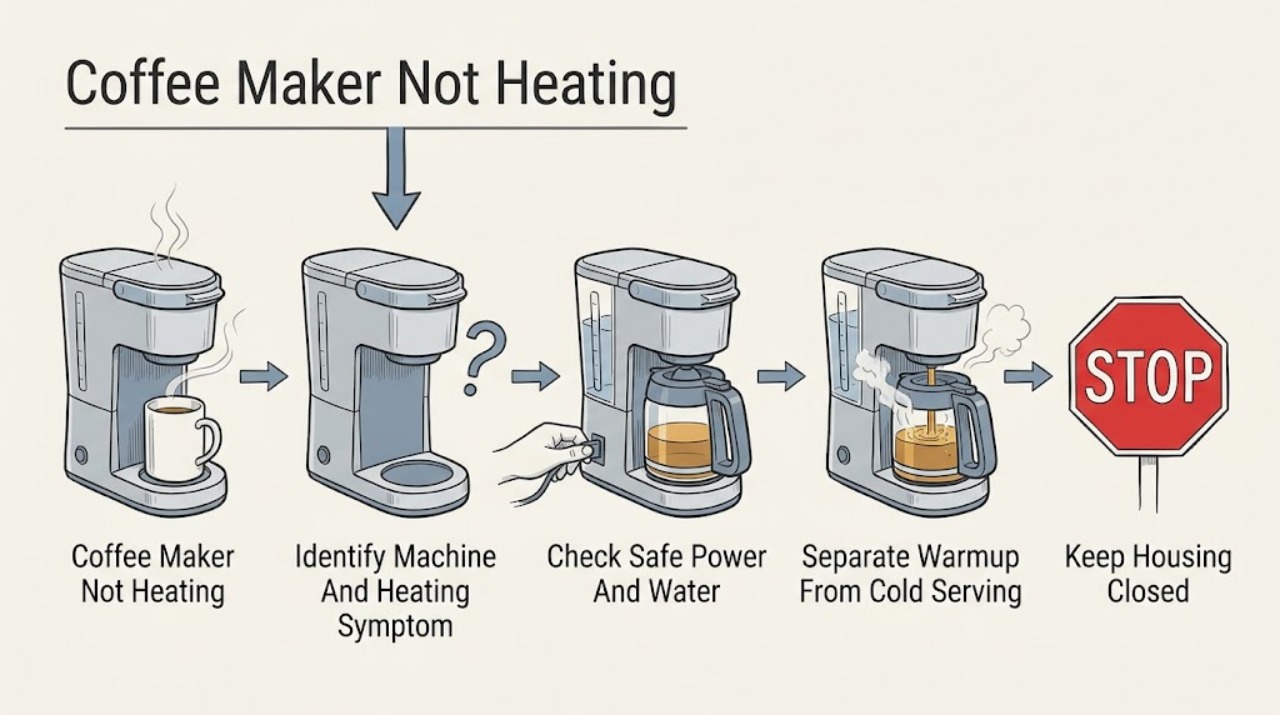
Breville Coffee Maker Not Heating: Safe Checks for Cold Coffee
First identify whether the Breville is a drip brewer, an espresso machine, or only a cup or carafe that is cooling too quickly. A drip brewer may need its selected brew-temperature setting, water flow, or model-specific descaling checked; an espresso machine may still be warming while its power or steam light flashes, and a cold cup or portafilter can make a normal shot seem cold.
-
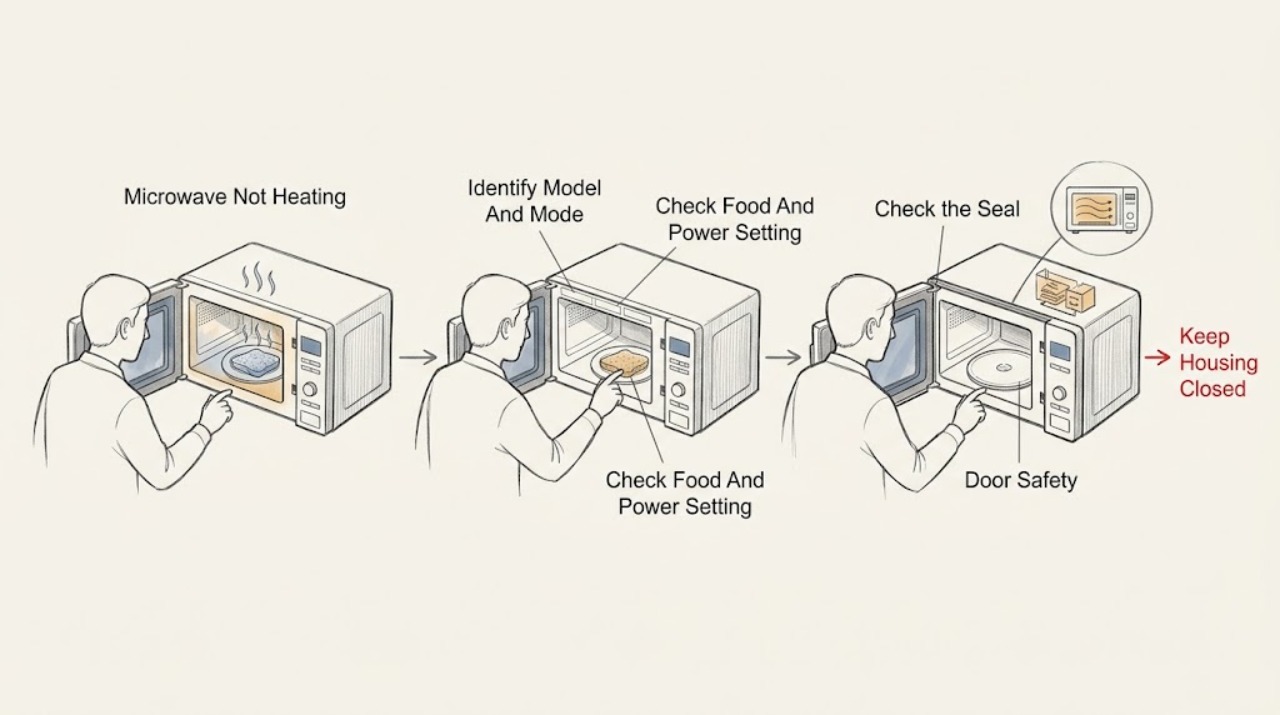
Breville Microwave Not Heating
For a Breville microwave that is not heating, first identify the exact model and confirm that you selected microwave mode rather than oven, grill, air-fry, or another combination mode. Use a microwave-suitable food or beverage, the intended power level and time, and observe whether the cycle runs, the turntable moves, and the food warms.
-
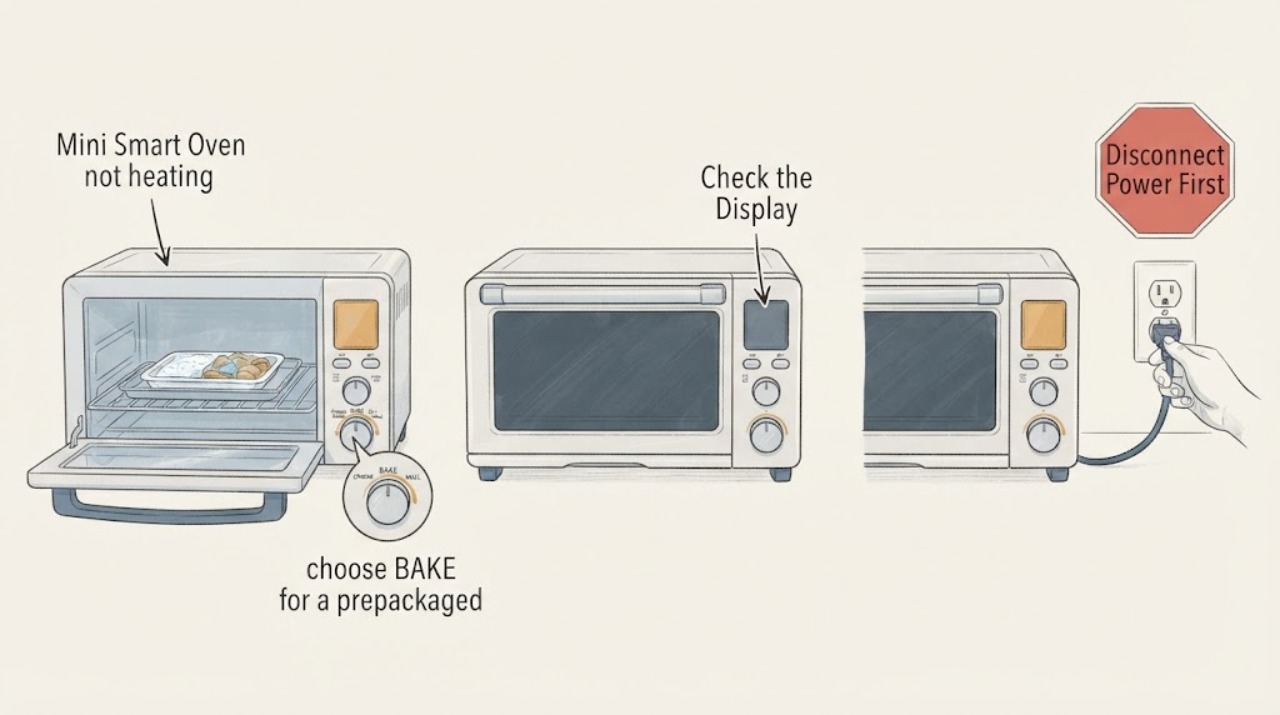
Breville Mini Smart Oven not heating frozen dinners
For a Breville Mini Smart Oven, first confirm the label and manual match the Mini Smart Oven/BOV450 family. A frozen dinner should be cooked with the package's oven-safe instructions and the model's Bake setup, not judged while the oven is still preheating.
-
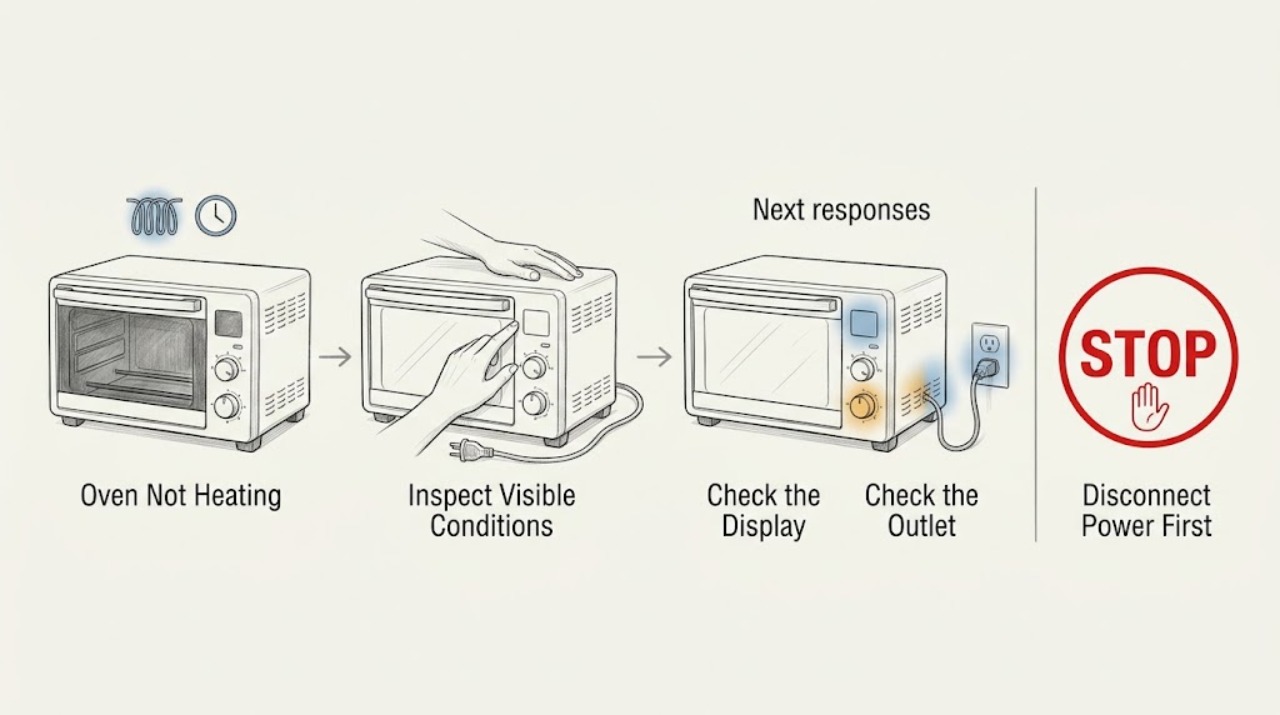
Breville Oven Not Heating: Checks for Power, Settings, and Safety
First separate a Breville oven that has no display or power from one that runs but does not heat. With the oven cool, verify the selected cooking function, temperature, timer, and START/CANCEL state, and remember that Element iQ can pulse the heating elements normally.
-
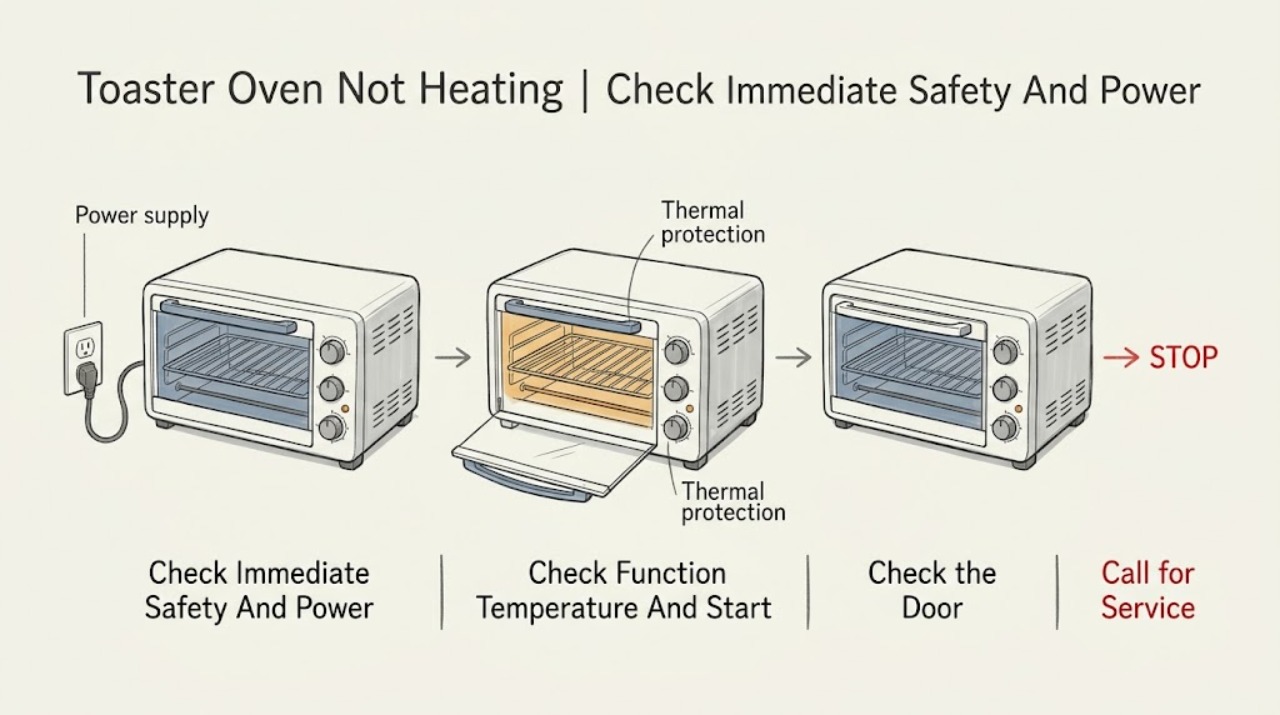
Breville Toaster Oven Not Heating: Safe Mode, Preheat, and Service Checks
First separate a setup or timing issue from a heating fault. On Breville Smart Oven families, the selected function, temperature, time, rack position, and START/CANCEL state all matter; the door should be closed and the oven allowed to complete its model-specific preheat.
-
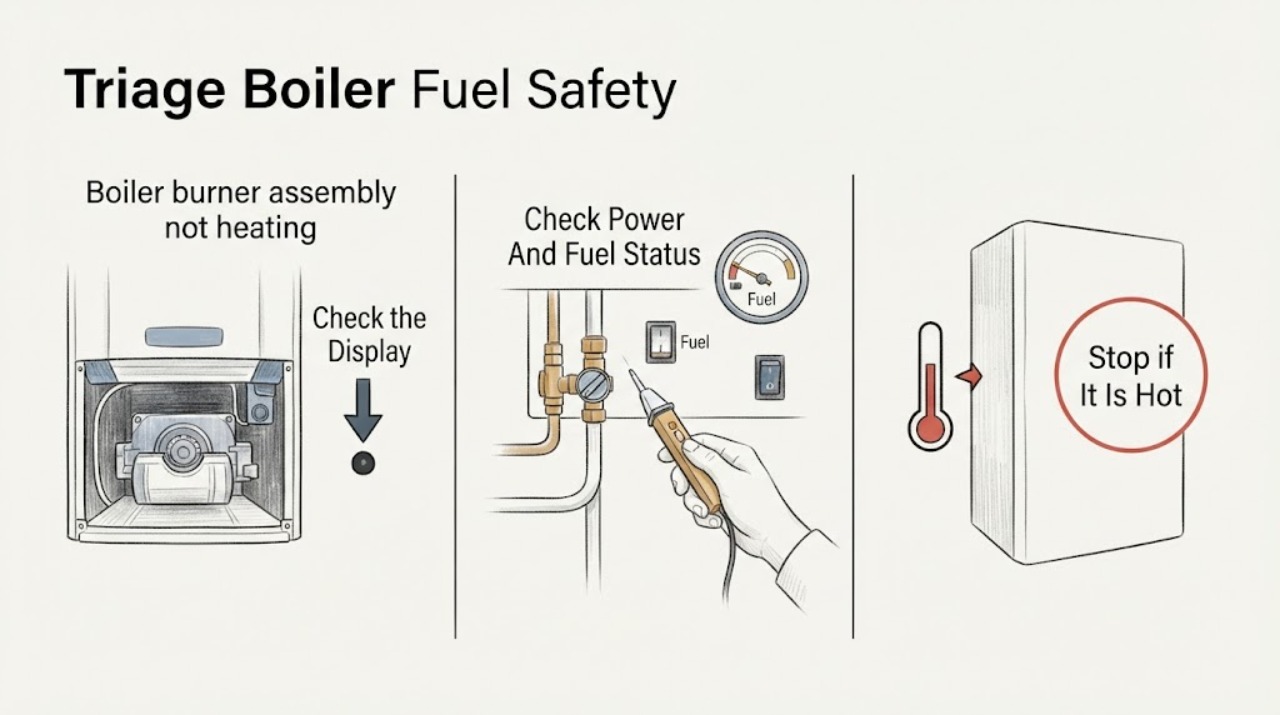
Buderus boiler burner assembly not heating: What to Check and What to Do Next
Do not try to light, adjust, clean, or remove a Buderus burner assembly yourself. First decide whether the boiler has no call for heat, has a control lockout, or calls for heat but does not produce burner heat.
-
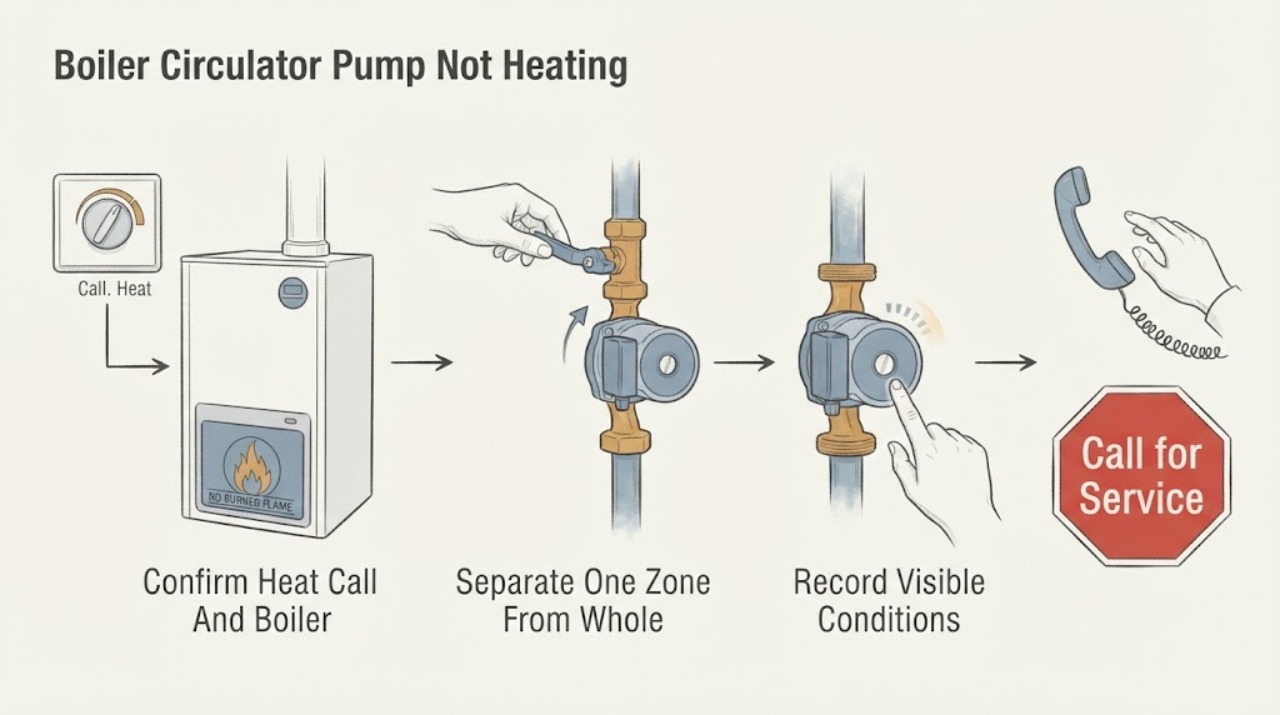
Buderus Boiler Circulator Pump Not Heating: What to Check and What to Do Next
A Buderus boiler that is not heating because the circulator pump may not be moving water needs a safe symptom check, not a pump-cover or wiring test. Confirm that the thermostat is actually calling for heat, note whether the boiler fires, and observe only from outside the casing whether the accessible gauge or controller shows a low-water or flow-related condition.
-
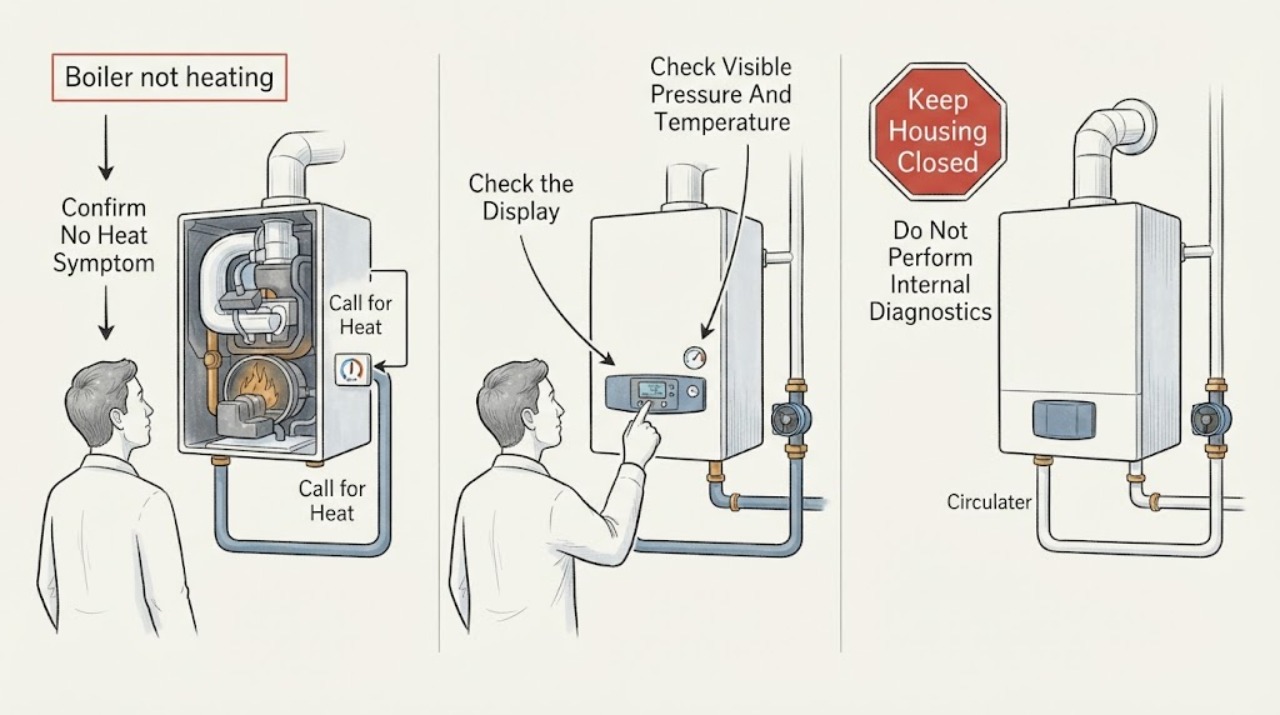
Buderus boiler not heating: What to Check and What to Do Next
A Buderus boiler that is not heating may have no heat call, a control or power problem, a burner lockout, low water or restricted circulation, air in the system, a blocked vent or condensate path, or a zone-side problem.
-
Buderus boiler thermostat not heating: What to Check and What to Do Next
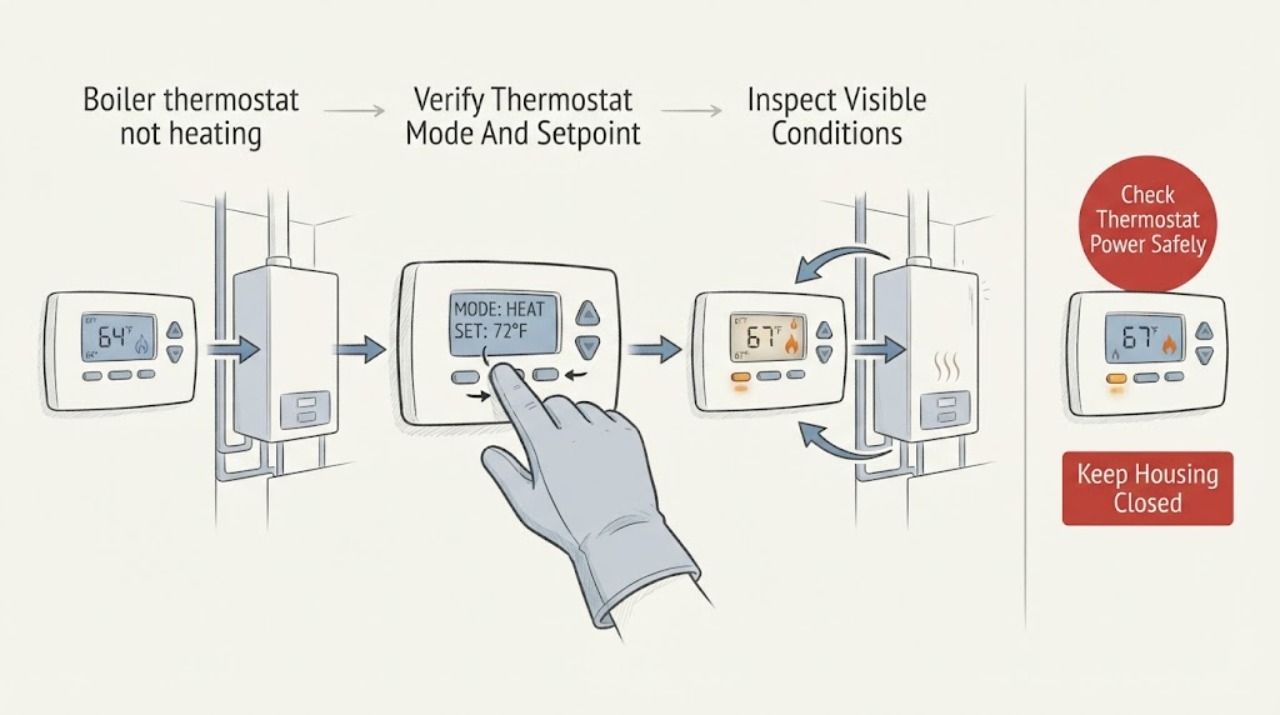
If a Buderus boiler thermostat is not heating, first verify that the thermostat is in heat mode, its setpoint is above the room temperature, and its schedule or setback is not active. Then note whether the thermostat shows a heat demand and whether the boiler responds, while checking only visible boiler indicators, pressure indication, leaks, and error messages.
-
Carrier furnace not heating: safe checks before service
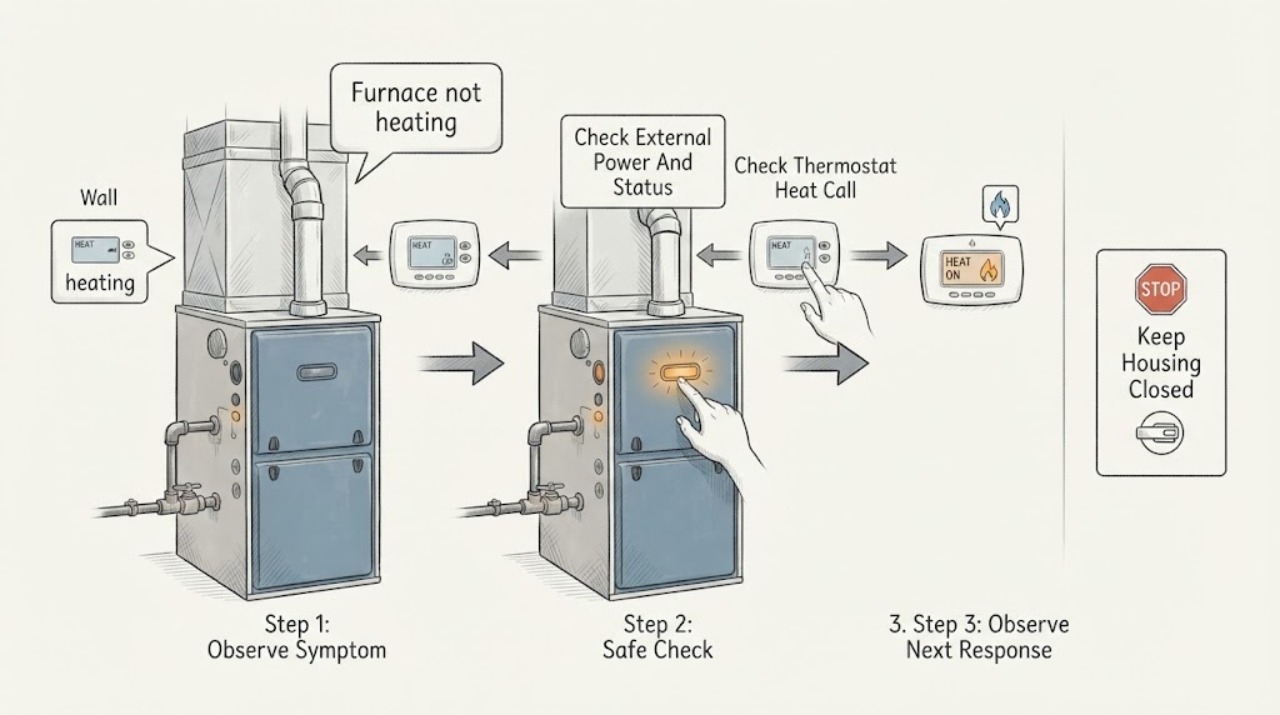
A Carrier furnace that is not heating may have no thermostat call, lost power, a blocked filter or vent, an ignition or flame-safety shutdown, or a fuel and combustion problem. First check the thermostat mode, set point, batteries if applicable, and fan setting, then inspect the filter and open supply and return grilles.
-
Coffee Machine Not Heating
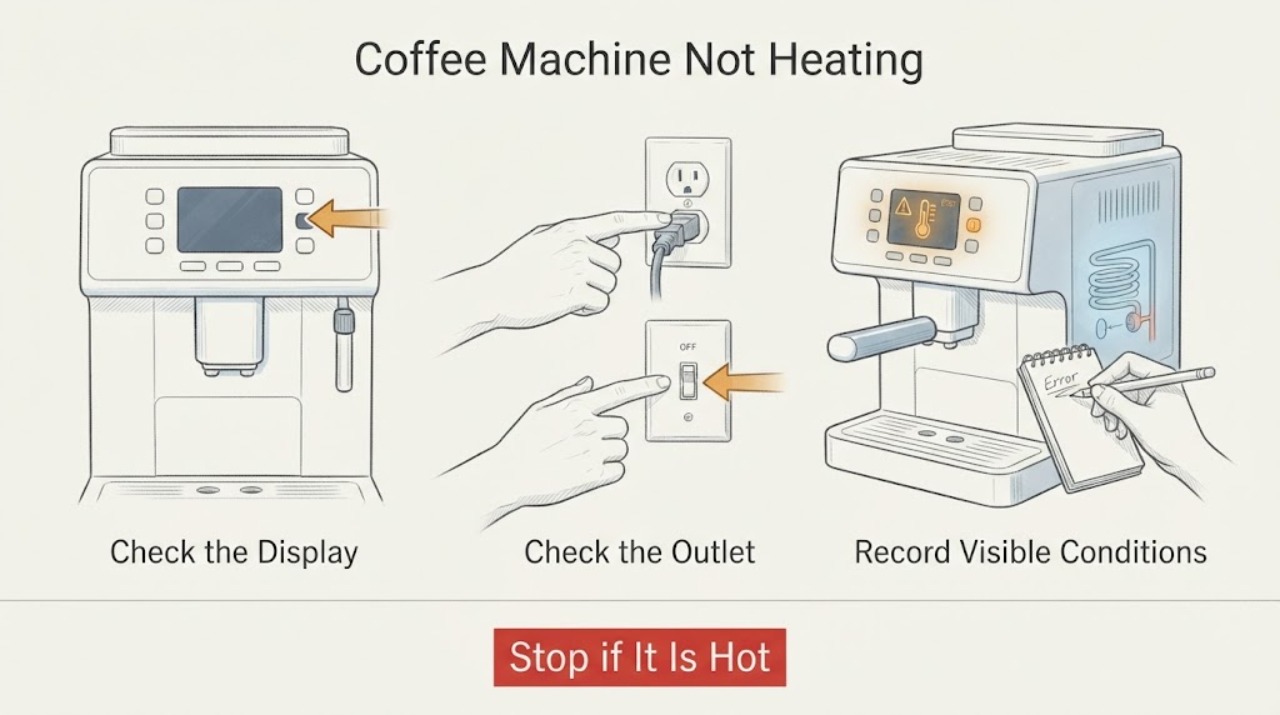
A coffee machine that is not heating may still be warming up, have an incorrectly seated or empty water tank, need descaling, or have a temperature or heating fault. Let the ready indicator finish, confirm the tank is full and seated, run only the model-approved rinse or descale procedure, and distinguish a lukewarm cup from a machine that never reaches ready. Persistent failure needs model-specific service because the heater and control are not user-safe to open.
-
Coffee Maker Not Heating
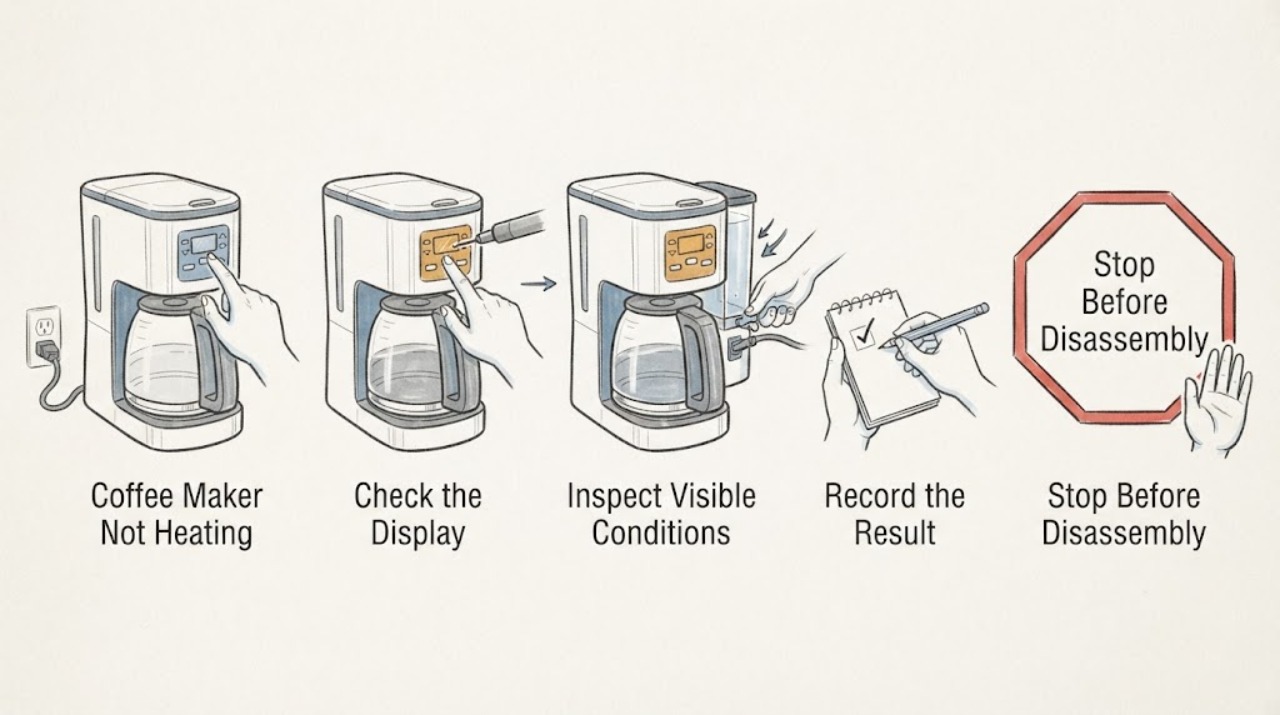
First determine whether the coffee maker has power and is merely in a warm-up or auto-off state, or whether it completes a brew with cold water and a cold plate. Confirm the tank and controls using the manual, run the documented descale cycle when scale is indicated or maintenance is due, and observe whether heating returns.
-
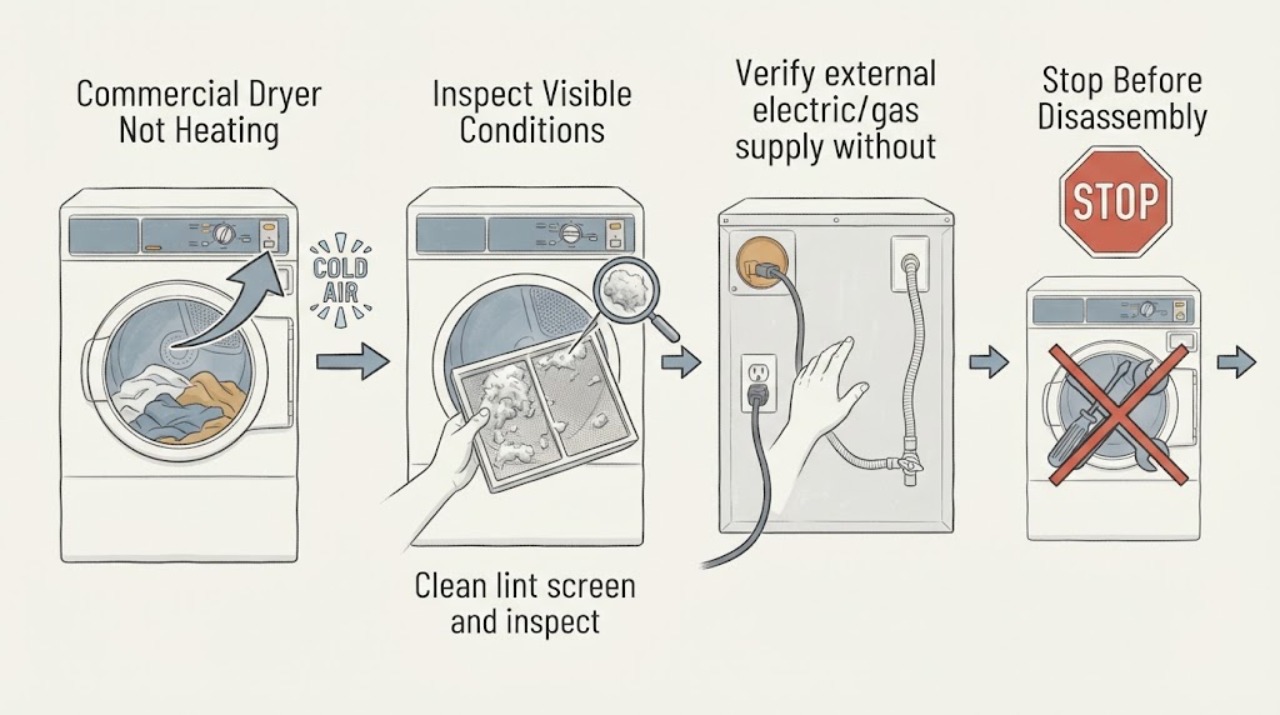
Commercial Dryer Not Heating
A commercial dryer that tumbles without heat may have restricted airflow, wrong/failed supply, or an internal heating/thermal fault. Clean the lint screen, inspect accessible exhaust and verify external supply only; clear airflow with no heat needs commercial service.
-
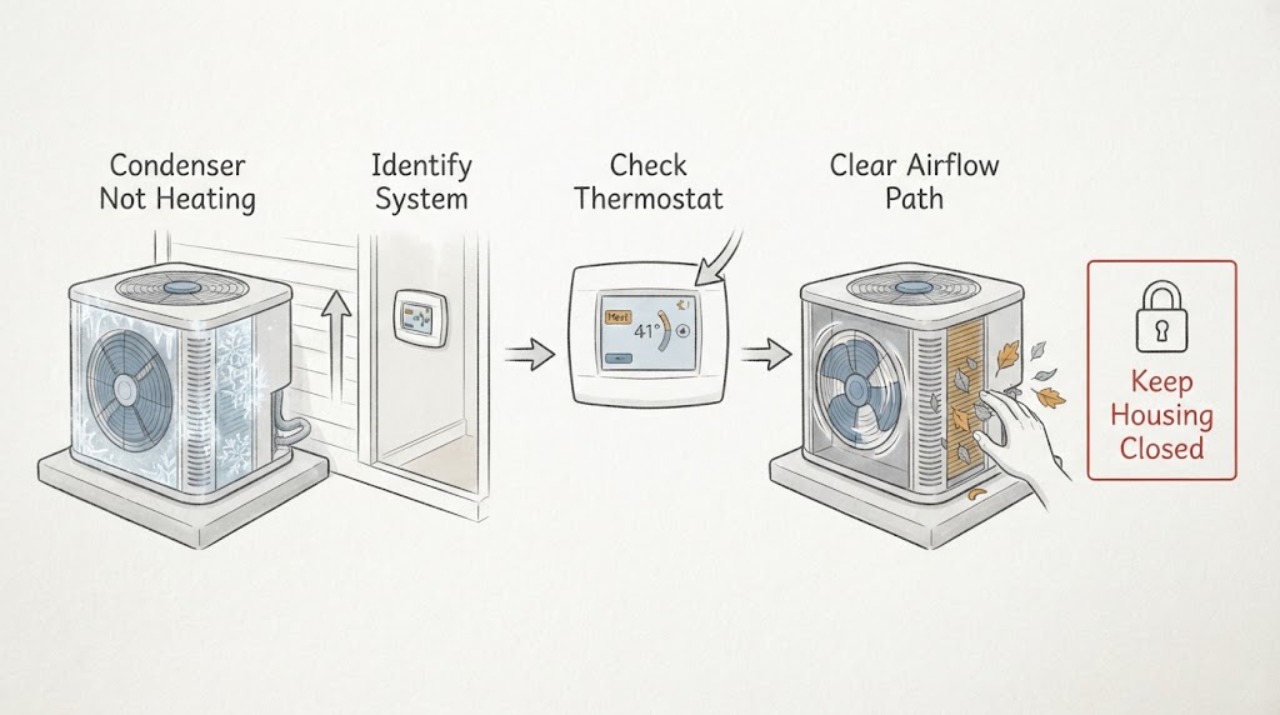
Condenser Not Heating: Identify the System and Check Safe Causes
An air-conditioner-only condenser is not a heat source, so it will not heat a home; a heat-pump outdoor condenser can heat by reversing the refrigerant flow. First confirm which system you have, then check that the thermostat is in Heat with the fan on Auto, the indoor filter and accessible airflow are not restricted, and the outdoor unit has clear air paths.
-
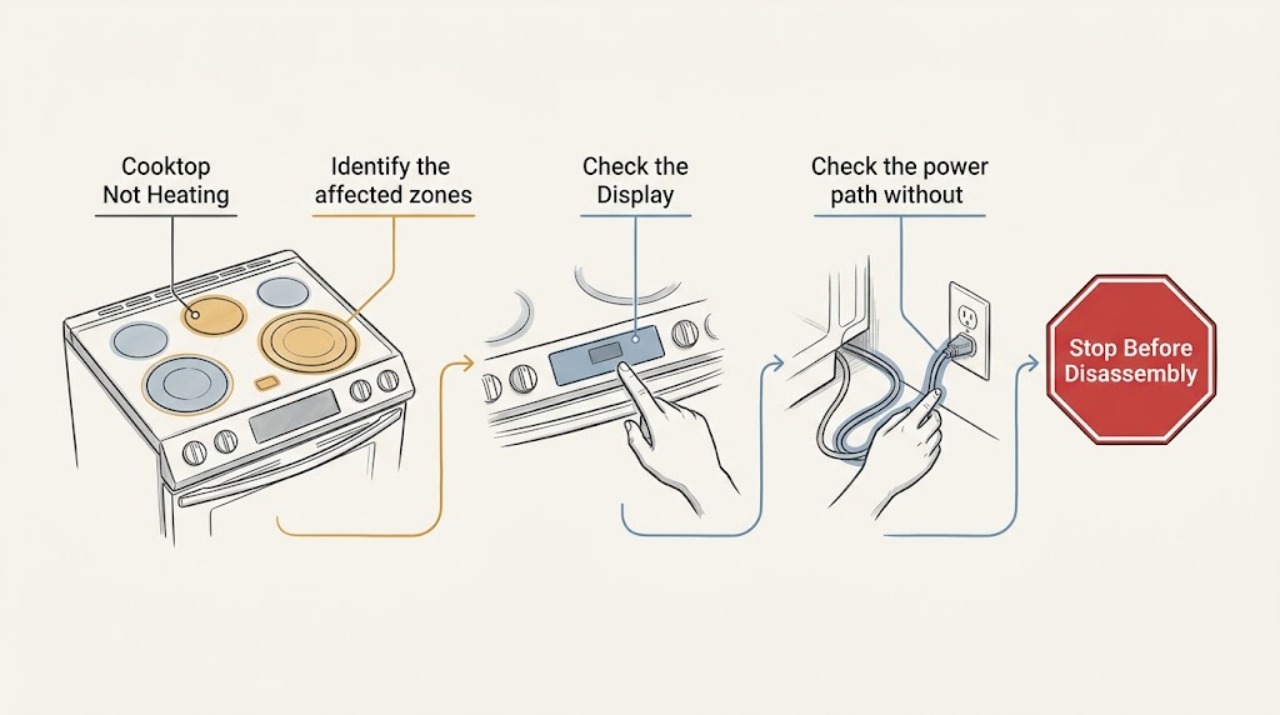
Cooktop Not Heating: Separate Power, Controls, Cookware, and Burner Faults
First identify whether the cooktop is gas, electric radiant, or induction, because a cold burner, a cycling radiant element, and a pan that an induction zone cannot detect need different checks. Confirm the selected zone and setting, check the appliance's power or gas supply from a safe external position, and look for a lock, pause state, error display, wet controls, or cookware mismatch.
-
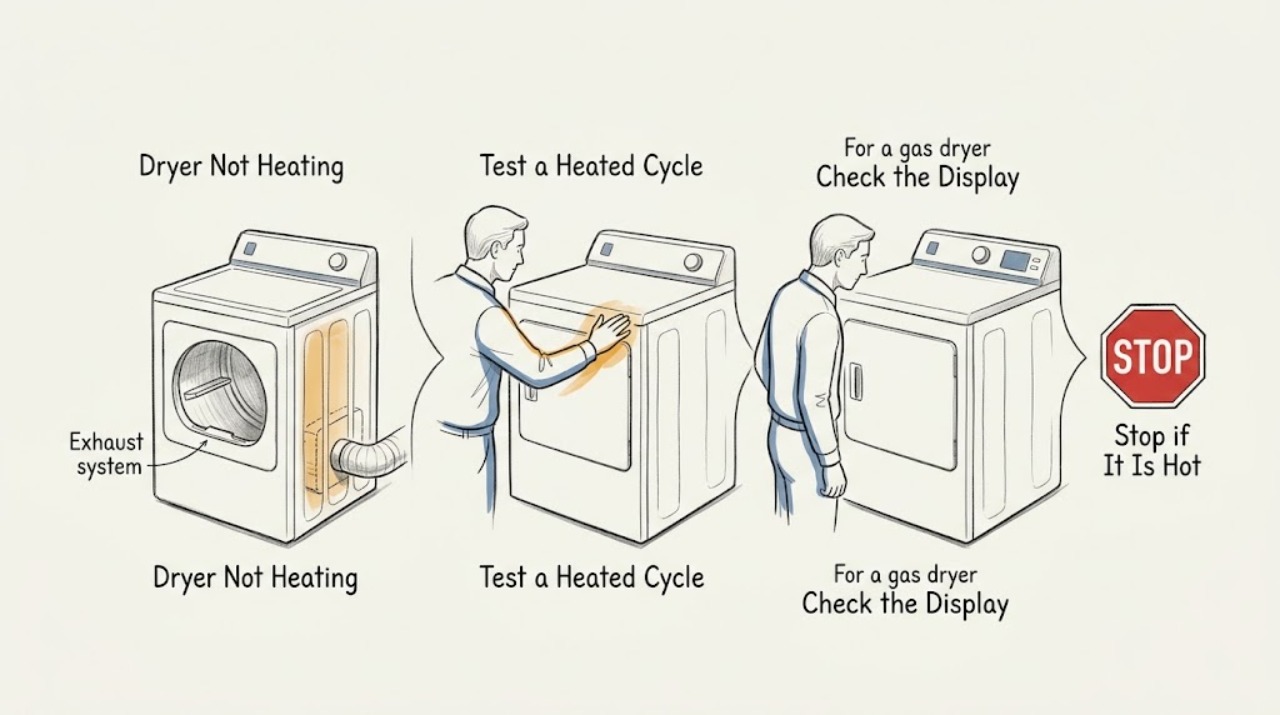
Crosley Dryer Not Heating
If a Crosley dryer tumbles but produces no heat, first confirm that the selected cycle and temperature are not Air Dry or No Heat. Then check the lint screen, accessible exhaust path, and outside airflow.
-
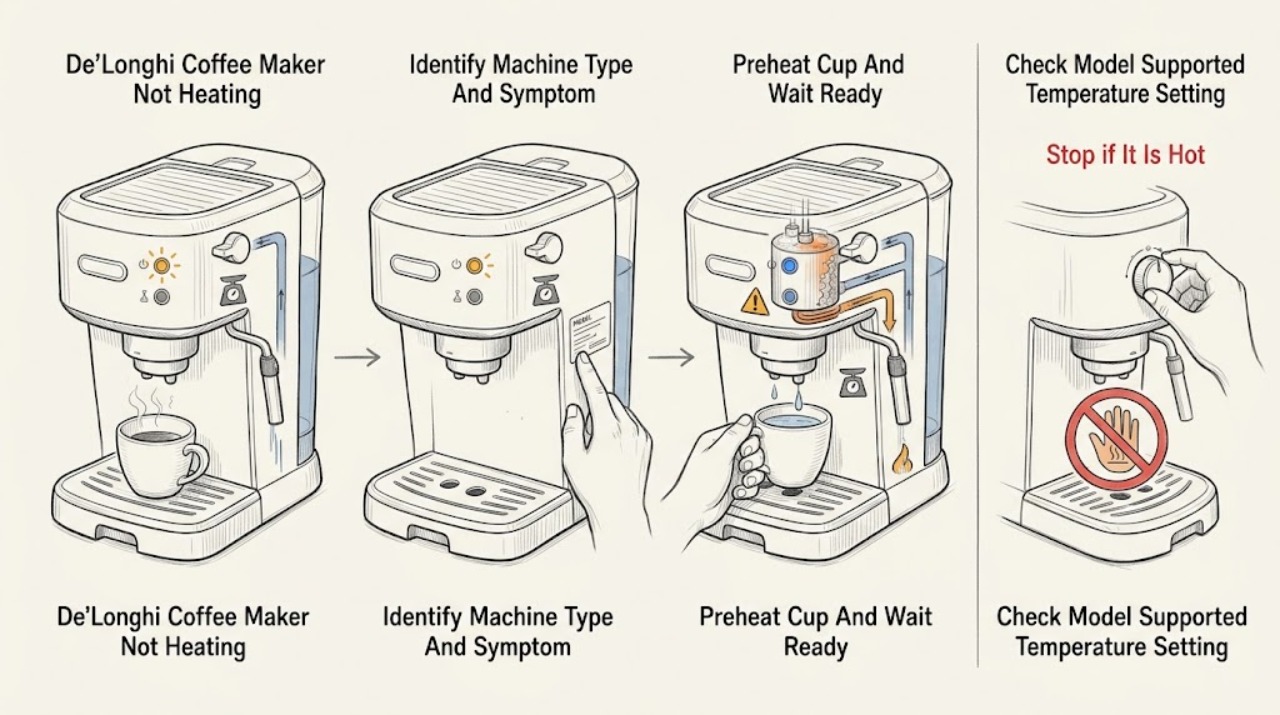
De'Longhi Coffee Maker Not Heating: Preheat, Descale, and Heater Checks
First separate a drink that cools quickly from a machine that produces no heat. De'Longhi coffee makers use different designs: a drip model may become less hot as scale restricts brewing, while pump and automatic models may need the machine's warm-up or rinse cycle, a ready/OK indication, a higher model-supported temperature setting, or a preheated cup.
-
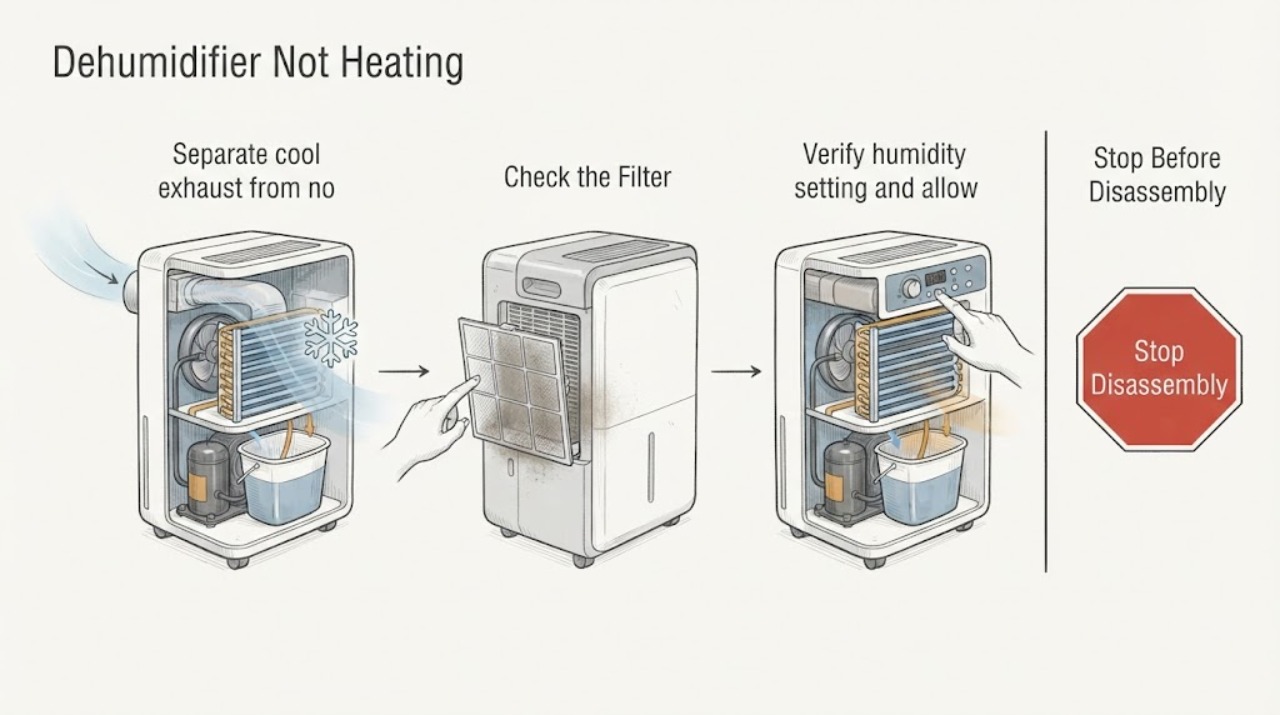
Dehumidifier Not Heating
A dehumidifier removes moisture rather than providing room heat, so cool exhaust may be normal defrost behavior. Check room temperature, airflow/filter, bucket and humidity setting. A warm room with clear airflow and an inactive compressor, odor or repeated failure needs service.
-
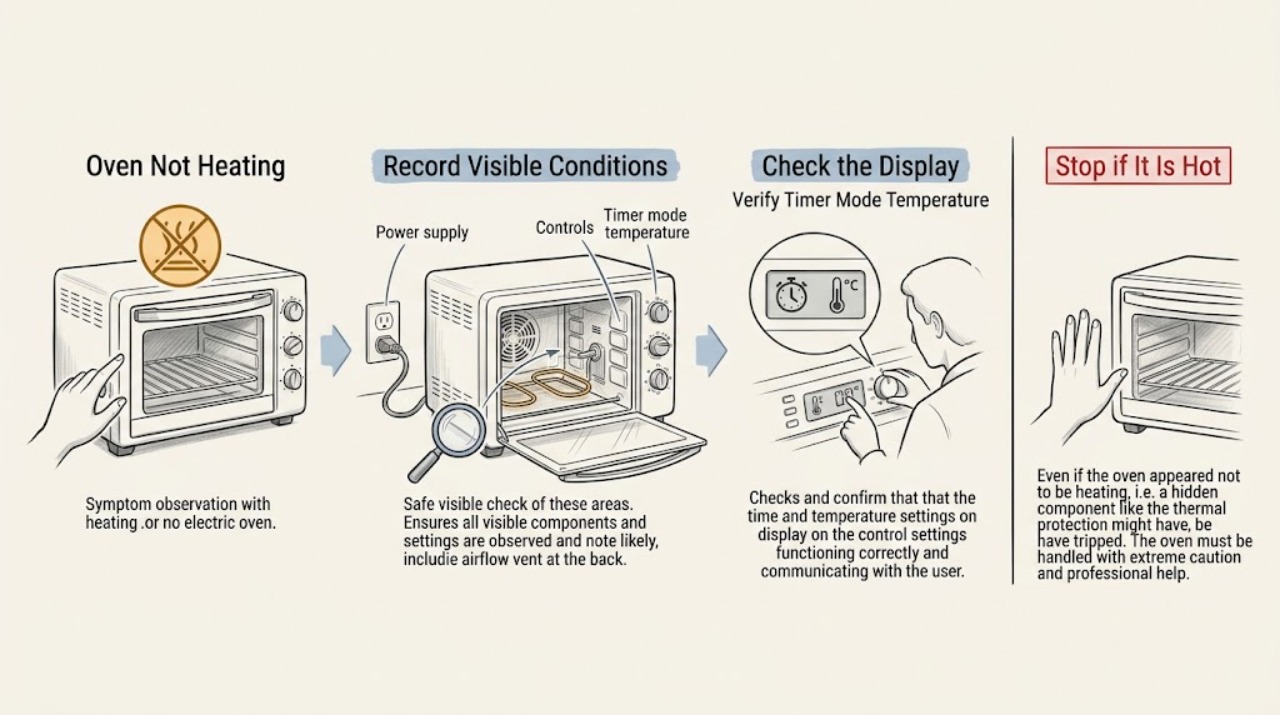
DeLonghi Oven Not Heating: Check the Controls, Power, Airflow, and Heat Response
If a DeLonghi oven is not heating, first stop for smoke, a burning or gas odor, sparking, a damaged cord, or a tripped breaker that will not reset. With the oven cool and switched off, confirm the supply or isolation switch, select a normal bake or heat function, set a temperature clearly above room temperature, and check that any timer is in manual or timed-cooking mode; DeLonghi notes that a manual timer must be set to a time period or manual position.
-
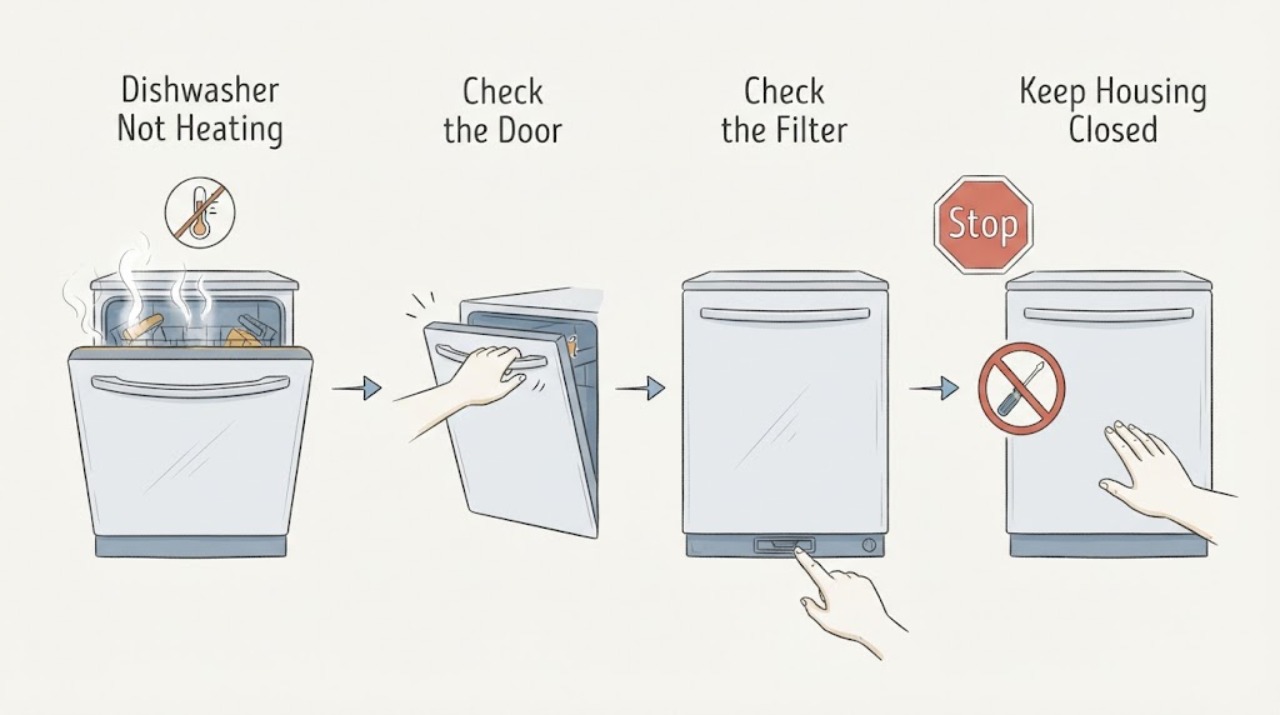
Dishwasher Not Heating
If a dishwasher is not heating, first confirm that the selected programme should heat and that the filters and sump are clear. Zanussi’s official support lists wrong programme selection, blocked filters/sump, excess foam, and a faulty heating element as distinct possibilities; a heating error code, when present, narrows the branch but remains model-specific.
-
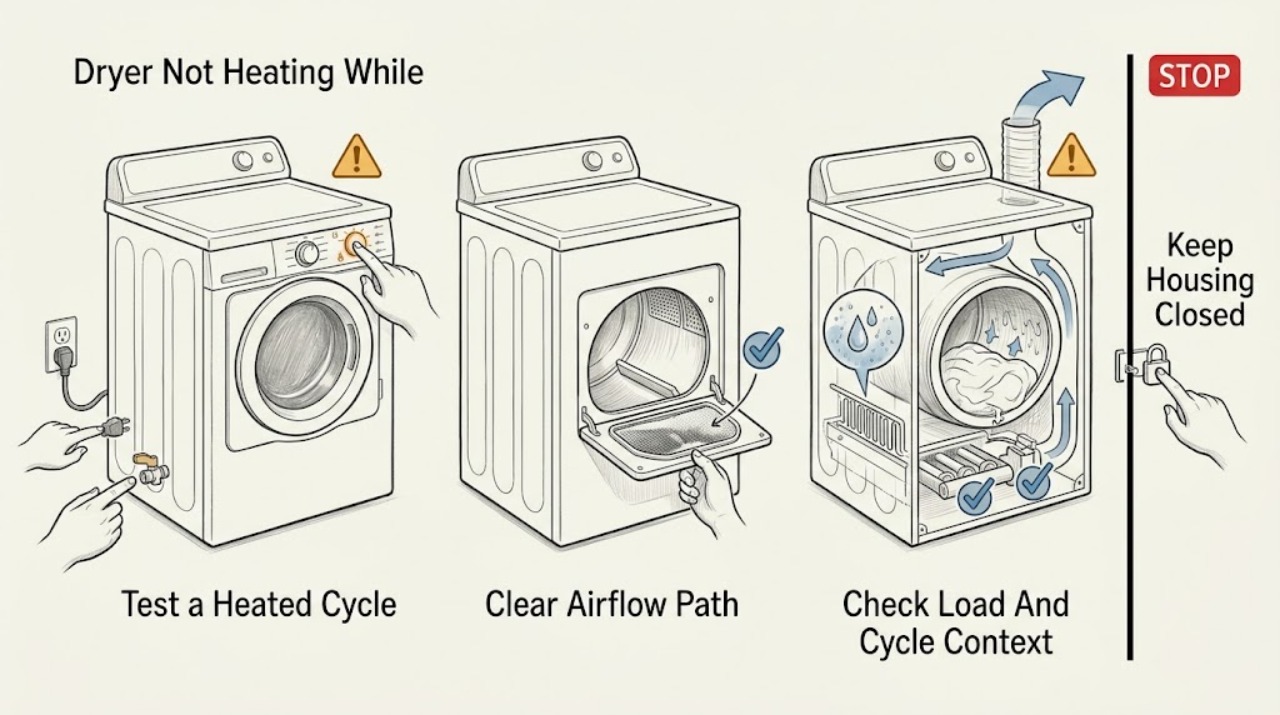
Dryer Not Heating While the Cycle Runs: What to Check and What to Do Next
A dryer can tumble and finish a cycle while producing no heat because the drum motor and heating system are separate. First verify that a heated timed cycle is selected and that the air coming from the exhaust is actually cold, not merely slow to dry.
-
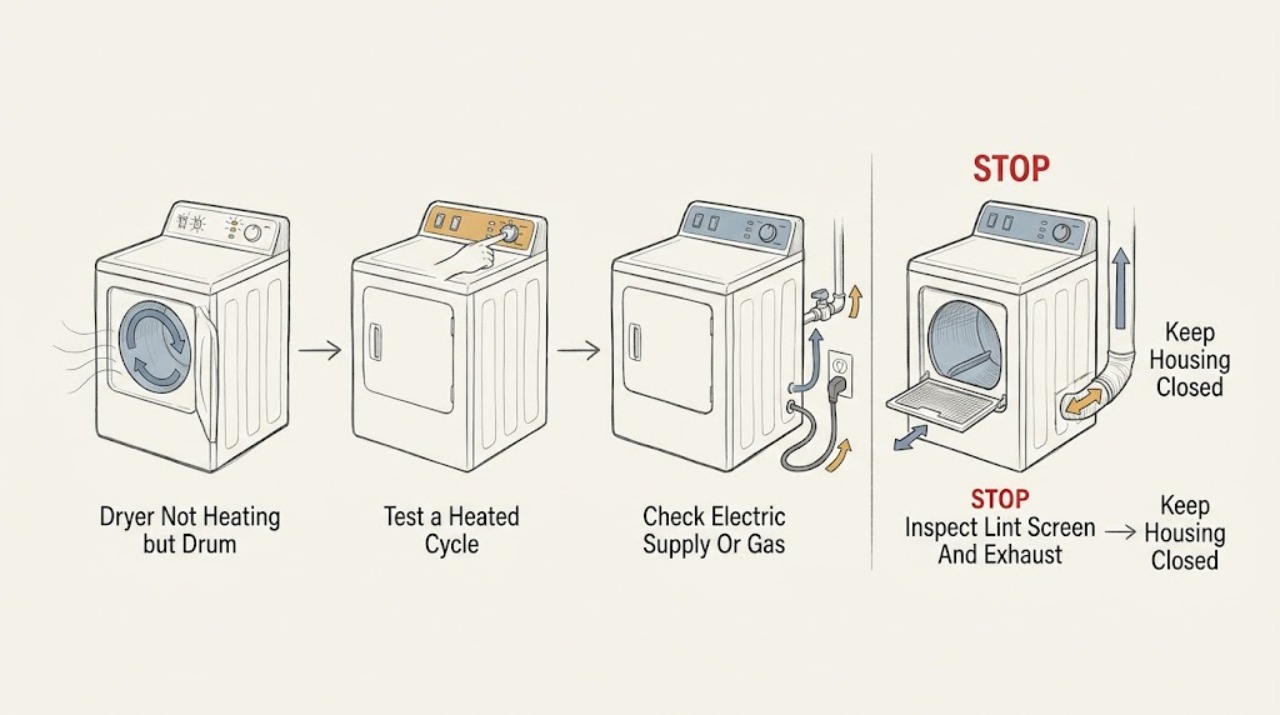
Dryer Not Heating but Drum Tumbles: What to Check and What to Do Next
When a dryer tumbles but does not heat, first confirm that a heated cycle is selected and that the symptom is not an Air Only or Fluff setting. Electric dryers can tumble when one side of the household supply is unavailable, so check for a tripped breaker only from the panel and stop if it trips again.
-
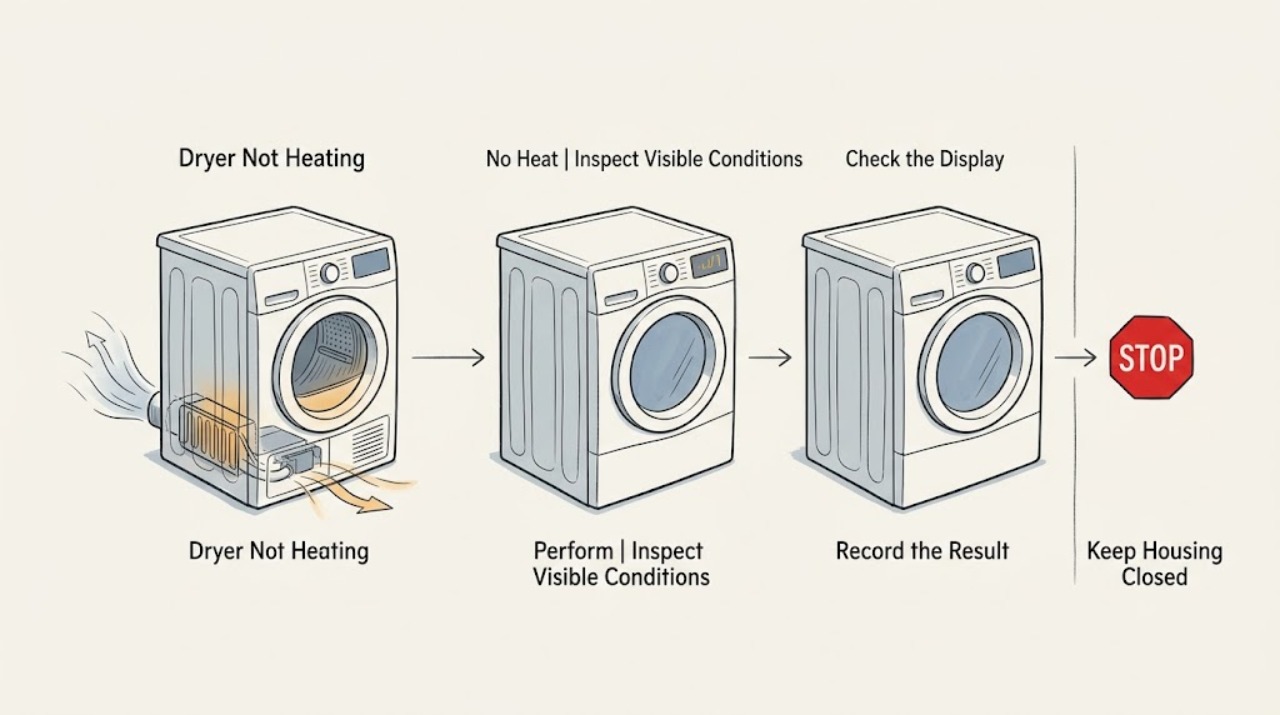
Dryer Not Heating, No Heat at Exhaust: What to Check and What to Do Next
First confirm that the dryer is on a heated cycle rather than Air Only, Fluff, cool-down, or another no-heat setting, then run a brief empty test and observe the airflow at the outside exhaust without touching hot parts. If the drum runs but the exhaust stays cold, check the correct power or gas supply, lint screen, vent hose, and outside hood.
-
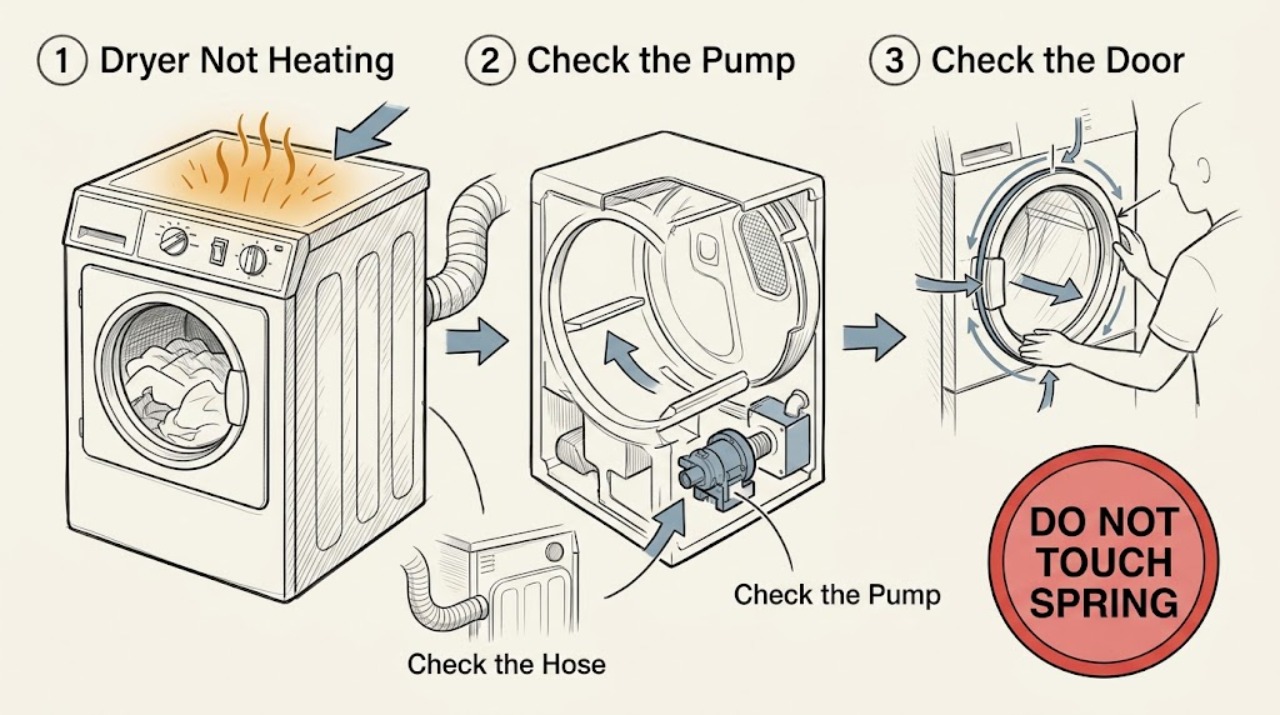
Dryer Not Heating: Check the Cycle, Airflow, Power, and Fuel Safely
If a dryer is not heating, first confirm whether it is actually running a heated cycle or an Air, Air Fluff, No Heat, or cool-down cycle. Then check the load, lint screen, visible exhaust, and accessible power connection with the dryer off and cool.
-
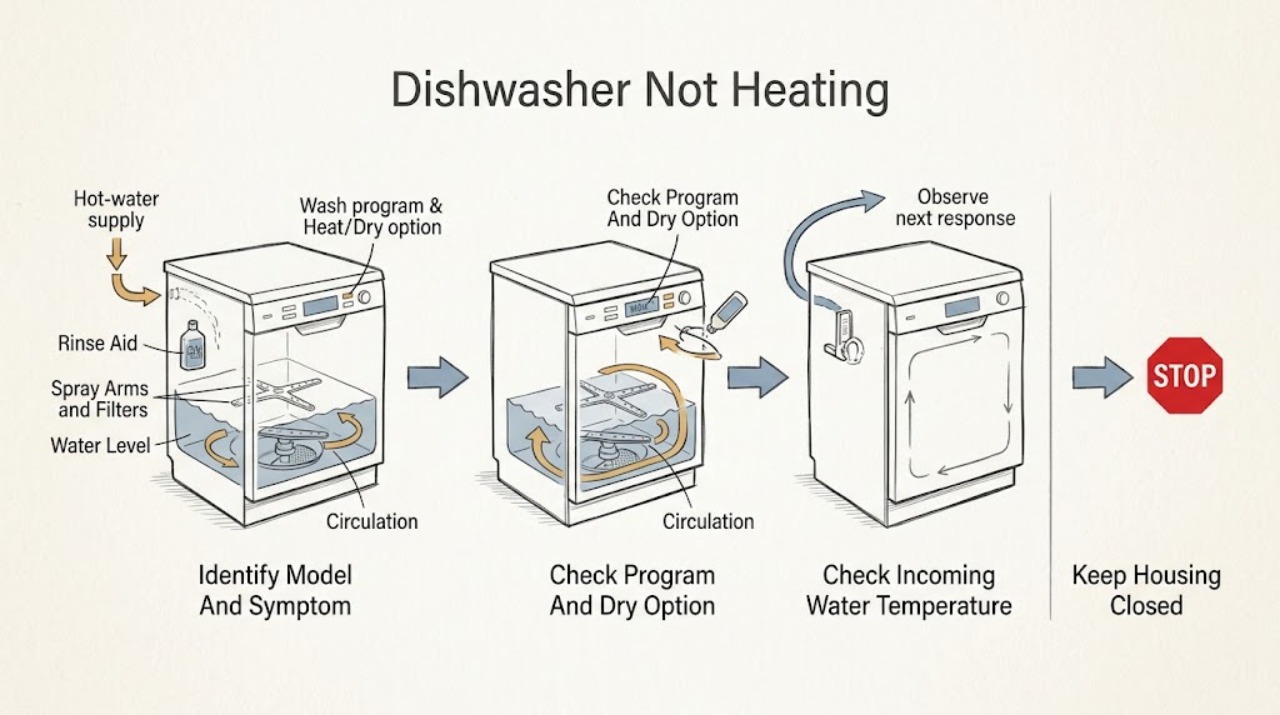
Electrolux Dishwasher Not Heating
First separate a cold incoming supply or a no-heat program from water that remains cold throughout the wash. Electrolux says hot incoming water helps cleaning, Quick/Fast Wash can use Air Dry rather than heated drying, and Heat Dry is a selectable option on applicable models; plastics and concave items can still retain water.
-
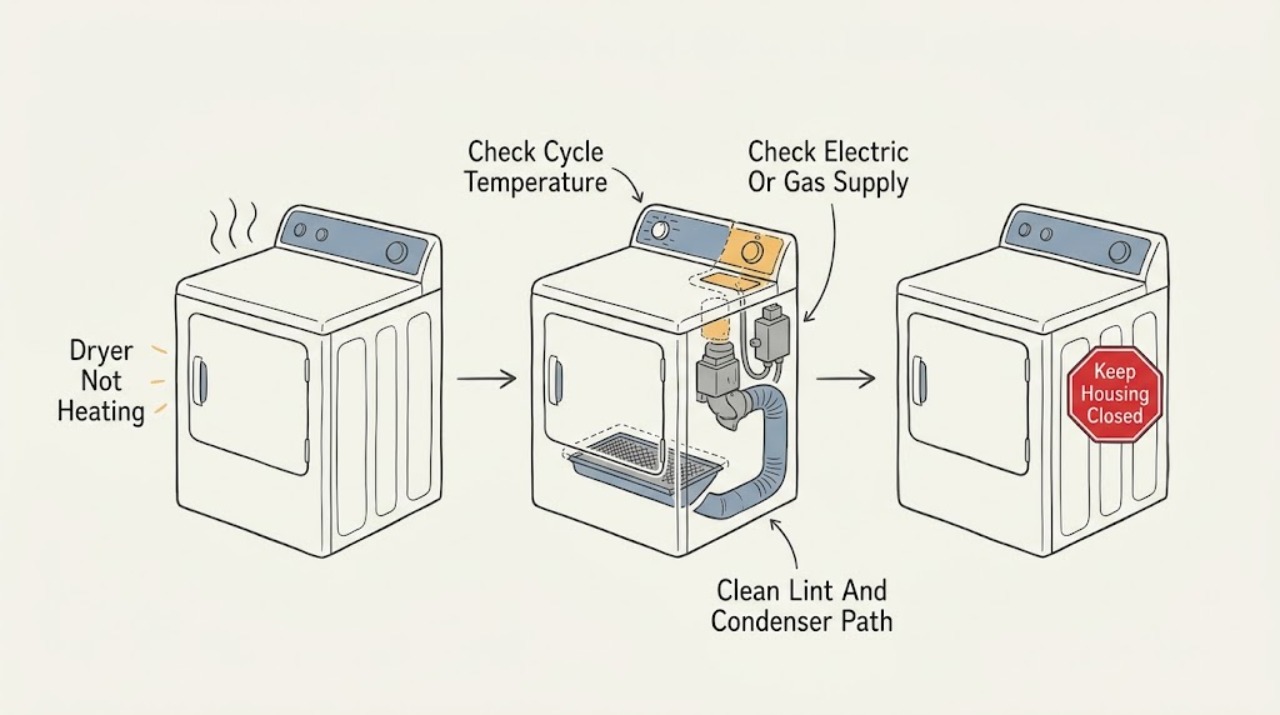
Electrolux Dryer Not Heating: Check the Cycle, Power, and Airflow
If an Electrolux dryer tumbles but does not heat, first check that the cycle is not Air Fluff or another no-heat setting. An electric dryer can still turn while one of its two house circuits or fuses is open; a gas model also needs an open gas supply and adequate ventilation.
-
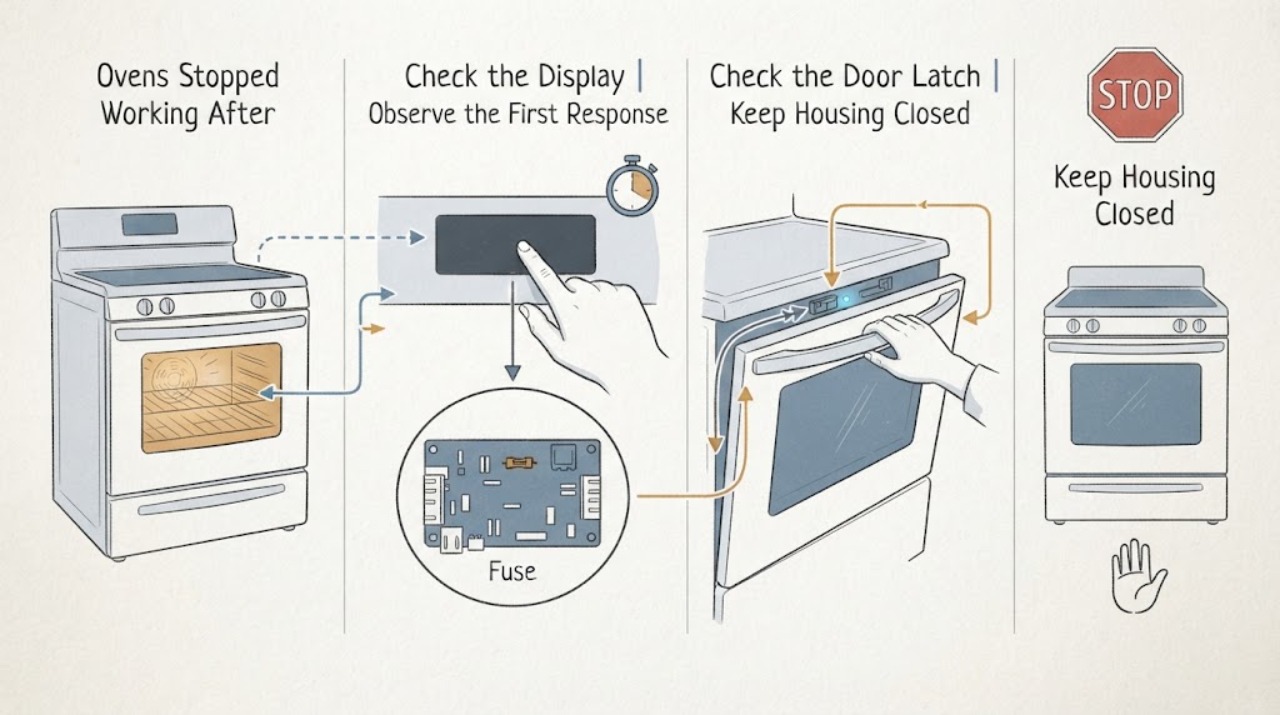
Electrolux E36DF76EPS Ovens Stopped Working After a Pop During Self-Clean
A pop near the end of a self-clean cycle followed by both ovens becoming unusable is not a normal preheat problem. Leave the Electrolux E36DF76EPS off, keep clear of the hot range until it has cooled, and do not run Self Clean again.
-
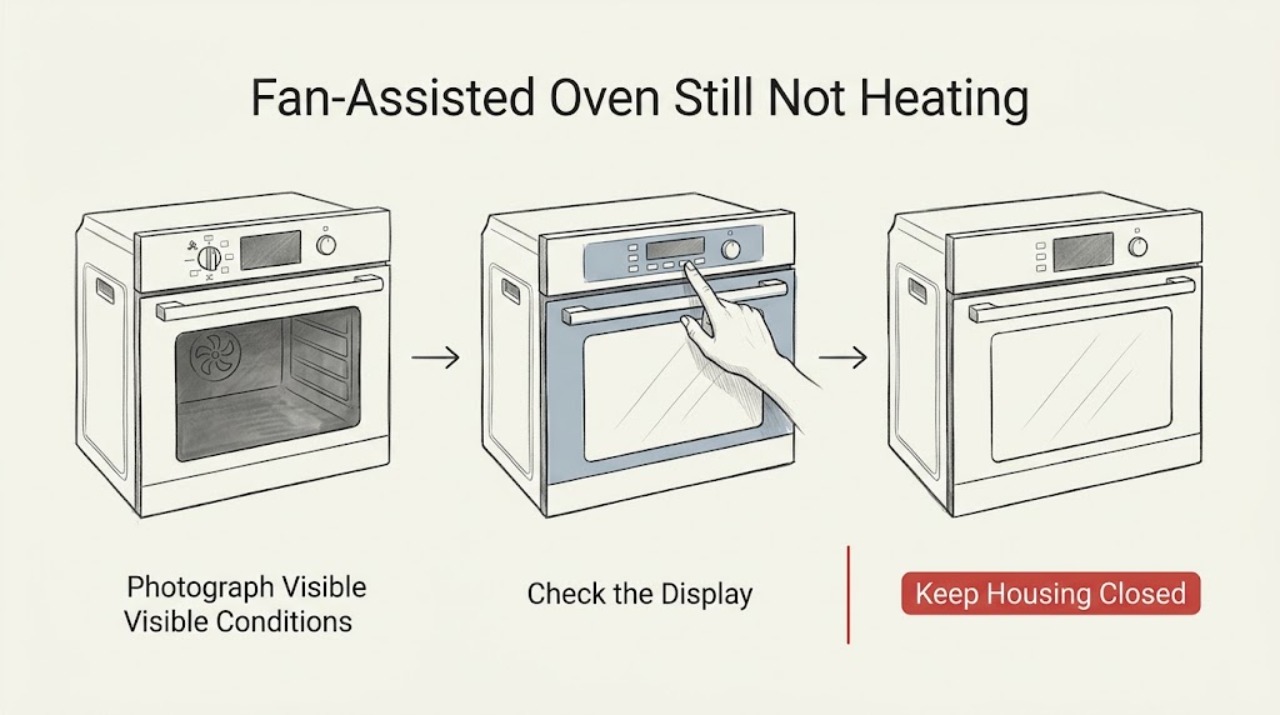
Electrolux EOB3400 Fan-Assisted Oven Still Not Heating After an Element Replacement
Treat the element replacement as an unverified repair, not proof that the new element is the correct part or that the connections and reassembly are sound. The EOB3400 family has regional and PNC variants, and its official manual calls the fan mode True Fan Cooking: select that function and the intended temperature with the cavity empty and the door closed.
-
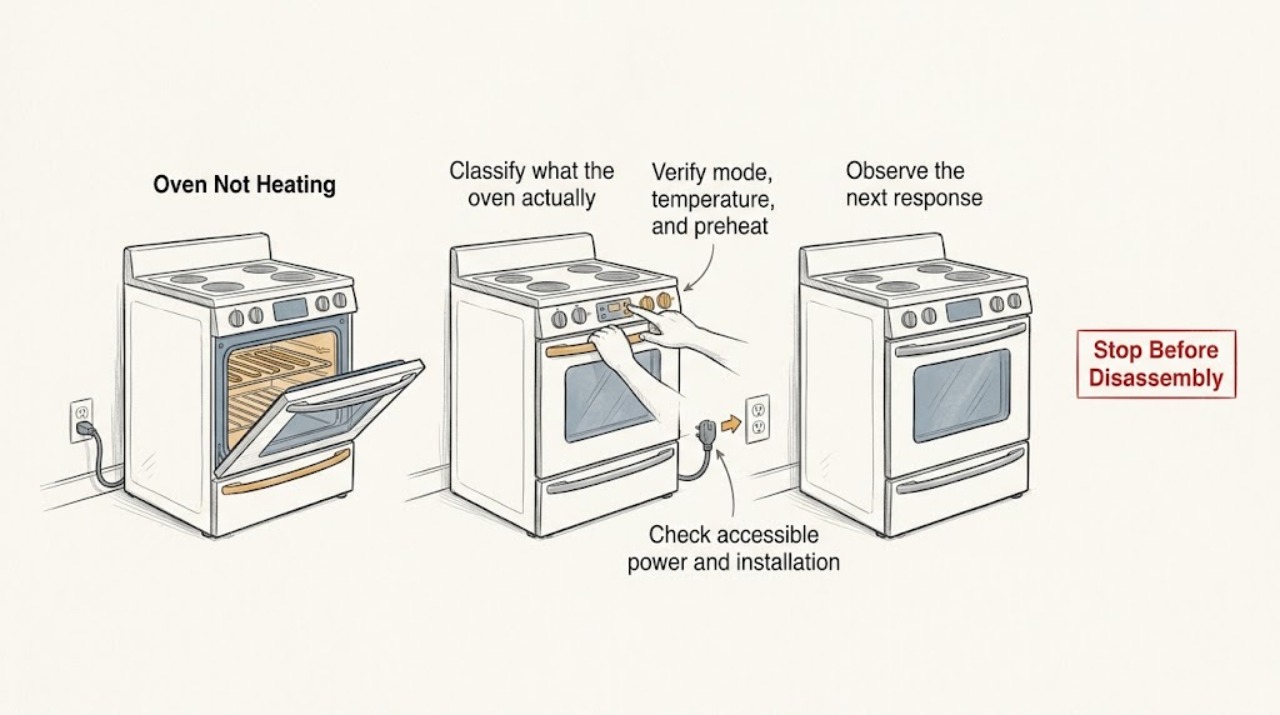
Electrolux Oven Not Heating: Find the Cause Safely
Confirm that a cooking mode and temperature were selected and that the oven is actually being preheated with the door closed. Then note whether the display and other functions have power, whether the oven reaches any warmth, and whether a code is shown.
-
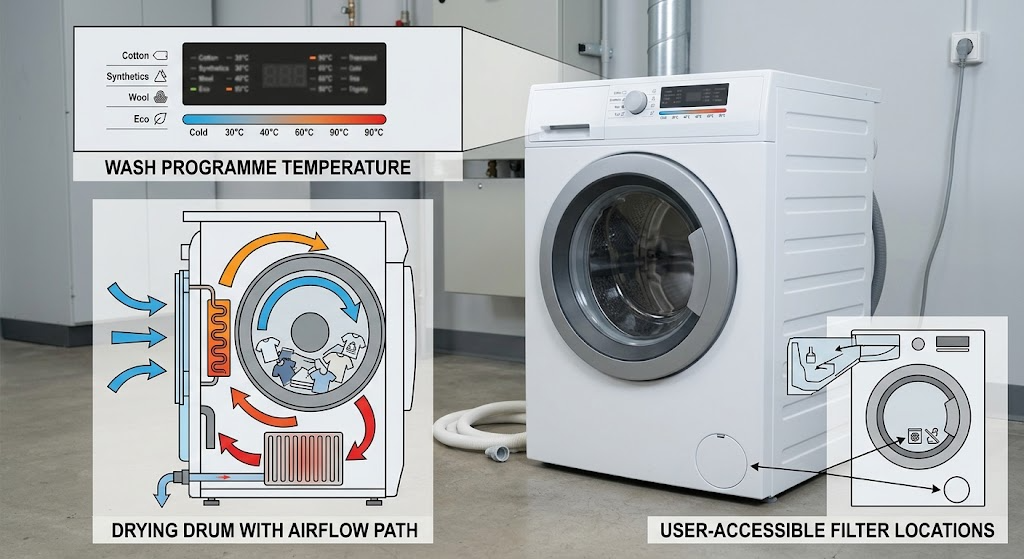
Electrolux Washer Dryer Not Heating: Separate Wash-Water and Drying Problems
First identify which function is not heating: a wash may end cold because the final rinse is normally cold, while a heat-pump drying cycle may feel cool at the start and run at a lower temperature. For wash heating, verify that the selected programme and temperature are not a cold or low-temperature setting; for drying, turn on the water tap, use the correct drying load and programme, and clean only the model-approved air, lint, condenser, and drain filters.
-
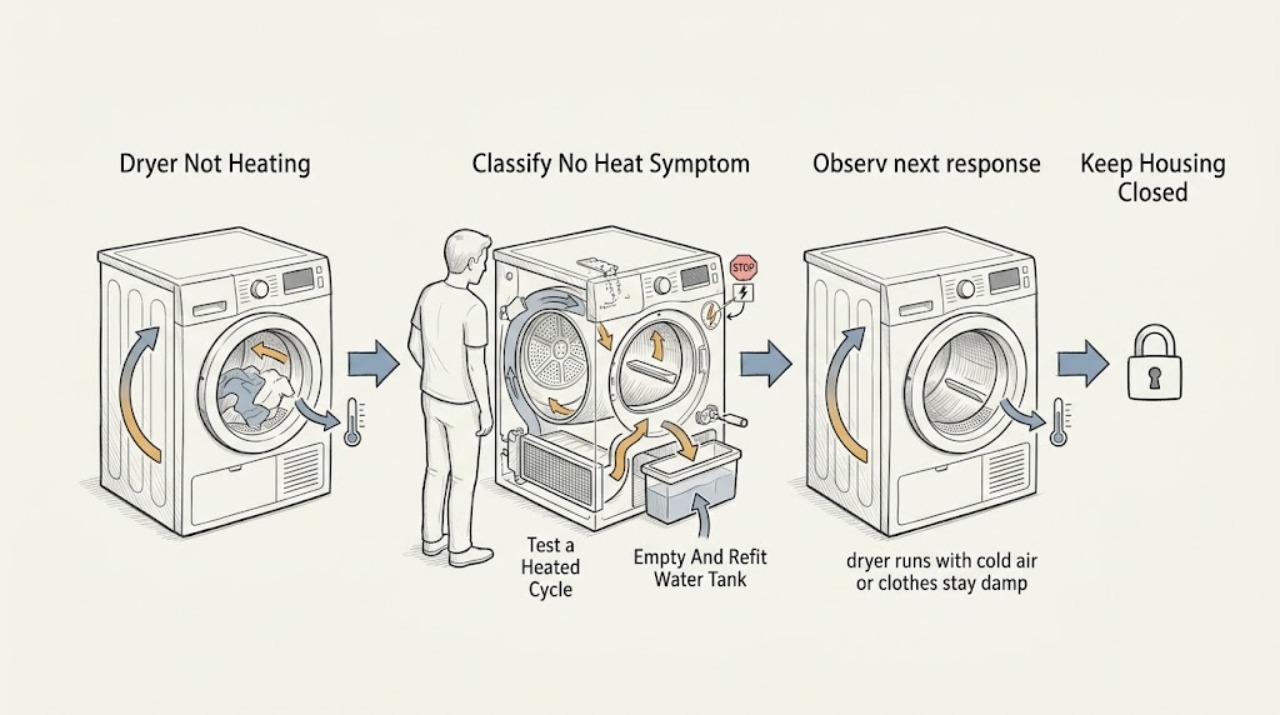
Fisher & Paykel Dryer Not Heating: Check the Cycle, Tank, and Airflow
Confirm that the Fisher & Paykel dryer is on a heated cycle rather than COOL AIR or another air-only setting, and check whether the progress display has already reached COOL or END. On condensing and heat-pump models, empty and correctly refit the water tank; a full tank can prevent normal heating or drying.
-
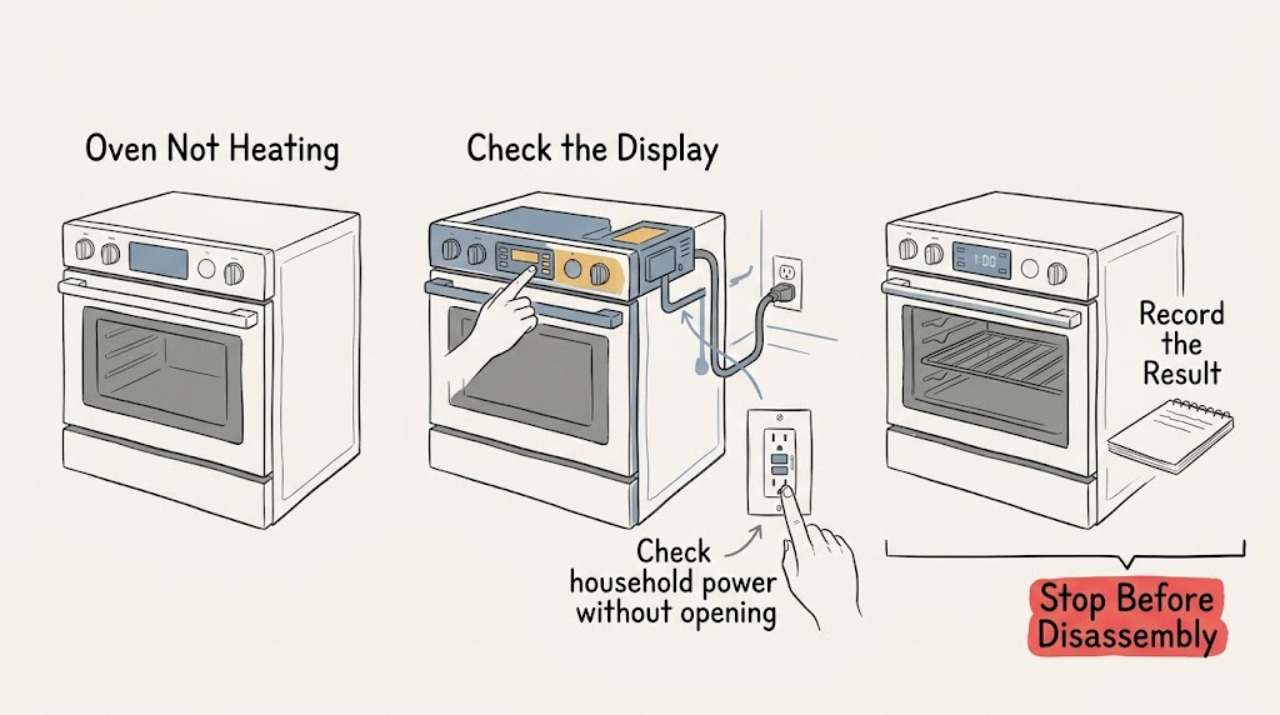
Fisher & Paykel Oven Not Heating: Check Power, Settings, Door, and Gas Safely
First distinguish an oven with no power from one that has an active display but remains cold. If the oven light, display, or dial halos are off, check for a household outage or tripped breaker without opening the appliance.
-
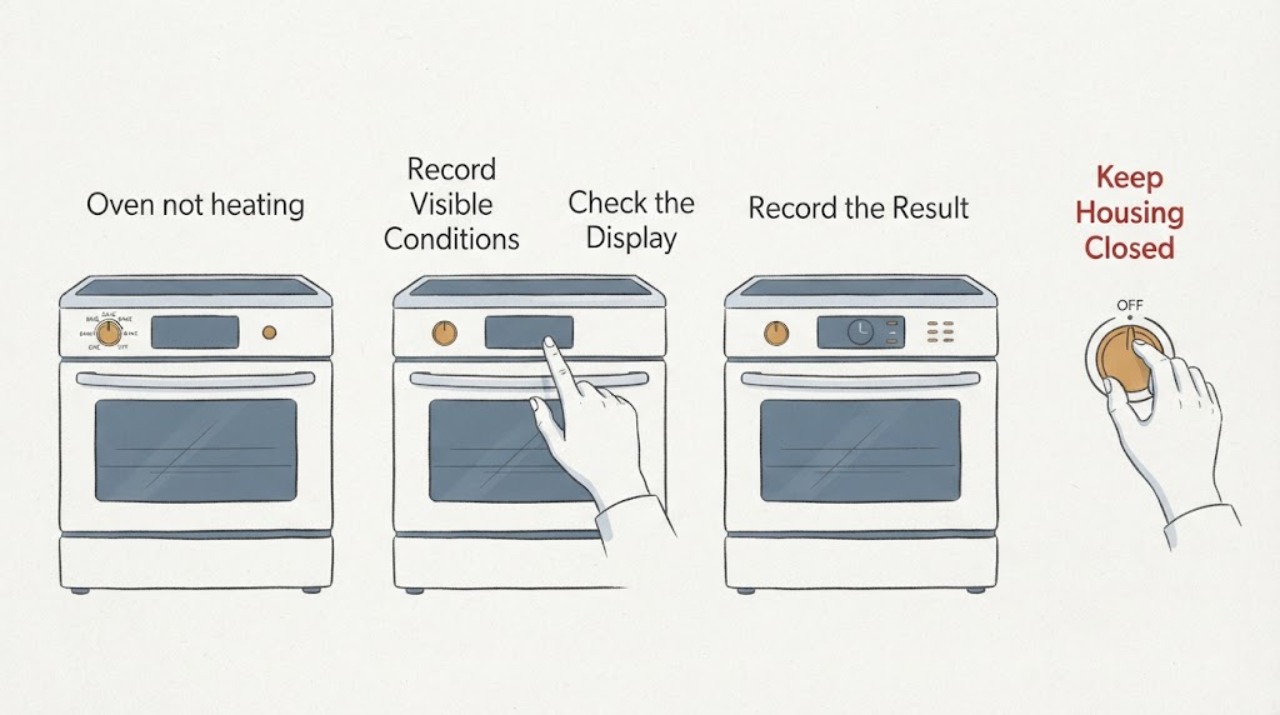
Fisher & Paykel OR30SDPWSX1 dEF: Select a Cooking Function
On the Fisher & Paykel OR30SDPWSX1, a display of dEF after changing the function dial can mean DEFROST is selected, not that the oven has failed. The exact user guide says DEFROST is not a cooking function: only the fan runs and the temperature cannot be adjusted.
-
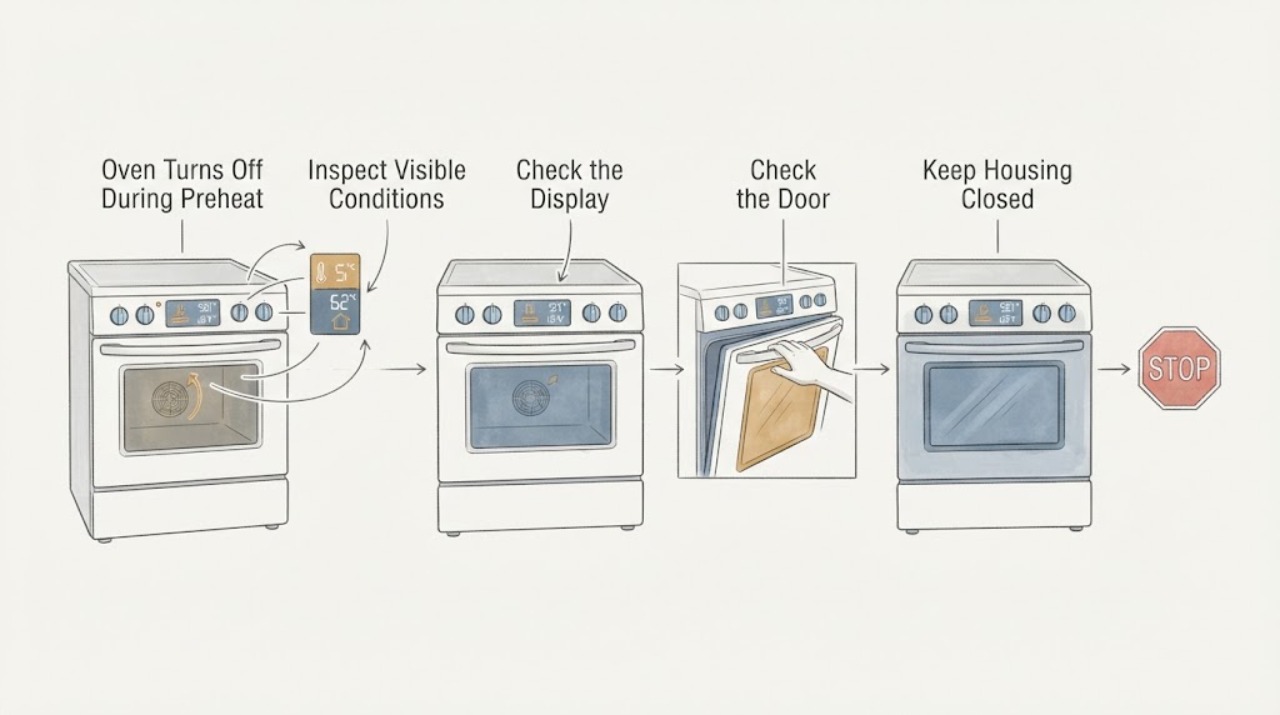
Fisher & Paykel OR36SDBGX1 Oven Turns Off During Preheat: Safe Checks
If a Fisher & Paykel OR36SDBGX1 oven repeatedly stops heating or the display resets during preheat, do not keep toggling it or repeatedly reset the breaker. From outside the appliance, record whether the display or controls remain on, whether the fan continues, whether heat returns only after selecting the controls again, and whether the problem happens only before the oven reaches temperature.
-
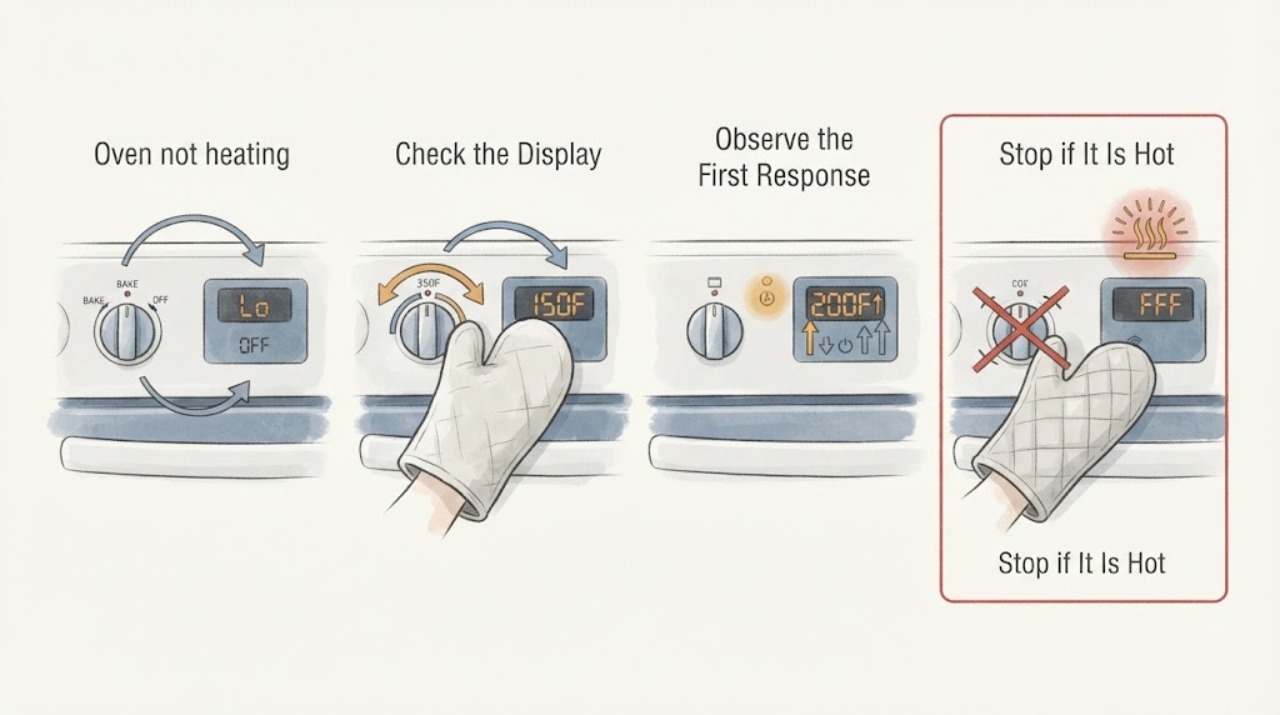
Fisher & Paykel WODV30 SS US Preheat: Read the Halo and Temperature Display
For a Fisher & Paykel WODV30 SS US oven that seems not to heat during preheat, first select the intended oven function and temperature and read the indicators instead of judging heat by opening the door. The official WODV30 quick-start guide shows the function halo glowing orange when a function is selected, the temperature halo glowing white while the oven heats, and the temperature display showing actual and set temperatures.
-
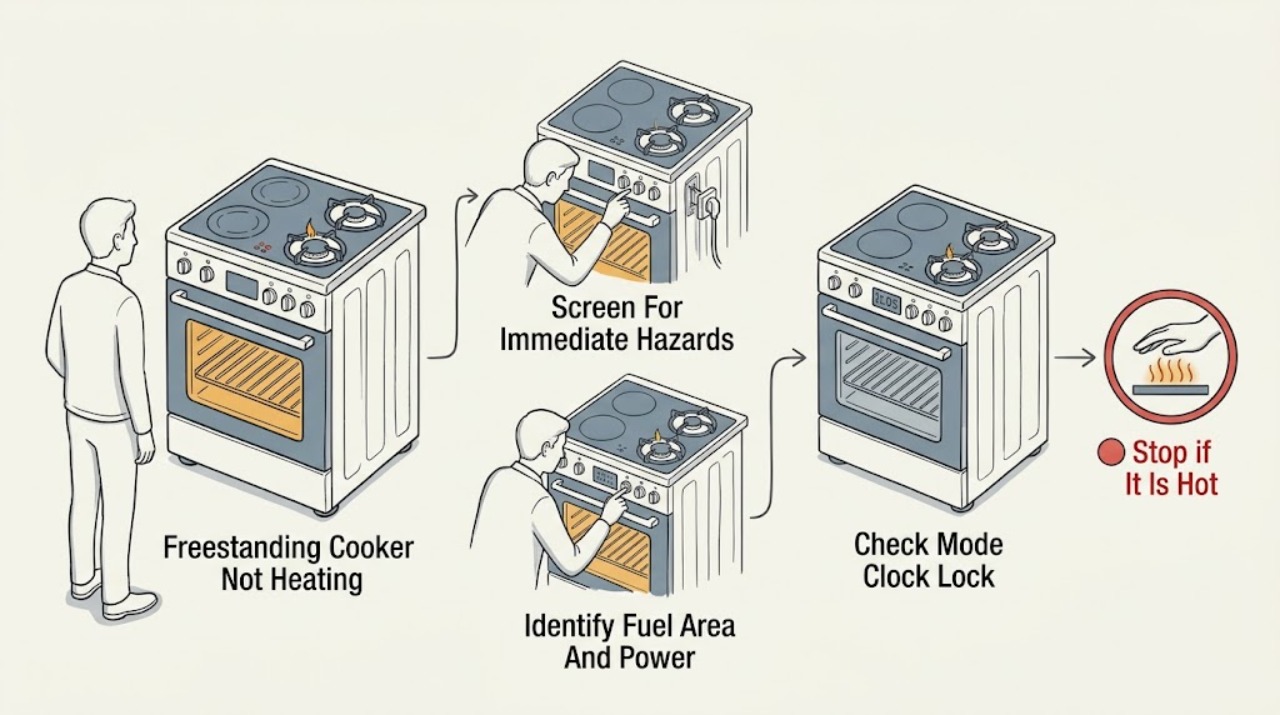
Freestanding Cooker Not Heating: Separate Power, Settings, Fuel, and Heating Faults
A freestanding cooker that is not heating needs to be split by fuel type and by area: the oven, a gas burner, an electric hob, or an induction zone. First record whether the display and other zones have power, then confirm the correct mode, temperature, clock, lock, demo mode, and delayed-start state.
-
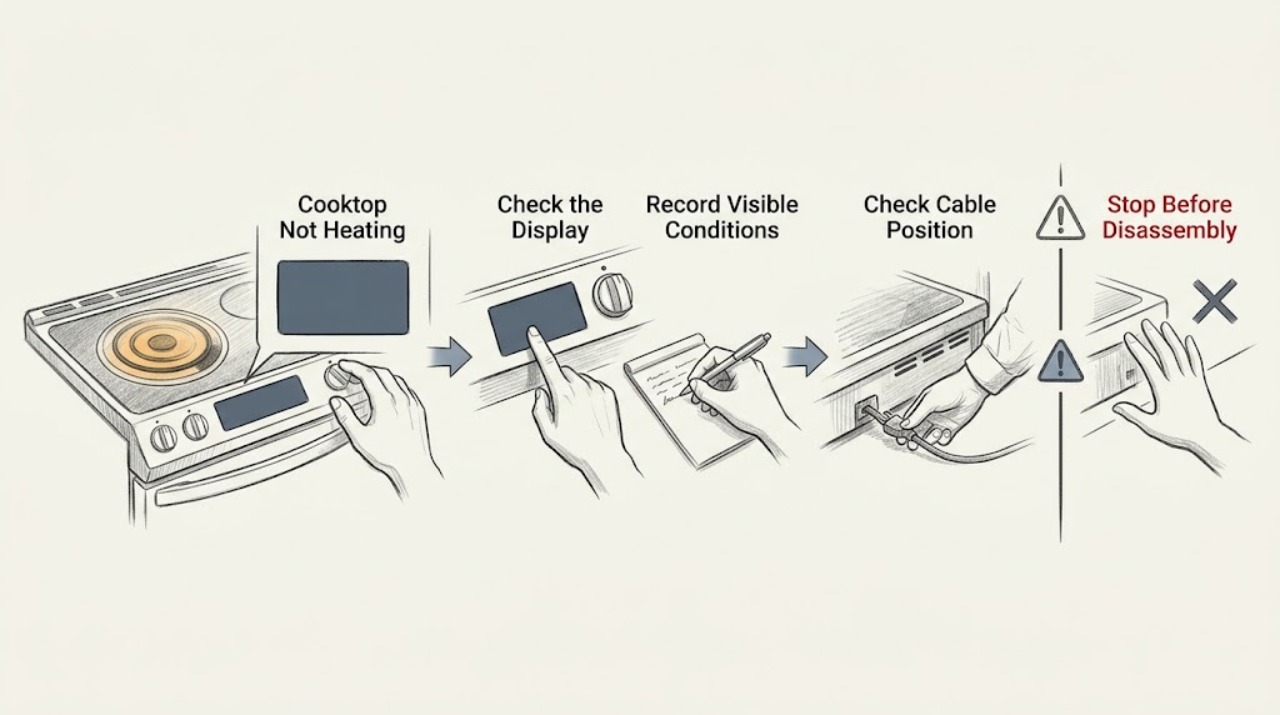
Frigidaire Cooktop Not Heating: Check Power, Controls, Cookware, and Burners
First determine whether the Frigidaire cooktop is gas, radiant electric, or induction, and whether every zone is affected. With the surface cool and no electrical or gas hazard, verify the controls are actually on, the user-accessible power supply has not been interrupted, and the cookware matches the surface.
-
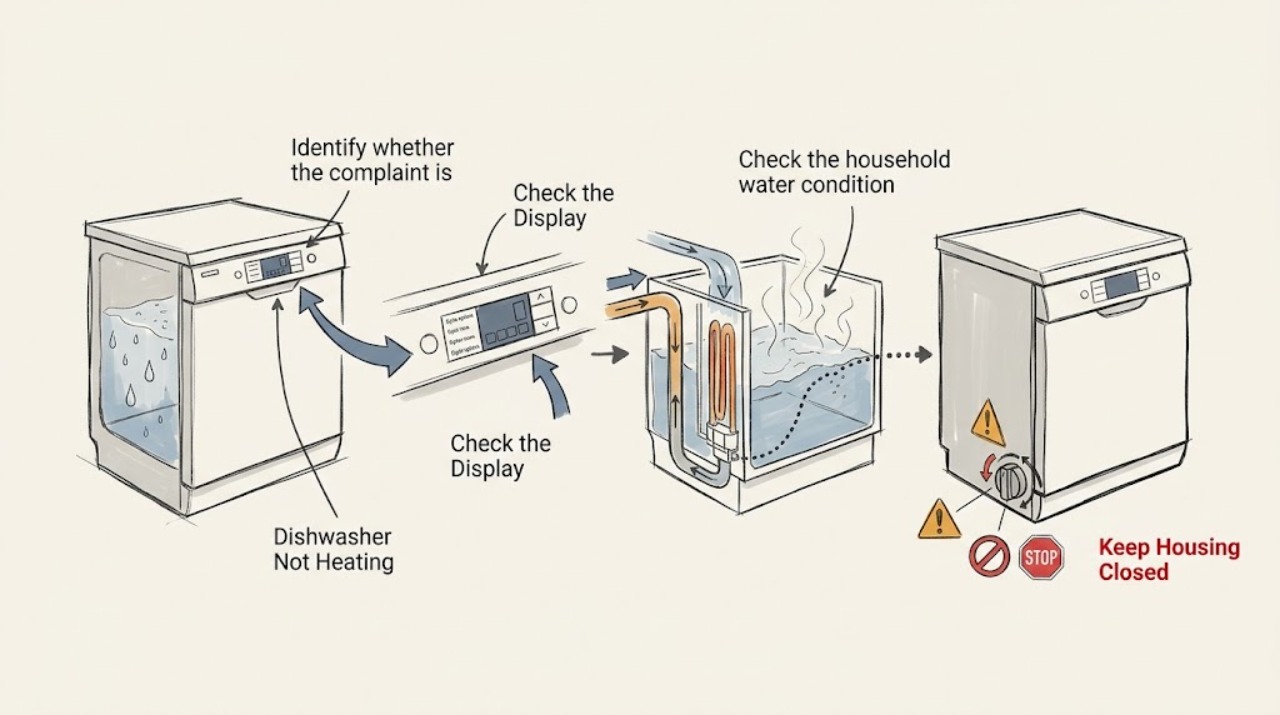
Frigidaire Dishwasher Not Heating
First separate a cold wash from poor drying: a Quick Wash or Air Dry cycle, plastics and concave items, or an empty rinse-aid dispenser can leave dishes wet without proving the wash water stayed cold. Check the selected program and Heat Dry option, refill rinse aid if your model uses it, and confirm the household water starts hot; Frigidaire recommends a water-heater setting of at least 120°F and says hot water at the sink can improve results.
-
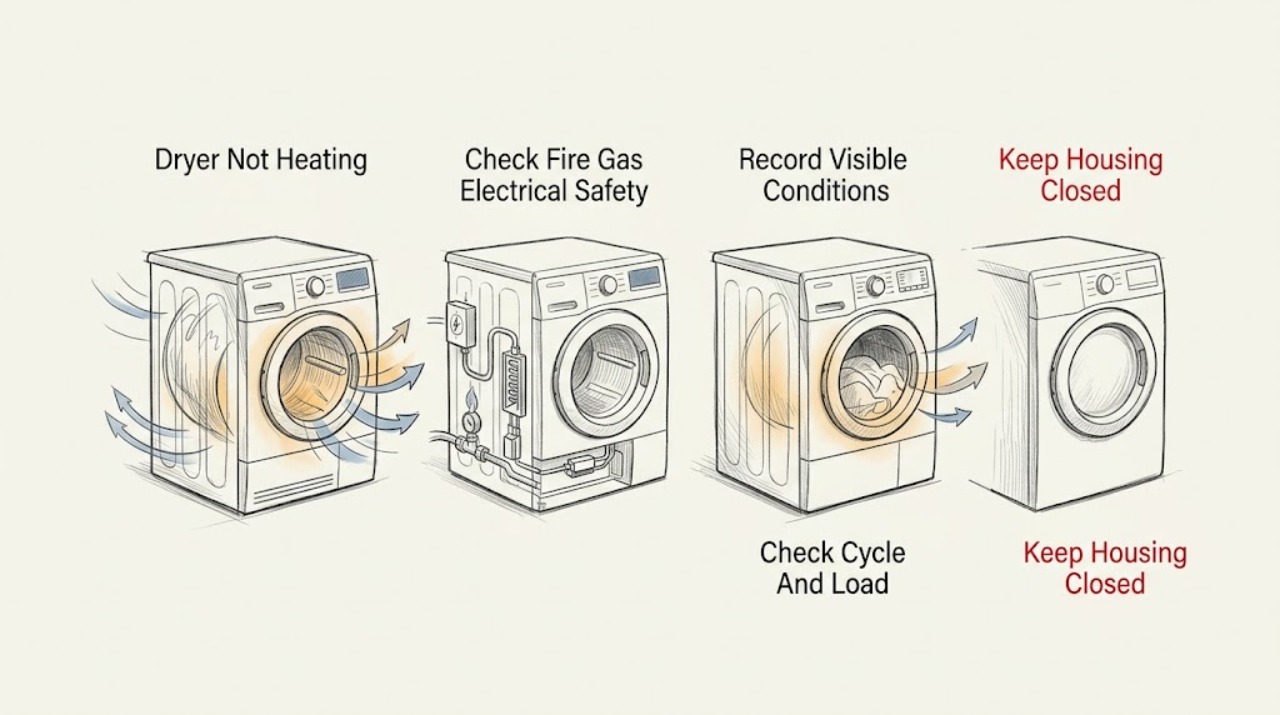
Frigidaire Dryer Not Heating
First determine whether the Frigidaire dryer is electric or gas and whether the drum runs but stays cold, heats weakly, or never starts. Stop for gas odor, smoke, sparks, scorching, a hot or damaged cord or receptacle, a blocked or damaged lint filter, or an exhaust that overheats.
-
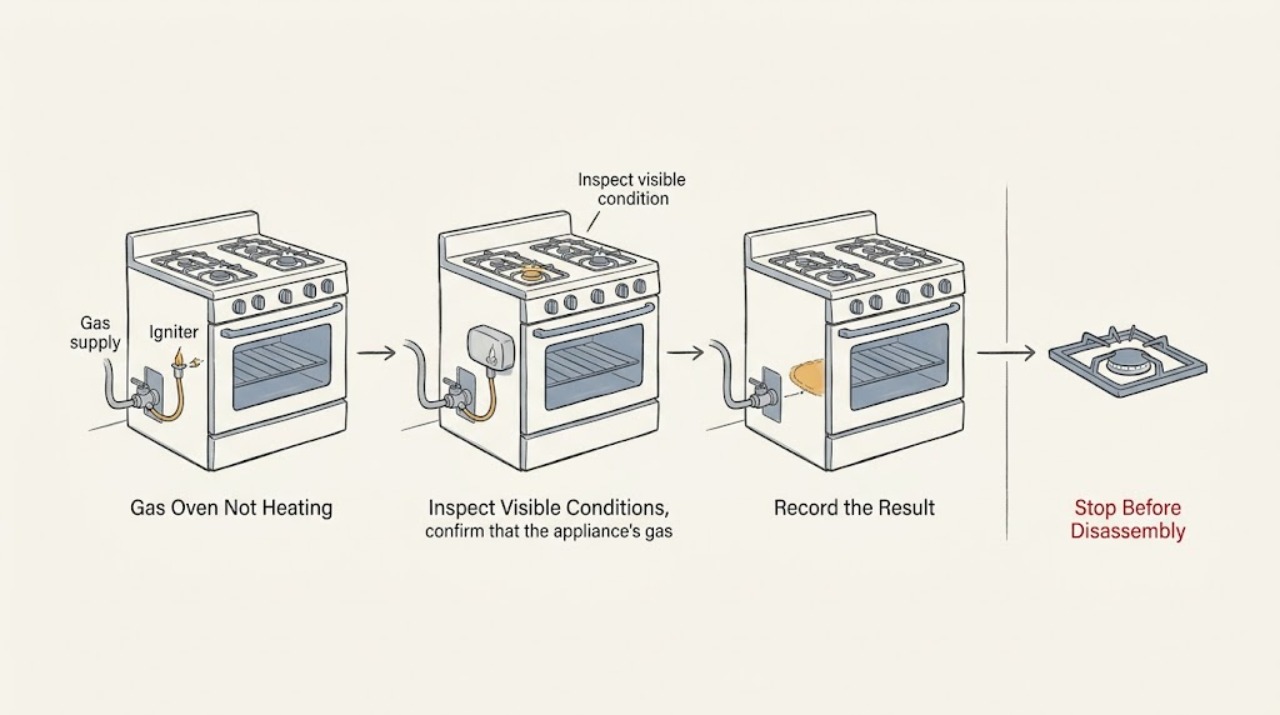
Frigidaire Gas Oven Not Heating
If a Frigidaire gas oven is not heating, first confirm that Bake is selected correctly, the oven has completed its model-specific preheat sequence, and the display shows no lock or error condition. Observe the bake burner only through the normal viewing area if the model permits it: a brief ignition and a stable heating cycle point away from a simple setting issue, while no ignition, repeated clicking, or a flame that never develops needs service-oriented diagnosis.
-
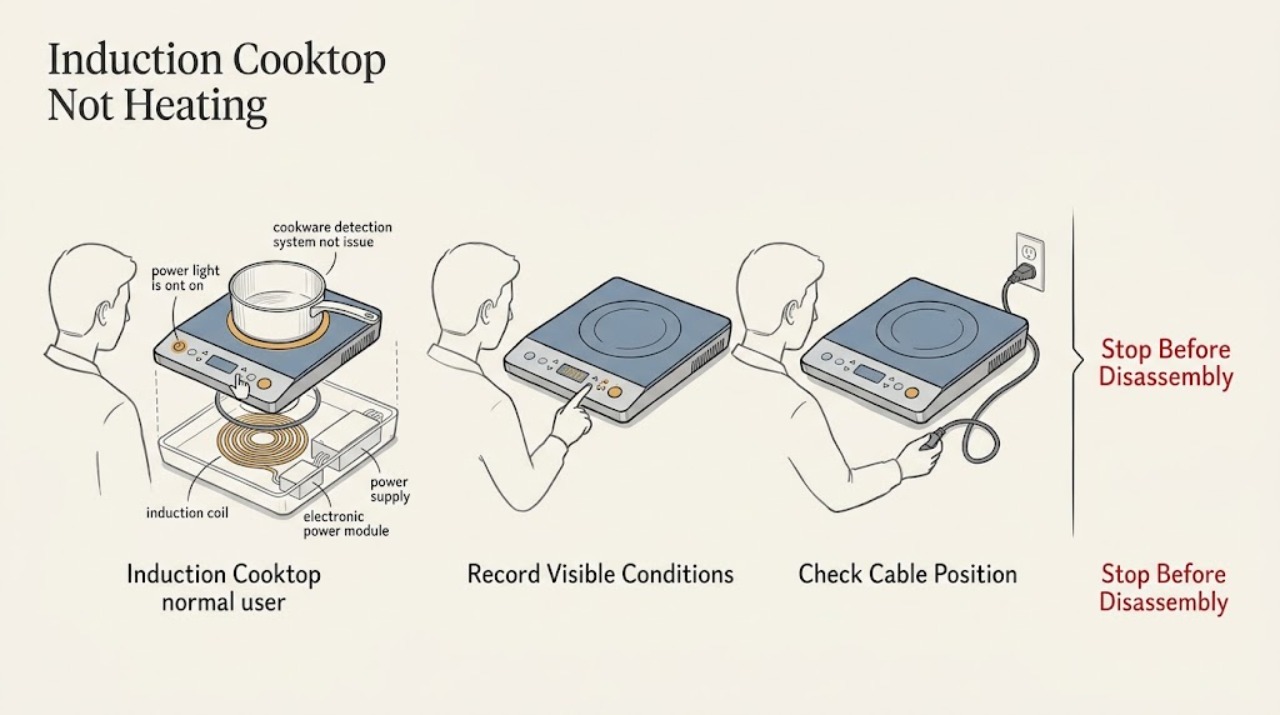
Frigidaire Induction Cooktop Not Heating: Check Cookware, Controls, and Power
An induction cooktop heats the pan rather than the glass, so first use cookware the exact Frigidaire manual approves and check that the pan base is magnetic, flat, and positioned correctly on the zone. Then check for a lock indication, moisture on the controls, and a user-accessible power interruption.
-
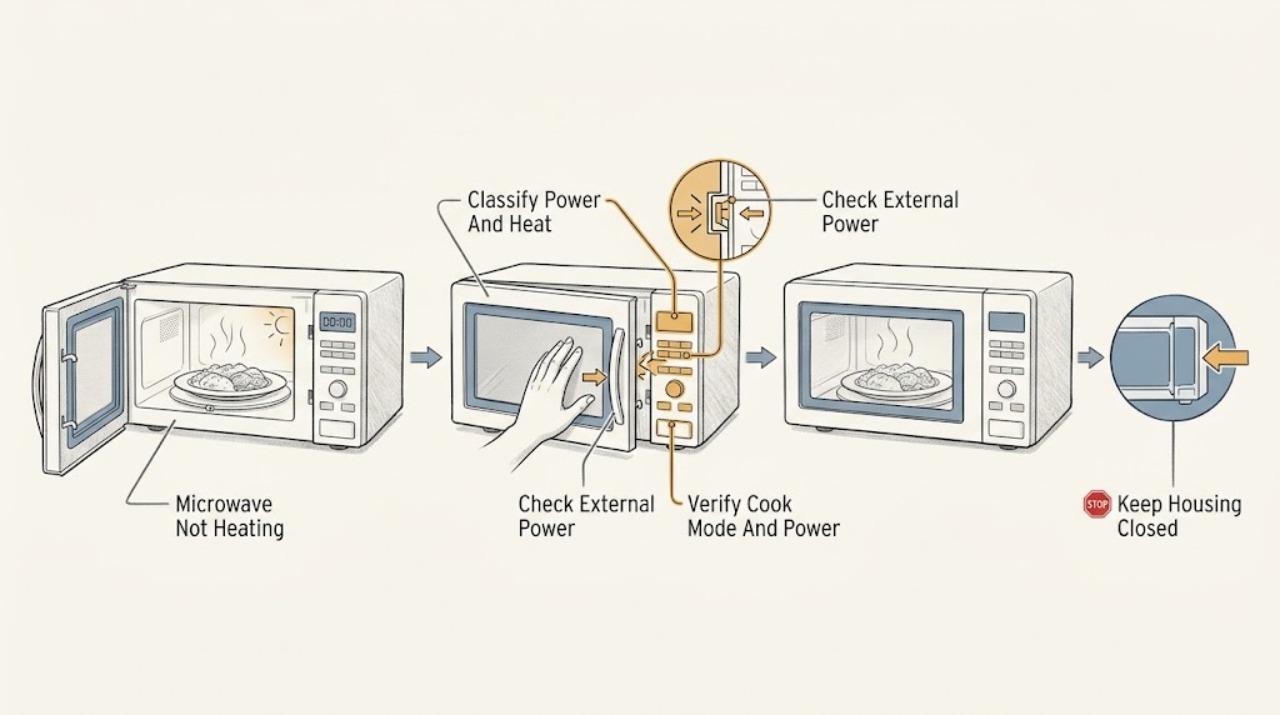
Frigidaire Microwave Not Heating: Check Settings, Demo Mode, Door, and Power
First separate a microwave that is completely dead from one that runs but leaves food cold. If the display and cavity light are dark, check the breaker and the correctly grounded supply from outside the appliance; Frigidaire says a recent surge can trip the breaker and that a microwave should use a dedicated non-GFI circuit.
-
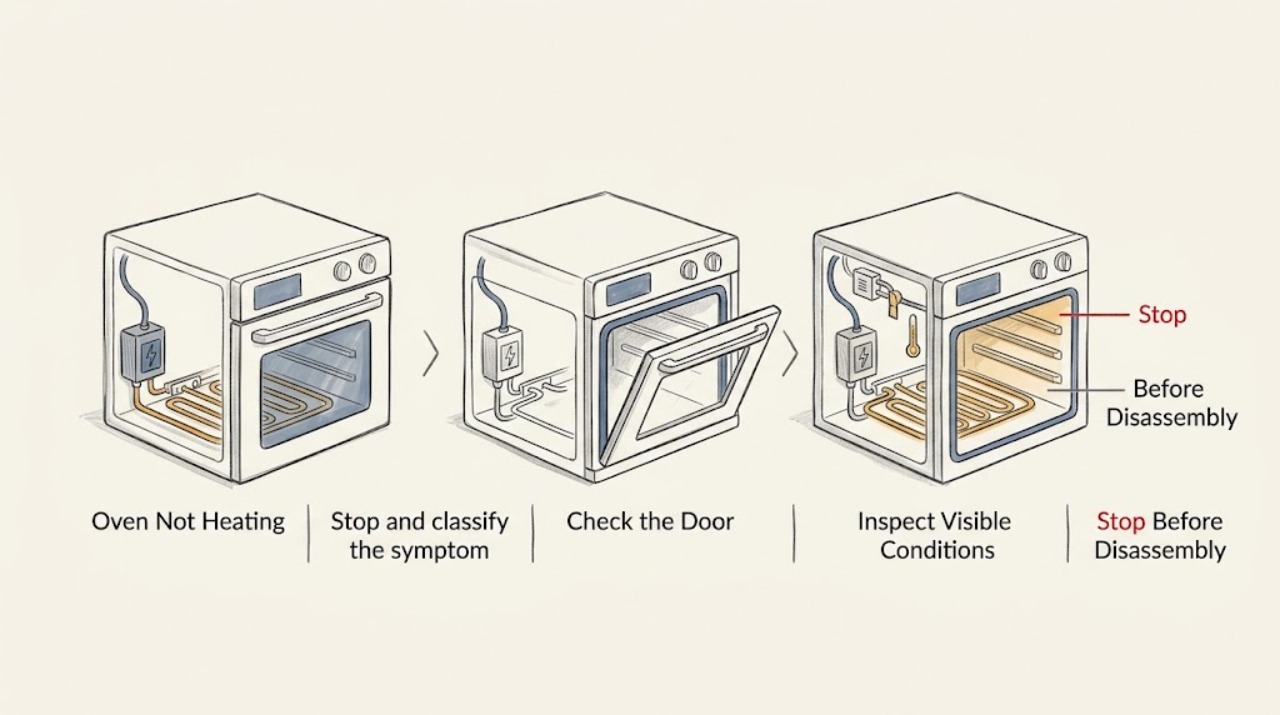
Frigidaire Oven Not Heating: Safe Preheat, Power, Door, and Ignition Checks
First separate an oven that produces no heat from one that is merely slow or runs cool. With the cavity empty and the door closed, select the model's normal Bake mode, start a full preheat, and confirm that the controls and indicator respond.
-
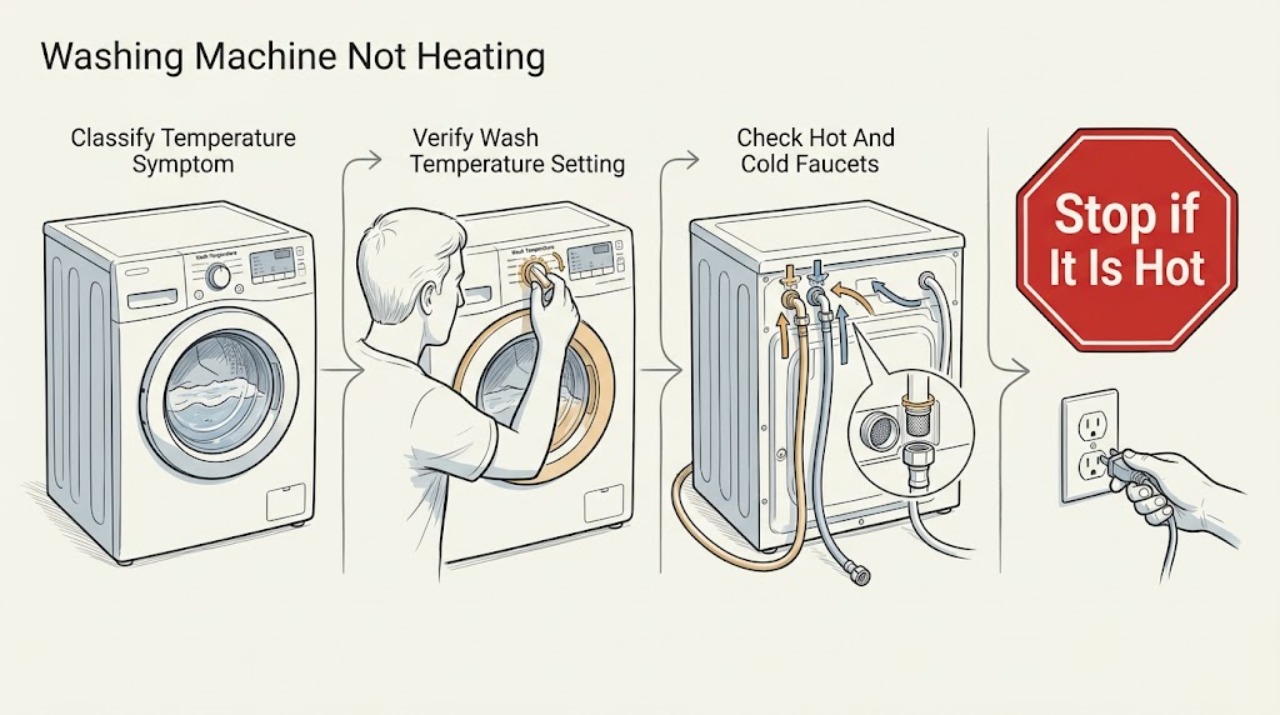
Frigidaire Washing Machine Not Heating: check the wash temperature and hot-water supply
A Frigidaire washing machine that does not seem to heat may be receiving cooler water by design, using a cycle or temperature option that does not call for hot water, or failing to receive the hot supply. First identify whether the washer fills normally but the wash water is cooler than expected, then check the selected Wash Temp and exact model instructions.
-
Furnace air filter not heating: What to Check and What to Do Next
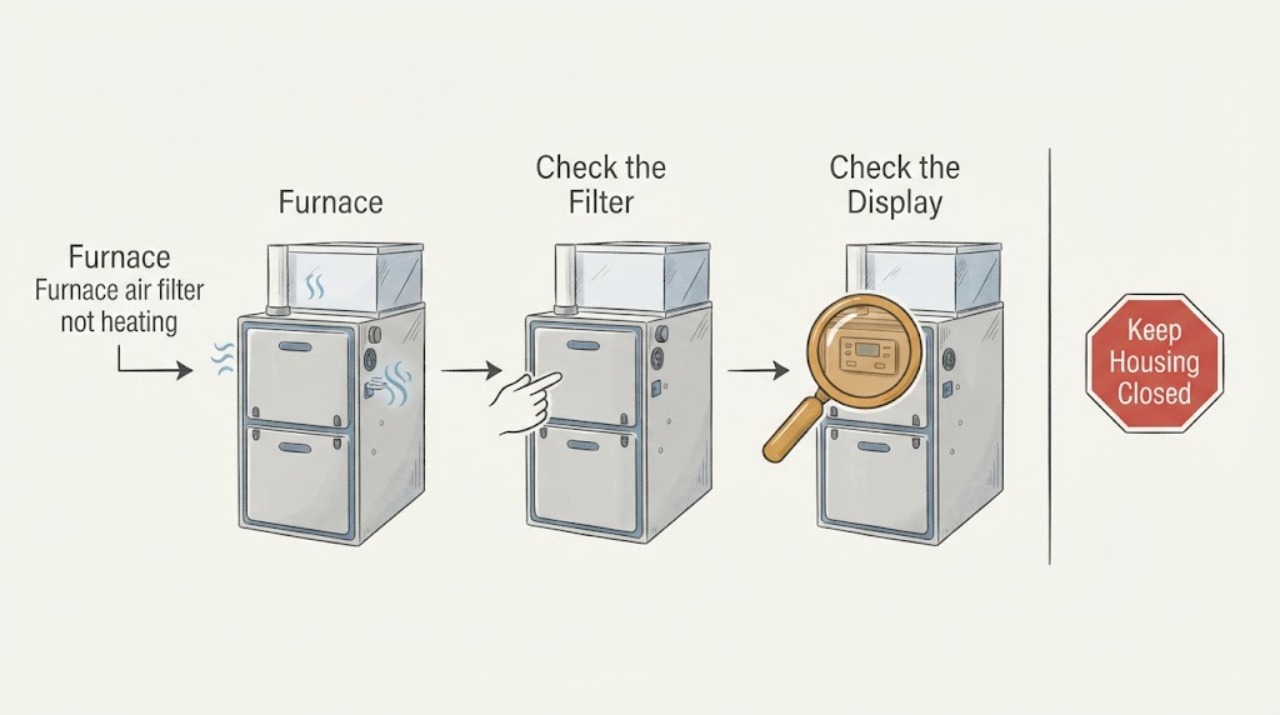
A furnace filter does not create heat; a dirty, wrong-size, backward, or poorly seated filter can reduce airflow and make the system run poorly or shut down, while no heat can also come from thermostat, power, ignition, flame-sensing, fuel, or limit faults. With the furnace off and cool, check the filter's condition, airflow arrow, fit, and accessible return path, then verify the thermostat and one normal power reset if the manual allows it.
-
Furnace igniter not heating: What to Check and What to Do Next
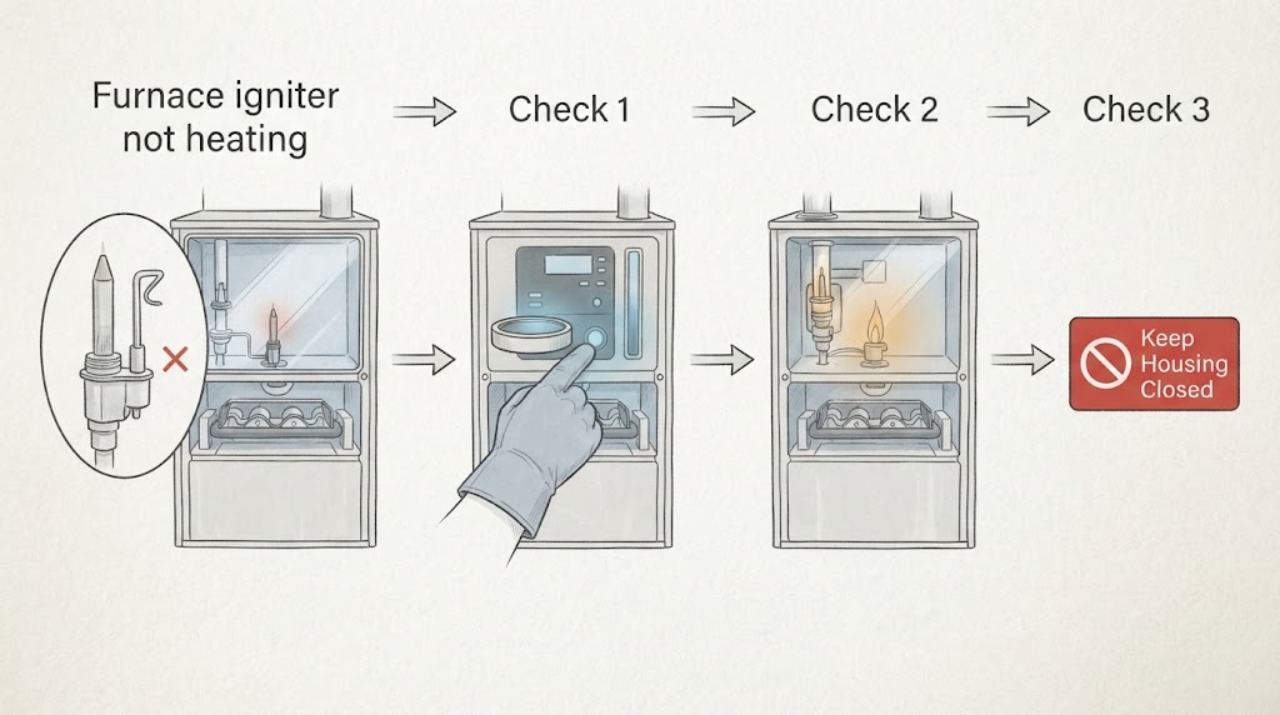
If a furnace igniter is not heating, do not remove the access panel or test the igniter with a meter. First confirm that the thermostat is calling for heat, the furnace has normal power, the filter and registers are not obviously blocked, and any diagnostic light or sight window can be read without opening the cabinet.
-
Furnace not heating thermostat calls for heat: What to Check and What to Do Next
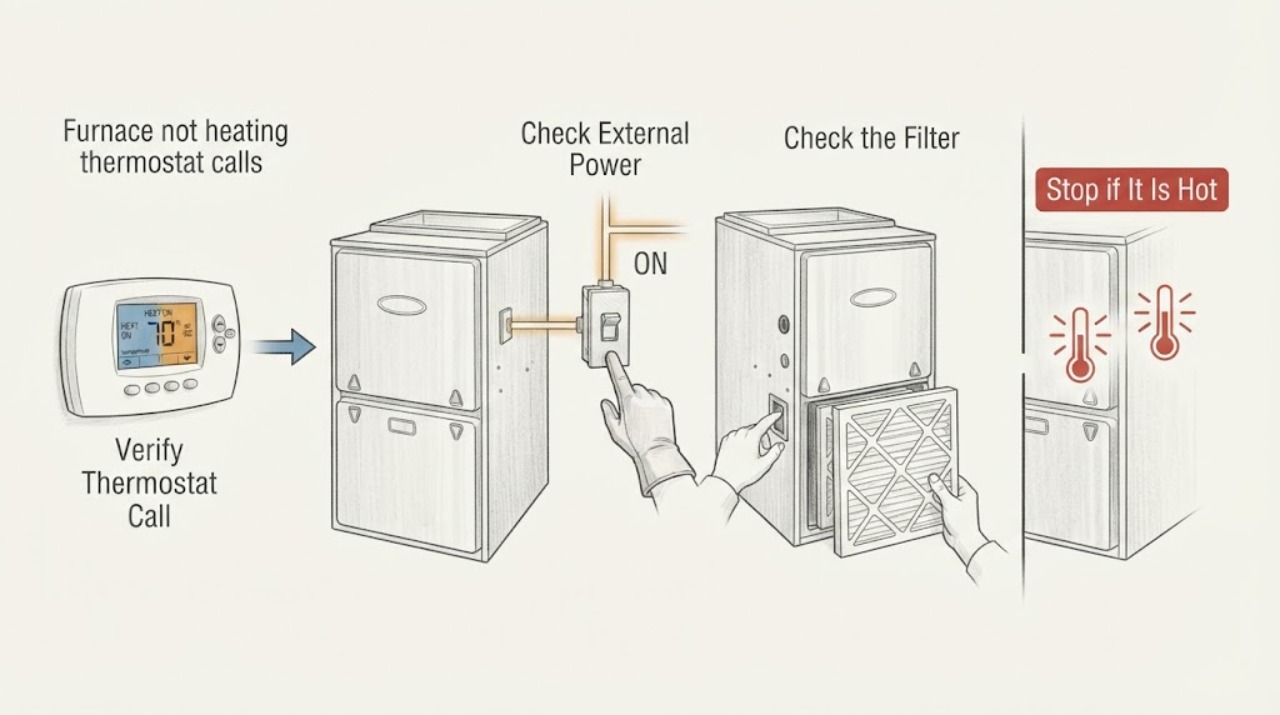
If the thermostat is calling for heat but the furnace is not heating, first confirm the display, Heat mode, setpoint, and fan setting, then check only the accessible furnace switch, breaker, filter, and open supply and return vents. A furnace can receive the call yet fail because of lost power, restricted airflow, a limit or condensate safety shutdown, fuel or ignition trouble, a blower fault, or a control problem.
-
Furnace Not Heating When Burner Ignition May Fail: What to Check and What to Do Next
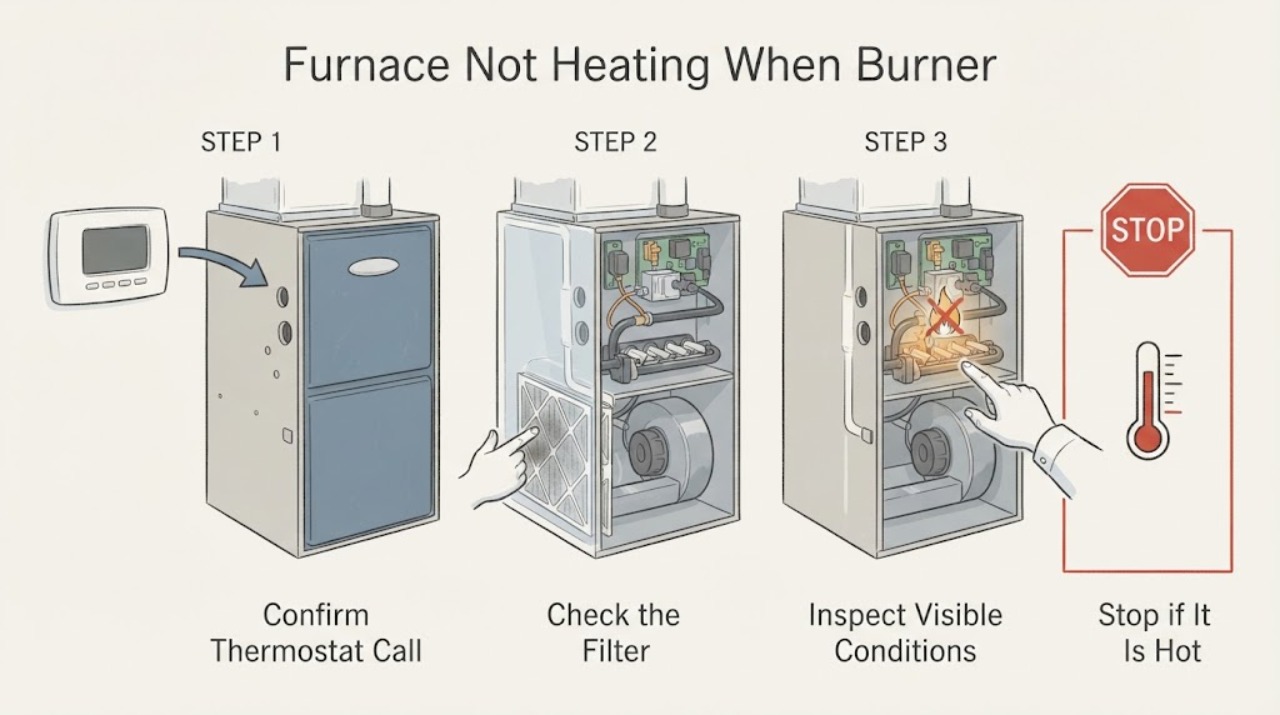
When a gas furnace is not heating and the burner may not be igniting, first confirm the thermostat is calling for heat, the furnace switch has power, and the filter is not visibly blocked. If the furnace has a safe viewing window, note whether the inducer or blower starts, ignition clicks or glows, a burner flame appears, and the flame stays on; do not remove access panels or touch the igniter, flame sensor, burner, gas valve, or wiring.