
Repair problem
Not Heating Troubleshooting Guides – Page 3
Published FixGraph guidance for diagnosing and responding to not heating.
Matching published guides
Choose a guide that matches the service, equipment, and conditions you are seeing.
-
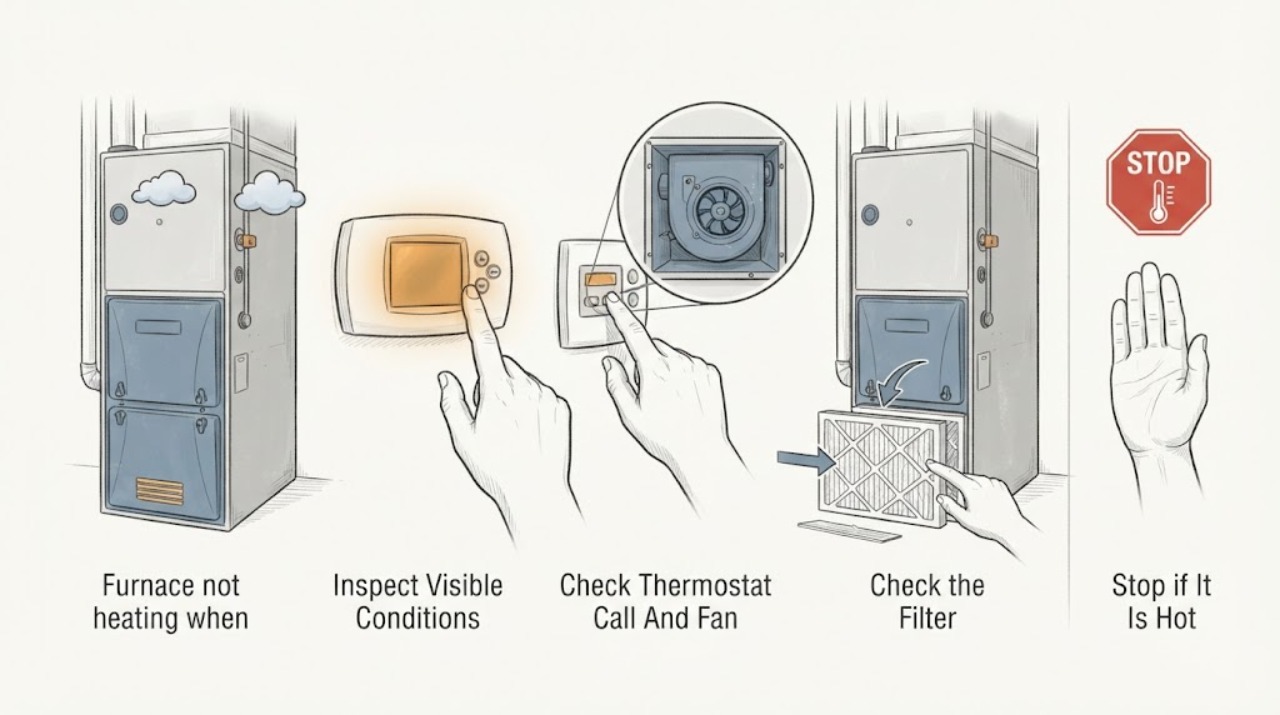
Furnace not heating when the blower runs or is silent: What to Check and What to Do Next
First separate a blower-only problem from a furnace-that-is-not-producing-heat problem. If the blower runs but the air is cold, the thermostat may be set to Fan On, the burner or igniter may not be operating, a dirty filter may have triggered a safety limit, or a fuel, condensate, control, or flame-sensing fault may have stopped heat production.
-
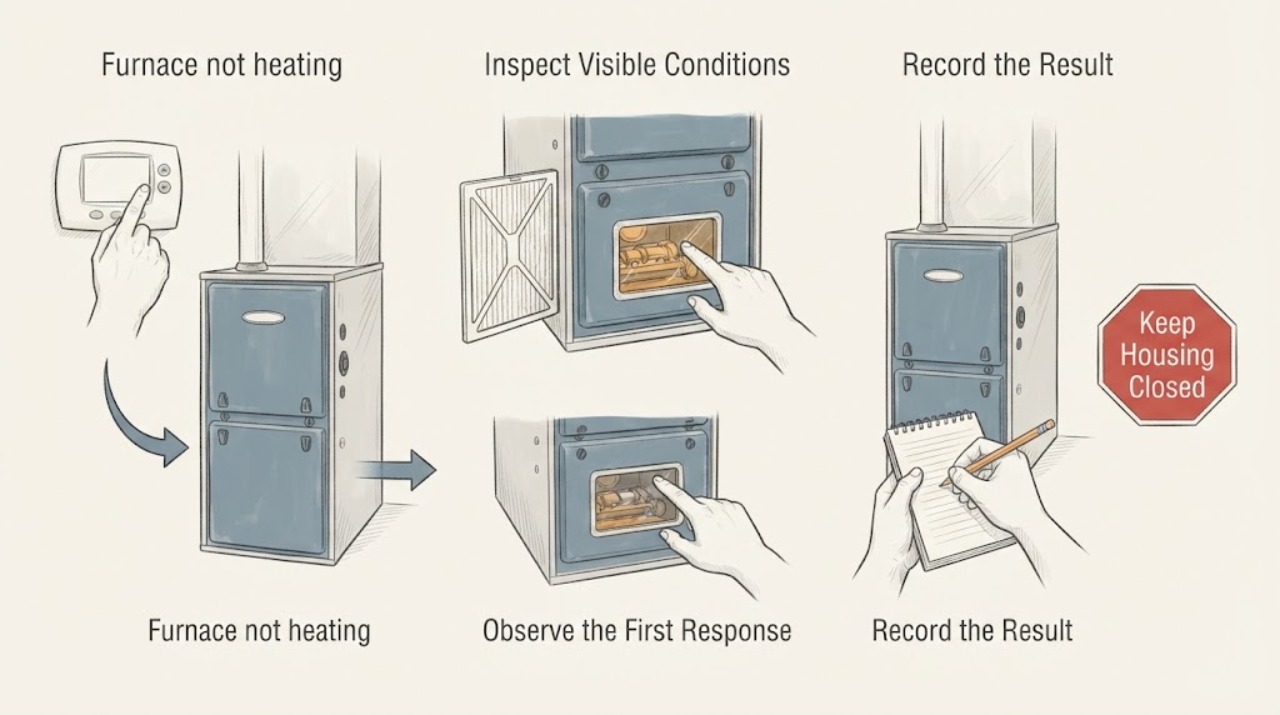
Furnace not heating: What to Check and What to Do Next
If a furnace is not heating, first check only the thermostat display and mode, room registers and return airflow, and any filter indicator or filter that is accessible without opening the furnace cabinet. Record whether the blower runs, whether warm air ever appears, and any visible diagnostic light pattern without repeatedly resetting or cycling the unit.
-
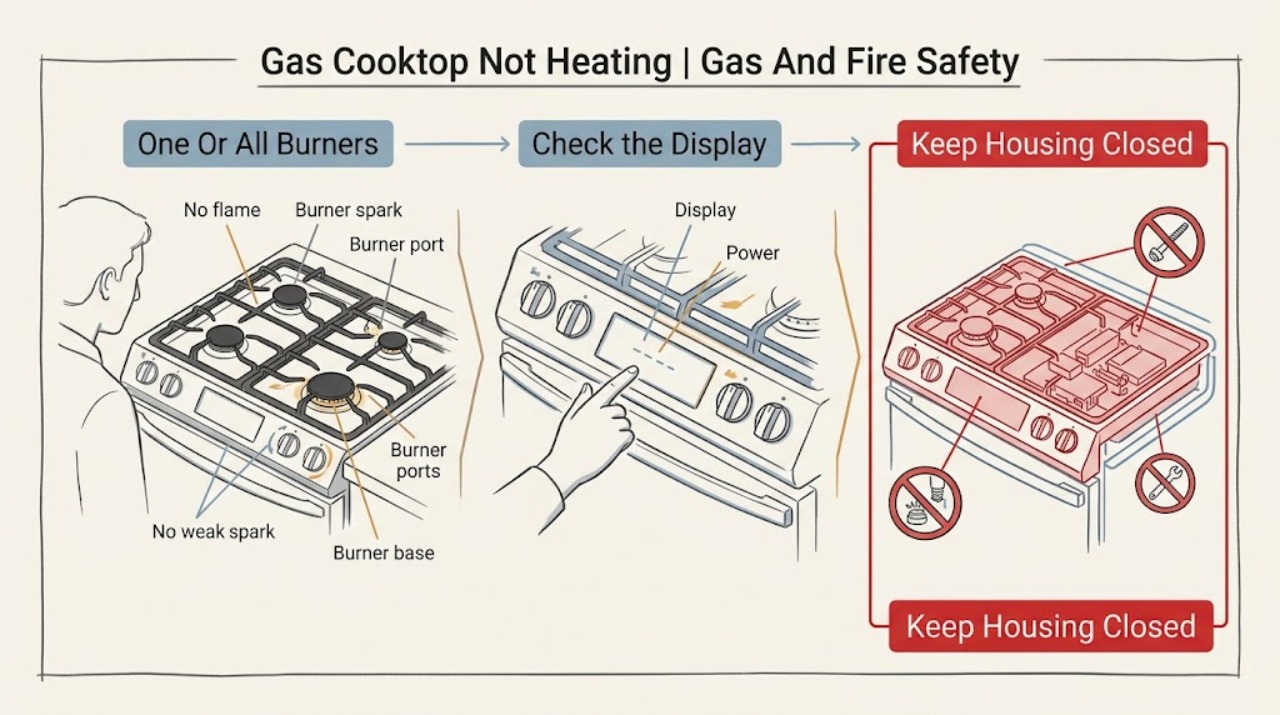
Gas Cooktop Not Heating
A gas cooktop that is not heating usually has no usable flame, a weak or uneven flame, a blocked or wet burner, a mis-seated cap, a control/ignition issue, or an interrupted gas supply. First turn the control off and check for gas odor, hissing, smoke, burning smell, abnormal flame, or a burner that will not shut off.
-
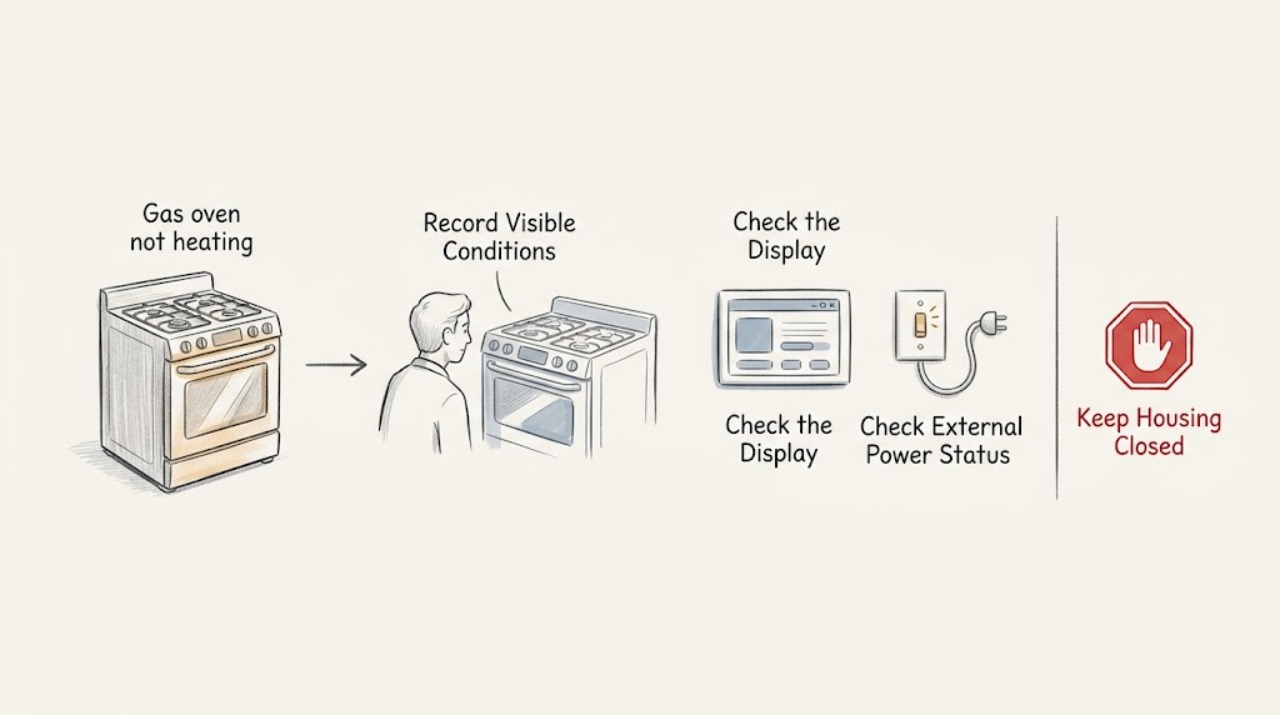
Gas oven not heating: check the controls and ignition safely
A gas oven that is not heating may be in the wrong mode, waiting for preheat, without electrical power, without gas supply, or unable to complete its ignition sequence. First record the model, display or error, selected mode, and whether the oven is cold, warming slowly, or heating unevenly.
-
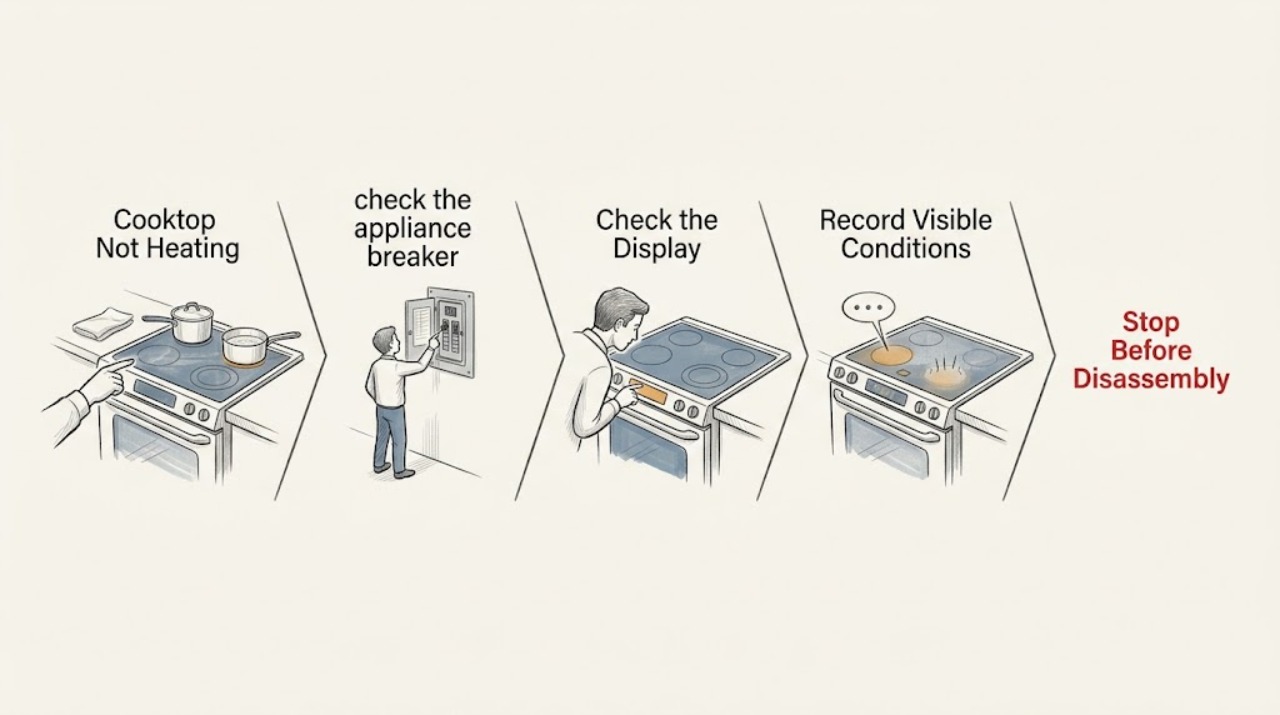
GE Cooktop Not Heating: Check the Burner, Pan, and Power Path
For a GE cooktop that is not heating, first determine whether one surface unit, the warming zone, or every unit is affected. With the controls off and the surface cool, verify the correct control, power supply, burner or module seating, and a flat smooth pan; a warming zone may not glow red even when it is operating. If a correctly selected unit stays cold, a breaker trips again, or built-in wiring needs inspection, stop and arrange qualified appliance service.
-
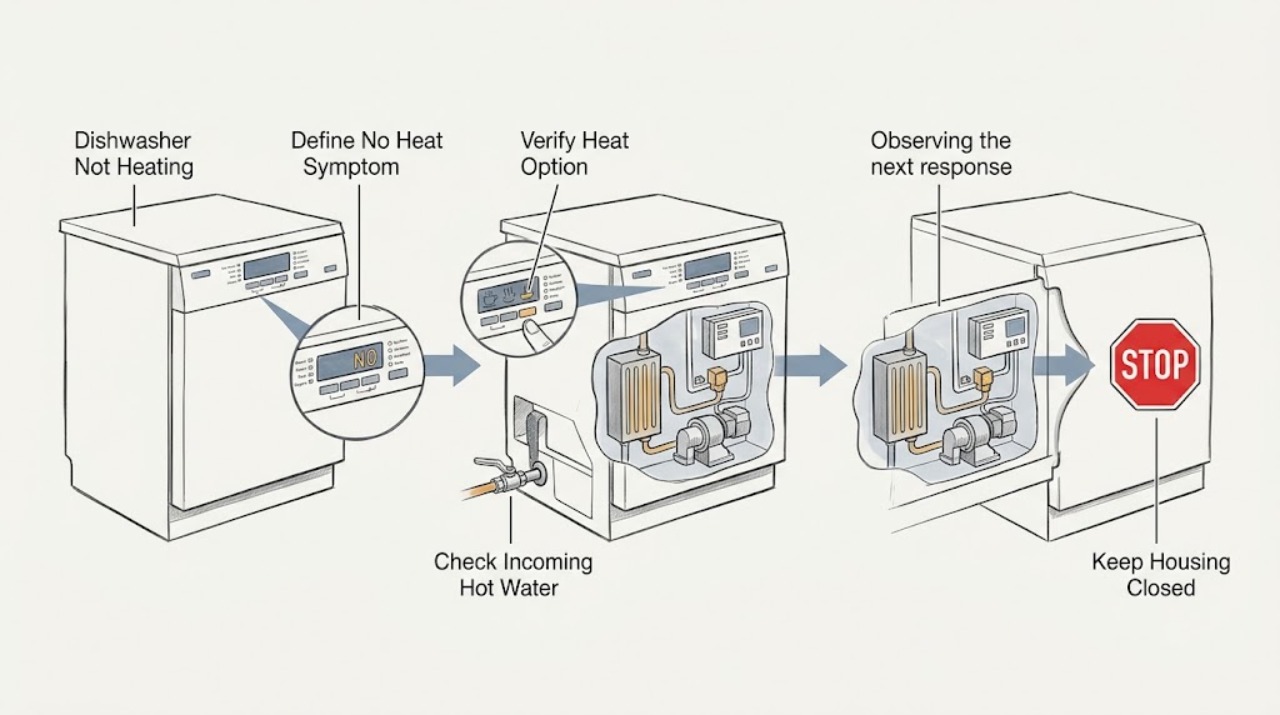
GE Dishwasher Not Heating: Check Cycle Settings, Incoming Water, and Heater Type
First decide whether the GE dishwasher truly fails to heat or is simply using a no-heat drying option. GE says natural-convection drying is expected when Heated Dry is not selected, and model options differ.
-
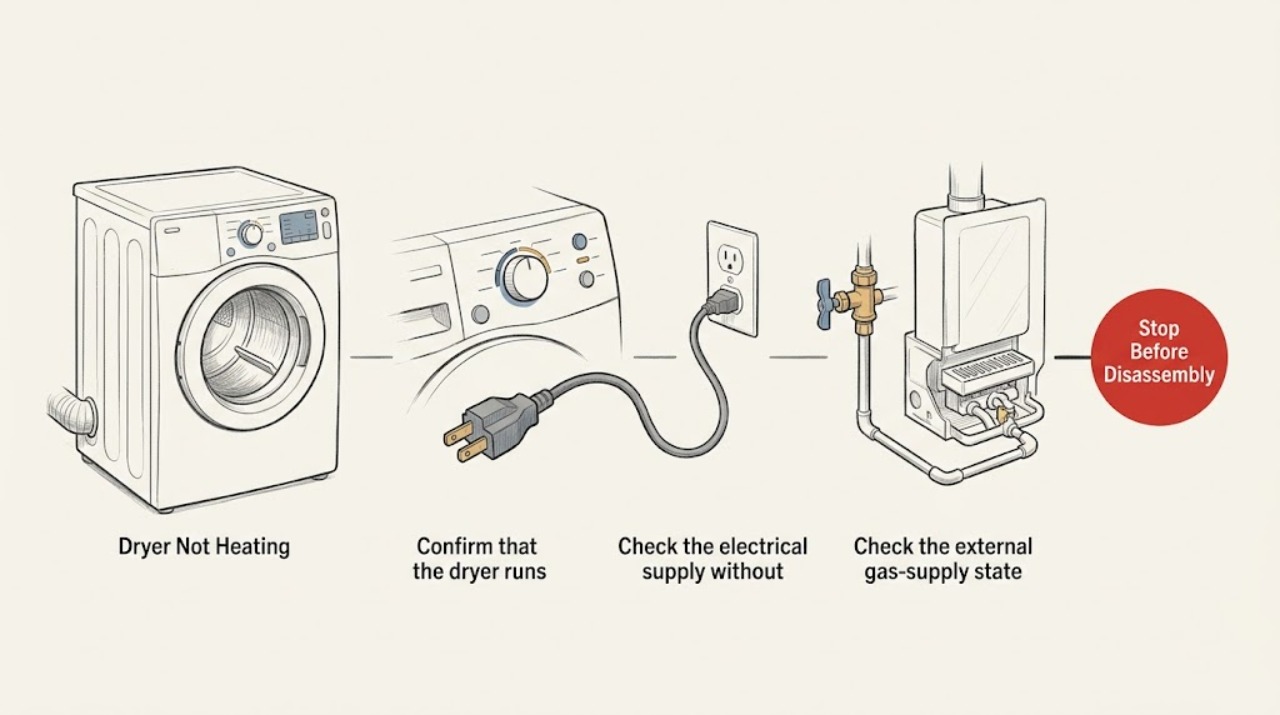
GE Dryer Not Heating: Check Cycle, Power, Gas, and Venting Safely
First confirm that the cycle is a heated dry cycle rather than Air Fluff or Cool Down, and that the dryer is actually running. Check the accessible outlet and breaker or fuse state; an electric dryer can tumble with incomplete power, while a gas dryer also needs a working gas supply.
-
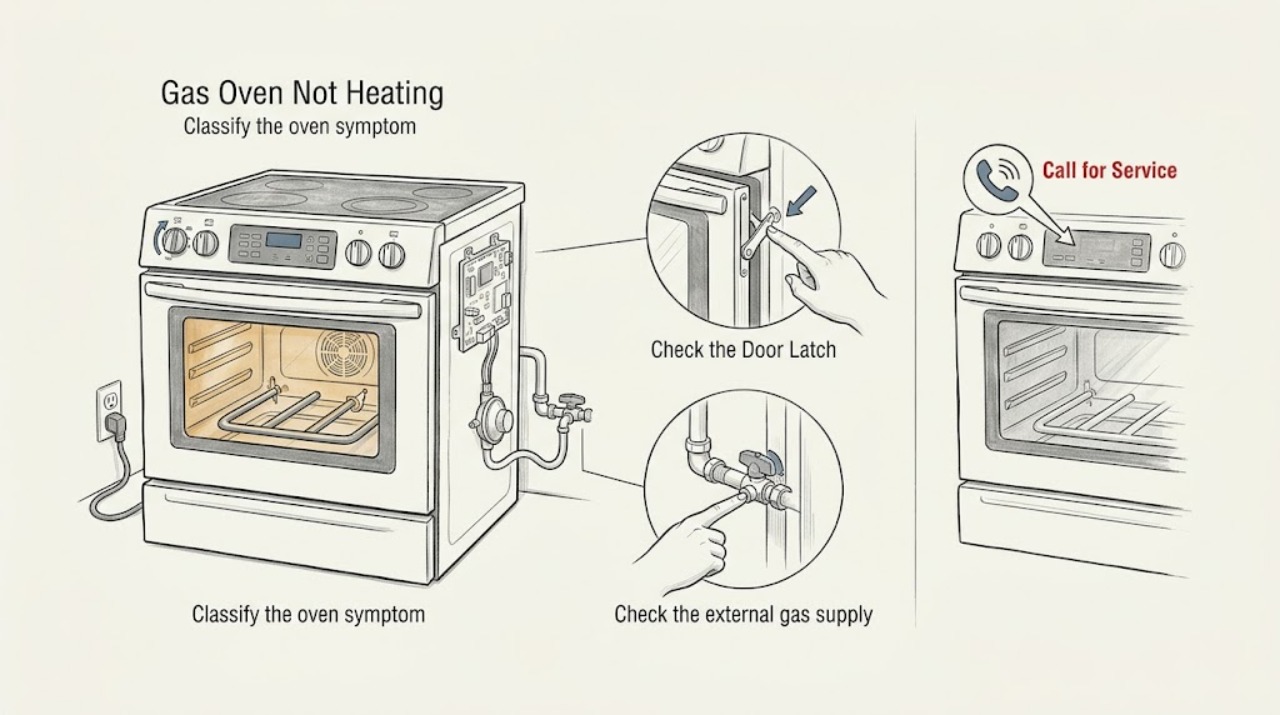
GE Gas Oven Not Heating: Check Settings, Power, Gas Supply, and Ignition Safely
If a GE gas oven is not heating, first confirm that the issue is in the oven rather than the surface burners: GE notes that burners can work while the oven does not. With no gas odor or other hazard, verify the Bake or Broil setting, temperature control, power connection or breaker, and any self-clean latch or model-specific mode.
-
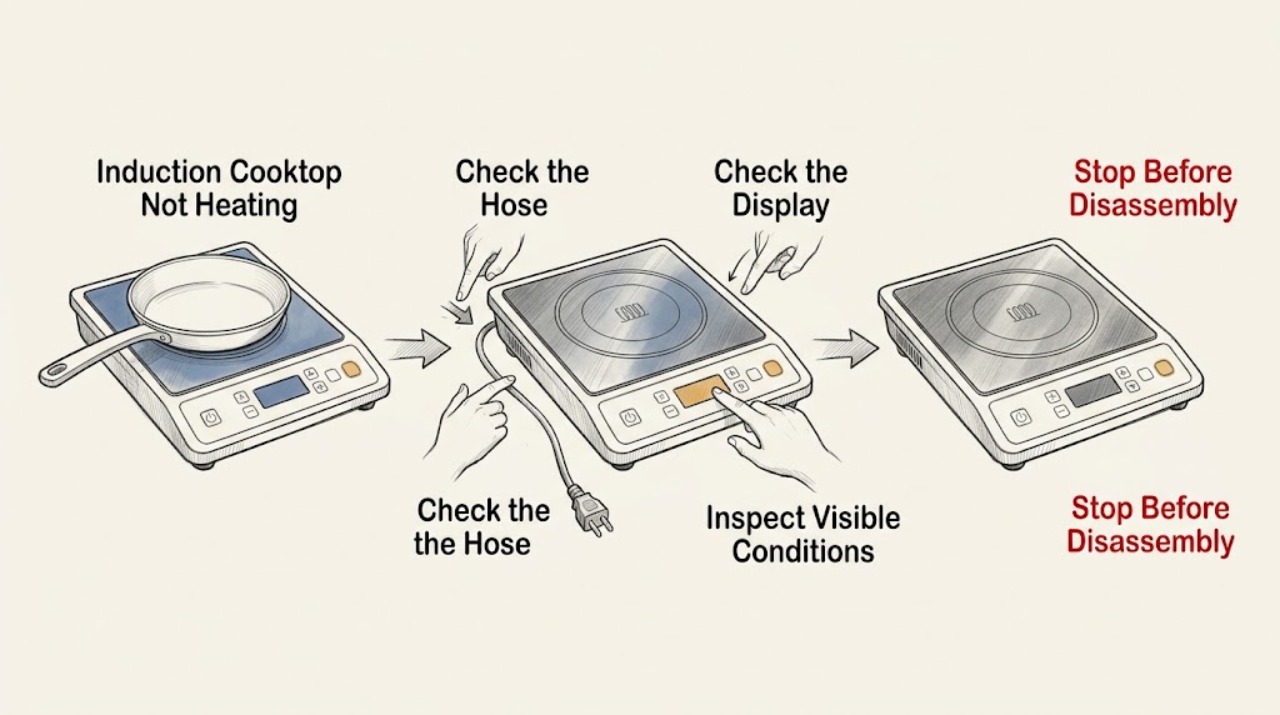
GE Induction Cooktop Not Heating: Check the Pan, Power, and Controls
A GE induction cooktop heats the pan, not the unused glass surface, and it will not activate unless the cookware is magnetic, large enough for that element, centered, and flat against the glass. Check those conditions first, then verify the control was turned on correctly and that the cooktop has power.
-
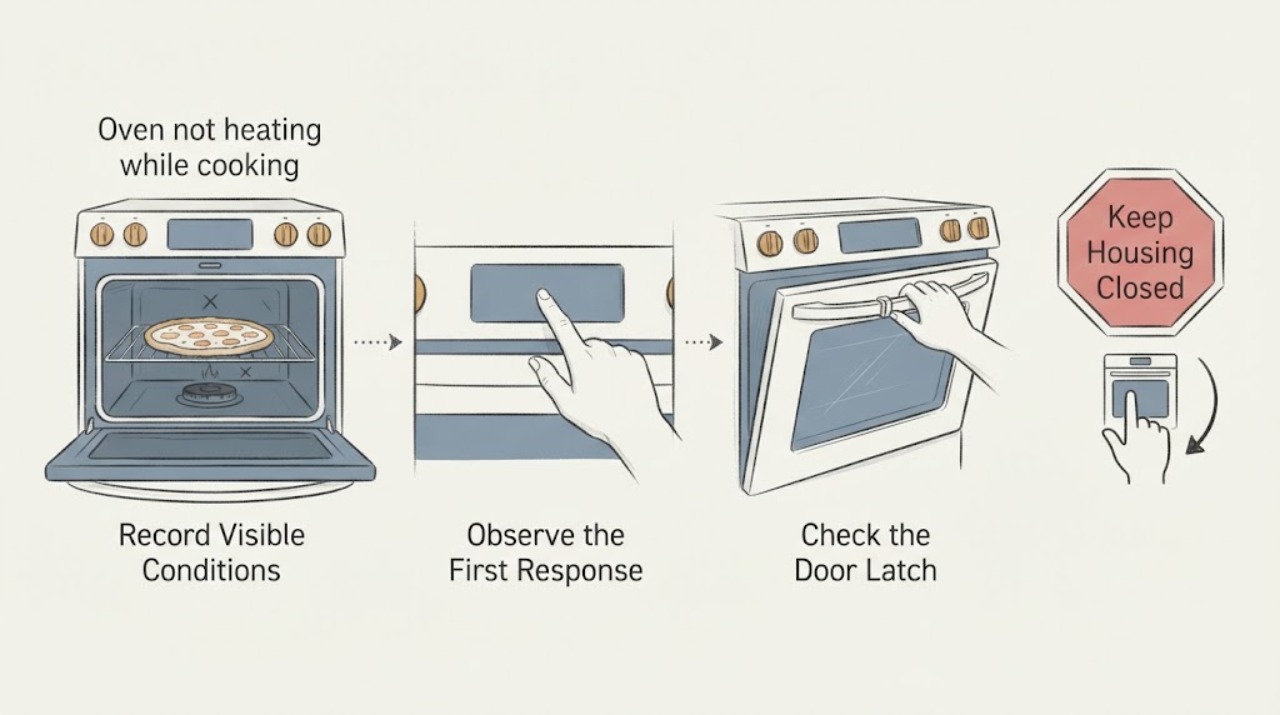
GE JGB905BEF2BB oven not heating while cooking pizza at high temperature
For the GE JGB905BEF2BB, a pizza that stays cold or takes far too long at a high setting is not automatically a failed oven. First separate a cooking/setup issue from an ignition or temperature-control problem: fully preheat before loading the pizza, confirm Bake rather than an unintended mode, keep the rack, pan or stone, and door seal clear, and note whether the oven actually reaches temperature before the problem occurs.
-
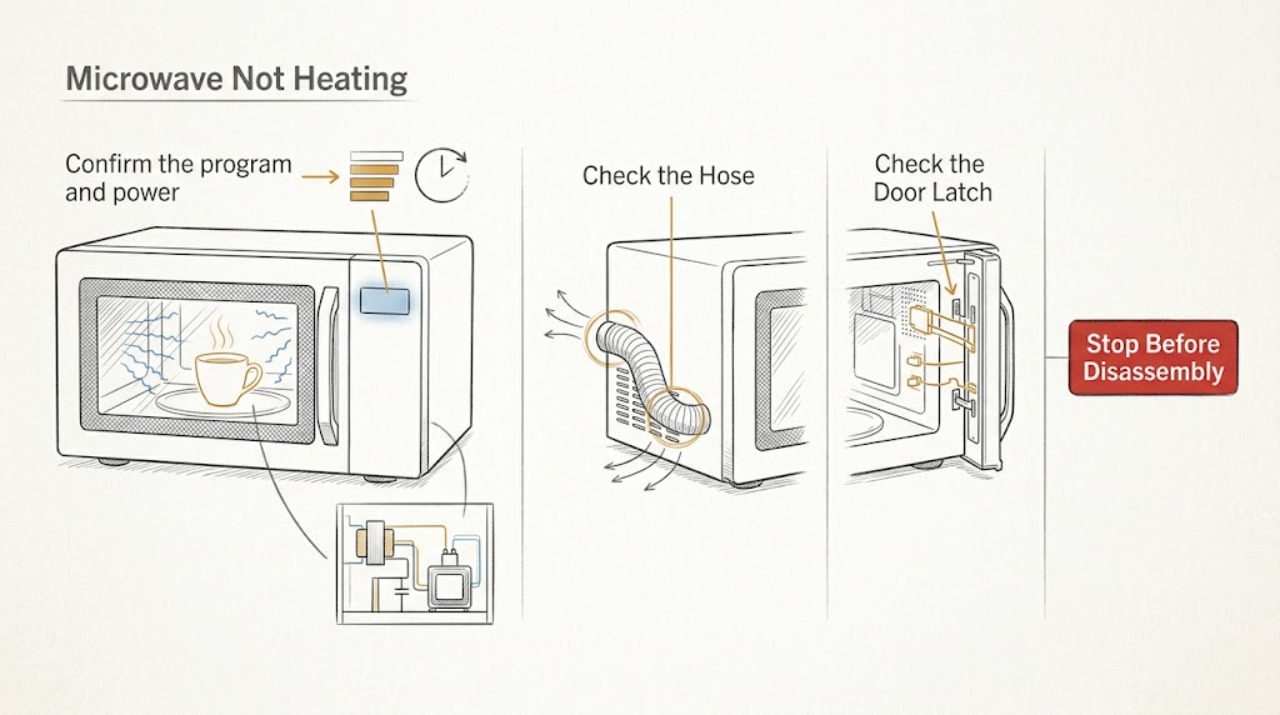
GE Microwave Not Heating
If a GE microwave runs but does not heat, first confirm that you used a cooking function rather than Timer, the door closes firmly, and the selected power level is appropriate. Test with a heat-safe glass bowl of water only if the oven is intact and the model instructions allow it; never put a thermometer inside the cavity and never run the microwave empty.
-
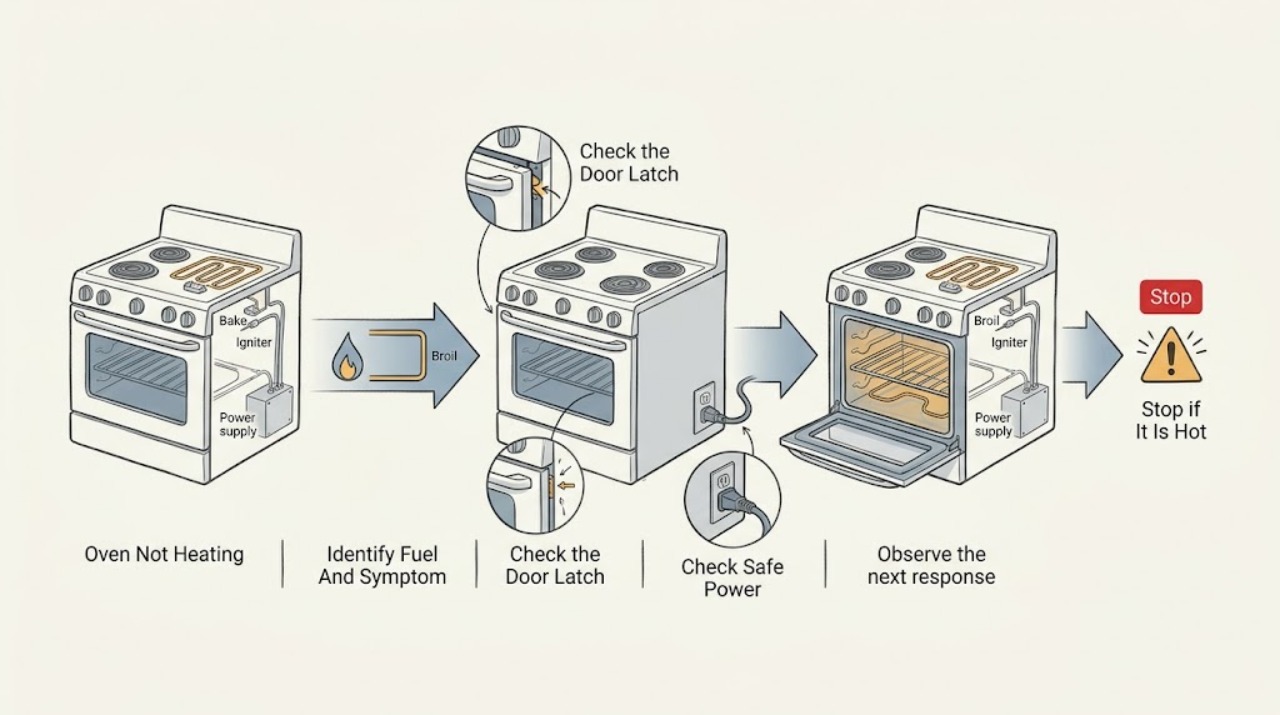
Ge Oven Not Heating
First identify whether this is a GE electric oven or a gas oven, then confirm the selected Bake or Broil function, temperature, Start command, self-clean latch, and any model-specific Sabbath mode. If the display is dead, a breaker is tripped, the power cord is loose, or the breaker trips again, stop and arrange qualified appliance service rather than repeatedly resetting it.
-
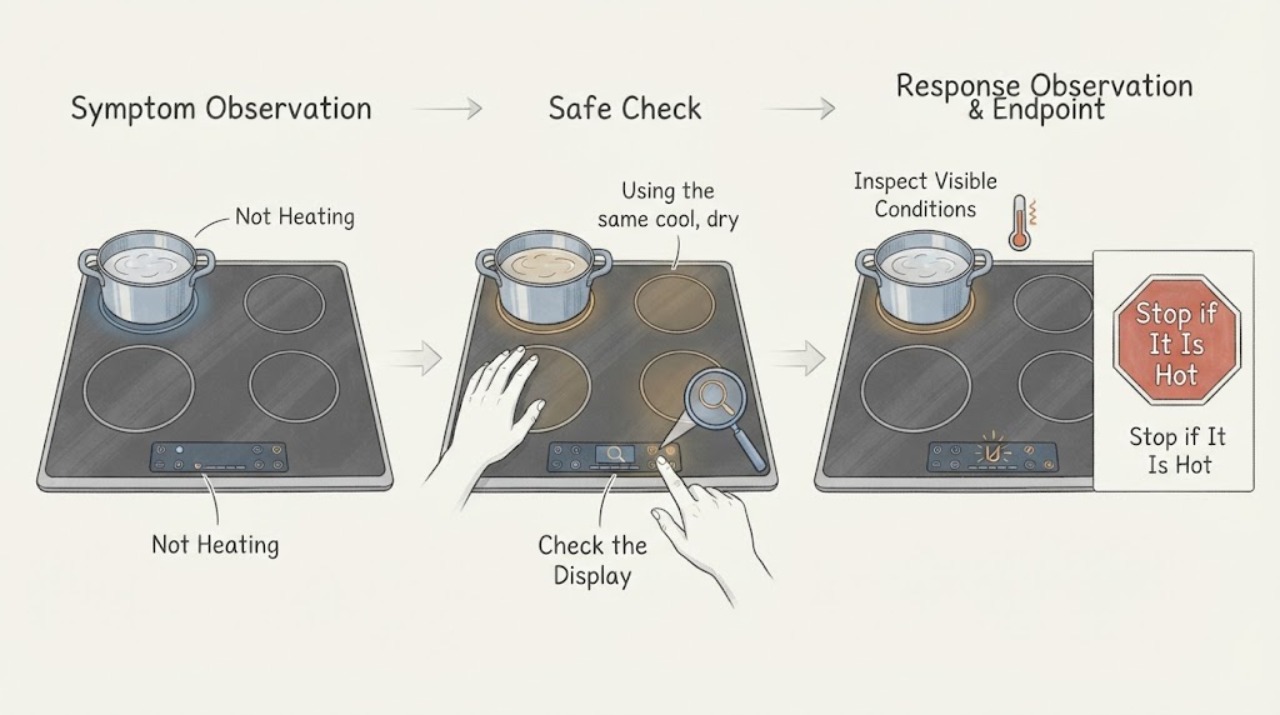
GE PHP9030SJ5SS Not Heating: Check Power Sharing
For the GE Profile PHP9030SJ5SS induction cooktop, first test one compatible, flat pan on one element with the control unlocked and the pan centered. This 30-inch model has two cooking zones: when two elements in the same zone are used and at least one is set to Hi, the manual says the Hi setting operates at reduced power even though the display does not change.
-
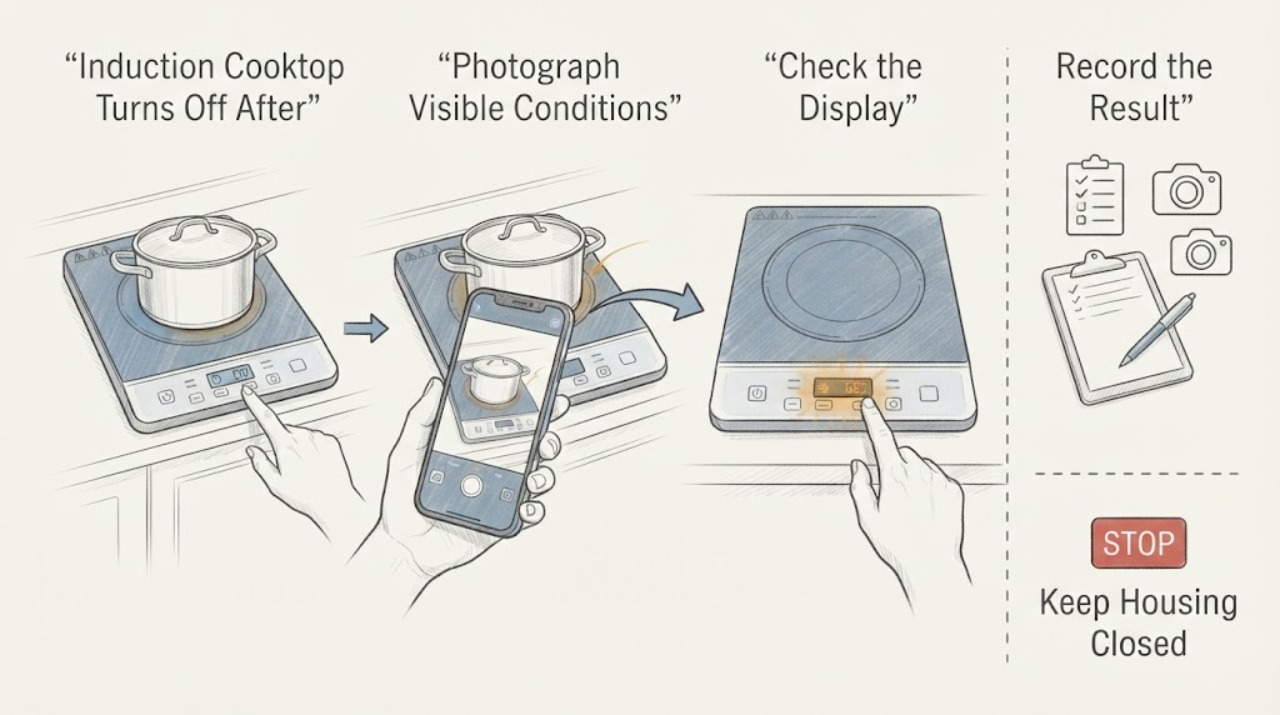
GE PHP9036DT Induction Cooktop Turns Off After 7 Seconds
For the GE Profile PHP9036DT family, first verify the pan rather than assuming the cooktop has failed: the flat bottom should attract a magnet, meet the affected element's minimum size, sit centered with full contact, and not overlap the controls. GE's opened PHP9036/PHP9036DTBB owner manual says that if a pan is not detected for more than 25 seconds, the element indicator flashes and the control turns off.
-
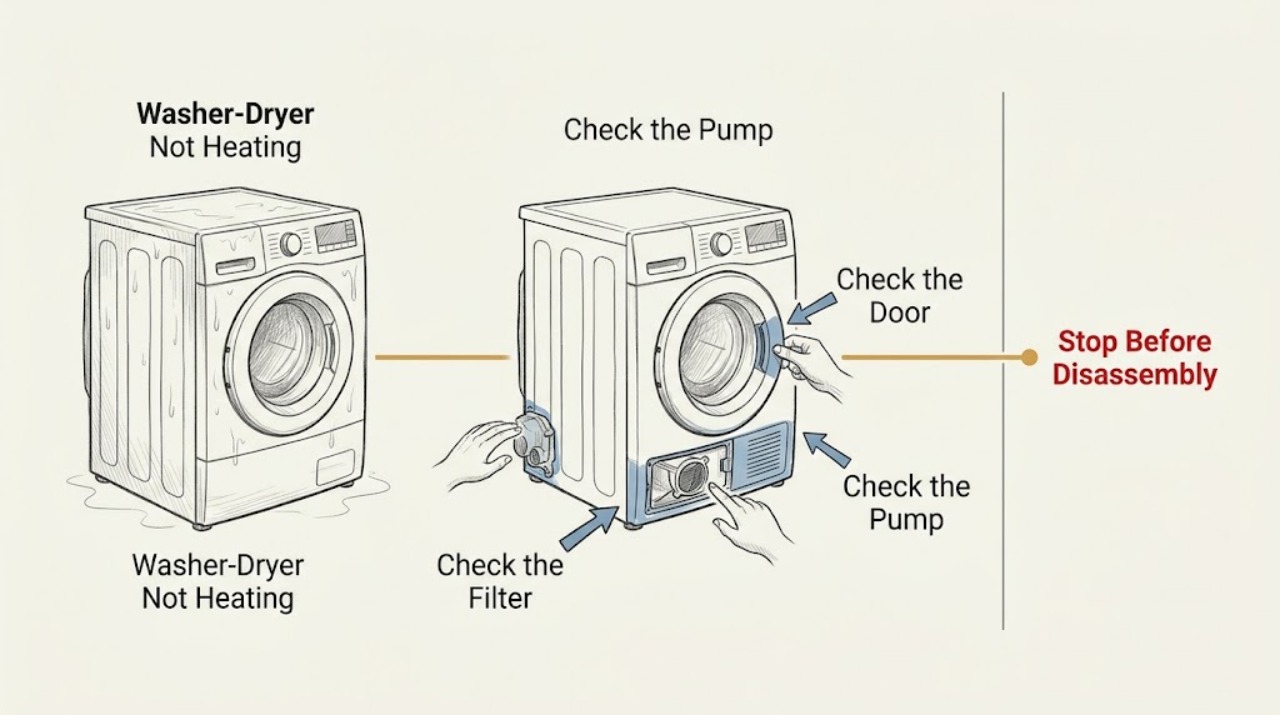
GE Washer-Dryer Not Heating: Safe Checks for Combo and Vented Units
A GE washer-dryer may seem not to heat for two different reasons: a ventless GE Profile UltraFast Combo intentionally dries at a lower, consistent temperature, while a conventional electric dryer can tumble on only partial household power and still fail to heat. First identify which design you have, then choose a true drying cycle and check the load, drainage, visible airflow, and power symptoms that apply to that design.
-
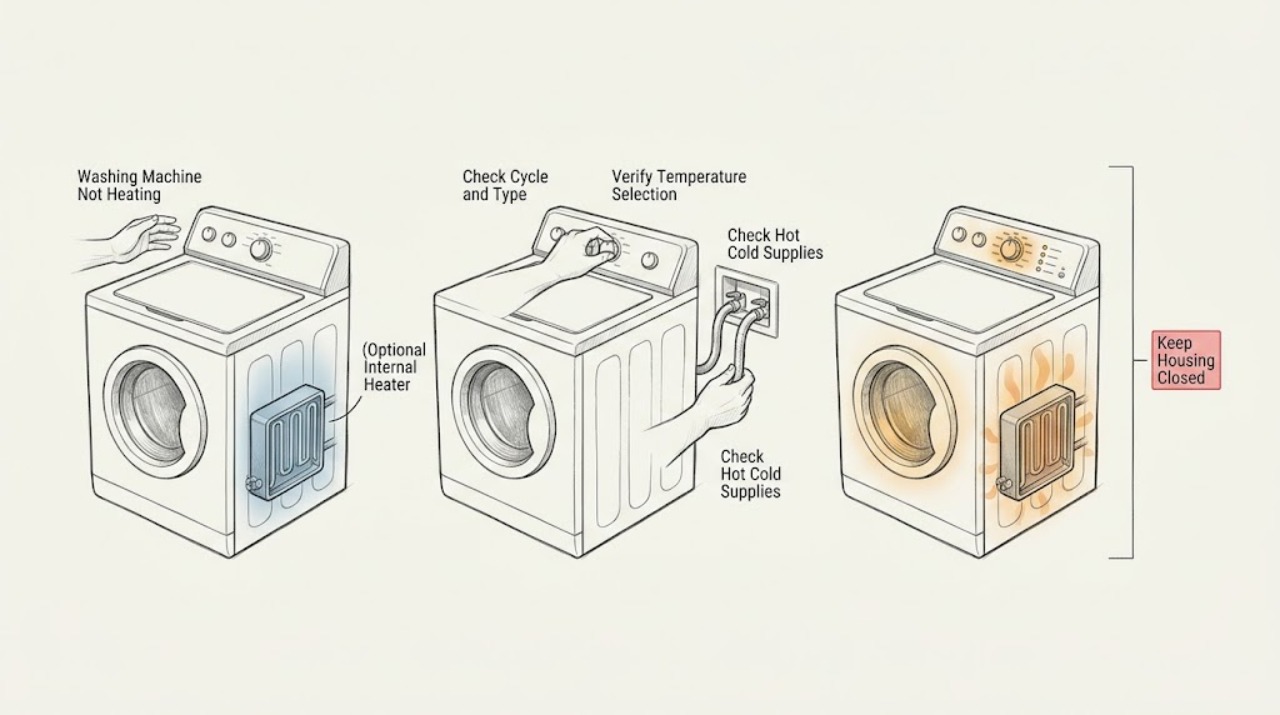
GE Washing Machine Not Heating: Check the Water Path Before the Washer
A GE washing machine that seems not to heat may be receiving normal mixed-temperature water rather than failing: GE says many washers mix hot and cold water even when HOT is selected, and WARM depends on both incoming supplies. First confirm the selected cycle and compare the hot and cold supply hoses and valves without opening the appliance.
-
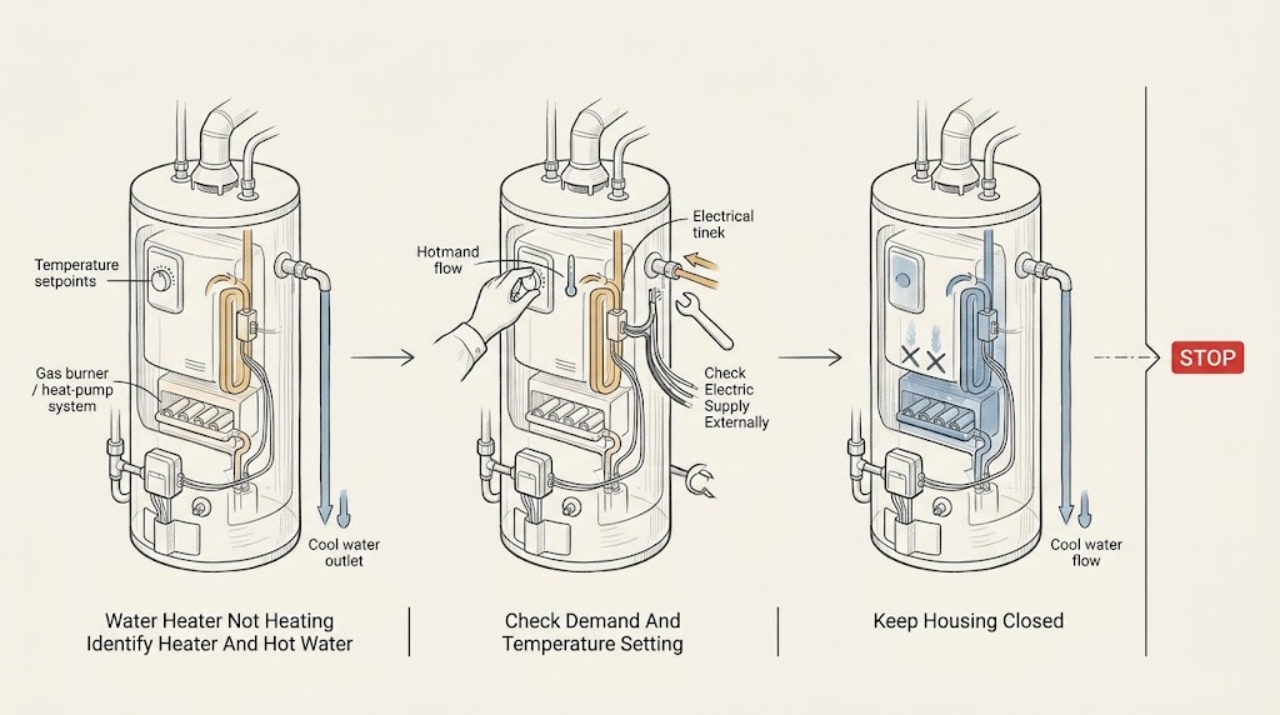
GE Water Heater Not Heating: Identify the Heater Type Before Checking Power
First record the exact GE model, serial information, fuel or heat-pump type, display state, and whether the complaint is no hot water at every faucet or only less hot water after heavy use. Check that all hot-water faucets are closed and that the temperature setting is not too low; a low setting, colder inlet water, a long exposed pipe, or an open faucet can look like a heater failure.
-
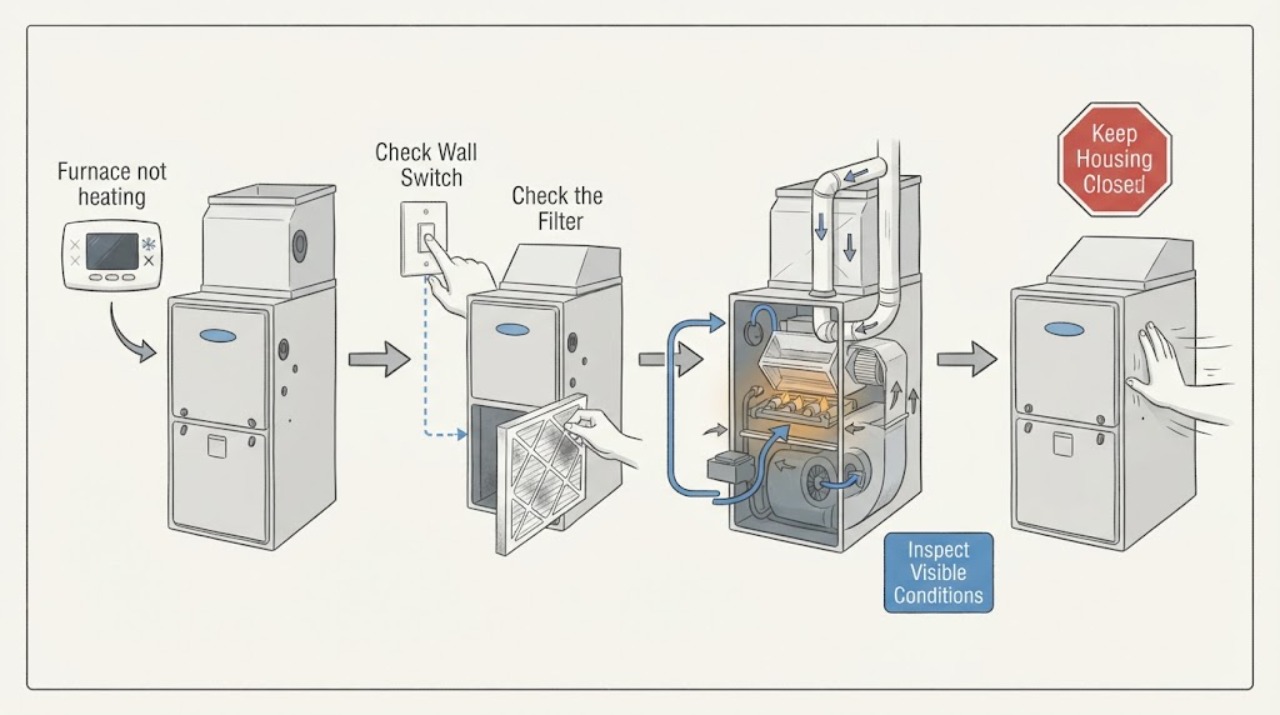
Goodman furnace not heating: What to Check and What to Do Next
A Goodman furnace that is not heating may not be receiving a call for heat, may have lost electrical power, may have an airflow restriction, or may be stopping during ignition, combustion, exhaust, or blower operation. Start with safe observations: thermostat mode and setpoint, the furnace power switch and clearly labeled breaker, the return-air filter, supply and return airflow, and any status light or code visible without opening the cabinet.
-
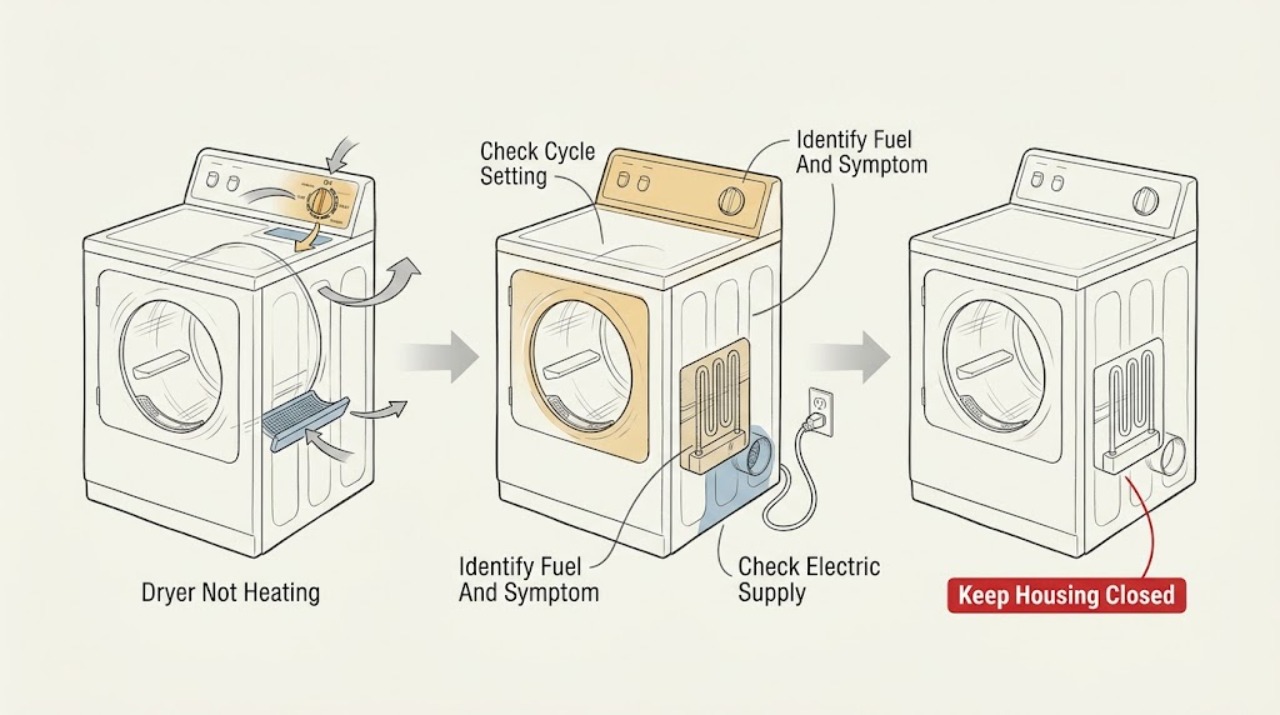
Haier Dryer Not Heating
A Haier dryer may be intentionally running without heat when Rack Dry or Air Dry is selected. Confirm a heat-enabled cycle, identify whether the dryer is gas or electric, and check only the external power and airflow items that are safe to access.
-
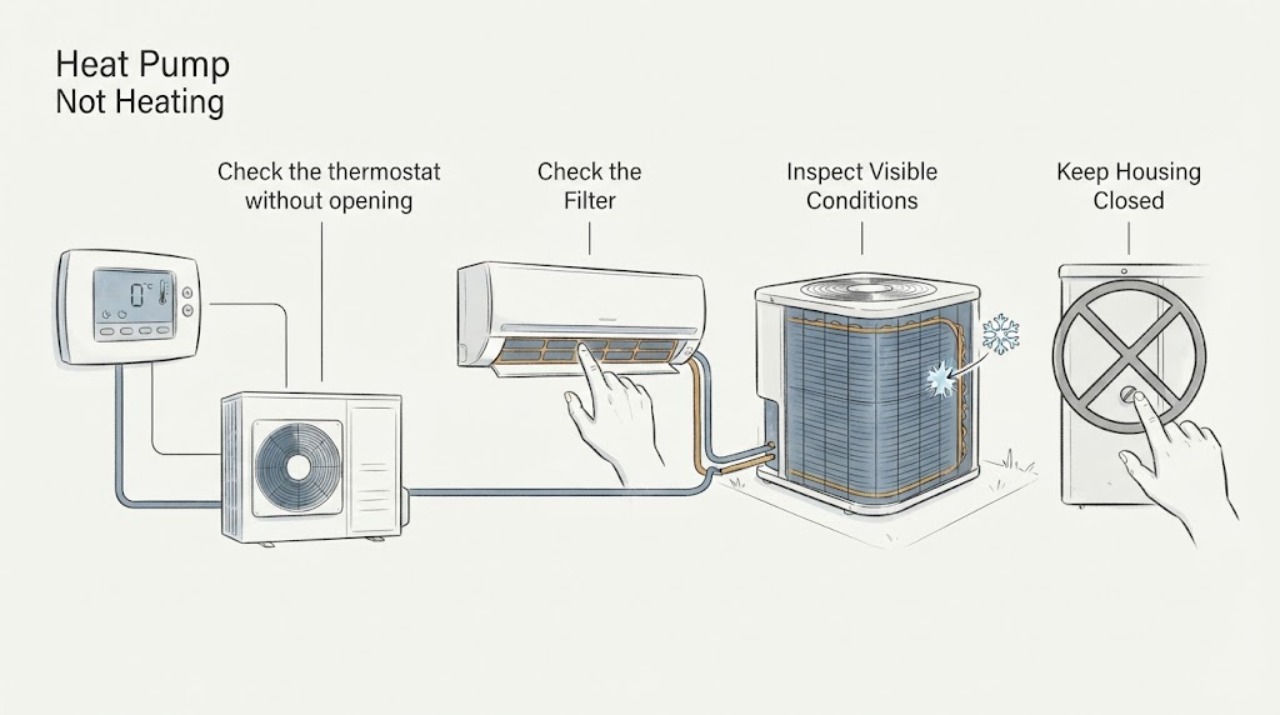
Heat Pump Not Heating: Check Mode, Airflow, Defrost, and Power Before Service
If a heat pump is not heating, first confirm the thermostat is calling for heat and that the fan is set to Auto, then check the accessible air filter, indoor and outdoor power status, and the outdoor unit for leaves, snow, or a solid ice coating. Cool air for a short period can occur during a normal defrost cycle, and heat-pump supply air may feel less hot than furnace air.
-
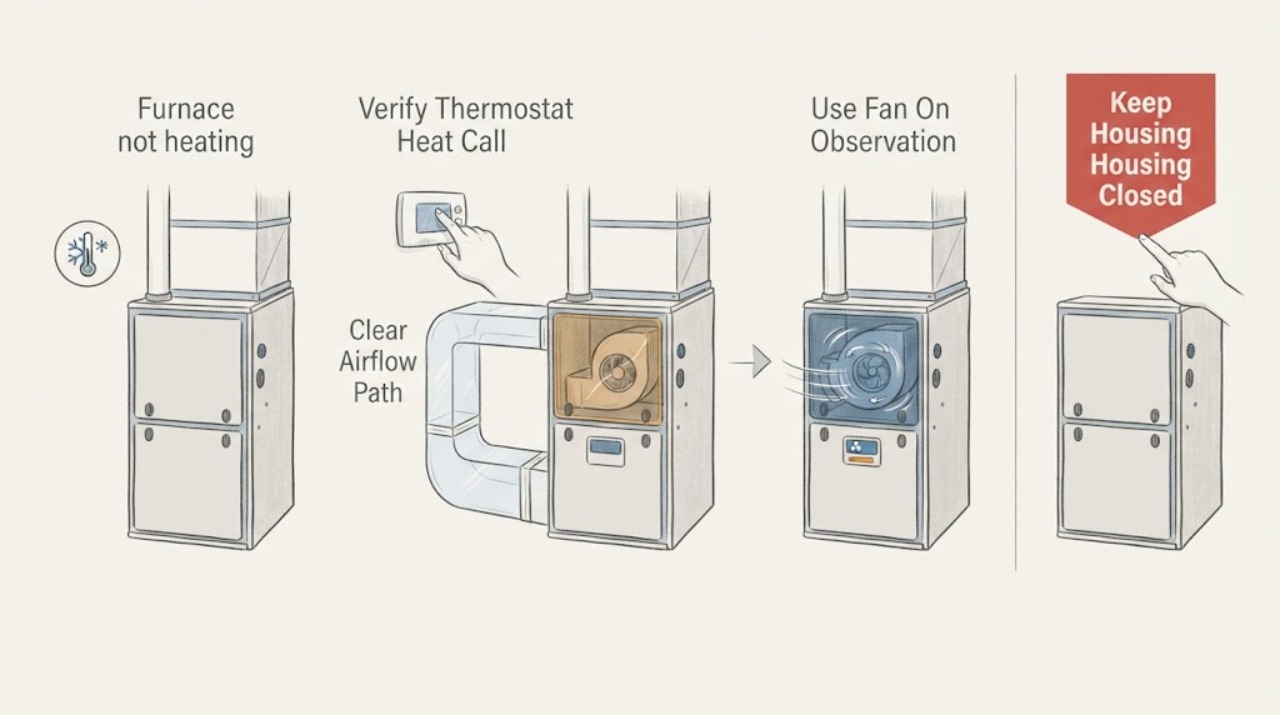
Honeywell furnace not heating: blower motor checks and when to call for service
Honeywell Home's own no-heat guide separates no air, room-temperature air, weak warm air, and cold air, then routes a fan that does not operate with a fan call to service. Start by recording the Honeywell thermostat model, furnace manufacturer/model, fuel type, and whether the vents have no airflow or weak airflow.
-
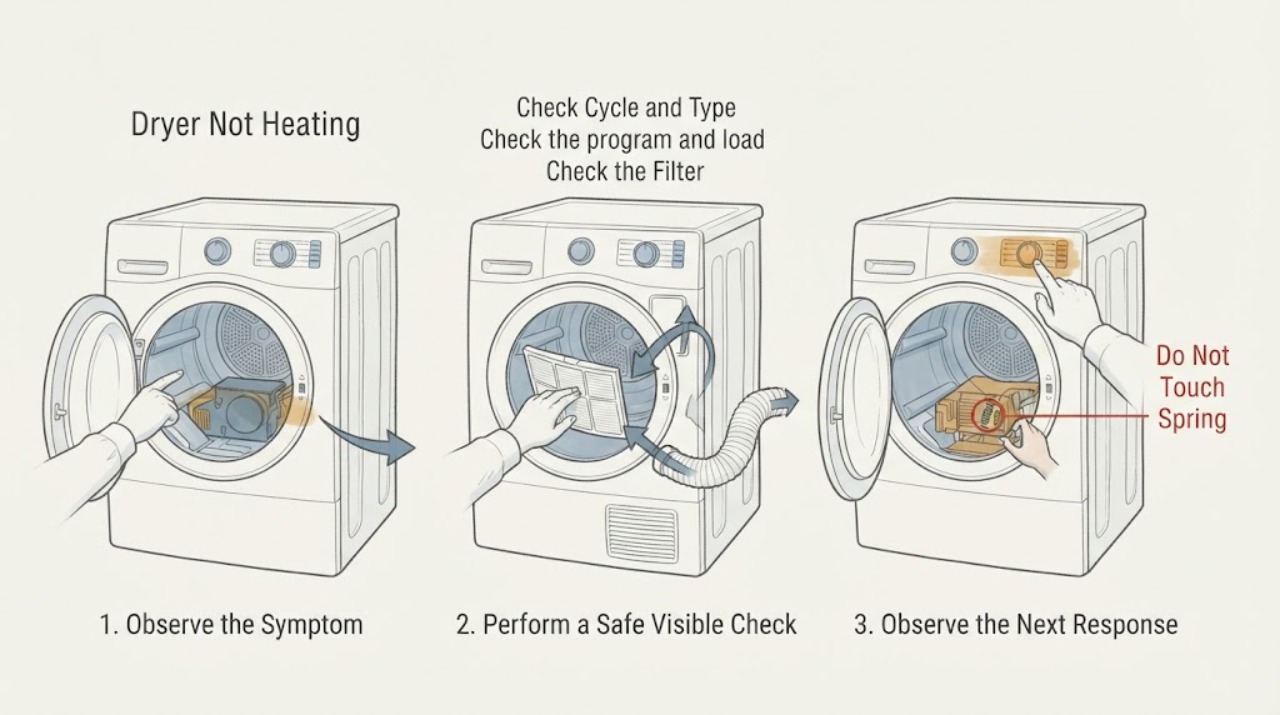
Hoover Dryer Not Heating
First determine whether the dryer truly has no heat or whether it is a Hoover heat-pump model that warms gradually and does not feel hot when the door is opened. Check the selected program, load size, lint filter, condenser filter, vent hose, outside vent, water tank, and room conditions according to the exact model manual.
-
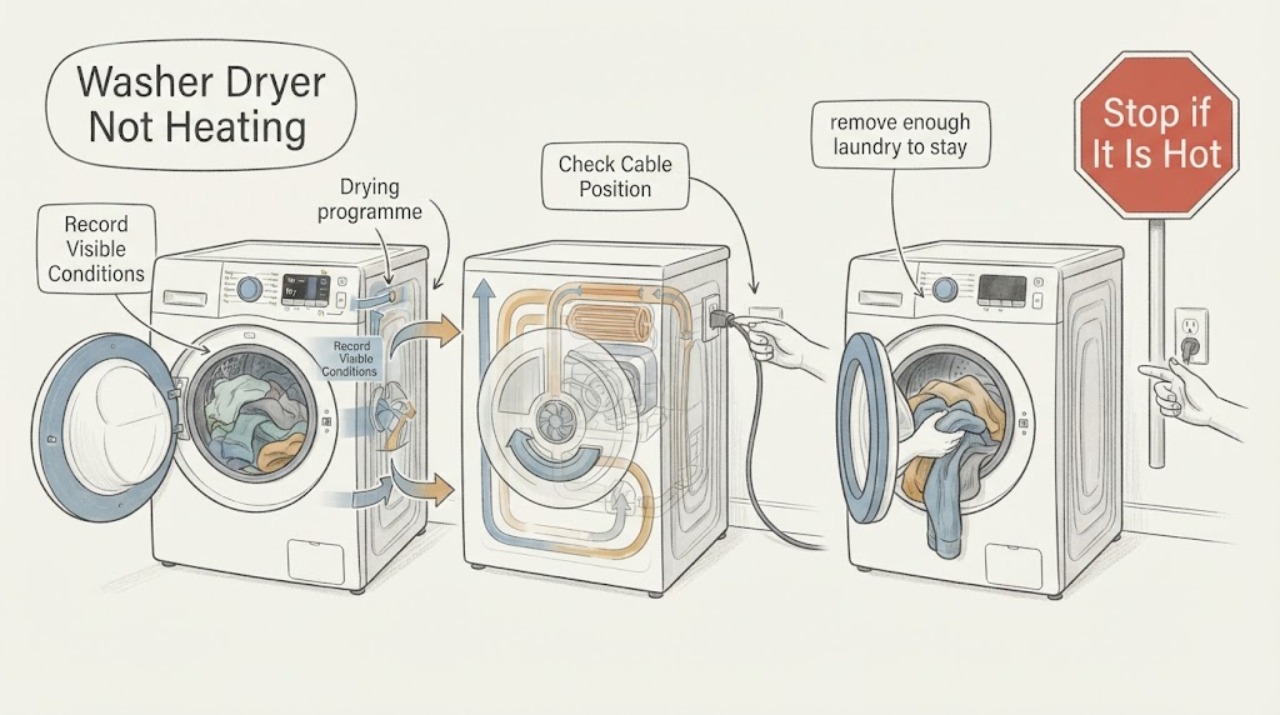
Hoover Washer Dryer Not Heating
If a Hoover washer-dryer is not heating, first confirm that the problem is in the drying phase rather than the wash-water temperature, and select an actual drying or dry-only programme with the heat level your model provides. Remove part of the wash load because Hoover says a washer-dryer's drying capacity is lower than its wash capacity, then check whether the laundry was spun and whether the programme is appropriate for the fabric.
-
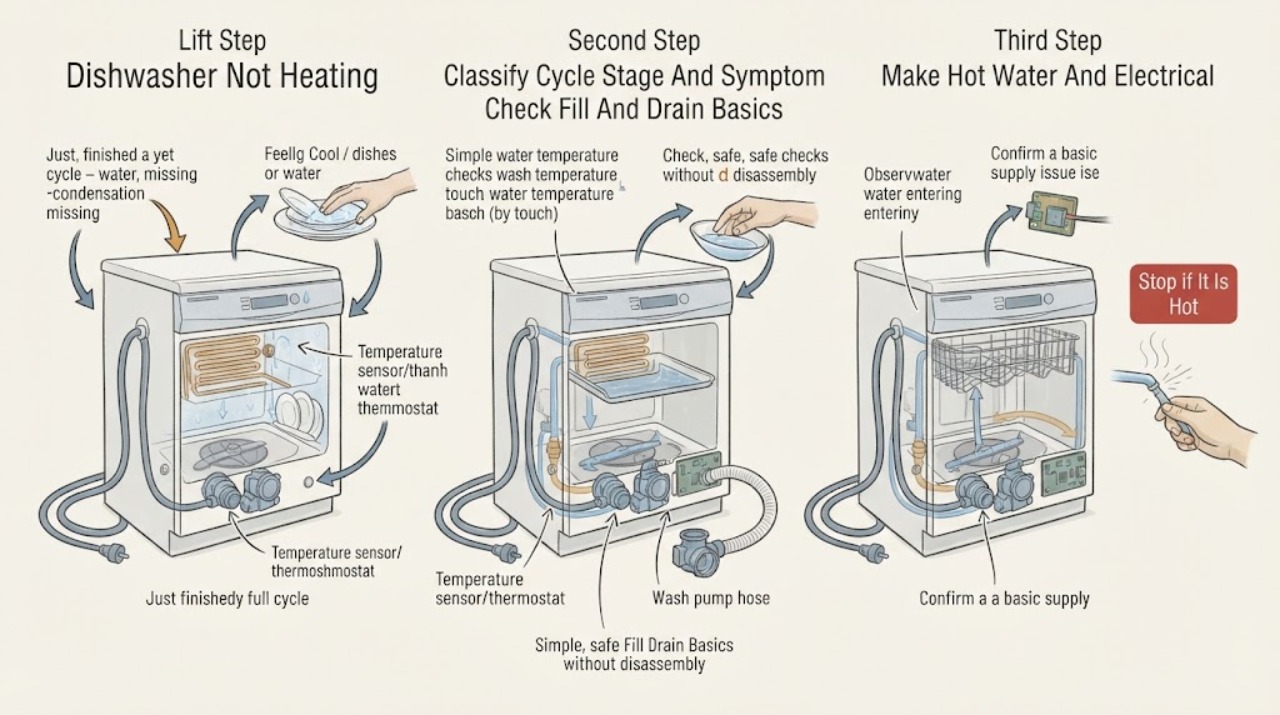
Hotpoint Dishwasher Not Heating: Identify the Cycle Stage Before Service
Do not open the dishwasher during a hot programme or touch the water to test its temperature. First record whether the machine fills, washes, drains, and completes, or whether it stops before heating.
-
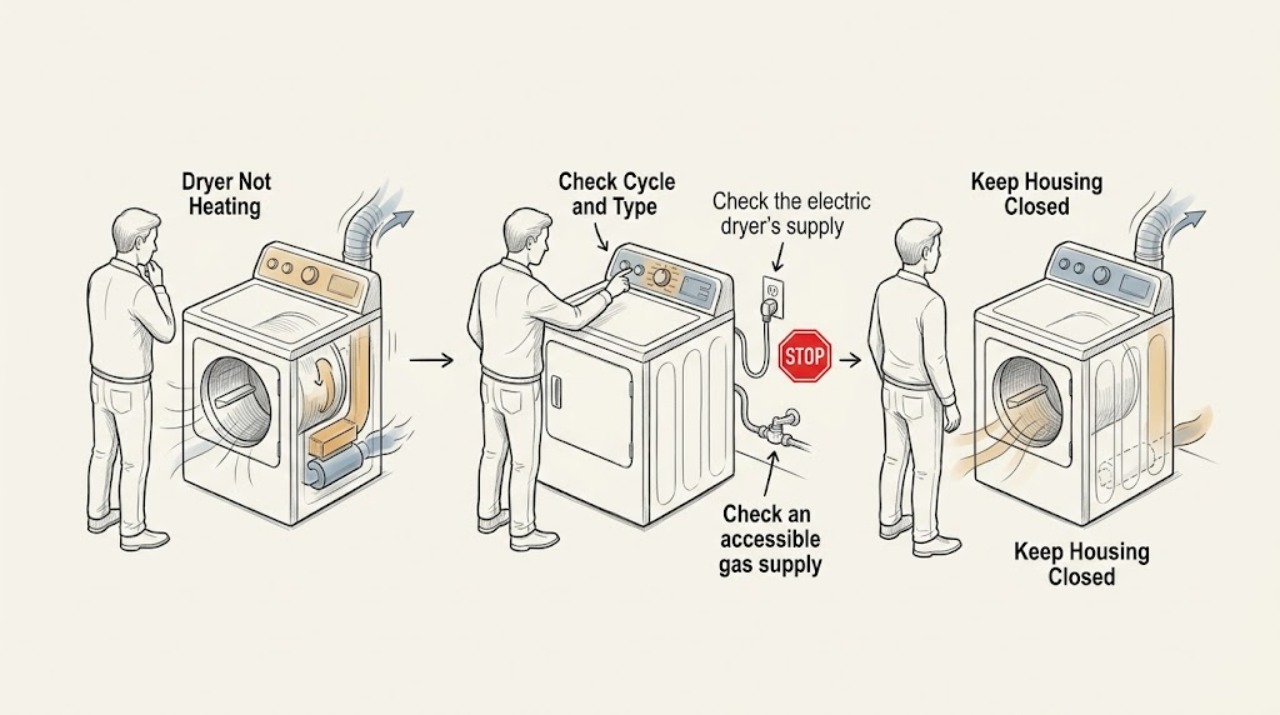
Hotpoint Dryer Not Heating: Safe Checks Before Service
If a Hotpoint dryer tumbles but produces no heat, first confirm that a dry cycle and a heat setting are selected, then identify whether the dryer is electric or gas. An electric model can tumble with a partially tripped breaker while the heating circuit is unavailable; a gas model needs its gas supply available and the correct cycle.
-
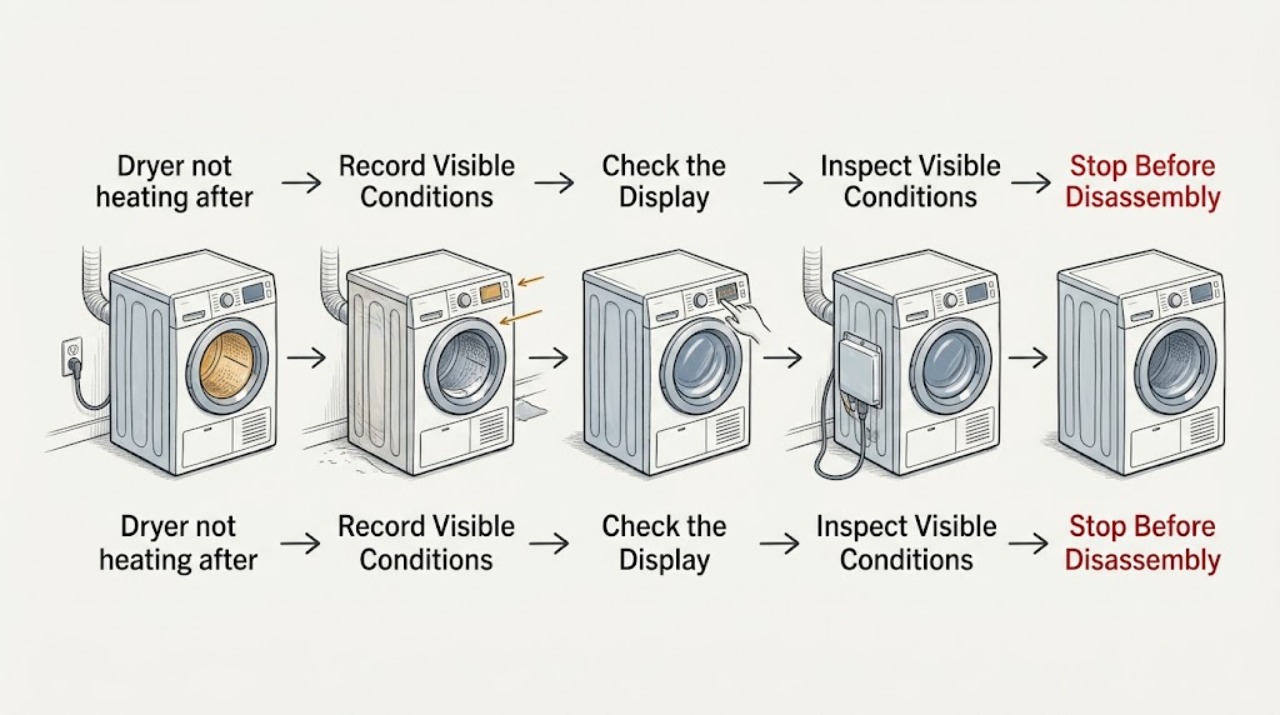
Hotpoint HTX24EASK0WS dryer not heating after a move: check the new electrical supply first
The HTX24EASK0WS is an electric dryer rated for a 208/240-volt supply, so a no-heat symptom that begins after moving should be checked at the new-house cycle setting, dryer circuit, cord and outlet before anyone suspects an internal heater. Confirm a heated setting, inspect the dedicated breaker from the normal panel position, and look at the plug, cord, outlet and visible vent for damage or a crushed connection.
-
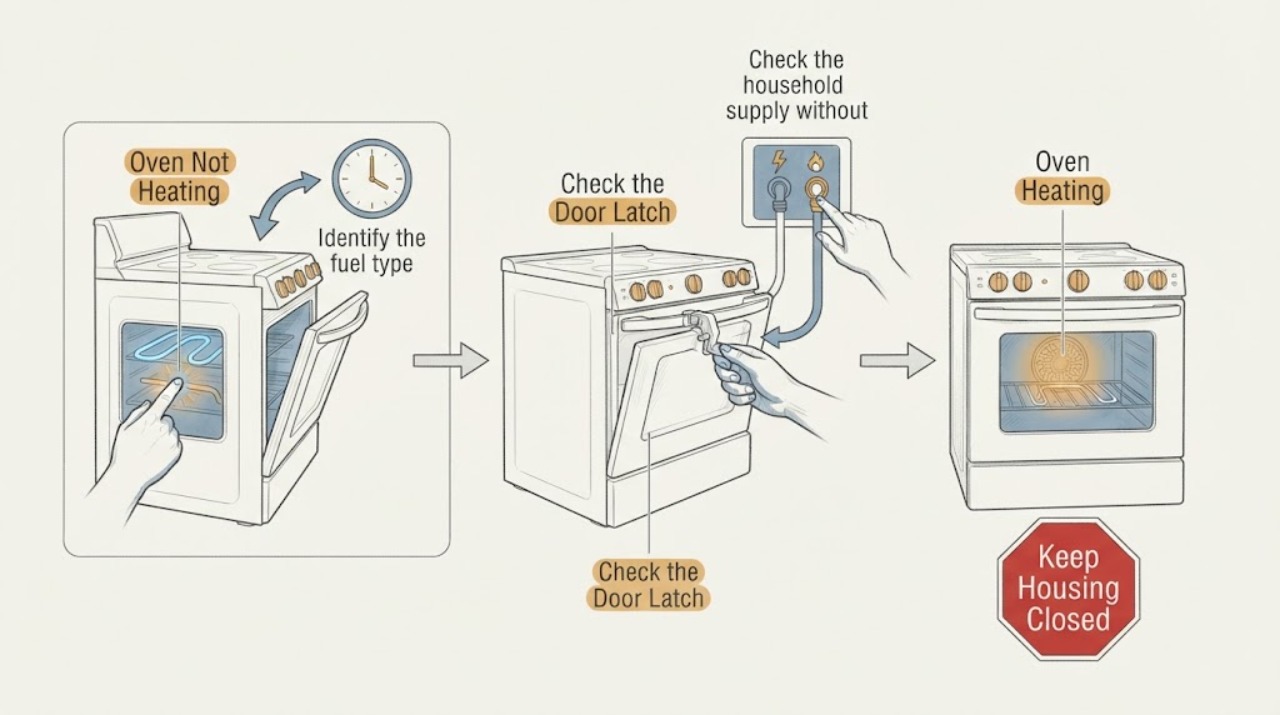
Hotpoint Oven Not Heating: Check the Setting, Supply, and Heating Path
First identify whether the Hotpoint oven is electric or gas and whether it is completely inactive, warm but below temperature, or heating unevenly. Confirm the oven function and temperature are selected, the electronic clock or timer is set as required by the model, the door or self-clean latch is not holding the oven out of operation, and the household breaker or fuse is on.
-
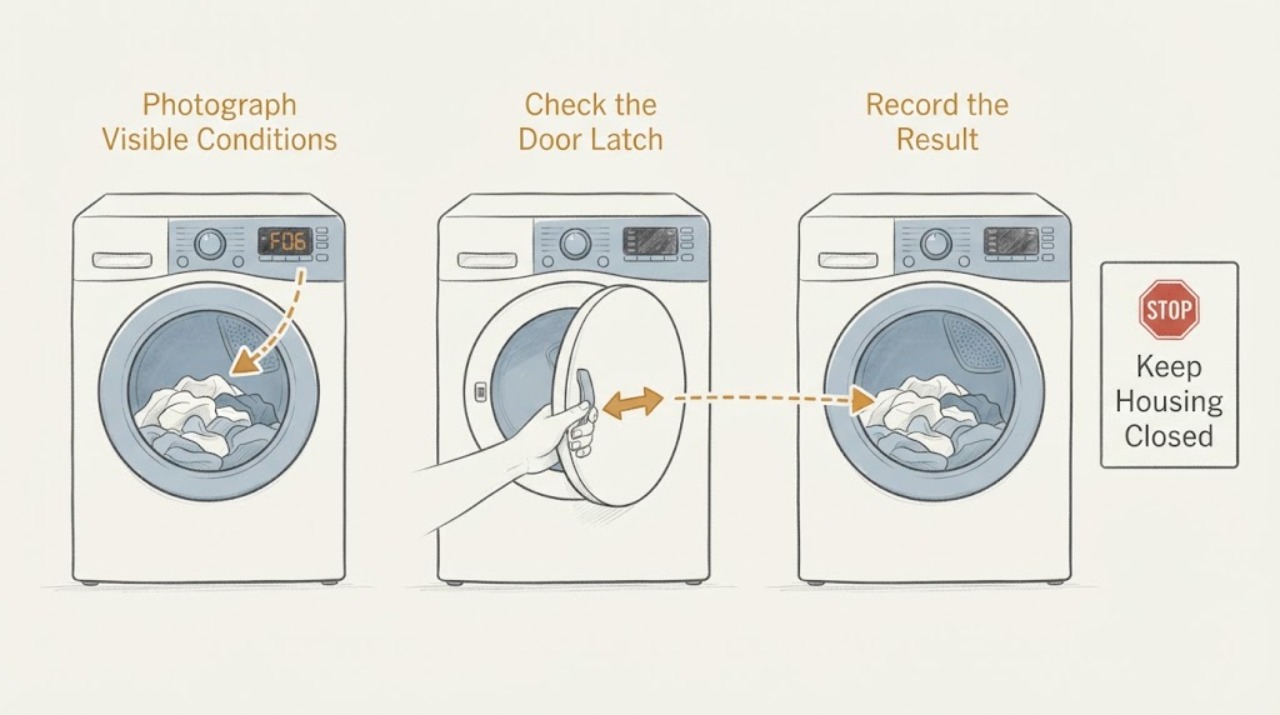
Hotpoint TDWSF 83B EP F06: Why a Dryer That Does Not Heat Needs a Door-Lock Check
On a Hotpoint TDWSF 83B EP, do not treat F06 as proof that the heater or thermostat has failed. Hotpoint UK's tumble-dryer error guide identifies F06 as a door-lock fault: the door may not close or the programme may not start.
-
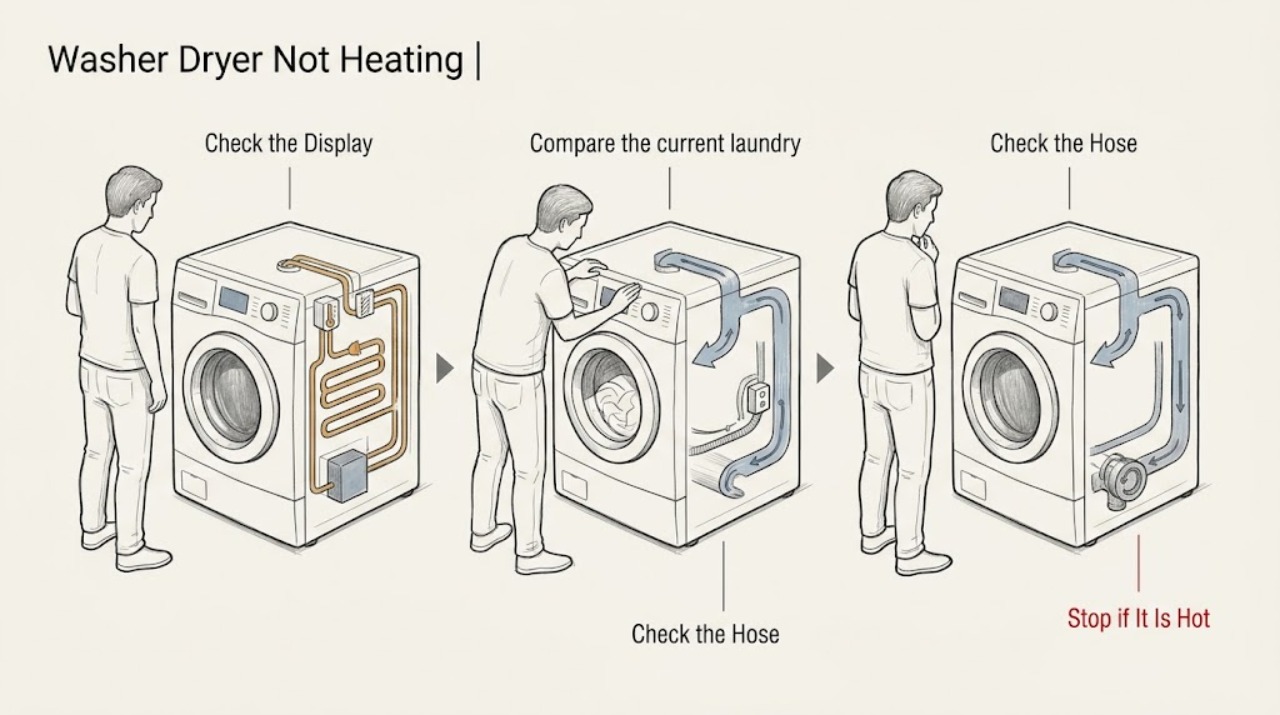
Hotpoint Washer Dryer Not Heating
First confirm that the selected programme is meant to heat and that the washer-dryer is not simply in a cool-down or low-temperature phase. Check the load and lower drying capacity, because an overloaded drum can restrict air circulation and leave clothes damp.
-
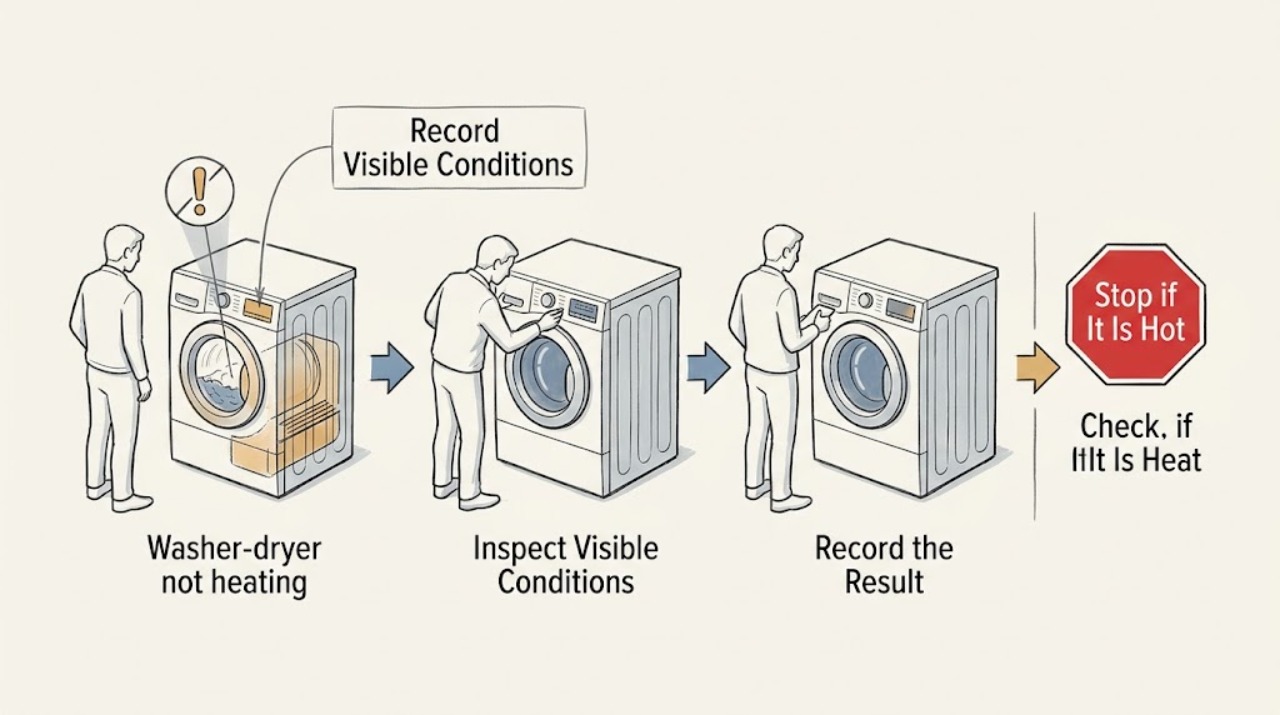
How to troubleshoot an AEG washer-dryer that is not heating
First identify whether your AEG washer-dryer is not heating the wash water, the drying air, or both. Cold clothes at the end of a wash can be normal because the final rinse is generally cold, but a selected heating cycle should show warmth during the wash.
-
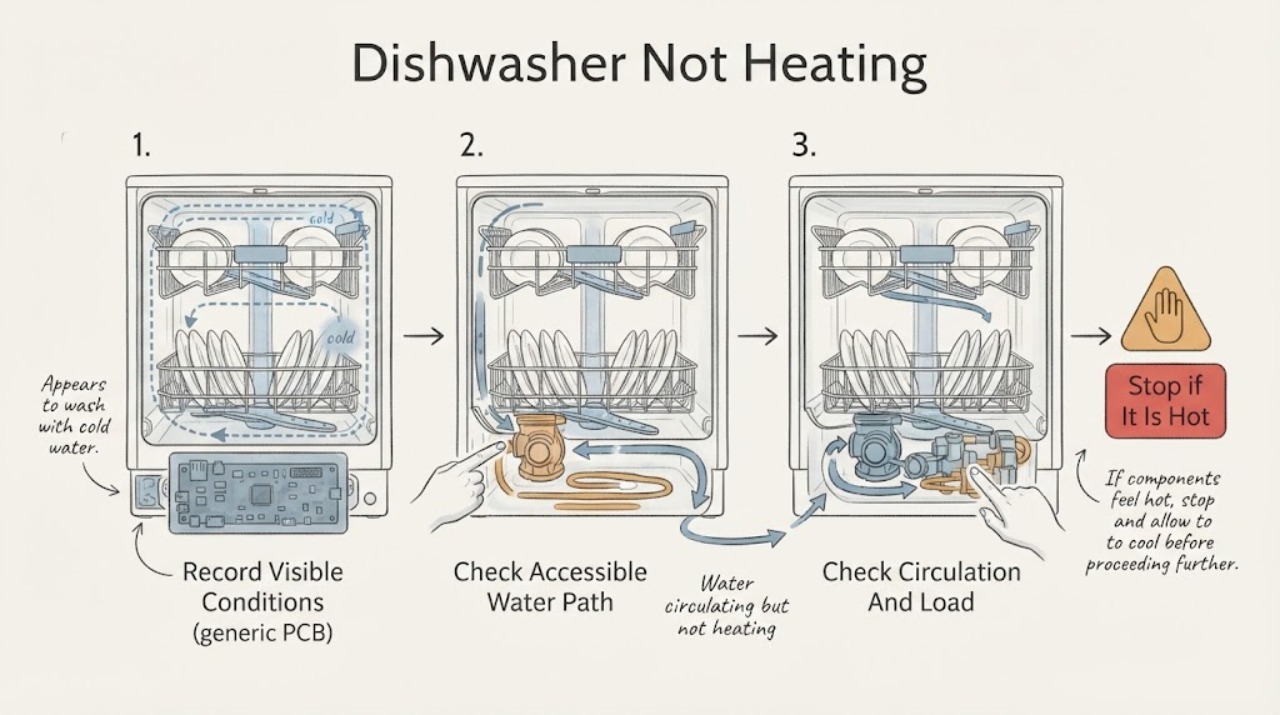
Indesit Dishwasher Not Heating
A cold load does not by itself prove that an Indesit dishwasher heater has failed. First confirm that the dishwasher actually filled, circulated water, and reached a programme stage that calls for heat; some cycles and phases are not equally hot, and a drain or fill problem can prevent the heating stage.
-
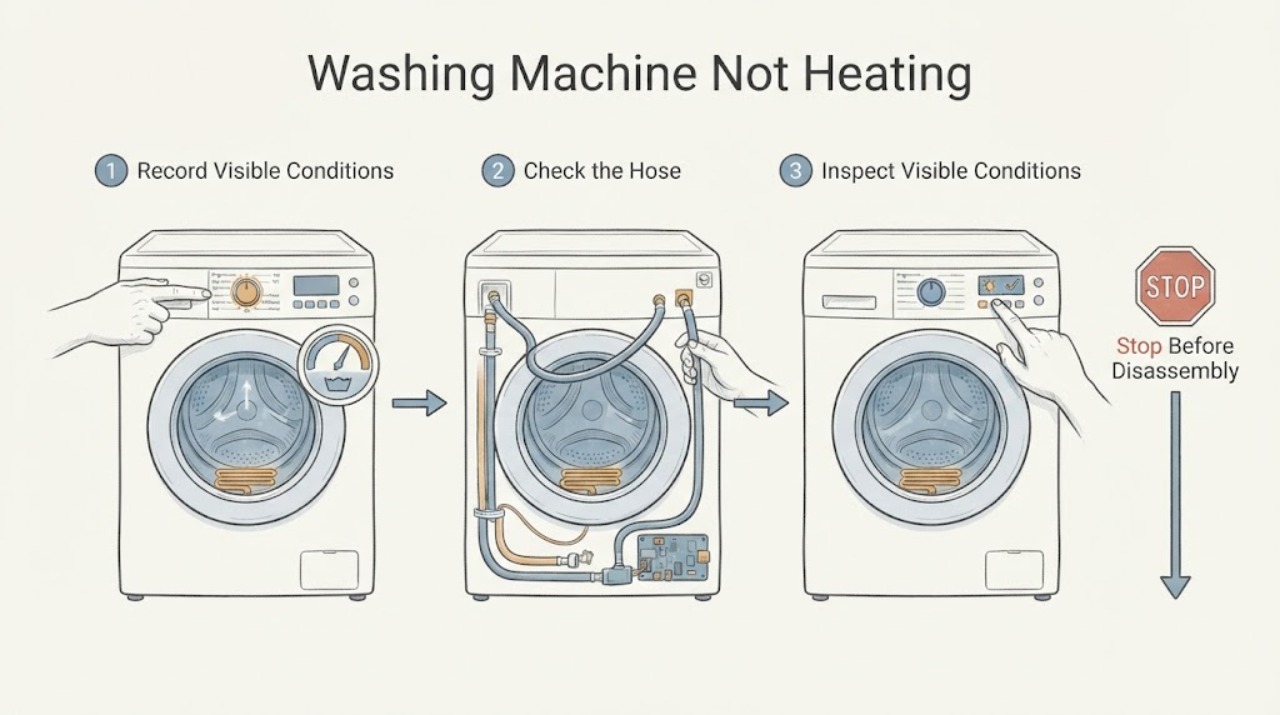
Indesit Washing Machine Not Heating: Check the Programme Stage Before the Heater
Do not judge heating during a cold-fill, rinse, spin, economy, or early programme stage: many programmes use little or no heat at that point, and the machine may heat only after filling and beginning the main wash. First identify the model and programme, confirm the selected temperature is not cold or reduced, and observe whether the machine fills, tumbles, pauses, and completes the expected stage.
-
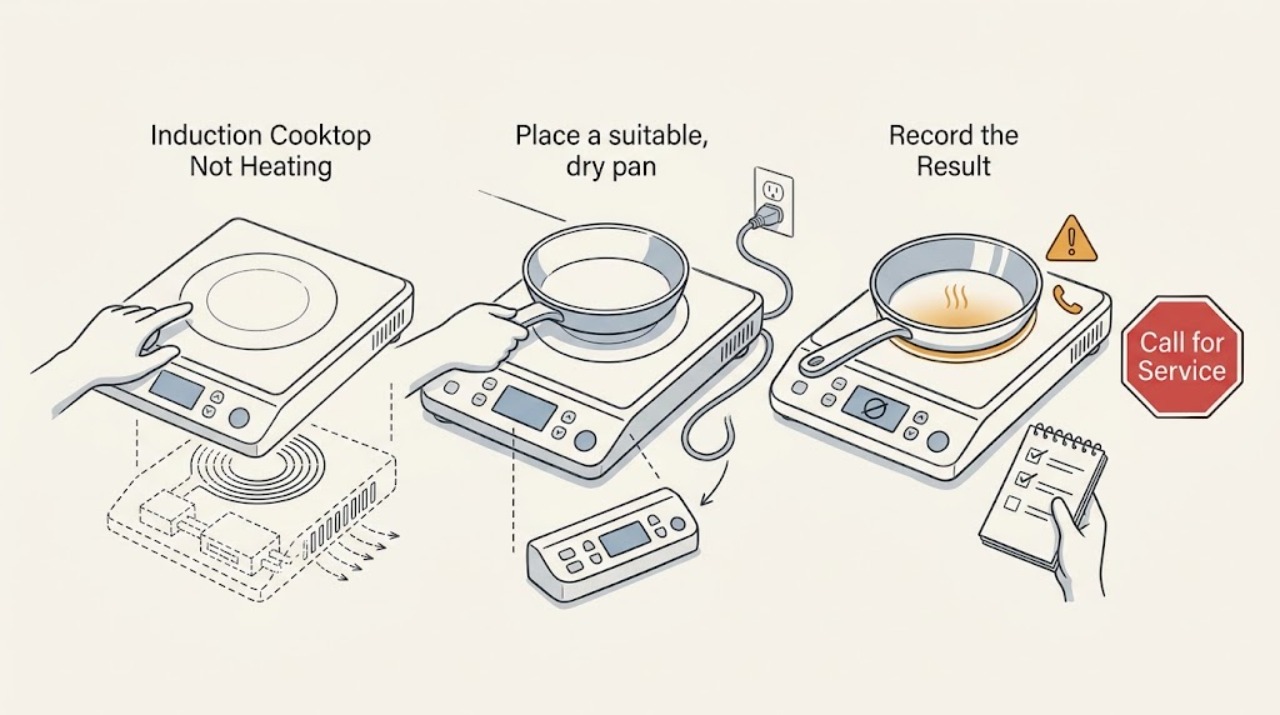
Induction Cooktop Not Heating: Check the Pan, Settings, and Power
Keep this as a pure induction diagnosis: do not look for gas ignition parts. First check that the pan is magnetic, large enough for the selected zone, flat, and centered.
-
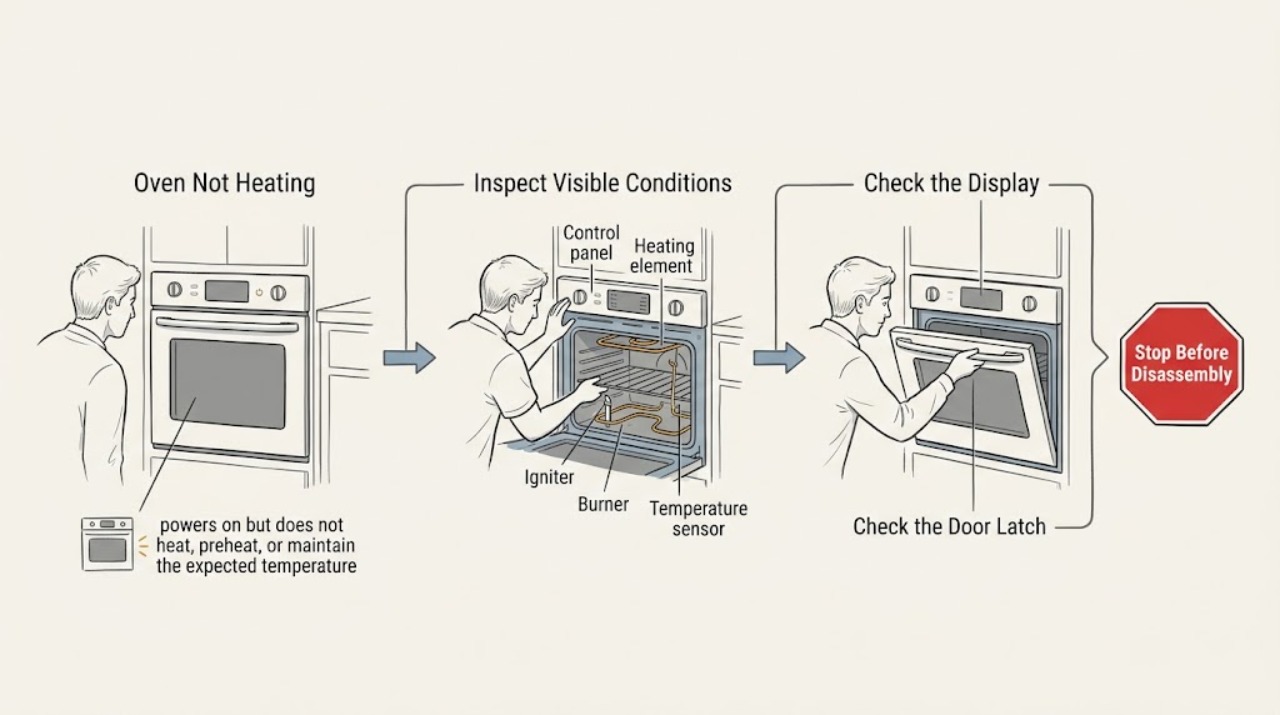
JennAir Oven Not Heating: Safe Checks for Electric and Gas Models
First identify whether the JennAir oven is electric or gas, whether the display responds, and whether it is truly not heating or simply preheating slowly. Confirm the correct Bake or other cooking mode, temperature, clock, door closure, Control Lock, Demo Mode, and Delayed Start settings.
-
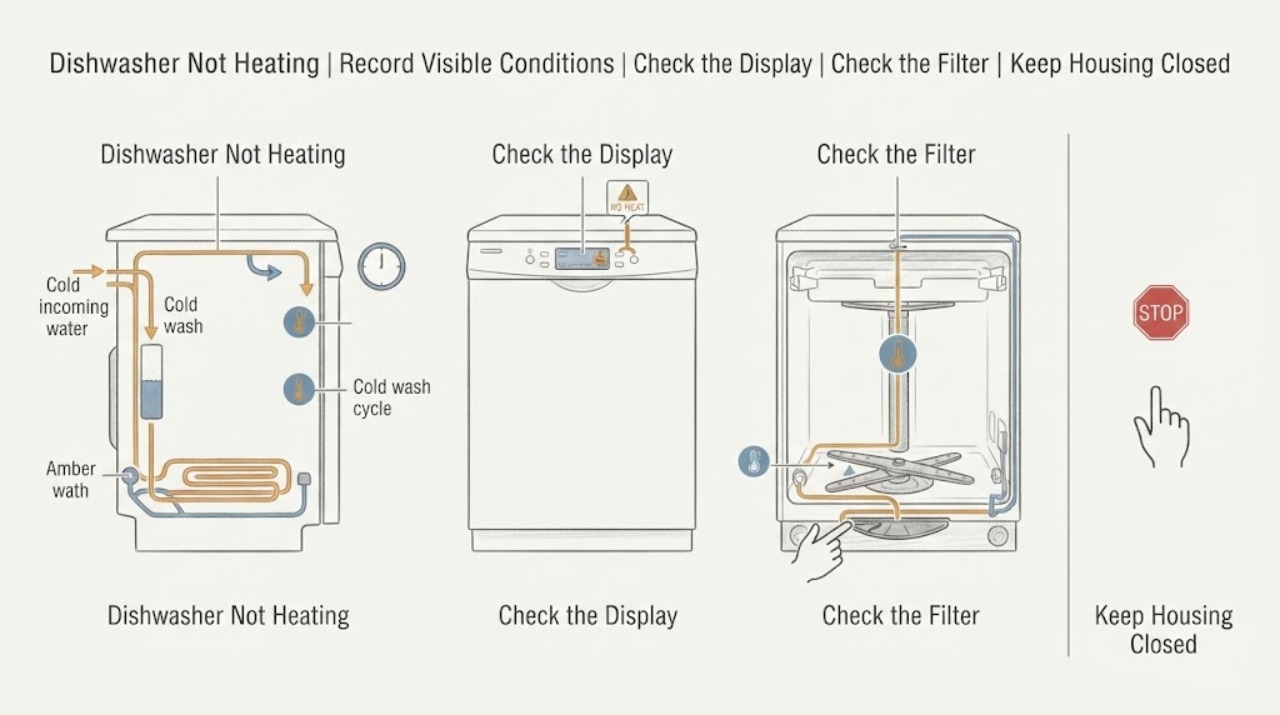
Kenmore Dishwasher Not Heating: Separate Wash Temperature from Heated Dry
First separate a dishwasher that is not heating wash water from one that cleans but leaves dishes wet after drying. Record the complete Kenmore model and the selected cycle, then check only the user-accessible filter, spray arms, water supply, cycle options, and visible error or pause state described in that model's manual.
-
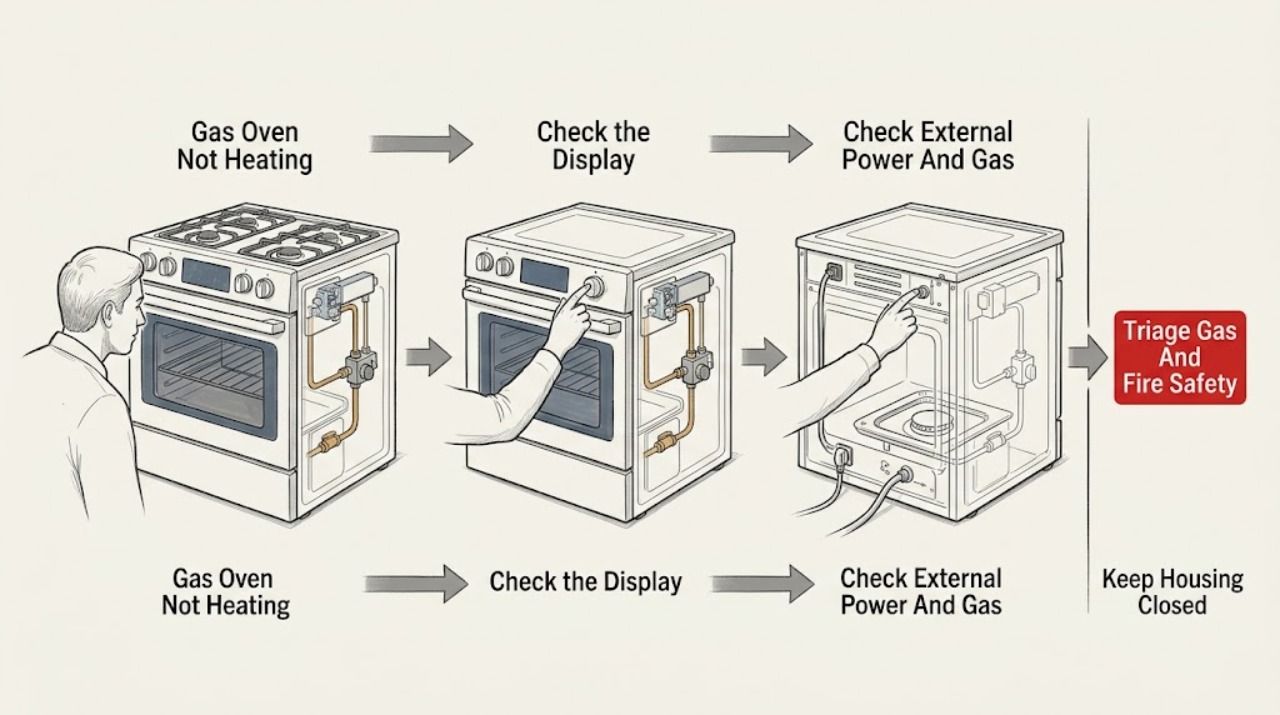
Kenmore Gas Oven Not Heating: Check the Controls, Gas, and Ignition Safely
Start by identifying the exact Kenmore model and its owner's manual because Kenmore gas ovens use different controls and ignition arrangements. Confirm that the clock or control state, Bake or Broil function, temperature setting, and any lock or special mode are correct, and check power at the appliance without repeatedly resetting a breaker.
-
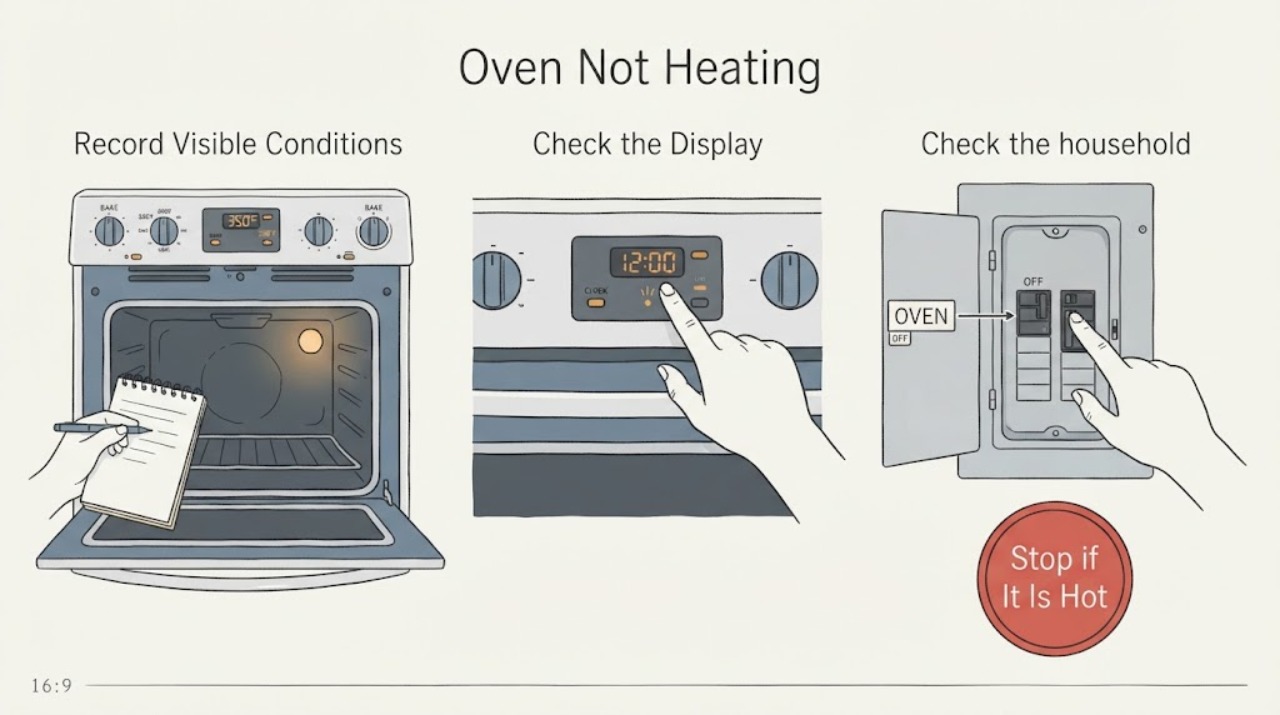
Kenmore Oven Not Heating
A Kenmore oven that is not heating needs to be separated by fuel type and symptom: no display or no response points to power or controls; a lit display with no heat points to the selected mode, clock or lock, door state, and the bake, broil, or gas-ignition path. Confirm the exact model and use its manual because Kenmore code meanings and controls vary.
-
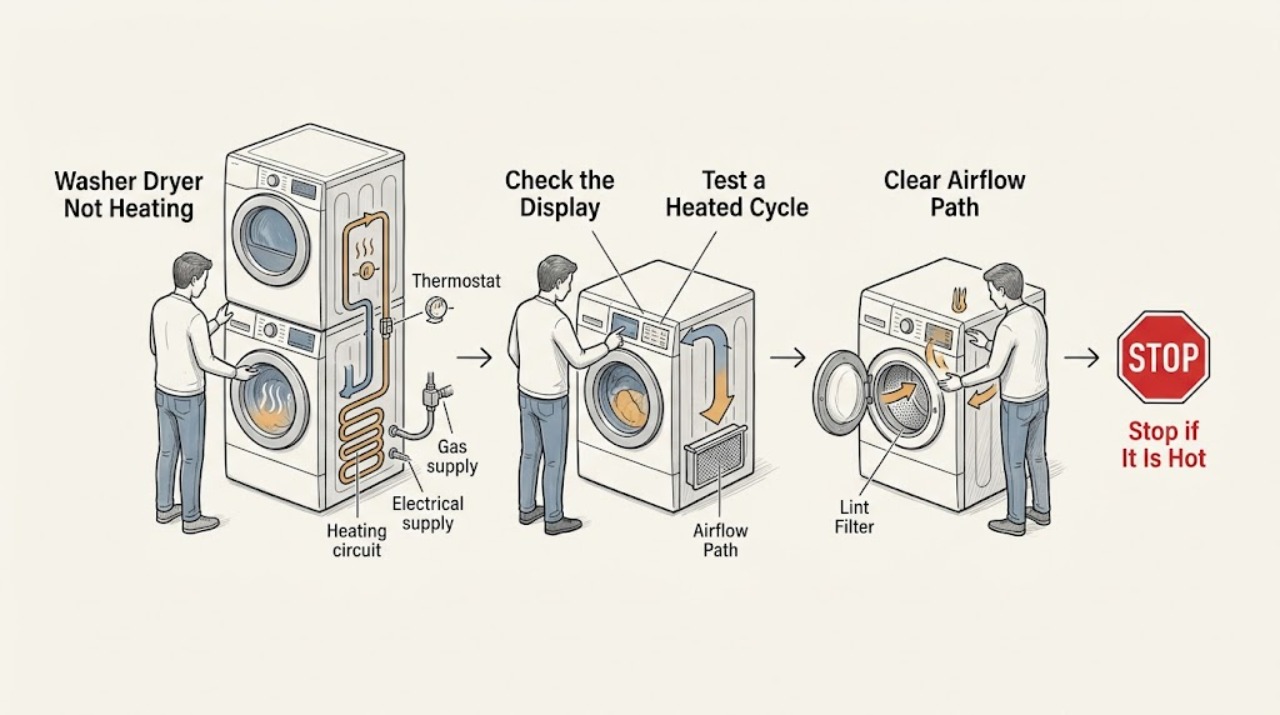
Kenmore Washer Dryer Not Heating
First determine whether the Kenmore washer-dryer is failing to heat wash water, or whether the dryer portion tumbles but produces no warm air. A dryer can appear to work on an Air Dry or no-heat setting, and exact cycles vary by model.
-
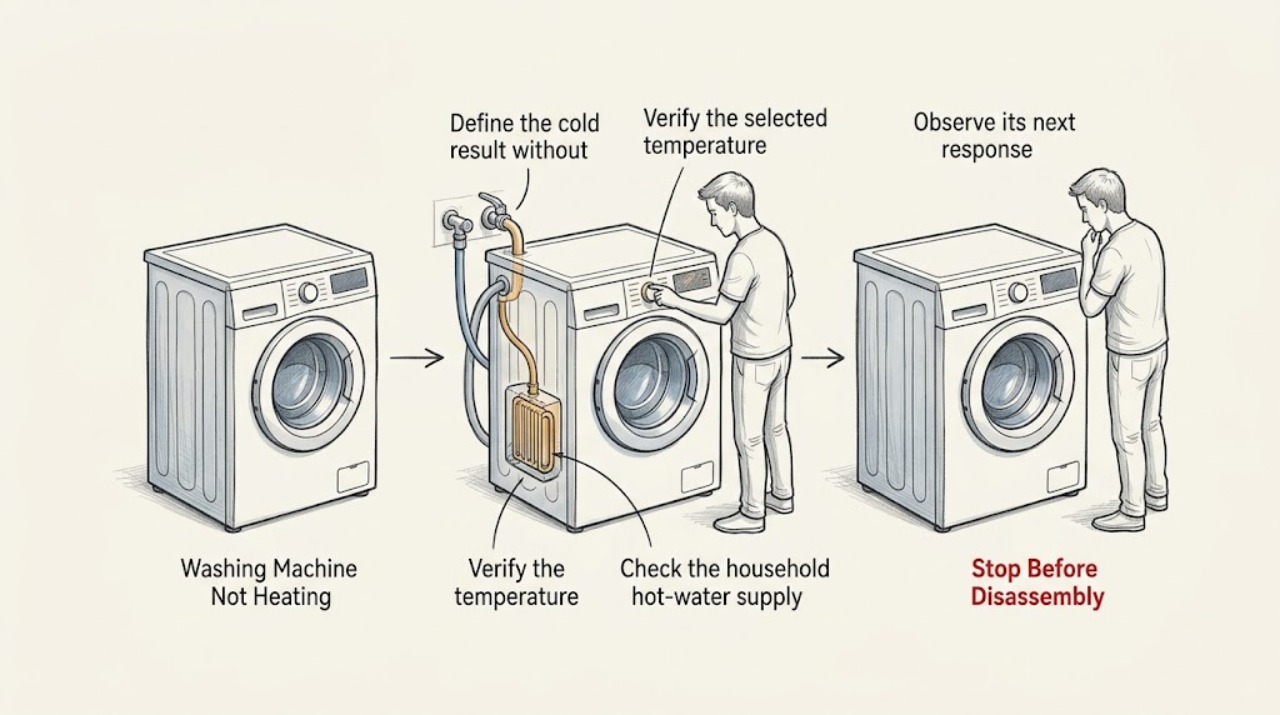
Kenmore Washing Machine Not Heating: Check the Water Path and Model Features
Most Kenmore washers do not make all of their hot wash water internally: the selected cycle may blend incoming hot and cold water, while only some models add an internal heater or steam option. Start by comparing the selected temperature with what the load actually receives, not by assuming a failed heater.
-
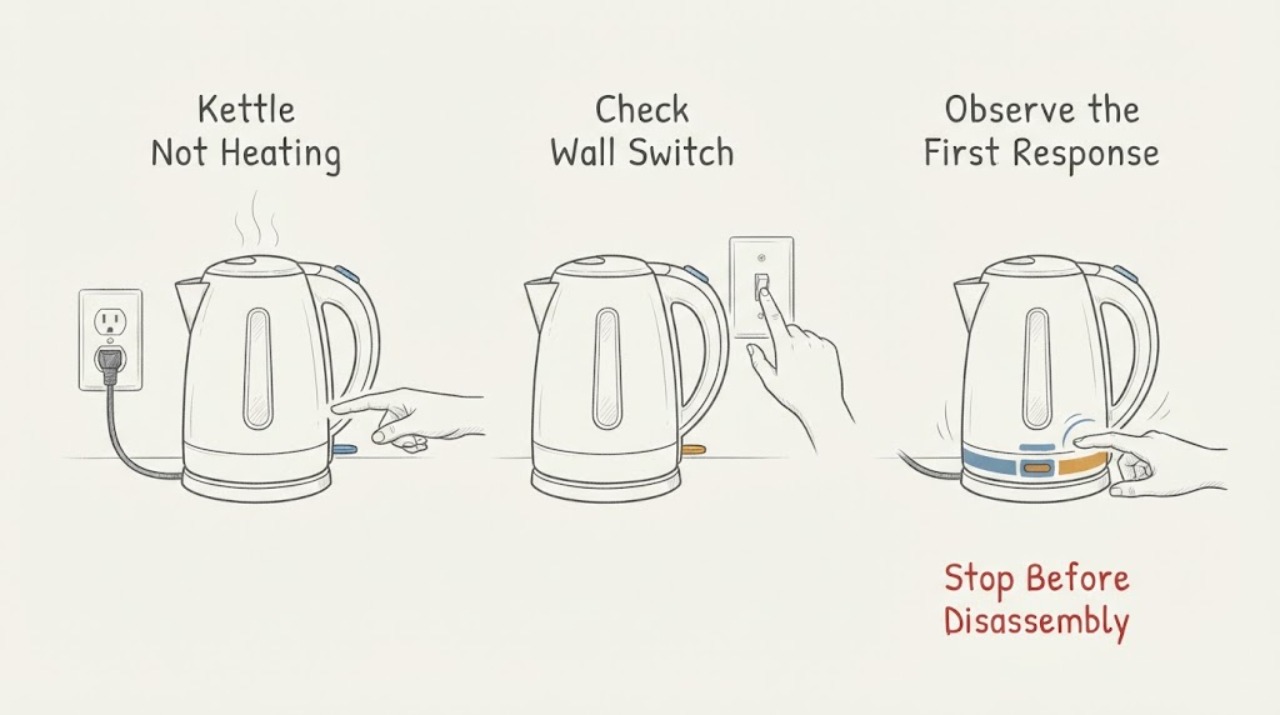
Kettle Not Heating
For a kettle that does not heat, first reseat the kettle on its supplied base, confirm the switch is on, and test the outlet with another appliance. If it was boiled dry, switch it off, unplug it, let it cool, and refill it before trying again. A kettle that still does not heat, has a damaged cord, or smells electrical should remain unplugged for service.
-
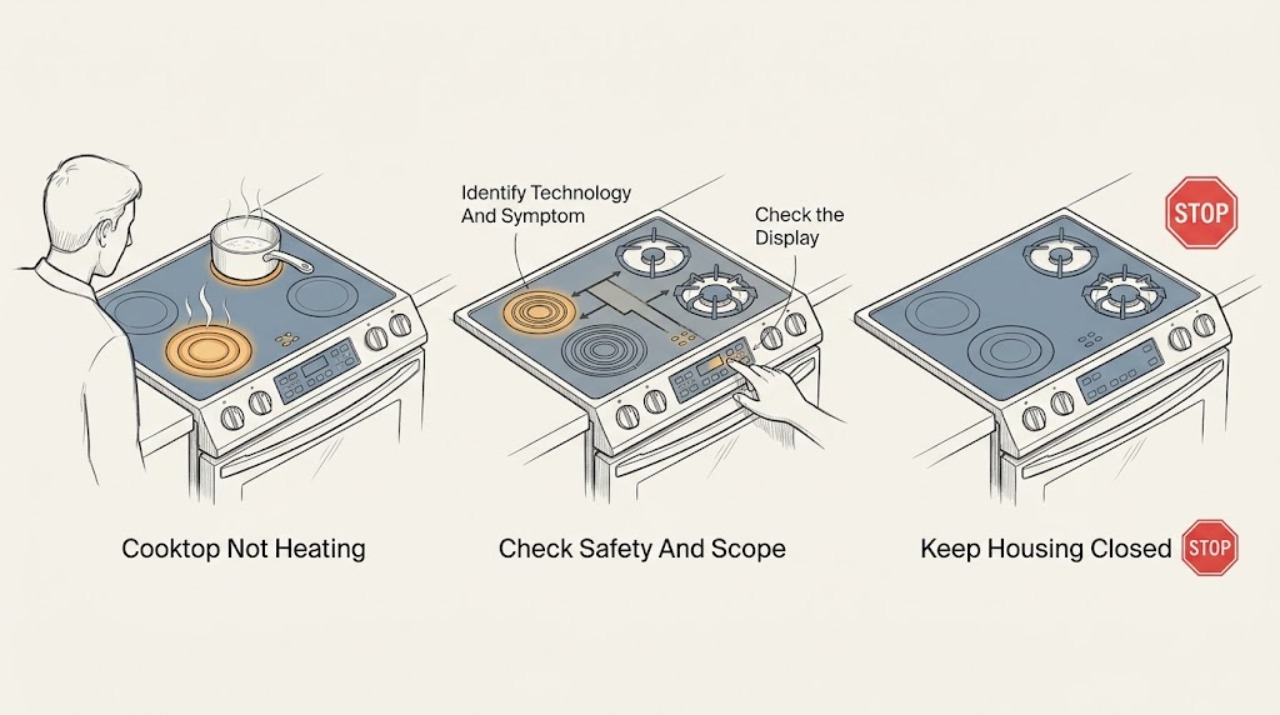
Kitchenaid Cooktop Not Heating
First identify whether the KitchenAid cooktop is gas, electric radiant, or induction and whether one zone or every zone is affected. Stop for a gas odor, smoke, sparks, arcing, a damaged cord or receptacle, a cracked glass surface, or controls that behave erratically.
-
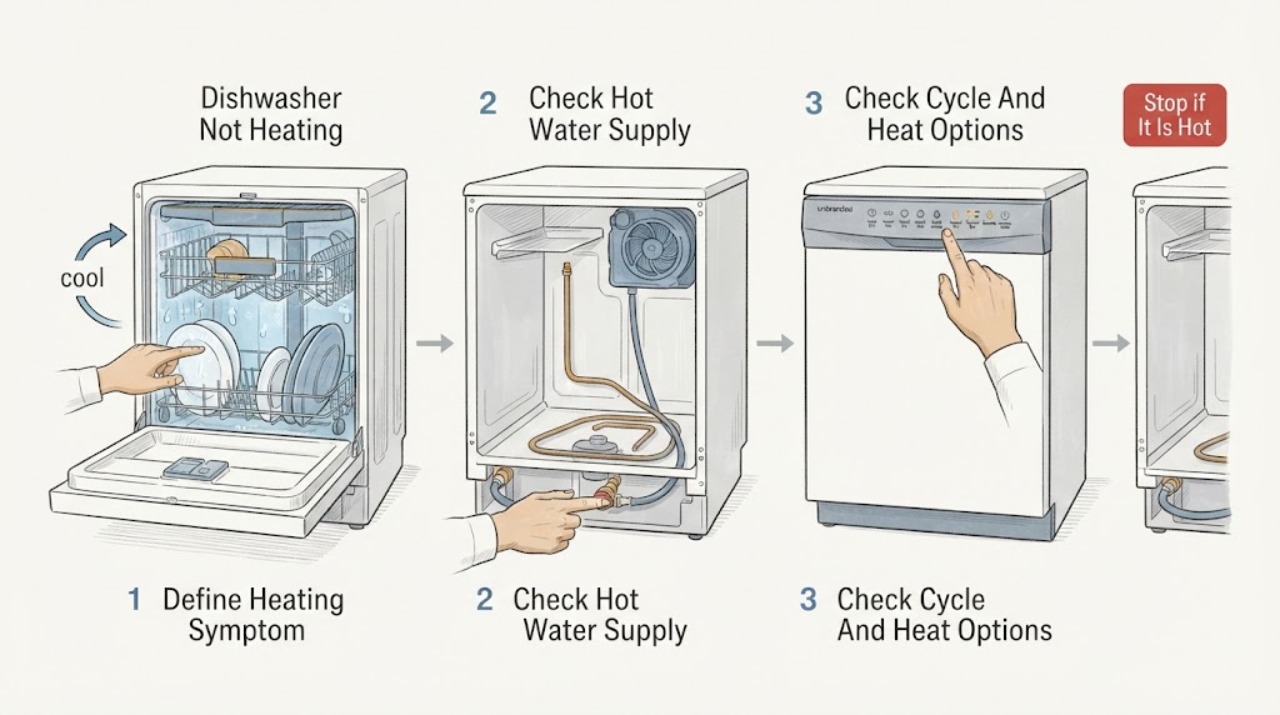
KitchenAid Dishwasher Not Heating: Check Water Supply, Cycle, and Heat Results
First define what is not heating: incoming wash water, the final rinse and drying phase, or the dishes at the end. KitchenAid says dishwashers perform best with incoming water around 120°F (49°C), and that a cold supply can lengthen cycles because the appliance may spend more time heating.
-
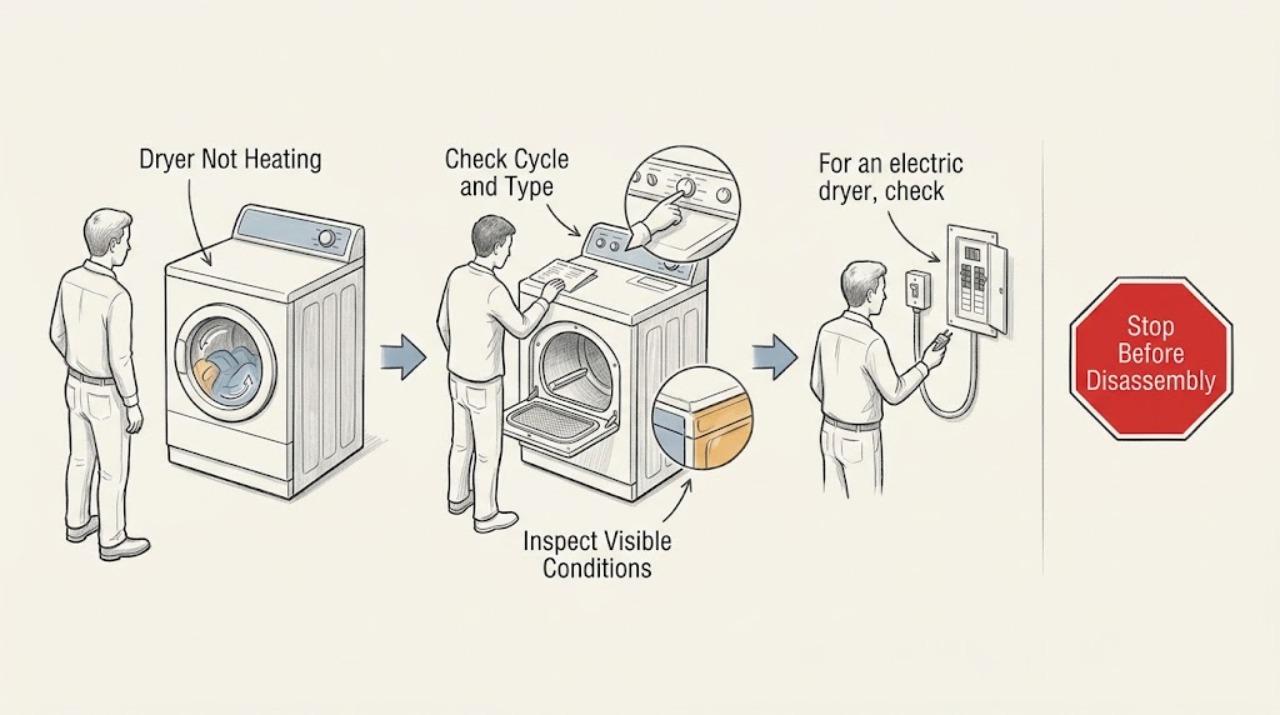
KitchenAid Dryer Not Heating: Check the Cycle, Power or Gas Supply, and Airflow
Start with the cycle: Air Only intentionally tumbles without heat, so select a heat cycle appropriate for the load. Then confirm the dryer door is closed, the controls and Start command are accepted, and the power supply is stable.
-
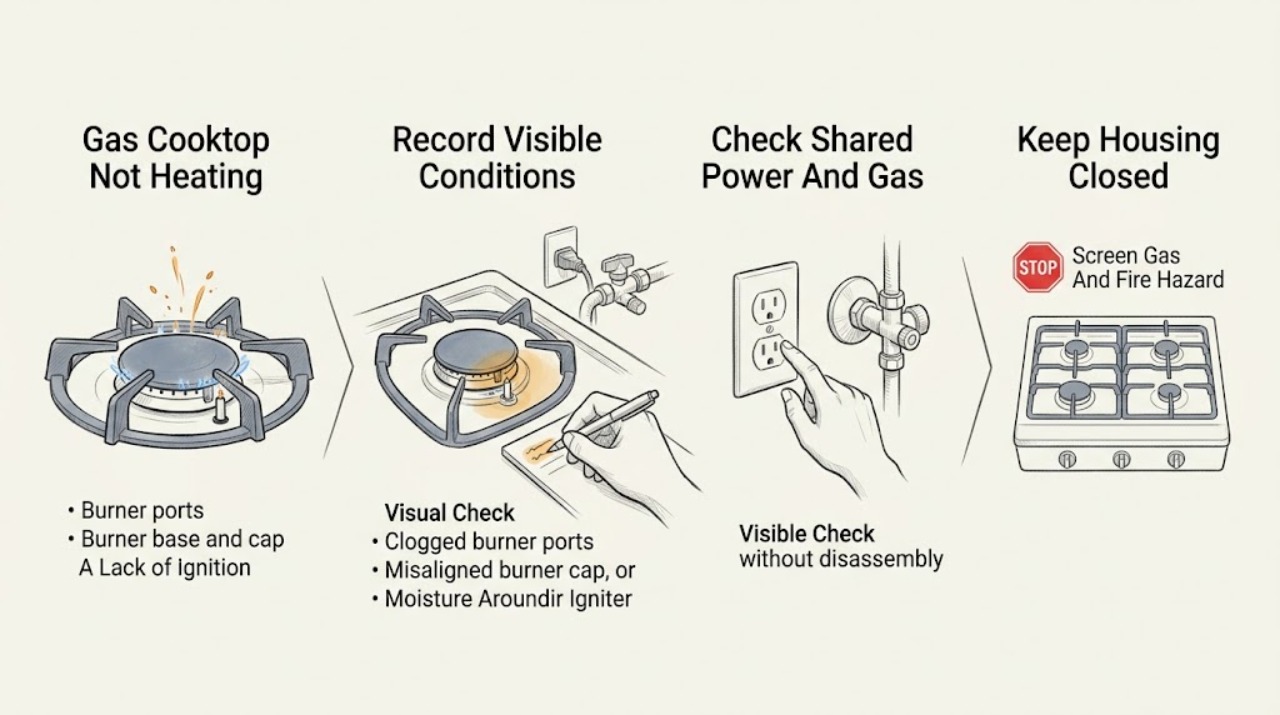
Kitchenaid Gas Cooktop Not Heating
A KitchenAid gas cooktop that does not heat may have an unlit burner, a wet or obstructed port, a misaligned burner cap, a control lock, loss of electrical ignition power, a closed gas supply, a flame or fuel-conversion issue, or a component fault. Stop immediately for gas odor, a continuous gas sound, smoke, sparks, arcing, a yellow or unstable flame, scorching, or a cracked or wet cooktop.
-
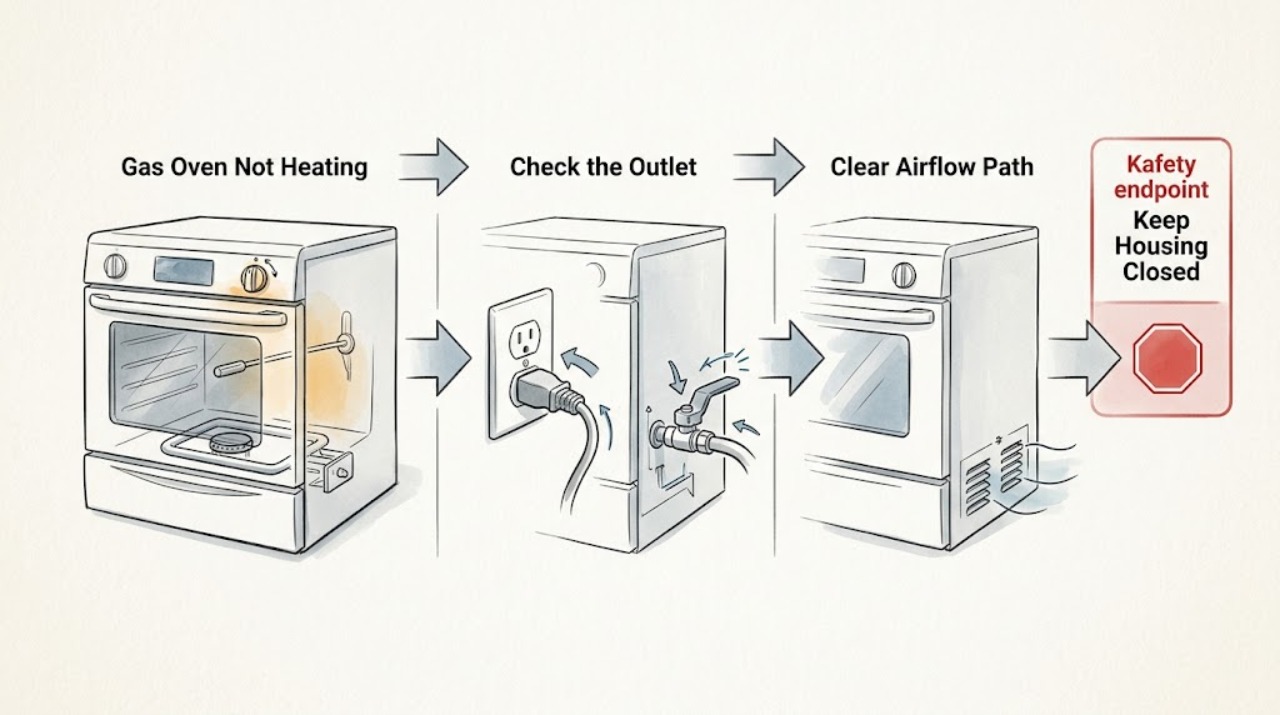
KitchenAid Gas Oven Not Heating: Check Ignition, Gas Supply and Controls Safely
A KitchenAid gas oven that is not heating needs a fuel, control and ignition check in that order. Confirm the full model and that the appliance is a gas range or gas wall oven; the oven still needs safe electrical power for its controls and igniters.
-
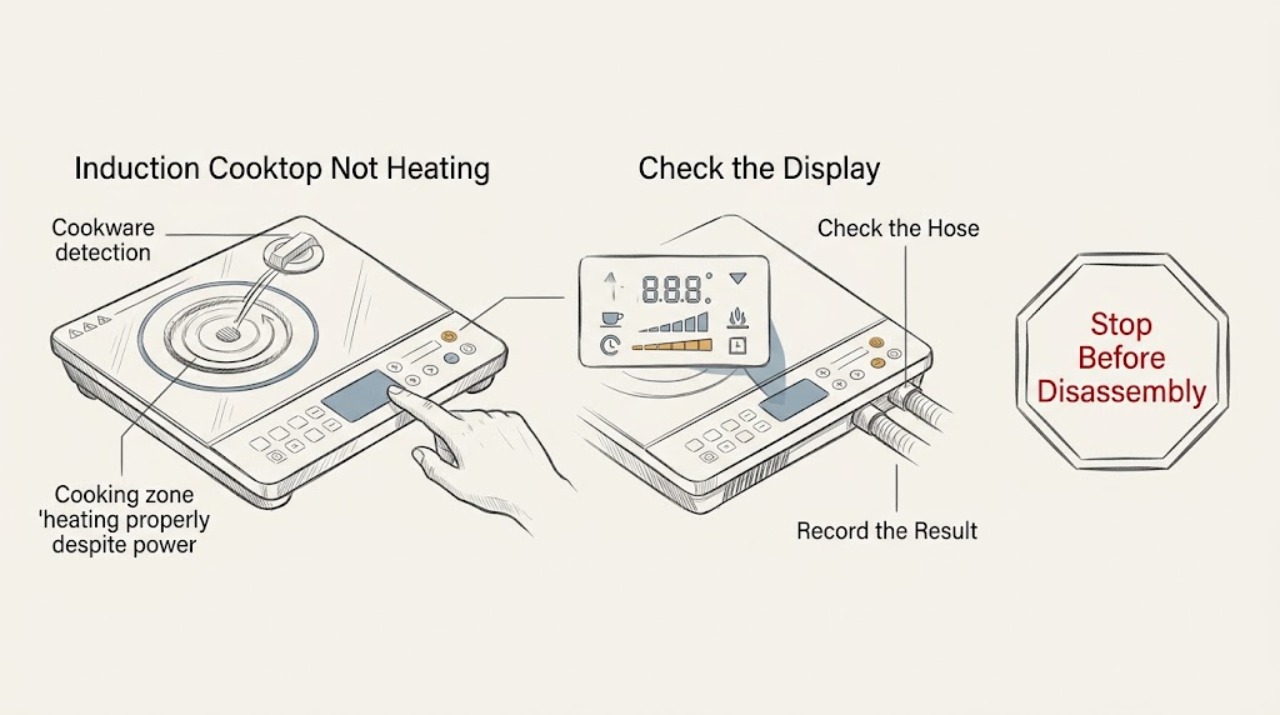
KitchenAid Induction Cooktop Not Heating: Check Pan Detection, Controls, and Cooling
A KitchenAid induction cooktop may appear not to heat when the pan is not ferromagnetic, is too small or off-center, the control lock is active, the touch panel is wet or obstructed, or the cooktop has reduced or stopped output while protecting itself from heat or poor ventilation. Use a flat induction-compatible pan centered on the matching zone, select a heat level, clear and dry the controls, and let a hot cooktop cool before trying again.
-
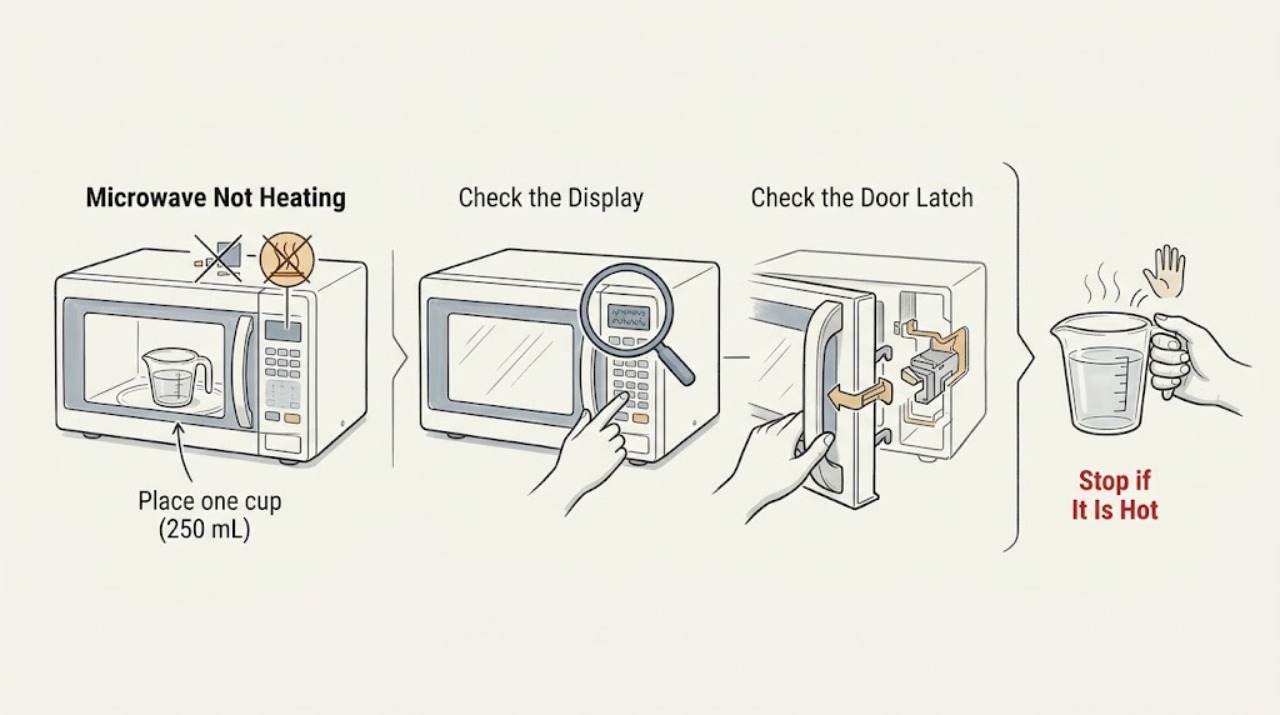
KitchenAid Microwave Not Heating
Run a one-minute, full-power test with one cup of water. If the water stays cold while the light, fan, or turntable operates, stop using the microwave and arrange qualified service; do not remove its cabinet.
-
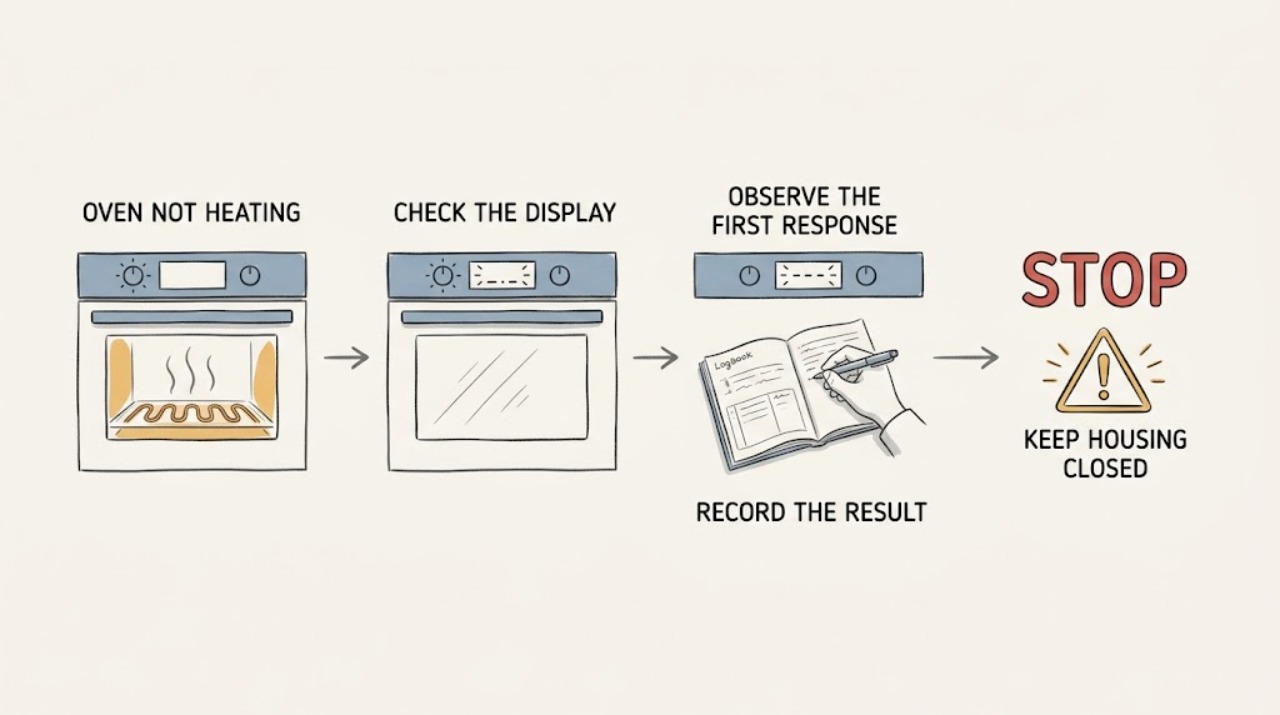
KitchenAid Oven Not Heating: Checks for Electric and Gas Models
First decide whether the KitchenAid oven is completely without power or has a live display that runs a cycle without producing heat. With no signs of smoke, gas, water, arcing, or repeated breaker trips, check the door, selected cooking mode, temperature, Control Lock or demo mode, and any Delayed Start setting.