
Repair problem
Not Heating Troubleshooting Guides – Page 4
Published FixGraph guidance for diagnosing and responding to not heating.
Matching published guides
Choose a guide that matches the service, equipment, and conditions you are seeing.
-
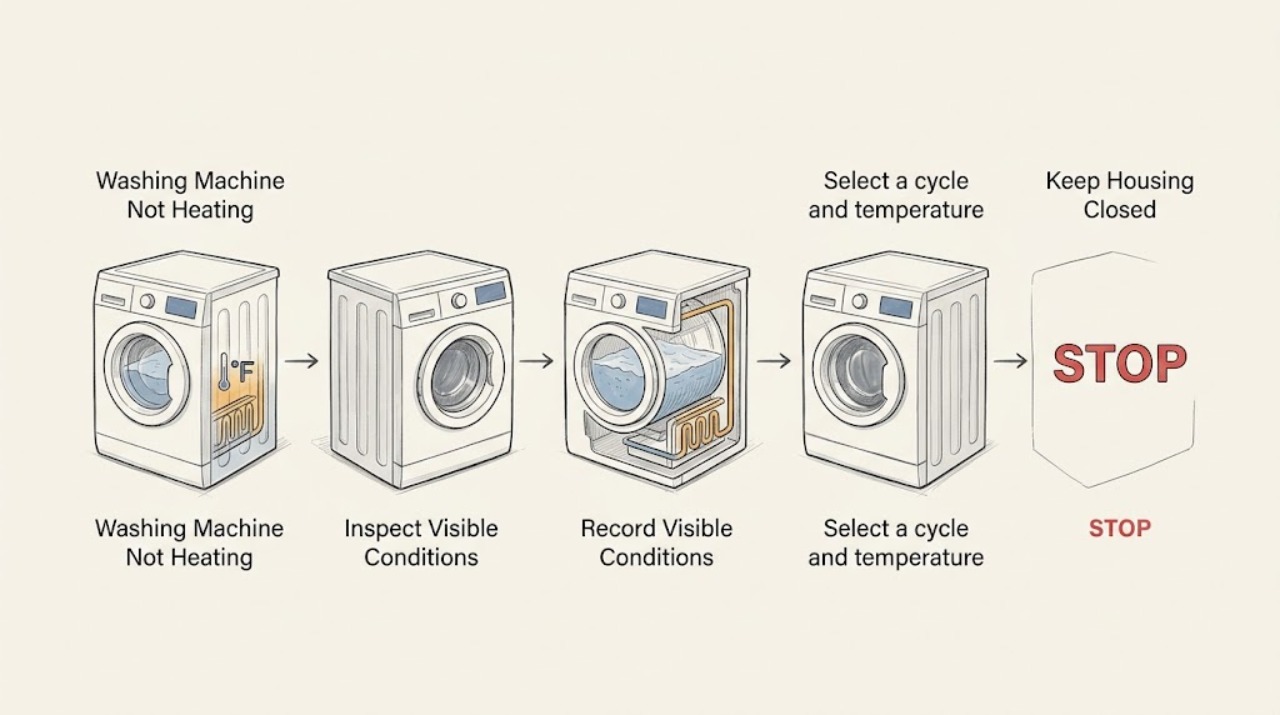
KitchenAid Washing Machine Not Heating: Check Water, Settings, and Model Features
Most KitchenAid washers rely on the home's hot and cold water supply and mix incoming water to the selected wash temperature; an internal heater or steam phase exists only on models whose manual lists that feature. A cool fill does not always mean the washer's heater has failed: the selected cycle, load, household water temperature, hose connections, and temperature-sensing logic all matter.
-
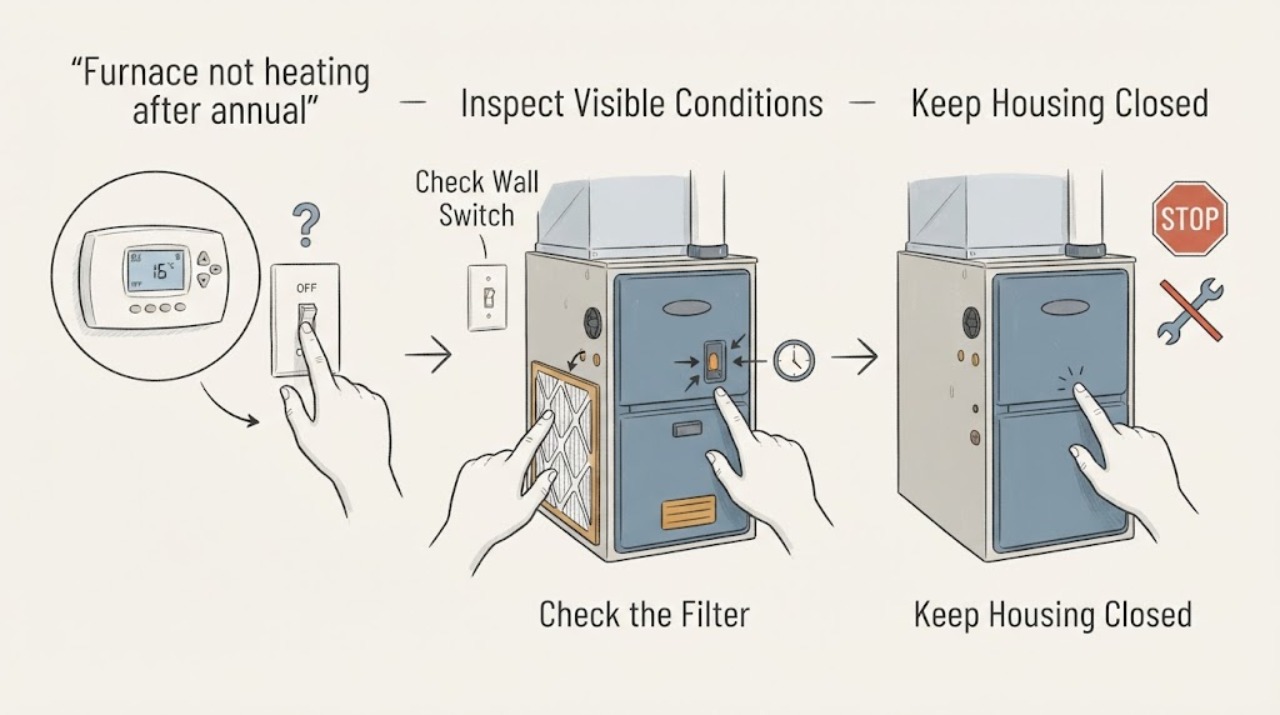
Lennox furnace not heating after annual maintenance: safe checks
A Lennox furnace that is not heating after annual maintenance may be responding to a thermostat setting, a power interruption, a restricted filter, an access panel that is not seated, or a fault in ignition, airflow, controls, or venting. The timing after maintenance is useful history, but it does not prove the visit caused the failure.
-
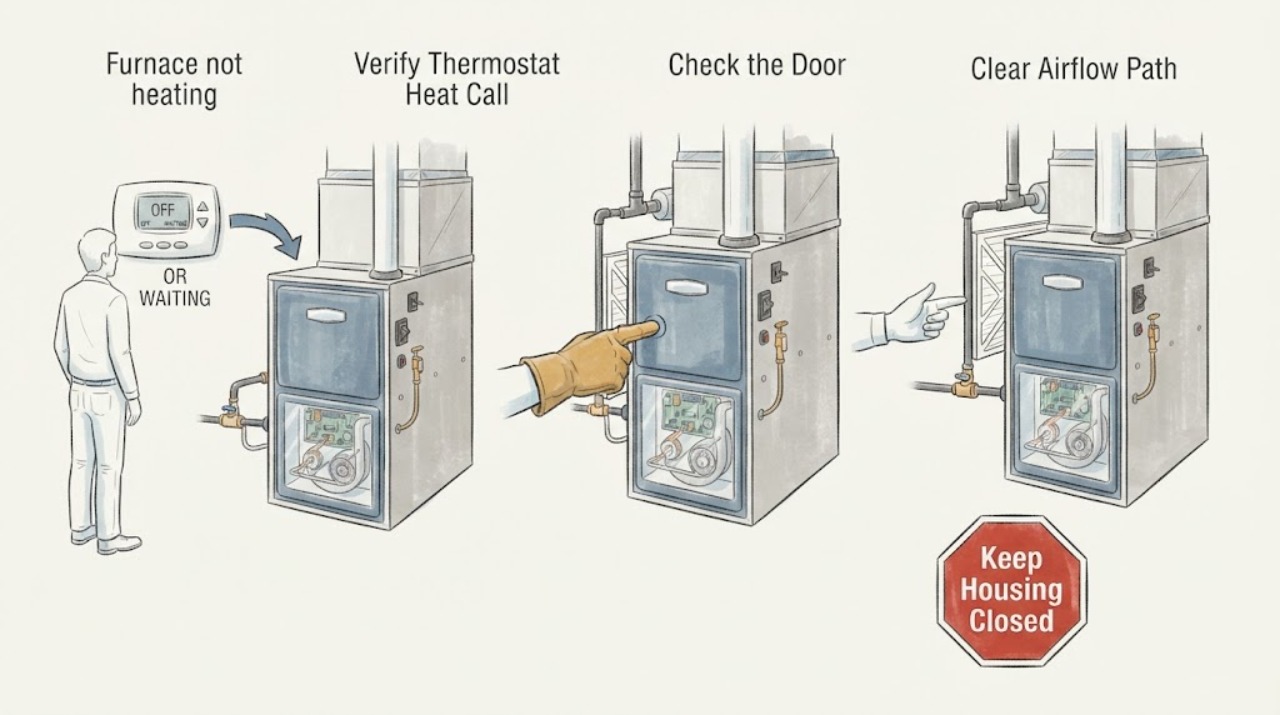
Lennox furnace not heating: What to Check and What to Do Next
If a Lennox furnace is not heating, first confirm the thermostat is calling for heat and the fan is set to Auto, then check the furnace disconnect or breaker and the filter without opening the cabinet. A brief burst of cool air at startup can be normal while the ducts warm, but air that stays cool means the burners or electric heat are not producing or delivering heat.
-
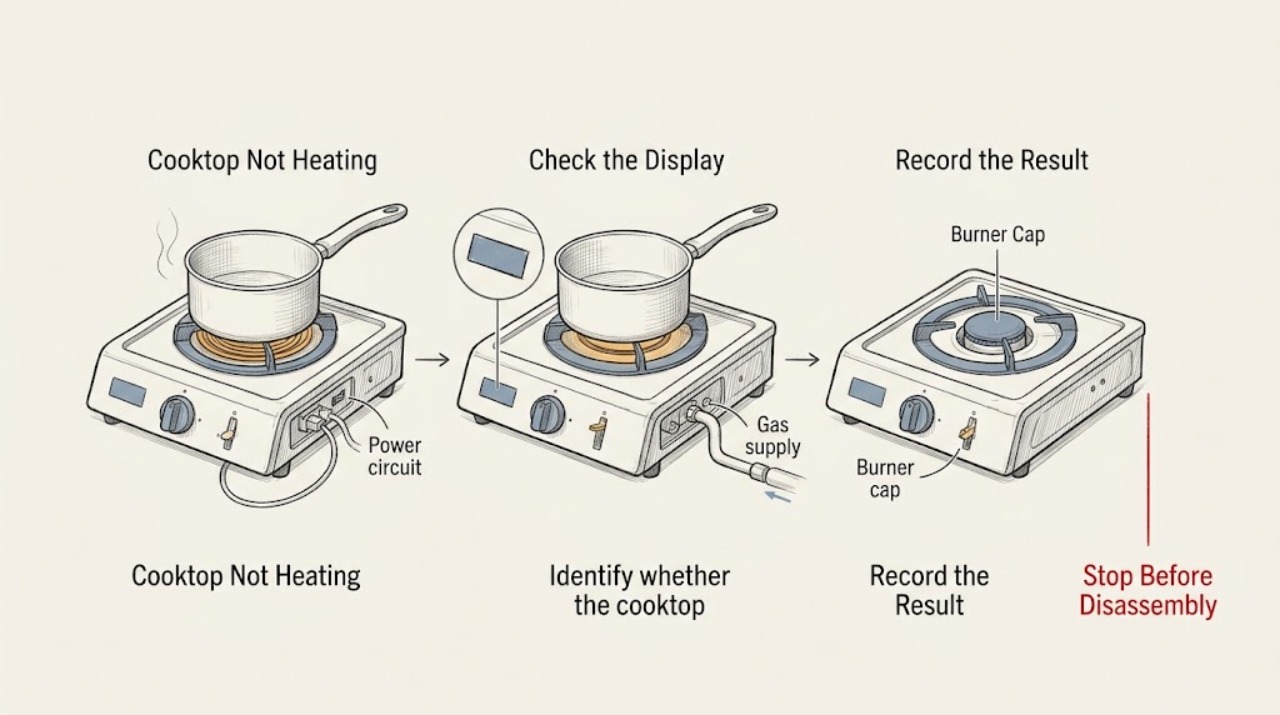
LG Cooktop Not Heating: Check the Correct Burner, Power, and Gas Safety
An LG cooktop that is not heating may have a control or power problem, an unsuitable or incorrectly positioned pan on an induction zone, a burner cap or head that is wet or misassembled on a gas model, or an electric element that is cycling normally or has failed. First identify whether the issue affects one burner or all of them, then switch the controls off and check for a cracked surface, smoke, burning smell, gas odor, liquid in the controls, or damaged wiring.
-
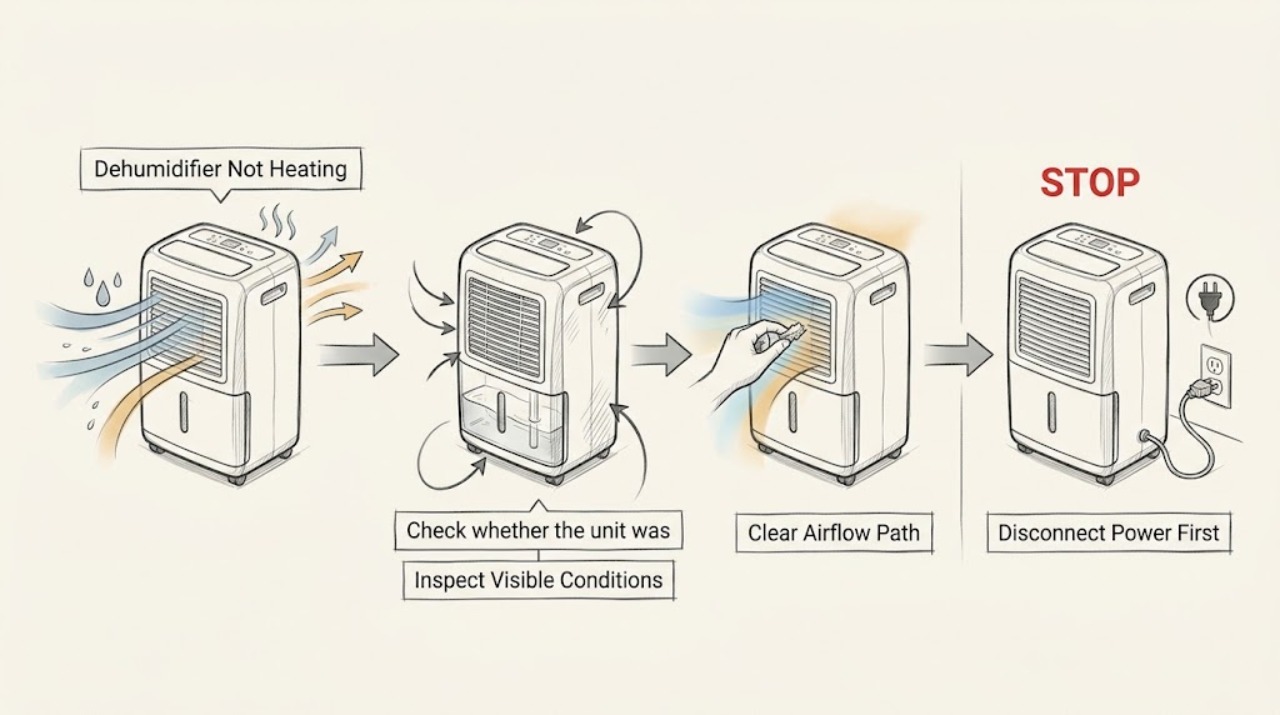
LG Dehumidifier Not Heating
An LG dehumidifier is not a room heater: its normal dehumidifying cycle sends dry air back into the room and can raise room temperature, but the outlet temperature is not a standalone heating test. If the air feels cool, first confirm that the fan runs, the humidity setting is below the room reading, and the room is within the unit's specified operating range.
-
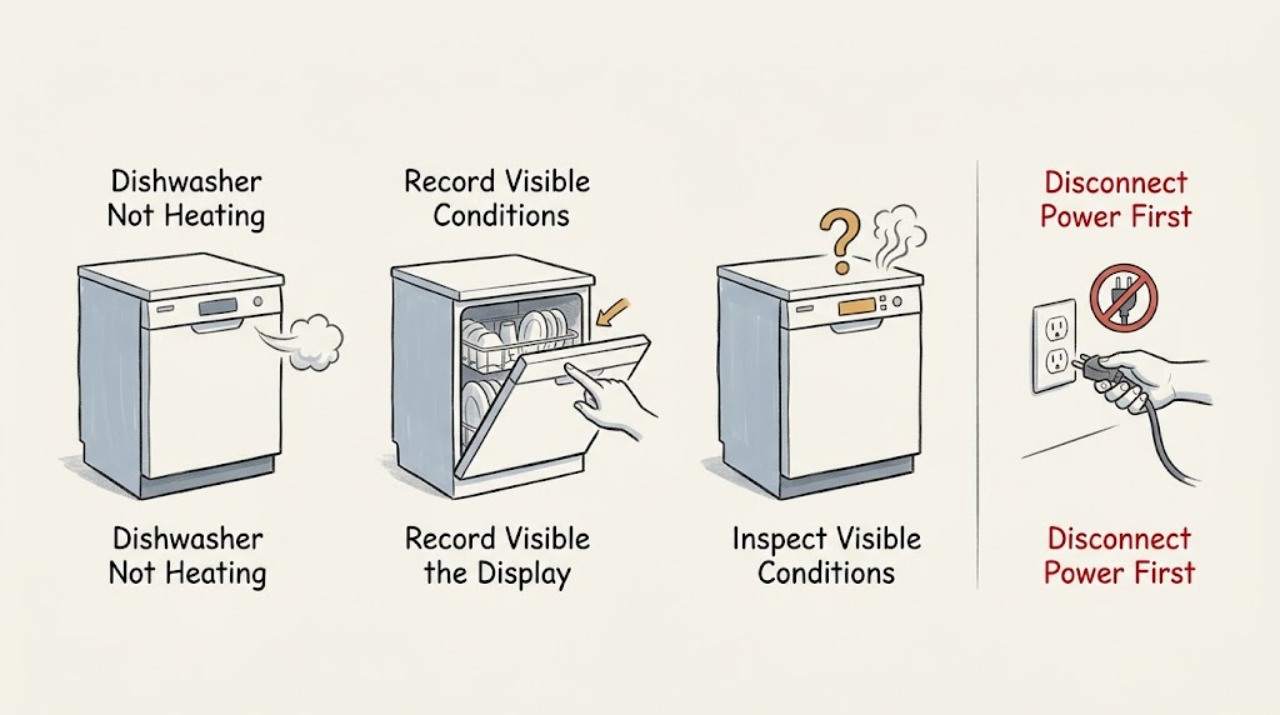
LG Dishwasher Not Heating
Separate a true heating fault from normal drying behavior first. Record the selected cycle, whether wash water or dishes become warm, and any code. Wet plastic or a wet tub wall can be normal, while everything remaining wet, a returning HE or temperature code, or no airflow during the model's documented dry stage needs the matching LG check or service; do not test live heater wiring.
-
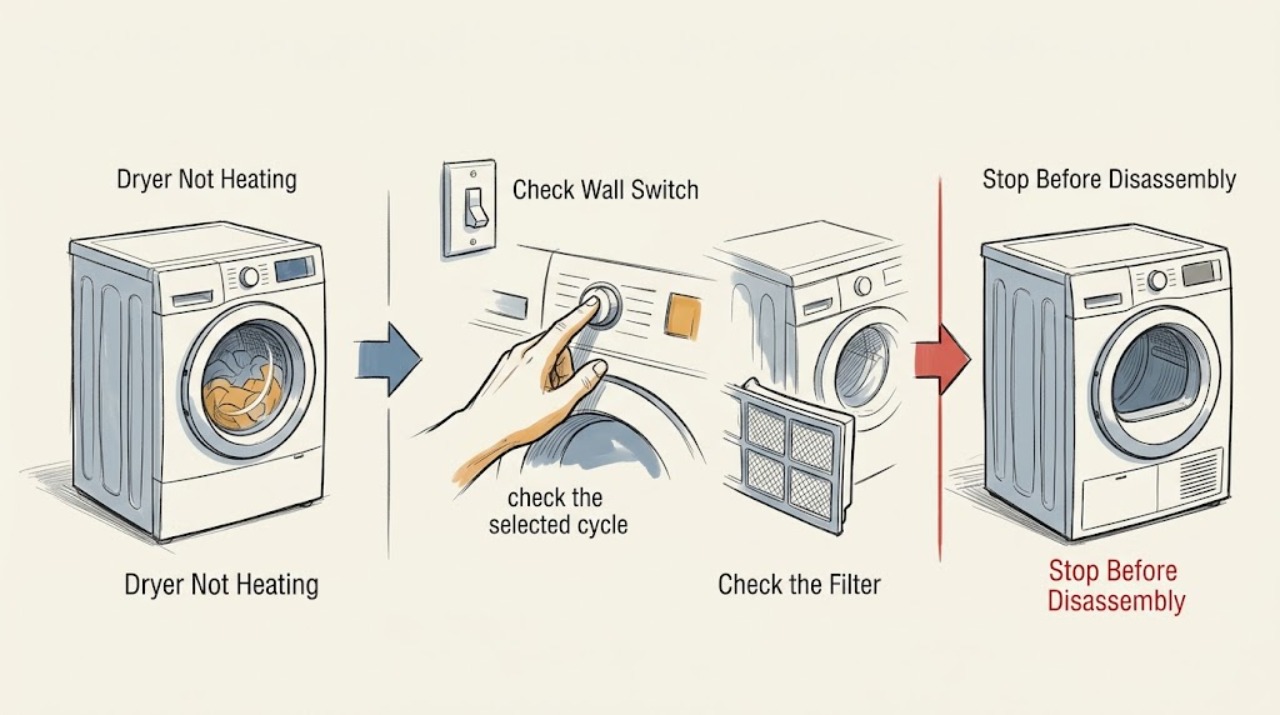
LG Dryer Not Heating: Check the Cycle, Airflow, and Power Safely
Before troubleshooting an LG dryer that is not heating, stop for gas odor, burning smell, smoke, sparks, visible melting, overheating, or a breaker that trips again. If the appliance is safe and cool, check whether Air Dry or Energy Saver is intentionally using little or no heat, then try a normal heat setting only if the model manual permits it.
-
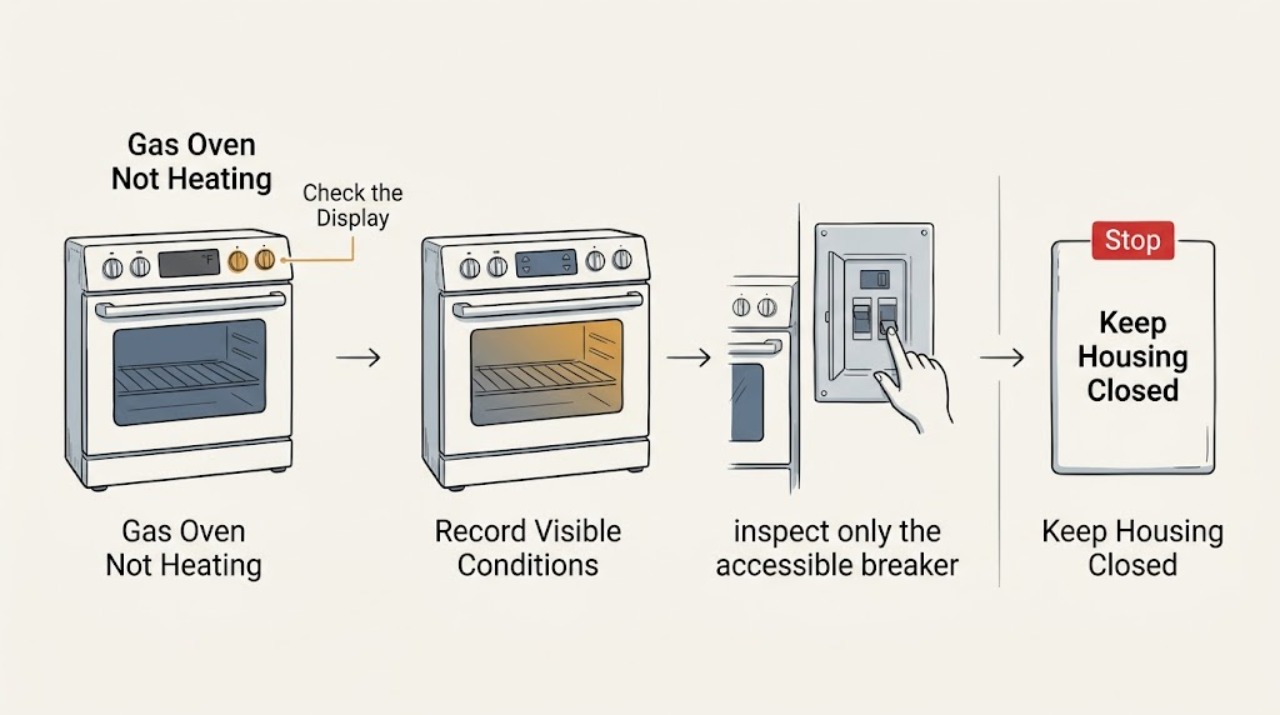
LG Gas Oven Not Heating: Check Settings, Gas Supply, and Ignition Safely
If an LG gas oven is not heating, first stop for gas odor or hissing, delayed ignition or a bang, abnormal flame, smoke, arcing, water near electrical parts, or a repeated breaker trip. If there is no hazard, record the exact model and any displayed code, confirm the breaker and direct power connection, select the intended oven mode and temperature, press START to confirm it, and check that Oven Lockout or Child Lock and Delay Start are not active.
-
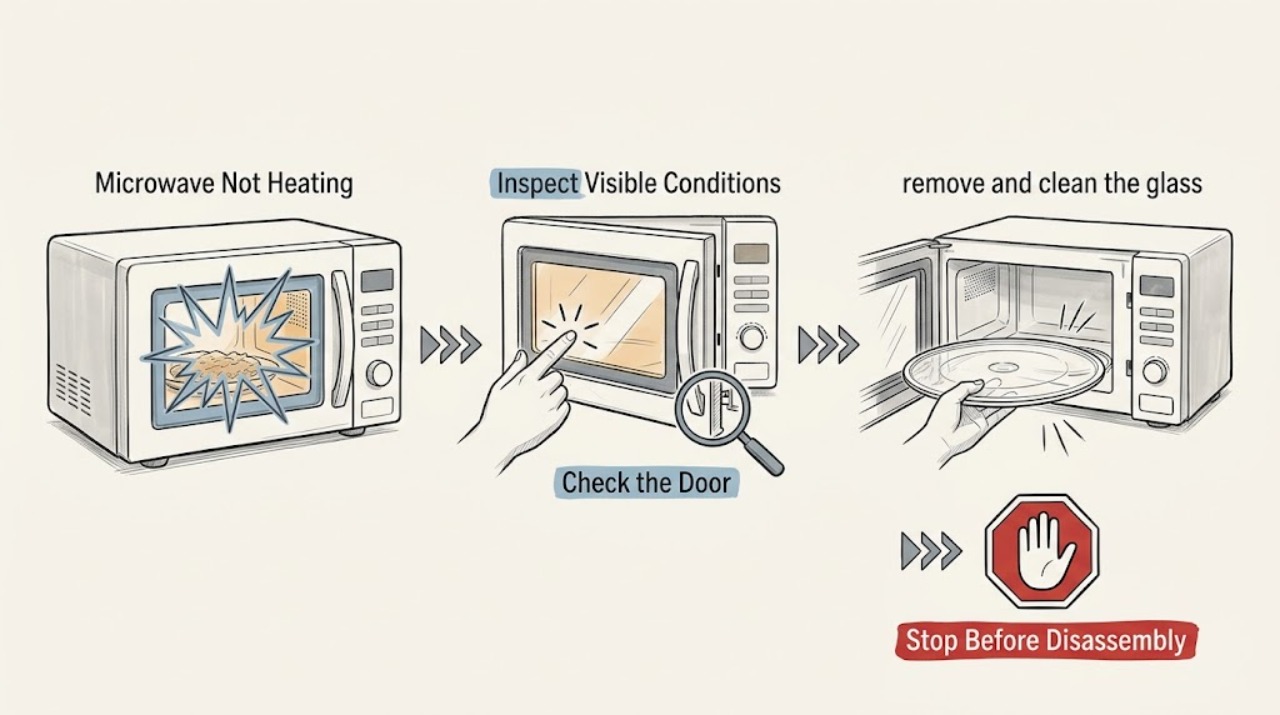
LG Microwave Not Heating: Use a Water Test to Split the Causes
Test the LG microwave with one cup of water in a microwave-safe container using a short normal cycle. Before blaming a heating part, check frozen food, cooking settings, door operation, and whether the glass tray rotates freely. If the water remains cold while the cycle runs, stop and arrange qualified service; never open the cabinet.
-
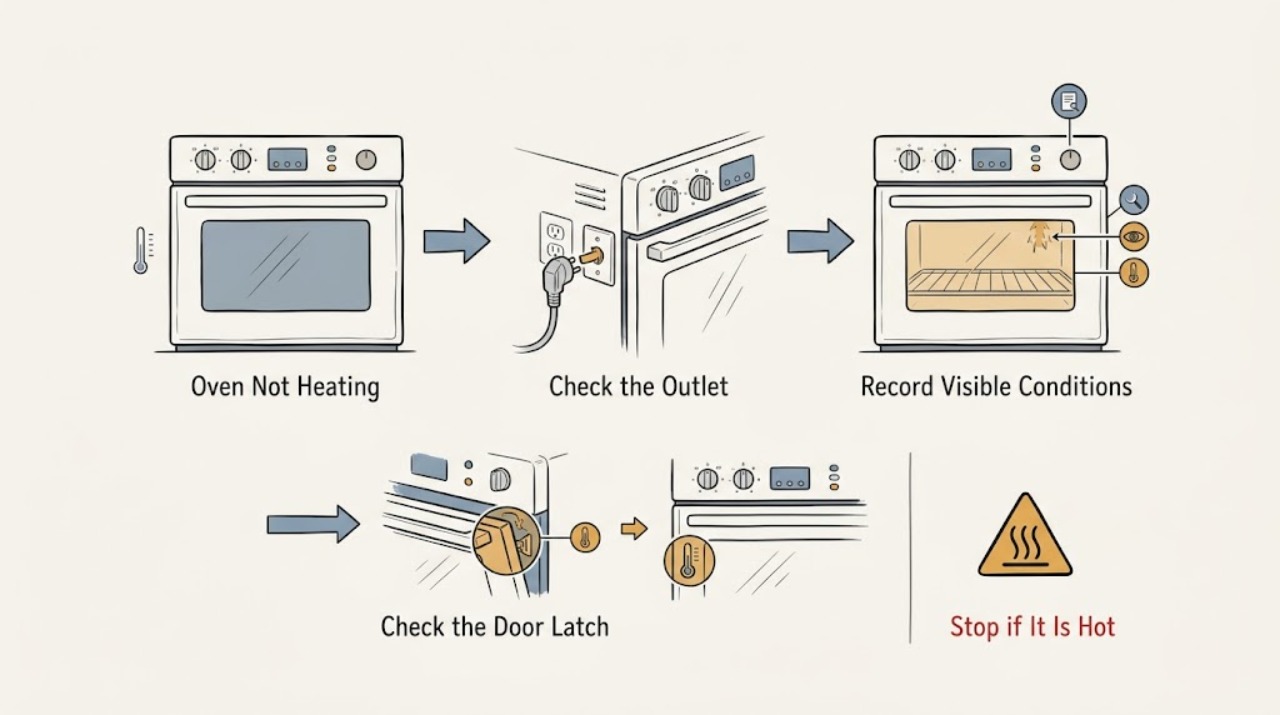
LG Oven Not Heating: Check Settings, Power, and Fuel Type Safely
First determine whether the oven has no power, has a working display but does not start, or starts without producing heat. Confirm the exact LG model and whether it is electric, gas, or dual-fuel, then check the selected cooking mode, temperature, START confirmation, delay start, lockout, door, and any displayed error.
-
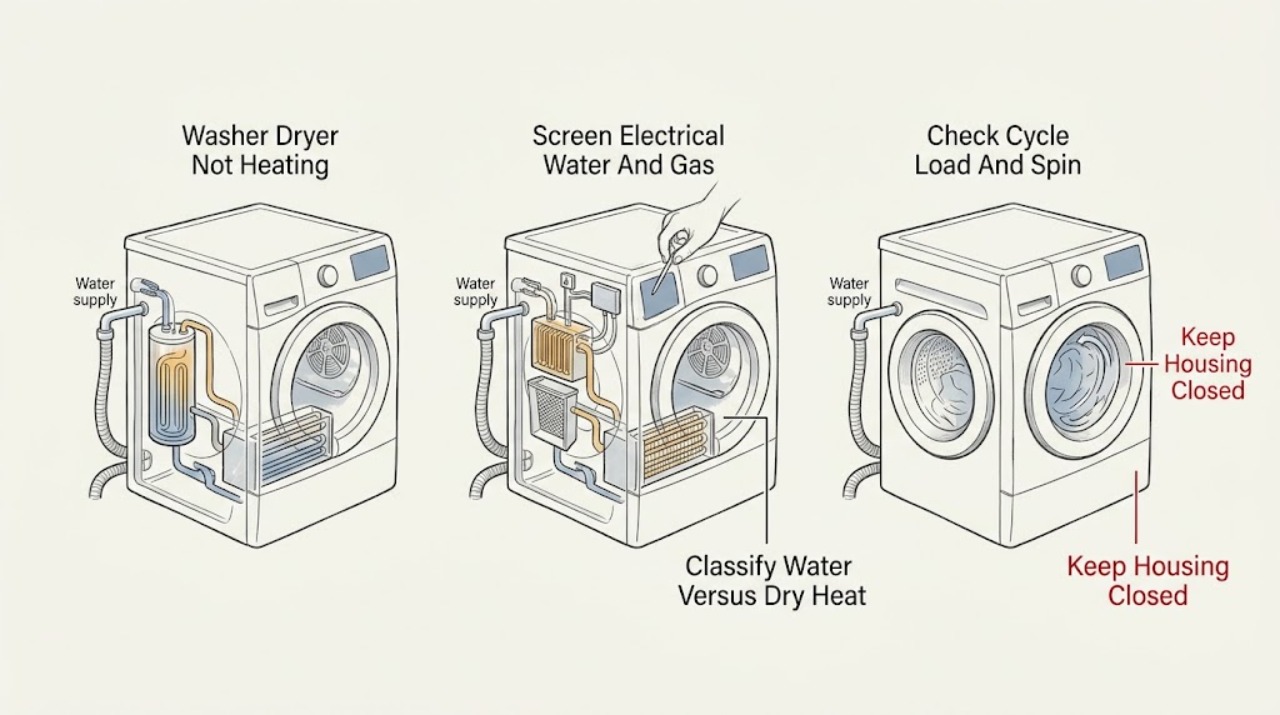
Lg Washer Dryer Not Heating
An LG washer-dryer that seems not to heat may be showing normal cold-water warm-up behavior, using an energy-saving or low-heat cycle, carrying too large or too-wet a load, lacking the water flow needed by a ventless drying system, or have a clogged lint filter, heat exchanger, sensor, fan, heater, control, or wiring fault.
-
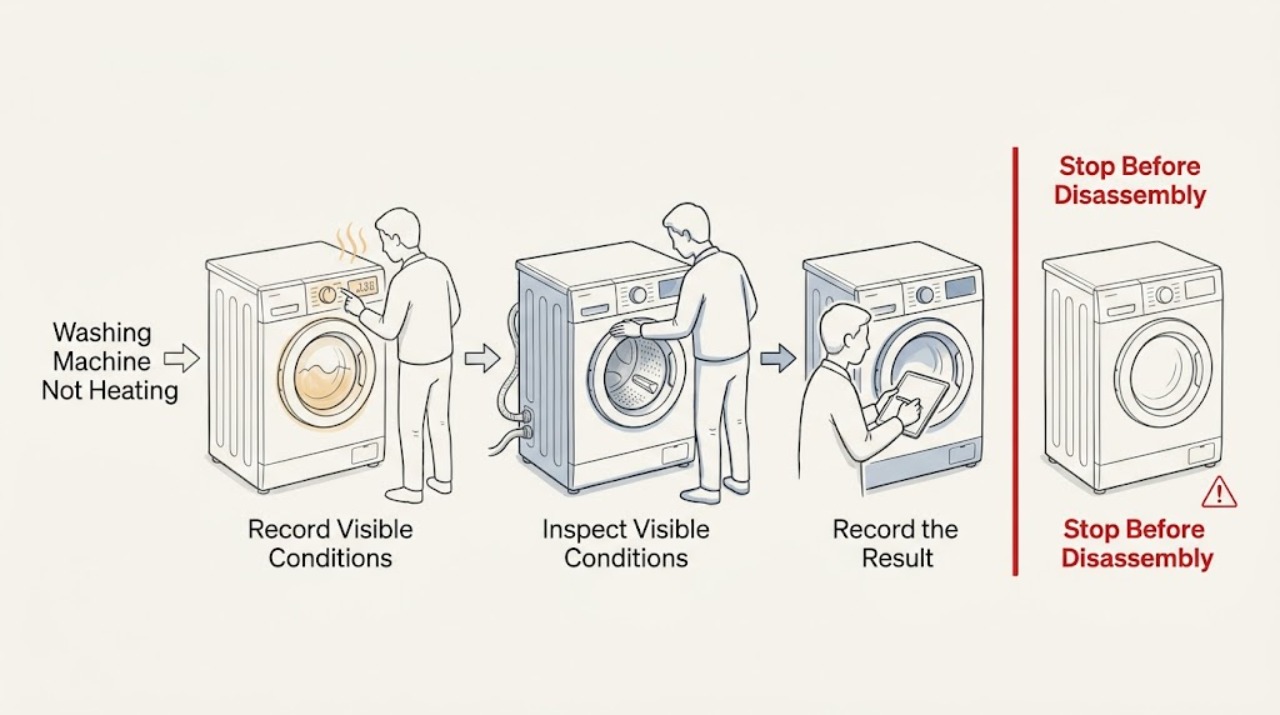
LG Washing Machine Not Heating: Check Water Supply, Cycle Settings, and Model Features
An LG washing machine may appear not to heat because the selected cycle mixes household hot and cold water, the hot supply is cold or slow to arrive, the machine is intentionally moving on after its heating time limit, or the particular model's internal heater or steam function has a fault. Start by selecting the cycle and temperature in the order shown by the model manual, then check the home's hot water and the external hot and cold hose connections.
-
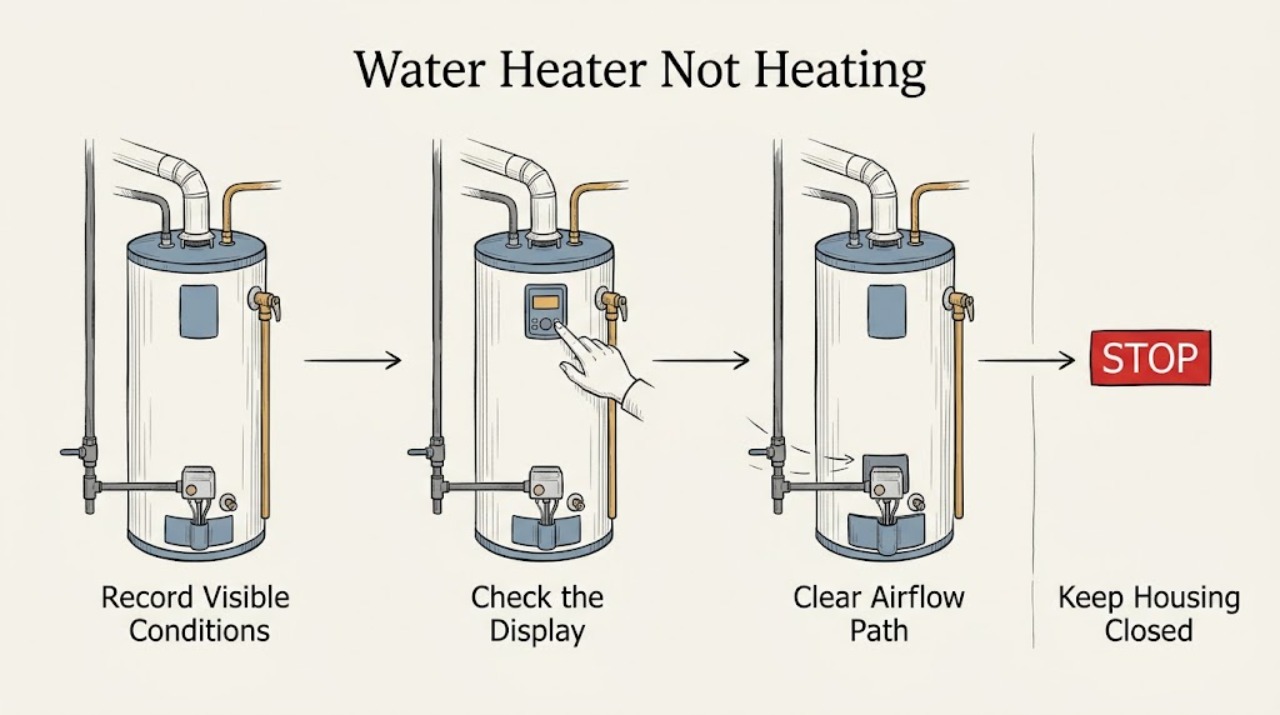
LG Water Heater Not Heating: Separate Recovery From a Fault
An LG heat-pump water heater can deliver little or no hot water after unusually high demand, a low temperature setting, a tripped safety control, poor air exchange, or loss of electrical supply. Check demand, the displayed setting, breaker, and air filter/clearance from outside the unit. Do not open covers or reset a safety device unless the model procedure and a qualified person permit it.
-
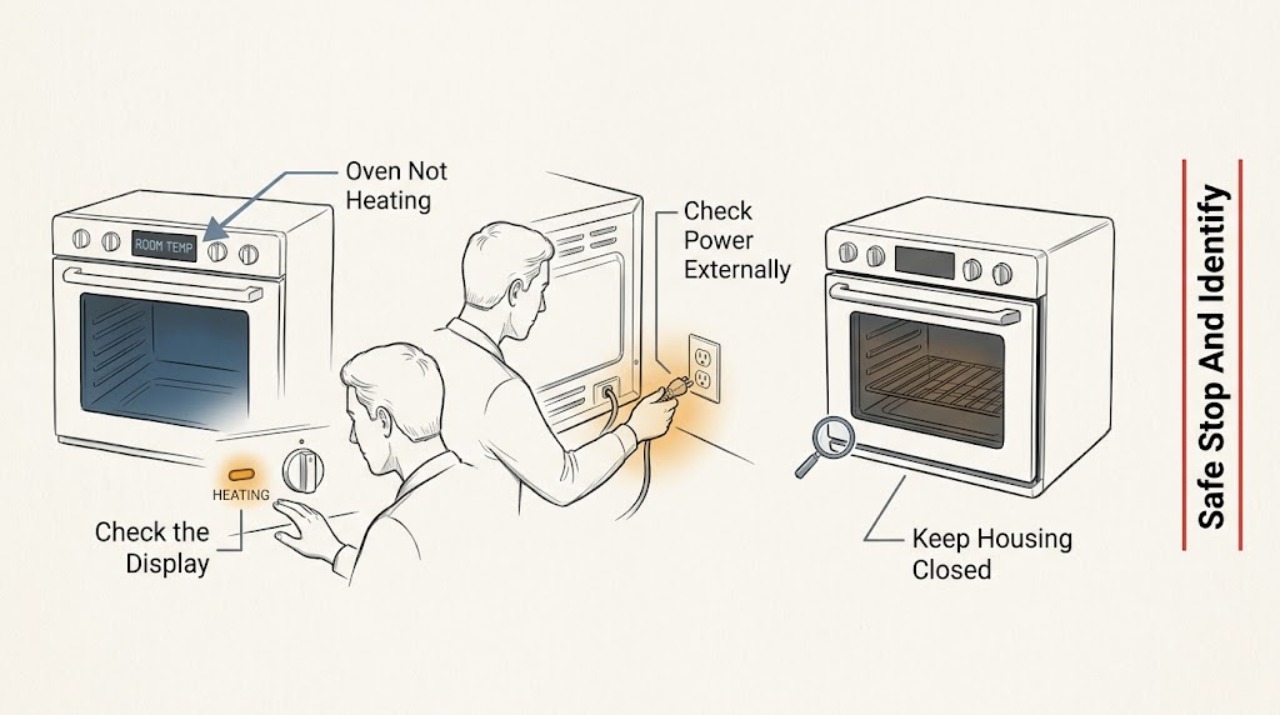
Magic Chef Oven Not Heating: Check the Mode, Power, and Fuel Path
First identify whether the Magic Chef oven is electric or gas and whether the oven is completely inactive, runs without heat, heats weakly, or stops partway through a cycle. Confirm the clock, cooking mode, temperature, and Start or control setting for the exact model, then check power and, only for a gas model, whether other gas appliances work.
-
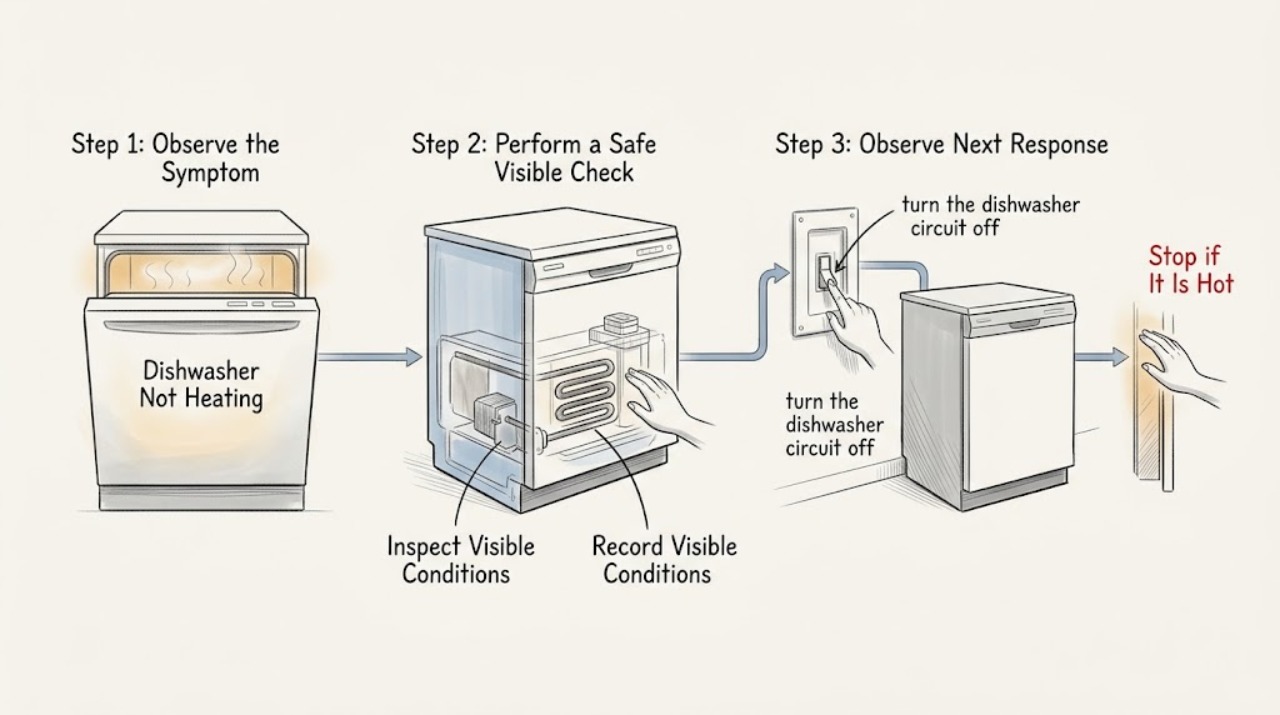
Maytag Dishwasher Not Heating: Separate a Cycle Setting From a Heat Fault
Confirm that the selected Maytag dishwasher cycle includes a heating or heated-dry option, then check the tub for warmth or steam only after the cycle has finished. A one-minute power reset can clear a control interruption, but no heat, a repeated breaker trip, a fault code, or a burning smell requires service. Do not touch or test the heating element or wiring while energized.
-
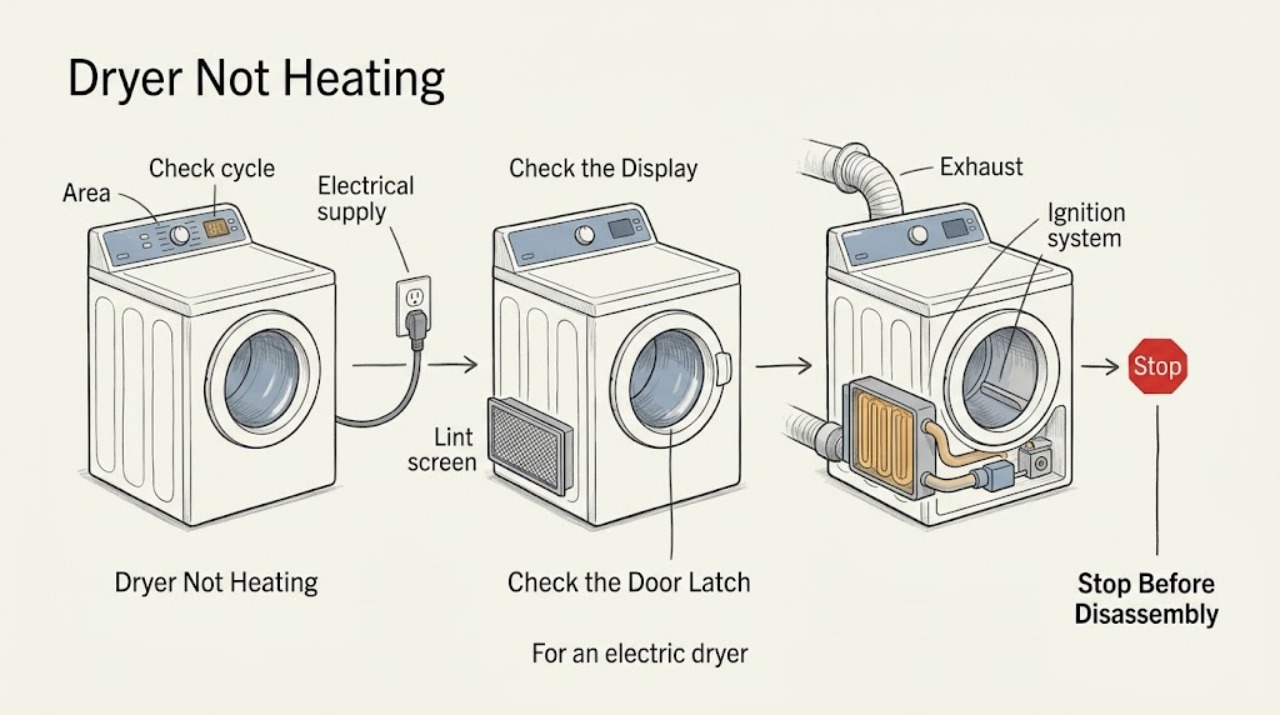
Maytag Dryer Not Heating: Check the Cycle, Airflow, and Power
First stop if there is a burning smell, smoke, sparks, unusual heat, a damaged cord, a gas odor, or a breaker that trips again. Otherwise confirm that the selected cycle is heated rather than Air Only, then check the accessible power supply for an electric dryer or the gas supply and shutoff for a gas dryer.
-
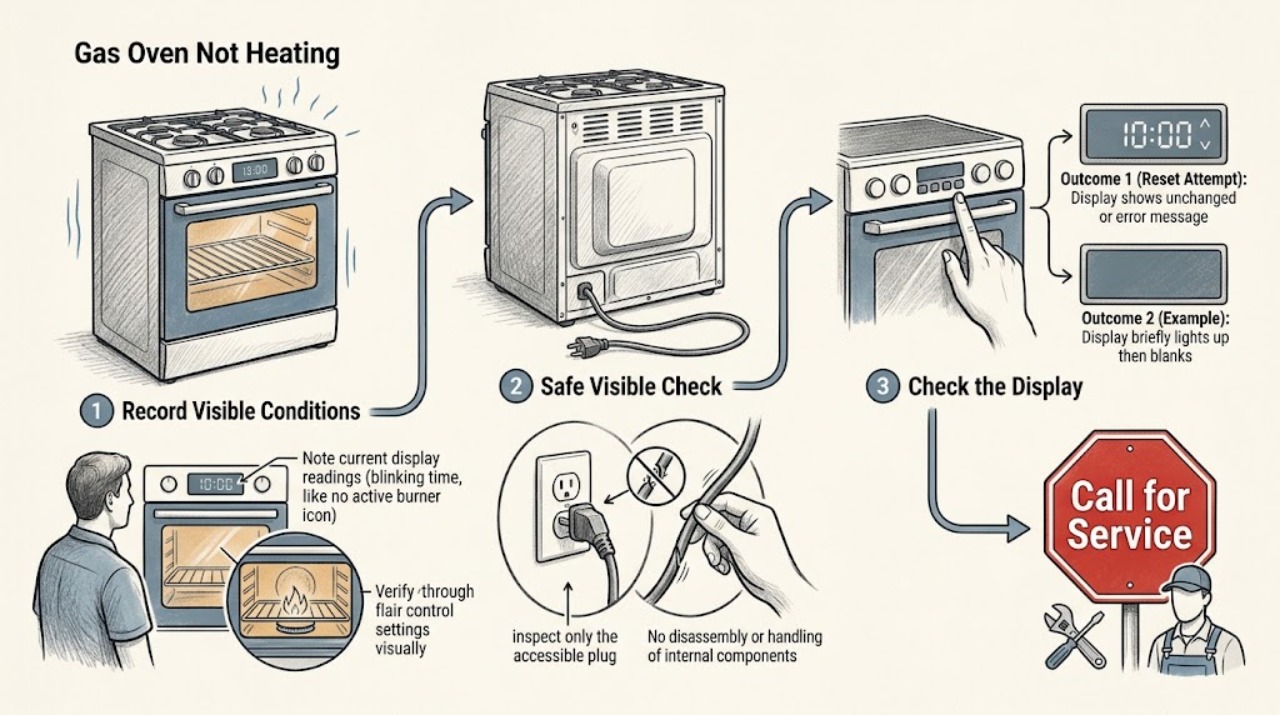
Maytag Gas Oven Not Heating: Safe Checks for Gas, Controls, and Ignition
If a Maytag gas oven is not heating, first separate a completely unpowered control from a powered oven that fails to ignite or stays cold. Confirm the model-specific control setting, door position, and safe external power and gas supply checks.
-
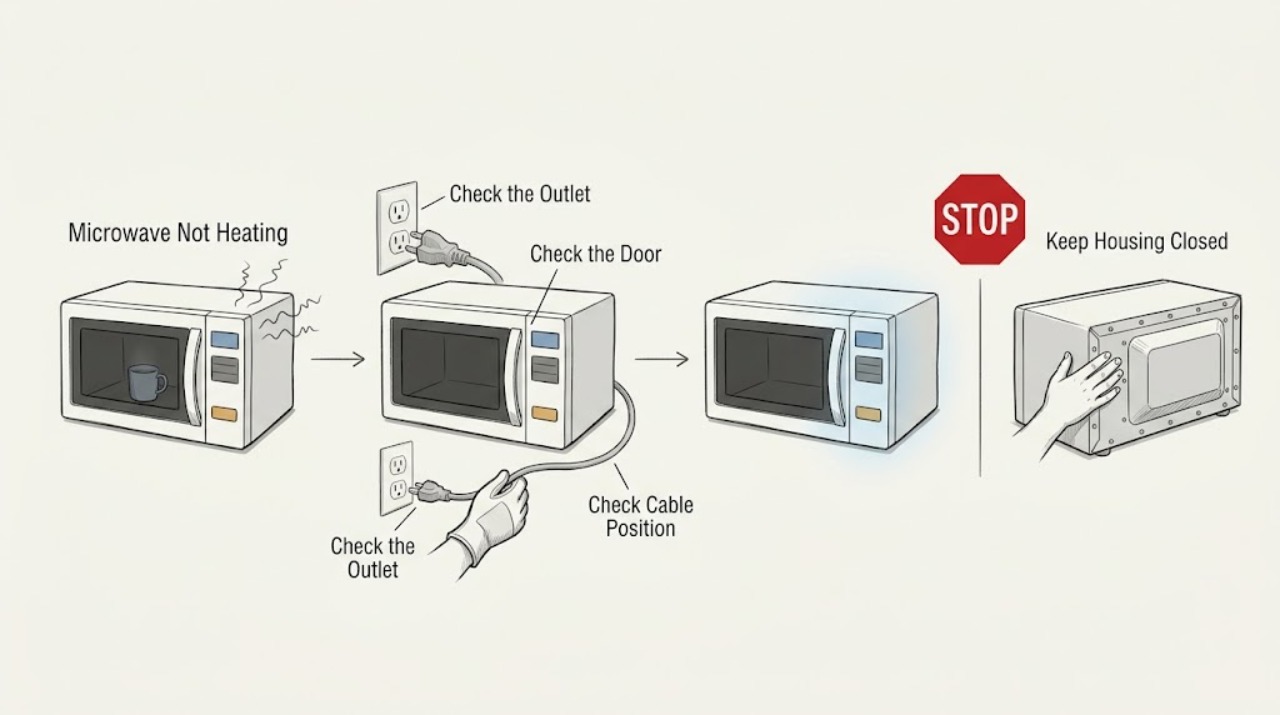
Maytag Microwave Not Heating: Check Power, Door Closure, and Controls
If a Maytag microwave runs but does not heat, first verify the outlet and power path, then make sure the door closes fully and the selected power and time are appropriate. Check for Control Lock, Demo Mode, or a displayed code. Test only with a cup of water as Maytag describes; if it remains cold or the breaker trips, stop and arrange qualified service.
-
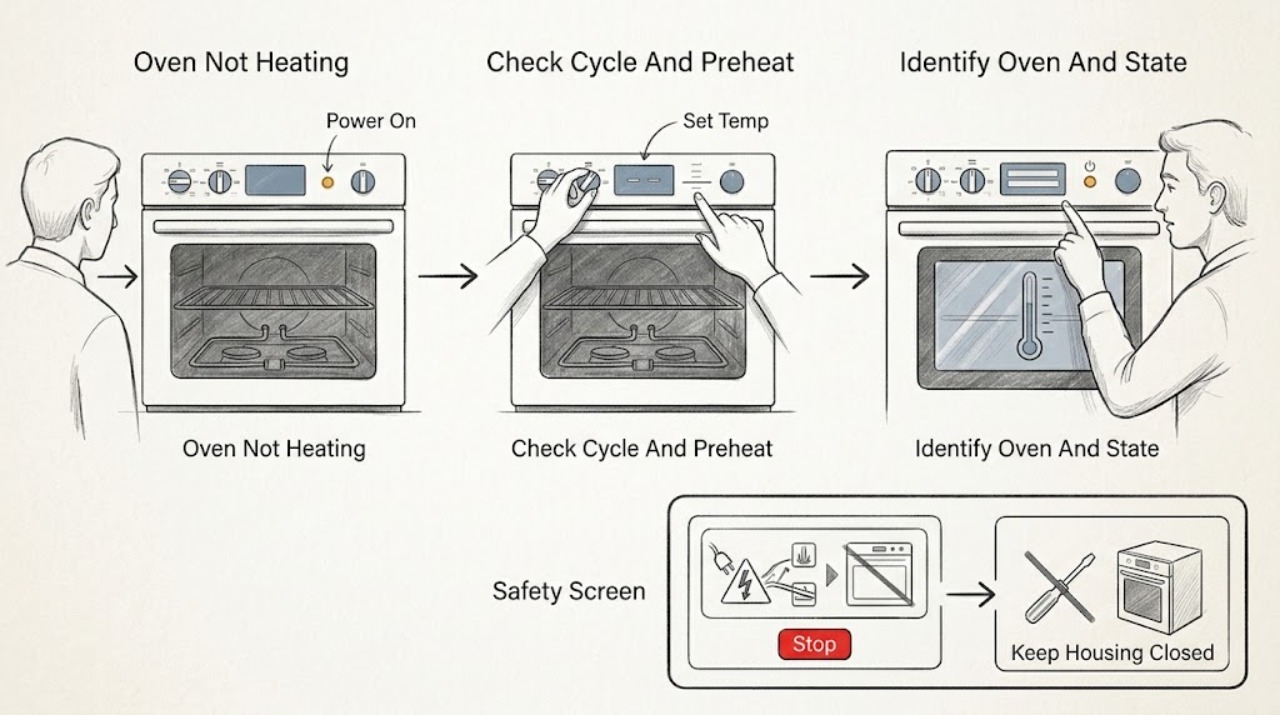
Maytag Oven Not Heating: Check the Setting, Power, and Heat System Safely
First decide whether the Maytag oven is completely dead, preheating slowly, or powering on without producing heat. Read the model label and confirm whether it is electric, gas, or a wall oven, then select Bake with a temperature and allow the documented preheat period without repeatedly opening the door.
-
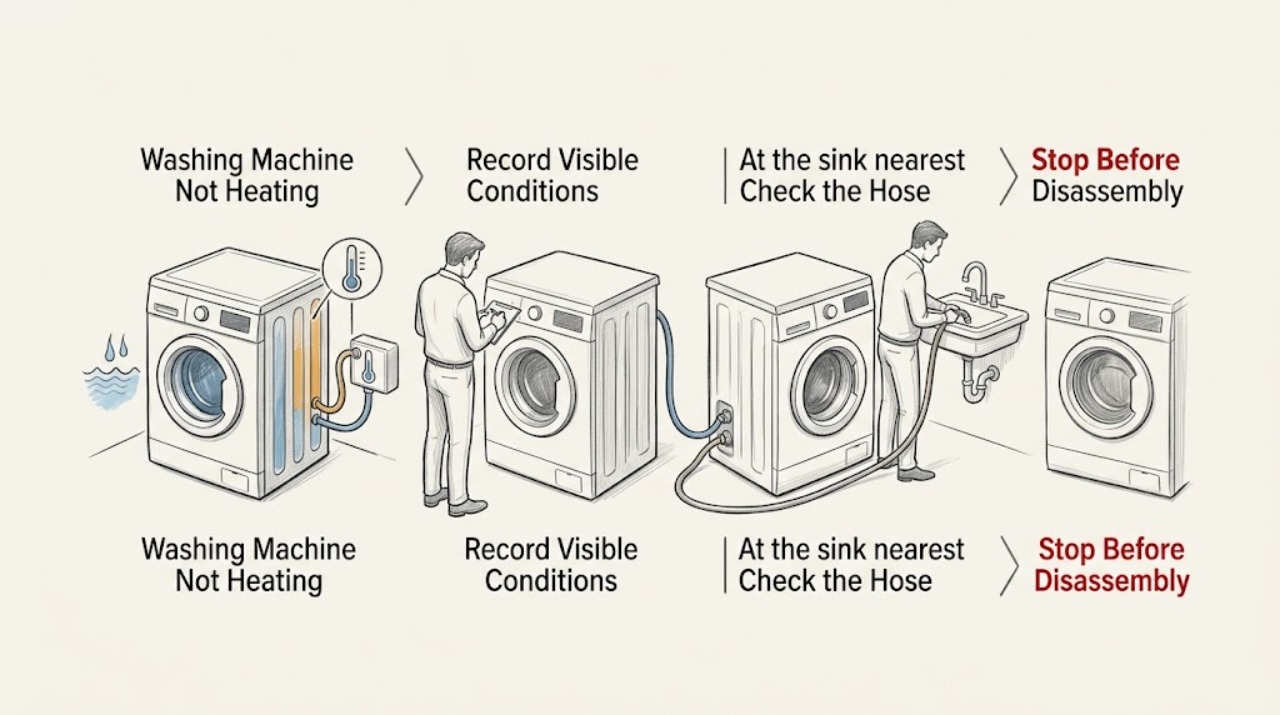
Maytag Washing Machine Not Heating: Check the Water Path First
A Maytag washing machine that seems not to heat is often receiving cooler household water than expected, using a cycle whose temperature is intentionally moderated, or filling through reversed, restricted, or incorrectly opened hot and cold supplies. Maytag says the washer may begin a cycle with cold water, senses temperature in the tub, and can use an internal heater only on select heated or Steam cycles.
-
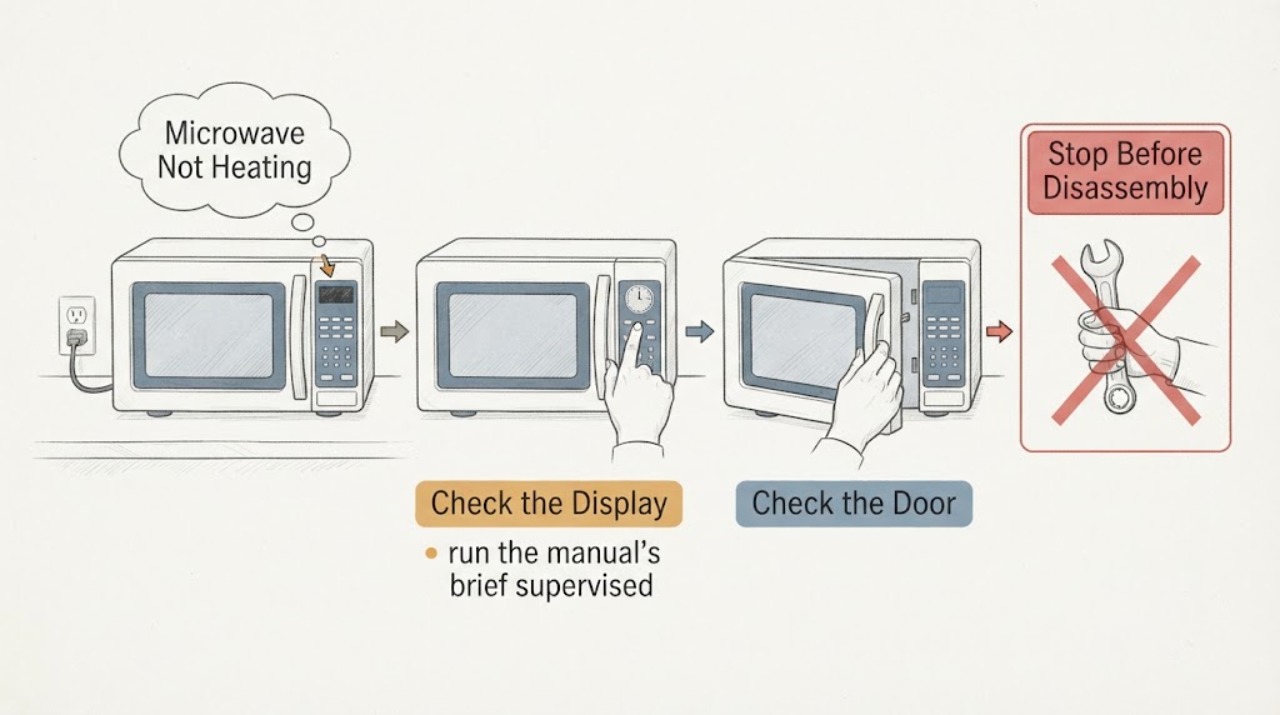
Microwave Not Heating
A microwave that runs but does not heat should first be separated from Demo mode, Control Lock, a low power setting, a door not fully closed, or an unsuitable power source. Whirlpool recommends a supervised water heat check and model-manual control checks. If controls and door are normal but food remains cold, stop owner troubleshooting because internal heating parts require professional service.
-
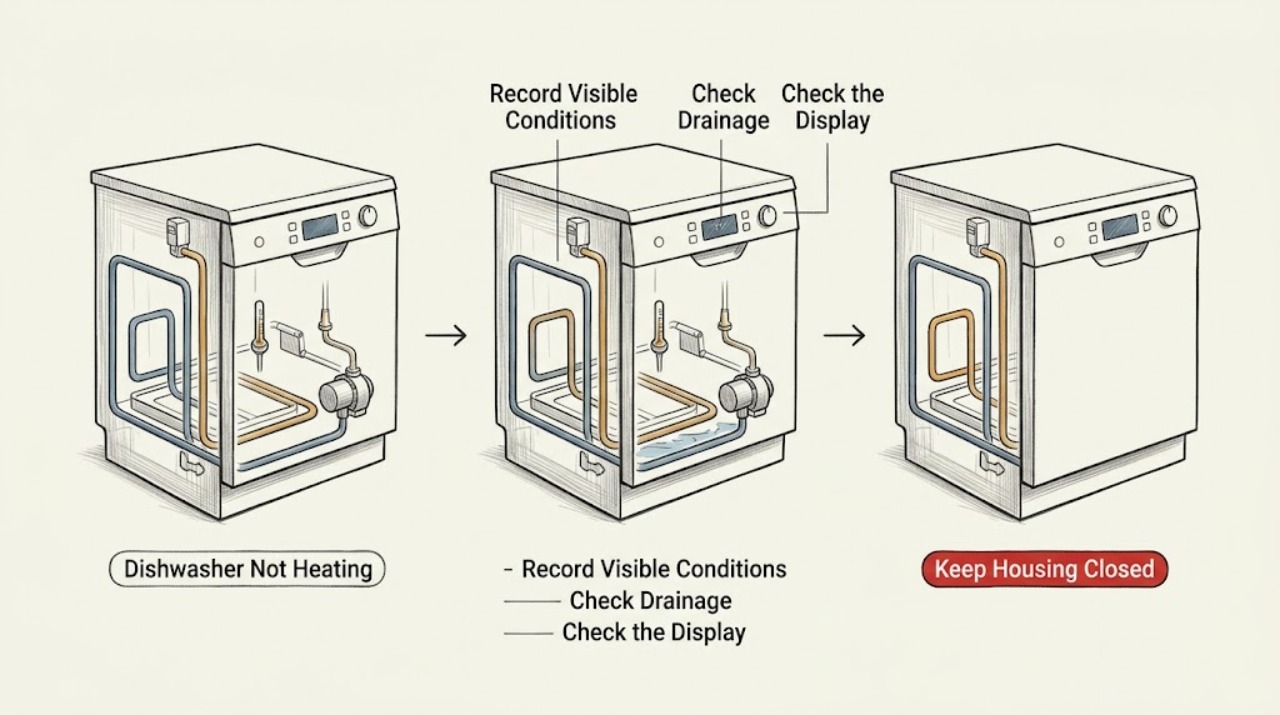
Miele Dishwasher Not Heating: Use the Program Result and Code Together
A Miele dishwasher that is not heating may have a technical heating fault, a circulation problem, or a program result that needs more context. Record whether water and dishes stay cold, whether drying is also affected, and whether an F-code appears. Miele identifies F1 sensor and F24 heating-relay faults as technical faults that require service; do not open the appliance or test live heating parts.
-
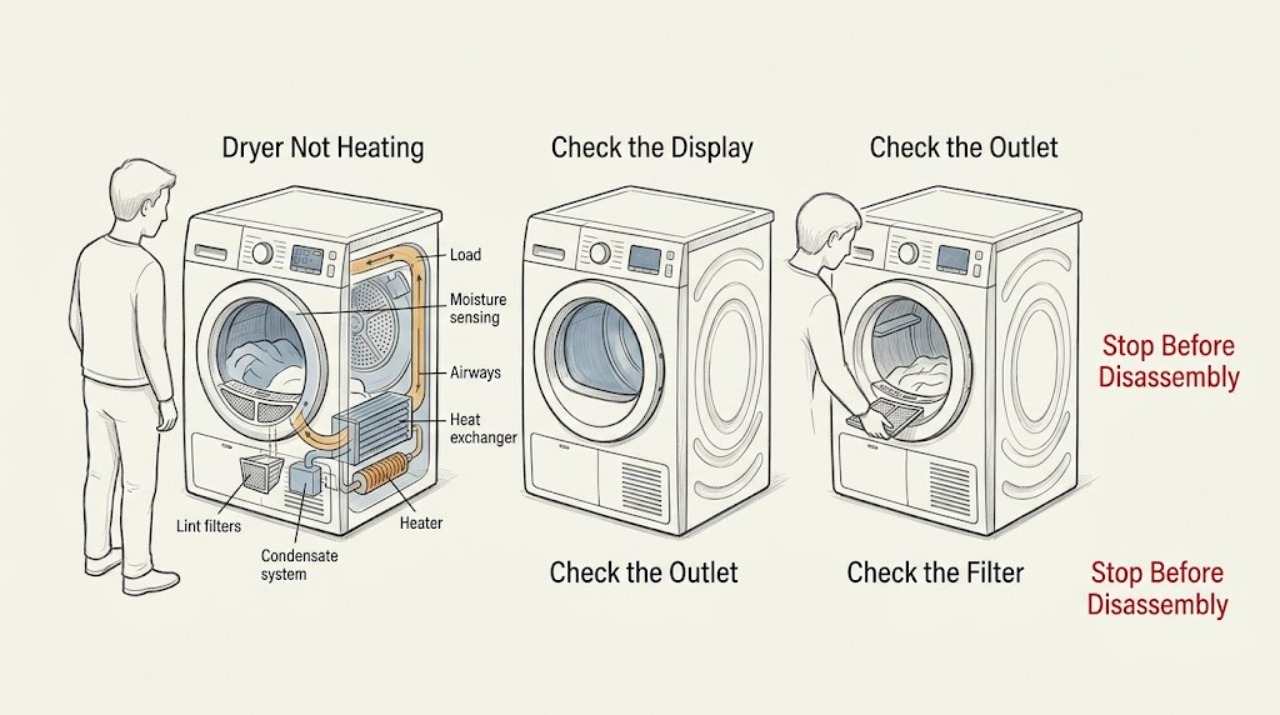
Miele Dryer Not Heating: Check the Program, Airflow, Filters, and Moisture System
First separate a true no-heat symptom from a cycle or sensing result: record the selected program, load, whether the drum and airflow run, and whether the display shows Clean out airways, Empty out container, Cold air, Finish, or a fault. Stop using the dryer for smoke, a burning or electrical smell, sparks, unusual heat, a damaged cord, a breaker that trips again, or any unsafe condition.
-
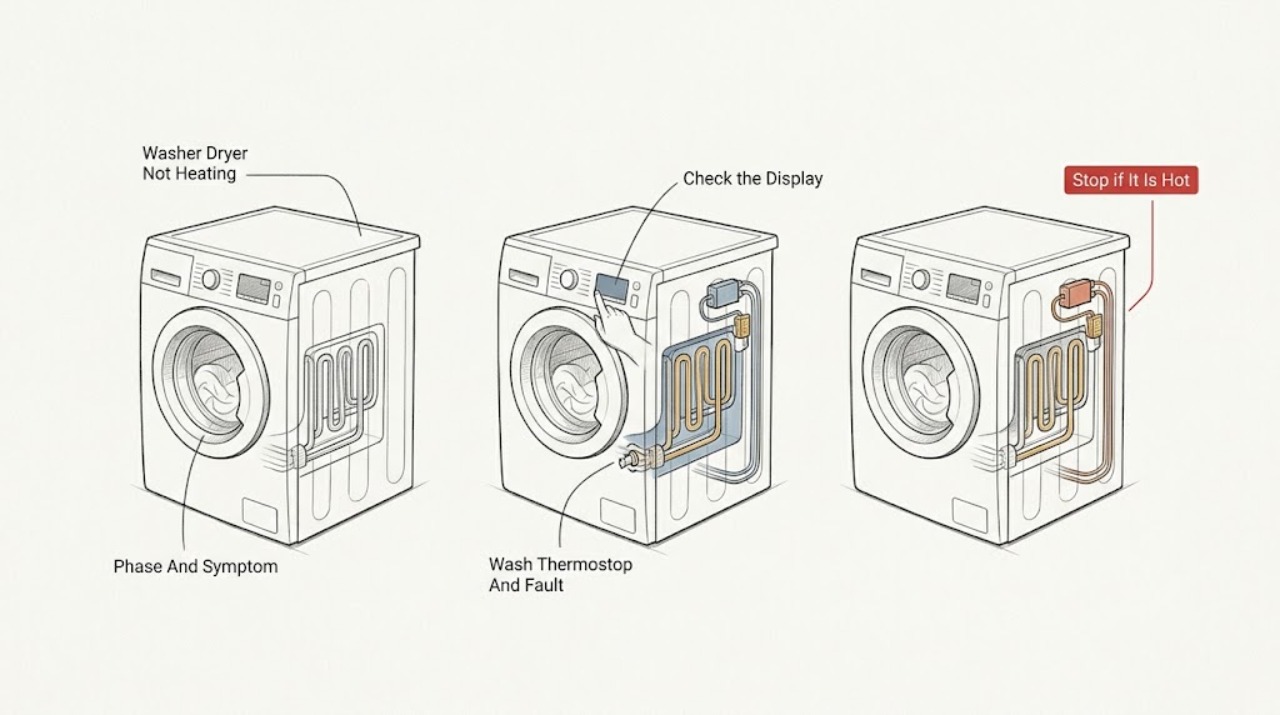
Miele Washer Dryer Not Heating
First determine whether your Miele washer-dryer is failing to heat the wash water, the drying air, or both. For a wash-heating problem, note whether F20 or a heating fault appears and whether the program pauses while Thermostop waits for temperature.
-
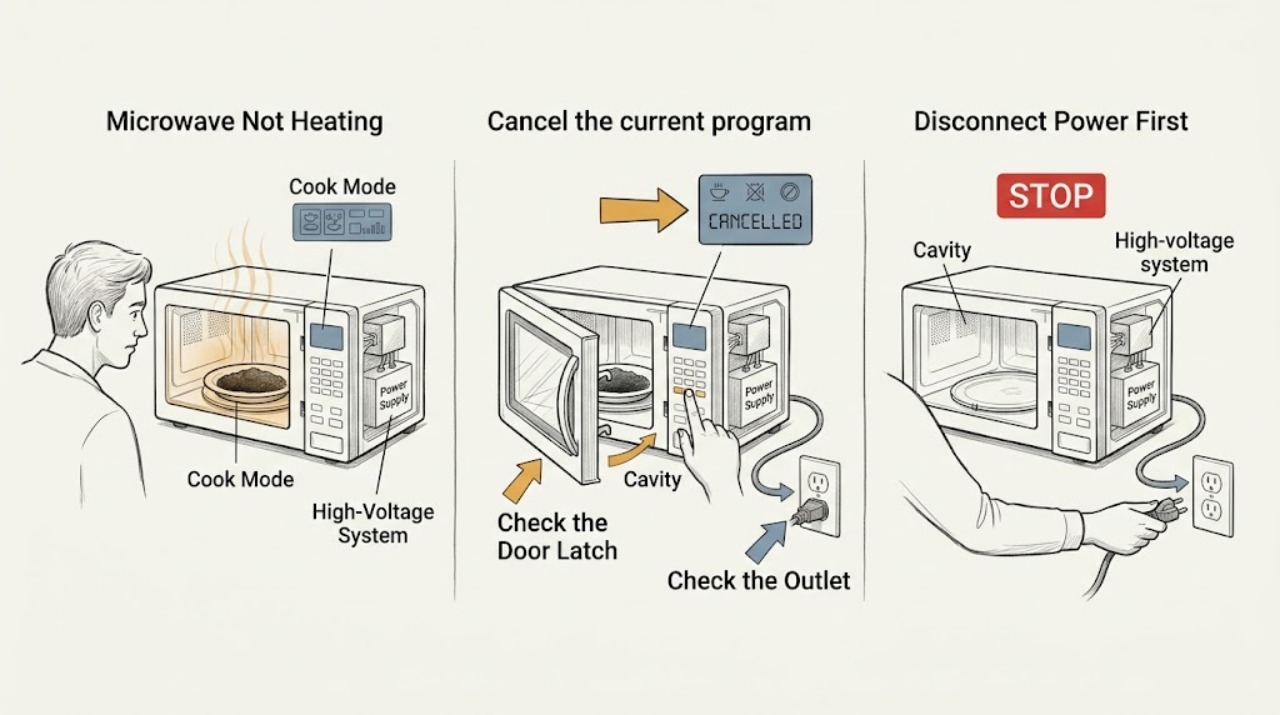
Monogram Microwave Not Heating: Check the Mode and Door Before Service
First make sure the Monogram microwave is running a Cook cycle rather than Timer or another non-heating mode, and confirm the door closes fully. Check only the visible cavity and control state. If it runs but does not heat after those checks, or if there is arcing, smoke, a burning odor, or door damage, stop using it and arrange authorized service; do not open the cabinet.
-
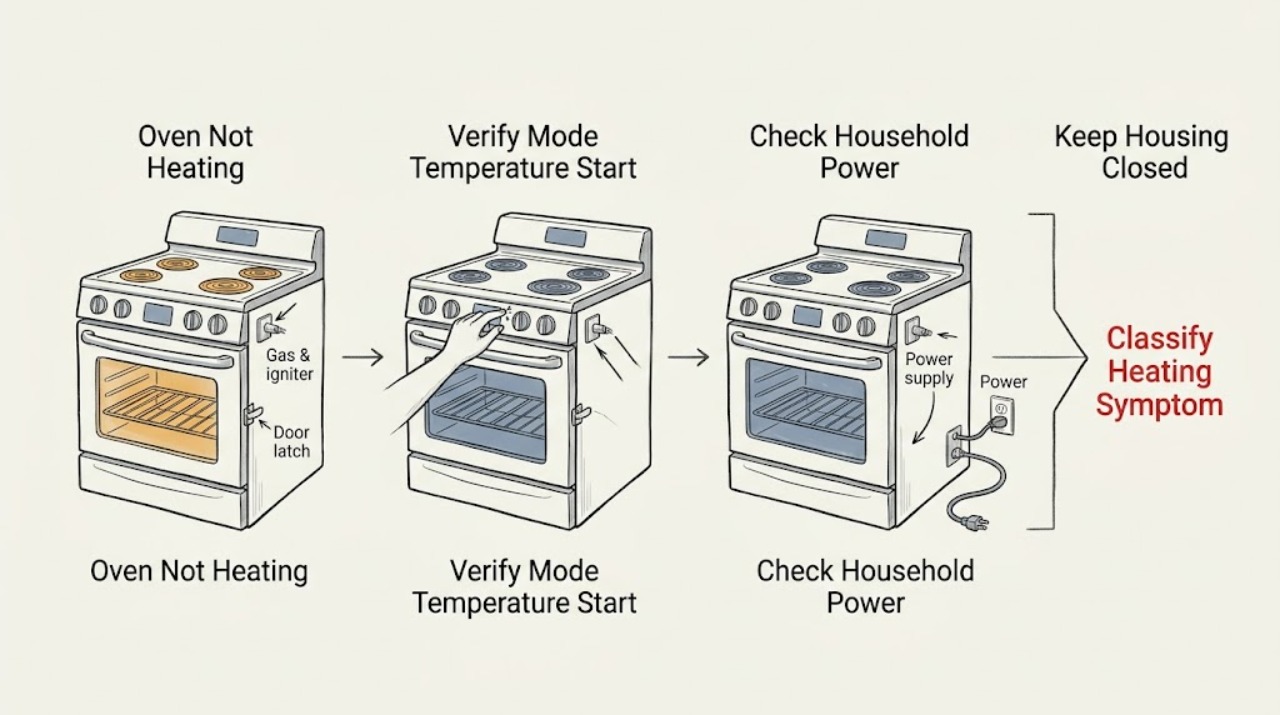
Monogram Oven Not Heating: Safe Checks Before Service
First identify whether the Monogram oven is completely inactive, starts but never warms, preheats slowly, or reaches some heat but not the selected temperature. Confirm the correct Bake or Broil mode, temperature and Start command, then check the household breaker or fuse and the exact model manual.
-
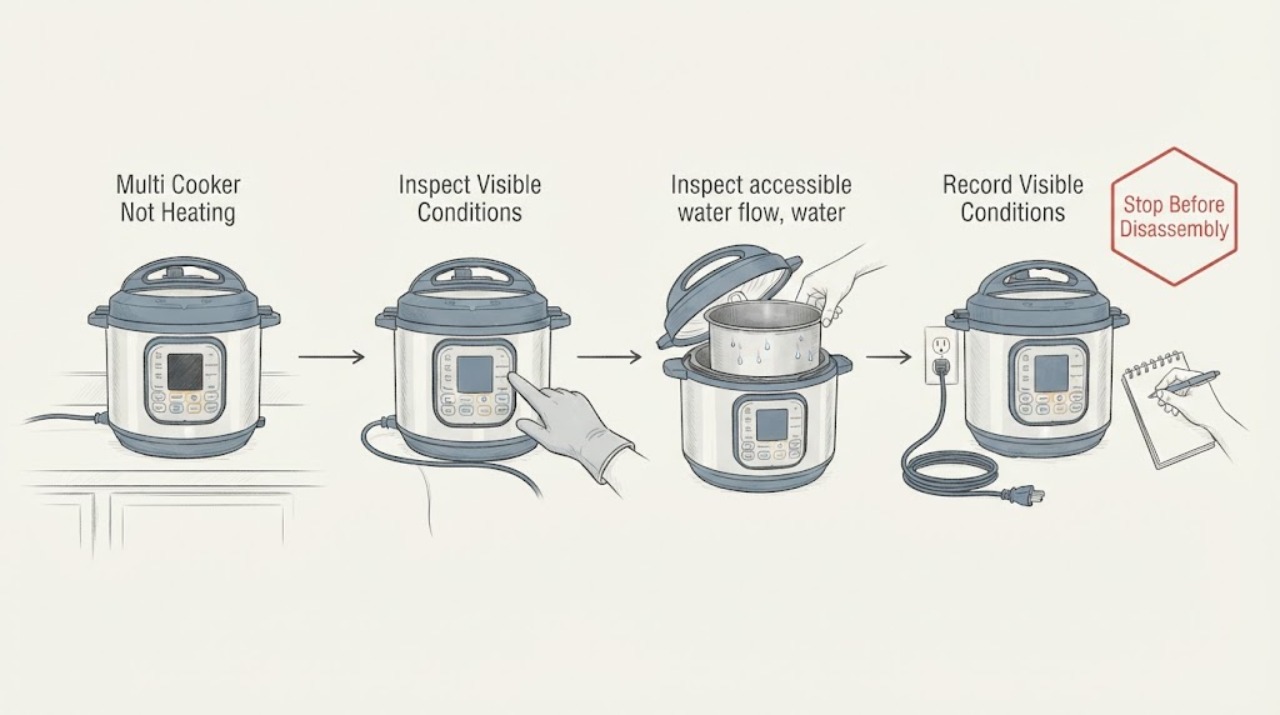
Multi Cooker Not Heating
A multi cooker may delay heat while it completes a priming cycle, but persistent no-heat needs checks for power, water flow, level, and fault messages. Breville’s manual says its appliance runs a 40-second priming cycle before the heater turns on; do not open the unit or defeat a thermal safeguard.
-
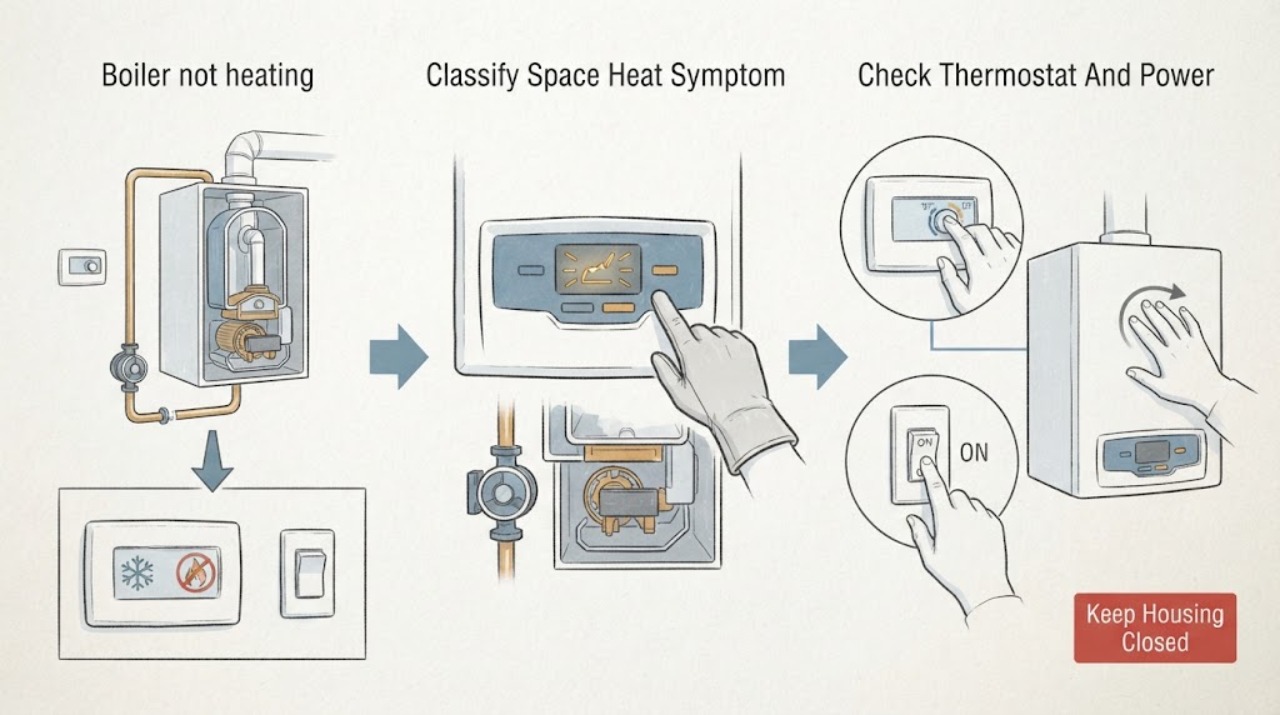
Navien boiler not heating: What to Check and What to Do Next
First separate a no-heat call from a boiler that fires but cannot move heat: check whether the thermostat is calling for space heat, whether the Navien display has power or an error message, whether domestic hot water still works, and whether any radiator, baseboard, or radiant zone warms. Navien's user guidance allows only limited homeowner troubleshooting because the unit combines water, electricity, and gas.
-
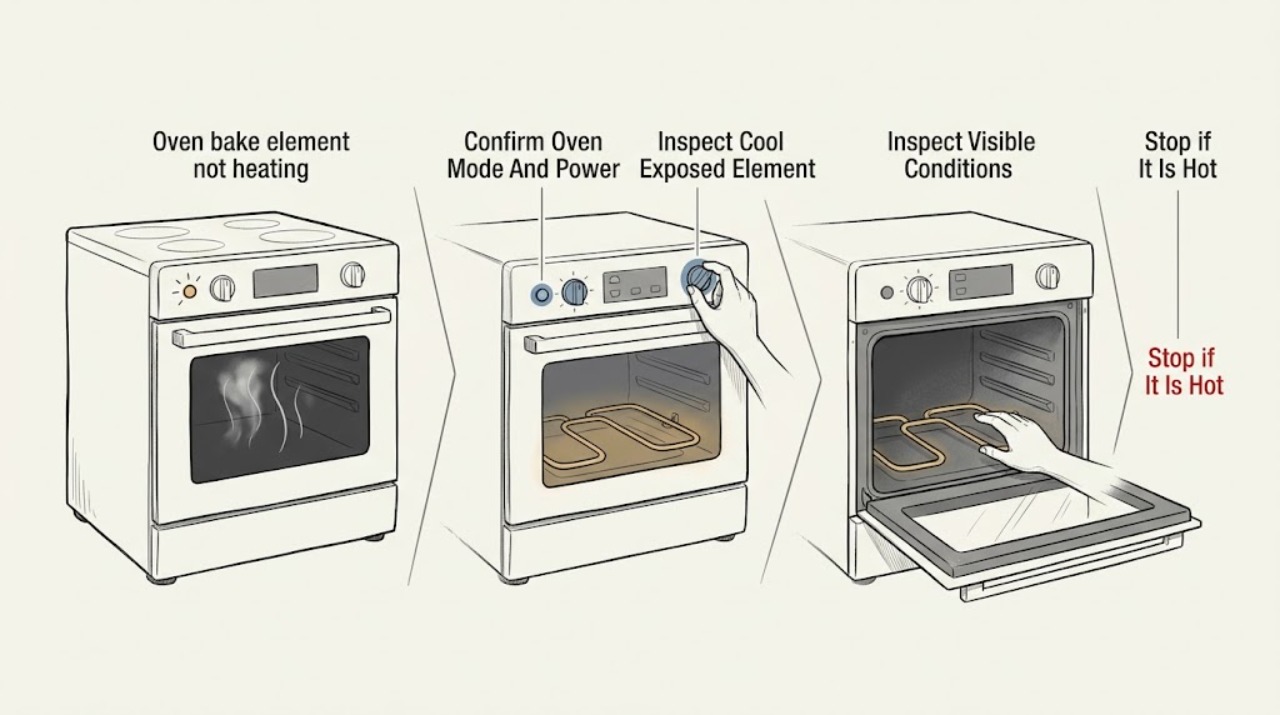
Oven bake element not heating: What to Check and What to Do Next
If an oven bake element is not heating, first confirm the Bake mode and temperature, check that the door closes, and observe from a safe position whether an exposed electric element ever activates during a normal bake request. After the oven is completely cool, look for a break, blister, hole, or severe damage without touching the element.
-
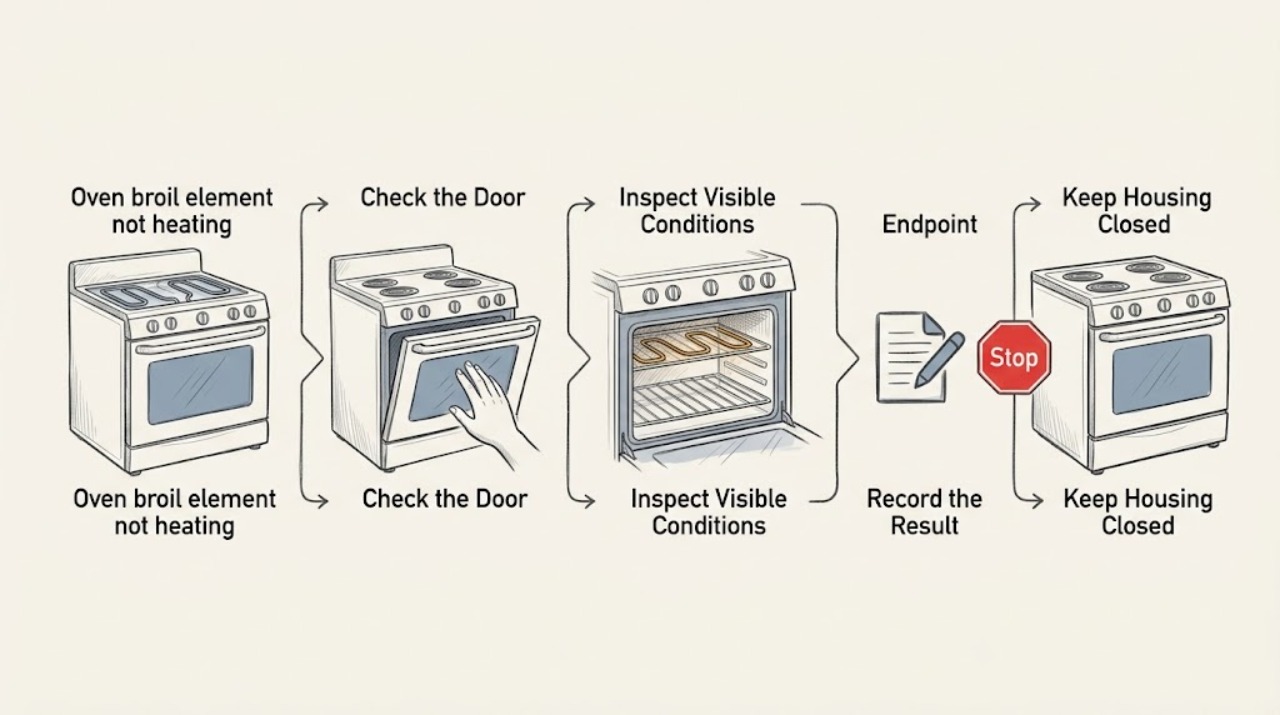
Oven broil element not heating: What to Check and What to Do Next
A broil element that appears not to heat may be operating in a cycle, may not glow even when it is producing heat, or may have a failed element, control, sensor, door-position, or power circuit. Select the exact broil mode and follow the model manual's door and start instructions; observe the upper element only after the oven is clear and without touching it.
-
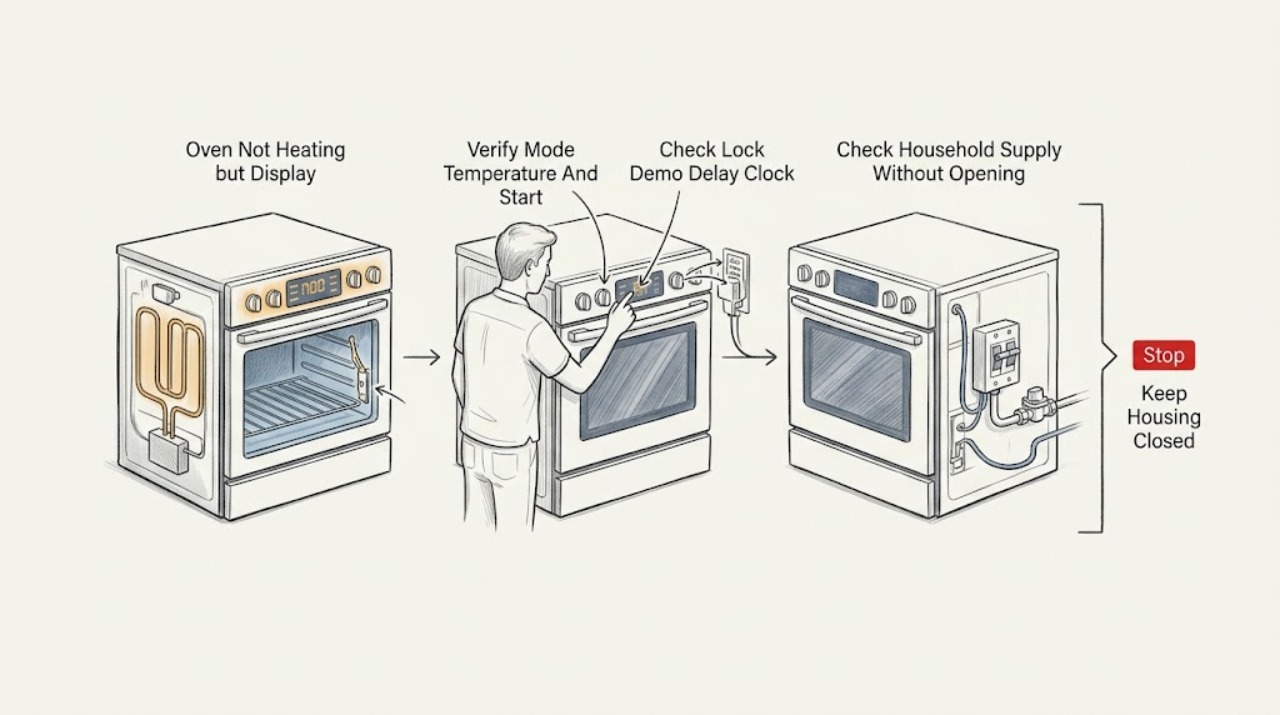
Oven Not Heating but Display Works: What to Check and What to Do Next
A lit display only proves that some oven controls have power; it does not prove that the heating circuit, igniter, sensor, door switch, or full electrical or gas supply is working. Confirm the correct cooking mode and temperature, press Start, cancel any delayed start, and check that control lock or demo mode is not active and the door is fully closed.
-
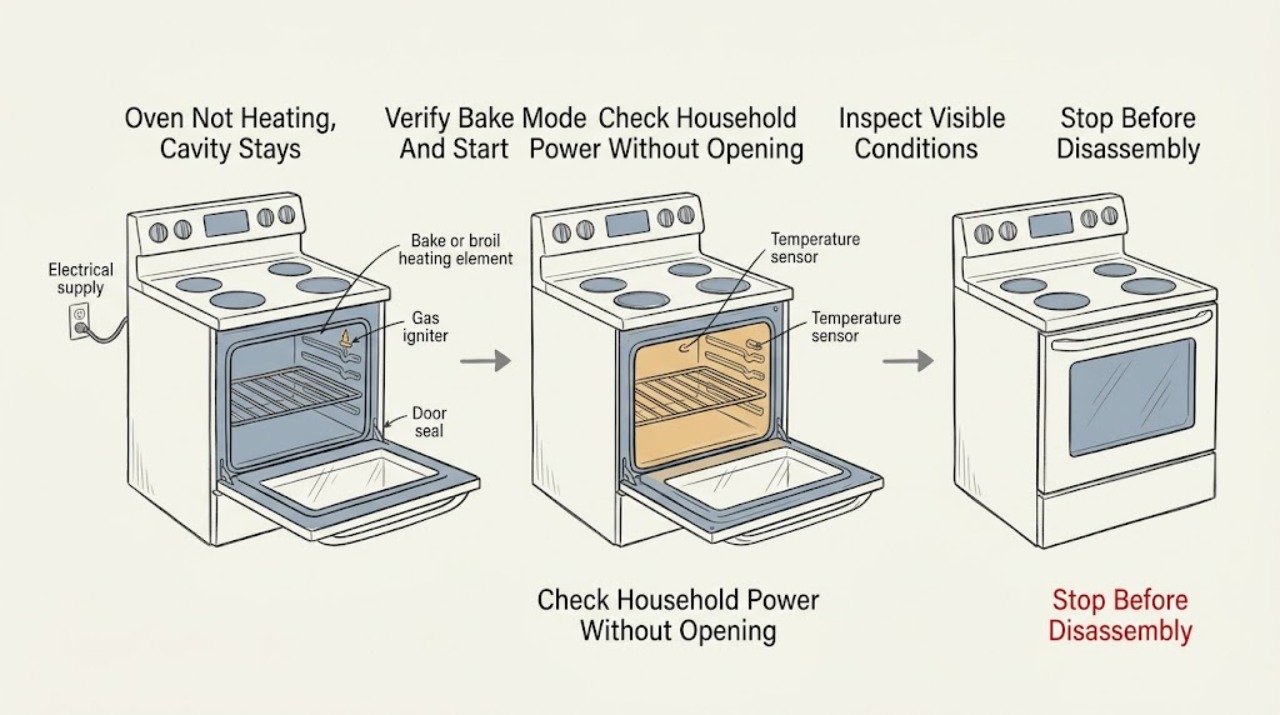
Oven Not Heating, Cavity Stays Cool: What to Check and What to Do Next
If an oven cavity stays cool, first confirm that a normal Bake or equivalent heating mode is selected, the temperature is set above the current cavity temperature, the door is fully closed, and a delayed-start, control-lock, demo, Sabbath, or twin-oven setting is not preventing heat. Check the household breaker or fuse only from a dry, safe position.
-
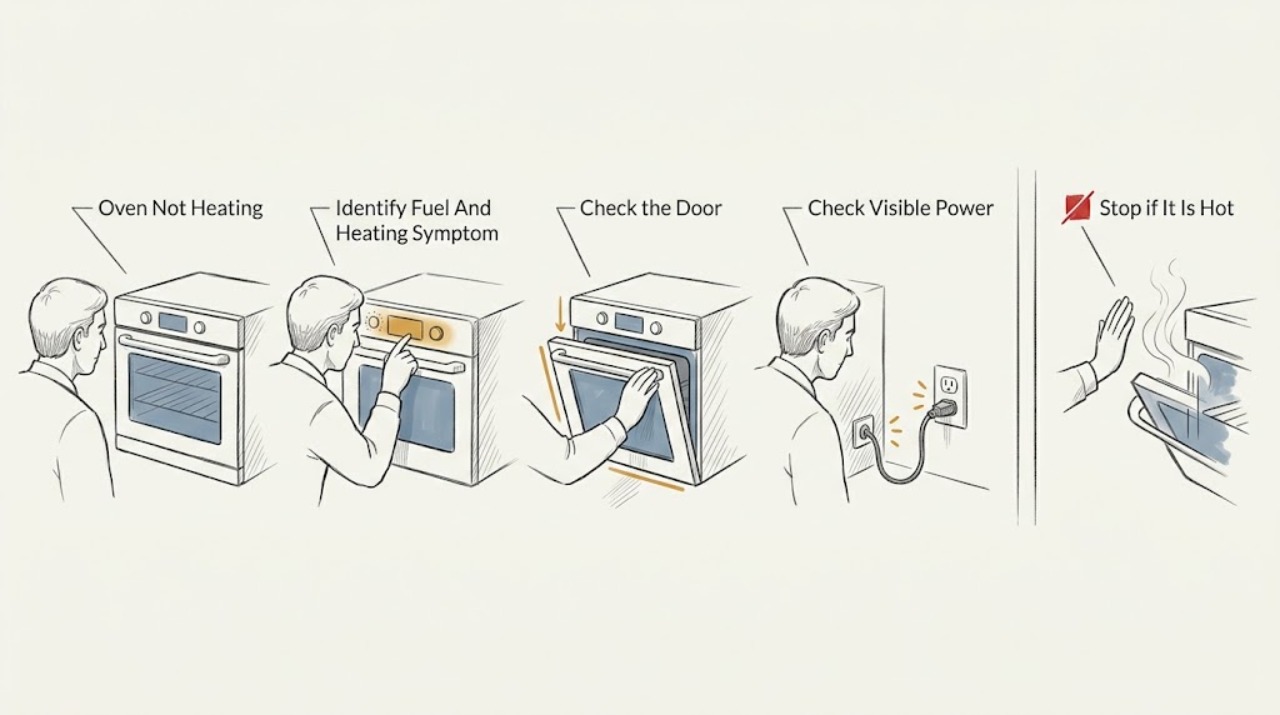
Oven Not Heating: Identify the Fuel Type and Check Safe Causes
First identify whether the oven is electric, gas, dual-fuel, or unknown, then distinguish no heat at all from slow or uneven heating. Check the selected cooking mode, temperature, clock or delayed-start state, control lock, door closure, and visible power condition using the model manual.
-
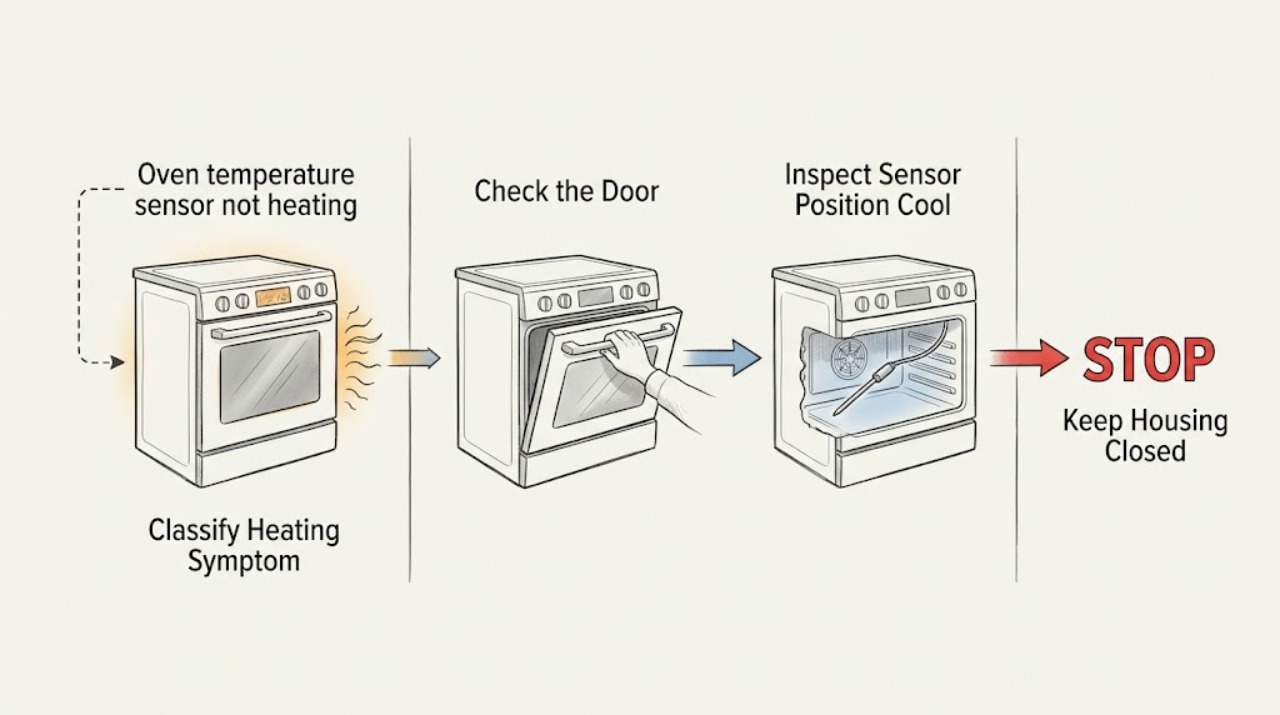
Oven temperature sensor not heating: What to Check and What to Do Next
An oven temperature sensor does not create heat; it reports oven temperature so the control can regulate the heating system. If the oven does not heat, first confirm the cooking mode, door, settings, power or gas symptoms, and whether a bake element or gas igniter visibly activates.
-
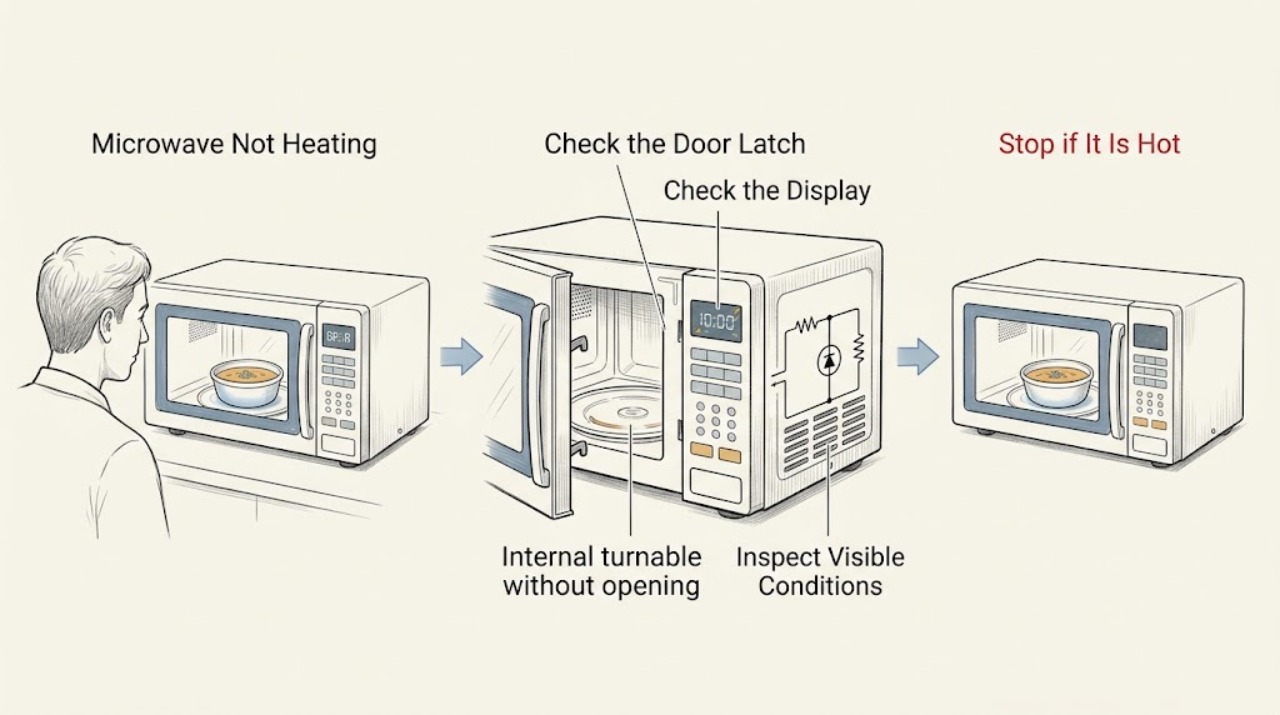
Panasonic Microwave Not Heating
If a Panasonic microwave runs but does not heat, verify the door closes securely, the power level is appropriate, and the turntable and interior are intact. Test with a microwave-safe cup of water and check for an error or demo indication. A returning error, no heat after these checks, smoke, or arcing requires authorized service.
-
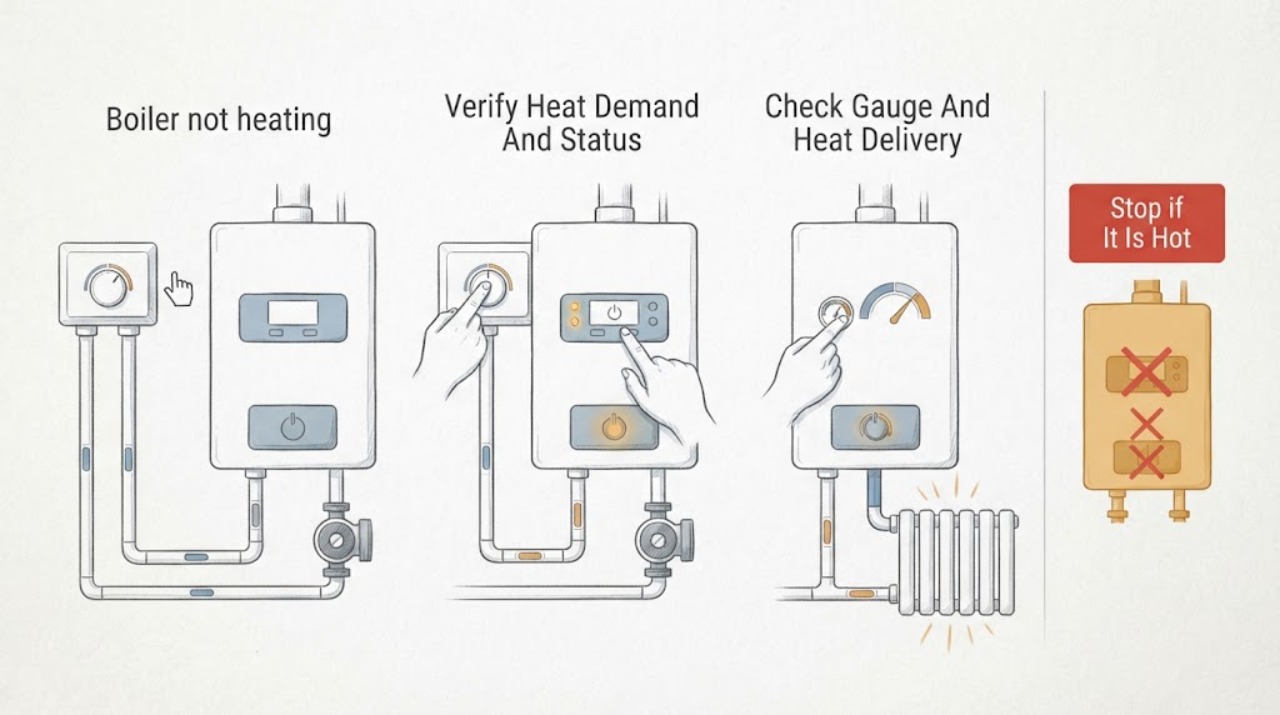
Peerless boiler not heating: What to Check and What to Do Next
When a Peerless boiler is not heating, first determine whether the thermostat is calling, whether the boiler has power and an alert, whether the burner starts, and whether hot water reaches the heating zones. A no-heat condition can come from a thermostat or control demand problem, loss of power or fuel, a limit or low-water safety response, air or a circulation blockage, circulator failure, ignition or venting trouble, or a clogged system.
-
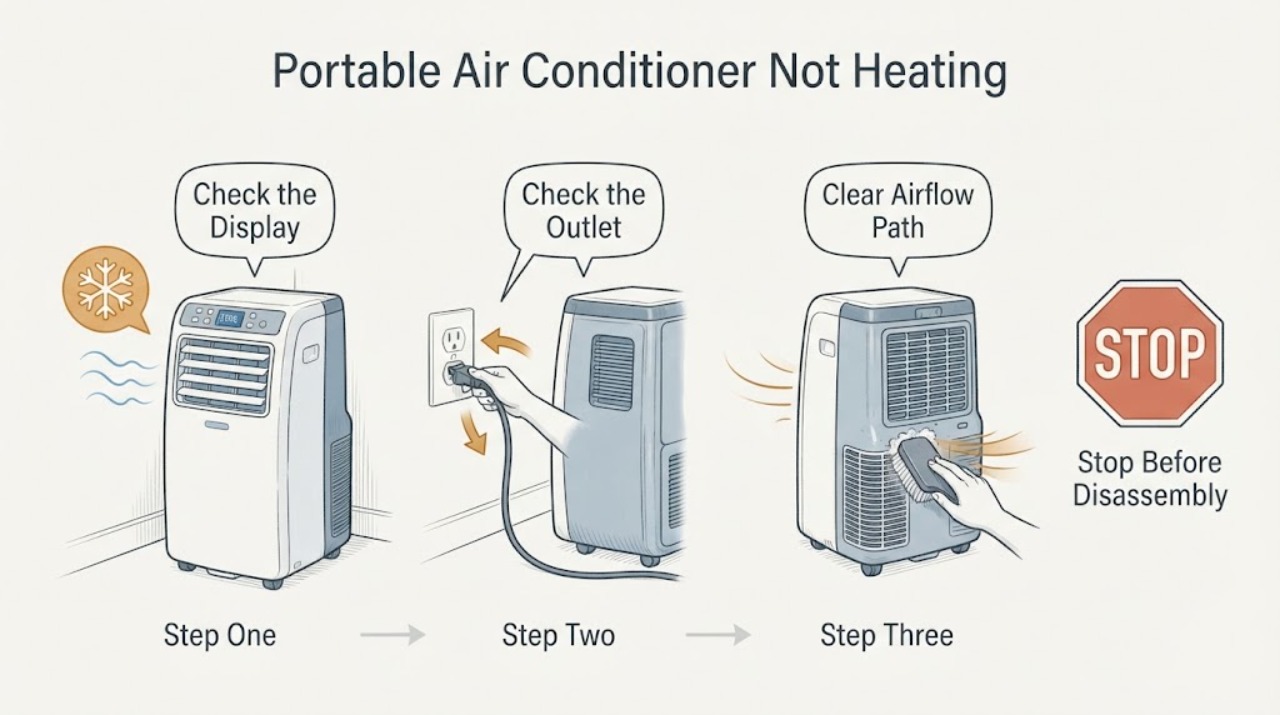
Portable Air Conditioner Not Heating
First verify that the portable air conditioner actually has a Heat or Supplemental Heat function; cooling-only models cannot produce heat. On a heating-capable unit, select Heat, set the target above room temperature, allow time for warm air, and keep the filter, inlet, exhaust hose, window kit, and clearances in the model’s required configuration.
-
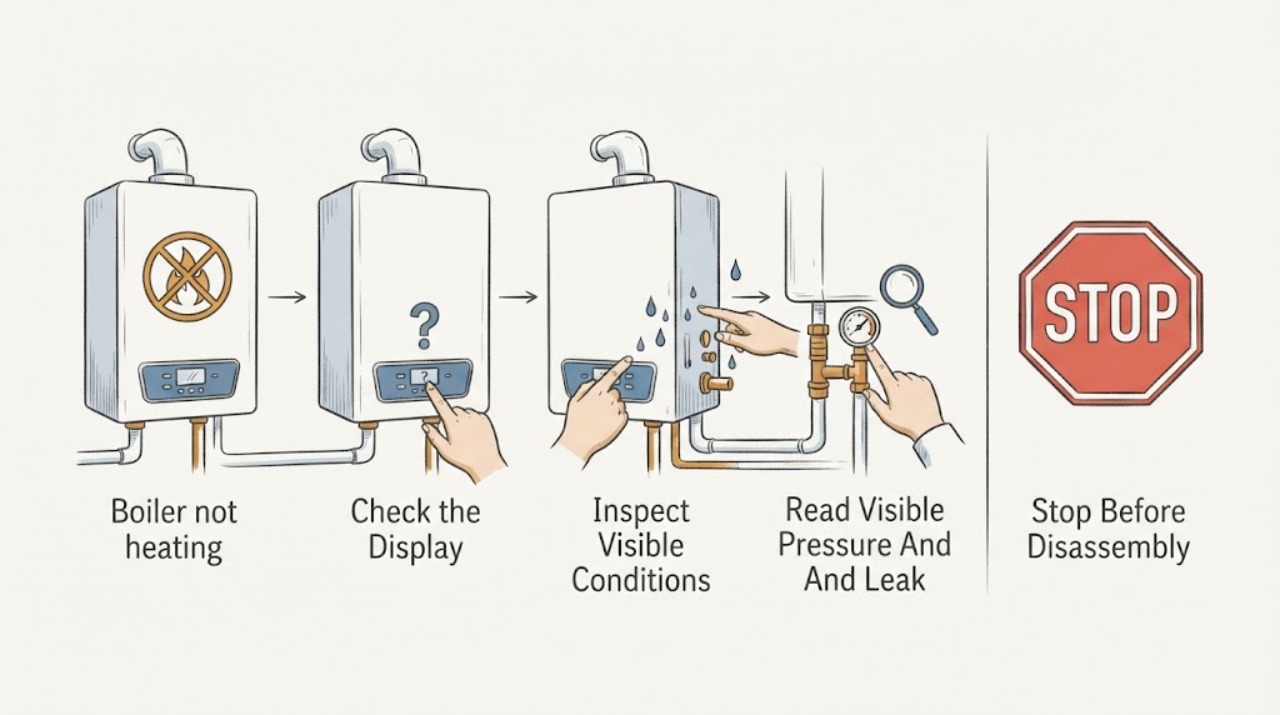
Rheem boiler not heating: What to Check and What to Do Next
First separate a boiler that is not firing from a boiler that fires but does not deliver heat to the home. Check the thermostat or zone control's call for heat, the Rheem display for a warning or alarm, and the visible supply and return temperatures or pressure indication without opening the cabinet.
-
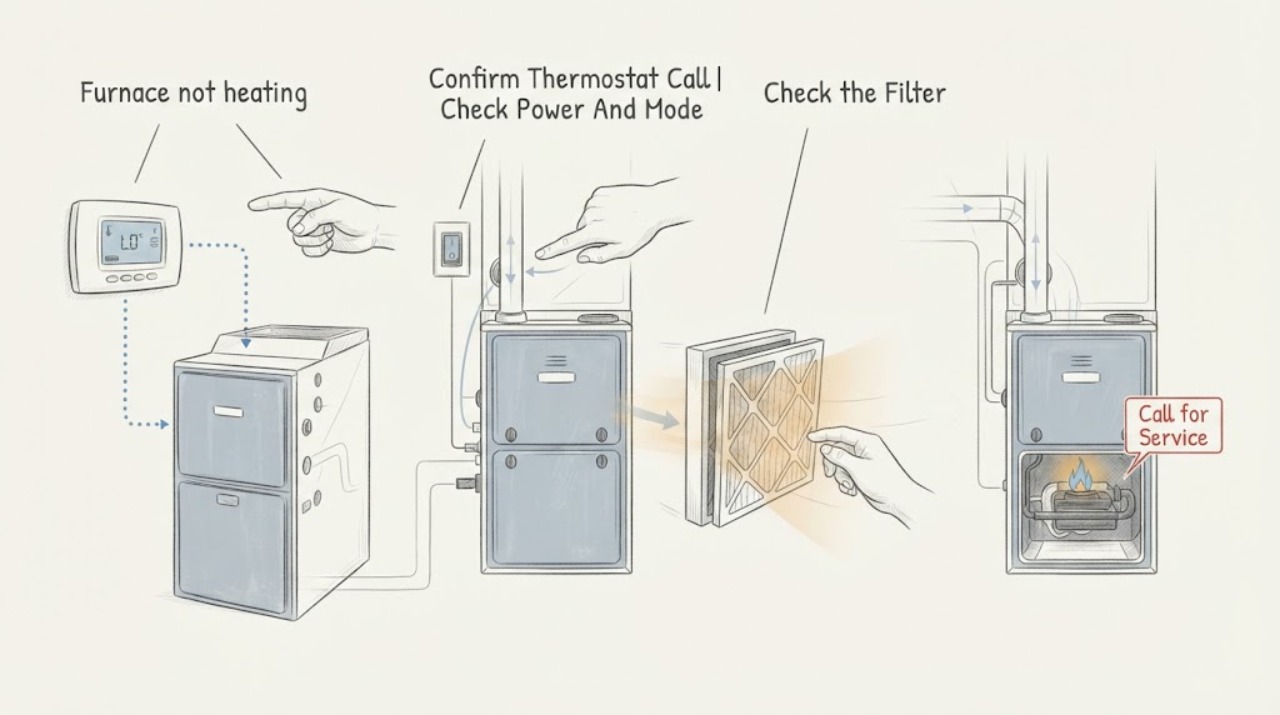
Rheem furnace not heating: What to Check and What to Do Next
Start with observations that do not require opening the Rheem furnace: confirm the thermostat is actually calling for heat, check that the system has power and the correct mode, inspect the filter and visible registers, and note what the furnace does next. If nothing starts, the control call, power, or low-voltage path may be missing.
-
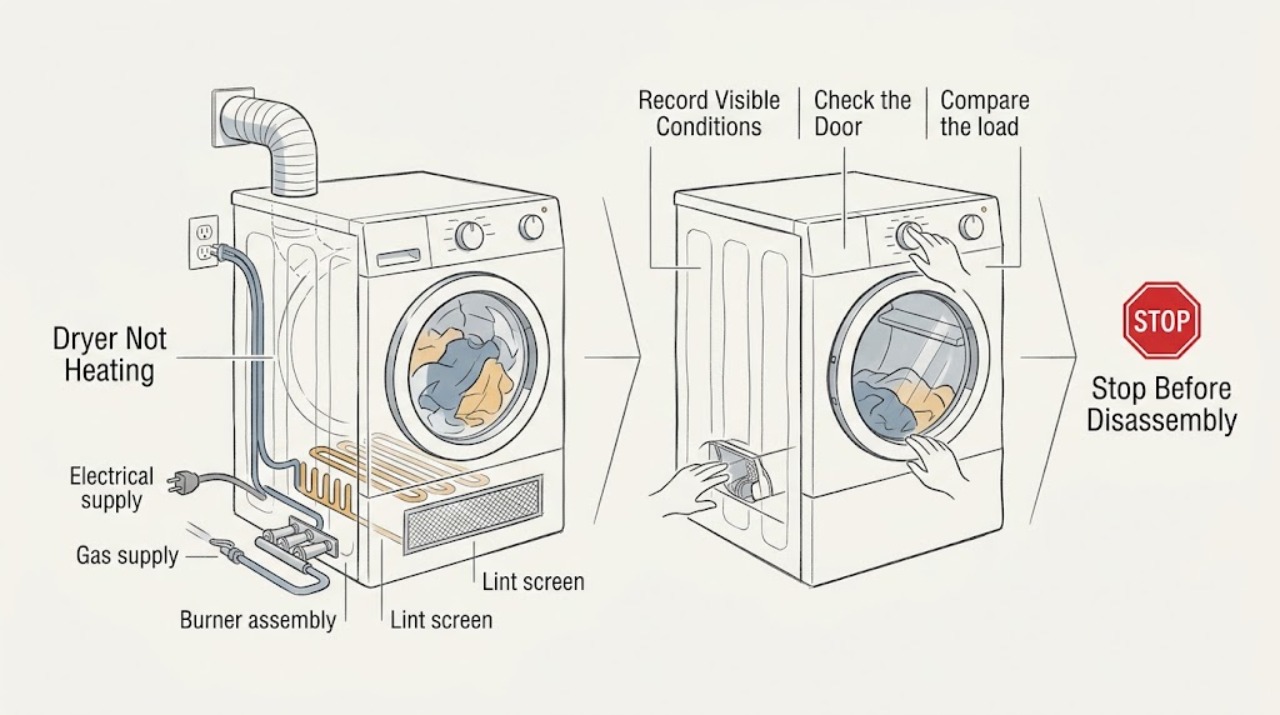
Roper Dryer Not Heating: Check the Cycle, Airflow, and Power or Gas Supply
First distinguish a true no-heat problem from an Air Only or No Heat cycle, a small or overloaded load, or restricted airflow. With no smoke, burning odor, gas smell, sparks, unusual heat, damaged cord, or repeated breaker trip, select a heated timed cycle and use the model-safe heat check; if the drum is warm, the heater is working and the next branch is load, lint, or vent performance.
-
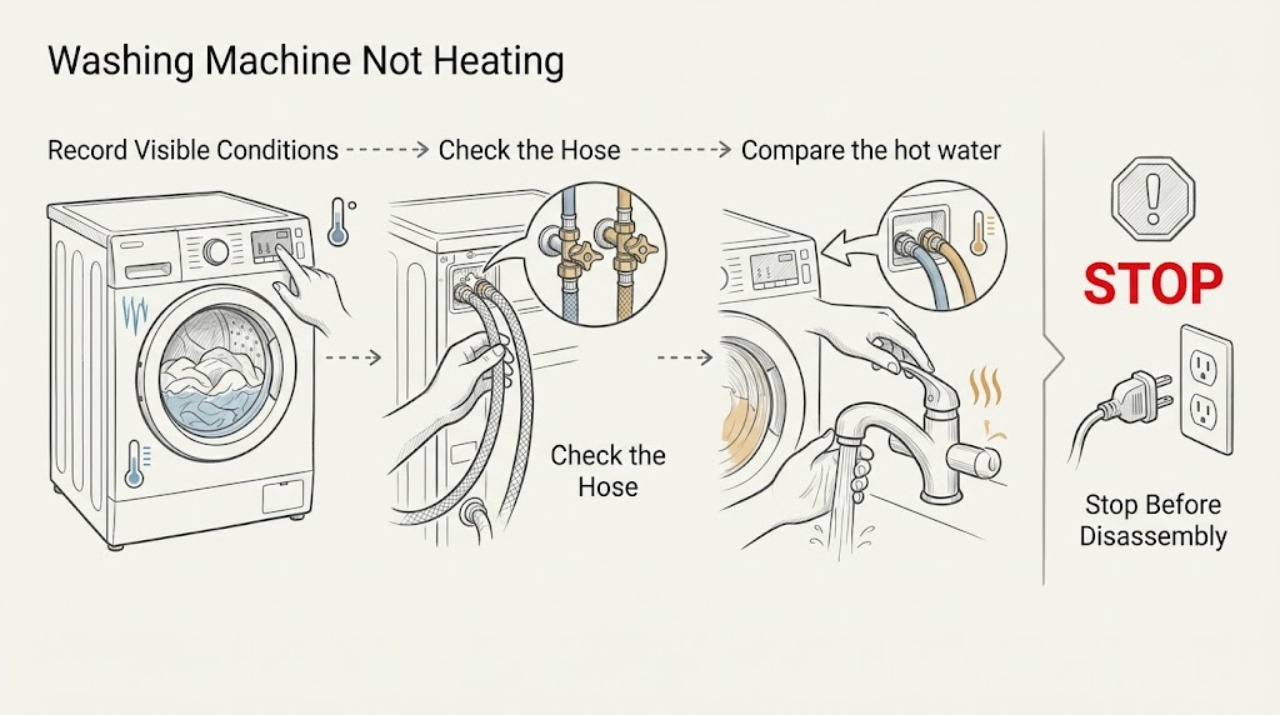
Roper Washing Machine Not Heating: Check the Water Path First
A Roper washer usually gets wash temperature from the household hot and cold water supplies, not from a user-adjustable internal heater. First identify the exact model and cycle, then confirm the temperature setting, both water faucets, and that the hot and cold hoses are not reversed or kinked.
-
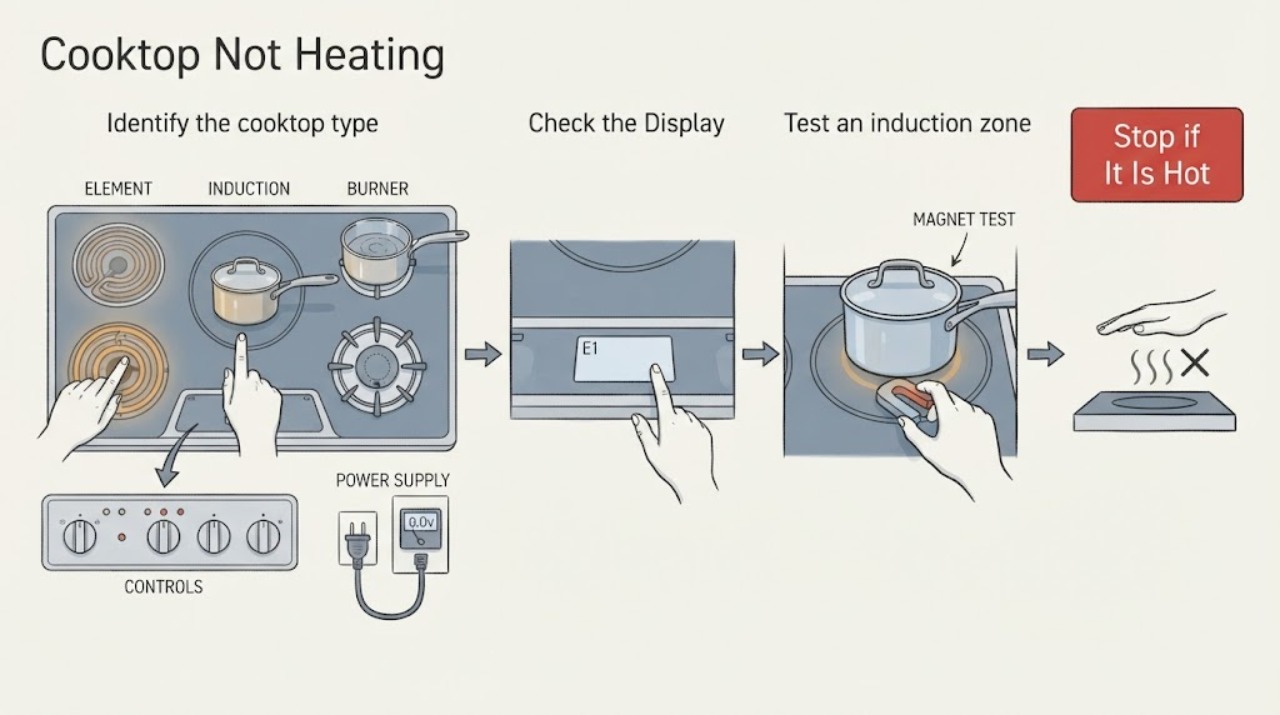
Samsung Cooktop Not Heating: Check Power, Cookware, and the Burner Safely
First determine whether the Samsung cooktop is radiant electric, induction, or gas, and whether one burner or the whole cooktop is affected. Confirm power or gas supply, select the correct burner and heat level, and make sure the control panel is clean and dry.
-
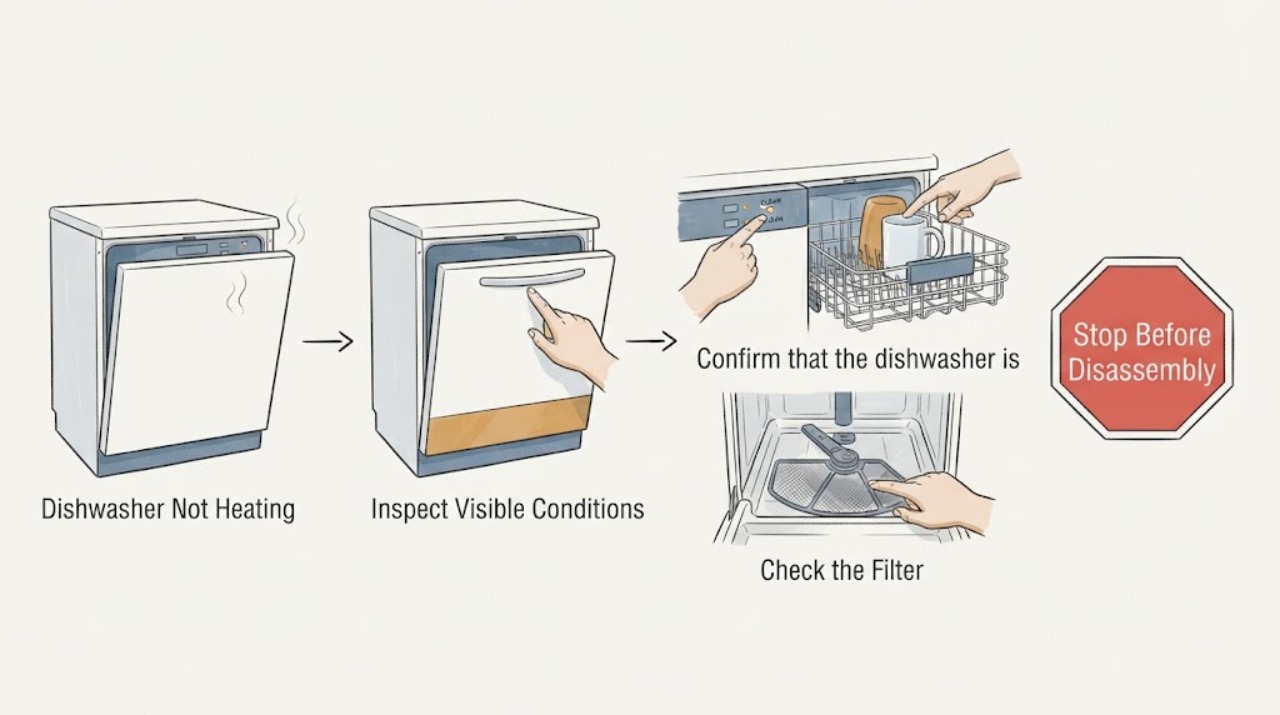
Samsung Dishwasher Not Heating
If a Samsung dishwasher finishes with cold water or damp dishes, first check whether the cycle is actually running and whether a heating-related code appears. A single cool cycle can follow a reset or interrupted program, but repeated cold cycles, a recurring HE-family code, or a cycle that stops mid-run points to a heating-system fault that needs service. Do not open panels or test live wiring.
-
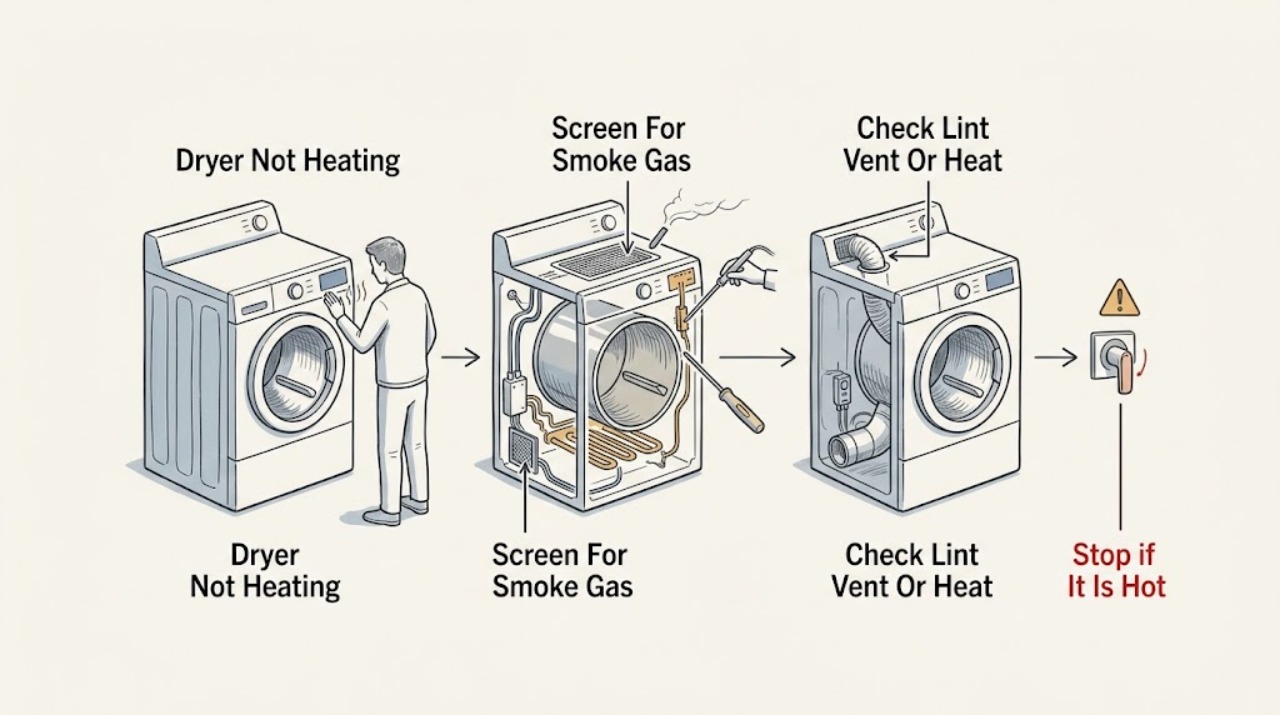
Samsung Dryer Not Heating: Check the Cycle, Airflow, Power, and Error Codes
If a Samsung dryer is not heating, first decide whether it has no heat at all or is merely warm, slow, or in a cooling portion of the cycle. Use a model-supported Time Dry or another cycle that should heat, turn Eco Dry off if applicable, and check the lint filter and exhaust path.
-
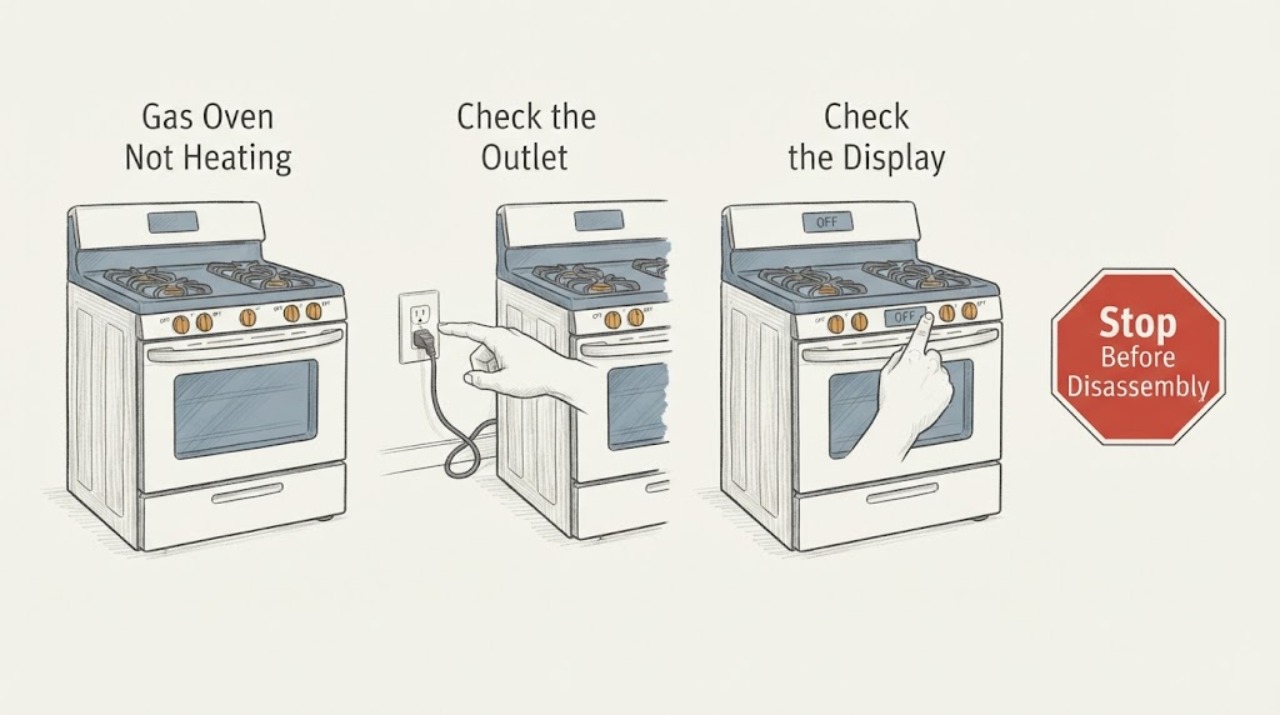
Samsung Gas Oven Not Heating: Check Mode, Gas, and Ignition Safely
If a Samsung gas oven will not heat, first note the exact model, selected mode, display, and whether the cooktop burners ignite normally. Confirm the oven door is closed, Demo mode is off, and a Bake or other supported mode was actually started.
-
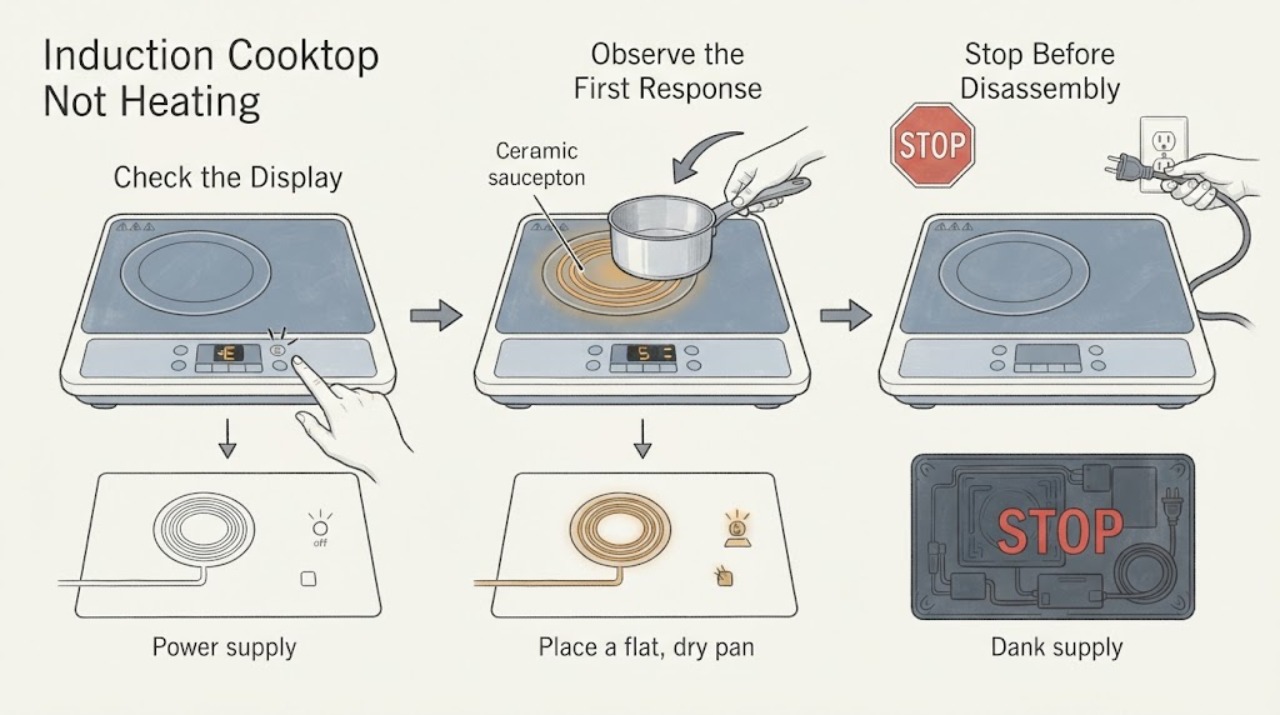
Samsung Induction Cooktop Not Heating: Check the Pan, Zone, Controls, and Power
An induction zone can stay cold because the pan is not magnetic, is too small, is off-center, or is empty, or because the selected zone, controls, power supply, or induction electronics have a fault. First make sure the panel is unlocked, clean, and dry and that the cooktop has safe external power.
-
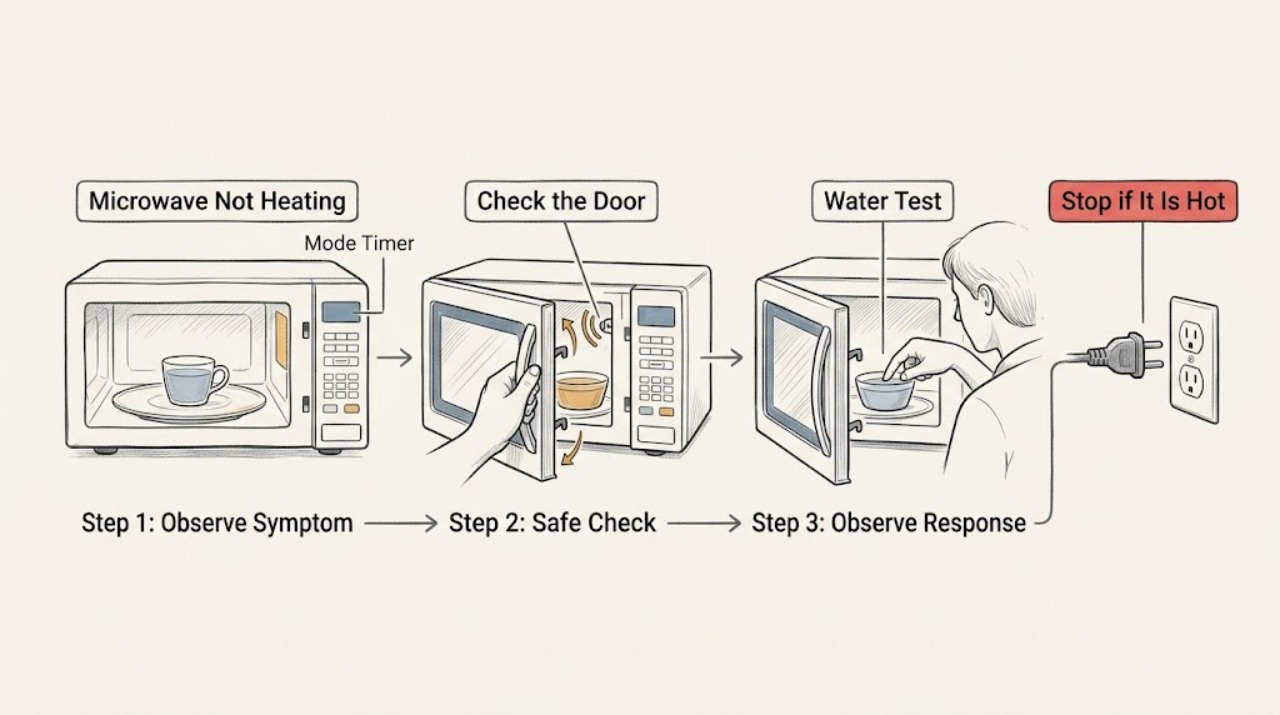
Samsung Microwave Not Heating: Check Mode, Door, and Venting
Test heating with a microwave-safe cup of water and first check for Demo mode, Kitchen Timer, a door that is not fully closed, and inadequate clearance on an over-the-range model. Samsung says Demo mode can run the timer without turning on heating, while door and ventilation conditions can leave the oven running without warming food. If those external checks are normal, stop and request service; do not access the magnetron or other high-voltage parts.
-
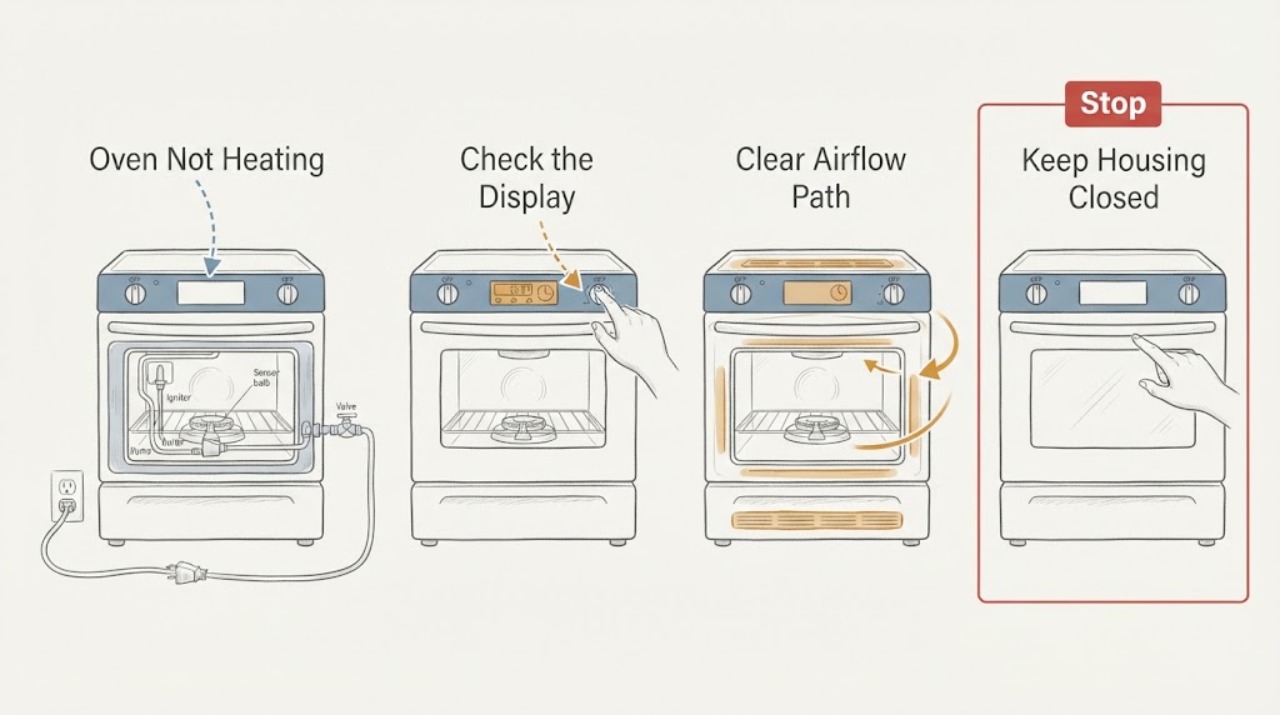
Samsung Oven Not Heating: Check Mode, Door, Power, and Fuel Safely
If a Samsung oven is not heating, first confirm that the correct mode and temperature were selected and Start was pressed, then check whether the display is in Demo mode, shows an error, or indicates a door or control state. Keep the door closed while preheating and do not use foil that blocks airflow.