
On this page
Start here
Quick answer
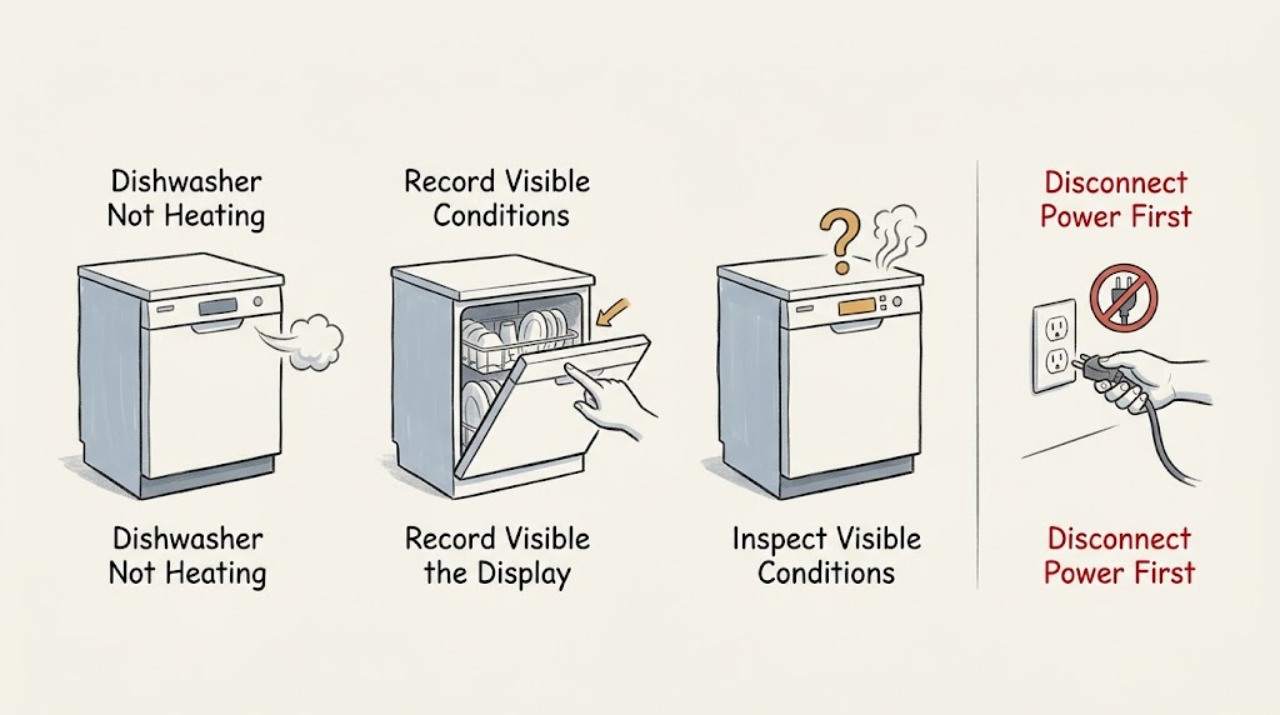
Separate a true heating fault from normal drying behavior first. Record the selected cycle, whether wash water or dishes become warm, and any code. Wet plastic or a wet tub wall can be normal, while everything remaining wet, a returning HE or temperature code, or no airflow during the model's documented dry stage needs the matching LG check or service; do not test live heater wiring.
Before you begin
Safety first
- Disconnect power before cleaning only an accessible filter. Do not remove panels, test live heater or fan wiring, insert objects into the vent, or replace a component from the symptom alone.
Work through in order
Diagnostic checks
Use only checks that match the exact appliance or system and its official guide.
-
Check 1
Record the cycle, the end-of-cycle dish and tub condition, and any display code before changing options.
Expected result: The dishwasher stops with HE or tE; washing completes but dishes are cold and wet; only plastic is wet; or the tub walls are wet while dishes are dry.
Next step: If HE or tE returns, stop at external checks and request service. If the issue is drying, continue with the rinse-aid and option checks instead of assuming the heater has failed.
Why this matters
Why: A heater or temperature-sensor condition is different from drying behavior that LG describes as normal for some materials and surfaces.
-
Check 2
For an all-wet load, check the rinse-aid indicator and refill or adjust the dispenser only as allowed by the model, then select an available drying option such as Extra Dry.
Expected result: The rinse-aid indicator is empty or blinking, the model has Extra Dry or Sanitary Rinse, or the result does not change after one normal cycle.
Next step: Use the model's instructions for the rinse-aid setting and run one normal test. Do not infer a heater part from wet plastics alone.
Why this matters
Why: Rinse aid and the heat retained during washing affect drying performance; an all-wet result that persists after these model-supported options needs further diagnosis.
-
Check 3
At the end of a regular cycle's documented dry stage, observe the lower-left door vent from the outside without removing the door or panels.
Expected result: Airflow is felt at the vent, or no airflow is felt after the drying advice and option checks.
Next step: If there is no airflow, request service. Do not insert tools into the vent or try to energize a fan or heater directly.
Why this matters
Why: Airflow supports the expected venting path; no airflow during the dry stage is a service indication in LG's dishwasher drying guidance.
-
Check 4
Check whether the cycle also leaves standing water or an outlet code before judging the heating result.
Expected result: Water remains above the filter or OE appears, or the tub drains normally and only temperature or drying is abnormal.
Next step: Inspect only the accessible filter and visible hose path with power disconnected. If the outlet condition or water above the filter persists, request service before further heating tests.
Why this matters
Why: An incomplete drain can prevent a normal sequence and confound a report of cold dishes; a normal drain narrows the report to heating or drying behavior.
Use your observations
Decision map
Find the observation that best matches what you see, then follow the next safe action.
-
PATH 01Next step
What you see
Only plastic items or the tub walls are wet while ceramic, glass, or metal dishes are dry
Do this next
Use the loading and drying guidance for the model; do not replace a heater based on this observation alone.
Why this path and its safety boundary
Why it matters: LG describes this as potentially normal heat retention and condensation behavior rather than proof of a heater failure.
-
PATH 02Next step
What you see
Everything is wet, the rinse-aid supply is low, and no heater or temperature code is displayed
Do this next
Restore rinse aid or use the available supported option for one test cycle; if the all-wet result remains, check the vent and request service if airflow is absent.
Why this path and its safety boundary
Why it matters: Drying support such as rinse aid or a model-equipped drying option is a more appropriate first path than component replacement.
-
PATH 03Next step
What you see
HE or tE returns, or no airflow is present during the documented dry stage
Do this next
Stop using the dishwasher and arrange qualified service with the model, code, selected cycle, and observed dry-stage result.
Why this path and its safety boundary
Why it matters: LG associates these observations with a heater, temperature, or heat-dry component that requires detailed inspection.
-
PATH 04Next step
What you see
The dishwasher also leaves water above the filter or repeats OE
Do this next
Follow the accessible drain-path check only; request service if the water remains above the filter or the code returns.
Why this path and its safety boundary
Why it matters: The outlet problem must be separated from the heating complaint because the cycle sequence may not have completed normally.
Helpful context
Understand the symptom
Heating and drying are related but not identical
A dishwasher can finish with wet dishes even when its wash sequence and heater are not proven faulty. Plastic cools quickly, tub-wall condensation can be normal, and rinse aid or a model-specific drying option changes the result. A returning HE or tE code, or absent airflow during the documented dry stage, is a different service path.
When checks do not resolve it
Need a professional?
Request service for a returning HE or tE code, absent dry-stage airflow, persistent all-wet results after the model-supported rinse-aid and option checks, standing water above the filter, or any leak, burning smell, unusual noise, or repeated breaker trip.
Safety scope: Disconnect power before cleaning only an accessible filter. Do not remove panels, test live heater or fan wiring, insert objects into the vent, or replace a component from the symptom alone.
Have this ready
- Provide the LG model number, selected cycle and options, load material pattern, code, water level after the cycle, and dry-stage vent observation.
Common questions
FAQ
Does wet plastic prove my LG dishwasher is not heating?
No. LG notes that plastic cools faster than ceramic, glass, or metal and can retain water even when other dishes dry. Check the overall load and any display code before treating it as a heater failure.
What does an HE code mean on an LG dishwasher?
LG describes HE as a heater error that can occur when the supplied water is not being heated and says it requires service inspection. Record the code and model rather than testing live wiring.
When should I stop troubleshooting a heating complaint?
Stop when HE or tE returns, the vent has no airflow during the documented dry stage, water remains above the filter, or there is a leak, burning smell, repeated breaker trip, or unusual noise. Arrange qualified service.
Read the exact guide
Official sources
- [LG Dishwasher] Guide to Error CodesLG USA Support · LG dishwasher HE, tE, OE, and heat-dry error behavior
- Not Drying - DishwasherLG USA Support · LG dishwasher drying behavior, rinse aid, options, and dry-stage vent check
Community feedback
Share a repair observation
Share a plain-text repair observation. Accepted observations are published automatically; this page may take a moment to update.