
On this page
Start here
Quick answer
First separate a long heating pause from a complete lack of heat. Run the hot-water tap at the sink until it is hot before starting, confirm the dishwasher has its normal water supply, and use only options supported by the exact Amana model. Amana explains that a dishwasher can pause while it brings water to the required temperature, and that a cold supply can lengthen the cycle and reduce drying. After one complete programme, if the water and dishes remain cold, a heating, temperature-sensing, or control fault is possible and needs service. If the door is not latched, power was interrupted, a breaker trips, or the appliance leaks, stop repeated testing and use the appropriate safe shutdown or service path. Do not open panels or test live wiring.
Before you begin
Safety first
- Owner checks are limited to normal controls, visible water supply, door closure, finished-load observations, and ordinary plug or breaker observation where safe. Internal heater, sensor, pump, control, wiring, junction-box, and live electrical work require a qualified technician.
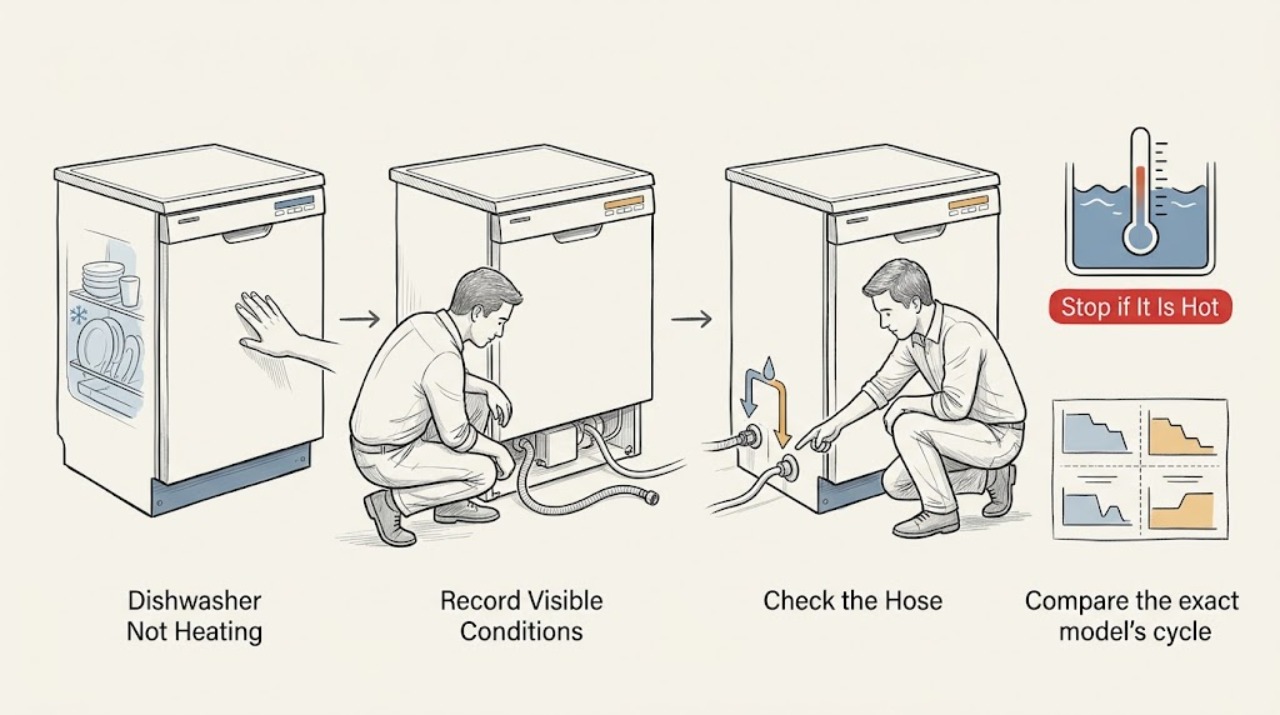
Work through in order
Diagnostic checks
Use only checks that match the exact appliance or system and its official guide.
-
Check 1
Identify the exact Amana model from the rating label or normal control information, then record the programme, selected heat or dry options, whether the cycle completed, and whether the tub or dishes were warm at the end. Note any flashing sanitize or cycle indicator and any display message. Do not use undocumented button combinations to force a test.
Expected result: The cycle is still running or paused, it completed with warm water, it completed with cold water and cold dishes, it stopped early, or an indicator is flashing.
Next step: If the cycle is only paused, allow one model-supported programme to finish. If it completed cold, stopped early, or repeats an indicator, continue with the external checks below and preserve the exact model and symptom for service.
Stop if: Do not open panels, access internal wiring, or test the heater or sensor while powered.
Why this matters
Why: A long or paused cycle can be a temperature hold, while cold results after completion or a repeated interruption are stronger evidence of a problem. A flashing indicator can also mean the cycle was interrupted or the water did not reach its required temperature; it does not identify one failed part by itself.
-
Check 2
Before the next test programme, run the household hot-water tap at the sink until the water is hot, then start the dishwasher using its normal hot-water supply and a cycle listed by the exact Amana manual. Check only that the visible supply has not been deliberately shut off and that no accessible hose is obviously kinked or damaged; do not loosen a connection.
Expected result: The tap water is cold, the dishwasher supply is visibly restricted, the hose is damaged, or the supply seems normal but the dishwasher still produces cold results.
Next step: Correct only an obvious, user-accessible supply condition allowed by the manual, then run one complete programme. If the hose is damaged, water flow is absent, or the cold symptom remains with a normal supply, stop and arrange service.
Stop if: Do not alter plumbing, dismantle the inlet assembly, or operate with a leaking or damaged hose.
Why this matters
Why: Amana identifies incoming water temperature and supply as factors in wash and drying performance. A cold supply can make the dishwasher wait longer and leave dishes less dry, but a normal visible supply does not prove that an internal valve, heater, or sensor is working.
-
Check 3
Compare the exact model's cycle and option names with the Amana manual. If the model offers a high-temperature, sanitize, or heated-dry option, select it only as the manual describes; otherwise use the normal cycle. Do not cancel during a pause just because the appliance is quiet.
Expected result: The model has a supported heat option, the programme pauses and later continues, the option is unavailable, or the programme never resumes or completes.
Next step: Let one supported cycle complete and then reassess the tub and dishes. If it completes warm, the earlier result was consistent with cycle selection or a thermal hold. If it remains cold or stops again, request appliance service rather than repeating resets.
Stop if: Do not bypass a cycle interlock or attempt an internal component test.
Why this matters
Why: Heating and drying options vary by model. A thermal pause can be normal, but a programme that remains stopped, repeatedly loses its option state, or finishes cold after the supported option and a complete cycle points beyond a simple selection issue.
-
Check 4
Check the door from the normal user position and confirm it closes and latches fully. If the controls are dark or the cycle was interrupted, perform only the ordinary plug or breaker check permitted by the installation and manual; do not repeatedly cycle power to force heating.
Expected result: The door does not latch, the control panel has no power, a breaker has tripped, the cycle indicator shows an interruption, or the door and power appear normal.
Next step: Restore only an obvious, safe user-level condition and run no more than one complete model-approved cycle. If power drops again, the door will not latch, or the cold symptom persists with normal operation, leave the dishwasher off and arrange service.
Stop if: Do not remove the junction-box cover, handle exposed wiring, use a damaged outlet or cord, or continue after repeated breaker trips.
Why this matters
Why: A door or power interruption can prevent a programme from reaching or completing its heating stage. A breaker that trips again, a damaged cord or outlet, or a door that cannot latch is not a heating adjustment and needs safe service handling.
-
Check 5
After one complete cycle with a normal hot-water supply and model-supported options, inspect only the finished load and surrounding floor. Record whether the water and dishes are warm, whether only drying is poor, and whether there is any leak, burning smell, unusual noise, or recurring indicator.
Expected result: The tub is warm but dishes are wet, the tub and dishes are both cold, a sanitize or other warning returns, or there is a leak, burning smell, or abnormal noise.
Next step: For warm-water/poor-drying results, follow the exact model's rinse-aid and drying guidance. For persistent cold results, a returning warning, or any safety symptom, stop using the appliance and arrange authorised appliance-repair diagnosis with the recorded model and cycle details.
Stop if: Do not run another test with a leak, burning smell, damaged wiring, or repeated electrical interruption.
Why this matters
Why: Warm water with poor drying is a different symptom from a dishwasher that never heats. Persistent cold water after the supply and programme checks makes an internal heating or temperature-control fault more likely, while a leak, burning smell, or electrical abnormality is a safety issue rather than a DIY heating check.
Use your observations
Decision map
Find the observation that best matches what you see, then follow the next safe action.
-
PATH 01Next step
What you see
The dishwasher pauses or runs for a long time but eventually has warm water and completes the programme.
Do this next
Start future cycles with the sink hot-water tap already hot and use the exact manual's cycle guidance. Request service if the pause becomes a failure to complete or the load later turns cold.
Why this path and its safety boundary
Why it matters: This pattern is more consistent with a thermal hold or cold incoming water than with proof of a failed heater.
-
PATH 02Next step
What you see
The supply is visibly normal, one model-approved programme completes, and the tub and dishes remain cold.
Do this next
Leave the dishwasher off and arrange service. Give the technician the exact model, cycle, options, supply observation, and whether the cycle completed.
Why this path and its safety boundary
Why it matters: A simple cold-start condition is less likely. An internal heating, temperature-sensing, or control problem is possible, but the symptom does not identify a replaceable part.
-
PATH 03Next step
What you see
The tub is warm but the dishes are wet, while the dishwasher completes without a leak or recurring warning.
Do this next
Use the exact Amana manual's drying and rinse-aid guidance. Do not replace a heater based on wet dishes alone; seek service if the model-supported drying function does not work or the symptom changes to cold water.
Why this path and its safety boundary
Why it matters: The heating stage is occurring, so poor drying should be treated separately from a no-heat fault. Drying performance depends on the model's option, rinse-aid guidance, loading, and incoming water conditions.
-
PATH 04Next step
What you see
A cycle stops early, a sanitize or cycle indicator flashes again, the door will not latch, power drops, or a breaker trips.
Do this next
Perform only the ordinary external door, plug, or breaker observation allowed by the installation. If the condition returns, keep the appliance off and arrange service; do not keep resetting it.
Why this path and its safety boundary
Why it matters: The programme may have been interrupted or may not be reaching its temperature stage. A recurring electrical interruption or failed latch is not safely explained by a heater alone.
-
PATH 05Next step
What you see
There is a leak, burning smell, damaged cord or hose, exposed electrical damage, or another immediate safety concern.
Do this next
Stop using the dishwasher. If it can be done without touching damage, close the water supply for a leak and isolate power using the normal safe disconnect; arrange qualified service.
Why this path and its safety boundary
Why it matters: This is a safety stop, not a heating diagnosis. Continued operation could worsen water or electrical damage.
Helpful context
Understand the symptom
What “not heating” can mean
A dishwasher may appear not to heat because the incoming water was cold, because the programme is holding while it heats, because a heat or dry option was not selected, or because a cycle was interrupted. Amana says cold water can increase cycle time and reduce drying, and its manuals describe pauses while the dishwasher senses or reaches the proper temperature. A genuinely cold tub and cold dishes after a completed programme are a different pattern from a long cycle that eventually becomes warm. Record which pattern you have before assuming that a heater has failed.
Use one controlled programme as the observation
Check the normal user controls, run the sink's hot tap before starting, and select a heat or heated-dry option only if the exact model manual lists it. Let the programme complete rather than cancelling during a thermal hold. At the end, note whether the tub has warm water, whether dishes are warm or merely wet, whether the cycle stopped early, and whether a sanitize or other indicator is flashing. Those observations are more useful than repeatedly restarting a cold load.
Keep the owner checks external
The owner-level checks are limited to the visible controls, normal water tap, visible supply condition, door closure, and an ordinary breaker or plug check where the installation makes that accessible. Do not remove the door, kickplate, or electrical covers; do not probe the heating element, temperature sensor, or control wiring; and do not bypass a thermal or leak-protection device. A service technician must diagnose an internal no-heat fault with the exact model documentation.
When checks do not resolve it
Need a professional?
Arrange appliance-repair service when the tub and dishes remain cold after one complete, model-approved cycle with a normal hot-water supply; when a heat or sanitize warning returns; when the programme will not complete; or when a door, power, hose, leak, burning smell, or repeated breaker condition is present. Keep the dishwasher off for a persistent no-heat or electrical symptom. Do not remove panels, test a heater or sensor, probe wiring, bypass a safety device, or dismantle plumbing.
Safety scope: Owner checks are limited to normal controls, visible water supply, door closure, finished-load observations, and ordinary plug or breaker observation where safe. Internal heater, sensor, pump, control, wiring, junction-box, and live electrical work require a qualified technician.
Common questions
FAQ
Why is my Amana dishwasher taking a long time and still not drying?
A cold incoming supply can lengthen the cycle and reduce drying, and the dishwasher may pause while it reaches its required temperature. Run the sink hot-water tap until hot before starting and let one model-supported cycle complete. If the tub stays cold or the cycle repeatedly stops, arrange service rather than assuming that wet dishes alone prove a heater failure.
How can I tell whether an Amana dishwasher is heating?
Use the exact model's programme and option guidance, let one complete cycle finish, and record whether the tub and dishes are warm. Warm water with wet dishes points toward drying performance; a completely cold tub and cold dishes after a normal cycle, especially with a returning warning, needs service diagnosis. Do not touch an element or open the appliance to test it.
What should I do if the Amana dishwasher sanitize light flashes?
Record the indicator and whether the cycle completed. Amana explains that a flashing sanitize indicator can be associated with water not reaching the required temperature or with an interrupted cycle. Check only the normal door, power, and hot-water observations allowed by the exact manual, then run one supported cycle. If the indicator returns or the dishwasher remains cold, keep it off and arrange service.
Should I replace the heating element in an Amana dishwasher that is not heating?
Not from this symptom alone. The exact model and symptom may involve incoming water, a thermal hold, an interrupted cycle, temperature sensing, controls, or the heating system. After safe external checks, a qualified technician should diagnose the appliance and select any compatible part. Do not open panels or test live components.
Read the exact guide
Official sources
- Owner's ManualAmana · Official Amana dishwasher owner's manual; use the manual matching the exact model for options, temperatures, and procedures.
- Owner's ManualAmana · Official Amana dishwasher owner's manual for a specific model family; exact installation instructions must be checked against the installed model.
- Dishwashers - Issues with Door, Dispenser and LightsAmana · Official Amana dishwasher support article; indicator behavior and button layouts vary by model.
- Water Temperature - DishwasherAmana Product Help · Official Amana Product Help page for Amana dishwashers; exact temperature and cycle behavior remain model dependent.
- No Power - Not Turning On - DishwasherAmana Product Help · Official Amana Product Help page for dishwasher no-power symptoms; the installation may be cord-connected or direct-wired.
- Not Drying - DishwasherAmana Product Help · Official Amana Product Help page for dishwasher drying performance; available options vary by exact model.
Community feedback
Share a repair observation
Share a plain-text repair observation. Accepted observations are published automatically; this page may take a moment to update.