
On this page
Start here
Quick answer
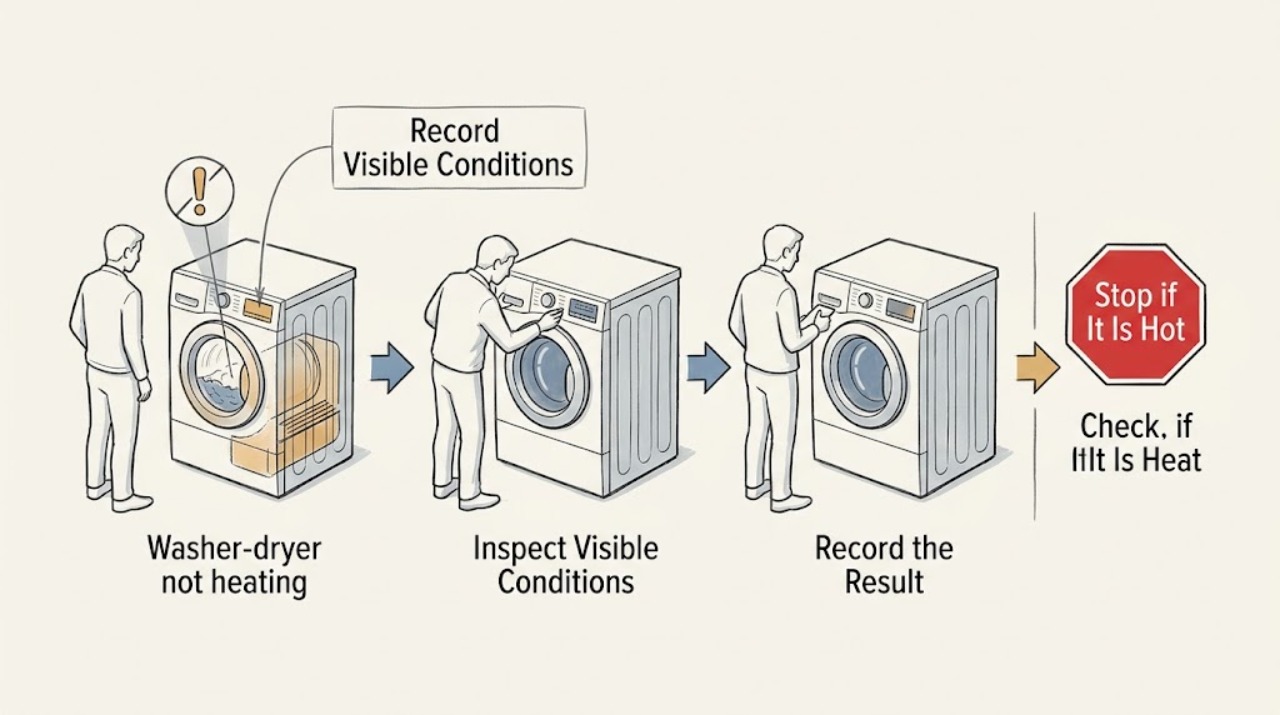
First identify whether your AEG washer-dryer is not heating the wash water, the drying air, or both. Cold clothes at the end of a wash can be normal because the final rinse is generally cold, but a selected heating cycle should show warmth during the wash. For drying, a washer-dryer needs water, an appropriate smaller drying load, and clear model-specific air and drain filters; heat-pump models can feel cooler and take longer. Check the programme, load, water tap, filters, and displayed code without opening the cabinet. If a heating cycle stays cold, drying remains cold after the manufacturer’s test, an E60 or other fault appears, or there is a burning smell, leak, smoke, or repeated electrical trip, stop using the appliance and arrange professional service.
Work through in order
Diagnostic checks
Use only checks that match the exact appliance or system and its official guide.
-
Check 1
Decide which phase is failing before repeating a programme: run through the symptom in your notes as wash water staying cold, laundry being cold only after the final rinse, drying air staying cold, or both phases failing. Record the selected programme and any displayed code.
Expected result: Cold laundry only at the end of washing can be explained by a cold final rinse; cold wash water during a programme that should heat, or a dryer that leaves laundry damp and cold, is a different fault path.
Next step: Use the wash checks for a wash-only symptom and the drying checks for a dry-only symptom. If both fail or a code is present, preserve the exact sequence for service.
Why this matters
Why: Separating the wash and dry systems prevents a normal rinse temperature or heat-pump behaviour from being mistaken for a failed heater.
-
Check 2
For a wash-only complaint, confirm that the selected programme includes heating and that its temperature was not reduced to a cold setting. Use the programme and temperature options shown for your model; if the manual allows a high-temperature cotton or maintenance check, run it empty and cautiously observe whether the door becomes warm during the wash, not at the cold final rinse.
Expected result: A warm door during the heating portion indicates that the wash-water heating system is operating; a door that stays cold on a heating programme, especially with an E60-type code, supports an internal heating fault.
Next step: If it warms, use the correct programme and do not judge the heater by the final rinse. If it remains cold or a code returns, stop further tests and request service; do not open the cabinet.
Why this matters
Why: The selected cycle and the phase of the programme are more useful evidence than touching laundry after the complete cycle.
-
Check 3
For a drying-only complaint, verify that the water tap is open, the drying load is within the drying capacity rather than the larger wash capacity, and the fabric type matches the selected drying programme. Look for a filter warning and clean only the accessible air or drain filter described in the model manual, with the appliance disconnected and cool.
Expected result: A closed tap, excessive load, unsuitable programme, or blocked filter can produce damp laundry without proving that the heat source has failed. A correct programme with a smaller load and clear user-maintenance filters removes those common causes.
Next step: Run one appropriate drying check after the corrections. If the appliance is hot but the load remains damp, investigate load and sensing conditions with the manual; if it remains cold, use the service branch.
Why this matters
Why: Washer-dryer drying depends on water flow, airflow, drainage, load size, and programme selection as well as heat generation.
-
Check 4
If the manual permits a no-load timed drying test, use the stated timed programme and observe the drum only at the manual’s recommended point without reaching into the appliance or repeatedly opening the door. Stop immediately for a burning smell, smoke, unusual electrical noise, a leak, or a tripped breaker.
Expected result: A heat-pump washer-dryer may warm gradually and operate at a lower temperature; a drum that remains cold after the specified check, with laundry still damp, supports a service fault rather than a normal slow start.
Next step: If it remains cold, disconnect it only if that can be done safely and leave it out of use until an authorised or qualified service professional diagnoses it. Do not repeat a failed heat test.
Why this matters
Why: The result distinguishes expected heat-pump behaviour from a heating system that is not producing heat, but it does not identify which internal part failed.
-
Check 5
Photograph or write down the full display message, beeps or flashes, and the appliance model, PNC, and serial information. Note whether washing, drying, or both were affected and what checks have already been completed.
Expected result: A recurring E60-type heating indication or another code gives the technician a defined fault trail; no code does not rule out an internal heater, sensor, airflow, or control issue.
Next step: Give the complete record to AEG support or an appliance service professional. Do not substitute a generic part or dismantle the appliance because the display is blank.
Why this matters
Why: Exact model and event information lets service use the correct manual and model-specific diagnostic procedure instead of guessing from the symptom.
Use your observations
Decision map
Find the observation that best matches what you see, then follow the next safe action.
-
PATH 01Next step
What you see
The laundry is cold only after washing, but the selected wash programme warms the door during its heating phase.
Do this next
Use the programme and temperature intended for the fabric and judge heating during the wash phase. Seek service if the symptom changes to cold wash water or a fault code appears.
Why this path and its safety boundary
Why it matters: The cold final rinse is likely explaining the end-of-cycle temperature, so this observation does not establish a failed heater.
-
PATH 02Next step
What you see
Wash water stays cold on a programme that should heat, the door does not warm during the heating phase, or an E60-type code appears.
Do this next
Stop repeated cycles and arrange professional service. Do not remove the rear panel, test live terminals, or replace a heater or sensor without model-specific diagnosis.
Why this path and its safety boundary
Why it matters: AEG treats this pattern as possible heating-system failure rather than a normal rinse condition.
-
PATH 03Next step
What you see
Drying is weak but the tap, load size, programme, and user-accessible filters were incorrect or blocked.
Do this next
Correct the applicable user-level condition according to the model manual and perform one suitable drying check; do not keep increasing the load or repeating long cycles.
Why this path and its safety boundary
Why it matters: The drying result may be explained by water, airflow, drainage, fabric selection, or overloading rather than a failed heat source.
-
PATH 04Next step
What you see
The drying drum remains cold after the manufacturer’s permitted test, or the machine repeatedly leaves laundry damp after basic checks.
Do this next
Disconnect and leave the appliance unused if safe to do so, then contact an authorised or qualified appliance service professional.
Why this path and its safety boundary
Why it matters: An internal heating, sensing, airflow, or control fault is possible and cannot be identified safely from the outside.
-
PATH 05Next step
What you see
There is a burning smell, smoke, water leak, exposed damage, repeated breaker or residual-current trips, or uncertainty about safe isolation.
Do this next
Stop using the washer-dryer. If it can be done without touching wet or damaged electrical parts, disconnect it and close the water tap; otherwise keep clear and arrange urgent professional appliance or electrical service.
Why this path and its safety boundary
Why it matters: This is a stop condition, not a routine heating check.
Helpful context
Understand the symptom
Separate wash heating from drying heating
A washer-dryer has two different user symptoms. During washing, the selected temperature controls whether the water is heated, and clothes can still feel cold after the programme because the final rinse is normally cold. During drying, the appliance uses a drying system and, on applicable models, water as part of the drying process. A heat-pump design may use a gentler lower temperature, so the drum may not feel hot at the beginning even when the system is working.
Use maintenance checks before suspecting a heater
An overloaded drying programme, a blocked lint or drain filter, the wrong fabric programme, or a closed water tap can make a washer-dryer appear not to heat. The drying capacity is lower than the washing capacity, so a load that fits the wash programme may be too large for drying. Clean only the user-accessible filter described for your model and disconnect the appliance before cleaning or maintenance.
Know when the heater is a service issue
AEG describes an E60-type indication as a heating problem and recommends service when the appropriate heating check remains cold. A fault may involve an internal heater, sensor, control, airflow, or another model-specific part; the symptom alone cannot identify a replacement. Keep the full displayed code, model, PNC, and serial information for the service team, and do not dismantle internal components unless AEG specifically instructs you to do so.
Only after diagnosis
Potential parts
- wash or drying heating component
Consider a heating component only after service diagnosis confirms that the wash or drying heat source is defective; a cold final rinse, low heat-pump temperature, blocked filter, or wrong programme does not identify this part.
Confirm the exact AEG model, PNC, appliance configuration, and service documentation before selecting or replacing any internal heating component. - model-specific air or drain filter
Consider a replacement filter only if the model has that user-accessible filter, inspection shows it is damaged or cannot be cleaned, and poor drying is linked to restricted airflow or drainage.
Filter arrangements differ by AEG washer-dryer model; confirm the manual and exact appliance identification before ordering or fitting one.
When checks do not resolve it
Need a professional?
Book service when heating does not return after the model-appropriate programme and filter checks, a heating code appears, or any electrical, leak, smoke, or burning symptom occurs.
Common questions
FAQ
Why are my clothes cold when the AEG washer-dryer finishes washing?
The final rinse is generally cold, so cold laundry at the very end does not by itself prove that the heater failed. Check whether the door becomes warm during the heating portion of a suitable wash programme instead.
Why does my AEG washer-dryer need water when it is drying?
AEG’s washer-dryer drying guidance says the water tap must be on during drying. A closed tap can produce poor or absent drying and should be checked before assuming the heat source is defective.
Can a heat-pump washer-dryer feel less hot than expected?
Yes. Heat-pump systems can use a gentler lower temperature and may warm gradually. Follow the model’s drying programme and load guidance; if the drum remains cold after the permitted check or the laundry stays damp, stop use and request service.
What should I do if an E60-type heating code appears?
Record the complete code and model information, stop repeated tests, and arrange professional service. Do not remove panels or test internal electrical parts; the code indicates a heating-related fault path, not a guaranteed replacement part.
Read the exact guide
Official sources
- Drying cycle of washer dryer takes too long, too short or not drying at allAEG · Applies specifically to washer-dryers; used for water supply during drying, air and drain filters, drying-load capacity, and programme selection.
- Washing machine does not heat water, and does not display an error messageAEG · Applies to washing machines and washer-dryers; used for cold final-rinse interpretation, heating-program checks, filter/load checks, and E60-type heating indications.
- What to check before contacting AEG consumer serviceAEG · Used for safe restart and maintenance boundaries, recording codes and identification details, consulting the model manual, and professional escalation.
Community feedback
Share a repair observation
Share a plain-text repair observation. Accepted observations are published automatically; this page may take a moment to update.