
Repair problem
Not Heating Troubleshooting Guides – Page 5
Published FixGraph guidance for diagnosing and responding to not heating.
Matching published guides
Choose a guide that matches the service, equipment, and conditions you are seeing.
-
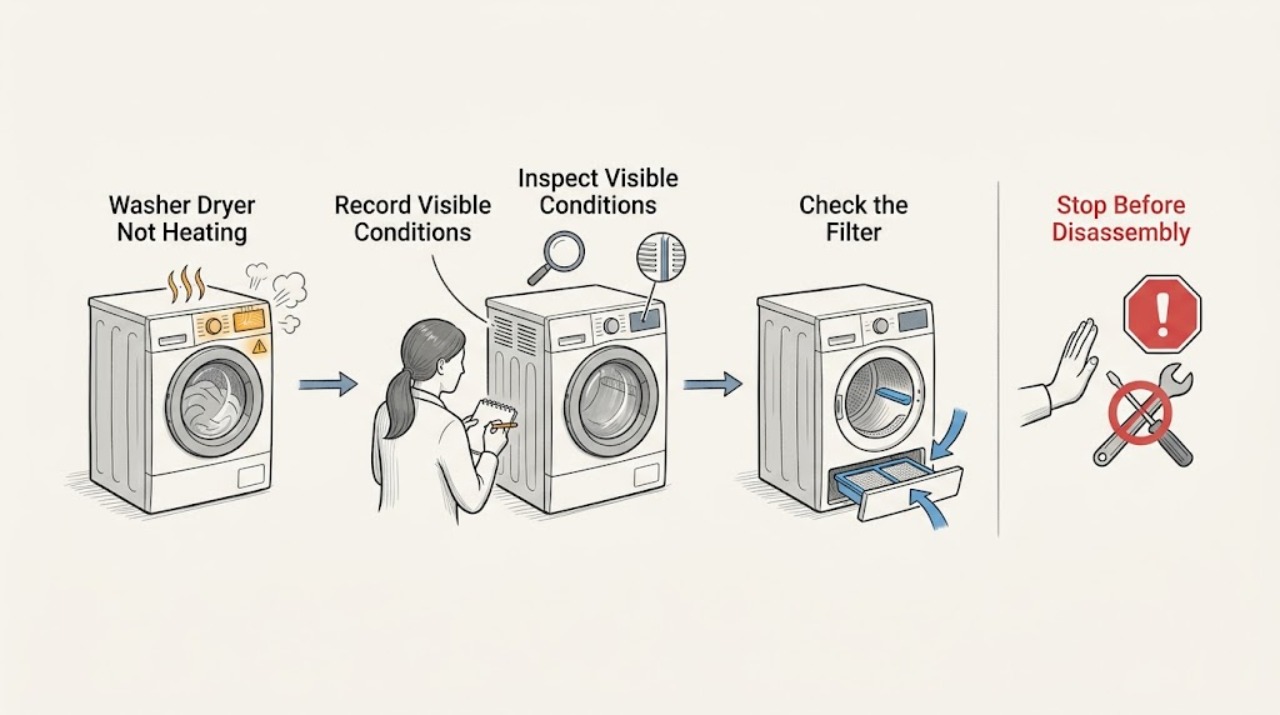
Samsung Washer Dryer Not Heating: Separate Wash and Dry Heat
First identify whether the Samsung washer-dryer is failing to heat water during washing or failing to produce warm air during drying. For the drying function, check that the selected cycle is supposed to use heat, turn off Eco Dry if the model offers it, clean the lint filter and model-specific heat exchanger, and check the exhaust or condensation path.
-
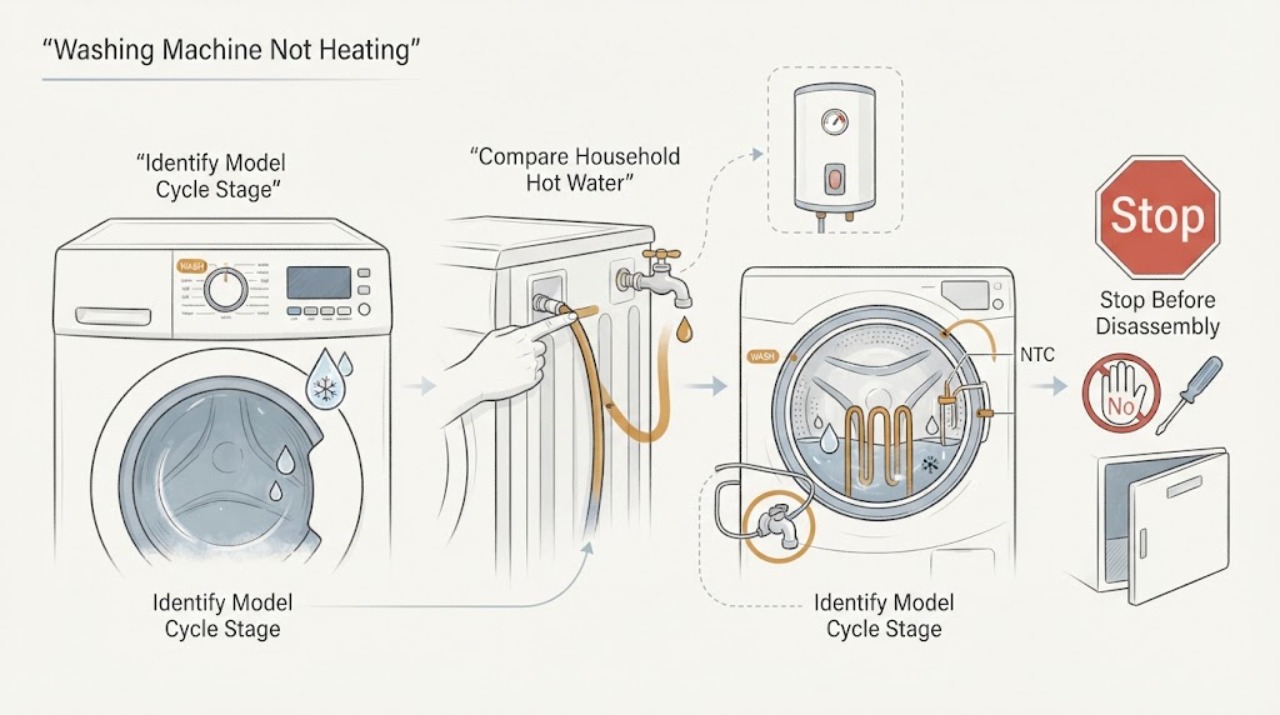
Samsung Washing Machine Not Heating
A Samsung washer that seems not to heat may be working normally: many cycles use cold water for part of the program, Samsung washers mix hot and cold with Auto Temperature Control, and the final rinse may be the only warm part of a Warm cycle. First record the exact model, cycle, temperature setting, and stage, then compare the water only during a stage that should use hot water.
-
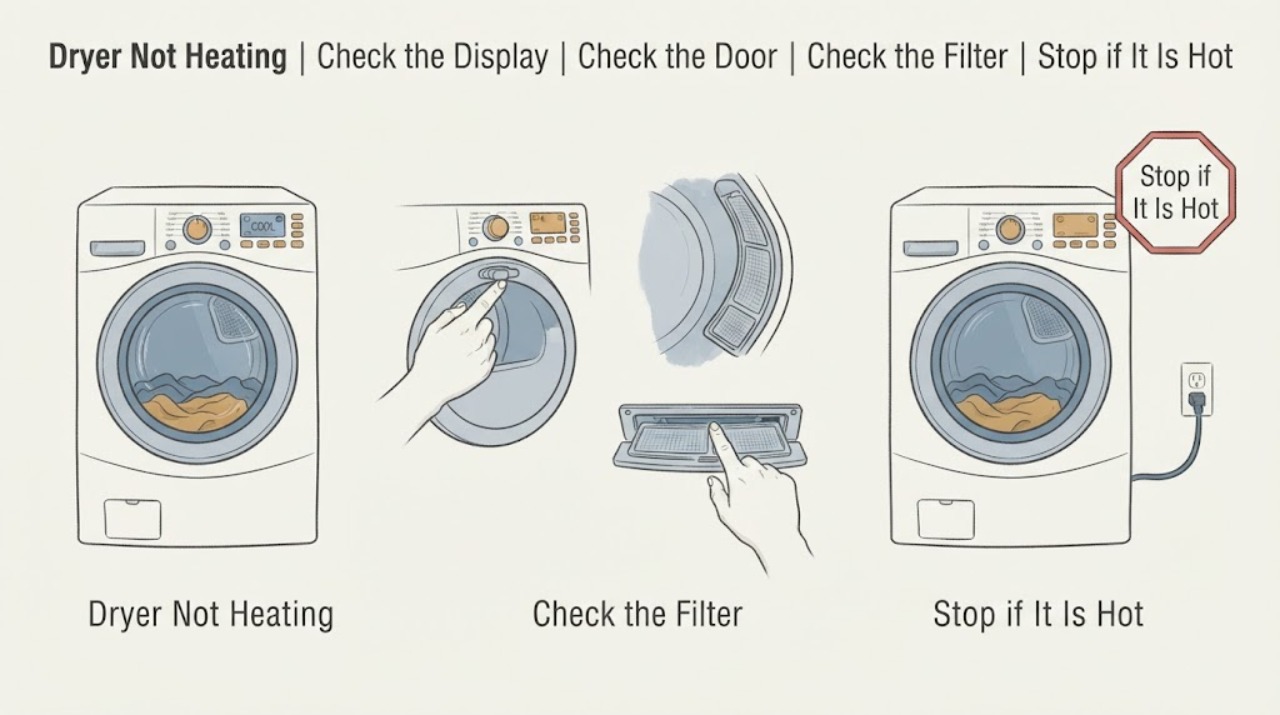
Sharp Dryer Not Heating: Check the Cycle, Airflow, and Model Type
First identify the Sharp dryer's model and whether it is vented, condenser, or heat-pump, because the controls and maintenance points differ. Confirm that a heated program—not an air-only or cool cycle—is selected, the door is closed, and any model-specific water tank or filter indicator is clear.
-
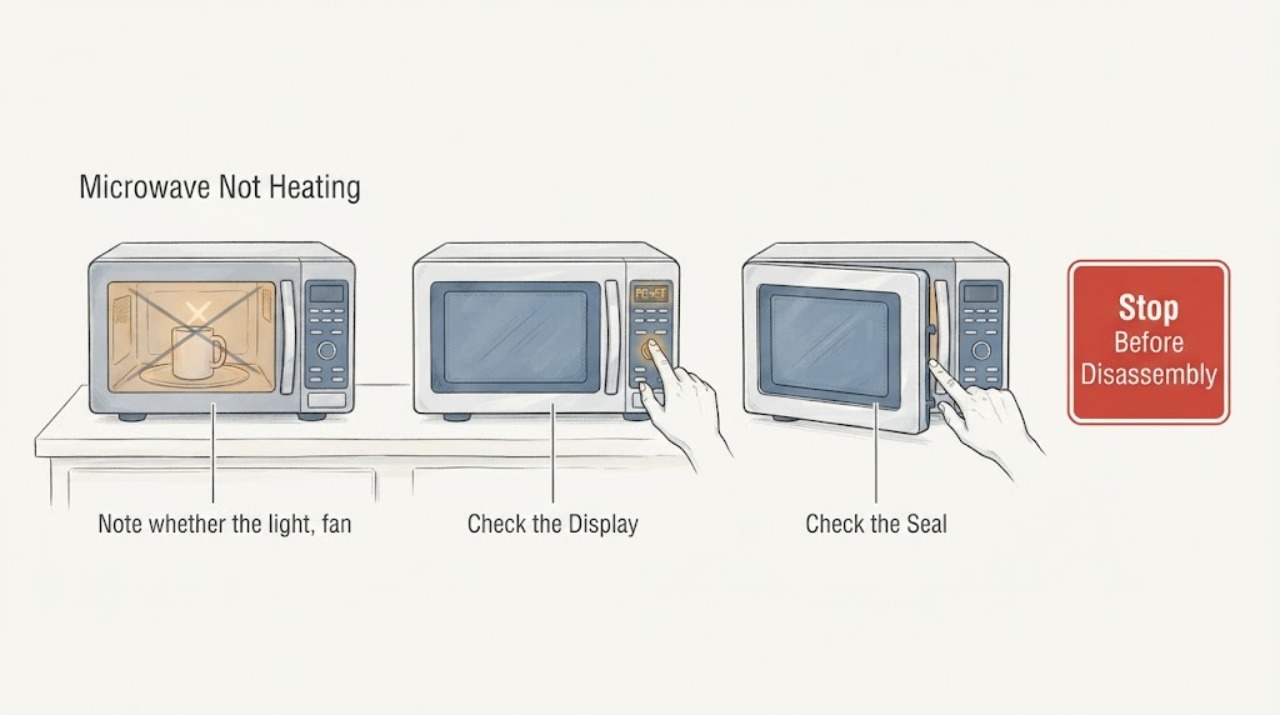
Sharp Microwave Not Heating
A Sharp microwave that runs but does not heat should be checked for the selected cooking mode, door closure, and approved container setup. Do not open the cabinet; persistent no-heat needs qualified microwave service.
-
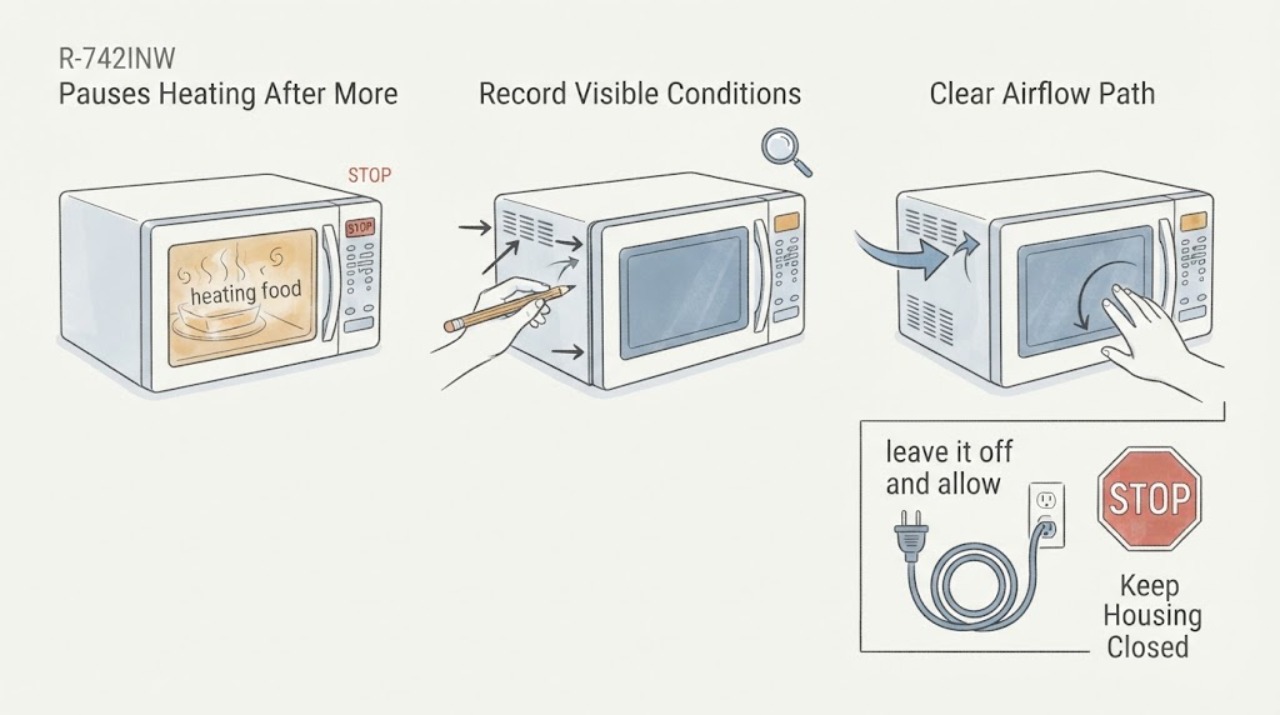
Sharp R-742INW Pauses Heating After More Than 3 Minutes at 900 W
A pause in microwave heating after sustained full-power use can be consistent with heat buildup or an airflow-related protective response, but the Sharp R-742INW sources opened here do not document a user-resettable safety-mode timer or prove that this symptom is normal. Sharp's official data sheet identifies this model family as a 900 W microwave with an electronic control panel; its official support site directs owners to search by model for the applicable manual.
-
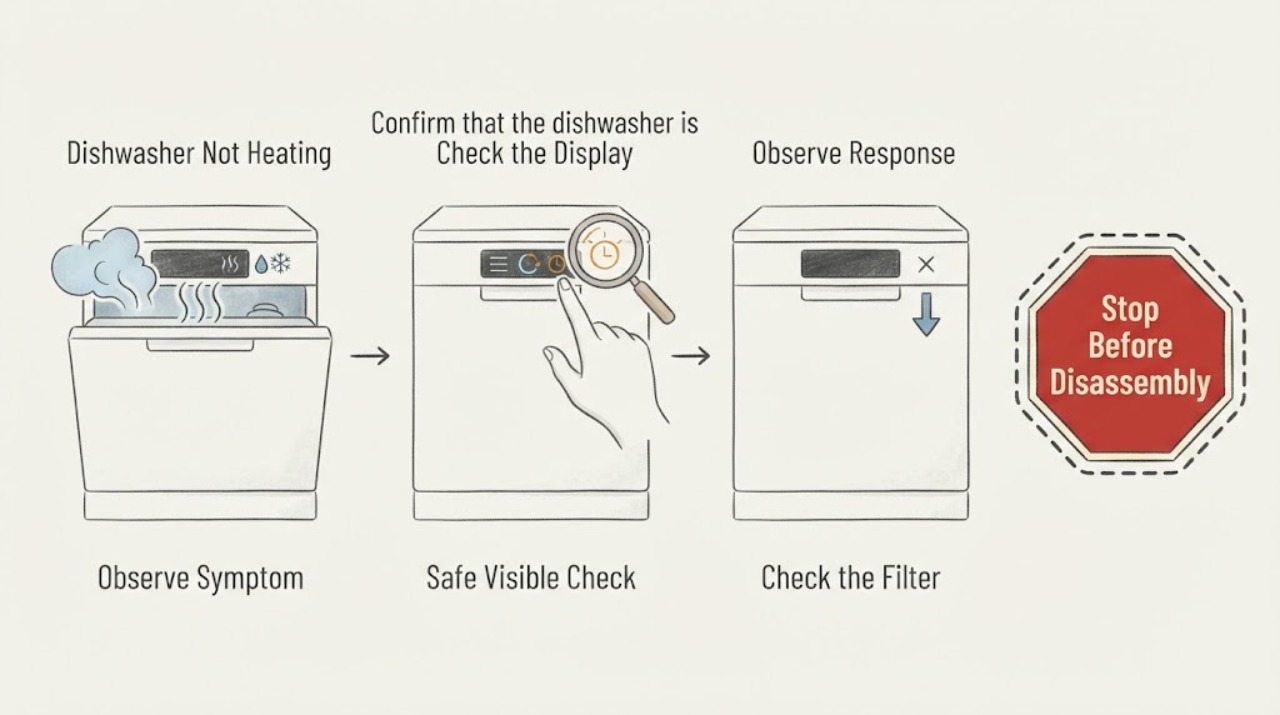
Siemens Dishwasher Not Heating
For a Siemens dishwasher that is not heating, begin with the symptom’s observable path: filter and pump for draining or odour, water supply for filling, detergent and spray arms for dispensing or wash results, and the model manual for display messages. Switch off and isolate water or power when the official guidance calls for it. If the issue persists, leaks, or the dishwasher will not heat, arrange Siemens service.
-
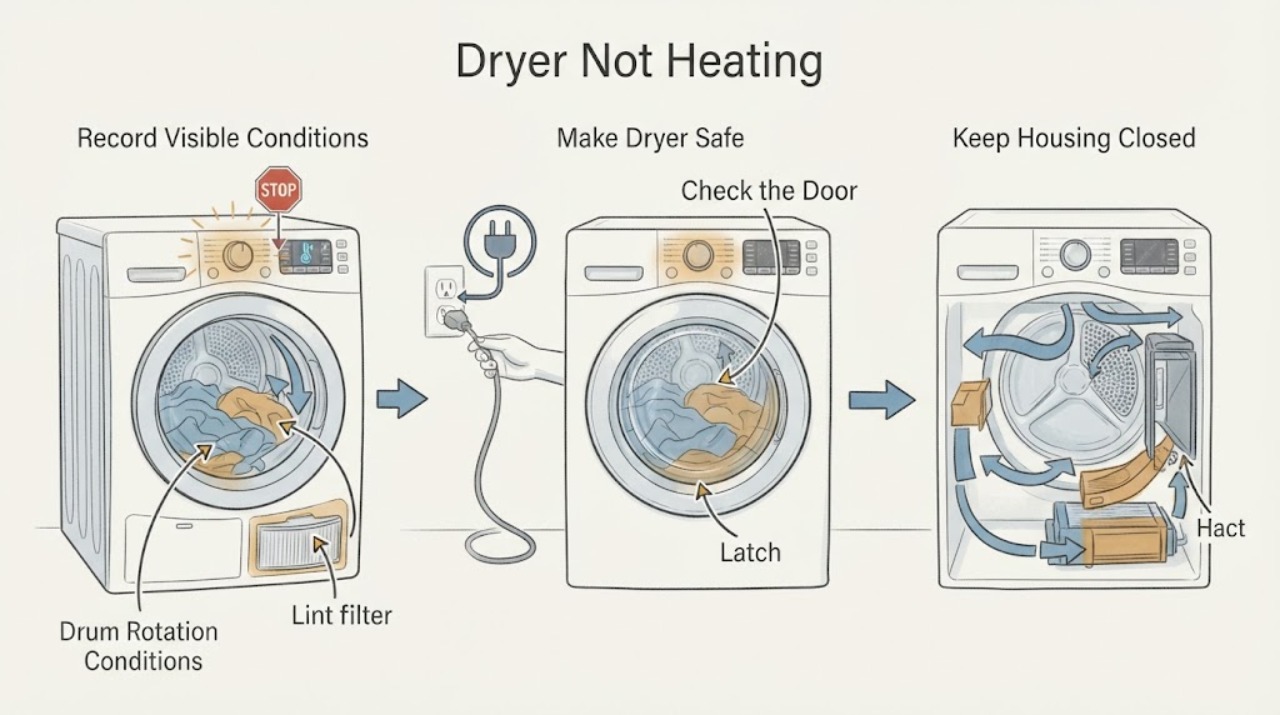
Siemens Dryer Not Heating
A Siemens dryer that is not heating needs an appliance-specific check because heat-pump, condenser, and vented models do not use the same air and water paths. First record the complete E-Nr, programme, load, and any display or filter warning.
-
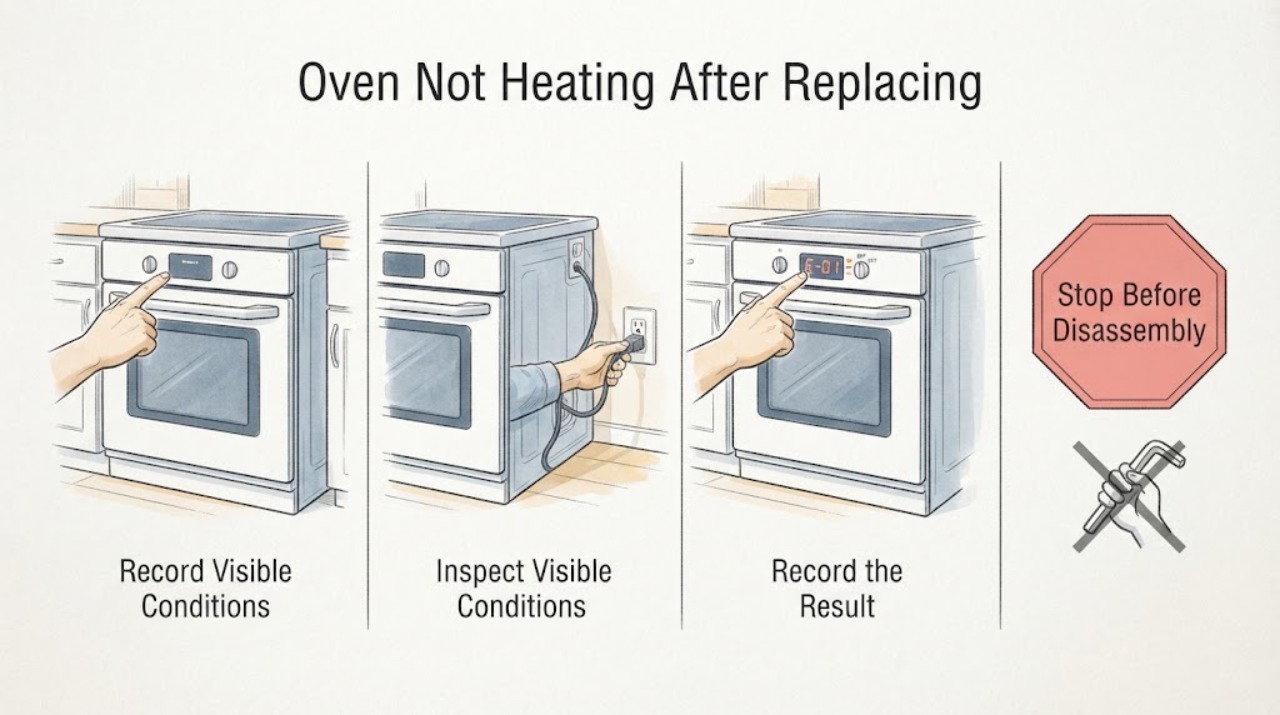
Siemens Oven Not Heating After Replacing an Old Oven: Safe UK Connection Checks
If a new Siemens oven will not heat after replacing an old oven in the UK, do not assume the old connection is suitable for the new appliance and do not rewire it yourself. First record the new oven's full E-Nr., installation instructions, power requirements, connection type, and whether the display has power.
-
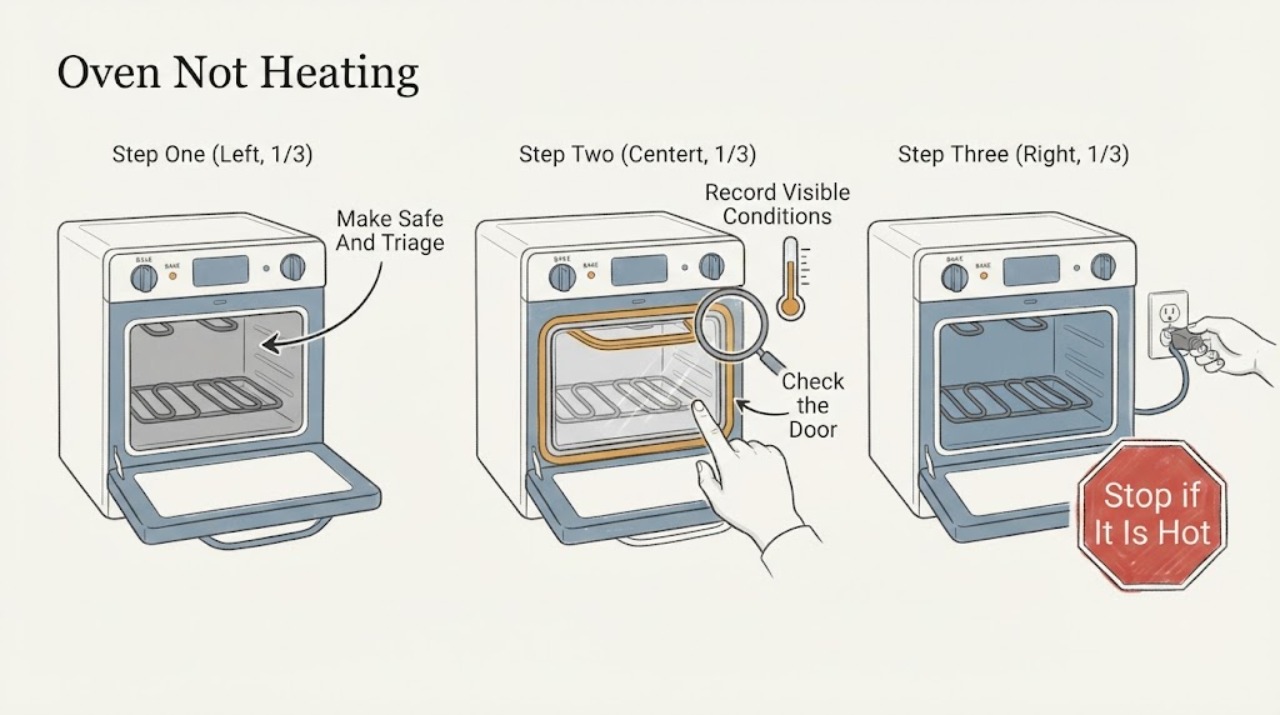
Siemens Oven Not Heating: Check Mode, Power, Door, and Safe Service Boundaries
When a Siemens oven does not heat, first identify the exact E-Nr/model, whether it is electric, gas, or a combination appliance, and whether the cavity, display, fan, or cooktop still works. Confirm the intended heating mode, temperature, clock or timer state, door closure, and any padlock or error display from the exact manual.
-
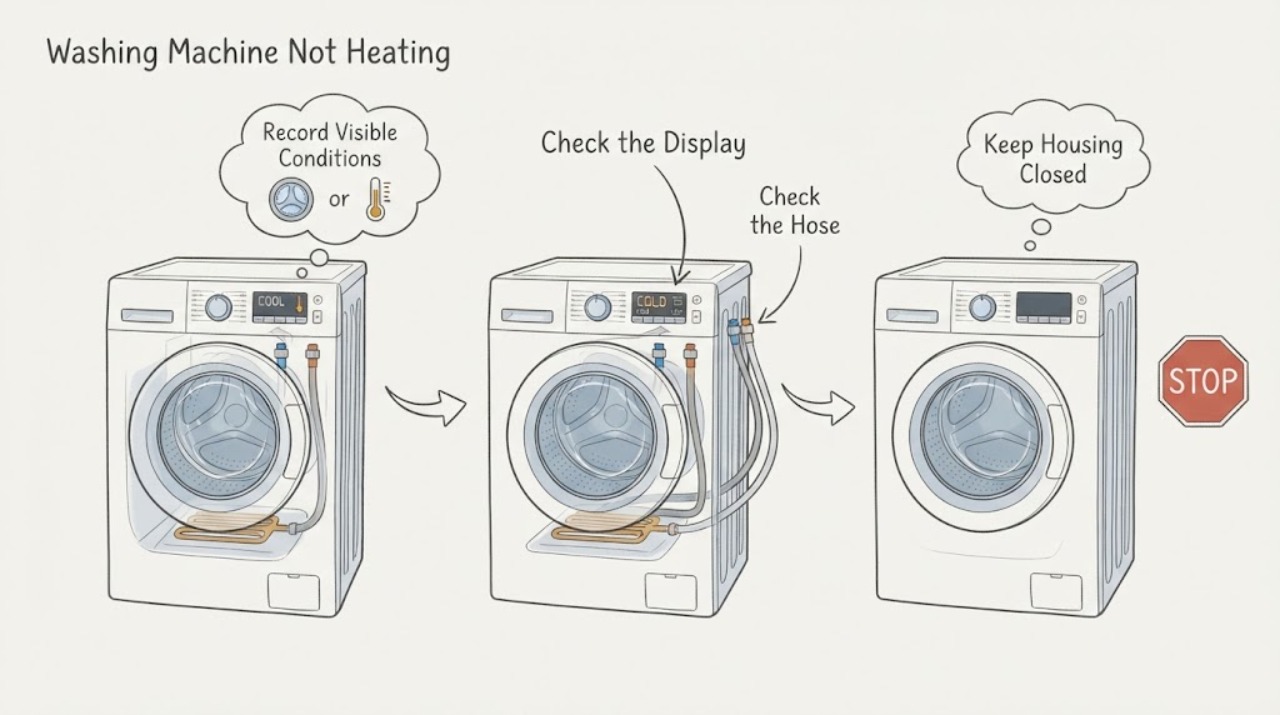
Siemens Washing Machine Not Heating: Program, Water Supply, and Heater Checks
First confirm that the selected Siemens program is meant to heat water and that the result is genuinely cold, rather than a normal low-temperature or cold rinse. Check the model manual for the correct temperature setting, water-inlet arrangement, and any displayed code.
-
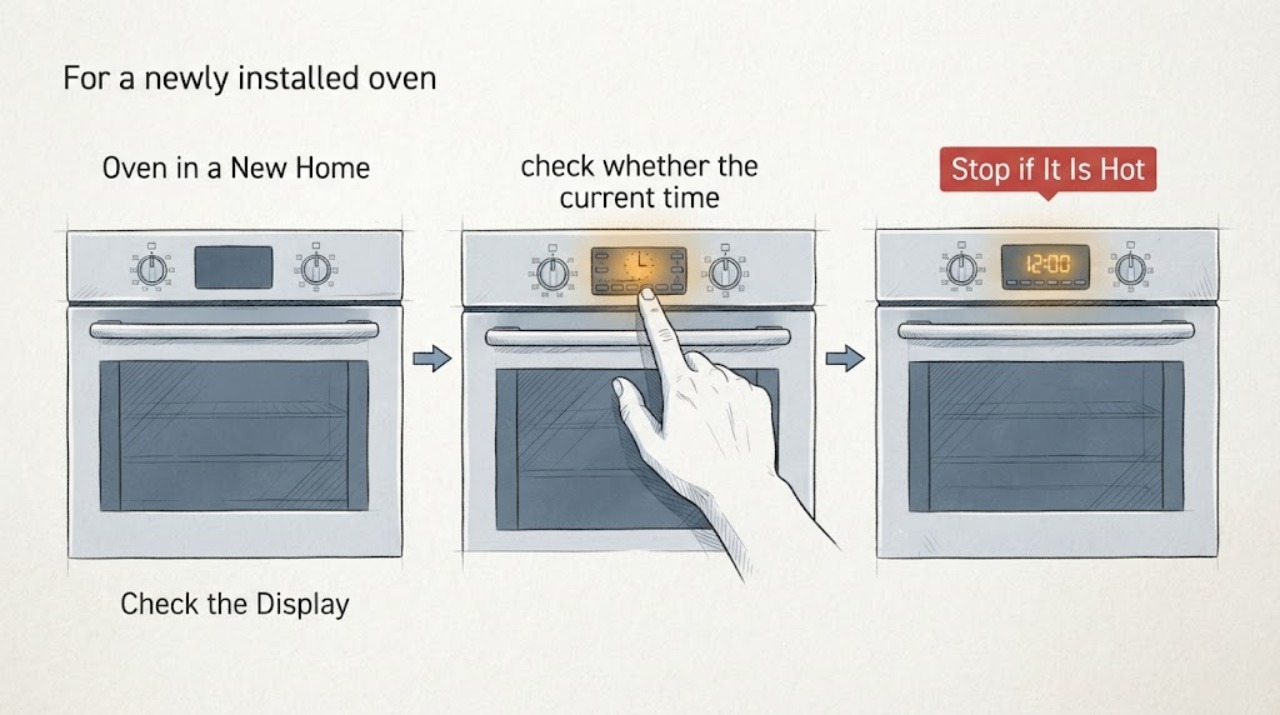
Smeg Oven in a New Home: First Use, Preheating, and “Not Heating” Checks
If a Smeg oven in a new home seems not to heat, first find the product code and the exact manual because Smeg controls and fuel types vary. On electronic Smeg ovens, the clock may need to be set before a cooking function can start.
-
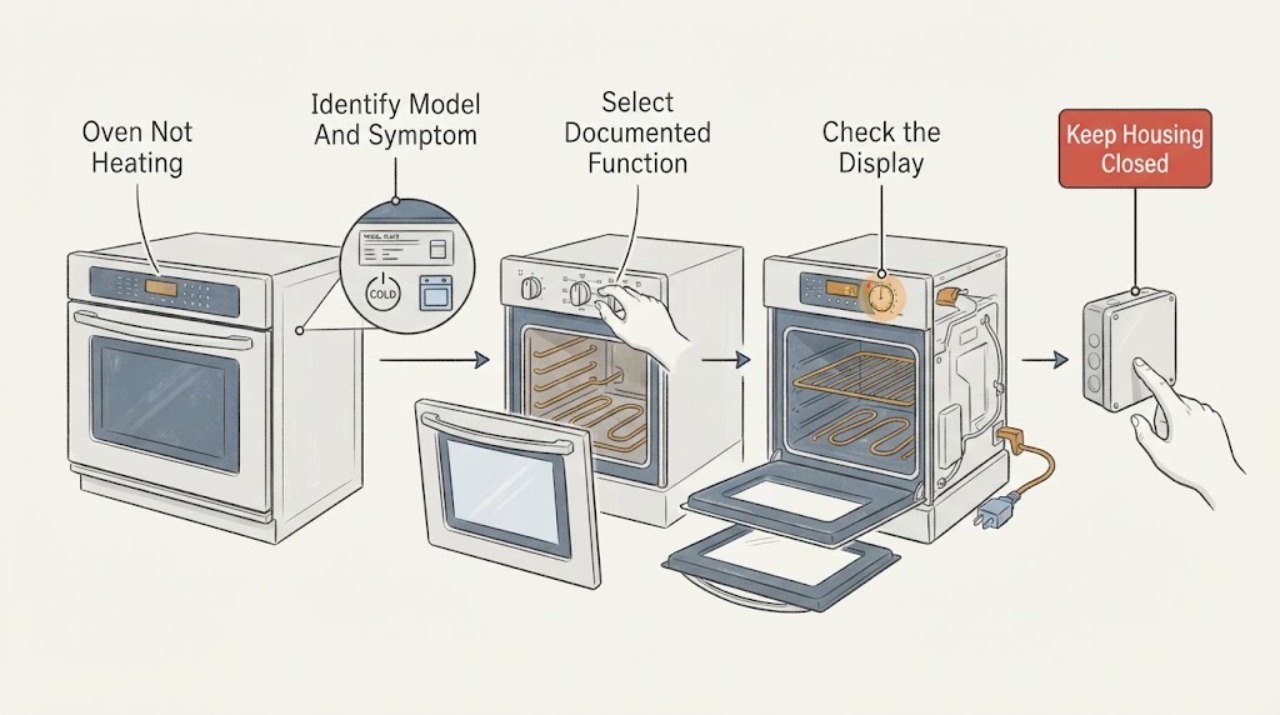
Smeg Oven Not Heating: Check the Mode, Door, Preheat, and Power
If a Smeg oven is not heating, first record the exact model, fuel type, display message, cooking function, target temperature, and whether the preheat indicator responds. A wrong function such as defrost or keep-warm, an unset clock or delayed program, an open or locked door, a tripped supply, or a mode-specific control state can look like failed heating.
-
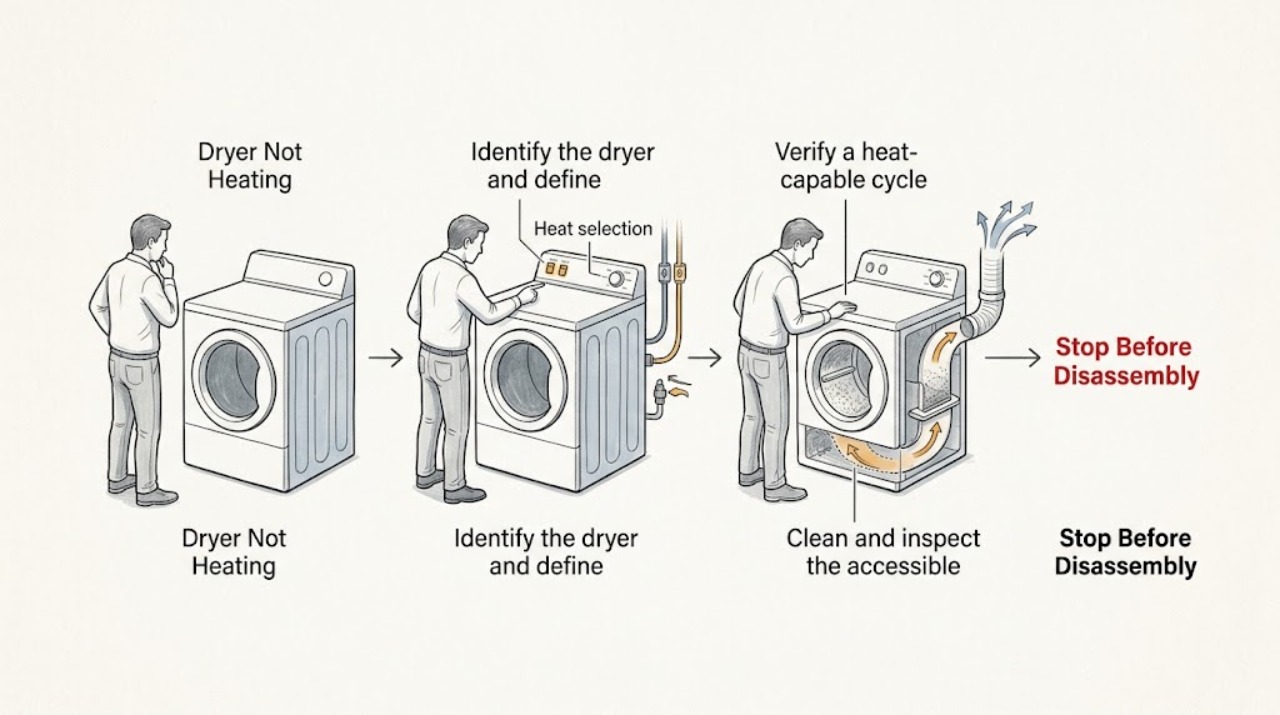
Speed Queen Dryer Not Heating: Check Settings, Airflow, and the Correct Power Path
First confirm that the Speed Queen dryer is set to a heated cycle rather than No Heat, Cool Down, or another air-only setting, and clean the lint filter. Then inspect the exhaust path from the outside for a crushed hose, blockage, or a hood flap that cannot move freely.
-
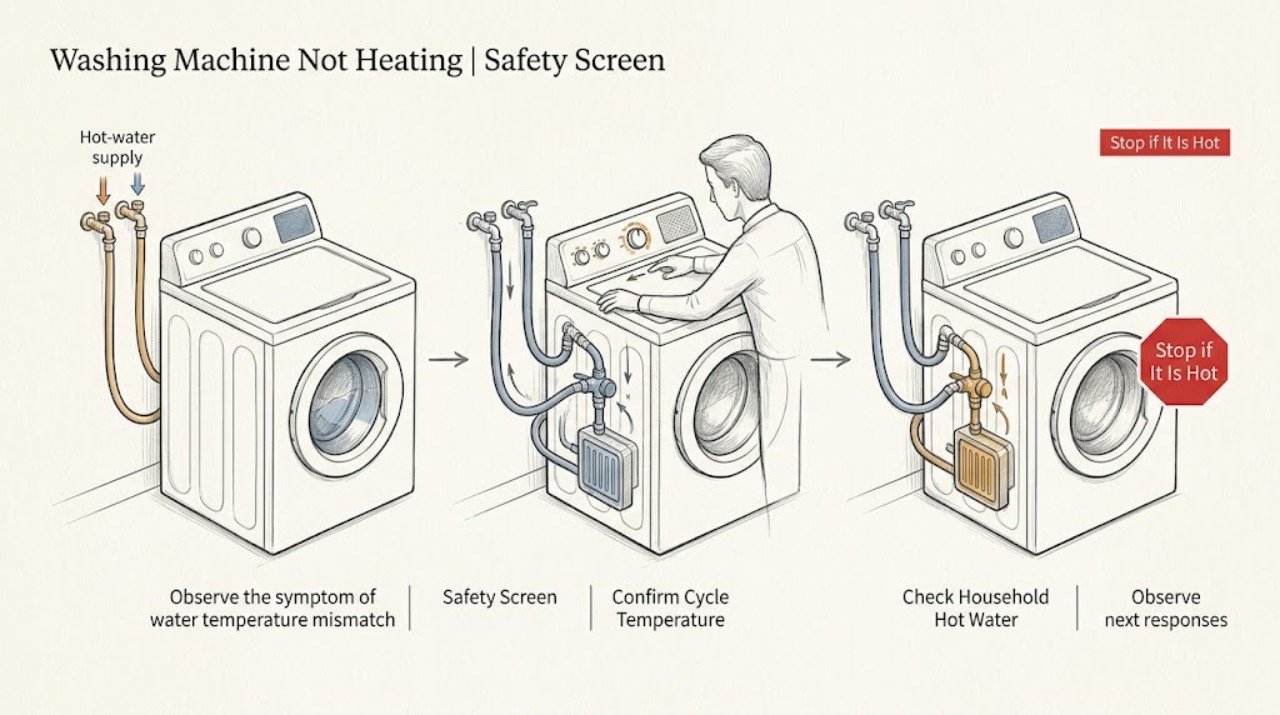
Speed Queen Washing Machine Not Heating
A Speed Queen washer that seems not to heat may be receiving cold water because of a household hot-water issue, a closed or crossed hose, a temperature selection, or a model-specific control or heating fault. First confirm what the selected cycle is supposed to do and whether the machine is top-load or front-load; some rinse stages intentionally use cold water.
-
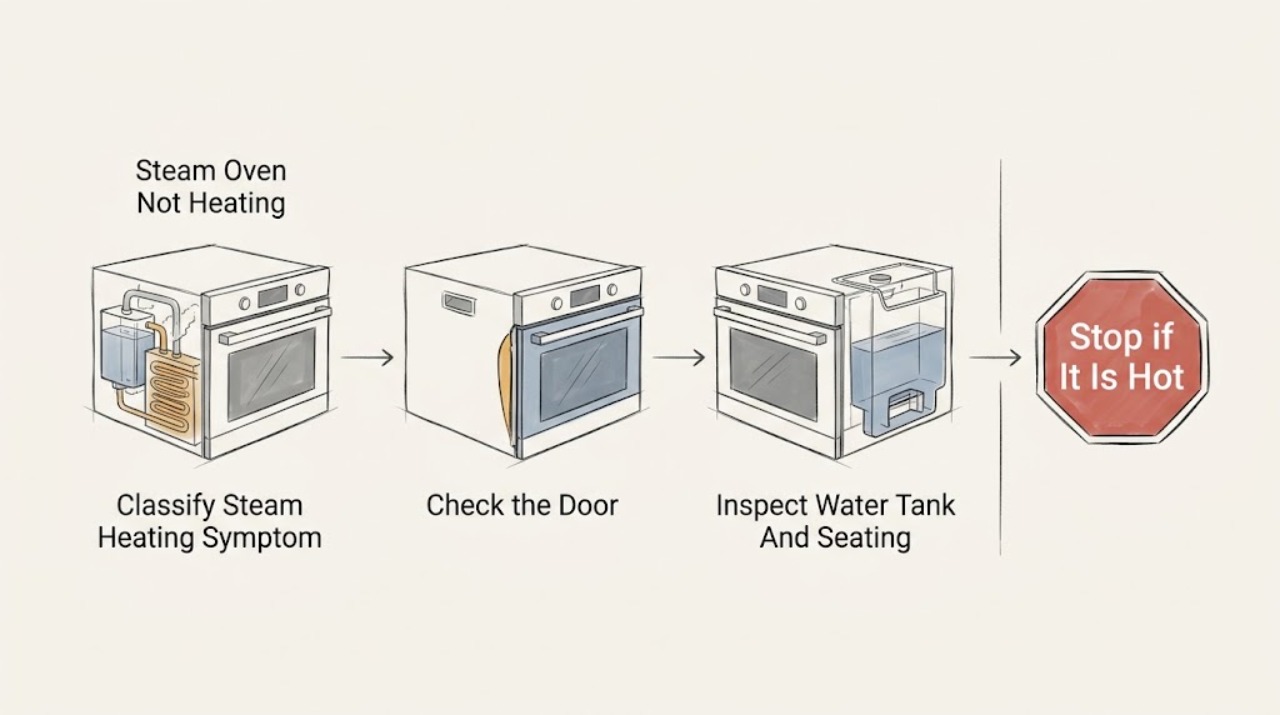
Steam Oven Not Heating: Check the Mode, Water Path, and Safe Start Conditions
If a steam oven is not heating, first determine whether the display is blank, a cooking mode will not start, the oven warms but produces no steam, or the heating phase never reaches temperature. With the appliance cool, check the selected mode, temperature, door position, water-tank level and seating, and any exact message or error code.
-
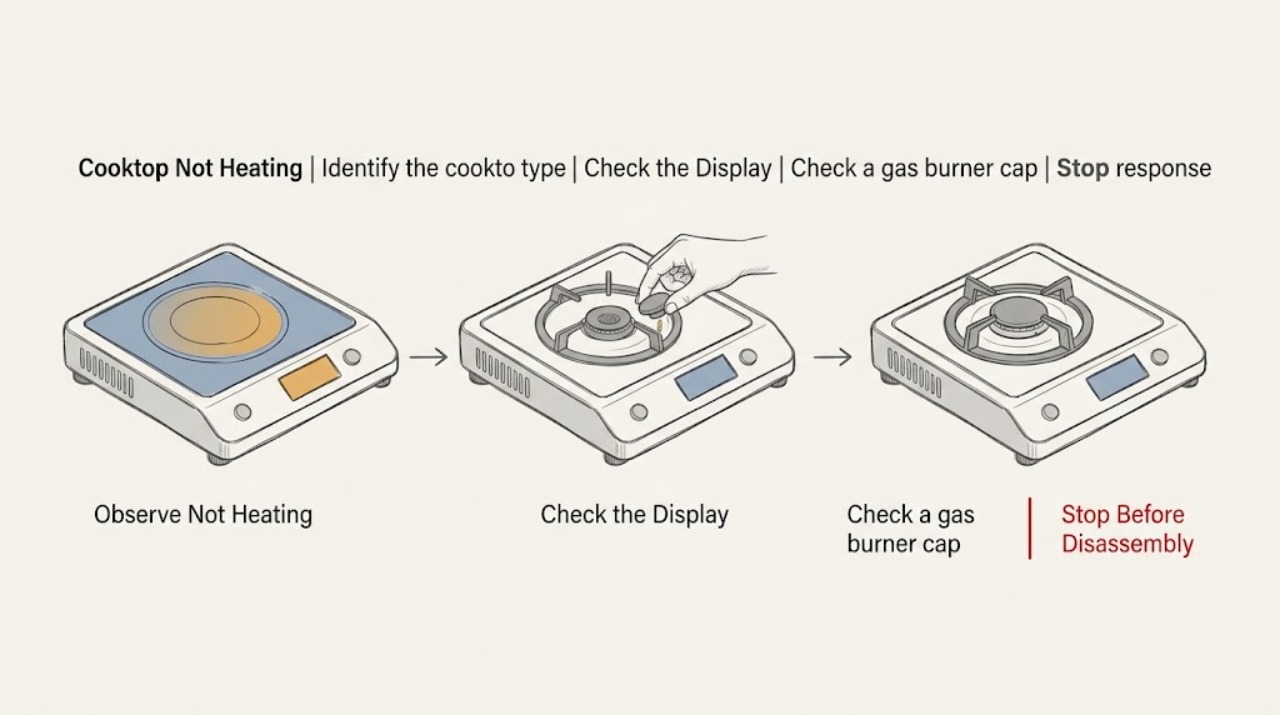
Thermador Cooktop Not Heating
First identify whether the Thermador cooktop is gas, electric, or induction, because not heating has a different safe first check in each case. Confirm that the controls and household supply are on, then use only the matching low-risk check: a gas burner needs a correctly seated, dry cap and clear visible ports; an electric element needs the selected control and a stable supply; an induction zone needs a centered, induction-compatible pan of adequate size.
-
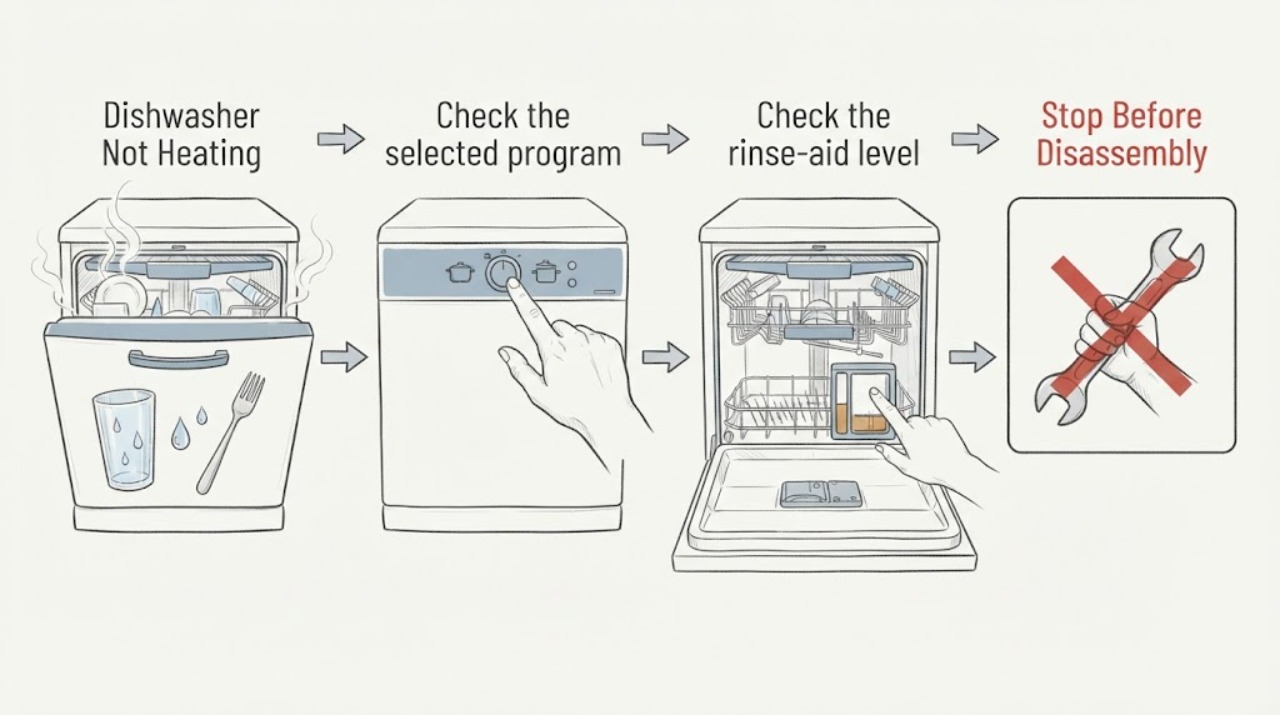
Thermador Dishwasher Not Heating
A Thermador dishwasher can finish with wet dishes without having a failed heater: Thermador uses condensation drying rather than a bottom heating element, and plastics stay wetter than glass. Check that the selected cycle includes drying, the rinse-aid dispenser is supplied, the spray arms and filter are clean, and the incoming water is hot enough for the cycle.
-
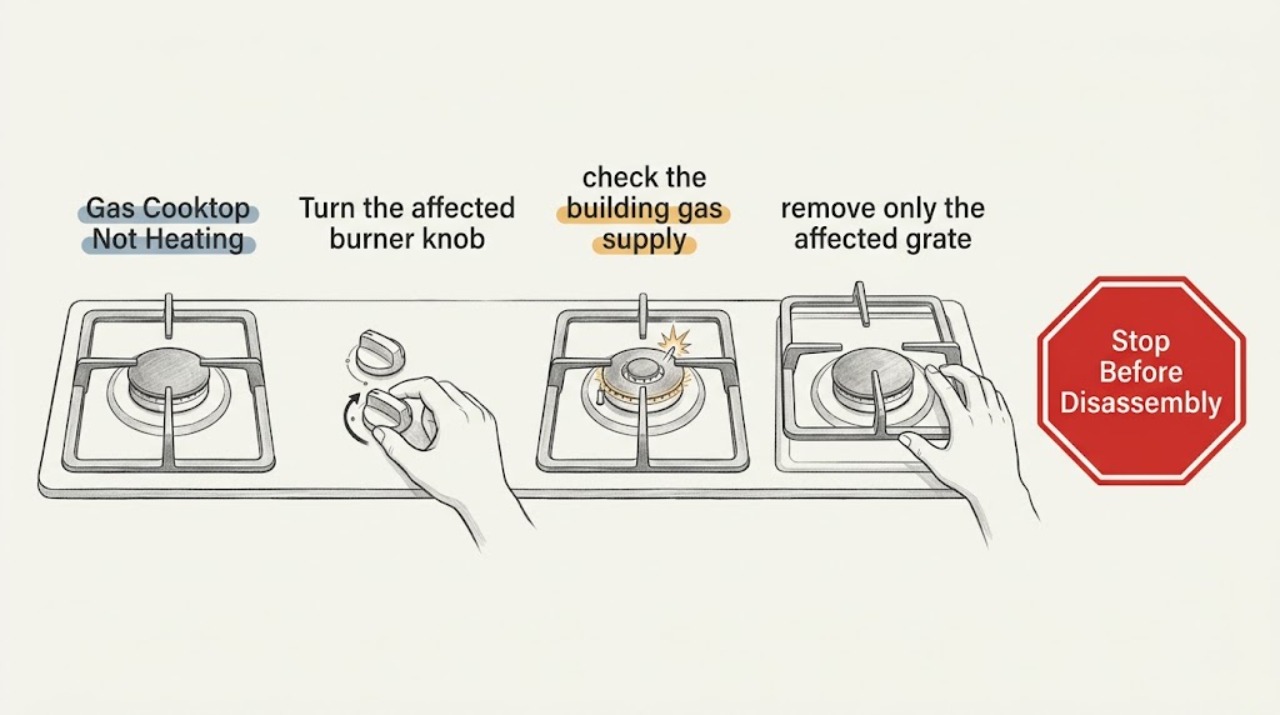
Thermador Gas Cooktop Not Heating: Check Gas, Burner Fit, and Ignition Safely
If a Thermador gas cooktop is not heating, first turn the affected knob off and decide whether there is no flame, a weak or uneven flame, or a flame that lights but does not deliver normal heat. With no gas odor or other danger sign, confirm the main gas supply and appliance power, then let the cooktop cool before checking that the burner cap and head are correctly seated, dry, and free of blocked ports.
-
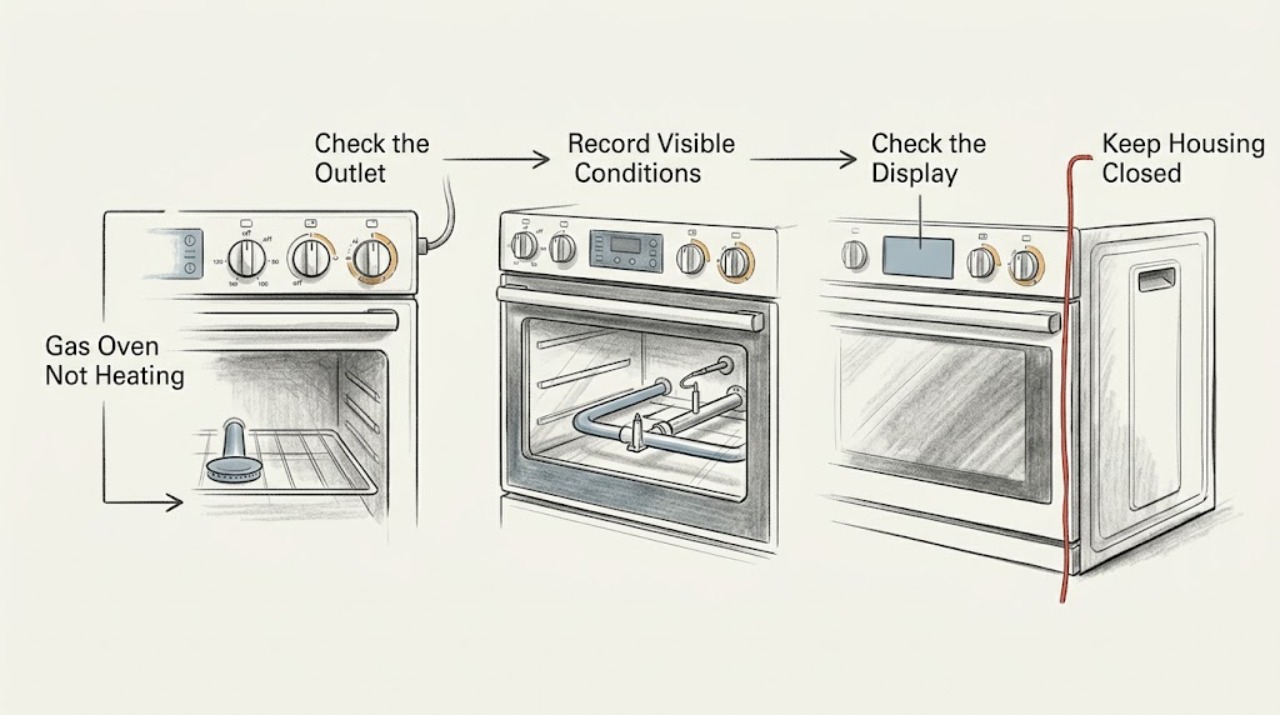
Thermador Gas Oven Not Heating: Check Settings, Supply, and Ignition Safely
A Thermador gas oven that does not heat may be in the wrong mode or timer state, may lack electrical or gas supply, or may have an oven-specific ignition, burner, flame-sensing, or temperature-control fault. Record the exact model, display, selected mode and temperature, then make one normal start request while observing from outside.
-
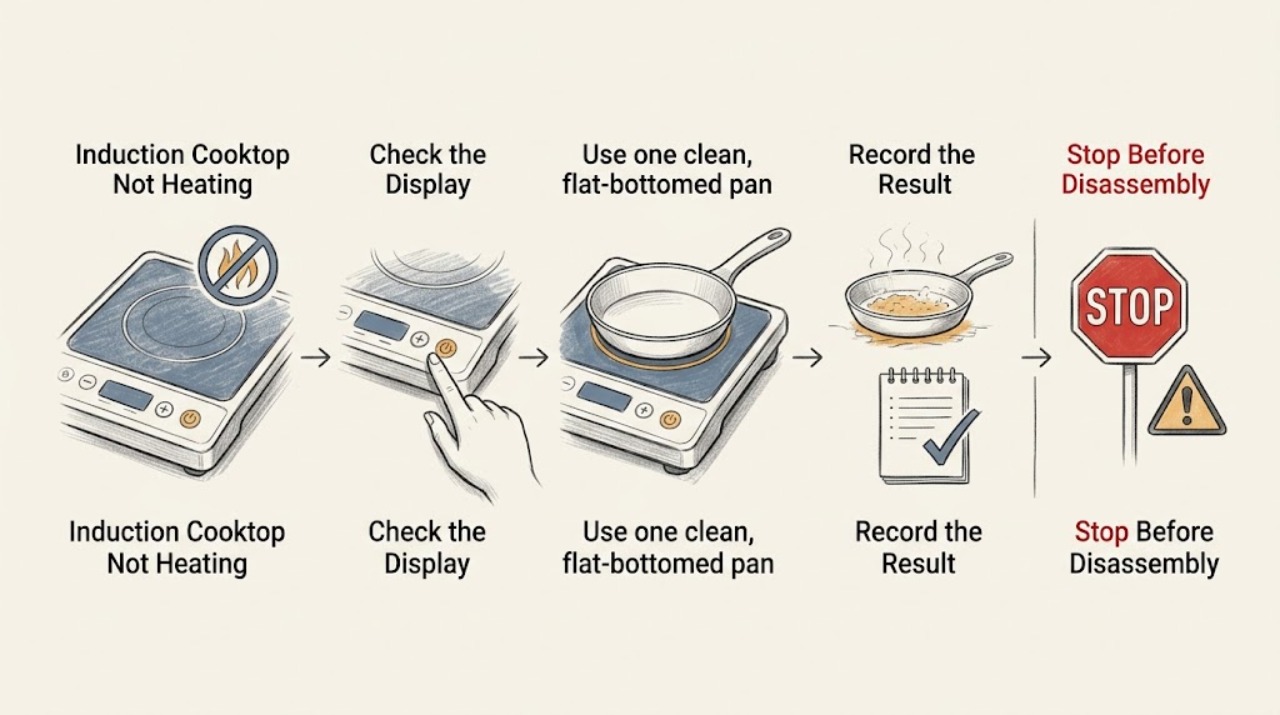
Thermador Induction Cooktop Not Heating: Check the Pan, Zone, and Power
A Thermador induction cooktop usually fails to heat because the pan is not being detected, the wrong zone or control state is selected, power is being shared across zones, or the cooktop has entered an overheat or fault state. Start with a flat, magnetic pan centered on the correct zone, a dry unlocked control panel, and one zone at a moderate setting.
-
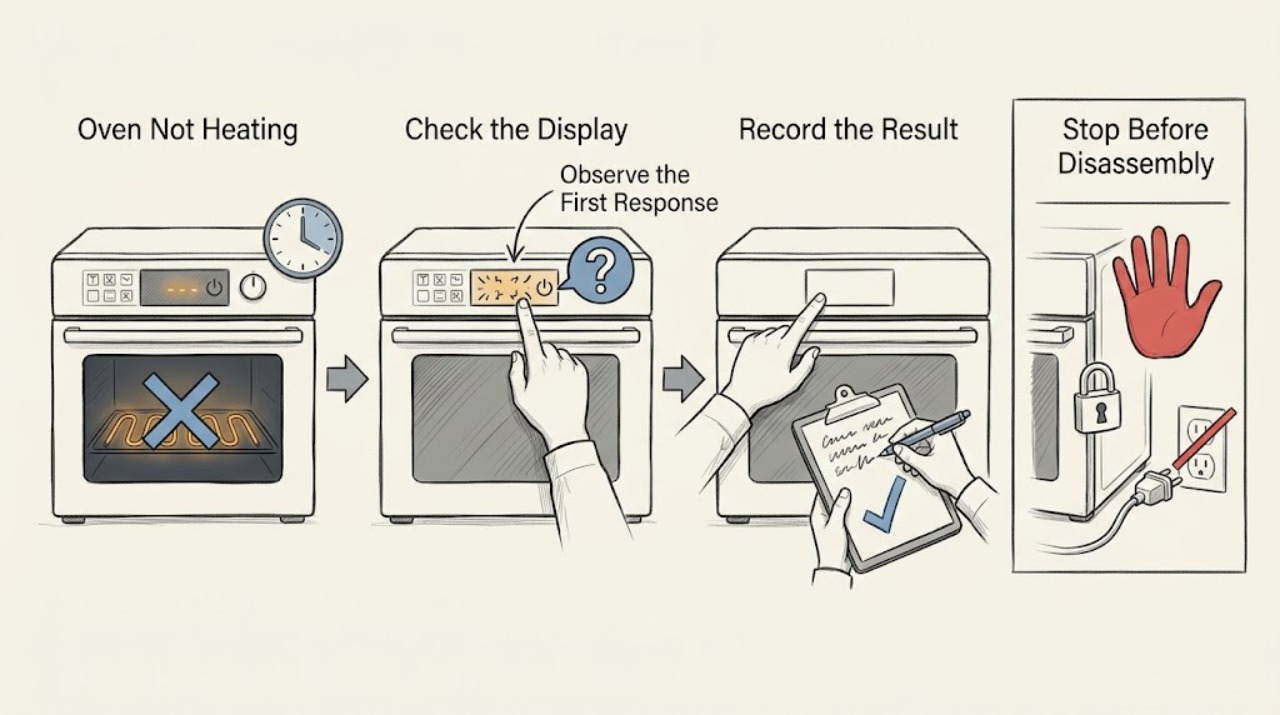
Thermador Oven Not Heating: Check the Mode, Power, Door, and Fuel Type
First decide whether the Thermador oven is completely without power, powers up but never starts heating, or heats weakly or unevenly. Confirm the selected cooking mode and temperature, start the cycle, keep the door closed while preheating, and use the exact model manual for controls and fuel-specific behavior.
-
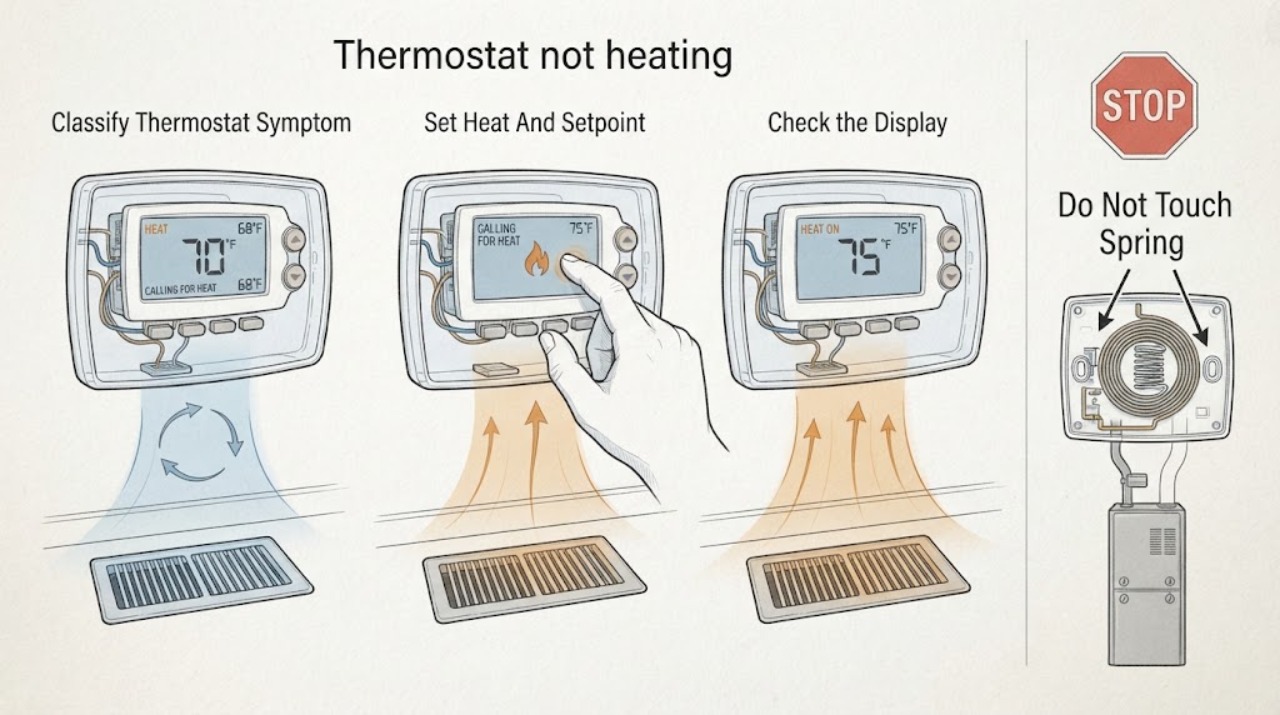
Thermostat not heating: safe checks before HVAC service
First separate a thermostat problem from a heating-equipment problem. Check that the display has power, the mode is Heat, and the set temperature is above the room reading; then allow the normal equipment delay shown by the thermostat or manual.
-
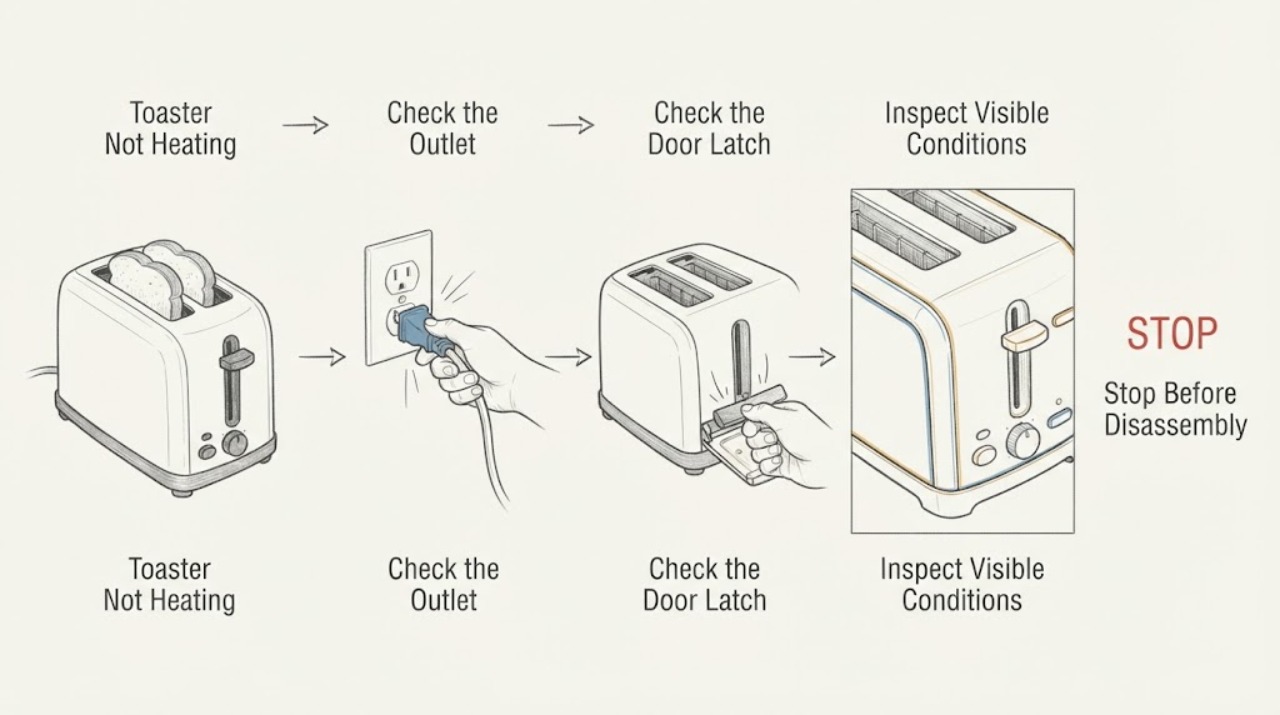
Toaster Not Heating: Safe Checks for Power and Controls
A toaster that does not heat should be checked from the outside. Confirm the outlet, plug it directly into a suitable outlet, make sure the bread lifter latches, and press Cancel if a cycle needs to stop.
-
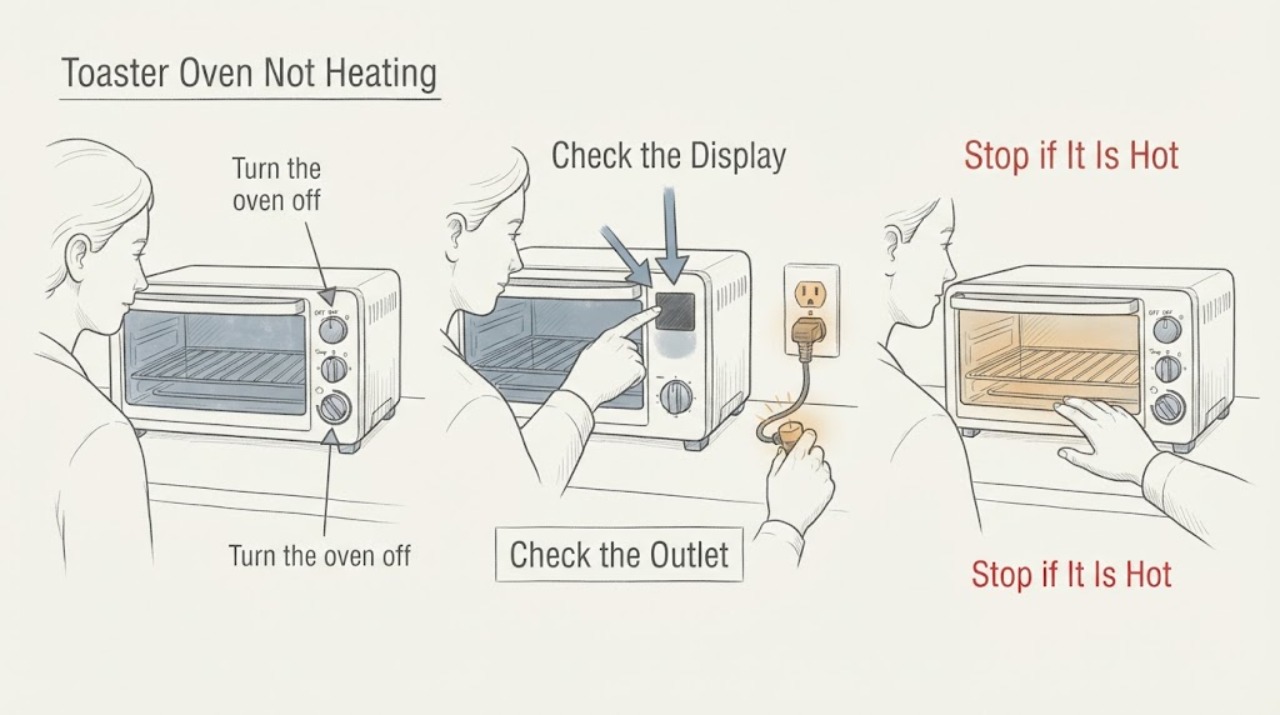
Toaster Oven Not Heating
For a toaster oven that does not heat, first confirm a timed bake/toast mode, temperature, and timer are actually set, then test the outlet and inspect the accessible crumb tray and heating elements after unplugging and cooling. If neither element heats in the correct mode, or the cord, plug, control, or element is damaged, stop using it and arrange manufacturer service rather than opening the oven.
-
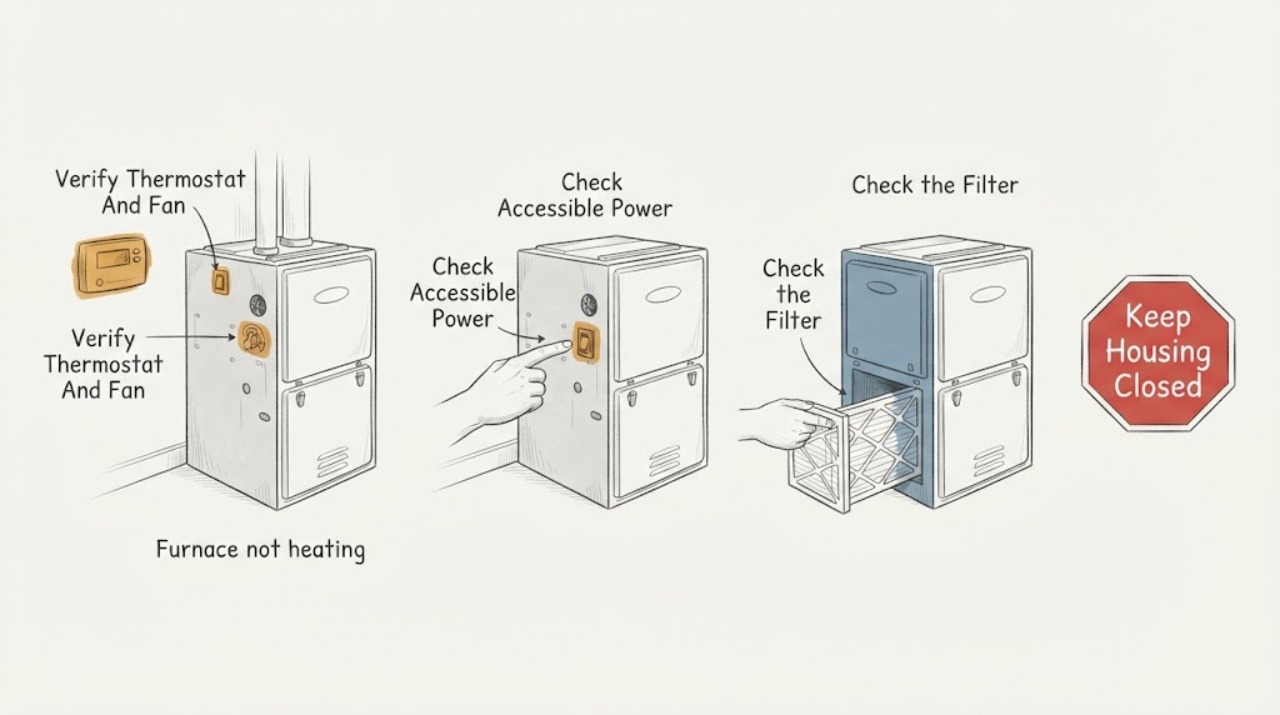
Trane furnace not heating: What to Check and What to Do Next
If a Trane furnace is not heating, verify that the thermostat is calling for heat and the fan is set appropriately, then check the accessible furnace switch, breaker, filter, return, and supply vents. Note whether the furnace is silent, starts but does not ignite, ignites and shuts back down, or runs the blower with cool air.
-
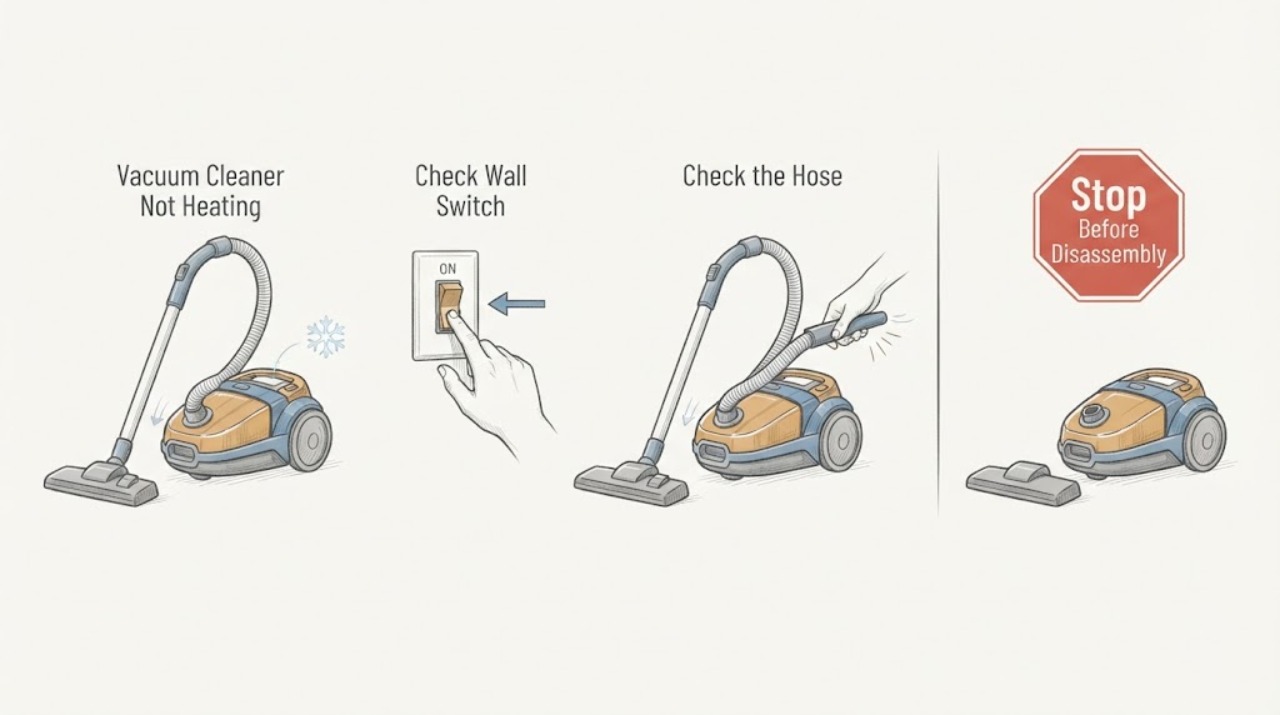
Vacuum Cleaner Not Heating
A vacuum cleaner that feels hot or blows unusually warm air is often protecting itself from restricted airflow. Turn it off and unplug it, let it cool, then clear the floor head, wand, hose, bin path, and user-washable filters according to the model manual. Reassemble only when filters are completely dry; recurring overheating, smoke, a damaged cord, or a hot motor needs service.
-
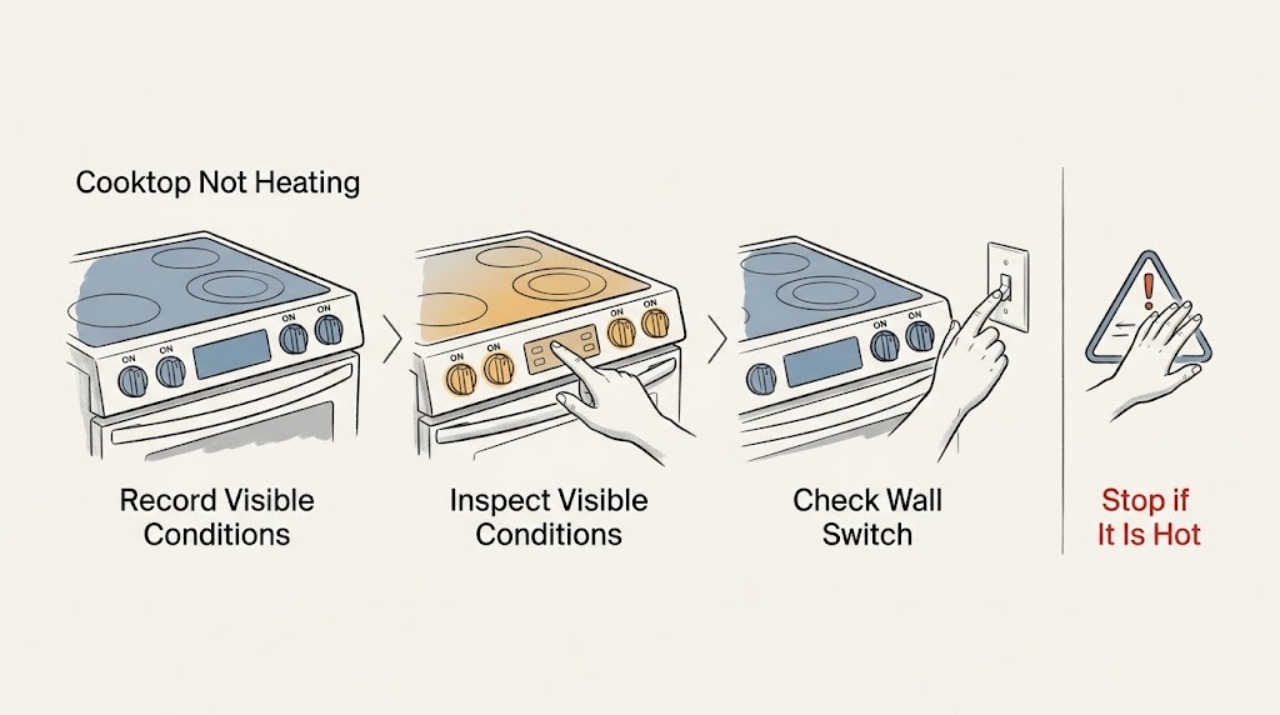
Viking Cooktop Not Heating
Do not assume a Viking cooktop is gas, radiant electric, or induction. Read the model and energy type from the rating information or the matching Viking manual, then use the branch for that design.
-
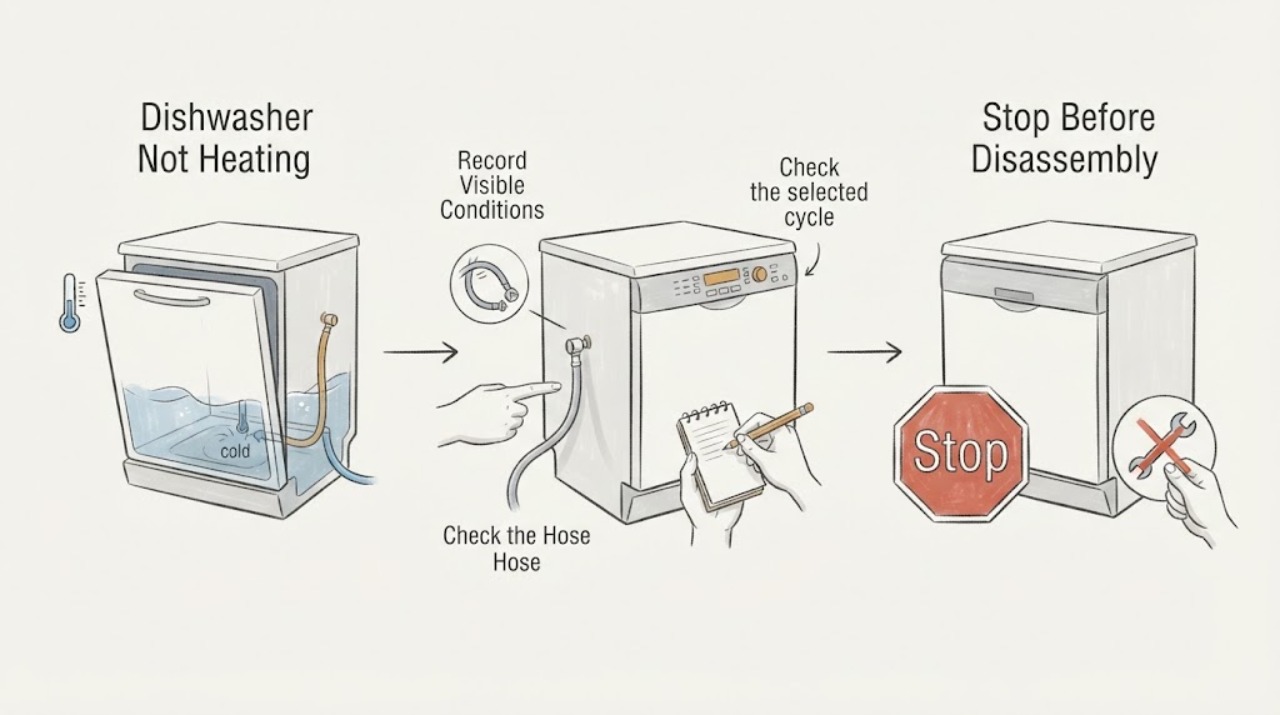
Viking Dishwasher Not Heating: Safe Checks
If a Viking dishwasher is not heating, first distinguish cold incoming water or a long cycle from dishes that remain cold and wet after completion. Confirm the dishwasher is connected to the intended hot-water supply, note the selected cycle, rinse aid, and any flashing fault pattern, and use the exact model manual. Do not access the heater or live wiring; recurring temperature or control faults require Viking service.
-
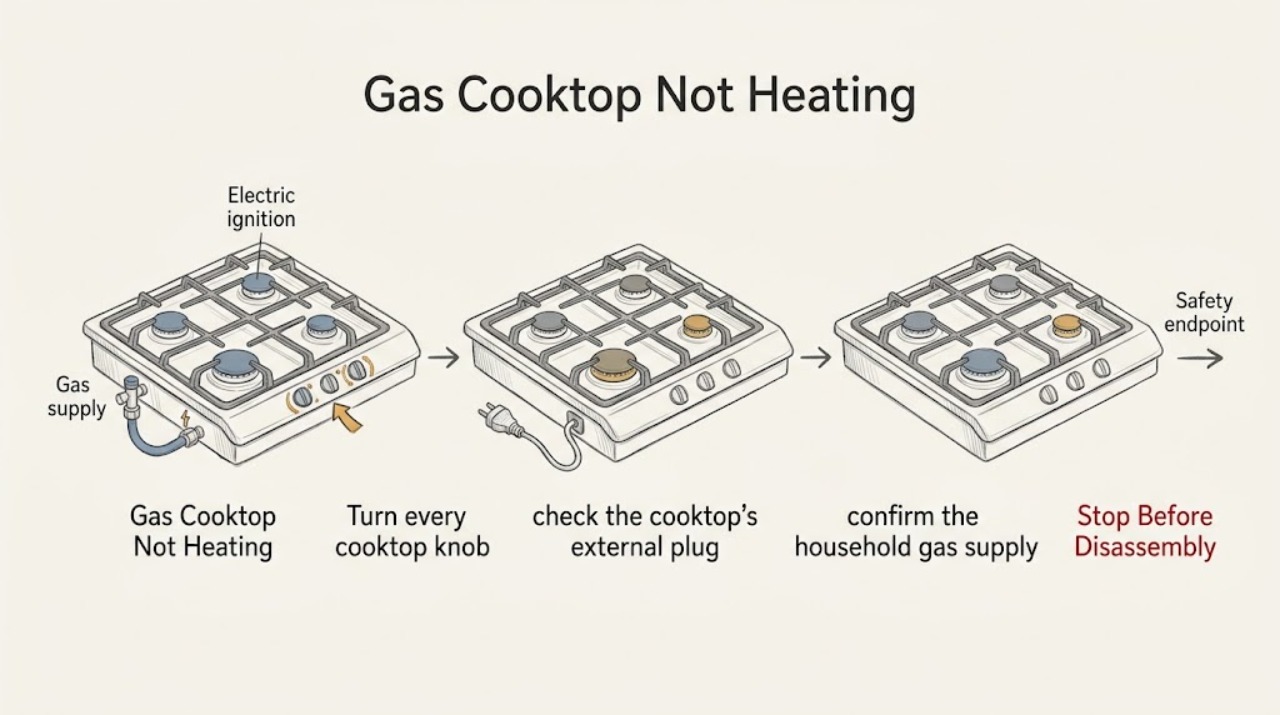
Viking Gas Cooktop Not Heating
A Viking gas cooktop that is not heating may have no spark, no gas reaching the burner, a wet or dirty igniter, a cap or burner head that is misaligned, blocked ports, an unsuitable gas setup, or a flame that is too weak for the cookware. First turn every control off and stop if you smell unburned gas, hear delayed ignition or popping, see a yellow or unstable flame, or the igniters keep sparking after ignition.
-
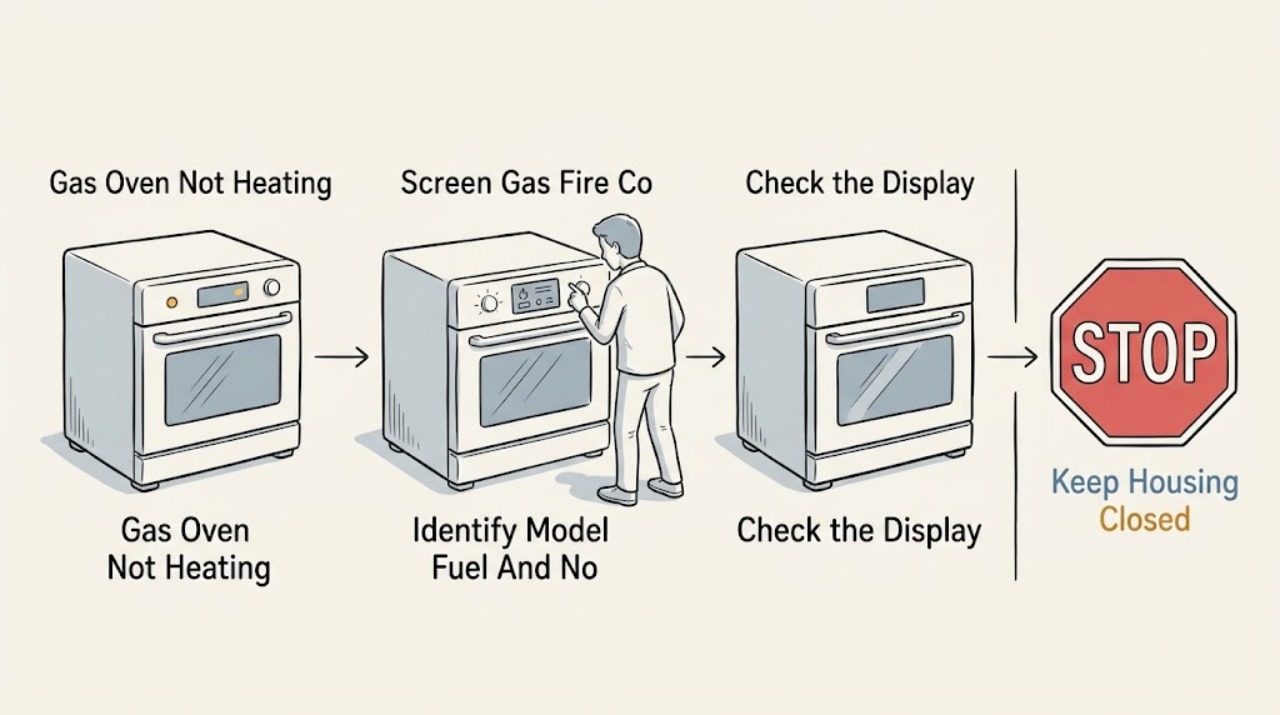
Viking Gas Oven Not Heating: Check the Start Sequence, Supply, and Ignition Safely
A Viking gas oven that is not heating may have an incomplete mode or temperature selection, a delay or control state, no electrical power for the ignition and controls, a closed or unavailable gas supply, a failed ignition sequence, or a burner that lights but does not maintain heat. First identify the exact model and whether the oven is gas or dual fuel, then record whether there is a display, clicking, flame, error, or preheat response.
-
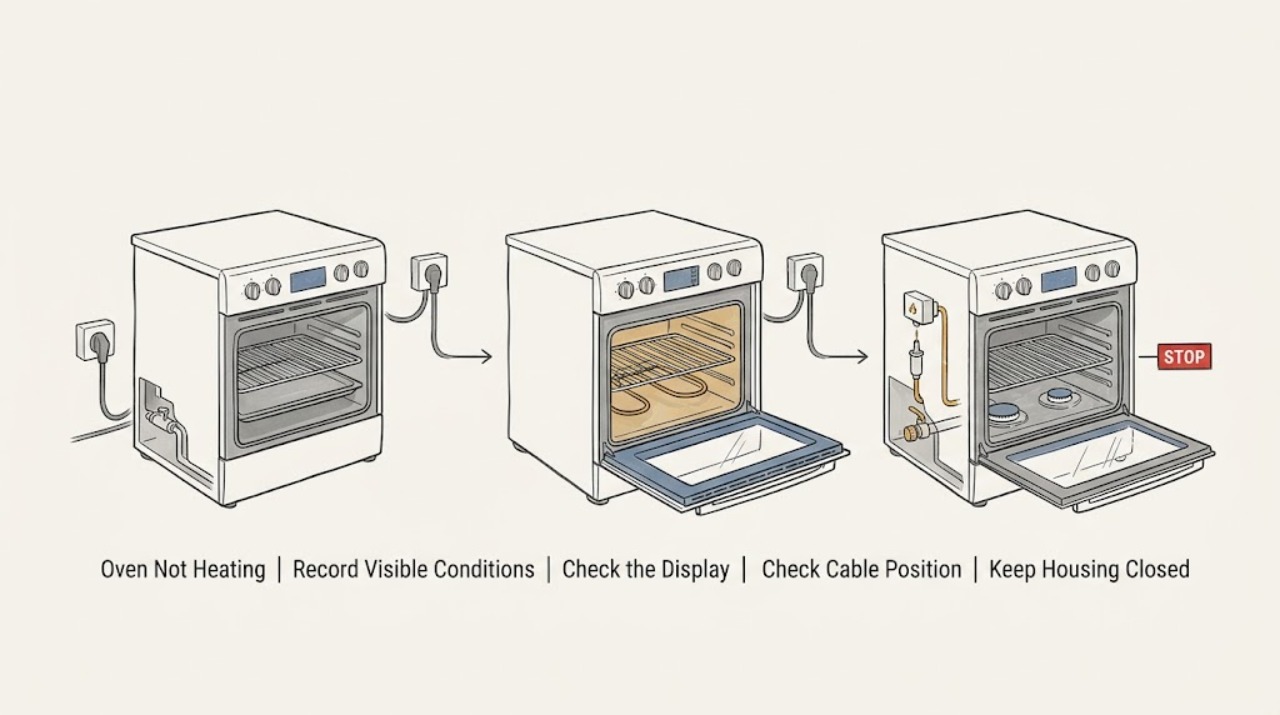
Viking Oven Not Heating: Check the Mode, Power, and Fuel Safely
First identify the Viking oven or range model and whether it is electric, gas, or dual fuel. Confirm that a normal bake or broil mode, start command, temperature setting, and door position are correct, and look for a control lock, delayed start, self-clean state, or power interruption.
-
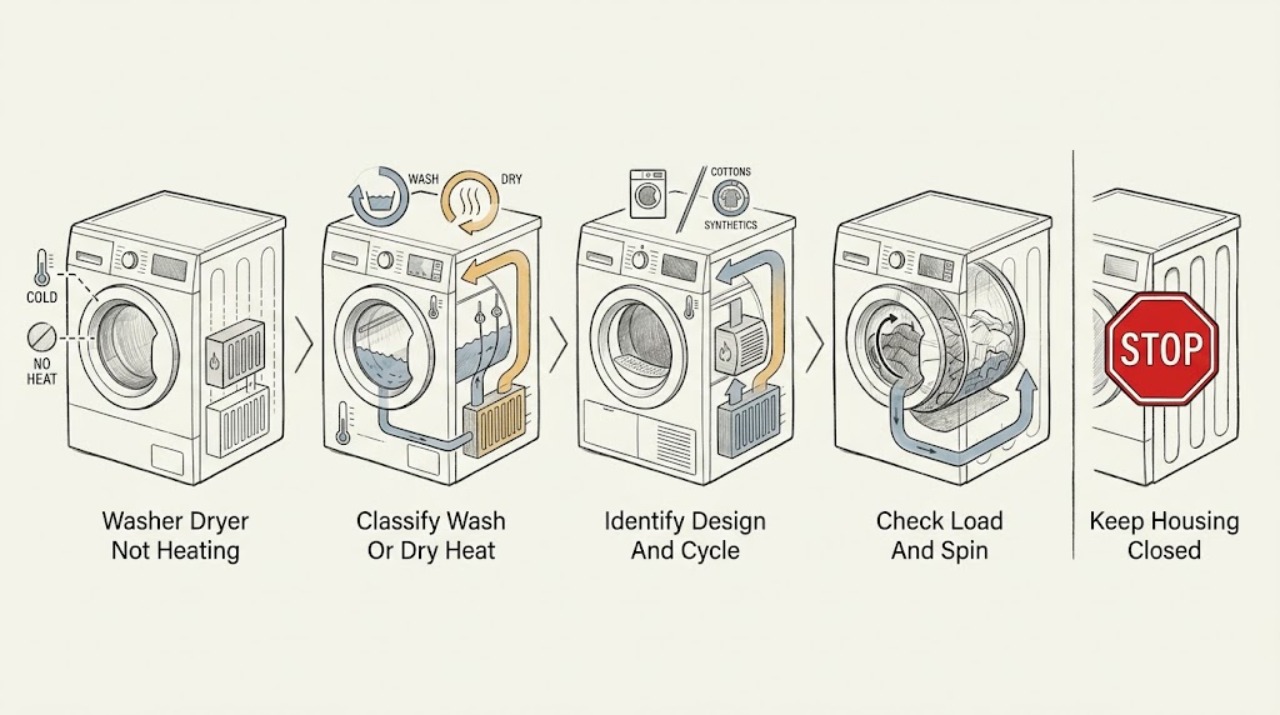
Washer Dryer Not Heating
A washer dryer that is not heating needs two separate checks: is the wash water not getting warm, or is the drying air not warming the load? First identify the appliance design from its rating label and manual: a vented dryer needs an open exhaust path, while a condenser or heat-pump combo may use water, a drain path, a heat exchanger, and a lower-temperature drying process.
-
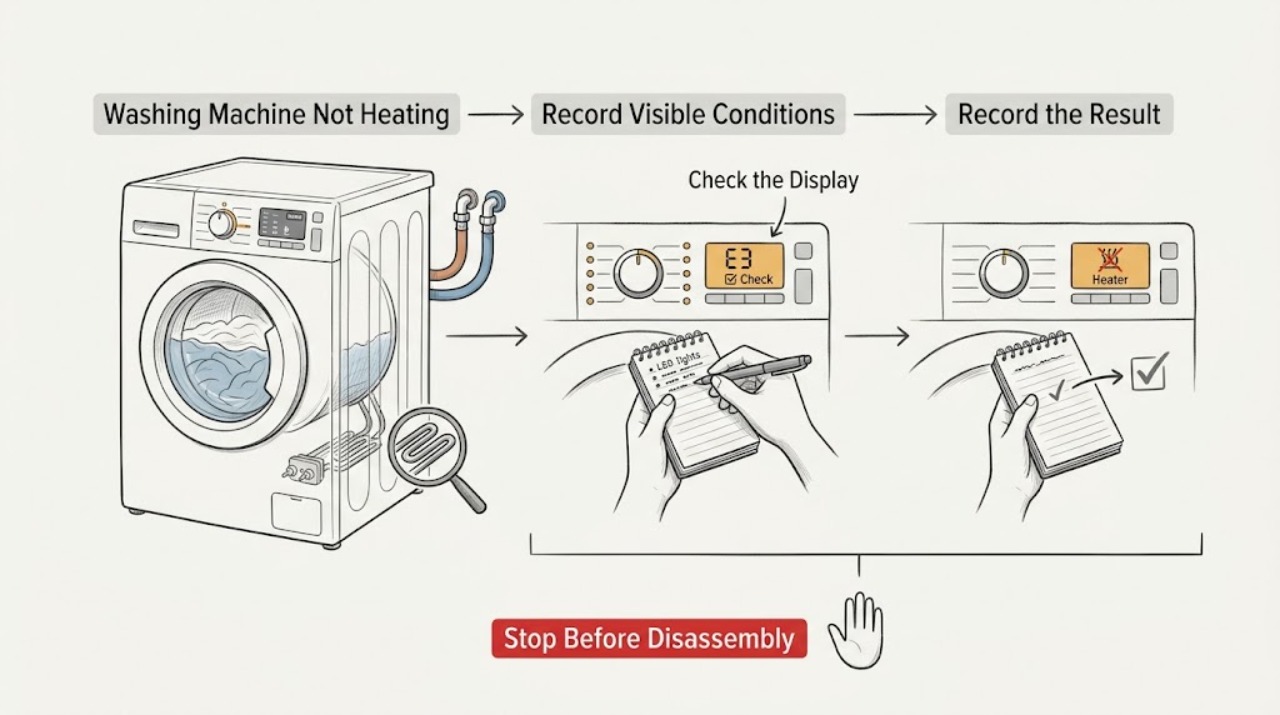
Washing Machine Not Heating: Check the Water Path and Cycle Safely
A washing machine that seems not to heat may be receiving cold water, blending hot and cold water by design, using a low-temperature or rinse phase, or moving on before cold incoming water reaches the selected setting. Some models heat water internally and others rely partly or entirely on the household hot-water supply, so do not assume every washer has the same heater or that a cool door or tub proves a failure.
-
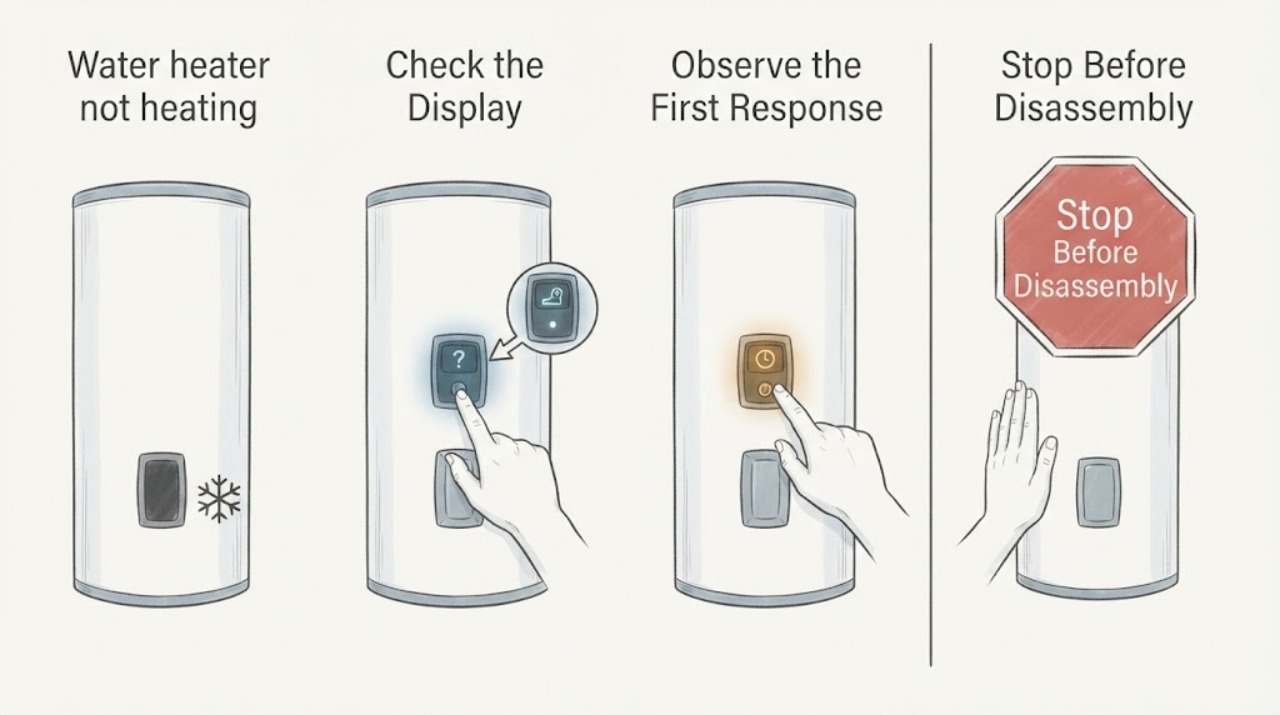
Water heater not heating
A water heater that is not heating should be checked by type: confirm fuel/power, thermostat setting, error or safety state, and whether the problem affects all hot water or one outlet. Check the breaker or normal control once, but do not remove access panels or test live wiring, elements, gas valves, or safety controls. Scalding, leaks, smoke, gas odor, or repeated trips require immediate service.
-
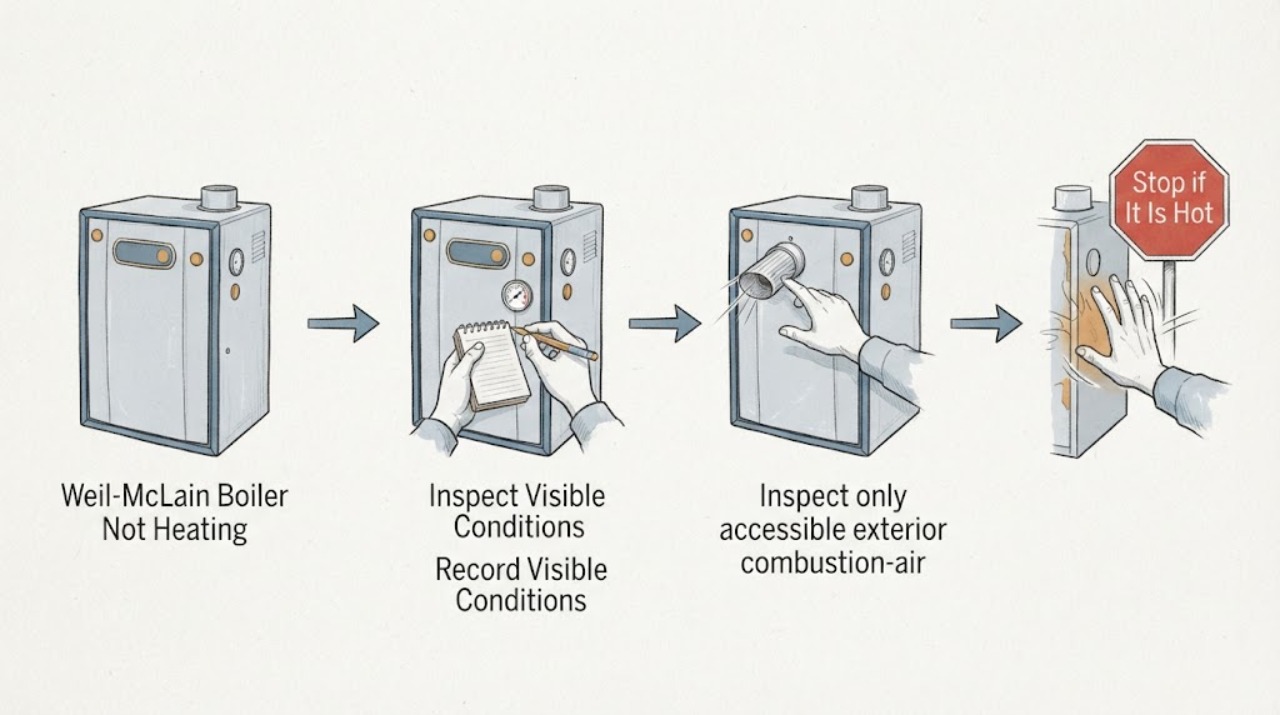
Weil-McLain Boiler Not Heating: What to Check and What to Do Next
When a Weil-McLain boiler is not heating, start at the thermostat and zone call, then observe the boiler display or indicator, pressure gauge, burner or circulator response, and the radiators or baseboards. Check only accessible air and vent openings and, on a high-efficiency model, the condensate path; do not open the jacket or adjust gas, electrical, pressure, or combustion controls.
-
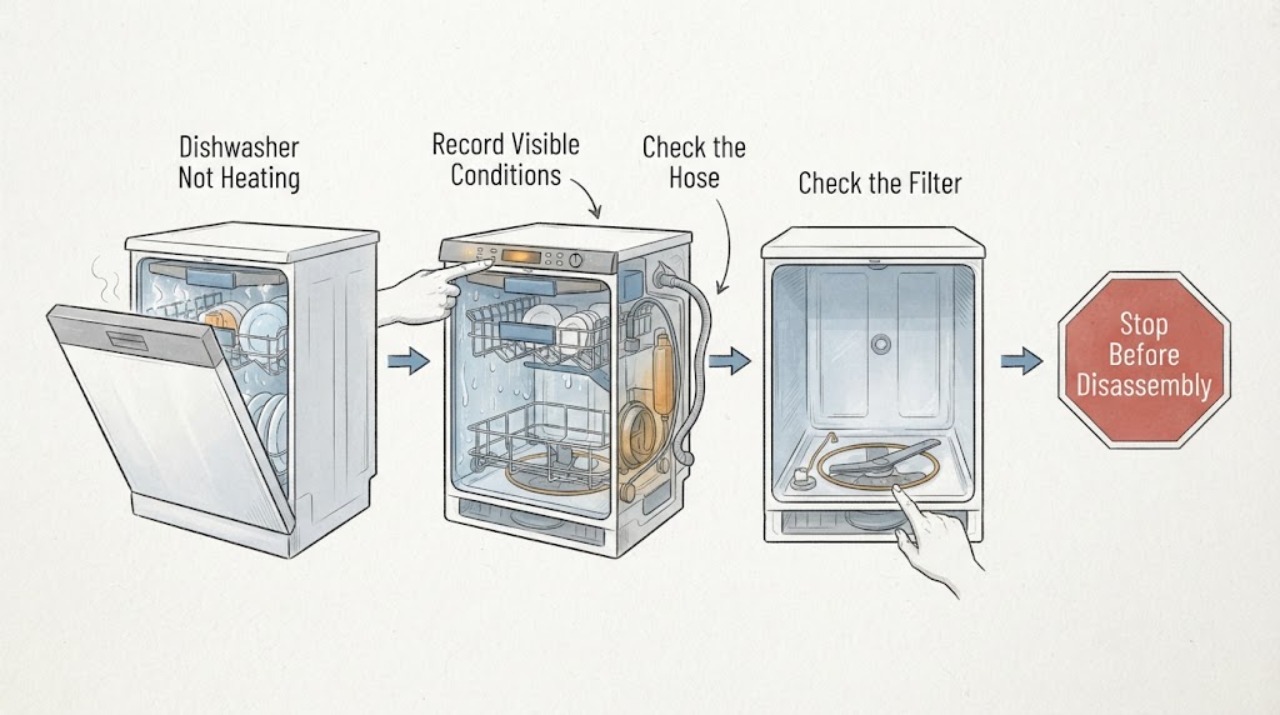
Westinghouse Dishwasher Not Heating: Check Program, Water, and Heat Error
If a Westinghouse dishwasher is not heating, first check that the selected program includes a hot wash and drying phase, the inlet valve is open, and the machine completes its fill and drain steps. Westinghouse documentation identifies E3 as not reaching the required temperature, commonly associated with a heating-element malfunction, and E4 as overflow or a leak.
-
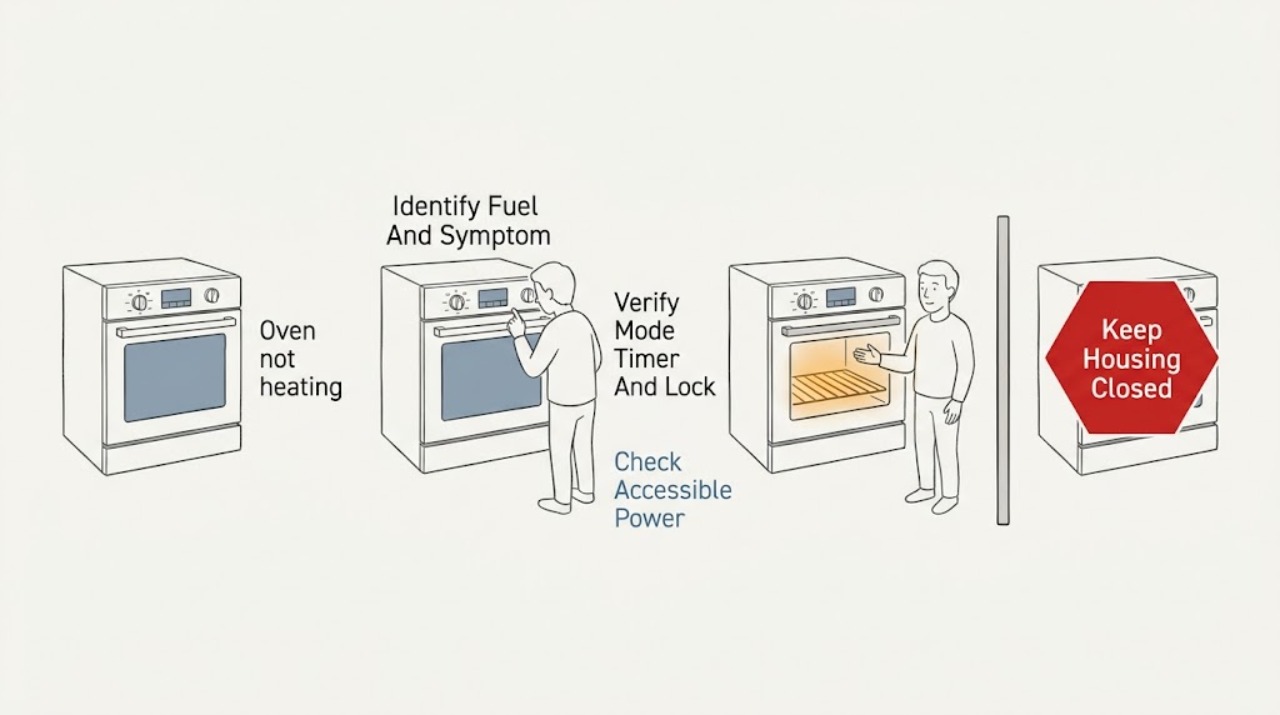
Westinghouse oven not heating: check the mode, power, door and fuel type safely
A Westinghouse oven that is not heating may be in the wrong timer or cooking mode, still be in a post-power-failure state, lack a supply phase, have a door or seal problem, or have a failed heating element, temperature sensor, control, igniter, or gas supply component. First identify whether the oven is electric, gas, or dual-fuel from its rating label and manual; do not apply gas-ignition checks to an electric model.
-
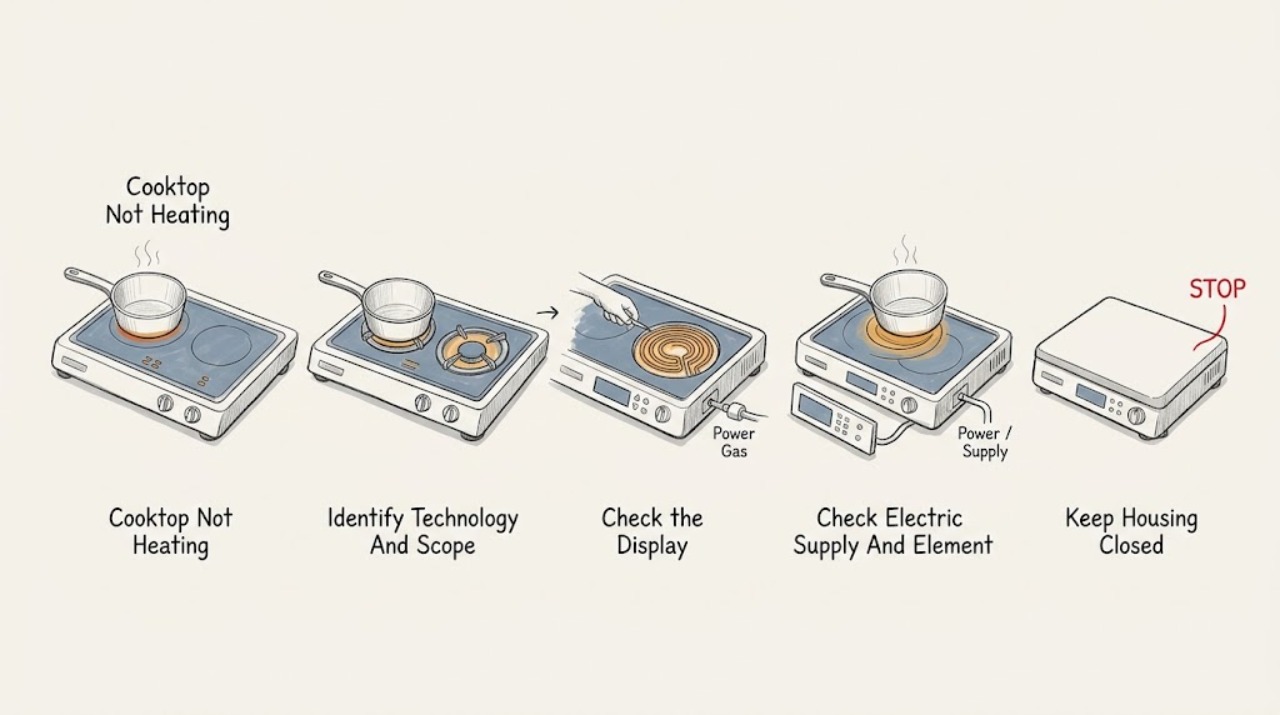
Whirlpool Cooktop Not Heating: Separate Gas, Electric, and Induction Causes
First identify whether the Whirlpool cooktop is gas, radiant electric, or induction; the same symptom has different safe checks. For any type, note whether the whole surface or only one zone is affected, confirm the intended control and lock state, and check for a displayed code.
-
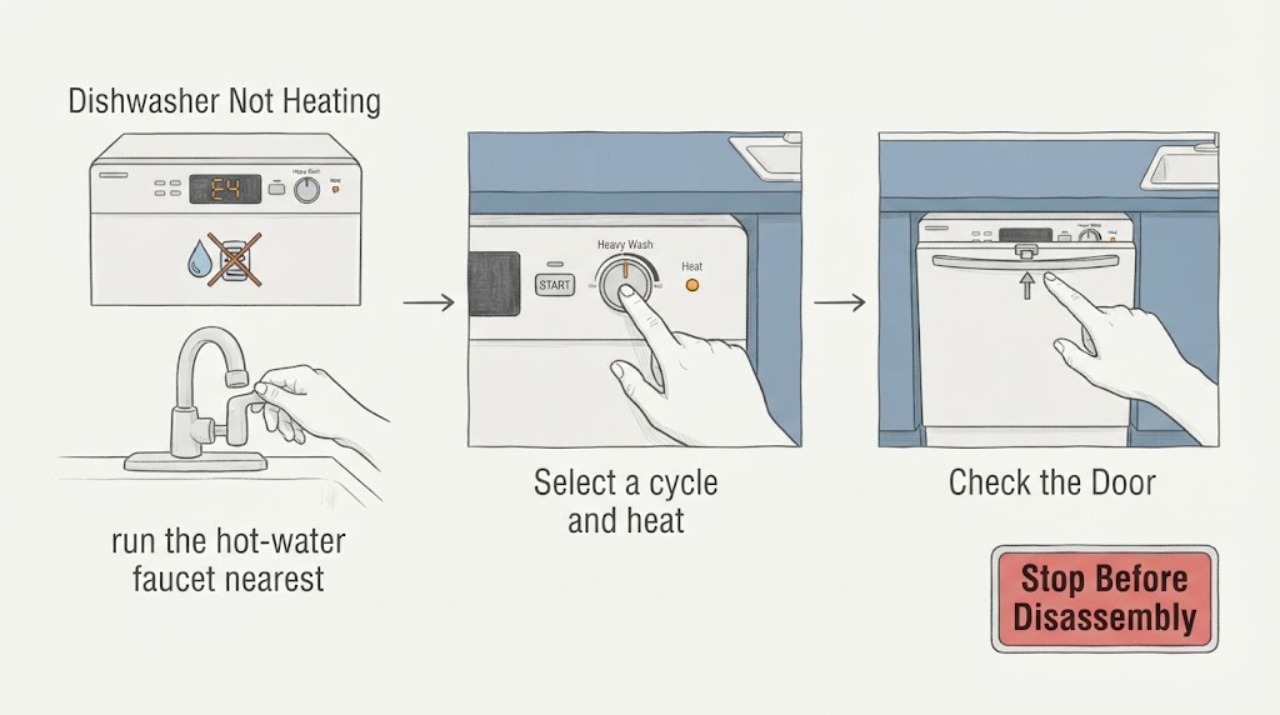
Whirlpool Dishwasher Not Heating: Safe Checks Before Service
If a Whirlpool dishwasher finishes with cool water, cool dishes, or no steam, first separate a cold incoming supply or a low-heat cycle from a failed internal heating circuit. Run a cycle with the available heated or high-temperature option, make sure hot water reaches the dishwasher, and note whether the cycle pauses for heating or ends cold.
-
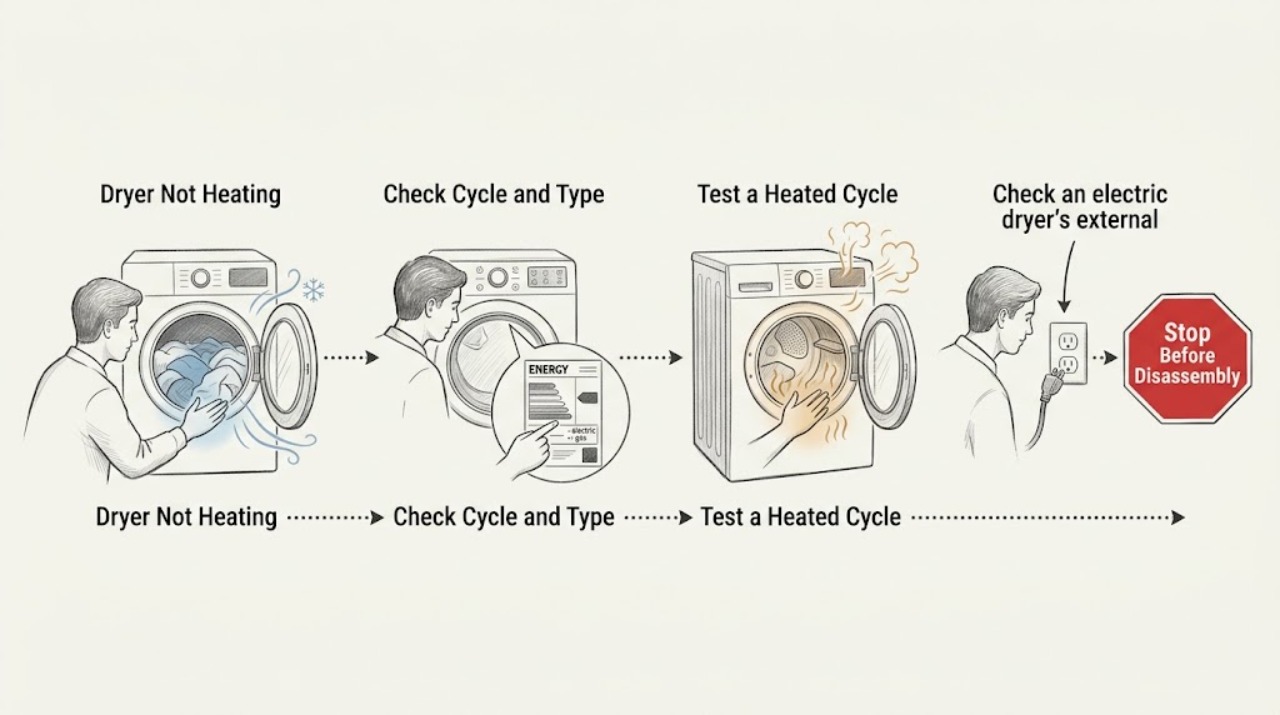
Whirlpool Dryer Not Heating: Check the Cycle, Power, and Airflow
First confirm that the Whirlpool dryer is on a heated cycle rather than Air Only or Air Fluff, and separate a vented electric, vented gas, or heat-pump model. For an electric model, a tripped leg of the two-breaker supply can leave the drum turning without heat; for a gas model, a closed visible shutoff can do the same.
-
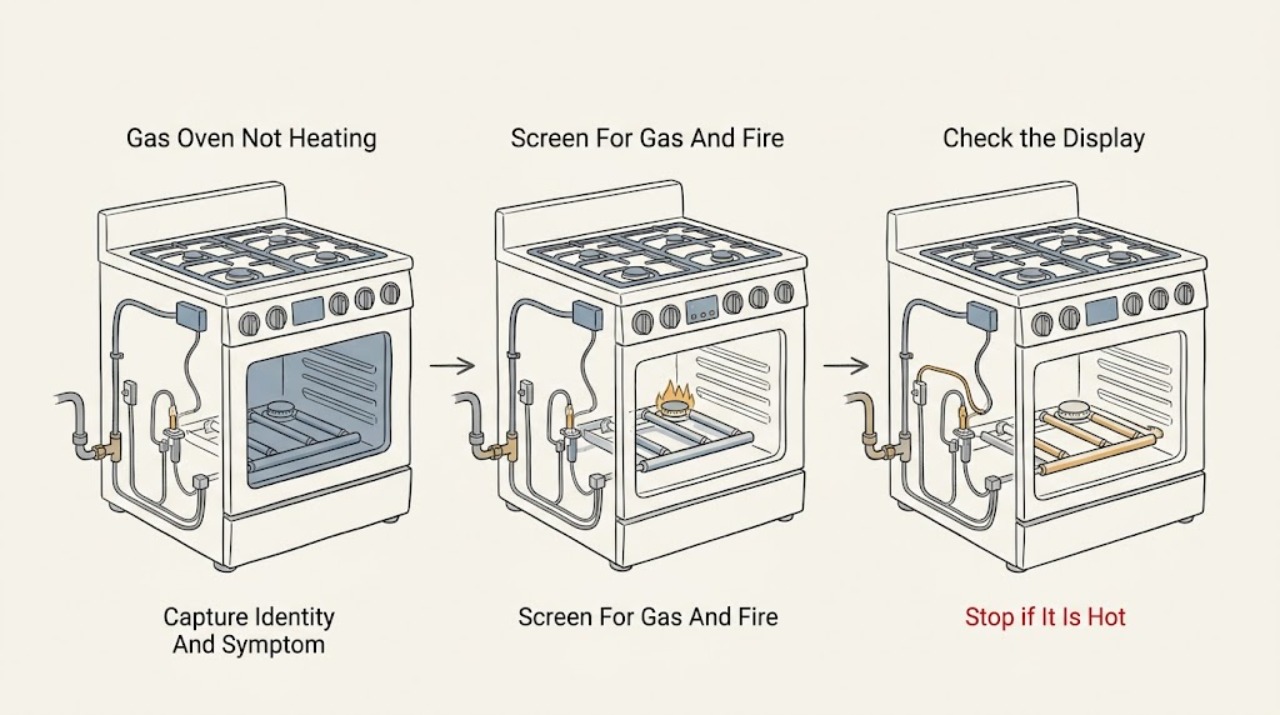
Whirlpool Gas Oven Not Heating: Safe Checks Before Service
When a Whirlpool gas oven is not heating, first identify whether the display, gas supply, and ignition sequence are normal; do not assume a cold oven proves that one particular part failed. Record the exact model, cavity, mode, temperature setting, and any complete error display.
-
Whirlpool Microwave Not Heating
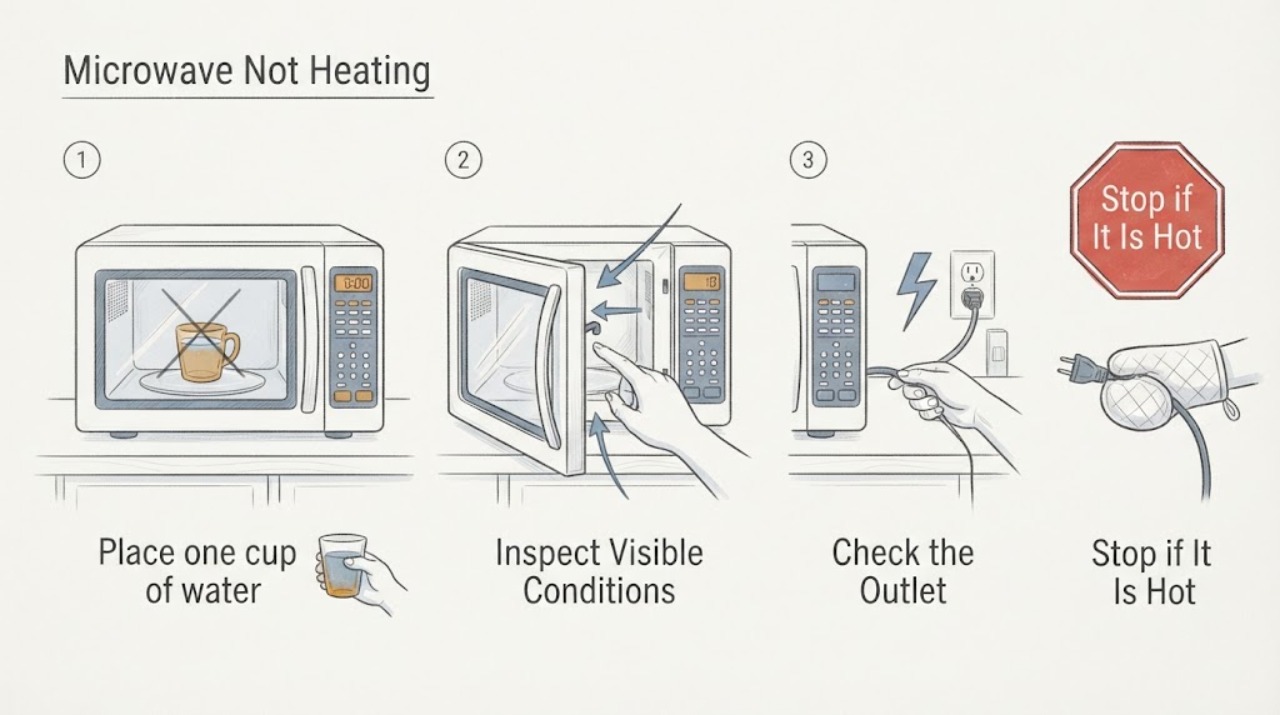
If a Whirlpool microwave runs but does not heat, test it with one cup of water for one minute at the model's high-power setting, then check the selected power level, control lock or demo mode, door closure, and whether it is connected directly to the intended outlet rather than an inverter or generator. If the water stays cold after those checks, stop using the microwave and arrange service; do not open the cabinet because the heating circuit is not a user repair.
-
Whirlpool Oven Not Heating: Check the Mode, Supply, and Safety Signs
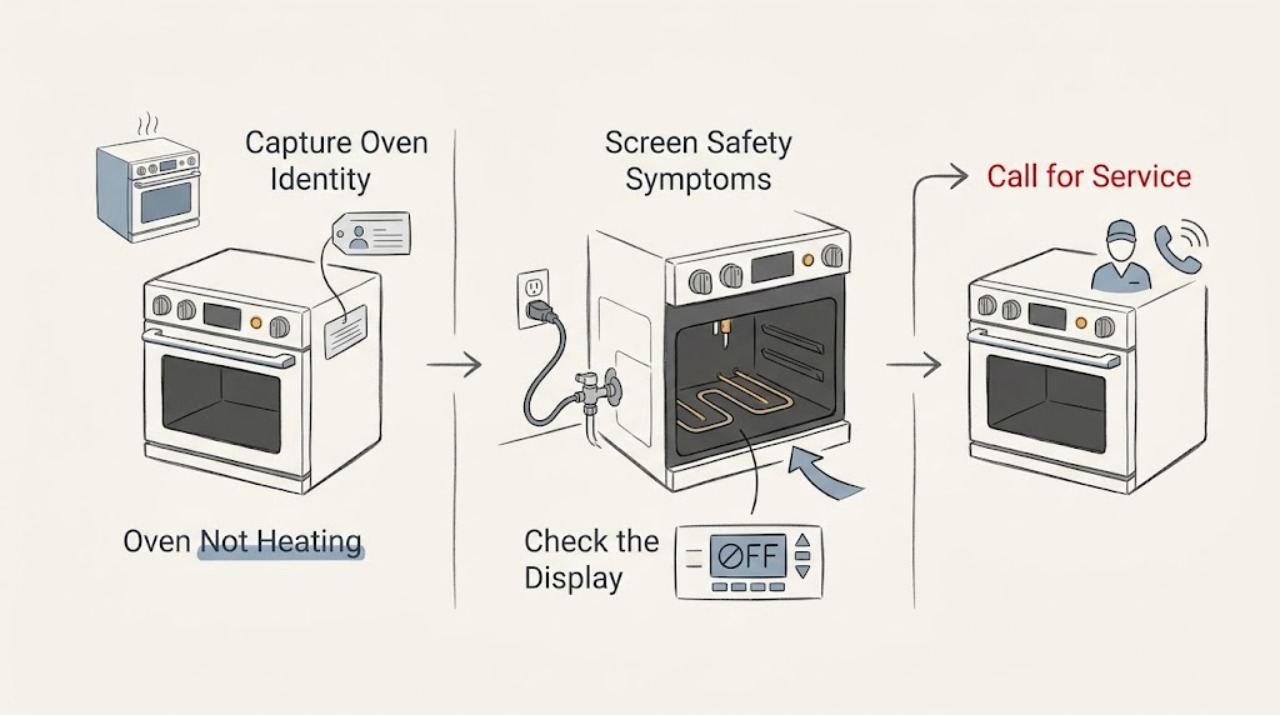
A Whirlpool oven that is not heating needs a fuel-type and symptom split before any part is suspected. Confirm whether it is electric, gas, or dual fuel, then record whether the display works, whether a normal mode and temperature were selected, whether the door closes, whether preheat is merely slow, and whether an error is shown.
-
Whirlpool Washer Dryer Not Heating: Check the Drying Setting, Supply, and Air Path
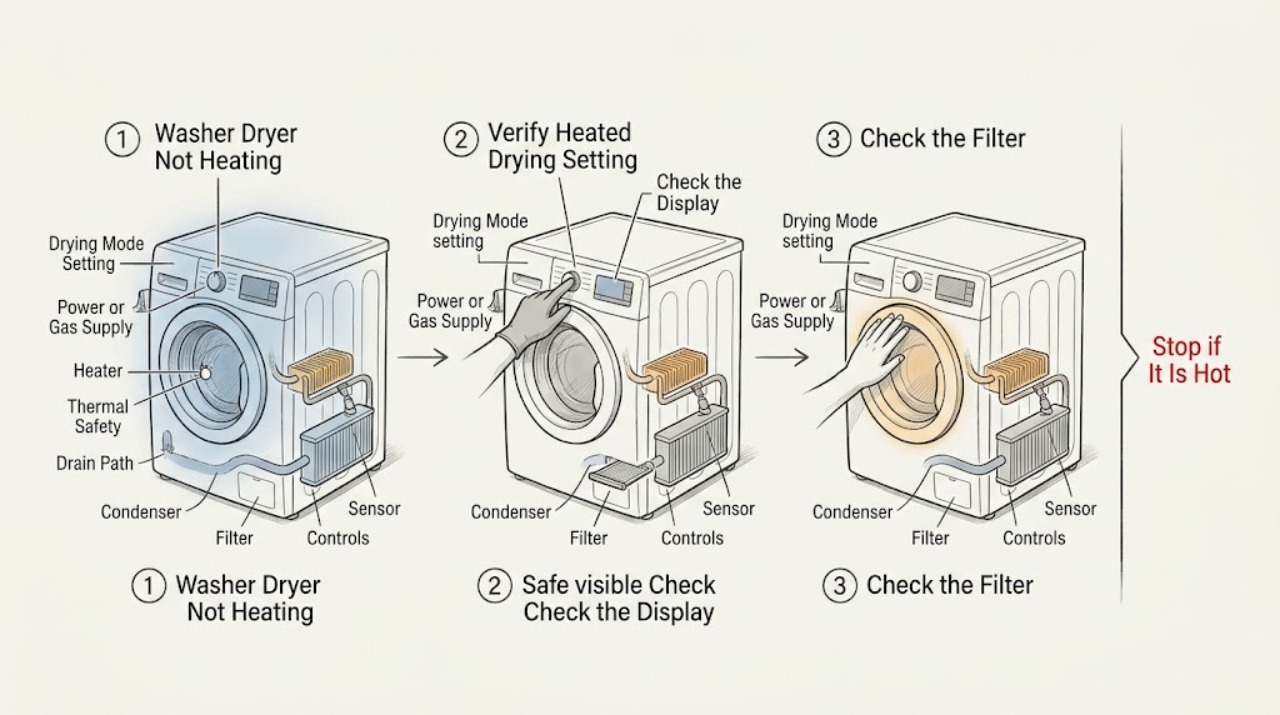
If the drying side of a Whirlpool washer-dryer is not heating, first confirm that a heated Auto Drying or Timed Drying function was selected and that the cycle is not Air Only or Off. Then test a small, well-spun load and check only the external plug, breakers or fuses, door closure, model-specific filter or drain path, and any required water or gas supply.
-
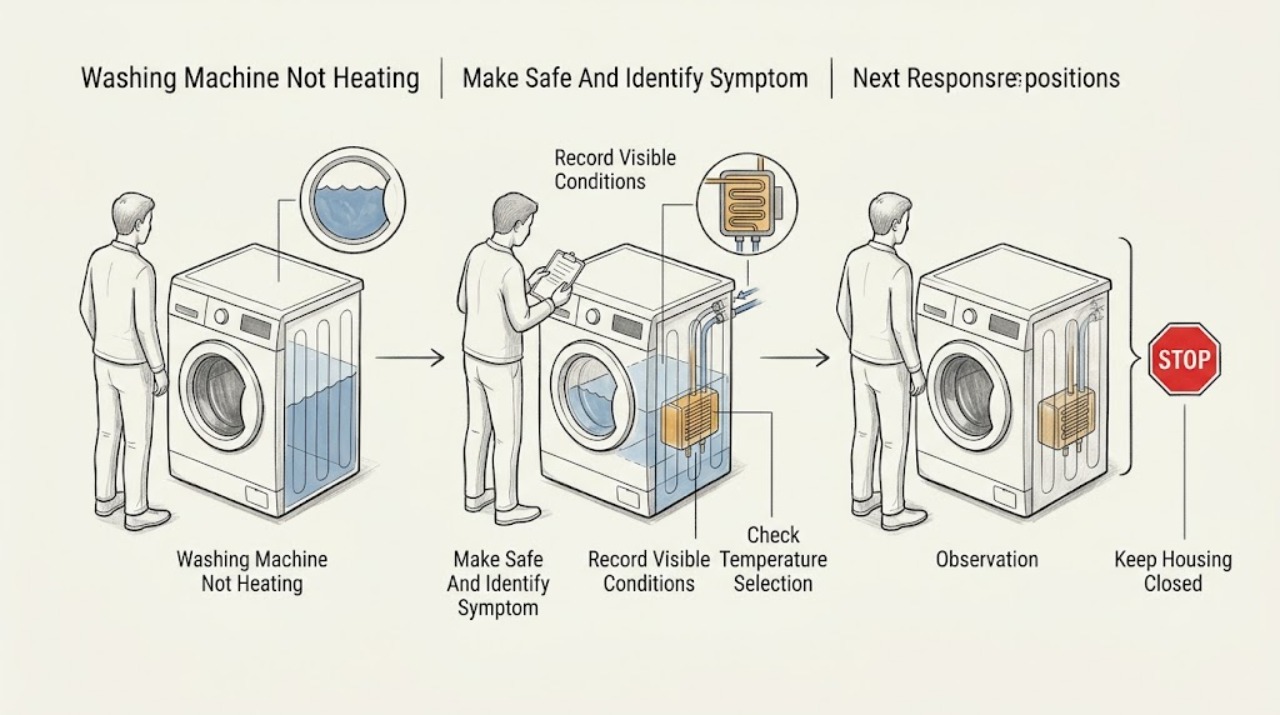
Whirlpool Washing Machine Not Heating: Check Water Supply and Cycle Type
A Whirlpool washer that seems not to heat may be receiving cooler water by design, selecting a cycle with a lower temperature, or waiting for a heated cycle or Steam option on a model that has that feature. Whirlpool says the washer senses temperature in the tub, usually regulates incoming hot and cold water, and can show lower hot or warm temperatures when the water heater is far away or has been used for many loads.
-
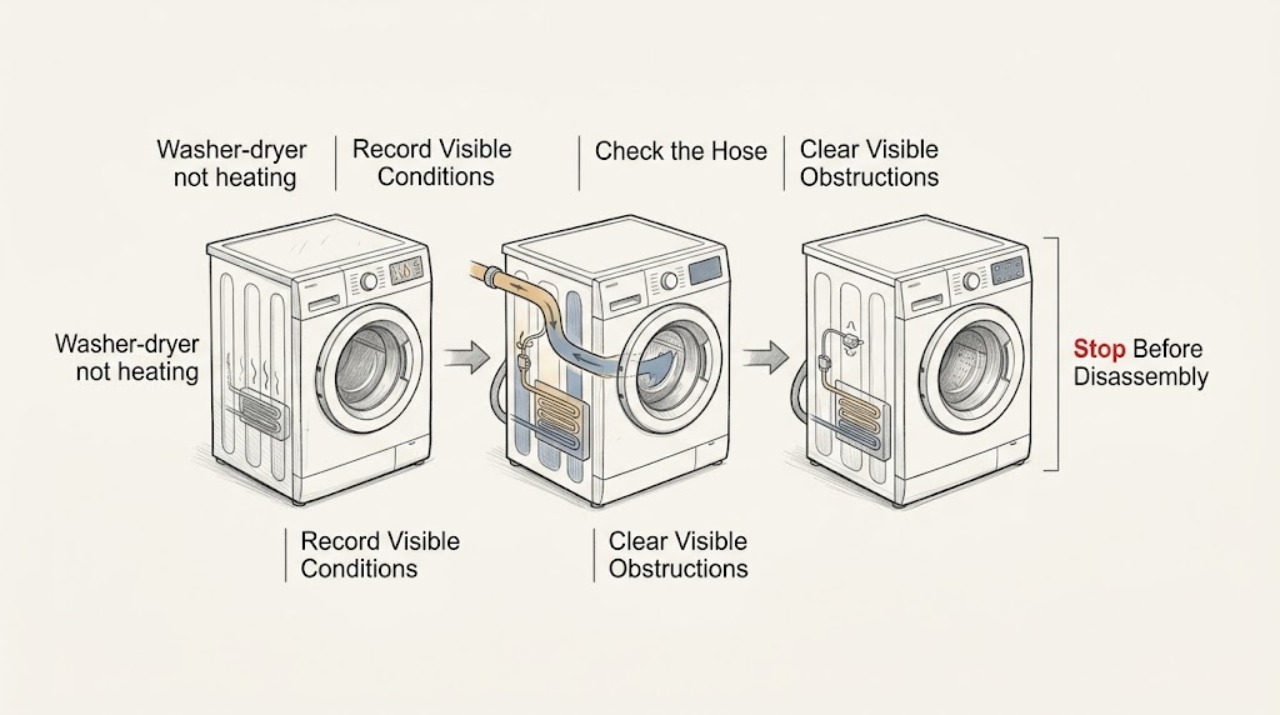
Why Is My Magic Chef Washer Dryer Not Heating?
First separate a cold wash from a dryer that produces no heat. Magic Chef washer-dryer combo manuals list the selected cycle and load size as operating factors, and identify a heating fault as a damaged NTC thermistor or worn heating pipe that needs service.
-
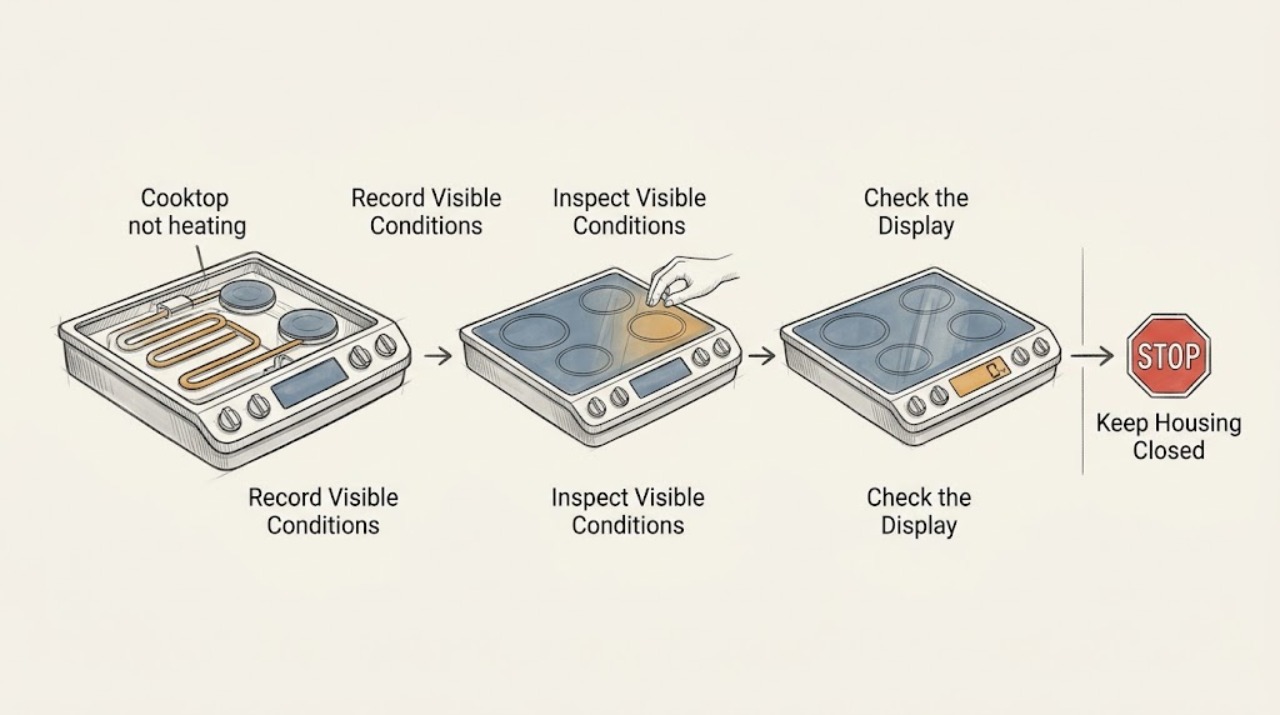
Why Is My Miele Cooktop Not Heating?
A Miele cooktop that is not heating may have lost power, be locked or in a demonstration setting, be rejecting the cookware on an induction model, or be cycling because its normal temperature or overheating protection is active. First identify whether the cooktop is electric/ceramic, induction, or gas; check the display and breaker without opening the appliance; then follow the matching check below.
-
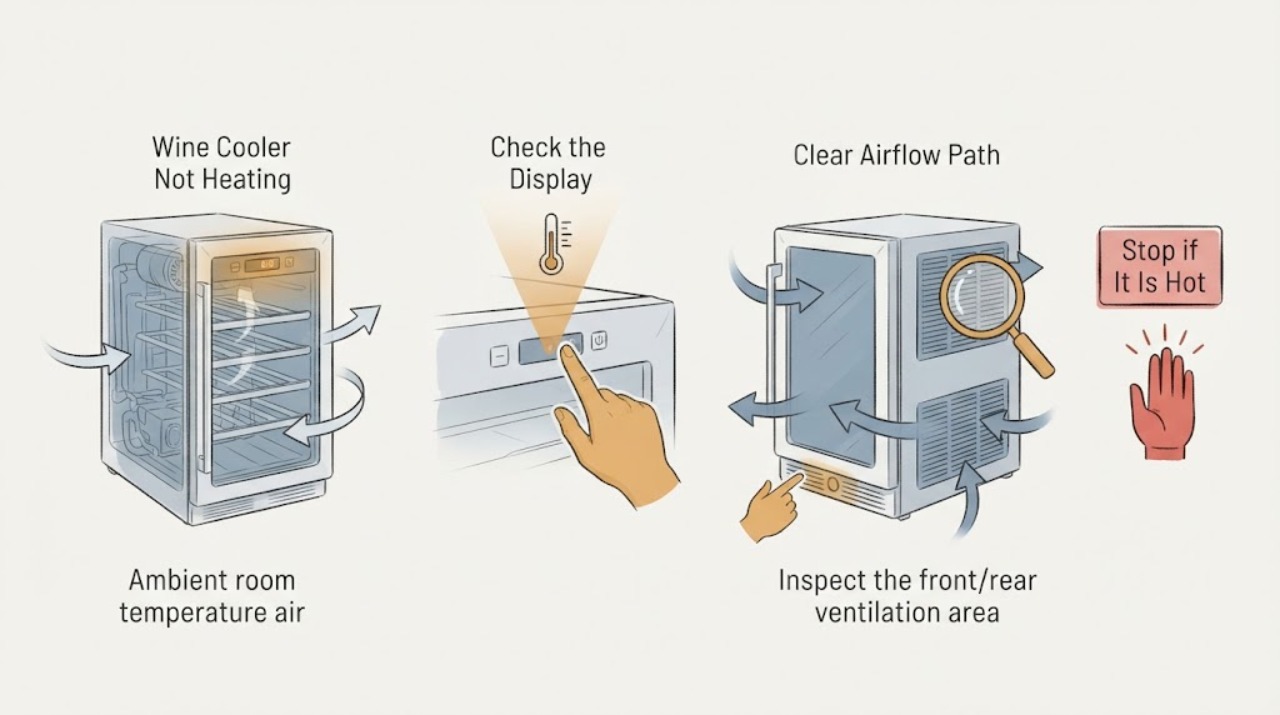
Wine Cooler Not Heating
A wine cooler reported as “not heating” should first be clarified as not cooling enough or actually warming above its setpoint. Check power, set temperature, heat sources, door gasket, ventilation, ambient conditions, and recent loading. If it remains warm on a powered, ventilated unit with a sealed door, protect the wine and arrange refrigeration service; do not open the sealed system.