
On this page
Start here
Quick answer
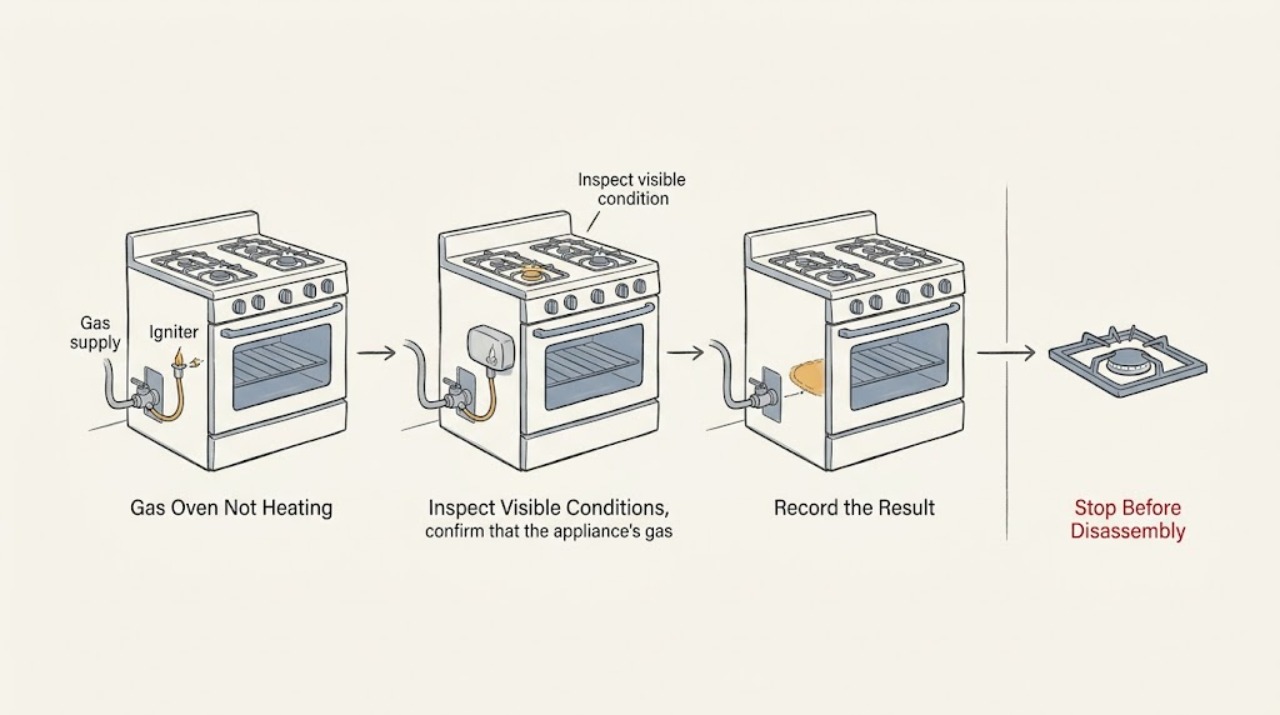
If a Frigidaire gas oven is not heating, first confirm that Bake is selected correctly, the oven has completed its model-specific preheat sequence, and the display shows no lock or error condition. Observe the bake burner only through the normal viewing area if the model permits it: a brief ignition and a stable heating cycle point away from a simple setting issue, while no ignition, repeated clicking, or a flame that never develops needs service-oriented diagnosis. Confirm the gas shutoff is open only if it is safely accessible and check that other gas appliances behave normally; never open gas fittings or remove panels. If there is a gas odor, smoke, yellow or unstable flame, sparking, a hot electrical smell, or the oven remains cold after the safe checks, stop using it, ventilate and leave the area for a gas odor, and arrange qualified Frigidaire service.
Work through in order
Diagnostic checks
Use only checks that match the exact appliance or system and its official guide.
-
Check 1
Set the oven to the model's Bake mode and a normal temperature using the documented controls, then observe the display, preheat indication, and any lock or error message. Keep the oven empty and the door closed during preheat; do not repeatedly restart a cycle that reports a fault.
Expected result: The display shows a lock or error, the preheat indication never begins, the oven warms slowly, or the control appears normal while the cavity stays cold.
Next step: Follow the exact model manual for any displayed code or lock state. If Bake is selected correctly but the cavity remains cold, continue with safe gas-supply and visible burner observations.
Why this matters
Why: A control or lock state can prevent heating; slow warming differs from no heat, while normal controls with a cold cavity move the check toward gas ignition and service.
-
Check 2
From outside the oven and without opening panels, confirm that the appliance's gas shutoff is in its normal open position only if it is clearly accessible and safe to inspect. Compare whether another gas appliance in the home operates normally; do not alter a regulator, fitting, or gas connection.
Expected result: The shutoff appears closed, other gas appliances also fail, the connection shows damage, or the gas supply appears normal.
Next step: If a supply interruption is suspected, stop and contact the gas provider or qualified service. Do not relight, loosen, or repair gas fittings yourself; if supply appears normal, continue with the model-safe burner observation.
Why this matters
Why: A closed supply or broader interruption can prevent burner ignition; a damaged connection or gas odor is a safety hazard; normal supply makes the oven's ignition or control path more likely.
-
Check 3
If the model allows a normal viewing check, observe the bake burner area only through the intended opening or window during a single start attempt. Do not reach inside, remove the oven floor, or place a hand near the flame or igniter.
Expected result: Ignition occurs and the burner cycles normally, repeated clicking occurs without ignition, no ignition is visible, or the flame is yellow, unstable, or accompanied by an odor.
Next step: Stop immediately for gas odor, smoke, sparking, or an abnormal flame and seek qualified help. For no ignition without a hazard, leave the oven off and arrange service rather than attempting to clean or replace internal gas parts.
Why this matters
Why: Normal visible ignition suggests the gas path is operating at least during that attempt; no ignition or repeated clicking points toward an igniter, burner, valve, or control issue; an abnormal flame or odor is unsafe.
-
Check 4
Check the oven door from the outside for a visibly displaced or damaged gasket and confirm the door closes fully. Allow the exact model's preheat sequence to finish before judging temperature; do not pull, rub, or remove the gasket and do not hold the door open while heating.
Expected result: The door does not close squarely, the gasket is torn or detached, the oven reaches temperature after a full preheat, or it remains cold despite a good seal.
Next step: Use the model manual for a seal replacement or calibration decision and request service for damage. If the oven remains cold after the safe preheat check, stop using it and arrange gas-appliance service.
Why this matters
Why: A damaged seal can let heat escape and mimic poor heating; a correct seal with no temperature rise makes the burner, ignition, gas supply, or control path more likely.
-
Check 5
Record the full model number, selected mode, preheat behavior, display code, gas-supply observation, visible burner result, door-seal condition, and any odor or sound. Do not open the cabinet or test live wiring; keep the appliance off if any safety symptom occurred.
Expected result: The oven remains cold after correct settings and a safe supply check, ignition fails repeatedly, an error returns, or there is gas odor, smoke, sparking, or an abnormal flame.
Next step: Leave the oven out of service and provide the record to a qualified Frigidaire technician. Follow local emergency gas guidance for an odor instead of continuing diagnosis.
Why this matters
Why: A repeatable no-heat condition requires model-specific gas and control diagnosis; a gas, fire, or electrical symptom is an immediate stop boundary.
Use your observations
Decision map
Find the observation that best matches what you see, then follow the next safe action.
-
PATH 01Next step
What you see
The oven ignites visibly and reaches the set temperature after the exact model's normal preheat period.
Do this next
Use the model's preheat and calibration guidance and monitor consistent cooking results. Request service if the cavity later fails to heat or temperatures drift substantially.
Why this path and its safety boundary
Why it matters: A simple no-heat failure is not established; the original impression may be a preheat or calibration issue.
-
PATH 02Next step
What you see
The oven controls respond but no ignition or heating occurs, while the gas supply appears normal and no gas odor is present.
Do this next
Leave the oven off and arrange qualified Frigidaire service. Do not remove panels or attempt internal gas repair.
Why this path and its safety boundary
Why it matters: An igniter, burner, valve, sensor, control, or related internal fault is possible.
-
PATH 03Next step
What you see
Other gas appliances also fail or the oven shutoff appears closed or inaccessible.
Do this next
Stop using the oven and contact the gas provider or qualified service through the appropriate safe channel. Do not alter fittings or attempt to relight around an odor.
Why this path and its safety boundary
Why it matters: A household or appliance gas-supply condition may be preventing heating.
-
PATH 04Next step
What you see
The oven warms but loses heat through a damaged gasket or never reaches the expected result after a full preheat.
Do this next
Use the exact manual for permitted calibration and request service for a damaged seal or persistent temperature failure. Do not pull or replace internal gas parts without qualified diagnosis.
Why this path and its safety boundary
Why it matters: A door-seal, calibration, sensor, or heating-control issue needs model-specific evaluation.
-
PATH 05Next step
What you see
There is gas odor, smoke, sparking, a yellow or unstable flame, burning electrical odor, or a hot or damaged control area.
Do this next
Turn controls off if safe, do not operate switches or create a flame around gas odor, leave the area, and follow local emergency guidance. Arrange qualified service before using the oven again.
Why this path and its safety boundary
Why it matters: This is an immediate gas, fire, or electrical safety stop.
Helpful context
Understand the symptom
Start by separating a cold oven from a slow preheat
A gas oven can take time to preheat and may cycle its burner rather than keep a constant flame. If the cavity never warms, the bake ignition or gas path is more concerning than ordinary cycling. If it warms but cooking is uneven or consistently below the setting, follow the exact model's preheat and calibration guidance rather than replacing a gas component from temperature alone.
Use only visible, model-safe observations
Check the display, selected mode, door position, and any visible bake-burner behavior through the normal viewing area. Do not remove the oven bottom, burner shield, rear cover, or control panel to look for an igniter or gas valve. A qualified technician must diagnose internal gas and electrical components.
Treat gas and fire symptoms as stop conditions
If you smell gas, do not light a flame, operate switches, or keep testing the oven. Leave the area and follow local gas-emergency guidance. Stop for smoke, a yellow or unstable flame, sparking, a burning electrical smell, or heat escaping through a damaged door seal.
Only after diagnosis
Potential parts
- oven igniter or ignition component
Consider this category only if qualified diagnosis finds that the oven's gas supply and controls are correct but the bake burner does not ignite.
Confirm the complete Frigidaire model and manufacturer's fit information before ordering; no heat alone does not identify an igniter. - gas safety valve or burner component
Consider this category only after qualified service confirms an internal gas-flow or burner fault following safe supply and ignition checks.
Do not open gas fittings or install a valve from a symptom description. Verify exact model compatibility through qualified service. - temperature sensor or oven control
Consider this category only when the oven ignites but cannot regulate or reach temperature and a qualified diagnosis identifies the sensor or control path.
Use model-specific diagnosis and fitment information; do not work on live wiring or gas controls.
When checks do not resolve it
Need a professional?
Call qualified Frigidaire gas-appliance service when the oven remains cold after correct Bake selection and a safe gas-supply check, ignition fails, an error returns, the door seal is damaged, or internal gas, ignition, sensor, or control diagnosis is required. Stop immediately for gas odor, smoke, sparking, abnormal flame, burning electrical smell, or a damaged gas connection.
Common questions
FAQ
Why is my Frigidaire gas oven not heating at all?
Check the Bake setting, display or error state, safe gas-supply condition, and visible ignition behavior through the normal viewing area. If it never ignites or remains cold, arrange qualified service rather than opening gas or electrical panels.
How long should a Frigidaire gas oven take to preheat?
Preheat time varies by model, setting, and starting temperature. Keep the oven empty and the door closed during the exact model's preheat sequence; judge a no-heat fault only after that sequence fails to warm the cavity.
What should I do if I smell gas while the Frigidaire oven is not heating?
Stop testing, do not operate switches or create a flame, leave the area, and follow local gas-emergency guidance. Arrange qualified service before using the oven again.
Read the exact guide
Official sources
- Baking with Your Gas RangeFrigidaire · Frigidaire gas oven operation, control selection, and model manual boundary
- Oven - Is too HotFrigidaire · Frigidaire oven preheat, door-closed, manual, and model-specific temperature checks
- How To Fix Gas Burner That Won't Light or HeatFrigidaire · Frigidaire gas range ignition, burner, gas-supply, and service boundary relevant to oven heating diagnosis
- What To Do If Your Gas Range Won't StartFrigidaire · Frigidaire gas range control, manual, model support, and service boundary relevant to a gas oven that will not heat
- Oven - Is Not Hot EnoughFrigidaire · Frigidaire oven heat-loss, door-gasket, preheat, calibration, and service boundary; apply gas-specific component conclusions only through the exact model manual
Community feedback
Share a repair observation
Share a plain-text repair observation. Accepted observations are published automatically; this page may take a moment to update.