
On this page
Start here
Quick answer
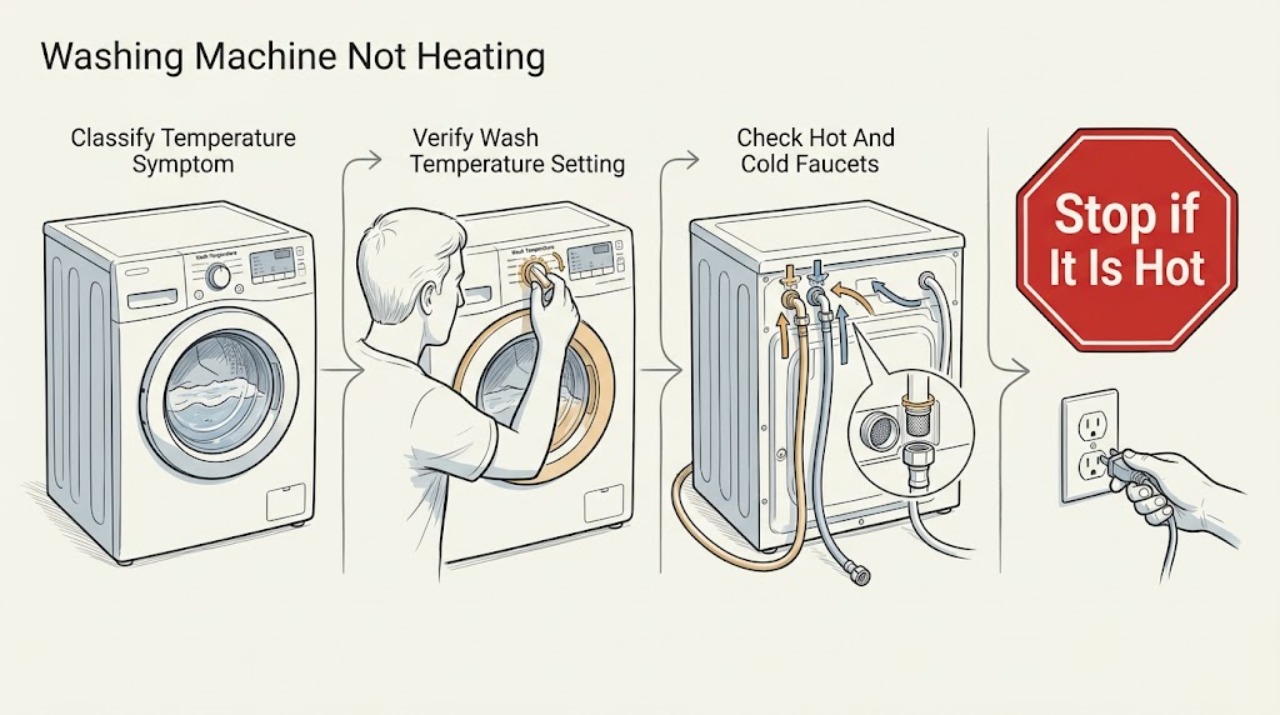
A Frigidaire washing machine that does not seem to heat may be receiving cooler water by design, using a cycle or temperature option that does not call for hot water, or failing to receive the hot supply. First identify whether the washer fills normally but the wash water is cooler than expected, then check the selected Wash Temp and exact model instructions. Confirm the hot and cold faucets are open, the hoses are connected to the matching H and C inlets, and neither hose is kinked or restricted. Frigidaire notes that high-efficiency laundry-center controls may supply cooler water to save energy, so compare the result with the selected cycle and a nearby hot faucet before assuming an internal heater fault. If the hot supply is available and correctly connected but the washer still gives an abnormal temperature result, leaks, an error, or a cycle that cannot proceed, stop altering the plumbing and arrange qualified appliance service.
Work through in order
Diagnostic checks
Use only checks that match the exact appliance or system and its official guide.
-
Check 1
Run or observe the affected wash cycle from a safe position and record whether the washer fills, tumbles, and completes normally while water feels cooler than expected, or whether it fails to fill, stops, shows an error, or leaks.
Expected result: Note the selected Wash Temp and cycle, whether hot water reaches the tub, whether the cold supply behaves normally, and whether the symptom affects every cycle or only one option.
Next step: Continue with the cycle and hose checks for a temperature-only complaint; use the stop boundary and service branch for a leak, error, or unsafe electrical or water condition.
Stop if: Stop the washer for a water leak near electricity, a burning smell, smoke, damaged cord, exposed wiring, or a drum that moves abnormally.
Why this matters
Why: A completed cycle with cooler-than-expected water can be normal for an energy-saving control or cycle. No hot water, a failed fill, a code, leak, or incomplete cycle points toward supply, hose, control, or service diagnosis.
-
Check 2
Select the cycle and Wash Temp option specified for the load in the exact Frigidaire manual, then start it using the documented Start or Start/Pause sequence; do not change a running cycle by turning the selector unless the manual says to cancel first.
Expected result: Record whether the temperature option is available, whether it was set to a cooler choice, whether the control accepts the selection, and whether the washer fills and continues.
Next step: Compare one correctly selected cycle with the original result; if the setting is correct but the water remains unexpectedly cold, check the hot supply and hose routing.
Stop if: Do not force the selector, bypass a lock, or continue if the control sparks, smells burned, or starts an unexpected cycle.
Why this matters
Why: The washer may be following the selected temperature or a cycle's energy-saving behavior rather than failing to heat. A missing option, unaccepted command, or repeated stop indicates a model-specific control or service issue.
-
Check 3
From the normal utility area, verify that both the hot and cold water faucets supplying the washer are fully open and that the household hot-water supply produces warm water at a nearby faucet.
Expected result: Record whether the hot faucet is closed or cool, the cold faucet is available, water pressure is weak, or both supplies behave normally while the washer's hot selection remains cool.
Next step: Restore only a normally closed faucet, avoid running other high-demand fixtures during the check, and continue to the hose and inlet inspection when supply is available.
Stop if: Stop for a leaking shutoff, damaged supply line, flooding, water near an electrical outlet, or a water-heater problem requiring plumbing work.
Why this matters
Why: A closed, cool, or weak household hot supply can make the washer appear unable to heat even when its controls are working. Normal household hot water shifts attention to hose connections, inlet screens, control, or service.
-
Check 4
Turn off the water supply before handling hoses, then verify that the hose marked for hot is connected to the washer's H or hot inlet and the cold hose to C or cold inlet; inspect for kinks, pinches, loose connections, or a flood-safe hose the manual does not support.
Expected result: Record whether the hoses are reversed, bent, crushed behind the washer, loose, leaking, or correctly routed with the matching temperature markings.
Next step: Correct only an obvious routing or connection issue using the installation instructions, restore water slowly, and check for leaks before running a cycle.
Stop if: Do not pull a stacked or heavy unit, force a corroded fitting, over-tighten a connection, or continue with a bulging, split, or leaking hose.
Why this matters
Why: Frigidaire says reversed, kinked, restricted, or unsupported hoses can prevent proper filling and temperature behavior. Correct routing can resolve a hot-selection complaint; a correct, leak-free connection points to flow screens or the appliance.
-
Check 5
If the exact instructions permit it and the water is off, check the faucet flow and the visible inlet-filter screens for debris; keep the washer disconnected from power before maintenance and do not pry into the valve body.
Expected result: Record whether hot water flows freely from the hose, an inlet screen is clogged, both screens are clear, or the valve and hose connection show damage.
Next step: Restore only clean, correctly seated connections, check for leaks, and arrange service when the screen is damaged, the valve does not admit water, or the temperature remains wrong.
Stop if: Do not scrape screens aggressively, operate with a leaking connection, bypass an inlet valve, or open the control or heater area.
Why this matters
Why: A restricted hot inlet can reduce or eliminate hot water entering the tub while cold filling still appears normal. Clear external debris only as the manual allows; a clear screen with persistent temperature failure suggests an internal control or valve issue.
-
Check 6
Compare the result with the manual's description of the selected cycle and high-efficiency temperature behavior, allowing the washer to complete its normal fill and wash sequence rather than judging heat from the first few seconds.
Expected result: Record whether the water is consistently cooler but the cycle completes, whether only a high-temperature option differs, or whether every temperature option gives the same cold result.
Next step: Use the normal setting when the result matches the manual; request service for a persistent mismatch, code, incomplete cycle, or evidence that hot water never enters.
Stop if: Stop if the washer overheats, smells burned, leaks, trips power, or shows a fault that the manual does not clear.
Why this matters
Why: Consistently cooler water with normal cycle completion may be an energy-saving design. No change between options after a correct hot supply check, or a cycle that cannot complete, is not explained by temperature preference alone.
-
Check 7
After the settings, hot-water supply, hose routing, and permitted screen checks are complete, run one supervised correctly selected cycle and record the fill temperature behavior without opening panels or repeatedly changing settings.
Expected result: Record whether the washer fills with the expected supply, completes the wash, leaves no error or leak, and behaves differently from the original complaint.
Next step: Stop troubleshooting and arrange qualified appliance service with the model, cycle, temperature selection, supply result, hose configuration, and observed symptom.
Stop if: Do not continue cycles with a leak, burning odor, electrical fault, damaged hose, abnormal movement, or an unresolved error.
Why this matters
Why: A normal cycle after correcting a setting or supply issue supports that external branch. Persistent cold water despite normal hot supply, correct routing, and a sound inlet path suggests a temperature sensor, valve, heater, or control fault requiring service.
Use your observations
Decision map
Find the observation that best matches what you see, then follow the next safe action.
-
PATH 01Safety boundary
What you see
The washer fills, runs, and completes normally, but the water is cooler than older machines or cooler than expected for the selected cycle.
Do this next
Confirm the cycle and Wash Temp in the model manual and monitor one correctly selected load.
Why this path and its safety boundary
Why it matters: Frigidaire says high-efficiency laundry-center controls may supply cooler water to save energy, so cooler does not by itself prove an internal heater failure.
Safety stop: Request service if the result is accompanied by an error, incomplete cycle, leak, or no response to the documented temperature setting.
-
PATH 02Safety boundary
What you see
The household hot supply is cool or unavailable, the faucet is closed, or hoses are reversed, kinked, pinched, or leaking.
Do this next
Correct only the accessible supply or routing issue according to the installation instructions, restore water slowly, and check for leaks.
Why this path and its safety boundary
Why it matters: The washer cannot deliver the selected hot wash temperature until the external supply and inlet routing are corrected.
Safety stop: Use a plumber or service professional for a supply, shutoff, or hose condition that cannot be corrected safely.
-
PATH 03Safety boundary
What you see
The hot faucet and hose are correct, but hot flow is weak or the inlet screen is visibly restricted.
Do this next
Clean or restore only the accessible screen and connection as the manual permits; arrange service for a damaged screen, valve, or persistent restriction.
Why this path and its safety boundary
Why it matters: Debris or restriction at the hot inlet can limit hot water while the washer's other functions remain normal.
Safety stop: Do not open the valve body, scrape aggressively, or run the washer with a leaking fitting.
-
PATH 04Safety boundary
What you see
The hot supply, hose routing, inlet path, cycle setting, and one supervised test are normal, but the washer still never delivers the expected temperature or stops with a fault.
Do this next
Leave the washer in a safe state and arrange qualified appliance service with the model and complete diagnostic record.
Why this path and its safety boundary
Why it matters: An internal inlet valve, sensor, heater, or control issue may remain; the symptom does not identify a compatible replacement part.
Safety stop: Do not test live wiring, open the cabinet, bypass a sensor or valve, or install a part based only on the temperature complaint.
-
PATH 05Safety boundary
What you see
The washer leaks, trips power, smells burned, shows an unresolved error, moves abnormally, or cannot complete the cycle.
Do this next
Stop the cycle, isolate water or power only when safe, protect the area from flooding, and arrange qualified appliance service.
Why this path and its safety boundary
Why it matters: This is not a simple water-temperature preference and needs an immediate safety or service decision.
Safety stop: Do not restart the machine to reproduce a leak, electrical smell, or unresolved fault.
Helpful context
Understand the symptom
Cooler wash water is not automatically a failed heater
Frigidaire's high-efficiency laundry-center guidance says controls may supply cooler water to save energy. Wash temperature also depends on the selected cycle, the hot-water supply, and the time it takes water to reach the machine. A washer that fills, tumbles, drains, and completes the selected cycle with warm rather than very hot water has a different next check from a washer that receives no hot supply or stops with an error.
The inlet connections decide which temperature reaches the tub
Both hot and cold faucets must be on, and the hoses must connect to the matching hot and cold inlets. A reversed, kinked, flood-safe, or restricted hose can make a hot selection seem ineffective. Frigidaire also recommends checking the water flow and inlet screens, but the water should be turned off before hoses are disconnected.
Use the exact cycle controls before seeking an internal repair
Frigidaire's cycle guidance places Wash Temp selection before Start/Pause and notes that settings differ by model. Change a setting only before or after cancelling a cycle as the manual directs. If the supply and controls are correct but the washer still cannot deliver the expected temperature, internal diagnosis belongs with qualified service rather than an improvised heater or valve replacement.
Safety boundary
Stop conditions
- Stop the washer for water near electricity, a leaking or bulging hose, burning smell, smoke, damaged cord, exposed wiring, abnormal movement, or an unresolved error.
- Do not open the cabinet, test live wiring, bypass a temperature sensor or inlet valve, over-tighten fittings, or replace a part based only on cool wash water.
- Arrange qualified appliance or plumbing service when hot household water and correctly routed hoses are available but the washer still cannot deliver the selected temperature or complete the cycle.
When checks do not resolve it
Need a professional?
Request qualified appliance service when the hot supply and hose connections are correct but the Frigidaire washer remains abnormally cold, shows an error, cannot complete the cycle, leaks, trips power, or has a damaged inlet, control, heater, or sensor condition.
Have this ready
- Give the professional the exact model, cycle and Wash Temp, whether the tub received hot water, household faucet result, hose routing, inlet-screen observation, displayed error, and supervised test result.
Common questions
FAQ
Why is my Frigidaire washer's hot water only warm?
Frigidaire says high-efficiency laundry-center controls may supply cooler water to save energy. Confirm the cycle and Wash Temp, then verify the household hot supply and matching H and C hose connections before assuming an internal fault.
Can reversed washer hoses cause the hot setting not to heat?
Yes. Frigidaire's water-supply guide says the hot and cold hoses must connect to the matching washer inlets and should not be kinked or restricted. Turn off water before handling connections and check for leaks after correction.
When does a Frigidaire washer that is not heating need service?
Arrange service when household hot water and correctly routed hoses are available but the washer remains abnormally cold, cannot complete the cycle, shows an error, leaks, trips power, or has a burning smell or damaged connection.
Read the exact guide
Official sources
- How To Fix Your Washer Not StartingFrigidaire · Frigidaire washer start and no-cycle boundary
- Laundry Water Supply GuideFrigidaire · Frigidaire washer hot and cold supply, hose routing, flow, inlet screens, and leak checks
- Laundry Centers - How do I make sure the water temperature in my Laundry Center washer is correct?Frigidaire · Frigidaire laundry-center wash-water temperature, energy-saving behavior, inlet routing, and water-heater guidance
- Laundry Centers - How do I use my display or select cycles on my Frigidaire Laundry Center?Frigidaire · Frigidaire washer cycle, Wash Temp, water level, Start/Pause, and model-manual guidance
- What should I do if my Frigidaire Top Load washer is not filling with water properly?Frigidaire · Frigidaire washer fill, hot and cold faucets, hose, pressure, lid, and inlet-screen checks
Community feedback
Share a repair observation
Share a plain-text repair observation. Accepted observations are published automatically; this page may take a moment to update.