
On this page
Start here
Quick answer
First separate an oven that produces no heat from one that is merely slow or runs cool. With the cavity empty and the door closed, select the model's normal Bake mode, start a full preheat, and confirm that the controls and indicator respond. If an electric oven has no heat after a correct preheat, a supply or heating-system fault may be involved; Frigidaire notes that insufficient power and a damaged door gasket can cause poor heating. If your Frigidaire model is gas, the igniter should operate and the burner should ignite during a normal Bake start; do not manually light it or keep retrying if there is no flame, a strong gas odor, sparking, or abnormal delay. Turn the oven off for an over-temperature code, let it cool, and arrange qualified service if the safe checks do not restore heat.
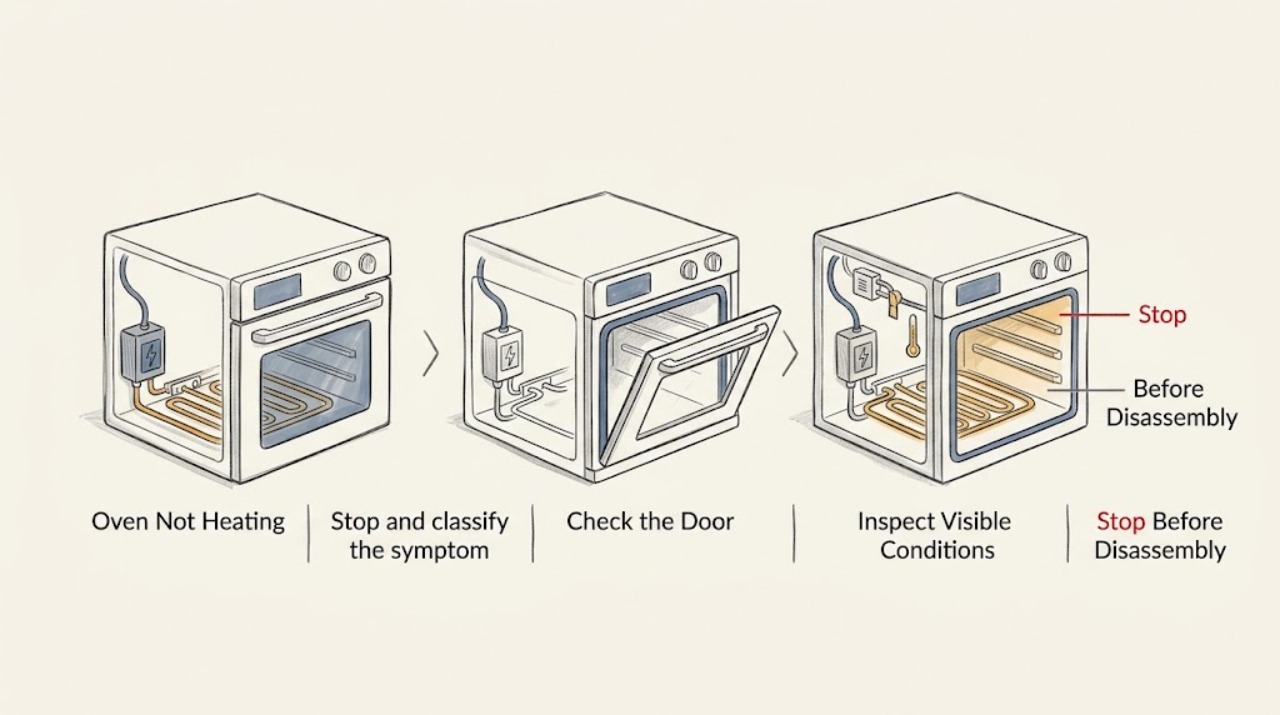
Work through in order
Diagnostic checks
Use only checks that match the exact appliance or system and its official guide.
-
Check 1
Stop and classify the symptom before testing: note whether the oven is completely cold, warms but does not reach the set temperature, heats unevenly, shows an error, or produces a gas odor, smoke, burning smell, or electrical arcing.
Expected result: A gas odor, smoke, burning smell, visible arcing, damaged cord, repeated breaker trip, or an unusually hot oven is present; or the display shows an over-temperature or other fault code.
Next step: Cancel or turn the oven off. For gas odor, leave the area and seek help from a safe location; for smoke, fire, arcing, or a repeated electrical trip, keep clear and arrange qualified help. For F10, let the oven cool and follow the model manual; do not continue normal cooking until the condition is resolved.
Why this matters
Why: These signs are not normal preheat behavior and can make continued heating unsafe. Frigidaire identifies F10 on standard ovens as a higher-than-normal temperature condition.
-
Check 2
With the cavity cool and empty, select the ordinary Bake mode described by your model manual, enter a normal cooking temperature, press Start, and allow the oven to complete its preheat indication without opening the door.
Expected result: The display responds, the preheat indicator or tone appears, and the cavity begins warming; or the controls do not start the cycle and the cavity remains cold.
Next step: If the cycle starts, wait for the model's full preheat signal before judging the result. If the controls do not respond or a code appears, record it and use the model-specific manual rather than repeatedly pressing controls.
Why this matters
Why: An incorrect mode, an unstarted cycle, an active lockout, or opening the door early can look like a heating fault. Frigidaire recommends an empty oven and a closed door during preheat, and Quick Preheat is a model feature with its own controls.
-
Check 3
Check the accessible power path without opening the appliance: look for a tripped oven breaker or fuse, a control display that is dim or dead, and any visible damage or scorching at the plug or cord. Do not remove covers or probe a live circuit.
Expected result: The breaker is tripped, the display is dead, the cord or receptacle is damaged, or power appears normal while the oven still produces no heat.
Next step: If there is damage, repeated tripping, or uncertainty about the supply, leave the oven off and use a qualified electrician or appliance technician. If a breaker has tripped once and there is no damage, reset it only once when safe; if it trips again, stop.
Why this matters
Why: An oven can operate its display yet lack the proper supply needed for heating, and a damaged electrical connection is a safety issue. Frigidaire says inadequate power can prevent an electric oven from reaching and maintaining temperature.
-
Check 4
After the oven is completely cool, inspect the door gasket and closure from the outside. Look for a torn, detached, flattened, or missing gasket, a door that does not close squarely, or an obstruction at the seal; do not pull, rub, or disassemble the gasket.
Expected result: The seal is visibly compromised or the door does not close correctly; or the gasket is intact and the door closes evenly.
Next step: Remove only a loose, visible obstruction without force. If the gasket or hinge/door alignment is damaged, stop using the oven for temperature-critical cooking and arrange model-specific service; if it looks sound, continue to the model-dependent heating check.
Why this matters
Why: A damaged or missing gasket can let heat escape and produce poor cooking results, but a sound gasket does not rule out a power or heating-system fault.
-
Check 5
If the appliance is an electric oven, and only after it is cool and safely switched off, inspect the visible Bake or Broil element for a break, blister, or burn mark. Do not touch it, remove panels, or measure resistance unless you are qualified and following the model manual.
Expected result: A visible element is damaged, or no visible damage is found but the oven remains cold after a correct Bake preheat attempt.
Next step: Record which element and which mode were affected, keep the oven off, and request qualified appliance service rather than replacing a part based only on appearance.
Why this matters
Why: A damaged visible element is a useful service clue, but an intact element does not prove that the element, relay, sensor, wiring, or supply is working; those circuits can remain hazardous even when the oven is off at the controls.
-
Check 6
If the appliance is a gas Frigidaire range and there is no gas odor or other hazard, observe one normal Bake start from a safe position with the door closed. Do not attempt manual lighting, bypass an igniter, or repeatedly restart the burner.
Expected result: The igniter operates and a normal burner flame appears; the igniter operates but no flame appears; or there is no expected ignition and an odor, repeated clicking, or abnormal flame occurs.
Next step: If a stable normal flame appears, let the cycle proceed to preheat. If there is no flame, an abnormal flame, repeated failed ignition, or any gas odor, turn the oven off, ventilate only if safe without operating switches, leave the area, and arrange qualified gas-appliance service.
Why this matters
Why: Frigidaire's gas installation guidance describes an electric igniter followed by burner ignition, with a model-dependent delay. Failure to ignite can involve the gas valve, igniter, controls, or supply and cannot be safely isolated by continued attempts.
-
Check 7
If the oven heats but cooking remains consistently too cool or uneven after the setup, power, gasket, and model-appropriate heating checks, consult the exact Use and Care manual for temperature calibration and rack/bakeware guidance.
Expected result: Calibration or rack/bakeware guidance improves the result; or the oven still does not reach or maintain temperature.
Next step: Apply only the documented model setting once and retest with the same controlled recipe. If the oven remains cold, slow, or unstable, stop troubleshooting and schedule qualified appliance service.
Why this matters
Why: Frigidaire says calibration instructions vary by model and that preheat, rack position, and bakeware affect cooking results. Calibration is not a substitute for a missing flame, a failed element, a power problem, or an error code.
Use your observations
Decision map
Find the observation that best matches what you see, then follow the next safe action.
-
PATH 01Next step
What you see
The control does not start Bake, the display is dead, or the oven shows a setup or lockout message.
Do this next
Record the message, confirm the model's Bake/Start sequence, and use the exact manual. Escalate a persistent code or unresponsive control to service.
Why this path and its safety boundary
Why it matters: The symptom is not yet evidence of a failed heating element or burner.
-
PATH 02Next step
What you see
A breaker or fuse is tripped but there is no visible damage and the appliance is safe to access.
Do this next
Reset the breaker only once when safe. If it trips again or the oven still has no heat, leave it off and call a qualified electrician or appliance technician.
Why this path and its safety boundary
Why it matters: The oven may not have had the supply needed for heating.
-
PATH 03Next step
What you see
The display works and the oven runs, but a damaged or missing door gasket is visible.
Do this next
Do not pull or rub the gasket. Arrange model-specific service or replacement guidance, then retest only after the seal is correctly restored.
Why this path and its safety boundary
Why it matters: Heat may be escaping through the door seal.
-
PATH 04Next step
What you see
An electric oven has a visibly damaged heating element or remains cold after a proper Bake preheat attempt.
Do this next
Keep the oven off and provide the technician with the affected mode and visible element symptom; do not open panels or test live voltage.
Why this path and its safety boundary
Why it matters: A heating circuit, supply, control, or sensor fault is possible.
-
PATH 05Next step
What you see
A gas oven's igniter operates but no burner flame appears, or ignition repeatedly fails.
Do this next
Turn the oven off and stop attempts. If there is any gas odor, leave the area and seek help from a safe location; otherwise arrange qualified gas-appliance service.
Why this path and its safety boundary
Why it matters: The burner ignition system or gas supply requires qualified diagnosis.
-
PATH 06Next step
What you see
The oven heats but is consistently too cool or uneven after full preheat and the gasket appears sound.
Do this next
Use the exact Use and Care manual for calibration and rack guidance once. If the result remains outside normal cooking performance, request service.
Why this path and its safety boundary
Why it matters: Setup, rack/bakeware, or model-specific temperature calibration may be involved.
-
PATH 07Next step
What you see
The oven displays F10 or becomes hotter than expected.
Do this next
Turn the oven off and allow it to cool. Follow the model's reset guidance only after cooling; if the code or overheat returns, do not use the oven and arrange service.
Why this path and its safety boundary
Why it matters: Frigidaire identifies F10 on standard range and wall ovens as a higher-than-normal temperature condition.
-
PATH 08Next step
What you see
There is a gas smell, smoke, fire, electrical arcing, a damaged cord, or a breaker repeatedly trips.
Do this next
Stop using the oven, leave the area for gas odor or fire risk, and contact the appropriate qualified emergency or appliance service from a safe location. Do not operate switches if gas may be present.
Why this path and its safety boundary
Why it matters: This is an immediate safety stop, not a normal no-heat diagnosis.
Helpful context
Understand the symptom
What not heating can mean
A display that never starts a heating cycle, an oven that warms slowly, and an oven that reaches an uneven or low cooking temperature are different symptoms. Record the selected mode, whether the preheat indication appears, whether any heat is present, and any code or odor before changing settings. Frigidaire's support guidance for electric ovens specifically calls out proper power and the door gasket, while temperature calibration is model-specific.
Gas and electric models have different safe observations
Do not remove panels or test live oven wiring. On a gas model, a normal start can involve an electric igniter followed by burner ignition, but a gas smell, repeated failed ignition, unusual flame, or smoke is a stop condition. On an electric model, inspect only visible parts after the oven is cool and disconnected as appropriate; hidden voltage, element, sensor, and control faults belong to qualified service.
Safety boundary
Stop conditions
- Gas odor or suspected gas leak
- Smoke, fire, burning smell, or electrical arcing
- Damaged cord, receptacle, exposed wiring, or repeated breaker trip
- F10 or another recurring over-temperature condition
- Need to open a panel, test live voltage, or bypass a safety device
When checks do not resolve it
Need a professional?
Arrange qualified appliance service when the Frigidaire oven remains cold after a correct mode, preheat, accessible power, and door-seal check; when an electric element is damaged; when a gas igniter does not produce normal burner ignition; when an error code returns; or when temperature remains unstable after model-specific setup and calibration guidance. Use a qualified electrician for supply, breaker, cord, or receptacle concerns and qualified gas-appliance service for ignition or gas concerns.
Common questions
FAQ
Why does my Frigidaire oven turn on but not get hot enough?
Frigidaire identifies insufficient power and a damaged door gasket as possible causes of poor heating. Confirm a full preheat with an empty oven and closed door, inspect the cool gasket without pulling it, and arrange service if the supply or heating system remains suspect.
How long should I wait before deciding a Frigidaire oven is not heating?
Use the model's preheat indication rather than opening the door early or judging by a short interval. Frigidaire notes that proper preheating can take up to 20 minutes on some models, with the exact behavior depending on the oven and selected mode.
What should I do if my Frigidaire gas oven glows but does not heat?
A gas model may use an electric igniter before the burner flame appears. Observe only one normal start when there is no hazard; do not manually light or repeatedly retry. If no flame appears, ignition is abnormal, or gas is smelled, turn it off, leave the area when necessary, and arrange qualified service.
Can I fix a Frigidaire oven that shows F10?
F10 is a higher-than-normal temperature alert on standard range and wall ovens. Turn the oven off and let it cool; follow the exact model's reset instructions only after cooling, and request service if the alert returns.
Is temperature calibration the answer when a Frigidaire oven does not heat?
Calibration can address a consistent temperature offset after the oven otherwise preheats and operates normally, but it is not a fix for no power, a missing gas flame, a damaged element, a failed seal, or an error code. Use only the model-specific manual procedure.
Read the exact guide
Official sources
- INSTALLATION INSTRUCTIONS - FREESTANDING GAS RANGEFrigidaire · Qualified installation/service boundary and gas oven burner ignition sequence using an electric igniter.
- Oven - Is too HotFrigidaire · Full preheat, empty cavity, closed door, rack and bakeware effects, and model-specific temperature calibration.
- Ovens - How do I use Quick Preheat or Preheat?Frigidaire · Model-dependent Quick Preheat operation, temperature entry, Start, and cancel controls.
- Oven Error Codes and Alarms GuideFrigidaire · Safe reset guidance and F10 thermal-runaway response, including cool-down and service boundary.
- EN User Manual | Gas RangeFrigidaire · Gas-odor response and oven-use safety boundaries for gas range owners.
- Oven - Is Not Hot EnoughFrigidaire · Proper power, door-gasket sealing, professional service boundary, and model-specific calibration for an oven that is not hot enough.
Community feedback
Share a repair observation
Share a plain-text repair observation. Accepted observations are published automatically; this page may take a moment to update.