
On this page
Start here
Quick answer
If a Hotpoint dryer tumbles but produces no heat, first confirm that a dry cycle and a heat setting are selected, then identify whether the dryer is electric or gas. An electric model can tumble with a partially tripped breaker while the heating circuit is unavailable; a gas model needs its gas supply available and the correct cycle. Check the lint filter and visible exhaust path for blockage and keep the dryer front and airflow openings clear. Do not open the cabinet, test live wiring, bypass a thermal safety device, or relight or alter gas components. Stop for a burning smell, smoke, sparking, gas odor, a damaged cord, or repeated overheating, and arrange qualified appliance service when the simple checks do not restore heat.
Before you begin
Safety first
- This article supports control, accessible supply, filter, visible airflow, and external hazard checks only. Do not open the cabinet, test live circuits, bypass safety devices, or disassemble gas components.
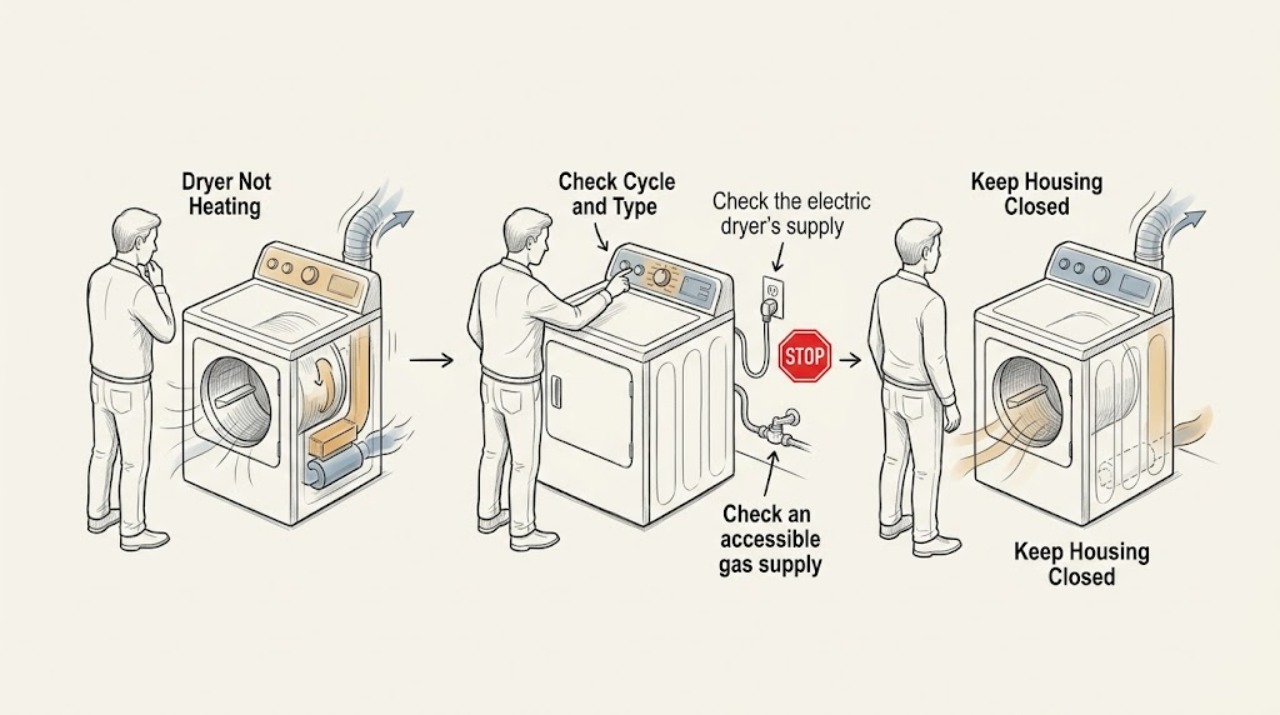
Work through in order
Diagnostic checks
Use only checks that match the exact appliance or system and its official guide.
-
Confirm the cycle, temperature, and dryer type
With the drum empty and the dryer stopped, identify whether the appliance is electric or gas and check that the selected cycle is a heated dry cycle rather than air fluff, no heat, or cool down; confirm the temperature setting is not set to no heat.
Expected result: A no-heat or cool setting was selected, or the cycle and temperature already call for heat; record whether the dryer tumbles and whether the issue affects every cycle.
Next step: Run one brief, supervised heated cycle only when there is no odor, smoke, sparking, or other hazard; stop if the drum does not tumble normally or the fault is accompanied by a safety symptom.
Stop if: Do not keep testing a dryer with smoke, a burning smell, sparking, a damaged cord, or a gas odor.
Why this matters
Why: A no-heat setting explains the symptom without proving a component failure. If a heated cycle is selected but the dryer still tumbles without warmth, continue with the matching electric or gas supply check.
-
Check the electric dryer's supply without opening it
If the dryer is electric, inspect the household dryer breaker or fuses from the normal service-panel position and look for an obviously partially tripped breaker; reset the dryer breaker only as the panel and model instructions allow, with the dryer controls off.
Expected result: The breaker was partially tripped and heat returns after one reset, or the dryer continues to tumble without heat, the breaker trips again, or the panel and cord show overheating or damage.
Next step: If one safe reset restores heat, monitor the next cycle and stop for service if the symptom returns; otherwise leave the dryer off and arrange an appliance or electrical professional.
Stop if: Do not remove the dryer terminal-block cover, touch wiring, measure live voltage, replace fuses with a different type, or repeatedly reset a tripping breaker.
Why this matters
Why: An electric dryer can run the motor on partial power while the heating circuit lacks the required supply. A returning trip or damaged connection points to an electrical fault that needs qualified diagnosis, not repeated resets.
-
Check an accessible gas supply condition
If the dryer is gas, confirm from the normal accessible position that the appliance gas shutoff is in its expected open position only when there is no gas odor and the installation instructions identify that control; do not disconnect the line or open any burner area.
Expected result: The dryer was newly installed or the accessible shutoff was closed, or the supply appears available but the dryer still runs without heat; note any gas odor or unusual sound.
Next step: Have a qualified gas-appliance technician assess a persistent gas-model no-heat condition; if a gas odor is present, leave the area and follow the gas supplier or emergency instructions from a safe location.
Stop if: Do not test for leaks with a flame, loosen gas fittings, relight internal components, or operate the dryer when gas odor, damaged tubing, or combustion concerns are present.
Why this matters
Why: A closed supply can explain no heat after installation. If the supply is available and the dryer still does not heat, the ignition or burner system requires service rather than user disassembly.
-
Inspect the lint filter and visible exhaust path
With the dryer off and cool, clean the lint filter according to the model instructions and inspect the visible exhaust duct connection and outside termination for a kink, crushed section, lint buildup, or a damper that cannot move freely; keep the front and ventilation openings clear.
Expected result: The filter or visible duct is blocked, the outside damper does not open freely during normal operation, or the airflow path appears clear but the dryer still produces no heat.
Next step: Remove only accessible lint from the filter and external termination, then perform one supervised cycle; arrange qualified service or vent cleaning when the duct is concealed, damaged, or still restricted.
Stop if: Do not operate without the lint filter, insert tools into the duct or cabinet, use combustible ducting, or keep running a dryer that overheats or smells scorched.
Why this matters
Why: Restricted airflow can cause poor drying and can trip thermal protection; a clear visible path does not rule out an internal or concealed restriction. No-heat after airflow maintenance points toward supply, heating, control, or safety components.
-
Check for visible power-cord or heat damage
From outside the appliance, inspect the plug, cord, outlet area, and accessible rear connection cover for scorching, melting, fraying, looseness, or a burning odor without removing a cover or moving the dryer into a cramped space.
Expected result: The cord and outlet appear intact, or there is visible heat damage, looseness, odor, smoke, sparking, or evidence that a connection has overheated.
Next step: If intact, continue only with the prior supply and airflow results; if damaged or abnormal, stop using the dryer, isolate power only from a safe accessible control, and arrange qualified appliance or electrical service.
Stop if: Do not touch exposed conductors, remove the terminal-block cover, use an extension cord, or operate with a hot, loose, melted, or damaged connection.
Why this matters
Why: A damaged electrical connection can interrupt heating and create shock or fire risk. An intact exterior does not establish that internal heating parts are safe or functional.
-
Perform one controlled retest and decide on service
After the selected cycle, supply, filter, and visible airflow checks are complete and no hazard was found, run one short supervised heated cycle with a small, suitable load and keep people away from the exhaust and drum opening.
Expected result: Warm air and normal drying return, or the dryer tumbles without heat, shuts down, overheats, trips protection, produces an odor, or has restricted exhaust.
Next step: Stop testing and provide the model, fuel type, cycle, breaker or gas-supply result, airflow observations, and any odor or shutdown history to qualified service when heat does not return or the fault recurs.
Stop if: Do not bypass a thermal limiter or safety switch, open the cabinet, or continue operation after smoke, burning odor, sparking, gas odor, or overheating.
Why this matters
Why: Restored heat supports a setting, supply, or airflow cause. Persistent no heat or a returning protection event indicates an internal heating, ignition, control, thermal-safety, or installation problem beyond ordinary checks.
Use your observations
Decision map
Find the observation that best matches what you see, then follow the next safe action.
-
PATH 01Safety boundary
What you see
The dryer was set to air fluff, cool down, no heat, or another cycle that does not request heat.
Do this next
Select the intended heated dry cycle and temperature, then perform one supervised test with no hazard present.
Why this path and its safety boundary
Why it matters: The control selection explains the no-heat observation without establishing a failed heating part.
Safety stop: Stop if heat remains absent on the correct cycle or any smoke, odor, sparking, gas odor, or overheating appears.
-
PATH 02Safety boundary
What you see
An electric dryer tumbles but a breaker or fuse was partially tripped, or heat returns after one permitted breaker reset.
Do this next
Monitor one cycle only if heat returns and the panel, cord, and outlet are normal; arrange qualified service for a recurring trip or persistent no-heat condition.
Why this path and its safety boundary
Why it matters: The motor can operate while the heating supply is incomplete; a returning trip is an electrical fault signal.
Safety stop: Do not keep resetting, open the terminal block, or touch live wiring.
-
PATH 03Safety boundary
What you see
A gas dryer has a closed accessible supply after installation, or the supply appears available but the dryer still does not heat.
Do this next
Use only the model's accessible shutoff guidance when there is no odor; otherwise leave the area and obtain qualified gas-appliance help.
Why this path and its safety boundary
Why it matters: The first case may be a supply setup issue; the second requires qualified ignition or burner diagnosis.
Safety stop: Never use an open flame to check leaks or disassemble gas components; stop immediately for gas odor or combustion concerns.
-
PATH 04Safety boundary
What you see
The lint filter or visible exhaust path is blocked, the exterior damper does not move freely, or the dryer overheats or repeatedly trips thermal protection.
Do this next
Clean only the permitted accessible areas, stop if the duct is damaged or concealed, and arrange qualified vent or appliance service when airflow or heat remains abnormal.
Why this path and its safety boundary
Why it matters: Airflow restriction can reduce drying performance and contribute to thermal protection; a clear exterior does not rule out a concealed restriction or internal fault.
Safety stop: Do not run without the filter, insert tools into the duct or cabinet, or continue after a scorched smell or overheating.
-
PATH 05Safety boundary
What you see
The correct heated cycle, accessible supply, filter, visible airflow, and exterior cord checks are normal, but the dryer still tumbles without heat.
Do this next
Leave the dryer out of service and arrange qualified appliance repair; provide the fuel type, model, cycle, observed airflow, and supply checks.
Why this path and its safety boundary
Why it matters: An internal heating, ignition, thermal-safety, control, or wiring fault remains possible and cannot be safely identified by external observation alone.
Safety stop: Do not open the cabinet, bypass a safety device, replace a heating or gas part by guesswork, or test energized components.
Helpful context
Understand the symptom
First separate a setting, supply, and airflow problem
No heat does not always mean the heater itself has failed. A no-heat or air-fluff selection, a partially tripped electric-dryer breaker, an unavailable gas supply, a blocked filter, or restricted exhaust can all change the result. Make observations with the dryer stopped and cool enough to handle; the exact Hotpoint model manual controls the electrical, gas, and venting details.
Keep cabinet and gas work out of ordinary troubleshooting
The lint filter and visible external vent path are ordinary maintenance checks, but heating elements, thermal limiters, wiring, burner assemblies, and internal controls are not safe guess-and-check parts. Unplug the appliance or disconnect its supply before any permitted cleaning, keep flammable materials away, and use qualified service for internal electrical or gas diagnosis.
Safety boundary
Stop conditions
- Stop using the dryer immediately for smoke, a burning or scorched smell, sparking, exposed conductors, a hot or damaged cord, gas odor, unusual combustion, or repeated overheating.
- Do not open the cabinet, remove the terminal-block cover, touch wiring, measure live voltage, bypass a thermal limiter or safety switch, or replace internal heating or gas parts by guesswork.
- Do not repeatedly reset a tripping breaker, use an extension cord, operate without the lint filter, or use plastic or combustible exhaust ducting.
- For a gas odor, leave the area without operating switches or flames and follow the gas supplier or emergency instructions from a safe location.
- Arrange qualified appliance, electrical, gas, or vent service when safe external checks do not restore heat or when the dryer overheats, shuts down, or has a concealed airflow fault.
Only after diagnosis
Potential parts
- dryer heating element or heater assembly
Consider this category only if qualified diagnosis confirms an electric heating assembly failure after supply and airflow are verified.
Confirm the exact Hotpoint model, fuel type, heater design, and manufacturer's fit information before ordering; do not select by appearance alone. - dryer thermal safety component
Consider this category only if qualified diagnosis identifies a failed thermal safety component and the underlying airflow or overheating cause has been assessed.
Use only the exact model-specified safety component and have a qualified technician verify the cause; never bypass it or substitute a different rating. - dryer gas ignition or burner component
Consider this category only if a qualified gas-appliance technician confirms that ignition or burner operation is the cause after gas supply and airflow checks.
Confirm the exact Hotpoint gas-dryer model and approved assembly with the manufacturer or technician; do not work on gas fittings or burner components as an ordinary user check.
When checks do not resolve it
Need a professional?
Arrange qualified appliance service when a Hotpoint dryer still tumbles without heat after the correct cycle, one permitted supply check, and accessible filter or airflow checks. Use an electrical professional for recurring breaker trips or damaged cord connections, a qualified gas-appliance technician for a persistent gas-model no-heat condition, and qualified vent service for a concealed or damaged exhaust path. Treat smoke, sparking, burning odor, gas odor, exposed wiring, or repeated overheating as stop-use conditions.
Safety scope: This article supports control, accessible supply, filter, visible airflow, and external hazard checks only. Do not open the cabinet, test live circuits, bypass safety devices, or disassemble gas components.
Common questions
FAQ
Why does my Hotpoint dryer tumble but not heat?
Check the cycle and temperature first, then identify whether it is electric or gas. An electric dryer can tumble with an incomplete heating supply, while a gas dryer also needs an available gas supply. Restricted airflow, thermal protection, heating parts, ignition, wiring, or controls can remain after those checks and need qualified service.
Can a Hotpoint electric dryer run if the breaker is partly tripped?
Yes. Official GE support notes that an electric dryer may tumble on partial power while not heating. With the controls off, one permitted breaker reset may be observed; a repeat trip or persistent no heat needs qualified electrical or appliance service.
What should I check on a Hotpoint gas dryer that is not heating?
Confirm the correct heated cycle, clear the lint filter and visible airflow path, and check the accessible gas-supply condition only when there is no gas odor and the model instructions allow it. If the supply is available but the dryer still does not heat, arrange qualified gas-appliance service rather than opening the burner area.
Can a blocked vent cause a Hotpoint dryer to stop heating?
Restricted airflow can cause poor drying and contribute to thermal protection. Clean the permitted accessible filter and inspect the visible exhaust path, but do not insert tools into the duct or cabinet. A concealed, damaged, or still-restricted path needs qualified vent or appliance service.
When should I stop using a Hotpoint dryer?
Stop for smoke, burning or scorched odor, sparking, a hot or damaged cord, exposed wiring, gas odor, unusual combustion, or repeated overheating. Leave the area for a gas odor when safe and follow the appropriate emergency or gas-supplier instructions; otherwise arrange qualified service.
Read the exact guide
Official sources
- Electric Dryer - Runs But Does Not HeatGE Appliances · Official GE Appliances support article; Hotpoint is supported through the GE Appliances owner and service system, while exact model instructions control.
- Dryer - Electrical Requirements and Breaker SizeGE Appliances · Official GE Appliances support article covering GE and Hotpoint gas and electric dryer supply requirements; do not infer a specific model's wiring from the general page.
- Owner's Manual and Installation Instructions: DBL333, DCL333, DVL223 DryersGE Appliances · Official GE dryer manual used for general safety and troubleshooting principles; the reader's exact Hotpoint manual controls model-specific details.
- Gas Dryer - Runs But Does Not HeatGE Appliances · Official GE Appliances support article; use the exact Hotpoint model manual for gas and safety details.
Community feedback
Share a repair observation
Share a plain-text repair observation. Accepted observations are published automatically; this page may take a moment to update.