
On this page
Start here
Quick answer
The HTX24EASK0WS is an electric dryer rated for a 208/240-volt supply, so a no-heat symptom that begins after moving should be checked at the new-house cycle setting, dryer circuit, cord and outlet before anyone suspects an internal heater. Confirm a heated setting, inspect the dedicated breaker from the normal panel position, and look at the plug, cord, outlet and visible vent for damage or a crushed connection. Do not open the terminal block, measure live voltage, repeatedly reset a breaker, or keep operating after an odor, smoke, sparking, overheating or a returning trip.
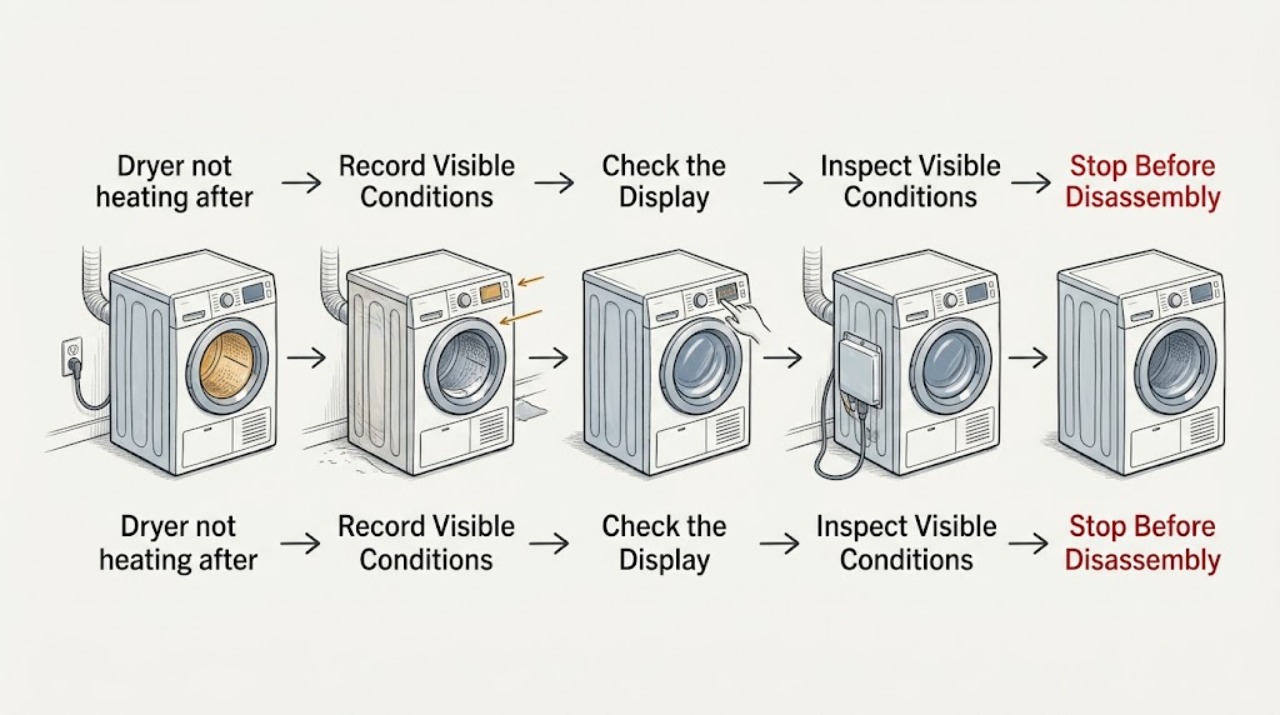
Work through in order
Diagnostic checks
Use only checks that match the exact appliance or system and its official guide.
-
Check 1
With the dryer stopped and empty, read the rating label without moving the appliance and record the full model, whether it tumbles, when heat was last known to work, and what changed at the new house.
Expected result: The label reads HTX24EASK0WS and the drum still tumbles, or the label, power behavior, or symptom does not match that description.
Next step: Record the full model and rating-plate information for service. If the model is different or unreadable, stop model-specific troubleshooting and obtain the correct manual before checking parts or wiring.
Stop if: Do not pull a stacked or tightly installed dryer out just to read a hidden label, and stop if moving it would expose a damaged cord or unstable installation.
Why this matters
Why: The matching Hotpoint parts page identifies HTX24EASK0WS as a 6.2 cu. ft. electric dryer. A move-linked onset makes the new installation and supply path a meaningful first branch, but a model mismatch prevents safe use of model-specific instructions.
-
Check 2
From the controls, verify that the selector is a heated dry cycle and that the heat choice is not an air-only or no-heat setting; leave the controls off while inspecting the rest of the installation.
Expected result: The machine was on an air-only or no-heat selection, or it was already calling for heat while the drum continued to turn without warmth.
Next step: If no hazard is present, select the intended heated setting for one later supervised test. If the setting was correct, keep the dryer off while checking the breaker, cord, outlet and vent.
Stop if: Do not test a cycle when there is smoke, a burning smell, sparking, visible melting, unusual overheating or a damaged power connection.
Why this matters
Why: The model has four cycles and three heat selections, so a control choice can explain a no-heat report without proving a failed component. If a heated selection was already in use, continue with the electric-supply checks instead of repeatedly changing cycles.
-
Check 3
From the normal electrical-panel position, with the dryer controls off, look for the dedicated paired dryer breaker or its labeled fuses and any obvious partial trip; reset it only once and only as the panel instructions permit.
Expected result: A breaker was visibly out of position and heat returns after one reset, or the breaker stays on while the dryer tumbles without heat, trips again, or shows an abnormal panel condition.
Next step: If one permitted reset restores heat and there is no damage, monitor only one short cycle. If heat remains absent or the breaker trips again, leave the dryer off and have a qualified electrician or appliance technician check the circuit and appliance.
Stop if: Never remove the terminal-block cover, touch wiring, measure live voltage, substitute a fuse, or repeatedly reset a tripping breaker.
Why this matters
Why: This electric model needs a 208/240-volt appliance supply. After a move, a supply-side change can leave the motor or controls active while the heating supply is incomplete; a repeat trip is a fault signal, not permission to keep resetting.
-
Check 4
Without opening any cover or moving the dryer into a cramped space, inspect the plug, cord, outlet face and visible rear connection cover from outside for scorching, melting, fraying, looseness, smoke or a burning odor.
Expected result: The exterior connection looks cool and intact, or there is heat damage, an odor, exposed conductor, looseness, or evidence that the connection was stressed during the move.
Next step: If intact, continue only with the vent and one-test decision. If abnormal, stop using the dryer, isolate power only from a safely accessible control, and arrange qualified electrical or appliance service; do not try to tighten or rewire it.
Stop if: Do not touch exposed conductors, remove the terminal-block cover, use an extension cord, or operate with a hot, loose, melted or damaged connection.
Why this matters
Why: The installation instructions call for a new UL-listed 240-volt, 30-amp dryer cord, proper grounding, secure connections and a replaced terminal-block cover. External damage can interrupt heating and create a shock or fire risk even if the drum still turns.
-
Check 5
With the dryer off and cool, clean the lint filter and inspect only the visible exhaust transition and outside termination for a crushed or kinked duct, lint buildup, a blocked hood, or a damper that cannot open freely.
Expected result: The filter or visible transition is blocked or damaged, the outside hood is restricted, or the visible path is clear but the dryer still has no heat.
Next step: Remove only accessible lint from the filter and termination. If the duct is concealed, damaged, crushed behind the moved appliance or still restricted, arrange qualified vent or appliance service instead of inserting tools into the duct or cabinet.
Stop if: Do not run without the lint filter, use plastic ducting, insert tools into the duct or cabinet, or keep running after scorching, smoke or overheating.
Why this matters
Why: The installation instructions require outdoor exhausting through a four-inch metal or UL-listed dryer transition and warn that restricted or improper venting reduces drying and can create a fire hazard. A clear visible path does not rule out a concealed restriction or an internal fault.
-
Check 6
Only when the cycle, breaker, cord, outlet and visible vent are normal and no hazard is present, run one brief supervised heated cycle with a small suitable load and observe the result from outside the opening.
Expected result: Warm air returns normally, or the dryer tumbles with no heat, trips protection, shuts down, overheats, or produces an odor or sparking.
Next step: Stop the test at the first abnormal sign. Give qualified service the full model, move date, cycle and heat setting, breaker result, cord/outlet condition, vent observations and any shutdown or odor history.
Stop if: Do not bypass a thermal safety device, open the cabinet, repeat high-heat tests, or continue operation after smoke, burning odor, sparking, overheating or a breaker trip.
Why this matters
Why: Heat returning after a setting, supply or installation correction supports that external branch. Persistent no heat or a returning protection event leaves an internal heater, thermal-safety, control or wiring fault possible; outside observation cannot identify the failed part safely.
Use your observations
Decision map
Find the observation that best matches what you see, then follow the next safe action.
-
PATH 01Next step
What you see
The label confirms HTX24EASK0WS, the dryer tumbles, and the no-heat symptom began immediately after connection at the new house.
Do this next
Check the dedicated breaker from the normal panel position and the visible cord, outlet and connection area without live testing; escalate an abnormal result to a qualified professional.
Why this path and its safety boundary
Why it matters: The model is an electric 208/240-volt dryer, so the new circuit, cord, outlet and grounding path become the first decision rather than a gas-supply diagnosis or an assumed heater failure.
-
PATH 02Next step
What you see
One permitted breaker reset restores heat and the cord, outlet, panel and vent show no damage.
Do this next
Observe one short cycle only. Arrange electrical or appliance service if the breaker trips again or heat disappears again; do not reset repeatedly.
Why this path and its safety boundary
Why it matters: An incomplete or interrupted appliance supply is more likely than a proven heater failure, but a reset does not certify the circuit or connection.
-
PATH 03Next step
What you see
The breaker remains on, but the plug or outlet is hot, loose, scorched, melted, smoking, or accompanied by a burning odor.
Do this next
From a safe position isolate power if possible without touching damaged parts, keep people away, and call a qualified electrician or appliance technician; use emergency services for smoke or fire.
Why this path and its safety boundary
Why it matters: This is an electrical fire or shock warning, not a normal no-heat branch. The dryer must not be used to see whether the heater recovers.
-
PATH 04Next step
What you see
The setting, supply, exterior connection and accessible vent are normal, yet the HTX24EASK0WS still tumbles without heat.
Do this next
Leave the dryer out of service and arrange qualified appliance repair. Provide the full model and the move-related checks rather than ordering a heater or safety component by guesswork.
Why this path and its safety boundary
Why it matters: An internal heating, thermal-safety, control or wiring problem remains possible, but the official installation material does not justify identifying a particular part from this symptom.
Helpful context
Understand the symptom
A move changes more than the room: the receptacle, cord arrangement, breaker, grounding, and exhaust transition may now be different. This exact model is electric, so a gas-shutoff explanation does not apply. The public Hotpoint product page omits the zero in the displayed family name, while the Hotpoint parts page identifies the assigned HTX24EASK0WS; use the full rating-plate model when arranging service or checking a part.
The checks below stay at the controls, normal panel position, and visible exterior. They are not a substitute for opening the dryer or testing energized wiring.
When checks do not resolve it
Need a professional?
Use a qualified electrician for a recurring breaker trip, damaged cord or outlet, grounding doubt, or any supply/connection issue. Use qualified appliance service when the exact model still tumbles without heat after the safe external checks. Do not open the cabinet or terminal block, test energized components, bypass thermal protection, or select a heater, fuse or control part without model-specific diagnosis.
Common questions
FAQ
Why can the drum turn if an electric dryer has no heat after moving?
The controls and drum motor can appear to operate while the high-voltage heating supply or connection is incomplete. Because this model is rated for a 208/240-volt appliance supply, check the new-house breaker and visible connection from safe positions before assuming an internal heater failed.
Should I open the rear cover to check the cord after a move?
No. The installation instructions require power to be disconnected before electrical connections and warn never to leave the terminal-block cover off. Have a qualified professional inspect wiring or a damaged connection.
Does this Hotpoint model need a gas shutoff check?
No. The exact parts listing identifies HTX24EASK0WS as an electric dryer. Do not apply a gas-dryer troubleshooting branch to this appliance; use the full rating-plate model when arranging support.
Read the exact guide
Official sources
- Replacement PartsGE Appliances / Hotpoint · Exact assigned model identity and links to the model's official product literature
- Hotpoint HTX24EASKWS Hotpoint 6.2 cu. ft. Capacity aluminized alloy Electric DryerHotpoint / GE Appliances · Public product-family specifications for the assigned HTX24EASK0WS; confirm the full rating-plate model for service
- 31-3000293-2_LoRes.pdfGE Appliances / Hotpoint · Official installation instructions opened from the Hotpoint product page and applied only to the matching electric dryer installation path
Community feedback
Share a repair observation
Share a plain-text repair observation. Accepted observations are published automatically; this page may take a moment to update.