
On this page
Start here
Quick answer
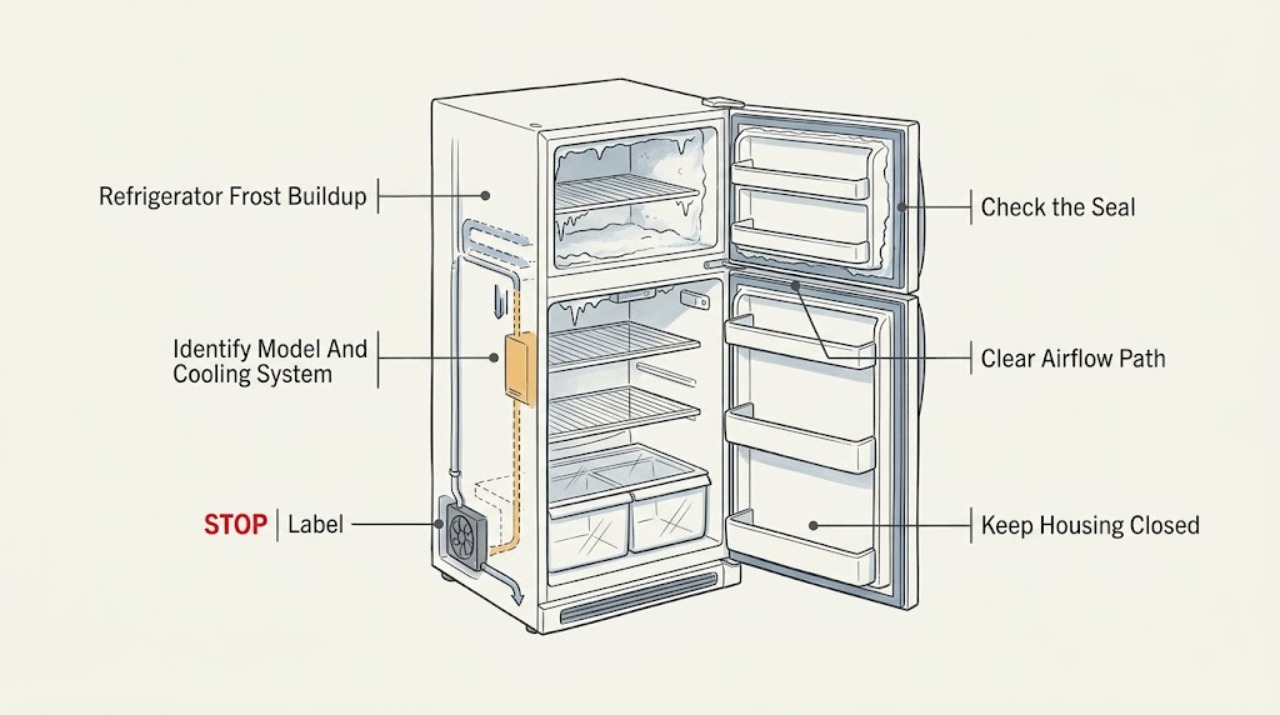
First identify the Daewoo model and whether it uses Direct/Lil-Frost, Frost Free, or High-Tech No Frost cooling; the official Daewoo catalog shows that these systems and features differ by model. A light, localized frost layer can follow frequent or prolonged door opening, a package preventing the door from sealing, warm or uncovered food, or blocked air circulation. Check the door and gasket contact, visible obstructions, loading around air outlets, and whether frost is concentrated at the door edge, rear wall, or one small area. Do not assume a No Frost unit should be manually defrosted: Daewoo describes its No Frost/Frost Free systems as using automatic defrosting or preventing frost buildup, so recurring heavy frost, water pooling, a fan rubbing ice, or cooling loss points toward an internal defrost, drain, fan, sensor, heater, control, or sealed-cooling problem. Unplug before any permitted cleaning, never chip ice with a knife or heat gun, and arrange qualified Daewoo service for panels, heaters, wiring, fans, drains behind covers, or persistent frost.
Before you begin
Safety first
- This article covers model identification, visible door and gasket checks, user-accessible loading and airflow observations, visible moisture symptoms, and exact-manual-directed maintenance only. A qualified technician must handle hidden drains, evaporator panels, defrost heaters, fans, sensors, controls, wiring, compressors, and refrigerant systems.
Work through in order
Diagnostic checks
Use only checks that match the exact appliance or system and its official guide.
-
Check 1
Record the exact model and serial information and identify the stated cooling system from the product label, model page, or owner manual: Direct/Lil-Frost, Frost Free, or High-Tech No Frost. Photograph the frost location before disturbing it and note whether the refrigerator is otherwise cooling normally.
Expected result: The model is static or Lil-Frost, the model is Frost Free/No Frost, the model cannot be identified, or frost is light and localized versus thick, widespread, returning, or blocking a fan or shelf.
Next step: Use the exact model documentation. Continue with visible door, loading, and airflow checks for any model; for heavy frost on a Frost Free/No Frost model, plan service if it returns or affects cooling rather than repeatedly manual-defrosting it.
Stop if: Do not remove panels or select a heater, thermostat, sensor, drain, or fan part from a similar-looking Daewoo model.
Why this matters
Why: Defrost expectations and safe user maintenance depend on the cooling design. Light frost on a static system is not the same as heavy recurring frost on a system advertised as automatic or frost free. An unidentified model makes a generic timing or defrost instruction unsafe.
-
Check 2
Inspect the outside edge of the door or drawer and the accessible gasket contact without removing the gasket. Check for a food package, shelf, bin, ice container, or misaligned drawer preventing full closure. Look for a continuous gap, torn gasket, condensation, or frost concentrated around the opening, and note frequent or prolonged door openings or a recently loaded warm item.
Expected result: The door closes against the gasket all around, an obstruction or misalignment is visible, the gasket is torn or does not contact, or frost is concentrated near the door edge rather than spread across the rear wall.
Next step: Remove only the visible obstruction, rearrange a load that prevents closure, and close the door promptly. If the gasket is damaged, the door is misaligned, or frost persists after the external correction, arrange service and do not pry or replace the gasket without model instructions.
Stop if: Do not force the door, heat the gasket, drill or puncture ice, or remove hinges, panels, or electrical door switches.
Why this matters
Why: Warm humid room air entering through an obstruction, poor closure, or damaged gasket is a plausible external cause of edge frost. A sound-looking gasket does not clear an internal defrost or airflow fault, especially when frost is widespread or returns quickly.
-
Check 3
With power and doors otherwise undisturbed, inspect the user-accessible shelves, baskets, and cold-air openings. Move only packages visibly touching the rear wall, blocking a vent, or packed tightly against the door; cover warm or moist food and avoid overloading the compartment. Do not remove an air duct or rear cover to look behind it.
Expected result: Packages block a visible outlet or door path, moist or uncovered food is present, the cabinet is heavily packed, the airflow path is visibly open, or frost covers a rear wall or air outlet.
Next step: Correct only the visible loading and moisture conditions, then monitor the model's normal cooling behavior with doors closed. If frost blocks an outlet, cooling becomes uneven, or a fan rubs or stops, stop using the appliance as needed to protect food and arrange service.
Stop if: Do not chip frost from a hidden evaporator, insert tools into an air duct, touch a fan, or use heat to accelerate melting.
Why this matters
Why: Restricted circulation and added moisture can make localized frost or uneven cooling more likely. Frost covering an outlet or the rear wall on a Frost Free/No Frost model suggests that an internal airflow or defrost issue may already be present; a clear visible load does not diagnose the cause.
-
Check 4
Look only at the user-accessible cabinet floor, drain opening if the exact manual identifies one, and area beneath drawers. Note water pooling, a recurring sheet of ice at the bottom, an overflow into the refrigerator, or frost that melts and refreezes in one channel. Do not push a wire, chemical, or sharp object into a drain and do not pour water near electrical components.
Expected result: The cabinet is dry, water or ice repeatedly collects at the bottom, a visible drain opening is obstructed by accessible debris, or water appears near a lamp, control, or wiring.
Next step: Clean only an exact-manual-approved accessible surface with power disconnected and dry hands. For recurring pooling, hidden drain access, overflow, or water near electrics, stop and arrange qualified service.
Stop if: Do not probe the drain, remove the evaporator cover, tilt the appliance, disconnect tubing, or continue operation through a water or electrical hazard.
Why this matters
Why: Pooling or a recurring bottom ice sheet can be consistent with a restricted drain or defrost-water path, but a hidden drain blockage, frozen drain, or drain-pan issue cannot be safely distinguished from outside. Water near electrics is an immediate hazard.
-
Check 5
Use the exact model manual to determine whether a user-permitted manual defrost is specified and what the safe shutdown and food-storage procedure is. For a Direct/Lil-Frost model, follow only that documented procedure; for a Frost Free or High-Tech No Frost model, treat recurring heavy frost as a fault signal rather than a routine request to repeatedly defrost. Keep the appliance unplugged during any permitted cleaning and never use sharp tools or direct heat.
Expected result: The manual explicitly permits a user defrost, the model is advertised as automatic/frost free, the frost is light and removable without force, or the frost is thick, recurring, or accompanied by poor cooling.
Next step: Carry out only the exact manual's low-risk defrost and cleaning steps when applicable. If heavy frost returns, blocks airflow, or is on an automatic system, protect food and arrange service for internal diagnosis.
Stop if: Do not improvise a defrost duration, energize a heater, use a heat gun or hair dryer, or restart an appliance with water around electrical parts.
Why this matters
Why: Some Daewoo cooling systems require or minimize manual defrosting, while the official No Frost/Frost Free descriptions claim automatic defrosting or prevention of frost buildup. A temporary melt may hide an internal defrost, drain, fan, sensor, heater, or control fault without repairing it.
-
Check 6
After the visible checks, document the frost pattern, time until it returns, freezer and refrigerator temperature trend, door and gasket condition, airflow and fan sounds, bottom-water symptoms, cooling-system type, and any display or alarm message. Do not attempt to test the defrost heater, thermostat, thermistor, drain heater, fan motor, control board, wiring, compressor, or refrigerant circuit.
Expected result: Frost stops after a visible door or loading correction, frost returns on an automatic system, the fan rubs or stops, water repeatedly pools, cooling is poor, or a smell, trip, leak, or display fault is present.
Next step: Arrange Daewoo technical service or a qualified refrigerator technician, providing the exact model and photos or timeline. Protect perishable food and stop operation for electrical, water, or temperature hazards.
Stop if: Do not open panels, perform live tests, bypass safety switches, handle refrigerant, or keep cycling the appliance to melt and hide recurring frost.
Why this matters
Why: Improvement after a visible seal or loading correction supports excess moisture entry or restricted airflow. Recurring frost, fan interference, pooling, or cooling loss makes an internal defrost, drain, airflow, sensor, heater, control, or sealed-system fault more likely, but the symptom cannot identify a part safely.
Use your observations
Decision map
Find the observation that best matches what you see, then follow the next safe action.
-
PATH 01Safety boundary
What you see
Frost is concentrated at the door edge or gasket, and a package, drawer, frequent opening pattern, poor closure, or visible gasket gap is present.
Do this next
Correct only the visible obstruction or loading issue and monitor with the door closed. Arrange service for a torn gasket, misaligned door, or frost that returns after the correction.
Why this path and its safety boundary
Why it matters: Moist room air entering through the closure is more likely than a primary hidden defrost failure.
Safety stop: Do not force, heat, puncture, or remove the gasket or door switch.
-
PATH 02Safety boundary
What you see
Frost covers the rear wall or a cold-air outlet, cooling is uneven, or the fan makes a rubbing sound while visible loading and door closure are normal.
Do this next
Move only visible packages away from outlets, do not access hidden covers, and arrange service if the frost or fan symptom persists or cooling declines.
Why this path and its safety boundary
Why it matters: Restricted airflow or an internal defrost/fan condition is more likely than a simple door-opening issue, particularly on Frost Free or No Frost models.
Safety stop: Do not touch the fan, chip the evaporator, insert tools into vents, or use direct heat.
-
PATH 03Safety boundary
What you see
Water or a recurring ice sheet collects under drawers or at the cabinet floor, especially after frost melts.
Do this next
Keep water away from electrical areas and arrange service for a recurring pool, hidden drain, or overflow. Clean only a surface the exact manual explicitly makes user-accessible.
Why this path and its safety boundary
Why it matters: A restricted or frozen defrost-water path, drain-pan issue, or hidden overflow is possible; the visible symptom does not identify a safe user repair.
Safety stop: Do not probe or flush a hidden drain, remove panels, tilt the refrigerator, or disconnect tubing.
-
PATH 04Safety boundary
What you see
The exact model uses Direct/Lil-Frost cooling and has a thin, localized layer that does not block the door, shelves, or airflow and cooling remains normal.
Do this next
Follow the exact owner manual for permitted manual defrost and cleaning, keep food protected, and monitor whether frost returns unusually quickly or cooling changes.
Why this path and its safety boundary
Why it matters: The layer may be consistent with the model's defrost design or moisture entry rather than an immediate internal failure.
Safety stop: Do not assume this branch applies to a Frost Free/No Frost model and do not use metal tools or direct heat.
-
PATH 05Safety boundary
What you see
The model is Frost Free or High-Tech No Frost, but heavy frost returns after a permitted defrost, blocks a vent, affects cooling, or appears with a fan, alarm, or temperature symptom.
Do this next
Stop repeated manual defrost cycles and arrange qualified Daewoo service with the model and frost timeline. Protect food if temperatures are rising.
Why this path and its safety boundary
Why it matters: An internal defrost, drain, fan, temperature-sensing, control, or sealed-cooling issue is more likely because the documented system is designed to prevent or automatically remove frost.
Safety stop: Do not open panels, replace a heater or sensor, test wiring, or work on the refrigerant circuit.
-
PATH 06Safety boundary
What you see
Water reaches electrical areas, the cord is hot or damaged, there is smoke, burning odor, sparking, repeated breaker tripping, or food is warming beyond safe handling.
Do this next
Stop using the refrigerator. Disconnect power and close the water supply only if safe without touching the hazard, move food if possible, and arrange qualified service.
Why this path and its safety boundary
Why it matters: The immediate priority is electrical, fire, shock, water, or food safety, not frost removal.
Safety stop: Do not touch wet electrics, keep restarting the appliance, scrape ice near wiring, or attempt live testing.
Helpful context
Understand the symptom
Frost is not the same diagnosis on every Daewoo refrigerator
Daewoo sells refrigerators with different cooling and defrost designs. An opened CKN0287EWEA0-EU product page identifies Frost Free technology and automatic defrosting, while an opened FKM360FWR1UA page identifies No Frost and fan-distributed dry cold air; other Daewoo models use Lil-Frost or static/direct cooling. Frost on a static freezer can be a maintenance condition, while heavy or recurring frost on a Frost Free/No Frost model is a stronger reason to seek service. Use the exact model page and owner manual before choosing any defrost or control procedure.
Keep panels, heaters, fans, drains, and wiring professional
Unplug the refrigerator before cleaning or a model-permitted manual-defrost operation, and keep water away from lamps, controls, and other electrical parts. Never use a knife, metal scraper, heat gun, hair dryer, or mechanical device to attack ice. Do not remove evaporator or rear panels, touch a defrost heater or fan, clear a hidden drain with a probe, bypass a door switch, test live wiring, or handle refrigerant. Stop immediately for smoke, burning odor, sparking, a hot or damaged cord, water near electrics, repeated breaker trips, or food becoming unsafe, and arrange qualified service.
Safety boundary
Stop conditions
- Stop immediately for smoke, burning odor, sparking, a hot or damaged cord, repeated electrical trips, water near electrical components, unsafe food temperature, or a suspected refrigerant leak; disconnect power or close the water supply only if safe.
- Do not use knives, metal scrapers, heat guns, hair dryers, mechanical devices, or direct heat to remove frost or accelerate defrosting.
- Do not remove evaporator or rear panels, probe drains, touch fans or heaters, bypass door switches, test live wiring, disconnect tubing, or handle refrigerant.
- Recurring heavy frost, fan interference, water pooling, cooling loss, or a frost complaint on a Frost Free/No Frost model requires Daewoo or qualified refrigerator service.
When checks do not resolve it
Need a professional?
Safety scope: This article covers model identification, visible door and gasket checks, user-accessible loading and airflow observations, visible moisture symptoms, and exact-manual-directed maintenance only. A qualified technician must handle hidden drains, evaporator panels, defrost heaters, fans, sensors, controls, wiring, compressors, and refrigerant systems.
Common questions
FAQ
Why is my Daewoo refrigerator building up frost?
Start with the exact cooling design. A door that does not seal, frequent opening, warm or uncovered food, and blocked airflow can add moisture and create localized frost. Heavy recurring frost on a Frost Free or No Frost model, especially with poor cooling, fan noise, or water pooling, needs service for an internal defrost, drain, fan, sensor, heater, or control problem.
Does a Daewoo No Frost refrigerator need manual defrosting?
Daewoo describes High-Tech No Frost and Frost Free systems as using automatic defrosting or eliminating the need for manual defrosting. If heavy frost still returns, do not make repeated manual defrosting the repair; use the exact model documentation and arrange service for the underlying defrost, drain, airflow, or control fault.
Can a bad door seal cause frost in a Daewoo freezer?
Yes. A visible gap, obstruction, misaligned drawer, or damaged gasket can let humid air enter and create frost around the opening. Correct only a visible loading or closure issue; a damaged seal, persistent gap, or frost that returns after correction should be handled with model-specific service.
Why is ice forming at the bottom of my Daewoo refrigerator?
A recurring bottom ice sheet or water pool can follow meltwater that is not draining correctly, but the hidden drain and defrost path cannot be diagnosed safely from outside. Keep water away from electrical parts, do not probe the drain, and arrange qualified service if the symptom returns.
When should I call a Daewoo refrigerator technician for frost buildup?
Call when frost is heavy or recurring on an automatic Frost Free/No Frost model, blocks an air outlet or fan, causes uneven cooling, produces repeated bottom-water symptoms, or would require a panel, heater, sensor, drain, fan, wiring, compressor, or refrigerant access. Stop immediately for smoke, sparking, a hot cord, water near electrics, repeated trips, or unsafe food temperatures.
Read the exact guide
Official sources
- Technical Service and WarrantyDaewoo · Official Daewoo Europe support page; service coverage and contact options vary by country and model.
- DAEWOO CKN0287EWEA0-EU 54 CM Fridge-Freezer with E Class, 278 LDaewoo · Official product page for CKN0287EWEA0-EU only; its automatic-defrost and ice-tray details are not universal to other Daewoo refrigerators.
- DAEWOO CFN0491EPPA0-EU 70 CM NF Upright Freezer with E Class, 406 LDaewoo · Official upright-freezer product page, used only as another example of Daewoo No Frost feature labeling and not as a refrigerator-specific repair procedure.
- Холодильник Daewoo FKM360FWR1UADaewoo Electronics Ukraine · Official product page for FKM360FWR1UA only; its No Frost and fan-airflow descriptions are model examples, not universal Daewoo specifications.
- Cooling TechnologiesDaewoo · Official Daewoo technology overview; a model may use only one of the listed systems, so the exact model documentation controls.
Community feedback
Share a repair observation
Share a plain-text repair observation. Accepted observations are published automatically; this page may take a moment to update.