
On this page
Start here
Quick answer
Protect the floor, close the refrigerator water shutoff, and find the first wet point. Check the accessible supply line, filter seating, and dispenser area. A cracked line, concealed leak, or water near electrical parts needs the appliance kept off and service.
Before you begin
Safety first
- Do not touch wet electrical parts or work on refrigerant systems.
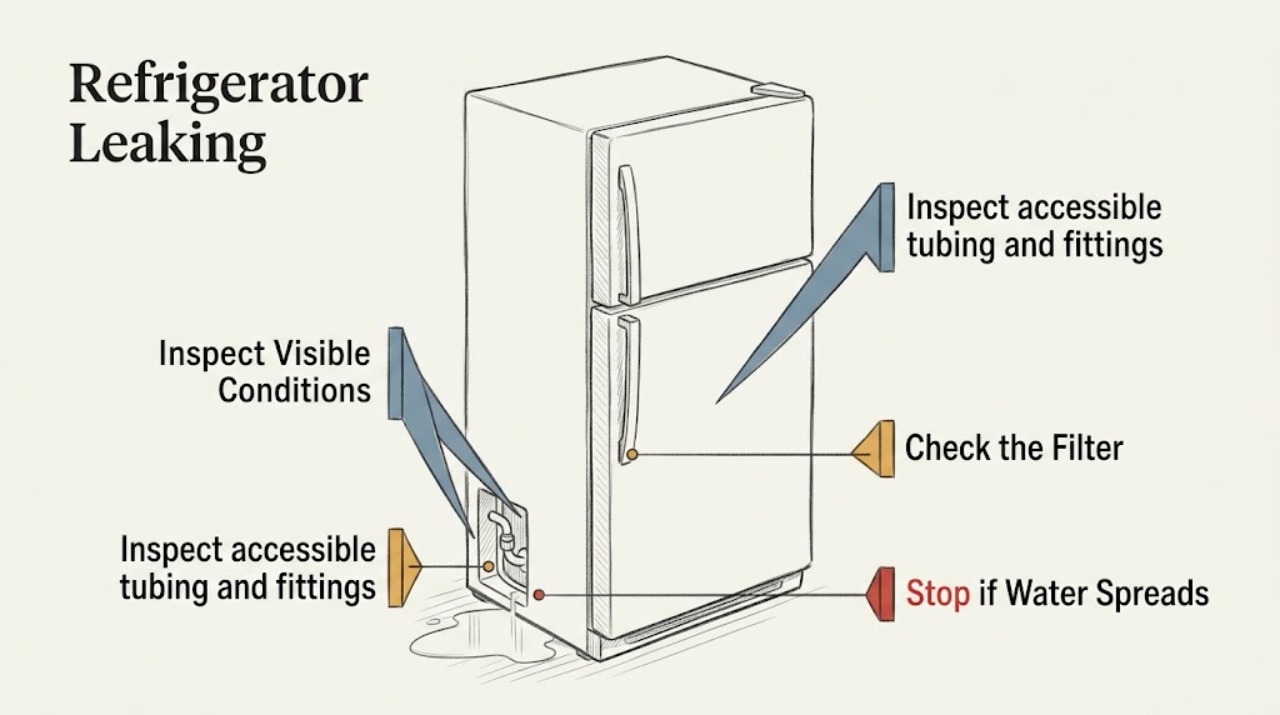
Work through in order
Diagnostic checks
Use only checks that match the exact appliance or system and its official guide.
-
Check 1
Close the water shutoff and wipe dry, then observe whether water returns at the back, filter, dispenser, or inside the cabinet.
Expected result: The first wet point is an accessible connection/filter or a concealed area.
Next step: Keep water off until the source is identified; do not pull a built-in unit if connections could be damaged.
Why this matters
Why: Location separates water-supply and filter issues from internal or drain problems.
-
Check 2
Inspect accessible tubing and fittings for cracks, kinks, or seepage using a dry paper towel.
Expected result: A line is cracked or a fitting wets the towel.
Next step: Leave the shutoff closed and have the connection replaced or serviced; do not improvise a pressurized-line repair.
Why this matters
Why: KitchenAid identifies damaged tubing and connection points as leak sources.
-
Check 3
If fitted, inspect the water filter and its O-rings for damage and reseat it only according to the exact model instructions.
Expected result: The filter is cracked, missing an O-ring, or not fully seated.
Next step: Use the model-approved installation procedure and test once with the area dry; stop if it leaks again.
Why this matters
Why: An incorrectly installed or damaged filter can leak from the filter area.
Use your observations
Decision map
Find the observation that best matches what you see, then follow the next safe action.
-
PATH 01Next step
What you see
Water returns at a filter or accessible line connection
Do this next
Keep water off, correct only the approved external condition, and retest once.
Why this path and its safety boundary
Why it matters: A filter-seating or supply-line issue is more likely.
-
PATH 02Next step
What you see
The source is concealed or the leak persists
Do this next
Keep the appliance off as needed and request qualified service.
Why this path and its safety boundary
Why it matters: An internal water, drain, or component fault remains possible.
When checks do not resolve it
Need a professional?
Arrange service for a cracked line, concealed, or persistent leak.
Safety scope: Do not touch wet electrical parts or work on refrigerant systems.
Common questions
FAQ
Should I leave the water supply on during a refrigerator leak?
No. Close the accessible shutoff while locating the source, especially if water is spreading or near electrical parts.
Can a water filter leak?
Yes. KitchenAid says a damaged or incorrectly seated filter can leak. Follow the exact model instructions and stop if it leaks again.
Read the exact guide
Official sources
- Leaking from Bottom - Built-In RefrigeratorKitchenAid Product Help · KitchenAid built-in refrigerators
- What to Do if There is Water on the FloorKitchenAid Product Help · KitchenAid full-size refrigerators
- How to Check the Water Supply LineKitchenAid Product Help · KitchenAid refrigerator water connections
Community feedback
Share a repair observation
Share a plain-text repair observation. Accepted observations are published automatically; this page may take a moment to update.