
On this page
Start here
Quick answer
First locate whether the water is behind the crisper drawers, on the floor under the refrigerator, or at a plumbed dispenser connection. A blocked defrost drain commonly leaves a puddle inside; an unbalanced refrigerator can spill its drain pan; frost, a door that does not seal, or a water connection can create other leak paths. Clear only an accessible drain outlet as your Beko manual allows, keep water away from electrical parts, and arrange authorized service for an active leak, a damaged seal or tray, a concealed connection, or a leak that returns.
Before you begin
Safety first
- Do not tip or pull out a built-in refrigerator alone, remove sealed-system or rear covers, disconnect hidden water lines, or touch wet electrical equipment.
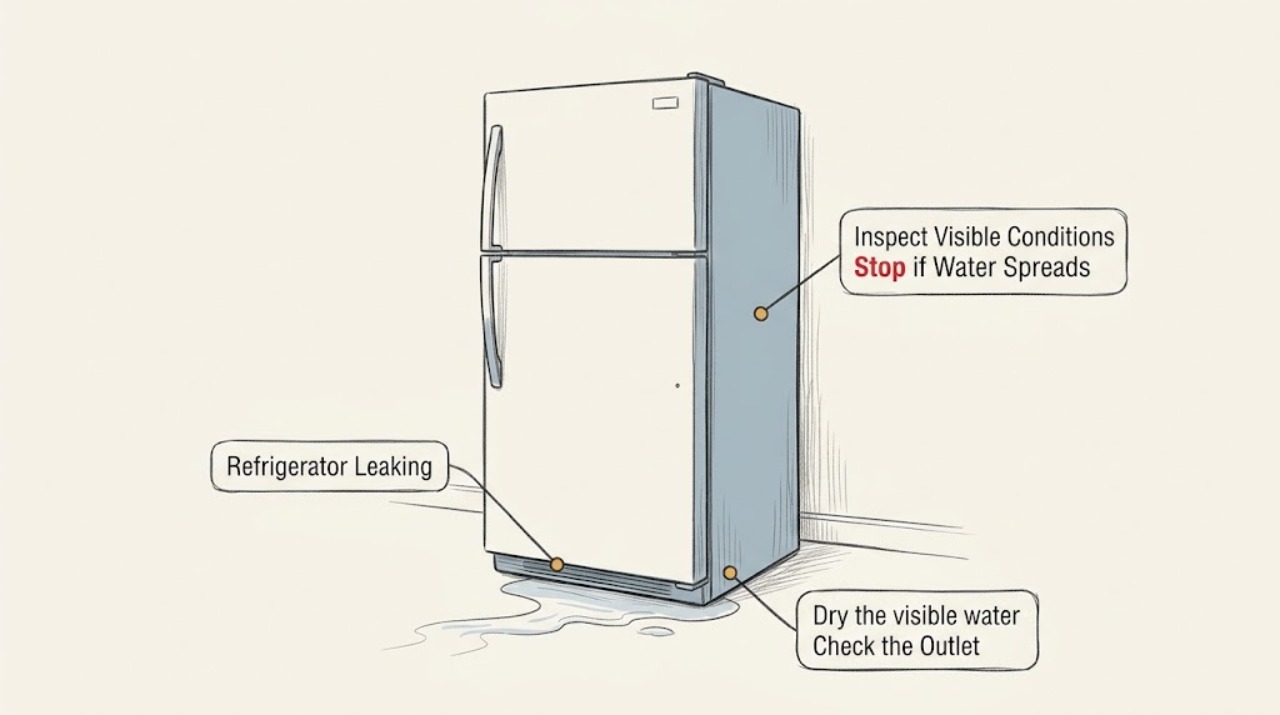
Work through in order
Diagnostic checks
Use only checks that match the exact appliance or system and its official guide.
-
Check 1
Dry the visible water with towels, then trace the first place it reappears: behind the crisper drawers, beneath the cabinet, at the rear, or around a water dispenser line.
Expected result: Water is confined to the interior bottom, appears on the floor, or is concentrated at a plumbed dispenser connection.
Next step: Continue with the matching accessible check below. If the leak is active, reaches an outlet or cord, or cannot be traced without moving the appliance, stop use and arrange authorized service.
Why this matters
Why: The location separates a defrost-drain or frost path from a drain-pan, leveling, or water-line path; a location that cannot be seen safely needs service rather than a guessed repair.
-
Check 2
If the puddle is inside behind the crisper drawers, remove the drawers and inspect the defrost-drain outlet at the bottom of the compartment; clean only the accessible outlet with the supplied plunger or the method specified in your Beko manual.
Expected result: The drain area is blocked or water collects there again after it is cleared, or the outlet looks open and the puddle remains.
Next step: Clear only the visible, accessible obstruction and monitor one defrost cycle. If the puddle returns, do not insert tools farther into the appliance; arrange authorized service and use the model manual for any defrost procedure.
Why this matters
Why: A blockage can hold defrost water inside the cabinet. Recurring water with an open outlet suggests a deeper restriction, excess frost, or another internal fault rather than a surface spill.
-
Check 3
If water is on the floor under the refrigerator, look for a full or displaced drain pan and check from a safe standing position whether the cabinet rocks; do not move a built-in or heavy appliance without help.
Expected result: The refrigerator rocks, the pan is visibly displaced or damaged, or the pan looks secure and the floor still becomes wet.
Next step: For a freestanding model, use the leveling-foot procedure in the Beko manual only if it can be done without tipping or moving the unit unsafely. Otherwise stop and arrange service; do not reach behind a running refrigerator near a hot compressor.
Why this matters
Why: An unbalanced cabinet can spill defrost water from its pan. A damaged or inaccessible pan, or a floor leak with no visible pan problem, needs a technician to inspect the appliance safely.
-
Check 4
If the refrigerator has a plumbed water dispenser or ice maker, inspect only the visible water-line connections for drips, a loose-looking fitting, or an obstruction, using the connection locations shown in the exact user manual.
Expected result: A visible connection is wet, or all visible connections are dry while water still appears around the dispenser or rear of the cabinet.
Next step: Do not disconnect or tighten a hidden line as a trial repair. Close the appliance's accessible water supply if the manual provides one and arrange authorized service for a continuing dispenser or ice-maker leak.
Why this matters
Why: A wet visible fitting can identify the leak path, but model-specific line routing means a dry accessible fitting does not rule out a concealed connection or internal line fault.
-
Check 5
Inspect the refrigerator door seal for gaps, cracks, or tears and check that food is not preventing the door from closing; wipe a dirty seal with a soft cloth and warm water.
Expected result: The seal closes evenly, or a gap, damaged section, or persistent frost buildup is visible near the wet area.
Next step: Remove only the obstruction and let the seal dry. Follow the Beko manual for any defrost procedure; if the seal is damaged or frost and water return, contact an authorized service agent.
Why this matters
Why: A door that admits warm air can increase condensation and frost, which can overwhelm normal drainage. A loose or cracked seal is a repair issue rather than a drain-cleaning issue.
-
Check 6
Check whether the moisture is only a light film or a few drops on the rear wall, and note whether the refrigerator was newly connected, left open, or loaded with hot food.
Expected result: Moisture is limited to the rear wall and does not form a growing puddle, or it is excessive and spreads to shelves or the floor.
Next step: Keep items from touching the rear wall and avoid leaving the door open. If water is excessive, recurring, or affecting food storage, follow the relevant checks and arrange service if they do not resolve it.
Why this matters
Why: Limited rear-wall droplets can be normal condensation and defrost water. Excess moisture or a spreading leak points to drainage, frost, door-seal, leveling, or water-line trouble.
Use your observations
Decision map
Find the observation that best matches what you see, then follow the next safe action.
-
PATH 01Next step
What you see
Water forms behind the crisper drawers and the defrost-drain outlet is visibly blocked.
Do this next
Clear only the accessible outlet with the method allowed by the Beko manual, then monitor it. If the puddle returns or the restriction is deeper, arrange authorized service.
Why this path and its safety boundary
Why it matters: A blocked condensation path is more likely than a floor-level drain-pan problem.
-
PATH 02Next step
What you see
The leak reaches the floor, the cabinet rocks, or the visible drain pan is displaced or damaged.
Do this next
Do not tip or move a heavy or built-in refrigerator alone. Use the manual's leveling procedure only when safe; otherwise arrange service and protect nearby flooring.
Why this path and its safety boundary
Why it matters: Defrost water may be spilling from the pan or the appliance may need safe leveling; a damaged or inaccessible pan is not an ordinary cleaning task.
-
PATH 03Next step
What you see
A plumbed dispenser or ice-maker area is wet but the interior drain and door seal look normal.
Do this next
Stop using the dispenser, close the accessible water supply if provided, and arrange authorized service rather than disconnecting hidden fittings.
Why this path and its safety boundary
Why it matters: The water-line path is more likely than defrost condensation, and the connection layout depends on the exact model.
-
PATH 04Next step
What you see
There is heavy frost, a damaged seal, frequent long door openings, or food touching the rear wall along with the moisture.
Do this next
Remove the obstruction, clean the seal gently, and follow the model manual for defrosting. Persistent frost, a torn seal, or renewed floor water needs authorized service.
Why this path and its safety boundary
Why it matters: Warm-air entry or diverted defrost water can be driving excess condensation and overwhelming the normal drain path.
-
PATH 05Next step
What you see
Water is near an outlet or cord, the leak is active and spreading, or its source cannot be reached safely.
Do this next
Stop using the refrigerator, keep clear of wet electrical equipment, and arrange qualified appliance service. Do not pull the appliance out or remove rear covers to continue troubleshooting.
Why this path and its safety boundary
Why it matters: The immediate priority is electrical and water safety, not further diagnosis from inside the cabinet.
Helpful context
Understand the symptom
Where the water appears is the useful clue
A small amount of moisture or a drop on the rear wall can be part of normal defrosting, but a growing puddle or water on the floor is not something to ignore. Start with the location of the water, then follow the matching check rather than opening the rear of the appliance or applying the same fix to every Beko model.
Protect the appliance and the floor
Keep food and hands clear while inspecting the cabinet. Do not pull a built-in refrigerator out alone, remove sealed-system covers, or disconnect a hidden water line. If water reaches an outlet, cord, or other electrical equipment, stop using the appliance and get qualified help rather than touching wet electrical parts.
When checks do not resolve it
Need a professional?
Contact authorized Beko service for an active or recurring leak, a damaged door seal or drain pan, a concealed dispenser connection, persistent frost with water, or any leak that cannot be traced through the accessible checks.
Safety scope: Do not tip or pull out a built-in refrigerator alone, remove sealed-system or rear covers, disconnect hidden water lines, or touch wet electrical equipment.
Have this ready
- Provide the model or article number, where the water first appears, whether the unit has a plumbed dispenser or ice maker, the condition of the door seal and frost, and whether the leak reaches the floor or electrical area.
Common questions
FAQ
Why is water pooling behind the crisper drawers in my Beko refrigerator?
The condensation drain may be blocked. Remove the drawers, inspect the accessible drain outlet, and clean it only with the supplied plunger or the method in your model manual. If water returns, arrange authorized service.
Why is my Beko refrigerator leaking onto the floor?
Check from a safe standing position for a full or displaced drain pan and whether the refrigerator rocks. A plumbed water connection or damaged pan is another possibility. Do not move a built-in or heavy appliance alone; arrange service if the source is not obvious.
Are a few drops on the rear wall of a Beko refrigerator normal?
A small amount of rear-wall moisture can be normal condensation and defrost water. It is not normal when moisture becomes a growing puddle, spreads to shelves or the floor, or occurs with heavy frost; then check drainage and door sealing and arrange service if it persists.
What should I do if the leak is near a Beko refrigerator's power cord or outlet?
Stop using the refrigerator and keep away from wet electrical equipment. Do not touch wet plugs, pull the appliance out, or remove rear covers; arrange qualified appliance service and address the electrical hazard safely.
Read the exact guide
Official sources
- Why is there water in the bottom of my fridge?Beko UK · Beko refrigerator internal and floor water, blocked drainage, frost, seals, and rear drip-pan checks
- How can I prevent condensation in my refrigerator?Beko · Beko refrigerator condensation, door-seal, frost, door-opening, and moisture guidance
- How to fix a refrigerator that's leakingBeko · Beko refrigerator leak-location, drain-pan, interior-drain, and plumbed water-connection guidance
Community feedback
Share a repair observation
Share a plain-text repair observation. Accepted observations are published automatically; this page may take a moment to update.