
On this page
Start here
Quick answer
If the KitchenAid refrigerator has power but food is warm, start with the cooling setting and the temperature symptom rather than replacing a part. Then restore air circulation, account for a recent load or hot room, and check accessible condenser care; persistent warmth after those checks needs service diagnosis.
Before you begin
Safety first
- Disconnect power before cleaning accessible areas. Do not open sealed refrigeration circuits, remove electrical covers, or test live wiring.
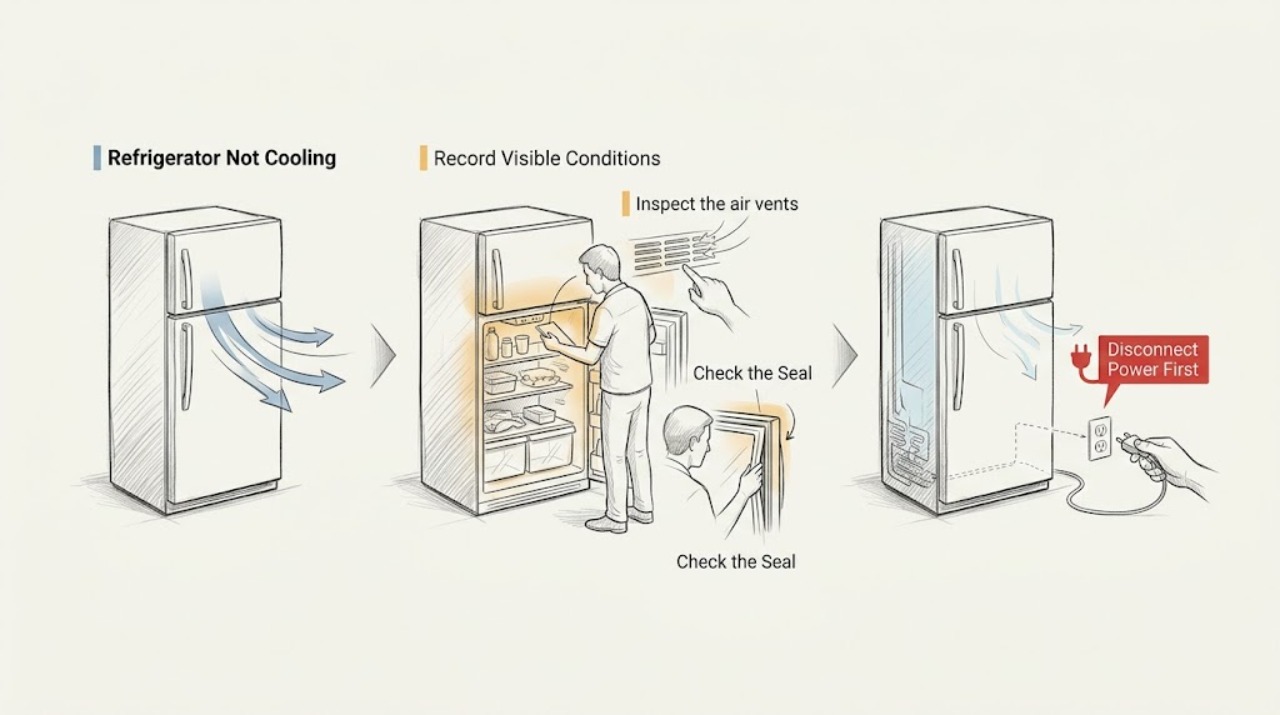
Work through in order
Diagnostic checks
Use only checks that match the exact appliance or system and its official guide.
-
Check 1
Confirm the refrigerator is powered and the cooling function is enabled, then record whether the refrigerator section, freezer section, or both are warm. Use the model's control instructions and do not repeatedly set the controls to their coldest position.
Expected result: The display/lights work but one section is warm, both sections are warm, or cooling was turned off/demo mode was selected.
Next step: Enable cooling if it was intentionally turned off, record the current settings, and continue with the compartment-specific airflow check.
Why this matters
Why: A powered unit with one warm compartment points first toward temperature distribution; both warm compartments or a disabled cooling function changes the next check.
-
Check 2
Inspect the air vents in both the freezer and refrigerator compartments. Move containers away from the supply and return paths, leave room between items and the rear wall, and note whether only the refrigerator section is warm.
Expected result: A vent is blocked or items are directly in the cold-air path, or the vents are open but the affected section remains warm.
Next step: Restore the documented clearance and reassess after the temperature has had time to stabilize. If both compartments remain warm, continue to the environment and condenser checks.
Why this matters
Why: KitchenAid explains that blocked airflow can create warm spots and that the shared freezer-to-refrigerator air path matters; clear vents with continued warmth point beyond loading.
-
Check 3
Check for a recent large grocery load, frequent/long door openings, unusually hot room, nearby heat source, or recent installation. Verify that the doors close and the gaskets seal without a bin or package in the way.
Expected result: The warm condition follows a recent load, installation, hot environment, or closure problem, or none of those conditions is present.
Next step: Allow the model-specific stabilization period after correcting the condition. If temperature does not recover, record the exact compartment and service history for a technician.
Why this matters
Why: The first group can temporarily lengthen recovery or admit warm air; a normal load, environment, and seal make a cooling-system diagnosis more likely.
-
Check 4
With power disconnected and only where the owner's instructions permit, inspect accessible condenser-coil and condenser-fan areas for heavy dust or an obviously obstructed fan. Do not remove covers or test energized wiring.
Expected result: The accessible area is heavily soiled or the fan does not appear to operate normally, or it is clear and unobstructed.
Next step: Clean only as directed by the model manual and retest once. If the fan remains abnormal, the refrigerator stays warm, or a circuit board/sealed-system fault is suspected, stop and request qualified service.
Why this matters
Why: KitchenAid identifies dirty coils and a failed or stuck condenser fan as possible cooling causes; a clear accessible area does not rule out a control or sealed-system fault.
Use your observations
Decision map
Find the observation that best matches what you see, then follow the next safe action.
-
PATH 01Next step
What you see
The freezer is cold but the refrigerator section is warm, and containers or food cover an air vent.
Do this next
Clear the vents and rear-wall space, then reassess after stabilization; do not place temperature-sensitive items directly in the air stream.
Why this path and its safety boundary
Why it matters: The temperature difference makes an obstructed shared-air path more likely than a total loss of cooling.
-
PATH 02Next step
What you see
Both sections are warm even though cooling is enabled, the outlet is stable, vents are clear, and no recent load or installation explains the change.
Do this next
Stop at accessible checks and arrange model-specific service with the recorded temperatures, settings, and observations.
Why this path and its safety boundary
Why it matters: The remaining possibilities include condenser airflow, controls, fan operation, or a sealed-system issue that cannot be identified safely from an external check.
-
PATH 03Next step
What you see
The refrigerator is powered and cooling returns after enabling the function or correcting a recent load/door condition.
Do this next
Keep the doors closed promptly, leave vents clear, and monitor one normal stabilization period; call service if the warm condition recurs without the same trigger.
Why this path and its safety boundary
Why it matters: An operating setting or temporary heat/moisture load was more likely than an immediate component failure.
When checks do not resolve it
Need a professional?
Request service when the refrigerator remains warm after cooling, airflow, environment, and permitted condenser checks, or when there is a leak, smoke, burning odor, repeated breaker trip, unusual grinding, or a returning fault code.
Safety scope: Disconnect power before cleaning accessible areas. Do not open sealed refrigeration circuits, remove electrical covers, or test live wiring.
Have this ready
- Provide the model number, which compartment is warm, observed temperatures if available, control state, door/vent findings, recent load or installation details, and any fan or noise observation.
Common questions
FAQ
Why is the refrigerator section warm while the freezer is cold?
Start by checking the shared air path: KitchenAid says blocked vents can reduce airflow between the freezer and refrigerator sections. Clear the vents and leave space around them before pursuing service.
Should I replace the condenser fan or control board because the refrigerator is warm?
No. KitchenAid lists a condenser fan and circuit board as possible causes, but the symptom alone does not identify either part. Check only accessible conditions allowed by the model instructions and use service diagnosis for a persistent fault.
Read the exact guide
Official sources
- Both Compartments are Not Cooling - Built-In RefrigeratorKitchenAid Product Help · KitchenAid refrigerator power, on/off state, and control checks
- Why Is My Fridge Not Cooling and How Can I Fix It?KitchenAid · KitchenAid refrigerator cooling causes, condenser coils, and condenser fan
- Refrigerator Section is Not Cooling - Built-In RefrigeratorKitchenAid Product Help · KitchenAid refrigerator airflow, loading, door use, and temperature recovery
- Tips for Properly Setting the Controls - Product Help | KitchenAidKitchenAid Product Help · KitchenAid refrigerator cooling controls and showroom mode
Community feedback
Share a repair observation
Share a plain-text repair observation. Accepted observations are published automatically; this page may take a moment to update.