
Repair problem
Not Cooling Troubleshooting Guides
Published FixGraph guidance for diagnosing and responding to not cooling.
Matching published guides
Choose a guide that matches the service, equipment, and conditions you are seeing.
-
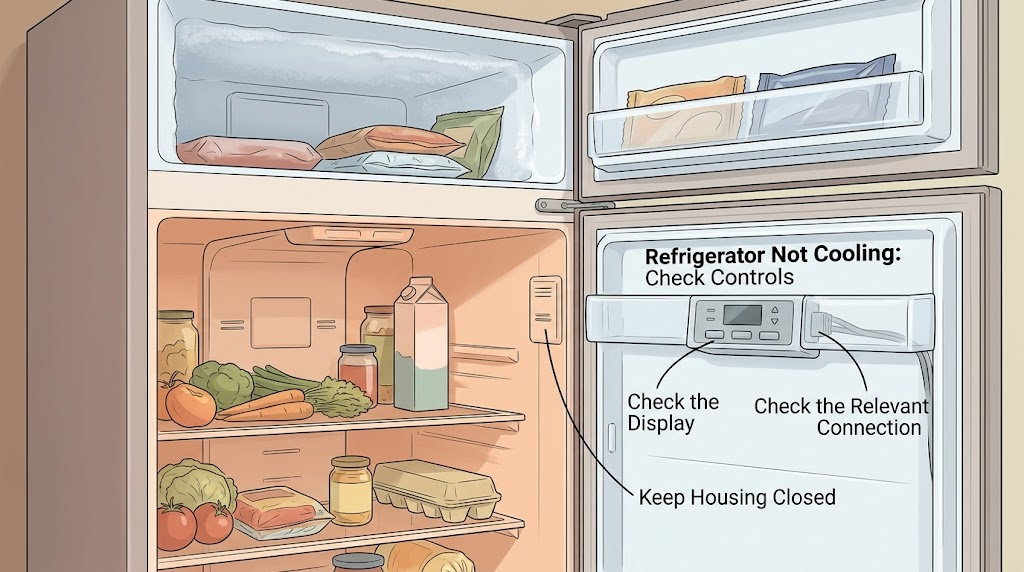
Admiral Refrigerator Not Cooling: Check Controls, Airflow, and Door Sealing
Start with the exact Admiral model and configuration: the brand's current refrigerator range includes single-door, top-mount, and side-by-side designs, so controls and airflow paths are not interchangeable. From a normal user position, verify that the refrigerator is powered and cooling is enabled, check the model's temperature setting, clear food from any labeled vents, and confirm the doors close against an intact gasket.
-
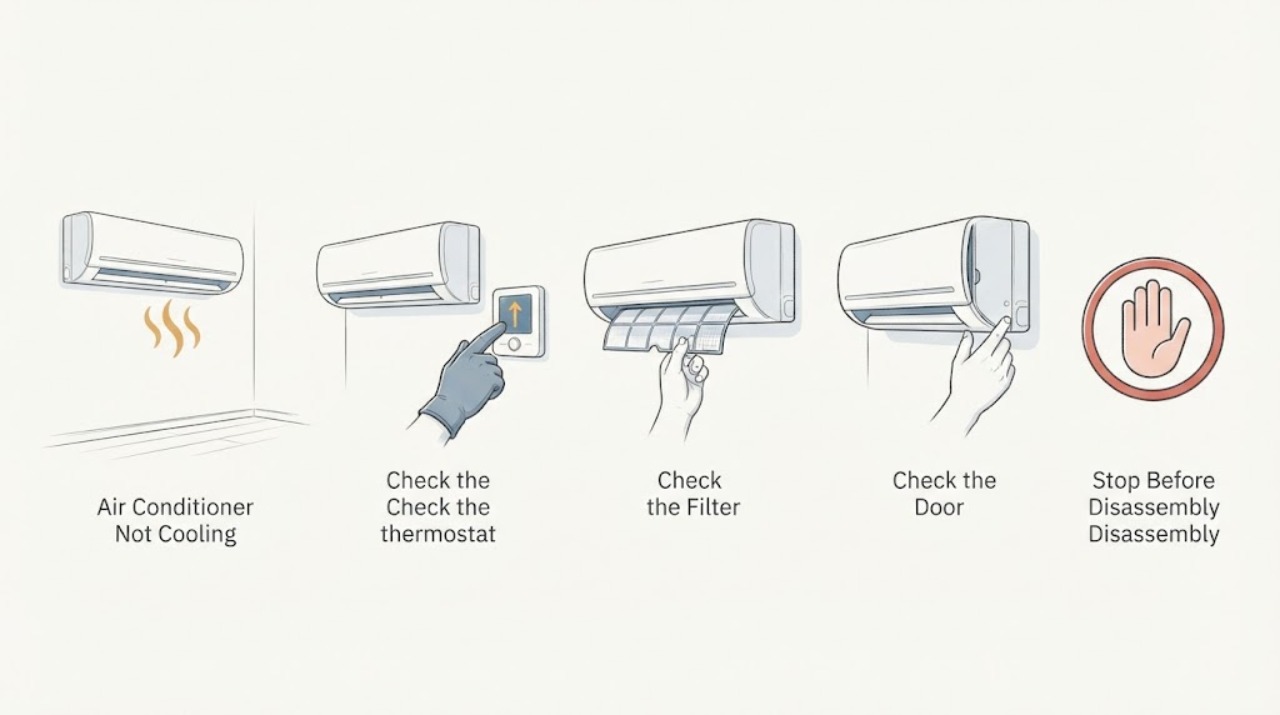
Air Conditioner Not Cooling
When an air conditioner is not cooling, first check the thermostat mode and setpoint, airflow through a clean filter, and visible debris around the outdoor condenser. Observe whether the indoor fan runs, whether the outdoor fan runs, and whether ice is present on lines or coils.
-
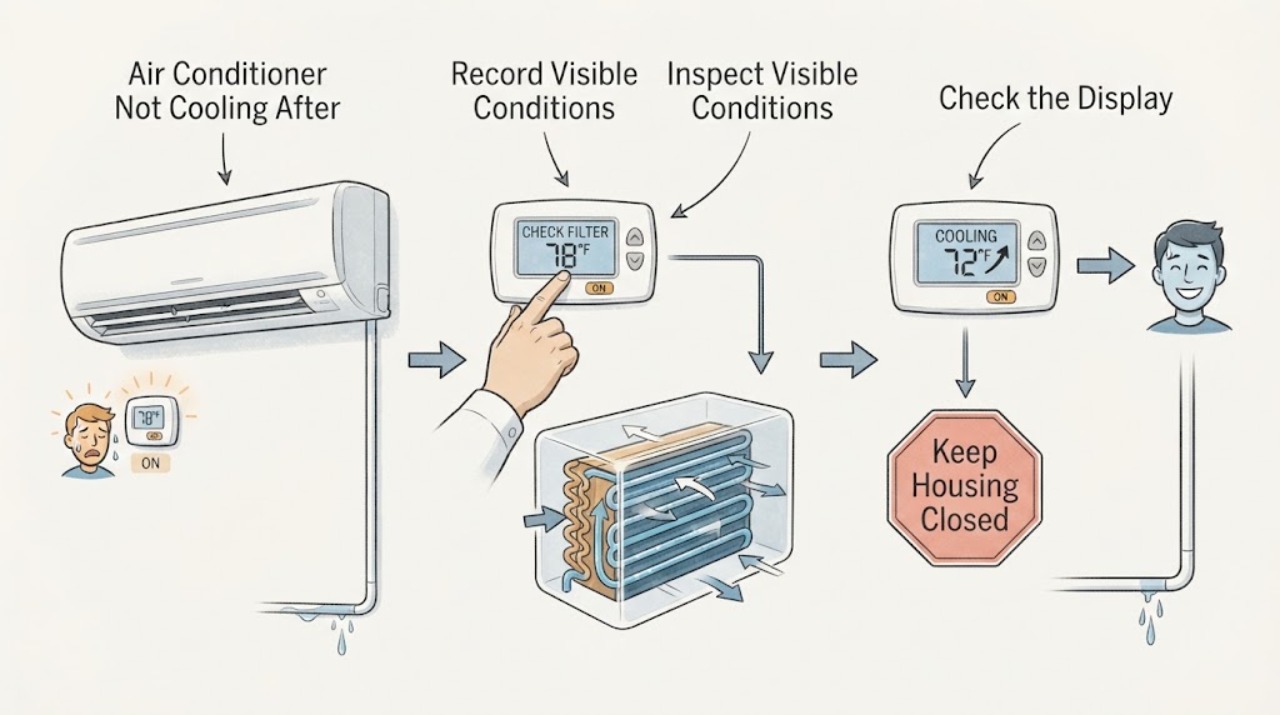
Air Conditioner Not Cooling After Evaporator Replacement: Safe Checks
If an air conditioner still does not cool after an evaporator coil was replaced, treat the timing as a post-installation commissioning or handoff issue first. Record whether cooling never returned or worked briefly, then check only the thermostat, filter, registers, visible ice, visible condensate, and outdoor-unit response from a safe position.
-
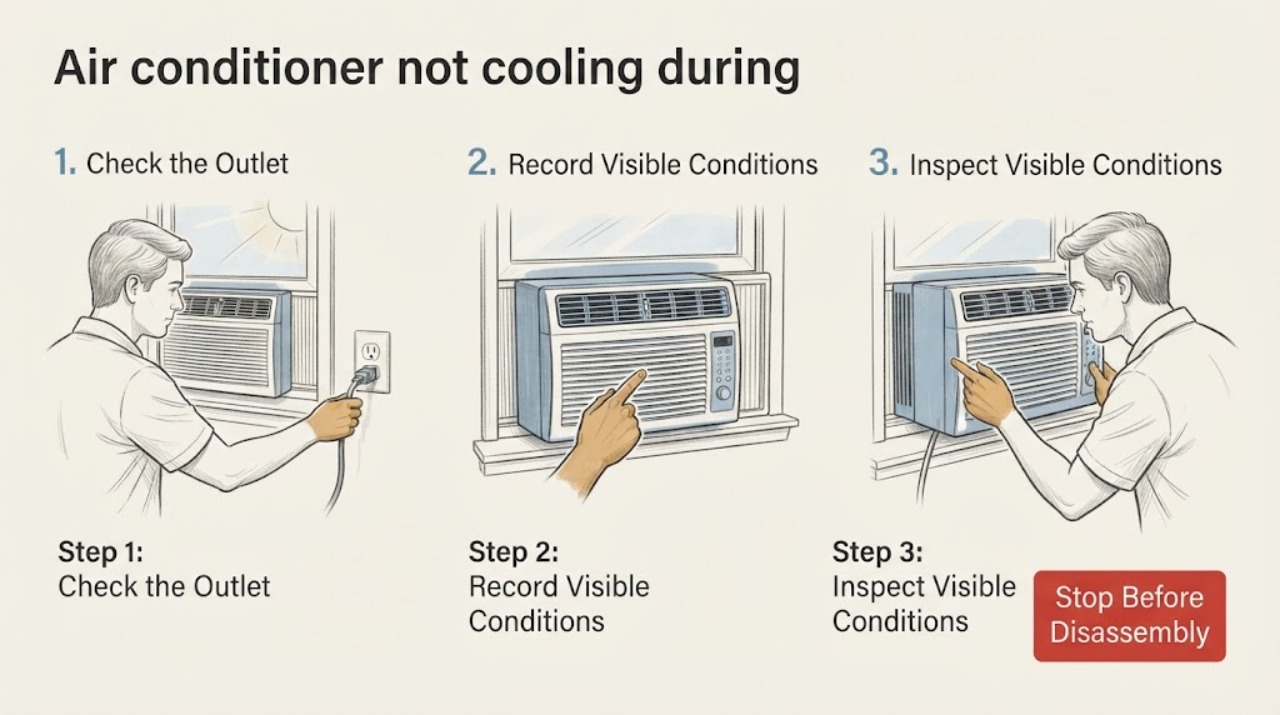
Air conditioner not cooling during the day but works at night
If an air conditioner cools at night but struggles during the day, the added daytime heat load may be exposing a capacity, airflow, outdoor-temperature, or system fault. First confirm that the mode and schedule are calling for cooling, then check the filter and visible indoor and outdoor airflow paths.
-
Air Conditioner Not Cooling Upstairs or Blowing Air Through Vents
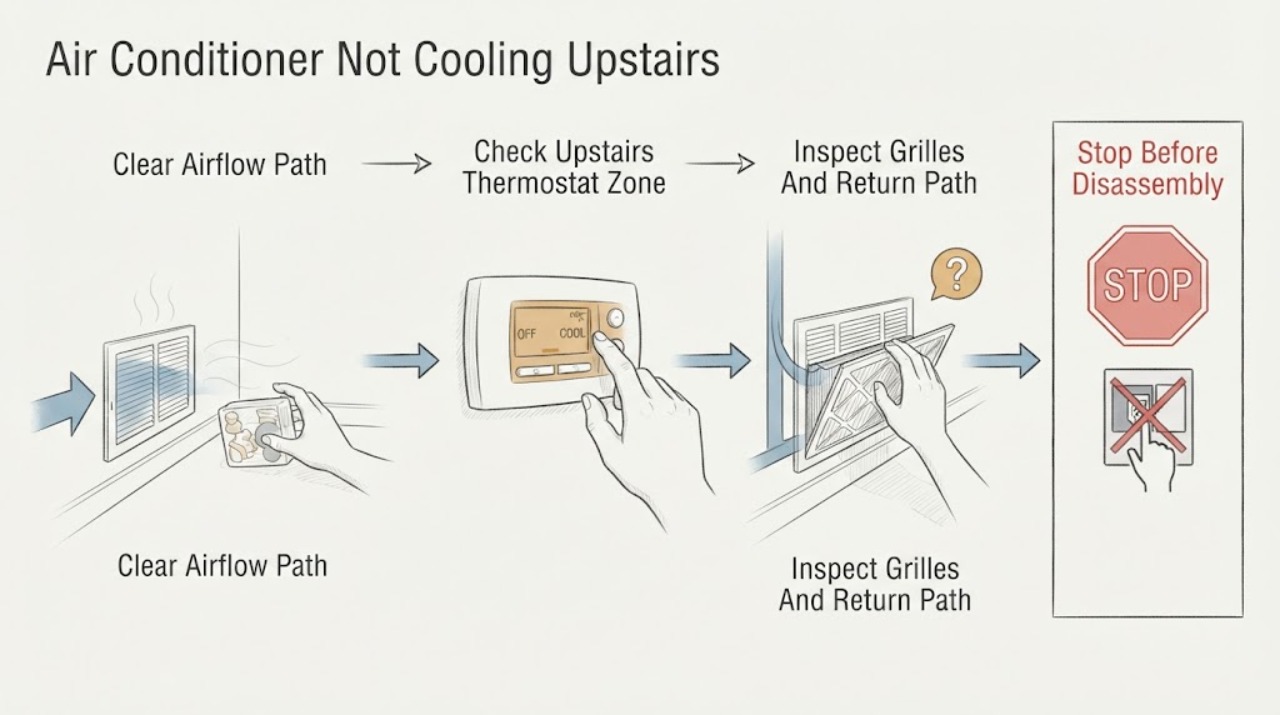
When an air conditioner cools downstairs but the upstairs rooms are not cooling or have little or no air from the vents, first determine whether the problem is airflow to the upstairs zone or whole-system cooling. Check the upstairs thermostat or zone call, keep supply and return grilles unobstructed, inspect the accessible filter, and compare airflow at several upstairs and downstairs registers.
-
Air Conditioner Not Cooling When in the Sun: Separate Heat Load from a Fault
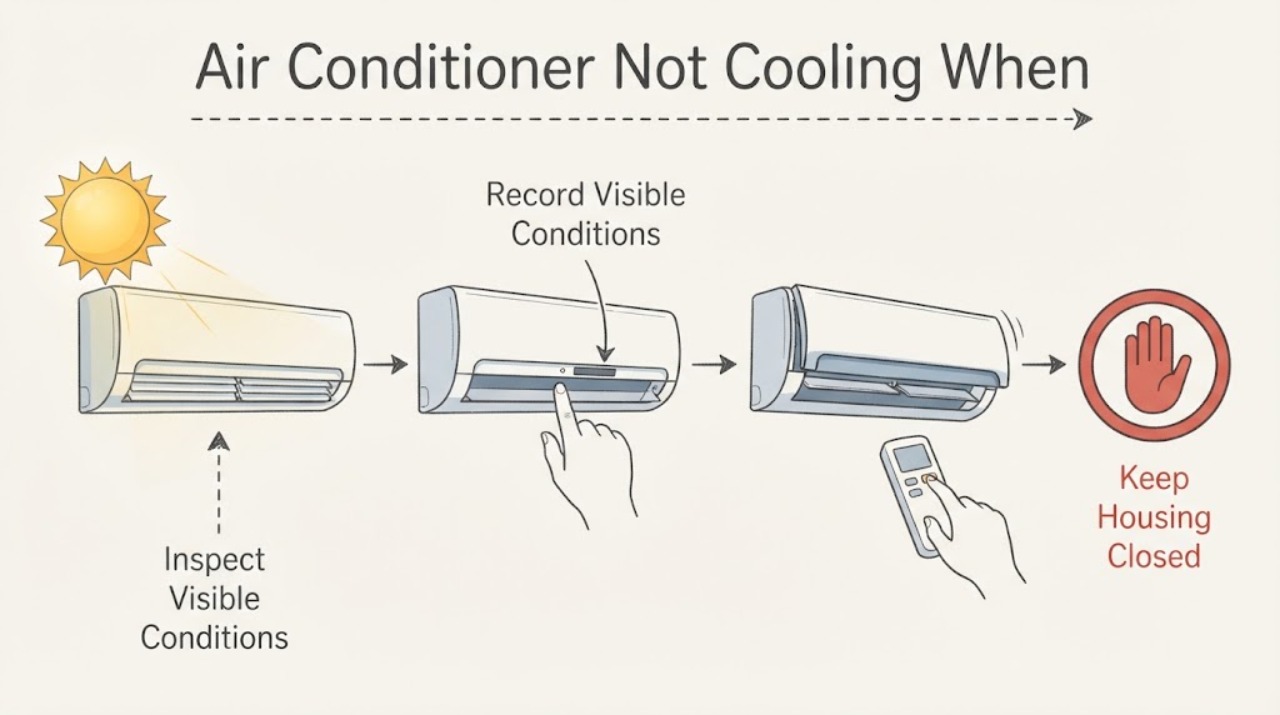
Direct sun can make a room or a sun-facing outdoor condenser work harder, but it should not by itself make a correctly operating air conditioner stop cooling. First determine whether this is a room AC, window unit, mini-split, or central split system, then compare thermostat readings, supply-air temperature by feel, run time, and whether the outdoor unit is operating.
-
Air Conditioner Not Cooling When the Outside Unit Is On but the House Is Not Cooling
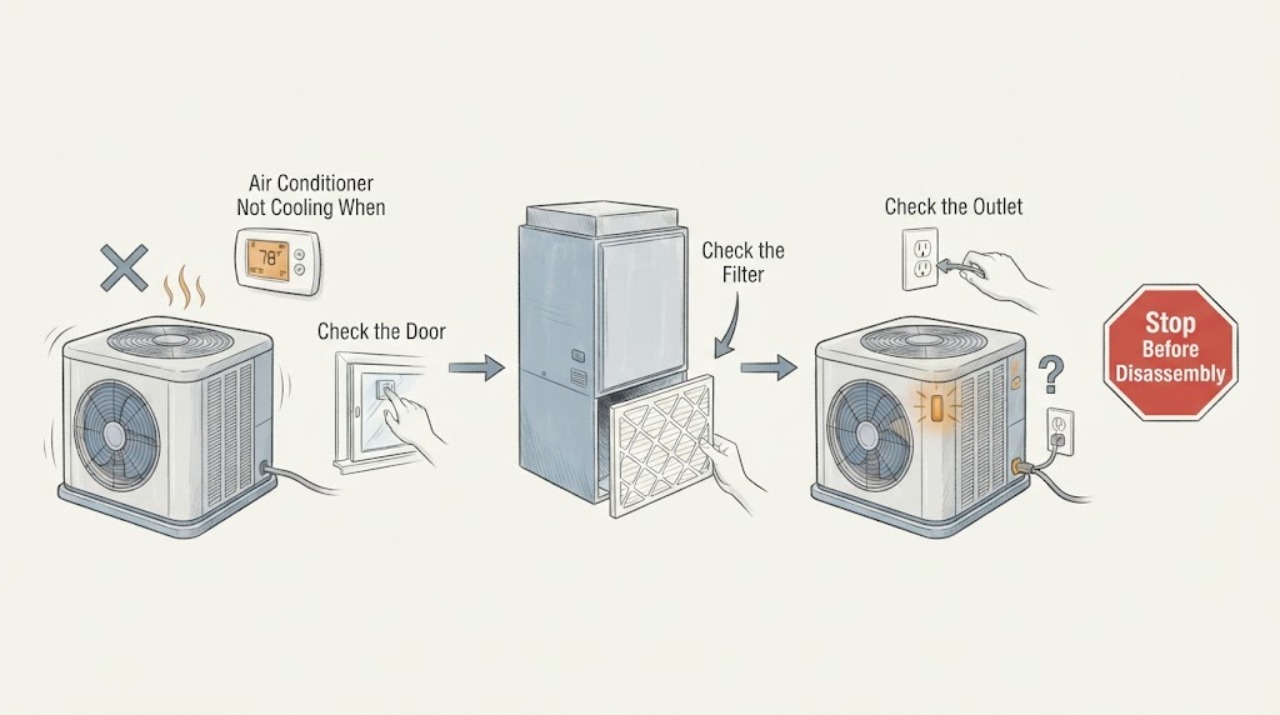
An outdoor unit running does not prove that the indoor blower is moving enough air or that the system is removing heat. Check the thermostat mode, indoor airflow, accessible filter, open registers, visible ice, condensate warning, and clear space around the outdoor unit.
-
Air Conditioner Not Cooling: Blower Motor and Airflow Checks
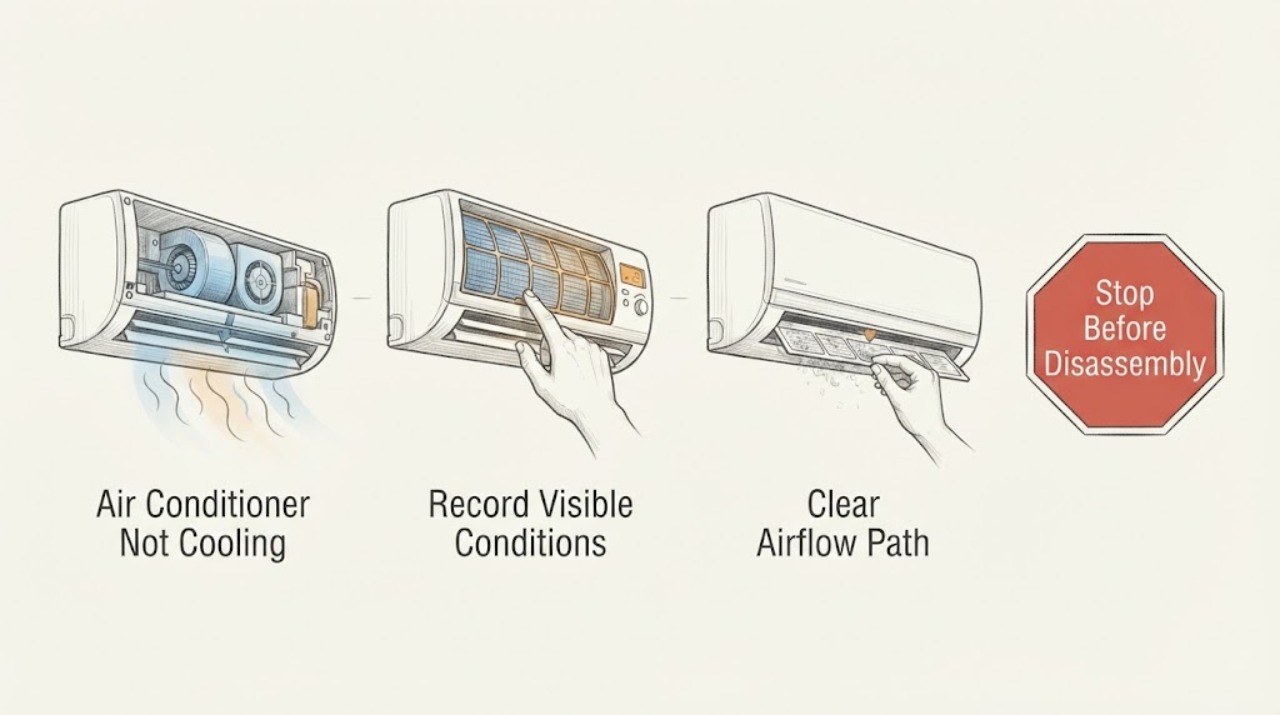
When an air conditioner is not cooling and the suspected component is the blower motor, first separate an airflow problem from a refrigeration problem. Check that the thermostat is calling for cooling, the indoor blower is moving air, and the return filter and supply registers are not blocked.
-
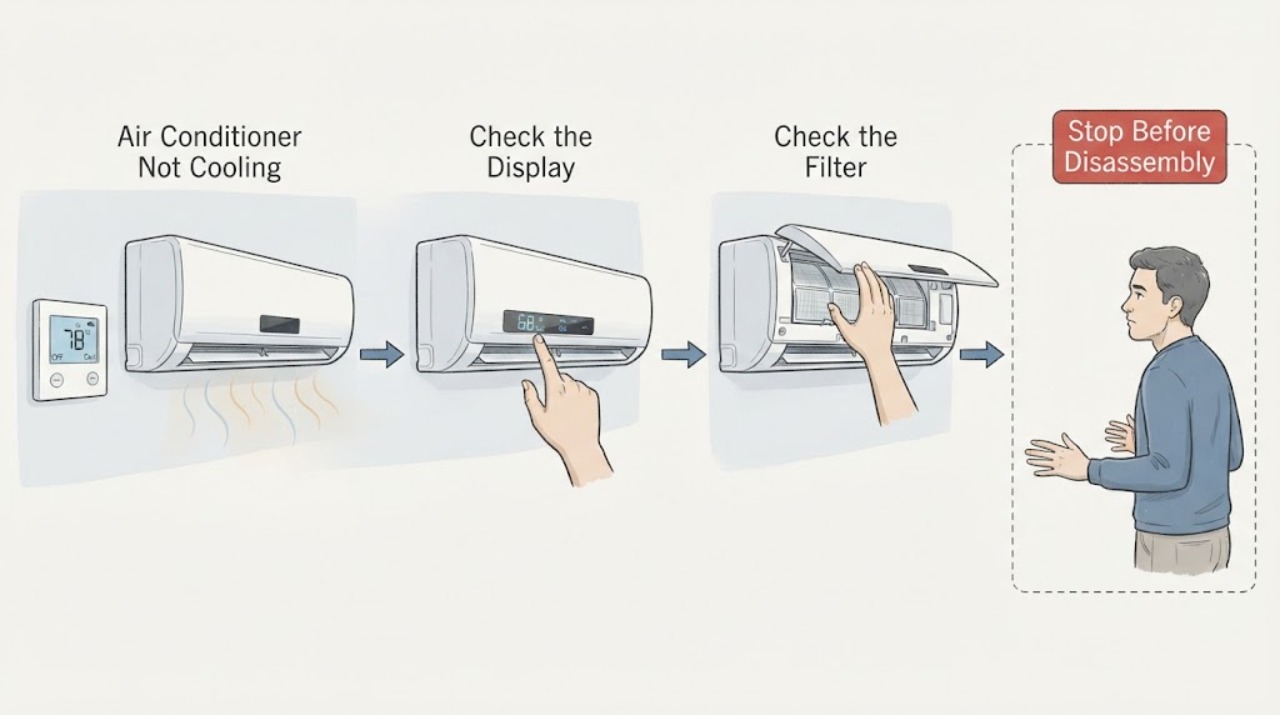
Air Conditioner Not Cooling: Thermostat and Blower Motor Checks
If the air conditioner is not cooling, confirm the thermostat is actually calling for Cool, then inspect the accessible filter and registers before judging the blower motor. A fan set to run continuously can move warm air, while a loaded filter can reduce airflow and contribute to ice.
-
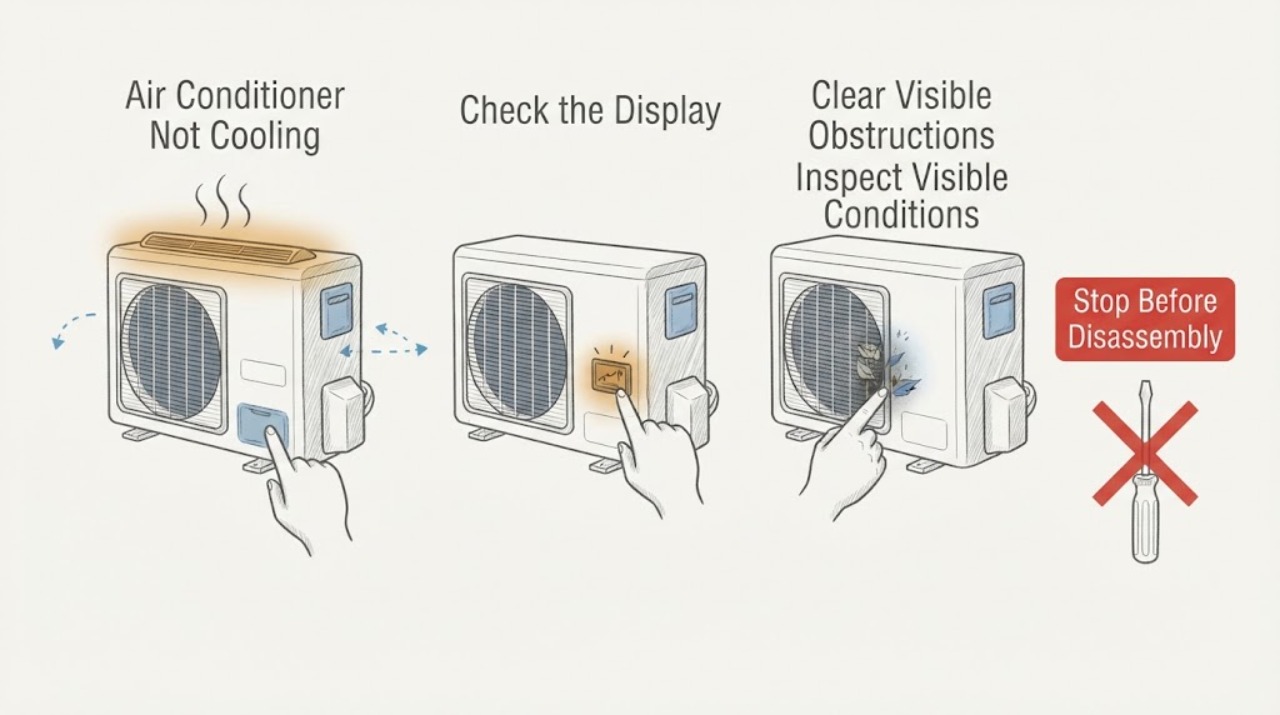
Air Conditioner Not Cooling: When a Capacitor May Be Involved
A capacitor can be one reason an air conditioner does not start, but a warm room or a humming outdoor unit does not prove that the capacitor has failed. Confirm the thermostat mode and target, inspect the accessible filter and registers, and observe whether the indoor airflow and outdoor fan start from a safe distance.
-
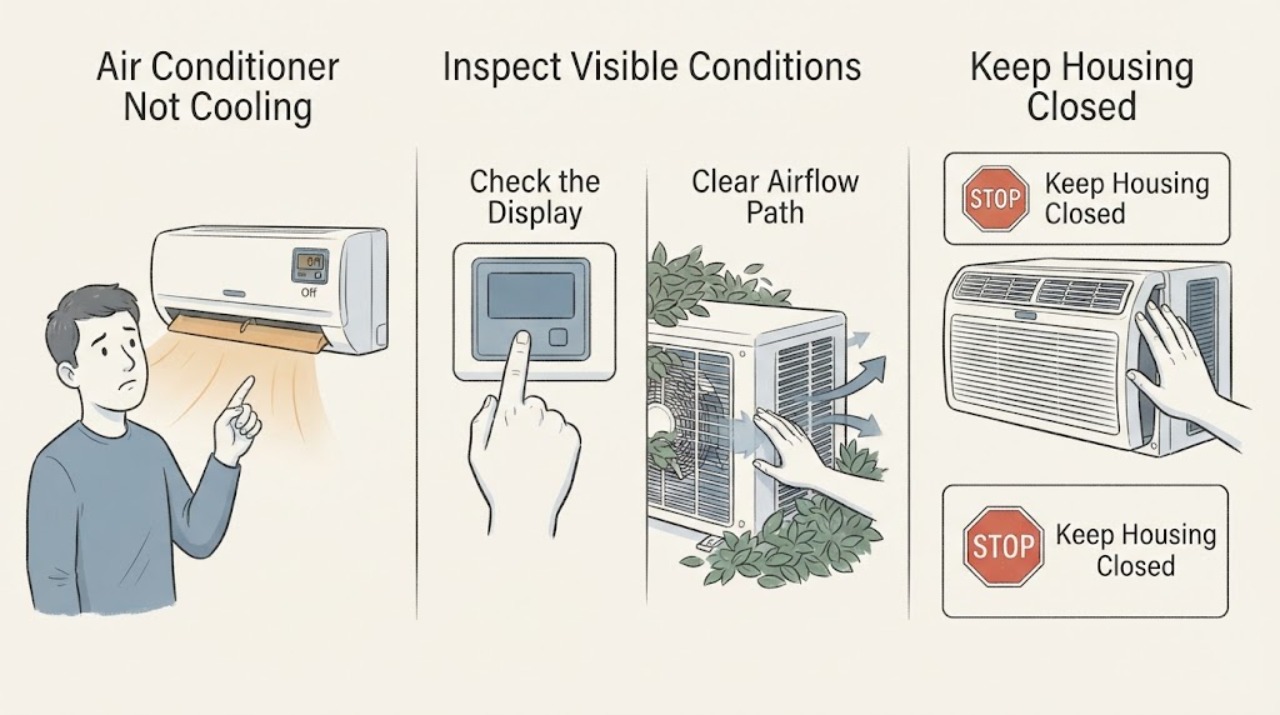
Air Conditioner Not Cooling: Check Airflow Before Capacitor or Compressor Service
Start with the thermostat, filter, airflow, and visible ice, but treat capacitor and compressor work as professional HVAC service. Set the thermostat to cooling with the fan on Auto, confirm the filter is not blocked, and make sure supply and return paths and the outdoor unit are not visibly obstructed.
-
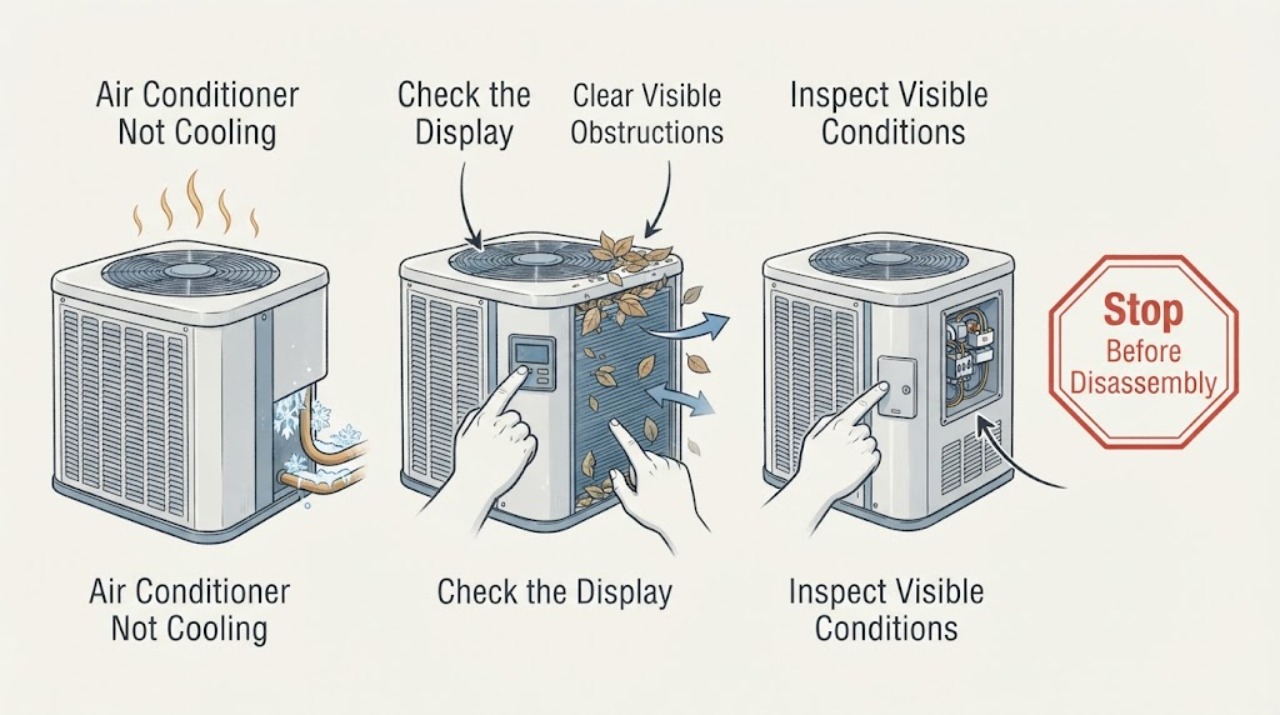
Air Conditioner Not Cooling: Safe Capacitor and Contactor Clues
If an air conditioner is not cooling, begin with the thermostat mode, target, filter, airflow, and visible outdoor clearance. A contactor or capacitor may be involved when the outdoor unit does not start, hums, or stops, but neither part can be confirmed from a sound or a warm room.
-
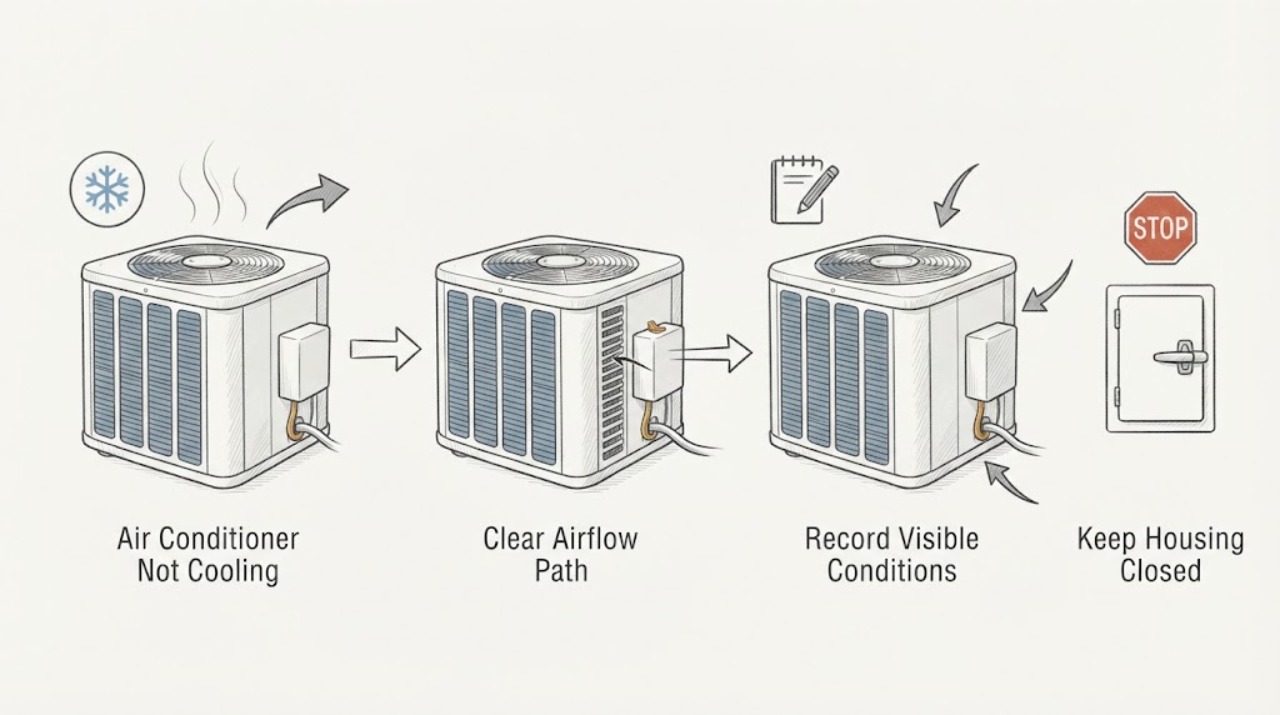
Air Conditioner Not Cooling: Check Airflow, Drainage, and Capacitor Symptoms Safely
Start with the thermostat mode and setpoint, then check the accessible air filter and whether supply air is weak. Look for ice on visible tubing or the indoor coil area and for condensate water near the indoor unit or drain outlet.
-
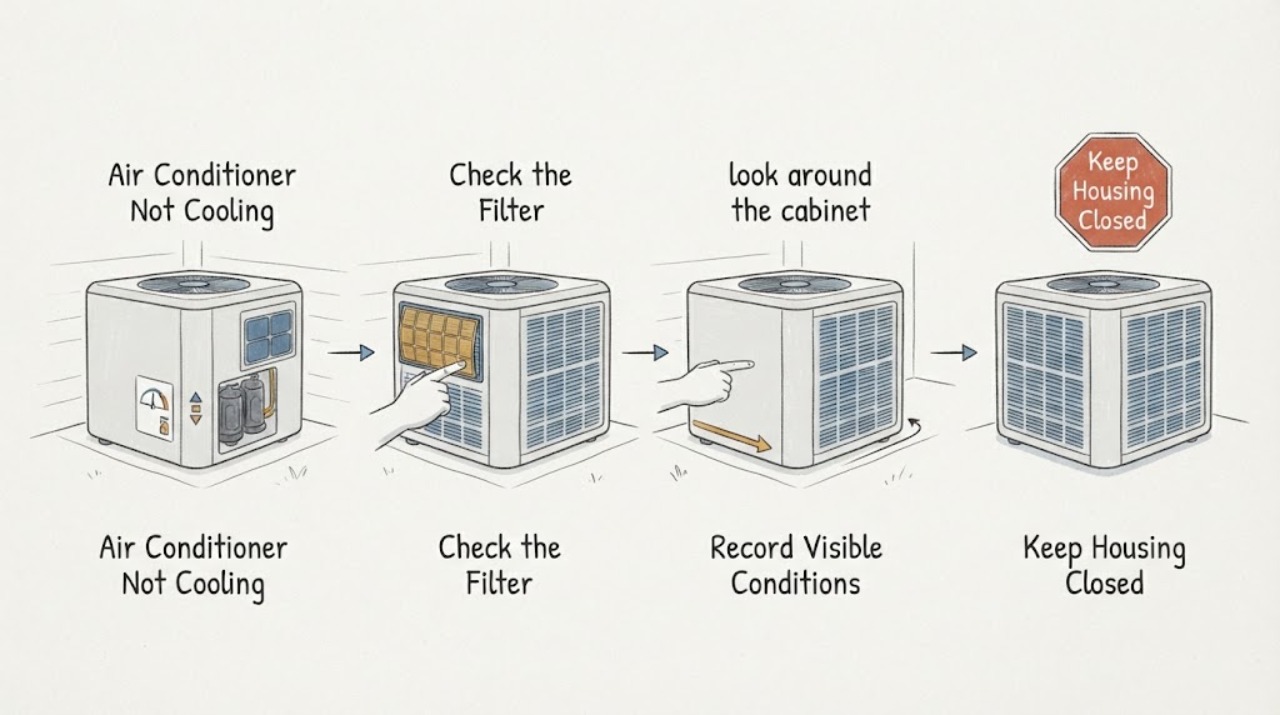
Air Conditioner Not Cooling: How to Tell if the Compressor Is Involved
An air conditioner that is not cooling may have an airflow, thermostat, outdoor-coil, frozen-evaporator, refrigerant, electrical, or compressor problem. A compressor cannot be confirmed by sound alone, and its sealed refrigerant circuit and high-voltage starting components are not homeowner checks.
-
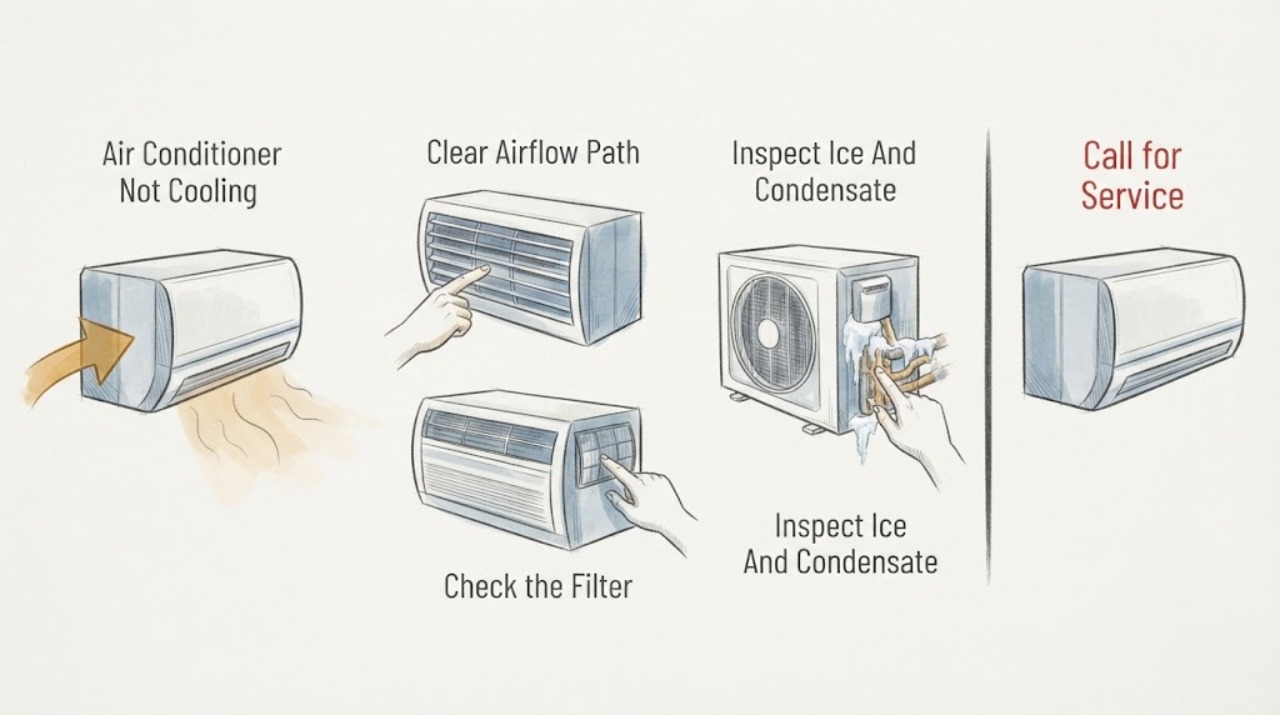
Air Conditioner Not Cooling: Check Airflow Before the Compressor or Coil
If an air conditioner is running but not cooling, first note whether the indoor airflow is absent, weak, or normal but warm. Check the thermostat's cooling call, the accessible filter and vents, and the outdoor unit from a safe distance.
-
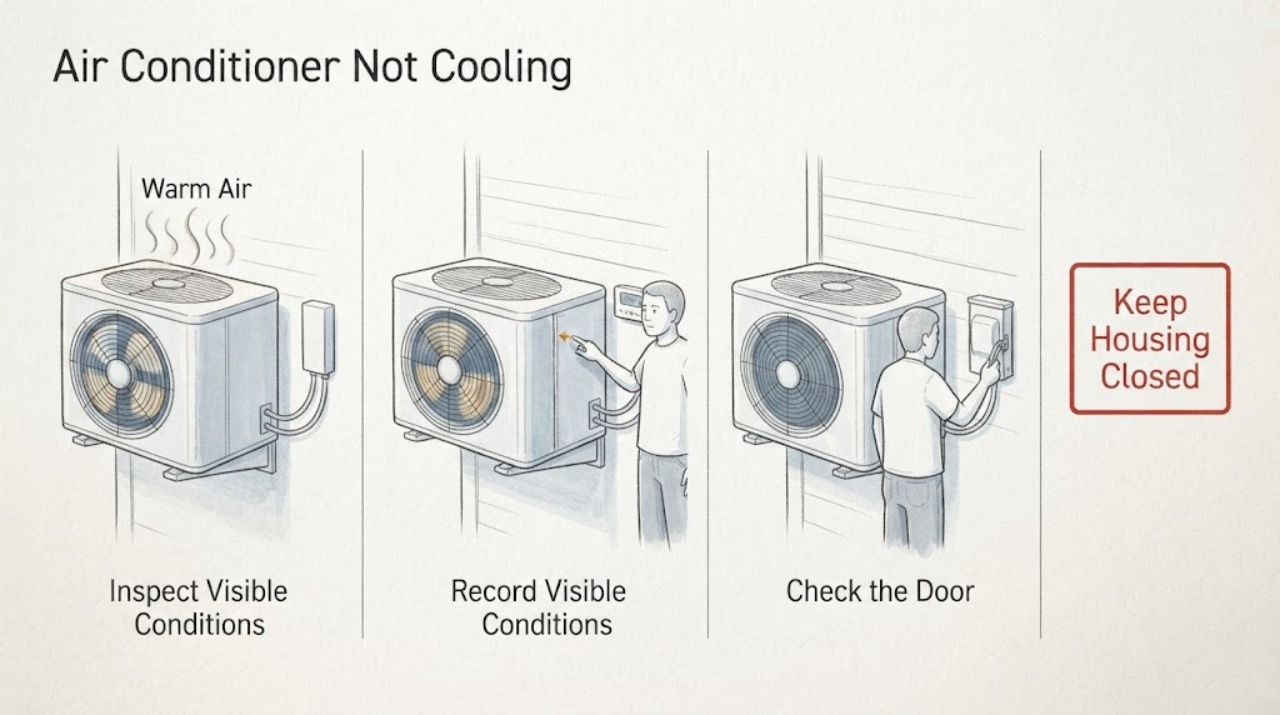
Air Conditioner Not Cooling: Check the Thermostat and Compressor Safely
Start at the thermostat: confirm the installed cooling mode, normal setpoint, schedule, and fan setting, then check the accessible filter and airflow. Observe whether the outdoor unit starts when there is a cooling call and whether the indoor air is weak, warm, or accompanied by ice or condensate water.
-
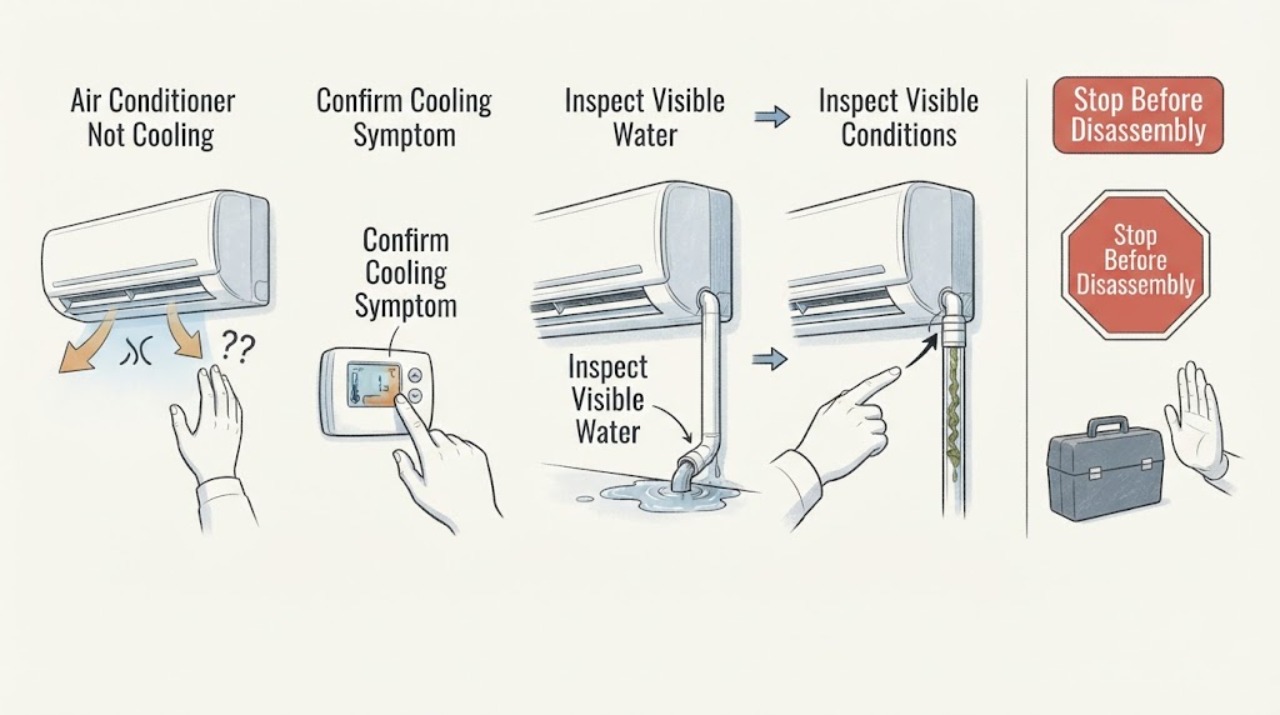
Air Conditioner Not Cooling: Check the Condensate Drain Line
A blocked condensate drain line or pan can make an air conditioner stop cooling because water backs up and a condensate overflow switch may shut down the compressor, outdoor fan, or indoor fan. Look only from safe, ordinary access for standing water, a wet area near the indoor unit, or no water leaving the known drain outlet; also note whether a safety switch has stopped the system.
-
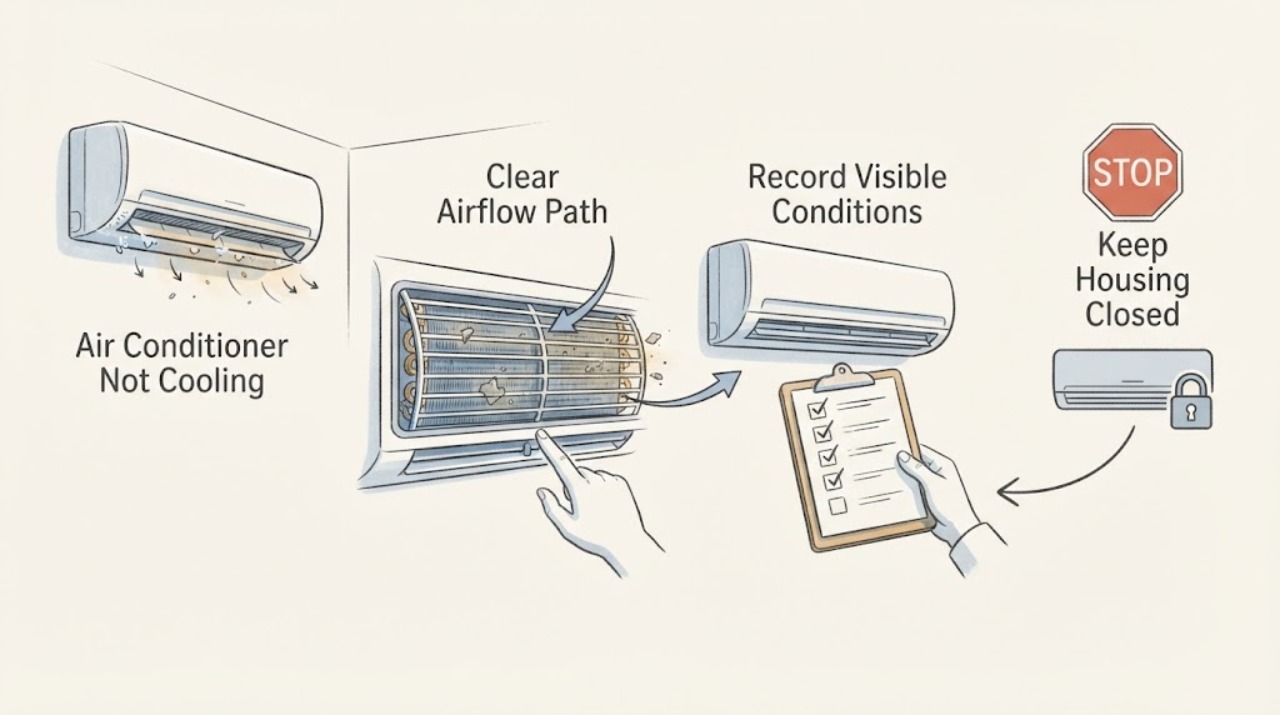
Air Conditioner Not Cooling: Check the Evaporator Coil Safely
If an air conditioner is not cooling, first confirm the thermostat's cooling mode and inspect the accessible filter and airflow. Look for frost or ice on visible tubing, the indoor coil area, or the outdoor unit, and look for condensate water near the air handler.
-
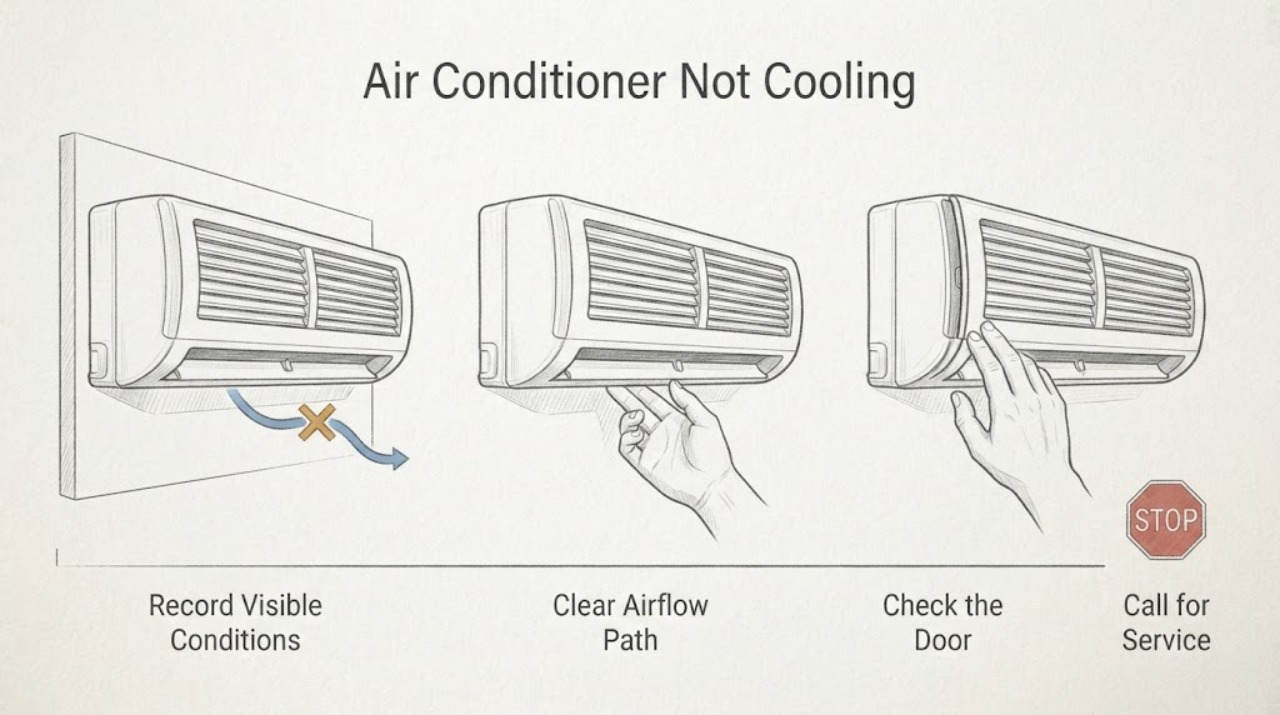
Air Conditioner Not Cooling: Check the Filter First
A dirty, wet, collapsed, incorrectly sized, or backward-installed air filter can restrict airflow enough to make an air conditioner cool poorly, run longer, or freeze the indoor coil. Check the filter only at the user-accessible location named by the equipment manual, confirm its size and airflow direction, and replace or clean it only as the filter and system instructions allow.
-
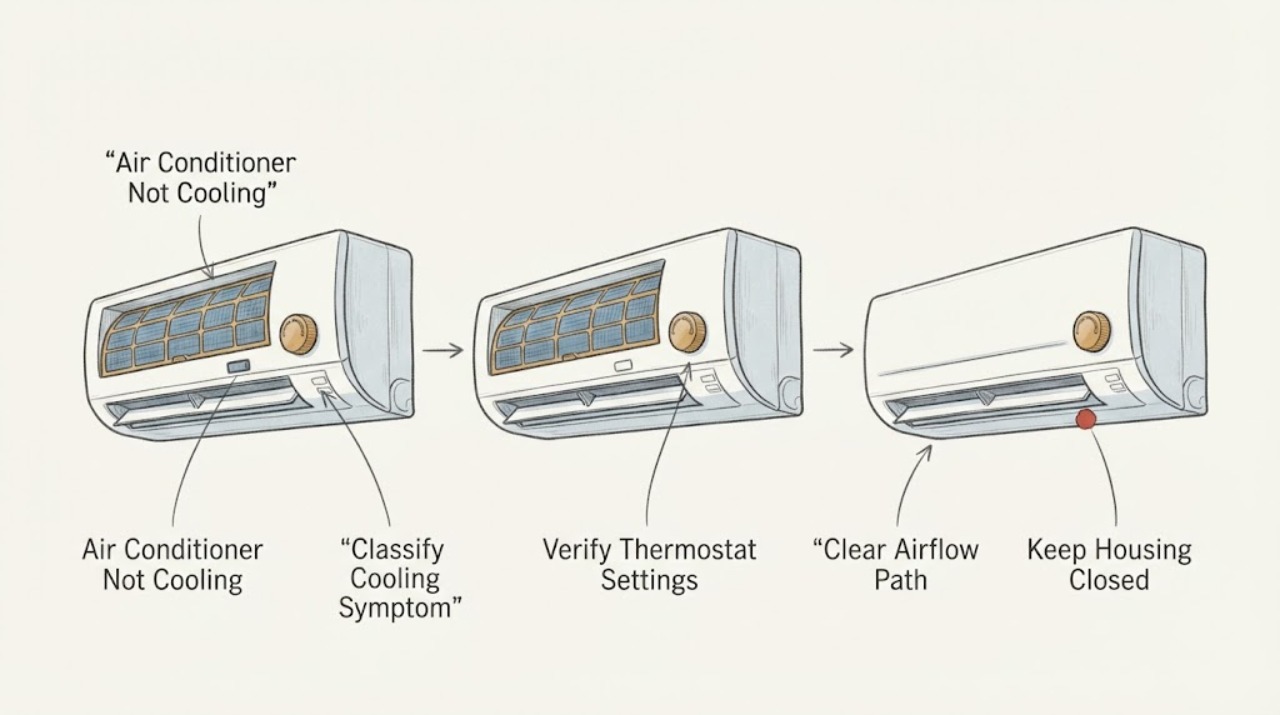
Air Conditioner Not Cooling: Check the Filter and Thermostat Before the HVAC System
When an air conditioner is not cooling, first separate a thermostat or power command problem from weak airflow caused by the filter and from a running system that is not removing heat. Confirm that the thermostat is calling for cooling, the fan is not set to run continuously, and the filter is installed in the correct direction and not heavily loaded.
-
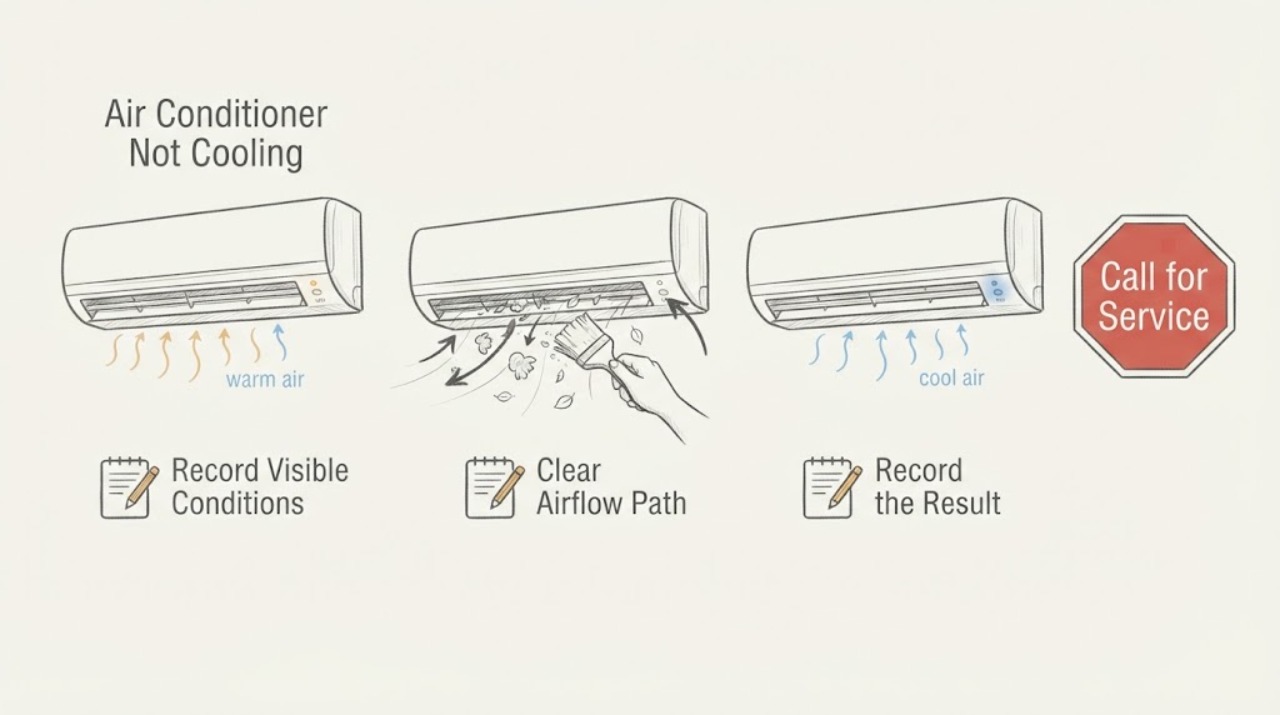
Air Conditioner Not Cooling: Safe Indoor and Outdoor Checks
The assigned condition is “inside post”; this wording is preserved exactly and this article does not infer what it refers to. Start with observable facts instead: confirm the cooling setting, compare indoor airflow, inspect the user-accessible filter, look for visible ice or condensate, and observe the outdoor unit from a safe distance.
-
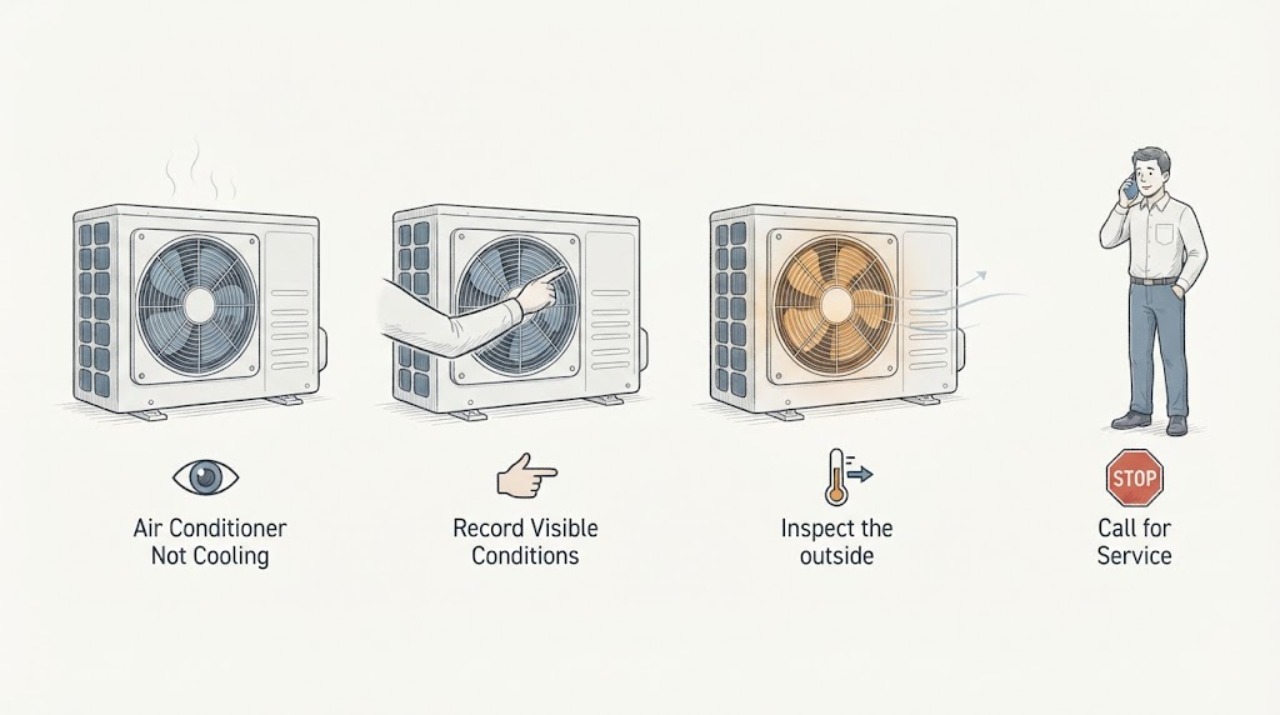
Air Conditioner Not Cooling: Safe Outside-Unit Checks
The assigned condition is “outside unit,” and this phrase is preserved without adding a meaning that was not provided. From a safe position, confirm the cooling call, compare indoor airflow, observe whether the outdoor fan starts, and look for external debris, unusual sounds, ice, water, or visible oily residue.
-
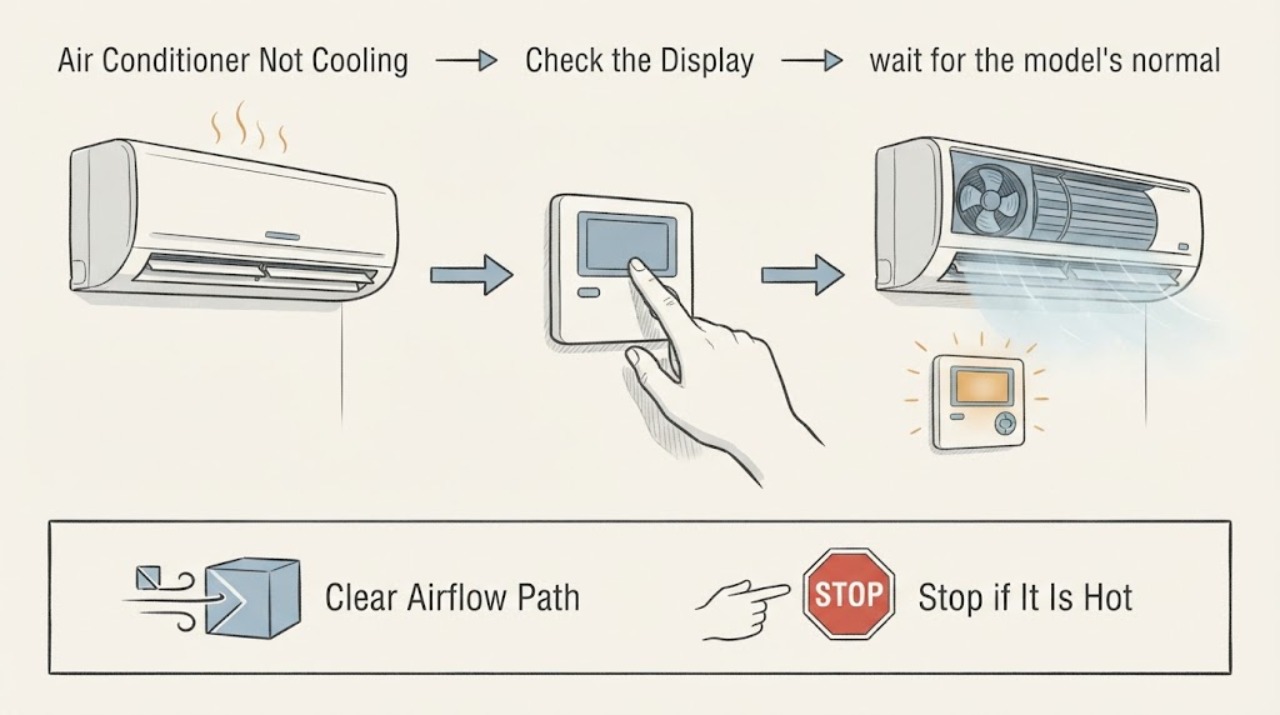
Air Conditioner Not Cooling: Thermostat Checks Before HVAC Service
When an air conditioner is not cooling and the thermostat is the suspected component, confirm the thermostat is calling for Cool, the target is below the room temperature, and the fan and schedule are not overriding the request. Check the display or batteries if applicable, then turn the system off before inspecting an accessible filter and the return and supply openings.
-
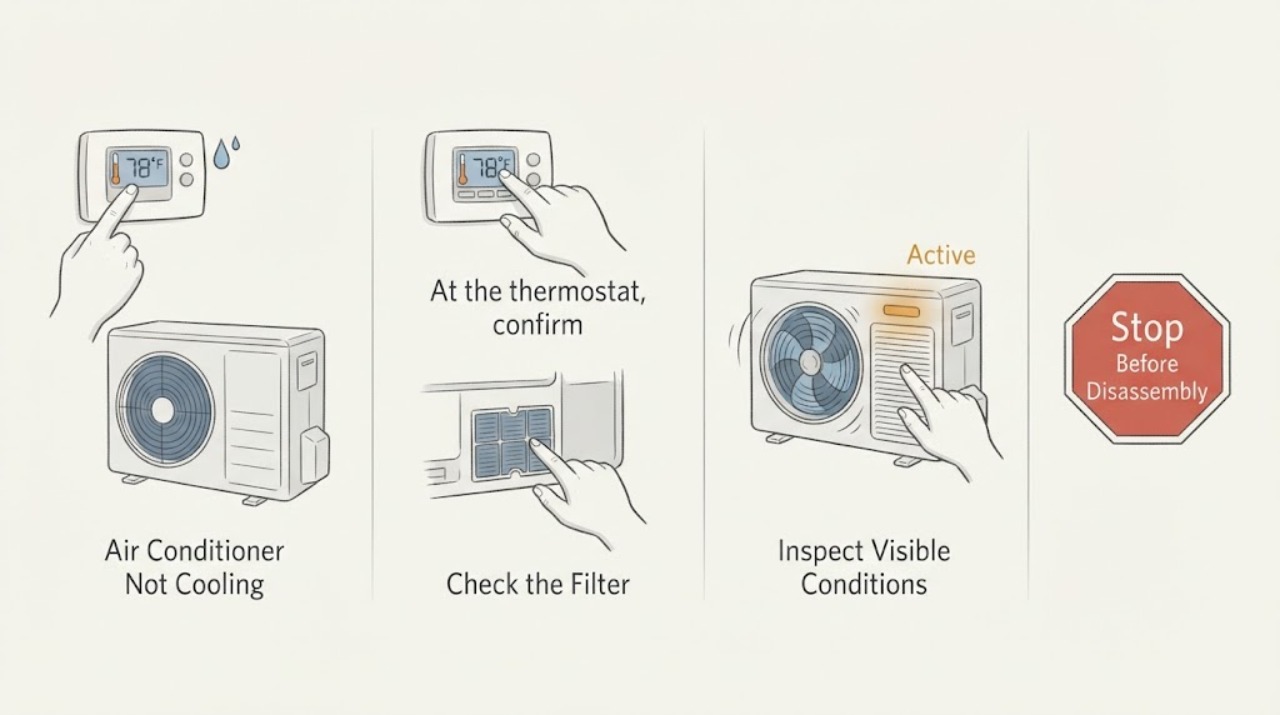
Air Conditioner Not Cooling: Check Settings, Airflow, Ice, and the Outdoor Unit
Start with the thermostat mode and fan setting, then check the air filter and the outdoor unit from a safe distance. A dirty filter or blocked outdoor coil can reduce airflow and cooling, while ice on the refrigerant lines, repeated breaker trips, a non-running outdoor unit, or suspected low refrigerant requires the system to be shut down as appropriate and examined by a qualified HVAC professional. Do not open electrical compartments or handle refrigerant.
-
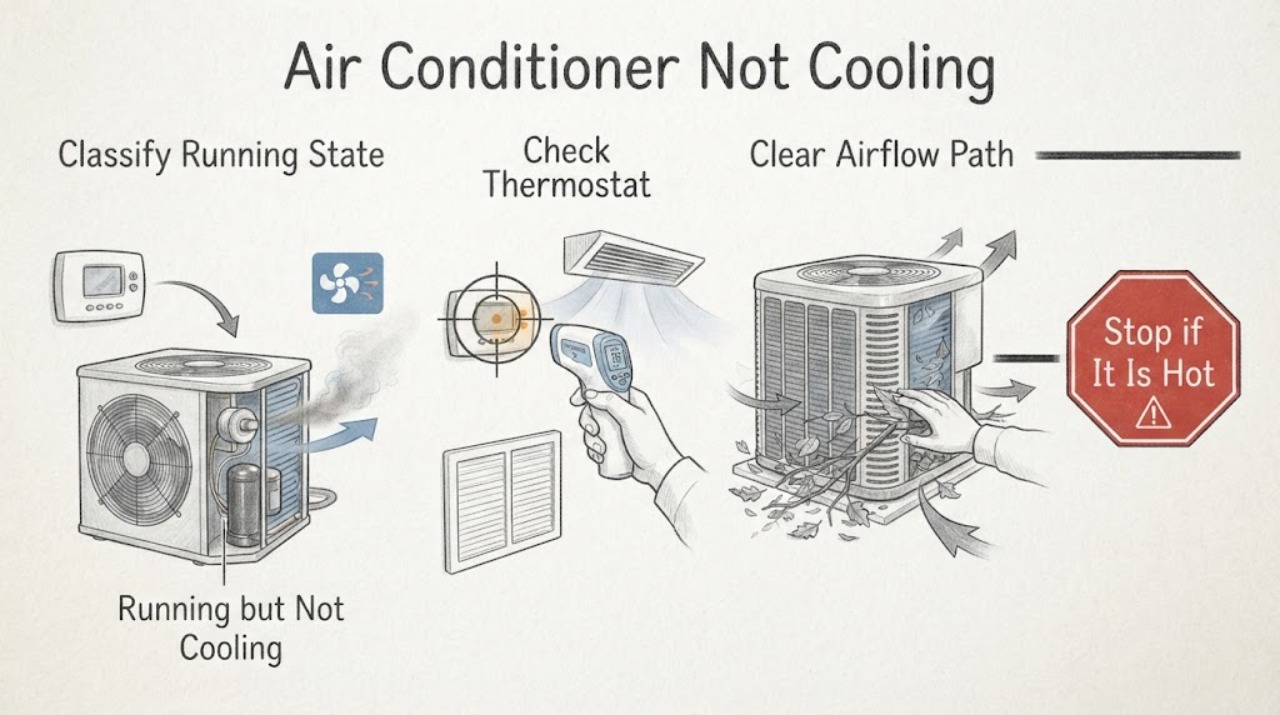
Air Conditioner Not Cooling: Check the Thermostat and Airflow Before Internal Parts
First decide whether the air conditioner is not running, is running with weak airflow, or is blowing air that is not cool. Check the thermostat mode and setpoint, compare supply vents and the return, inspect the accessible filter with the system off, and look from a safe distance for ice, water, or outdoor-unit obstruction.
-
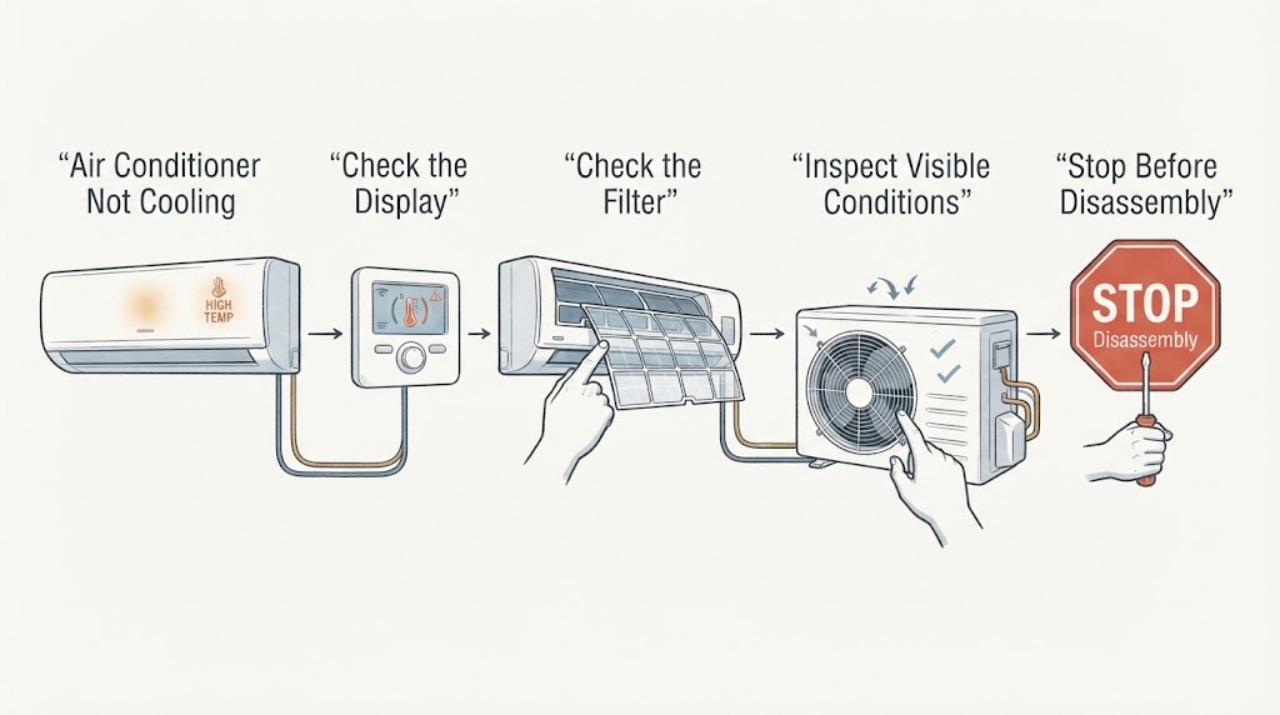
Air Conditioner Not Cooling: Check the Thermostat, Airflow, and Outdoor Unit
When an air conditioner runs but does not cool, start at the thermostat and filter, then observe airflow, ice, condensate, and the outdoor unit from a safe distance. A thermostat setting or a loaded filter can limit cooling, while weak airflow can point toward the blower path.
-
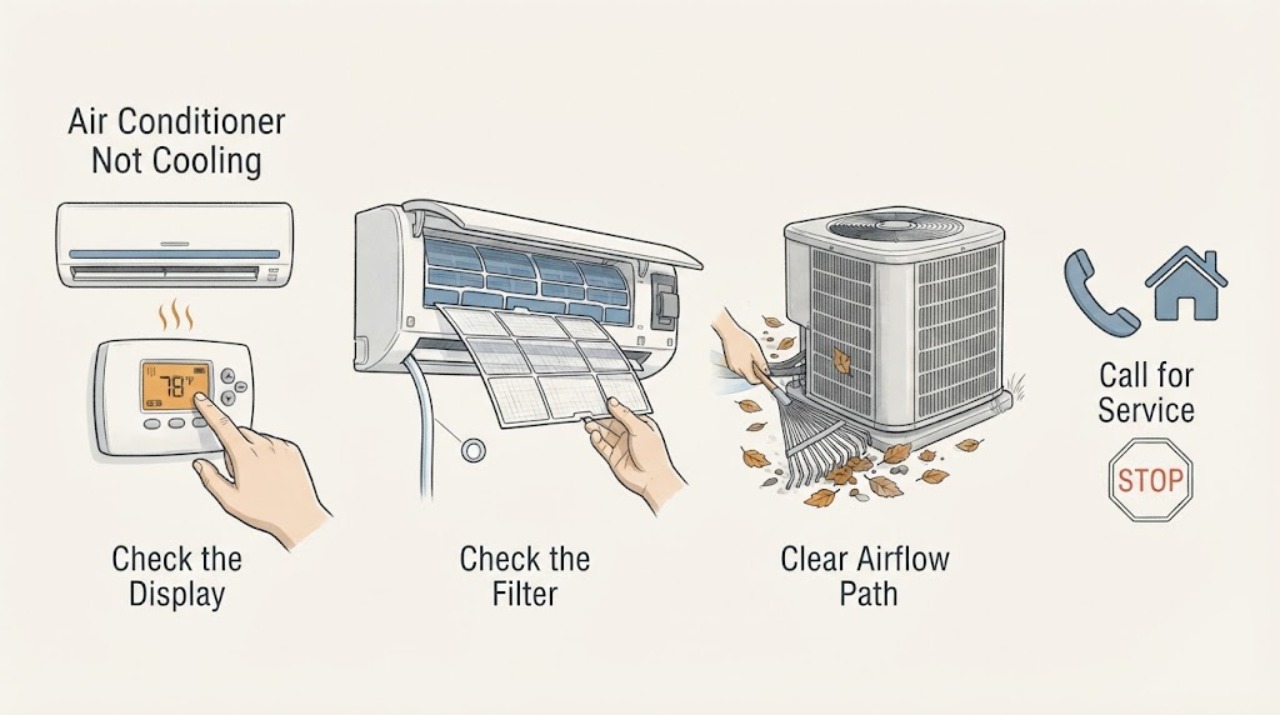
Air Conditioner Not Cooling: Thermostat, Airflow, and Drain Checks
First confirm that the thermostat is actually calling for cooling, then check the dry, user-accessible filter and airflow. If airflow is weak or absent, the filter, return path, blower motor, or indoor control may be involved.
-
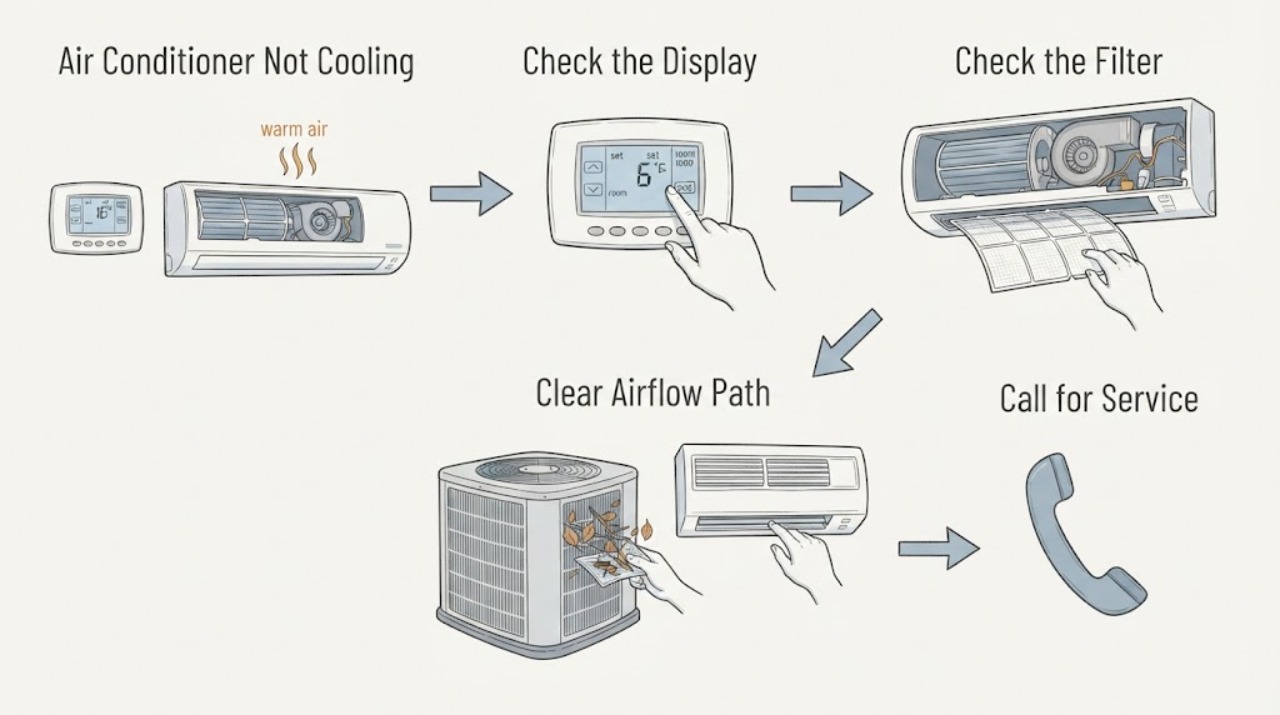
Air Conditioner Not Cooling: Thermostat, Filter, Blower, and Capacitor Checks
Start with the thermostat and the user-accessible air filter, then compare airflow with what the outdoor unit is visibly doing. A wrong mode or clogged filter can mimic a failed air conditioner, while weak or absent indoor airflow, ice, an outdoor fan that will not start, humming, or repeated electrical trips point toward a blower motor, capacitor, compressor, refrigerant, or control problem that needs HVAC service.
-
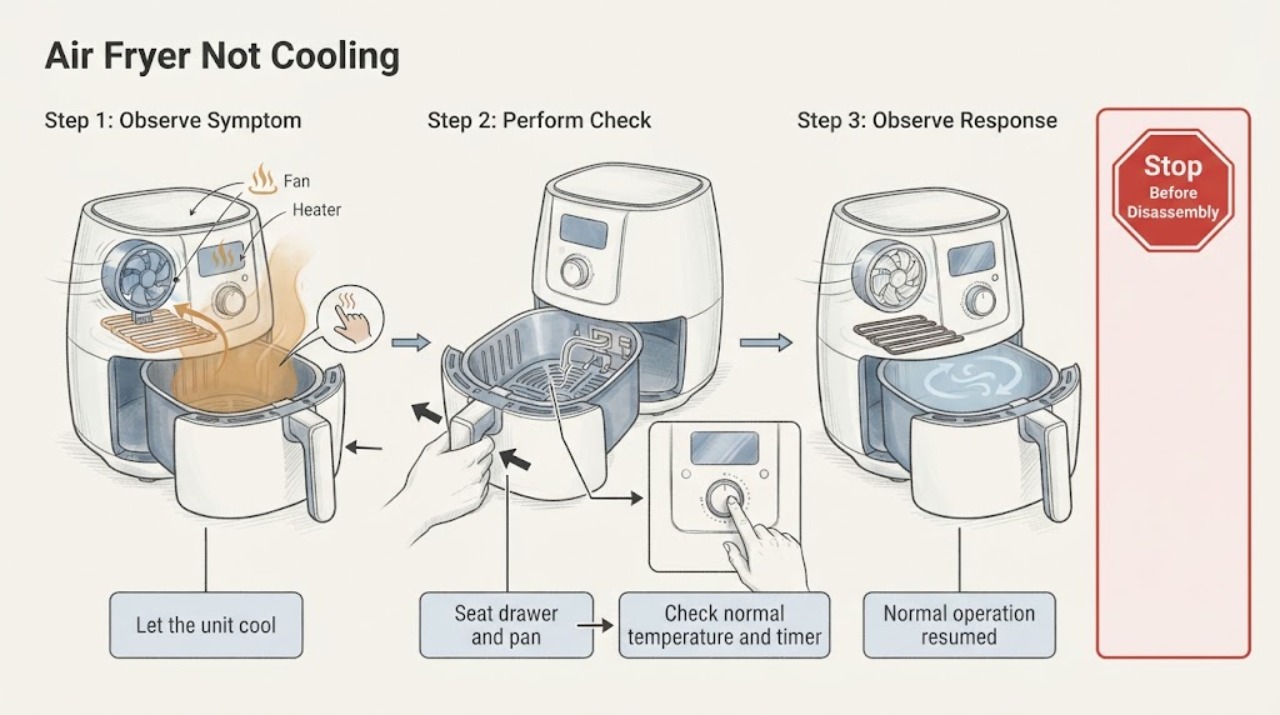
Air Fryer Not Cooling
“Not cooling” can mean residual heat, missing airflow, or food that is not heating. Let the air fryer cool, seat the drawer/pan, check the temperature and timer, and stop for abnormal overheating or a failed fan.
-
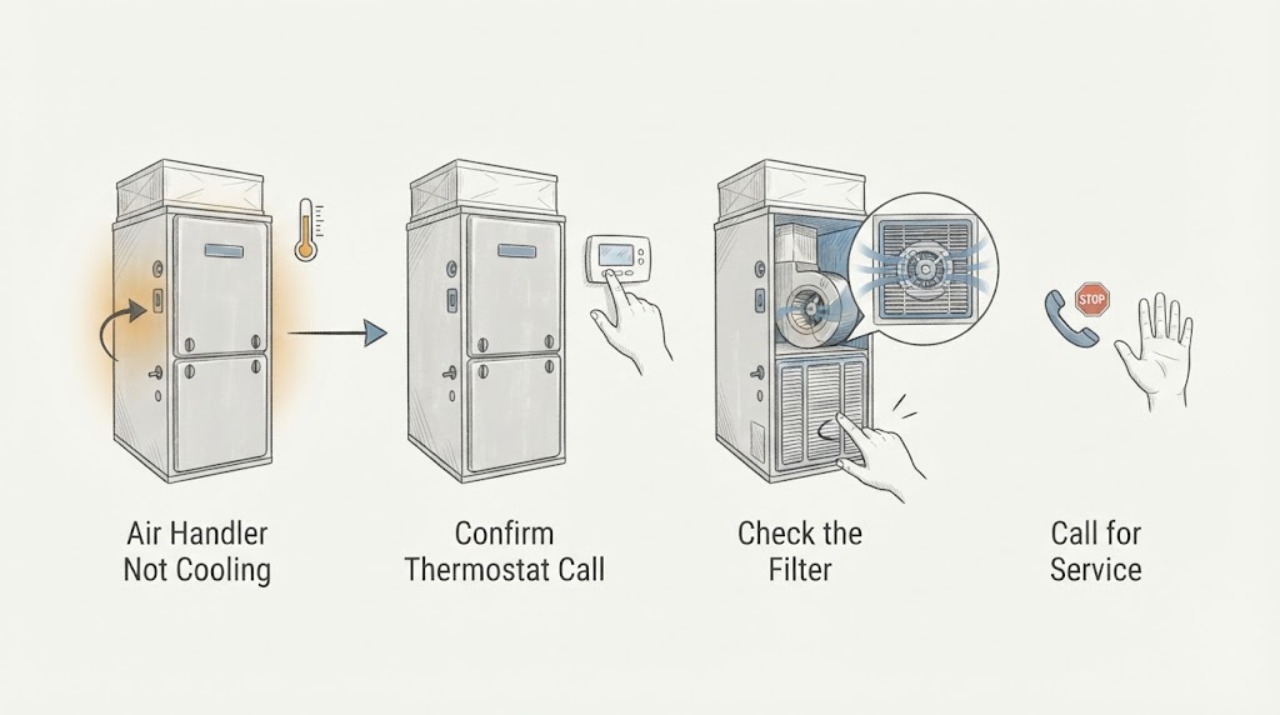
Air Handler Not Cooling: Blower Motor and Airflow Checks
An air handler that is not cooling may have no cooling call, restricted airflow, a frozen coil, a condensate or protection shutdown, or a fault in the blower motor or another HVAC component. First separate no cold air with normal airflow from no airflow at all: check the thermostat, accessible filter, return and supply registers, and visible ice or water from a safe position.
-
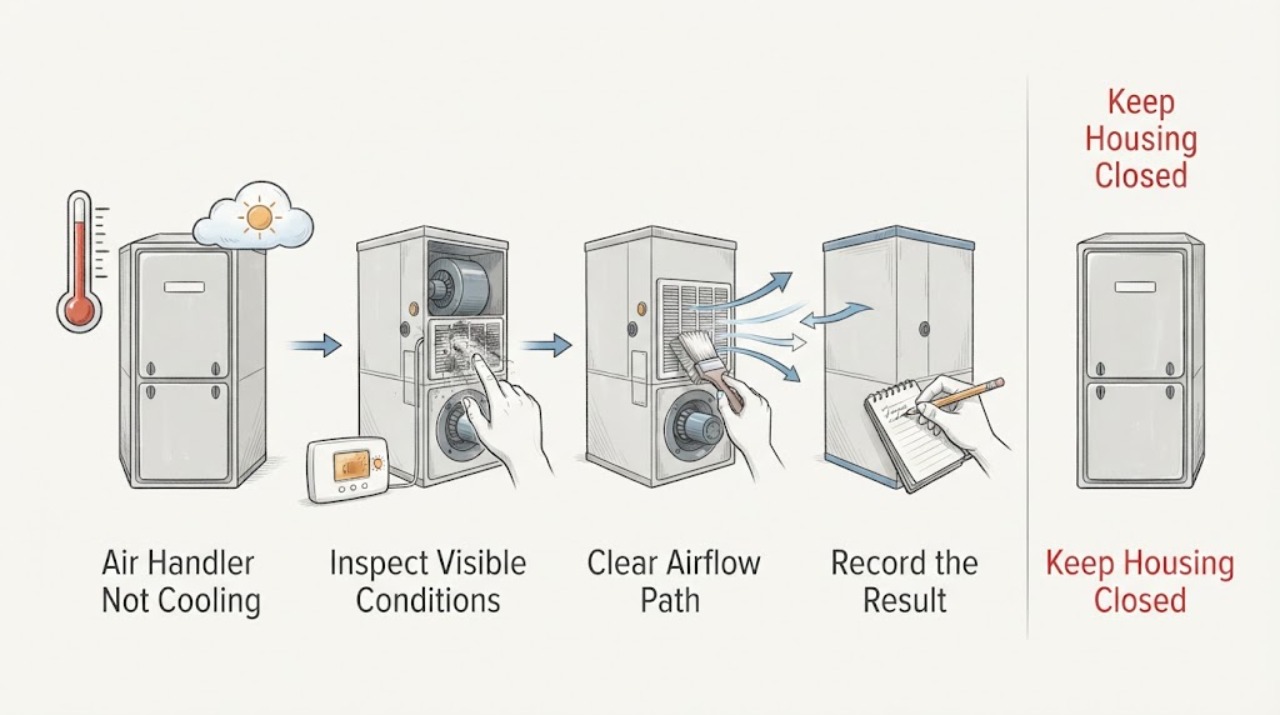
Air Handler Not Cooling: Blower Motor and Thermostat Checks
First determine whether the air handler has no airflow or is moving air that is not cool. Confirm that the thermostat is powered, set to Cool, and calling below the room temperature; then compare airflow at several registers.
-
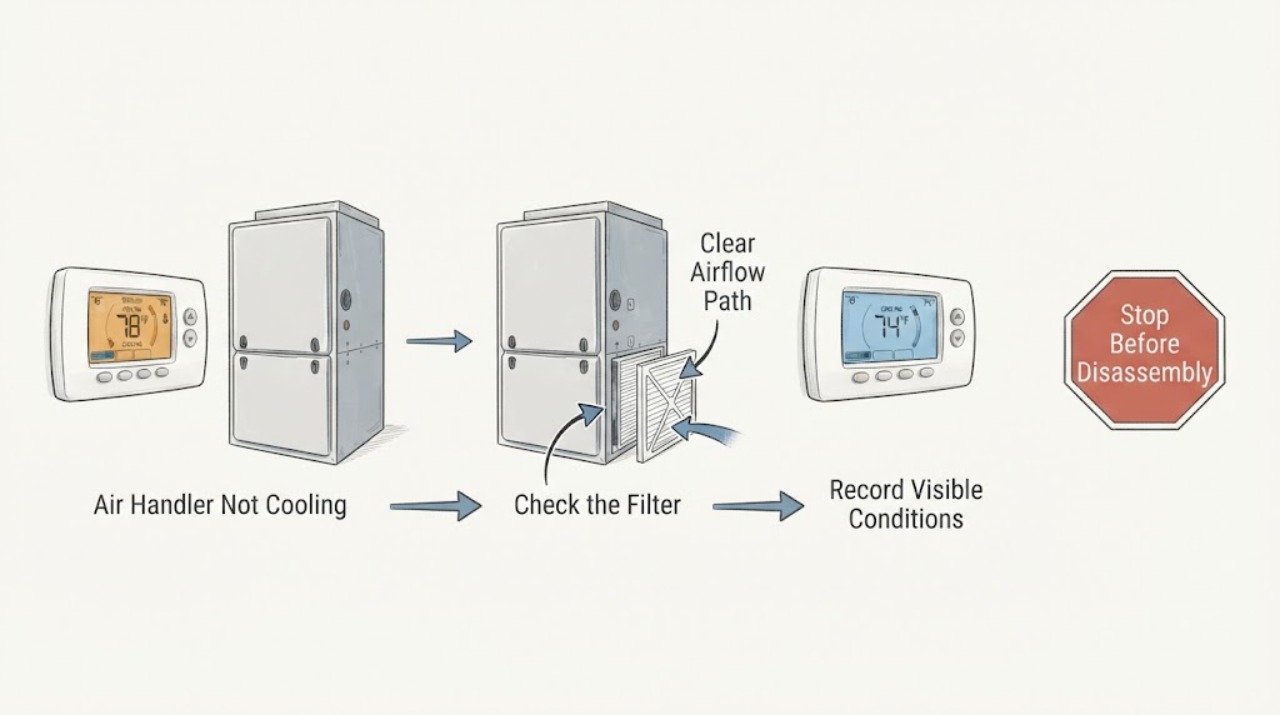
Air Handler Not Cooling: Check the Thermostat and Airflow Safely
An air handler that is not cooling can have two different symptoms: little or no air movement at the registers, or normal airflow that is warm. First check that the thermostat is in Cool, the setpoint is below the room temperature, the schedule or hold is not overriding it, and the indoor fan is set as expected.
-
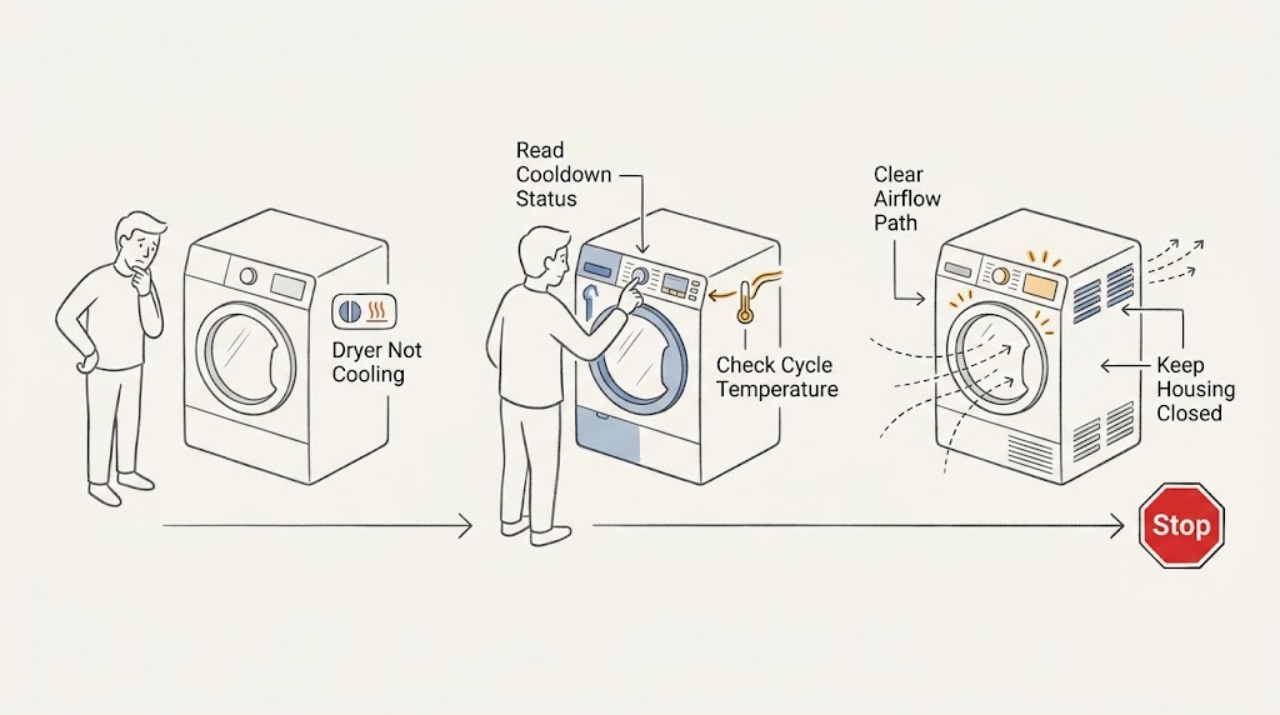
Amana Dryer Not Cooling: Check the Cool-Down Stage and Airflow
An Amana dryer can seem not to cool when the load is removed before its cool-down portion ends, when a high-temperature Timed Dry setting is used, or when restricted exhaust airflow keeps heat inside the dryer. First read the cycle status and settings, then—only with the dryer stopped and safe to inspect—clean the lint screen and look for a crushed or blocked vent and exterior hood.
-
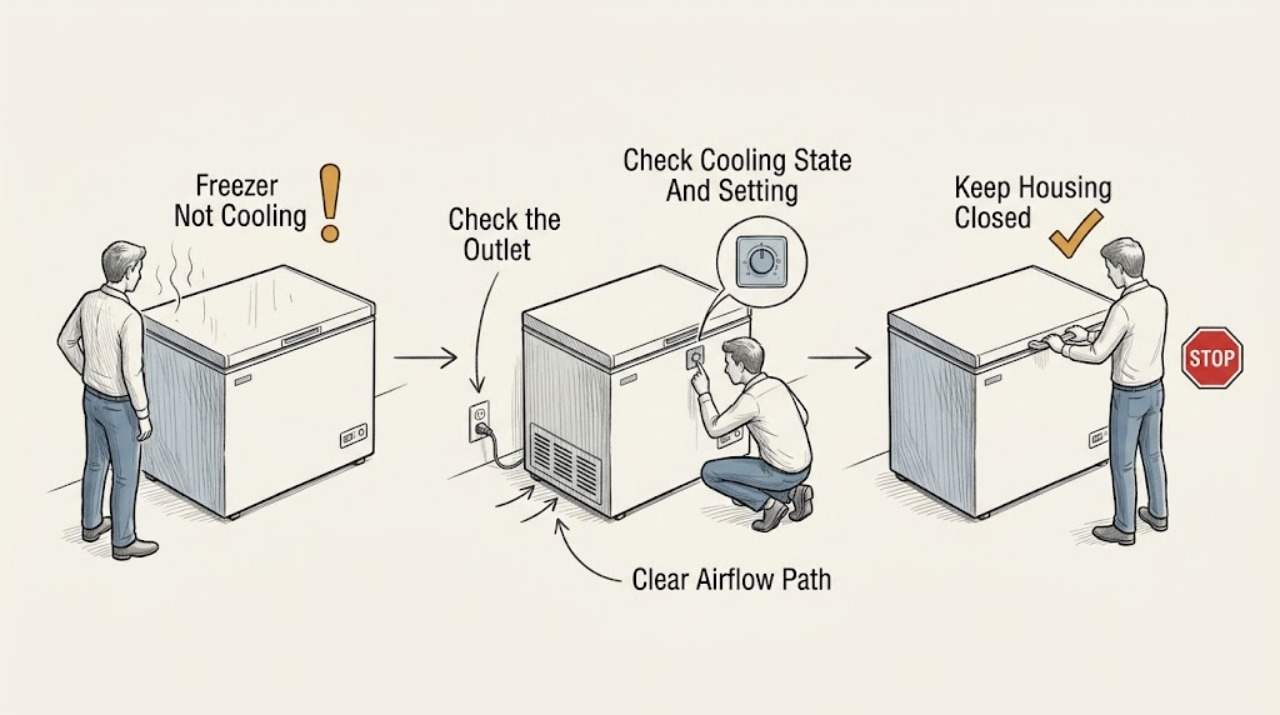
Amana Freezer Not Cooling: Check Power, Controls, Airflow, and the Seal
An Amana freezer that is not cooling may be off at the power or control path, in a cooling-off or demo state, unable to circulate air, or losing cold air through a blocked or poorly sealed door or lid. Check the outlet and cooling state, inspect only visible airflow and seal conditions, and follow the model manual for any stabilization period after a setting change or large load.
-
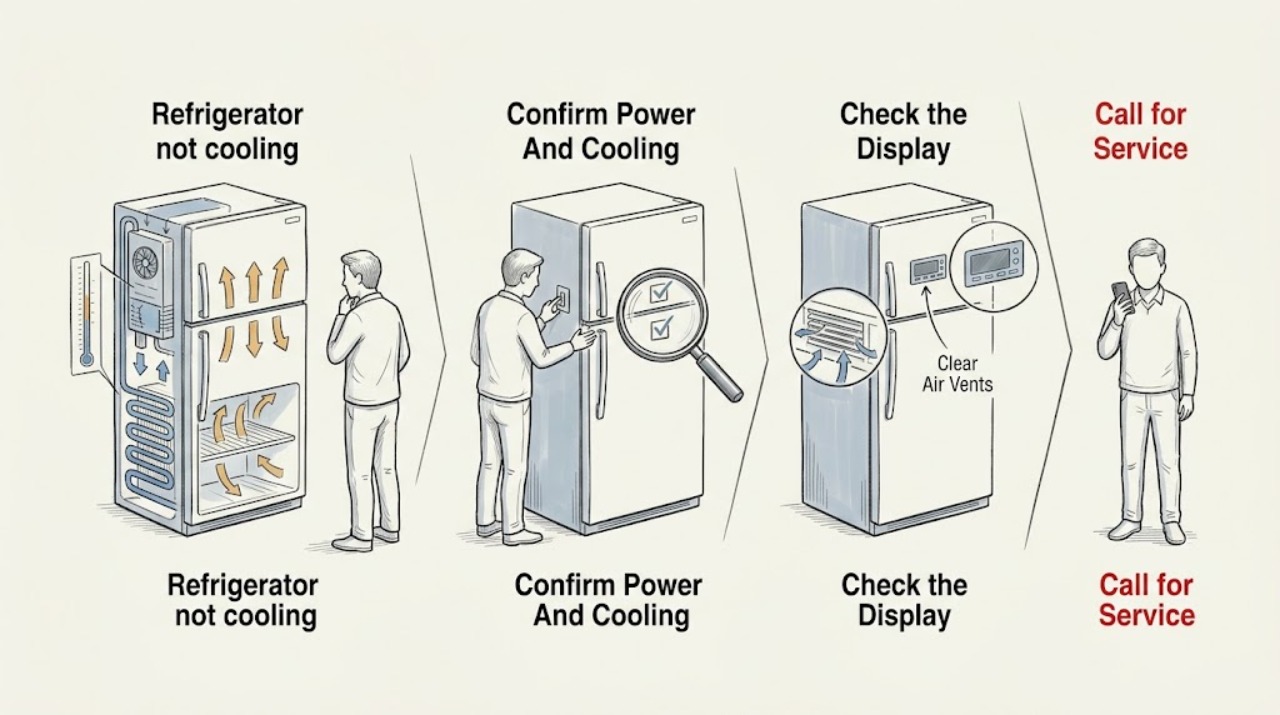
Amana refrigerator not cooling: What to Check and What to Do Next
Check the simple causes first: confirm the Amana refrigerator is powered on and cooling is enabled, verify the controls were not changed, make sure food is not blocking the freezer and refrigerator vents, and check that the doors close and seal. Amana says a recent installation, warm room, frequent door opening, large load, blocked airflow, Demo or Showroom mode, and model-dependent condenser access can all affect cooling.
-
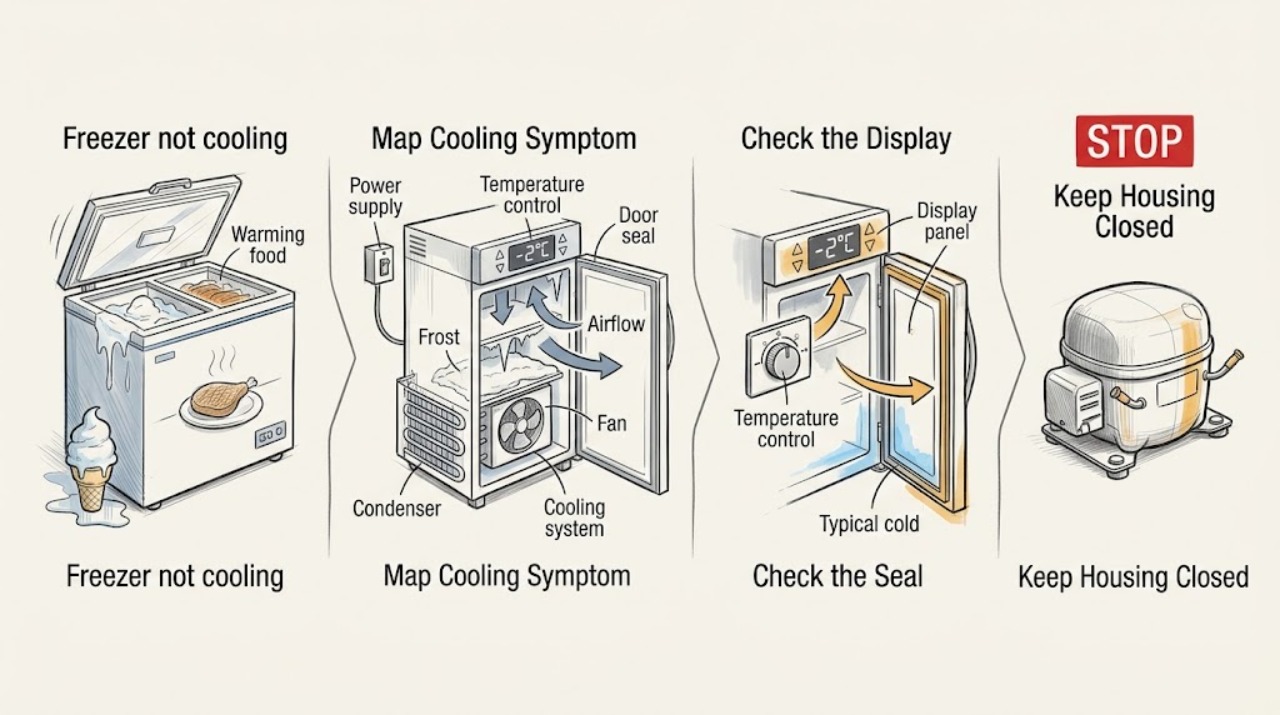
Beko freezer not cooling: safe checks before calling for service
Keep the freezer door closed while you determine whether the problem is a recent installation, a power or control issue, blocked airflow, a poor door seal, heavy frost, or a fault that needs service. Check the plug, normal temperature control, and any visible alarm only from a dry, safe position; do not repeatedly cycle power or open the cabinet.
-
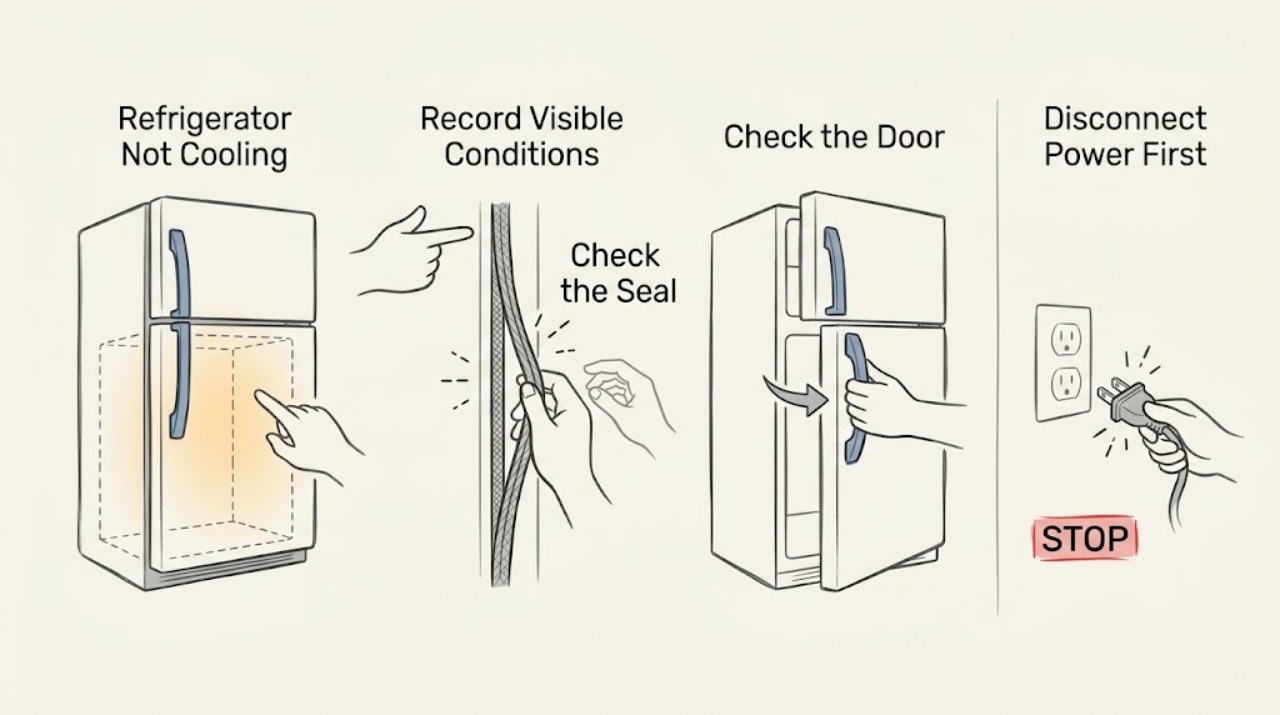
Beko Refrigerator Not Cooling
Verify the actual temperature before assuming the compressor has failed: place a thermometer in a glass of water on the middle shelf and leave it for 12 hours or overnight. Then check the temperature setting, door seal, recent hot food or long door opening, blocked airflow from overpacking, and the appliance's ambient location.
-
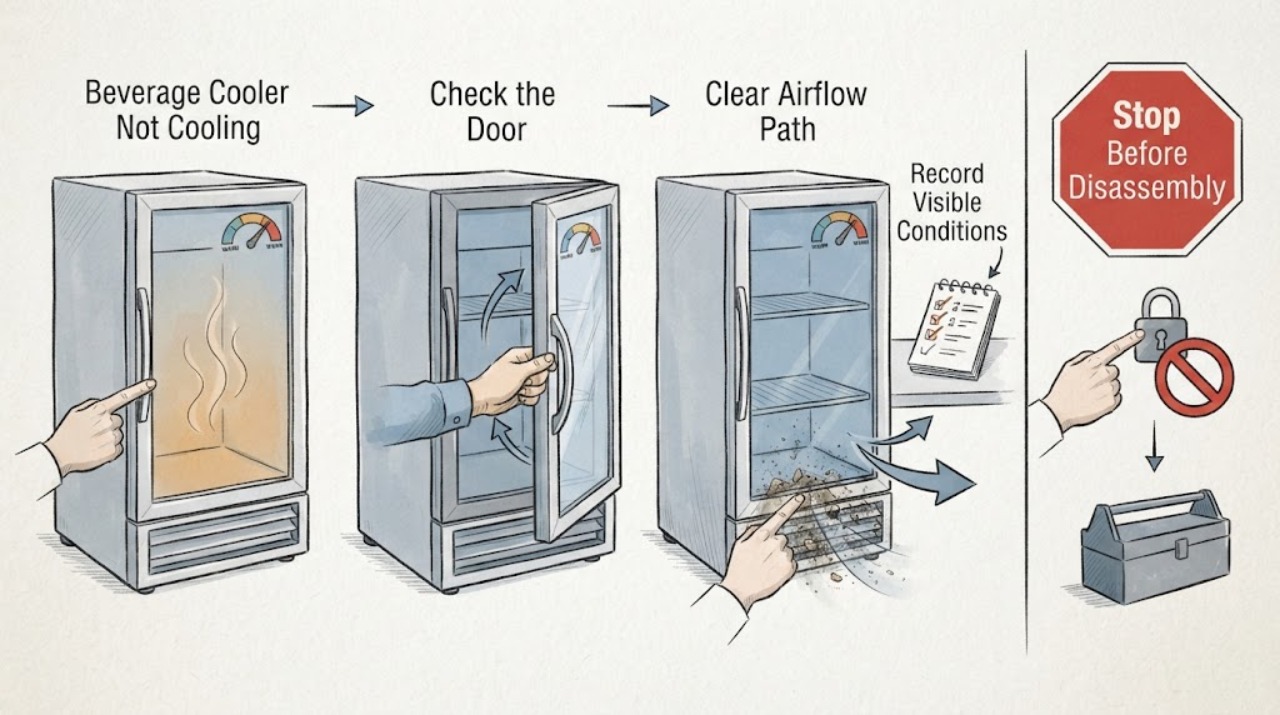
Beverage Cooler Not Cooling
If a beverage cooler is not cooling, confirm power and the temperature setting, keep the vents clear, allow time after loading, and listen for the compressor. A compressor that runs without cooling, or a unit with no compressor response after stable power, needs service for sealed-system or control diagnosis.
-
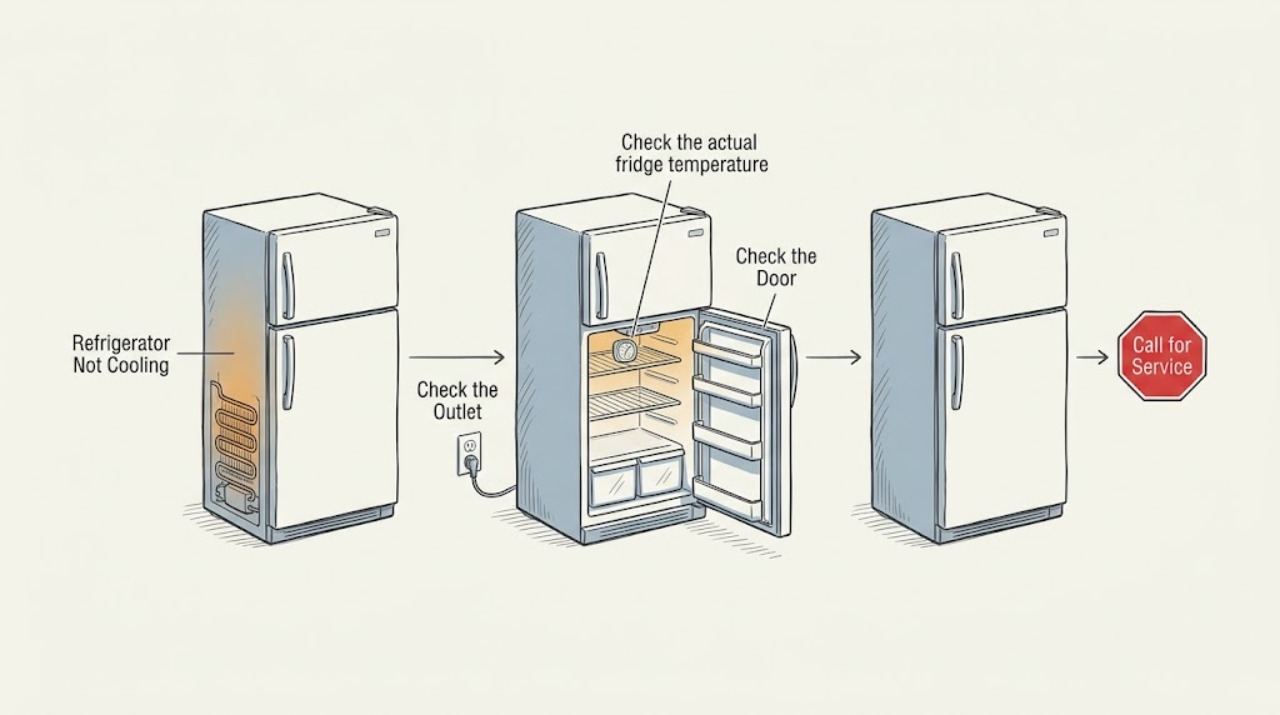
Blomberg Refrigerator Not Cooling
If a Blomberg refrigerator is not cooling, first confirm that it has power and that the temperature control is on, then set the compartment according to the model manual. Blomberg's general guidance gives 3°C to 5°C as the fridge range and recommends checking the actual temperature with a thermometer in a glass of water for about 12 hours.
-
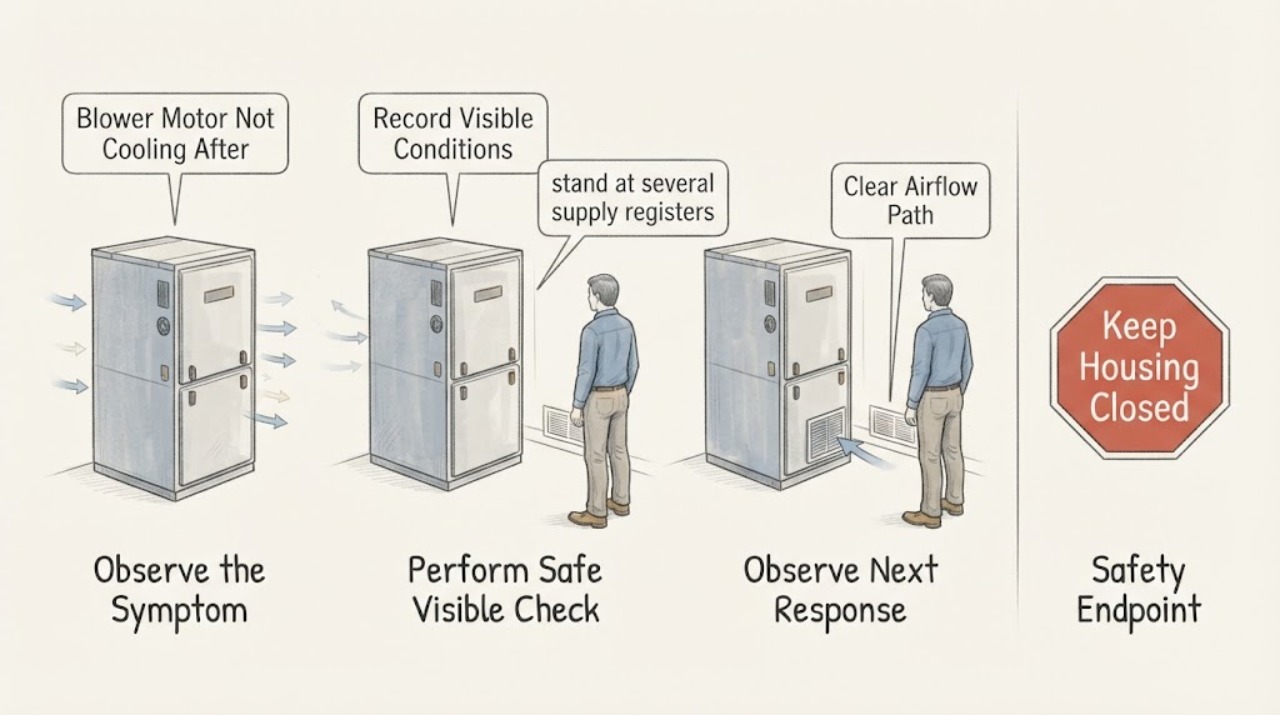
Blower Motor Not Cooling After a Blower Motor Change
If an air conditioner stopped cooling after the blower motor was changed, first separate an airflow failure from a refrigeration failure. From the thermostat and registers, check whether the system is calling for cooling and whether air is moving.
-
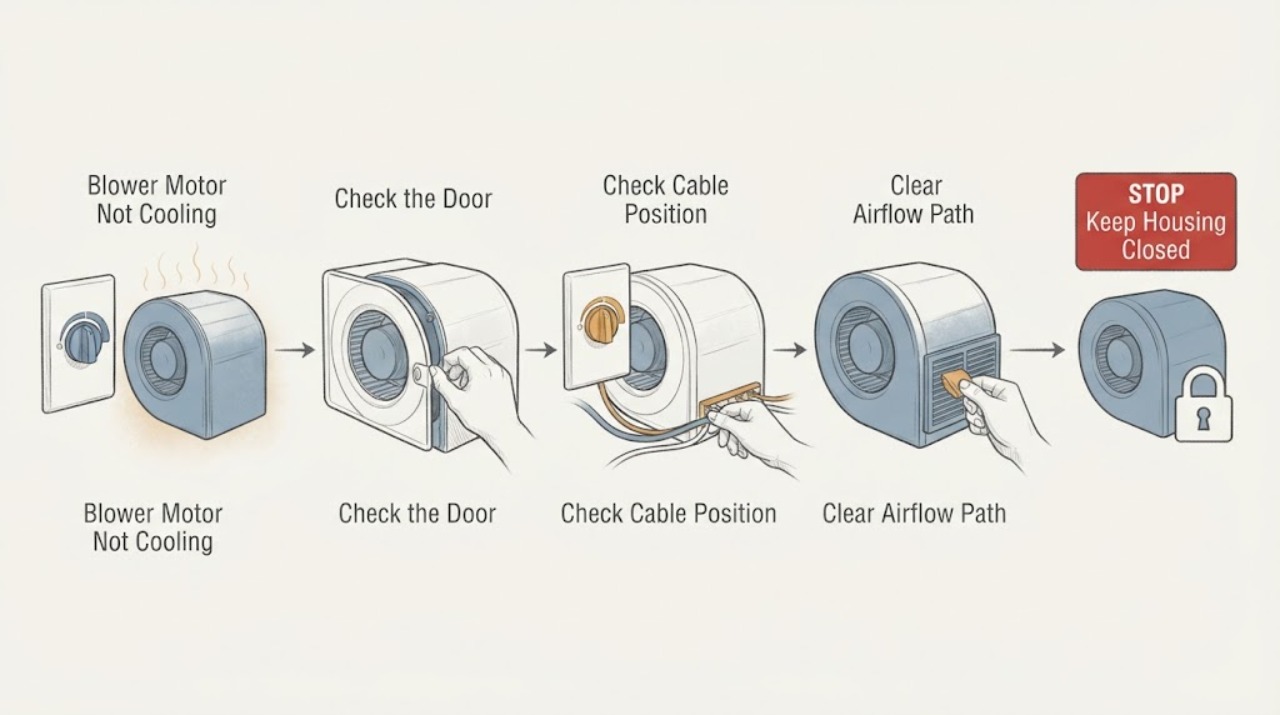
Blower Motor Not Cooling: Check the Thermostat Before HVAC Service
A blower motor does not create cooling by itself: it moves air through the indoor unit while the thermostat calls for cooling and the outdoor system removes heat. First separate no airflow from warm airflow.
-
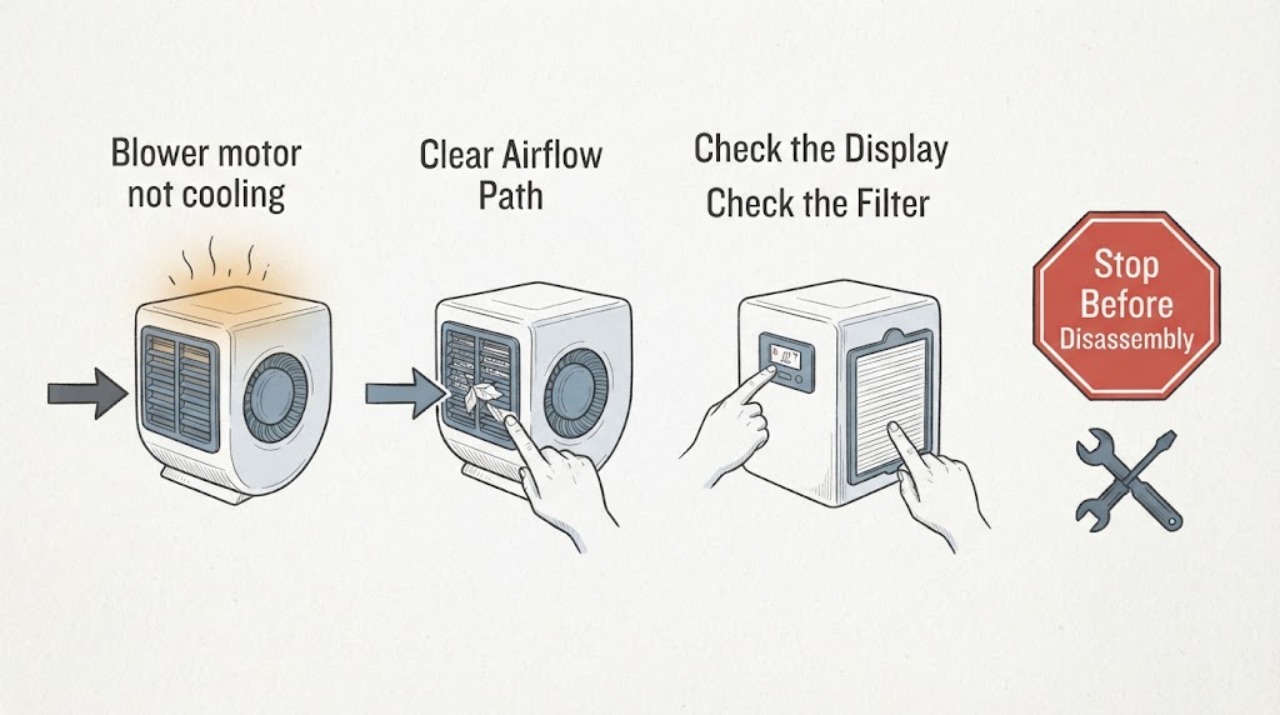
Blower motor not cooling: separate airflow loss from an AC cooling fault
A blower motor does not create cooling by itself: it circulates air through the indoor coil and supply ducts, so a failed or overheating blower can cause little or no airflow, while normal airflow with warm air points to the thermostat, outdoor unit, coil, refrigerant, or another system problem.
-
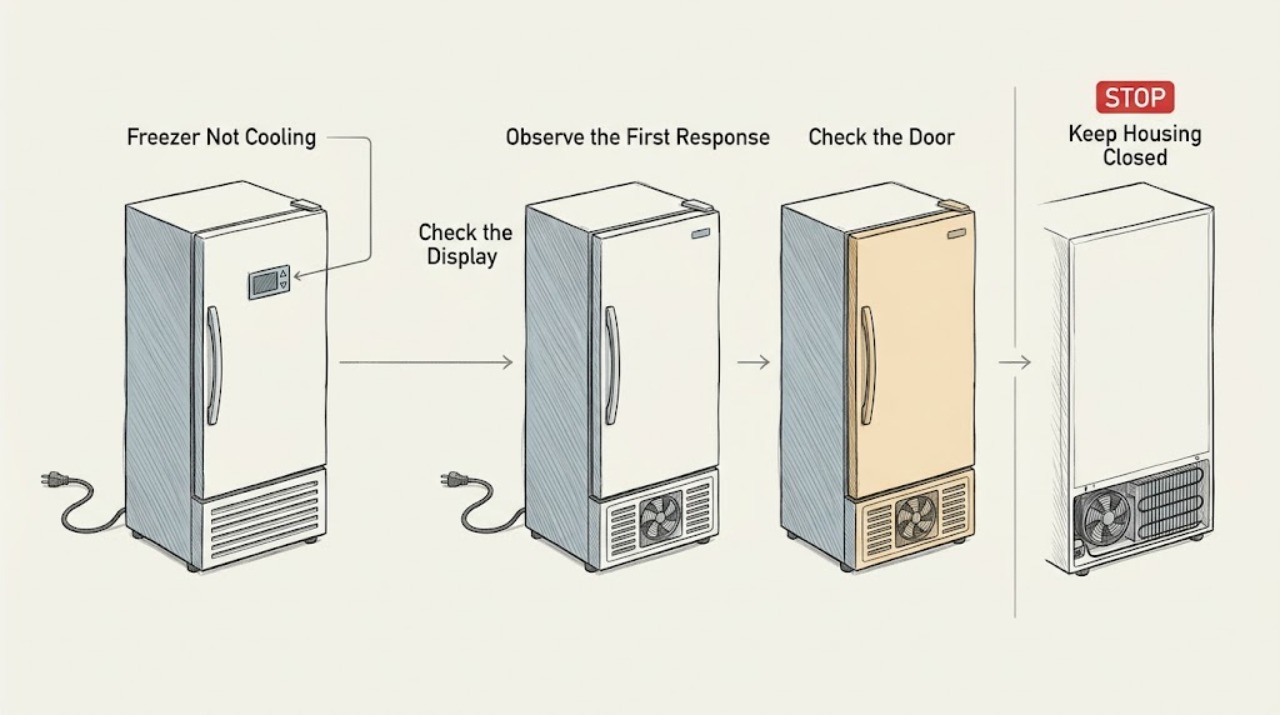
Bosch Freezer Not Cooling: Check Power, Temperature, Airflow, and Frost
If a Bosch freezer is not cooling, first check the plug or external switch, confirm the temperature setting was not changed, and look for a blocked door seal, ventilation opening, or heavy frost. If those visible checks do not restore cooling, or the freezer is warm with a fault indication, repeated trip, damaged cord, or unusual odor, stop and arrange qualified Bosch or appliance service rather than opening the cabinet.
-
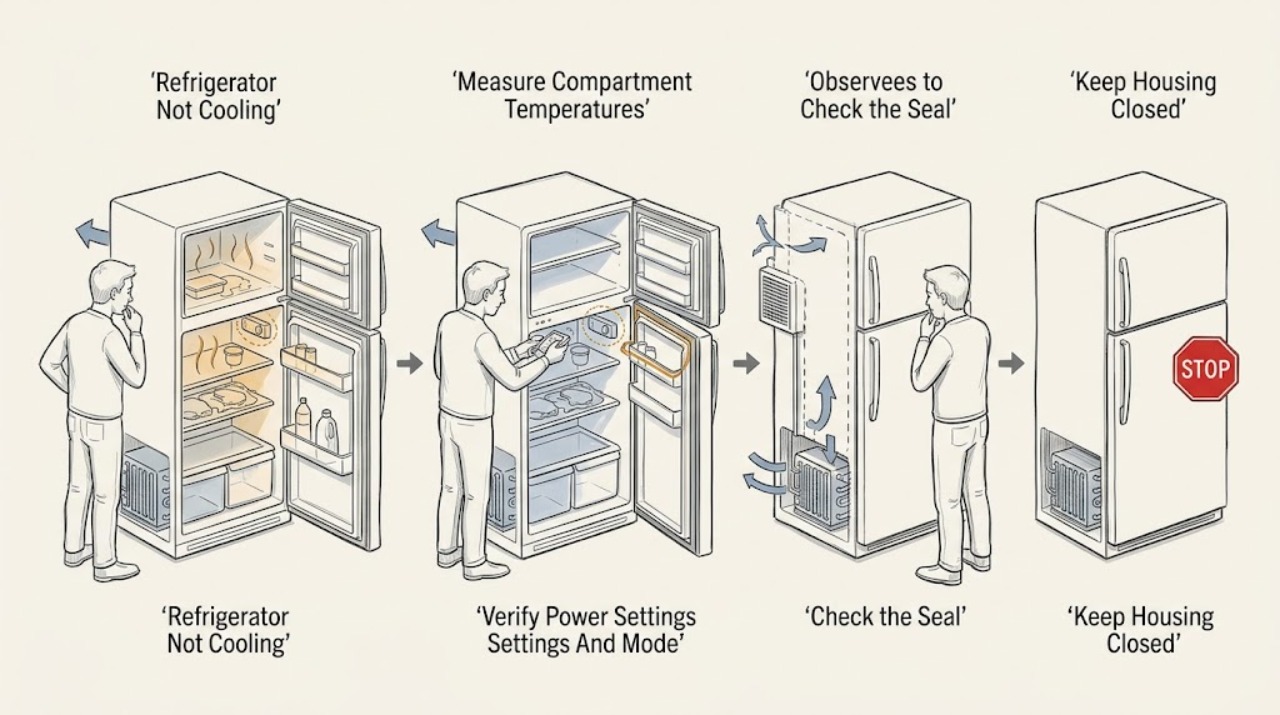
Bosch Refrigerator Not Cooling: Safe Checks and Next Steps
If a Bosch refrigerator is not cooling, first measure the actual temperature in the center of the refrigerator and freezer rather than relying only on the display. Confirm that the appliance has power, the refrigerator setting was not changed, and no showroom or special mode is active; Bosch's general guide uses 35–38°F (1.7–3.3°C) for the refrigerator, but the exact model manual controls the available settings.
-
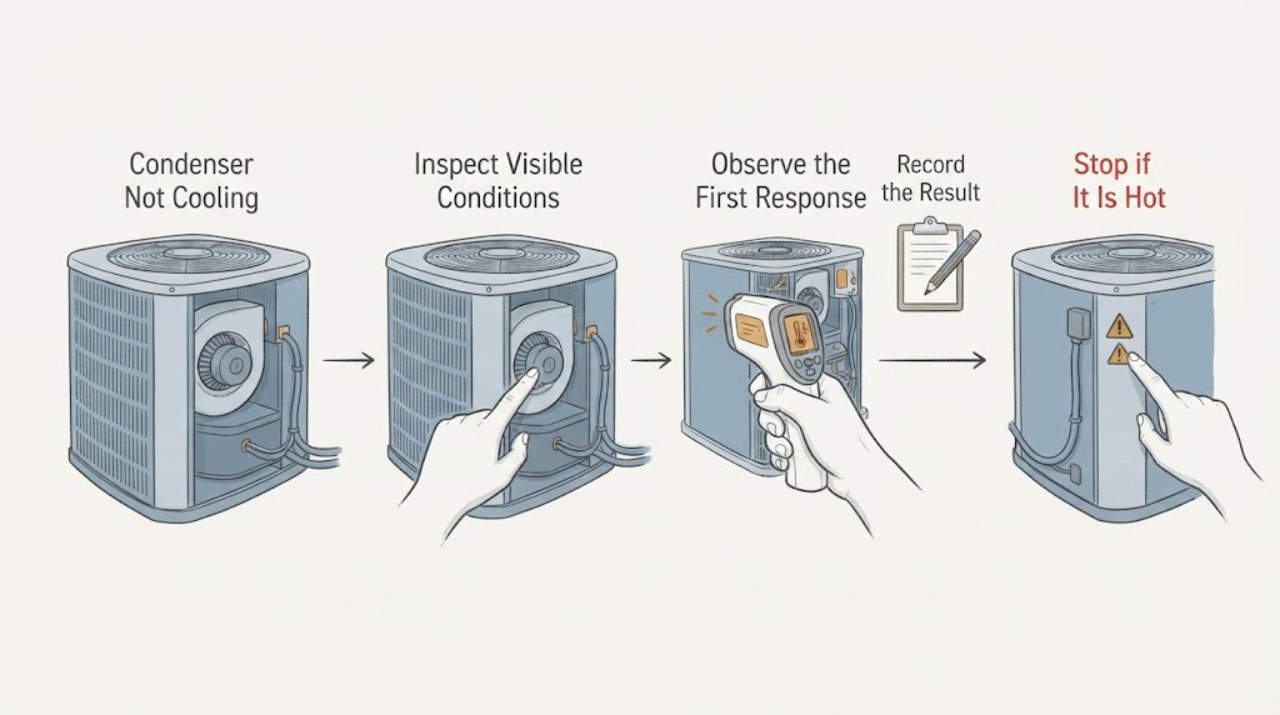
Condenser Not Cooling: Separate Blower Motor and Outdoor Unit Symptoms
When an HVAC condenser is not cooling and the assigned clue is blower motor, first separate indoor airflow from outdoor heat rejection. Check the thermostat mode and call, feel for normal airflow at a supply register, and observe the outdoor condenser from a safe distance.
-
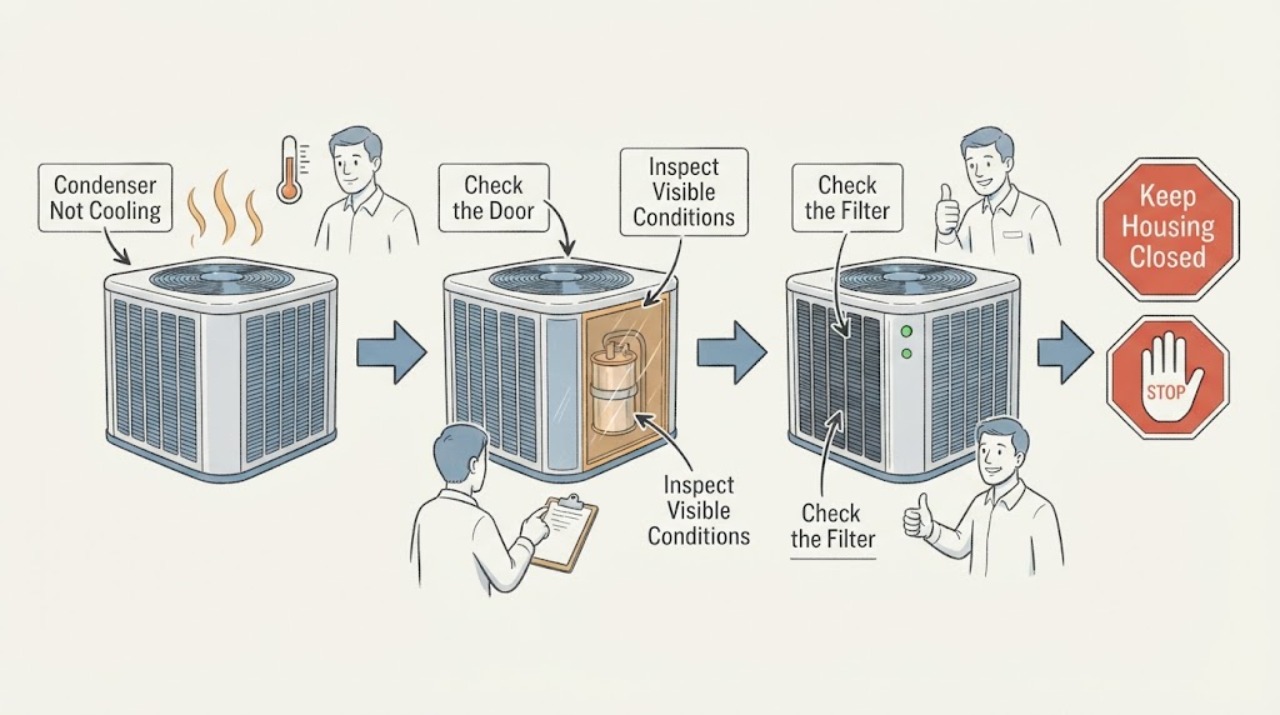
Condenser Not Cooling: Safe Checks Before a Capacitor Diagnosis
A condenser that is not cooling can have a thermostat, indoor-airflow, outdoor-airflow, fan, compressor, refrigerant, or capacitor-related problem. First compare thermostat demand, indoor airflow, outdoor fan behavior, ice, and visible obstructions from safe positions.
-
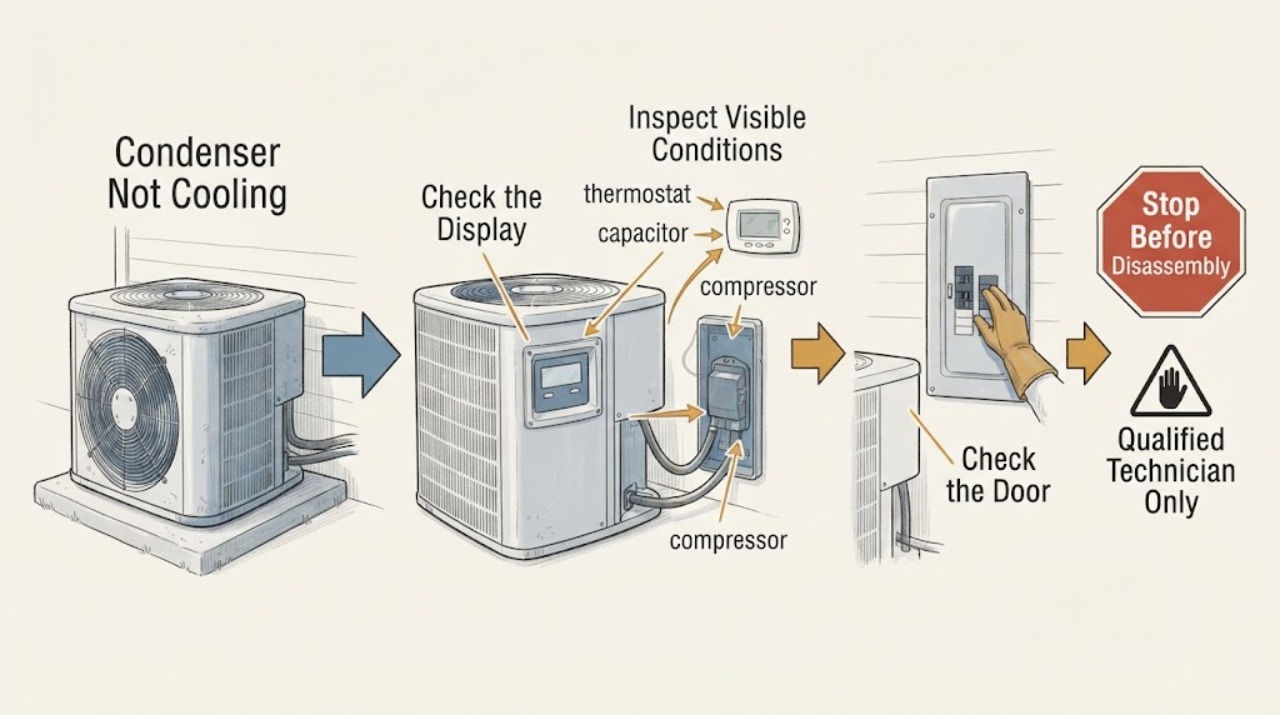
Condenser Not Cooling: Check the Thermostat and Outdoor Unit Safely
A condenser that is not cooling may have no valid thermostat demand, no power to the outdoor unit, blocked outdoor airflow, a failed capacitor or fan, a compressor fault, or low refrigerant. First confirm the thermostat is calling for cooling and observe whether the outdoor condenser starts, but do not open the cabinet.
-
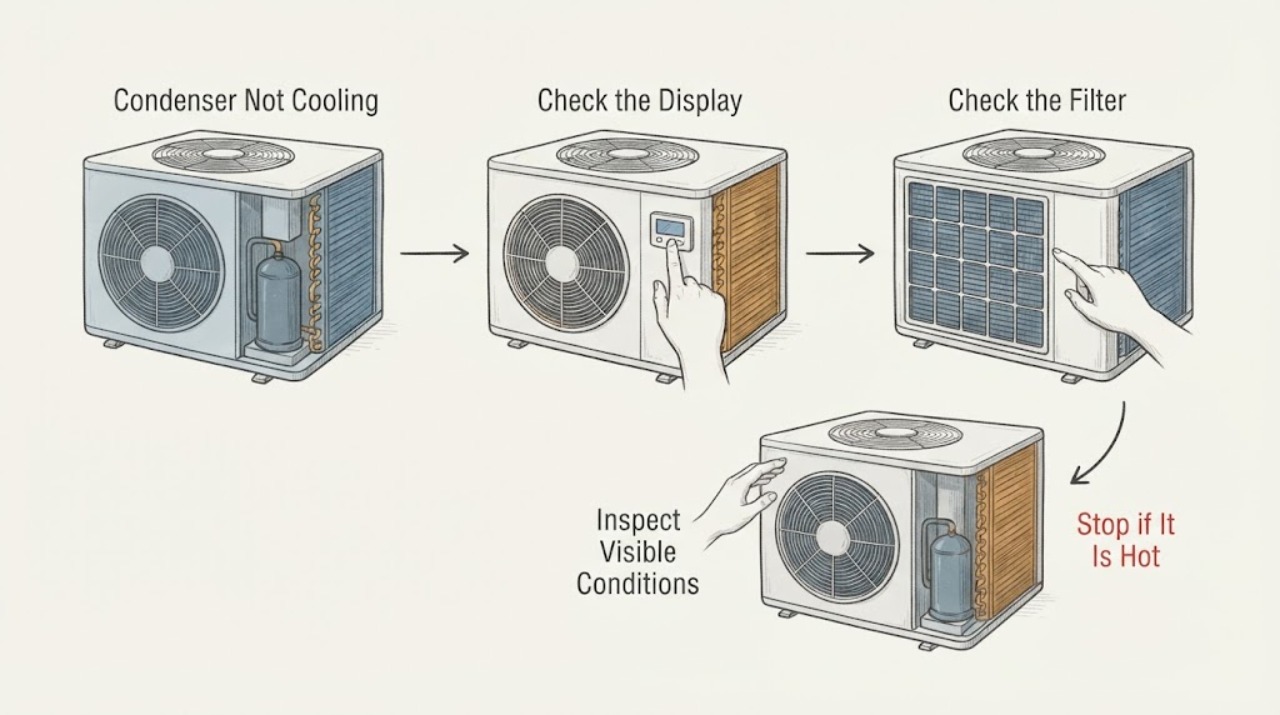
Condenser Not Cooling: Check the System Safely Before Calling HVAC
A condenser that is not cooling usually means the outdoor unit is not rejecting heat, or that an indoor airflow, thermostat, frozen-coil, electrical, refrigerant, compressor, or fan problem is preventing the split system from cooling. First confirm that the thermostat is calling for cooling and that indoor air is moving, then inspect the filter and the outdoor cabinet from a safe distance for blockage, ice, unusual noise, or no operation.