
Repair problem
Not Cooling Troubleshooting Guides – Page 2
Published FixGraph guidance for diagnosing and responding to not cooling.
Matching published guides
Choose a guide that matches the service, equipment, and conditions you are seeing.
-
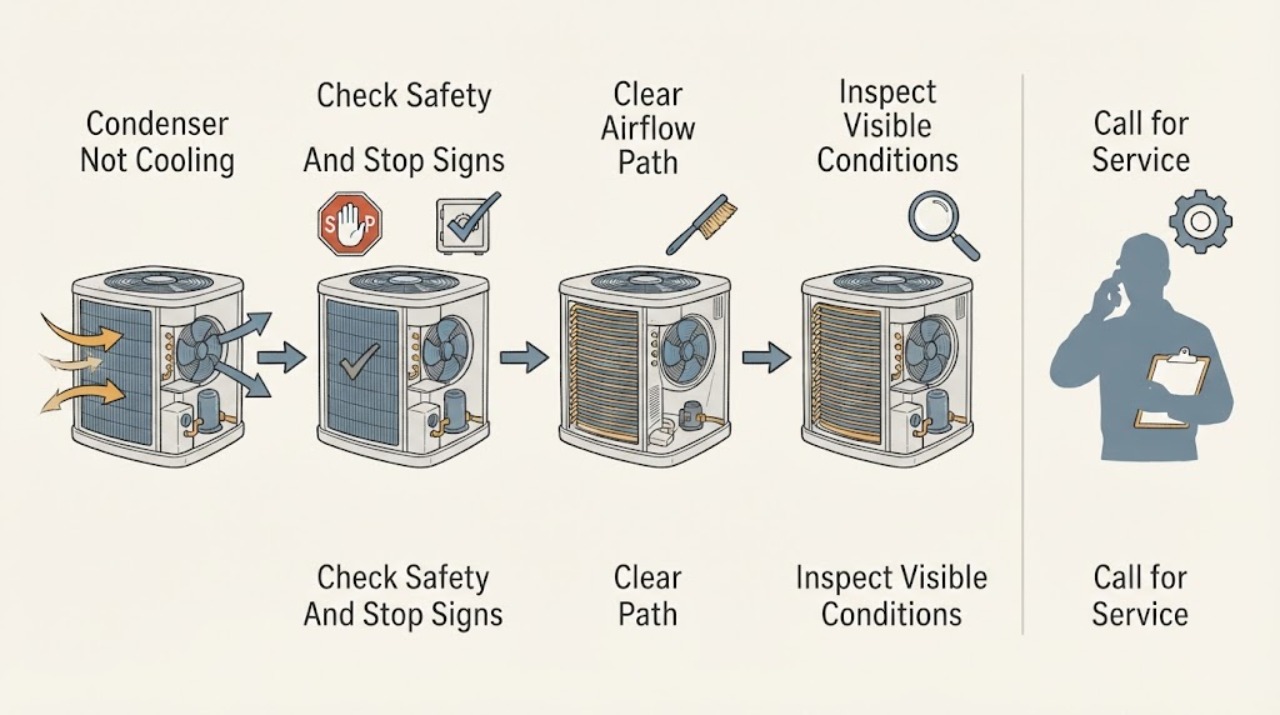
Condenser Not Cooling: Check the Call for Cooling, Outdoor Airflow, and Safe Fault Boundaries
If a condenser is not cooling, first check from a safe position that the thermostat is calling for cooling and the indoor filter and airflow are not obviously restricted. With the call for cooling still active, observe whether the outdoor condenser fan runs, whether the unit is silent, humming, short-cycling, unusually noisy, or surrounded by blocked airflow.
-
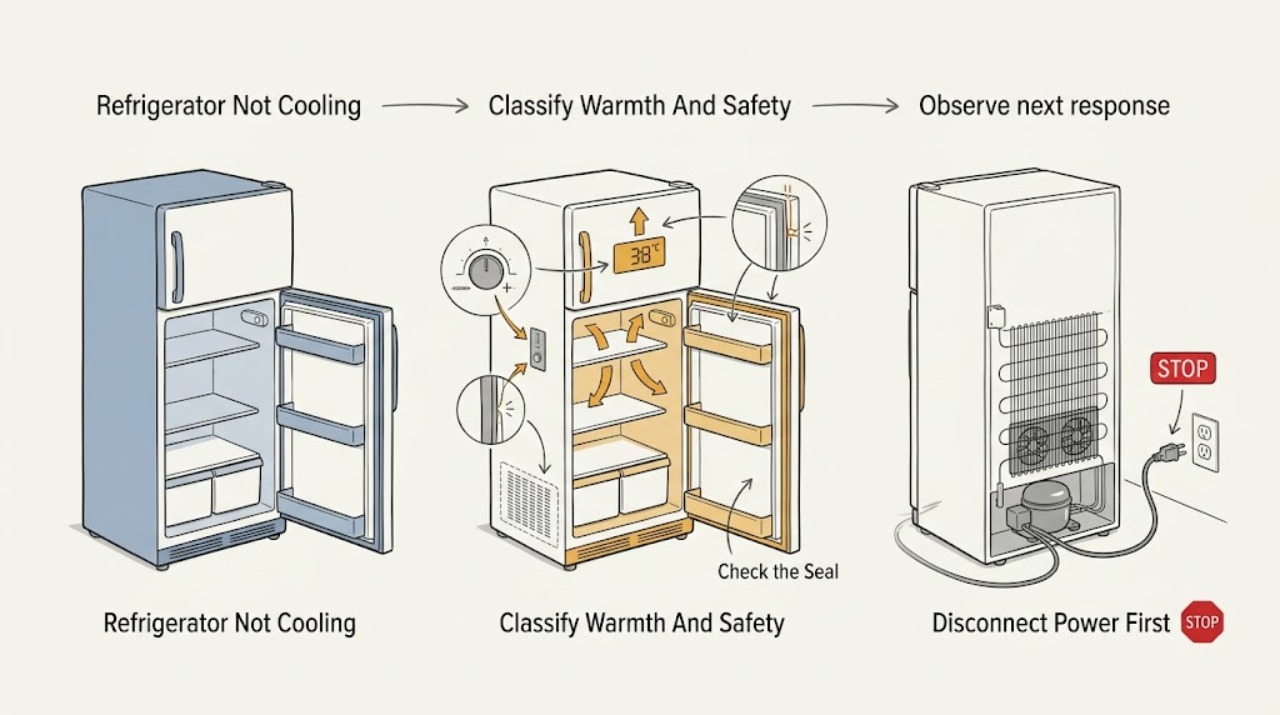
Crosley Refrigerator Not Cooling: Settings, Airflow, Doors, and Safe Service Checks
First check whether the refrigerator has power and whether either temperature control is OFF or set too warm. Confirm that packages are not holding a door open, the gasket contacts the cabinet all the way around, food is not blocking interior air vents, and the exterior grille/clearance is not obstructed.
-
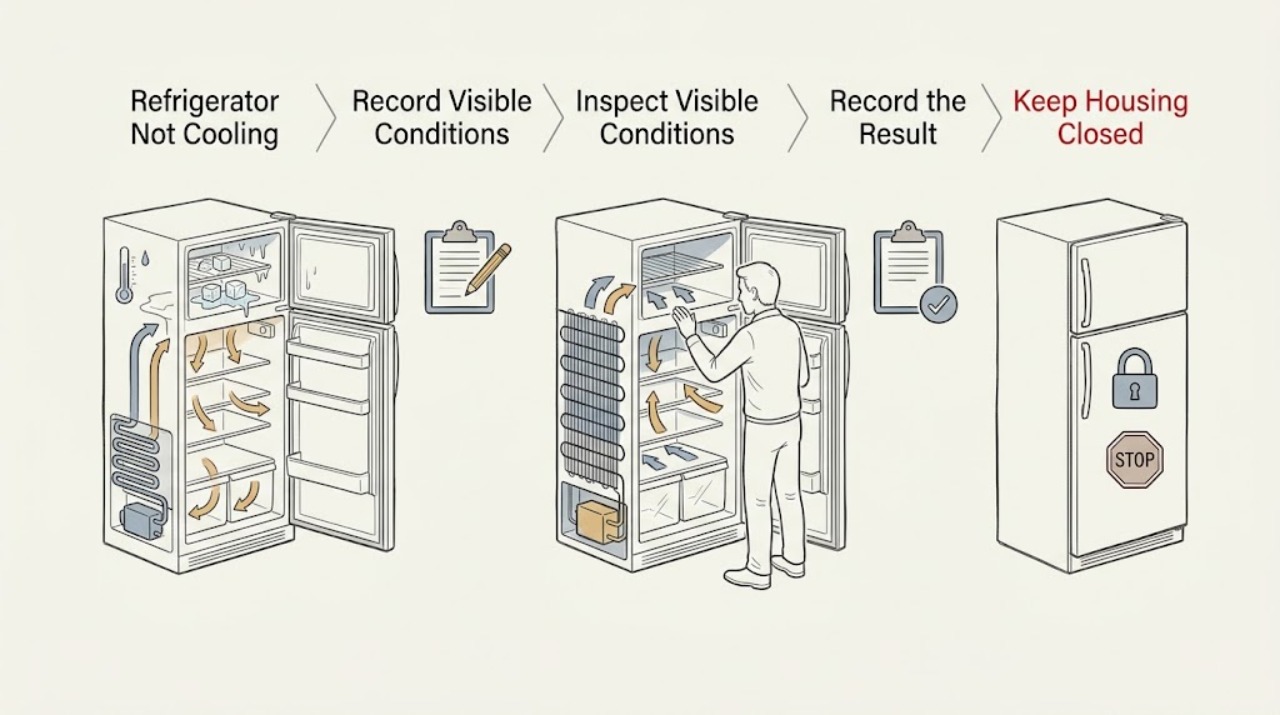
Dacor Refrigerator Not Cooling
When a Dacor refrigerator is not cooling, first read the complete model number and check that the display responds, the temperature settings are not in a model-specific off, demo, vacation, or other reduced-cooling state, and any available Power Cool or equivalent mode is used only as the owner's guide describes. Confirm both doors close against their gaskets, shelves and food are not blocking visible vents, and the cabinet has room to reject heat.
-
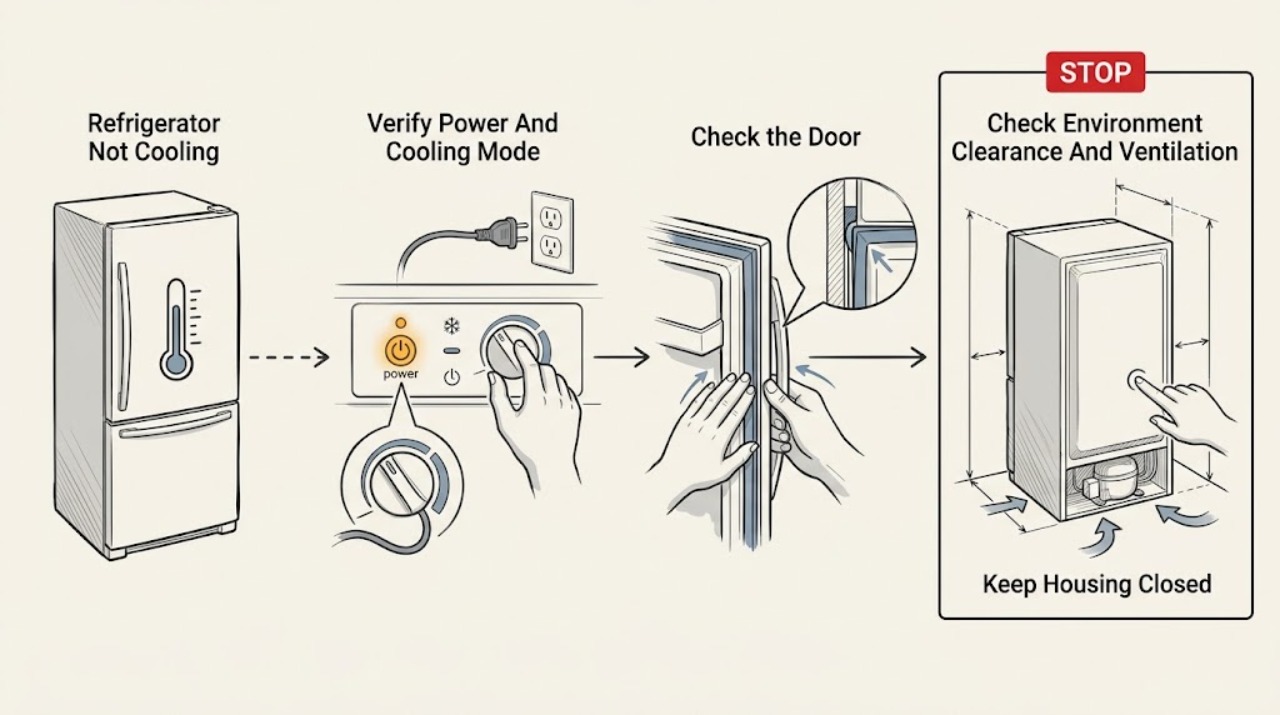
Daewoo Refrigerator Not Cooling: Safe Checks Before Service
If a Daewoo refrigerator is not cooling, first protect the food and check that the appliance has power, the temperature control is set for cooling rather than an off or convertible mode, and the doors close fully. Then look for blocked interior air outlets, overloading, a nearby heat source, or inadequate clearance around the cabinet.
-
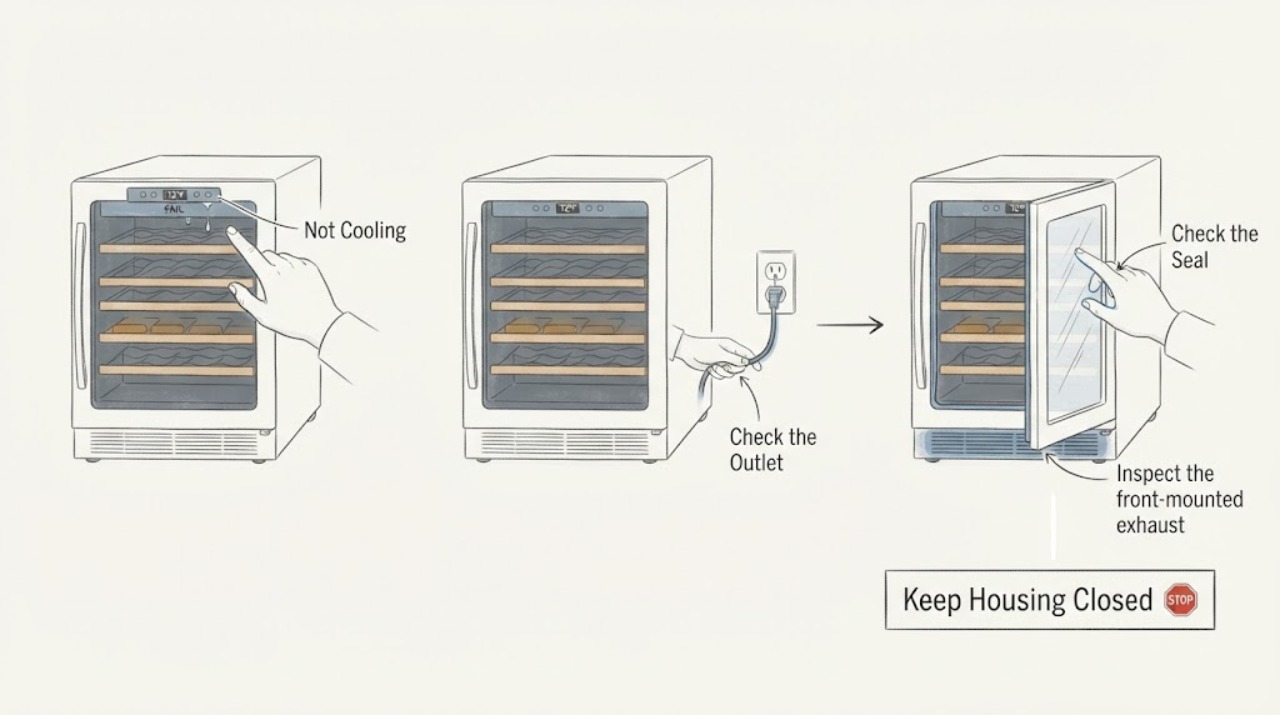
Danby DWC276BLS Not Cooling: Front Vent and Setting Checks
For the Danby DWC276BLS, confirm that the electronic control is on and set within the documented 39–64°F range, then check the front-mounted exhaust and door seal. This is a single-zone integrated wine cooler: the front exhaust must remain clear, shelves must not be covered in a way that blocks cabinet airflow, and a recently loaded warm bottle group may delay recovery.
-
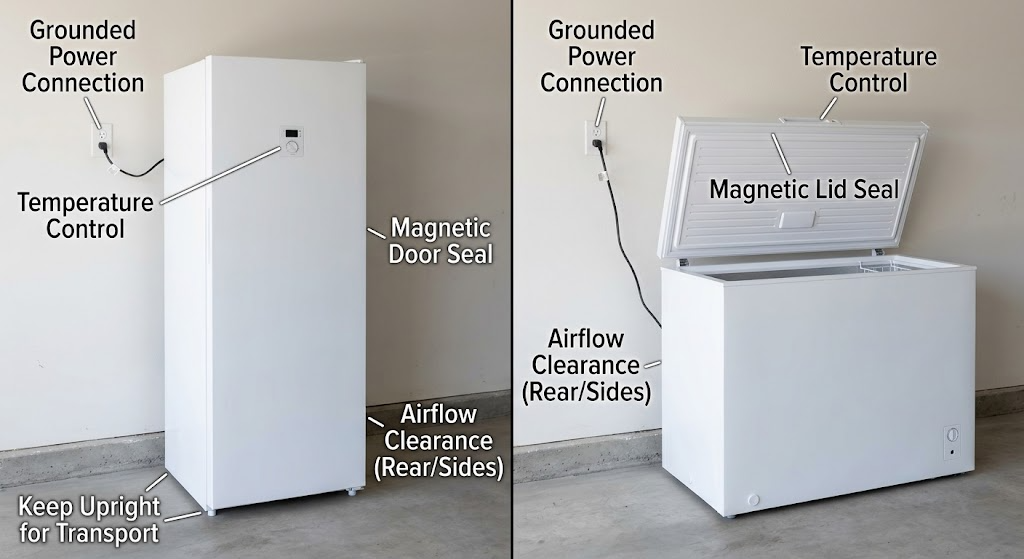
Danby Freezer Not Cooling: Check Power, Temperature, Door Seal, Airflow, and Placement
Start by separating no power from weak cooling. Danby's freezer guidance says to confirm that the unit is plugged in and turned on, and to allow a freezer that was transported on its side to stand upright for 6 hours before plugging it in.
-
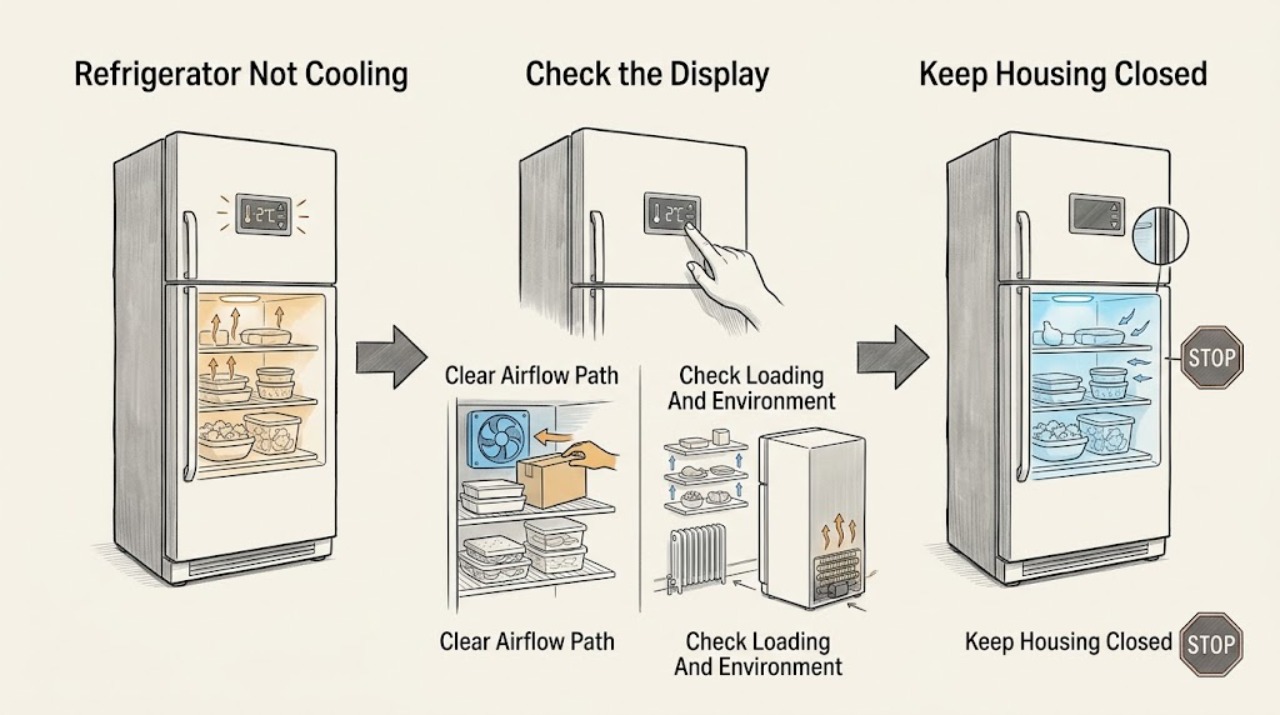
Danby Refrigerator Not Cooling: Settings, Airflow, Doors, and Safe Checks
First confirm that the Danby refrigerator is plugged in, turned on, and not in a model-specific standby or compressor-off mode. Check the exact temperature controls rather than assuming a higher number is warmer or colder; Danby dial and electronic models differ.
-
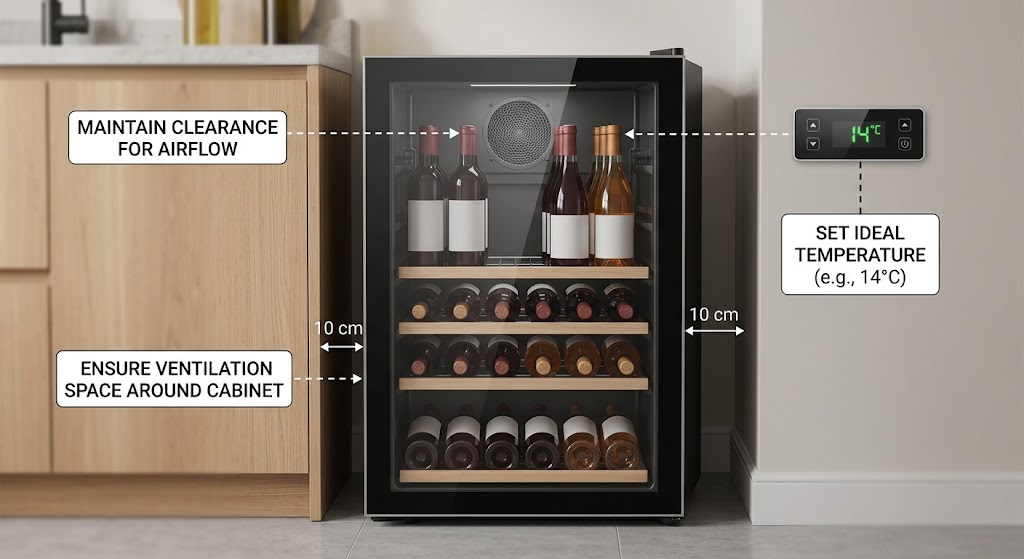
Danby Wine Cooler Not Cooling: Safe Checks for Settings, Airflow, and Loading
If a Danby wine cooler is not cooling, first verify that it has power and that the control is turned on and set to a cooling temperature for the correct zone. Do not assume every Danby cooler uses the same control: some manuals use a rear thermostat dial while newer models use digital or dual-zone controls, so use the exact model manual.
-
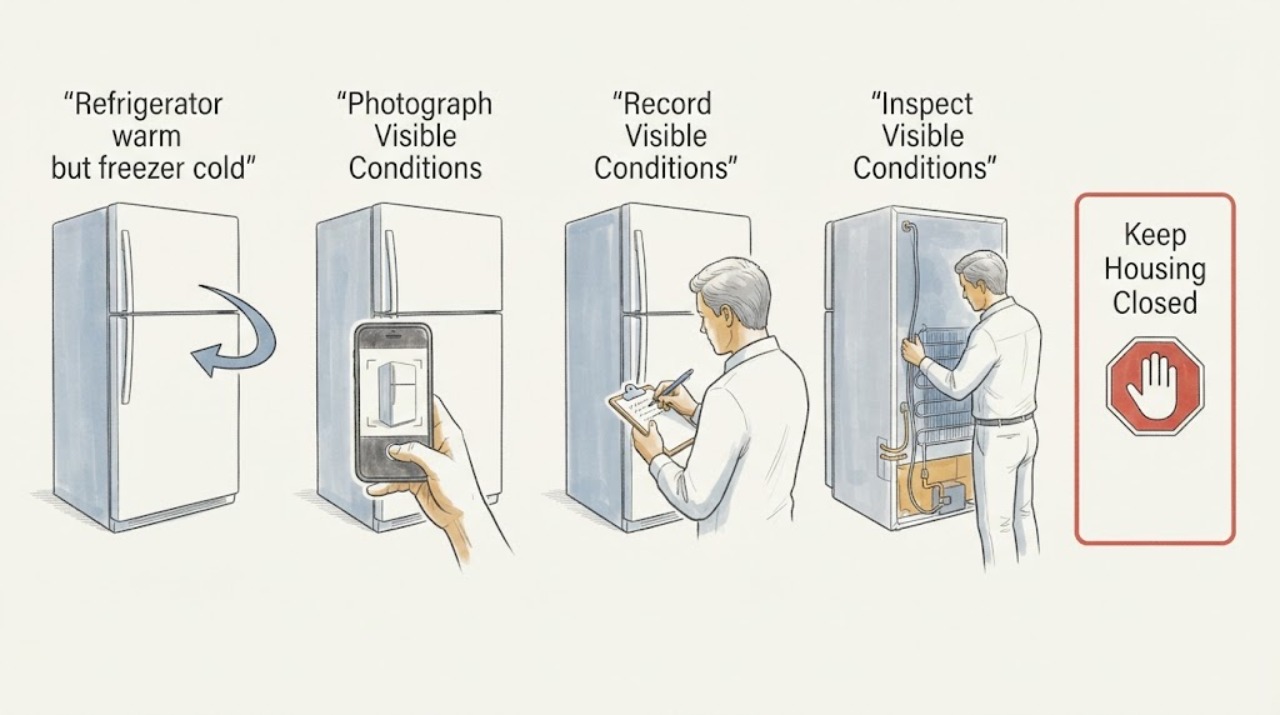
Electrolux EI12BF25US refrigerator warm but freezer cold, with 18C display after frost was melted
The EI12BF25US is an exact Electrolux 11.8 cu. ft.
-
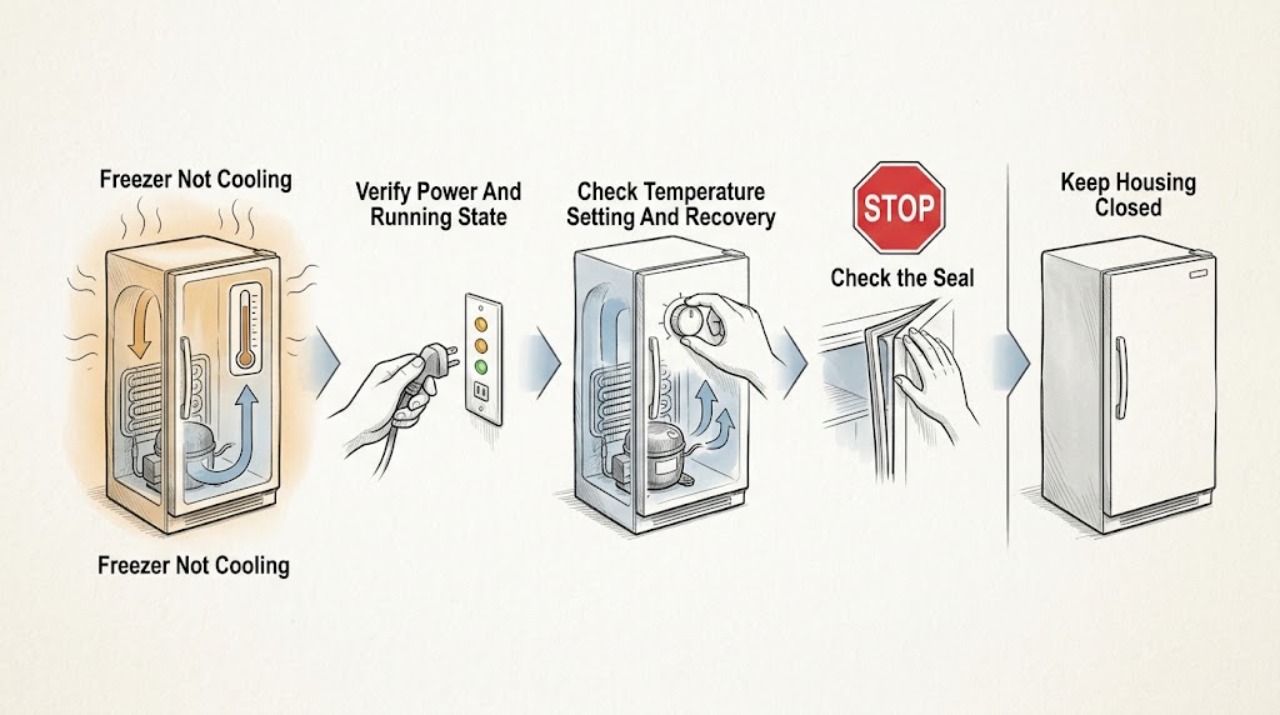
Electrolux Freezer Not Cooling: Safe Checks Before Service
Start by confirming that the Electrolux freezer has power, is set to a normal cold setting, and has a fully closed door with an intact seal. Clear food from the air vents, inspect for heavy frost, and keep the door closed while the temperature recovers.
-
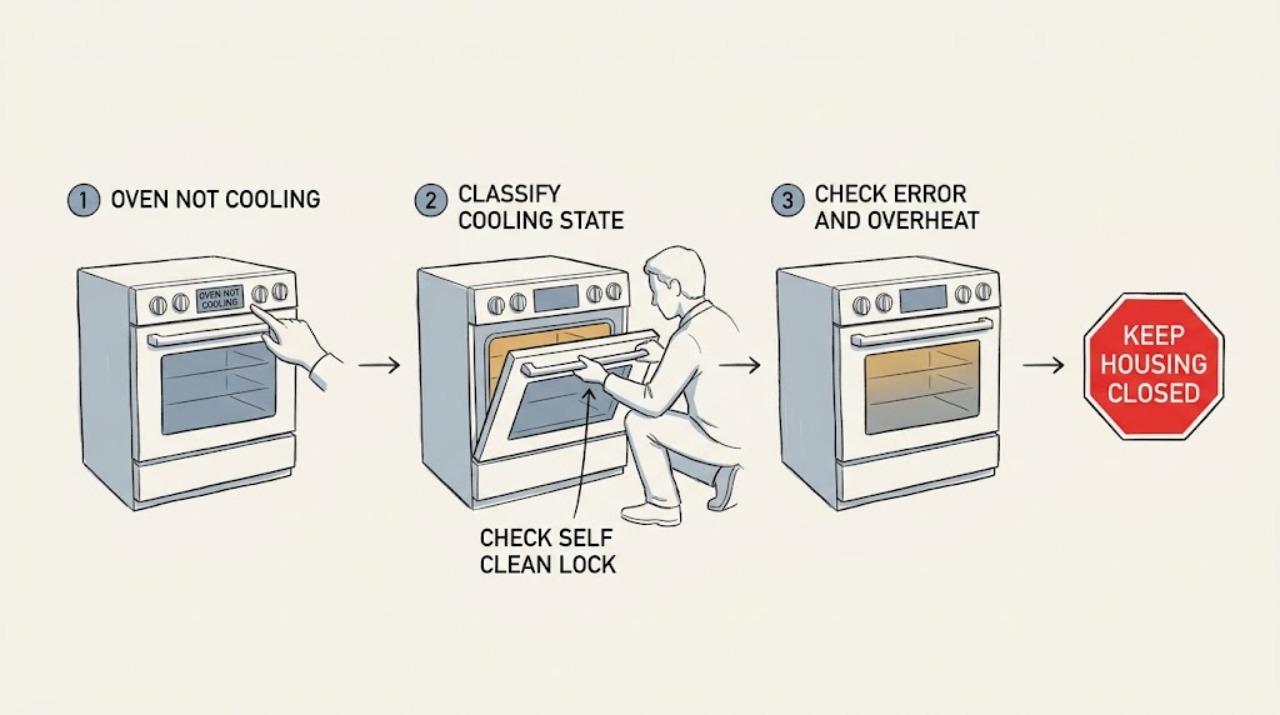
Electrolux Oven Not Cooling
An Electrolux oven is not supposed to cool instantly. Its cooling fan normally runs while cooking and can continue while the cavity is warm; Electrolux's opened support guidance says it should normally stop within about an hour after cooking.
-
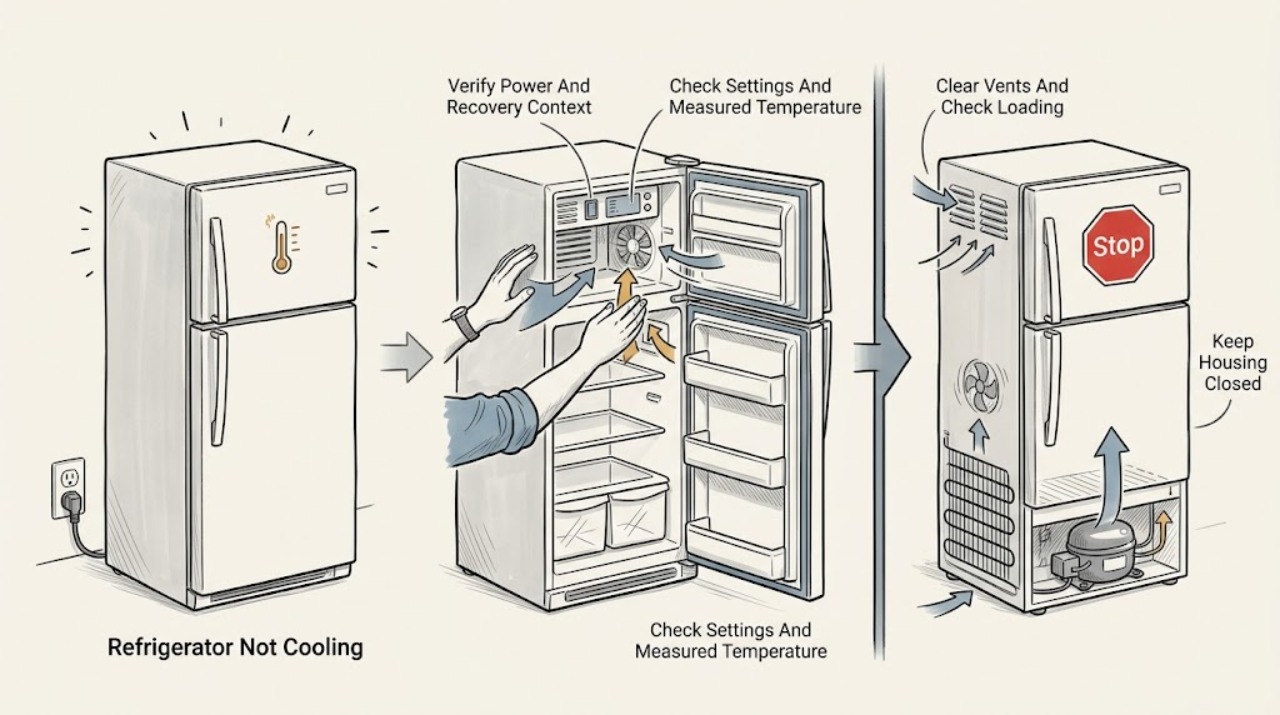
Electrolux Refrigerator Not Cooling: Safe Checks Before Service
For an Electrolux refrigerator that is not cooling, first determine whether the whole appliance is without power, whether only the fresh-food compartment is warm, or whether both sections are warm. Check the display and interior light, the control setting, door closure and gasket, blocked interior vents, and whether the unit was recently installed, moved, loaded heavily, or affected by a power interruption.
-
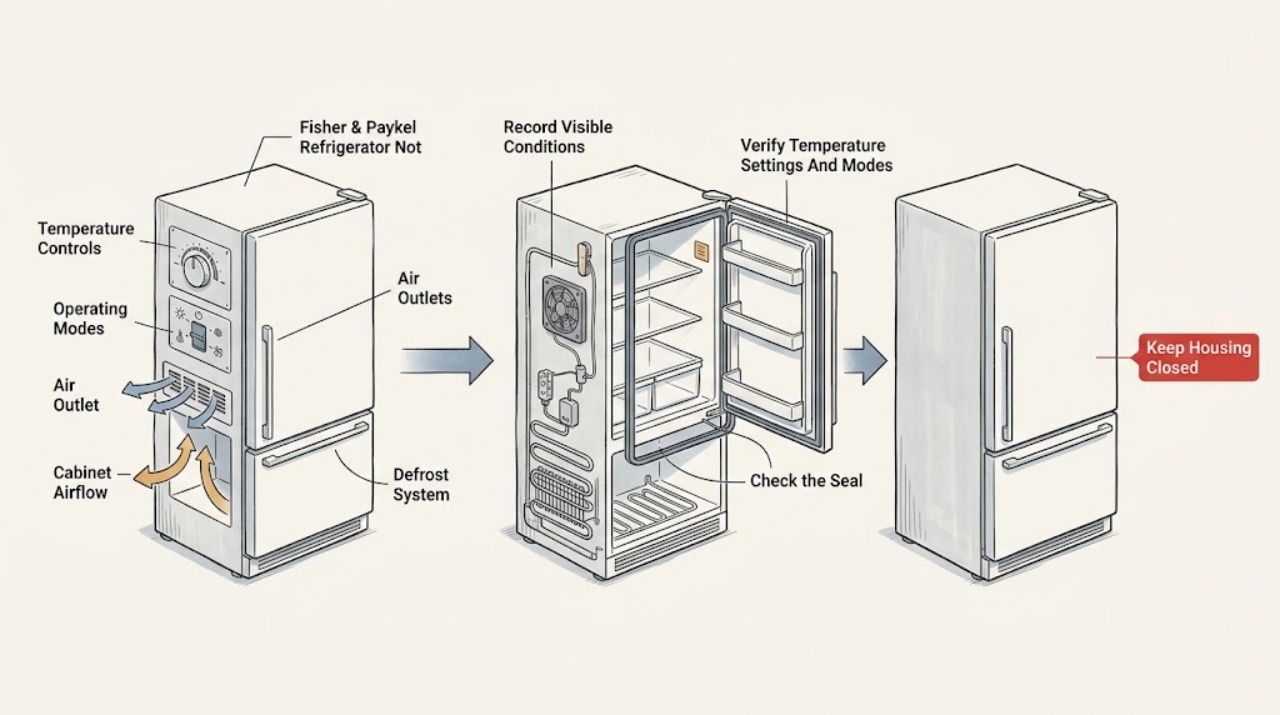
Fisher & Paykel Refrigerator Not Cooling: Settings, Airflow, and Service Checks
For a Fisher & Paykel refrigerator that is not cooling, first determine whether the appliance has power and whether one compartment or both are warm. Check the exact model's temperature setting and active mode, keep doors closed while the temperature stabilizes, move food away from visible air outlets, and confirm the doors close against clean, flat gaskets.
-
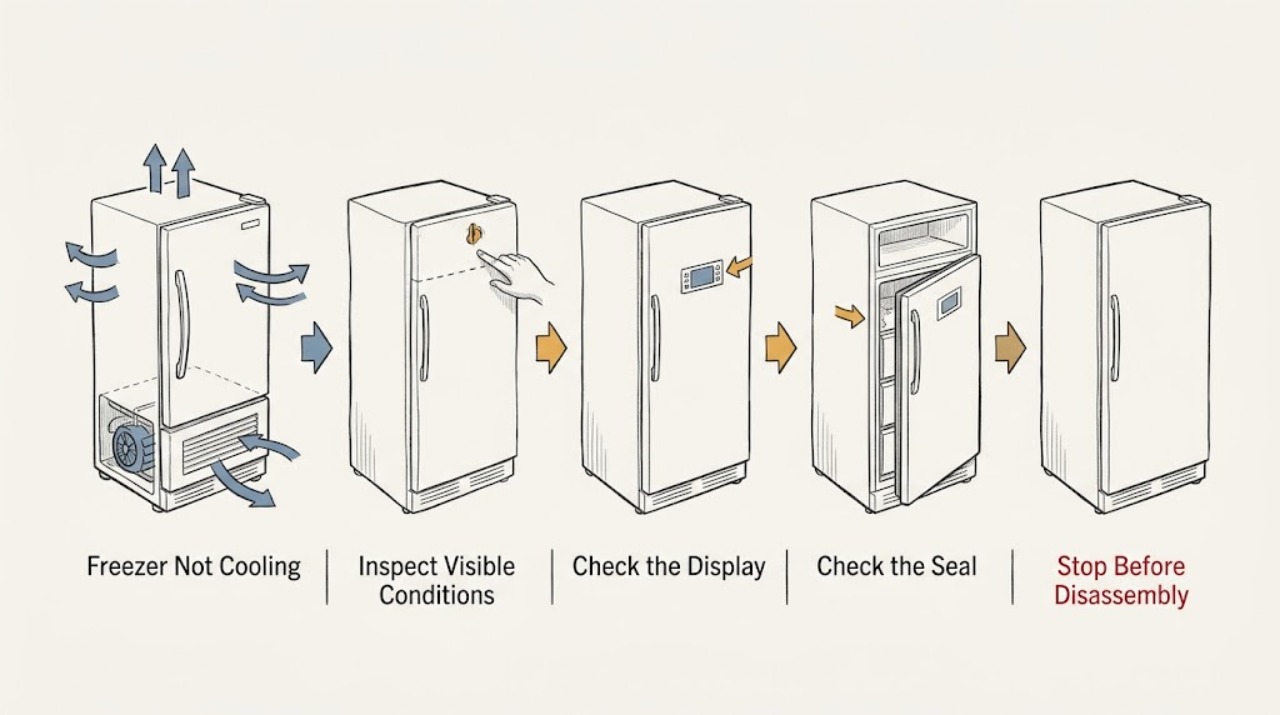
Freezer Not Cooling: Check the Setting, Airflow, Frost, and Power Safely
Start by protecting the food and measuring the freezer temperature if you can. Confirm that the freezer is powered on and not in an Off, Demo, or Showroom mode, then verify the temperature setting and wait for the model's specified stabilization period.
-
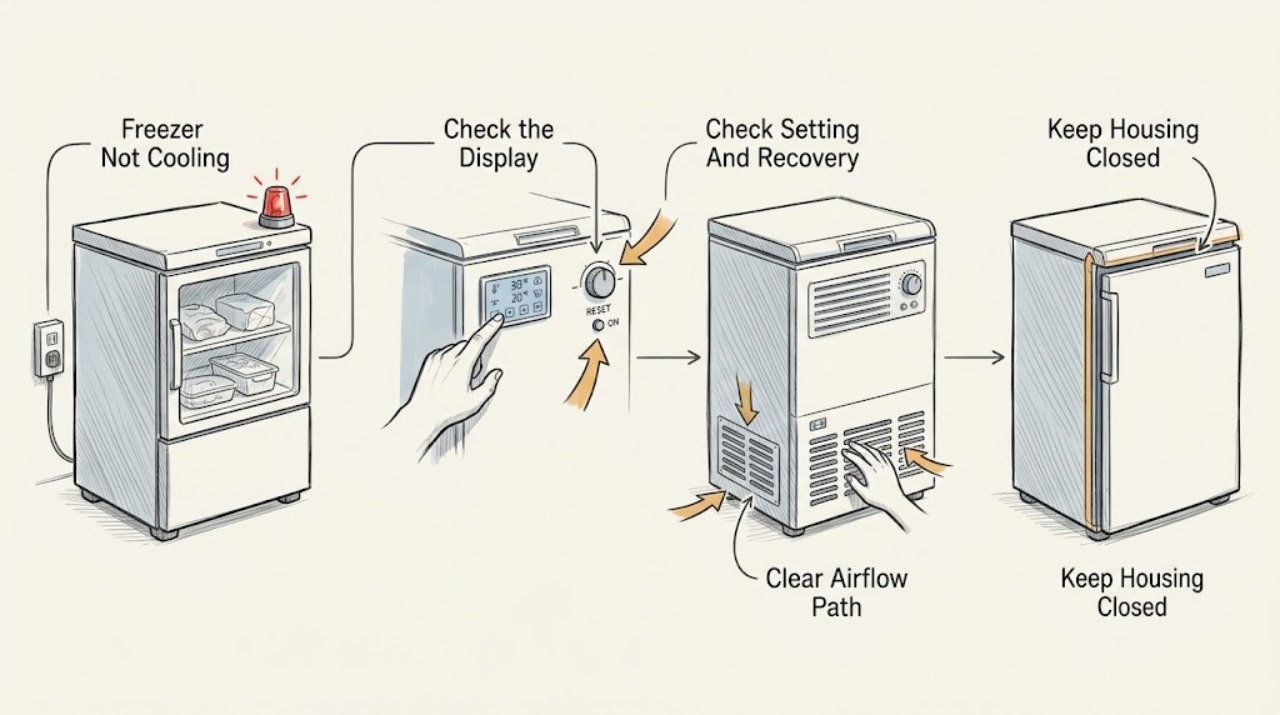
Frigidaire Freezer Not Cooling: Check Power, Airflow, Frost, and Seals
If your Frigidaire freezer is not cooling, keep the door or lid closed and first confirm that it has power and the control is not set to off. Then verify the temperature setting, clear food from interior vents, check that the door or lid closes and seals, and look for heavy frost that restricts airflow.
-
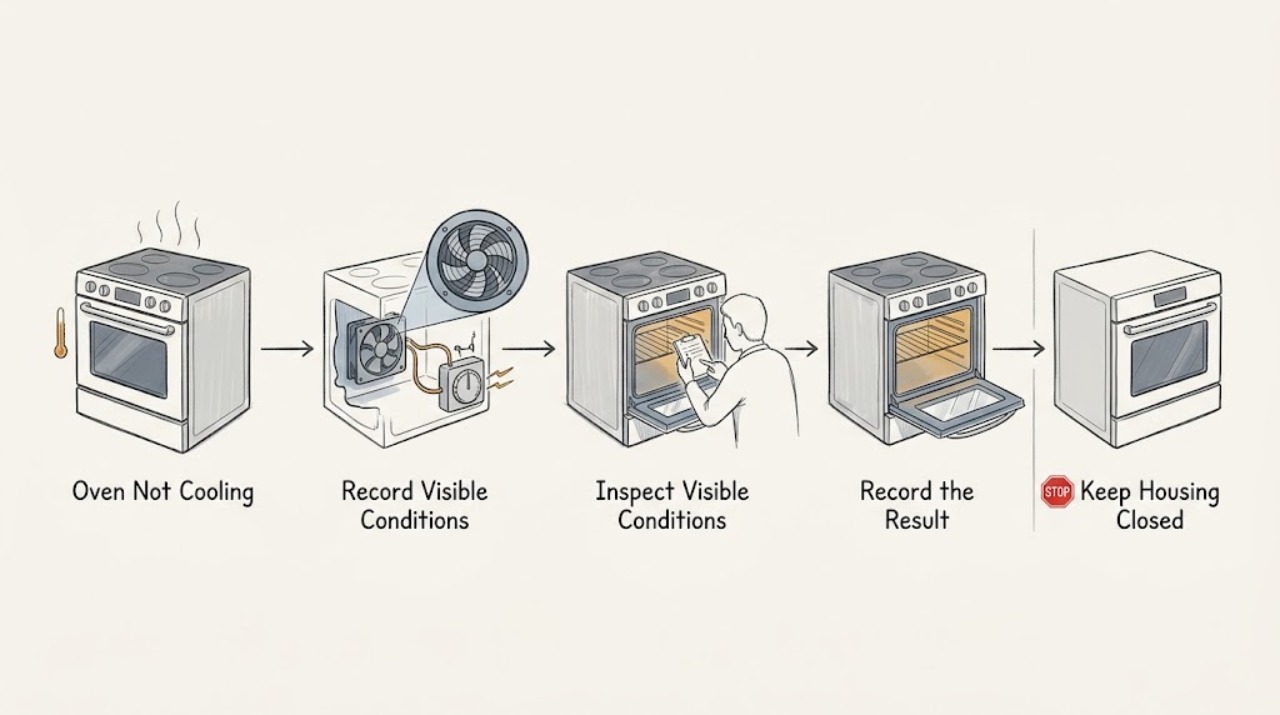
Frigidaire Oven Not Cooling: Check the Cooling-Fan Behavior
First separate normal retained heat from a cooling-fan or over-temperature fault. Frigidaire says the oven fan can run during preheat and baking, and may continue after the oven is turned off until the internal temperature falls.
-
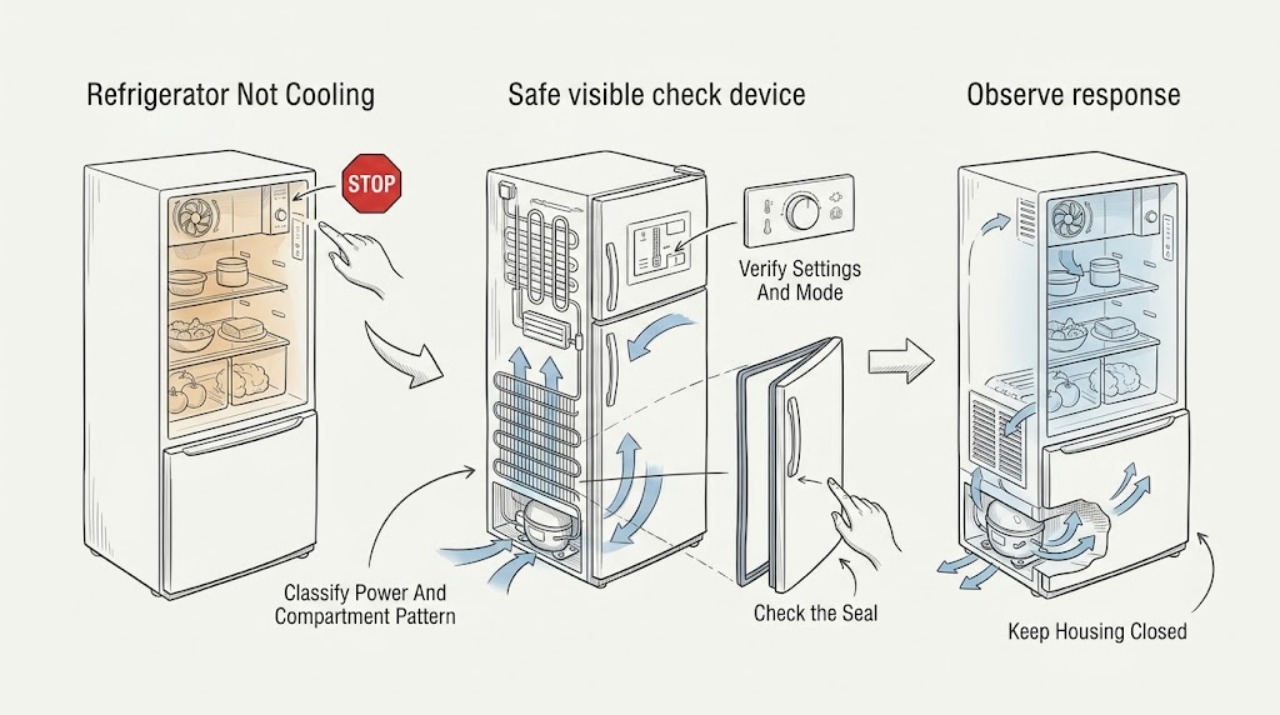
Frigidaire Refrigerator Not Cooling: Settings, Airflow, and Safe Checks
First separate a refrigerator with no power from one that has power but is warm. Frigidaire's guidance points to installation or recent power loss, temperature settings, a warm room, blocked vents, an open or poorly sealing door, and restricted rear airflow as user-visible causes.
-
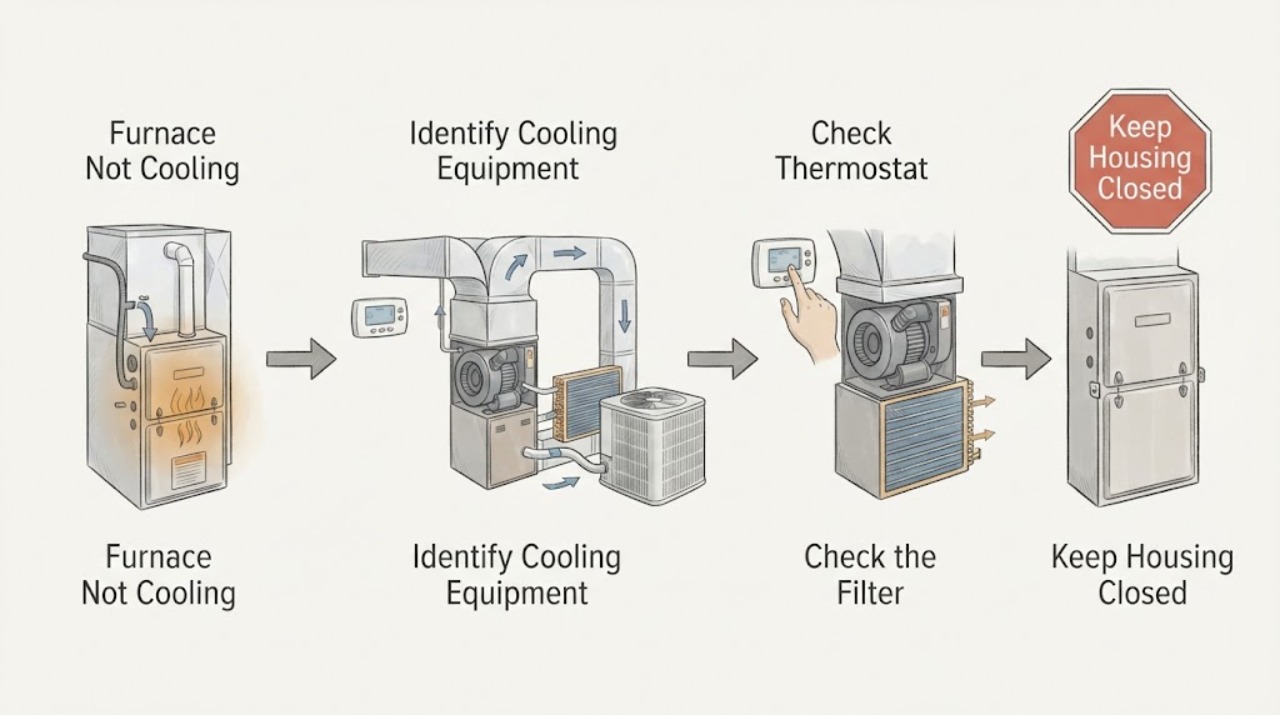
Furnace Not Cooling: Check the Shared HVAC System Safely
A furnace does not provide cooling; it is the heating and indoor-air-moving part of many central HVAC systems. If the home is not cooling, check the thermostat's Cool mode and temperature setting, keep the fan on Auto, inspect the accessible air filter and vents, and observe whether the outdoor air-conditioning condenser operates.
-
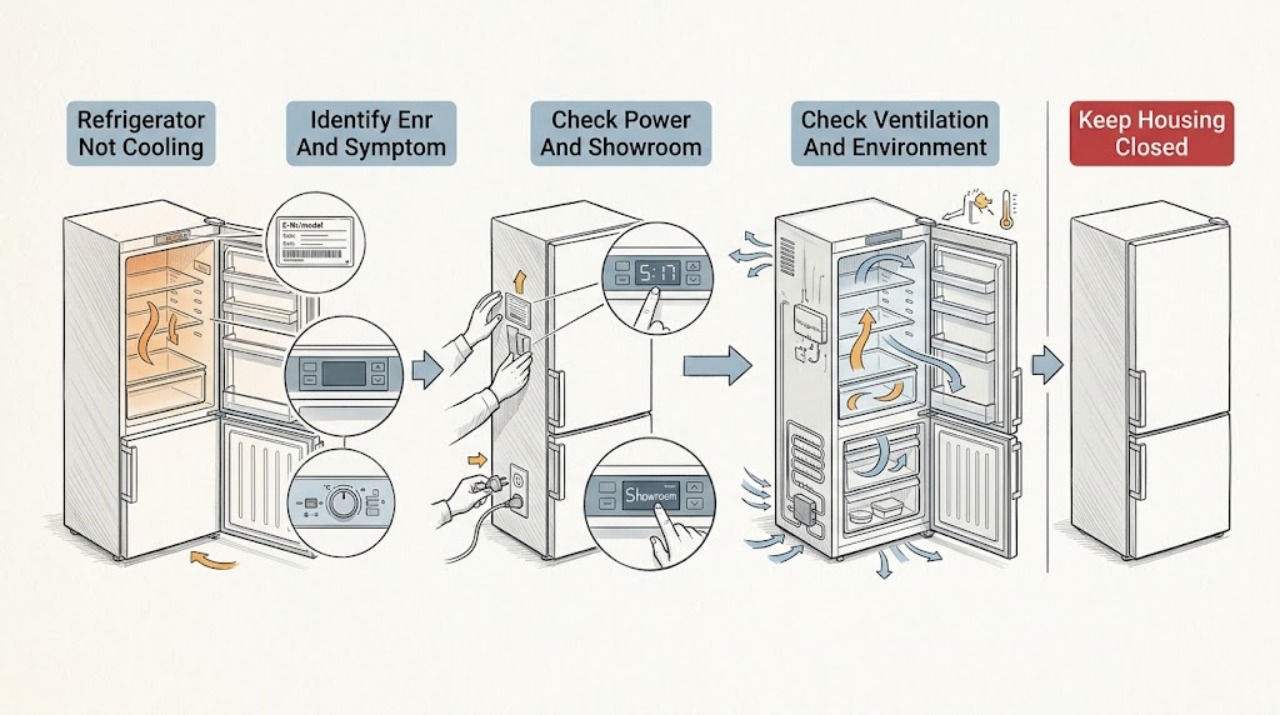
Gaggenau Refrigerator Not Cooling: Check Mode, Airflow, and Temperature First
First record the exact Gaggenau E-Nr/model, which compartment is warm, and whether the display and interior lights work. If the display is lit but the refrigerator does not cool, check the exact manual for showroom/demo mode; the opened RC 282 and RVB497790 manuals both identify showroom mode as a cause of a powered refrigerator that does not cool.
-
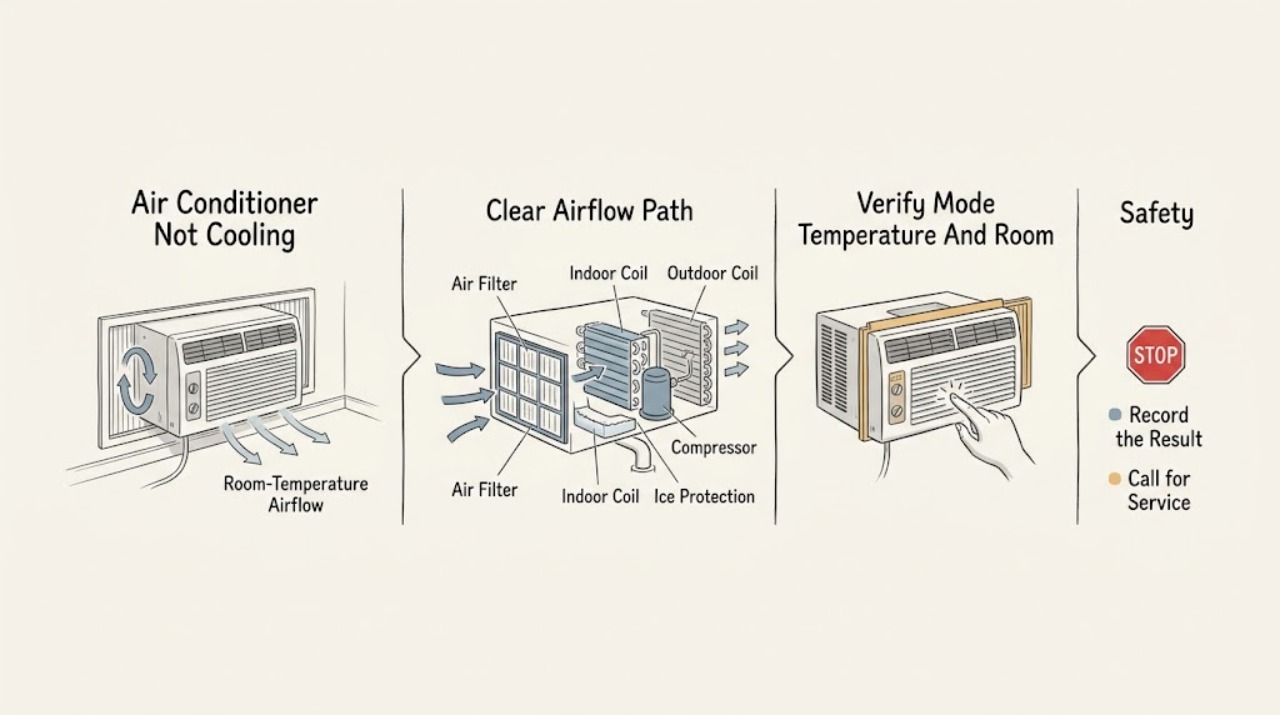
GE Air Conditioner Not Cooling: Settings, Airflow, Ice, and Service Checks
For a GE room air conditioner that is running but not cooling, first separate weak airflow from airflow that feels normal but is not cold. Confirm the model's cooling mode and temperature setting; on a mechanical dial GE says the highest setting provides maximum cooling, while on electronic controls a lower temperature setting provides maximum cooling.
-
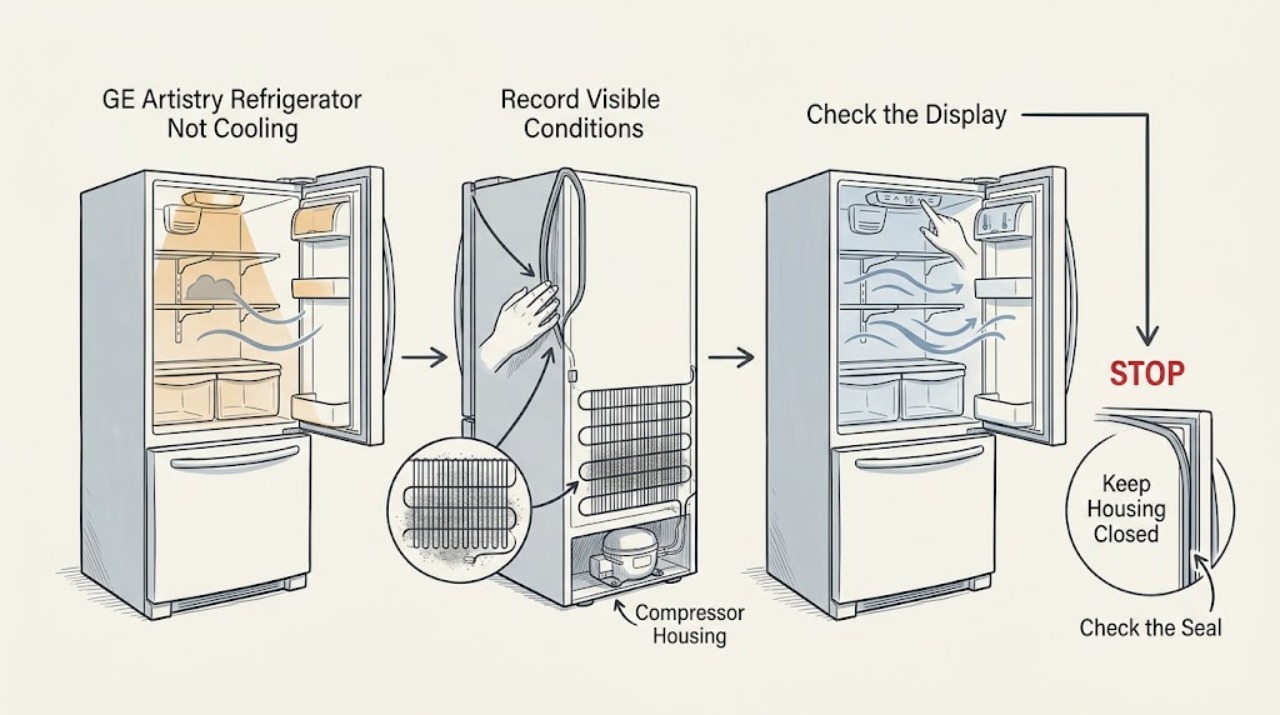
GE Artistry Refrigerator Not Cooling
If a GE Artistry refrigerator is not cooling, first record whether the fresh-food section, freezer, or both are warm and whether the unit is newly installed or recently loaded.
-
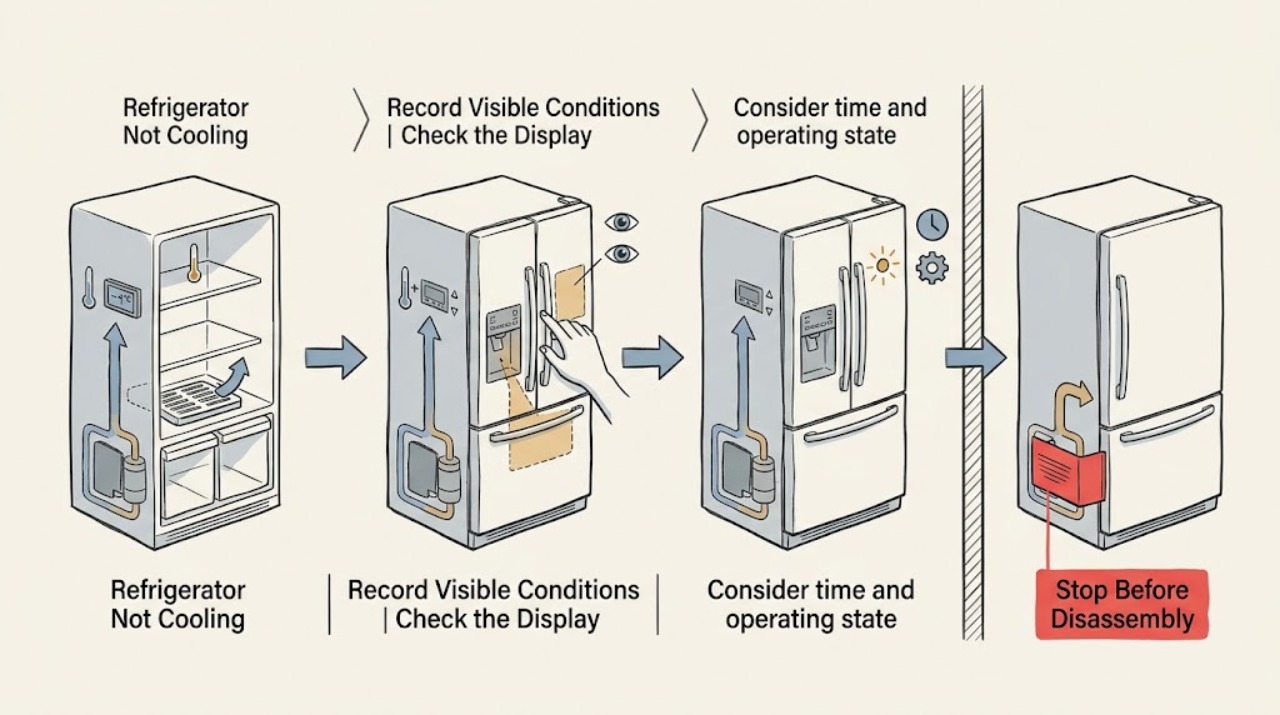
GE Café Refrigerator Not Cooling
If a GE Café refrigerator is warm, first check the exact model's temperature controls, power indications, and any OFF, demo, or diagnostic state. Then allow a newly installed or recently interrupted unit time to stabilize, check that doors and gaskets seal, clear food from air outlets, and verify the installation has the manual's required clearance.
-
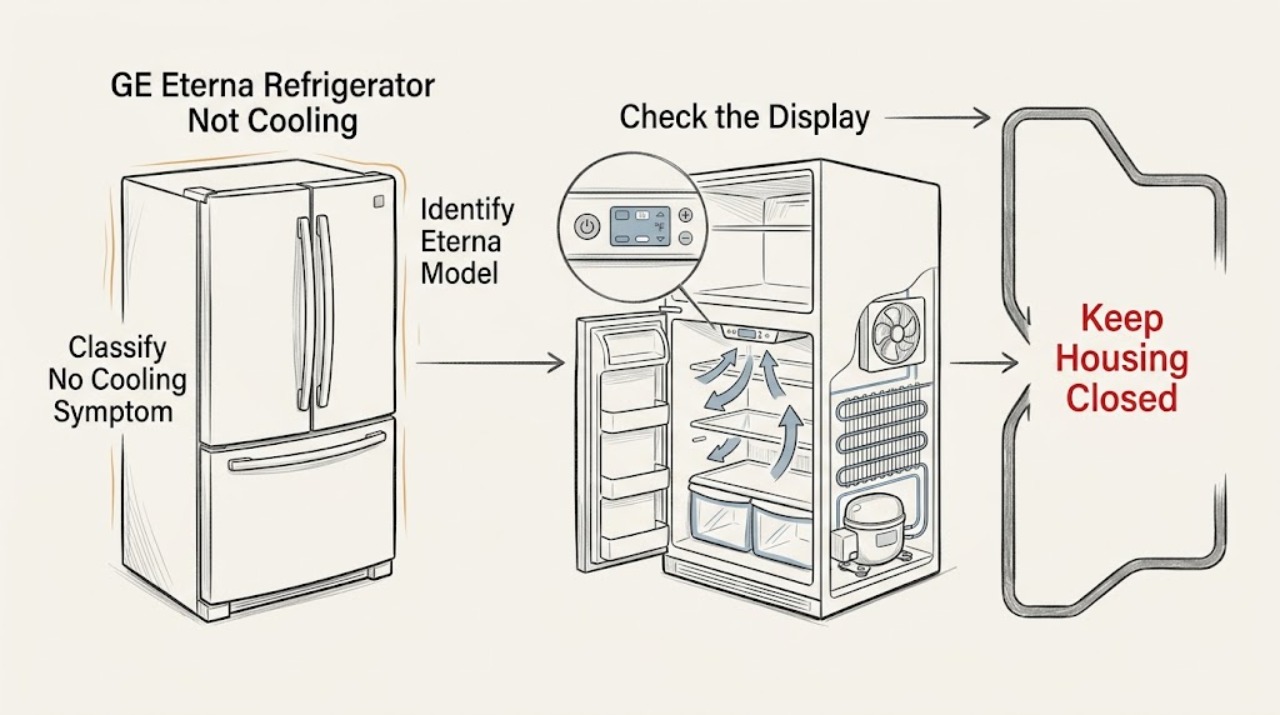
GE Eterna Refrigerator Not Cooling: Safe Checks by Symptom
GE Eterna refrigerators are an older GE derivative line with model-specific feature mixes, and GE says Eterna appliances are no longer manufactured. Start by recording the complete model and serial number, then separate no power from a running refrigerator that is warm: check the plug/outlet, the temperature controls, door closure/gaskets, blocked air passages, and whether the unit is in a normal defrost cycle or a model-specific demo mode.
-
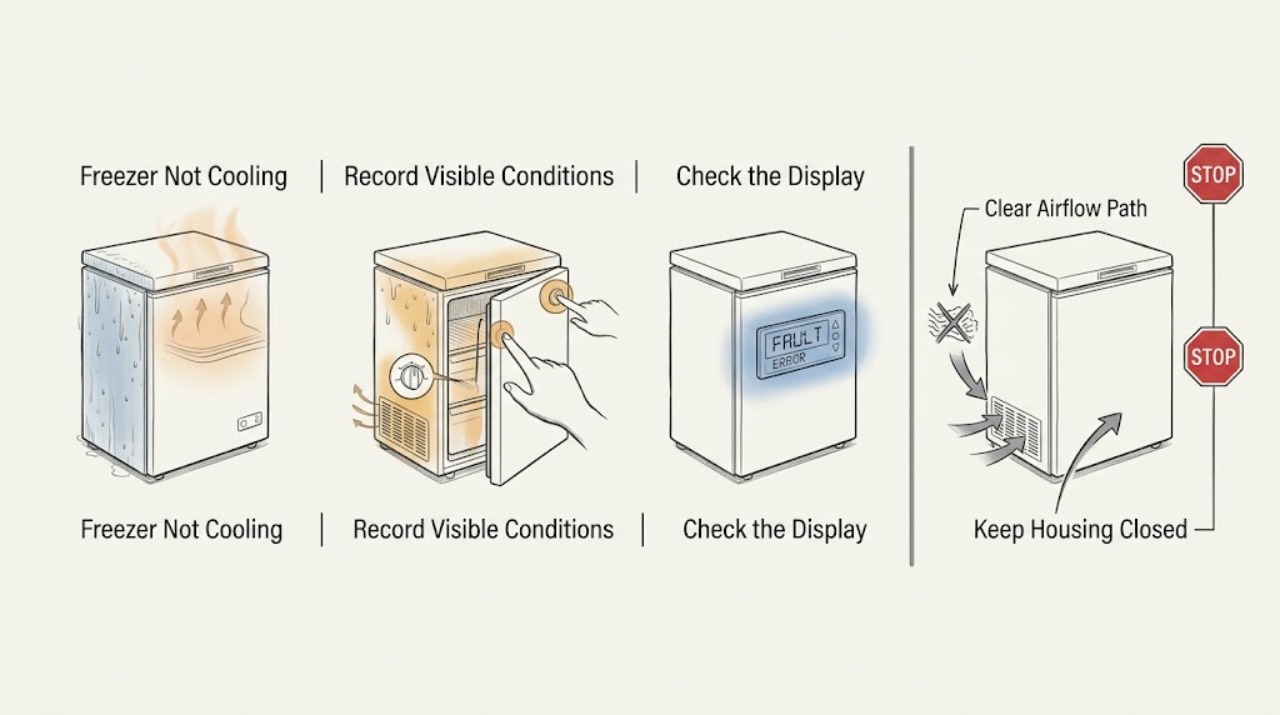
GE Freezer Not Cooling: Check Temperature, Airflow, Frost, and Safe Service Boundaries
If a GE freezer is not cooling, protect the food first and separate a power or control problem from a blocked-airflow, frost, door-seal, or mechanical fault. Keep the door closed as much as practical, record the internal temperature if an appliance thermometer is available, and identify whether the freezer is an upright, chest, or refrigerator freezer compartment.
-
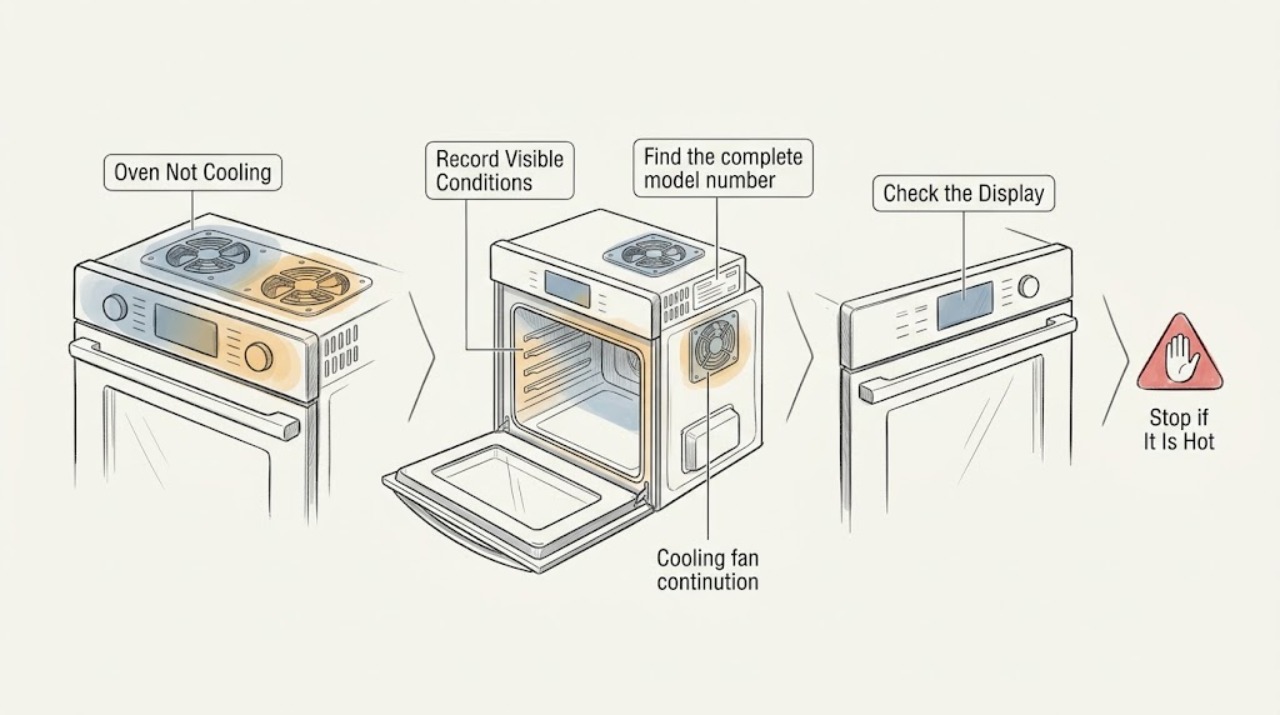
GE Oven Not Cooling: Fan Behavior and Safe Checks
A GE oven that still feels warm after cooking is not necessarily failing: on many GE ranges and wall ovens, a thermostat-controlled cooling fan may run during baking and continue after the oven is turned off while internal controls cool. Gas and dual-fuel freestanding ranges may not have a cooling fan, so the exact model and appliance type matter.
-
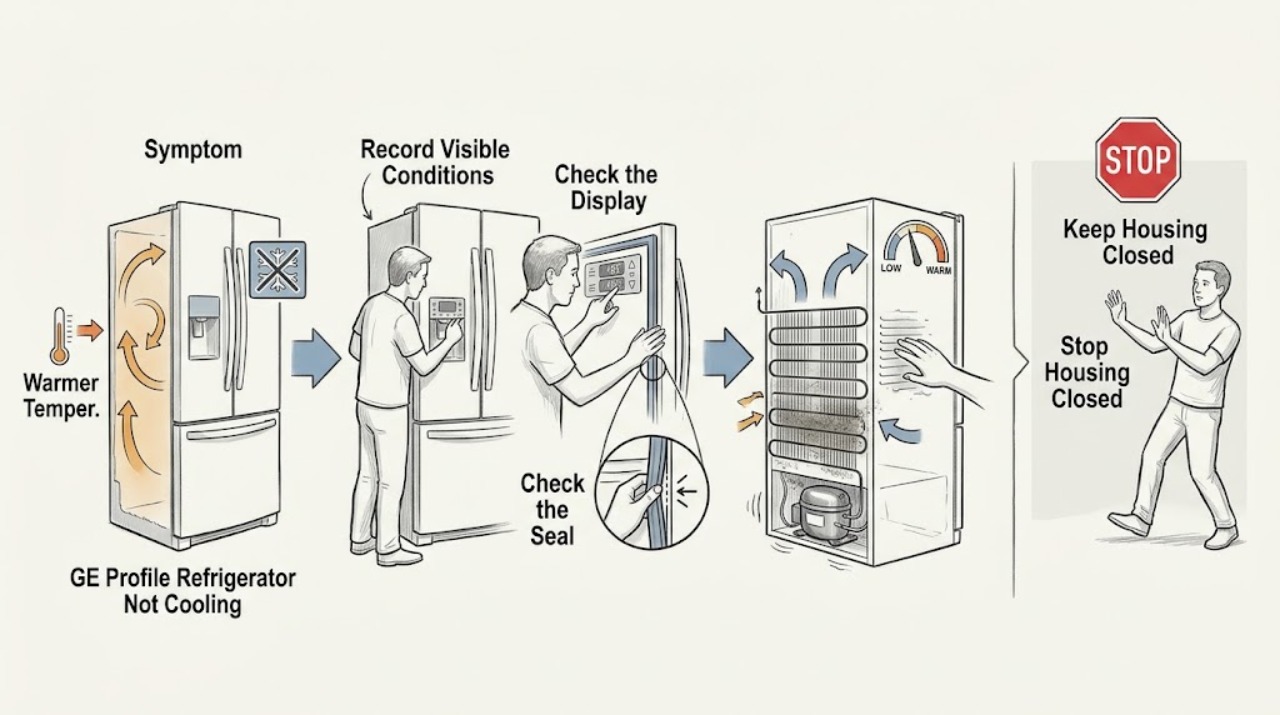
GE Profile Refrigerator Not Cooling
If a GE Profile refrigerator is not cooling, first distinguish a newly installed or heavily loaded cabinet from one that is warm despite correct settings. Record the exact model, displayed temperatures, whether the freezer is also warm, whether the compressor or fans run, and whether the doors and gaskets seal.
-
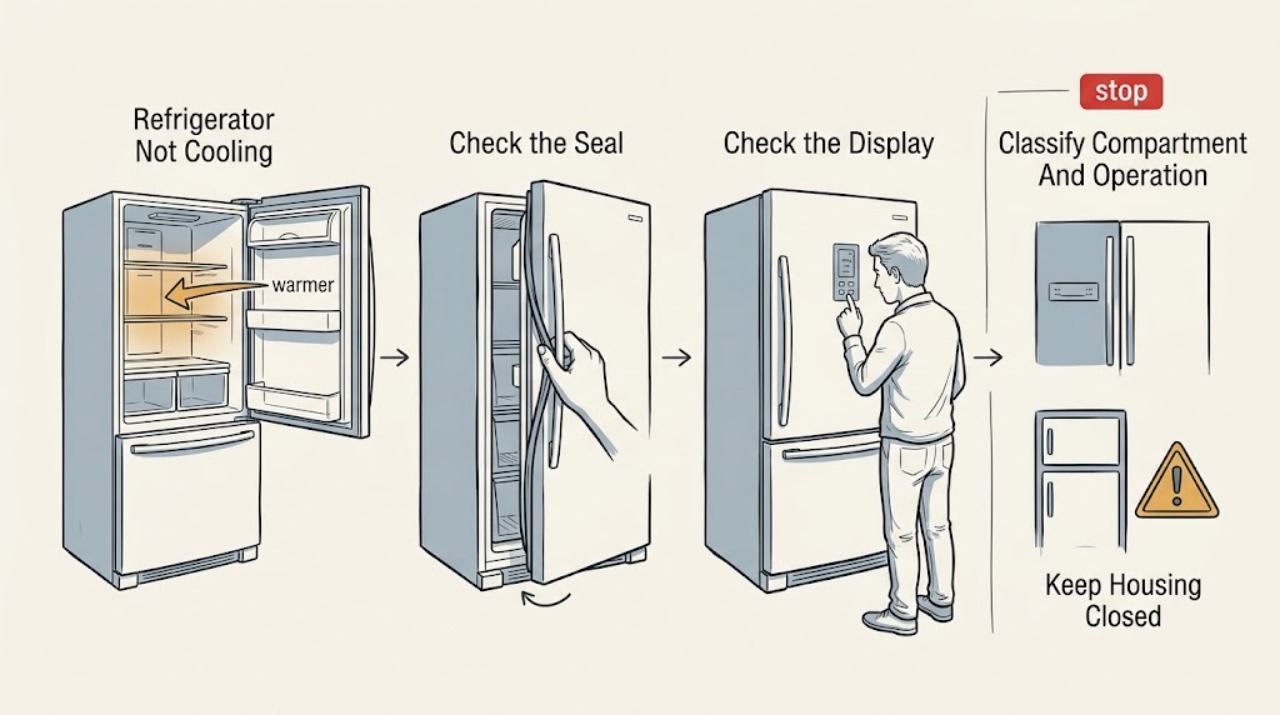
GE Refrigerator Not Cooling
When a GE refrigerator is not cooling, first record whether the refrigerator section, freezer section, or both are warm, and whether the interior light, fans, or compressor seem to run. Confirm the temperature controls were not turned off and use the exact model manual for the control style.
-
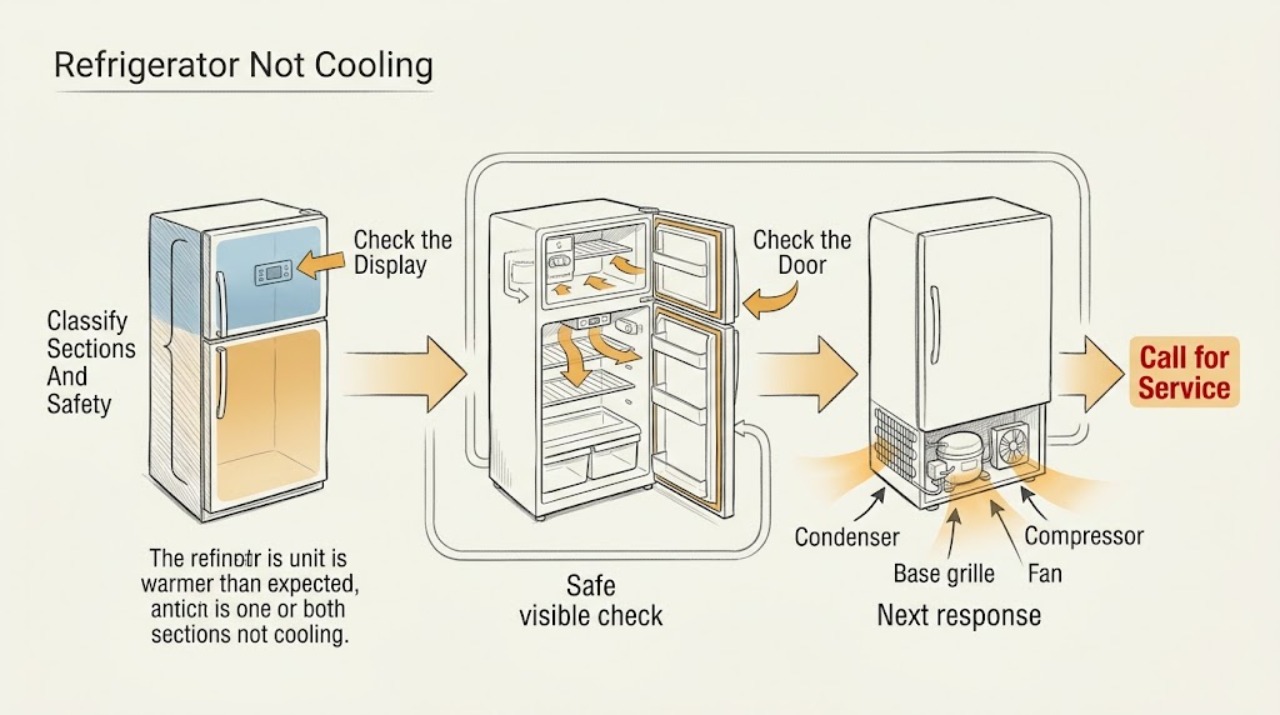
Gladiator Refrigerator Not Cooling: Check Controls, Airflow, and Condenser Access
First determine whether both sections are warm, only the refrigerator section is warm, or the unit is in a control state that leaves lights on but cooling off. On the opened Gladiator manual for the GARF30FDGB/GAFZ30FDGB family, hold the documented TEMP SETTING control for 3 seconds to turn cooling on or off; the interior light can still operate when cooling is off.
-
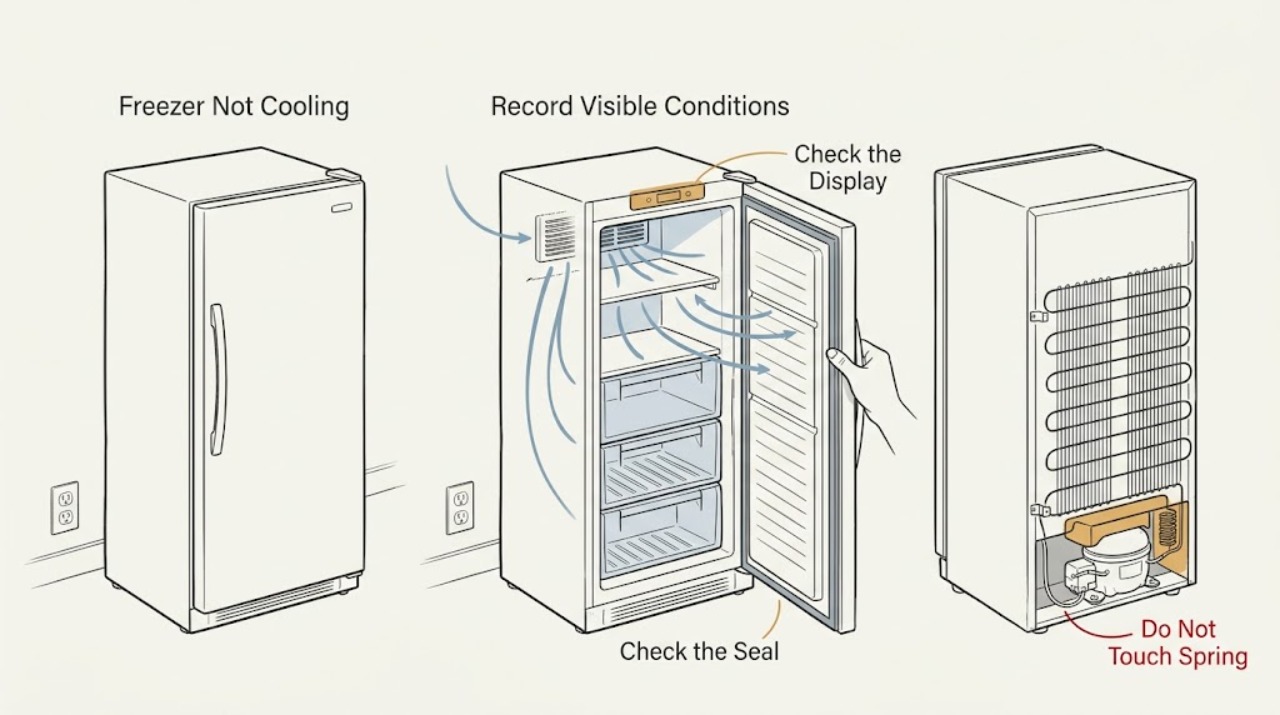
Haier Freezer Not Cooling: Check the Setting, Airflow, Frost, and Power
When a Haier freezer is not cooling, protect the food first and separate a control or power issue from blocked airflow, a door-seal problem, heavy frost, or an internal refrigeration fault. Check that the unit is on and the temperature control is not OFF, verify power from a dry and safe position, inspect the gasket and vents, and record the actual freezer temperature if a thermometer is available.
-
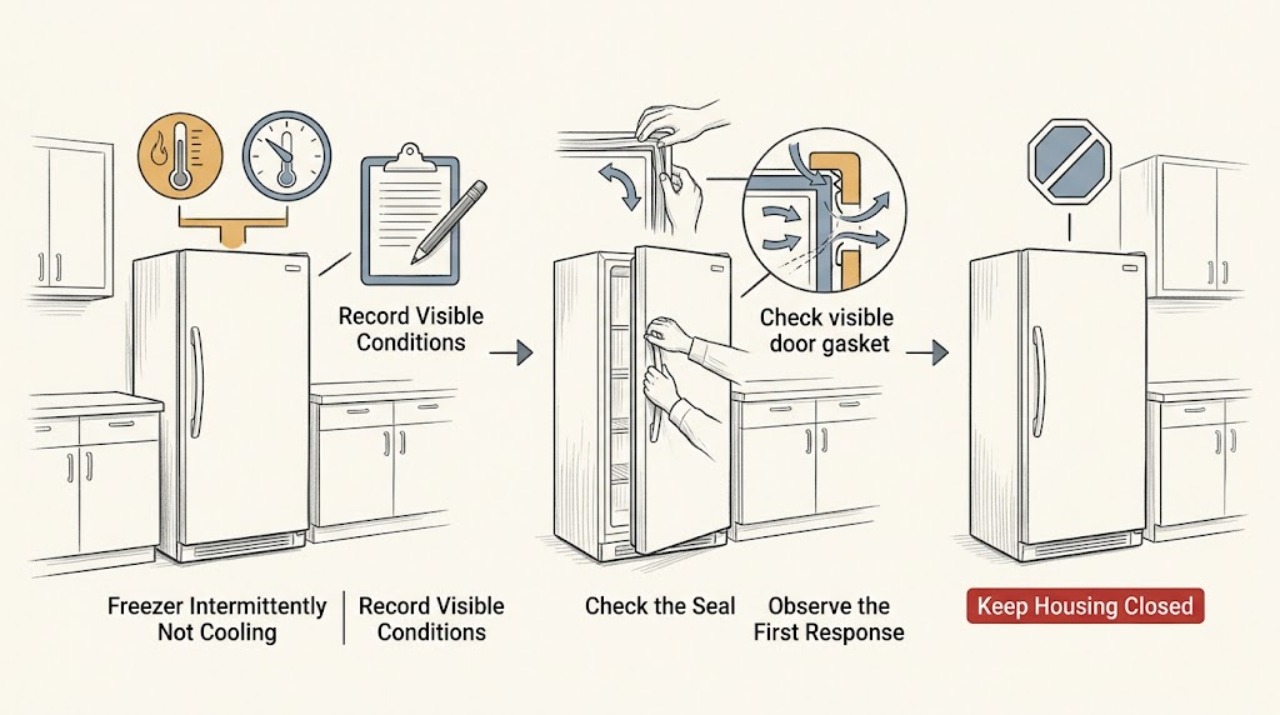
Haier HRF15N3AGS Freezer Intermittently Not Cooling in a Kitchen
The Haier HRF15N3AGS is a French-door refrigerator with a bottom freezer, so an intermittently warm freezer should be diagnosed as a temperature-and-recovery problem rather than as a standalone freezer with a generic part list. Keep the freezer door closed as much as practical, move food to a known-safe cold location if it is thawing, and record the actual freezer temperature with an appliance thermometer.
-
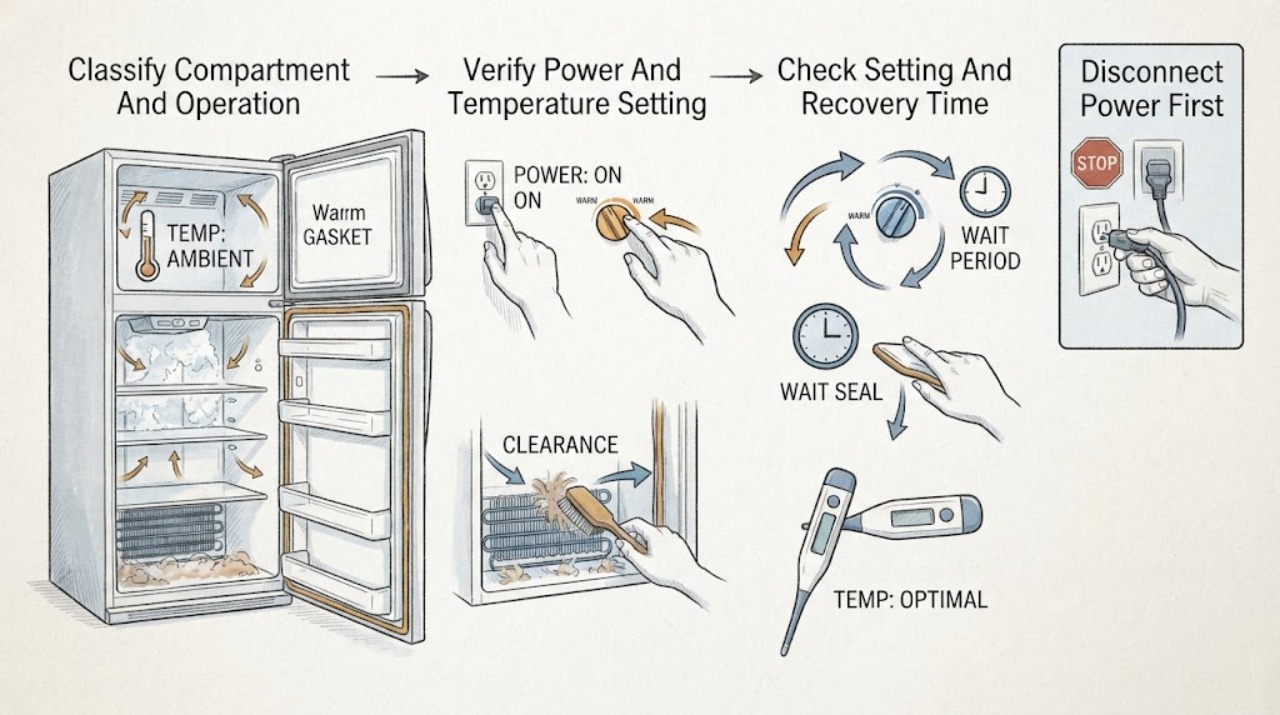
Haier Refrigerator Not Cooling
If a Haier refrigerator is not cooling, first determine whether both compartments are warm or only the fresh-food or freezer section is affected. Verify that the refrigerator is on a working outlet, powered on, and set to a cold temperature; then check that food is not blocking interior air vents, doors are not being opened excessively, and the door gaskets close with a continuous seal.
-
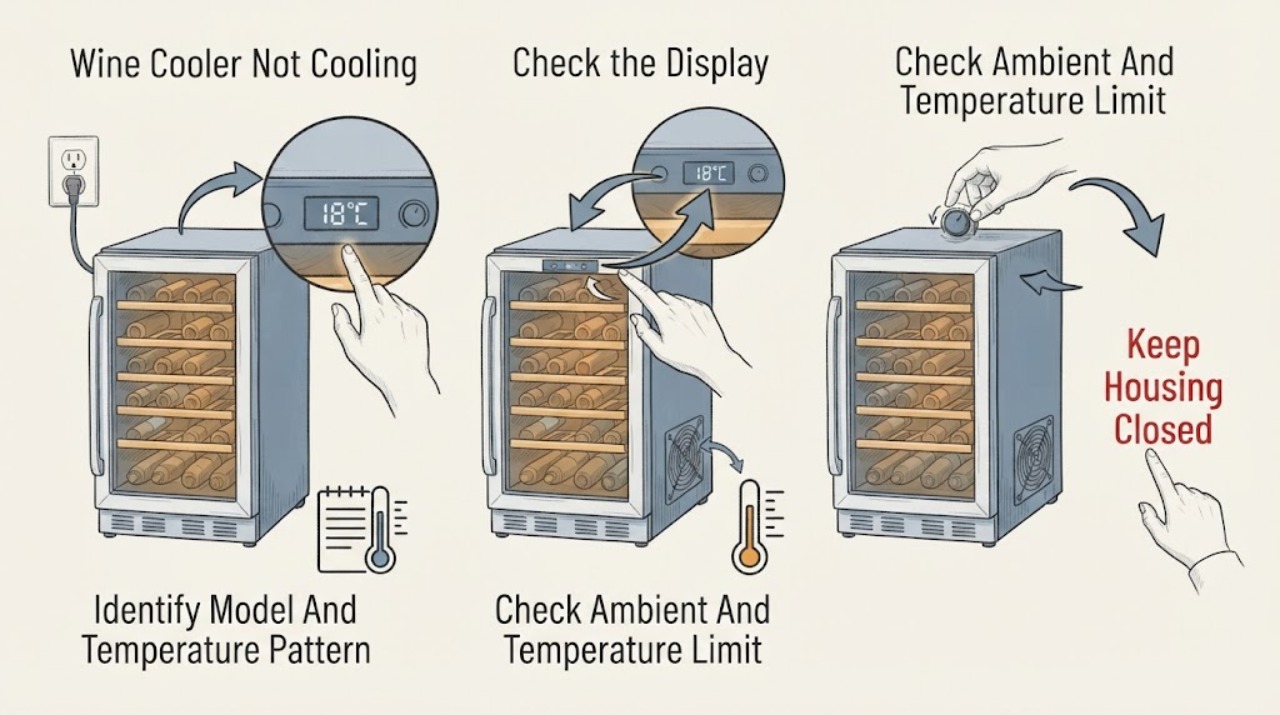
Haier Wine Cooler Not Cooling: Check Temperature, Airflow, and Model Limits
Start with the exact Haier model and determine whether the cabinet is a thermoelectric, compressor-based, single-zone, or dual-zone wine cellar. Confirm that the unit is on, plugged into a working outlet, and set to a cold temperature within the range for that model.
-
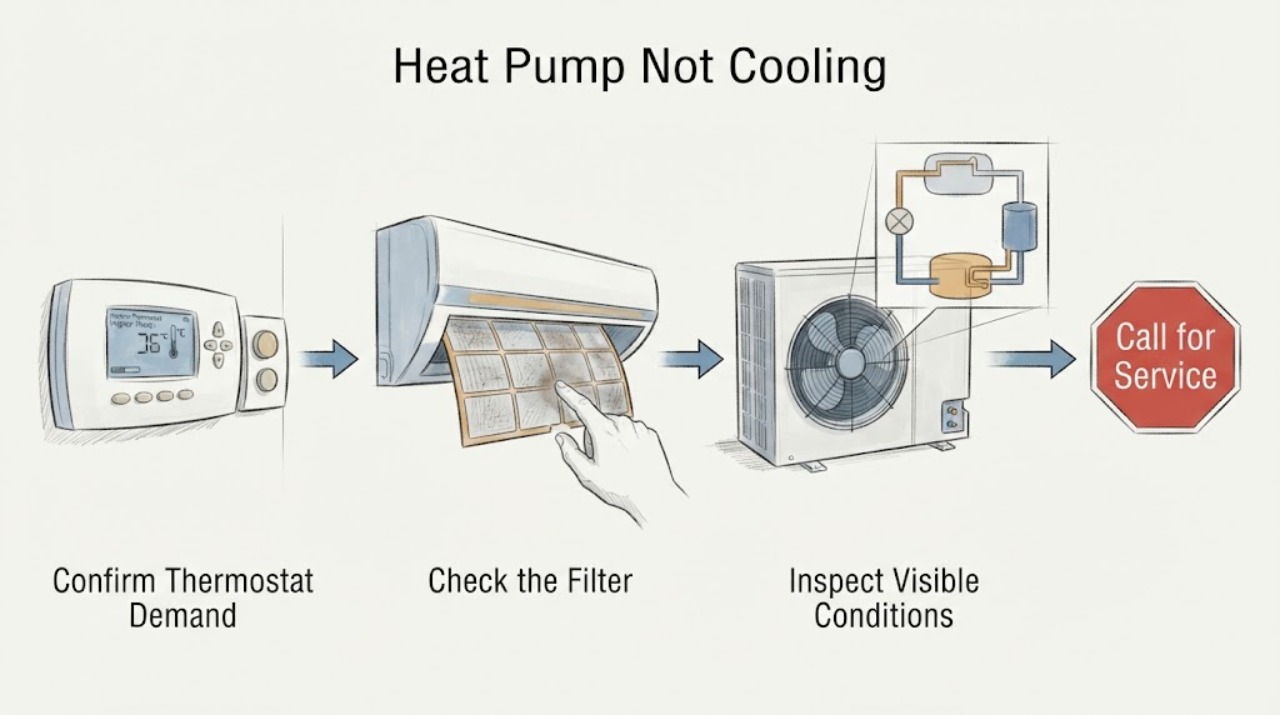
Heat Pump Not Cooling: Safe Checks and Next Steps
If a heat pump is not cooling, first confirm the thermostat is in Cool with the setpoint below the room temperature and the fan on Auto, then note whether the indoor and outdoor units run, whether airflow is weak, and whether ice is visible. Check only the accessible filter, registers, and outdoor-unit clearance.
-
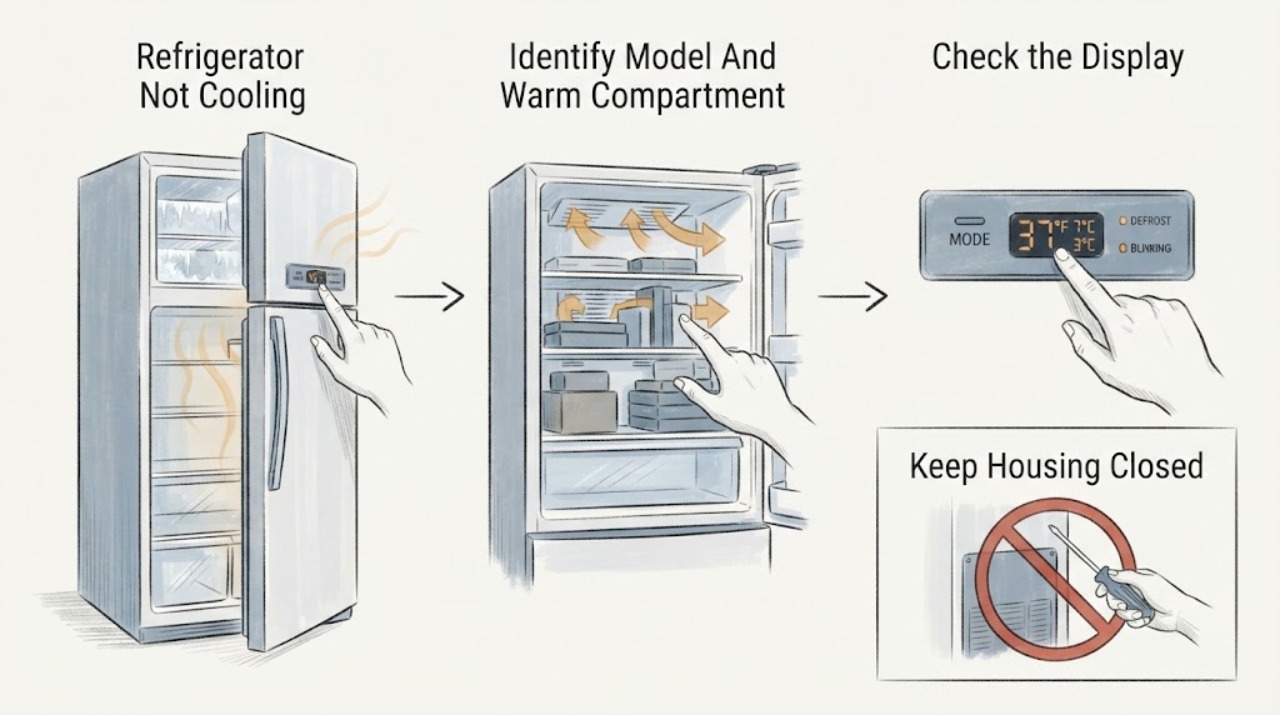
Hisense Refrigerator Not Cooling: Check Power, Modes, Airflow, and Frost
First identify the full model and whether the problem affects the refrigerator compartment, freezer, or both. Check the grounded outlet and household breaker from a dry, safe position, then confirm the temperature control is not off and that a model-specific Cooling Off, Demo, Vacation, or energy-saving mode is not stopping cooling.
-
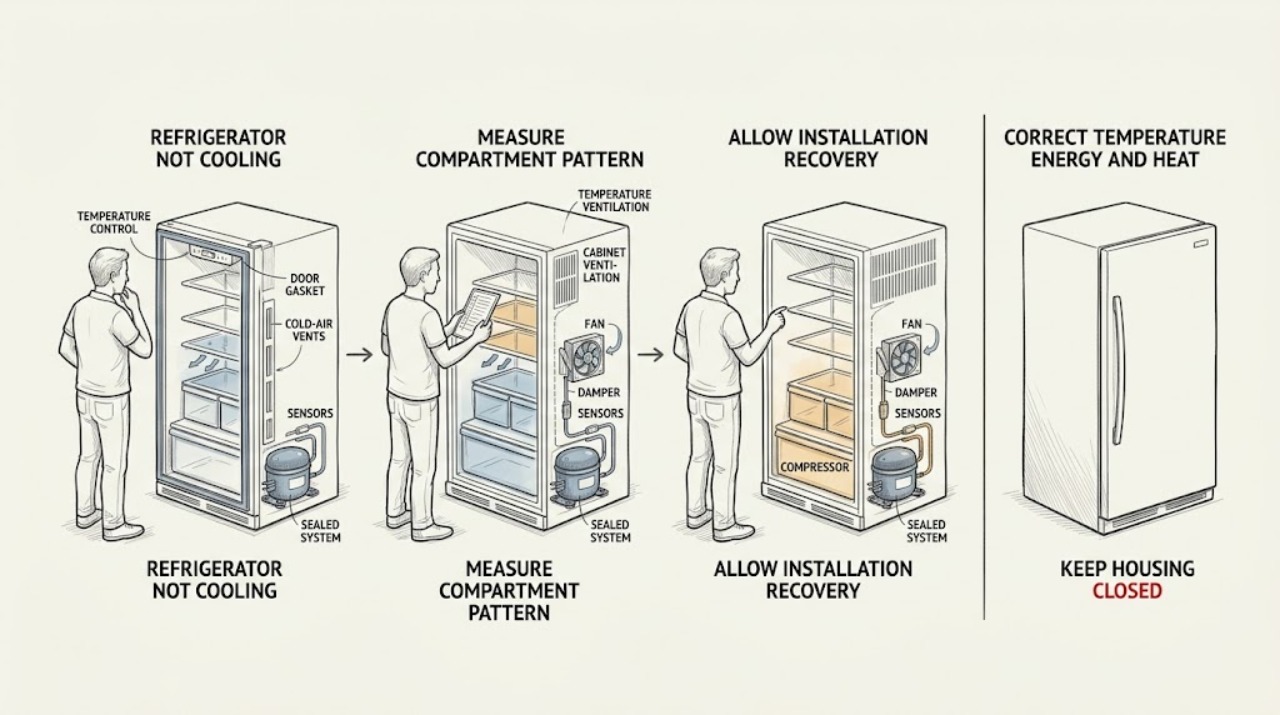
Hitachi Refrigerator Not Cooling
Start by deciding whether the whole appliance is warm, the refrigerator compartment is warm while the freezer is cold, or the unit is newly installed and still pulling down temperature. Hitachi's official refrigerator support pages direct owners to check the temperature setting, deactivate Energy Saving when applicable, fully close the door, leave space in front of rear cold-air vents, avoid direct sunlight and heat sources, and reduce excessive door opening.
-
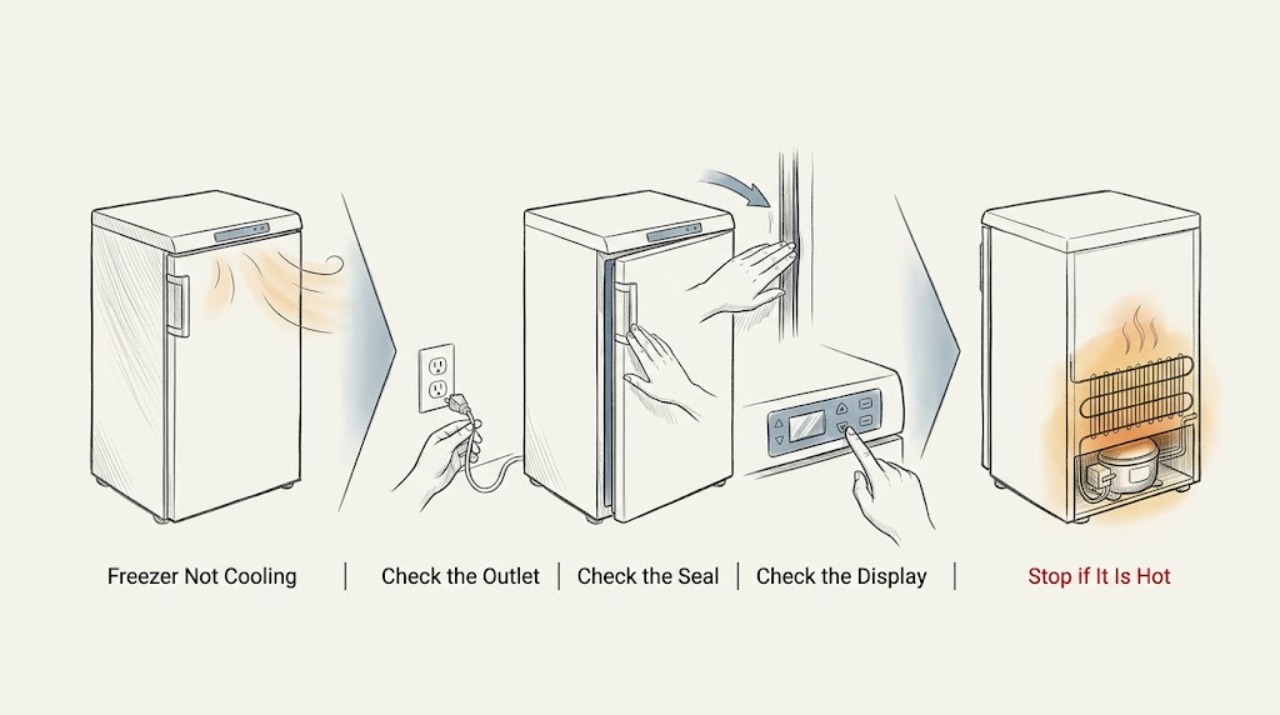
Hotpoint Freezer Not Cooling
If a Hotpoint freezer is not cooling, keep the door closed and first check the visible power connection, door seal, temperature setting, ventilation, and whether a large fresh load or recent power interruption explains the delay. Hotpoint's general guidance uses -18 °C or colder as the safe freezer temperature for applicable models; use a suitable appliance thermometer and the exact manual rather than guessing from cabinet feel.
-
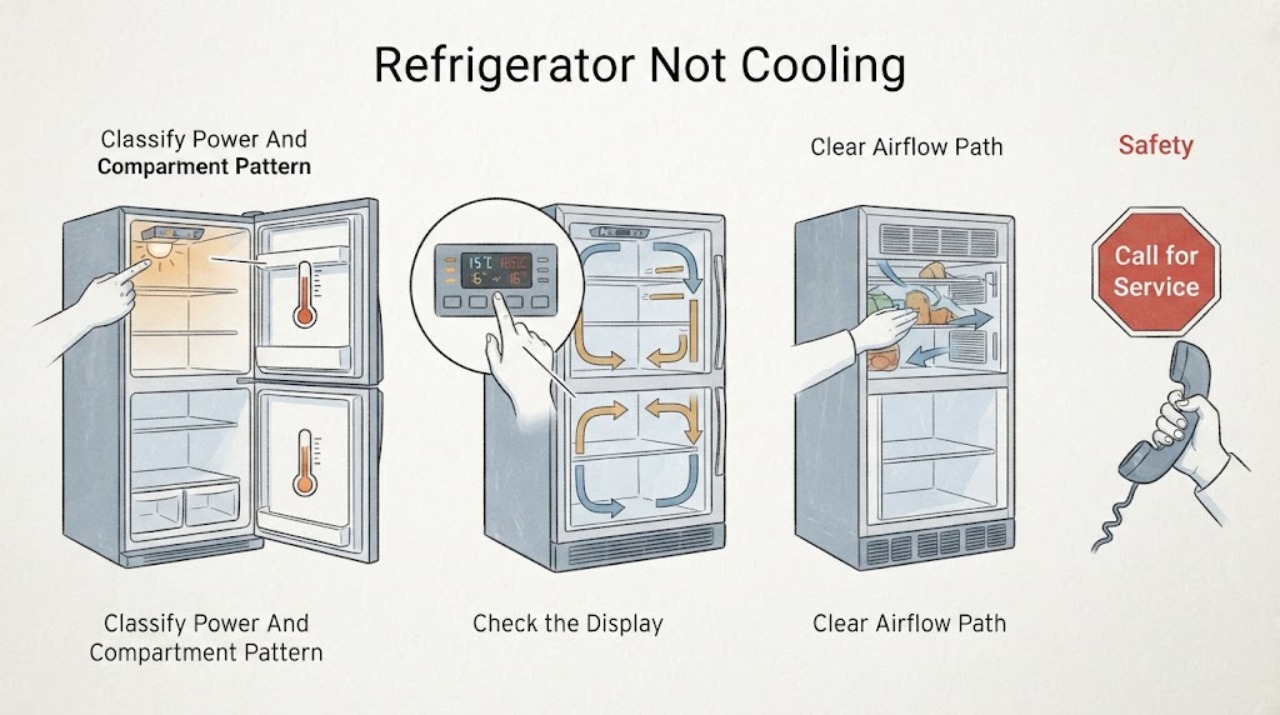
Hotpoint Refrigerator Not Cooling: Find the Safe Next Check
First determine whether the refrigerator has power and whether the freezer is also warm. Keep the doors closed and protect perishable food while you check the exact model manual.
-
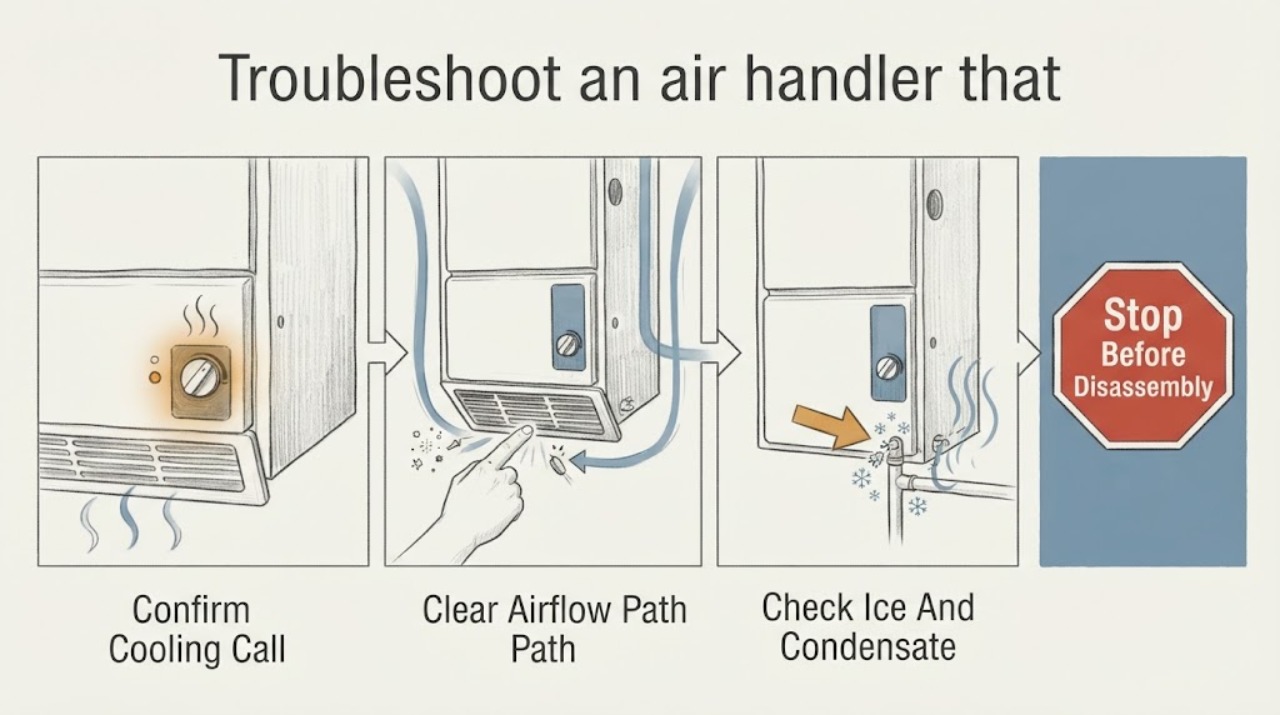
How to troubleshoot an air handler that is not cooling
First separate an airflow problem from a cooling problem: confirm the thermostat is set to Cool with the fan on Auto, then check the air handler's filter and supply/return airflow. With power off at the thermostat, look for ice or unusual water around the indoor coil; if you see ice, shut the system off and let a qualified HVAC professional diagnose the airflow or refrigerant cause.
-
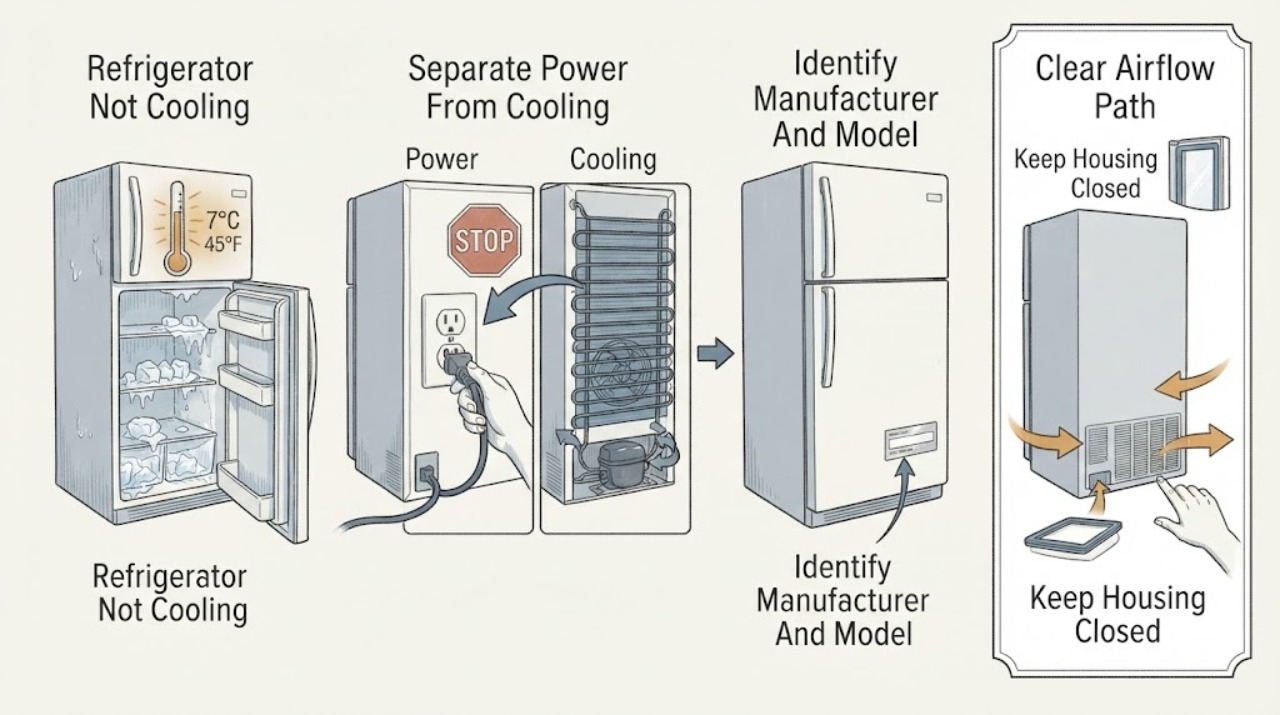
IKEA Refrigerator Not Cooling
First separate “not cooling” from “not turning on.” Check from a safe, dry position whether the interior light, display, or other normal indicator is present; do not open covers or perform live tests. IKEA sells refrigerators made by IKEA and external vendors, with different controls and manuals, so record the IKEA article number, manufacturer, model, and serial number before applying a reset or temperature instruction.
-
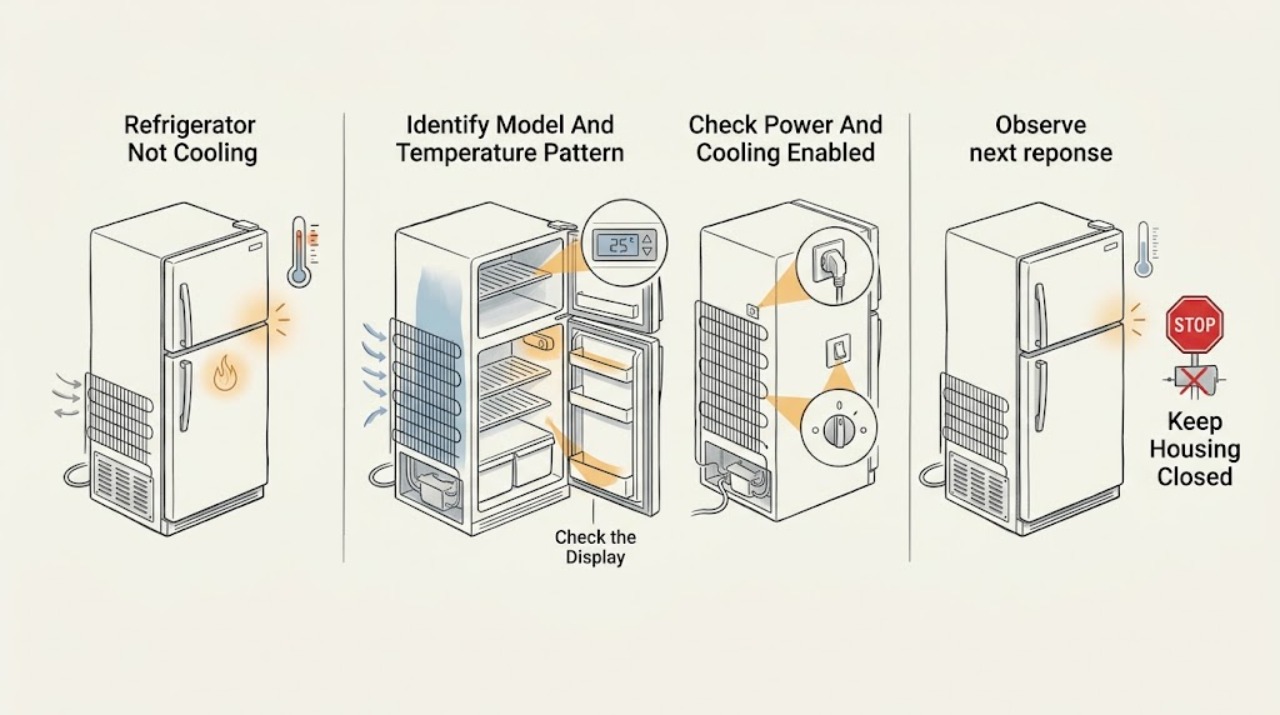
Inglis Refrigerator Not Cooling: Safe Checks by Symptom
Start by separating a refrigerator that is completely off from one that has lights but is warm. Confirm the accessible power connection and that cooling is enabled; some Whirlpool-family controls use a Cooling Off or Showroom/Demo state, but the exit sequence varies by model.
-
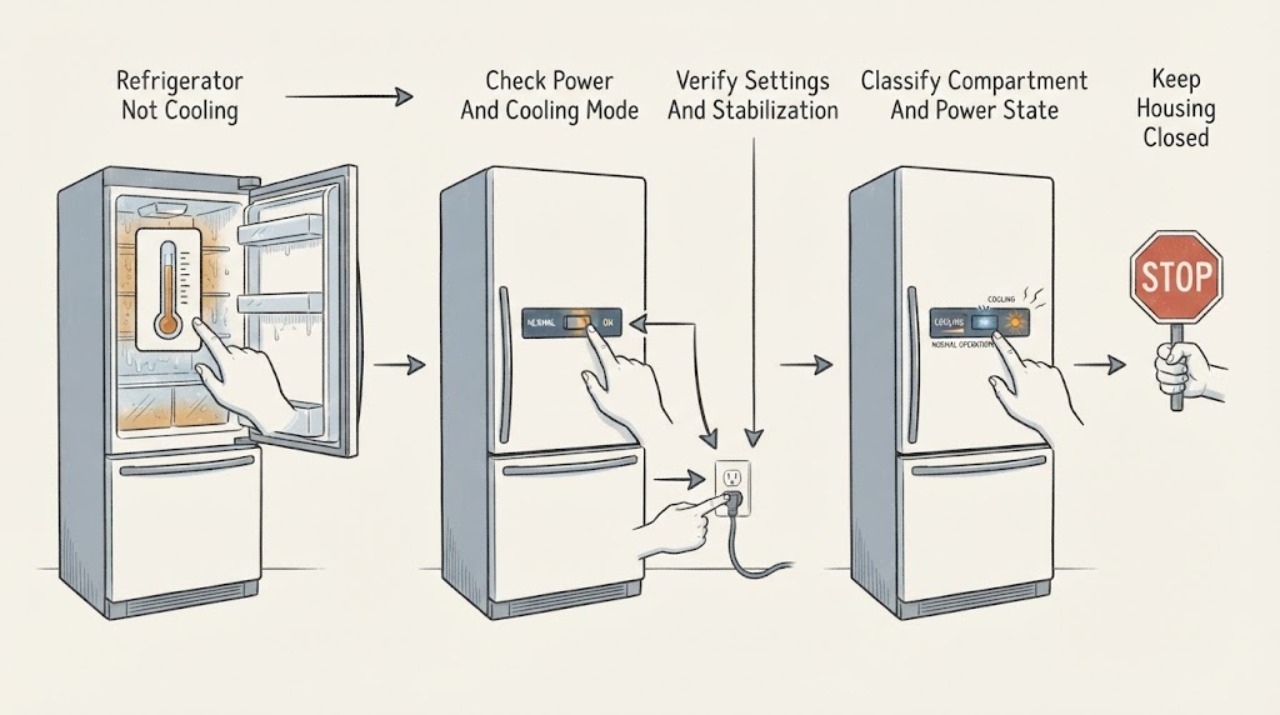
JennAir Refrigerator Not Cooling: Separate Settings, Airflow, and Service Faults
First identify the cooling pattern: an all-refrigerator column, a combined refrigerator/freezer with only the fresh-food section warm, only the freezer warm, or both compartments warm. Check the exact model's power and cooling status, Showroom or Demo mode, and temperature settings before assuming a compressor fault.
-
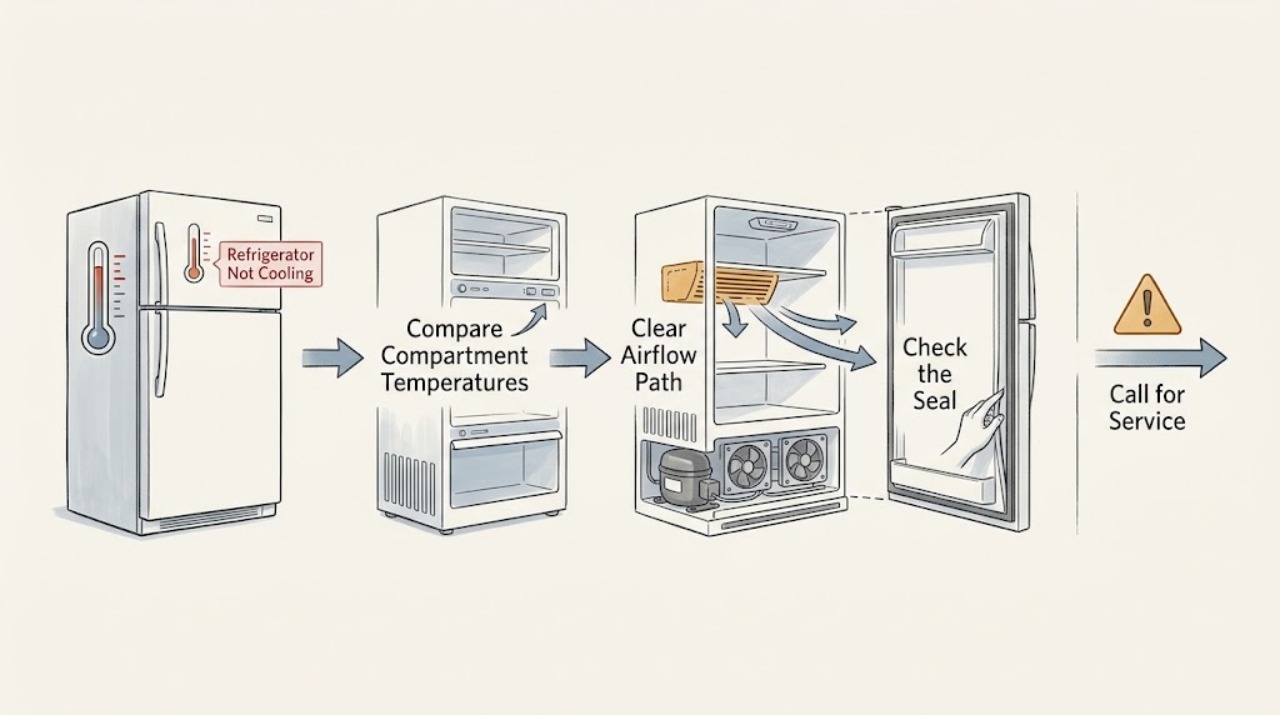
Kelvinator Refrigerator Not Cooling: Check Both Compartments Safely
First determine whether the freezer is also warm. Kelvinator guidance separates a warm refrigerator compartment, a warm freezer, and no cooling at all.
-
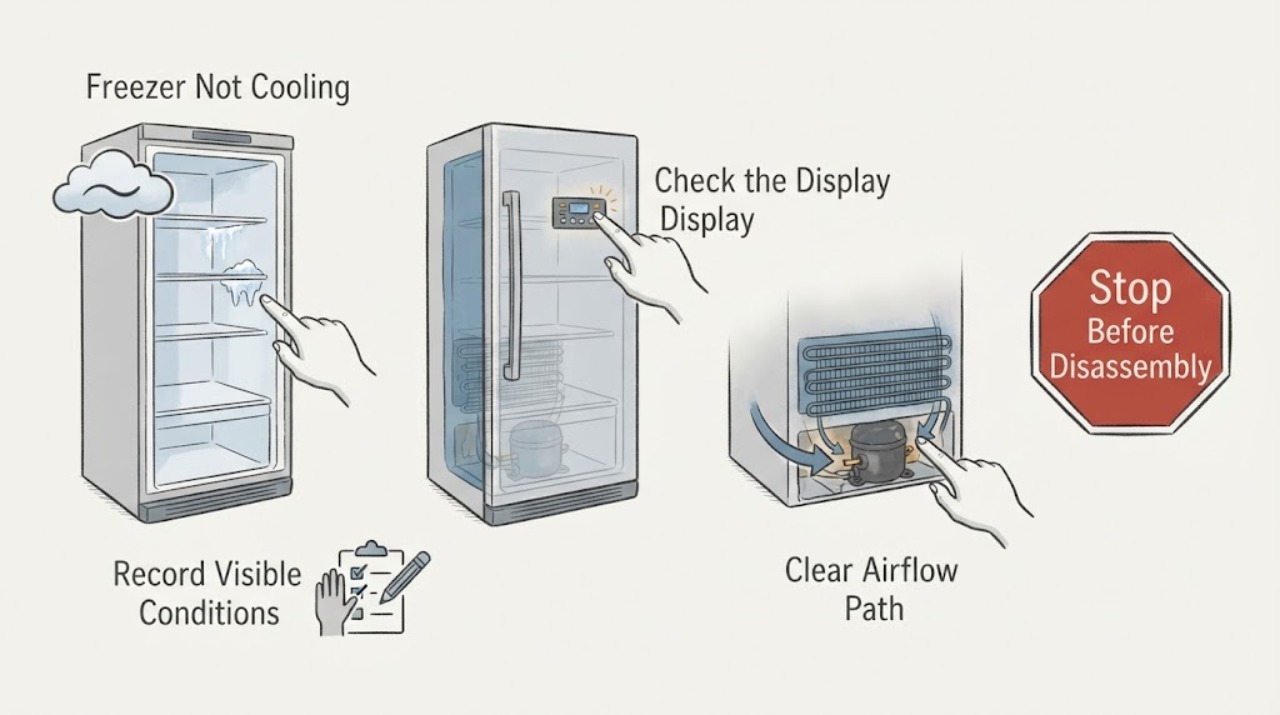
Kenmore Freezer Not Cooling: Safe Checks and Service Signs
If a Kenmore freezer is not cooling, keep the door closed to protect the food, then determine whether the unit has power and whether the temperature control is set to Off or too warm. Check for blocked interior vents, an overpacked cabinet, a door or lid that does not seal, and heavy frost that restricts airflow.
-
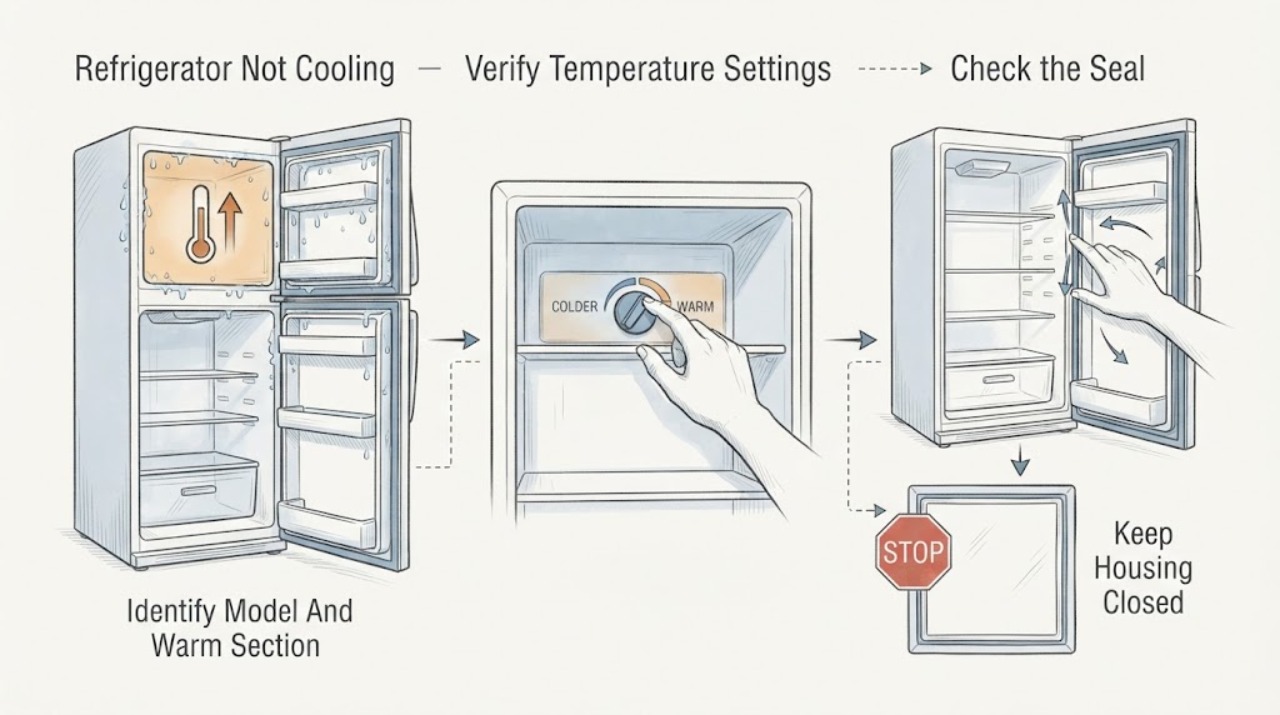
Kenmore Refrigerator Not Cooling: Check Settings, Door Seals, and Condenser Coils
Start by recording the exact Kenmore model and the actual symptom: whether the refrigerator, freezer, or both sections are warming. Confirm the controls against the Kenmore guidance of 37–40°F for the refrigerator and 5°F for the freezer, then check that the doors close and that the gasket is not warped or torn.
-
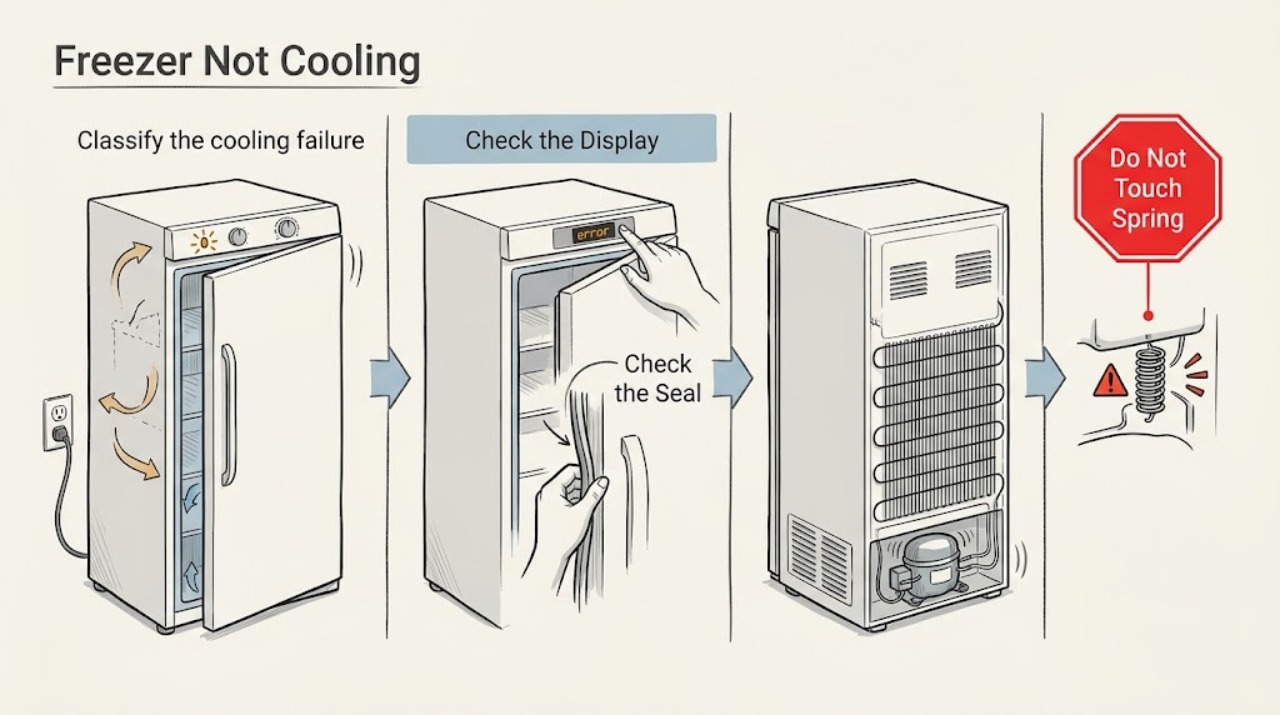
KitchenAid Freezer Not Cooling
First determine whether the KitchenAid freezer is completely off, running but warm, or cooling unevenly. Check the power connection and control setting, make sure the door gasket seals and vents are clear, and confirm food is not blocking circulation.
-
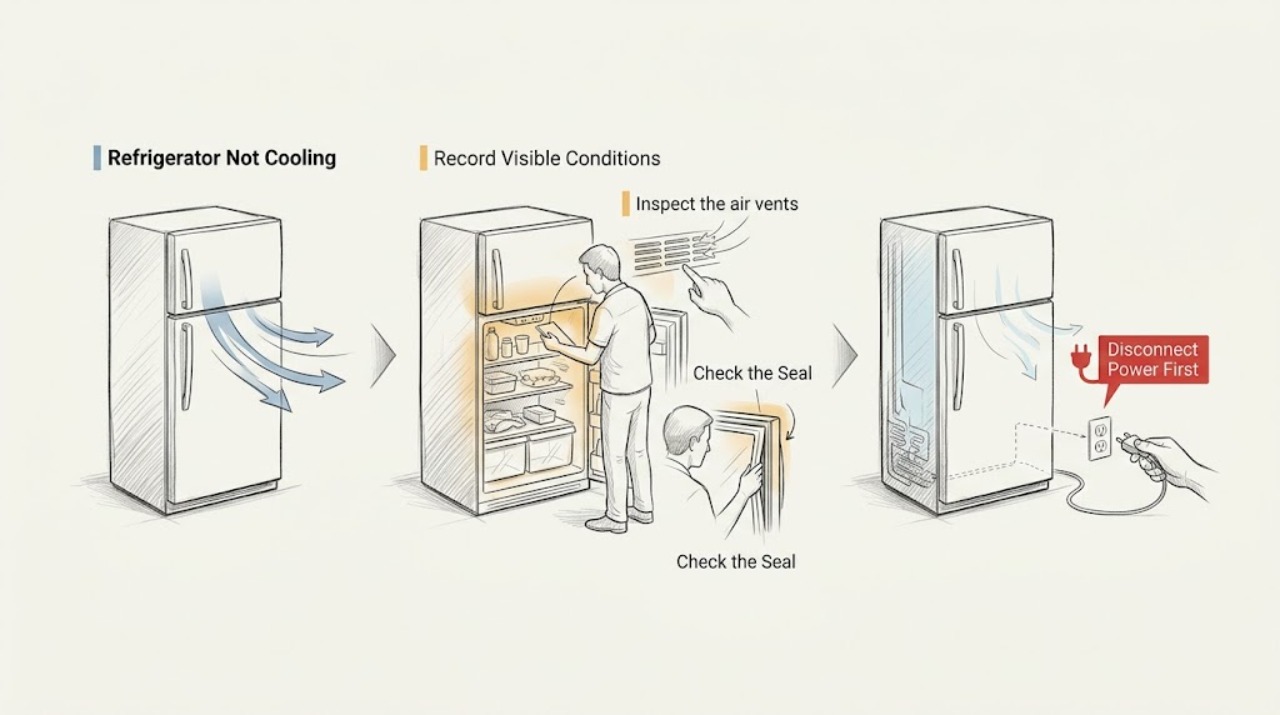
KitchenAid Refrigerator Not Cooling
If the KitchenAid refrigerator has power but food is warm, start with the cooling setting and the temperature symptom rather than replacing a part. Then restore air circulation, account for a recent load or hot room, and check accessible condenser care; persistent warmth after those checks needs service diagnosis.
-
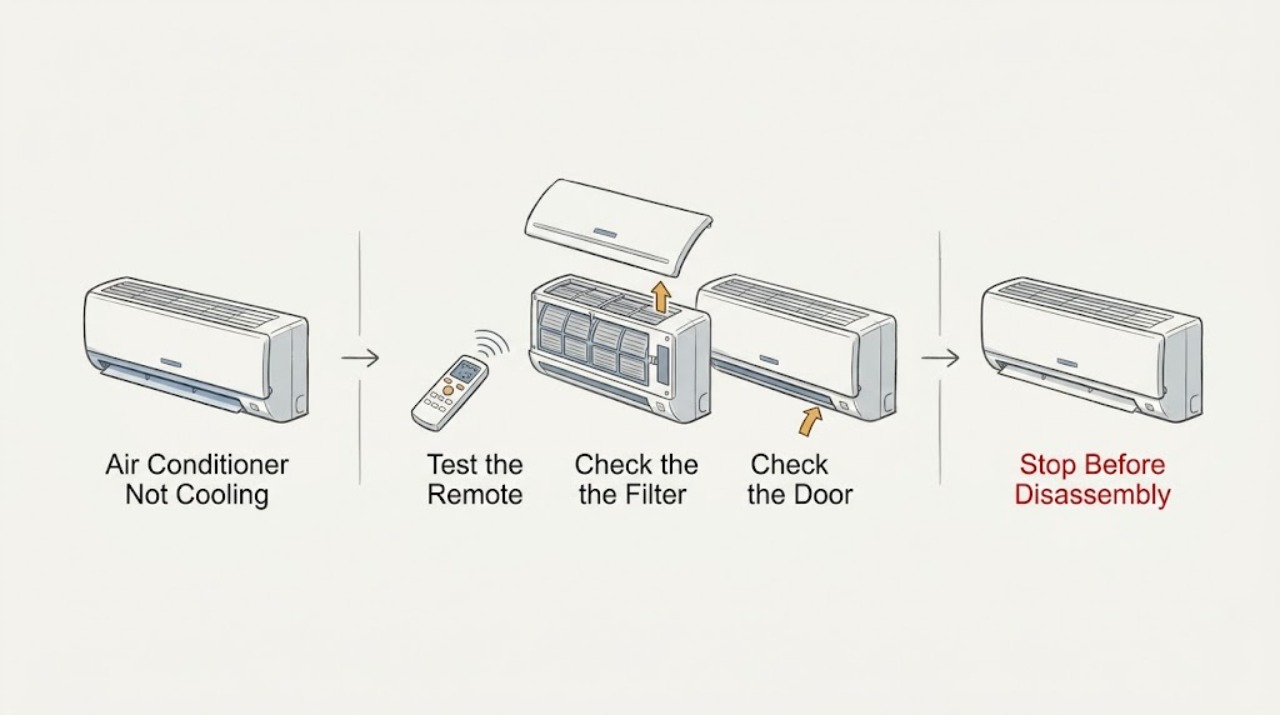
LG Air Conditioner Not Cooling
Set the unit to Cooling rather than AI, dehumidification, or fan-only mode; clean the accessible filter and confirm the outdoor unit has clear ventilation. Allow the unit to run under the model's normal test conditions. If cooling does not return or a code appears, arrange service.
-
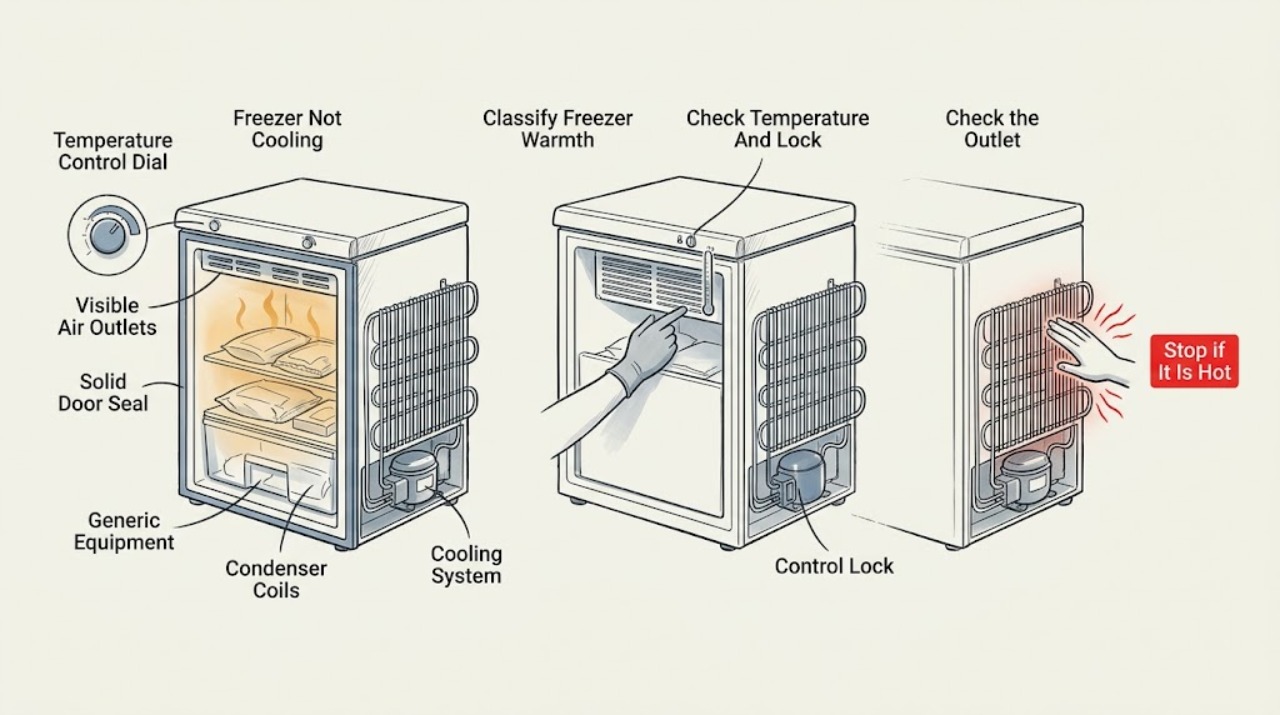
LG Freezer Not Cooling: check settings, airflow, frost, and power
If an LG freezer is not cooling, first determine whether the freezer is warming while the refrigerator still cools, whether the entire appliance is off, or whether the display shows a normal target temperature but the food is thawing. Confirm the freezer setting and control lock, keep cold-air outlets clear, avoid overpacking, and make sure the door closes and seals fully.