
Repair problem
Not Cooling Troubleshooting Guides – Page 3
Published FixGraph guidance for diagnosing and responding to not cooling.
Matching published guides
Choose a guide that matches the service, equipment, and conditions you are seeing.
-
LG LP1111WXR Not Cooling: Check the Exhaust Setup First
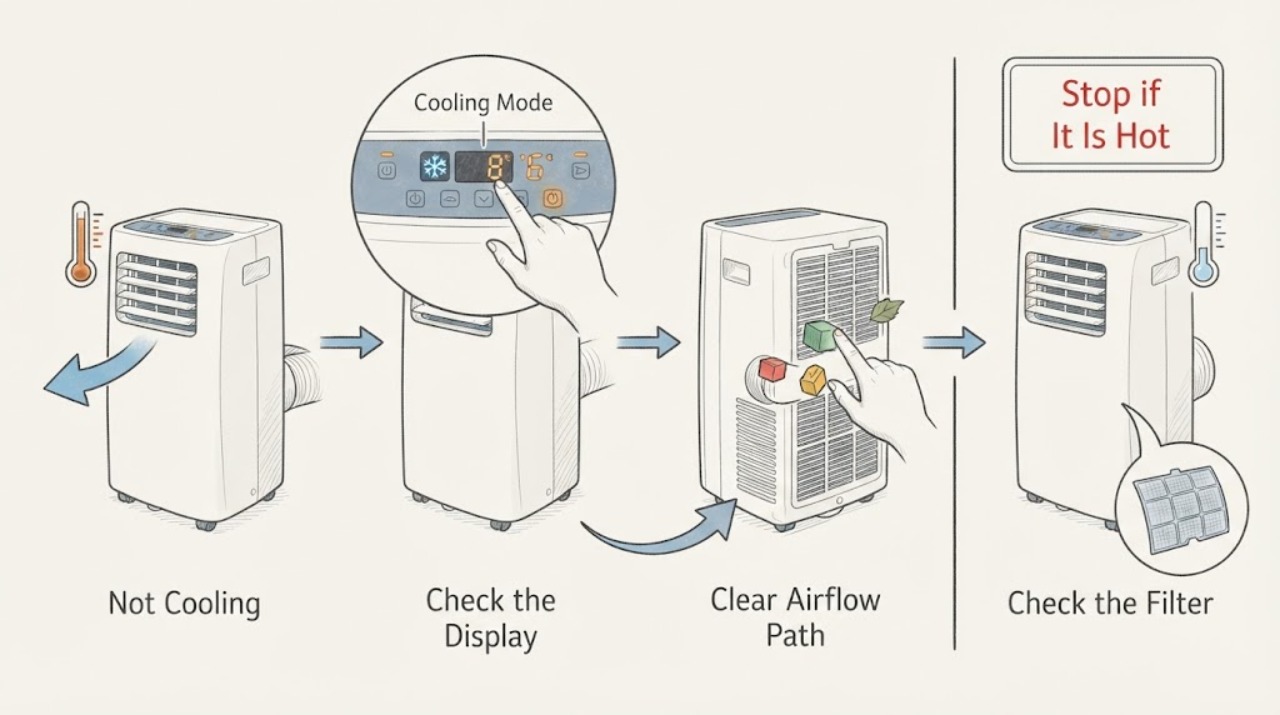
For the LG LP1111WXR, first confirm that the unit is in Cooling mode with a lower target temperature, then check the portable installation: the exhaust hose must discharge outdoors without a kink, blockage, or gap that sends hot air back into the room. This model is a single-hose portable air conditioner with a window installation kit, a washable filter, and a water-full indicator.
-
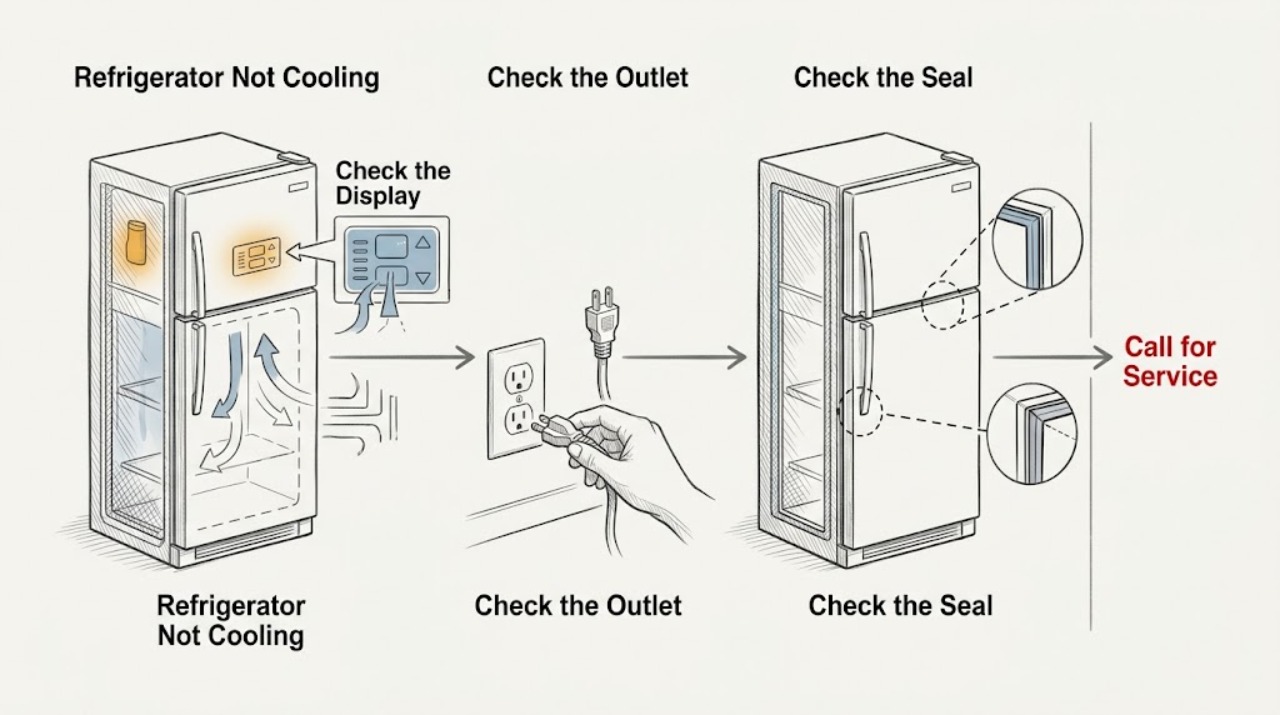
LG Refrigerator Not Cooling: Check Airflow Before Sealed-System Faults
Check the temperature setting, blocked vents, door closure, and recent installation or loading before assuming a compressor or sealed-system failure. LG recommends the refrigerator compartment around 1–3°C (34–37°F) on the cited guide; use your model manual if its controls differ. If the unit stays warm after airflow and stabilization checks, arrange service.
-
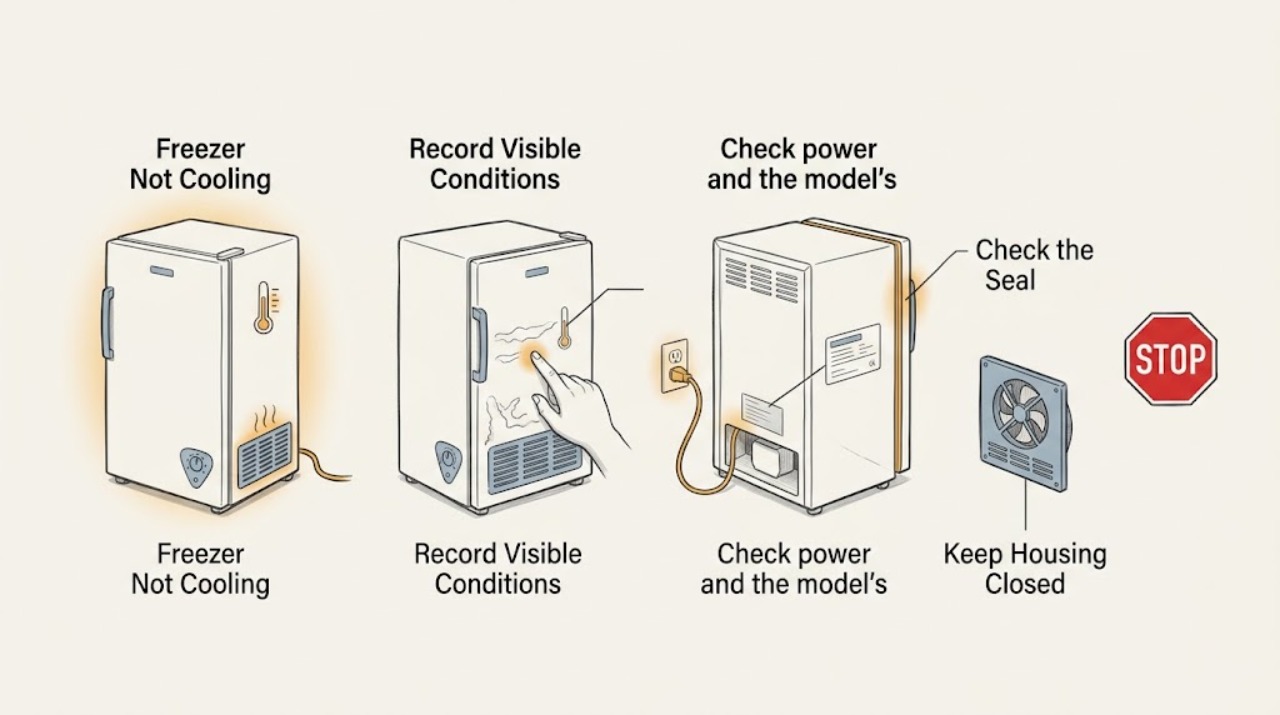
Liebherr Freezer Not Cooling: Check Power, Settings, Airflow, and Frost Safely
When a Liebherr freezer is not cooling, first protect the food and determine whether the cabinet has power, the door is sealing, and the display shows a temperature or power-failure alarm. Liebherr says a warm freezer can result from a wrong setting, an open door, inadequate ventilation or air extraction, unsuitable ambient conditions, frequent opening, a large fresh-food load, a nearby heat source, a power interruption, or an appliance fault.
-
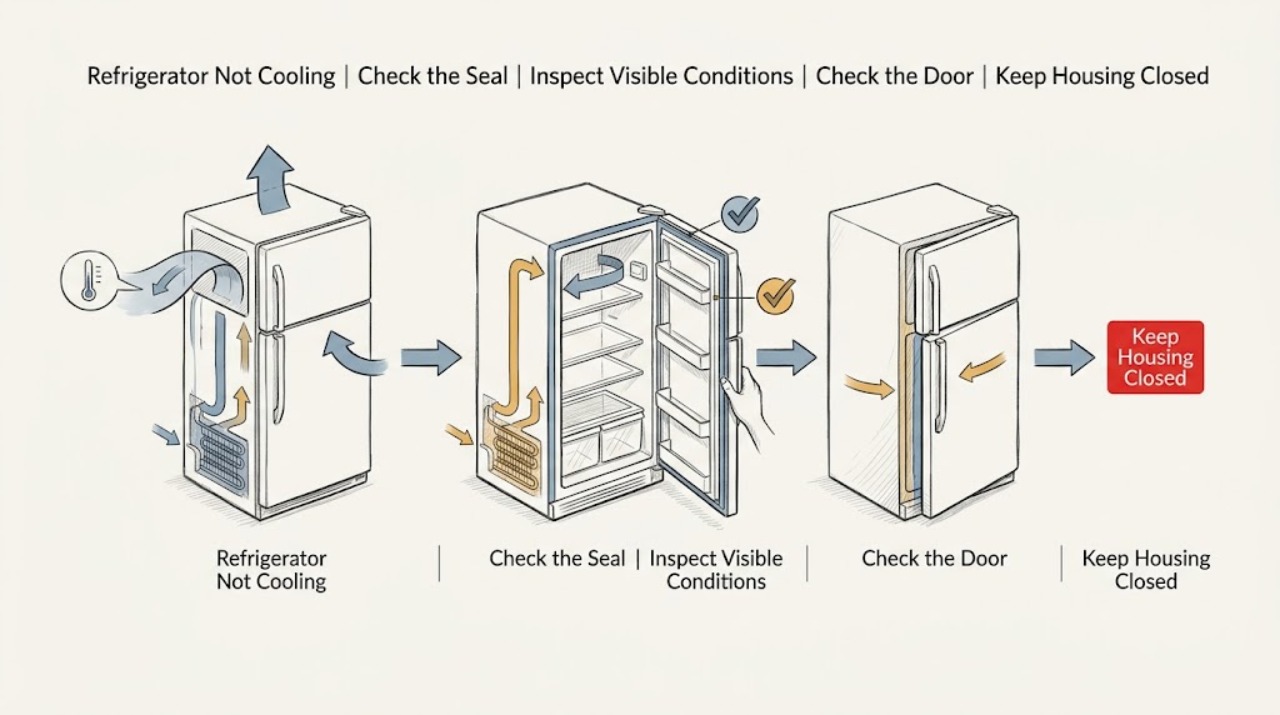
Liebherr Refrigerator Not Cooling
When a Liebherr refrigerator is not cooling enough, first check the door seal, clear the ventilation grilles, and confirm the temperature setting before assuming a component failure. A recent warm load or frequent door opening can require recovery time. If the display shows a fault, the temperature stays high after these external checks, or the freezer also warms, move perishable food and request service.
-
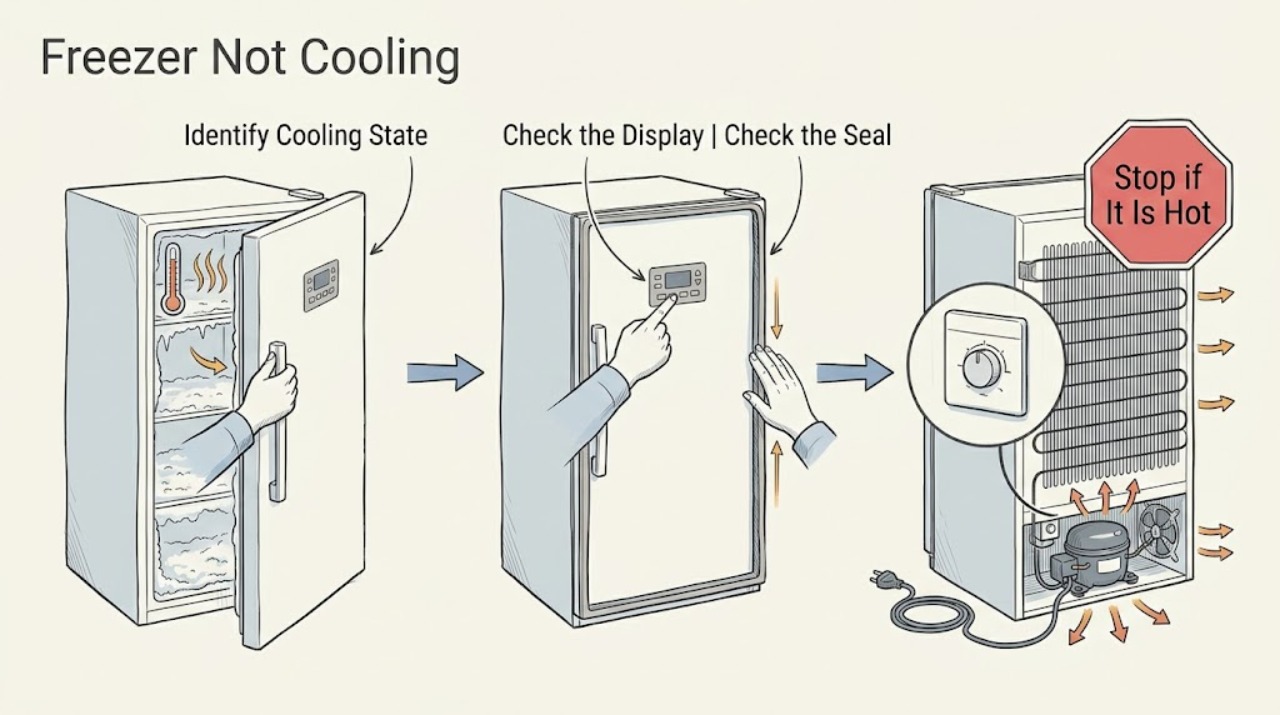
Magic Chef Freezer Not Cooling: Check Power, Settings, Seal, Frost, and Airflow
First confirm the freezer is powered, the temperature control is set for cooling, the door or lid closes and seals, and the unit has room for ventilation. If it was recently moved or unplugged, let it stand and cool according to the exact model manual before judging performance.
-
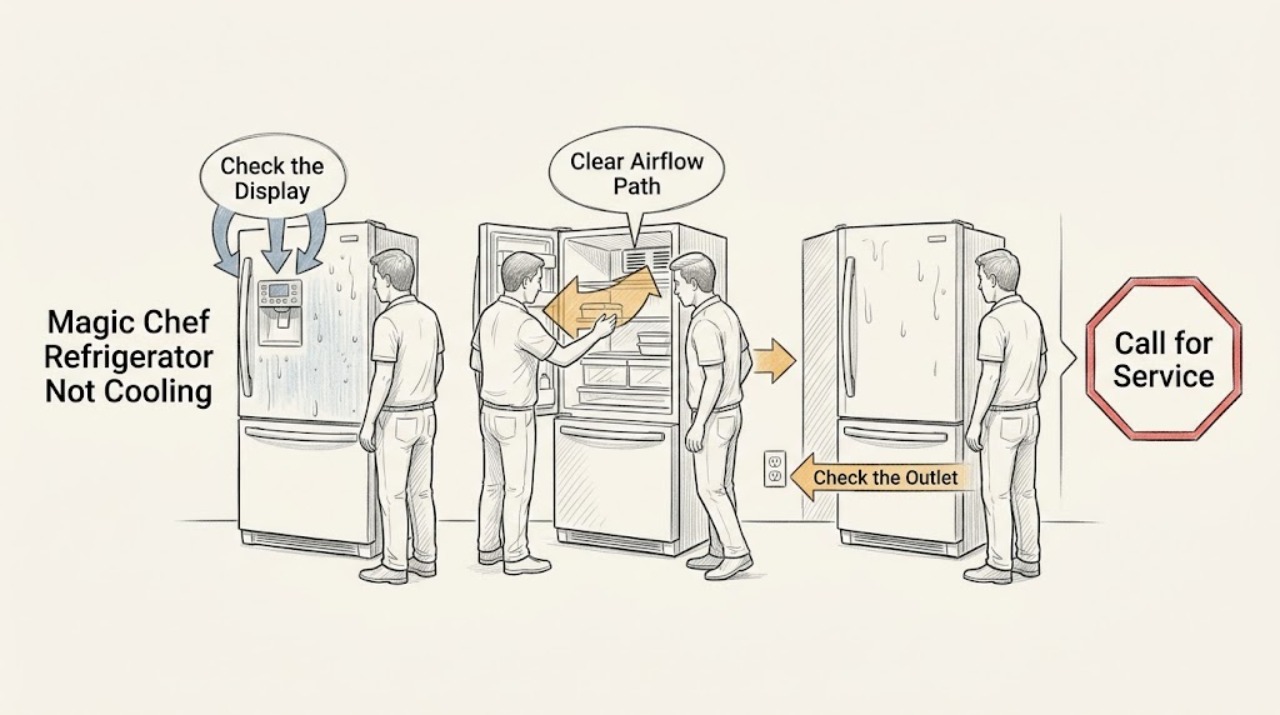
Magic Chef Refrigerator Not Cooling: Separate Setting, Airflow, and System Faults
If a Magic Chef refrigerator is warm, first confirm that it has power and that the temperature control has not been moved. Then check whether the door closes, air vents are blocked, the cabinet has recently been loaded, or frost is restricting circulation. Do not scrape ice with a sharp tool or open the sealed system; persistent warmth after safe checks needs qualified service.
-
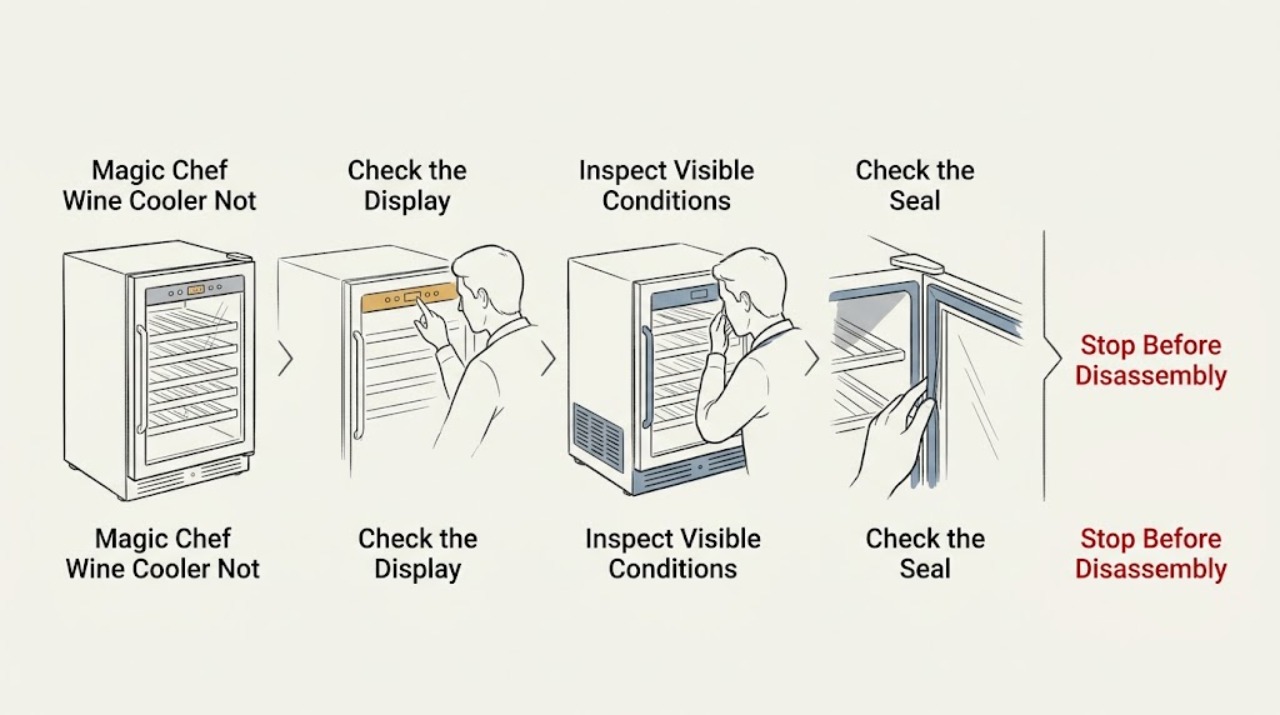
Magic Chef Wine Cooler Not Cooling: Check Airflow, Settings, and the Door Seal
Confirm that the Magic Chef wine cooler has power, the temperature setting is appropriate, and the door closes against its seal. Keep the cabinet from being overpacked and allow a recently loaded unit time to pull down. If the display works but the temperature stays high, frost or moisture is abnormal, or the compressor area is unusually hot or silent, stop repeated testing and use the model manual or qualified service.
-
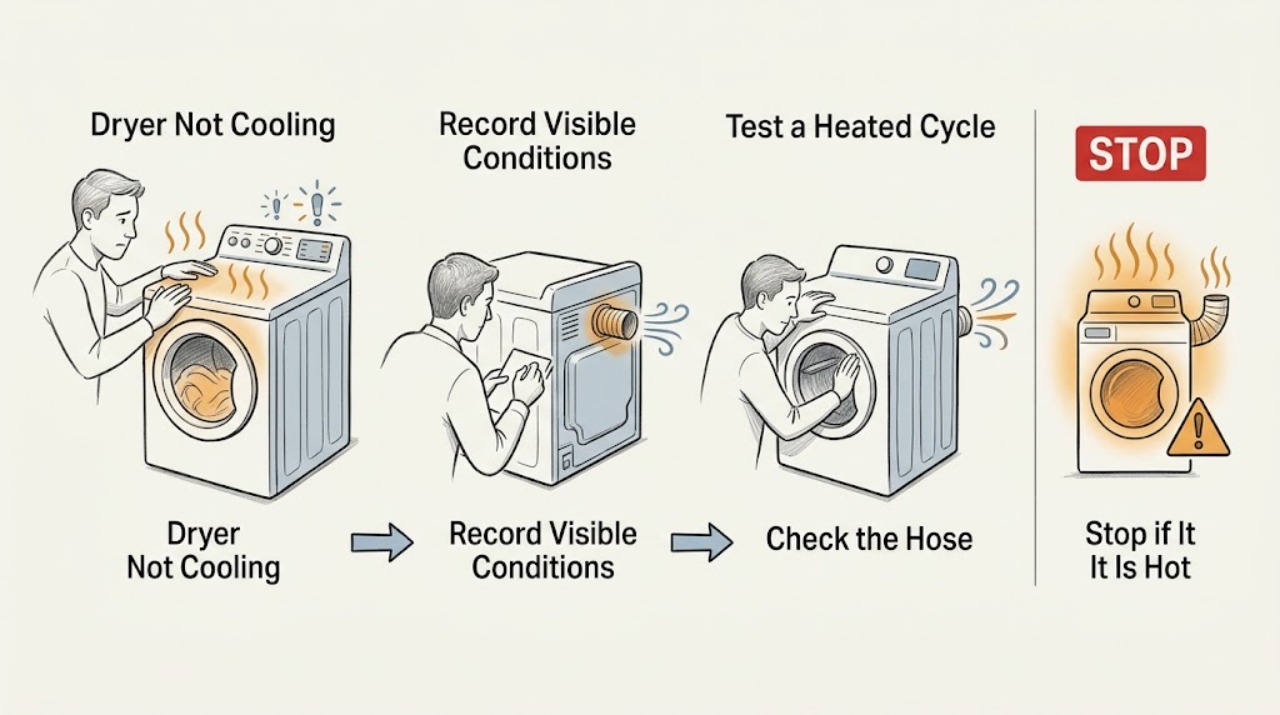
Maytag Dryer Not Cooling: Safe Checks for a Load That Stays Hot
If a Maytag dryer is not cooling, first determine whether the load was removed before the model's Cool Down finished or whether the dryer is still producing heat after that stage. Maytag describes a cool-down portion that tumbles without heat, while high-temperature or timed cycles can leave laundry warmer and restricted airflow can trap heat and moisture.
-
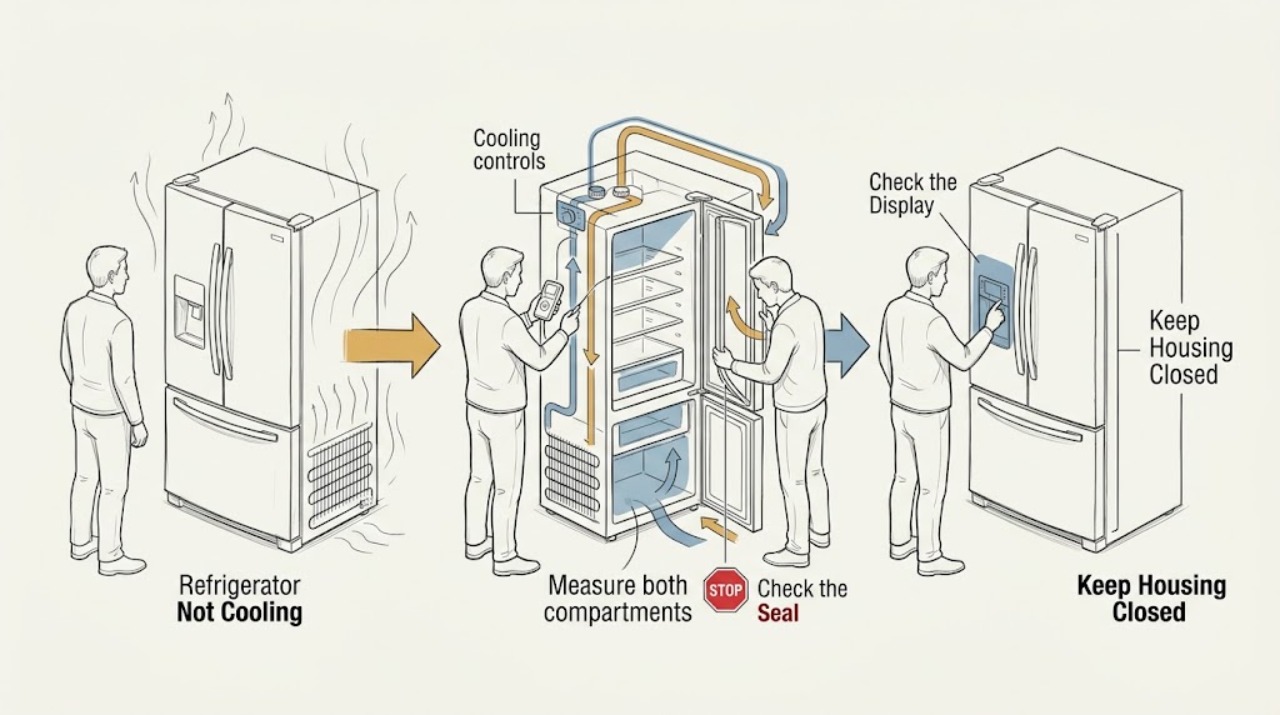
Maytag Refrigerator Not Cooling: Check Power, Mode, Airflow, and Load
When a Maytag refrigerator is not cooling, first confirm that cooling is on and that the temperature controls were not changed or left in showroom mode. Then check the door seal, blocked vents, recent large loads, and the surrounding heat or airflow conditions. Give a setting change time to stabilize. If both sections remain warm or the compressor and fans need internal diagnosis, protect food and arrange service.
-
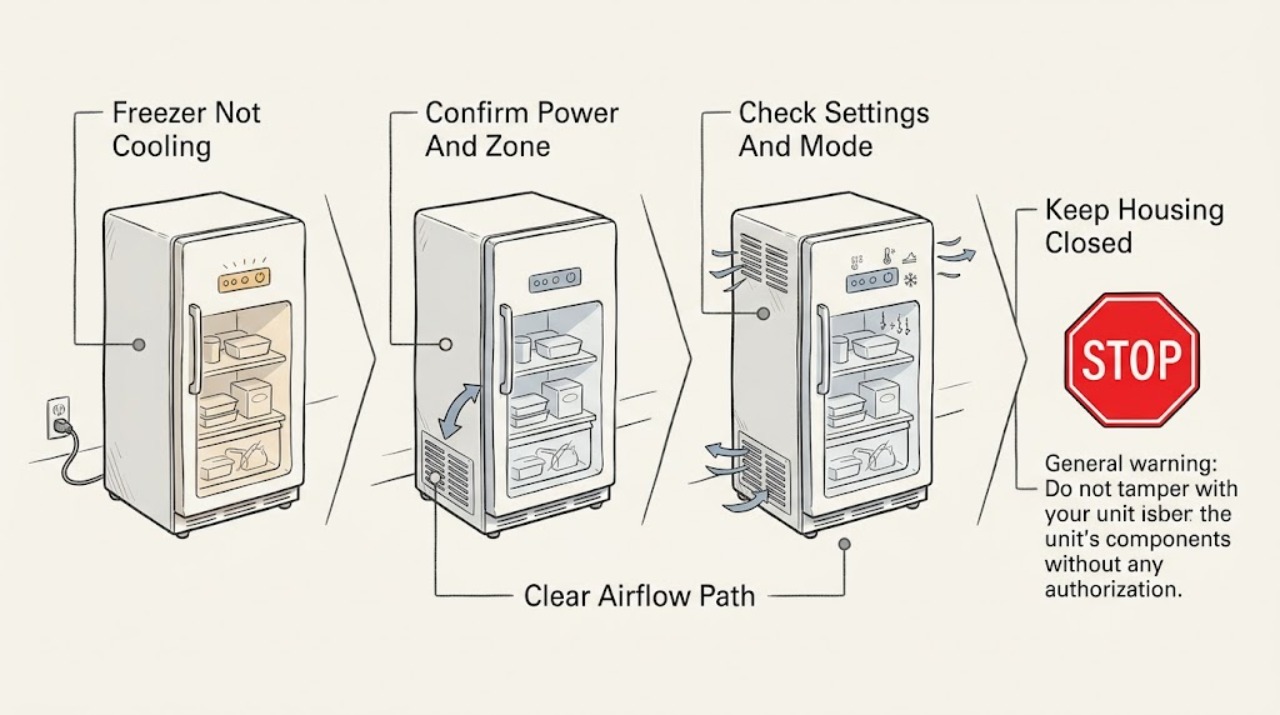
Miele Freezer Not Cooling: Check Power, Door Seal, Airflow, and Frost
When a Miele freezer is not cooling, first confirm that the freezer zone is switched on and the appliance is receiving power, then check the displayed temperature, door closure, loading, ventilation, and frost pattern.
-
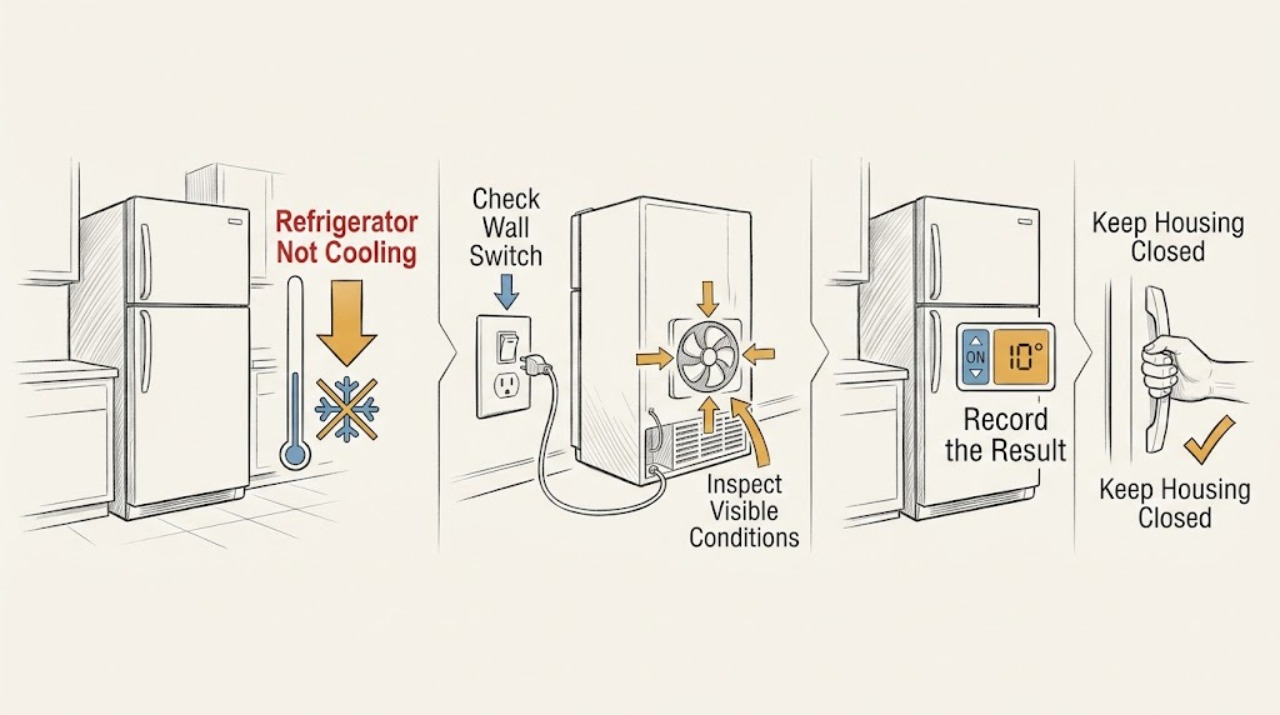
Miele Refrigerator Not Cooling: Check Power, Mode, and Ventilation
Check that the Miele refrigerator and the affected zone are switched on, the plug is seated, and the appliance is not in demo mode. Then inspect accessible ventilation openings and door closure. A tripped breaker, repeated trip, or persistent warm cabinet needs qualified electrical or Miele Service diagnosis; do not open the cooling circuit.
-
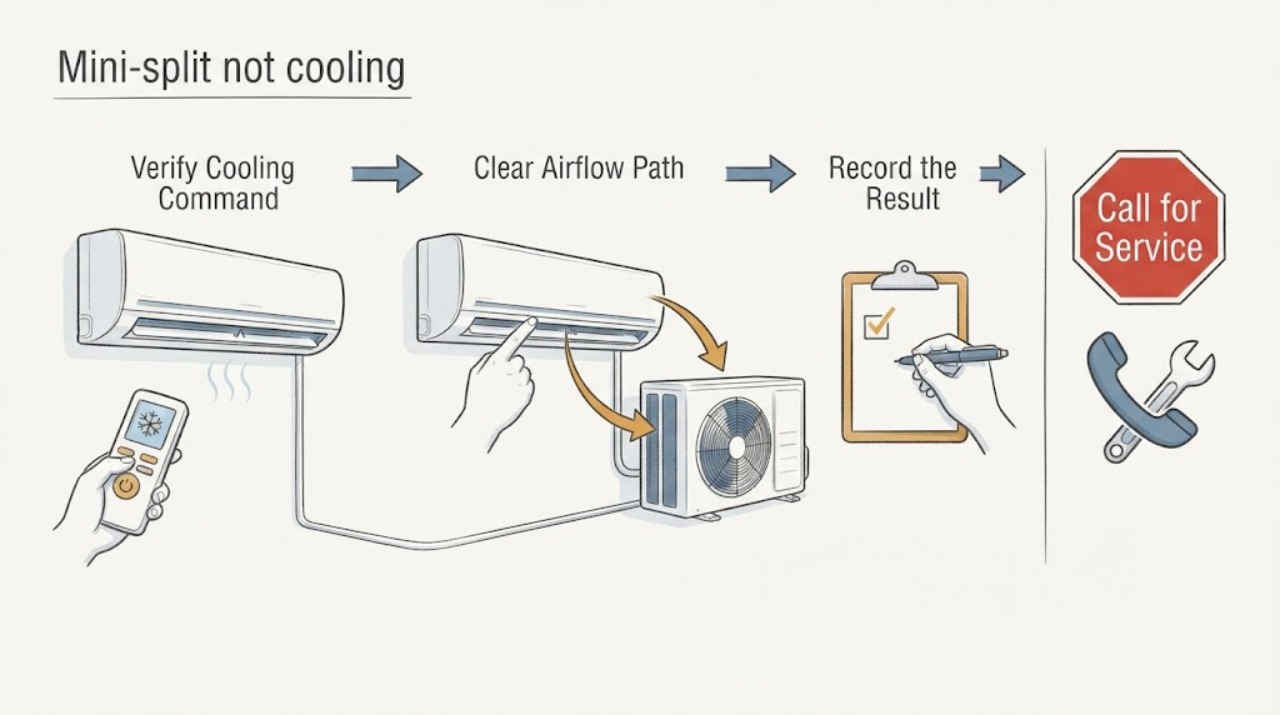
Mini-split not cooling: check mode, airflow, and outdoor operation before service
A mini-split that is not cooling may be in the wrong mode, set too high, restricted by a dirty filter or blocked airflow, affected by a condensate problem, or experiencing an electrical, refrigerant, coil, fan, or control fault. Confirm Cool mode and the remote setting, then check the accessible indoor filter and the clear space around the indoor and outdoor units without opening panels.
-
Moffat Refrigerator Not Cooling
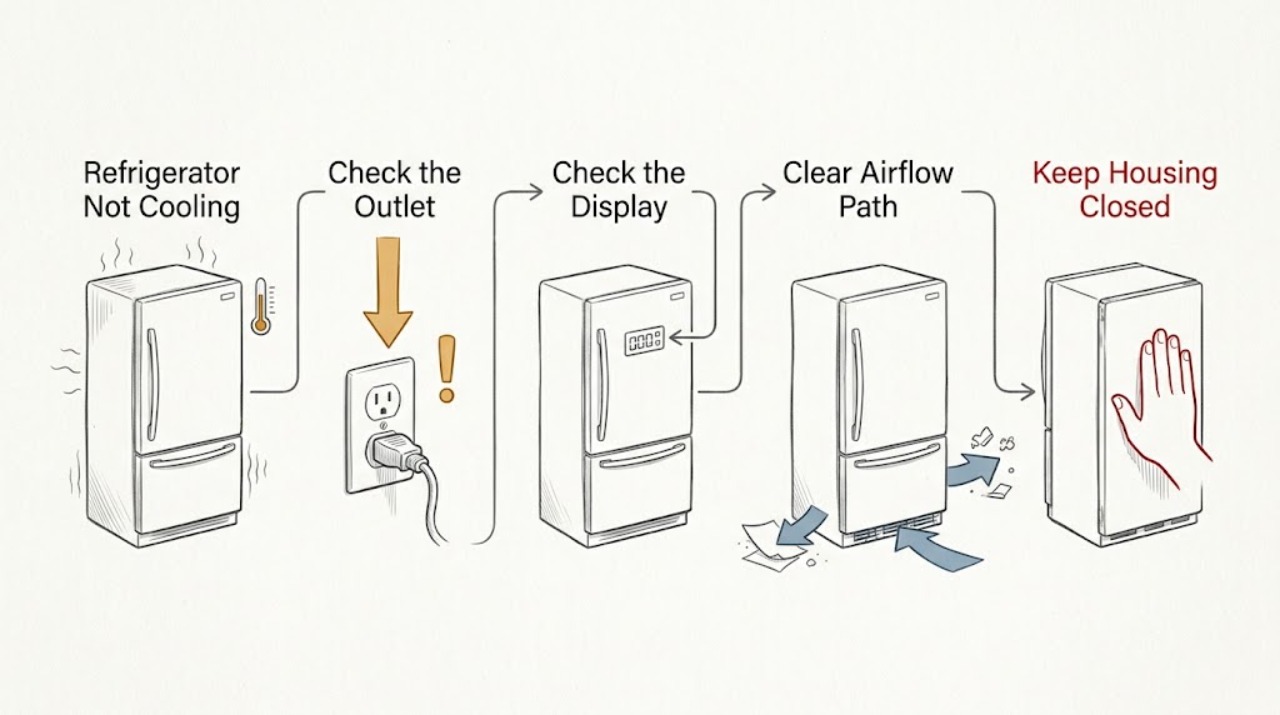
Check the Moffat temperature controls, door closure, gasket, airflow, and recent installation or loading before assuming a sealed-system failure. Compare whether the freezer is also warm and note any heavy frost or interior light that stays on. If safe external checks do not restore cooling, protect perishable food and arrange service; do not open the refrigeration circuit or control area.
-
Monogram Refrigerator Not Cooling: Check Settings, Seals, and Airflow
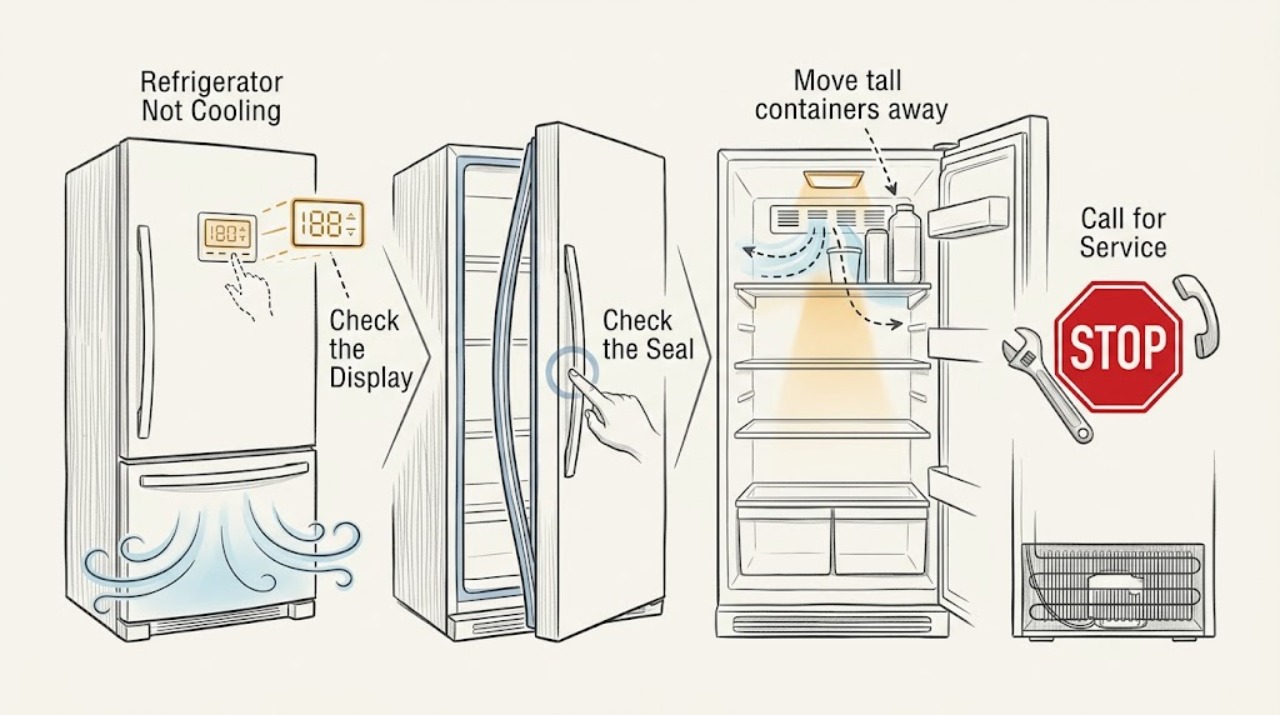
Check the temperature setting, door closure, gasket, blocked air vents, and recent installation or loading before assuming a sealed-system failure. Keep the refrigerator plugged in so the symptom remains available for diagnosis. If temperatures stay high after those visible checks, arrange Monogram service and avoid opening the sealed system.
-
Panasonic Refrigerator Not Cooling: Check Power, Airflow, and Door Seals
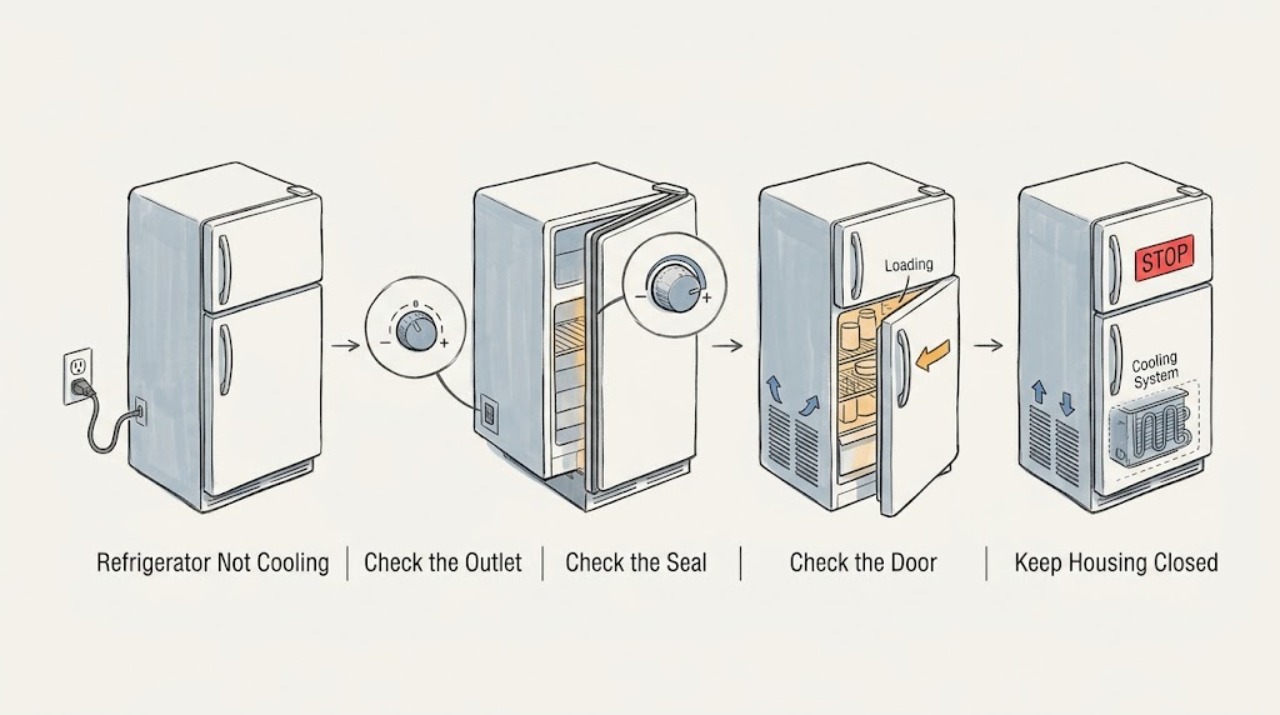
Confirm the refrigerator has power, the control is set as the manual requires, the doors close firmly, and food is not blocking cold-air circulation. Move it away from direct heat only within the installation guidance and allow the cabinet to recover after warm loading or frequent door opening. If it remains warm, shows an error, or has a damaged cord/seal, arrange Panasonic service rather than opening the cooling system.
-
Performa Refrigerator Not Cooling
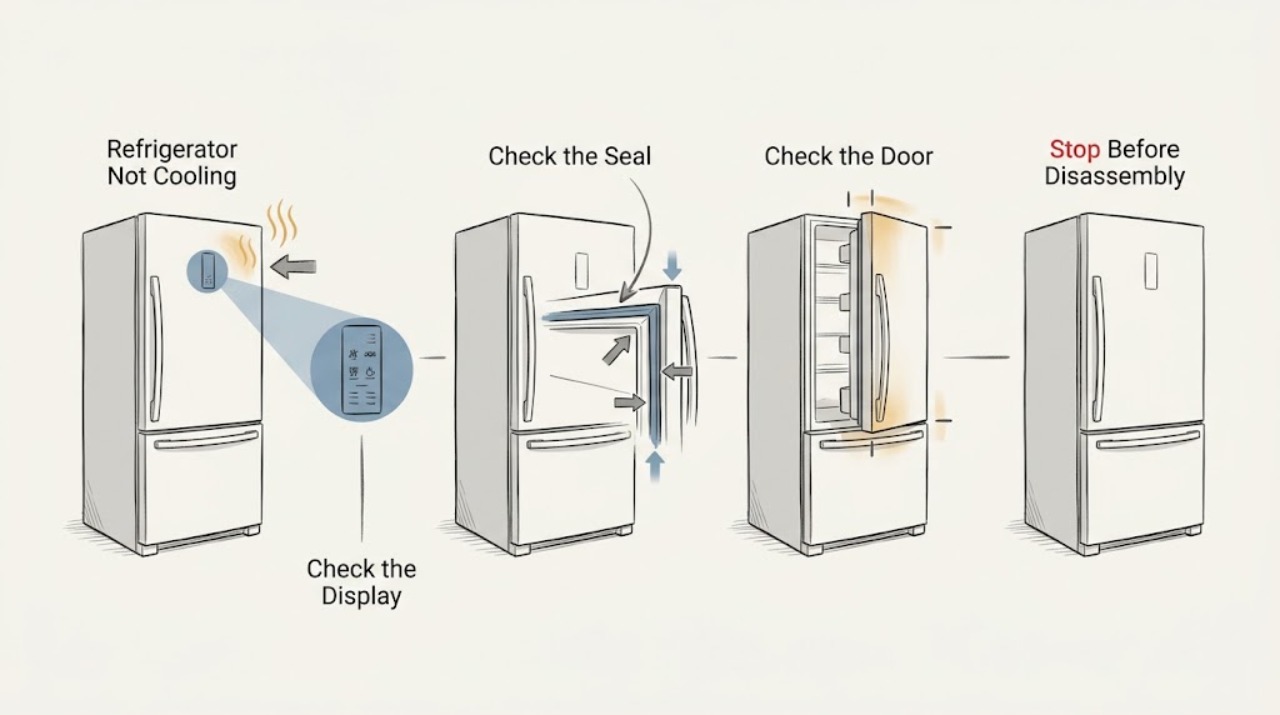
For a Performa refrigerator that is not cooling, check power and controls, clear internal air vents, confirm the doors seal, and account for a recent installation or large warm load. Give a temperature adjustment time to stabilize. If the compressor/fans do not run, frost blocks airflow, or food remains warm, arrange service and protect perishables.
-
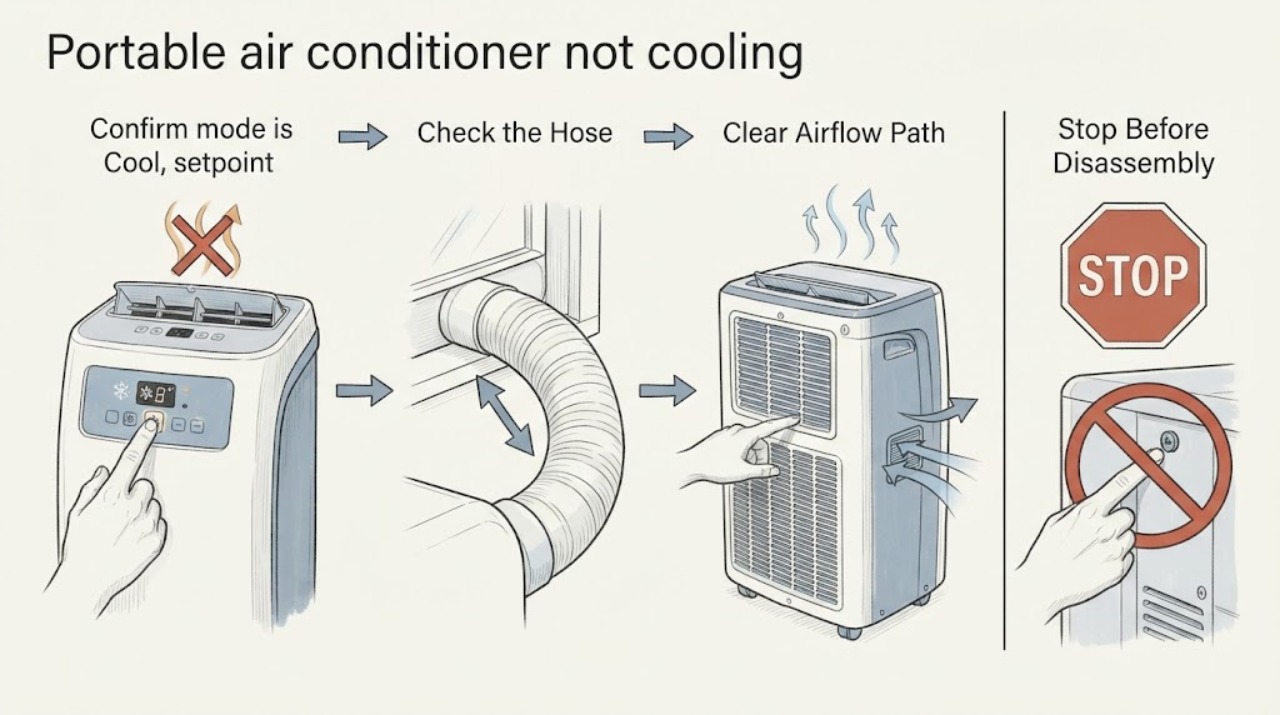
Portable air conditioner not cooling
A portable air conditioner that is not cooling should be checked for the cooling mode and setpoint, a correctly installed exhaust hose, closed windows/doors, clean filter and coils, and a full drain tank if the model uses one. Do not vent into an indoor space or extend the hose. If airflow and venting are correct but the unit still does not cool, arrange service.
-
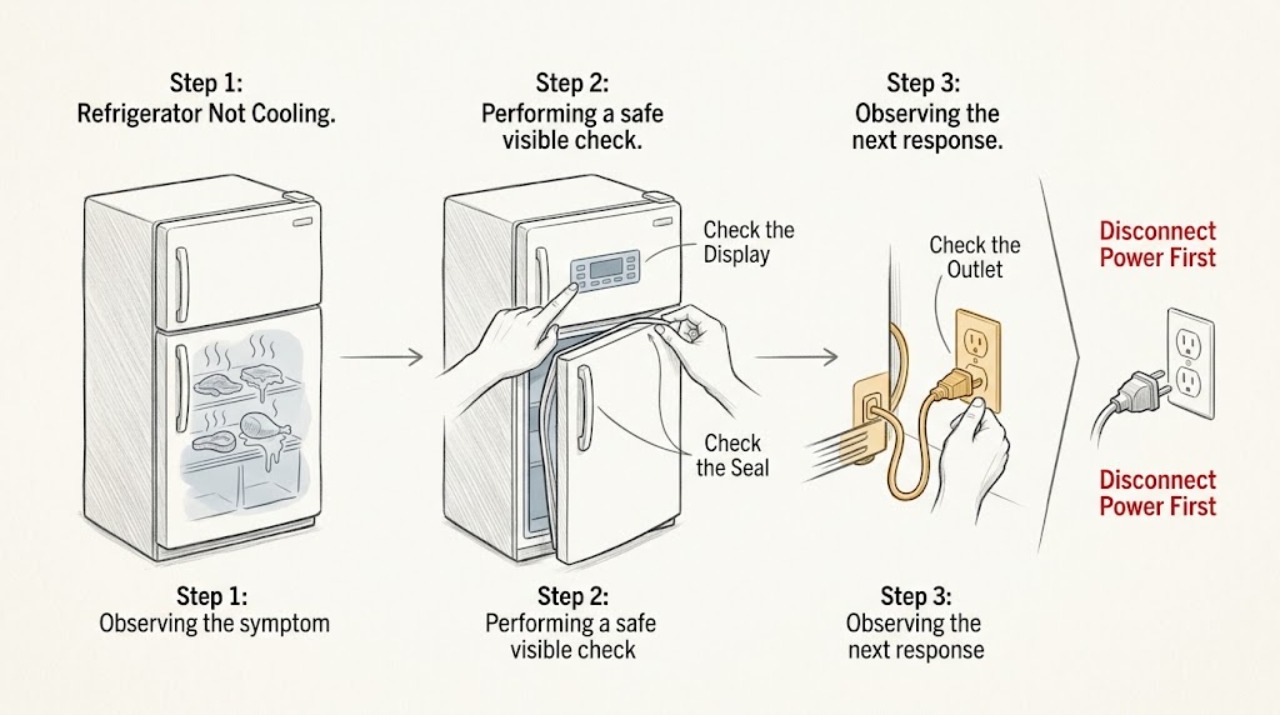
Profile Refrigerator Not Cooling: Check Settings, Airflow, and Door Seals
Check the temperature setting, door closure, food blocking the vents, and the installation clearance before assuming a sealed-system failure. A newly installed refrigerator may need time to stabilize. If your model has accessible condenser coils, clean them only with power disconnected and according to its manual. Persistent warmth, heavy frost, or a refrigerator that will not run needs service.
-
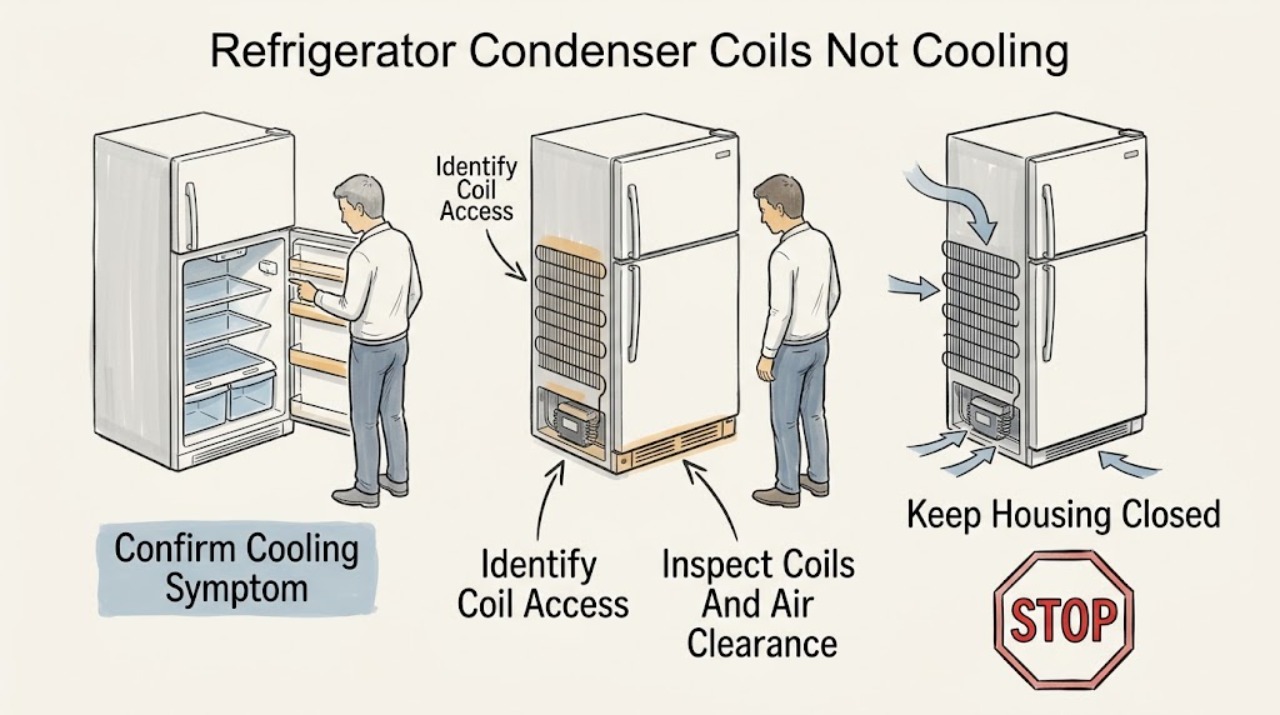
Refrigerator Condenser Coils Not Cooling: What to Check and What to Do Next
The condenser coils do not make the inside of a refrigerator cold; they release heat removed from the cabinet. If the refrigerator is not cooling and the condenser area looks dusty, first identify the coil location and confirm that your model permits owner cleaning.
-
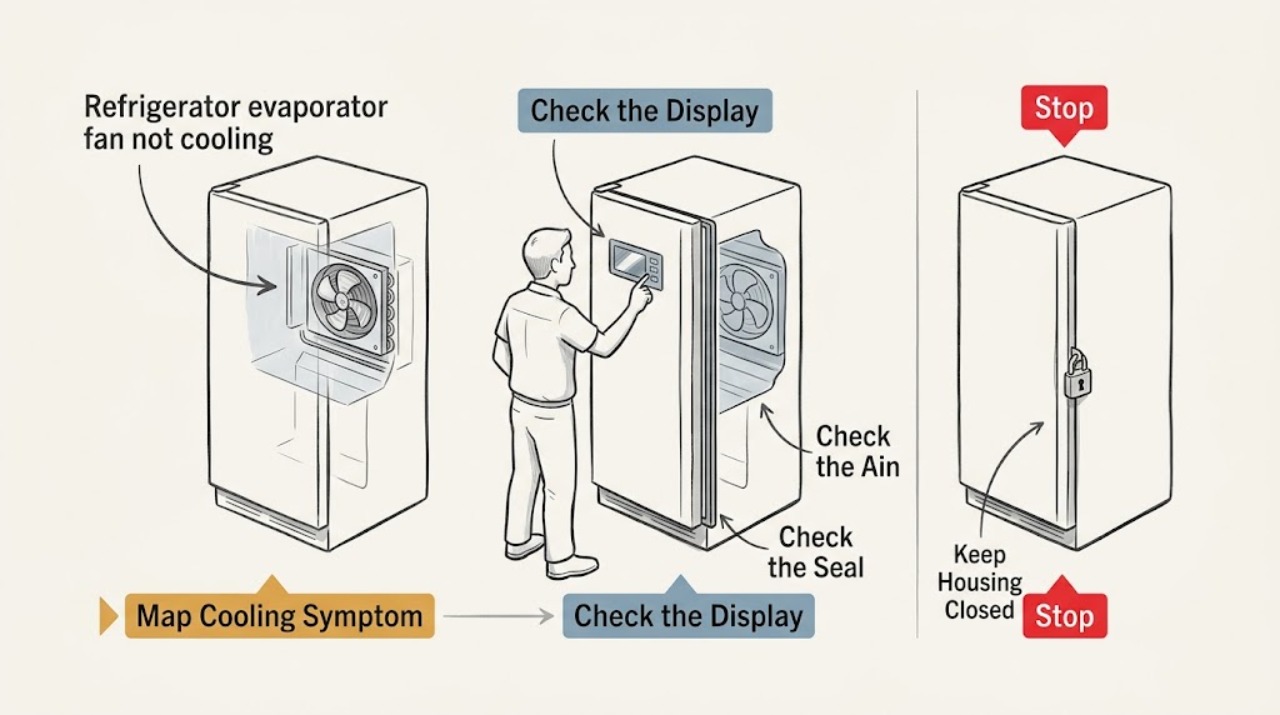
Refrigerator evaporator fan not cooling: What to Check and What to Do Next
A refrigerator that is not cooling may have an evaporator-fan problem, but the same symptom can come from loss of power, demo or cooling-off mode, blocked vents, a door-seal leak, heavy frost, a defrost fault, a sensor problem, or another internal failure. First separate whether the freezer, fresh-food compartment, or both are warm.
-
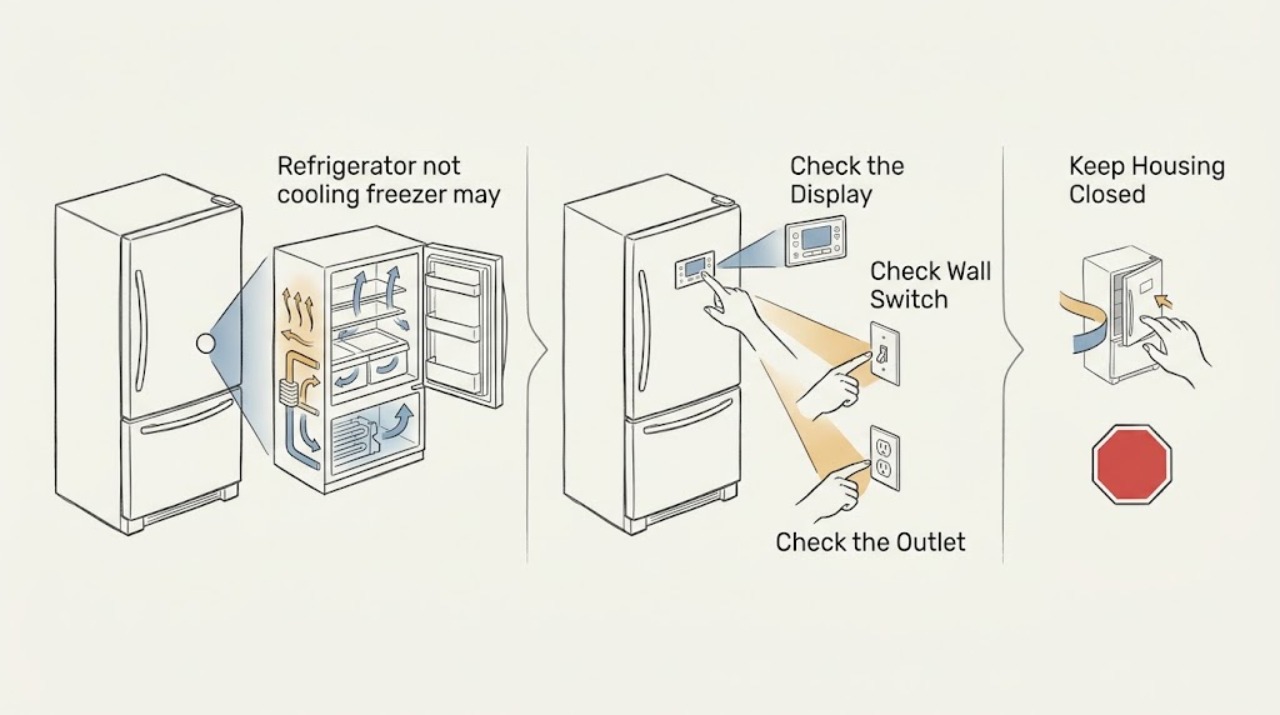
Refrigerator not cooling freezer may be cold: What to Check and What to Do Next
When the refrigerator compartment is warm but the freezer may still be cold, the cooling system may be running while cold air is not reaching the fresh-food section. First verify the actual temperatures and that the refrigerator is powered and not in Cooling Off, Demo, or Showroom mode.
-
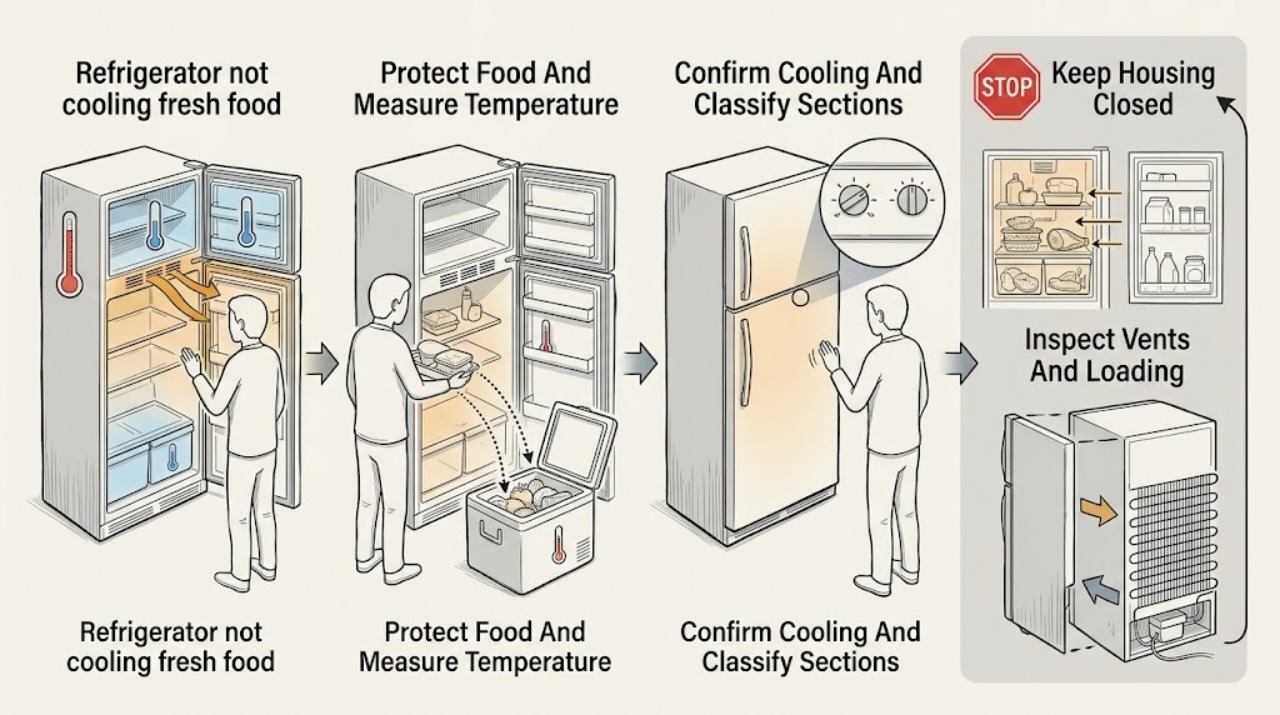
Refrigerator not cooling fresh food section is warm: What to Check and What to Do Next
A warm fresh-food section can result from blocked air vents, a crowded cabinet, a door that is not sealing, an incorrect control or showroom setting, a recent power interruption or food load, frost blocking the shared freezer-to-refrigerator airflow, or a cooling-system fault. First protect perishable food and measure the refrigerator with an appliance thermometer; FDA guidance says the refrigerator should be at or below 40°F.
-
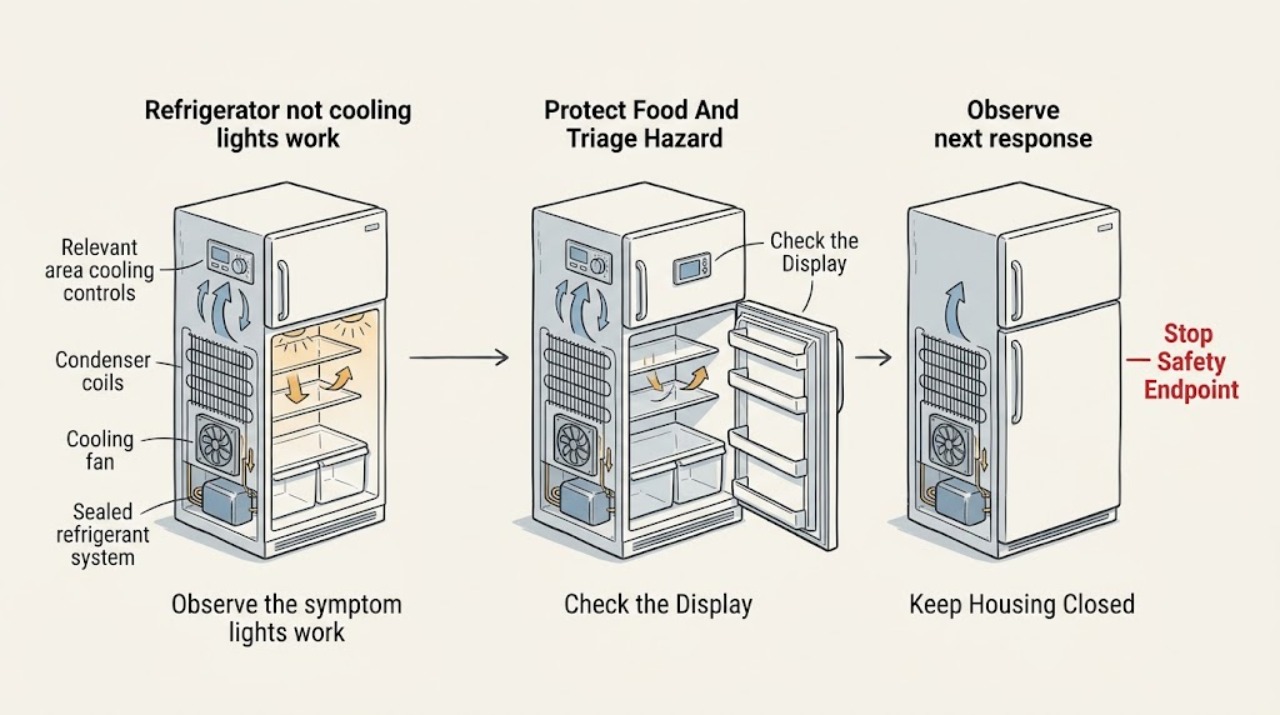
Refrigerator not cooling lights work: What to Check and What to Do Next
Interior lights can work even when a refrigerator is not cooling, so they confirm only that some power or control functions are present. Check the external power connection, cooling-on or showroom setting, temperature control, door closure, visible airflow, recent installation or power interruption, and the room conditions.
-
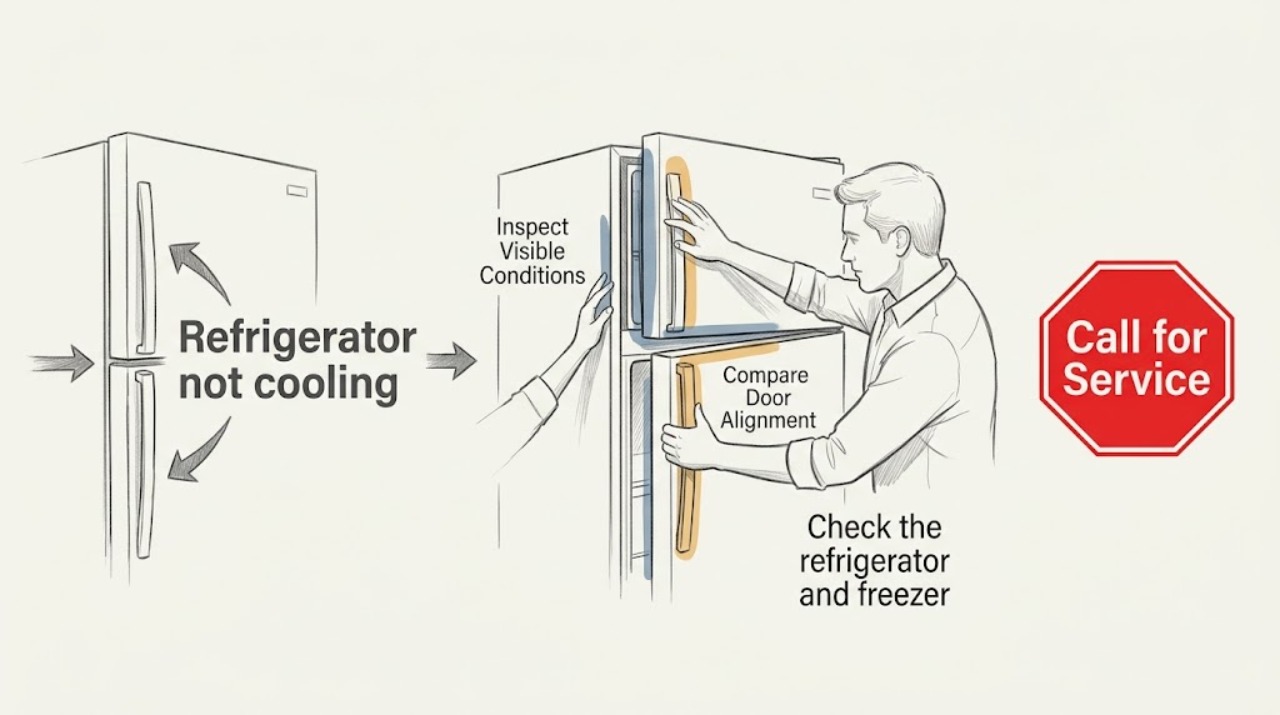
Refrigerator not cooling: What to Check and What to Do Next
Protect the food first, then check the actual compartment temperature, cooling setting, door seal, blocked vents, visible frost, and the sound of the refrigerator running. A recent power interruption, demo mode, crowded vents, or a door that does not seal can make a refrigerator feel warm.
-
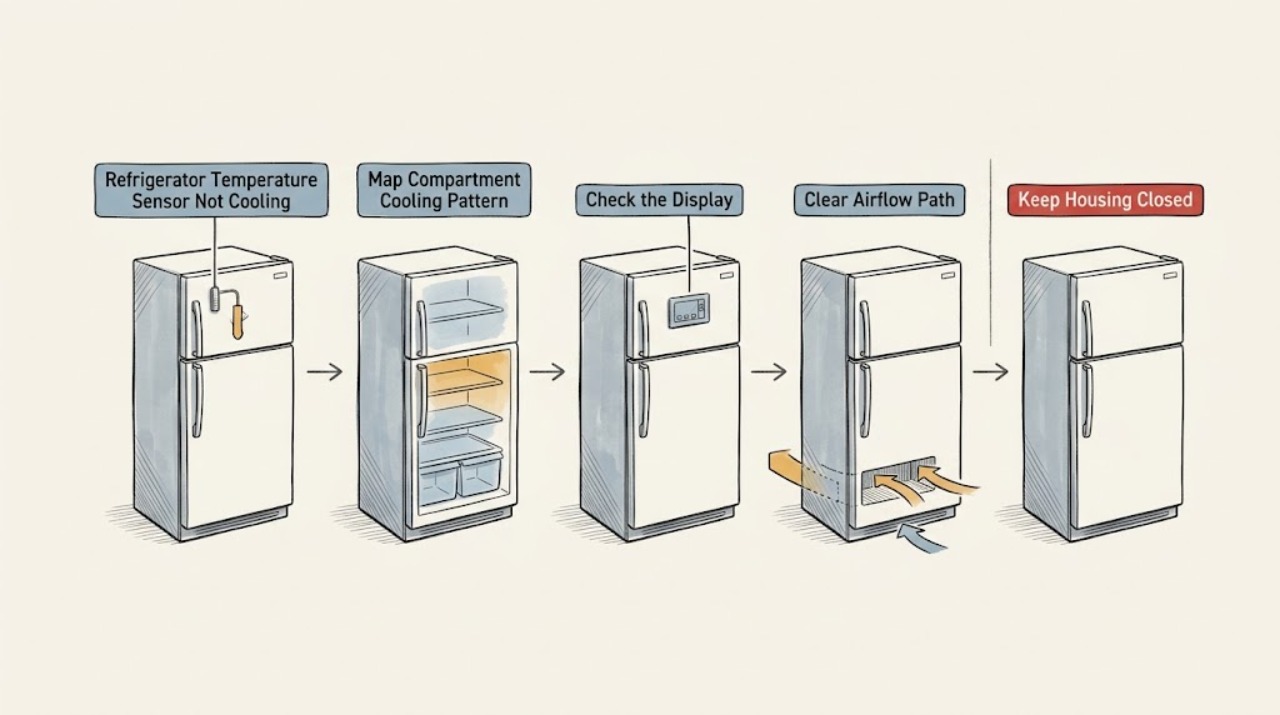
Refrigerator Temperature Sensor Not Cooling: What to Check and What to Do Next
A refrigerator temperature sensor, often called a thermistor in service information, reports compartment conditions to the control system; a sensor fault can therefore produce incorrect cooling, but a warm refrigerator does not prove the sensor is bad.
-
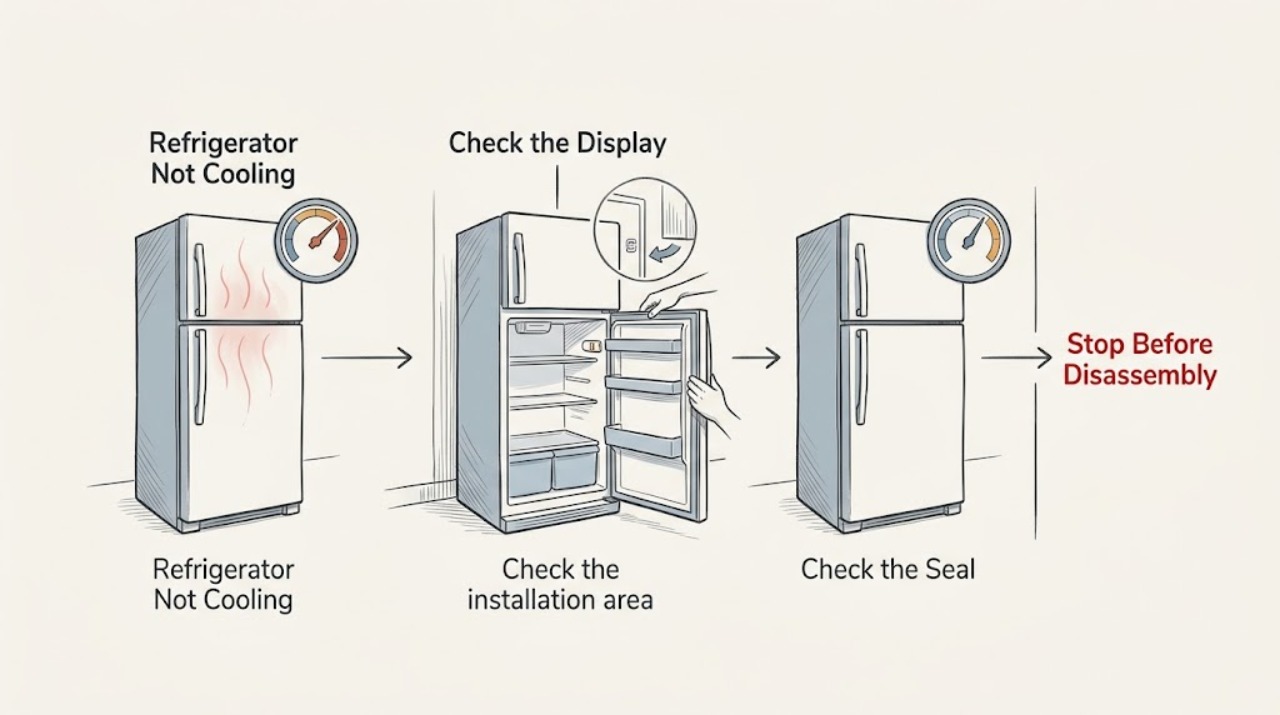
Roper Refrigerator Not Cooling
Check that cooling is enabled and the controls are set correctly, keep air vents clear, confirm the doors seal, and allow 24 hours after installation or an adjustment. A hot garage, nearby heat source, blocked grille or coils, large warm load, or frequent door opening can delay cooling. Arrange service for persistent warmth, frost, abnormal noise, or a nonresponsive control.
-
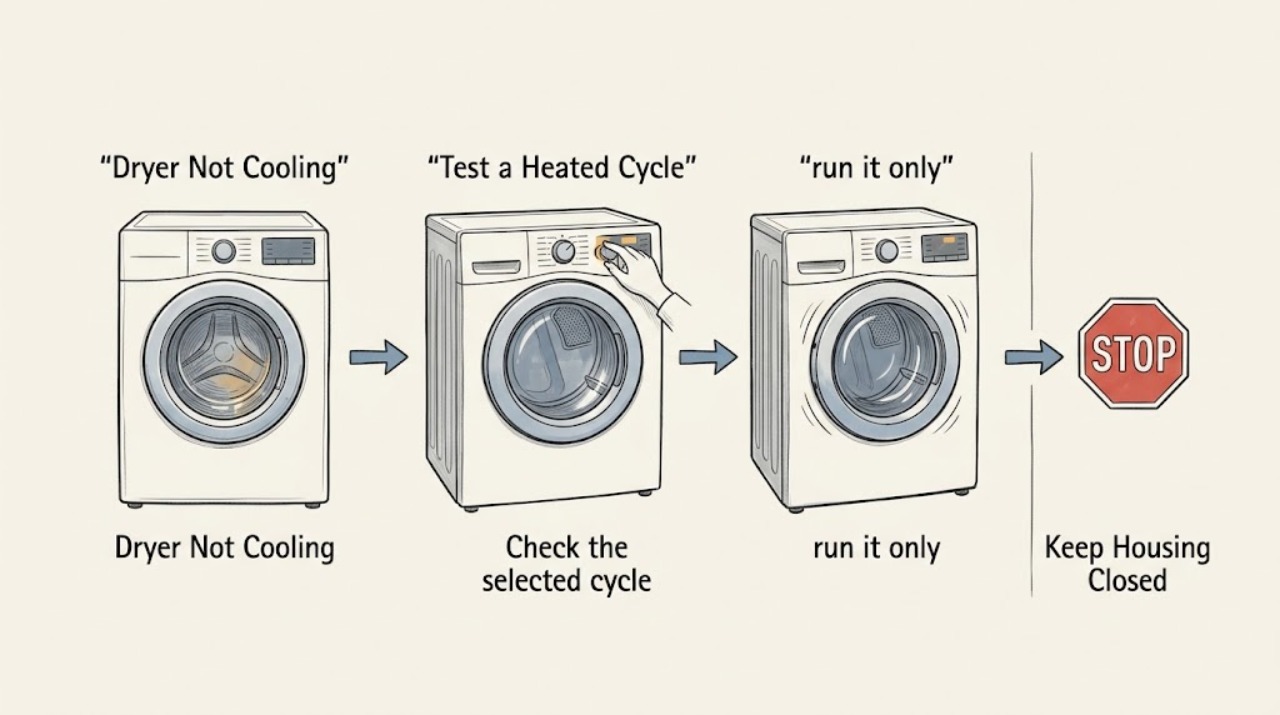
Samsung Dryer Not Cooling: Separate Normal Cool-Down From a Fault
First establish when the Samsung dryer is supposed to cool. Samsung dryers can blow room-temperature air in Air Fluff, enter an unheated cool-down phase near the end of a cycle, and continue tumbling without heat when Wrinkle Prevent is enabled.
-
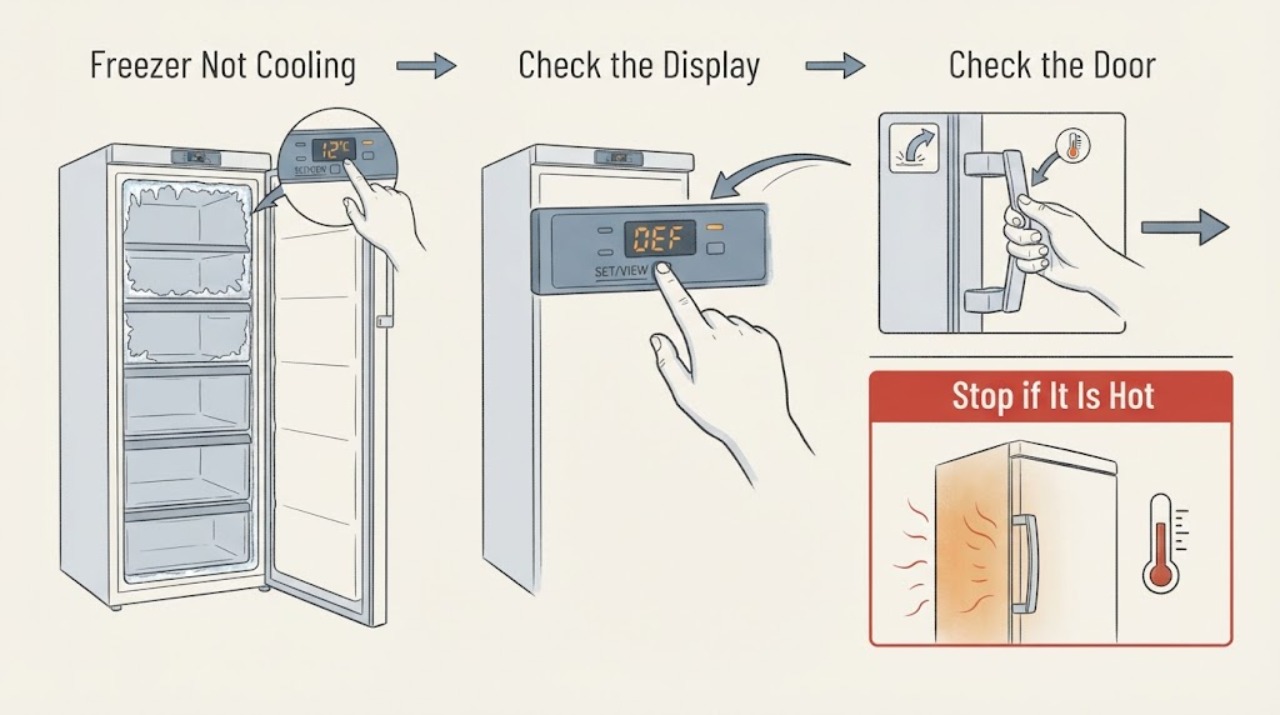
Samsung Freezer Not Cooling
First protect the food and determine whether the freezer is warm but running, or has no cooling at all. Check that the freezer is in its normal mode rather than Cooling Off, confirm the set temperature and actual temperature, make sure the door closes and its gasket seals, and clear food from the interior vents.
-
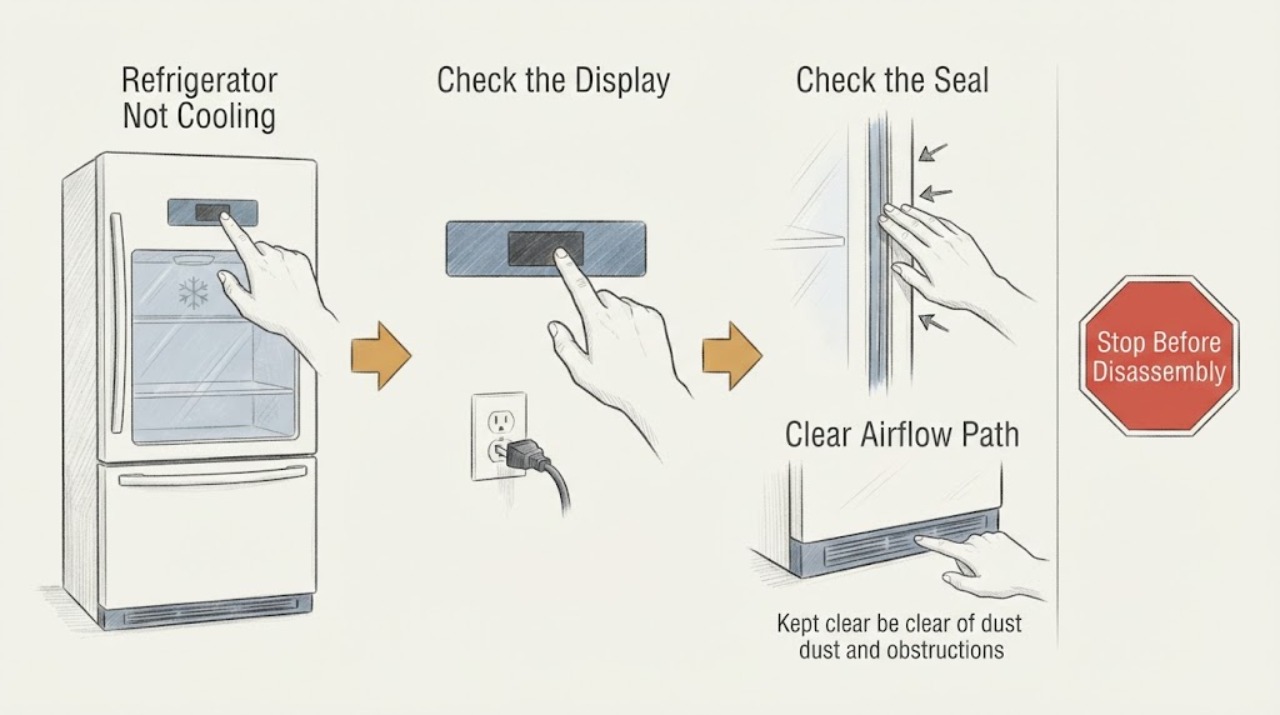
Samsung Refrigerator Not Cooling: Door, Airflow, and Power Checks
A Samsung refrigerator that is not cooling needs a compartment and power split first. Check whether lights/display work, confirm doors seal and visible vents are clear, and keep doors closed while observing. Persistent warmth, abnormal frost/noise, or any electrical hazard requires qualified service.
-
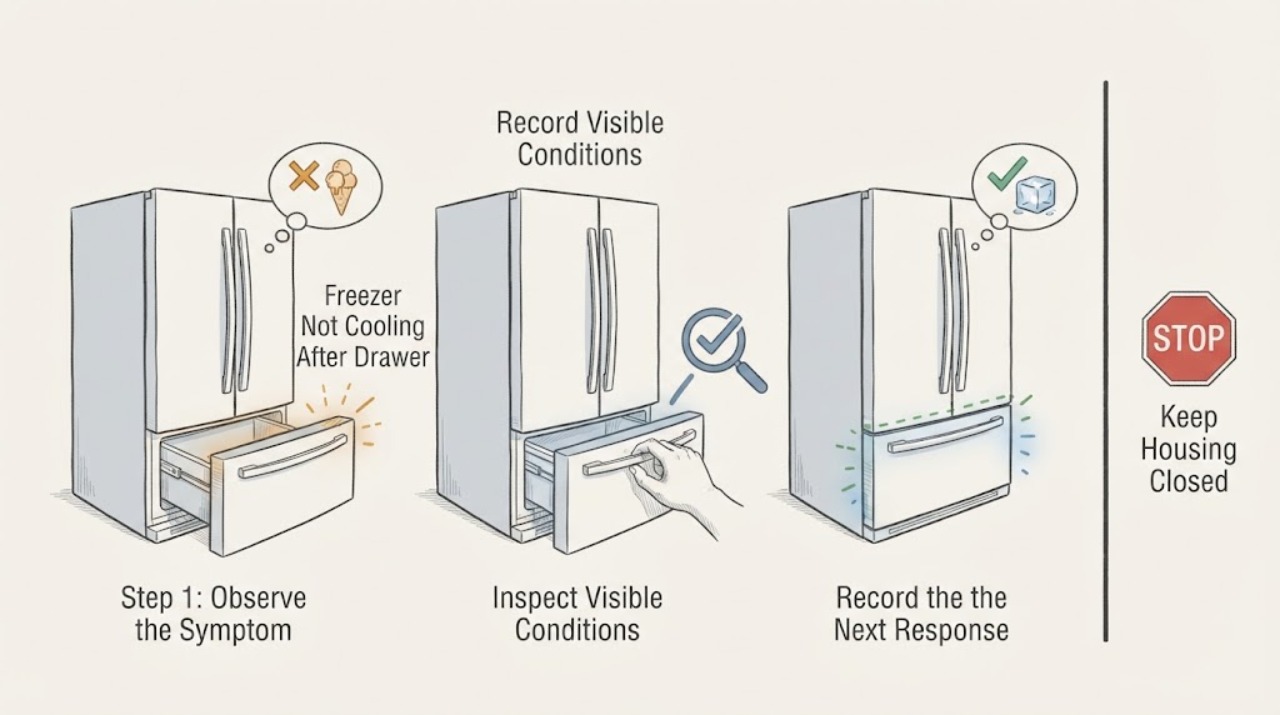
Samsung RF261BEAESR Freezer Not Cooling After Drawer Realignment: Check Closure Before Waiting
For a Samsung RF261BEAESR freezer that was recently realigned, first make sure the pull-out drawer closes flush, its seal is continuous, and no bin, package, frost, or rail/auto-close component is keeping it open. Confirm the refrigerator is in normal cooling mode and the freezer setting matches the model documentation, then place a thermometer between frozen packages and keep the drawer closed.
-
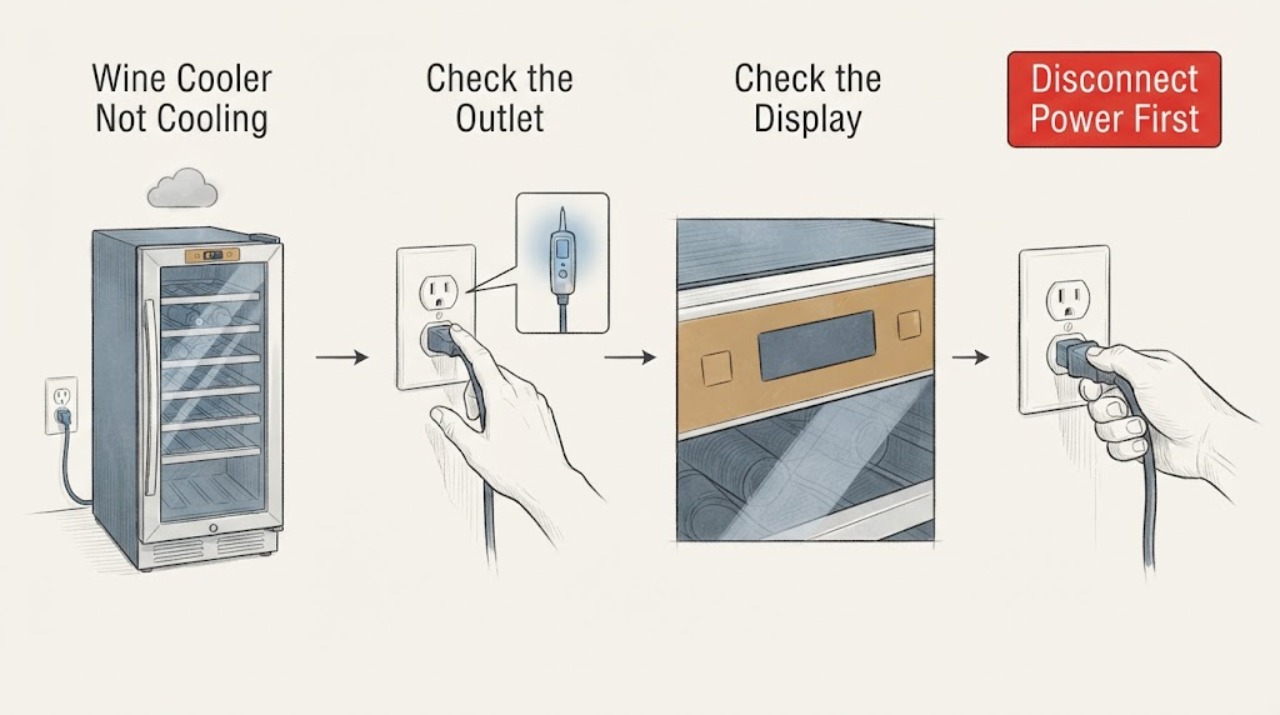
Samsung Wine Cooler Not Cooling: Safe Checks Before Service
When a Samsung wine cooler is not cooling, first confirm that the cooler has power and that the display and temperature controls respond. Then check the selected zone setting, Cooling Off or demonstration state if your model has one, door closure and gasket contact, blocked interior or exterior ventilation, heavy loading, and exposure to heat.
-
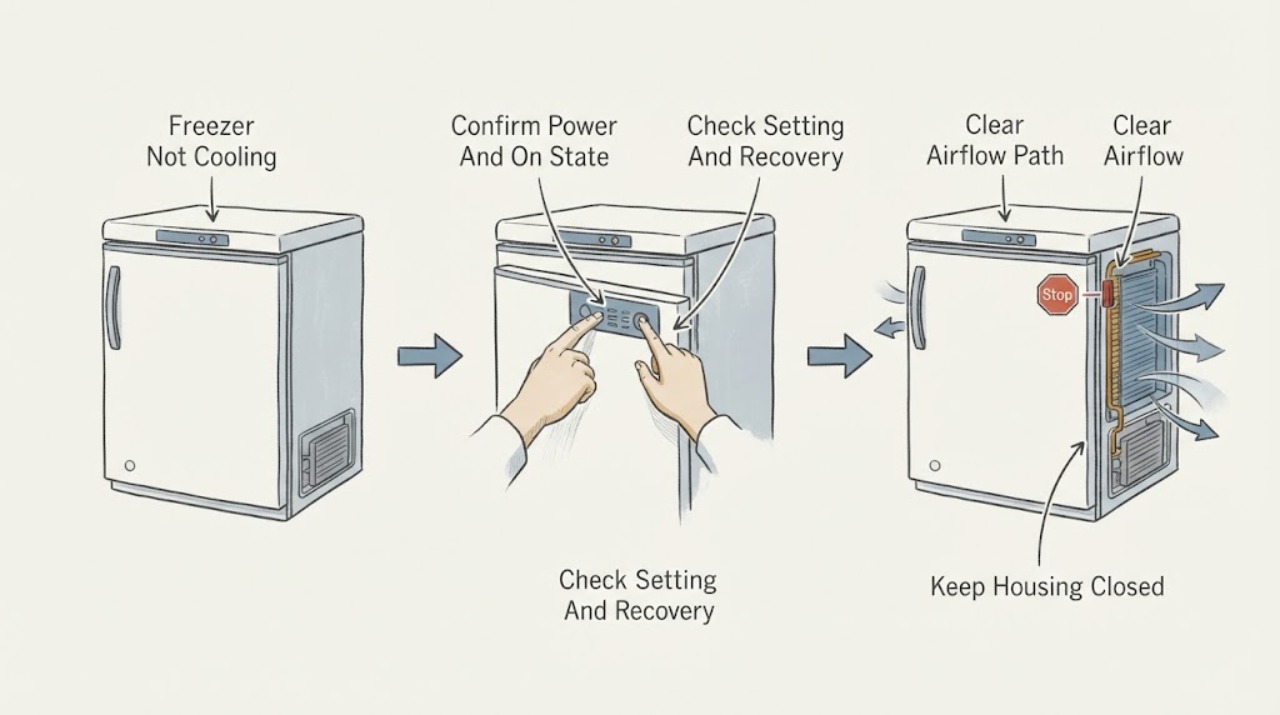
Siemens Freezer Not Cooling: Safe Checks Before Service
If a Siemens freezer is not cooling, keep the door closed, check that the appliance is powered and switched on, and confirm the freezer setting rather than guessing from one warm item. Siemens manuals use -18 °C as the recommended freezer setting, but controls and ranges vary by model.
-
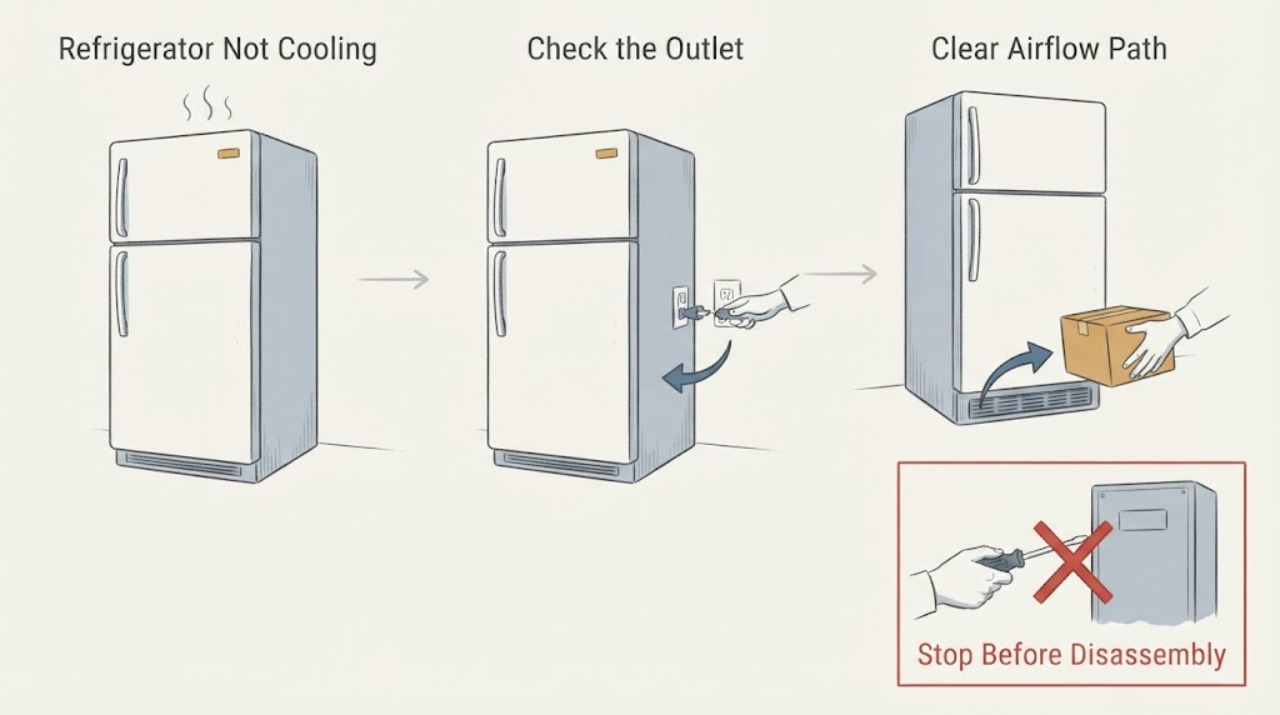
Siemens Refrigerator Not Cooling
For a Siemens refrigerator that is not cooling, confirm power, operating mode, door closure, airflow, and recent loading before changing settings. A persistent warm cabinet needs service and food should be moved to safe cold storage.
-
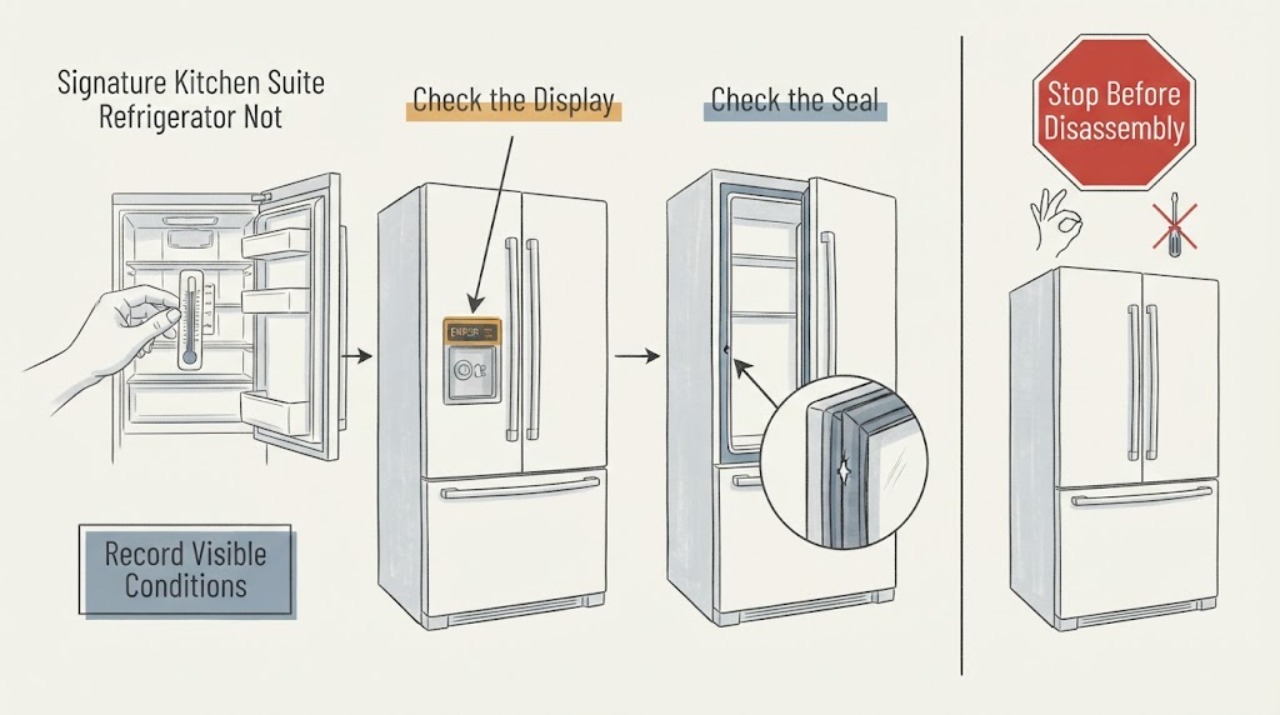
Signature Kitchen Suite Refrigerator Not Cooling
A Signature Kitchen Suite refrigerator with not cooling should be checked from outside using the owner manual. Start with the control state, door and airflow conditions, water or ice path as relevant, and any visible leak or electrical symptom. If the symptom persists after safe external checks, use model-specific service.
-
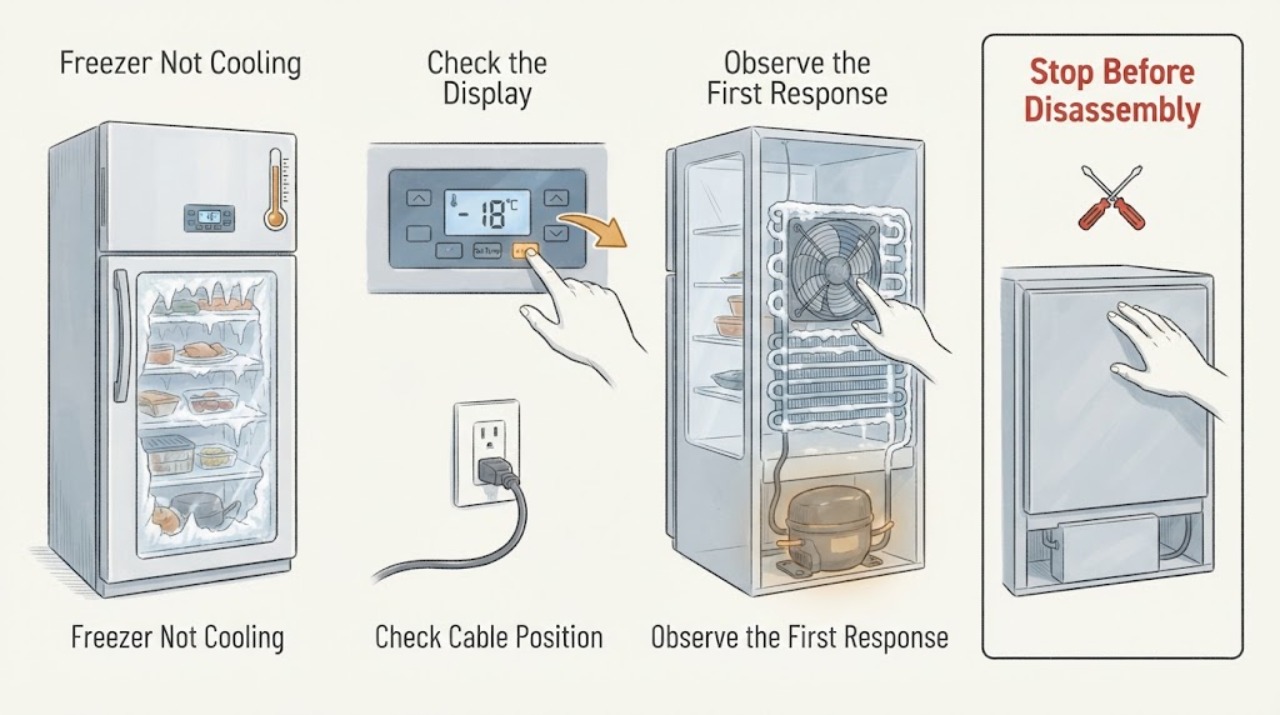
Smeg Freezer Not Cooling: Check Settings, Door Seal, Frost, and Airflow
Protect the food and check safety first when a Smeg freezer is not cooling. If there is a burning smell, smoke, sparking, a hot or damaged plug, water at an electrical part, abnormal overheating, or a breaker that trips, stop the appliance and isolate power only from a safe, dry position; do not open panels.
-
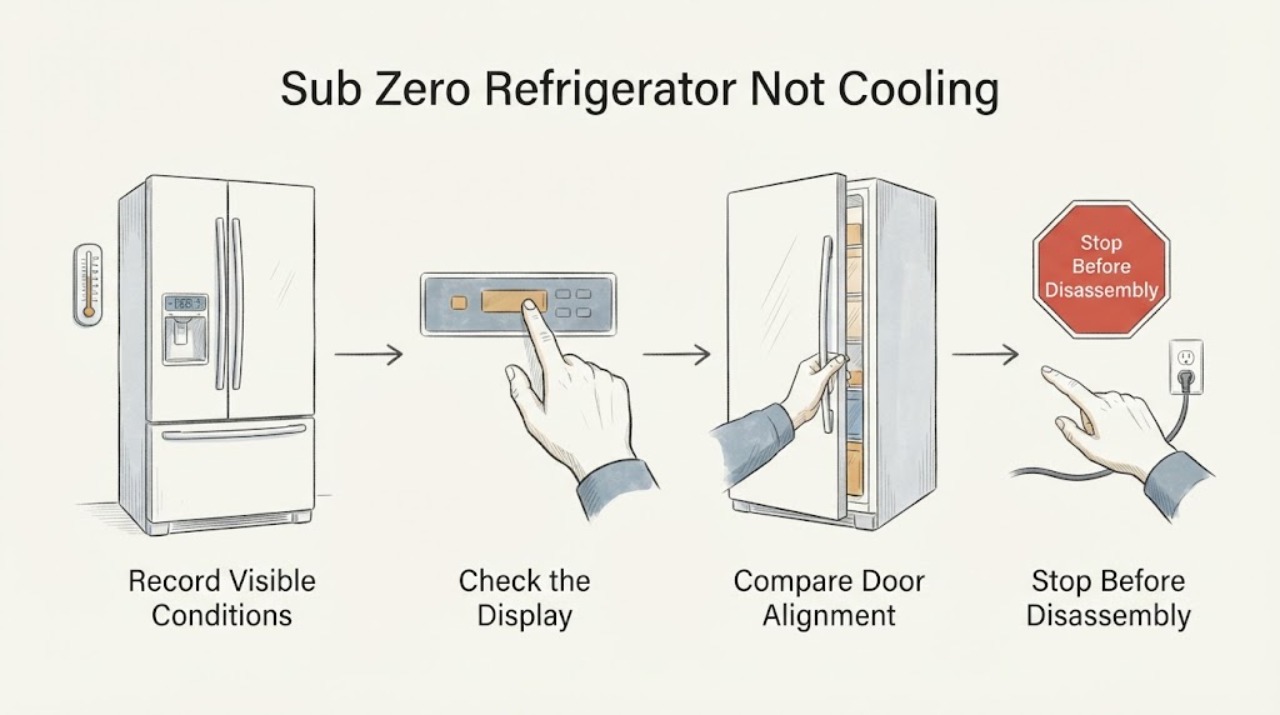
Sub Zero Refrigerator Not Cooling
If a Sub-Zero refrigerator is not cooling, first identify whether the refrigerator section, freezer section, or all sections are warm and record the exact model from the serial tag. Confirm the unit is running, the control is set for the intended section, the doors close fully, nothing blocks the door or visible airflow path, and the door gasket is not damaged.
-
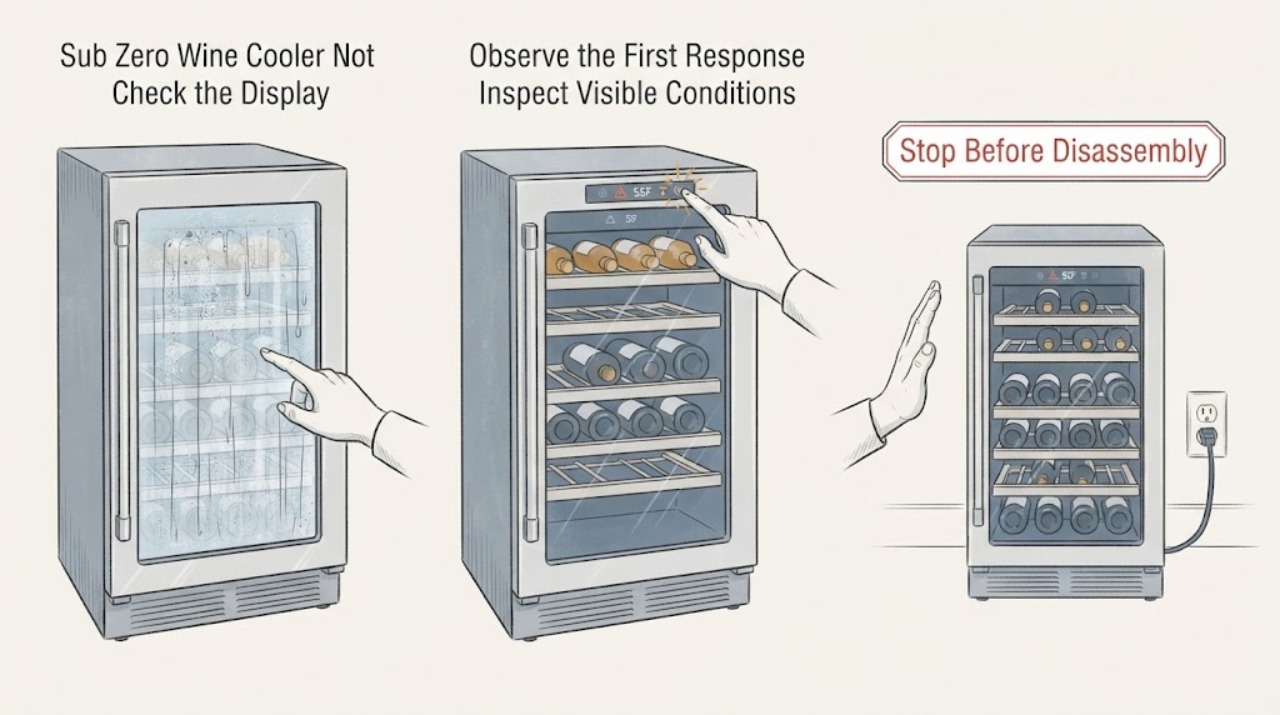
Sub Zero Wine Cooler Not Cooling Troubleshooting Guide
For a warm Sub-Zero wine cooler, verify power, the setpoint, door closure, and condenser cleanliness, then allow recovery with the door closed. If it remains warm or shows an indicator, use Factory Certified Service rather than opening the refrigeration system.
-
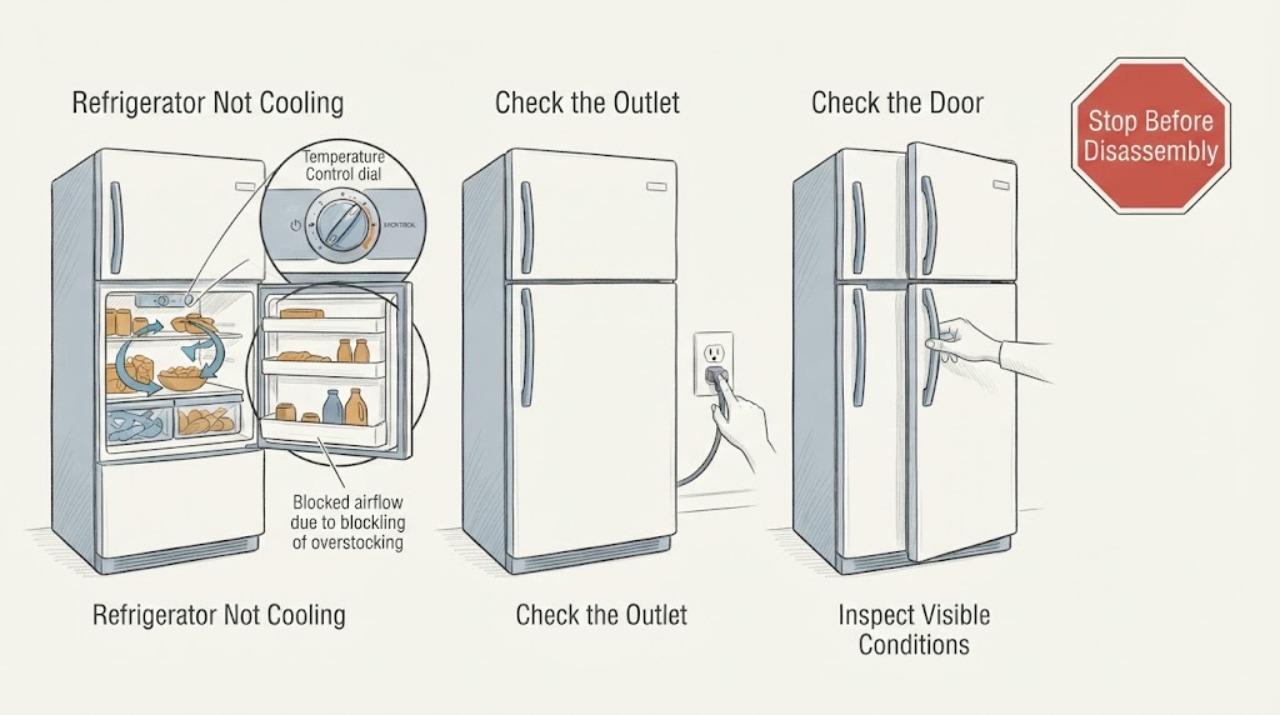
Summit Refrigerator Not Cooling: Safe Checks Before Service
When a Summit refrigerator is not cooling, first confirm that it has power and is actually turned on, then check the thermostat setting, door seal, internal airflow, frost on the rear wall, condenser clearance, and room temperature. Summit's official FAQ says a newly installed unit may need up to 24 hours to cool, while blocked vents, a poorly closed door, excessive frost, a dirty rear condenser, unsuitable room temperature, or an incorrect control setting can reduce cooling.
-
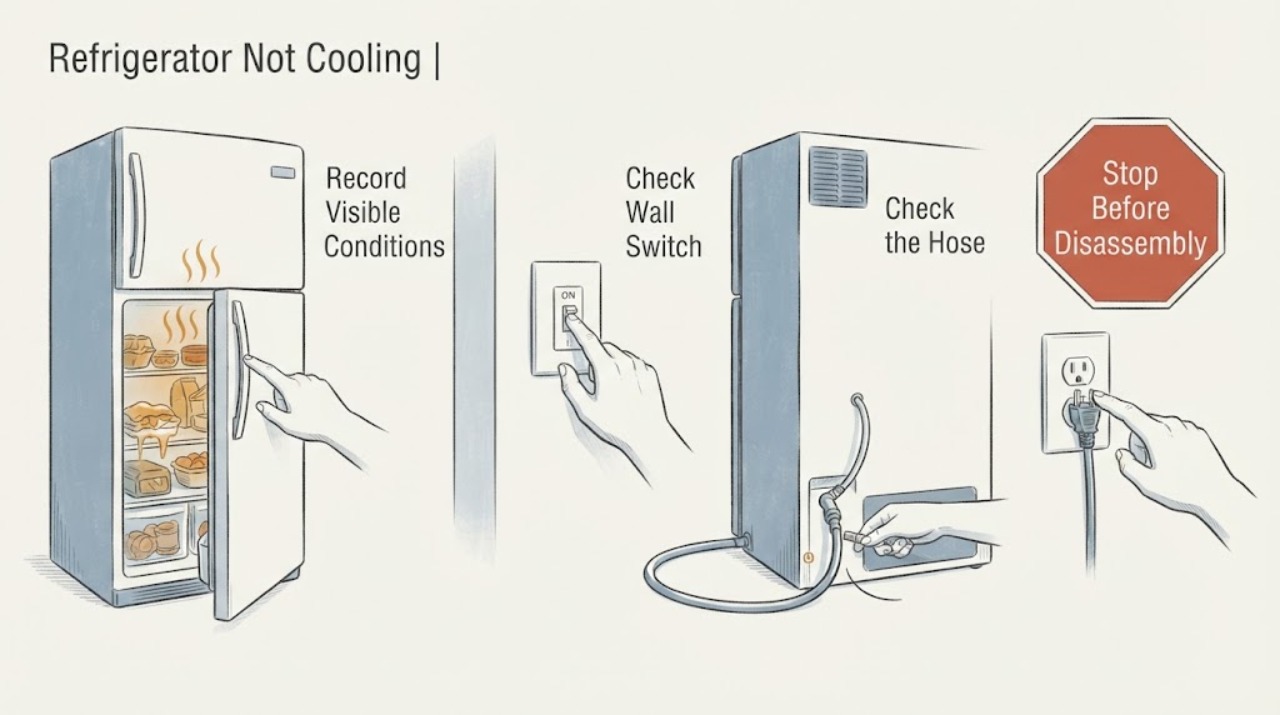
Tappan Refrigerator Not Cooling
Check power, temperature settings, door seal, blocked vents, load, and room conditions. Allow stabilization after startup or a warm load. Persistent warmth after those checks, abnormal noise, heavy frost, or repeated trips needs service.
-
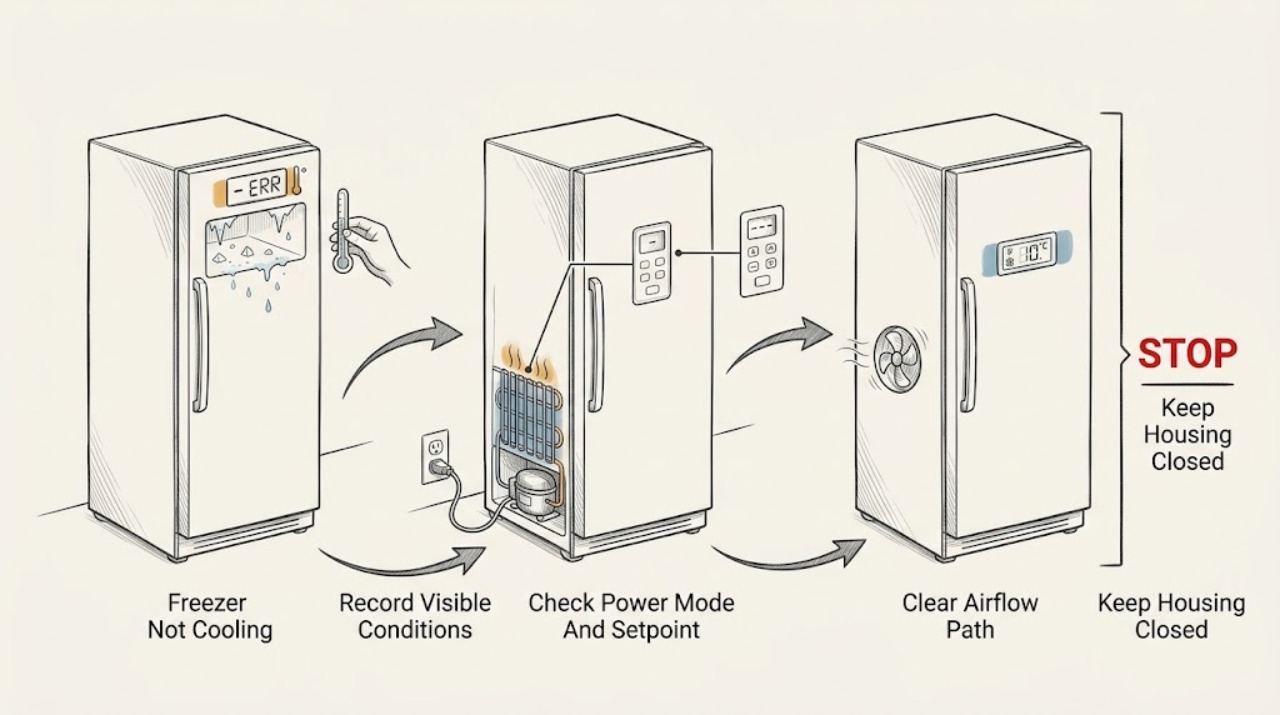
Thermador Freezer Not Cooling: Check Settings, Airflow and Frost Safely
Protect the food first, then record the Thermador model, displayed temperature or alarm, and whether the interior is warm, partially cold, or covered in frost. Use the exact manual to confirm the freezer is switched on, not in Vacation, Sabbath, showroom, or another reduced-cooling mode, and set to the intended temperature.
-
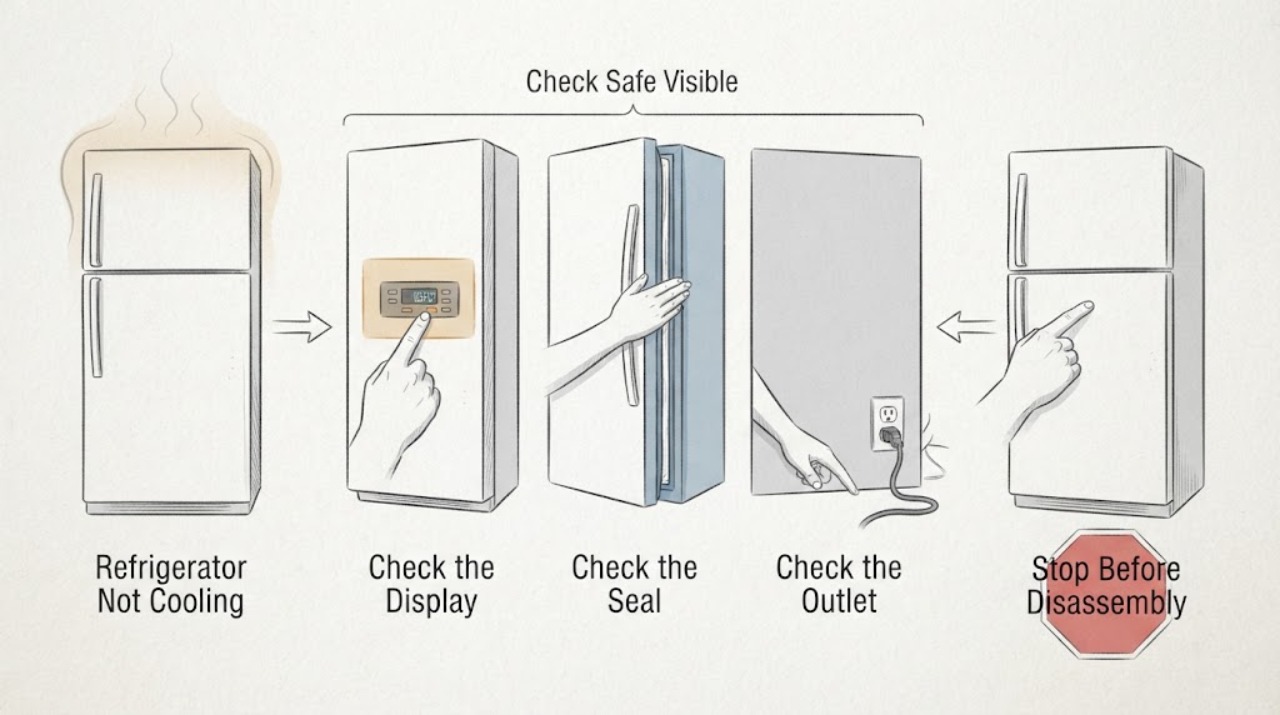
Thermador Refrigerator Not Cooling
For a Thermador refrigerator that is not cooling, check the display, compartment temperatures, door closure, airflow, and household power from outside. Protect perishable food and arrange qualified service if the appliance remains warm or shows a fault.
-
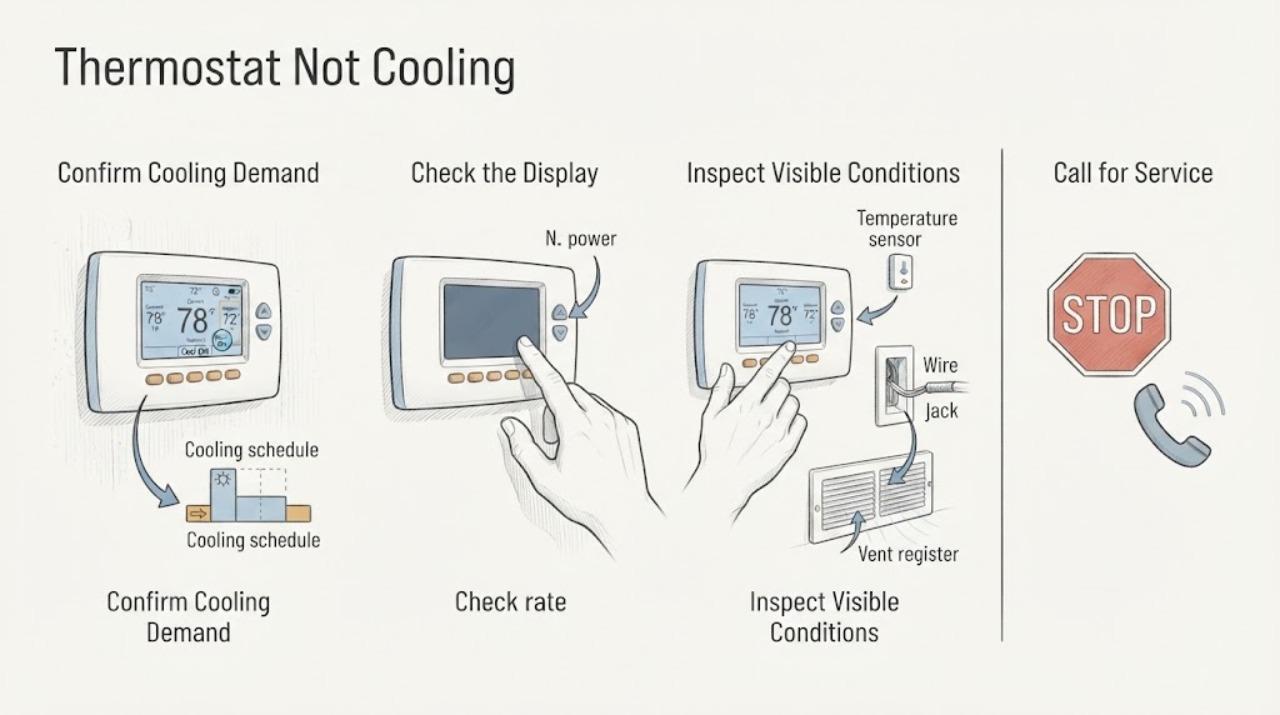
Thermostat Not Cooling: Safe Checks and Next Steps
If a thermostat is not cooling, first check that it is calling for Cool, the target temperature is below the room temperature, and the fan is on Auto. Then note whether the display is blank, shows a delay or error, or changes to a cooling state while the HVAC equipment does not start.
-
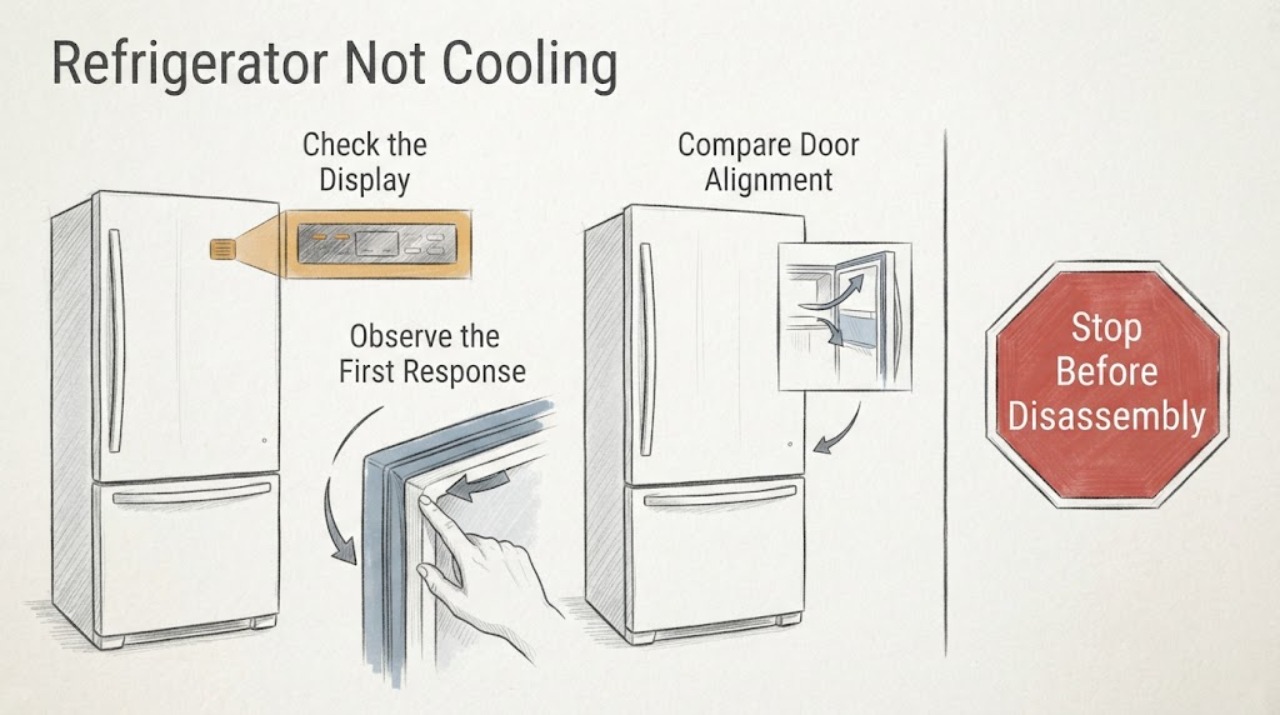
Viking Refrigerator Not Cooling: Safe Checks
If a Viking refrigerator is not cooling, first confirm power and that cooling has not been turned off, then check set points, blocked vents, door sealing, startup time, and accessible airflow. Allow 24 hours after installation or a major load before judging recovery. Persistent warmth in one or both compartments, abnormal frost, or any electrical or refrigerant safety symptom needs qualified service.
-
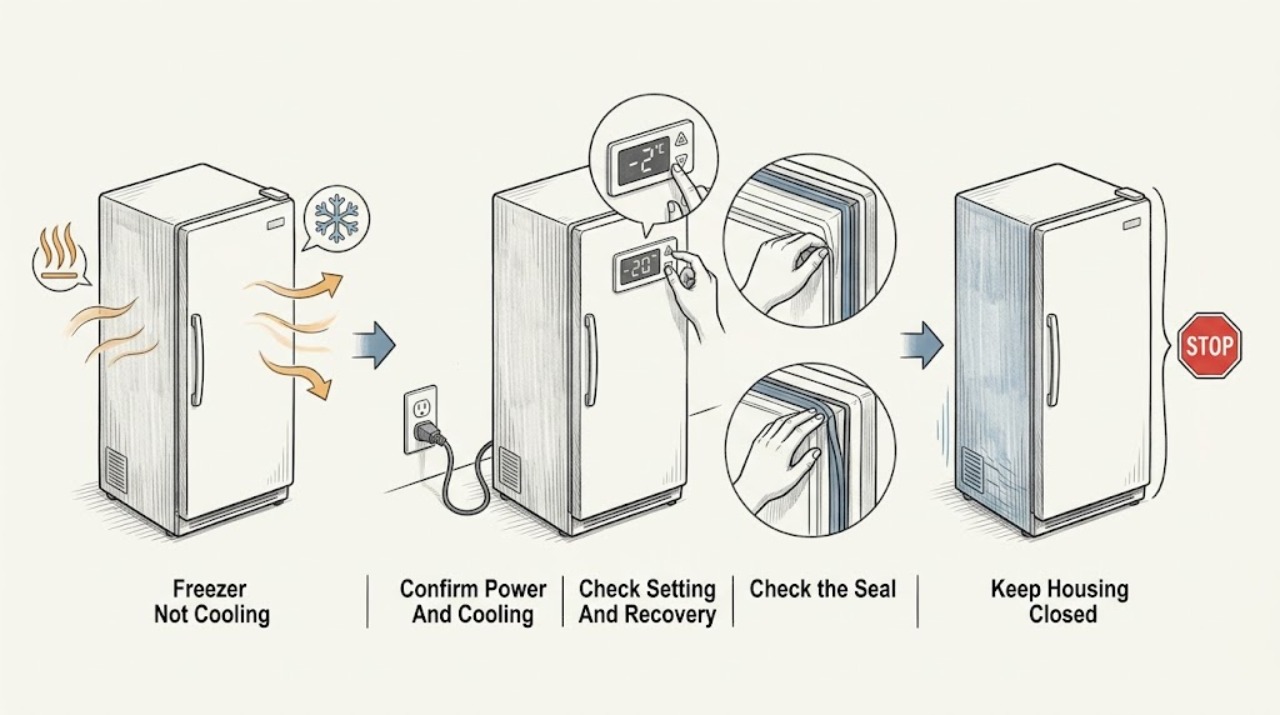
Whirlpool Freezer Not Cooling: Check Power, Settings, Door Seal, Frost, and Airflow
When a Whirlpool freezer is not cooling, first confirm that cooling is enabled and power is stable, then check the displayed setting, door closure, gasket, blocked vents, frost pattern, and room conditions. A large recent load or frequent door opening can temporarily raise temperature, while a damaged seal can admit warm humid air and create frost that blocks airflow.
-
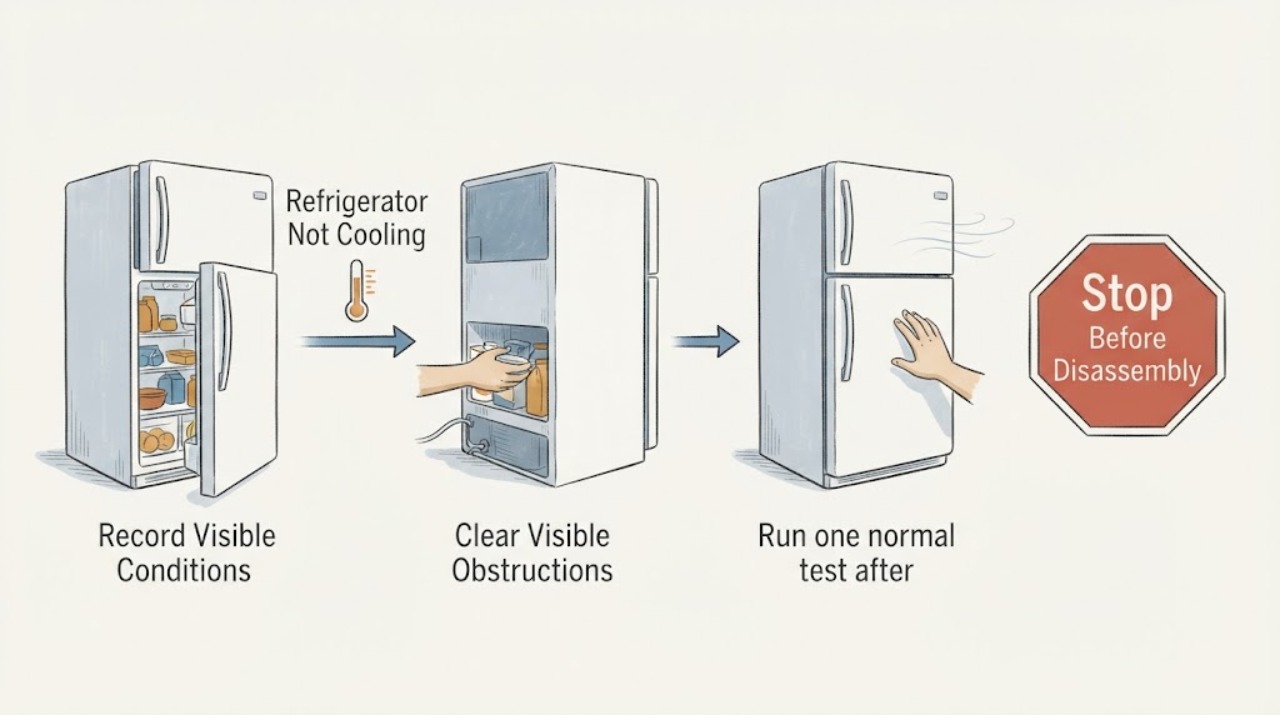
Whirlpool Refrigerator Not Cooling
For a whirlpool refrigerator not cooling problem, first identify the exact model and symptom, then follow the opened manufacturer guidance for the accessible check. Observe whether the condition clears after one documented retry; a returning fault or any hazard needs qualified service.
-
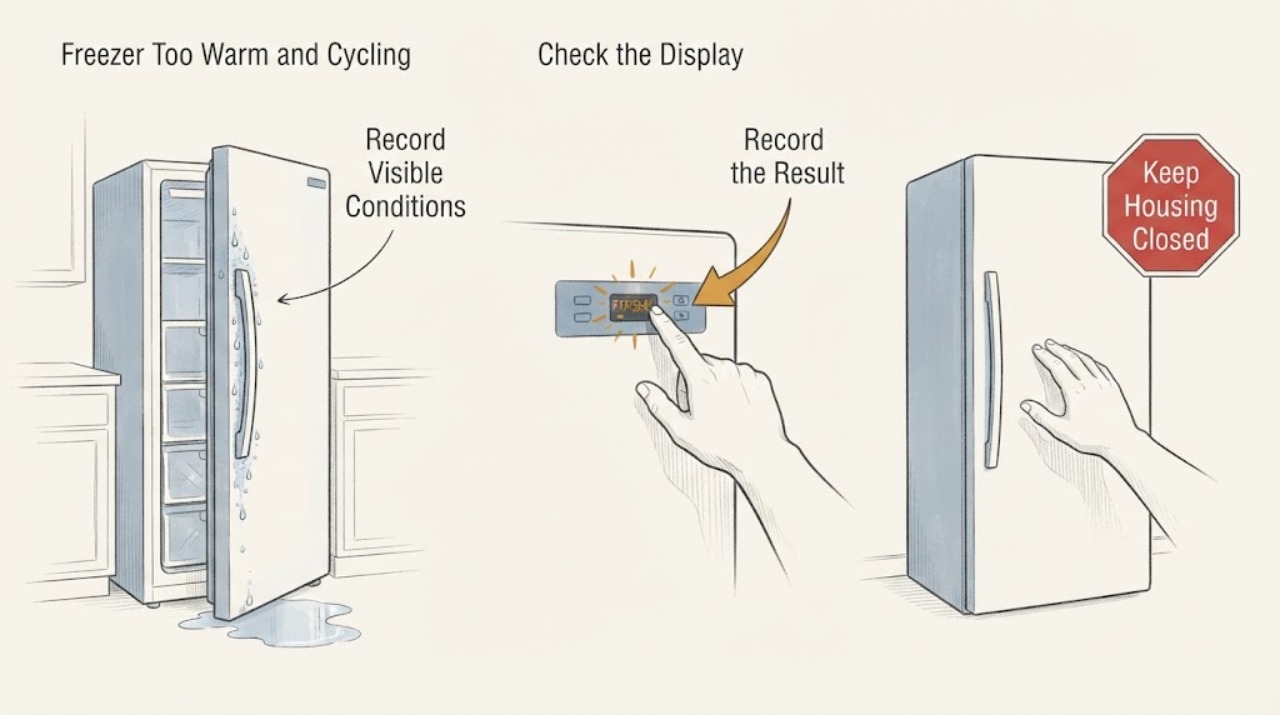
Whirlpool WRS325FNAM00 Freezer Too Warm and Cycling Often: Measure Before Blaming a Part
For a Whirlpool WRS325FNAM00 freezer that is warmer than expected and seems to cycle frequently, measure the food compartment with an appliance thermometer before interpreting the sound. Whirlpool's general refrigerator guidance uses 0°F as the freezer target and says to allow 24 hours after a small control adjustment; a recent installation or large warm load can take 24 to 48 hours to settle.
-
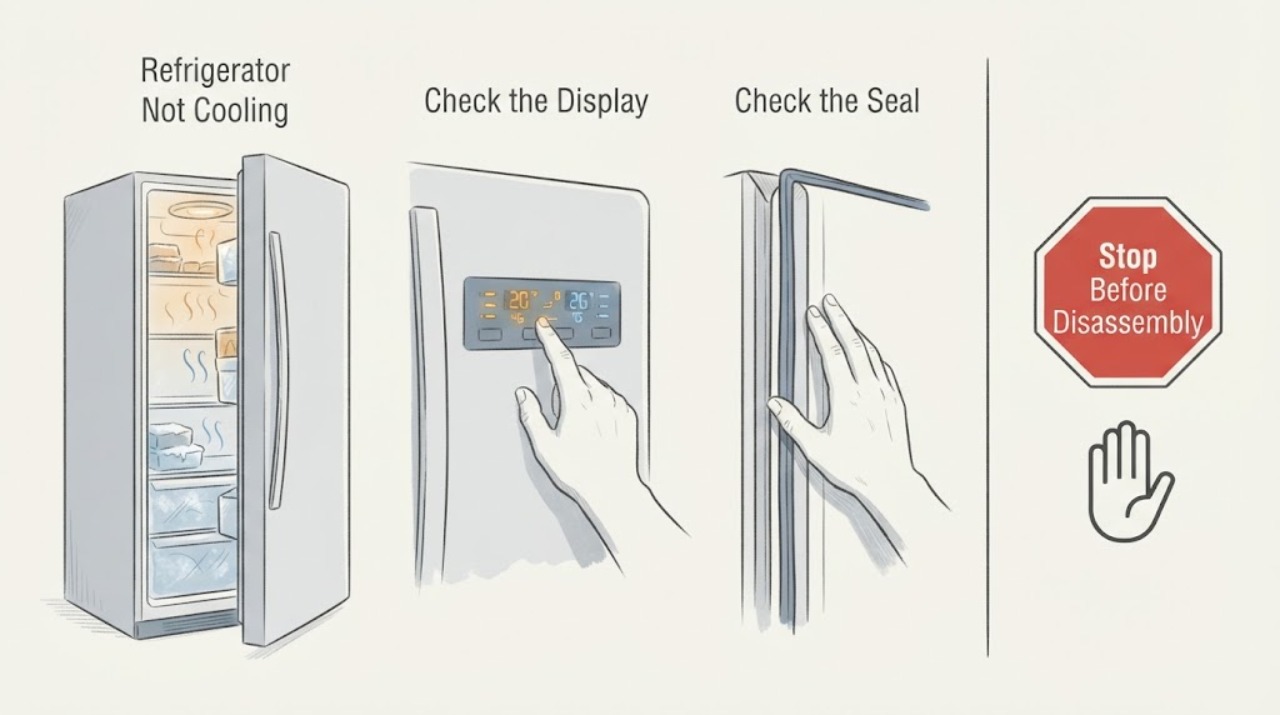
White-Westinghouse Refrigerator Not Cooling: Check Airflow, Settings, and Door Seal
A White-Westinghouse refrigerator that is warm should first be checked for a changed temperature setting, blocked internal airflow, a door that is not sealing, and whether the unit has power and is completing a cooling cycle. Move perishable food if the compartment is not staying cold. If the compressor never starts, frost blocks the air path, or cooling does not return after accessible checks, arrange model-specific service.
-
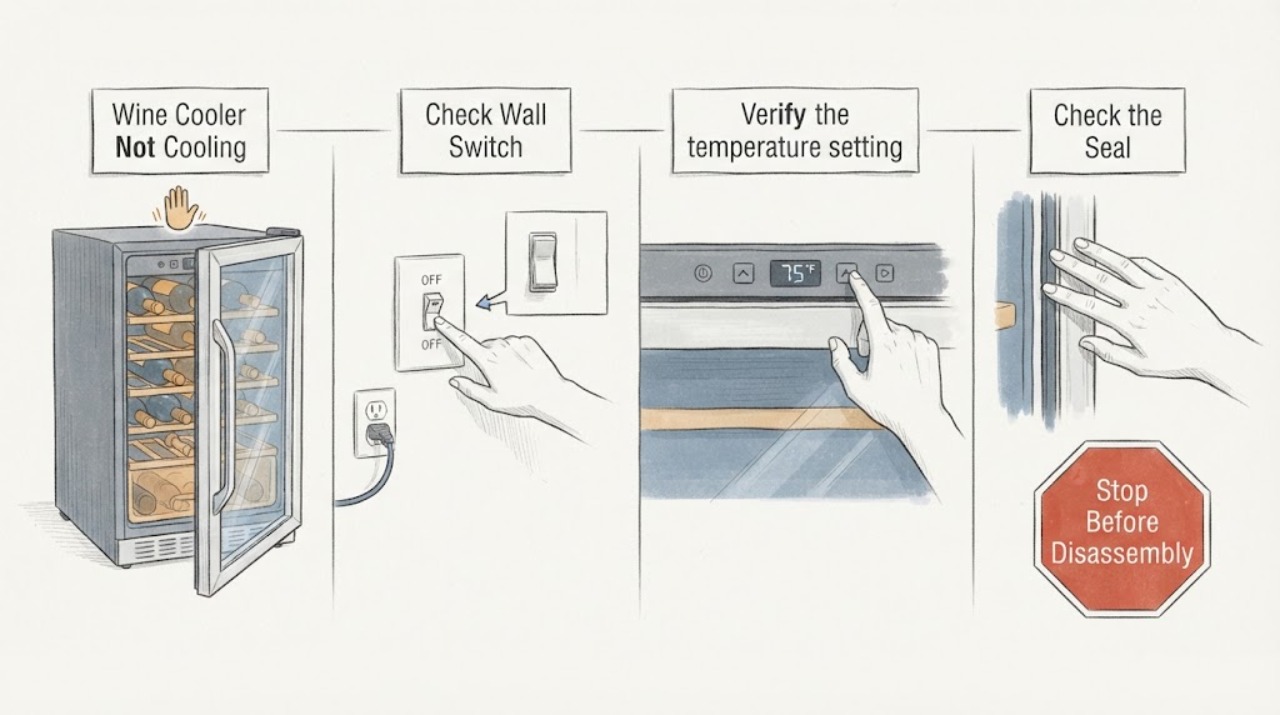
Wine Cooler Not Cooling
Check that the wine cooler is powered on, has stood upright after transport as its manual requires, and has clear ventilation. Verify the temperature setting, door seal, bottle loading, room conditions, and fan airflow. A compressor may run frequently under heat load, but a cooler that stays warm after these checks, makes repeated trips, or shows oil/leak or electrical symptoms needs service; do not open the sealed refrigeration circuit.