
On this page
Start here
Quick answer
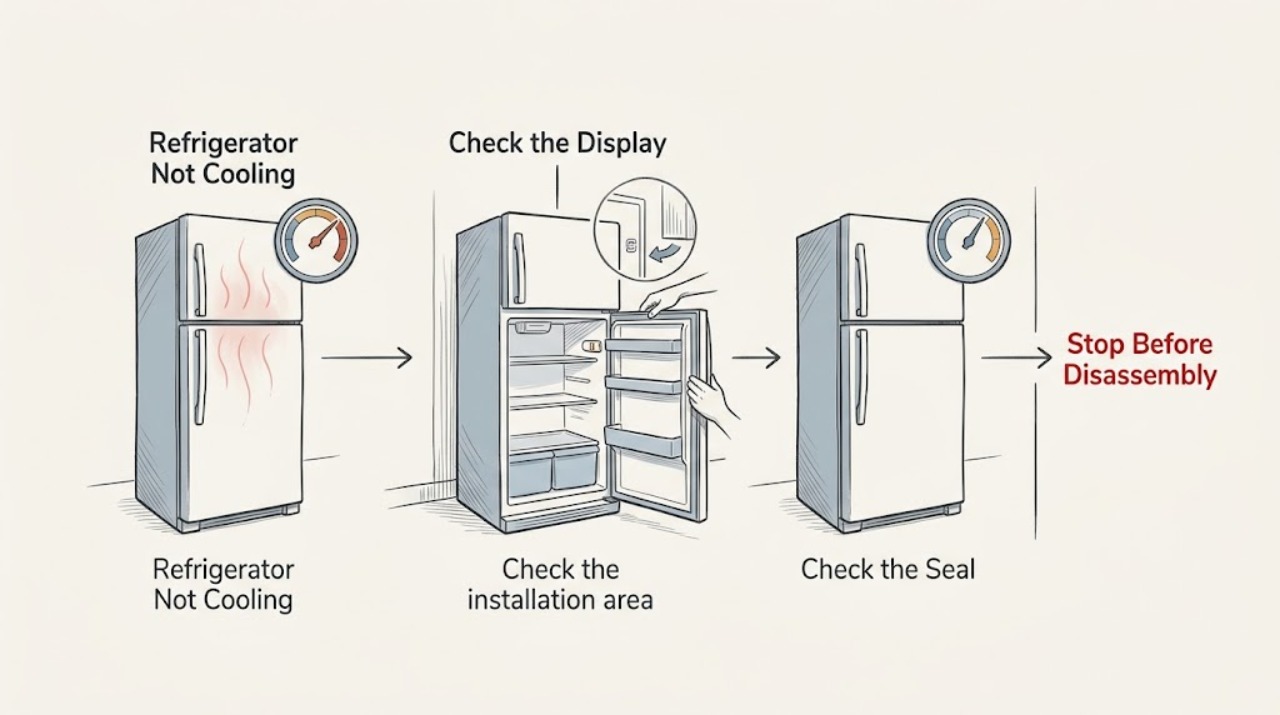
Check that cooling is enabled and the controls are set correctly, keep air vents clear, confirm the doors seal, and allow 24 hours after installation or an adjustment. A hot garage, nearby heat source, blocked grille or coils, large warm load, or frequent door opening can delay cooling. Arrange service for persistent warmth, frost, abnormal noise, or a nonresponsive control.
Work through in order
Diagnostic checks
Use only checks that match the exact appliance or system and its official guide.
-
Check 1
Confirm the refrigerator is powered, cooling is enabled rather than in a showroom/demo state if the model has one, and the controls are not set unusually warm.
Expected result: Cooling is disabled or settings are incorrect, or controls appear normal.
Next step: Use the model manual to restore cooling and wait for stabilization before further changes.
Why this matters
Why: A mode or setting can stop expected cooling; normal controls shift attention to environment and airflow.
-
Check 2
Check the installation area for a garage or heat source, and ensure the base grille and required clearance are not blocked.
Expected result: The room is outside the recommended environment or a heat source/grille is obstructed, or the installation is suitable.
Next step: Correct accessible clearance or move heat sources only when practical; follow the model installation guidance.
Why this matters
Why: Extreme ambient conditions and blocked ventilation reduce cooling performance; suitable installation makes an internal fault more likely.
-
Check 3
Move food away from interior vents, check both door gaskets for a gap, and note whether a large amount of warm food was recently added or doors opened often.
Expected result: Airflow or seal is blocked, or the refrigerator is recovering from a load/door use.
Next step: Clear vents, close doors promptly, and allow several hours to stabilize; avoid repeated setting changes.
Why this matters
Why: Restricted airflow, warm loads, and open doors can create temporary temperature problems and moisture; a sealed, clear cabinet with no recovery event needs diagnosis.
-
Check 4
If the manual permits, disconnect power before vacuuming the accessible front condenser area; restore the grille and power, then allow up to 24 hours to assess.
Expected result: Dust is heavy and cooling improves, or cooling remains poor.
Next step: Call qualified service for persistent warmth, abnormal noise, heavy frost, or a control that does not respond.
Why this matters
Why: Restricted condenser airflow can reduce performance; no improvement after safe maintenance points to service.
Use your observations
Decision map
Find the observation that best matches what you see, then follow the next safe action.
-
PATH 01Next step
What you see
Cooling was disabled, the setting was wrong, or the unit was recently installed
Do this next
Restore the model setting and allow the manufacturer-recommended stabilization period, commonly 24 hours.
Why this path and its safety boundary
Why it matters: The symptom has an operating or recovery explanation that should be corrected and allowed time to settle before judging parts.
-
PATH 02Next step
What you see
Vents, grille, gasket, heat source, or a large warm load explains the temperature
Do this next
Correct the accessible condition and monitor without repeated adjustments.
Why this path and its safety boundary
Why it matters: Airflow, heat exposure, door sealing, or recovery load can account for the warmth without proving an internal component failure.
-
PATH 03Next step
What you see
Both sections remain warm after safe environment and airflow checks
Do this next
Protect perishable food and arrange qualified service; report temperatures, frost, sounds, and settings.
Why this path and its safety boundary
Why it matters: Broad warmth remains after the common external causes are excluded, so qualified cooling diagnosis is warranted.
Helpful context
Understand the symptom
Rule out recovery conditions before parts
A refrigerator can need hours to recover after installation, a large load, or frequent opening. Note whether the freezer, fresh-food section, or both are warm and whether airflow is present before changing multiple controls.
Only after diagnosis
Potential parts
- fan, sensor, or sealed-system component
Only after settings, installation, airflow, door seal, condenser access, and stabilization checks fail.
When checks do not resolve it
Need a professional?
Cooling remains poor after environment, settings, airflow, door seal, and stabilization checks.
Common questions
FAQ
How long should a refrigerator take to cool after installation?
Manufacturer guidance says to allow about 24 hours for the freezer to reach proper temperatures; avoid judging repeated adjustments before stabilization.
Can blocked vents make a refrigerator warm?
Yes. Food packages against vents restrict airflow. Clear the vents and allow the cabinet to stabilize before requesting service.
Read the exact guide
Official sources
- Not CoolingWhirlpool Corporation (Roper Brand support) · Roper refrigerator support using Whirlpool manufacturer guidance on environment, heat sources, condenser cleaning, controls, installation recovery, vents, loads, door use, and service.
Community feedback
Share a repair observation
Share a plain-text repair observation. Accepted observations are published automatically; this page may take a moment to update.