
On this page
Start here
Quick answer
For a Performa refrigerator that is not cooling, check power and controls, clear internal air vents, confirm the doors seal, and account for a recent installation or large warm load. Give a temperature adjustment time to stabilize. If the compressor/fans do not run, frost blocks airflow, or food remains warm, arrange service and protect perishables.
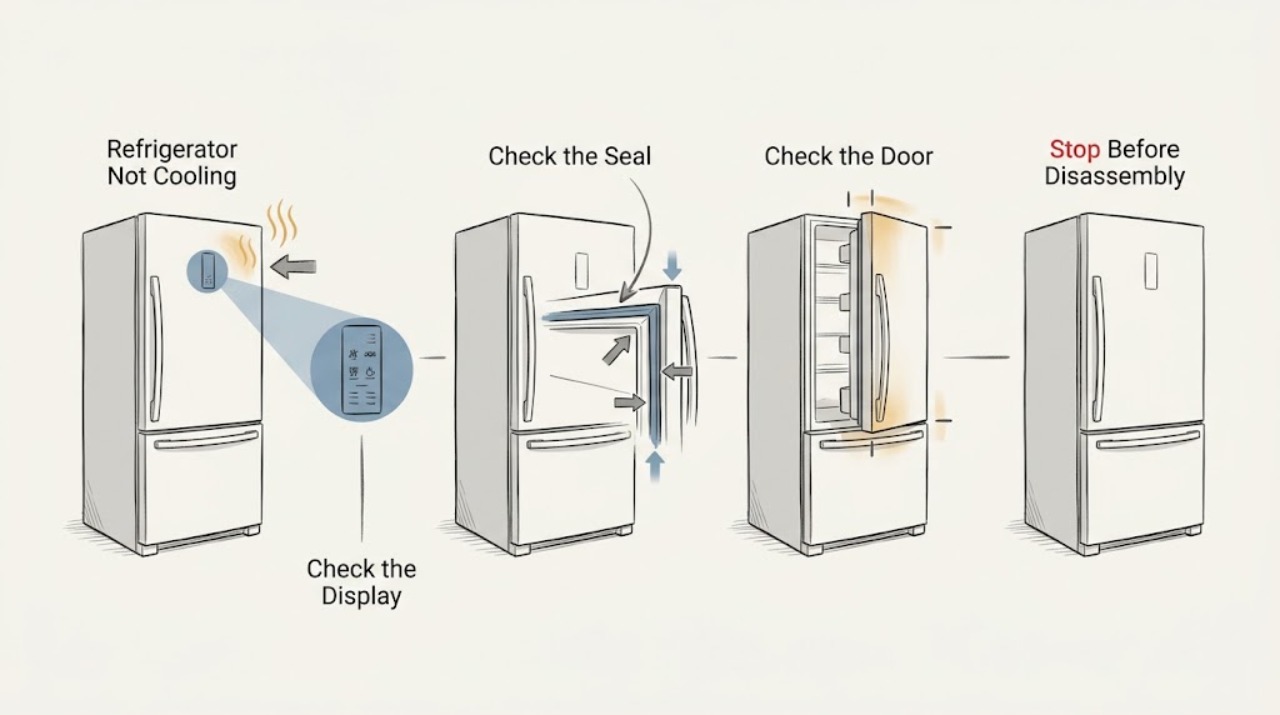
Work through in order
Diagnostic checks
Use only checks that match the exact appliance or system and its official guide.
-
Check 1
Confirm the plug is seated and the refrigerator controls are not set to off; check for interior light or display operation without repeatedly cycling the breaker.
Expected result: The appliance has no signs of power, or lights/display work while cooling is absent.
Next step: Verify the outlet safely; if power is present and the refrigerator still does not cool, continue without opening panels.
Why this matters
Why: No power or an off control is a supply/control issue; power with no cooling shifts the check to airflow and cooling operation.
-
Check 2
Move food away from the freezer and refrigerator air vents and verify that each door closes against its gasket without obstruction.
Expected result: A vent is blocked or a door seal has a gap, or vents and seals are clear.
Next step: Rearrange movable food and correct the obstruction; allow the unit to stabilize before reassessing.
Why this matters
Why: Restricted airflow or humid air entry can create warm sections and frost; clear airflow makes a cooling-system fault more likely if temperatures stay high.
-
Check 3
Check whether the refrigerator was recently installed, placed next to a heat source, or loaded with many warm items, and avoid frequent door openings while it stabilizes.
Expected result: One of these temporary conditions is present, or the unit has been operating normally for a full stabilization period.
Next step: Use the model's recommended control setting and monitor; if food remains warm or cooling never starts, call a technician.
Why this matters
Why: A recent install, warm load, hot location, or frequent opening can temporarily raise temperature; persistent warming afterward needs diagnosis.
Use your observations
Decision map
Find the observation that best matches what you see, then follow the next safe action.
-
PATH 01Next step
What you see
Lights/display are off and the outlet is also dead or the breaker is tripped.
Do this next
Check the outlet and breaker once safely; call an electrician if the circuit will not hold.
Why this path and its safety boundary
Why it matters: The supply or household circuit is more likely than the refrigeration system.
-
PATH 02Next step
What you see
The freezer is cold but the refrigerator section is warm, with blocked vents or frost near an air passage.
Do this next
Clear movable obstructions and correct the seal; call service if frost or warming returns.
Why this path and its safety boundary
Why it matters: Airflow restriction, door loading, or frost is more likely than total cooling loss.
-
PATH 03Next step
What you see
Both compartments stay warm after temporary conditions are gone, or fans/compressor do not run normally.
Do this next
Protect perishables and arrange qualified refrigerator service; do not attempt sealed-system repair.
Why this path and its safety boundary
Why it matters: A control, fan, compressor-start, defrost, or sealed-system fault may be present.
Helpful context
Understand the symptom
Check airflow before parts
Refrigerator and freezer compartments depend on controlled airflow, door sealing, and a stable cooling cycle. A blocked vent or frequent door opening can look like a component failure, while a warm freezer plus warm refrigerator needs prompt professional diagnosis.
When checks do not resolve it
Need a professional?
Stop relying on the refrigerator if food is warming, the compressor area is unusually hot, frost blocks airflow, the unit trips power, or cooling does not return after safe checks and stabilization. Move perishables and call qualified service; do not open refrigerant or energized panels.
Common questions
FAQ
How long should I wait after changing a temperature control?
Use the model guidance and allow the refrigerator time to stabilize before judging the result. If food remains warm, service is warranted.
Why is the freezer cold but the refrigerator warm?
Blocked or frosted air passages, a door-loading problem, or an airflow component can limit transfer from the freezer. Clear movable obstructions and call service if it persists.
Read the exact guide
Official sources
- Not CoolingWhirlpool Corporation · refrigerator no-cooling checks for environment, coils, controls, vents, loads, and door openings
- Owner's ManualWhirlpool Corporation / Maytag Appliances · Maytag Performa refrigerator operation, care, temperature, leveling, and ice service
- Frosting in the Freezer Section - Quad DoorWhirlpool Corporation · refrigerator door seals, humidity, vents, and frost-related airflow
Community feedback
Share a repair observation
Share a plain-text repair observation. Accepted observations are published automatically; this page may take a moment to update.