
On this page
Start here
Quick answer
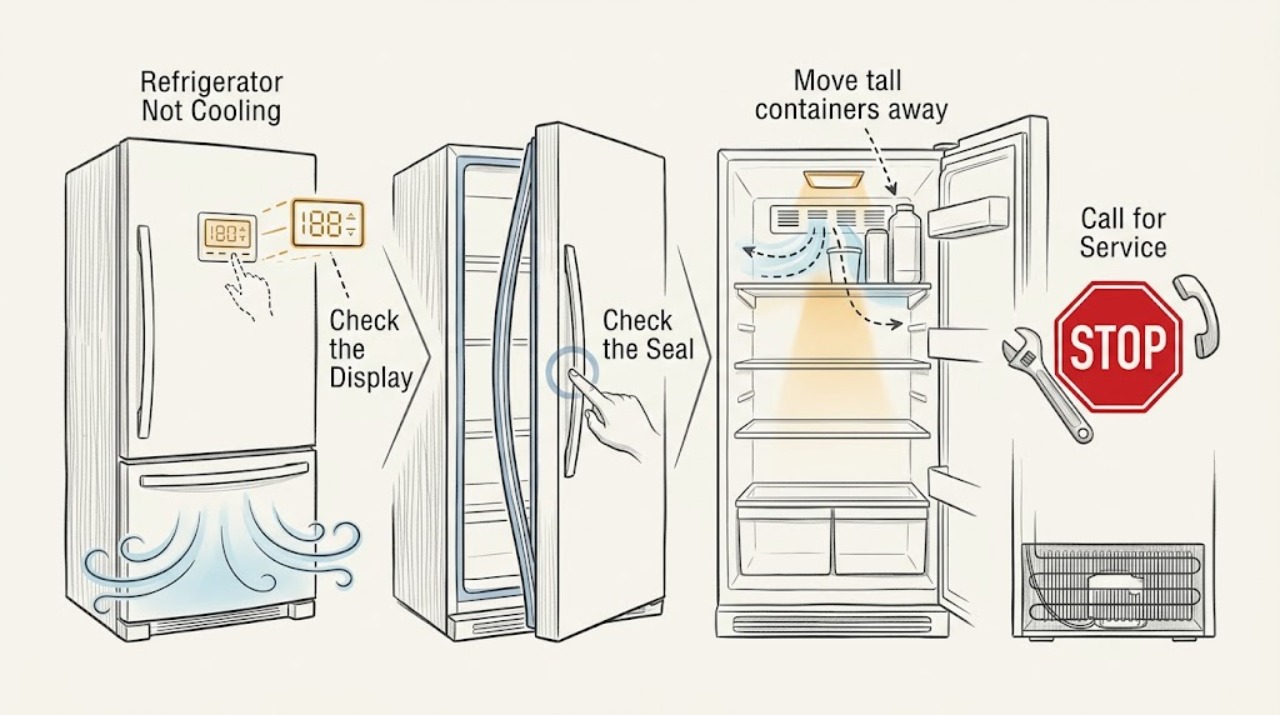
Check the temperature setting, door closure, gasket, blocked air vents, and recent installation or loading before assuming a sealed-system failure. Keep the refrigerator plugged in so the symptom remains available for diagnosis. If temperatures stay high after those visible checks, arrange Monogram service and avoid opening the sealed system.
Work through in order
Diagnostic checks
Use only checks that match the exact appliance or system and its official guide.
-
Check 1
Check the temperature control and, if the refrigerator was newly installed or restarted, note how long it has had to stabilize.
Expected result: The setting is warmer than intended or the unit has not had about a day to stabilize, or the setting/time are appropriate.
Next step: Correct the setting according to the Monogram manual and allow stabilization. Continue if food temperatures remain high.
Why this matters
Why: GE advises checking controls and allowing about 24 hours after installation for cooling to stabilize.
-
Check 2
Inspect both doors for packages, trays, ice, or bins preventing closure, then check the gasket for a continuous seal.
Expected result: The door is held open or the gasket has a gap/damage, or closure appears normal.
Next step: Remove only visible obstructions and arrange service for a torn gasket or misalignment.
Why this matters
Why: Warm air entering through poor closure raises temperatures and can also cause frost; a normal seal shifts attention to airflow and condenser conditions.
-
Check 3
Move tall containers away from rear air openings and check that the refrigerator has model-appropriate clearance around it.
Expected result: Food blocks an air path or the cabinet is crowded against surrounding surfaces, or airflow is clear.
Next step: Restore visible space following the manual. Do not dismantle air towers or fans.
Why this matters
Why: Blocked internal or external airflow can reduce cooling efficiency.
-
Check 4
Close the door slowly and observe whether the interior light goes out; if the model allows user cleaning, unplug before any condenser maintenance.
Expected result: The light stays on, coils require model-specific cleaning, or the light and condenser checks are normal.
Next step: Correct a visible door/switch issue using the manual. Arrange service when cooling remains poor or a fan/sealed-system diagnosis is needed.
Why this matters
Why: GE notes that a light left on can add heat, and that only models identified in their manuals should have user-cleanable coils.
Use your observations
Decision map
Find the observation that best matches what you see, then follow the next safe action.
-
PATH 01Next step
What you see
Cooling improves after the correct setting and stabilization period
Do this next
Monitor food temperatures and use the Monogram manual for the intended setpoint.
-
PATH 02Next step
What you see
A blocked door, damaged gasket, blocked airflow, or light that stays on is found
Do this next
Correct only the accessible condition and arrange service for damage or a persistent symptom.
-
PATH 03Next step
What you see
Temperatures remain high with correct settings, clear airflow, and a sealed door
Do this next
Keep the refrigerator plugged in and arrange qualified Monogram service; do not open refrigerant or electrical systems.
Helpful context
Understand the symptom
Start with conditions the refrigerator can correct
A recently installed or heavily loaded refrigerator may need time to stabilize. A door that does not seal, containers blocking an air path, or an interior light that stays on can also keep temperatures high.
When checks do not resolve it
Need a professional?
Arrange service when food temperatures remain high after visible setting, door, gasket, and airflow checks, when a fan is not running, when the light stays on, or when sealed-system/electrical work would be required.
Common questions
FAQ
How long should a new Monogram refrigerator take to cool?
GE advises allowing about 24 hours after installation for a refrigerator to cool and stabilize. If it remains warm afterward with proper settings, arrange service.
Should I unplug my refrigerator when it is not cooling?
Keep it plugged in unless there is an immediate safety concern, because the symptom can disappear and become harder for a technician to diagnose. Do not open sealed or electrical components.
Read the exact guide
Official sources
- Refrigerator - Not Cooling EnoughGE Appliances · Refrigerators; consult the Monogram model manual
Community feedback
Share a repair observation
Share a plain-text repair observation. Accepted observations are published automatically; this page may take a moment to update.