
On this page
Start here
Quick answer
Check the temperature setting, blocked vents, door closure, and recent installation or loading before assuming a compressor or sealed-system failure. LG recommends the refrigerator compartment around 1–3°C (34–37°F) on the cited guide; use your model manual if its controls differ. If the unit stays warm after airflow and stabilization checks, arrange service.
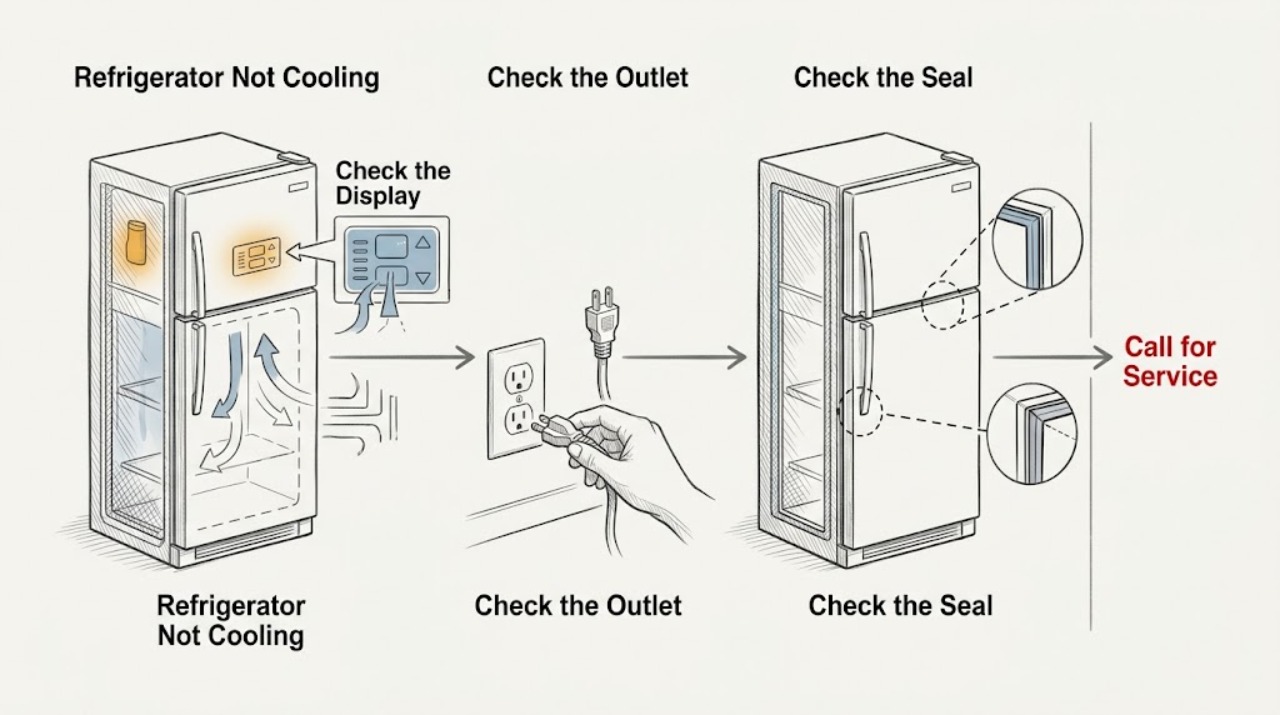
Work through in order
Diagnostic checks
Use only checks that match the exact appliance or system and its official guide.
-
Check 1
Read the refrigerator and freezer settings with the control lock released, then compare them with the target range in the LG model instructions.
Expected result: A compartment is set warmer than intended, or the settings are already appropriate.
Next step: Correct the setting using the manual and allow the unit to stabilize before judging cooling.
Why this matters
Why: An incorrect setting can explain a warm cabinet without proving a refrigeration-component fault.
-
Check 2
Look inside both compartments for food covering cold-air outlets or packed shelves that block circulation.
Expected result: An outlet is covered or the compartments are heavily packed, or air paths are clear.
Next step: Move items away from vents and leave room for air movement; do not remove panels.
Why this matters
Why: LG says obstructed vents and overloading can weaken circulation even while the cooling system runs.
-
Check 3
Close each door slowly and check for a container, shelf, drawer, or gasket gap that prevents a full seal.
Expected result: A door springs open, a container protrudes, or the gasket does not contact evenly.
Next step: Correct the obstruction and monitor recovery with doors closed.
Why this matters
Why: Warm air entering through a door gap can raise temperature and create frost that further restricts airflow.
-
Check 4
Ask whether the refrigerator was installed, moved, serviced, or loaded with a large amount of warm food recently.
Expected result: The unit has not had the documented recovery period, or it remains warm after stabilization.
Next step: Allow the stated recovery period while protecting perishable food; request service if cooling does not return.
Why this matters
Why: LG notes that a recent installation or service event can require time to reach stable temperature; persistence after that separates a temporary load from a fault.
Use your observations
Decision map
Find the observation that best matches what you see, then follow the next safe action.
-
PATH 01Next step
What you see
The setting was high or vents were blocked and temperature improves after correction
Do this next
Keep the vents clear and recheck temperature after normal use.
-
PATH 02Next step
What you see
A door cannot seal and frost is forming in the freezer
Do this next
Correct the door or gasket issue and obtain service if the seal cannot be restored.
-
PATH 03Next step
What you see
Settings, airflow, doors, and recovery time are normal but both compartments remain warm
Do this next
Arrange qualified LG appliance service and avoid opening the refrigeration circuit.
Helpful context
Understand the symptom
Start with the symptom
Warm food, repeated door opening, blocked cold-air paths, and a recently installed refrigerator can all look like a cooling failure. The first decision is whether cold air is being restricted or the appliance is not recovering at all.
When checks do not resolve it
Need a professional?
Request service if both compartments stay warm after the setting, airflow, door, and stabilization checks, or if food safety, a leak, damaged cord, or repeated breaker trip is involved.
Common questions
FAQ
What temperature should an LG refrigerator use?
The cited LG guide recommends about 1–3°C (34–37°F) for the refrigerator compartment, but the exact controls vary by model. Check the owner manual before changing settings.
How long should I wait after installing an LG refrigerator?
LG says a recently installed unit may need two to three days for temperature to stabilize, depending on the load. If it remains warm afterward, request service.
Read the exact guide
Official sources
- Troubleshooting an LG refrigerator not cooling properlyLG USA Support · LG refrigerator cooling performance
Community feedback
Share a repair observation
Share a plain-text repair observation. Accepted observations are published automatically; this page may take a moment to update.