
LG appliance guidance
LG Refrigerator Repair Guides
Troubleshooting and repair guidance for published LG Refrigerator problems, symptoms, and maintenance questions.
Published LG Refrigerator guides
Choose the guide whose symptom or condition most closely matches what you are seeing.
-
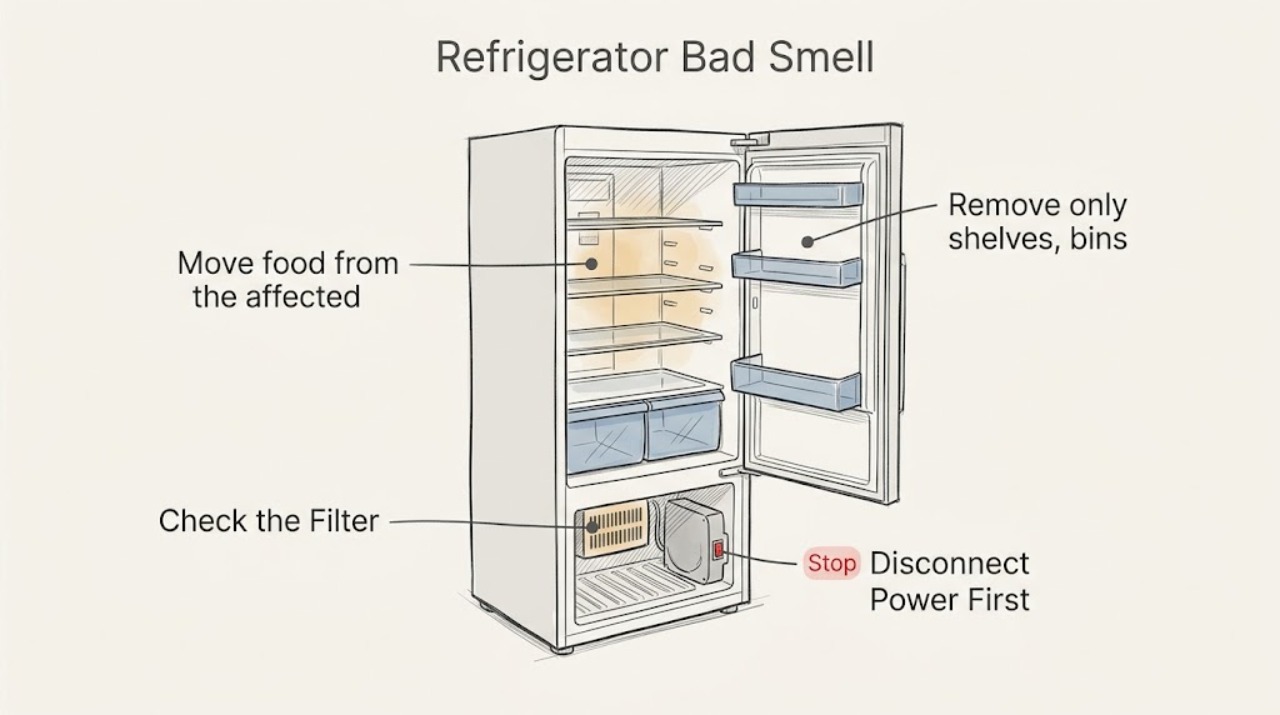
LG Refrigerator Bad Smell: Trace Food, Filter, and Back-Compartment Odors
Empty the affected LG refrigerator section and note whether the odor is from food or spills inside, the reusable deodorizer, or the back mechanical compartment. Clean removable parts and accessible interior surfaces with a soft cloth and mild detergent, and follow the model's deodorizer instructions. Disconnect power before external cleaning; do not remove the back cover, and request service for an electrical, burning, gas-like, or persistent rear odor.
-
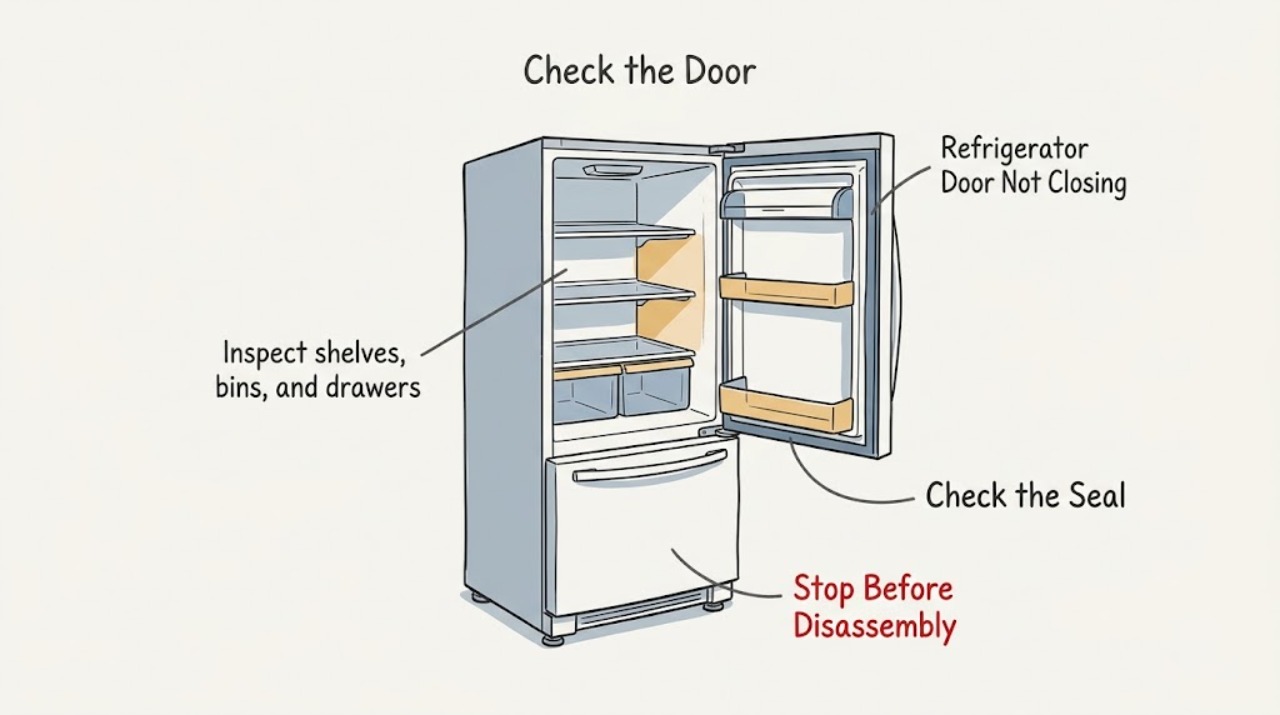
LG Refrigerator Door Not Closing: Check Shelves, Gasket, and Level
Remove any container, shelf, or drawer that projects into the LG refrigerator doorway, then clean and inspect the door gasket. Verify shelves and drawers are seated as the model shows and check whether the cabinet is level; a freezer door that will not self-close may need leveling. Do not force a sagging door or adjust hidden hinges without model instructions.
-
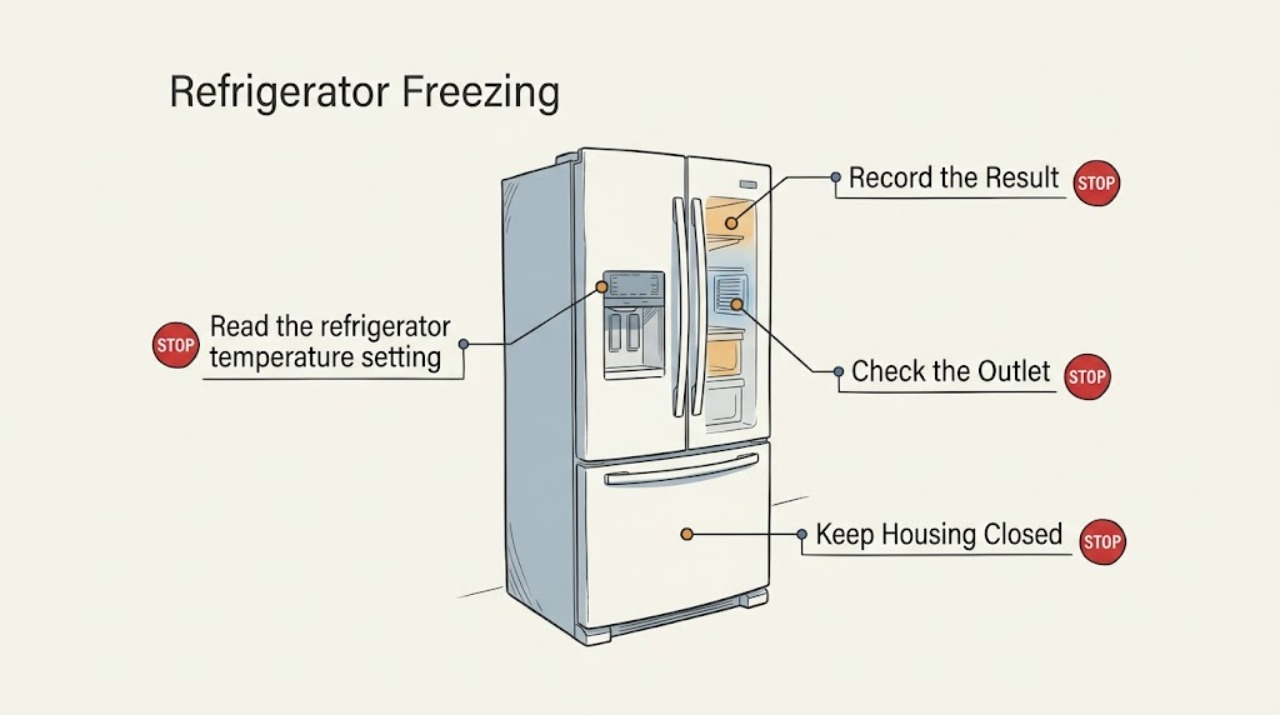
LG Refrigerator Freezing: Move Food from the Cold-Air Path
First identify whether food is freezing in the refrigerator compartment or only in a special drawer. Raise an overly cold refrigerator setting within the model's allowed range, move moisture-rich food away from the cold-air outlet, and clear the upper sensor area so airflow and temperature sensing are not blocked. Persistent freezing with a correct setup needs model-specific service.
-
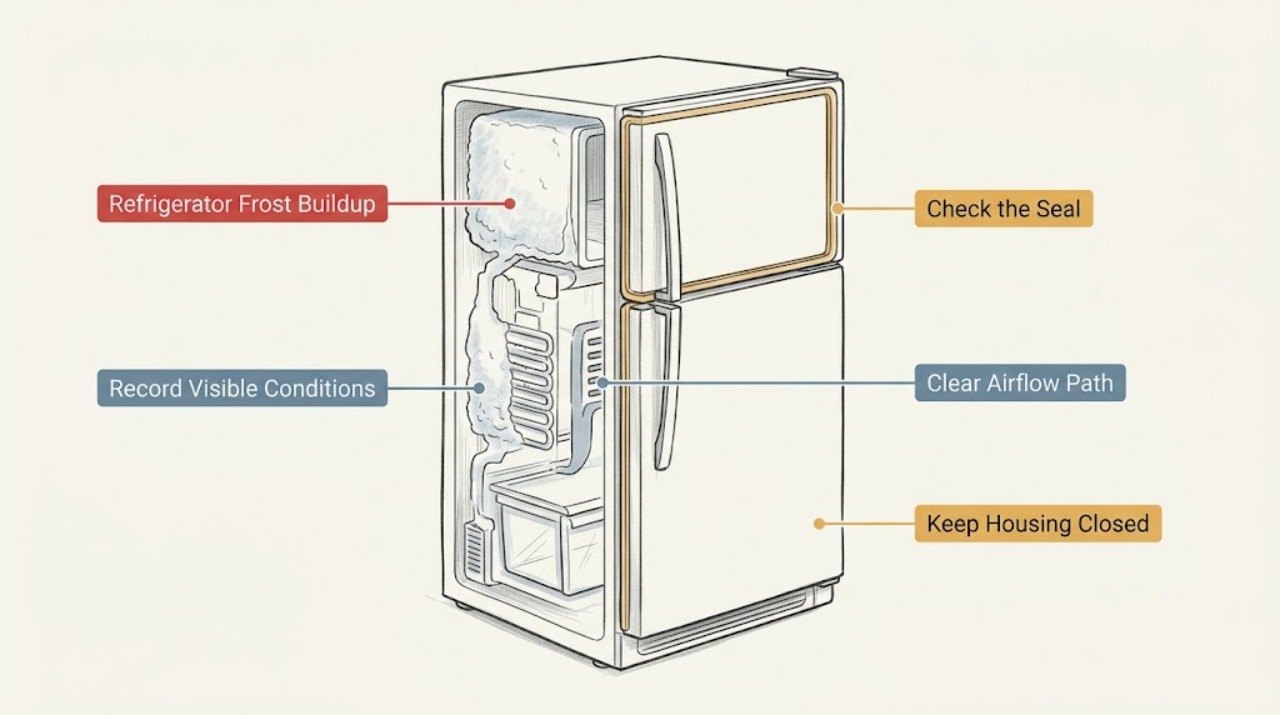
LG Refrigerator Frost Buildup: Check the Door Seal and Moisture Sources
Find out whether frost is localized near the door, spread across a wall, or blocking an air vent. Keep the freezer door fully sealed, clean a dirty gasket, avoid putting hot or uncovered wet food inside, and remove frost only with a cloth or warm method allowed by LG. Never use a knife or ice pick; recurring frost after a complete seal check needs service.
-
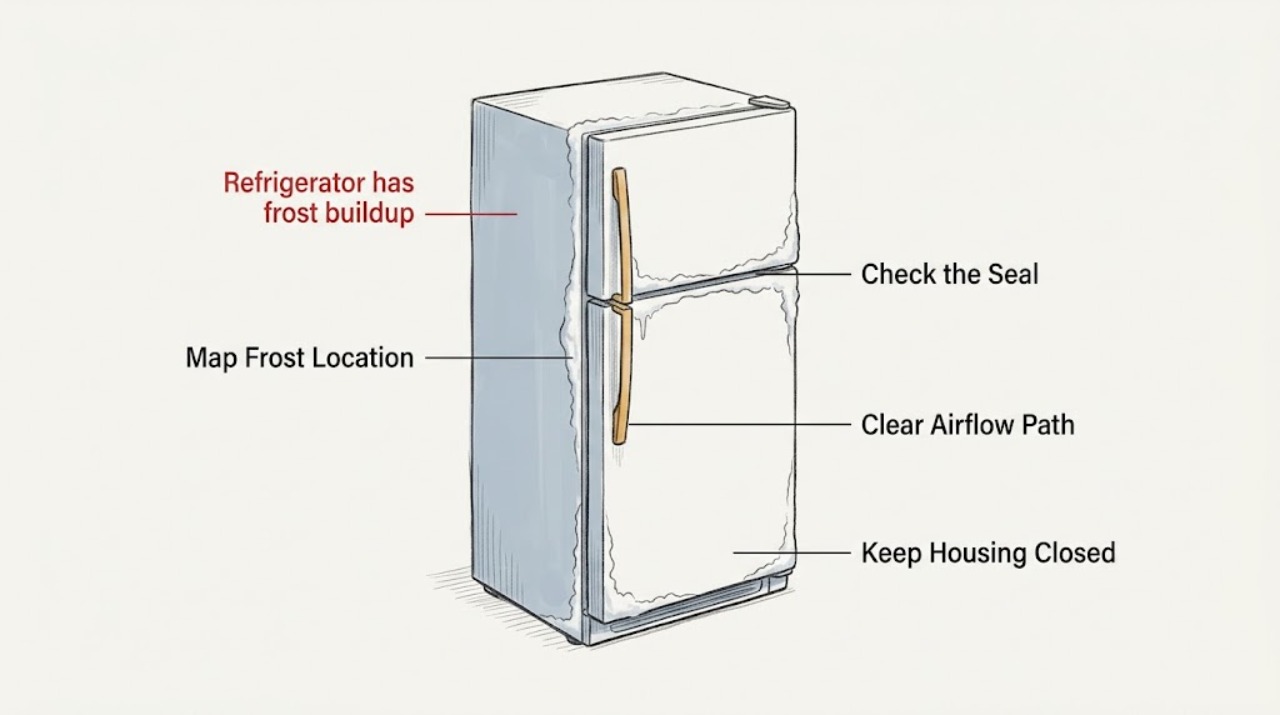
LG refrigerator has frost buildup: What to Check and What to Do Next
A small amount of frost can form normally when moisture meets cold air inside an LG refrigerator, especially after a door-open or warm-food event. Heavy, spreading, or recurring frost usually points to humid air entering through a door that is blocked or not sealing, food blocking an air path, a blocked defrost drain, or an airflow or defrost problem.
-
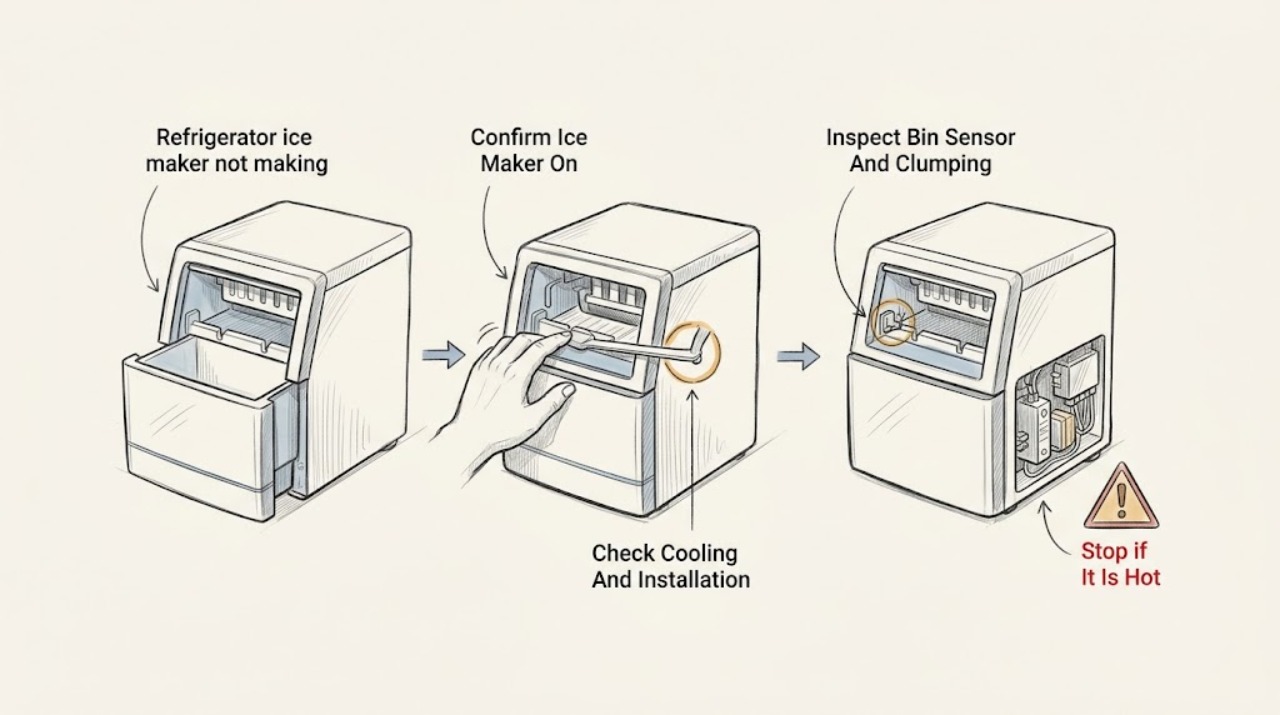
LG refrigerator ice maker not making ice: What to Check and What to Do Next
When an LG refrigerator ice maker is not making ice, first confirm that the ice maker is on for the exact model, the control panel is unlocked, and the freezer is actually cooling normally. Then check whether the bin is full or clumped, the feeler arm or sensor is blocked, and the accessible water supply or filter is restricting fill.
-
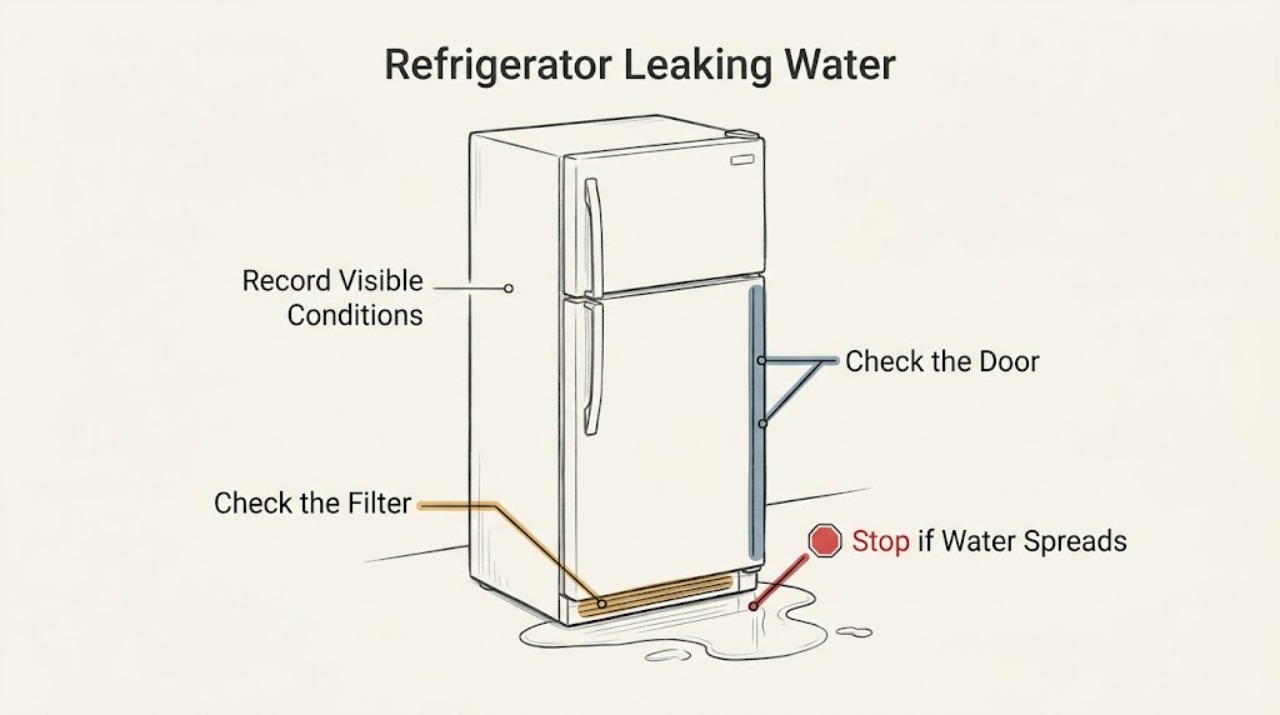
LG Refrigerator Leaking Water: What to Check and What to Do Next
If an LG refrigerator is leaking water, first map where the water begins and whether it appears after dispensing, ice making, or while idle. Check the water filter and its seals, the visible supply line and fittings, the dispenser and ice-maker area, and the door gasket, containers, and drain symptoms using the exact model guidance.
-
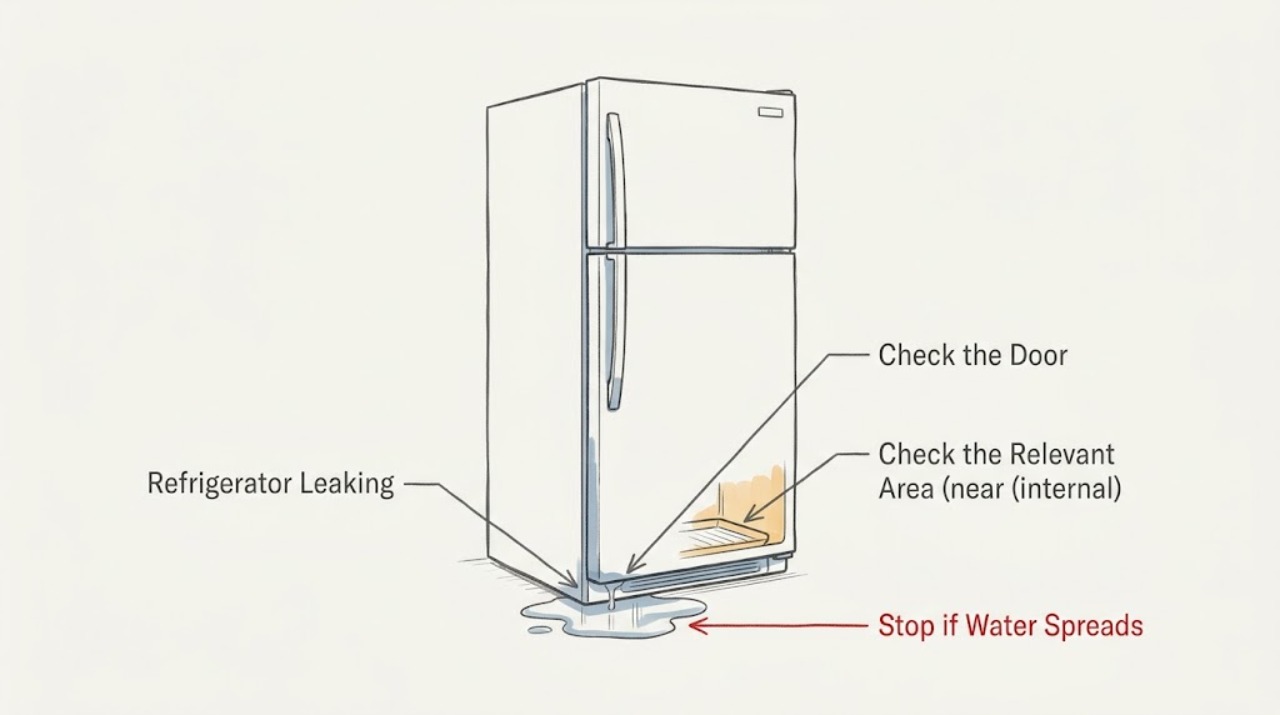
LG Refrigerator Leaking: Identify the Drain, Door, or Supply Source
Protect food and the floor, then locate the first wet point inside the LG refrigerator, under the cabinet, at a water connection, or near the door. A blocked freezer defrost drain can overflow into the compartment; an obstructed door or dirty gasket can add condensation. Disconnect power before safe external cleaning, never remove sealed panels, and request service for a supply-line leak, repeated overflow, or water near electrical parts.
-
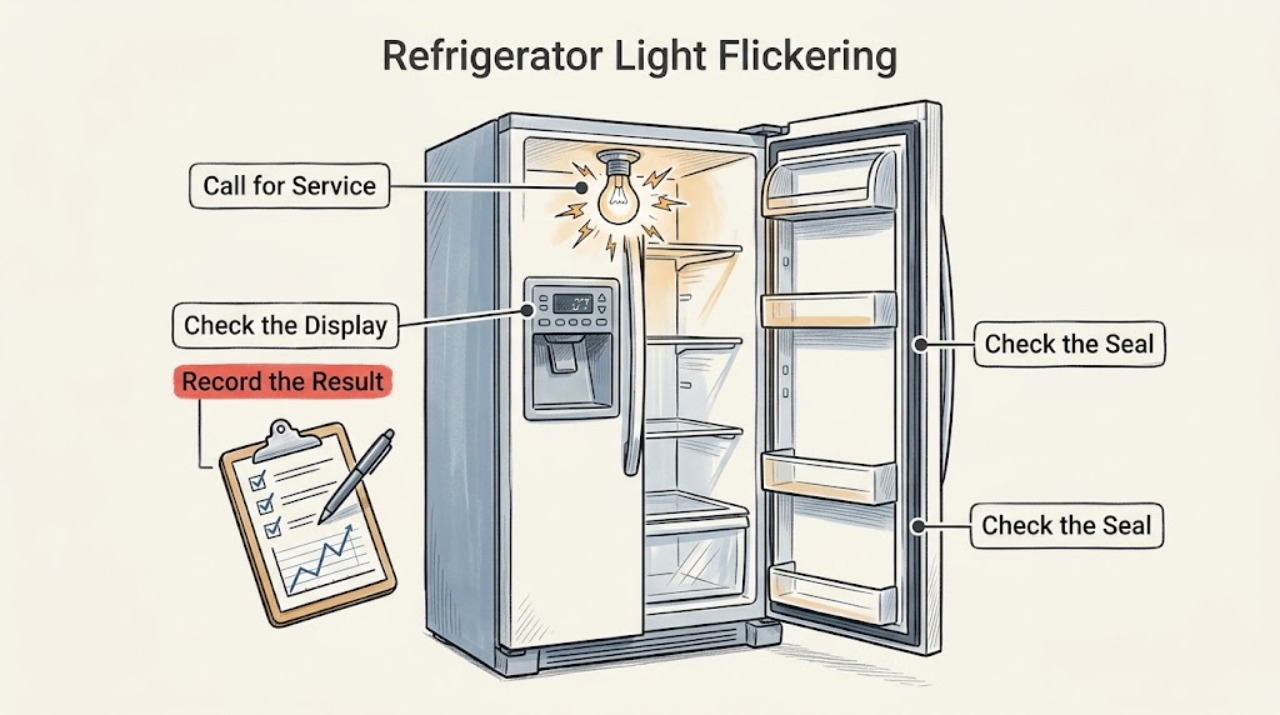
LG Refrigerator Light Flickering: Separate the Lamp From the Display
First identify which light is flickering: the interior lamp, the front control display, or both. Keep the doors closed while you check the outlet and model instructions. A reset can clear a temporary display power fault, but a continuing flicker, an unresponsive temperature control, or an LED lamp problem needs LG service.
-
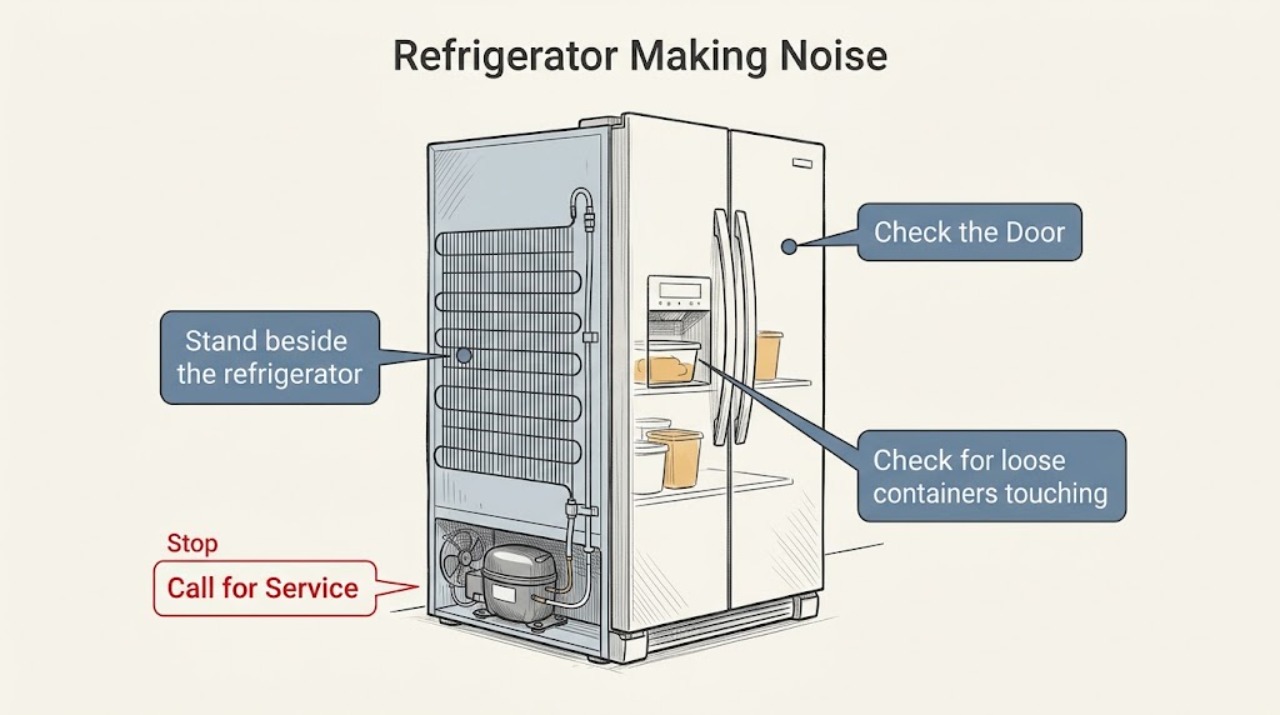
LG Refrigerator Making Noise: Match the Sound to Its Source
Classify the sound before touching anything. Clicking, gurgling, hissing, and a low compressor hum can be normal LG operating sounds. A new rattling that changes when the unit is moved, a fan-like scrape, or a loud noise that persists while cooling is poor deserves a focused inspection and possibly service.
-
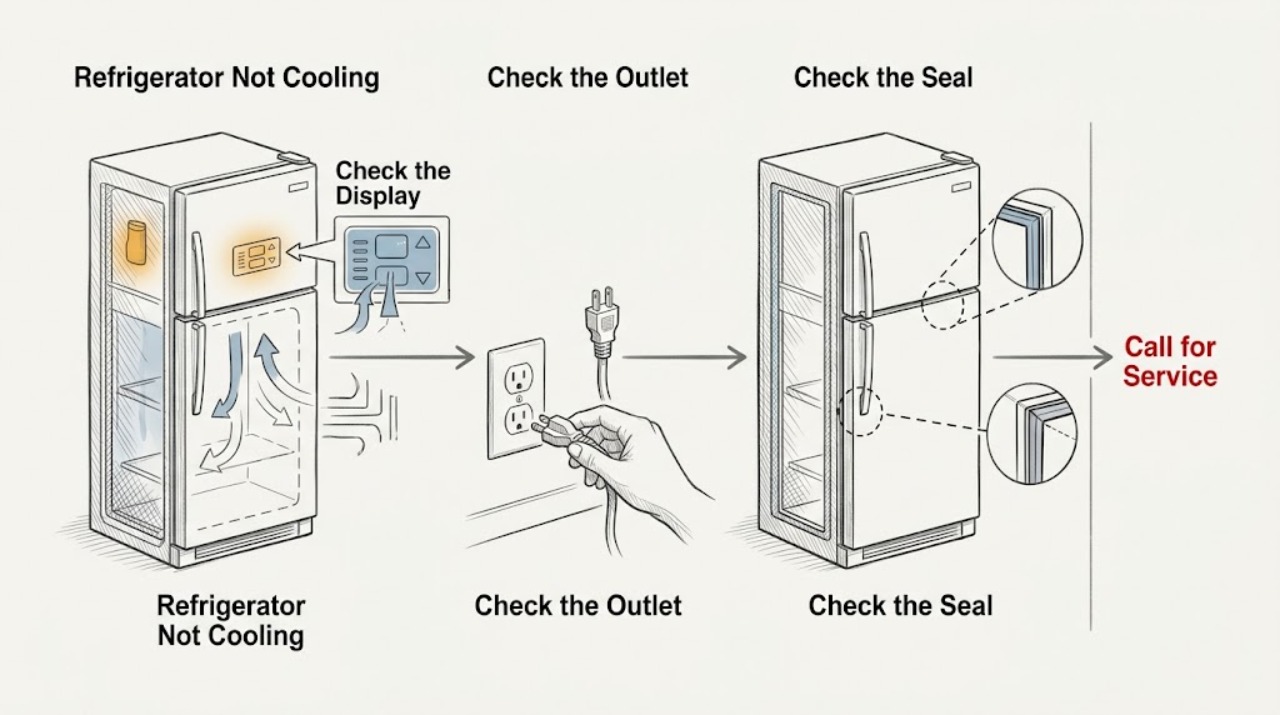
LG Refrigerator Not Cooling: Check Airflow Before Sealed-System Faults
Check the temperature setting, blocked vents, door closure, and recent installation or loading before assuming a compressor or sealed-system failure. LG recommends the refrigerator compartment around 1–3°C (34–37°F) on the cited guide; use your model manual if its controls differ. If the unit stays warm after airflow and stabilization checks, arrange service.
-
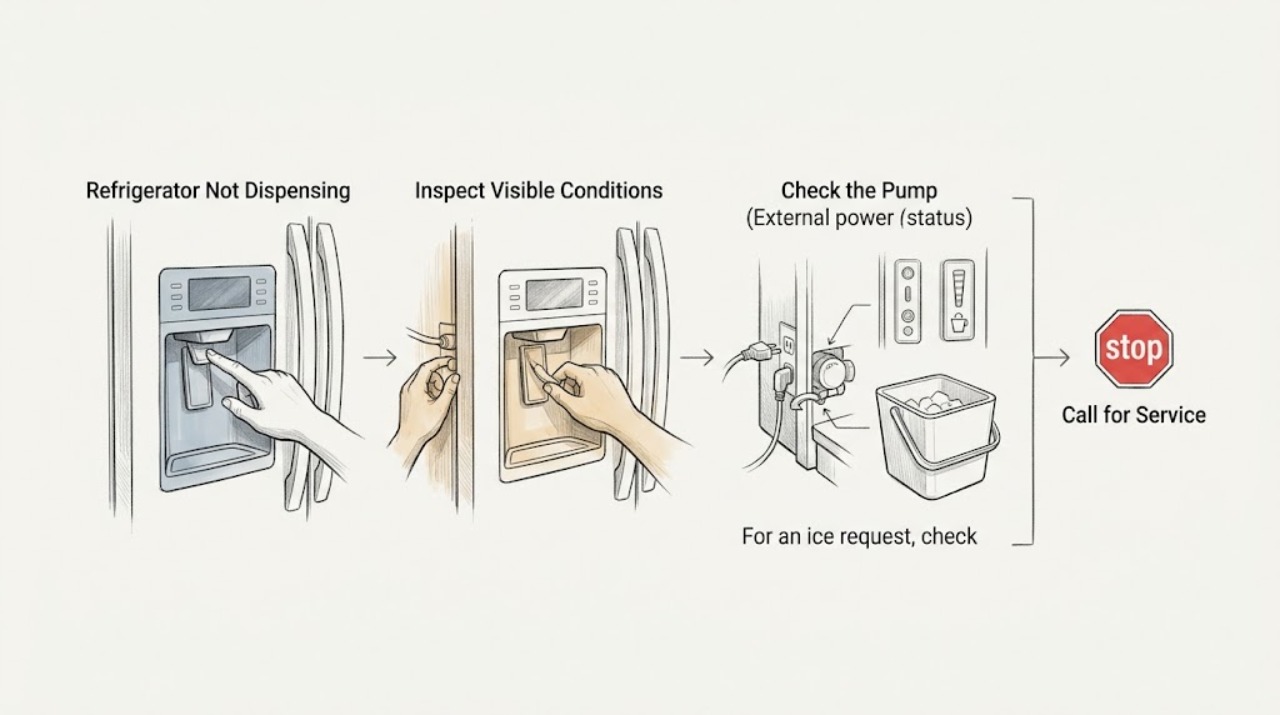
LG Refrigerator Not Dispensing: Check Lock, Flow, and Door Sensors
Start with the dispenser control state, then distinguish a water-flow restriction from an ice-bin or door-sensor interlock. LG says a locked panel, kinked supply line, clumped ice, or a door switch that still reports an open door can stop dispensing. If the dispenser stays silent after these accessible checks, arrange service.
-
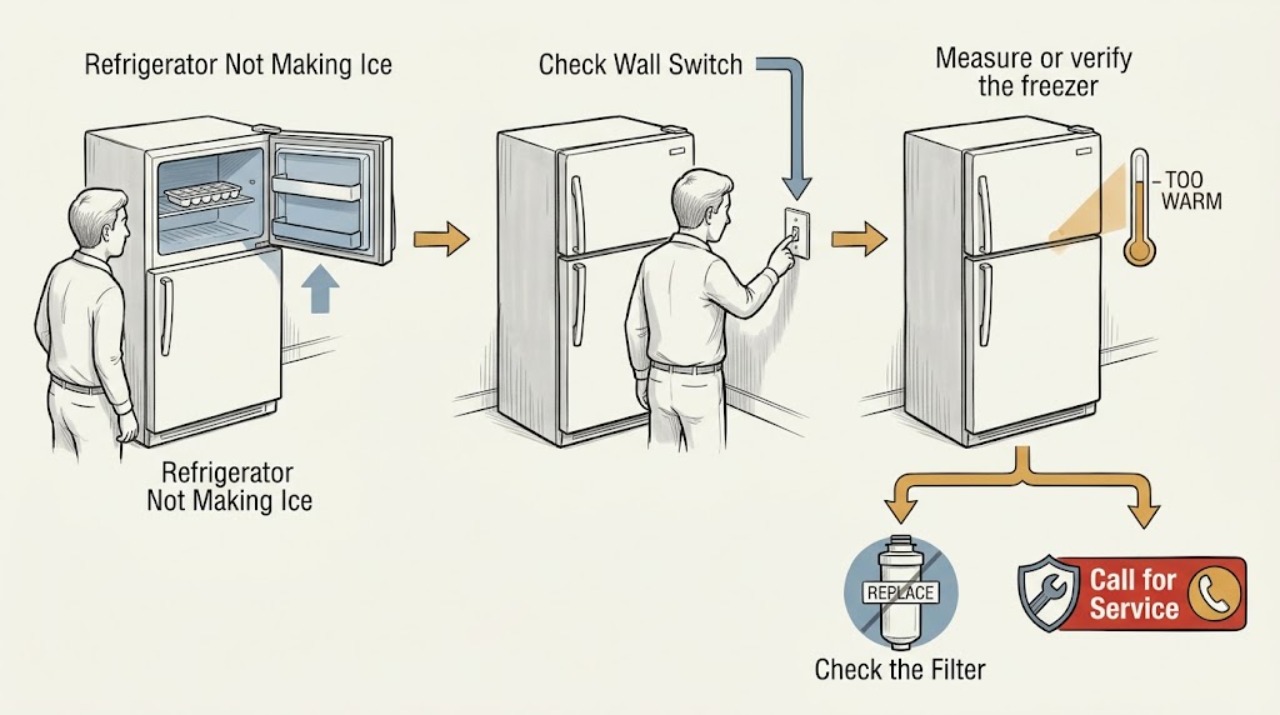
LG Refrigerator Not Making Ice: Verify Freezer Temperature and the Ice-Maker Test
Confirm that the ice maker is on, the freezer is cold enough, and the refrigerator has had time to stabilize. LG points to water supply, a warm freezer, an off control, or recent installation as common causes. A model-specific test that will not cycle, or no ice after the documented waiting period, calls for service.
-
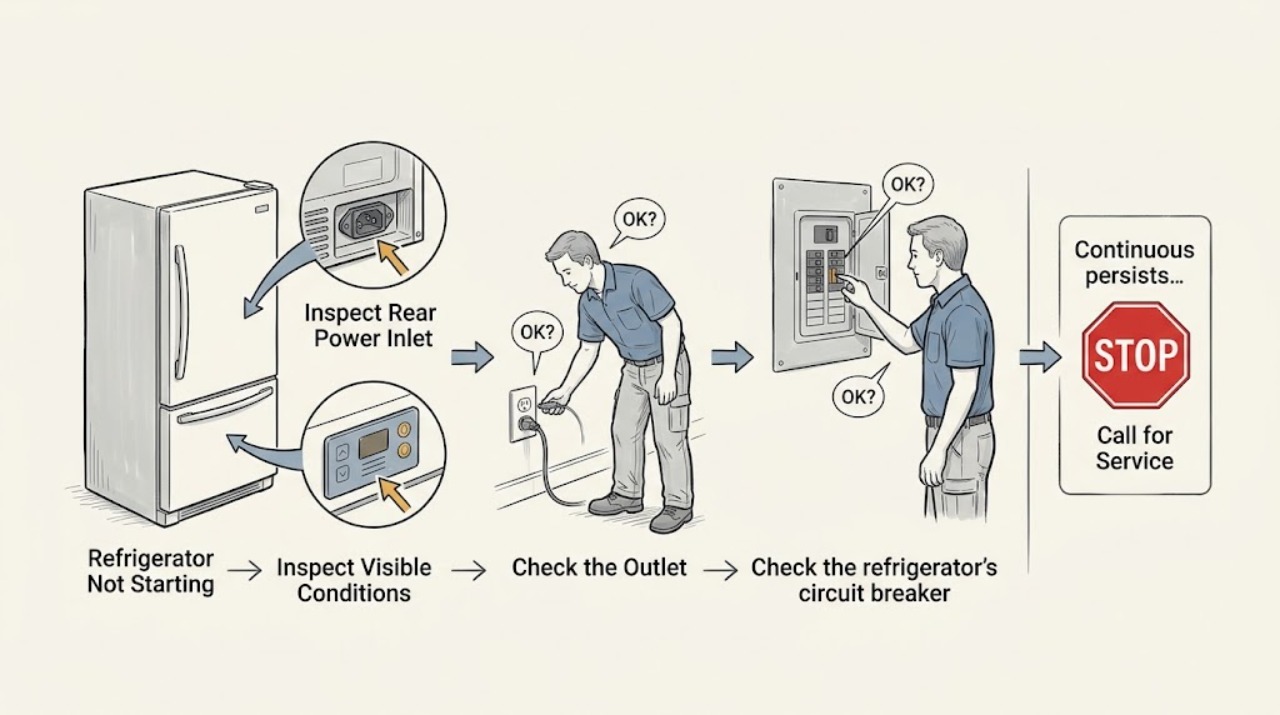
LG Refrigerator Not Starting: Check the Outlet and Breaker Safely
Determine whether the refrigerator has no power at all or has power but the compressor has not started. Check the plug, outlet, and breaker once using dry hands. If the outlet works but the refrigerator remains dead, or the breaker will not reset, stop troubleshooting and use LG or qualified electrical service.
-
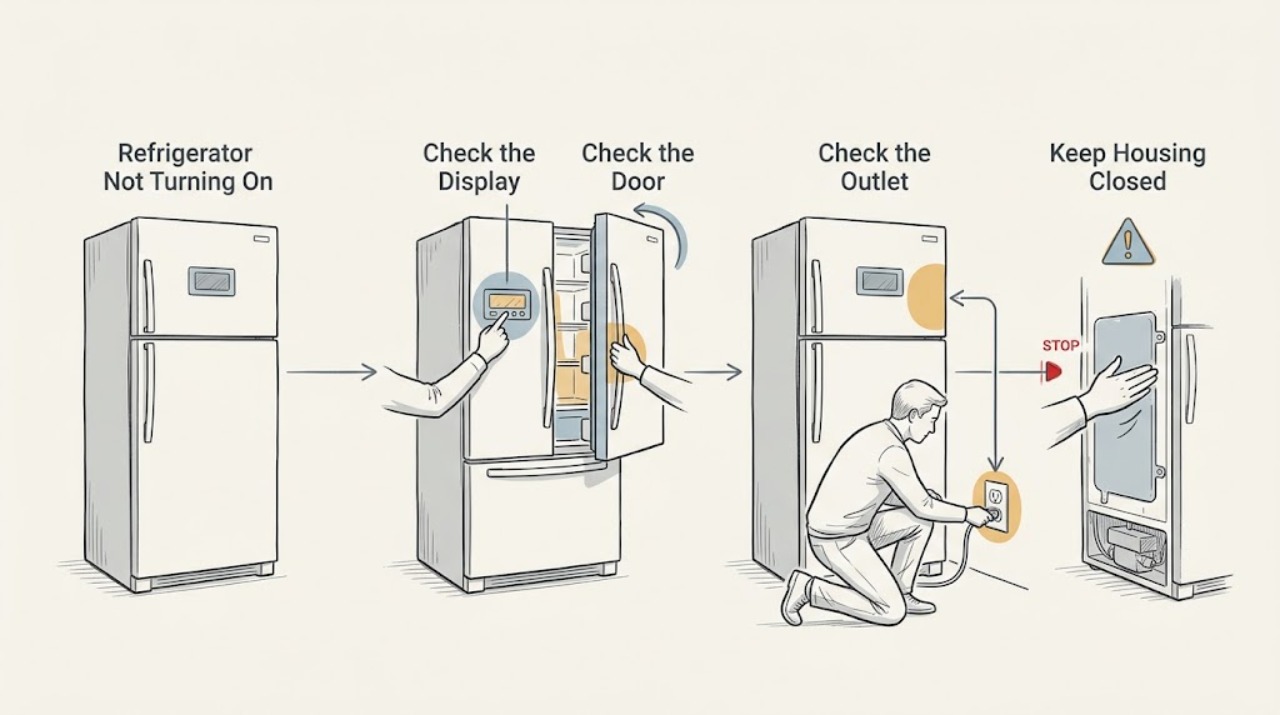
LG Refrigerator Not Turning On: Tell a Dark Display From a Power Loss
Wake the display and check for any interior light before concluding the refrigerator is off. LG displays can go dark after inactivity, while a loose plug, failed outlet, or tripped breaker can remove power entirely. If the display stays dark after a safe outlet check, do not open the control area; arrange service.
-
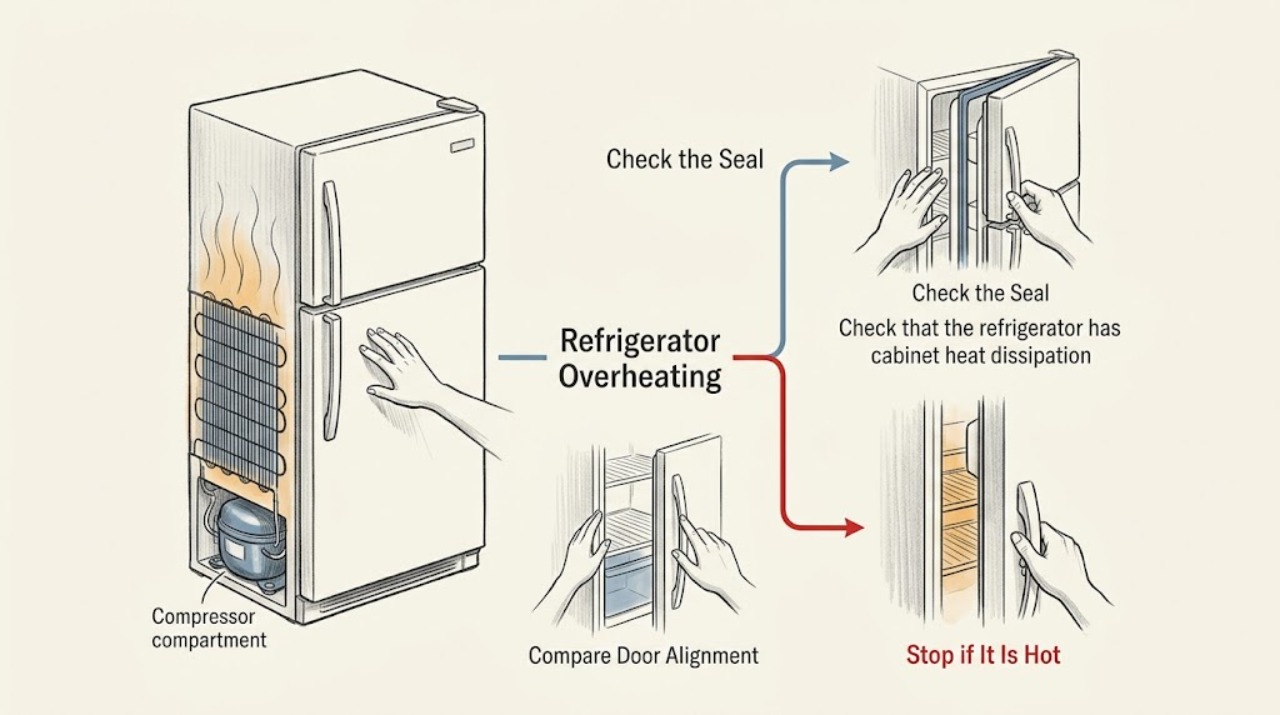
LG Refrigerator Overheating: Decide Whether Warm Cabinet Surfaces Are Normal
Warm sides, a warm front frame, or warm air under an LG refrigerator can be part of normal heat rejection. Check whether cooling is normal, whether the unit has ventilation clearance, and whether the heat is accompanied by an odor, damaged cord, or rising food temperature. Those accompanying symptoms—not warmth alone—determine the need for service.
-
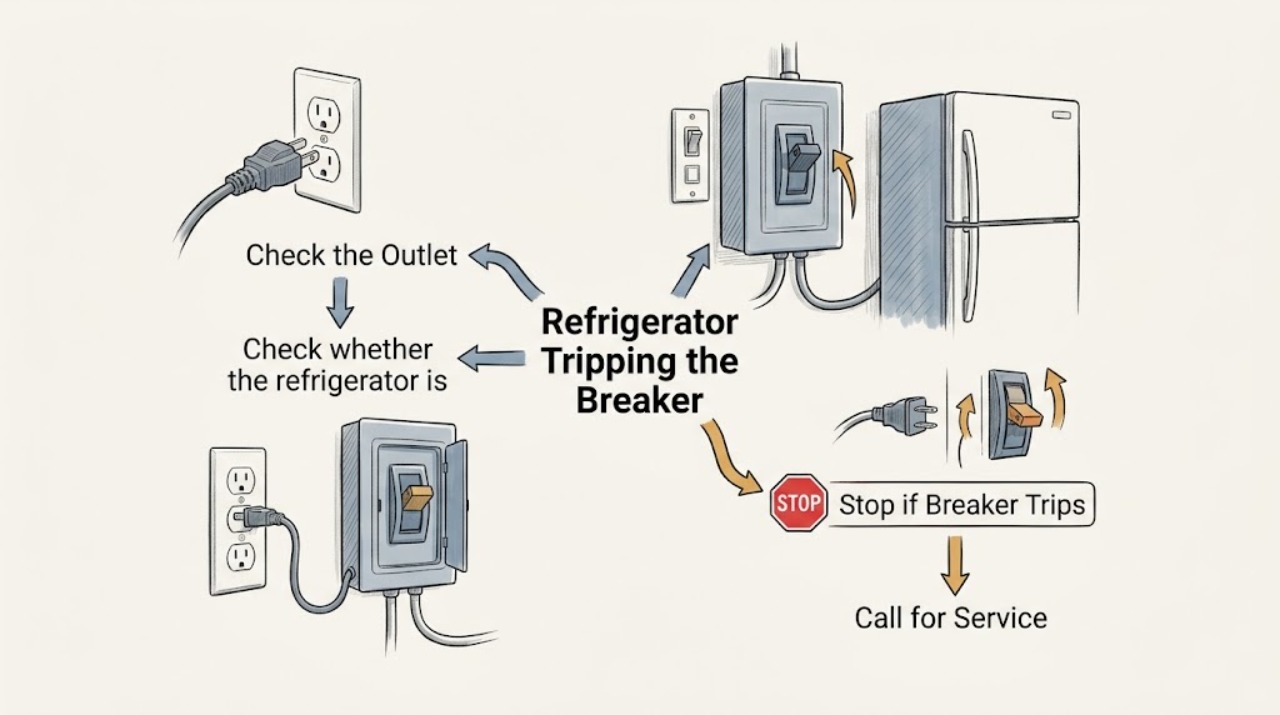
LG Refrigerator Tripping the Breaker: Stop Repeated Resets
Treat a repeated breaker trip as a protection signal, not a reset challenge. Disconnect extension-cord use, note whether the trip occurs immediately or only during operation, and reset only once if the installation is safe. If the breaker will not hold, the plug or outlet is damaged, or the refrigerator trips it again, stop and obtain qualified electrical or LG service.