
On this page
Start here
Quick answer
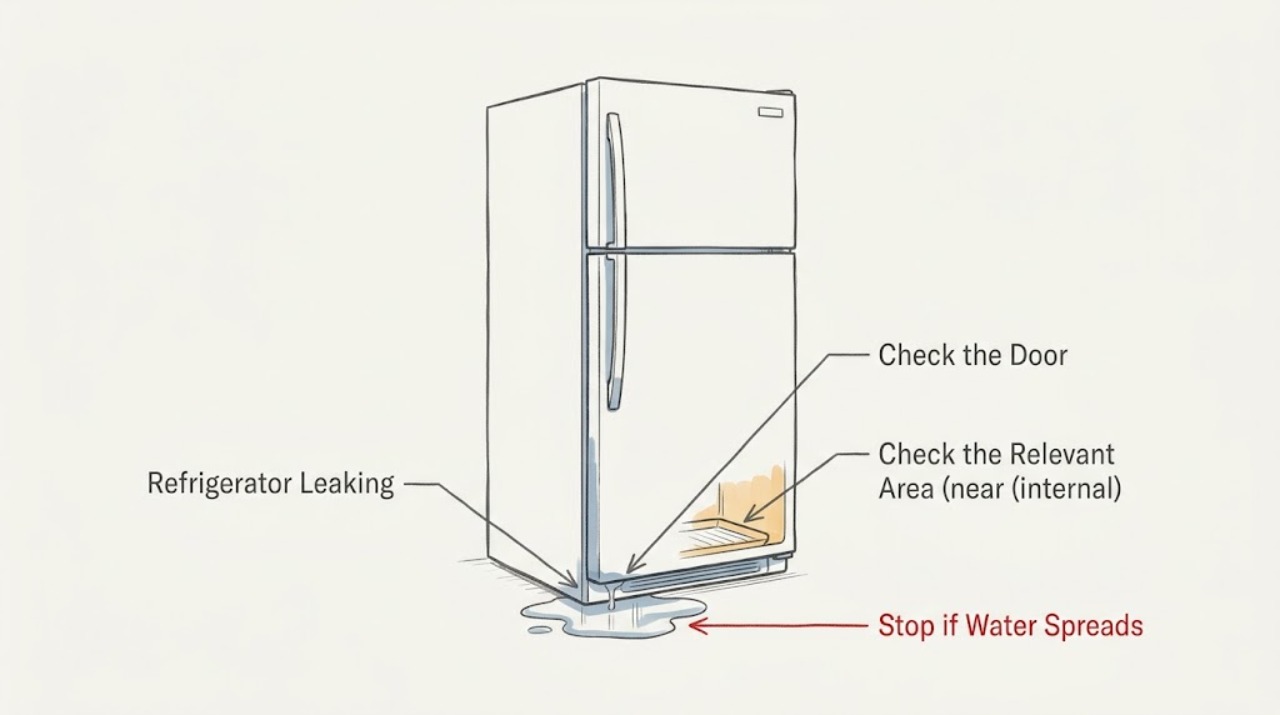
Protect food and the floor, then locate the first wet point inside the LG refrigerator, under the cabinet, at a water connection, or near the door. A blocked freezer defrost drain can overflow into the compartment; an obstructed door or dirty gasket can add condensation. Disconnect power before safe external cleaning, never remove sealed panels, and request service for a supply-line leak, repeated overflow, or water near electrical parts.
Before you begin
Safety first
- Do not remove the mechanical-compartment cover or chip ice with sharp tools. Disconnect power before safe cleaning.
Work through in order
Diagnostic checks
Use only checks that match the exact appliance or system and its official guide.
-
Check 1
Move food to a safe cold location, dry the floor, and note whether new water appears at an external water line/dispenser, inside the refrigerator ceiling or floor, around the door gasket, or under the cabinet.
Expected result: Water starts at a supply connection, follows a door/condensation pattern, drips from inside, or appears under the cabinet without an accessible source.
Next step: If a water connection is leaking, close the accessible water supply if safe. Keep water away from the plug and controls while tracing the source.
Why this matters
Why: A supply-line leak needs immediate water isolation; interior dripping can reflect a blocked defrost drain, while an under-cabinet source may require service.
-
Check 2
Check door bins, shelves, drawers, and the gasket for items preventing full closure; wipe the gasket and inspect for a continuous contact rather than a visible gap.
Expected result: A container blocks closure, the gasket is dirty or distorted, or the door seals evenly but water remains.
Next step: Rearrange items and clean/dry the gasket with a soft cloth. Arrange service for a torn gasket, misaligned door, or persistent gap.
Why this matters
Why: LG says door gaps admit humid air that can create condensation; a clean, closed seal makes that source less likely.
-
Check 3
Inspect visible freezer vents and the area where water is pooling for frost or ice; if the model's instructions allow a complete manual defrost, protect food, unplug, open doors, and let ice melt naturally before drying.
Expected result: Ice blocks the drain area and water stops after a complete safe defrost, or the leak returns after defrosting.
Next step: Use towels and avoid sharp tools. Request service for repeated leakage or ice that is behind panels or cannot be safely defrosted.
Why this matters
Why: LG explains that a blocked freezer drain can divert defrost water into the refrigerator or onto the floor; recurrence suggests an ongoing blockage or fault.
-
Check 4
After the area is dry, verify the cabinet is stable and level and check only accessible drain-pan or hose areas identified by the model manual; do not remove the rear mechanical cover.
Expected result: The appliance is unstable or an accessible hose/pan issue is visible, or the base remains dry but water returns from a concealed location.
Next step: Correct only model-approved external conditions. Stop using the refrigerator and arrange qualified service for concealed, persistent, or electrical-area leakage.
Why this matters
Why: Leveling and accessible routing can affect closure and drainage, but a concealed leak is not identifiable safely from the outside.
Use your observations
Decision map
Find the observation that best matches what you see, then follow the next safe action.
-
PATH 01Next step
What you see
Water follows a loose supply connection and stops after the accessible water supply is isolated
Do this next
Keep the supply off and obtain qualified repair for the leaking connection.
Why this path and its safety boundary
Why it matters: The water-line side is the supported source, not a defrost diagnosis.
-
PATH 02Next step
What you see
Water appears inside after frost buildup and stops after a complete safe defrost
Do this next
Monitor recurrence and request service if the drain blocks again; never chip the ice with a sharp tool.
Why this path and its safety boundary
Why it matters: A blocked or iced defrost drain is more likely.
-
PATH 03Next step
What you see
Door seal is clear and intact but water returns from beneath or a concealed panel
Do this next
Stop using the refrigerator if water approaches electrical parts and arrange qualified service.
Why this path and its safety boundary
Why it matters: Accessible door and condensation checks do not explain the leak.
Helpful context
Understand the symptom
Trace the first wet point before defrosting
Water on the floor can come from a dispenser line, door condensation, a freezer drain, or a pan. The first visible source determines whether an external check is appropriate or service is needed.
When checks do not resolve it
Need a professional?
Stop using the refrigerator when water reaches electrical parts or the leak source is concealed; arrange qualified inspection.
Safety scope: Do not remove the mechanical-compartment cover or chip ice with sharp tools. Disconnect power before safe cleaning.
Have this ready
- Provide the model, first wet point, water-line status, door/gasket result, frost/drain observations, and recurrence timing.
Common questions
FAQ
Why is water dripping inside my LG refrigerator?
A blocked freezer defrost drain can divert meltwater into the compartment. Door gaps, food blocking closure, and condensation can also create water, so locate the first wet point before defrosting or ordering a part.
Can I remove the rear panel to stop an LG refrigerator leak?
Do not remove a protected mechanical-compartment cover. Isolate an accessible water supply if it is leaking, keep water away from electrical parts, and request qualified service for a concealed leak.
Read the exact guide
Official sources
- LG Refrigerator – How to Level a FridgeLG USA Support · LG refrigerator leveling and door sealing guidance
- LG Refrigerator Troubleshooting CondensationLG USA Support · LG refrigerator door, gasket, food moisture, and drain condensation guidance
- How to Troubleshoot Water Leaking from the Ceiling or Pooling on the Floor in Your LG Top Freezer RefrigeratorLG USA Support · LG refrigerator defrost drain overflow and safe manual defrost guidance
Community feedback
Share a repair observation
Share a plain-text repair observation. Accepted observations are published automatically; this page may take a moment to update.