
On this page
Start here
Quick answer
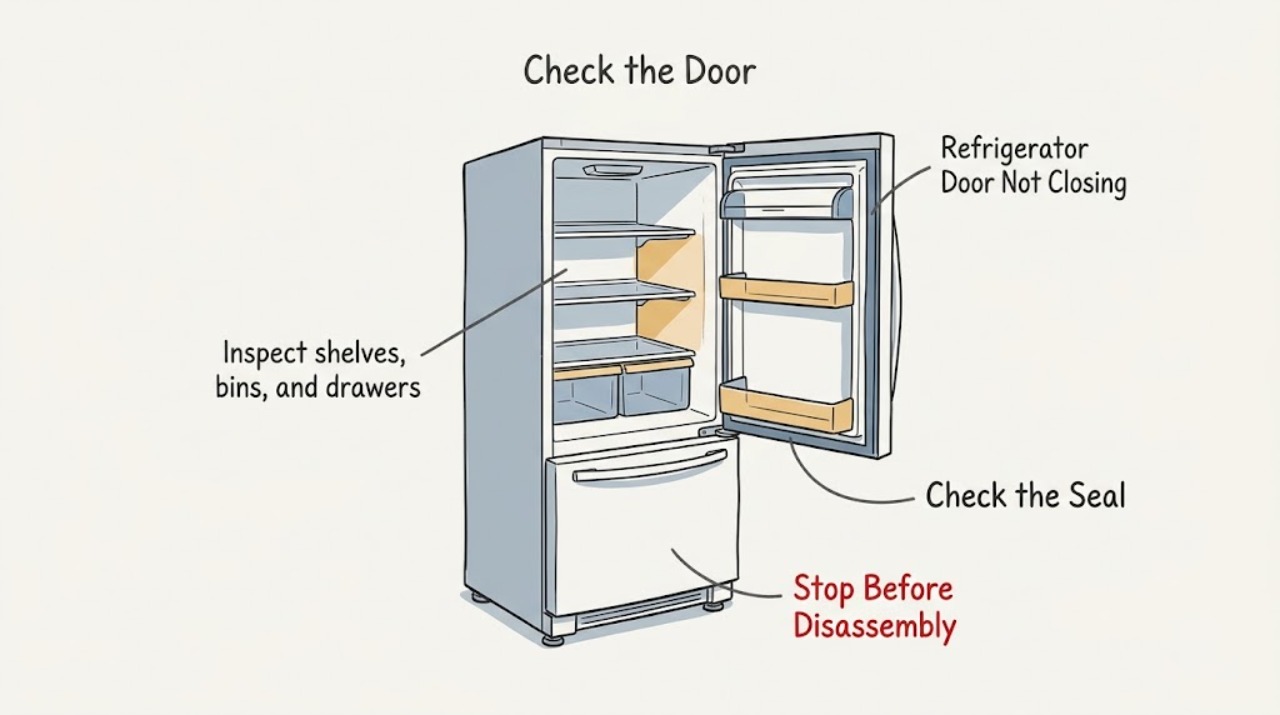
Remove any container, shelf, or drawer that projects into the LG refrigerator doorway, then clean and inspect the door gasket. Verify shelves and drawers are seated as the model shows and check whether the cabinet is level; a freezer door that will not self-close may need leveling. Do not force a sagging door or adjust hidden hinges without model instructions.
Before you begin
Safety first
- Do not force the door or adjust concealed hinge hardware without the model's instructions.
Work through in order
Diagnostic checks
Use only checks that match the exact appliance or system and its official guide.
-
Check 1
Close the door slowly and note where it stops; remove tall bottles, door-bin items, drawers, and containers near the frame, then check whether the door closes without resistance.
Expected result: The door hits one item or closes after rearrangement, or it still stops with the interior clear.
Next step: Keep the contact area clear and continue only if the problem remains. Do not slam or force the door past resistance.
Why this matters
Why: A repeatable contact point supports an obstruction; failure with a clear opening suggests shelf assembly, gasket, alignment, or level.
-
Check 2
Inspect shelves, bins, and drawers for a rail or rear corner that is not fully seated after cleaning or removal; reinstall only according to the model's arrangement.
Expected result: A shelf/drawer is proud of its rail or the door frame is clear and parts are seated.
Next step: Reassemble the affected part without forcing it. If it will not seat or is cracked, stop loading the door and obtain model-specific service guidance.
Why this matters
Why: LG notes incorrectly assembled shelves can prevent closure; correct seating removes that specific mechanical obstruction.
-
Check 3
Wipe the gasket and mating cabinet surface with a warm damp cloth, dry them, and inspect the full seal for a folded section, gap, detachment, or hardened debris.
Expected result: The gasket is dirty/compressed or it remains detached, torn, misshapen, or unable to contact the frame.
Next step: Clean and gently reposition only what the manual permits. Request service for a damaged or detached gasket or a continuing air gap.
Why this matters
Why: Foreign material or a displaced gasket can stop a seal; damage or persistent separation is not corrected by pushing harder.
-
Check 4
If the freezer door or drawer will not close by itself, check cabinet stability and level, then follow the LG model instructions for accessible leveling feet; verify closure after each small adjustment.
Expected result: The unit rocks or the door closes more reliably after leveling, or it remains misaligned despite a level stable cabinet.
Next step: Do not remove panels or adjust concealed hinge hardware without model-specific directions. Arrange service if the door remains high, sagging, or sealed unevenly.
Why this matters
Why: LG says leveling helps doors close and prevents air leakage; persistent misalignment may involve hinges or installation that needs service.
Use your observations
Decision map
Find the observation that best matches what you see, then follow the next safe action.
-
PATH 01Next step
What you see
Door closure returns after removing an item or reseating a shelf/drawer
Do this next
Keep the doorway clear and reinstall storage parts in their documented positions.
Why this path and its safety boundary
Why it matters: An interior obstruction or assembly position caused the symptom.
-
PATH 02Next step
What you see
The door closes but a gasket gap remains after cleaning and gentle repositioning
Do this next
Request model-specific gasket or alignment service; do not glue or heat-form the seal.
Why this path and its safety boundary
Why it matters: The seal is not reliably contacting the frame, risking warm-air entry and frost or condensation.
-
PATH 03Next step
What you see
A stable, level cabinet still has a sagging door or uneven gap
Do this next
Stop forcing the door and arrange qualified appliance service.
Why this path and its safety boundary
Why it matters: An installation or hinge/alignment issue remains outside the safe external checks.
Helpful context
Understand the symptom
Find the obstruction before touching the hinges
A door that stops at one point often meets a container, rack, shelf, or drawer. A uniform gap around the seal points toward gasket, alignment, or leveling. Those observations lead to different corrections.
When checks do not resolve it
Need a professional?
Arrange qualified service when external checks do not restore a uniform seal or when hinge/alignment work is required.
Safety scope: Do not force the door or adjust concealed hinge hardware without the model's instructions.
Have this ready
- Provide the model, door type, contact point, shelf/drawer changes, gasket condition, cabinet level, and remaining gap.
Common questions
FAQ
Why did my LG refrigerator door stop closing after cleaning?
A shelf, drawer, or bin may not be fully seated or a container may project into the frame. Remove the obstruction and reinstall interior parts as the model instructions show before investigating the gasket.
Should I replace the LG refrigerator gasket immediately?
Not from the symptom alone. Clean the gasket and check for a displaced section or obstruction first; replacement or alignment is conditional on a persistent gap, damage, or failed seal.
Read the exact guide
Official sources
- LG Refrigerator - How to Troubleshoot a Refrigerator Door Not Closing ProperlyLG USA Support · LG refrigerator door obstruction, shelf, and gasket checks
- LG Refrigerator – How to Level a FridgeLG USA Support · LG refrigerator leveling and door-closure guidance
Community feedback
Share a repair observation
Share a plain-text repair observation. Accepted observations are published automatically; this page may take a moment to update.