
On this page
Start here
Quick answer
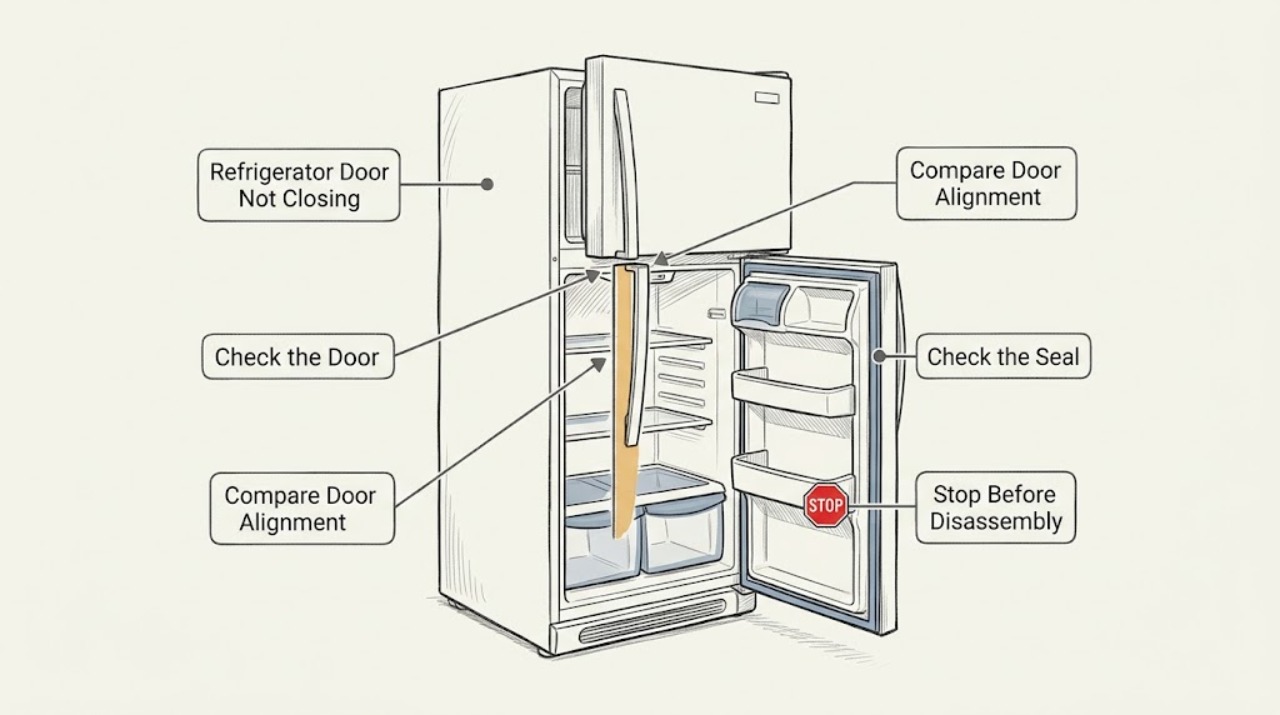
When an Amana refrigerator door will not close, start with anything physically holding it open: tall containers, overfilled door bins, shelves or drawers that are not fully seated, an ice bin out of position, shipping material, or food behind the door. On a French-door model, the vertical hinged seal must fold inward while the door is open so it can form the center seal when both doors close. Check the gasket for dirt, tears, brittleness, warping, or a visible gap, then check whether the cabinet and floor are level from a stable position. A door that was removed or installed incorrectly, remains misaligned, will not seal after the external checks, or causes frost and temperature changes needs the exact installation instructions or qualified service; do not force the door, remove it, adjust concealed hinges, or move a heavy refrigerator without the model procedure and proper help.
Work through in order
Diagnostic checks
Use only checks that match the exact appliance or system and its official guide.
-
Check 1
Open the door only as far as needed and inspect the door bins, shelves, drawers, crisper cover, ice bin, and the space behind the refrigerator door. Remove or rearrange only loose items that visibly project into the closing path, and remove any remaining shipping or packaging material.
Expected result: A tall bottle, overfilled bin, mis-seated shelf or drawer, displaced ice bin, food package, item behind the cabinet, or packaging material is touching the door; or the door has clear space.
Next step: Reposition the loose item or fully seat the bin, shelf, or drawer, then close the door gently and check the perimeter. If the door still stops with clear space, continue to the seal and alignment checks; do not force it against an obstruction.
Why this matters
Why: Amana lists internal and external obstructions and incorrectly seated storage parts as common causes of a door that will not close after loading or installation.
-
Check 2
If the refrigerator has French doors, watch the vertical hinged seal on the meeting edge of the left door as you open and close it. With the door open, fold the seal inward by hand only if it is visibly folded outward; keep fingers clear of the hinge and do not remove the seal.
Expected result: The hinged seal is folded outward and blocks the opposite door, it folds inward and the doors meet, or the seal will not return to its intended position.
Next step: If the seal folds normally and the doors close, check for a complete seal around the perimeter. If it remains outward, is damaged, or still leaves a gap after the safe position check, stop and arrange model-specific service rather than bending or replacing it by appearance.
Why this matters
Why: Amana explains that the vertical seal folds inward when the left door opens and forms the seal between doors when both close. An outward position can physically prevent closure or leave a center gap.
-
Check 3
Inspect the gasket around the entire door from a standing position. Wipe loose food particles from the gasket and mating surface with a soft damp cloth, then dry it; do not stretch, heat, glue, or pry the gasket from its channel.
Expected result: The gasket is dirty or sticky, brittle, cracked, warped, folded, or not contacting the cabinet evenly; or it is clean and appears intact.
Next step: After cleaning, close the door without slamming and look for a continuous contact around the perimeter. If a gap or damage remains, keep the door closed as much as possible and arrange service for the correct gasket and installation procedure; do not order a part from appearance alone.
Why this matters
Why: Amana says dirt can create resistance and a worn, cracked, or warped gasket can leave gaps that let warm air in. A clean intact gasket makes an obstruction, level, alignment, or hinge condition more likely.
-
Check 4
From a stable position, check the refrigerator cabinet side-to-side and front-to-back with a reliable level or phone level, and observe whether the door drifts open or fails to sit flush. Do not pull the refrigerator forward, remove a toe grille, or adjust leveling feet unless the model instructions, flooring, water line, cord, and safe assistance allow it.
Expected result: The cabinet or floor is visibly out of level, the door has an uneven gap or swings open, the unit rocks, or the cabinet appears level but the door remains misaligned.
Next step: If the unit is unstable or leveling would require moving it, stop and use the model installation instructions or a qualified installer. Do not shim, lift, or adjust a heavy refrigerator by guesswork; if it is stable and level, continue to the installation and alignment branch.
Why this matters
Why: Amana links an unlevel cabinet or floor to doors that cannot close or seal, frost and temperature fluctuation, and incorrect door-switch contact. A level cabinet with a persistent gap points toward door alignment, hinge, or structural service rather than a simple floor issue.
-
Check 5
Ask whether the door or hinge was removed, reversed, or adjusted during delivery or installation, and compare the visible alignment and gasket contact with the model's Installation Instructions. Check only accessible packaging and alignment; do not remove the door or hinge to reset it.
Expected result: The problem began after installation or door removal, the top and bottom gaps differ, the door sits low or high, the hinge is visibly damaged, or there is no installation history and no visible alignment problem.
Next step: Use the exact model instructions or contact the installer for an alignment assessment. If the hinge is bent, loose, damaged, or inaccessible, leave the door supported by normal closure only and arrange qualified service; do not lift the door or disassemble the hinge.
Why this matters
Why: Amana states that incorrect door installation or adjustment can prevent closure and sealing and can cause frost or temperature fluctuation. Different Amana families use different hinge and alignment procedures, so the symptom does not establish a compatible adjustment or replacement hinge.
-
Check 6
After the door is closed as far as it safely will go, check for a continuous gasket contact and any door-ajar alarm, interior light that stays on, frost, moisture, or temperature change. Record the model number and the exact gap or obstruction before requesting service.
Expected result: The gasket seals continuously and the alarm or light behaves normally, the door remains ajar or the alarm continues, frost or moisture is building, or the refrigerator is warming.
Next step: Keep the door closed and protect the contents if possible. Arrange qualified service for a persistent gap, alarm, frost, warming, or damaged door; do not tape the door shut over a defective hinge or access the switch and wiring.
Why this matters
Why: A door that does not seal can allow warm air in and can affect frost, temperature, and door-switch operation. A correct external fit with continuing alarm or warming suggests a switch, alignment, or control issue that cannot be safely diagnosed from the door symptom alone.
Use your observations
Decision map
Find the observation that best matches what you see, then follow the next safe action.
-
PATH 01Next step
What you see
The door closes after a bottle, package, bin, shelf, drawer, ice bin, or shipping material is repositioned.
Do this next
Keep the storage part fully seated and check that the gasket contacts all around. Monitor for a recurring gap, frost, or temperature change.
Why this path and its safety boundary
Why it matters: A physical obstruction was the most likely cause, not a confirmed hinge or gasket failure.
-
PATH 02Next step
What you see
A French-door center seal was folded outward and the doors close after it is returned inward without force.
Do this next
Use the door normally and confirm a continuous center seal. If the seal will not stay in position or is damaged, request model-specific service.
Why this path and its safety boundary
Why it matters: The mullion seal position was interfering with closure.
-
PATH 03Next step
What you see
The gasket is dirty and closure improves after gentle cleaning, with no cracks, warping, or perimeter gap.
Do this next
Keep the gasket and mating surface clean and dry. A persistent gap or damaged gasket needs the correct service part and procedure.
Why this path and its safety boundary
Why it matters: Surface contamination was likely creating resistance or interrupting gasket contact.
-
PATH 04Next step
What you see
The cabinet is out of level, the door drifts open, or the door was removed during installation and now has an uneven gap.
Do this next
Use the exact installation instructions or a qualified installer. Do not pull out, lift, shim, or disassemble a heavy refrigerator by guesswork.
Why this path and its safety boundary
Why it matters: Leveling or installation alignment is more likely than an internal refrigeration fault.
-
PATH 05Next step
What you see
The door still will not seal after clear obstructions are removed, the gasket is clean, and the unit is stable, or the alarm, frost, warming, damage, or hinge problem continues.
Do this next
Keep the door closed as much as practical, protect the contents, and arrange qualified Amana appliance service. Stop immediately for instability, glass damage, water near electrical parts, or any need to remove the door or access wiring.
Why this path and its safety boundary
Why it matters: A hinge, door, switch, liner, installation, or structural condition remains possible, but the symptom does not identify a safe compatible part or adjustment.
Helpful context
Understand the symptom
A door can fail to close because it is physically blocked, because its gasket cannot make contact, or because the cabinet, door, or hinge geometry is out of alignment. The refrigerator type matters: a French-door unit may have a center mullion seal, while top-freezer and side-by-side models use different door and hinge arrangements. Use the exact Amana Owner's Manual or Installation Instructions for any adjustment that is not an ordinary external check.
A door left ajar can raise temperature and cause frost or moisture. Keep temperature-sensitive food protected while the door is unsecured. Stop and seek service if the door is sagging, glass or liner is damaged, the cabinet is unstable, the gasket is torn, or closing it would require lifting the door, pulling out the appliance, or working near water or electrical connections.
When checks do not resolve it
Need a professional?
The door still leaves a gap after loose obstructions are removed and the gasket is clean and intact., The cabinet is unstable, the door is sagging or damaged, the mullion seal will not position, or the problem began after door removal or installation., The door-ajar alarm or interior light remains active, frost or moisture is building, the refrigerator is warming, or any panel, hinge, switch, wiring, or door removal would be required.
Have this ready
- The complete Amana model number and refrigerator configuration, such as French-door, side-by-side, or top-freezer.
- Where the gap occurs, whether the door is blocked or sagging, the gasket condition, the level or floor condition, and whether the door was removed or reversed during installation.
- Any door-ajar alarm, light behavior, frost, moisture, temperature change, visible damage, and the external checks already completed.
Common questions
FAQ
What is the first thing to check when an Amana refrigerator door will not close?
Check for a tall container, overfilled door bin, mis-seated shelf or drawer, displaced ice bin, food package, or shipping material in the closing path. Amana lists these obstructions before door or hinge adjustment.
Why does my Amana French-door refrigerator have a center gap?
The vertical hinged seal on the left French door may be folded outward instead of inward while the door is open. Amana says it should fold inward out of the way and form the center seal when both doors close; if it will not position or is damaged, arrange service.
Can a dirty gasket keep an Amana refrigerator door from closing?
Yes. Amana says food particles and dirt can create resistance, while a brittle, cracked, warped, or otherwise damaged gasket can leave a gap. Clean the accessible gasket gently and arrange service for damage or a continuing perimeter gap.
How does leveling affect an Amana refrigerator door?
An unlevel cabinet or floor can make a door swing open, sit unevenly, or fail to seal. Check level from a stable position and use the exact installation instructions or a qualified installer before moving or adjusting a heavy refrigerator.
Should I remove an Amana refrigerator door to fix the hinge?
Not as a general DIY step. Door removal and hinge resets vary by model and involve a heavy door, alignment, wiring or water connections on some configurations. Use the exact installation instructions or arrange qualified service rather than forcing, lifting, or disassembling the hinge.
Read the exact guide
Official sources
- Doors Not Sealing - RefrigeratorAmana Product Help · Amana refrigerator door-seal support; the concepts apply to visible seal and obstruction checks, while door adjustment remains model-specific
- How to Level the RefrigeratorAmana Product Help · Amana leveling guidance for most refrigerator models; use the exact installation instructions and proper assistance before moving or adjusting a unit
- Doors Not Closing ProperlyAmana Product Help · Amana refrigerator door-closure guidance across listed configurations; model installation instructions control alignment and hinge work
- Door Not Closing - RefrigeratorAmana Product Help · Amana French-door refrigerator closure guidance; apply only the vertical-seal check to models that have that feature
Community feedback
Share a repair observation
Share a plain-text repair observation. Accepted observations are published automatically; this page may take a moment to update.