
On this page
Start here
Quick answer
If a Bosch refrigerator door will not close, first remove or reposition any food container, shelf, drawer, bottle, or door-bin item that projects into the closing path. On a French-door model, make sure the vertically hinged mullion rail is folded flush before closing the doors. Then inspect the visible seal for dirt, grease, looseness, or damage and clean an intact seal with a soft cloth and mild soapy water. Check whether the cabinet is visibly leaning, the doors are uneven, or the door sags, rubs, springs back, or needs force; leveling, hinge, closer, and built-in alignment work is model- and installation-specific. If the door still will not seal, has a damaged gasket or hinge, or needs a base-grille, hinge, spring, or door-panel adjustment, stop forcing it and arrange qualified Bosch service. Do not remove the door, loosen hinge or leveling hardware, pry the seal, or allow the refrigerator to run with a persistent gap, because cold air loss can make it overwork and spoil food.
Before you begin
Safety first
- This article covers loose stored-item clearance, visible mullion position, visible gasket cleaning, and non-invasive observation of level and door behavior. A qualified technician must handle door removal, hinge, closer, spring, panel, sensor, base-grille, leveling, built-in alignment, wiring, and refrigeration work.
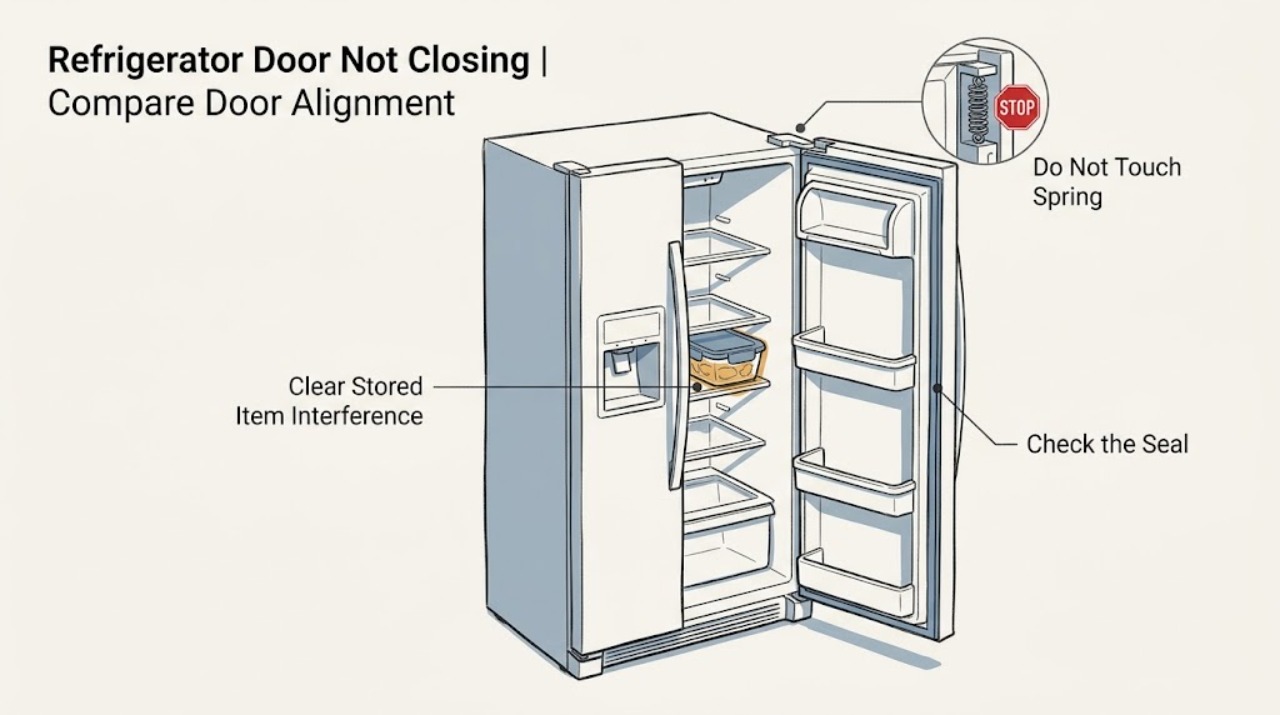
Work through in order
Diagnostic checks
Use only checks that match the exact appliance or system and its official guide.
-
Check 1
Inspect the closing path for containers, bottles, shelves, drawers, ice bins, door bins, packaging, or a protruding item. On a French-door Bosch refrigerator, look at the vertical hinged mullion rail and confirm it is in its normal folded or flush position before the doors meet. Remove or reposition only a loose stored item; do not force a drawer or fixed fitting.
Expected result: The door contacts a food item, shelf, drawer, or bin; the mullion rail is not flush; the closing path is clear; or the door closes only when lifted or pushed.
Next step: Remove the loose obstruction and close the door gently. If resistance, rubbing, sag, or an uneven gap remains, leave the fittings in place and continue to the seal and alignment checks.
Stop if: Do not force the door, bend the mullion rail, remove fixed shelves, or use an object to hold the door shut.
Why this matters
Why: A clear physical interference is more likely than a failed hinge or seal. A clear path with lift, sag, or uneven contact makes alignment or door hardware more likely.
-
Check 2
With the door open, inspect the visible gasket and its contact surfaces around the full perimeter for grease, food residue, a fold, a loose section, a pulled-out edge, cracking, or a tear. If the seal is intact and only dirty, wipe it with a soft cloth and mild soapy water, then dry it; do not use chlorine-based or abrasive cleaner.
Expected result: The gasket is dirty but intact; a section is folded or loose; the gasket is torn or hardened; or the seal looks normal but the door still does not meet the cabinet.
Next step: Clean only an intact visible seal and test gentle closure. Arrange service for a loose, damaged, or channel-displaced seal, or for a persistent gap after cleaning.
Stop if: Do not pry the gasket from its channel, glue it, stretch it, heat it, or force the door against a damaged seal.
Why this matters
Why: Residue can prevent the gasket from contacting the cabinet. A loose or damaged gasket can maintain a gap after cleaning and may need a model-specific replacement. A normal seal shifts attention to stored-item clearance, level, alignment, or hinge/closer behavior.
-
Check 3
With shelves and door bins in their normal positions, observe the door from the front and side as it closes gently. Look for one door lower than the other, a diagonal or uneven gap, cabinet rubbing, a door that rolls away from the seal, or a refrigerator that rocks or moves. Do not remove the base grille or turn leveling or hinge screws during this observation.
Expected result: The cabinet appears stable and the door meets evenly; the refrigerator is visibly tilted or rocks; one door is lower; the door rubs the cabinet; or the door closes only when lifted or pushed.
Next step: Use the exact Bosch installation manual for any permitted adjustment. If leveling, base-grille removal, hinge adjustment, moving the appliance, or door support is required, arrange qualified service rather than making a generic adjustment.
Stop if: Do not pull the refrigerator out, remove the base grille, loosen hinge or safety screws, or move a heavy appliance without the model procedure and appropriate support.
Why this matters
Why: An uneven gap, tilt, rocking cabinet, or lift-to-close symptom makes leveling, alignment, hinge, or closer hardware more likely than a simple dirty gasket. A stable, even door with a localized gap points back to the seal or a local obstruction.
-
Check 4
Observe whether the door sags, springs back, drops, binds at one hinge, opens again after a gentle close, or leaves a continuous gap that allows the door alarm or visible cold-air loss. Check only exposed, visible hardware for damage; do not remove the door, hinge cover, panel, wiring, or closer mechanism.
Expected result: The door latches and seals after the loose obstruction or cleaning; the door sags or springs open; a hinge, closer, panel, or seal is damaged; the door alarm persists; or food is warming because the gap remains.
Next step: Keep the door closed as much as possible and arrange qualified Bosch service for hinge, closer, spring, panel, wiring, seal-channel, or door-removal work. Move vulnerable food safely if the compartment cannot stay cold.
Stop if: Do not force the door, wedge it closed, remove hardware, work on wiring, or continue normal operation with a damaged door or persistent seal gap.
Why this matters
Why: A sagging, springing, damaged, or persistent-gap pattern is a door-hardware or installation fault and can make the refrigerator overwork. A door that seals normally after user-level checks does not need a hardware repair.
Use your observations
Decision map
Find the observation that best matches what you see, then follow the next safe action.
-
PATH 01Safety boundary
What you see
The door touches a container, shelf, drawer, door-bin item, or a French-door mullion rail is not folded or flush correctly.
Do this next
Remove or reposition only the loose item and restore the mullion rail's normal position according to the exact model manual. Close gently and reassess the seal.
Why this path and its safety boundary
Why it matters: A physical loading or hinged-rail obstruction is more likely than a failed gasket or hinge.
Safety stop: Do not force the door, bend the rail, remove fixed fittings, or use a prop to keep the door shut.
-
PATH 02Safety boundary
What you see
The closing path is clear, but residue, grease, a fold, loose gasket edge, or visible gasket damage prevents full contact.
Do this next
Clean an intact seal with a soft cloth and mild soapy water. Arrange service for a loose or damaged seal or a gap that remains afterward; the correct seal is model-specific.
Why this path and its safety boundary
Why it matters: The gasket is the likely immediate sealing problem; cleaning can help only when the gasket remains intact.
Safety stop: Do not use abrasive or chlorine cleaner, pry or glue the gasket, or force the door against a torn seal.
-
PATH 03Safety boundary
What you see
The doors are uneven, the cabinet rocks or visibly tilts, the door rubs the cabinet, or it closes only when lifted or pushed.
Do this next
Use the complete Bosch model installation instructions or arrange qualified service. Do not turn generic leveling or hinge screws because procedures and safety hardware vary by model.
Why this path and its safety boundary
Why it matters: Leveling, alignment, installation clearance, or hinge geometry is more likely than a simple surface-cleaning issue.
Safety stop: Do not move a heavy refrigerator, remove a base grille, loosen safety screws, or adjust a hinge without the exact procedure and suitable support.
-
PATH 04Safety boundary
What you see
The door sags, springs open, drops, binds at one hinge, has damaged hardware or a panel, or will not remain sealed after obstruction and seal checks.
Do this next
Stop forcing the door and arrange qualified Bosch service. Keep the door closed as far as practical and protect perishable food if the compartment temperature is rising.
Why this path and its safety boundary
Why it matters: A hinge, closer, spring, door-panel, seal-channel, or built-in alignment fault is more likely and may worsen the gap or damage the cabinet.
Safety stop: Do not remove the door, hinge covers, panels, wiring, or closer mechanism; do not operate with a persistent gap or damaged door.
-
PATH 05Safety boundary
What you see
The door appears to close and the gasket contacts the cabinet, but the door alarm continues or the refrigerator still reports an open-door condition.
Do this next
Check the exact Bosch manual for the door-alarm behavior and arrange service if the alarm persists, the door opens again, or cooling is affected.
Why this path and its safety boundary
Why it matters: A door-sensor, alignment, control, or localized seal-contact issue may remain even if the visible closing path looks normal.
Safety stop: Do not tape over the sensor, defeat an alarm or interlock, or leave the refrigerator running with an unverified seal.
Helpful context
Understand the symptom
Find the closing obstruction before touching the hardware
Open the door only as far as needed and inspect the visible path. Tall containers, bottles, shelves, drawers, ice bins, or door-bin contents can hold the door open even when the cabinet and gasket are sound. On a French-door Bosch refrigerator, the vertical hinged seal or mullion rail must be in its normal folded position when the door is opened and flush with the door edge when the doors close. Remove only a loose stored-item obstruction; do not force a drawer, move a fixed shelf, or push the door against resistance.
The gasket is a sealing surface, not a lever
Bosch identifies the door seal as a first check for a door that does not shut properly. Look for food residue, grease, a fold, a section pulled out of its channel, or visible tearing. For an intact seal, wipe with a soft cloth and mild soapy water; Bosch says not to use chlorine-based or abrasive cleaners or cloths. If the seal is loose or damaged, cleaning will not restore a reliable seal and the correct replacement depends on the complete model.
Level and alignment change how a door closes
A door that is lower on one side, rubs the cabinet, or fails to swing toward the seal can point to leveling or alignment rather than a container. Bosch installation material for a cited refrigerator family describes leveling screws that affect closing ease, alignment, and stability, and another Bosch guide describes model-specific hinge adjustment. These procedures are not universal: some require removing a base grille, supporting the appliance, or accessing hinge hardware. Treat a visual tilt or uneven gap as a service or exact-manual decision, not as permission to turn a screw at random.
Hinges, closers, and door panels are a professional boundary
If the door sags, springs open, drops, binds at one hinge, will not remain closed, or needs a hinge, closer, spring, panel, or gasket-channel repair, stop forcing it. Door removal and hinge work can involve a heavy door, stored contents, wiring on some models, and damage to the refrigerator or floor. Bosch manuals warn that repairs should be performed by qualified specialists and that objects jammed between the door and housing can damage the hinge. Keep the door closed as far as possible and arrange service if the gasket cannot maintain contact around the full perimeter.
Safety boundary
Stop conditions
- Stop forcing the door if it rubs, sags, springs open, will not latch, or leaves a persistent gap; continued operation can allow cold-air loss and overwork the refrigerator.
- Do not remove doors, hinge covers, panels, closers, springs, wiring, or base grilles, and do not loosen hinge or safety hardware without the exact model procedure and suitable support.
- Do not pry, glue, stretch, heat, or substitute a gasket; do not use chlorine-based or abrasive cleaners on the door seal.
- Move perishable food safely and arrange prompt service if the door cannot seal or the compartment is warming; do not defeat a door alarm or sensor.
When checks do not resolve it
Need a professional?
Safety scope: This article covers loose stored-item clearance, visible mullion position, visible gasket cleaning, and non-invasive observation of level and door behavior. A qualified technician must handle door removal, hinge, closer, spring, panel, sensor, base-grille, leveling, built-in alignment, wiring, and refrigeration work.
Common questions
FAQ
Why will my Bosch refrigerator door not close?
Check for food, shelves, drawers, bins, or a French-door mullion rail blocking the path. Then inspect and clean an intact gasket with mild soapy water. If the path and seal are clear but the door sags, rubs, or stays open, leveling, alignment, hinge, or closer service may be needed.
Can food in the door keep a Bosch refrigerator from closing?
Yes. Bosch warns that stored items can block the door. Remove or reposition only the loose item and check that drawers, shelves, bins, and the French-door mullion rail are in their normal positions; do not force fixed fittings.
How do I clean a Bosch refrigerator door gasket?
For an intact visible seal, Bosch recommends a soft cloth and mild soapy water. Do not use chlorine-based or abrasive cleaners or cloths. A loose or damaged gasket needs model-specific service rather than glue, heat, or stretching.
Could a Bosch refrigerator that is not level have a door-closing problem?
Yes. An uneven gap, a rocking cabinet, rubbing, or a door that closes only when lifted can point to leveling or alignment. Bosch installation guidance uses model-specific leveling and hinge hardware, so do not turn screws or move a heavy refrigerator without the exact procedure and appropriate support.
When should I call service for a Bosch refrigerator door?
Arrange service when the door still will not seal after loose-item and visible gasket checks, the gasket or hinge is damaged, the door sags or springs open, the cabinet needs leveling, or door removal, closer, spring, panel, sensor, or built-in alignment work is required. Keep the door closed as much as practical if food is warming.
Read the exact guide
Official sources
- Bosch Use and Care Manual B36CL..Bosch · Official Bosch manual for the cited B36CL model family; used for model-specific examples and safety principles, not universal adjustment instructions.
- How to Clean Your Refrigerator Door SealBosch · Official Bosch US seal-care guidance; cleaning applies to an intact visible seal, with model-specific replacement handled through service.
- Bosch Refrigerator Door Closing and Door Alignment Guide W10577851ABosch · Official Bosch refrigerator installation guide for the cited model family; used to establish that leveling and alignment are hardware- and support-dependent, not as generic adjustment instructions.
- Bosch Use and Care Manual B36FD..Bosch · Official Bosch manual for the cited B36FD model family; used to show French-door and alarm behavior varies by model.
- Refrigerator Door Won't Shut | TroubleshootingBosch · Official Bosch US refrigeration support guidance; applies to the general door-not-shutting symptom, while exact model instructions control hardware and installation.
Community feedback
Share a repair observation
Share a plain-text repair observation. Accepted observations are published automatically; this page may take a moment to update.