
Bosch appliance guidance
Bosch Refrigerator Repair Guides
Troubleshooting and repair guidance for published Bosch Refrigerator problems, symptoms, and maintenance questions.
Published Bosch Refrigerator guides
Choose the guide whose symptom or condition most closely matches what you are seeing.
-
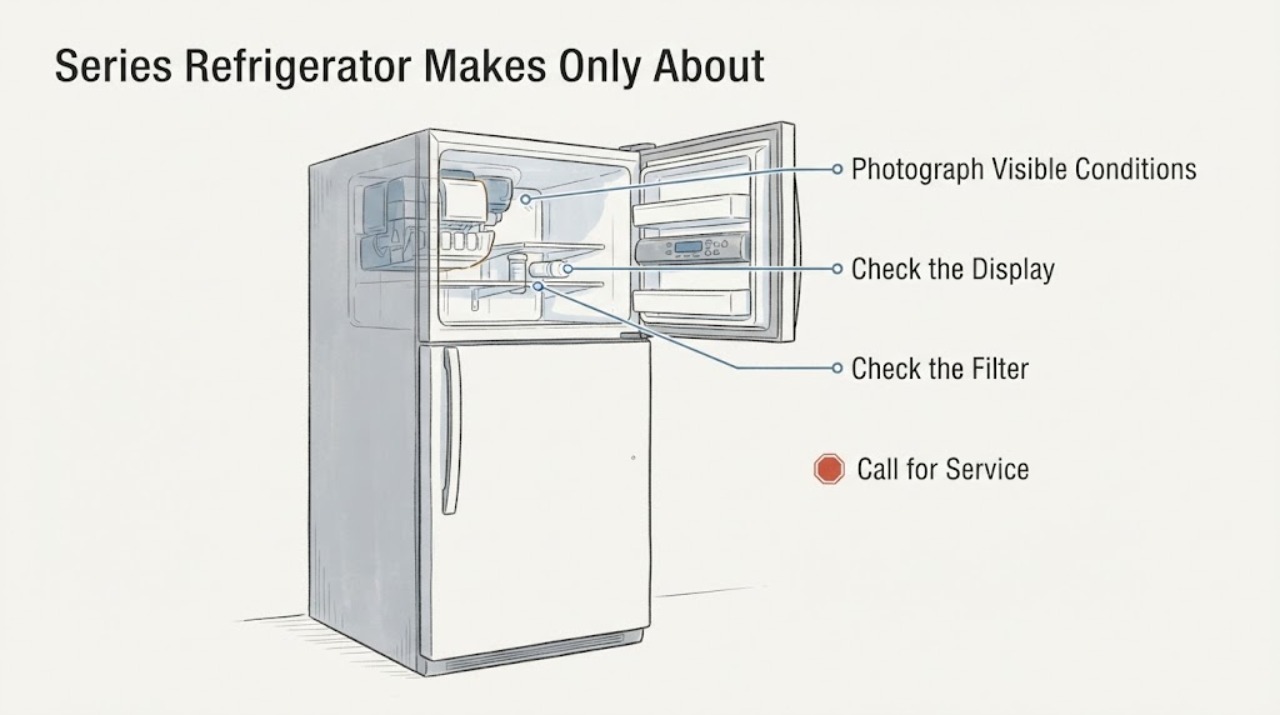
Bosch 500 Series Refrigerator Makes Only About 5 Ice Cubes a Day
About five ice cubes per day is not enough information by itself to identify a failed Bosch ice-maker part. First establish whether this Bosch 500 Series refrigerator is still within its startup period, because Bosch guidance for comparable refrigerator ice makers allows about 24 hours for the first batch and about 72 hours for full production.
-
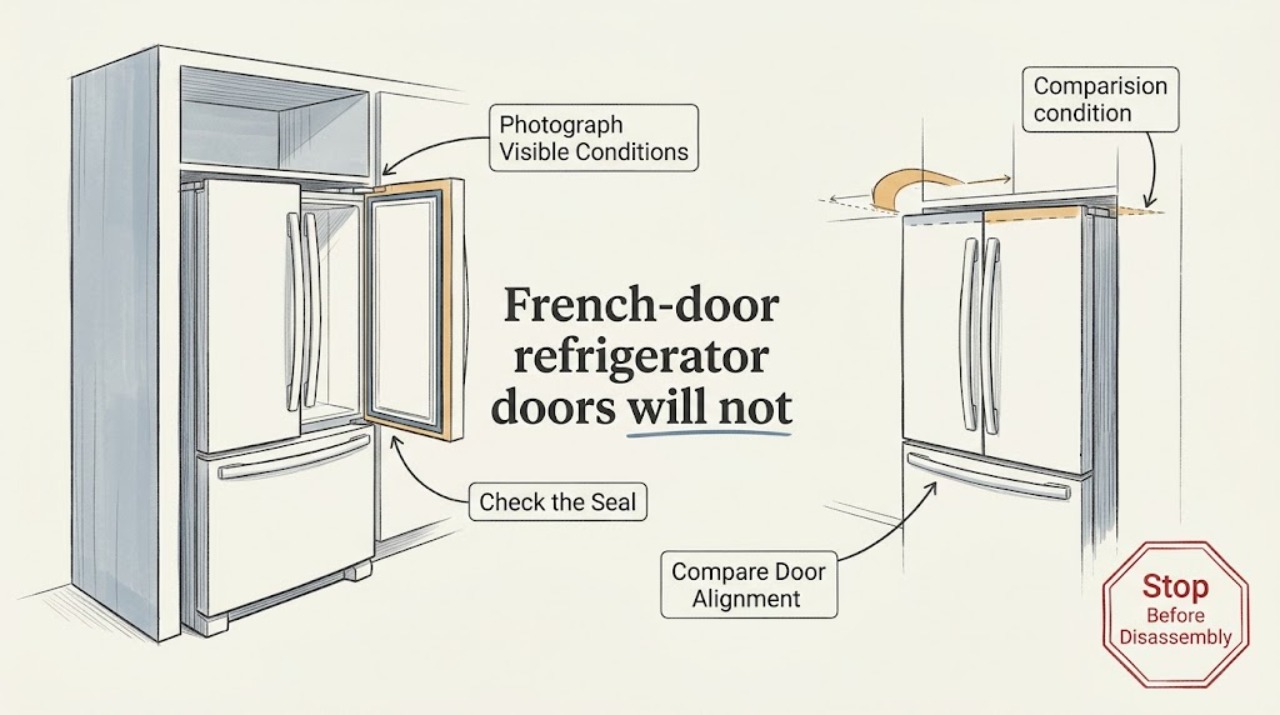
Bosch 800 French-door refrigerator doors will not open fully in a niche
If a Bosch 800 French-door refrigerator opens fully only after it is pulled out of a niche, treat the symptom as an installation-clearance question first, not as proof of a bad hinge. “800” is a series, not the complete Bosch E-Nr.; different 800 French-door models have different cabinet dimensions and door-clearance drawings.
-
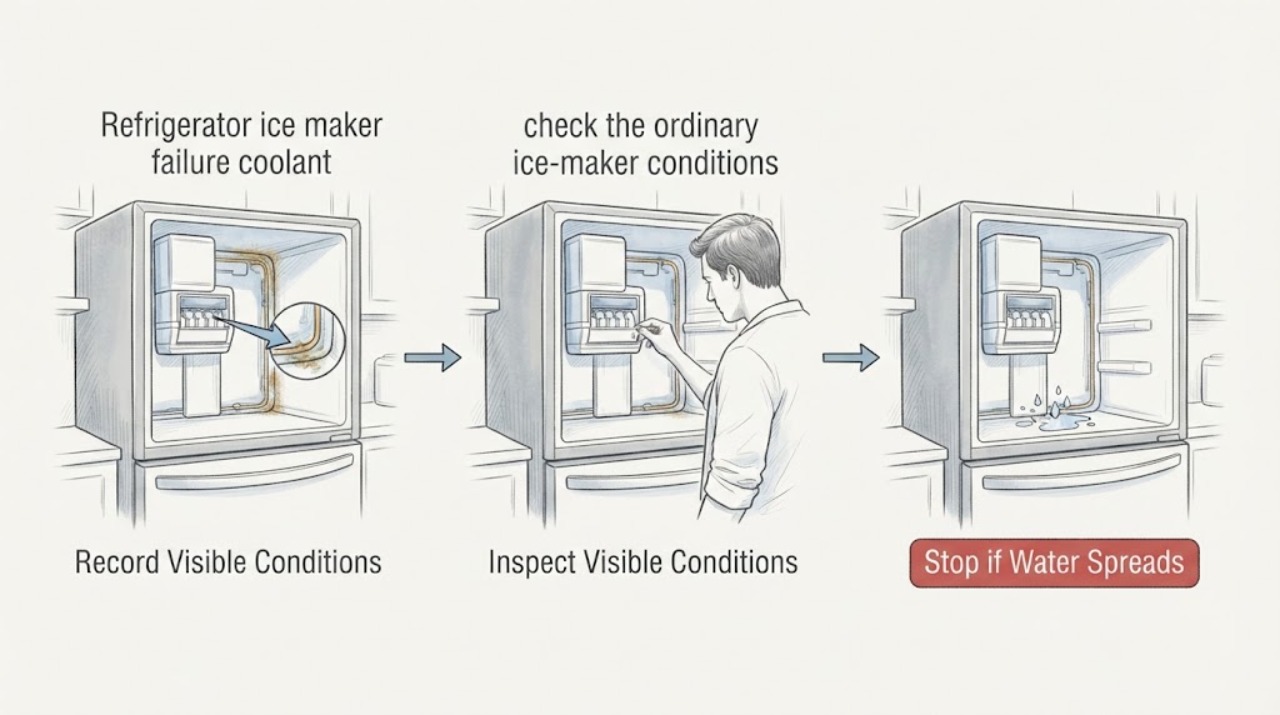
Bosch 800 Series Refrigerator Ice Maker Failure: Check Cooling Before Assuming a Refrigerant Leak
A Bosch 800 Series refrigerator with no ice does not by itself prove a coolant or refrigerant leak. First separate an ice-maker, water-supply, filter, bin, or freezer-temperature problem from evidence that the sealed cooling circuit is not maintaining temperature.
-
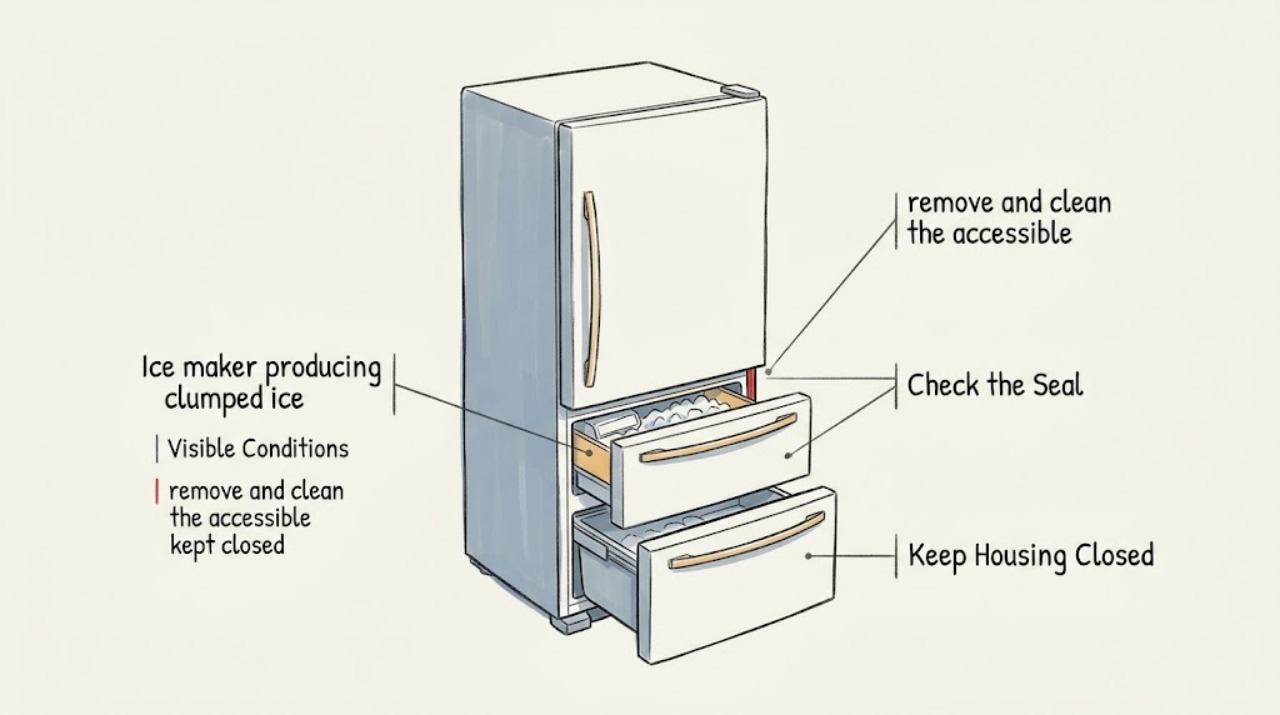
Bosch B21CL81SNS/04 ice maker producing clumped ice
For the Bosch B21CL81SNS/04, first distinguish a few cubes sticking together from a wet, solid, or repeatedly refrozen mass. Bosch's B21CL81SNS owner instructions say some cubes may stick together or be crushed, but the ice maker should be upright and level, the ice box must be correctly locked in place, and production depends on freezer temperature, room temperature, door opening, and water connection.
-
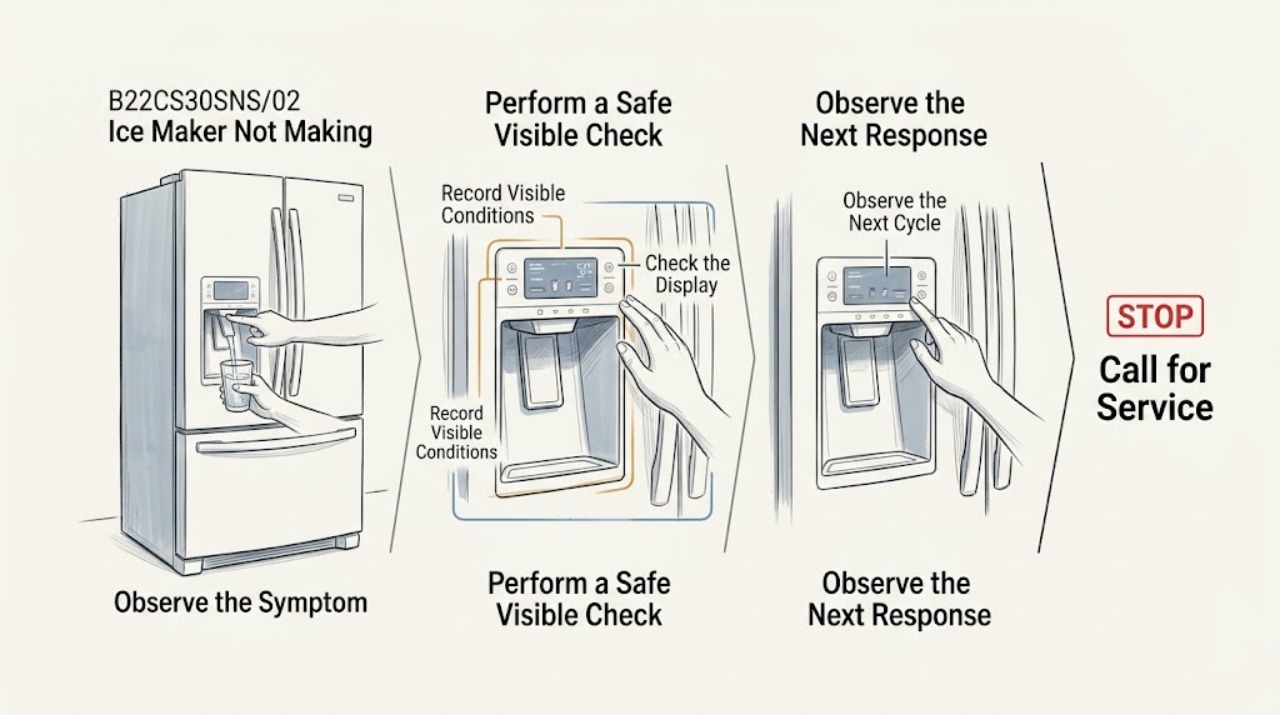
Bosch B22CS30SNS/02 Ice Maker Not Making Ice While Door Water Works
On the Bosch B22CS30SNS/02, normal water from the door dispenser does not prove that the ice maker can fill or harvest. Bosch's manual treats the water tap, ice-maker switch, ice-cube container engagement, freezer temperature, and the roughly 24-hour production period as separate checks.
-
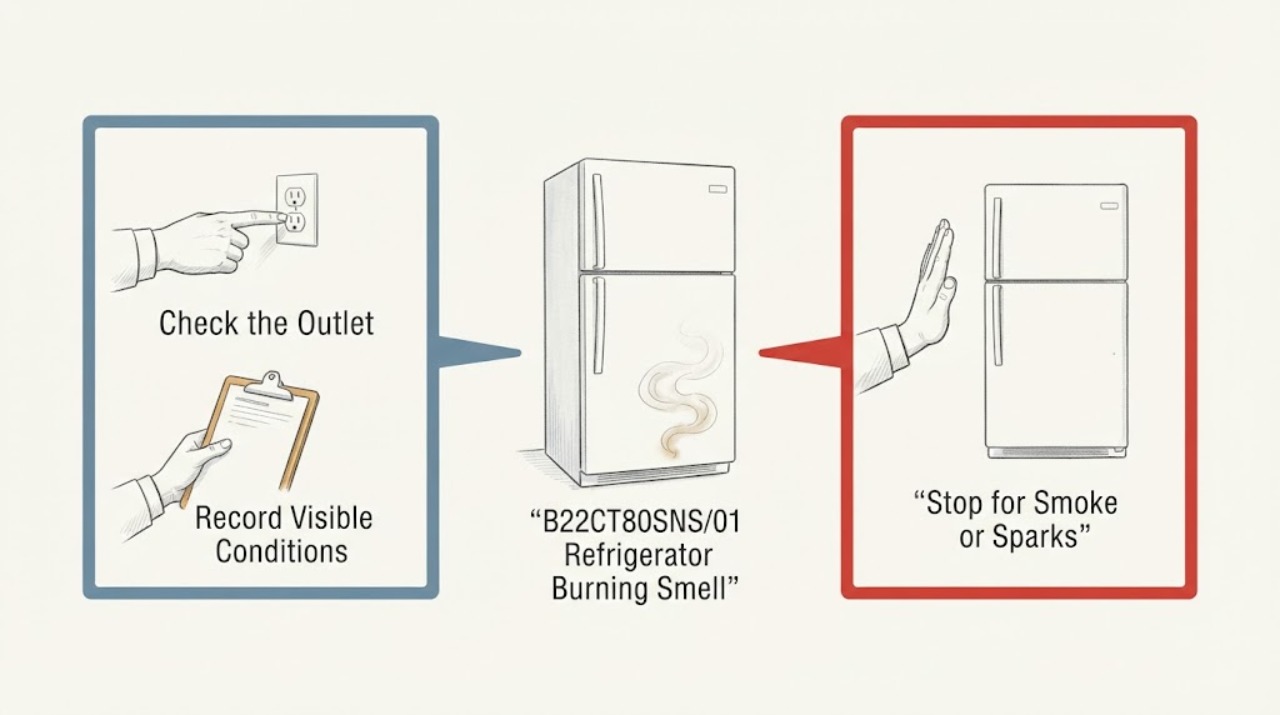
Bosch B22CT80SNS/01 Refrigerator Burning Smell: Stop Use Before Any Diagnosis
A burning smell from the Bosch B22CT80SNS/01 refrigerator is a stop-use symptom, not a diagnosis of a compressor, fan, relay, control, cord, or refrigerant part. If there is smoke, flame, sparking, a hot outlet or plug, a damaged cord, or repeated breaker tripping, move people away and contact emergency, fire, electrical, or appliance service from a safe location.
-
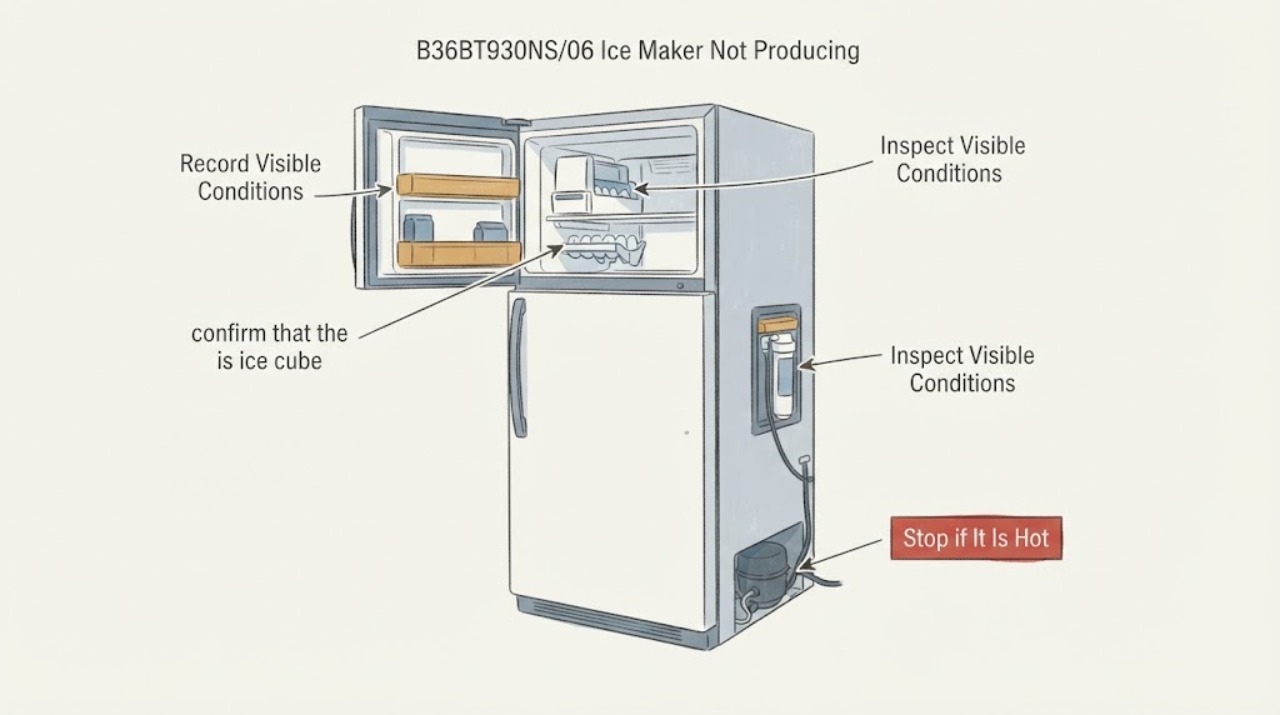
Bosch B36BT930NS/06 Ice Maker Not Producing Ice: Check the Tray, Water and Filter Alert
For Bosch B36BT930NS/06, first check the normal display setting for ice-cube production, the freezer temperature, the ice cube container's seating and whether anything is stored in the container. Bosch's exact-family manual says ice production starts only after the appliance reaches its set temperature, stops when the container is full, and can stop when the filter is blocked or needs replacement.
-
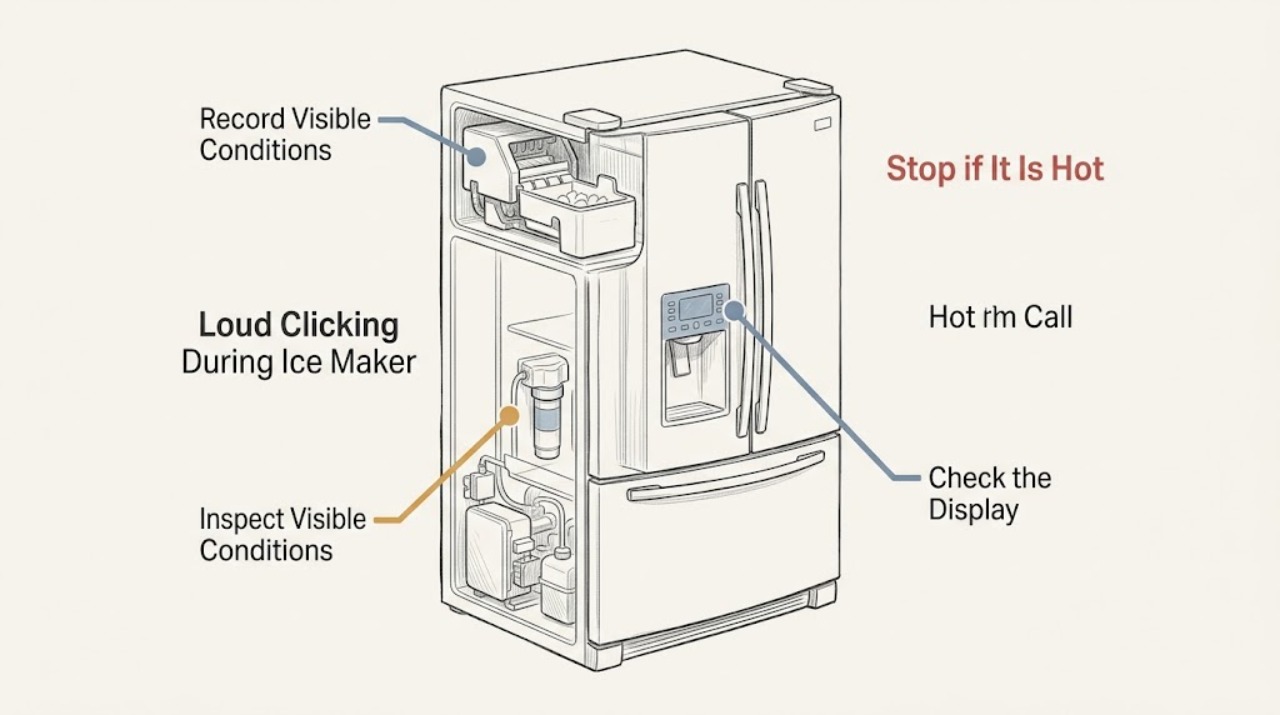
Bosch B36CD50SNS Loud Clicking During Ice Maker Operation
On the Bosch B36CD50SNS, a click during ice-maker operation is not automatically a failed part. Bosch's B36CD..
-
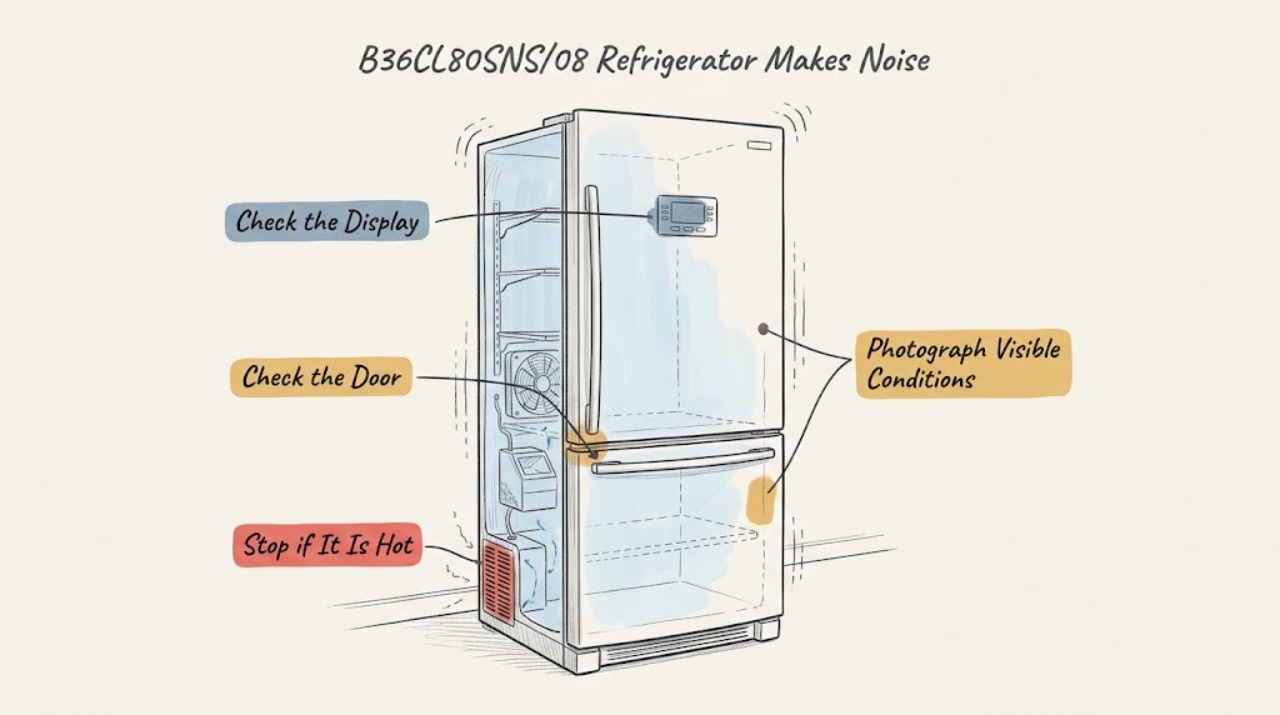
Bosch B36CL80SNS/08 Refrigerator Makes Noise: What to Check at Home
Bosch identifies humming, bubbling or gurgling, and clicking as possible normal refrigerator operating sounds, but a new or harsh noise still needs a location and pattern check. For the exact Bosch B36CL80SNS/08, record whether the sound comes from the freezer, fresh-food compartment, rear/bottom, doors, or removable shelves; whether it follows compressor/fan cooling, ice-making, or door use; and whether cooling remains normal.
-
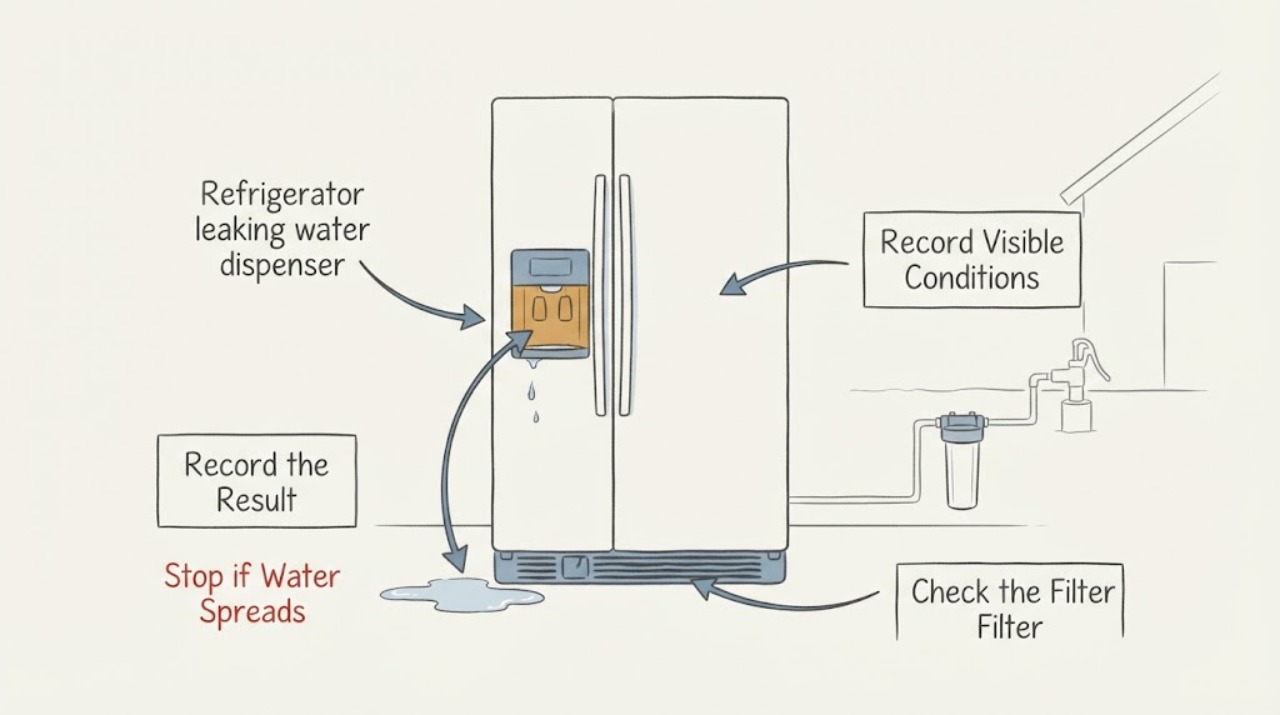
Bosch 800 Water Dispenser Leaking (B36CL80SNS)
On the Bosch B36CL80SNS, do not assume well water is the cause of a leaking dispenser. First stop dispensing, dry the area, and determine whether the water appears only immediately after dispensing or continues while idle.
-
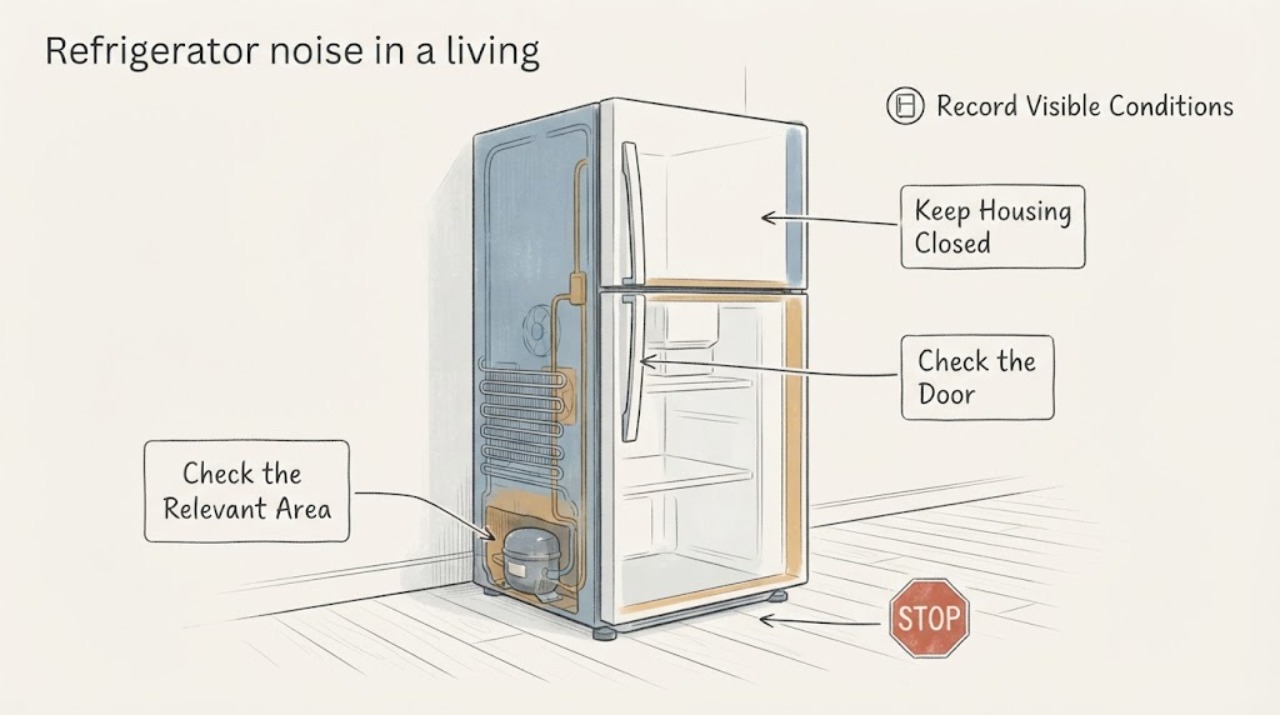
Bosch B36CL80SNS refrigerator noise in a living area
The Bosch B36CL80SNS can make operating sounds from its compressors, fans, refrigerant flow, valves, defrost, and ice dropping, and the Bosch B36CL.. manual lists humming, bubbling, buzzing, gurgling, clicking, crackling, and rumbling as possible normal sounds.
-
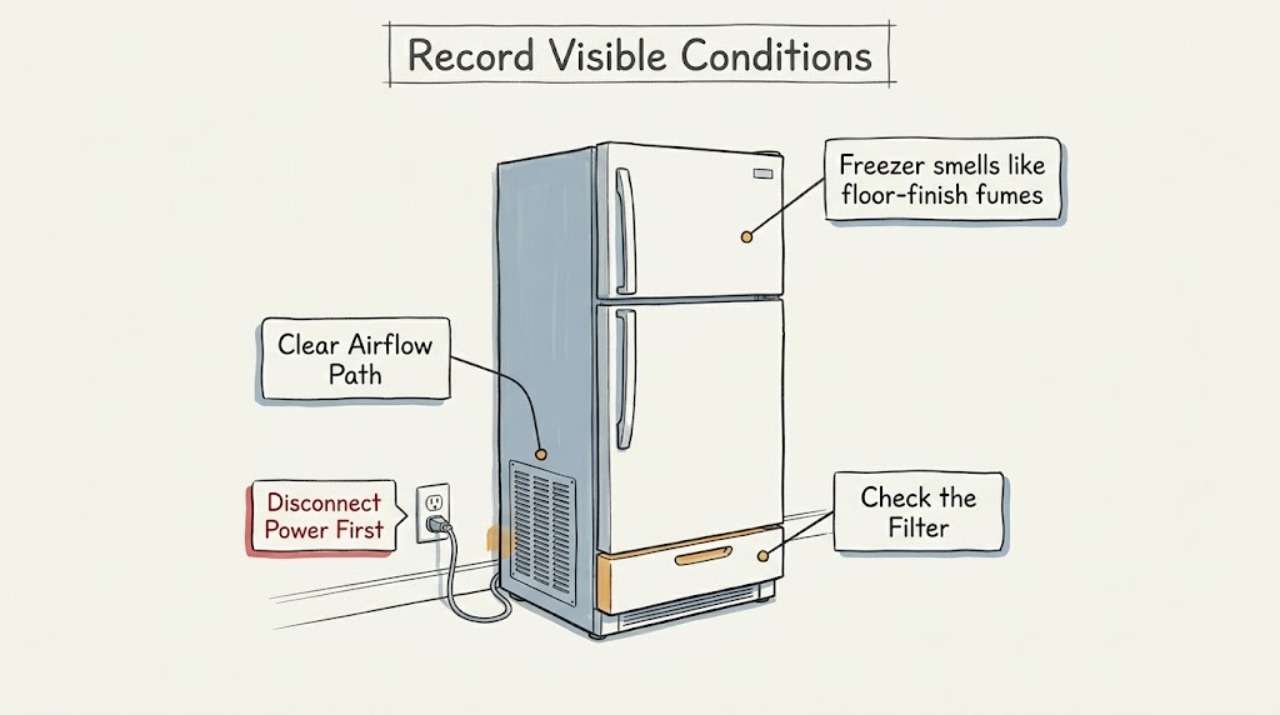
Bosch B36CT80SNS freezer smells like floor-finish fumes
A polyurethane-like smell in the freezer of a Bosch B36CT80SNS after hardwood floors were refinished should first be separated into an indoor-air source, an odor from food or packaging, and an appliance problem. Compare the timing and strength of the floor or room odor with the refrigerator and freezer, keep food closed and move any food or ice that has acquired a chemical smell, and ventilate the newly finished area with fresh air.
-
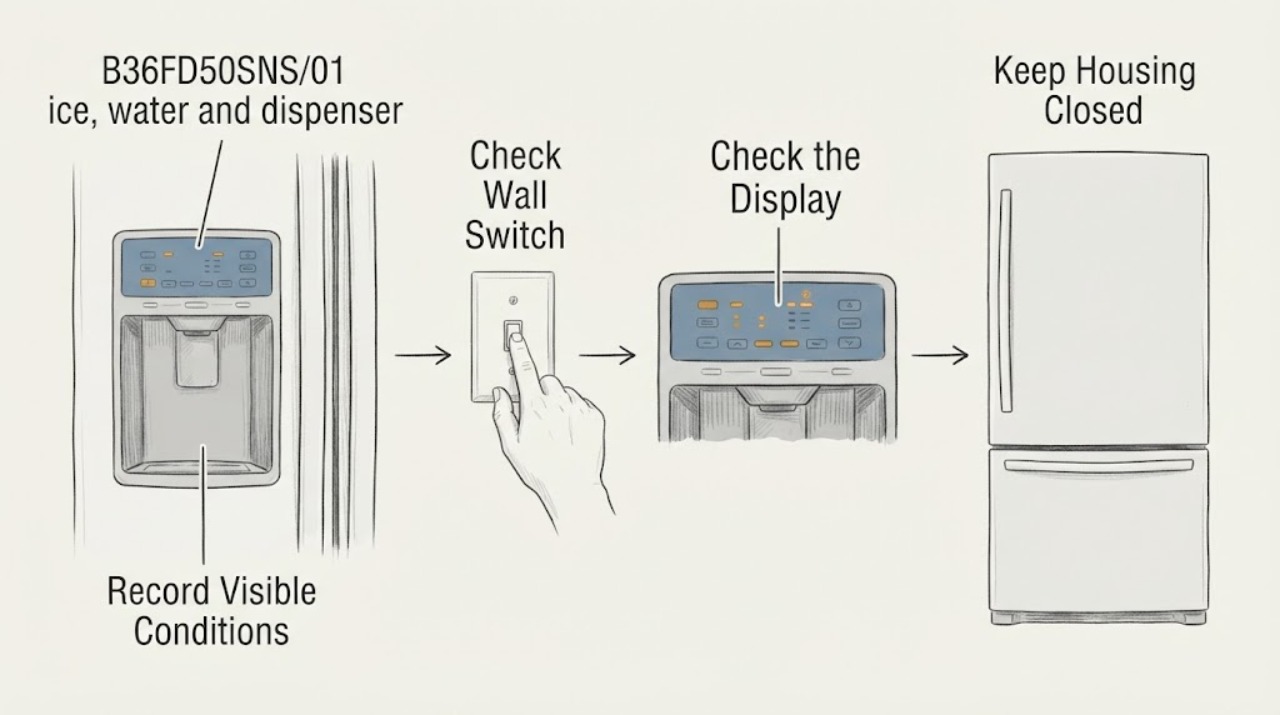
Bosch B36FD50SNS/01 ice, water and dispenser lights all stopped
For the Bosch B36FD50SNS/01, a dark ice-and-water dispenser panel together with no ice and no water is a control-area symptom, not proof that the ice maker, inlet valve, or control board has failed. First verify that the refrigerator still has power, the freezer door is closed, the dispenser is not locked, and ice production is enabled through the normal controls.
-
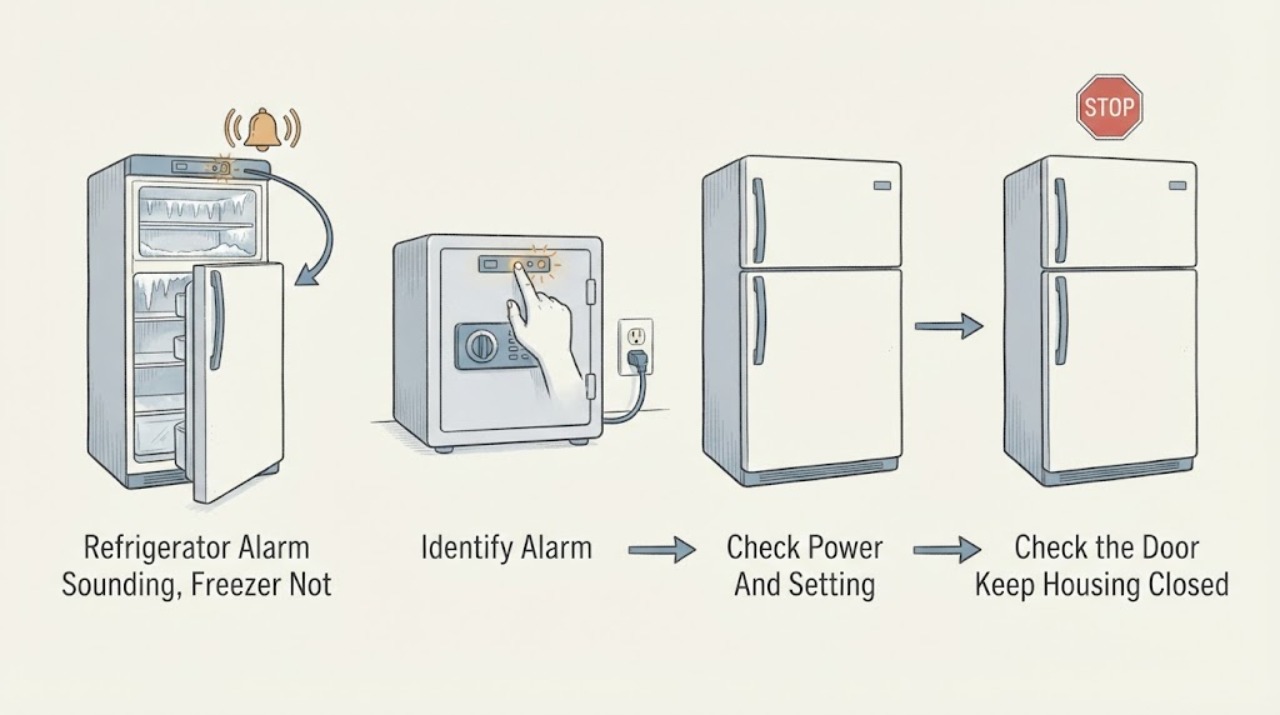
Bosch Refrigerator Alarm Sounding, Freezer Not Cooling Properly | Fix Guide
Treat the alarm as a signal to check the freezer condition, not as proof of one failed part. First identify whether the display indicates a door alarm or a temperature alarm, then confirm power, the freezer setting, complete door closure and unobstructed external ventilation.
-
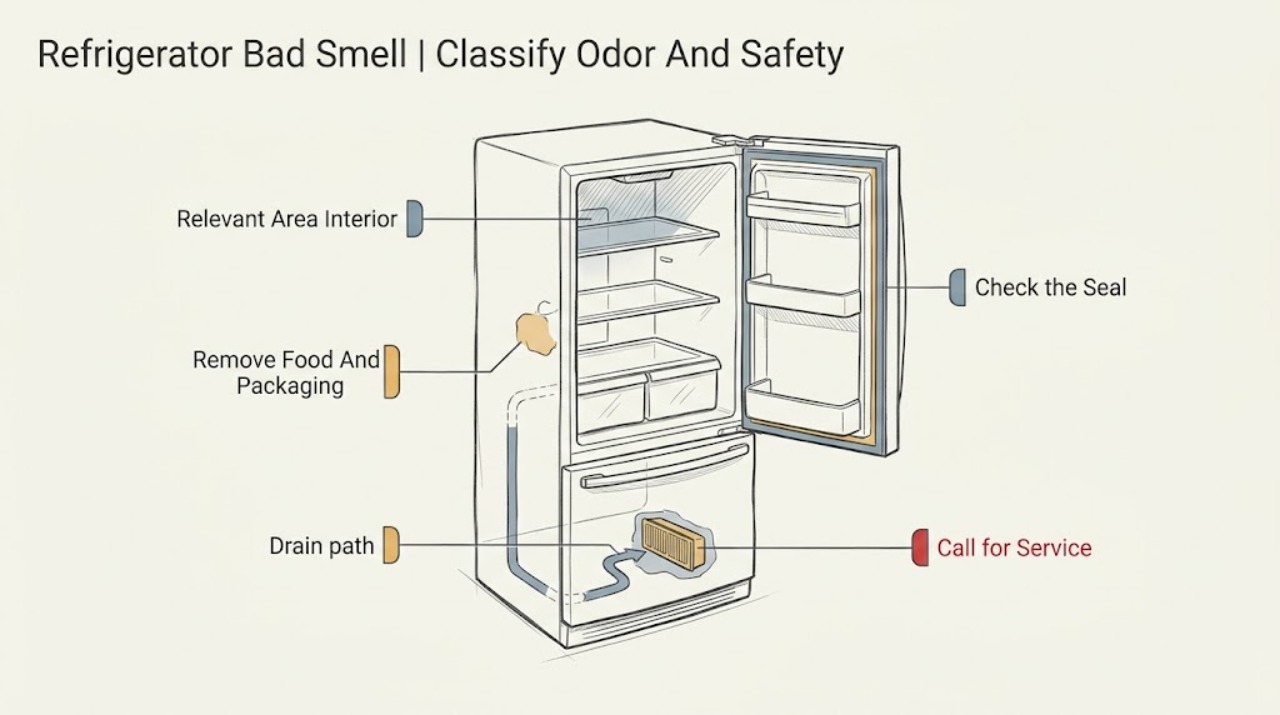
Bosch Refrigerator Bad Smell: Safe Checks and When to Call Service
First separate an ordinary food or moisture odor from a possible safety hazard. For a spoiled-food, spill, or musty smell with no smoke, heat, sparking, or cord damage, switch the Bosch refrigerator off using its normal control, remove and protect the food, clean the interior, packaging, bins, and seal with a soft cloth and mild soapy water, keep water out of the light and drain opening, and dry everything.
-
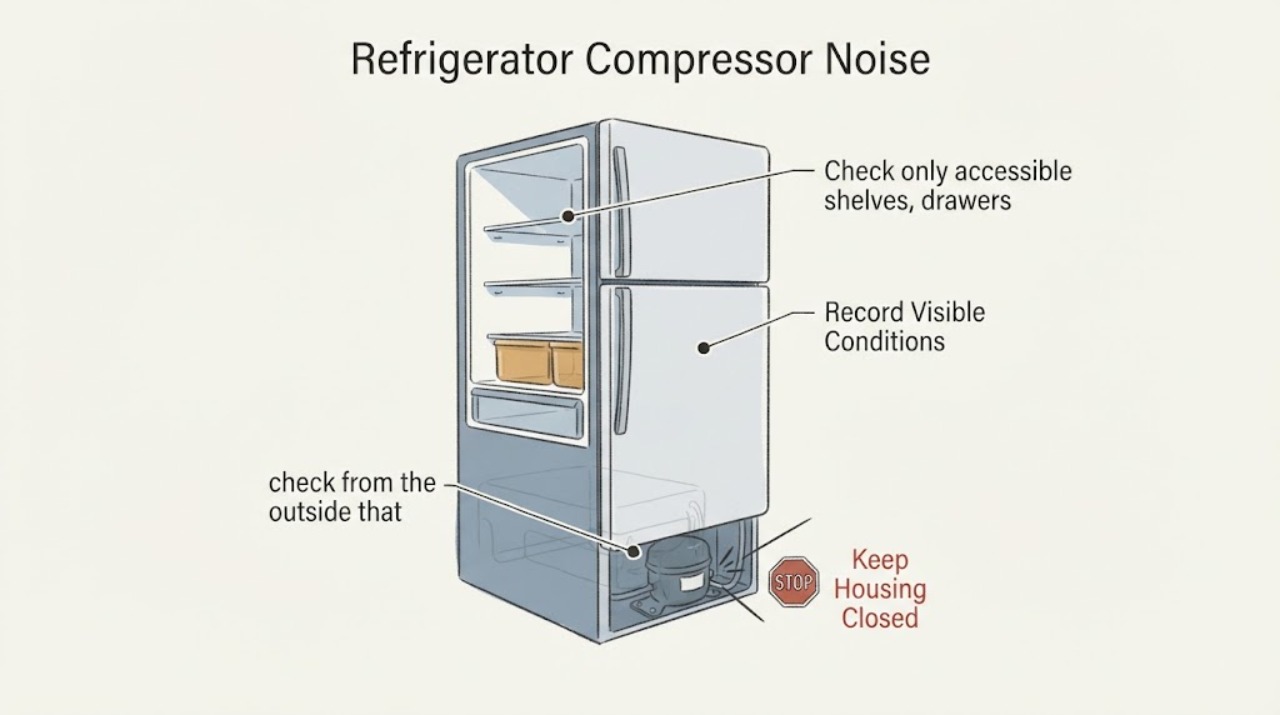
Bosch Refrigerator Compressor Noise: Separate Normal Cooling Sounds From Service Symptoms
A Bosch refrigerator can make a normal hum while the refrigerating unit runs, plus bubbling, gurgling or whirring as refrigerant moves through the tubing and clicking when a motor, switch or valve changes state. First record when the sound occurs, then check only external causes such as an unlevel cabinet, contact with nearby units, loose shelves or containers touching each other.
-
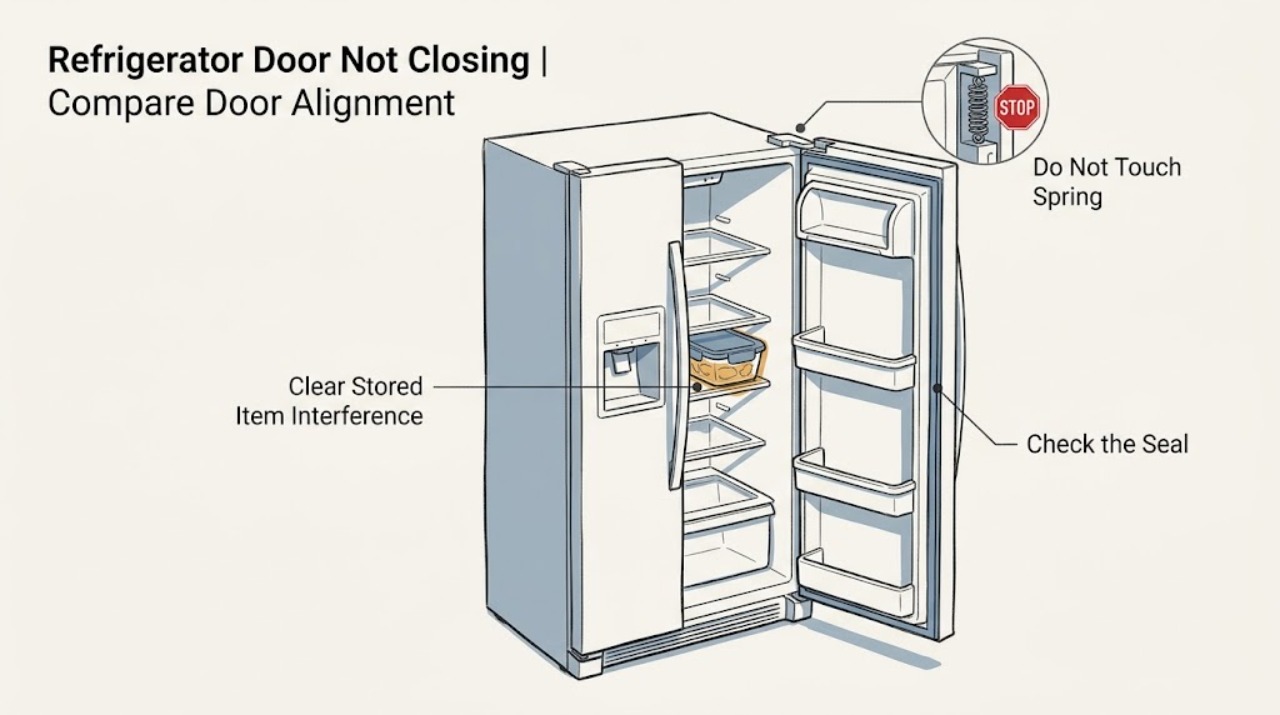
Bosch Refrigerator Door Not Closing: Safe Checks
If a Bosch refrigerator door will not close, first remove or reposition any food container, shelf, drawer, bottle, or door-bin item that projects into the closing path. On a French-door model, make sure the vertically hinged mullion rail is folded flush before closing the doors.
-
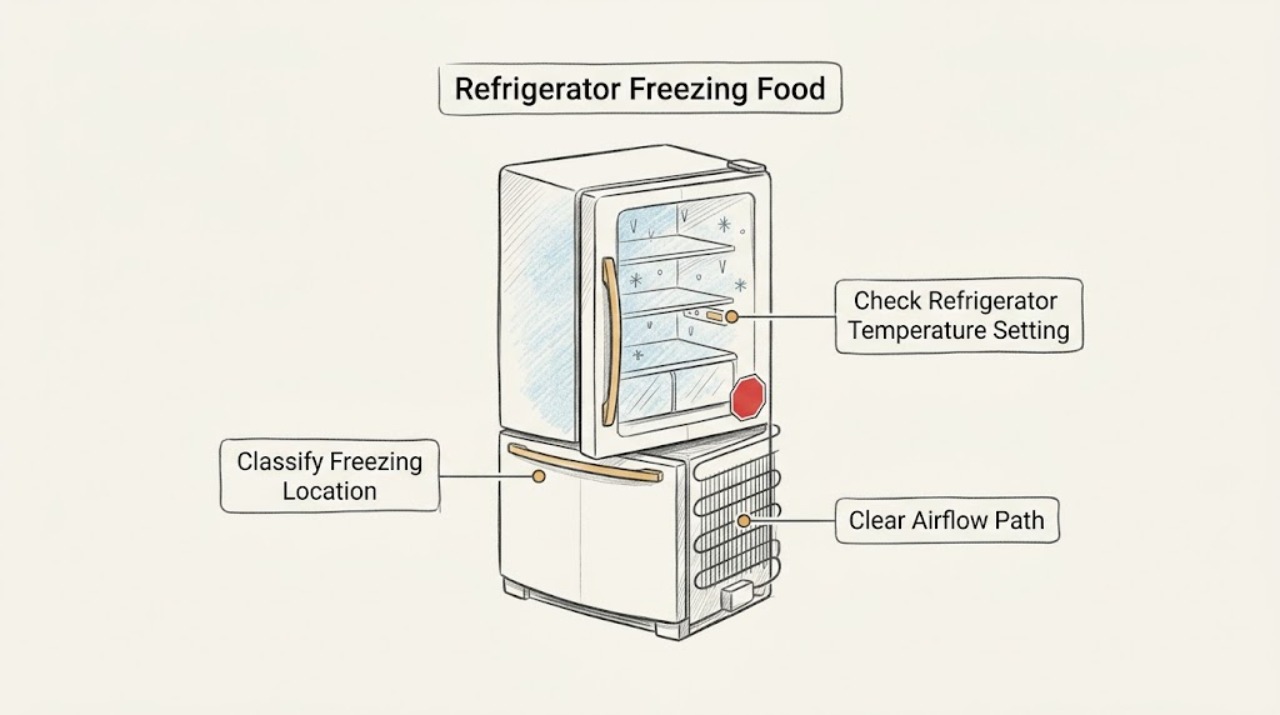
Bosch Refrigerator Freezing Food: What to Check and When to Call
If a Bosch refrigerator is freezing food, first separate a cold spot or package touching the rear wall from a whole refrigerator compartment that is below its normal setting. Check the exact model's refrigerator temperature control for an accidental high-cooling setting, keep food and containers clear of the rear wall and interior vents, and make sure the door closes fully.
-
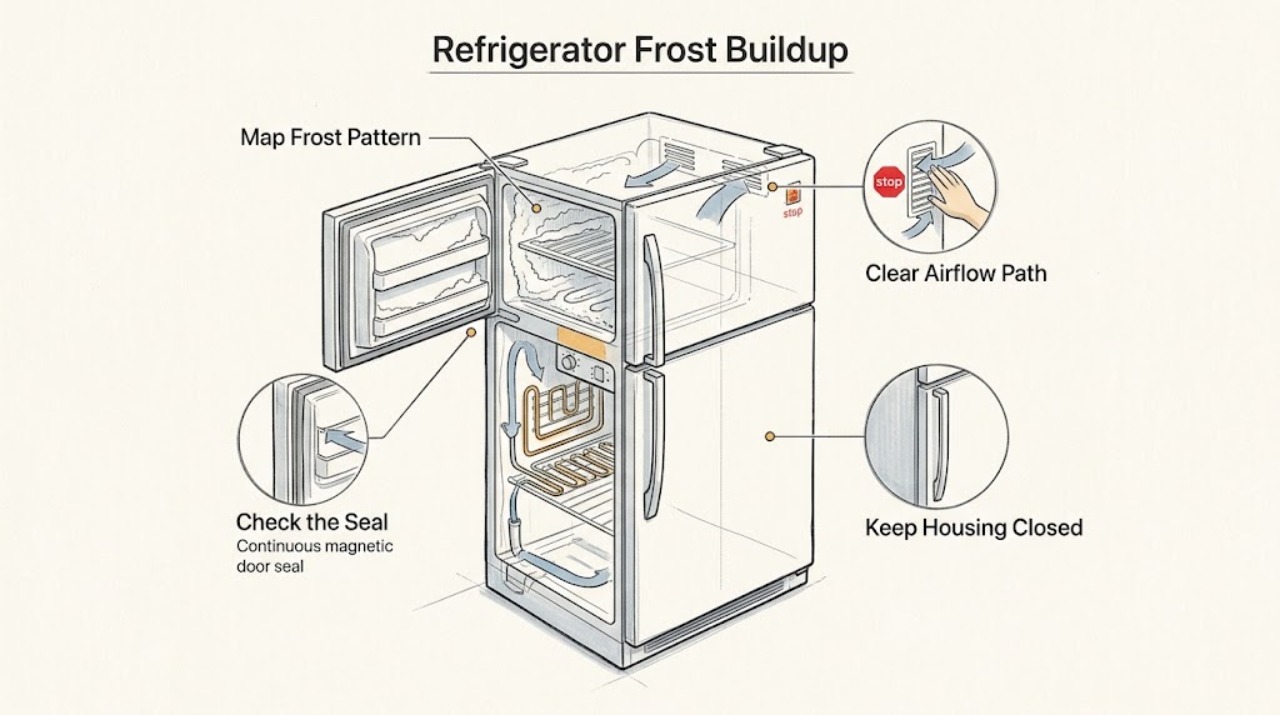
Bosch Refrigerator Frost Buildup
A light layer of frost or condensation on the rear wall of a Bosch refrigerator compartment can be part of normal cooling when that wall defrosts automatically. Frost that is thick, returns quickly, covers a freezer broadly, forms around a door edge, or appears with water at the base needs a different check.
-
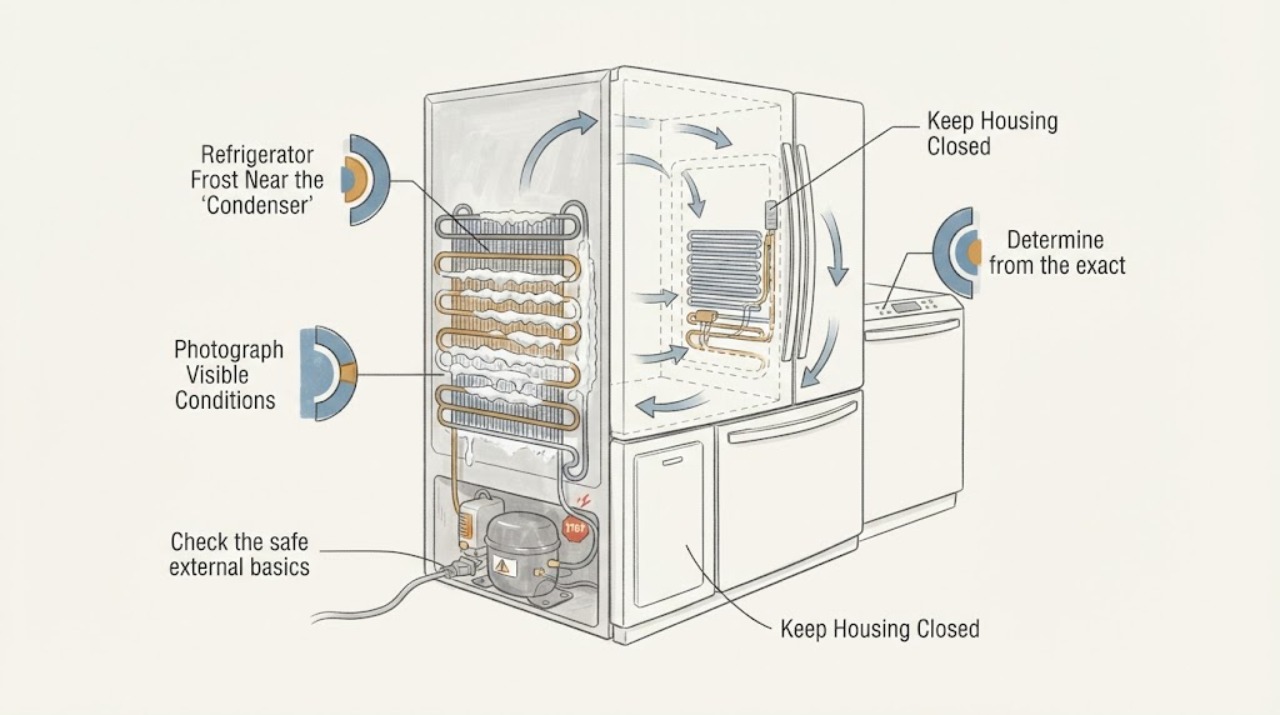
Bosch Refrigerator Frost Near the ‘Condenser’: Identify the Frost Location Before Diagnosing Defrost
Before calling this a Bosch condenser that is freezing, record exactly where the ice is: the freezer wall, refrigerator rear wall, an air vent, a drain area, or an external rear component. Bosch's consumer guidance says NoFrost appliances are designed to prevent interior ice, while a Bosch refrigerator guide says some rear-wall frost can be functional and defrost automatically.
-
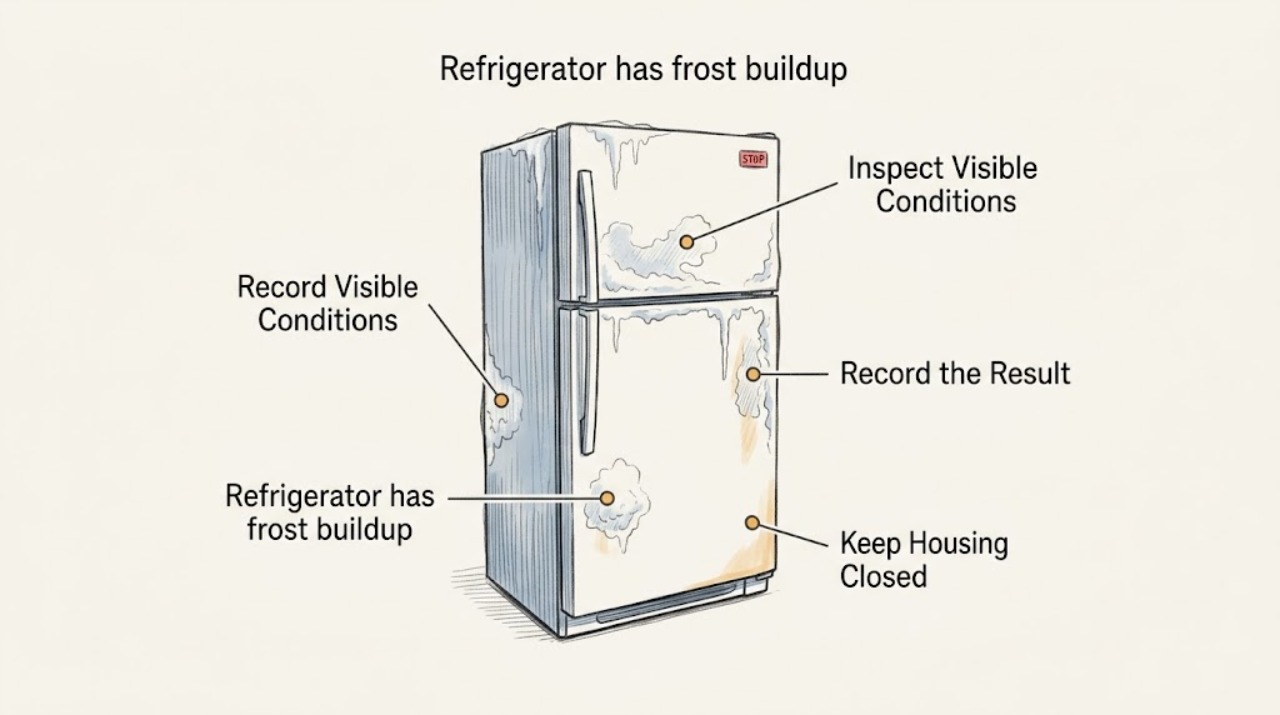
Bosch refrigerator has frost buildup: What to Check and What to Do Next
Some frost can be normal in a Bosch freezer, but a heavy or returning layer needs a cause check. First note whether frost is on the freezer walls, around a door edge, near a drawer, or in the refrigerator compartment, and whether the cabinet is still cooling normally.
-
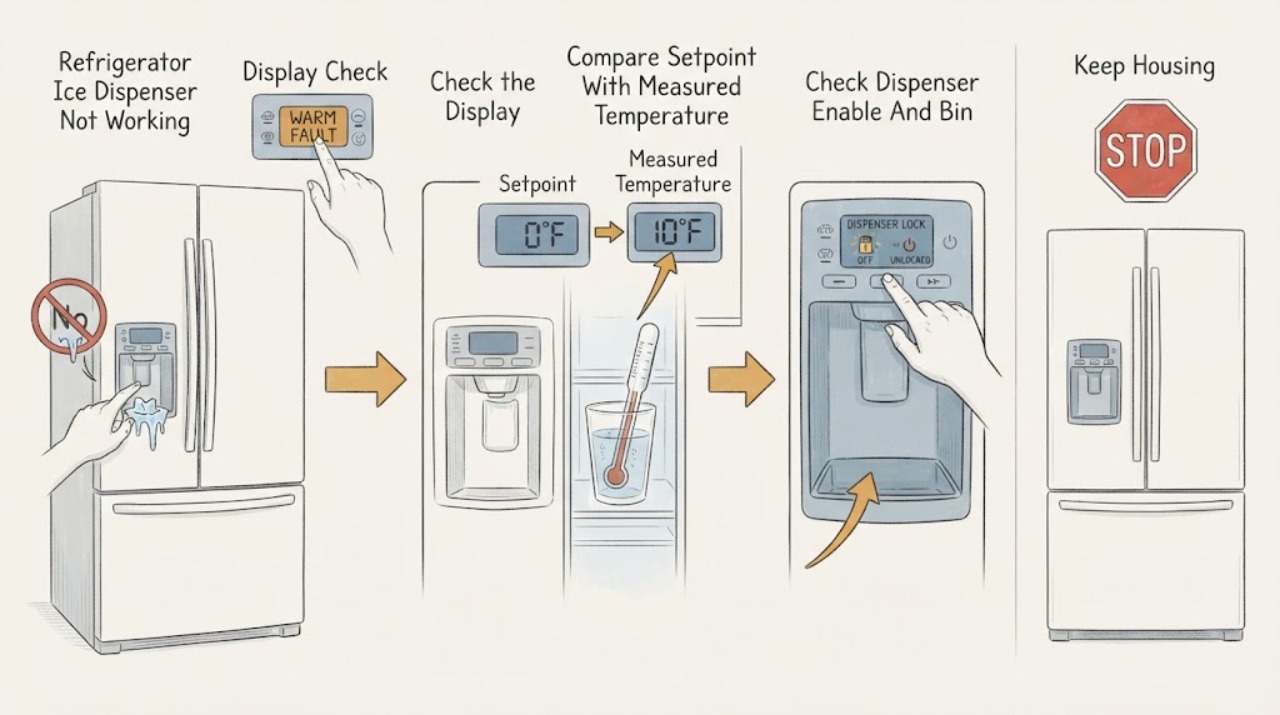
Bosch Refrigerator Ice Dispenser Not Working, Temperatures Higher Than Displayed | Fix Guide
Treat the two observations separately before naming a part. Bosch family manuals show that a refrigerator or freezer display can represent the set temperature rather than a live cabinet measurement, while Bosch guidance also says temperature can vary with door openings, load, newly stored food, ambient temperature and sunlight.
-
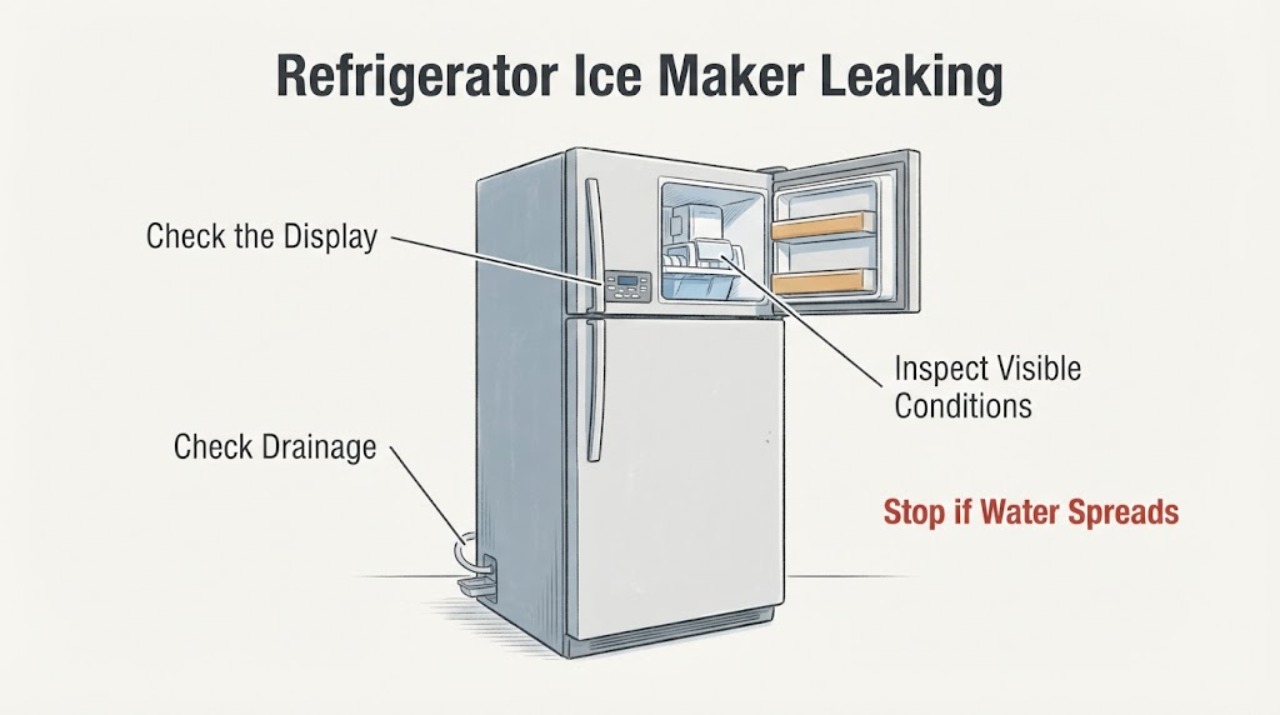
Bosch Refrigerator Ice Maker Leaking: Safe Checks Before Service
If water is coming from a Bosch refrigerator's ice-maker area, stop making ice and identify whether the water is coming from the ice compartment, an external supply connection, or a separate condensation or melt path. Bosch's refrigerator guidance lists an unsecured or damaged water connection as a leak cause and says damaged hoses require qualified service; its ice-maker guidance also says that an unlevel appliance can let water flow out of the ice maker.
-
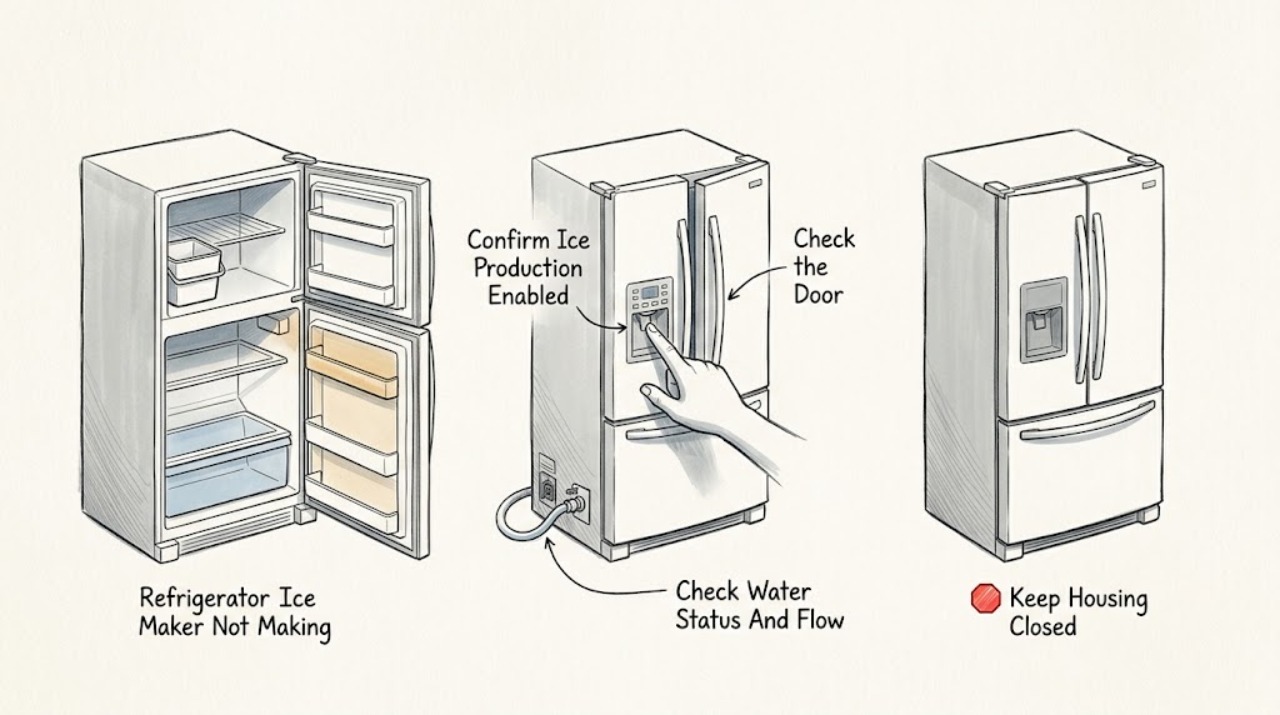
Bosch Refrigerator Ice Maker Not Making Ice: What to Check and What to Do Next
When a Bosch refrigerator ice maker is not making ice, start with the reversible checks: confirm ice production is enabled, the ice container and door are fully seated and closed, the freezer is cold enough according to the model manual, and the refrigerator has water with its shutoff open. A kinked water line, blocked or incorrectly installed filter, low supply flow, a blocked fill-level sensor or ejector, or a recent startup can stop or delay production.
-
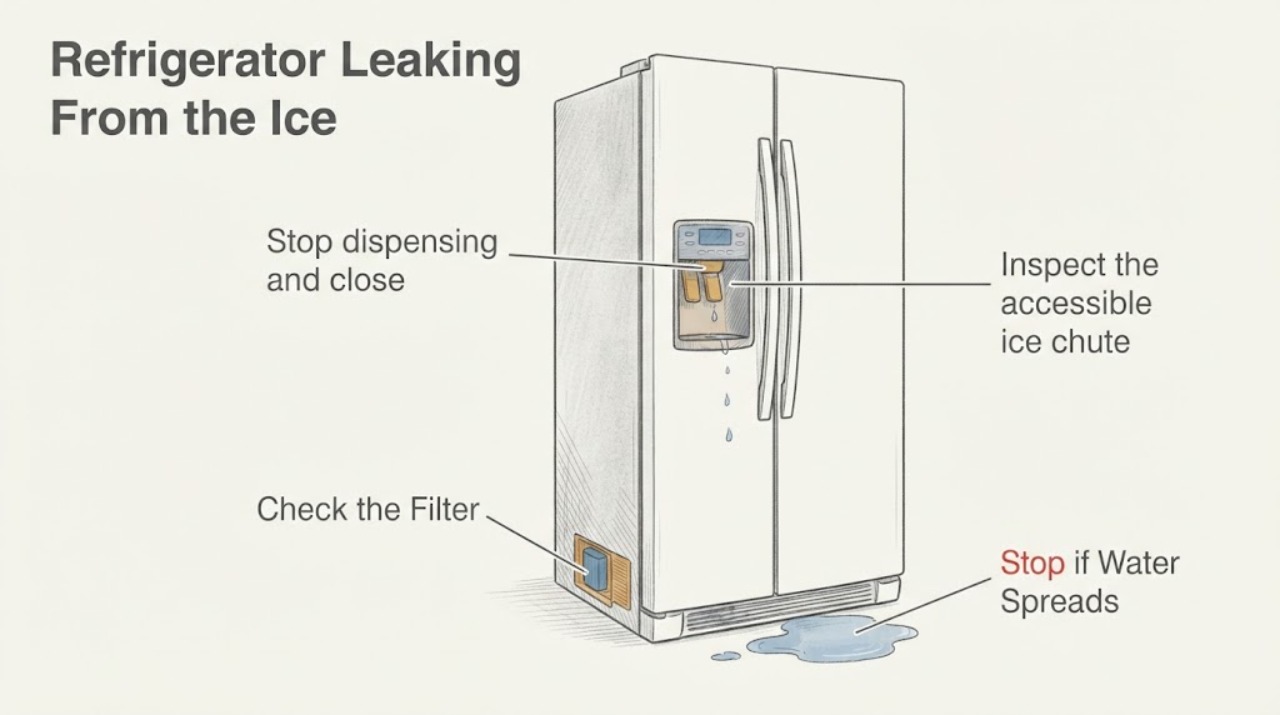
Bosch Refrigerator Leaking From the Ice or Water Dispenser
First identify whether this is one or two drops immediately after dispensing, water coming from the chute or drip tray, or a continuing leak from the hose or refrigerator cabinet. Bosch manuals for several refrigerator families list trapped air in the water system and melting ice residue in the chute as causes of dispenser dripping; they also point to blocked filters, low water pressure, kinked hoses, and loose or damaged water connections.
-
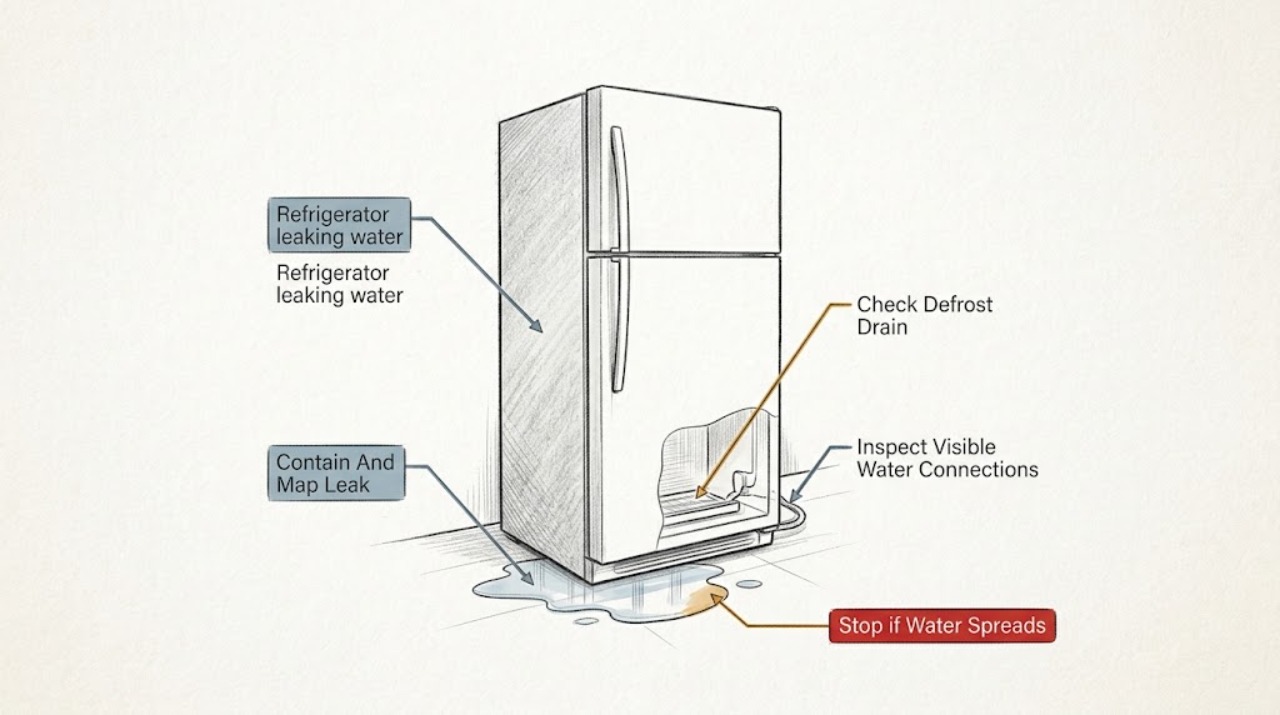
Bosch refrigerator leaking water: What to Check and What to Do Next
First contain the leak and identify where the water starts: inside the refrigerator under drawers, at the dispenser or door, or at the rear/base water connection. Bosch says water that does not drain from a refrigerator is commonly related to a contaminated defrost drain or drainage hole, and its refrigerator guidance separately calls out water-connection leaks, dispenser tubing, hoses, filters, and a kinked supply line.
-
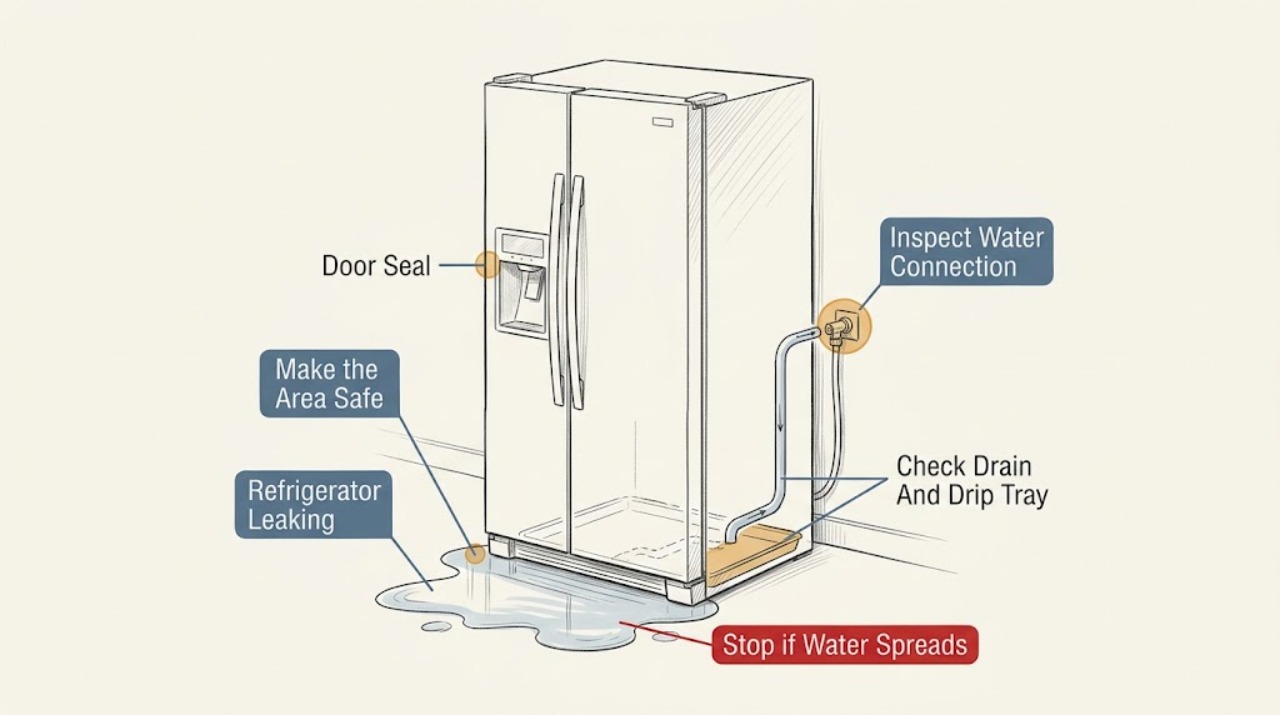
Bosch Refrigerator Leaking: Trace the Water Safely
First protect the floor and keep water away from the plug, cord, and controls. Then trace the highest wet point without pulling the refrigerator apart: a connected Bosch refrigerator can leak from a loose or damaged water hose/connection, an overflowing drip tray, a contaminated defrost drain, the ice or water dispenser, or condensation around a drawer or poorly closed door.
-
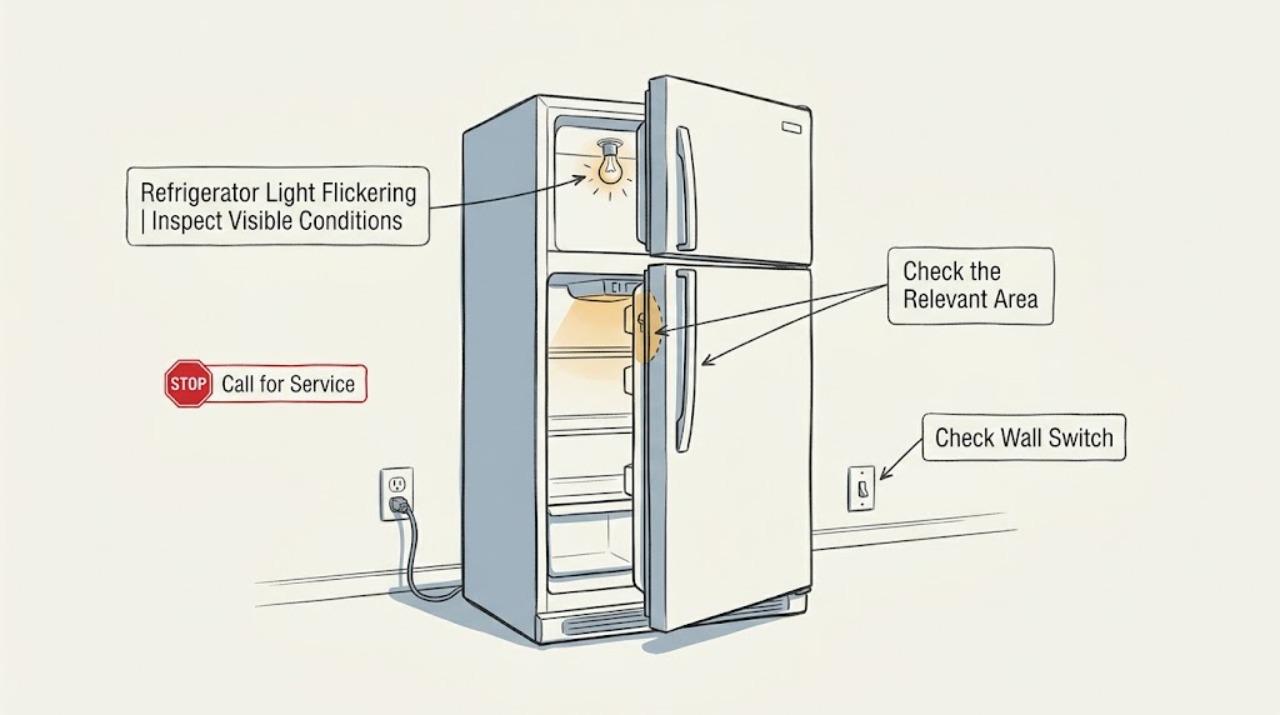
Bosch Refrigerator Light Flickering
If a Bosch refrigerator light flickers, first note whether only the interior light changes or the display and other appliance functions also flicker. Then check the plug and breaker from outside, and with power disconnected inspect the accessible door light switch and light lens for sticking, food residue, moisture, heat marks, or visible damage.
-
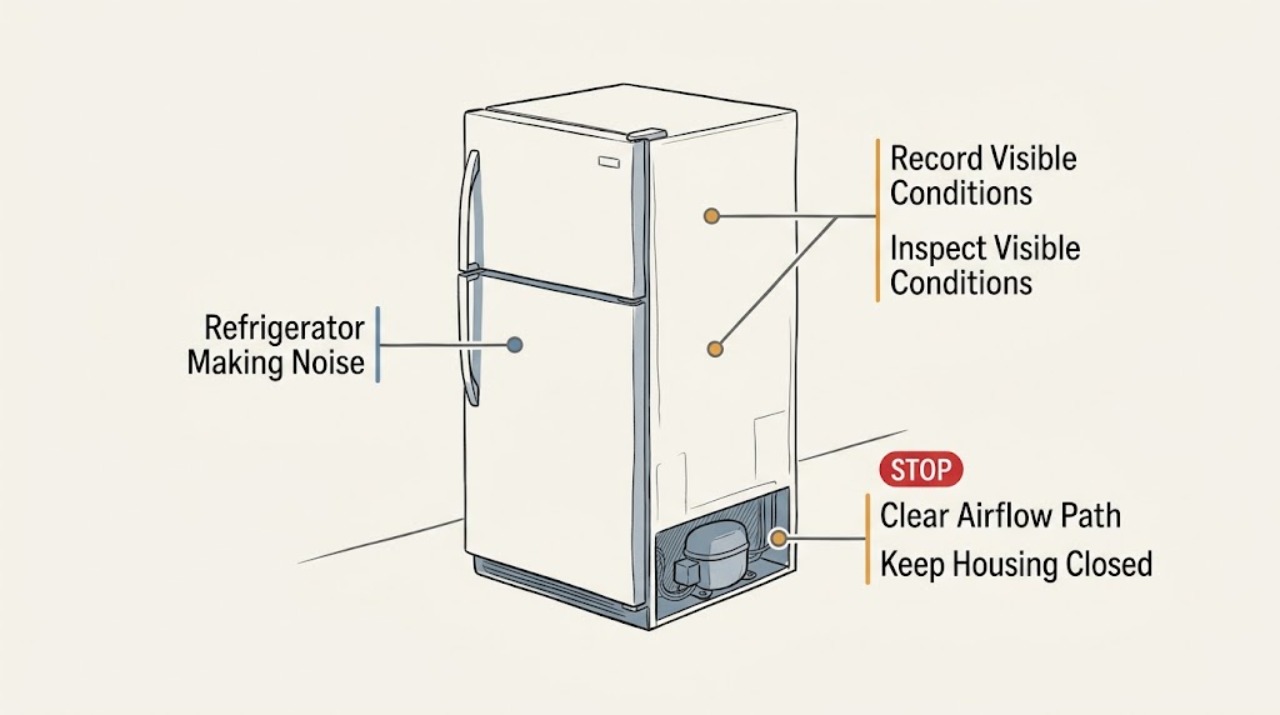
Bosch Refrigerator Making Noise
A Bosch refrigerator can normally hum while the compressor or a fan runs, gurgle or bubble as refrigerant moves through the tubes, click as a motor or switch changes state, or pop during automatic defrost. First note whether the sound is smooth and cyclical or a new scrape, grind, knock, or loud vibration.
-
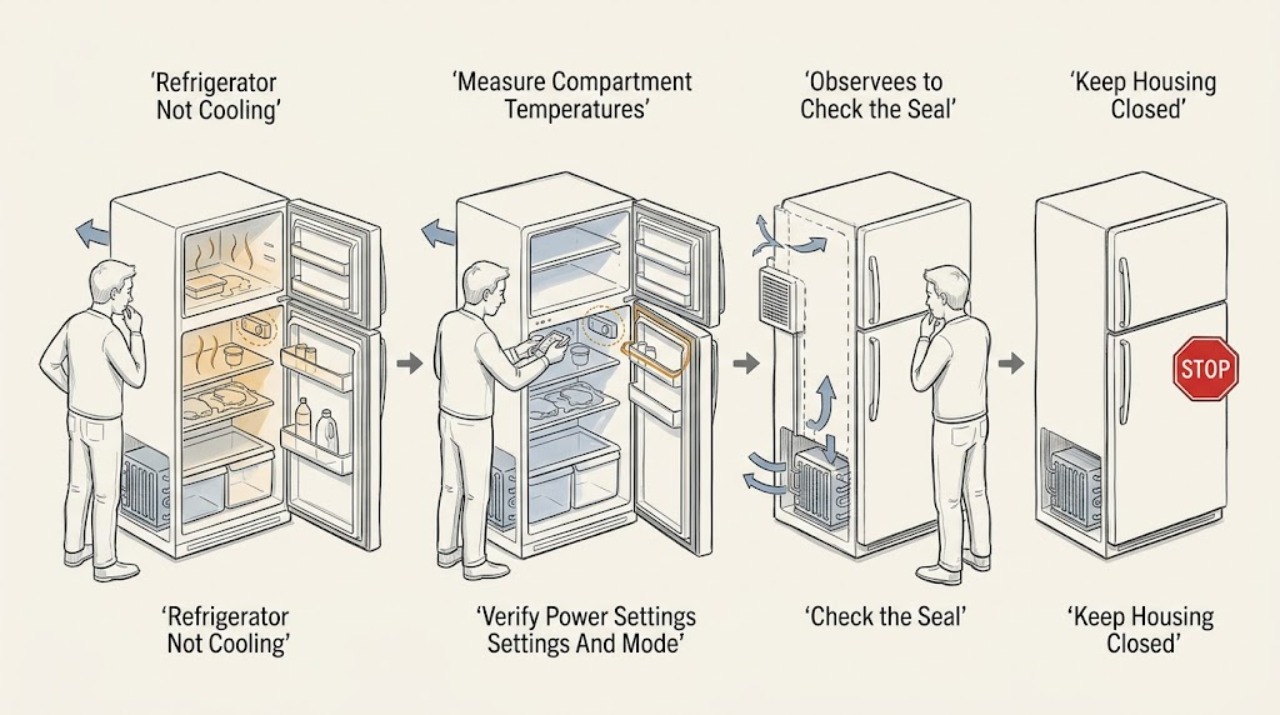
Bosch Refrigerator Not Cooling: Safe Checks and Next Steps
If a Bosch refrigerator is not cooling, first measure the actual temperature in the center of the refrigerator and freezer rather than relying only on the display. Confirm that the appliance has power, the refrigerator setting was not changed, and no showroom or special mode is active; Bosch's general guide uses 35–38°F (1.7–3.3°C) for the refrigerator, but the exact model manual controls the available settings.
-
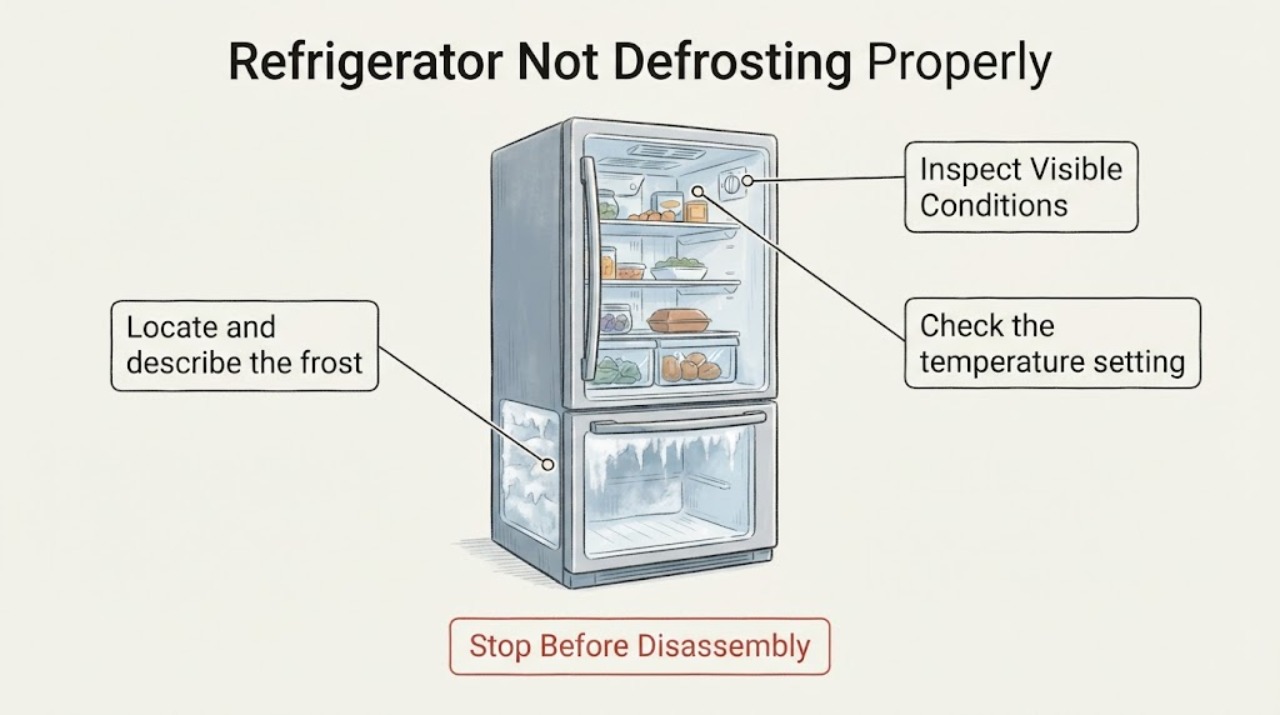
Bosch Refrigerator Not Defrosting Properly: Separate Normal Frost from Frost Buildup
First identify where the frost is and whether the Bosch refrigerator is a NoFrost model. Bosch says some freezer frost can be normal, but too much frost is a problem and the first check is whether the door closes correctly.
-
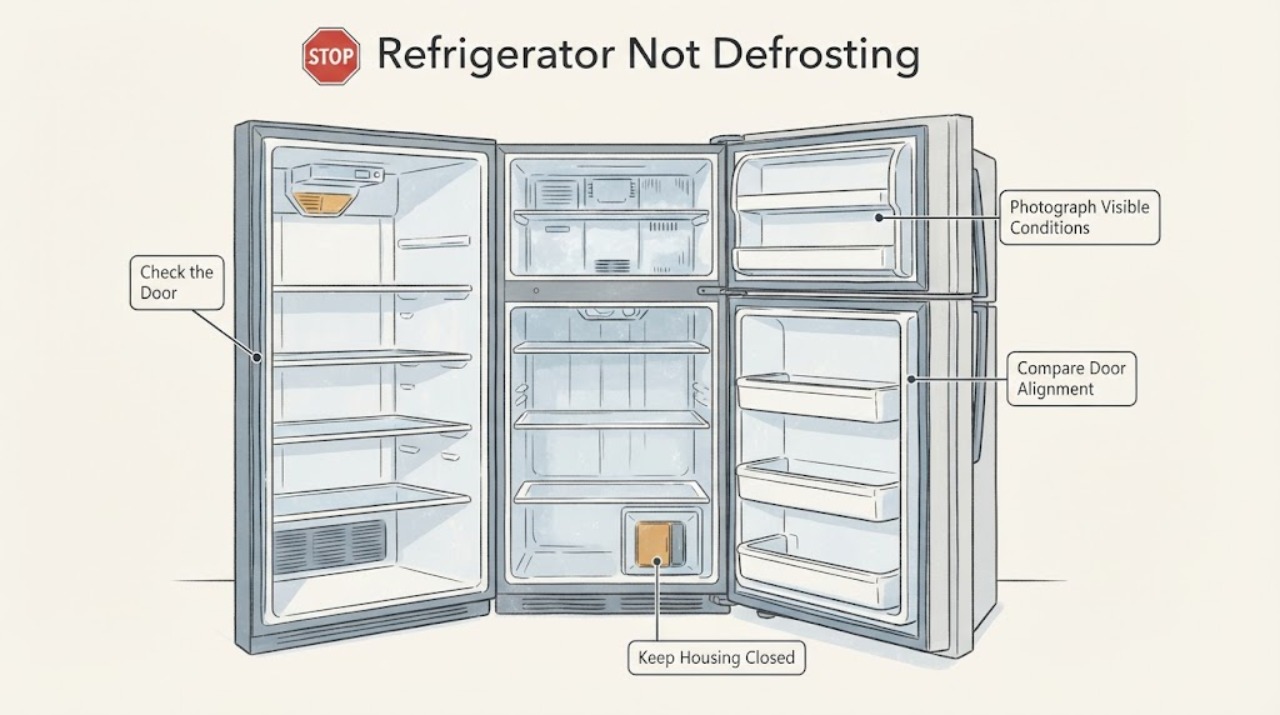
Bosch Refrigerator Not Defrosting: Identify Normal Frost Before Service
First locate the frost. A light film or droplets on the refrigerator compartment rear wall can be normal on Bosch designs that defrost that wall automatically, while a Bosch NoFrost freezer is designed to remain free of ice.
-
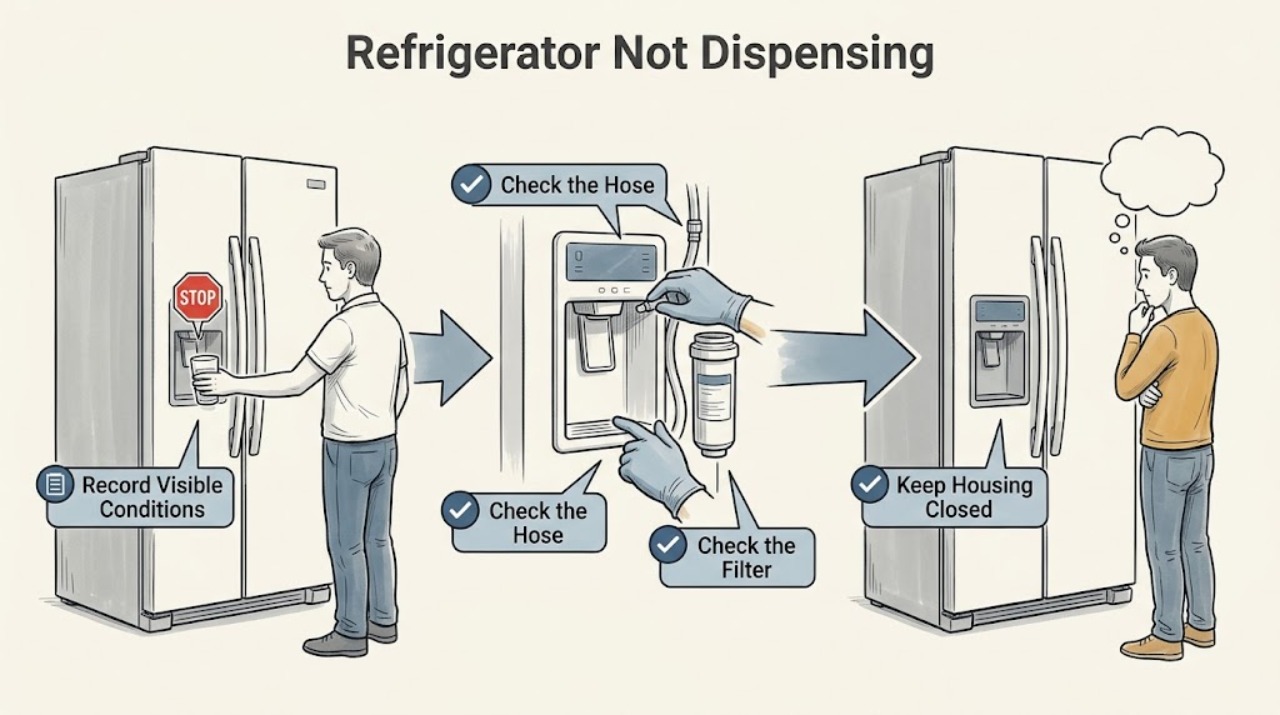
Bosch Refrigerator Not Dispensing
First separate the symptom: no water, no ice, or neither water nor ice. Check that the dispenser is not locked and the refrigerator door is fully closed; some Bosch models lock the dispenser when the door is open.
-
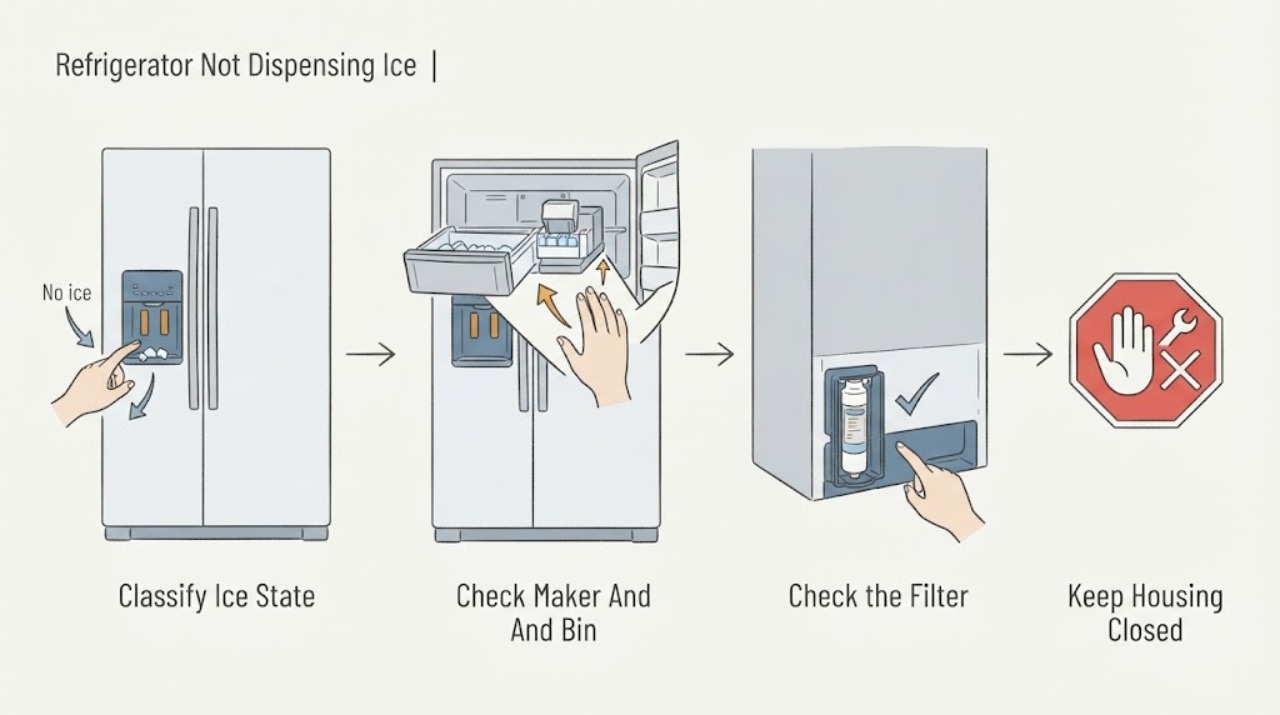
Bosch Refrigerator Not Dispensing Ice | Fix Guide
First separate an empty or non-producing ice maker from a dispenser that has ice but cannot deliver it. Bosch guidance supports checking that the ice maker is on, the ice bin is correctly seated, the visible ice is not frozen together, and the accessible water/filter path is connected and unrestricted.
-
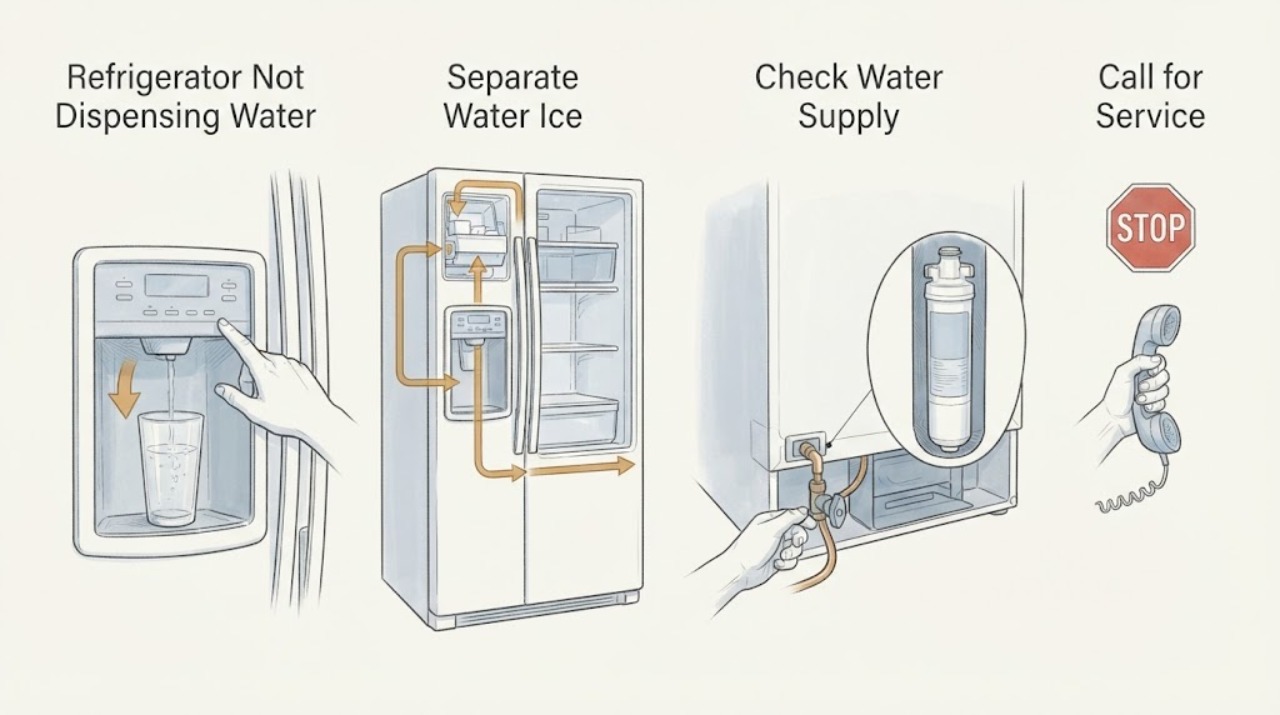
Bosch Refrigerator Not Dispensing Water or Ice | Safe Checks
Separate the symptom first: no water, no ice, or both. With the refrigerator operating normally, verify that the household water shutoff is open, the visible supply line is not kinked, the filter is correctly installed and not overdue, and the control panel is not locked or set to disable ice production.
-
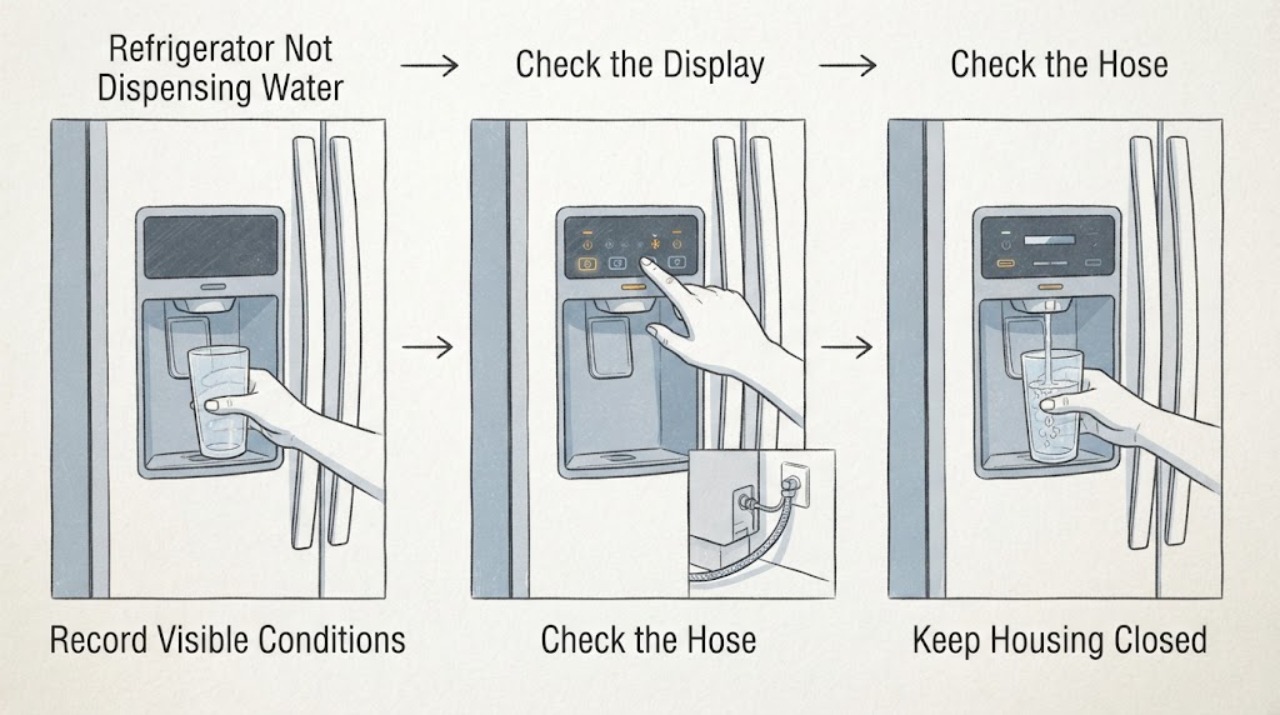
Bosch Refrigerator Not Dispensing Water: Check the Supply, Filter and Dispenser Lock
First confirm that this Bosch refrigerator is a plumbed model with a water dispenser, then use its exact E-Nr/model manual to check the dispenser lock, household water supply, hose and filter. Bosch manuals for dispenser-equipped families list an open supply valve, an unblocked water hose, sufficient pressure and a correctly fitted filter as user-level checks; some models also stop dispensing after prolonged or repeated use and require a short wait.
-
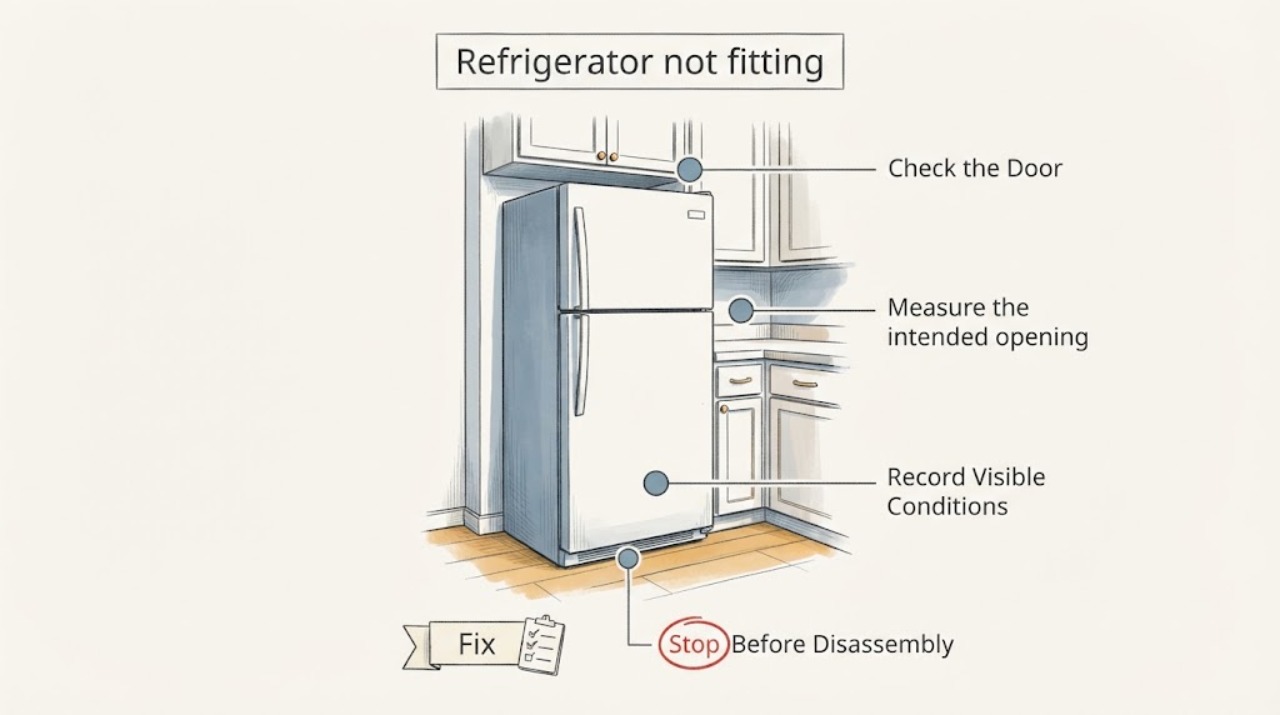
Bosch Refrigerator not fitting | Fix Guide
Treat “not fitting” as a measurement and access problem before trying to force the refrigerator into place. Bosch says to measure the opening at its narrowest width, use the shorter front/back height, measure depth, compare the exact model's overall and required cutout dimensions, allow model-specific ventilation and door-swing clearance, and measure the delivery path.
-
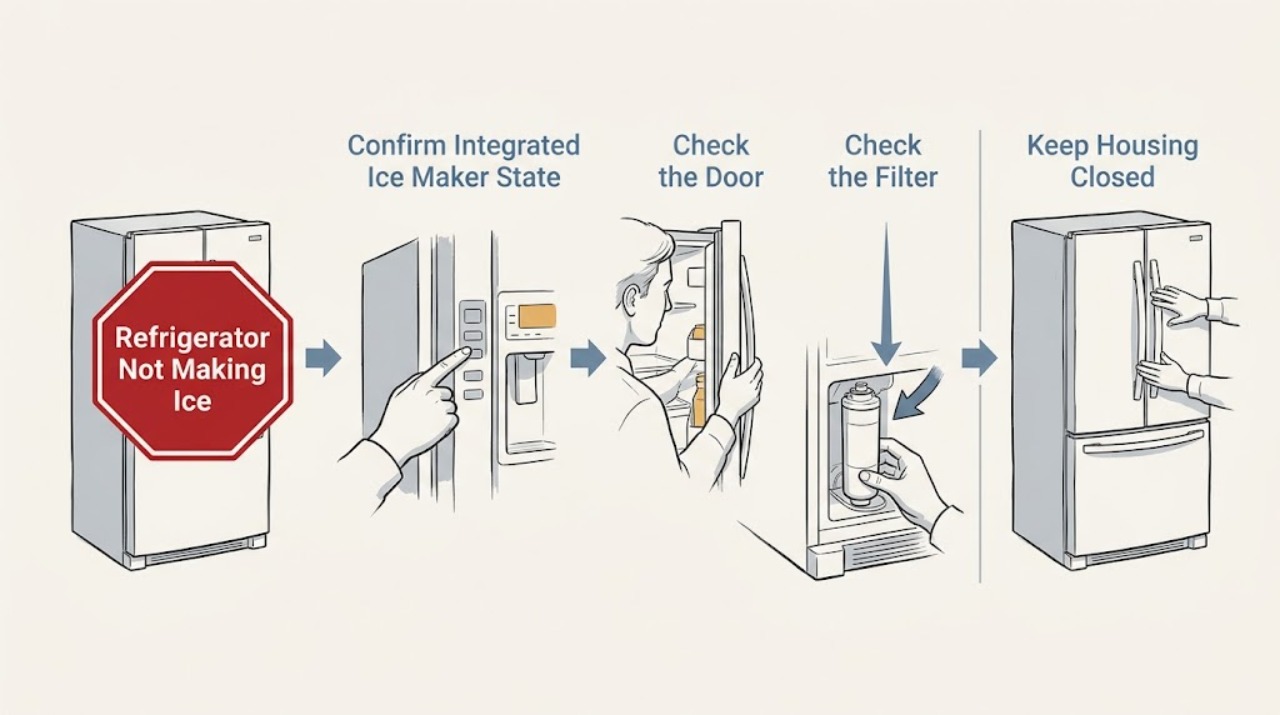
Bosch Refrigerator Not Making Ice: What to Check Safely
If a Bosch refrigerator is not making ice, first confirm that it is a refrigerator with an integrated ice maker and use the exact model manual. Check that ice production is switched on, the freezer door closes, the freezer is reaching its normal condition, the visible water shut-off is open, and the supply hose is not kinked.
-
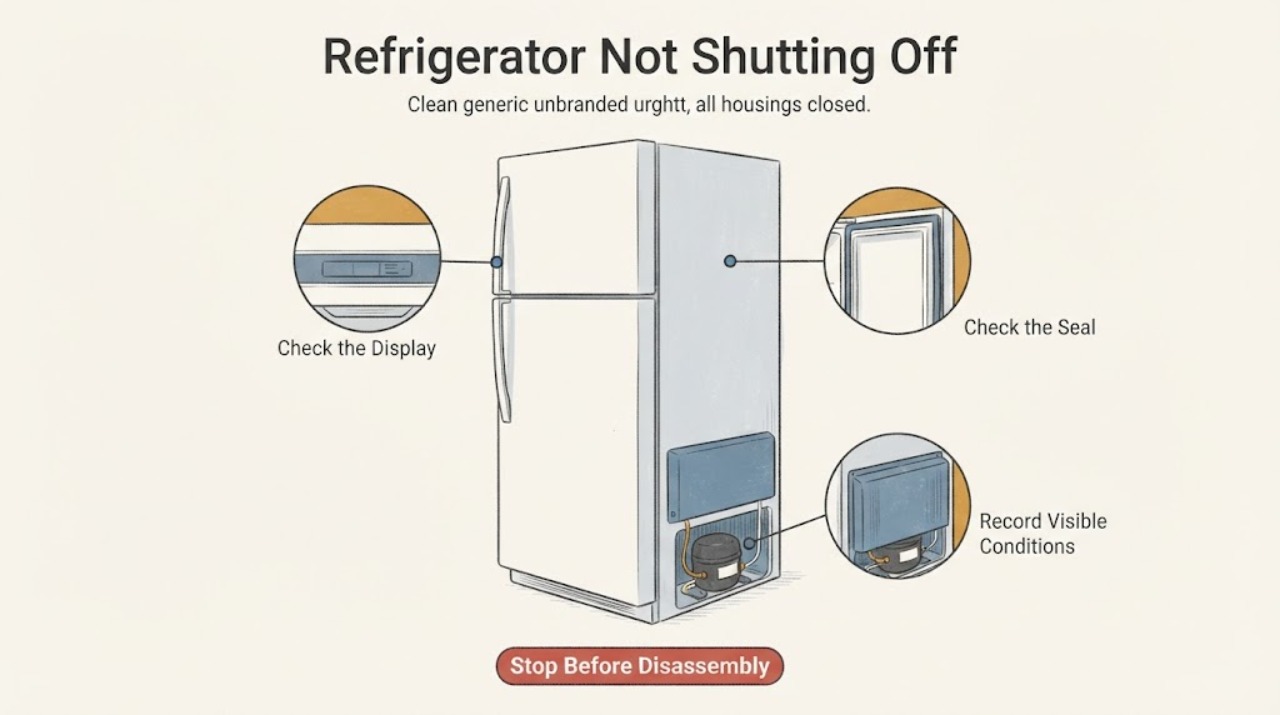
Bosch Refrigerator Not Shutting Off | Fix Guide
A Bosch refrigerator that seems not to shut off does not automatically have a failed compressor, relay, thermostat or control board. Bosch says longer compressor operation can be normal after installation or a long shutdown, after adding warm food, in a warm room, with frequent or open doors, or when a colder setting is selected.
-
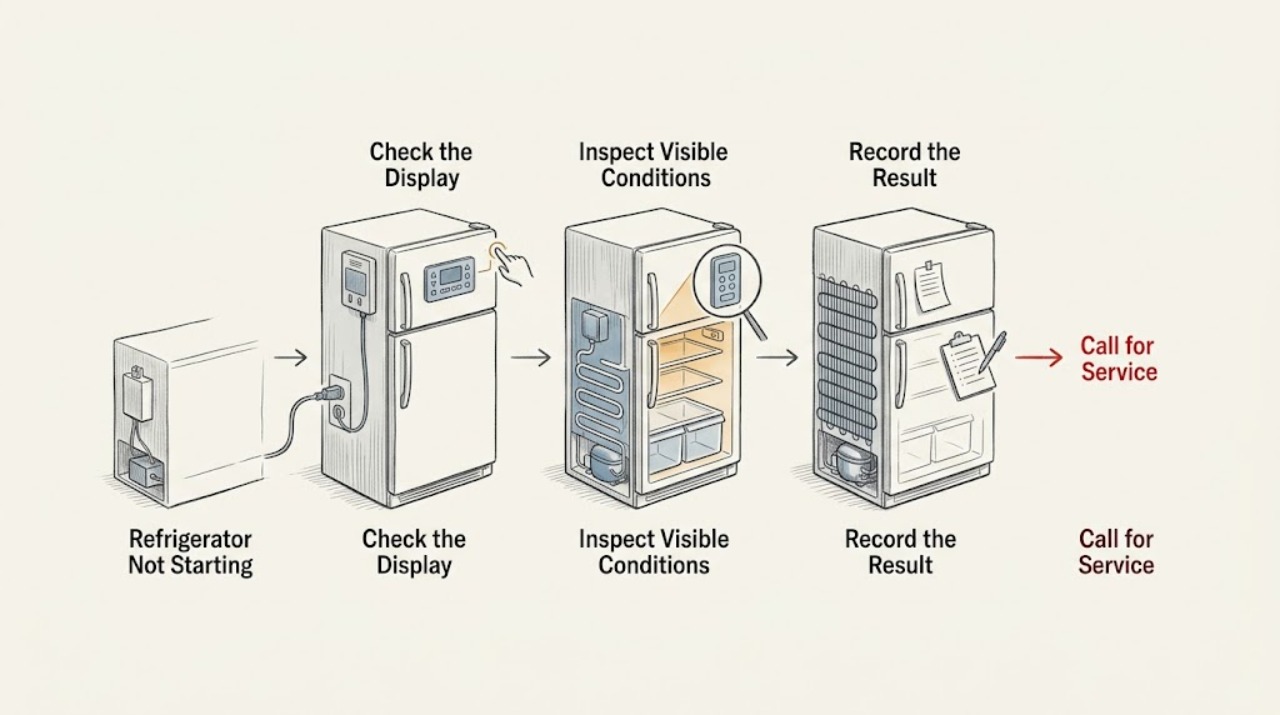
Bosch Refrigerator Not Starting
If a Bosch refrigerator is not starting, first separate a completely dead appliance from one that has lights or a display but is not cooling. For no display, no interior light, and no cooling, check the plug, outlet, breaker, and external power only if they are safe to touch.
-
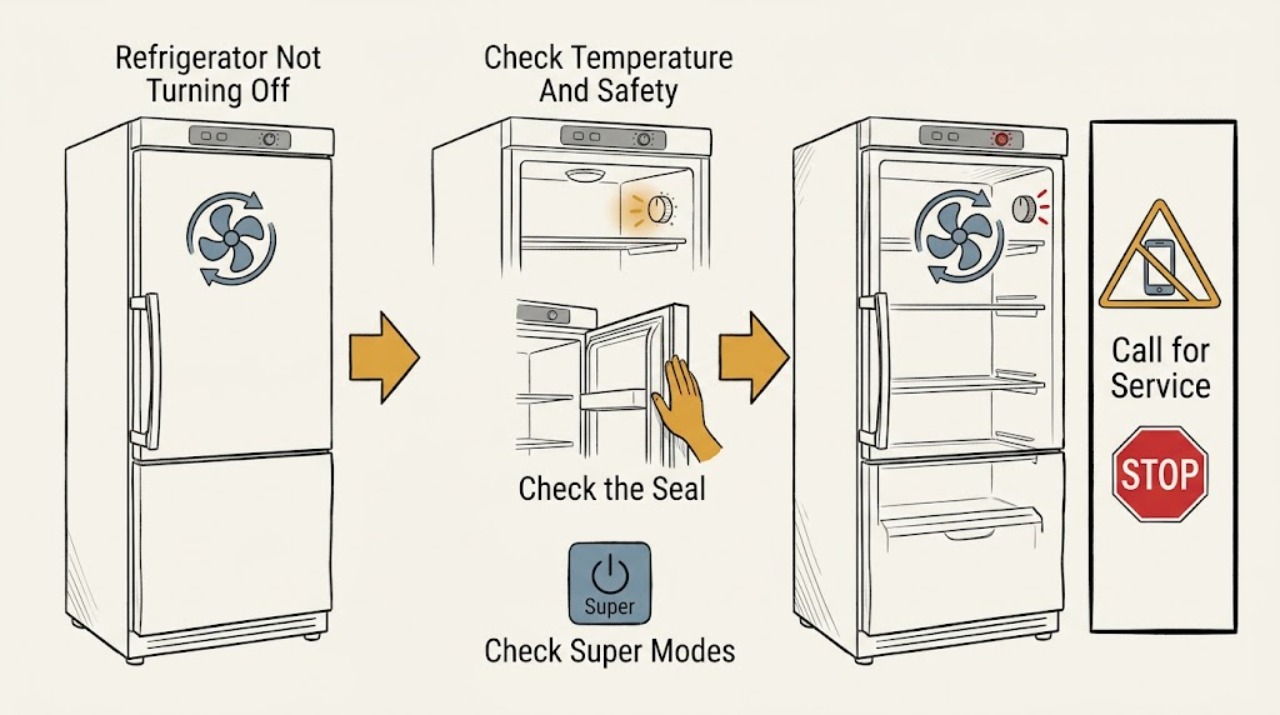
Bosch Refrigerator Not Turning Off: Normal Cycles vs. a Fault
A Bosch refrigerator that seems not to turn off is not automatically failing: efficient compressors and fans can run longer after installation, a warm room, a large warm load, frequent or prolonged door opening, or a colder setting. Bosch manuals also describe Super Freezing or Super Cooling as functions that increase cooling activity and noise until the model-specific function ends or is cancelled.
-
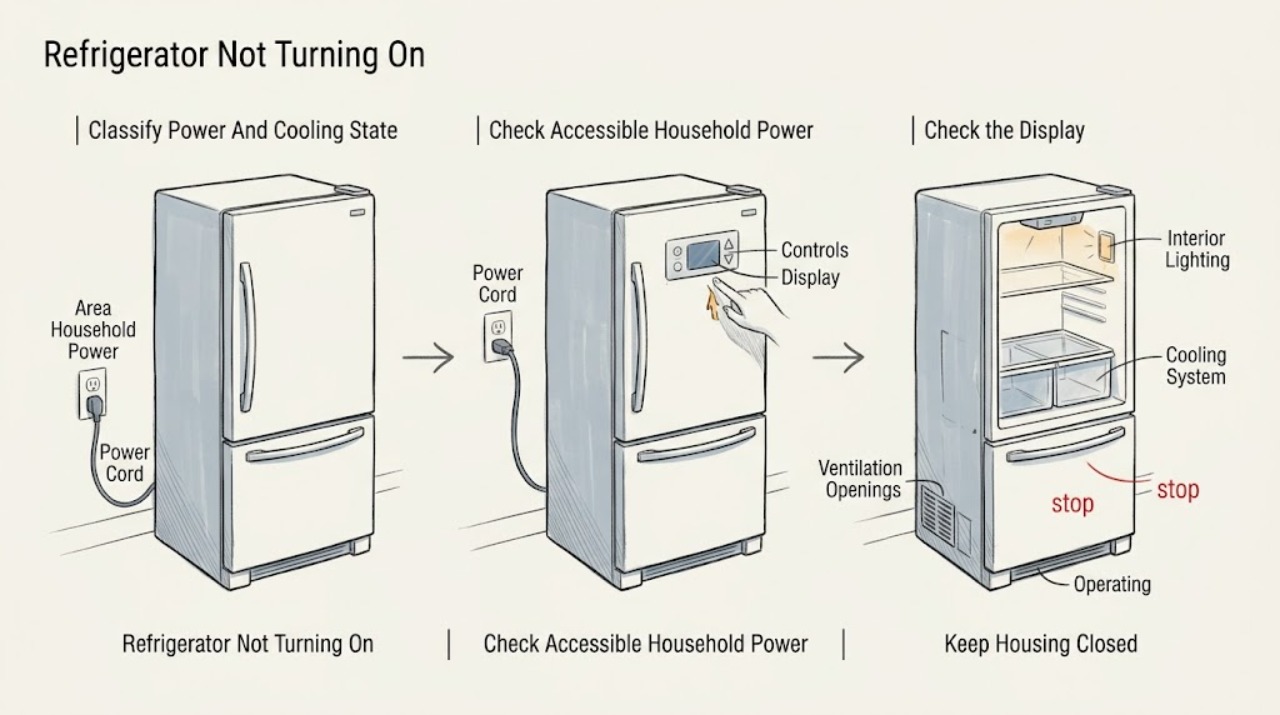
Bosch Refrigerator Not Turning On
First determine whether the Bosch refrigerator has no power at all or has power but is not cooling. If the display is blank, the interior light is off, and the appliance is silent, check only the accessible household breaker or fuse, a visible power connection, and whether the home has power.
-
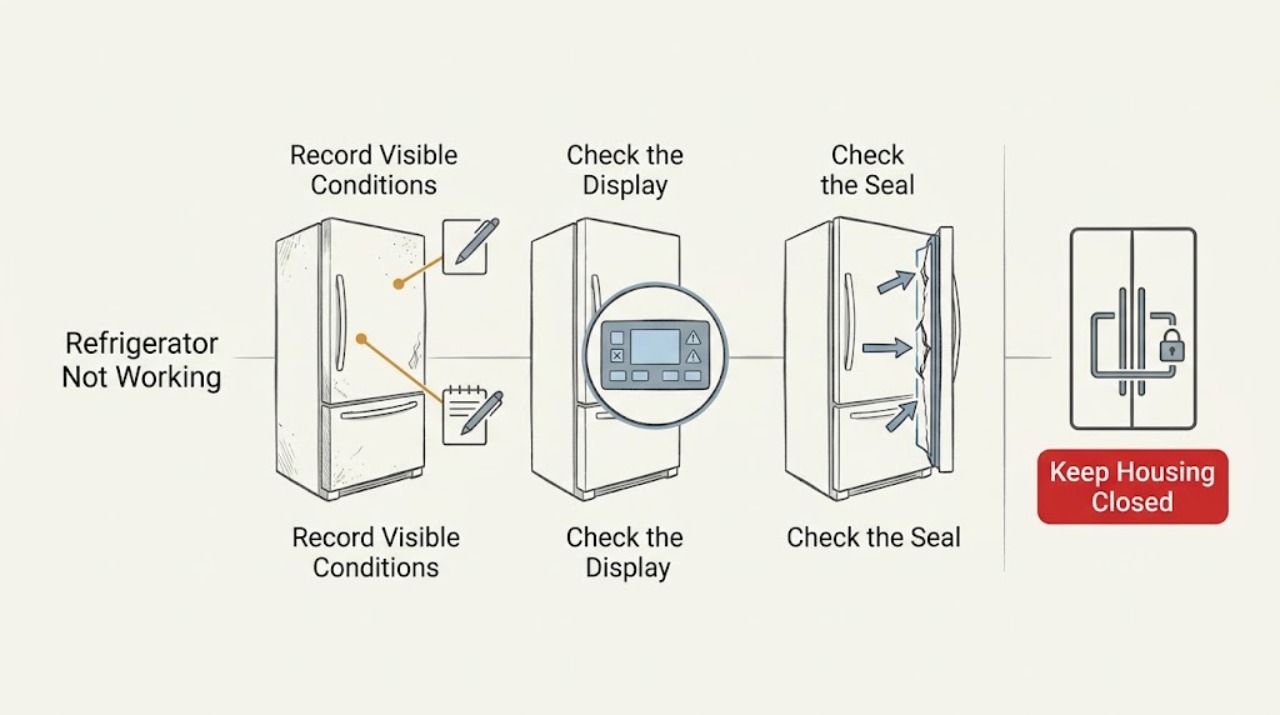
Bosch Refrigerator Not Working
First classify what has stopped: the display and interior light, cooling, water/ice dispensing, or normal operation accompanied by noise or an alarm. For a powered Bosch refrigerator that is warm, check the temperature setting, make sure external and internal air vents are not blocked, and confirm the doors close and seal; Bosch lists these as simple checks.
-
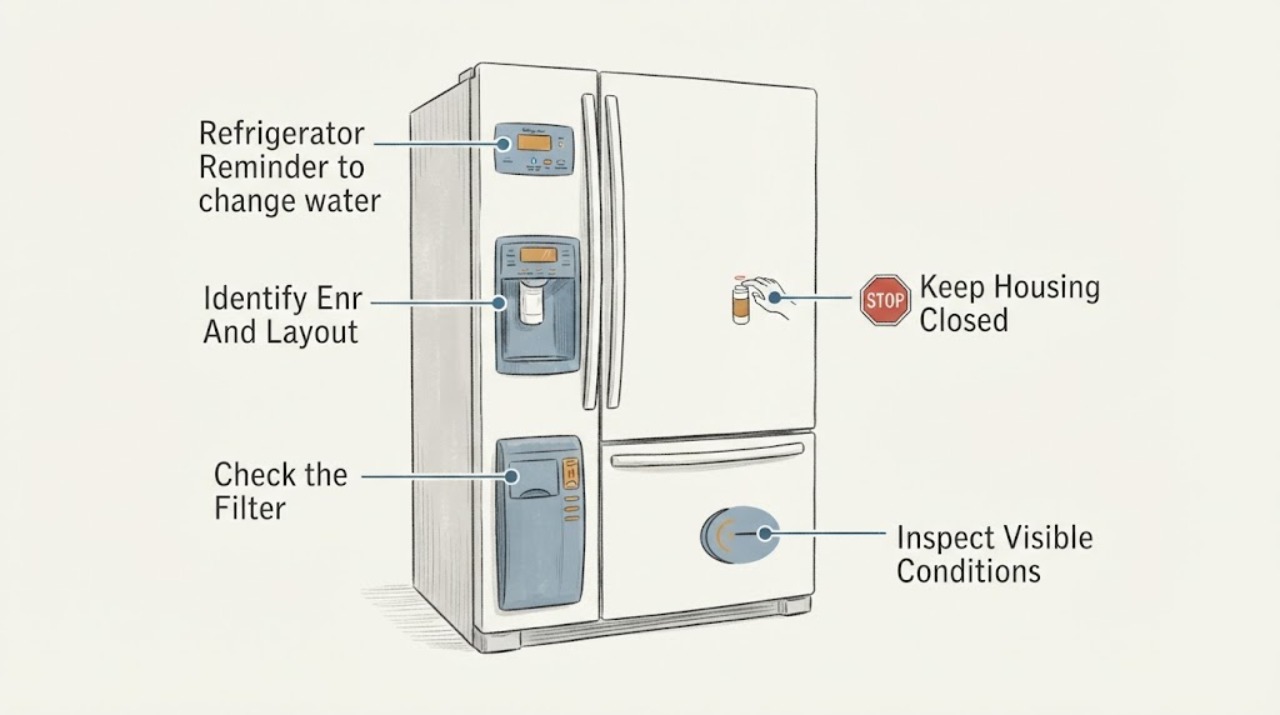
Bosch Refrigerator Reminder to change water filter not resetting | Fix Guide
Confirm the complete Bosch refrigerator E-Nr and install a filter that the model accepts before treating the reminder as a fault. Bosch says the filter indicator should be reset after replacement, but the control differs by model: one Bosch guide uses an “eco / filter reset 3s” button, another uses a simultaneous “super cool” and “ice” hold, and another uses a “FILTER RESET” pad.
-
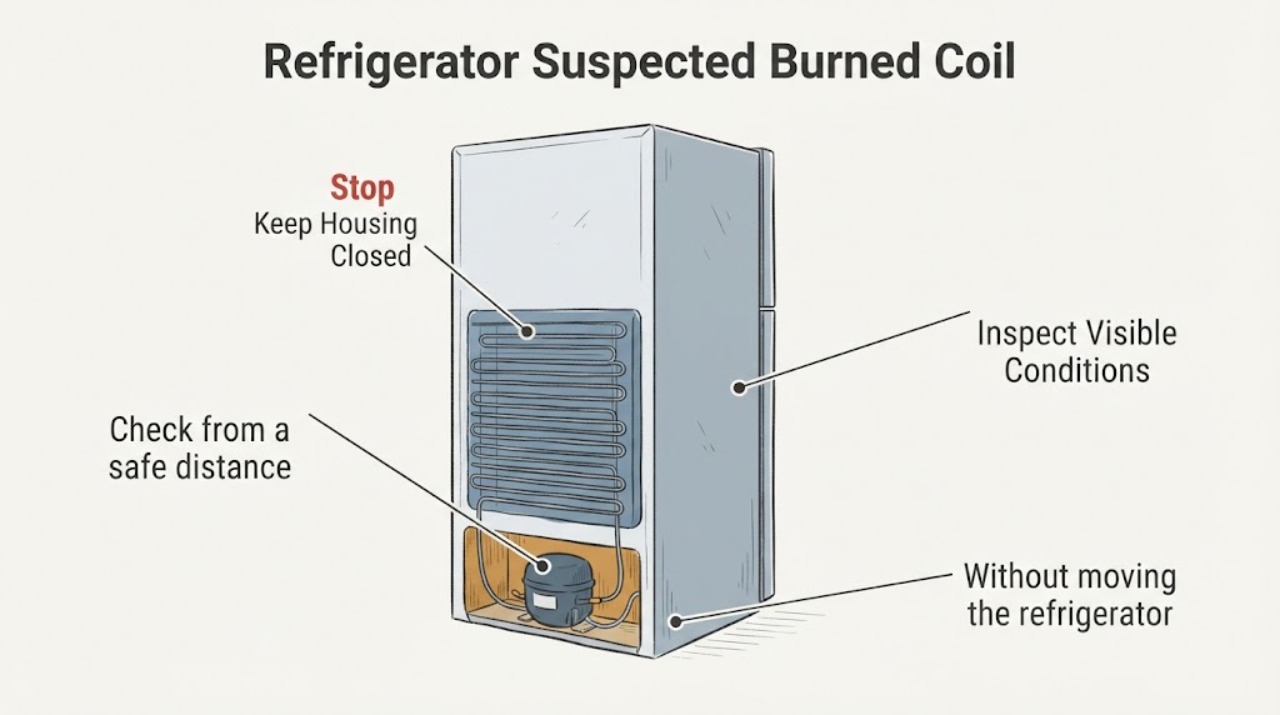
Bosch Refrigerator Suspected Burned Coil: Stop-Use and Service Guide
Treat a visibly burned, scorched or smoking area on a Bosch refrigerator as a stop-use problem, not as proof of a particular condenser, evaporator, heater or electrical coil. If there is smoke, flame, exposed wiring, liquid near electrical parts or active burning, keep clear and follow emergency procedures; do not touch, clean, scrape, move, open or re-energize the refrigerator.
-
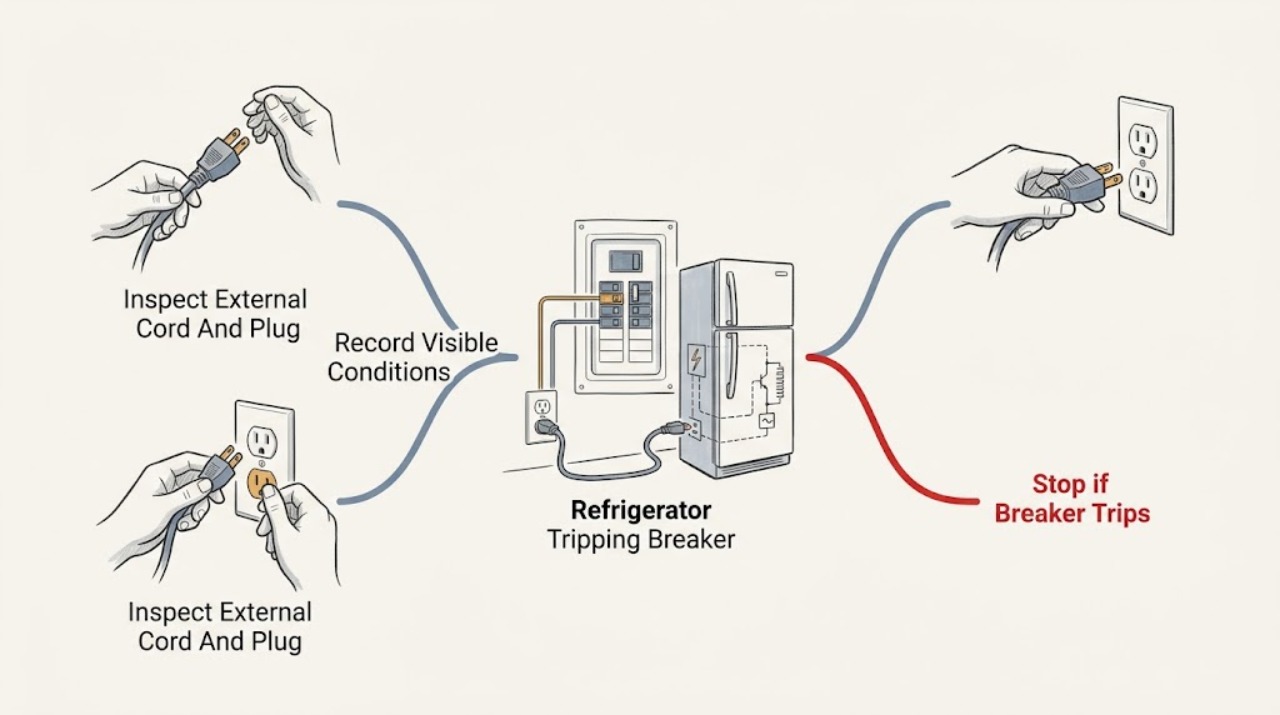
Bosch Refrigerator Tripping Breaker
Treat a Bosch refrigerator that trips a breaker as an electrical stop condition, especially if the protection opens again when the refrigerator is connected. Leave the protection in its tripped state and stop repeated reset attempts.
-
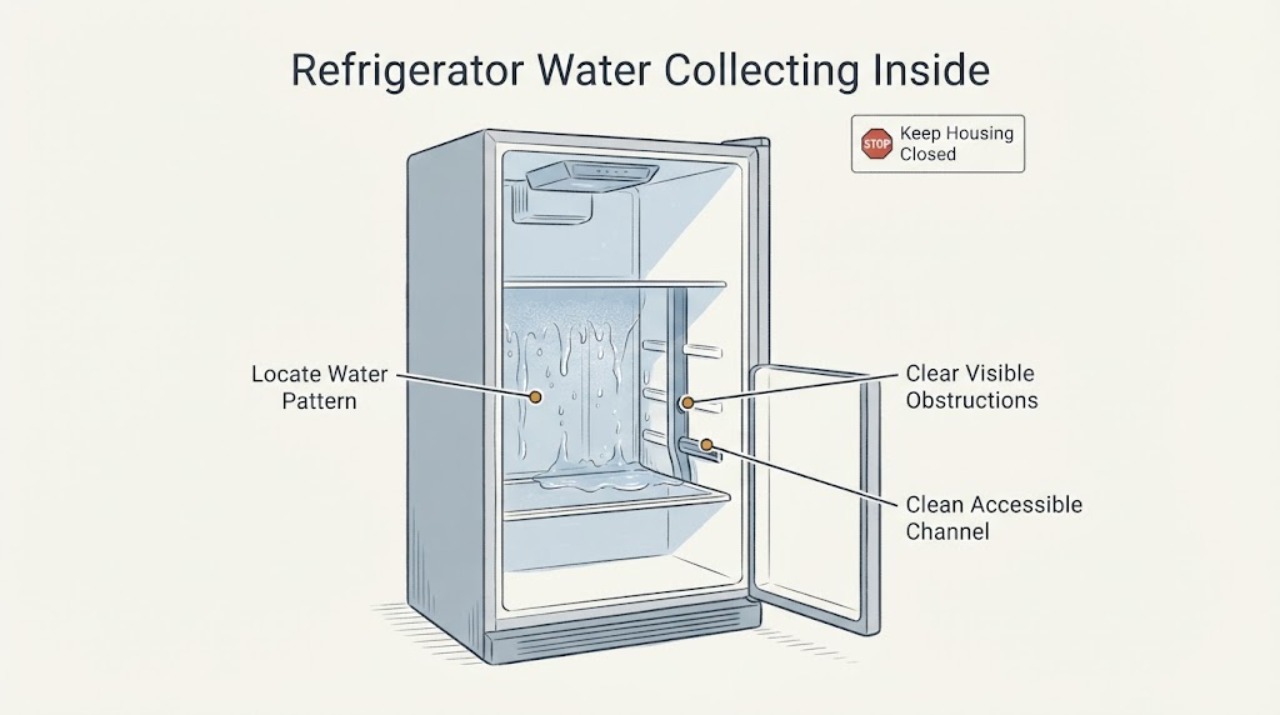
Bosch Refrigerator Water Collecting Inside | Fix Guide
First identify where the water is collecting. Bosch says droplets or frost on the rear refrigerator wall can be part of normal automatic defrosting, while a wet compartment base points to a blocked condensation channel or drainage hole.