
On this page
Start here
Quick answer
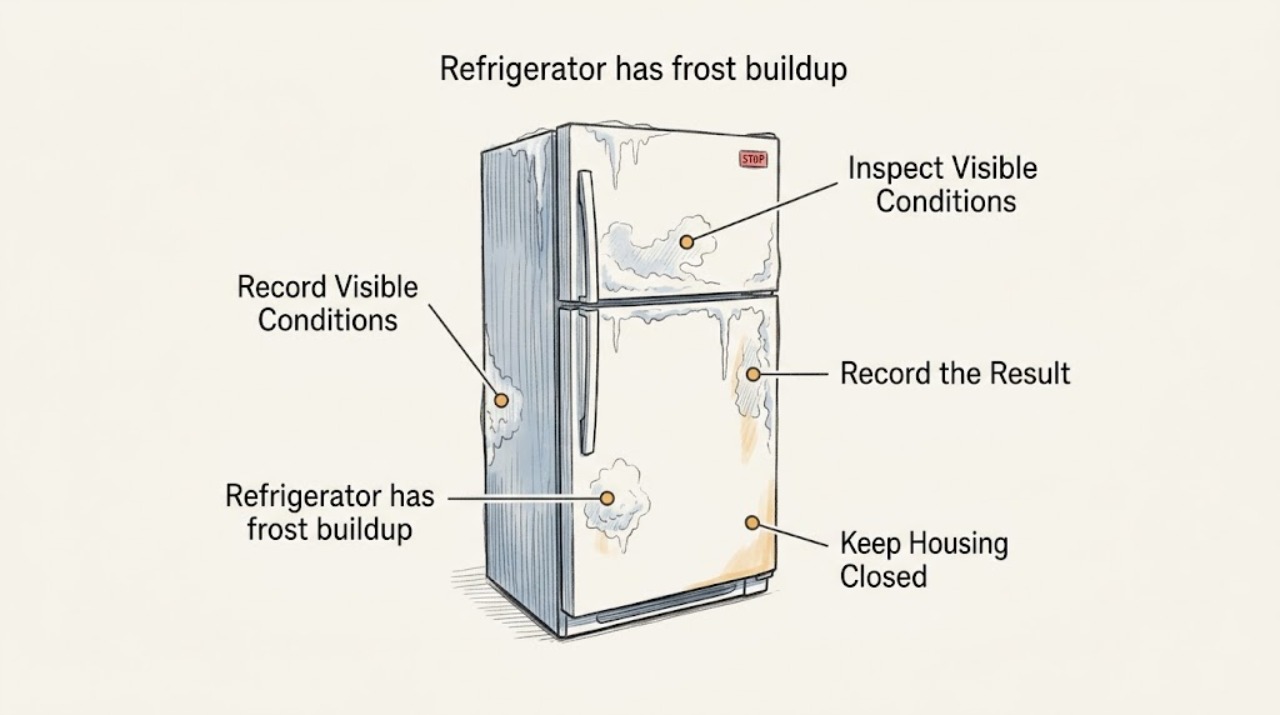
Some frost can be normal in a Bosch freezer, but a heavy or returning layer needs a cause check. First note whether frost is on the freezer walls, around a door edge, near a drawer, or in the refrigerator compartment, and whether the cabinet is still cooling normally. Check that food, bins, or shelves are not preventing a door from closing and inspect the gasket for looseness, gaps, or damage. Bosch advises allowing freezer frost to thaw naturally before wiping the interior with a soft cloth and mild soapy water, while keeping water away from lights and the drain opening; do not chip ice, use heat, or open panels. If the door seals correctly but frost returns, the refrigerator is warm, frost blocks airflow, or a fan or defrost fault is suspected, stop treating it as a cleaning issue and arrange Bosch or qualified refrigerator service.
Before you begin
Safety first
- Keep the appliance off for smoke, burning odor, arcing, hot connections, exposed wiring, uncontrolled water, or water near electrical parts. Do not open panels, touch fans, test energized components, or use heat to remove frost.
Work through in order
Diagnostic checks
Use only checks that match the exact appliance or system and its official guide.
-
Check 1
Keep the refrigerator and freezer doors closed as much as practical, then record where the frost is located, whether it is thin or blocking storage or air passages, and whether the refrigerator is cooling normally. Do not chip, scrape, or pry the ice.
Expected result: Frost is limited to a light freezer layer, forms around one door edge, covers a rear wall or vent, appears in the refrigerator compartment, or is accompanied by warming food, unusual noise, or water.
Next step: Photograph the frost pattern and continue with the door and gasket check only if there is no water, electrical concern, or unsafe warming. Stop using the appliance for smoke, burning odor, exposed wiring, or a rapidly worsening leak.
Why this matters
Why: Location and accompanying symptoms separate ordinary freezer frost or an air-leak clue from a possible airflow, cooling, defrost, or drain problem. Frost alone does not identify a failed component.
-
Check 2
Check that each Bosch refrigerator and freezer door closes fully without forcing it. Look for a package, shelf, drawer, ice container, or door bin holding the door open, and inspect the gasket contact area from the outside for gaps, folds, looseness, or visible damage.
Expected result: The door was obstructed, the gasket does not contact evenly, the seal is loose or damaged, or the door appears to close and contact evenly all the way around.
Next step: Reposition only the visible obstruction and clean the gasket and contact surface with a soft cloth and mild soapy water as Bosch describes. Do not bend, glue, heat, or replace the gasket without model confirmation; arrange service for a loose or damaged seal.
Why this matters
Why: A closure obstruction or gasket gap can let humid room air enter and create frost. An even contact pattern makes a door leak less likely, so recurring frost needs the exact model's cooling and defrost diagnosis.
-
Check 3
Observe the door-use and loading pattern over normal use: note frequent or prolonged openings, a large recent food load, a drawer left ajar, humid conditions, or food packages pressed against a rear vent. Do not block vents or rearrange shelves beyond the owner's manual guidance.
Expected result: Frost began after a door was left open, a drawer or package obstructed closure or airflow, a large load was added, or the frost returns even with normal closure and spacing.
Next step: Correct only the visible loading or closure issue and monitor without repeated door opening. If frost continues, food warms, or airflow is blocked by ice, arrange model-specific service rather than moving internal panels.
Why this matters
Why: Warm humid air and blocked air paths can explain a temporary frost increase. Frost that returns with correct closure and clear visible airflow paths is less likely to be a simple loading issue.
-
Check 4
If the model manual permits user cleaning and no hazard is present, move food to a suitable cool location, let freezer frost thaw naturally, and wipe the interior and seal with a soft cloth and mild soapy water. Keep meltwater out of lights and the drain opening; never use a knife, sharp tool, open flame, or directed heat to accelerate thawing.
Expected result: Frost clears without damage, water enters a light or drain opening, the frost cannot thaw normally, or a thick layer returns soon after the doors and seal are correct.
Next step: Dry accessible surfaces and restore food only as the exact manual permits. Stop and arrange service for water near electrical parts, damage from ice, frost that will not clear, or rapid recurrence.
Why this matters
Why: Safe thawing and cleaning can remove accumulated frost but cannot repair a door leak, blocked drain, defrost system, fan, sensor, or sealed-system fault. Water in electrical areas or rapid recurrence needs service.
-
Check 5
Identify the complete Bosch model number or E-Nr from the rating plate, owner's records, or the model-location instructions, and save a photo of the frost pattern and door seal. Use that identity to open the matching manual or support record without copying instructions from another Bosch series.
Expected result: The full model is available, only a product family is known, or no model identification is available; also note whether the unit is a frost-free design according to its documentation.
Next step: Provide the exact model, region, frost location, door-seal observations, cooling symptoms, and thaw history to service. Do not remove an evaporator cover or test a component to identify the fault.
Why this matters
Why: Bosch manuals, access points, operating controls, and part diagrams are model-specific. A family name or similar appearance is not enough to confirm a gasket, heater, or fan fit.
-
Check 6
After the safe external checks, observe whether frost returns, whether food becomes warmer, whether airflow is reduced by ice, and whether the refrigerator makes a new fan, compressor, sizzling, or clicking sound. Do not open electrical covers, touch a fan, or perform energized tests.
Expected result: The seal closes evenly but frost returns, cooling is poor, airflow is blocked, a fan is noisy or stopped, a fault indication appears, or the appliance shows smoke, burning odor, arcing, or a hot connection.
Next step: Keep the appliance closed and arrange Bosch or qualified refrigerator service for recurrence, warming, blocked airflow, or suspected fan or defrost failure. Disconnect power only from a dry, safe location for an electrical hazard and do not restart to test.
Why this matters
Why: Recurring frost with a good seal can require diagnosis of defrost, airflow, temperature sensing, or sealed-system components. Electrical or overheating signs are immediate safety issues, not a frost-cleaning task.
Use your observations
Decision map
Find the observation that best matches what you see, then follow the next safe action.
-
PATH 01Next step
What you see
Frost is concentrated around a door edge, the door was obstructed or ajar, or the Bosch gasket is visibly loose or damaged.
Do this next
Correct only the visible obstruction and clean the gasket with mild soapy water. Arrange service for a damaged or loose seal, an uneven door, or frost that returns after proper closure.
Why this path and its safety boundary
Why it matters: Humid air entering through a closure or seal problem is more likely than an internal defrost failure.
-
PATH 02Next step
What you see
Frost is light, confined to the freezer, and follows a recent open door, humid event, or large load; the gasket contacts evenly and cooling is normal.
Do this next
Follow the Bosch manual's cleaning guidance: allow frost to thaw naturally, wipe with mild soapy water, and keep water out of lights and drains. Monitor for recurrence without repeated door opening.
Why this path and its safety boundary
Why it matters: A temporary increase in moisture entering the freezer is more likely than a confirmed component failure.
-
PATH 03Next step
What you see
Frost covers a rear wall or visible air passage, the refrigerator is warming, or the frost returns quickly even though doors and gaskets are correct.
Do this next
Do not remove internal panels or test a heater or fan. Preserve the frost photos and exact Bosch model, keep food safe, and arrange qualified refrigerator service.
Why this path and its safety boundary
Why it matters: Airflow, defrost, temperature-sensing, fan, or sealed-system diagnosis is more likely than a surface-cleaning issue.
-
PATH 04Next step
What you see
Frost appears in the refrigerator compartment, blocks drawers or vents, or is accompanied by water pooling after thawing.
Do this next
Move food as needed, follow only the exact manual's safe cleaning guidance, and arrange service if water enters a light, the drain remains blocked, or frost and warming persist.
Why this path and its safety boundary
Why it matters: The symptom may involve an air path, drain, door alignment, or model-specific cooling condition rather than normal freezer frost.
-
PATH 05Next step
What you see
Smoke, burning odor, arcing, a hot electrical connection, exposed wiring, uncontrolled water, or a rapidly warming cabinet occurs.
Do this next
Keep clear, disconnect power only from a dry and safe location if needed, protect food without entering the hazard, and obtain qualified or emergency help. Do not restart the refrigerator to test it.
Why this path and its safety boundary
Why it matters: Continued operation could cause shock, fire, food loss, or water damage; this is beyond user observation.
Helpful context
Understand the symptom
Frost location changes the next check
A thin, occasional layer in a freezer is not the same symptom as a returning sheet around the door, a solid block over an air passage, or ice in the refrigerator compartment. Door leakage, a blocked or mis-seated drawer, humid air entering during frequent openings, and an internal cooling or defrost fault can look similar. Record the location and whether food is staying cold before choosing a repair path.
Bosch cleaning guidance is model-safe but not a repair procedure
Bosch advises moving food to a cool location, allowing frost to thaw, wiping surfaces with a soft cloth and mild soapy water, wiping the door seal, and keeping water away from lights and the drain opening. That guidance does not authorize removing an evaporator cover, testing a heater or fan, or forcing ice from a sealed cooling system. Use the exact owner manual for the refrigerator's layout.
Do not guess a part from the frost pattern
A frost pattern can indicate where to investigate, but it cannot identify a failed door gasket, defrost heater, or evaporator fan motor by itself. Bosch directs owners to use the appliance model number or E-Nr for manuals and parts information. Keep the refrigerator model and frost photos for service rather than ordering a component by appearance.
Safety boundary
Stop conditions
- Stop and arrange service for frost that returns rapidly after correct door closure, a refrigerator that is warming, airflow blocked by ice, an inoperative or noisy fan, a fault indication, or frost in an unexpected compartment.
- Do not chip or pry ice, use a knife, open flame, hair dryer, or directed heat, remove internal panels, touch a fan, or test a heater or electrical component.
- Stop immediately for smoke, burning odor, arcing, a hot connection, exposed wiring, water near electrical parts, uncontrolled water, or a rapidly warming cabinet. Disconnect power only from a dry, safe location and obtain qualified or emergency help.
- Do not select a Bosch gasket, defrost heater, or evaporator fan motor by appearance or generic series name. Confirm the complete model or E-Nr and diagnosis first.
Only after diagnosis
Potential parts
- refrigerator door gasket
Consider this only if the door fails to close or the gasket has a confirmed gap, looseness, or damage after visible obstruction and cleaning checks.
Bosch gaskets vary by complete model or E-Nr, door configuration, and region. Confirm fit and the diagnosis before selecting one. - refrigerator defrost heater
Consider this only after qualified diagnosis identifies a defrost-system fault and rules out door leakage, loading, drainage, and airflow causes.
Defrost components are model-specific and involve internal electrical and cooling access. Do not order or install one from frost appearance alone. - refrigerator evaporator fan motor
Consider this only when qualified diagnosis confirms an evaporator airflow or fan-motor fault after safe external checks.
Fan assemblies, connectors, and access differ by Bosch model. Confirm the exact model and professional diagnosis before selecting a part.
When checks do not resolve it
Need a professional?
Request service for recurring frost, poor cooling, a damaged or loose door gasket, blocked internal airflow, suspected defrost or fan failure, water near electrical parts, a fault indication, or any smoke, burning odor, arcing, or hot connection.
Safety scope: Keep the appliance off for smoke, burning odor, arcing, hot connections, exposed wiring, uncontrolled water, or water near electrical parts. Do not open panels, touch fans, test energized components, or use heat to remove frost.
Have this ready
- Provide the complete Bosch model or E-Nr, refrigerator and freezer locations affected, frost photos, door and gasket observations, loading and door-use pattern, cooling changes, unusual sounds, thawing steps, and any water or electrical observations.
Common questions
FAQ
Is frost in a Bosch refrigerator normal?
Bosch says some frost in a freezer can be normal, but too much frost indicates a problem. Check door closure and the gasket first; recurring or heavy frost needs model-specific service evaluation.
Why is frost forming around the Bosch freezer door?
A package, drawer, or bin may prevent full closure, or the gasket may be loose or damaged and allow humid air in. Correct only visible obstructions and arrange service for a seal that does not contact evenly.
Can I scrape ice off a Bosch refrigerator wall?
Do not chip or pry frost or use directed heat. Follow the exact manual's safe thawing guidance; Bosch recommends allowing frost to thaw naturally and wiping with a soft cloth and mild soapy water.
What should I do if frost blocks a vent?
Do not remove an internal panel or touch a fan. Keep the door closed, protect food as needed, photograph the frost pattern, and arrange service if airflow is reduced or the frost returns.
Could a bad door gasket cause frost buildup?
Yes, a gap or damaged gasket can allow humid air into the cabinet. Bosch advises cleaning the seal with mild soapy water and contacting support if it is loose or damaged, but the exact model must be confirmed before replacement.
Should I replace the Bosch defrost heater or fan?
Not from frost appearance alone. A qualified technician should confirm a defrost or evaporator-fan fault after checking door sealing, loading, airflow, and the exact Bosch model or E-Nr.
When should I stop using the refrigerator?
Stop and obtain qualified help for smoke, burning odor, arcing, hot electrical connections, exposed wiring, uncontrolled water, water near electrical parts, or rapidly worsening warming. Do not restart to test it.
Read the exact guide
Official sources
- Fridge and Fridge Freezer Spare PartsBosch Home Appliances · Bosch refrigerator model or E-Nr lookup and model-specific parts information
- Common Freezer ProblemsBosch Home Appliances · Bosch freezer frost, door closure, temperature, and professional-support guidance
- Get Support - RefrigerationBosch Home Appliances · Bosch refrigeration manuals, troubleshooting, model support, and service escalation
- Refrigerator Maintenance: How to clean your fridgeBosch Home Appliances · Bosch refrigerator frost thawing and interior cleaning precautions
- How to clean your freezerBosch Home Appliances · Bosch freezer frost thawing, cleaning, and water-protection guidance
- How to clean your refrigerator door sealBosch Home Appliances · Bosch refrigerator door-seal cleaning and damaged-seal escalation
Community feedback
Share a repair observation
Share a plain-text repair observation. Accepted observations are published automatically; this page may take a moment to update.