
Repair problem
Has Frost Buildup Troubleshooting Guides
Published FixGraph guidance for diagnosing and responding to has frost buildup.
Matching published guides
Choose a guide that matches the service, equipment, and conditions you are seeing.
-
Amana refrigerator has frost buildup: What to Check and What to Do Next
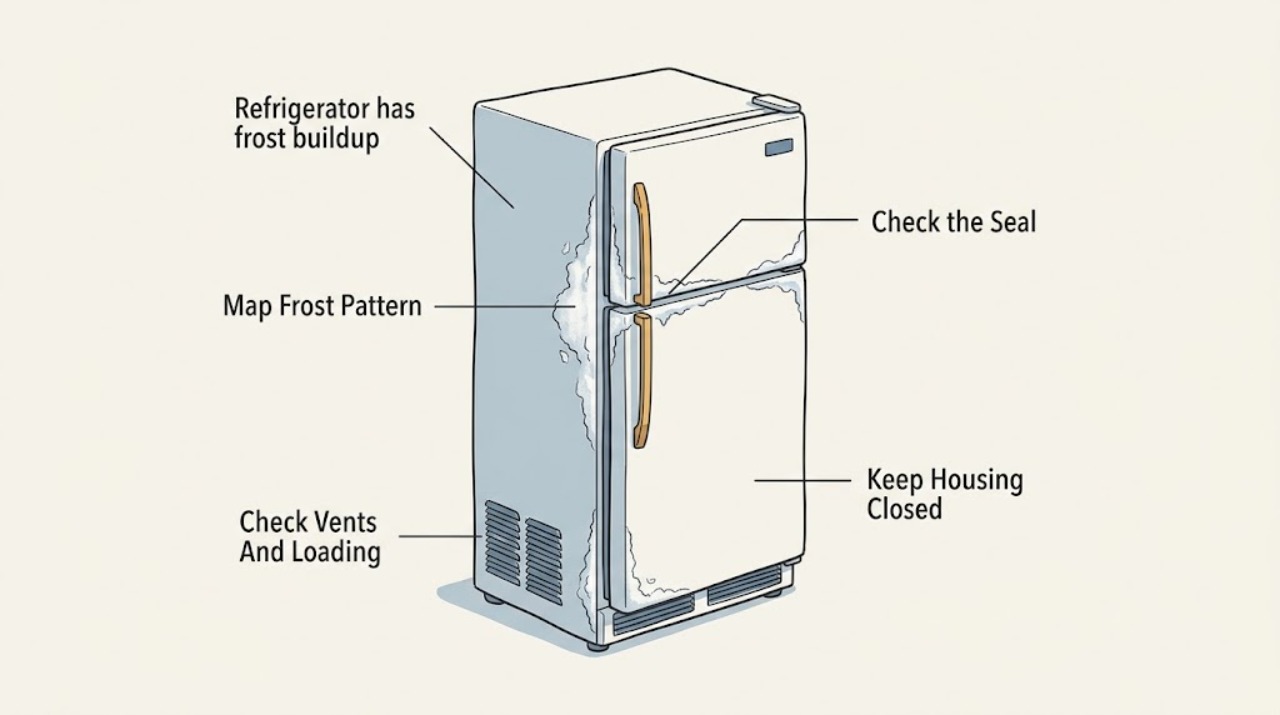
A small, light frost layer can be normal in an Amana refrigerator or freezer, but heavy, spreading, or recurring frost usually means warm humid air is entering, a door is not sealing, food is blocking an air vent, or an automatic-defrost or airflow problem needs service. First photograph where the frost is located and whether it is thin and even or packed around a back panel, vent, door edge, or food.
-
Bosch refrigerator has frost buildup: What to Check and What to Do Next
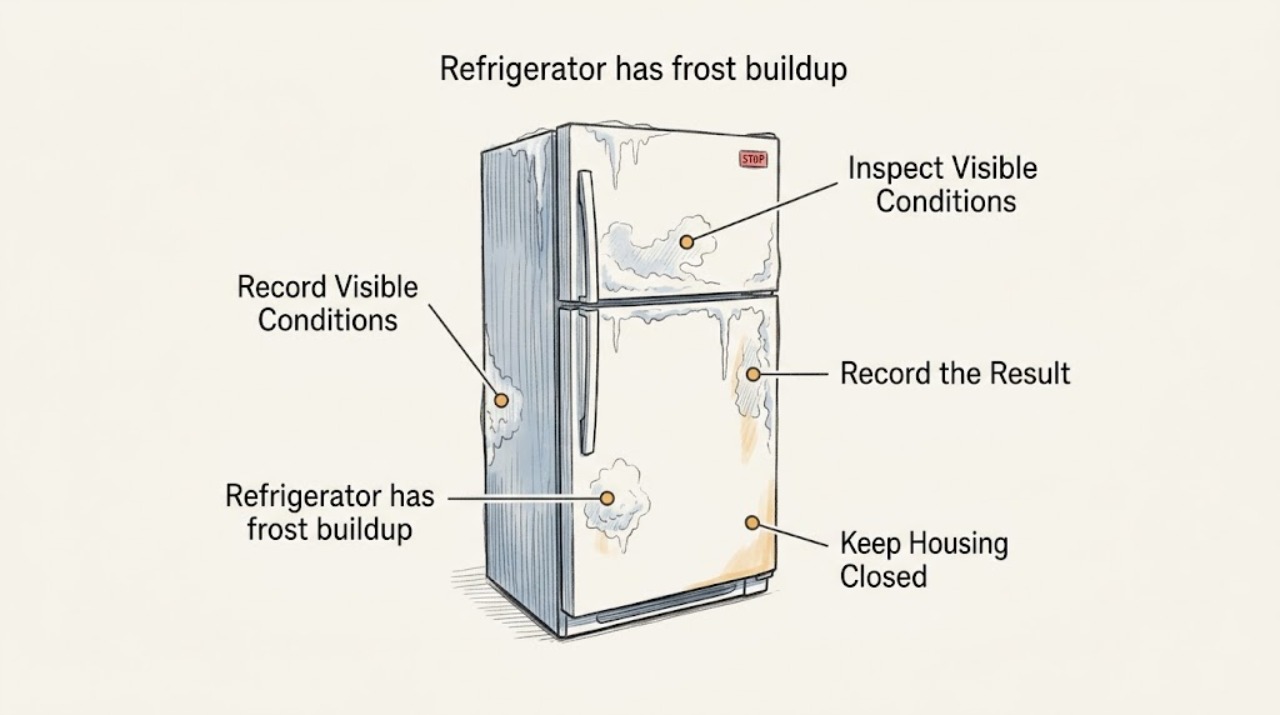
Some frost can be normal in a Bosch freezer, but a heavy or returning layer needs a cause check. First note whether frost is on the freezer walls, around a door edge, near a drawer, or in the refrigerator compartment, and whether the cabinet is still cooling normally.
-
Frigidaire refrigerator has frost buildup: What to Check and What to Do Next
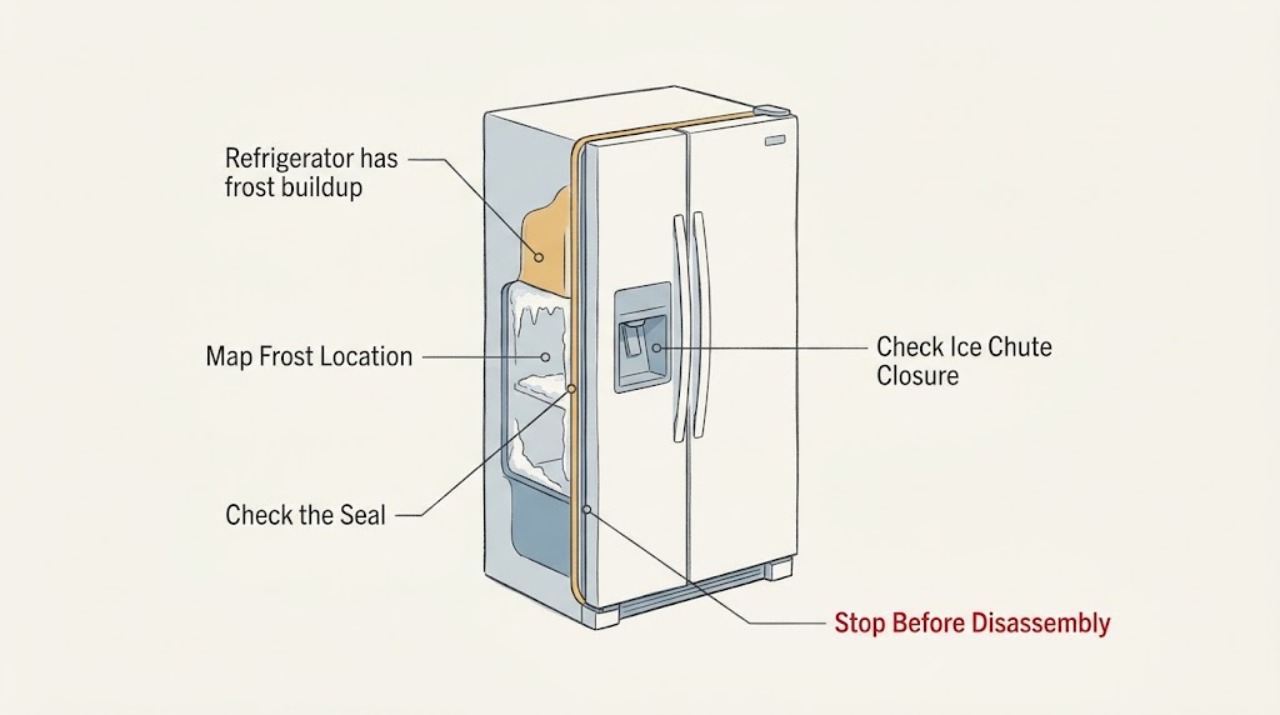
Frost in a Frigidaire refrigerator usually means warm, moist air is entering a below-freezing area or cold air is being distributed incorrectly. Start by noting where the frost is concentrated, then check from the outside whether a door or drawer is fully closing, the gasket is clean and contacting the cabinet, an ice chute flap is closing, and food is blocking an interior vent.
-
GE refrigerator has frost buildup: What to Check and What to Do Next
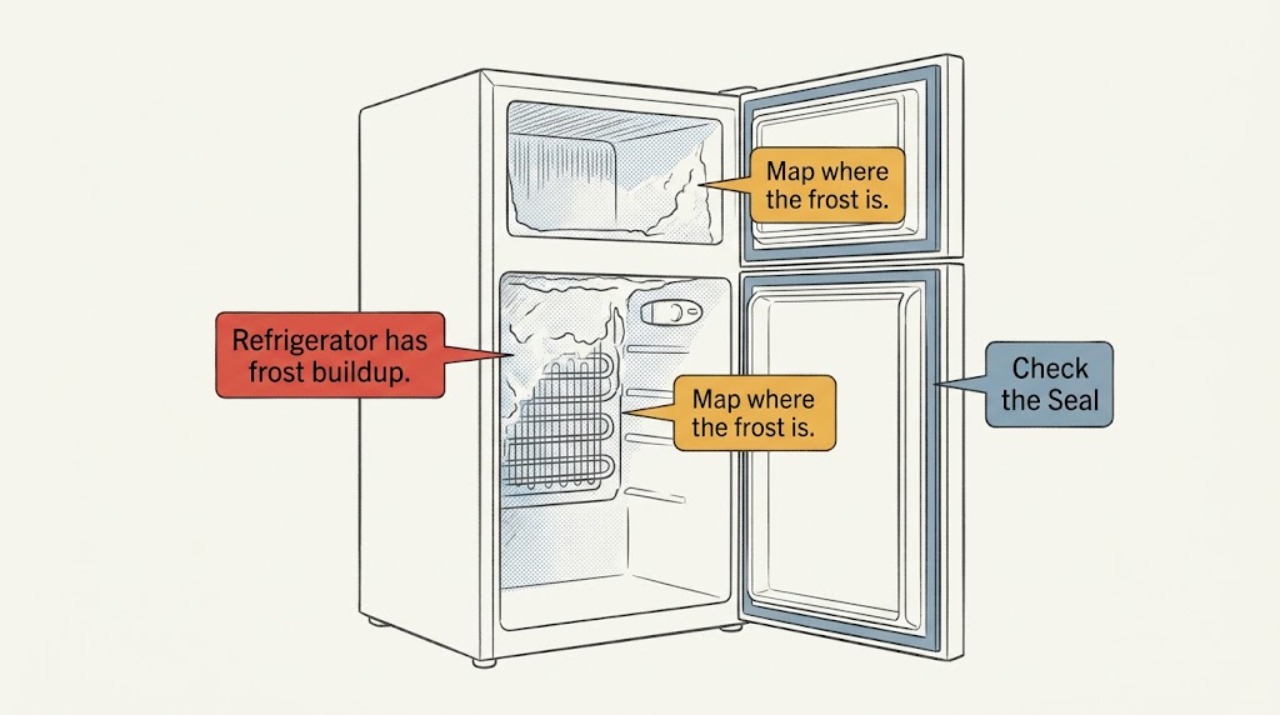
Frost in a GE refrigerator most often starts when warm, humid air enters through a door or drawer that is left open, blocked, misaligned, or not sealing; food or packaging against the rear wall can also restrict airflow. GE says ice accumulating on the wall of a frost-free refrigerator is not expected.
-
KitchenAid Refrigerator Has Frost Buildup: What to Check and What to Do Next
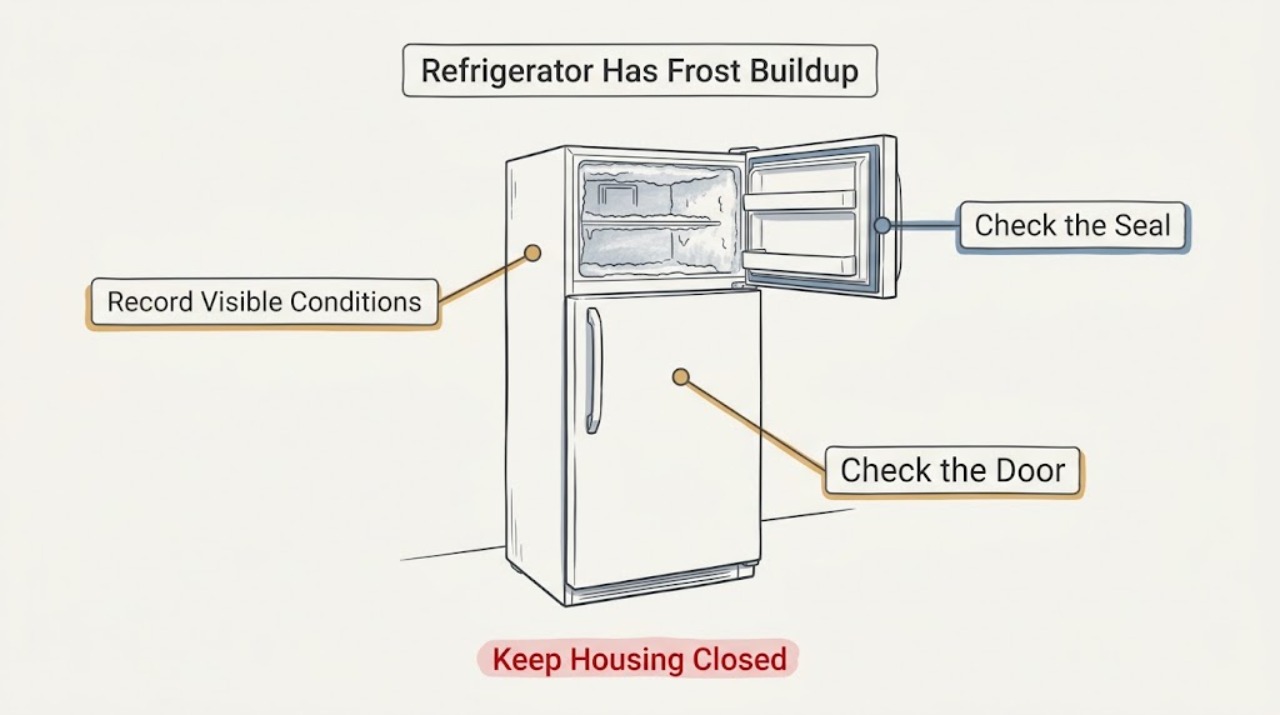
Frost buildup in a KitchenAid refrigerator usually starts with humid air entering through a door that is left open, blocked, or not sealing, but blocked vents, leveling, temperature settings, or an internal cooling or defrost problem can also be involved. First record where the frost is forming, confirm the doors close and the gaskets make contact, clear the model-specific air vents, and check that food is not holding a door open.
-
LG refrigerator has frost buildup: What to Check and What to Do Next
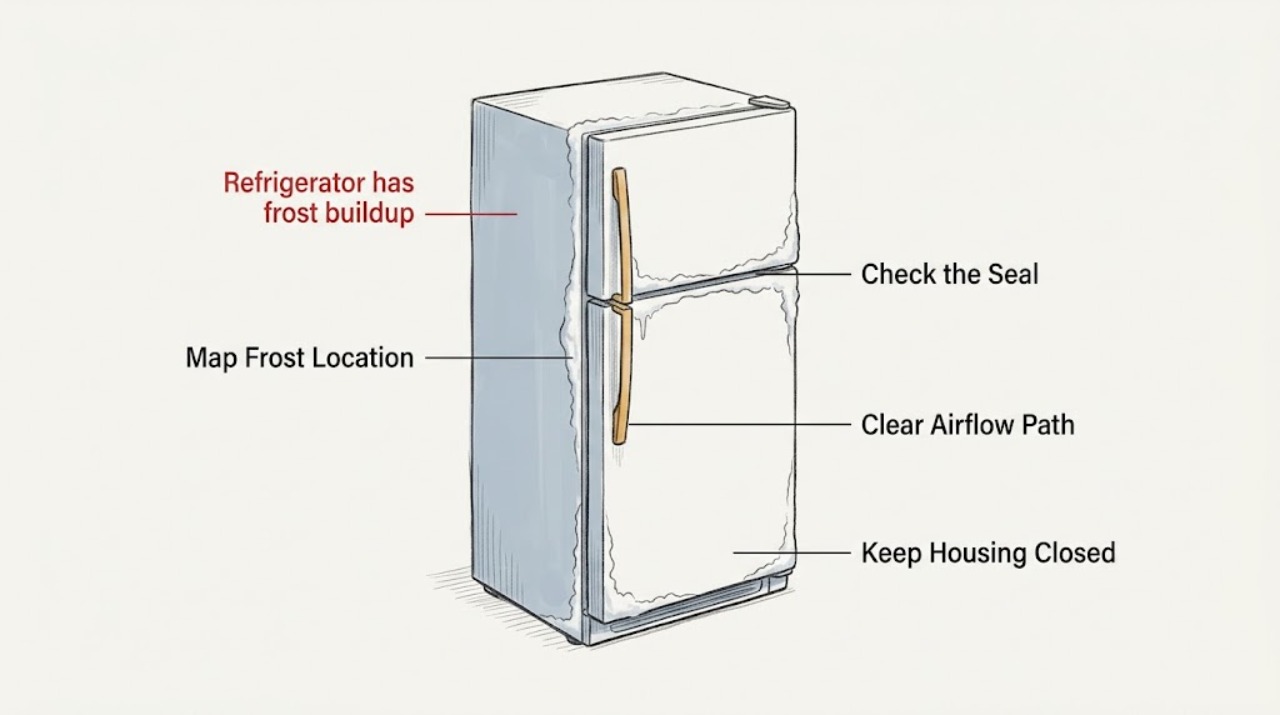
A small amount of frost can form normally when moisture meets cold air inside an LG refrigerator, especially after a door-open or warm-food event. Heavy, spreading, or recurring frost usually points to humid air entering through a door that is blocked or not sealing, food blocking an air path, a blocked defrost drain, or an airflow or defrost problem.
-
Maytag refrigerator has frost buildup: What to Check and What to Do Next
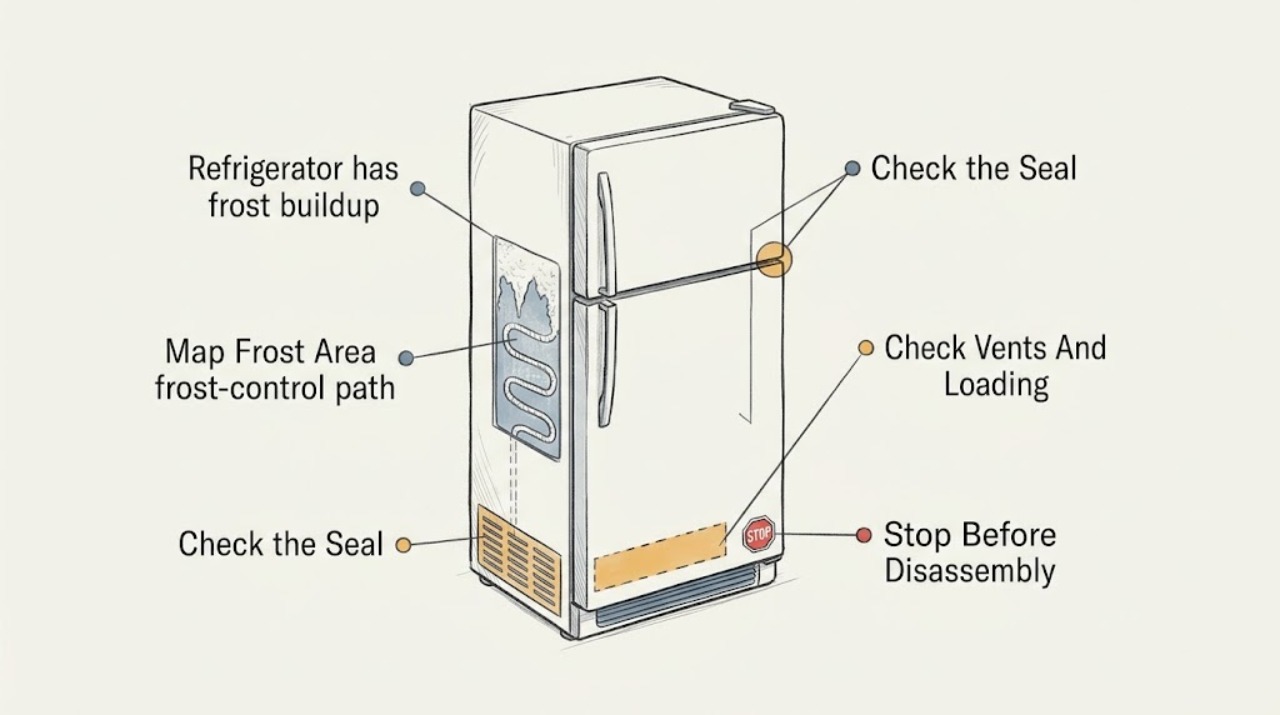
Some light frost or condensation can be normal in a Maytag refrigerator, especially after humid-air exposure, but heavy or recurring frost needs a cause check. First map whether it is at a door edge, on food beside a vent, near the freezer-to-refrigerator vents, or broadly across a rear panel.
-
Refrigerator defrost heater with frost buildup: What to Check and What to Do Next
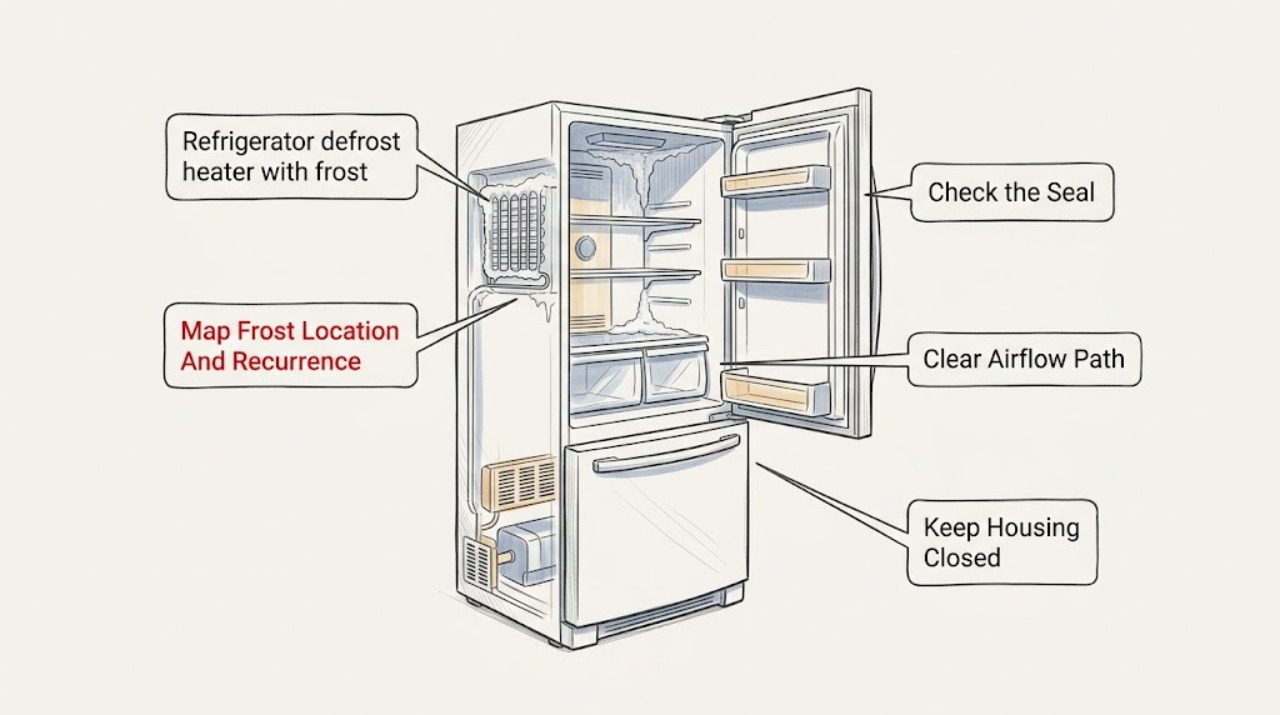
Frost around a refrigerator's evaporator or defrost-heater area does not by itself prove that the heater has failed. In an automatic-defrost refrigerator, the heater periodically melts frost from the evaporator; heavy or recurring frost usually means the defrost cycle, door seal, airflow, moisture entry, or drain needs attention.
-
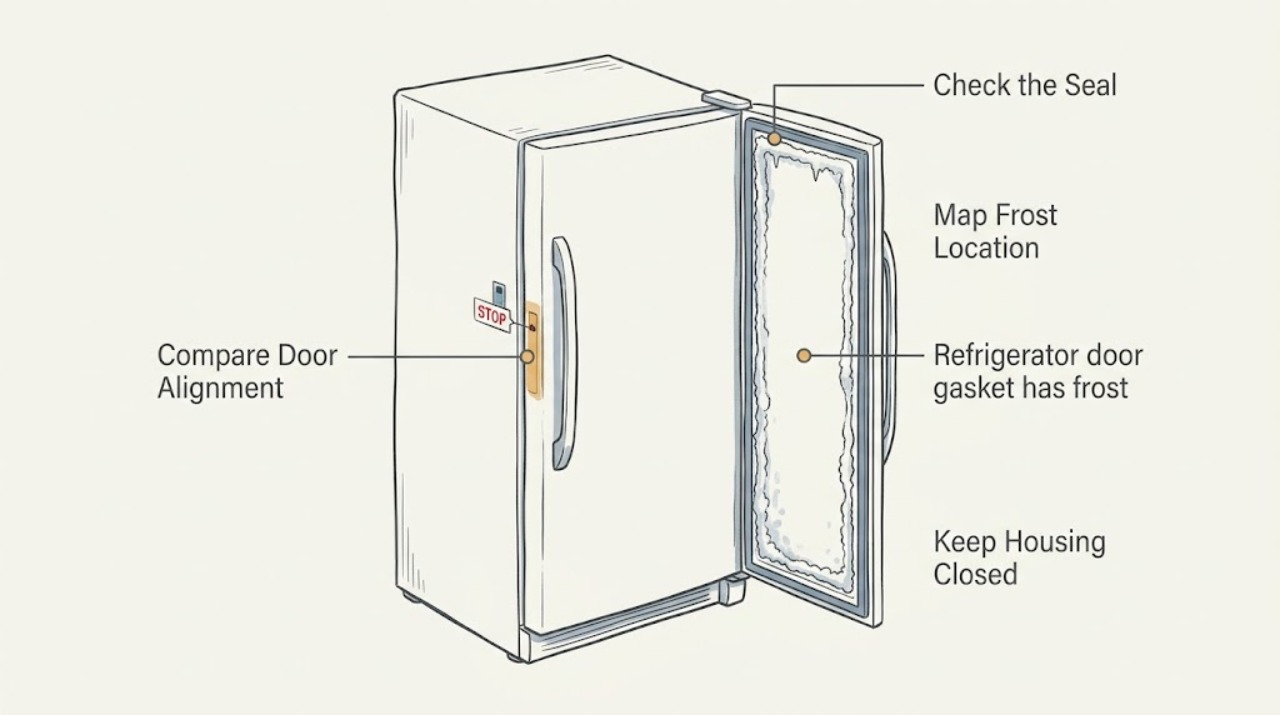
Refrigerator door gasket has frost buildup: What to Check and What to Do Next
Frost on or beside a refrigerator door gasket usually means warm, humid air is entering through a gap, but the gasket may not be the only cause. With the door closed, note whether the frost is only around the seal or also on the rear wall, shelves, or vents.
-
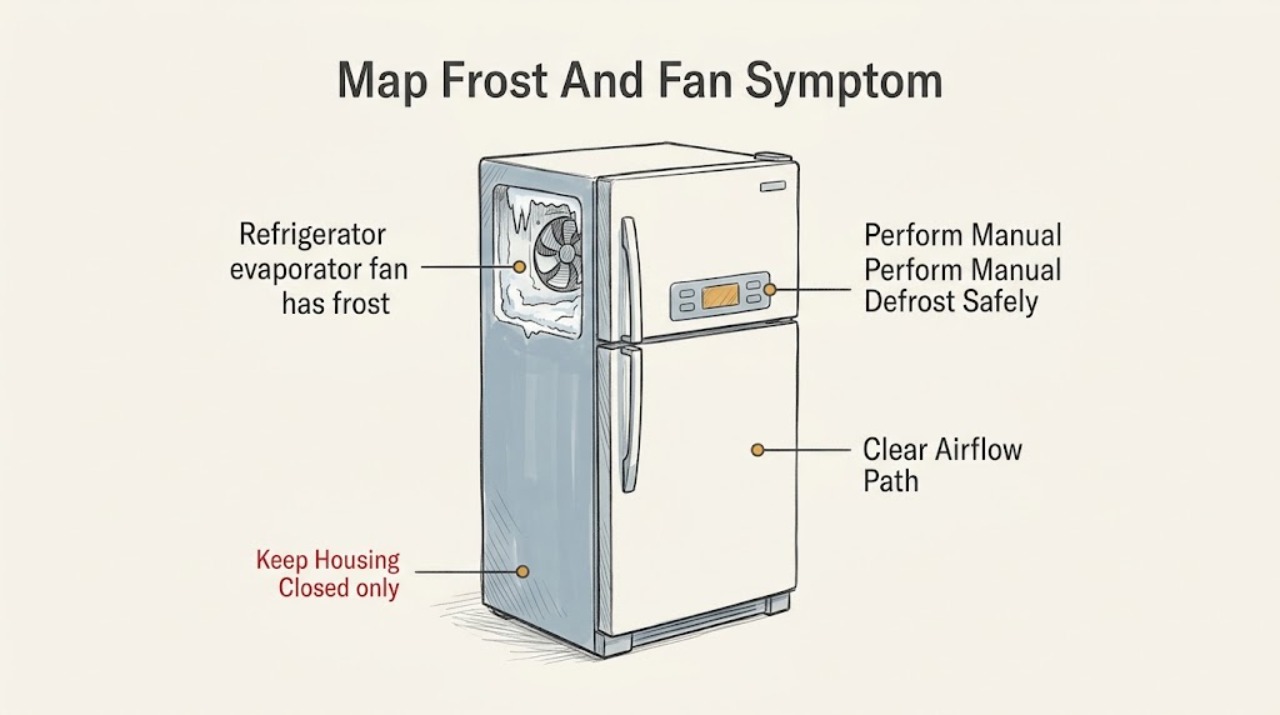
Refrigerator evaporator fan has frost buildup: What to Check and What to Do Next
Frost around a refrigerator evaporator fan can block airflow and make the fan rub, stop, or become noisy. Warm moist air from a door that does not seal, blocked vents, or a heavy load can create frost, while frost that returns after a complete defrost can indicate an unresolved door-seal, defrost, sensor, fan, wiring, or control-board problem.
-
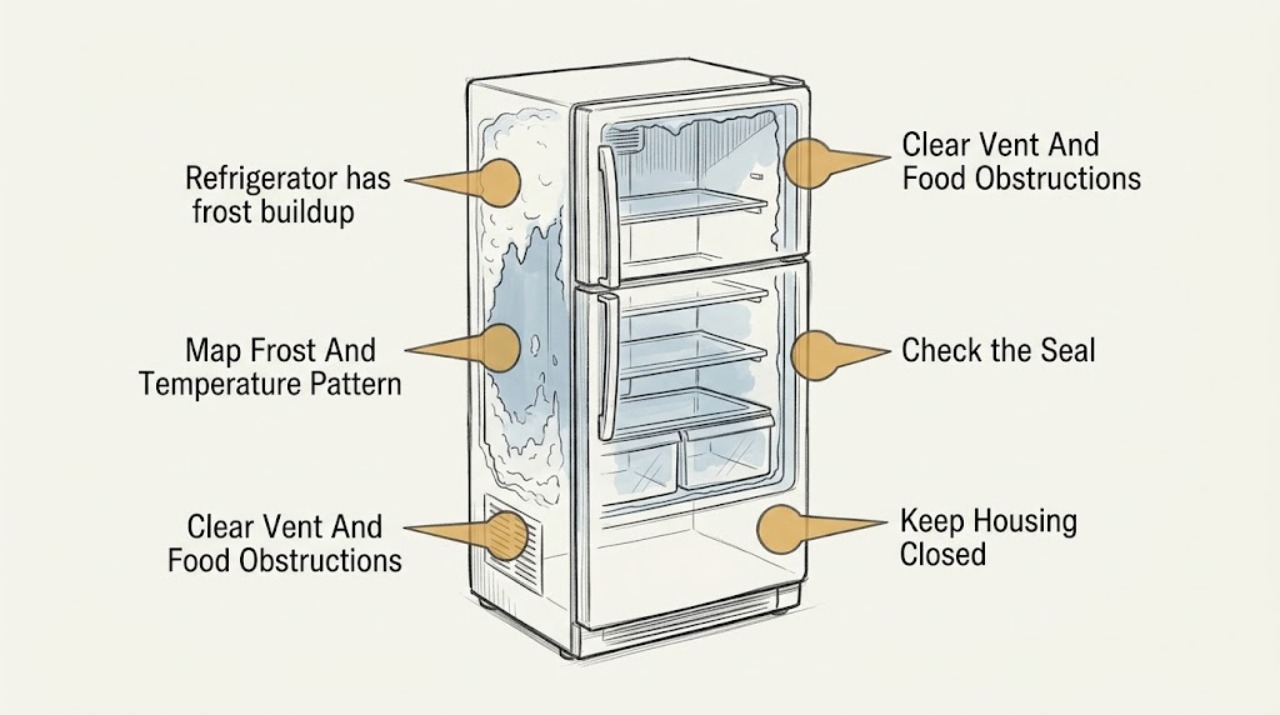
Refrigerator has frost buildup and reduced airflow: What to Check and What to Do Next
Frost that covers a refrigerator vent or the freezer's rear panel can reduce the cold-air path and create warm or frozen spots. First protect the food, record where the frost is, and check from inside for packages against the rear wall or in front of vents and for a door or gasket that is not closing.
-
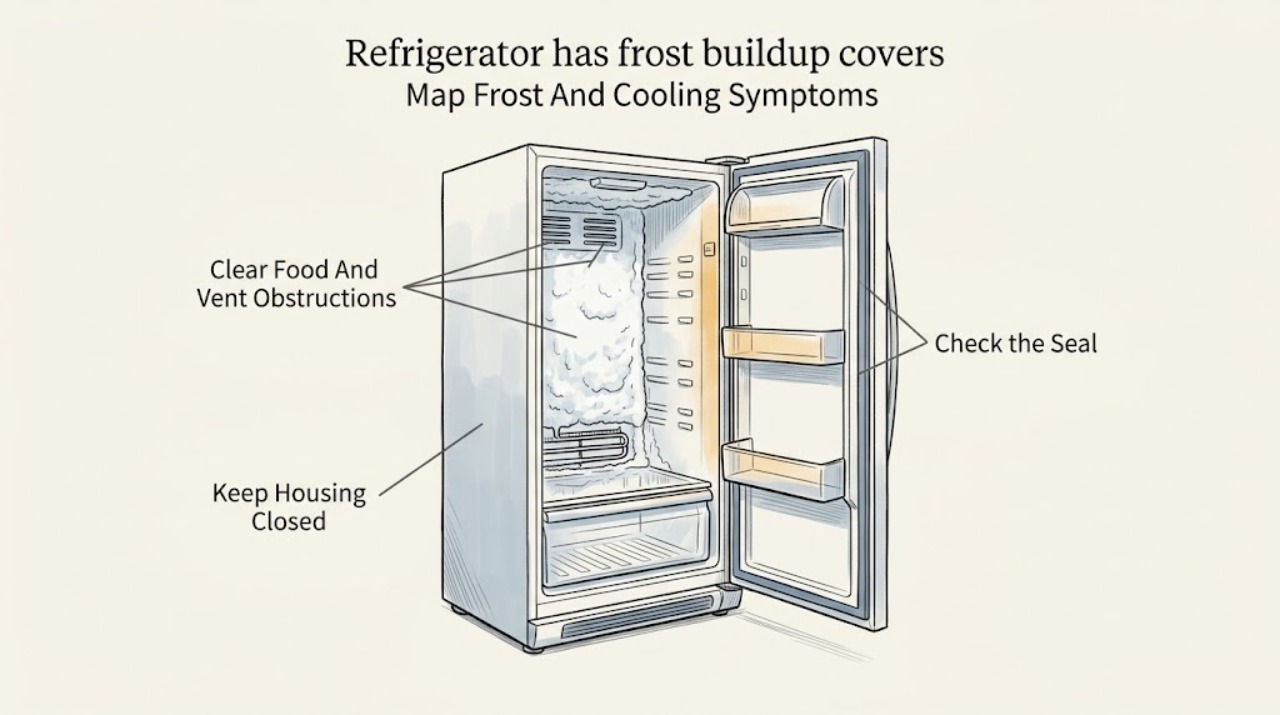
Refrigerator has frost buildup covers rear wall: What to Check and What to Do Next
A thin film of frost or condensation on a refrigerator's cold rear wall can occur during normal cooling or after a defrost cycle, but frost that covers the wall, returns quickly, blocks vents, or accompanies warm food needs attention. Check that food is not touching the rear wall, vents are clear, doors close fully, and the gasket is clean and intact.
-
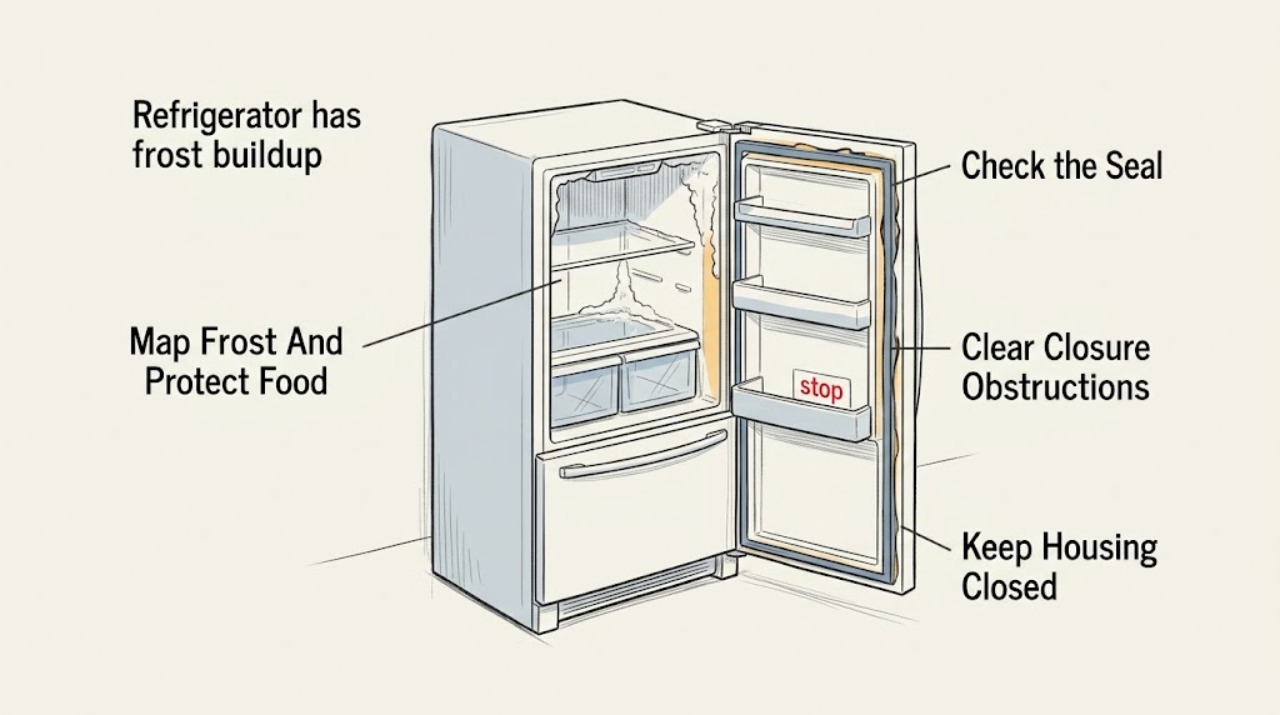
Refrigerator has frost buildup with door seal gaps: What to Check and What to Do Next
Frost buildup with a visible door-seal gap usually means warm, humid room air is entering where the refrigerator or freezer door should close tightly, but the gap may be caused by residue, a displaced gasket, an item or drawer blocking closure, a door that is out of alignment, or an unlevel installation.
-
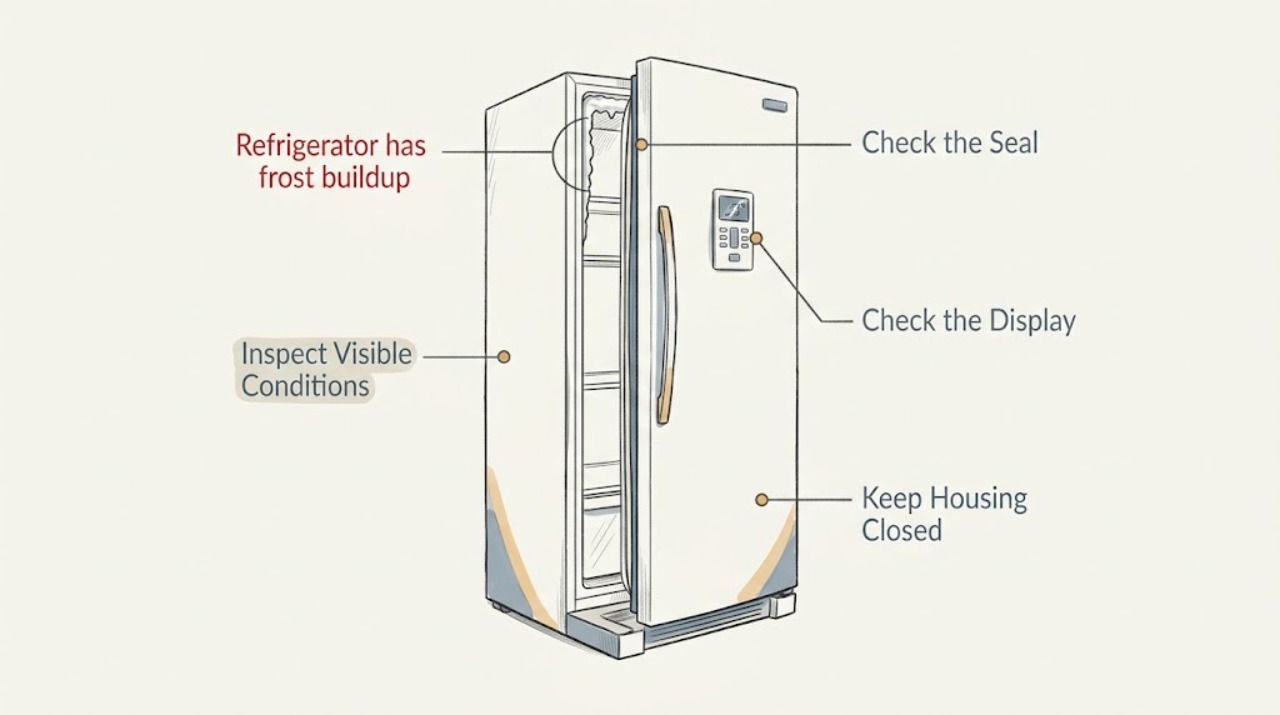
Refrigerator has frost buildup: What to Check and What to Do Next
Frost buildup commonly follows warm humid air entering through a door that is blocked or not sealing, blocked air vents, a setting or recent power event, or a defrost-system problem that cannot be confirmed from outside. First map where the frost is and whether the door closes fully.