
On this page
Start here
Quick answer
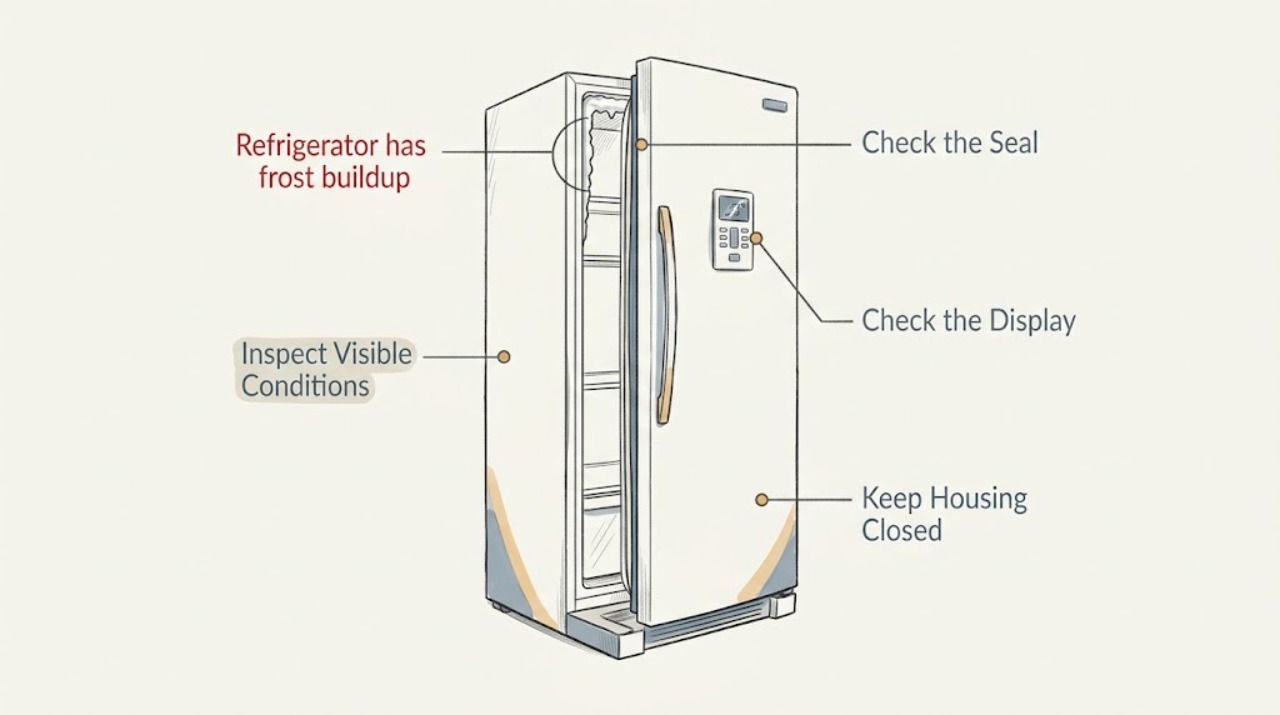
Frost buildup commonly follows warm humid air entering through a door that is blocked or not sealing, blocked air vents, a setting or recent power event, or a defrost-system problem that cannot be confirmed from outside. First map where the frost is and whether the door closes fully. Check only accessible seals, shelves, vents, controls, and food placement. Do not remove panels, test defrost parts, use a knife or sharp tool, apply heat, or open electrical covers. If frost returns, temperatures are unsafe, water is leaking, or the cause is not resolved by visible checks, arrange qualified refrigerator service.
Work through in order
Diagnostic checks
Use only checks that match the exact appliance or system and its official guide.
-
Check 1
With the refrigerator operating normally, look at the frost from the open door without removing interior panels, scraping ice, or reaching behind covers.
Expected result: Record whether frost is on the freezer back wall, around a door edge, on food, near an air vent, in the refrigerator compartment, or spread across much of the compartment; photograph the pattern.
Next step: Keep the photo and location record, then use the following closure, airflow, and operating-history checks without dismantling the appliance.
Stop if: Stop for exposed wiring, a damaged liner, leaking water near electricity, food-temperature uncertainty, or any need to chip, pry, or remove a panel.
Why this matters
Why: Frost concentrated near a door edge can fit an air-leak or seal problem, while frost at a vent or broad back-wall sheet may restrict airflow or require a defrost assessment. The pattern alone does not identify a failed part.
-
Check 2
Close each refrigerator and freezer door gently and inspect the visible gasket and door perimeter for an obstruction without pulling the gasket out.
Expected result: Look for a package, shelf, drawer, ice buildup, torn or flattened gasket, uneven door, or a corner that does not meet the cabinet; note whether the door remains closed on its own.
Next step: Reposition only loose food or shelves that are plainly accessible, wipe visible gasket dirt with a soft damp cloth if safe, and observe whether closure improves; do not force the door or adjust hinges.
Stop if: Stop for a split gasket, door that will not close, trapped glass, a damaged hinge, or a need to remove trim or force an alignment.
Why this matters
Why: A blocked or poor seal can admit humid room air and produce frost and temperature fluctuation. A damaged gasket or misalignment may need a model-specific part or technician assessment rather than a defrost-component diagnosis.
-
Check 3
Inspect the air vents and the displayed temperature controls from inside the compartments without removing covers or blocking the cold-air openings.
Expected result: Record whether a vent is visibly covered by food or frost, whether air movement seems absent, and whether the displayed setting or warning indicator differs from the usual setting; do not insert a tool into a vent.
Next step: Move only an accessible package that is plainly blocking a vent, note the model and display information, and allow normal operation to be observed without repeated resets.
Stop if: Stop for a hot compartment, alarm with unsafe food temperature, damaged control, exposed part, or any need to open a cover or test a fan or heater.
Why this matters
Why: Blocked vents can restrict circulation and contribute to frost or uneven temperatures. A changed setting or warning display may explain the event, while absent airflow or heavy frost around a vent may require service.
-
Check 4
Review recent use and environmental history without changing internal wiring or accessing defrost components.
Expected result: Note a door left ajar, frequent or long openings, hot or uncovered food, a humid period, a recent cleaning or shelf change, a power interruption, or a recent control change; record when frost first appeared.
Next step: Keep the usage timeline and compare it with the frost pattern; follow the model owner's operating guidance for normal settings, not an invented universal temperature or defrost interval.
Stop if: Do not repeatedly power-cycle the refrigerator, use a heat gun or hair dryer, or attempt a manual defrost through a panel or electrical part.
Why this matters
Why: A single event can add moisture that later freezes, while frost that returns under ordinary use points toward a continuing seal, airflow, temperature-control, or defrost issue. History narrows the service diagnosis but does not prove a component failure.
-
Check 5
Check for secondary water, temperature, and food-safety signs from a dry, stable position without operating a wet appliance or touching electrical components.
Expected result: Record meltwater on the floor or shelves, a leaking dispenser area, soft or spoiled food, unusual motor noise, an alarm, or a compartment that is visibly warmer than usual.
Next step: Protect the floor, handle food according to safe food-storage guidance, keep the appliance closed as much as practical, and arrange qualified refrigerator service when the issue persists or a hazard is present.
Stop if: Stop use and seek prompt service for water near an outlet, burning odor, smoke, exposed wiring, rapidly rising temperature, or uncontrolled leaking.
Why this matters
Why: Water or unsafe temperature can turn a frost complaint into a food-loss, slip, or electrical hazard. Persistent frost with normal visible seals and airflow needs professional inspection of the defrost and refrigeration system.
Use your observations
Decision map
Find the observation that best matches what you see, then follow the next safe action.
-
PATH 01Safety boundary
What you see
Frost is concentrated at a door edge and the door is blocked, uneven, or visibly not sealing.
Do this next
Clear only accessible obstructions, clean a dirty visible gasket gently, and arrange model-specific service if the gasket or alignment remains damaged.
Why this path and its safety boundary
Safety stop: Do not force the door, pull out the gasket, or adjust hinges without the model-specific procedure.
-
PATH 02Safety boundary
What you see
Frost covers an air vent or broad back-wall area, or airflow seems absent.
Do this next
Keep food clear of accessible vents, record the pattern, and arrange refrigerator service for a defrost or airflow assessment.
Why this path and its safety boundary
Safety stop: Do not remove a vent cover, test a fan or heater, chip ice, or use heat to clear it.
-
PATH 03Safety boundary
What you see
Frost appeared after a door-ajar event, hot loading, humid conditions, or a power interruption and the appliance otherwise operates normally.
Do this next
Correct the visible loading or closure issue, keep a dated record, and monitor under normal use according to the owner's guidance.
Why this path and its safety boundary
Safety stop: Do not claim the defrost system is healthy solely because frost followed one event.
-
PATH 04Safety boundary
What you see
Frost returns during ordinary use, temperatures fluctuate, or visible checks show no clear cause.
Do this next
Arrange qualified refrigerator service and provide the frost location, timeline, display information, seal observations, and airflow notes.
Why this path and its safety boundary
Safety stop: Do not open the interior or rear panels, test electrical or defrost parts, or repeatedly restart the appliance.
-
PATH 05Safety boundary
What you see
Water is near electricity, food temperature is unsafe, there is a burning smell or smoke, or the appliance is leaking rapidly.
Do this next
Keep clear, disconnect power only if it can be done without contacting water or damaged equipment, protect occupants and food as practical, and obtain prompt appliance or electrical help.
Why this path and its safety boundary
Safety stop: Do not touch wet electrical parts, continue operating a smoking appliance, or remove covers.
Helpful context
Understand the symptom
Frost location changes the next check
Manufacturer guidance links frost with humid air entering through a door seal, food or shelves preventing closure, blocked air vents, and temperature or operating conditions. A thin, localized patch is not the same evidence as a thick sheet covering a back wall or return vent. Location and recurrence are more useful than guessing a failed defrost component.
Keep frost removal non-destructive
Stay with user-observable checks: inspect the gasket and closure, keep food clear of vents, record the displayed setting, and note recent power or loading events. Do not chip ice with a sharp object, use a heat source, or remove an interior panel, because concealed refrigeration and electrical parts may be damaged.
Only after diagnosis
Potential parts
- refrigerator door gasket
Consider this only when the visible gasket is torn, flattened, or unable to seal after accessible obstructions are corrected and the model-specific fit is confirmed.
Match the refrigerator model, door position, gasket profile, and manufacturer fit information; do not order from appearance alone. - refrigerator defrost heater
Consider this only after a qualified technician confirms a defrost-system fault; frost location alone cannot establish that the heater is defective.
Confirm model-specific electrical and physical compatibility through the manufacturer or technician; do not test or replace it as a user-observation step. - refrigerator evaporator fan motor
Consider this only after professional diagnosis confirms an airflow fault and identifies the correct motor; a blocked vent or frost sheet can produce similar symptoms.
Match the model, voltage, connector, mounting, and fan specification; do not access or test the fan behind a panel.
When checks do not resolve it
Need a professional?
Arrange qualified refrigerator service when frost returns during ordinary use, covers a vent or back wall, temperatures fluctuate, a door gasket or alignment remains damaged, or water is leaking. Seek prompt appliance or electrical help for water near electricity, smoke, burning odor, exposed wiring, or unsafe food temperature.
Have this ready
- Provide the refrigerator model if known, frost location and photos, door and gasket observations, vent and display observations, recent power or loading history, temperature concerns, and any water or odor signs.
Common questions
FAQ
What does frost buildup on a refrigerator usually mean?
It can follow humid air entering through a poor door seal, blocked vents, a setting or recent power event, or an internal defrost issue. Frost location and recurrence help choose the next step.
Can I chip refrigerator frost with a knife or heat it off?
No. Do not use sharp tools or heat. They can damage the liner, concealed tubing, or electrical parts. Use only safe visible checks and arrange service when frost persists.
Should I replace the defrost heater when I see heavy frost?
Not from frost alone. A qualified technician should confirm a defrost fault and the model-specific part; a door seal, blocked vent, control, or other condition can look similar.
When does refrigerator frost need service?
Arrange service when frost returns during ordinary use, covers vents or the back wall, temperatures fluctuate, water leaks, or visible checks do not resolve the condition. Seek prompt help for smoke, burning odor, or water near electricity.
Read the exact guide
Official sources
- Refrigerator - Frost in FreezerGE Appliances · Supports accessible frost checks and escalation when frost persists after visible operating checks.
- Door Not SealingWhirlpool Product Help · Supports visible door and gasket checks without assuming a particular refrigerator model.
- LG Refrigerator - Frost Buildup - FREEZER ONLYLG USA Support · Supports differentiating door-seal, temperature, and airflow observations while avoiding internal defrost testing.
Community feedback
Share a repair observation
Share a plain-text repair observation. Accepted observations are published automatically; this page may take a moment to update.