
On this page
Start here
Quick answer
Frost buildup with a visible door-seal gap usually means warm, humid room air is entering where the refrigerator or freezer door should close tightly, but the gap may be caused by residue, a displaced gasket, an item or drawer blocking closure, a door that is out of alignment, or an unlevel installation. Start by protecting food and observing where the frost forms, then clean and gently reseat an intact gasket, remove closure obstructions, and check the exact manual before any leveling or defrost procedure. Do not use a knife, ice pick, sharp tool, open flame, or improvised heat to remove frost. If the gasket is torn, the door will not align or close, frost returns after a complete seal and safe defrost, water leaks, or the compartment is not staying cold, arrange appliance service.
Before you begin
Safety first
- This article covers observation, clearing loose closure obstructions, and cleaning or gently reseating an intact gasket only when the exact manual permits it. It does not authorize sharp-tool frost removal, heat, panel removal, hinge or door work, fan or drain work, refrigerant work, or improvised defrosting.
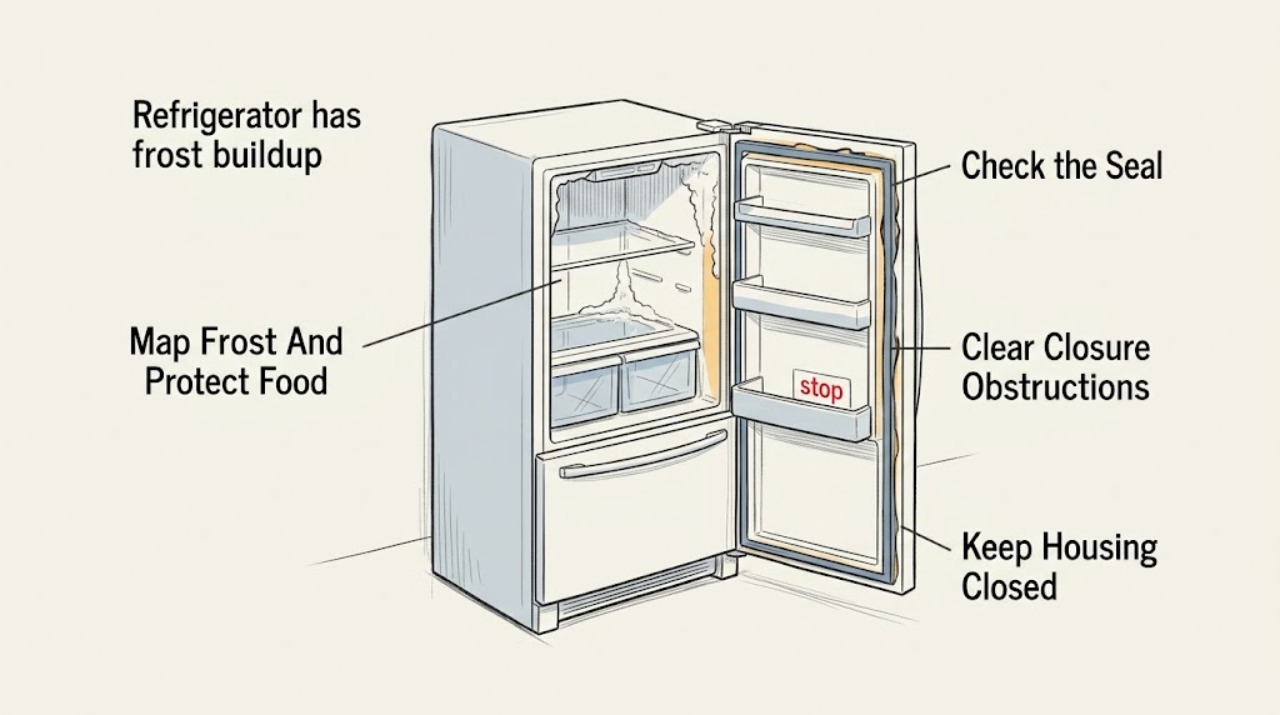
Work through in order
Diagnostic checks
Use only checks that match the exact appliance or system and its official guide.
-
Check 1
From ordinary access, note whether frost is concentrated along one door edge or corner, spread across the freezer, covering return-air vents, or accompanied by water and a warmer compartment; move perishable food to safe cold storage if the unit is not maintaining temperature.
Expected result: Frost follows the door perimeter, is widespread, covers vents, or is paired with water leakage or poor cooling.
Next step: Photograph the pattern and continue only with the matching safe check. If food is warming, water is reaching wiring or the floor, or the door cannot close, keep the door closed as much as possible and arrange prompt appliance service.
Stop if: Do not chip, pry, or scrape frost, and do not keep opening the compartment to monitor it if the unit is warming or leaking.
Why this matters
Why: Perimeter frost supports an air-leak or closure check. Widespread frost or vent blockage adds airflow, prolonged-opening, humidity, or defrost possibilities. Water or warming raises the need for prompt service and food-safety protection.
-
Check 2
With the door open, inspect the full gasket contact surface and cabinet landing for food residue, hardened debris, folds, compression, a loose section, a torn area, or a visible gap when the door is closed; do not pull the gasket out of its channel.
Expected result: The gasket is dirty but intact, partly out of its groove, compressed or folded, torn or hardened, or the gap remains with a clean-looking gasket.
Next step: Clean and gently reseat an intact loose section only as the exact manual allows. If the gasket is damaged or a gap remains, stop and arrange model-specific service or replacement guidance.
Stop if: Do not stretch, glue, cut, heat, puncture, or force the gasket into place.
Why this matters
Why: Residue, a displaced edge, or compression can prevent the magnetic seal from contacting the cabinet. A tear, hardened section, or persistent gap suggests gasket damage, door alignment, hinge, or cabinet-leveling trouble rather than removable dirt.
-
Check 3
Check that door bins, shelves, drawers, food packages, bags, and covers are not touching the door or gasket, and confirm that drawers and shelves are seated in their intended positions; remove only loose items that can be handled without forcing the door.
Expected result: An item blocks closure, a drawer or shelf is mis-seated, the door closes fully after rearrangement, or a gap remains with the storage area clear.
Next step: Rearrange the storage area, close the door normally, and recheck the gasket contact without slamming it. If the gap remains, proceed to the alignment and service branch rather than overfilling or forcing the door.
Stop if: Do not bend shelves, force drawers, slam the door, or keep using the unit when the door cannot latch or seal.
Why this matters
Why: A closure obstruction can create a small air path and frost even when the gasket itself is intact. A remaining gap after the storage path is clear makes gasket damage, door alignment, hinge movement, or an unlevel cabinet more likely.
-
Check 4
If the gasket is intact and the exact manual permits it, wipe residue from the gasket and its contact surface with a warm, damp cloth or the specified mild cleaner, dry both surfaces, and press a loose gasket edge back into its groove by hand without tools.
Expected result: The gasket lies flat and contacts the cabinet around the door, the gap closes, the gap remains, or the gasket springs back out or shows damage.
Next step: Close the door normally and monitor the frost pattern without repeated opening. If the gap remains, returns, or the gasket is damaged, keep the diagnosis with the model information and arrange service.
Stop if: Do not use a sharp tool, abrasive, solvent, adhesive, or heat source, and do not remove the gasket for a generic repair.
Why this matters
Why: A clean, seated gasket can restore the seal when residue or displacement caused the gap. A persistent or recurring gap indicates deformation, door alignment, hinge, cabinet leveling, or a gasket that needs replacement.
-
Check 5
Observe the refrigerator on its installed floor and compare the door edges and gasket contact from top to bottom; consult the exact installation instructions before making any leveling adjustment, and do not loosen hinges or remove the door as a test.
Expected result: The refrigerator or door appears out of level, one door corner has a larger gap, the door swings open instead of closing, or the cabinet and door appear aligned but the gap persists.
Next step: Use only the model-specific leveling procedure if it is an ordinary user adjustment and no force is needed. Otherwise leave the door undisturbed and arrange appliance service for alignment or hinge diagnosis.
Stop if: Do not lift the appliance, alter hinges, remove the door, or use improvised shims without exact manufacturer instructions and safe assistance.
Why this matters
Why: Installation level and door alignment can affect whether the gasket closes against the cabinet. A persistent gap on an aligned unit makes a damaged seal, hinge, door, or cabinet issue more likely.
-
Check 6
Inspect the visible freezer and refrigerator air vents for frost or stored items, then follow the exact manual's safe defrost method if frost blocks access; do not insert anything into an ice layer or use a knife, ice pick, open flame, or improvised heat.
Expected result: Vents are clear, vents are covered by frost, frost returns after a complete manual-directed defrost, or the unit leaks water or remains warm.
Next step: Keep vents clear and observe only after the unit returns to normal operation. If frost recurs, water leaks, or cooling remains poor, arrange appliance service rather than repeating improvised defrosts.
Stop if: Stop if water reaches electrical parts, the unit is warming, a fan is inaccessible, or defrosting requires removing panels or using heat.
Why this matters
Why: Blocked vents can restrict air movement and worsen frost or cooling. Recurrence after the seal is restored and a safe defrost points toward an airflow, defrost, fan, drain, or control problem requiring model-specific diagnosis.
Use your observations
Decision map
Find the observation that best matches what you see, then follow the next safe action.
-
PATH 01Safety boundary
What you see
Frost is concentrated beside the door edge and the gasket has a visible gap, residue, fold, or displaced section, while the compartment still cools normally.
Do this next
Clear closure obstructions, clean and gently reseat an intact gasket as the exact manual permits, then monitor whether the perimeter frost stops returning.
Why this path and its safety boundary
Why it matters: Warm humid air entering through the door seal is the leading explanation; an obstruction or displaced gasket is more likely than a primary defrost failure.
Safety stop: Stop for a torn or hardened gasket, a gap that remains after cleaning, or a door that will not close without force; arrange service.
-
PATH 02Safety boundary
What you see
The storage path is clear and the gasket is clean, but one corner or section still fails to contact the cabinet or springs out of its groove.
Do this next
Do not stretch or glue the gasket. Use the model information to request compatible gasket or alignment diagnosis and keep the door closed as much as possible until service.
Why this path and its safety boundary
Why it matters: Gasket damage, deformation, door or hinge alignment, or cabinet leveling is more likely than surface residue.
Safety stop: Stop if the door cannot latch, frost is spreading quickly, or food temperature is rising; arrange prompt service.
-
PATH 03Safety boundary
What you see
Frost covers much of the freezer, blocks return-air vents, or appears in both compartments after the door seal and storage path have been checked.
Do this next
Follow the exact manual's safe defrost guidance and keep vents clear. If frost returns or defrosting requires panel access, request appliance service for the airflow and defrost system.
Why this path and its safety boundary
Why it matters: Airflow restriction, prolonged door opening or humidity, or a defrost problem becomes more likely; a door gap may be contributing but is not the whole diagnosis.
Safety stop: Do not remove internal panels, use sharp tools or direct heat, or keep operating a unit that is warming.
-
PATH 04Safety boundary
What you see
Frost is paired with water leaking into the compartment or onto the floor, food is warming, or the door cannot close and seal.
Do this next
Protect food and flooring, limit door opening, keep clear of water near electrical parts, and arrange prompt appliance service for a complete seal, drain, defrost, and cooling assessment.
Why this path and its safety boundary
Why it matters: A blocked drain, failed defrost, severe air leak, or cooling fault may be present; continued operation can increase food loss or water damage.
Safety stop: Stop use and disconnect power only if the exact manual and the surrounding area make that action safe; do not reach through water or remove panels.
Helpful context
Understand the symptom
A gap changes the frost diagnosis
Frost along the edge or corner nearest a door gap is a strong reason to inspect the seal before assuming an internal cooling failure. A gasket can look present while food, a shelf, a drawer, residue, compression, or a door-alignment problem prevents full contact. Frost spread across vents or much of the compartment points toward airflow, prolonged door opening, humidity, or a defrost issue as well as the seal. Record the location and pattern before melting anything.
Restore the seal without damaging the appliance
Clean an intact gasket with the method allowed by the appliance instructions, dry it, and press a loose edge back into its groove only if it seats without force. Remove anything caught between the gasket and cabinet and confirm that shelves and drawers are fully installed. A torn, hardened, permanently deformed, or repeatedly displaced gasket is not repaired by more wiping; it needs model-specific replacement or service.
Treat recurring frost as a result, not just a surface symptom
After the seal and closure path are corrected, follow the exact manual for safe defrosting and return the refrigerator to normal operation. If frost comes back at the same edge, the door may still be misaligned or the gasket may be damaged. If frost returns across vents, blocks airflow, causes water to leak, or appears while the compartment warms, stop improvising and have the sealed closure, airflow, defrost, and drain systems assessed.
Safety boundary
Stop conditions
- Do not use a knife, ice pick, screwdriver, sharp tool, open flame, hair dryer, heat gun, or improvised heat source to remove frost.
- Do not stretch, glue, cut, puncture, heat, or force a refrigerator gasket, and do not loosen hinges or remove a door as a user test.
- Stop for a torn or hardened gasket, a gap that remains after safe cleaning, a door that will not close, rapid frost return, water near electrical parts, or food that is warming.
- Do not remove internal panels, probe the frost, force frozen drawers, or attempt fan, drain, defrost, refrigerant, or control repairs without the exact model procedure and qualified service.
- Do not keep operating or repeatedly opening a leaking or warming refrigerator while waiting for a diagnosis; protect food and flooring and arrange prompt service.
Only after diagnosis
Potential parts
- refrigerator door gasket
Consider this category only when the exact gasket is torn, hardened, permanently deformed, repeatedly displaced, or fails to seal after approved cleaning and reseating.
Confirm the exact refrigerator model, door or drawer position, attachment method, and manufacturer fit information before ordering. - door hinge or alignment hardware
Consider this category only when a qualified diagnosis finds that an uneven door, hinge movement, or alignment problem prevents an otherwise intact gasket from contacting the cabinet.
Confirm the exact model, door configuration, hinge side, and manufacturer repair procedure; do not substitute hardware by appearance. - defrost, airflow, or drain component
Consider this category only when frost returns after the seal and closure path are corrected and a qualified technician identifies a blocked drain, defrost, fan, airflow, or control fault.
Confirm the exact model and diagnostic result before selecting a component; do not remove panels or replace a control as a generic frost remedy.
When checks do not resolve it
Need a professional?
Arrange appliance service when the door-seal gap remains after clearing obstructions and safely cleaning an intact gasket, the gasket is torn or deformed, the door is misaligned, frost returns after a model-directed defrost, vents remain blocked, water leaks, or the refrigerator is not staying cold. Seek prompt service when food is warming or water reaches electrical parts. Keep the door closed as much as possible and do not use sharp tools or heat to remove frost.
Safety scope: This article covers observation, clearing loose closure obstructions, and cleaning or gently reseating an intact gasket only when the exact manual permits it. It does not authorize sharp-tool frost removal, heat, panel removal, hinge or door work, fan or drain work, refrigerant work, or improvised defrosting.
Common questions
FAQ
Can a small refrigerator door-seal gap cause frost?
Yes. A gap can let warm humid air enter and freeze near the door, but first check for food, shelves, drawers, residue, gasket displacement, alignment, and leveling that keep the door from closing. A persistent gap needs service or model-specific gasket guidance.
How do I clean a refrigerator gasket without making the frost worse?
With the exact manual as the authority, clean an intact gasket and its contact surface using the permitted warm damp cloth or mild-cleaner method, dry it, and press a loose edge back into its groove by hand. Do not use sharp tools, solvents, glue, or heat.
Why does frost come back after I clean the gasket?
The gap may still be present because the gasket is damaged or deformed, the door or hinge is misaligned, the cabinet is not level, or a storage item prevents closure. If the seal is confirmed and frost returns across vents or the compartment warms, a defrost, airflow, drain, or cooling fault needs service.
Can I scrape the ice off with a knife?
No. A knife, ice pick, screwdriver, or other sharp tool can damage the refrigerator. Follow the exact model's safe defrost procedure, and stop if defrosting requires heat, panel removal, or access to a fan, drain, or control.
When is frost buildup an urgent refrigerator problem?
Arrange prompt service when food is warming, water is leaking onto the floor or near electrical parts, the door will not close, frost rapidly returns, or the frost blocks vents. Protect perishable food and avoid repeated door opening while waiting for diagnosis.
Read the exact guide
Official sources
- LG Refrigerator - Frost Buildup - FREEZER ONLYLG USA Support · Manufacturer frost guidance used for symptom patterns and safe surface checks; the installed model may differ.
- [LG Refrigerator] Cold Air Escapes Through DoorLG USA Support · Manufacturer guidance used for general door-seal mechanics; the installed refrigerator's manual controls the exact procedure.
- [LG Refrigerator] Troubleshooting CondensationLG USA Support · Manufacturer guidance used to connect door closure, gasket condition, vents, and drain symptoms; exact model service instructions control.
- Condensation in the Refrigerator Section - Side by Side RefrigeratorWhirlpool Product Help · Manufacturer guidance used for general symptom branching; it is not a substitute for the installed refrigerator's manual.
- How to remove foreign matter from the door gasketLG Support · Manufacturer gasket-care guidance used for ordinary-access cleaning and reseating; it is not a universal door-removal procedure.
Community feedback
Share a repair observation
Share a plain-text repair observation. Accepted observations are published automatically; this page may take a moment to update.