
On this page
Start here
Quick answer
First identify where the frost is and whether the Bosch refrigerator is a NoFrost model. Bosch says some freezer frost can be normal, but too much frost is a problem and the first check is whether the door closes correctly. A Bosch refrigerator manual also describes light rear-wall frost in the refrigerator compartment as normal automatic defrost behavior, while a thick freezer frost layer can reduce cooling and needs model-specific defrosting. Check the door seal, thermostat setting and visible air vents; if a non-NoFrost model manual permits user defrosting, switch off and unplug it, protect the food, and let the ice thaw without knives or pointed tools. Do not infer a failed defrost heater, sensor or control board from frost alone; recurring frost or poor cooling needs Bosch service.
Work through in order
Diagnostic checks
Use only checks that match the exact appliance or system and its official guide.
-
Check 1
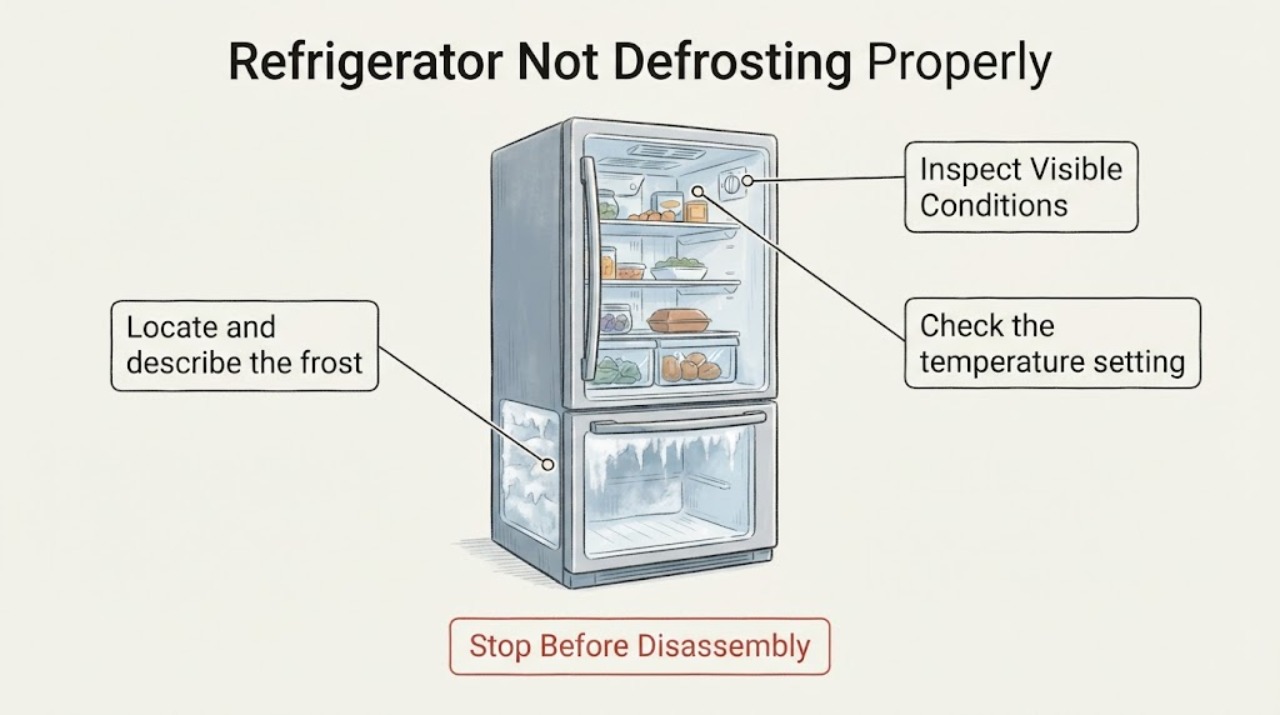
Locate and describe the frost before changing settings: identify whether it is on the refrigerator compartment rear wall, around the freezer walls/food, or blocking a visible vent, and check whether the appliance is labelled or documented as NoFrost.
Expected result: Light rear-wall condensation/frost can be part of automatic refrigerator-compartment operation in some Bosch manuals. Bosch’s general support says some freezer frost is normal, while excessive freezer frost is a problem; a thick coating that covers surfaces or affects airflow is more significant.
Next step: Use the exact E-Nr owner manual to determine whether that compartment should defrost automatically. Do not start a forced-defrost or service-mode procedure from a different Bosch model.
Why this matters
Why: Location and amount distinguish normal compartment behavior from a frost-buildup symptom, but they do not identify a failed heater, sensor or defrost timer.
-
Check 2
Check the freezer/refrigerator door closing and the accessible gasket: remove a package that prevents closure, wipe the seal with a soft damp cloth, and look for a loose, torn or visibly distorted seal.
Expected result: A door that does not close fully or a seal that does not contact the cabinet can admit humid air and produce recurring frost. Bosch says excessive freezer frost should first prompt a door-closure check, and a loose or damaged seal needs support.
Next step: Correct only an obvious obstruction and clean the seal as Bosch describes. If the seal is loose/damaged or frost returns, record the E-Nr and arrange Bosch service rather than replacing a gasket by appearance.
Why this matters
Why: An external sealing condition can explain frost without proving an internal defrost-system fault.
-
Check 3
Check the temperature setting and visible air circulation without removing panels: confirm the thermostat was not moved accidentally and that packages are not blocking the rear or internal vents.
Expected result: Bosch lists an accidentally changed thermostat and blocked rear vents among simple checks for poor cooling. Note whether the freezer is warm, the refrigerator is too cold, or only one compartment has the frost symptom.
Next step: Restore only the documented setting and reposition items to leave visible vents clear. If cooling remains poor or frost is dense, contact Bosch support promptly and protect perishable food.
Why this matters
Why: A setting or airflow problem can change frost and cooling behavior, but a temperature symptom alone cannot identify the defrost heater or sensor.
-
Check 4
If and only if the exact owner manual identifies the appliance as a manually defrosted/non-NoFrost model, follow that manual’s safe defrost procedure; otherwise do not improvise a forced thaw.
Expected result: A Bosch refrigerator manual opened for a documented model family says to switch off, unplug or remove the fuse, move frozen food to a cool place, let frost thaw, and avoid knives or pointed objects because they can damage refrigerant tubes. Bosch’s Qatar support also distinguishes NoFrost models, which do not need manual de-icing.
Next step: Use only the exact model manual. Keep water away from lights and controls, never scrape or pierce ice, and stop if the appliance has damaged tubing, a refrigerant smell, or inaccessible ice.
Why this matters
Why: Manual defrost instructions vary by model and region; this evidence cannot authorize a universal procedure for an unidentified Bosch refrigerator.
-
Check 5
Escalate when the external checks do not explain the pattern: arrange Bosch service for recurring frost, a warm freezer/refrigerator, a seal that will not close, or an appliance that should be NoFrost but repeatedly builds ice.
Expected result: Persistent frost after a correct door seal, setting, airflow and model-approved defrost check indicates that the cause is not established by user observations; food temperature may also be unsafe.
Next step: Record the E-Nr, serial number, compartment temperatures, frost location and timing, then contact Bosch support. Do not remove evaporator covers, test live components or replace an internal part based on frost alone.
Why this matters
Why: Professional assessment is required to distinguish airflow, refrigerant, fan and defrost-system causes without guessing a heater or sensor.
Use your observations
Decision map
Find the observation that best matches what you see, then follow the next safe action.
-
PATH 01Next step
What you see
If only a light layer appears on the refrigerator compartment rear wall and it clears as the appliance cycles
Do this next
Keep the condensation channel/drain clear as the manual permits and monitor temperature; do not scrape the wall.
Why this path and its safety boundary
Why it matters: A Bosch manual for a documented refrigerator family describes rear-wall condensation/frost and automatic defrost as normal; applicability must be checked against the exact model.
-
PATH 02Next step
What you see
If the freezer has a thick or rapidly returning frost layer and the door does not close or seal fully
Do this next
Remove visible obstructions, clean the seal, and arrange model-specific service if the seal is damaged or frost returns.
Why this path and its safety boundary
Why it matters: Bosch identifies door closure/seal as the first check for excessive freezer frost; humid air entry can explain the pattern without proving an internal fault.
-
PATH 03Next step
What you see
If the appliance is labelled NoFrost but develops substantial ice, or if frost remains after the model-approved defrost procedure
Do this next
Keep food safe, avoid panels and live testing, and contact Bosch service with the exact E-Nr and frost history.
Why this path and its safety boundary
Why it matters: The pattern is outside the expected user-maintenance boundary for a NoFrost or correctly defrosted appliance, and the internal cause is not established.
-
PATH 04Next step
What you see
If the refrigerator or freezer is warm, food is thawing, or the frost blocks airflow
Do this next
Minimize door opening, move vulnerable food to safe cold storage when possible, and contact Bosch support rather than changing internal components.
Why this path and its safety boundary
Why it matters: Cooling performance is affected and the food may be at risk; Bosch recommends prompt support for a refrigerator that has stopped cooling properly.
Helpful context
Understand the symptom
“Not defrosting properly” can describe different conditions: a little frost on a refrigerator rear wall, a thick coating in a freezer, or an ice blockage that affects airflow. Bosch’s general freezer guidance says some frost is normal but too much frost calls for a door-closure check and then professional help if the seal is not the issue. Because no E-Nr/model was supplied, this guide stays with visible conditions and documented user-level care; it does not diagnose an automatic defrost heater, sensor, fan or control board.
When checks do not resolve it
Need a professional?
Contact Bosch service when frost repeatedly returns, the freezer is warm, food is thawing, a door seal is loose or damaged, a NoFrost appliance builds substantial ice, or the exact manual does not authorize the proposed defrost step. Do not remove covers, probe the defrost heater or sensor, test live wiring, scrape ice with sharp tools, or replace a part from a generic Bosch diagram.
Common questions
FAQ
Is frost on a Bosch refrigerator rear wall always a fault?
No. A Bosch refrigerator manual for a documented family describes rear-wall condensation or light frost with automatic defrost as normal. Confirm the exact model before applying that interpretation; a thick or persistent freezer coating is a different symptom.
Can I use a knife or sharp tool to remove freezer ice?
No. Bosch’s opened manual warns that scraping ice with a knife or pointed object can damage refrigerant tubes. Use only the exact model manual’s safe defrost method and leave inaccessible or recurring ice to service.
Does frost prove the defrost heater or sensor failed?
No. Bosch’s public checks first cover door closure/seal, thermostat setting, vents and model-specific defrost instructions. A heater, sensor, fan or control diagnosis requires the exact model and professional assessment.
Read the exact guide
Official sources
- De-icing your fridgeBosch Home Appliances · Official Bosch Qatar support page used only for the NoFrost versus manual-defrost distinction; regional instructions do not replace the exact model manual.
- Refrigerator Not Cooling Properly | TroubleshootingBosch Home Appliances · Official Bosch US refrigeration troubleshooting page. It supports checking power, thermostat setting and visible rear vents, then contacting Bosch for poor cooling; it does not identify defrost components.
- Bosch Refrigerator Operating and Care Manual (Defrosting section)Bosch Home Appliances · Official Bosch manual opened as a documented-family example only. Its automatic refrigerator-compartment frost, manual freezer defrost, no-sharp-tools and food-safety instructions are not generalized to unidentified Bosch models; the exact E-Nr manual controls.
- Freezer problems | Common Freezer ProblemsBosch Home Appliances · Official Bosch US support page. It says some frost is normal, excessive frost warrants checking door closure, and professional help is needed if the seal is not the issue; it does not diagnose a heater or sensor.
- How to clean your refrigerator door sealBosch Home Appliances · Official Bosch US refrigerator support page. It supports soft-cloth/mild-soap cleaning and contacting Bosch when the seal is loose or damaged; it does not support universal seal replacement or internal repair.
- Refrigerator Maintenance: How to clean your fridgeBosch Home Appliances · Official Bosch US maintenance page. It supports removing food, allowing freezer frost to thaw, keeping water away from lights/drain areas and cleaning seals; it does not authorize internal defrost repair.
Community feedback
Share a repair observation
Share a plain-text repair observation. Accepted observations are published automatically; this page may take a moment to update.