
On this page
Start here
Quick answer
A Bosch refrigerator can make a normal hum while the refrigerating unit runs, plus bubbling, gurgling or whirring as refrigerant moves through the tubing and clicking when a motor, switch or valve changes state. First record when the sound occurs, then check only external causes such as an unlevel cabinet, contact with nearby units, loose shelves or containers touching each other. If cooling is normal and the sound follows a cycle, it does not by itself prove compressor damage. A new grinding or scraping sound, a sound that stays loud with vibration, loss of cooling, visible cord damage, smoke or a burning odor needs the appliance left off and qualified Bosch service; do not open the sealed system, add refrigerant or perform live electrical tests.
Before you begin
Safety first
- Do not remove covers, touch fans, open the refrigerant circuit, add refrigerant, bypass a protection device or perform live electrical tests. If the power cord is damaged or there is smoke/burning odor, disconnect only when safe and use qualified service.
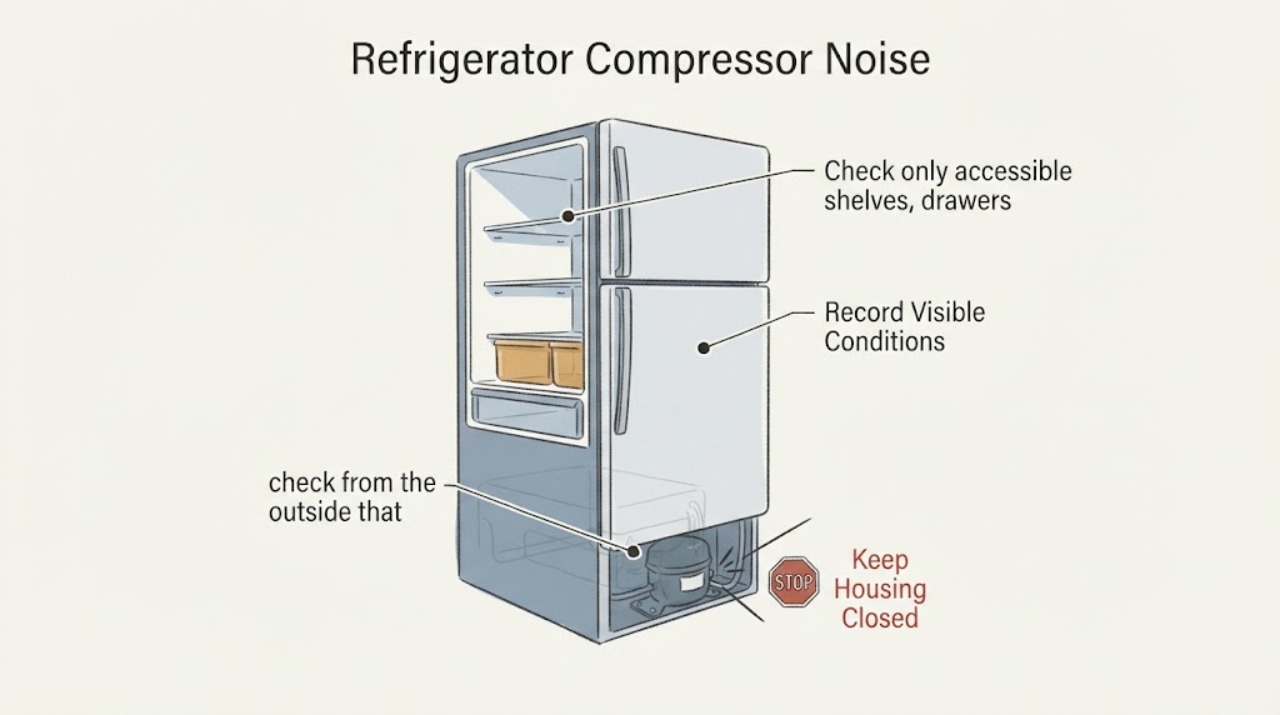
Work through in order
Diagnostic checks
Use only checks that match the exact appliance or system and its official guide.
-
Check 1
Listen for one complete cooling period without opening the appliance or reaching through a vent. Record whether the sound is a hum, brief click, bubbling/gurgling/whirring, or a new grinding/scraping or metallic vibration; note whether it starts and stops with cooling and whether food remains cold.
Expected result: The sound is brief or cycle-linked and cooling is normal, or it is persistent/new and cooling is reduced or uncertain.
Next step: Use the matching branch below. Do not label the compressor, fan or sealed system from the sound alone.
Why this matters
Why: Bosch describes humming, refrigerant-flow sounds and switching clicks as normal operating sounds. A new harsh mechanical sound or a sound paired with warming is outside what sound alone can classify as normal.
-
Check 2
With the refrigerator safely in place, check from the outside that it is level, is not pressed against adjacent cabinets or appliances, and has the clearance and ventilation specified for the exact manual. Do not move a heavy built-in unit or remove panels just to chase a noise.
Expected result: The cabinet rocks or contacts nearby furniture, the rear ventilation area is obstructed, or installation appears stable and clear.
Next step: Correct only the accessible installation condition allowed by the manual. If the noise continues, proceed to the removable-item check and service boundary.
Why this matters
Why: Bosch lists an unlevel appliance, contact with nearby units, and blocked ventilation as conditions that can increase noise or impair cooling. A stable installation makes an internal diagnosis no more certain; it only removes simple external causes.
-
Check 3
Check only accessible shelves, drawers, bottles and containers for wobble, sticking or contact with one another; separate touching items and refit loose removable parts without opening the cabinet.
Expected result: A shelf, drawer, bottle or container is vibrating, touching another item, or all accessible fittings are secure.
Next step: Run the appliance normally and compare the sound. If the same new or harsh sound remains, arrange model-specific service rather than replacing a part based on audio alone.
Why this matters
Why: Bosch identifies loose or touching fittings as easy-to-correct contributors to increased noise. If the sound continues with fittings stable, the cause has not been proven to be the compressor.
-
Check 4
If cooling is also in doubt, verify that the refrigerator has power, the interior light responds when the door opens, the thermostat was not accidentally changed, and accessible rear vents are not blocked; keep food-temperature safety in mind.
Expected result: The appliance has no power, a setting was changed, a vent is blocked, or these checks are normal but food is warming.
Next step: Correct only an obvious setting or accessible obstruction. If power and settings are normal but cooling is poor, move perishable food as needed and contact Bosch service promptly.
Why this matters
Why: Bosch lists power, thermostat setting and blocked rear vents as user-level checks for poor cooling, then directs users to contact support if cooling has stopped. These results do not identify a compressor or refrigeration-circuit failure.
-
Check 5
Stop using the refrigerator and arrange qualified service if the sound is accompanied by smoke, a burning odor, visible cord damage, a sharp electrical symptom, a refrigerant-related leak concern or continued loss of cooling. Do not open the sealed system, add refrigerant, bypass protection or perform live electrical tests.
Expected result: A hazard sign or persistent service symptom is present, or the noise remains after external installation and fitting checks.
Next step: Keep the appliance off when safe to do so, protect food as appropriate, and provide the model/E-Nr., sound description, timing, cooling status and external checks to Bosch or a qualified servicer.
Why this matters
Why: Bosch’s manual says a damaged power cord requires immediate disconnection and that repairs belong to the manufacturer, customer service or a similarly qualified person. Bosch’s noise support also recommends professional help when a compressor problem is possible.
Use your observations
Decision map
Find the observation that best matches what you see, then follow the next safe action.
-
PATH 01Next step
What you see
The sound is a hum, brief click, bubbling/gurgling or whirring that follows cooling operation, and the refrigerator is maintaining temperature.
Do this next
Monitor it after checking level, clearance and touching fittings; seek service if the pattern changes, becomes harsh or cooling declines.
Why this path and its safety boundary
Why it matters: This pattern matches Bosch’s listed normal operating sounds more closely than a confirmed compressor failure.
-
PATH 02Next step
What you see
The noise changes when an accessible shelf, bottle, container or nearby cabinet contact is corrected, or the appliance was visibly unlevel.
Do this next
Leave the cabinet level and clear according to the exact manual, keep fittings stable and reassess during a normal cooling cycle.
Why this path and its safety boundary
Why it matters: An external vibration or installation condition is more likely than a proven compressor fault.
-
PATH 03Next step
What you see
The sound is newly loud, grinding, scraping or metallic and remains after external contact, leveling and removable-item checks, even though the refrigerator still cools.
Do this next
Avoid opening the cabinet or ordering a compressor. Arrange Bosch or qualified service and report when the sound occurs and where it is heard.
Why this path and its safety boundary
Why it matters: A persistent abnormal sound needs model-specific assessment; listening cannot distinguish a compressor, fan, mount or another internal cause.
-
PATH 04Next step
What you see
Noise occurs with warming food, no cooling, smoke, burning odor, visible cord damage or another electrical/refrigeration hazard.
Do this next
Stop use safely, move perishable food as needed, and contact Bosch or a qualified servicer. Do not repeatedly power-cycle to reproduce the sound or work on live wiring or the sealed circuit.
Why this path and its safety boundary
Why it matters: The symptom has crossed the user-level observation boundary and may involve a safety or cooling failure; Bosch directs users to prompt support or qualified repair.
Helpful context
Understand the symptom
“Compressor noise” is a sound description, not a confirmed part failure. The Bosch operating guidance describes a humming motor/compressor, bubbling or gurgling refrigerant flow, and clicking when the motor, switches or valves turn on or off. Those sounds can occur during ordinary cooling. The useful first distinction is whether the sound follows a cooling cycle and the refrigerator still holds temperature, or whether it is a new mechanical or electrical symptom.
Use timing and cooling performance before naming a part
A brief hum or click when cooling starts, or a short bubbling/gurgling sound after the refrigerating unit starts or stops, is consistent with Bosch’s normal-noise descriptions. A sound that is newly harsh, scraping, metallic, continuously loud or accompanied by warming food is a different service decision. The same sound location cannot prove that the compressor, fan, relay or sealed refrigeration circuit is defective.
Keep the first checks outside the cabinet
Bosch’s user guidance points to level, clearance and loose or touching removable items as simple causes of excessive noise. It also asks users to confirm power, thermostat setting and unobstructed rear vents when cooling is poor. These checks can change the next step without requiring the user to remove a cover, touch a fan or disturb the refrigerant circuit.
Know when observation ends
If the noise remains after the external checks, or if the refrigerator is not cooling, stop trying to diagnose the compressor from sound alone. Bosch recommends professional help for a possible compressor problem. The manual also says damaged power cords should be disconnected and repairs handled by the manufacturer, customer service or a similarly qualified person.
When checks do not resolve it
Need a professional?
Safety scope: Do not remove covers, touch fans, open the refrigerant circuit, add refrigerant, bypass a protection device or perform live electrical tests. If the power cord is damaged or there is smoke/burning odor, disconnect only when safe and use qualified service.
Have this ready
- Exact Bosch model/E-Nr. and FD if available, refrigerator style, sound description, where it is heard, whether it is cycle-linked, whether cooling and interior light are normal, installation/clearance observations, and any smoke, odor, cord damage or leak concern.
Common questions
FAQ
Is a humming Bosch refrigerator compressor always failing?
No. Bosch describes a hum from the refrigerating unit as normal. A hum becomes a service concern when it is newly harsh or persistent after external checks, or when cooling is also failing; sound alone does not identify the compressor.
Why does a Bosch refrigerator click or gurgle?
Bosch attributes clicking to motors, switches or valves changing state and bubbling, gurgling or whirring to refrigerant moving through the tubing. Timing and normal cooling support a normal operating-sound interpretation, while a new abnormal pattern should be assessed.
Can I test or replace the compressor myself?
This guide does not support compressor replacement, refrigerant work or live electrical testing. Bosch recommends professional help for a possible compressor problem, and its manual directs repairs to the manufacturer, customer service or a similarly qualified person.
What should I check before calling Bosch about noise?
Record the sound and its timing, then check the accessible installation conditions Bosch lists: level, clearance from nearby units, loose fittings and touching containers. If cooling is poor, also check power, thermostat setting and accessible rear vents; persistent noise or poor cooling needs service.
Read the exact guide
Official sources
- Refrigerator Not Cooling Properly | Troubleshooting | Bosch Home AppliancesBosch Home Appliances · Bosch US refrigeration support page; supports external power, thermostat and rear-vent checks and directs users to prompt support when cooling has stopped.
- 40815356.fmBosch Home Appliances · Opened Bosch-hosted user manual whose cover/table of contents identifies a KDN..en fridge-freezer and whose noise section applies to the covered Bosch refrigerator/freezer family; exact assigned model is not supplied, so model-specific fit or repair is not inferred.
- Refrigerator Making Loud Noises | Troubleshooting | Bosch Home AppliancesBosch Home Appliances · Bosch US refrigeration support page; identifies normal hum, possible evaporator-fan observations, and professional help when a compressor problem is possible. It is not a model-specific diagnosis.
Community feedback
Share a repair observation
Share a plain-text repair observation. Accepted observations are published automatically; this page may take a moment to update.