
On this page
Start here
Quick answer
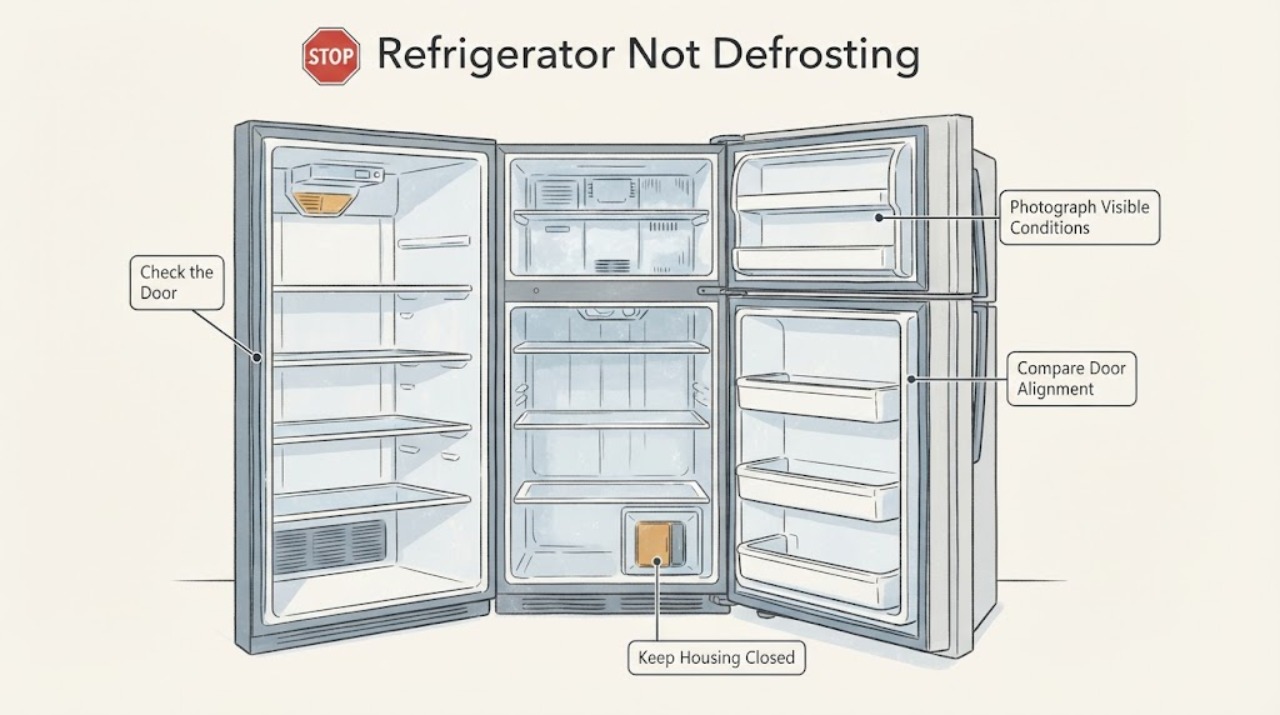
First locate the frost. A light film or droplets on the refrigerator compartment rear wall can be normal on Bosch designs that defrost that wall automatically, while a Bosch NoFrost freezer is designed to remain free of ice. Excessive frost, a freezer that is warming, or frost that returns after a door-seal and loading check needs model-specific service. Check power, temperature setting, door closure, gasket condition, visible vents, and food touching the rear wall without removing panels. If the exact manual permits a user defrost, switch the appliance off, protect food, and follow that manual; never scrape ice with a knife or pointed object, use a hair dryer or other forced heat, or infer a failed heater, sensor, fan, or control board from frost alone.
Before you begin
Safety first
- Do not scrape ice with a knife or pointed object, use a hair dryer, heat gun, open refrigeration panels, test live circuits, or replace a defrost part without qualified model-specific service. Protect food during any approved defrost.
Work through in order
Diagnostic checks
Use only checks that match the exact appliance or system and its official guide.
-
Check 1
Check whether the freezer or refrigerator is warming, whether a temperature alarm is active, and whether frozen food has started to thaw. Keep the doors closed as much as practical; if the appliance is warm, protect perishable food and do not refreeze food that has thawed unless the exact food-safety guidance permits it.
Expected result: Cooling is stable and frost is limited, or the freezer is warm, an alarm is active, food is thawing, or water is accumulating.
Next step: For warming, thawing, or an active temperature problem, keep the appliance closed, move food to safe cold storage if possible, and arrange Bosch or qualified refrigeration service. If temperatures are stable, continue with visible identity checks.
Why this matters
Why: Bosch treats excessive frost and a freezer that is too warm as conditions needing more than cosmetic cleaning; warming raises food-safety priority and does not identify the failed internal part.
-
Check 2
Map the frost without removing interior panels: refrigerator rear wall, freezer shelf or wall, door edge/gasket, or a vent/air outlet. Take a photo and note whether it is a thin film, isolated patch, or thick layer covering most of a surface.
Expected result: Frost is a light rear-wall film, a thick freezer layer, concentrated at the door edge, or blocking a vent or drawer.
Next step: Use the corresponding branch below. Keep the exact Bosch model manual available before any defrosting; do not scrape or heat the ice.
Why this matters
Why: A light rear-wall film may be part of an automatic refrigerator-compartment cycle, while thick freezer frost, blocked airflow, or frost at a poor seal can impair cooling. The location does not prove a heater, evaporator sensor, or fan failure.
-
Check 3
Close each affected door slowly and inspect the visible gasket for dirt, deformation, tears, or a section that is not contacting the frame. Remove only food, shelves, or containers that visibly prevent full closure; do not remove the gasket or adjust hinges without the exact manual.
Expected result: The door closes evenly with a continuous seal, or a visible obstruction, gap, damaged gasket, or frost block prevents closure.
Next step: Correct a visible loading obstruction and clean/dry an intact gasket using the model-approved method. Request service for a torn or deformed gasket, persistent gap, misalignment, or frost that returns after closure is corrected.
Why this matters
Why: Bosch says a door that does not close properly can allow conditions that create excessive frost; a damaged or persistently gapped seal needs model-specific repair. A good seal shifts attention to ventilation, settings, or service rather than proving a defrost component.
-
Check 4
Confirm the thermostat or temperature setting was not changed accidentally and that visible internal vents and external ventilation openings are not blocked by food, packaging, or nearby objects. Leave the airflow path described in the exact manual.
Expected result: The setting is wrong, a vent or ventilation opening is blocked, food touches the rear wall, or the visible airflow path is clear.
Next step: Restore the documented setting and remove only visible obstructions. If the freezer remains warm or frost continues despite clear airflow and correct closure, stop improvising and arrange service.
Why this matters
Why: Bosch lists an accidental thermostat change and blocked vents as external causes of cooling trouble; Bosch manual guidance also warns that food against the rear wall impairs air circulation. These checks do not identify an internal defrost failure.
-
Check 5
Find the appliance's full E-Nr/model from its rating plate and read the matching Bosch manual before attempting any defrost. Determine whether the affected compartment is automatic/NoFrost or a design that permits manual defrost; do not assume another Bosch family's procedure applies.
Expected result: The manual identifies automatic defrost/NoFrost, gives a model-specific defrost procedure, or cannot be matched to the appliance.
Next step: For automatic/NoFrost equipment or an unmatched manual, request model-specific service if frost is excessive or recurring. If the exact manual permits user defrost, follow only that manual after powering off safely and protecting food; never use a knife, pointed tool, hair dryer, or forced heat.
Why this matters
Why: Bosch documentation varies: some examples say the refrigerator rear wall defrosts automatically and a NoFrost freezer needs no defrosting, while other documented freezers require manual frost removal. Without the exact model, the correct procedure and service boundary are unresolved.
-
Check 6
Arrange Bosch or qualified refrigeration service when heavy frost returns after visible closure and airflow checks, the freezer remains warm, the exact manual says the compartment is automatic/NoFrost, the gasket remains damaged, or the appliance cannot be safely defrosted as documented.
Expected result: Frost clears only temporarily, cooling is not maintained, the model-specific manual gives no user remedy, or visible checks do not change the condition.
Next step: Keep the appliance closed as much as practical, protect food, and provide service with the E-Nr/model, frost location, photos, temperature trend, gasket result, setting, and whether vents were blocked. Do not open panels, test live circuits, or order an internal part from the symptom.
Why this matters
Why: Bosch routes excessive frost after a door-seal check, warm freezer conditions, and complex cooling repairs to professional help. Frost alone cannot distinguish a defrost heater, sensor, fan, drain, sealed-system, or control fault.
Use your observations
Decision map
Find the observation that best matches what you see, then follow the next safe action.
-
PATH 01Next step
What you see
The frost is a thin film or droplets on the refrigerator compartment rear wall, temperatures are stable, and the door closes normally.
Do this next
Keep food from touching the rear wall, leave the drainage channel clear, and monitor. Escalate if the frost becomes thick, cooling changes, or it appears in an area the exact manual says should remain frost-free.
Why this path and its safety boundary
Why it matters: Bosch manuals describe this as normal on designs whose refrigerator rear wall defrosts automatically; it is not evidence that the whole refrigerator has stopped defrosting.
-
PATH 02Next step
What you see
Frost is concentrated at a door edge, a gasket has a visible gap, food blocks a vent or touches the rear wall, or an external opening is obstructed.
Do this next
Remove only visible loading or ventilation obstructions and clean/dry an intact gasket according to the manual. Request service for damage, misalignment, or frost that returns.
Why this path and its safety boundary
Why it matters: Warm air entry or restricted circulation can create frost and cooling problems without proving an internal defrost-part failure.
-
PATH 03Next step
What you see
The exact Bosch E-Nr/model manual confirms that the affected compartment is not NoFrost and provides a user defrost procedure.
Do this next
Follow only the matched manual, with the appliance safely off and food protected. Never scrape with a knife or pointed object, use a hair dryer or forced heat, or bypass a safety instruction.
Why this path and its safety boundary
Why it matters: Some Bosch freezer designs require manual frost removal, but the method and food handling are model-dependent.
-
PATH 04Next step
What you see
The exact manual identifies NoFrost/automatic defrost, frost is thick or rapidly returns, the freezer is warm, or visible door and airflow checks are normal.
Do this next
Stop manual experimentation, protect food, and arrange Bosch or qualified refrigeration service with the model and evidence. Do not open the rear panel or test refrigeration circuitry.
Why this path and its safety boundary
Why it matters: Bosch says excessive frost or a warm freezer needs professional assessment; the symptom does not identify a heater, sensor, fan, drain, or control board.
Helpful context
Understand the symptom
Locate the frost before calling it a defrost failure
Record whether the ice is on the refrigerator compartment rear wall, a freezer wall or shelf, around a door edge, or near a vent. Also record whether the freezer is holding temperature, whether the door closes flush, whether food touches the rear wall or blocks airflow, and whether the frost returns after a visible obstruction is corrected. Bosch documents different defrost behavior by compartment and model, so a frost pattern cannot identify an internal heater or sensor.
Normal rear-wall frost is different from a freezer ice sheet
Bosch manuals state that condensation or hoarfrost on some refrigerator rear walls can be normal because that wall defrosts automatically. A documented NoFrost Bosch freezer is intended to remain free of ice, while another Bosch manual family describes regular manual removal for a freezer that does not defrost automatically. The exact E-Nr/model and regional manual therefore matter before choosing any defrost procedure.
Door closure and airflow are the safe first checks
Bosch attributes excessive freezer frost or cooling trouble to conditions such as a door that does not close, blocked vents, an accidental thermostat change, or food touching the rear wall. These visible checks can explain moisture entry or poor circulation without claiming a sealed-system or defrost-part failure.
When checks do not resolve it
Need a professional?
Call Bosch or qualified refrigeration service when heavy or recurring frost persists after visible door and airflow checks, the freezer is warming, the exact manual identifies automatic/NoFrost defrost, the door seal is damaged, food is thawing, or the manual cannot be matched. Do not use sharp tools or forced heat and do not open internal refrigeration panels.
Safety scope: Do not scrape ice with a knife or pointed object, use a hair dryer, heat gun, open refrigeration panels, test live circuits, or replace a defrost part without qualified model-specific service. Protect food during any approved defrost.
Have this ready
- Provide the full E-Nr/model and region, frost location and thickness, photos, freezer/refrigerator temperature trend, door and gasket result, thermostat setting, blocked-vent observations, food-thawing status, and whether the frost returned after a documented model-approved defrost.
Common questions
FAQ
Is frost on the back wall of a Bosch refrigerator normal?
On some Bosch designs, yes. Bosch manuals say condensation or a light frost film can form on the refrigerator rear wall and that it defrosts automatically. Keep food from touching the wall and keep the drainage channel clear; thick or recurring frost, warming, or frost in a NoFrost freezer needs model-specific service.
Does every Bosch freezer defrost automatically?
No conclusion is safe without the E-Nr/model. Bosch documentation includes NoFrost freezers that should remain ice-free and other freezer designs that require manual frost removal. Match the exact manual before choosing a defrost procedure.
What should I check before calling for Bosch refrigerator service?
Check power, thermostat setting, visible vents, food touching the rear wall, door closure, and the accessible gasket. Photograph the frost and note whether the freezer is warming. Do not remove panels or infer a heater or sensor failure from the frost pattern.
Can I remove Bosch freezer ice with a knife or hair dryer?
No. Bosch documentation warns that a knife or pointed object can damage refrigerant tubes, and forced heat can damage the appliance or create a hazard. If the matched manual permits user defrost, follow its safe method after powering off; otherwise use professional service.
Read the exact guide
Official sources
- Freezer problems | Common Freezer Problems | Bosch Home AppliancesBosch Home Appliances US · Opened Bosch's official US support page. It is a general symptom guide and does not identify a component; the exact owner manual remains controlling.
- Bosch refrigerator instruction manual (Defrosting section)Bosch Home Appliances · Opened the official Bosch-hosted PDF and verified the defrosting section. It is a documented manual example; the assigned appliance has no model, so its steps are not presented as universal instructions.
- Fridge is leaking water | Bosch UKBosch Home Appliances UK · Opened Bosch UK official support page. It supports visible door-seal and drainage checks and says exact model instructions should come from the user manual.
- Bosch KGN refrigerator information for use (Defrosting and troubleshooting sections)BSH Home Appliances / Bosch · Opened the official BSH/Bosch PDF and verified its KGN family content. It is used conditionally as a documented family example, not as proof that the assigned no-model refrigerator is KGN.
- Defrosting your fridge | BoschBosch Home Appliances India · Opened Bosch's official India support page. It provides a regional general procedure and explicitly says NoFrost appliances do not need defrosting; the exact appliance manual and regional instructions control.
- Refrigerator Not Cooling Properly | Troubleshooting | Bosch Home AppliancesBosch Home Appliances US · Opened Bosch's official US support page. It supports external checks only and directs stopped-cooling refrigerators to Bosch support.
Community feedback
Share a repair observation
Share a plain-text repair observation. Accepted observations are published automatically; this page may take a moment to update.