
On this page
Start here
Quick answer
If a Magic Chef refrigerator is warm, first confirm that it has power and that the temperature control has not been moved. Then check whether the door closes, air vents are blocked, the cabinet has recently been loaded, or frost is restricting circulation. Do not scrape ice with a sharp tool or open the sealed system; persistent warmth after safe checks needs qualified service.
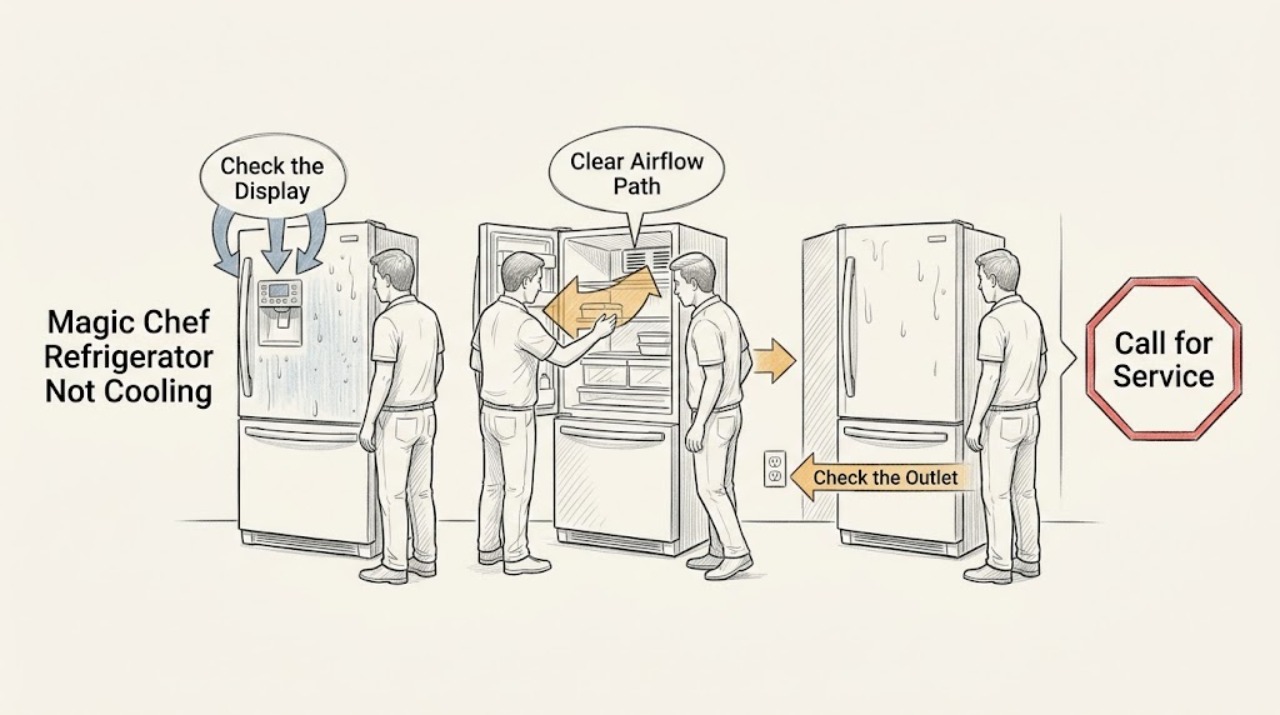
Work through in order
Diagnostic checks
Use only checks that match the exact appliance or system and its official guide.
-
Check 1
Open the door and verify the interior light or other controls respond, then confirm the plug and the refrigerator's temperature control are in their normal operating positions.
Expected result: There is no power response, or the control is at an off or warmer setting.
Next step: Restore power only from a safe, dry position and return the control to the model-specified operating setting; do not repeatedly reset a tripping circuit.
Stop if: Continue to the door and airflow checks.
Why this matters
Why: The refrigerator may not be receiving power or may simply be commanded not to cool.
-
Check 2
Inspect the door gasket and shelves without removing parts; close the door and check for a visible gap, a bin that prevents closure, or food covering the interior air path.
Expected result: The door does not seal or stored items block the air passage.
Next step: Reposition items and clean or re-seat accessible sealing surfaces according to the manual, then allow time for the temperature to recover.
Stop if: Continue to distinguish frost and load-related symptoms.
Why this matters
Why: Warm air entry or restricted circulation can make the compartment warm even when the cooling system runs.
-
Check 3
Note whether the freezer compartment, if equipped, is cold, whether the refrigerator has just been heavily loaded, and whether frost is visibly building around the freezer or air outlet.
Expected result: The unit was heavily loaded, a door was left open, or frost is covering the air path.
Next step: Reduce obstruction and follow the model's safe defrost instructions; never chip ice with a sharp instrument.
Stop if: A complete lack of cooling after the basic checks is a reason to stop escalating DIY tests.
Why this matters
Why: A temporary heat load or frost-restricted circulation is more likely than a confirmed compressor failure.
-
Check 4
After the safe setting, seal, and airflow checks, reassess the food compartment and listen for abnormal cycling, repeated clicking, smoke, or a burning smell.
Expected result: The refrigerator remains warm or shows abnormal sound, odor, heat, or repeated breaker trips.
Next step: Protect perishable food and arrange qualified appliance service; leave it off if an electrical hazard is present.
Stop if: Continue monitoring temperature and avoid changing multiple controls at once.
Why this matters
Why: The remaining possibilities include a control, fan, compressor, or sealed-system fault that requires model-specific diagnosis.
Use your observations
Decision map
Find the observation that best matches what you see, then follow the next safe action.
-
PATH 01Next step
What you see
There is no interior power response or the control was off
Do this next
Correct the safe power or setting issue once and observe whether cooling resumes.
-
PATH 02Next step
What you see
The freezer is cold but the refrigerator compartment is warm and the air path is blocked or frosted
Do this next
Clear safe obstructions or use the manual's defrost procedure, then reassess.
-
PATH 03Next step
What you see
Both compartments remain warm after power, setting, seal, and airflow checks
Do this next
Stop replacing parts by guesswork and arrange qualified appliance service.
Helpful context
Understand the symptom
Use the symptom pattern
A warm refrigerator with no interior light, a warm refrigerator with a running compressor, and a freezer that is cold while the fresh-food section is warm point to different next checks. Do not choose a replacement part from the symptom alone.
When checks do not resolve it
Need a professional?
Use qualified service for persistent loss of cooling or any electrical or sealed-system symptom.
Common questions
FAQ
How long should I wait after loading a warm refrigerator?
A recent load can temporarily raise the temperature. Keep the doors closed and observe the unit according to its manual; if it stays warm after the safe checks, arrange service rather than forcing a colder setting.
Should I chip frost off the freezer wall?
No. Follow the model's defrost instructions and never use a sharp tool that could damage the liner or refrigeration tubing.
Read the exact guide
Official sources
- 4.5 CU.FT. REFRIGERATOR INSTRUCTION MANUALMC Appliance / Magic Chef · Magic Chef compact refrigerator operation, temperature control, defrosting, maintenance, and safety
- 17.6 cu. ft. Top-Mount Refrigerator in BlackMagic Chef · Magic Chef refrigerator temperature-control and compartment design context
Community feedback
Share a repair observation
Share a plain-text repair observation. Accepted observations are published automatically; this page may take a moment to update.