
On this page
Start here
Quick answer
Verify the actual temperature before assuming the compressor has failed: place a thermometer in a glass of water on the middle shelf and leave it for 12 hours or overnight. Then check the temperature setting, door seal, recent hot food or long door opening, blocked airflow from overpacking, and the appliance's ambient location. If the temperature remains high after those checks, Beko says a compressor, evaporator fan, or condenser system may need professional diagnosis; do not open the sealed system or attempt electrical repair.
Before you begin
Safety first
- Do not open the sealed cooling system, handle refrigerant, test live wiring, or remove electrical covers. Unplug before cleaning an accessible condenser area. Move food to safe cold storage if the refrigerator cannot maintain a safe temperature.
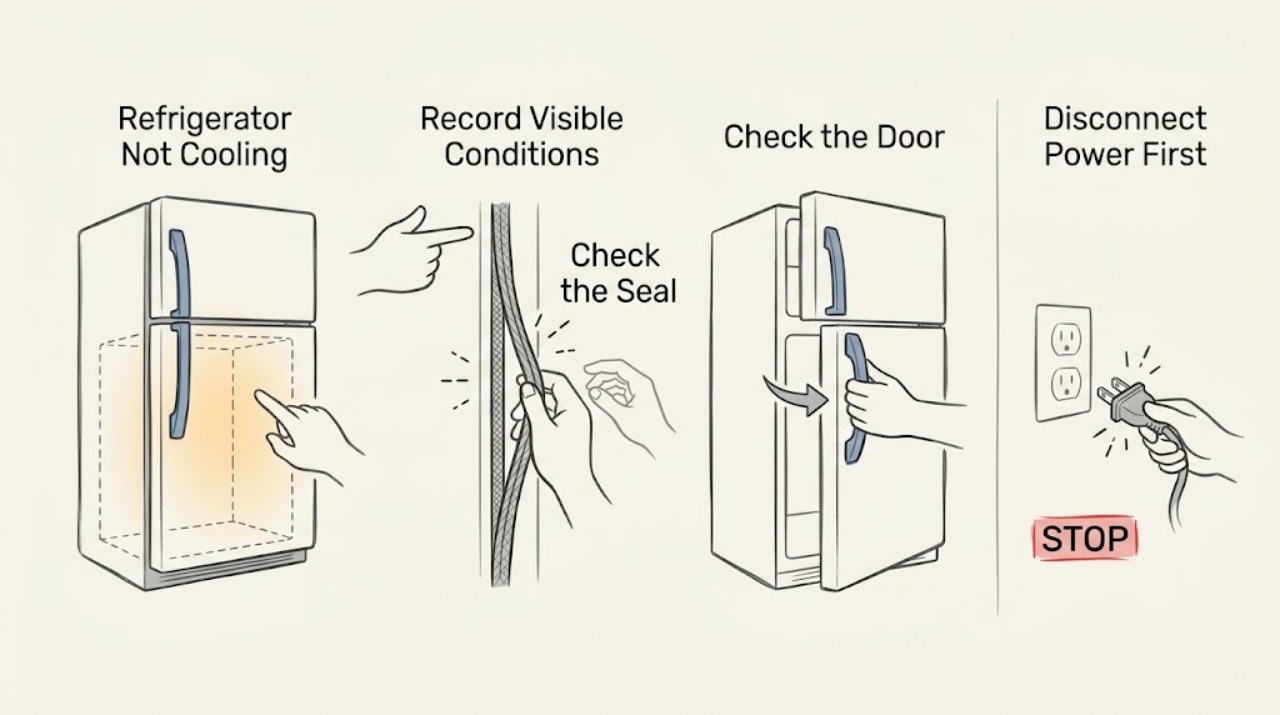
Work through in order
Diagnostic checks
Use only checks that match the exact appliance or system and its official guide.
-
Check 1
Put a refrigerator thermometer in a glass of water on the middle shelf and leave it undisturbed for 12 hours or overnight. Record the reading and compare it with the set temperature shown on the control panel, if your model has one.
Expected result: The measured temperature is around Beko's recommended refrigerator target of 5°C, or it is clearly warmer while the display appears normal.
Next step: If the reading is warm, continue with the seal, loading, setting, and ambient checks. If it is near the recommended target, keep the door closed and monitor rather than changing multiple controls at once.
Why this matters
Why: A normal measured temperature means the refrigerator is cooling even if the display or a quick hand test suggested otherwise. A warm measured temperature confirms a cooling problem; the external display alone cannot establish the actual compartment temperature.
-
Check 2
Check the temperature control against the exact model manual, then inspect the door gasket all the way around for a raised edge, crack, gap, or section that does not meet the cabinet when the door is closed.
Expected result: The setting is warmer than intended or the seal has a visible gap or damage, or the setting and seal appear normal.
Next step: Correct the setting using the model manual and close the door fully. If the gasket is cracked, raised, or will not seal, arrange service or a model-matched seal rather than gluing or reshaping it.
Why this matters
Why: An incorrect setting or warm air entering through a damaged seal can keep the compartment too warm. A sound seal and correct setting make a simple adjustment less likely to explain a persistent warm reading.
-
Check 3
Review the last day of use: note whether hot food was added, the door was left open for an extended period, or the refrigerator was just heavily restocked. Then leave the door closed and allow recovery before measuring again.
Expected result: The warm reading began after a heavy load, hot food, or prolonged door opening, or it remains warm after the refrigerator has been closed and allowed to recover.
Next step: Let the appliance recover with the door closed and recheck the temperature. If it remains warm, continue to the airflow and external-condition checks rather than repeatedly loading more food.
Why this matters
Why: Beko says these events can raise the internal temperature temporarily. If the temperature does not recover after the load and door conditions return to normal, a continuing fault is more likely.
-
Check 4
Look inside for items blocking cold-air vents or packing the shelves so tightly that air cannot circulate. Remove only enough items to restore visible space around the vents, and make sure food has cooled before storing it.
Expected result: The refrigerator is overpacked or a vent is blocked, or there is usable space around vents and the load is not obstructing airflow.
Next step: Rearrange the load to leave the vents clear, keep hot food out until it has cooled, and repeat the temperature check after stabilisation. If the reading remains high, proceed to the external and service branch.
Why this matters
Why: Beko identifies overpacking and blocked interior air circulation as reasons temperatures can vary. If airflow is already clear, rearranging food is unlikely to fix a persistent warm reading by itself.
-
Check 5
Check that the refrigerator is not in an ambient location outside the limits in its model documentation, and that the rear or underside ventilation area is not visibly covered in dust. If cleaning is allowed for your model, unplug the appliance before gently brushing or vacuuming the accessible condenser area at low suction.
Expected result: The room is unusually cold or hot for the model, ventilation is restricted, or the accessible condenser area is dusty; alternatively, the location and accessible area look normal.
Next step: Restore the model's required ambient and ventilation conditions and allow the appliance to stabilise. If it remains warm, do not remove panels or handle refrigerant; arrange authorised service.
Why this matters
Why: Beko notes that ambient conditions can affect operation and that a dirty condenser may not release heat efficiently. A normal location and clean accessible area make a sealed-system, fan, compressor, or control problem more concerning.
-
Check 6
Listen and look for operating clues without removing covers: note whether the refrigerator is completely silent while the interior light works, whether a fan or compressor runs unusually loudly, and whether frost is blocking an air path.
Expected result: The refrigerator is silent despite a warm compartment, makes a progressively louder or abnormal noise, or has persistent frost; or it has ordinary operating sounds with no unusual frost.
Next step: Stop at observation and record the sound, frost location, and temperature result. Contact an authorised service agent rather than testing live components or dismantling the cooling system.
Why this matters
Why: Beko says a warm refrigerator that is silent while the light works can indicate a fault, and identifies the compressor, evaporator fan, or condenser system as possible technical causes after basic checks. Frost or abnormal noise can also point to a condition that needs model-specific diagnosis.
Use your observations
Decision map
Find the observation that best matches what you see, then follow the next safe action.
-
PATH 01Next step
What you see
The thermometer is near the recommended refrigerator target after a heavy load or long-open door, and the seal and airflow are intact.
Do this next
Keep the door closed as much as practical, avoid adding hot food, and continue occasional temperature checks. Do not change settings repeatedly while the refrigerator is stabilising.
Why this path and its safety boundary
Why it matters: This pattern is more consistent with temporary heat load or normal recovery than with a cooling-system failure.
-
PATH 02Next step
What you see
The measured temperature is warm and a seal gap, incorrect setting, overpacked vent, dusty accessible condenser, or unsuitable ambient condition is found.
Do this next
Keep the corrected condition in place and recheck after stabilisation. If the refrigerator remains warm, stop user troubleshooting and arrange authorised service.
Why this path and its safety boundary
Why it matters: Improvement after one external correction makes that condition a likely contributor. No improvement after the checks makes an internal fan, compressor, condenser, control, or sealed-system fault more likely.
-
PATH 03Next step
What you see
The compartment is confirmed warm after the accessible checks, especially when the appliance is silent with the light on, has abnormal operating noise, or shows persistent frost.
Do this next
Move perishable food to a safe cold appliance, keep the door closed, and contact an authorised Beko service agent. Provide the model or service code and the measured temperature and symptom history.
Why this path and its safety boundary
Why it matters: This pattern is less likely to be a user-setting issue. Beko lists the compressor, evaporator fan, and condenser coils or fan among possible technical causes and recommends customer service rather than self-repair.
Helpful context
Understand the symptom
A warm Beko refrigerator can be recovering from a large grocery load or a long-open door, or it can have a restricted seal or airflow path. The display on the door, when present, may show the set temperature rather than the temperature of the food compartment. Measuring the air indirectly with a thermometer in water gives a more useful result for deciding what to do next.
Keep the door closed while the refrigerator stabilises and move perishable food to safe cold storage if the compartment is clearly warm. User checks should remain external and low risk: settings, seal, spacing, room conditions, and accessible dust on the condenser area. Beko recommends authorised service rather than self-repair when those checks do not restore cooling.
Only after diagnosis
Potential parts
- refrigerator door gasket
Consider this only when the temperature check confirms the compartment is warm and the existing gasket has a persistent gap, crack, or raised section that allows warm air into the cabinet.
Confirm the full model or service code and the manufacturer's fit information before ordering; do not assume a gasket from another Beko model will fit.
When checks do not resolve it
Need a professional?
Arrange authorised service when the measured temperature remains high after the setting, seal, loading, ambient, and accessible ventilation checks; when the appliance is silent with the light on; when abnormal noise or persistent frost accompanies poor cooling; or when a damaged seal needs replacement.
Safety scope: Do not open the sealed cooling system, handle refrigerant, test live wiring, or remove electrical covers. Unplug before cleaning an accessible condenser area. Move food to safe cold storage if the refrigerator cannot maintain a safe temperature.
Have this ready
- Provide the full model or service code, measured temperature and measurement method, control setting, whether the door seal or vents were blocked, the room condition, and any unusual sound or frost pattern.
Common questions
FAQ
How can I tell whether my Beko refrigerator is really too warm?
Place a thermometer in a glass of water on the middle shelf for 12 hours or overnight. An external display may show the set temperature rather than the actual compartment temperature, so use the measured result when deciding what to do next.
Can overpacking make a Beko refrigerator stop cooling evenly?
Yes. Beko says packing the cabinet too tightly can restrict cold-air circulation and create temperature variation. Clear the vents and leave room around the load, then recheck after the refrigerator stabilises.
What does it mean if the Beko refrigerator is silent but the light works?
Beko says a warm interior with the light on but no operating sound can indicate a fault, such as a compressor problem. Record the measured temperature and arrange authorised service rather than testing live components.
Should I clean the condenser coils if my Beko refrigerator is warm?
If the model exposes an accessible condenser area, Beko recommends unplugging the appliance before gently removing dust with a brush or low-suction vacuum. Do not remove panels or continue into sealed-system work; arrange service if cooling remains poor.
Read the exact guide
Official sources
- Why is my fridge not cooling?Beko · Beko refrigerator temperature, door, loading, setting, and technical cooling checks
- Should my fridge be making noise?Beko · Beko refrigerator operating sounds and technical-fault clues
- How to fix a refrigerator that's not cold enoughBeko · Beko refrigerator ambient temperature, door seals, airflow, condenser cleaning, and service boundary
- What Temperature Should a Fridge Freezer Be?Beko · Beko refrigerator target temperature, measurement method, door, loading, and ambient conditions
Community feedback
Share a repair observation
Share a plain-text repair observation. Accepted observations are published automatically; this page may take a moment to update.