
On this page
Start here
Quick answer
If a Blomberg refrigerator is not cooling, first confirm that it has power and that the temperature control is on, then set the compartment according to the model manual. Blomberg's general guidance gives 3°C to 5°C as the fridge range and recommends checking the actual temperature with a thermometer in a glass of water for about 12 hours. Keep vents clear, avoid overloading and hot food, minimize door openings, and inspect the door seal for gaps or damage. If the refrigerator remains warm after those checks, the compressor does not restart after a power interruption, heavy frost blocks airflow, or there is an abnormal noise, smell, leak, or damaged cord, keep food in a safe cold appliance and arrange qualified service rather than opening the sealed or electrical system.
Before you begin
Safety first
- The user may check power externally, settings, loading, accessible airflow, and door seals with power disconnected before cleaning. Compressor, fan, thermostat, defrost, sealed-system, refrigerant, wiring, and control-board work belongs to qualified service.
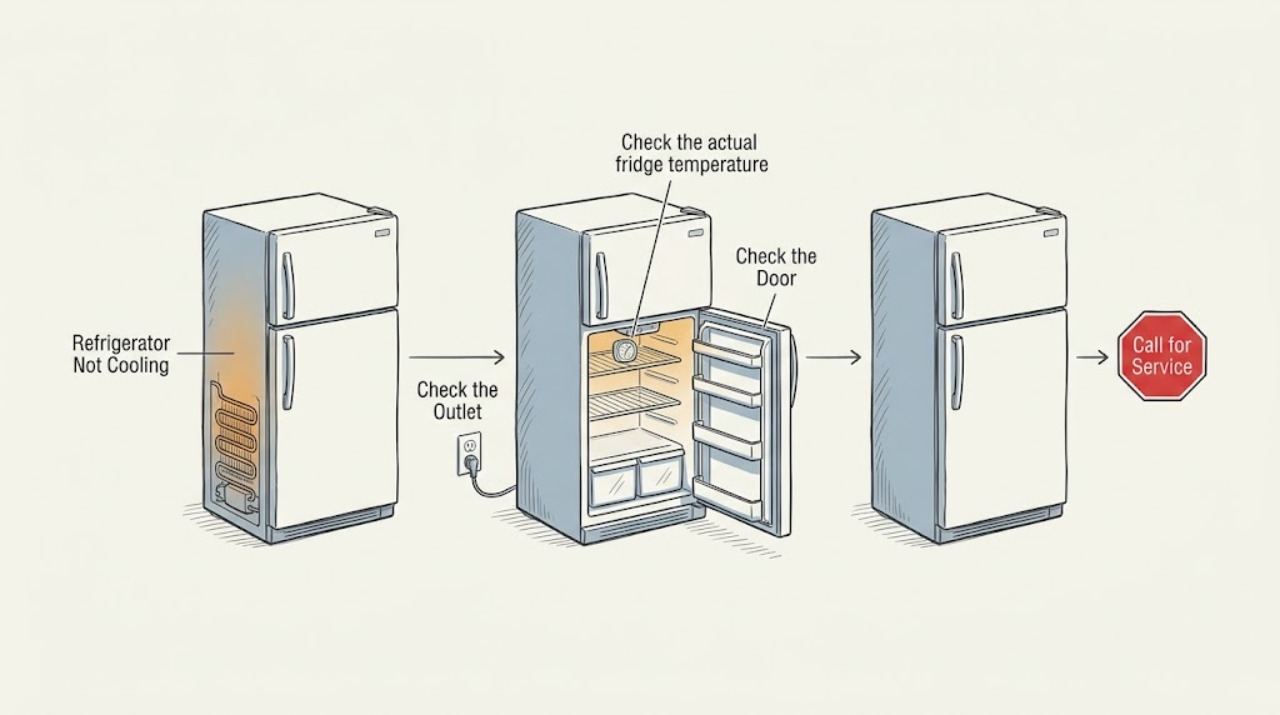
Work through in order
Diagnostic checks
Use only checks that match the exact appliance or system and its official guide.
-
Check 1
Check that the refrigerator plug is fully seated, the accessible outlet is powered, and the appliance's thermostat or digital control is not set to off. If there was a recent outage or the plug was removed, allow the model's normal restart period rather than repeatedly cycling the power.
Expected result: The outlet is dead, the refrigerator has no lights or operating response, the control is off, or the appliance has power but remains warm.
Next step: Address a household supply problem through appropriate electrical help. If the outlet works but the refrigerator has no response, keep it disconnected and arrange service; otherwise continue with the model-specific temperature and airflow checks.
Why this matters
Why: A dead outlet or absent response points first to the household supply or appliance power path. A powered refrigerator with a warm cabinet needs a temperature, airflow, door-seal, frost, or cooling-system check; the symptom alone does not identify a failed compressor or thermostat.
-
Check 2
Check the actual fridge temperature with a thermometer in a glass of water on the middle shelf for about 12 hours or overnight, then compare it with the model's setting and Blomberg's general 3°C to 5°C guidance.
Expected result: The measured temperature is within the expected range, above the expected range, or the measurement was taken before the appliance had time to stabilise after a setting change, delivery, or a large load of food.
Next step: Follow the exact model manual to select an appropriate setting and allow the refrigerator to stabilise. If a properly measured temperature remains high, continue with loading, airflow, and door-seal checks rather than replacing a control part based only on the reading.
Why this matters
Why: A normal measurement means the complaint may be about a different compartment, display interpretation, or short recovery period. A high measurement confirms inadequate cooling but does not by itself distinguish a setting, airflow, door, defrost, or internal fault.
-
Check 3
Rearrange food so interior air vents are not covered, remove or relocate recently added hot food, avoid overpacking the cabinet, and keep the door closed except for brief loading. Check whether the cooling complaint began after a large load or frequent door opening.
Expected result: Airflow was blocked or the refrigerator was heavily loaded, and cooling improves after rearrangement and a stabilisation period, or the cabinet remains warm with clear vents and a light load.
Next step: Keep vents clear and allow the appliance time to reach the selected temperature. If it remains warm, inspect the door seal and visible frost pattern; do not remove internal panels to look for a fan or evaporator fault.
Why this matters
Why: Restricted airflow, hot food, and frequent or prolonged door opening can lengthen recovery and create uneven temperatures. If the refrigerator stays warm with clear vents and no unusual loading, those operating conditions are less likely to be the complete cause.
-
Check 4
With power disconnected before cleaning, inspect the refrigerator and freezer door seals around the full perimeter for debris, looseness, wear, tears, or a section that does not contact the cabinet. Also look for heavy frost or ice that is blocking visible vents or a rear wall, and use only the defrost or drain procedure allowed by the exact model manual.
Expected result: The seal has a gap or damage, frost visibly obstructs airflow, or the seal and visible airflow path appear normal.
Next step: Clean an intact seal and keep the doors fully closed. If a seal is torn or loose, or frost returns after a model-directed defrost step, arrange qualified service for confirmation; do not chip ice with a sharp tool or open the cooling system.
Why this matters
Why: A compromised seal can admit warm air and make the appliance run longer; frost can restrict airflow or accompany a defrost issue. A normal visible seal and airflow path do not rule out an internal cooling fault.
Use your observations
Decision map
Find the observation that best matches what you see, then follow the next safe action.
-
PATH 01Next step
What you see
The outlet and controls are normal, the refrigerator has recently been moved or loaded with hot food, and the measured temperature improves after the model-specific stabilisation period.
Do this next
Keep the doors closed, avoid adding more warm food, and recheck the middle-shelf temperature after stabilisation. Escalate if it does not reach the model-appropriate range.
Why this path and its safety boundary
Why it matters: The recovery time or operating conditions explain the temporary warm reading more plausibly than a confirmed component failure.
-
PATH 02Next step
What you see
The measured temperature is high, vents are blocked or the cabinet is overpacked, and cooling improves after food is rearranged and airflow is restored.
Do this next
Maintain clearance around vents and avoid overloading. If the temperature rises again with normal loading, proceed to service rather than adding more settings changes.
Why this path and its safety boundary
Why it matters: The before-and-after change supports an airflow or loading restriction as the immediate cause, not a confirmed compressor or refrigerant failure.
-
PATH 03Next step
What you see
A door seal has a gap, is torn or loose, or the refrigerator shows condensation or recurring frost around a door while the cabinet runs warm.
Do this next
Clean only an intact seal and keep the door closed. Have qualified service confirm the model-specific gasket and alignment before ordering a replacement, especially if the door is sagging or the gap remains.
Why this path and its safety boundary
Why it matters: Warm air entering through a compromised seal is a credible contributor to the cooling complaint, but a damaged seal and a door-alignment problem can coexist.
-
PATH 04Next step
What you see
The actual temperature remains high after the setting, loading, airflow, door-seal, and visible frost checks, or the compressor does not restart after the manual's stated restart period.
Do this next
Keep perishable food in a known cold appliance, avoid repeated power cycling, and arrange qualified Blomberg or appliance service. Provide the measured temperature, control setting, timing, noise, frost, and door-seal observations.
Why this path and its safety boundary
Why it matters: The accessible checks have not isolated the cause. A thermostat, fan, defrost, compressor, sealed-system, or control issue may be involved, but the symptom does not identify which part and is not a safe basis for cabinet disassembly.
Helpful context
Understand the symptom
Verify the temperature before diagnosing a cooling failure
A display can show a set point rather than the air temperature. Blomberg recommends placing a thermometer in a glass of water on the middle shelf for about 12 hours or overnight. Record the measured result, the compartment tested, and whether the refrigerator is running; this separates a setting or recovery period from a persistent cooling fault.
Keep internal refrigeration work out of a home check
Disconnect power before cleaning or inspecting accessible areas. Do not remove the rear cover, pierce tubing, handle refrigerant, probe live wiring, or dismantle a compressor, fan, thermostat, or defrost assembly. If the cord, plug, outlet area, cabinet, or floor is wet or damaged, do not touch it to disconnect power; keep clear and arrange qualified service.
Only after diagnosis
Potential parts
- refrigerator door gasket
Consider this only if a qualified assessment confirms that the gasket is torn, detached, or unable to seal after the door and cabinet alignment are correct; warm temperatures alone do not identify the gasket.
Confirm the exact refrigerator model and the manufacturer's fit information before ordering any gasket. - refrigerator temperature control or sensor
Consider this only after qualified testing identifies a control or sensor fault; an incorrect setting, blocked airflow, door leak, frost, or sealed-system issue can produce the same warm-cabinet symptom.
Confirm the exact model and manufacturer-approved part specification before ordering, and do not attempt internal electrical replacement as a user check.
When checks do not resolve it
Need a professional?
A qualified technician should assess persistent inadequate cooling, repeated frost, a damaged or poorly seated door washer, a compressor that does not restart, or any electrical, leak, or abnormal-noise warning after the safe user checks.
Safety scope: The user may check power externally, settings, loading, accessible airflow, and door seals with power disconnected before cleaning. Compressor, fan, thermostat, defrost, sealed-system, refrigerant, wiring, and control-board work belongs to qualified service.
Common questions
FAQ
What temperature should a Blomberg refrigerator reach?
Blomberg's general guidance gives 3°C to 5°C for the fridge compartment. Check the actual temperature with a thermometer in a glass of water on the middle shelf for about 12 hours or overnight; an external display may show only the set point.
Why is my Blomberg refrigerator running but not cooling?
Check the selected setting, clear blocked vents, avoid overloading or hot food, minimize door openings, and inspect the door seal. If a measured temperature remains high after the appliance stabilizes, arrange service rather than opening the cooling system.
Can a door seal make a Blomberg refrigerator stop cooling properly?
Yes. A damaged, loose, dirty, or poorly seated seal can let warm air enter and make the appliance run longer. Clean an intact seal with power disconnected, but have a qualified technician confirm the gasket and door alignment before replacement.
When should I call service for a Blomberg refrigerator that is not cooling?
Call when the measured temperature stays high after the setting, loading, airflow, door-seal, and visible frost checks, or immediately for a damaged cord, wet electrical area, leak, burning smell, abnormal noise, or a compressor that does not restart as the manual directs.
Read the exact guide
Official sources
- How long should you wait to turn on a fridge after delivery?Blomberg · Blomberg refrigerator not cooling when recent movement, settling time, or temperature stabilisation may explain a warm reading
- What’s the best temperature for my fridge?Blomberg · Blomberg refrigerator not cooling when actual temperature, settings, airflow, ambient temperature, or door seals need checking
- Refrigerator / User ManualBlomberg · Blomberg refrigerator not cooling when power, settings, doors, loading, hot food, frost, or compressor restart may be involved
- Contact Us | BlombergBlomberg · Blomberg refrigerator not cooling after safe user checks
- Why are there droplets of water or ice on the fridge rear wall?Blomberg · Blomberg refrigerator not cooling when ice, condensation, blocked airflow, or a faulty door seal may be present
Community feedback
Share a repair observation
Share a plain-text repair observation. Accepted observations are published automatically; this page may take a moment to update.