
On this page
Start here
Quick answer
First identify where the water appears and whether it follows dispenser or ice-maker use, a defrost cycle, or door opening. From a dry position, look for moisture inside the cabinet, around the door gasket, under the appliance, and at any visible water connection. Do not remove panels, move the refrigerator into a wet area, perform live electrical tests, or force a drain clear. If water is persistent, spreading toward an outlet or cord, or coming from an inaccessible connection, stop the appliance if it can be done safely, shut off its water supply if that valve is safely reachable, protect the area, and arrange qualified appliance service.
Before you begin
Safety first
- User observation only: keep the refrigerator stationary, remain on a dry stable floor, do not open panels, perform live electrical tests, move the appliance through water, force a drain clear, disconnect tubing, or reach behind an unsafe unit. Keep people and pets away from water and wet electrical equipment.
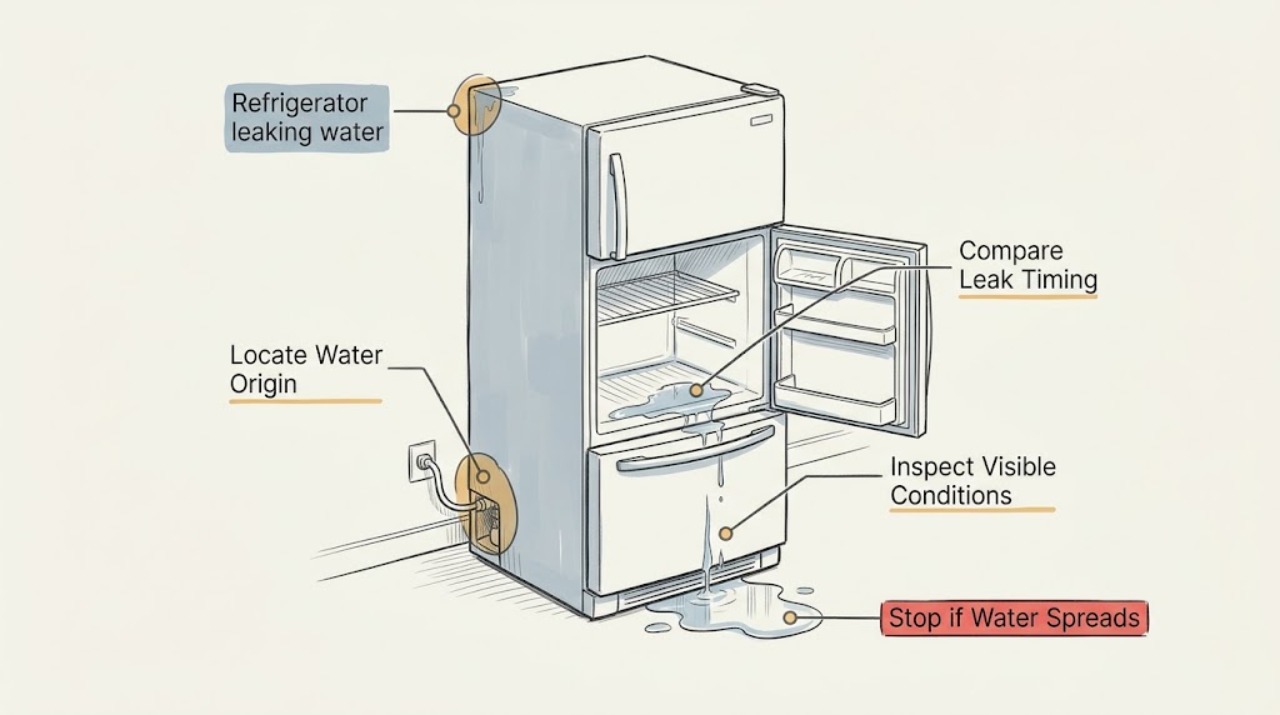
Work through in order
Diagnostic checks
Use only checks that match the exact appliance or system and its official guide.
-
Check 1
With the refrigerator stationary and the floor dry enough to stand safely, look at the visible water path inside the cabinet, beneath the front edge, and around accessible exterior surfaces without moving the appliance or removing panels.
Expected result: Classify the first visible wet area as inside a compartment, under a drawer, at the front floor edge, beneath the cabinet, near the dispenser, or at a visible supply/filter connection. Note whether the water is clear, frozen, or mixed with food residue.
Next step: Photograph the first visible wet area, wipe only accessible dry-area spills safely, and keep the appliance and floor under observation while arranging service if the source is not clear.
Stop if: Stop immediately if water reaches an outlet, cord, plug, power strip, or other electrical equipment, or if the floor becomes slippery or unsafe.
Why this matters
Why: An interior or under-drawer origin can fit a drain or defrost path concern; a dispenser or connection origin points toward the water system; an uncertain endpoint means the leak should not be diagnosed by part replacement.
-
Check 2
Without deliberately running a water or ice test, compare when the leak appears with normal use that already occurred, such as dispenser use, ice-maker activity, door opening, or a period when the refrigerator was left closed.
Expected result: Record whether water appears only after dispensing or ice use, after the appliance has been closed for a while, during or after a defrost period, or continuously regardless of use.
Next step: Stop any optional ice or water use if it appears related, keep a short time log, and provide it to an appliance technician rather than repeating cycles to reproduce the leak.
Stop if: Stop using the appliance's water or ice features and escalate if the leak is continuous, rapidly worsening, or cannot be contained without reaching a wet or energized area.
Why this matters
Why: Use-linked water suggests the dispenser, ice-maker, filter, or supply path; delayed water under a compartment can fit a defrost drainage or pan issue; continuous water raises urgency for an active supply leak or a failure that needs service.
-
Check 3
Visually inspect the accessible door gasket and closure from the front, checking for visible gaps, folds, debris, or an item preventing the door from seating; do not pull the gasket out or adjust hinges.
Expected result: Note whether the gasket contacts the frame around its visible perimeter, whether the door closes evenly, and whether frost or moisture is concentrated near a gap or on the cabinet floor.
Next step: Remove only an obvious loose item that blocks closure, if it can be done without force, then document the gasket condition and seek the model's manual or qualified service if the gasket is damaged or the leak continues.
Stop if: Stop if the door, hinge, gasket, or cabinet is damaged, unstable, or requires force to close; do not disassemble the door or seal.
Why this matters
Why: A visible sealing gap can allow warm moist air in and contribute to condensation or ice that later becomes water; a uniform seal makes a gasket-related cause less likely but does not rule out a drain or supply issue.
-
Check 4
Look inside the accessible lower or rear area of the refrigerator or freezer for visible ice, a wet liner, pooled water, or a drain opening identified by the owner's manual, without removing a panel or poking the drain.
Expected result: Record whether water is under a crisper, ice is accumulating on a floor or wall, the accessible drain area is visibly covered, or no internal evidence is present.
Next step: Keep food and the interior protected, avoid sharp tools, heat, chemicals, and forced flushing, and arrange service if the condition recurs or the drain is inaccessible.
Stop if: Stop if inspection would require panel removal, contact with ice near wiring, defrost-heater access, or any tool inside the appliance.
Why this matters
Why: Water under drawers or ice near a drain can be consistent with a blocked or frozen defrost path, but the exact cause and safe clearing method are model-specific; no visible evidence does not exclude a concealed pan or tube problem.
-
Check 5
From the front or another safely reachable position, inspect only visible filter housing, tubing, and connection areas for droplets, a split, kink, or a fresh wet trail; do not pull the refrigerator out or tighten a fitting.
Expected result: Note whether moisture is at the filter area, a visible tube, the floor behind the unit, or not visible at all. Identify whether the wetness increases after a normal prior use or is present continuously.
Next step: If the household shutoff is clearly accessible from a dry position, close it only when needed to limit an active water leak; otherwise keep clear and request appliance or plumbing service.
Stop if: Stop if the connection is behind the appliance, the floor is wet, water is near electrical equipment, or the shutoff cannot be reached without moving the appliance or entering the wet area.
Why this matters
Why: A wet visible supply path suggests a water-system leak and may require a safe water shutoff; no visible connection leak shifts attention toward internal drainage or an inaccessible source.
Use your observations
Decision map
Find the observation that best matches what you see, then follow the next safe action.
-
PATH 01Safety boundary
What you see
Water reaches an outlet, plug, cord, power strip, or other electrical equipment, or the floor around the appliance is wet and unsafe.
Do this next
Keep clear, do not touch wet electrical equipment, and use only a safe remote shutoff if one is already accessible without entering the wet area.
Why this path and its safety boundary
Safety stop: Do not perform live testing, pull the refrigerator through water, or re-energize equipment that may be wet.
-
PATH 02Safety boundary
What you see
Water is continuously entering or a visible supply, filter, or dispenser connection is wet.
Do this next
Stop water and ice use; close the refrigerator's water shutoff only if it is safely reachable from a dry position, then arrange service.
Why this path and its safety boundary
Safety stop: Do not tighten, disconnect, cut, or replace a connection while it is wet or inaccessible.
-
PATH 03Safety boundary
What you see
Water appears under an interior drawer or compartment, or ice and moisture cluster near an accessible drain area without an external supply leak.
Do this next
Treat a defrost drain, pan, or internal water path as a possibility and arrange model-appropriate service if it recurs.
Why this path and its safety boundary
Safety stop: Do not force a blockage clear or access hidden components.
-
PATH 04Safety boundary
What you see
The door has a visible gap, does not close evenly, or frost and moisture are concentrated near the gasket.
Do this next
Correct only an obvious loose obstruction that can be removed without force and seek the model's support or appliance service for a damaged seal or door alignment issue.
Why this path and its safety boundary
Safety stop: Do not remove the gasket, adjust hinges, or force the door closed.
-
PATH 05Safety boundary
What you see
The source cannot be seen, the leak recurs after cleaning, or timing does not match one visible cause.
Do this next
Stop guessing at parts and arrange qualified appliance service with the location, timing, photos, model information, and safe observations.
Why this path and its safety boundary
Safety stop: Do not repeat cycles, remove panels, or perform electrical or plumbing tests to force a diagnosis.
Helpful context
Understand the symptom
Start with the leak pattern, not a guessed part
Refrigerator water can come from a defrost drain or pan, a door that is not sealing, a filter or dispenser path, or an external water connection. The same puddle can be the endpoint of a leak that started elsewhere. Manufacturer guidance groups common causes around drainage, door sealing, and water-supply components, so a dated observation of location and timing is more useful than ordering a part first.
Keep the inspection dry and non-invasive
Use a flashlight from a stable, dry position and look only at accessible surfaces. Do not remove an interior or rear panel, pull the appliance across wet flooring, touch wet electrical equipment, or use a meter on energized parts. If the floor is wet, keep children and pets away and use only a safe, non-electrical cleanup method that does not require reaching behind the appliance.
What to document for service
Record whether the leak is inside the refrigerator, at the front, beneath it, or behind it; whether it appears after dispensing or ice production; whether the door closes evenly; and whether the water supply line or filter area looks wet. Photos from a safe position and the appliance model label can help a technician, but the label should not be used to assume a part is compatible.
Only after diagnosis
Potential parts
- refrigerator defrost drain kit
Consider only if a technician confirms a model-specific drain component is blocked, damaged, or otherwise the cause of the documented interior leak pattern.
Match the complete refrigerator model and revision using the manufacturer's parts information; do not assume a generic drain kit fits. - refrigerator water inlet valve
Consider only after a qualified diagnosis links a continuous or use-related supply leak to the inlet valve rather than tubing, filter housing, dispenser, or household plumbing.
Confirm model-specific fit, connector style, water path, and installation requirements before ordering or replacing. - refrigerator door gasket
Consider only when the visible seal is damaged or fails the model's closure guidance and the moisture pattern supports a door-sealing problem.
Confirm the exact model, door side, profile, and manufacturer's fit information; a similar-looking gasket may not seal correctly.
When checks do not resolve it
Need a professional?
Arrange appliance service when the leak source is unclear, recurs after safe observation, involves a door seal, defrost path, filter, dispenser, or water connection, or cannot be reached without moving or opening the appliance.
Have this ready
- Provide the model information, first visible wet location, timing relative to normal use, door-seal observations, visible connection condition, dated photos, and whether water approached electrical equipment.
Common questions
FAQ
Why is my refrigerator leaking water under the crisper drawers?
Water under a drawer can fit a defrost-drain, pan, or internal water-path issue, but the visible puddle is not proof of one failed part. Document the location and recurrence, avoid poking or flushing the drain, and arrange model-appropriate service if it returns.
Can a bad refrigerator door gasket cause water on the floor?
A door that does not seal can let warm moist air enter, causing frost or condensation that may later become water. Look for a visible gap or uneven closure without removing the gasket; continued leakage still needs the drain and water-supply paths considered.
Should I pull the refrigerator out to find the leak?
Not if the floor is wet, the appliance is heavy or built in, or moving it would expose a cord or connection. Observe only safely visible areas and have appliance or plumbing service inspect an inaccessible rear connection.
When should I shut off water to a refrigerator?
If an active leak is clearly from the refrigerator water path and the household shutoff is safely reachable from a dry position, closing it can limit water damage. Do not reach through water, move the appliance, or touch wet electrical equipment to reach the valve.
Read the exact guide
Official sources
- What should I do if I suspect my Samsung fridge/freezer is leaking water?Samsung Support UK · Manufacturer troubleshooting context for refrigerator door seals, defrost drains, drip pans, water connections, and leak-source identification
- Refrigerator - Water Leaking Onto The FloorGE Appliances · Manufacturer guidance on visible refrigerator water-valve, supply-line, and fill-line leak checks
- What to Do if There is Water on the FloorWhirlpool Product Help · Manufacturer guidance on refrigerator leaks involving drainage, door sealing, filters, and water connections
Community feedback
Share a repair observation
Share a plain-text repair observation. Accepted observations are published automatically; this page may take a moment to update.