
Repair problem
Leaking Water Troubleshooting Guides
Published FixGraph guidance for diagnosing and responding to leaking water.
Matching published guides
Choose a guide that matches the service, equipment, and conditions you are seeing.
-
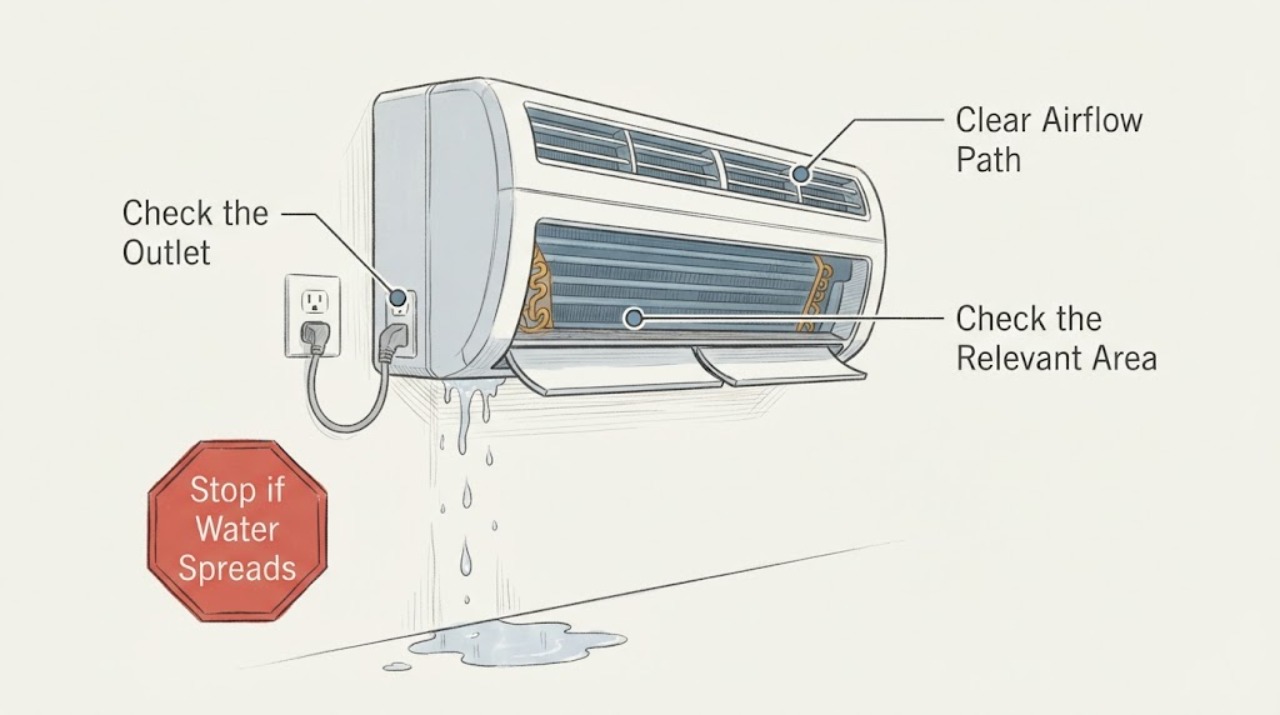
Air Conditioner Leaking Water at the Evaporator Coil: Safe Triage
Stop cooling first and keep water away from electrical equipment. Water around an evaporator coil is commonly condensation that is not draining, or ice on the coil that is melting after restricted airflow or another cooling fault.
-
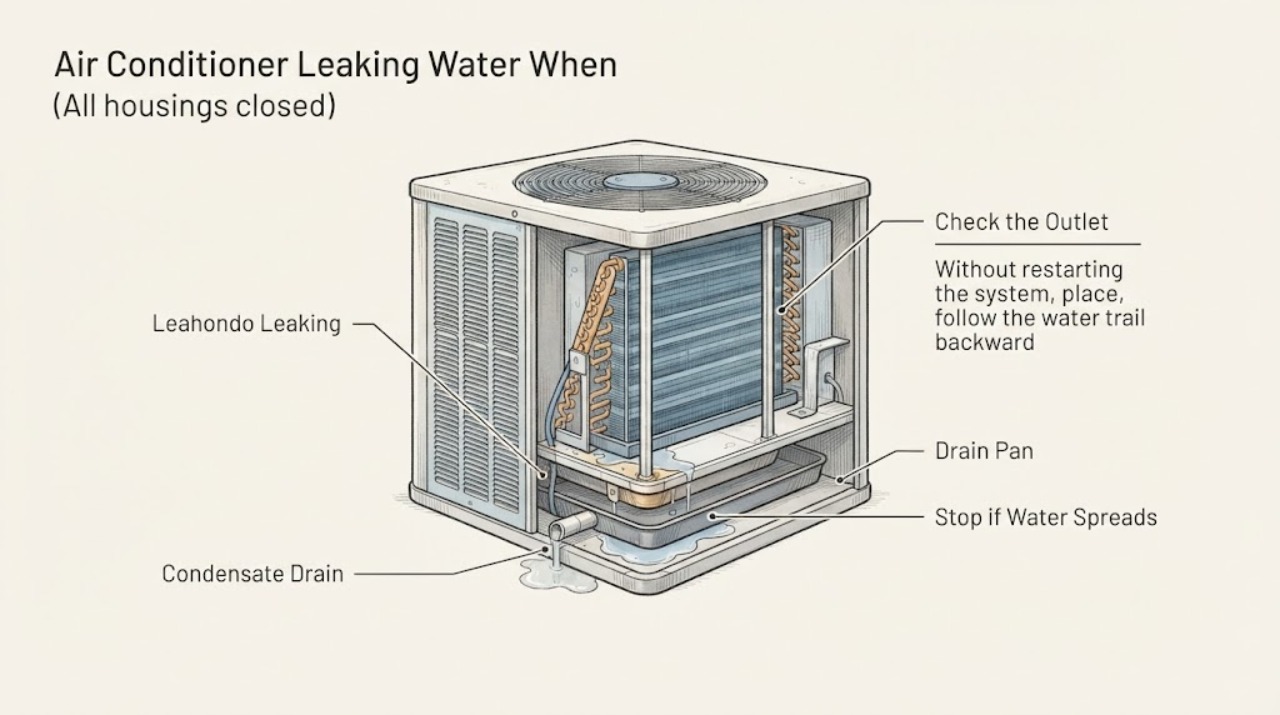
Air Conditioner Leaking Water When It Is Off: Find the Source Safely
A short drip after cooling can be meltwater from ice on the evaporator coil, but water that keeps appearing or returns while the air conditioner is off needs attention. A backed-up condensate drain or pan, a thawing coil, and an outside water source are different possibilities. Keep the system off, identify the first wet point from a dry position, and arrange HVAC service before running it again. Do not open the cabinet or perform a live electrical check.
-
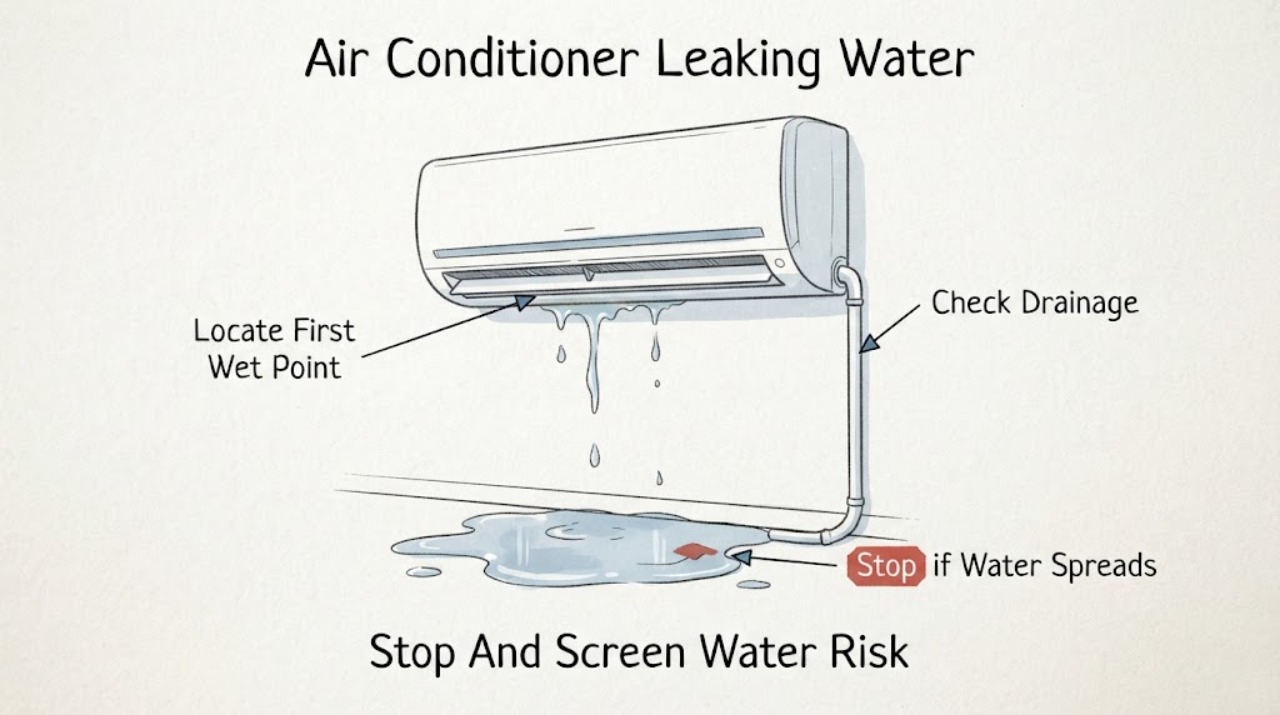
Air Conditioner Leaking Water: Find the First Wet Point Safely
Turn the air conditioner off when water is reaching electrical equipment, a ceiling is bulging, the leak is large or continuous, sewage or mold is involved, or the indoor unit is unsafe to approach. The first wet point matters: water at the indoor unit or wall can come from a blocked, detached, or frozen condensate drain; water at a ceiling or roof opening can also be building or plumbing water; water outside at the drain outlet may be normal condensate discharge.
-
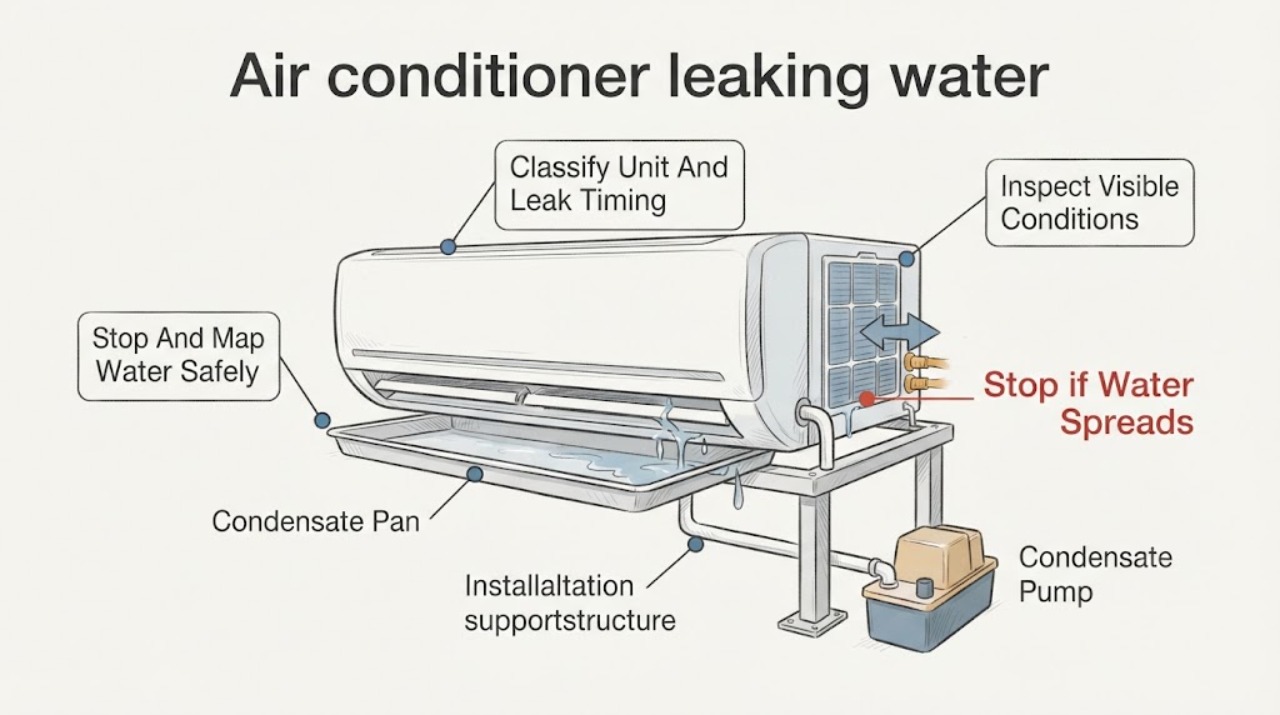
Air conditioner leaking water: What to Check and What to Do Next
Turn the air conditioner off when water appears, using only a dry normal control that you can reach safely. From a dry position, note whether the water is at an indoor air handler, wall-mounted unit, window unit, pan, drain outlet, ceiling, or floor, and whether it appeared during cooling, after shutdown, or after rain.
-
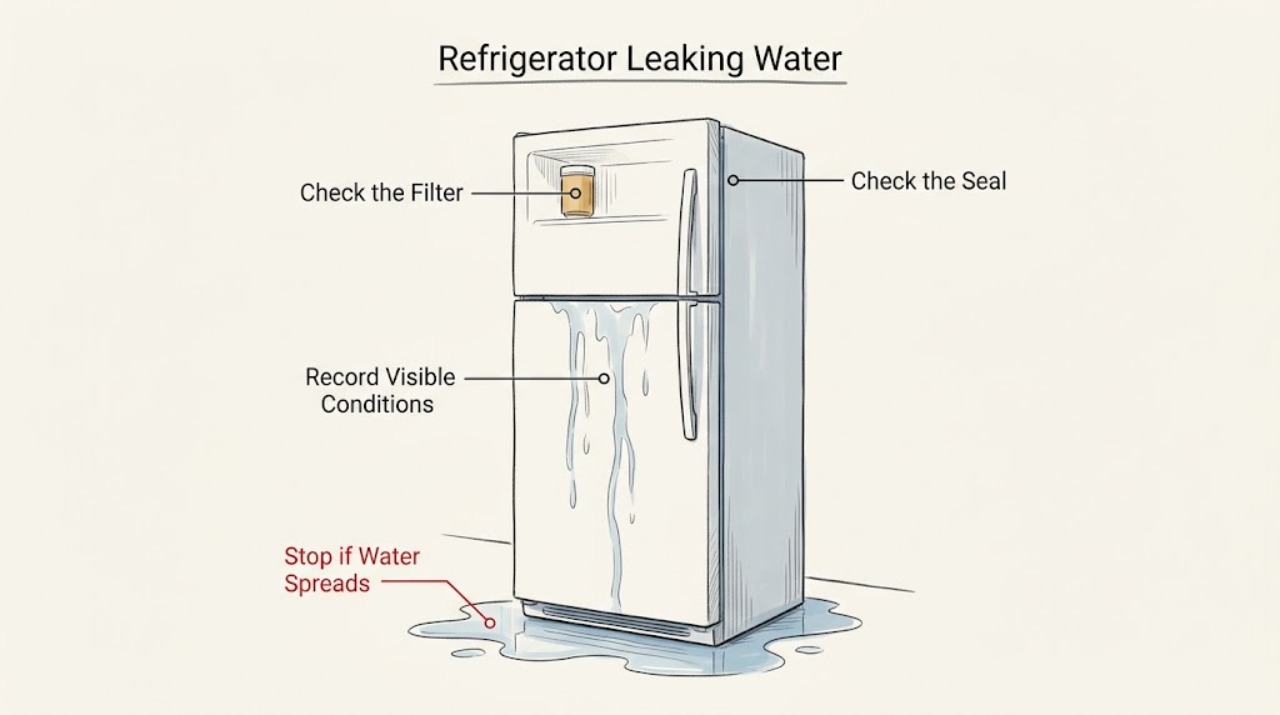
Amana Refrigerator Leaking Water: What to Check and What to Do Next
If an Amana refrigerator is leaking water, first identify whether the water is inside the cabinet, at the filter, under a door, or at the back. Check the filter seating, the water-supply line and connections, door and gasket contact, and any visible drain or defrost symptoms using the exact model manual.
-
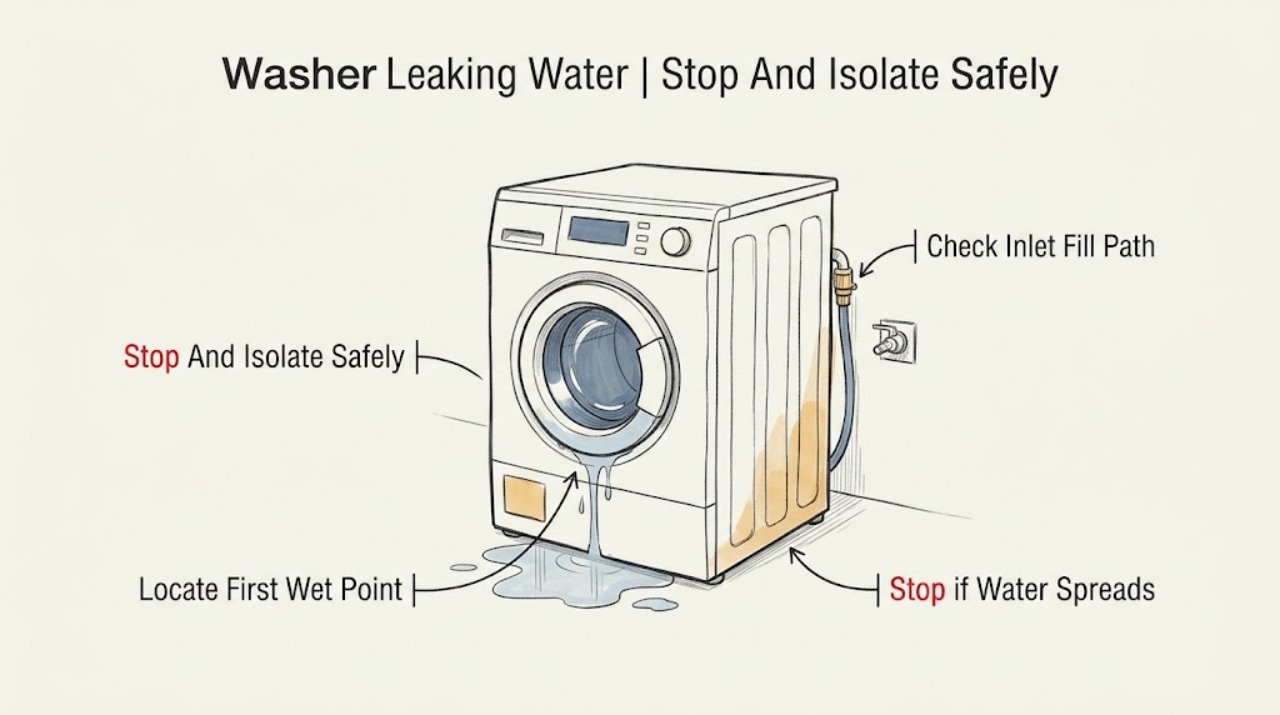
Amana Washer Leaking Water: What to Check and What to Do Next
Stop the Amana washer and keep water away from electrical connections. From a safe, dry position, note the first wet point and whether the leak starts during filling, washing, draining, or while the washer is idle.
-
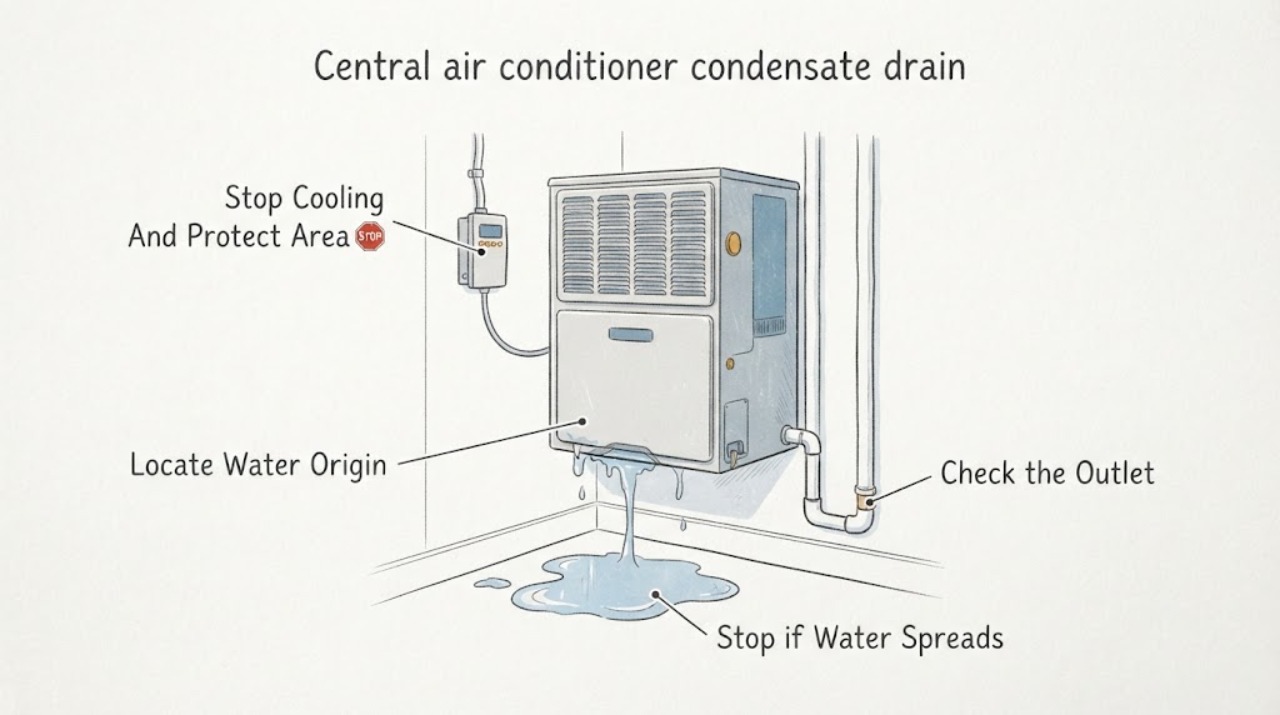
American Standard central air conditioner condensate drain leaking water: What to Check and What to Do Next
Water from an American Standard central air conditioner near the indoor unit commonly points to a backed-up condensate drain, an overflowing or damaged drain pan, a frozen evaporator coil that is thawing, or a leak at a connection. Turn cooling off, keep water away from electrical equipment, and document where the water starts and whether the pan or visible drain outlet is full.
-
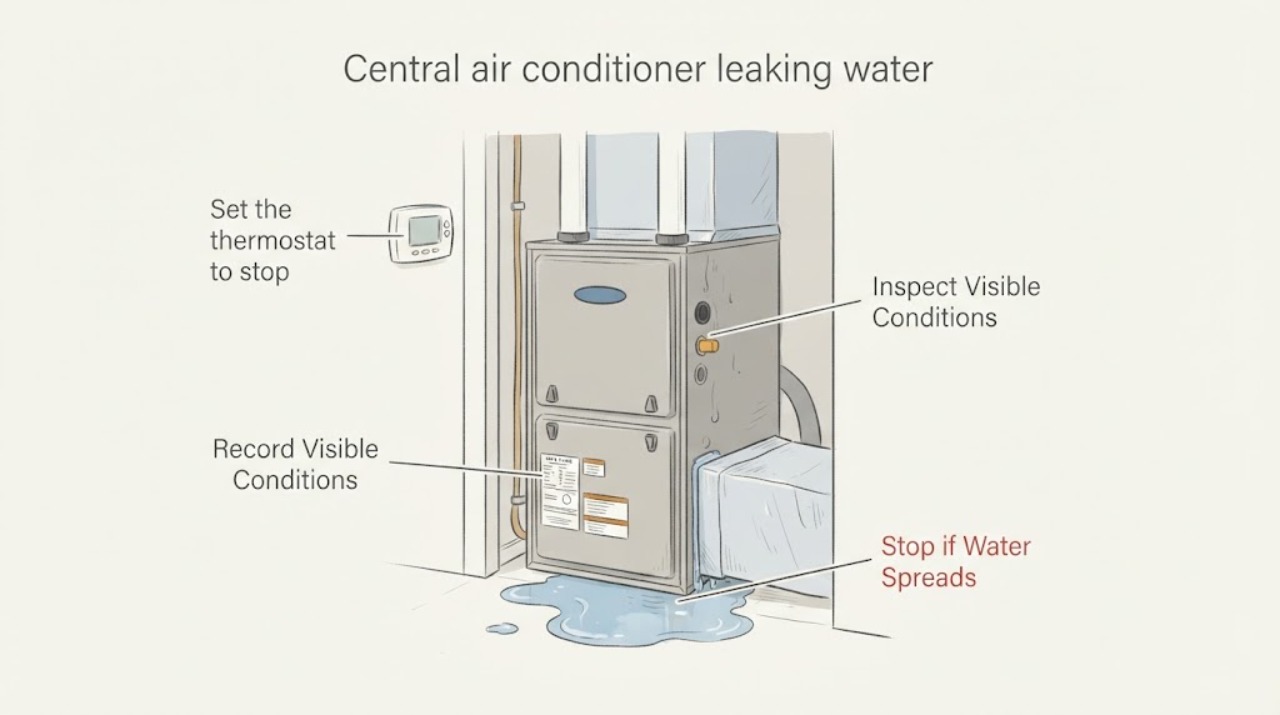
American Standard central air conditioner leaking water: What to Check and What to Do Next
Water from an American Standard central air conditioner usually means condensate is not reaching its drain, a drain pan or line is damaged or blocked, or a frozen evaporator coil is thawing. Turn cooling off if water is pooling, near electrical equipment, or reaching a ceiling or wall; never run a visibly frozen coil.
-
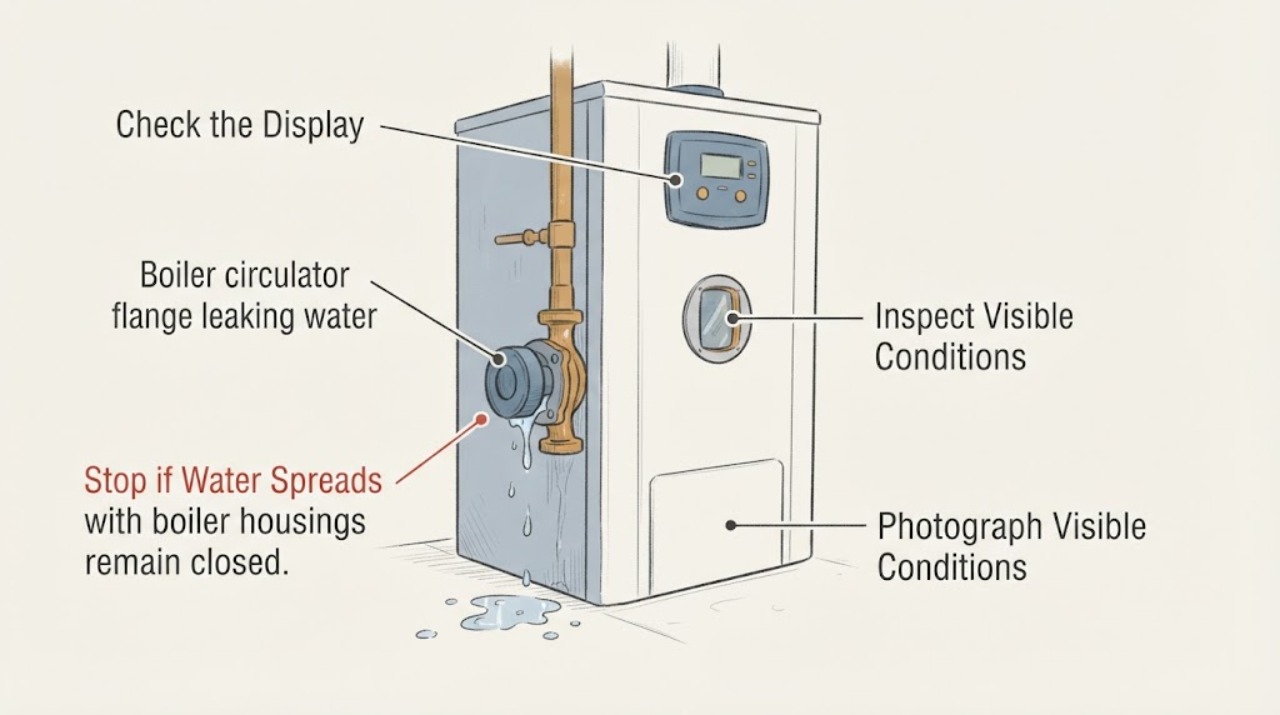
Boiler circulator flange leaking water: What to Check and What to Do Next
A leaking boiler circulator flange is a stop-and-call-professional problem, not a tightening or drain-down project for a homeowner. If the boiler controls are safely reachable and dry, stop the call for heat using the normal user control, keep clear of hot water and moving parts, and arrange a qualified heating professional.
-
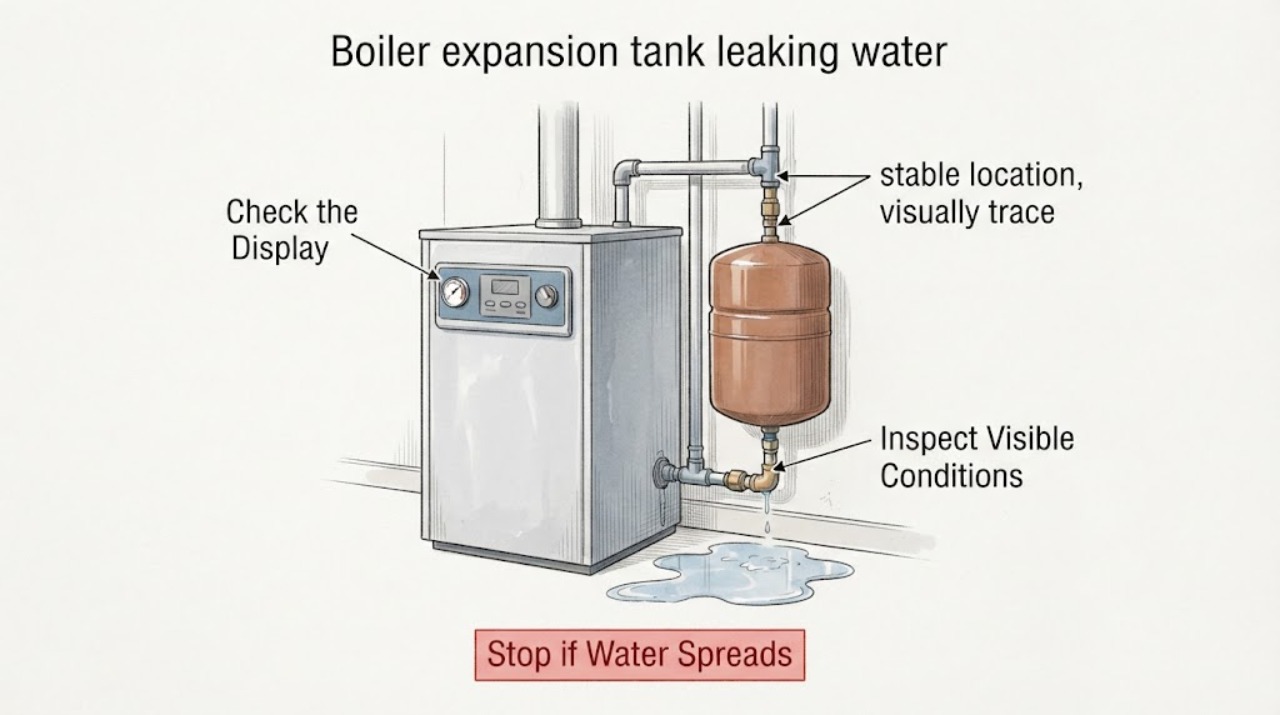
Boiler expansion tank leaking water: What to Check and What to Do Next
Water at a boiler expansion tank or nearby piping is a stop-and-call-professional problem. If the normal heating control is safely reachable and dry, stop the call for heat and leave the boiler out of service.
-
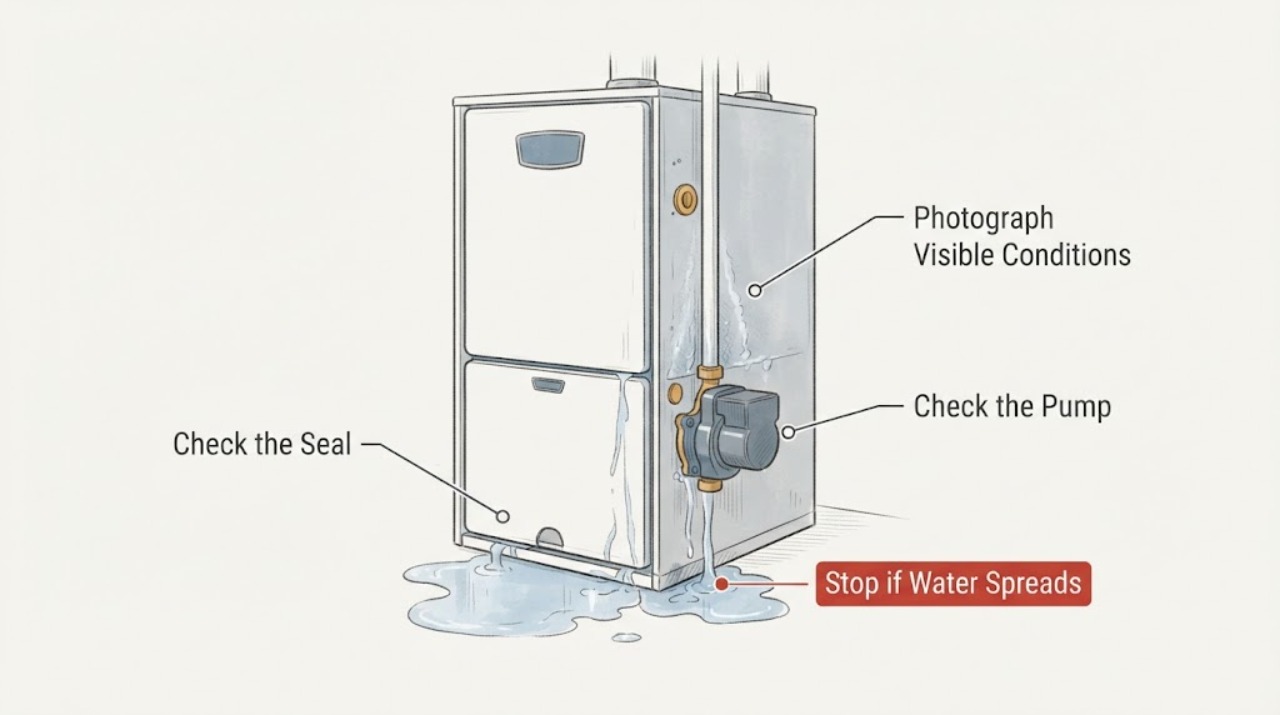
Boiler leaking water leak changes with heating: What to Check and What to Do Next
A boiler leak that increases, starts, or stops as the system heats is a pressure-and-temperature clue, not a reason to keep cycling the boiler. Water may be coming from a pressure-relief discharge, a fitting or seal, a condensate drain on a high-efficiency unit, or a heat-exchanger or other internal fault.
-
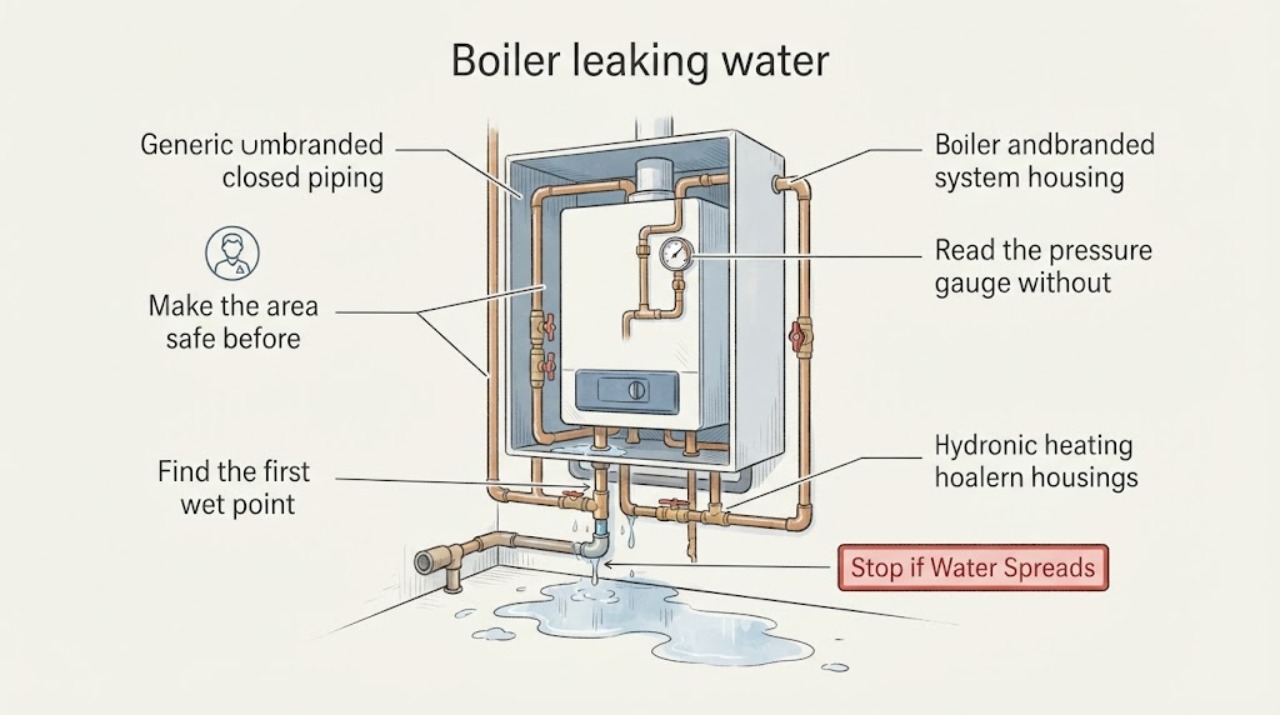
Boiler leaking water: What to Check and What to Do Next
Treat a leaking boiler as a shut-down-and-assess problem, not an internal DIY repair. If it is safe to reach, turn the heating off with the normal user control, keep clear of hot or pressurized water, and trace only accessible exterior surfaces.
-
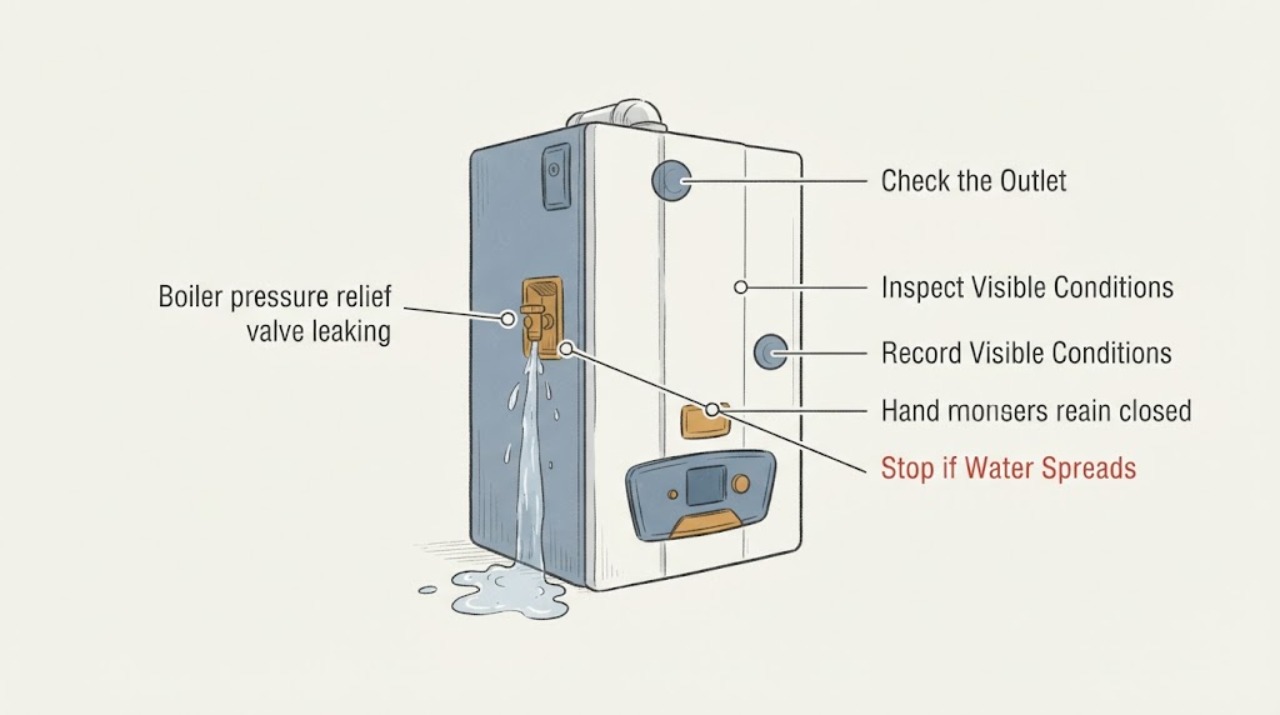
Boiler pressure relief valve leaking water: What to Check and What to Do Next
Water coming from a boiler pressure relief valve or its discharge pipe is a safety signal, not a routine drip to cap or test. From a dry, safe position, note where the water appears, whether it is hot or forceful, what the visible gauge is doing, and whether water is approaching electrical equipment.
-
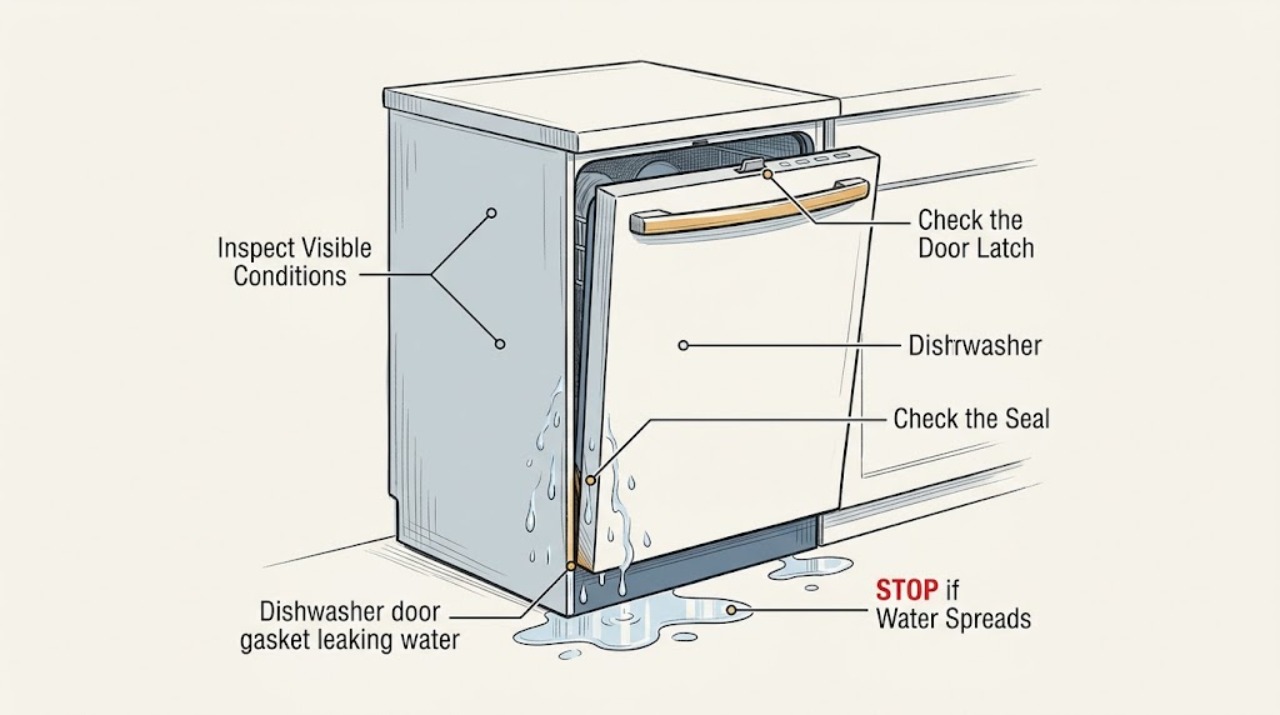
Bosch dishwasher door gasket leaking water: What to Check and What to Do Next
Water leaking from a Bosch dishwasher door gasket is most likely related to food or detergent residue on the sealing surfaces, a gasket that has pulled out of its track, a door that is not closing or aligning correctly, excess suds, an obstructed condensation vent on applicable models, or improper installation. Stop the cycle, keep clear of hot water, and note whether the first water appears below the door, at a corner, or from beneath the machine.
-
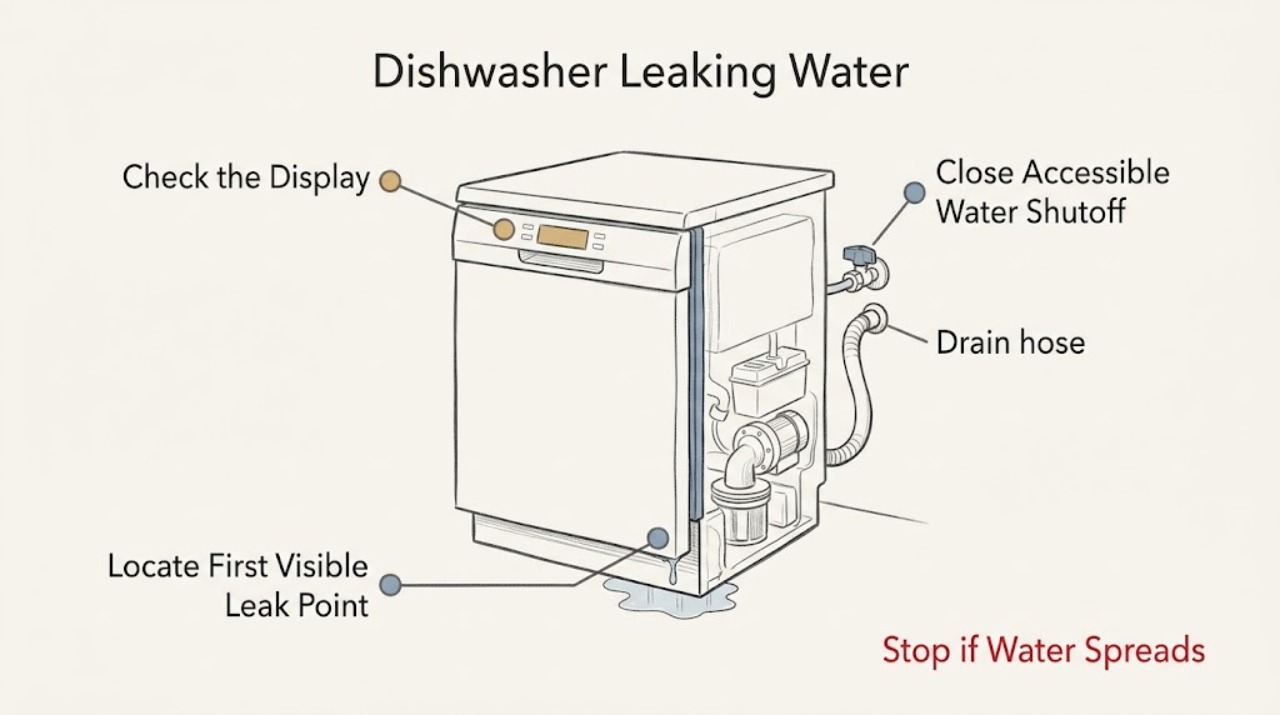
Bosch Dishwasher Leaking Water: What to Check and What to Do Next
If a Bosch dishwasher is actively leaking, stop the cycle and keep people away from the wet area. From a dry, safe position, turn the dishwasher off and close the nearby water shutoff valve if it is clearly accessible; disconnect power only by a safe external method and never by opening the appliance.
-
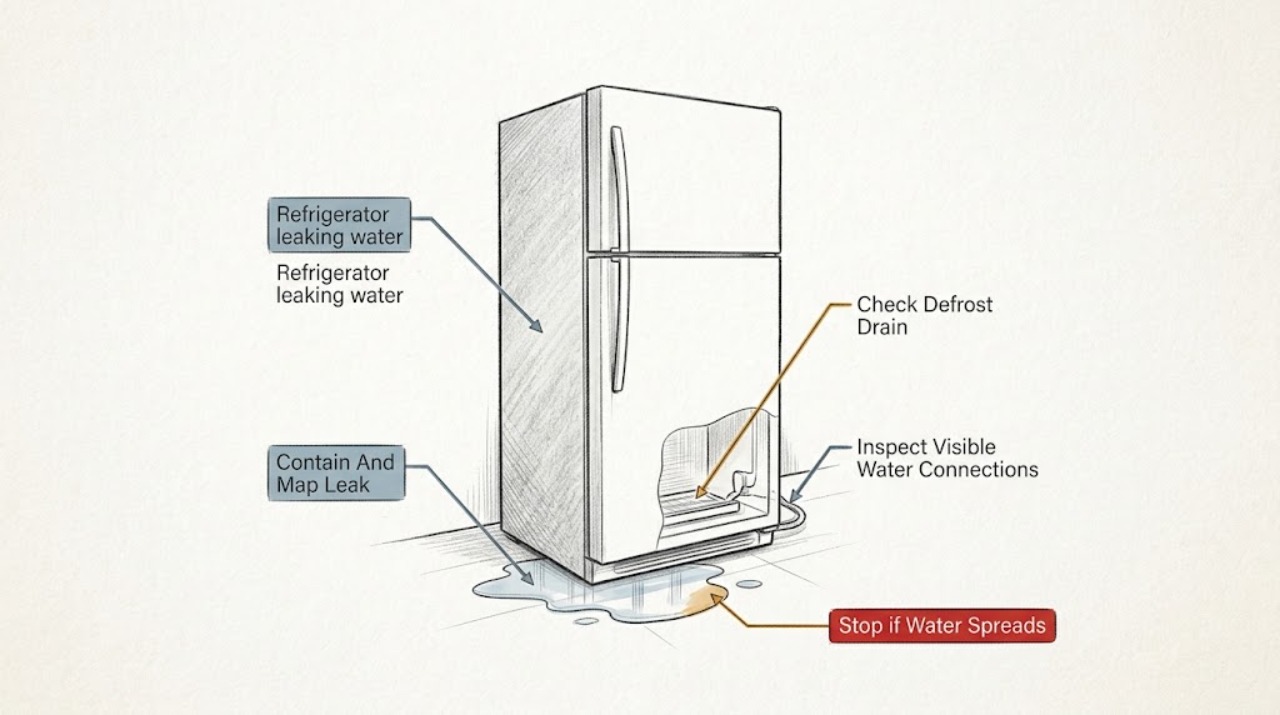
Bosch refrigerator leaking water: What to Check and What to Do Next
First contain the leak and identify where the water starts: inside the refrigerator under drawers, at the dispenser or door, or at the rear/base water connection. Bosch says water that does not drain from a refrigerator is commonly related to a contaminated defrost drain or drainage hole, and its refrigerator guidance separately calls out water-connection leaks, dispenser tubing, hoses, filters, and a kinked supply line.
-
Buderus boiler circulator flange leaking water: What to Check and What to Do Next
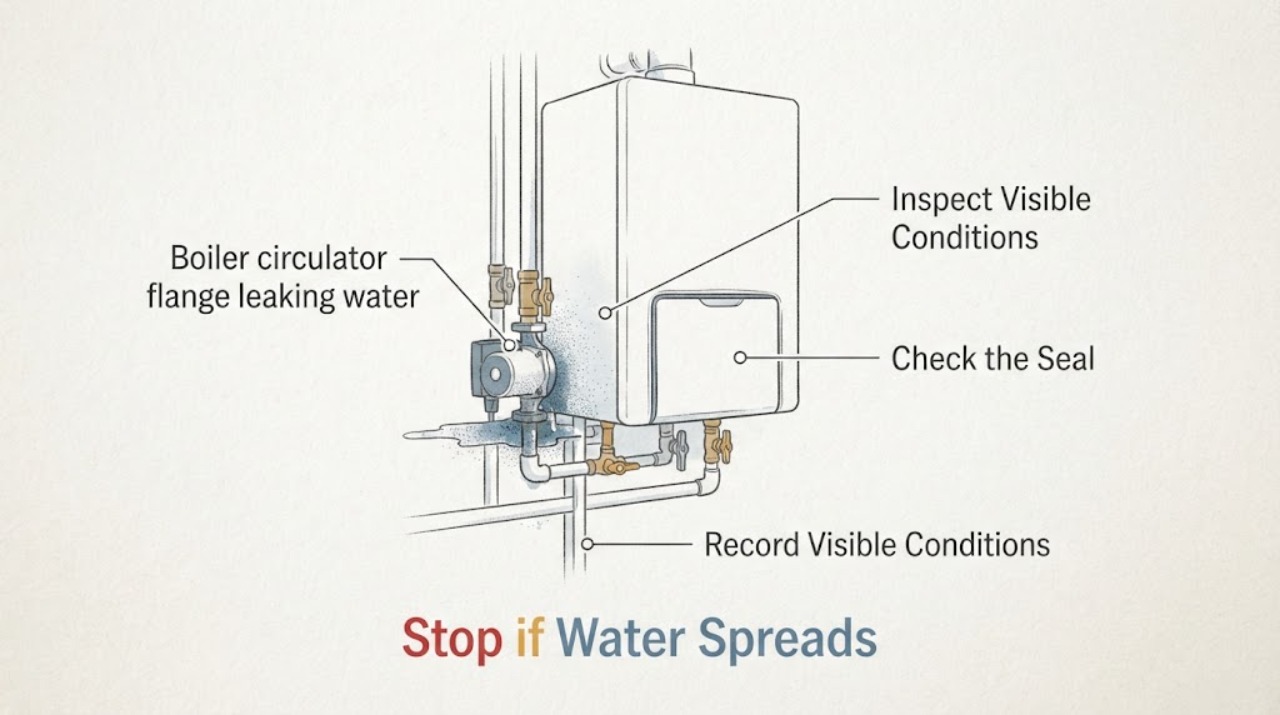
Water at a Buderus boiler circulator flange should be treated as a heating-system leak, not as a loose bolt to tighten while the boiler is running. From a safe position, switch the boiler off through its normal control if possible, keep clear of hot water, steam, gas, and electrical parts, and note whether the water is dripping from the flange face, gasket edge, pump body, valve, relief discharge, or an adjacent connection.
-
Buderus Boiler Expansion Tank Leaking Water: What to Check and What to Do Next
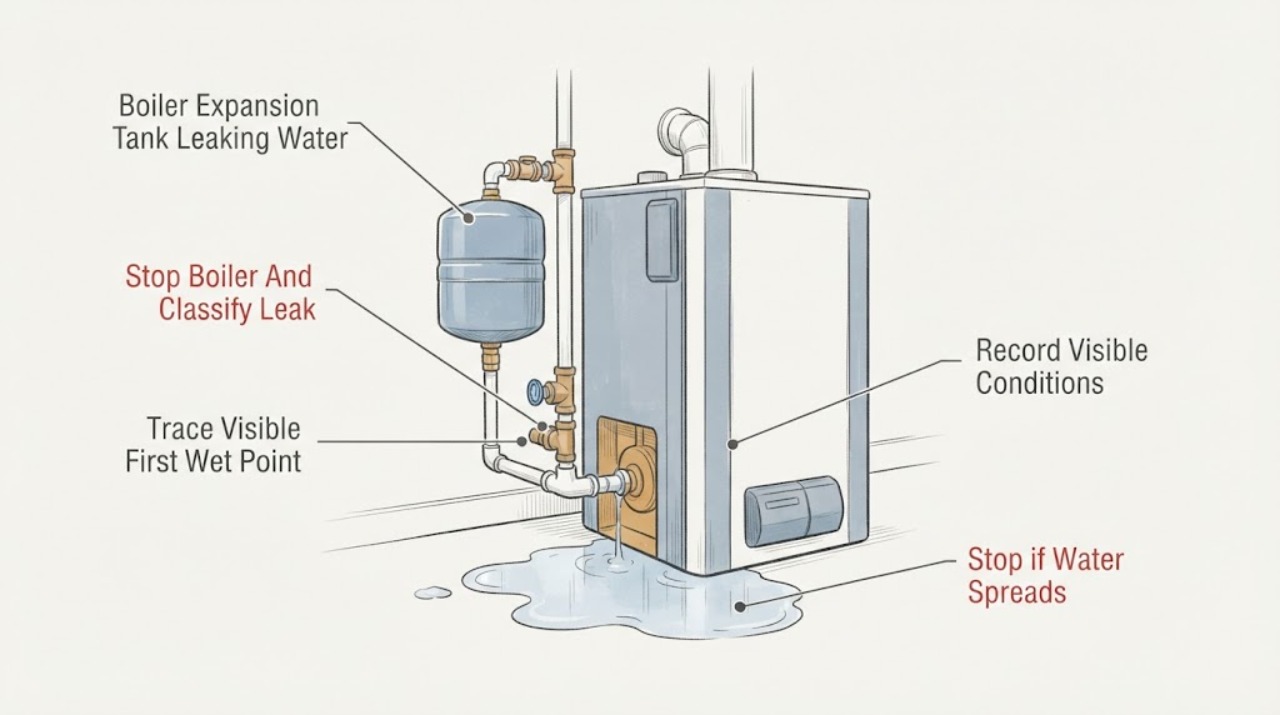
A leaking Buderus boiler expansion tank needs a safe identification check, not an immediate attempt to recharge or replace the tank. Turn the boiler off and keep people away from hot water or steam.
-
Buderus Boiler Leaking Water: What to Check and What to Do Next
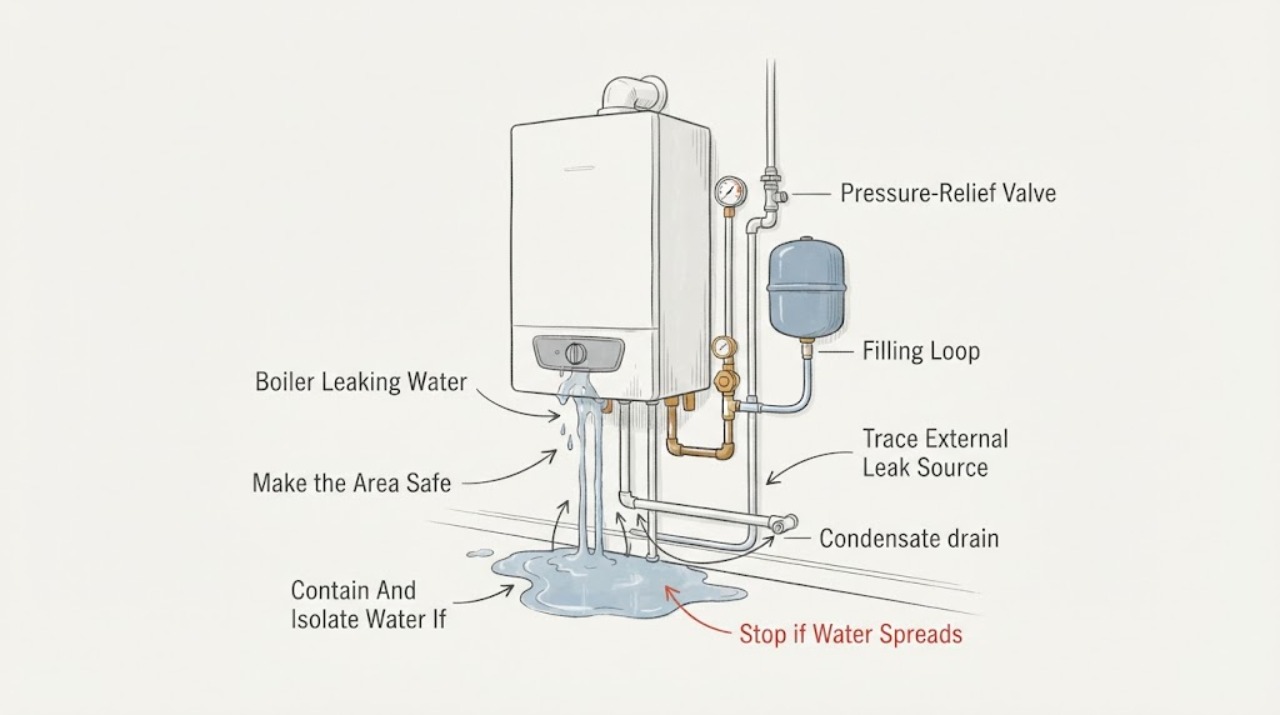
If a Buderus boiler is leaking water, stop the heating and contain the water only if the area is dry and the controls are safely reachable. Do not remove the boiler casing, reset a pressure-relief valve, or repeatedly refill the heating circuit.
-
Buderus boiler pressure relief valve leaking water: What to Check and What to Do Next
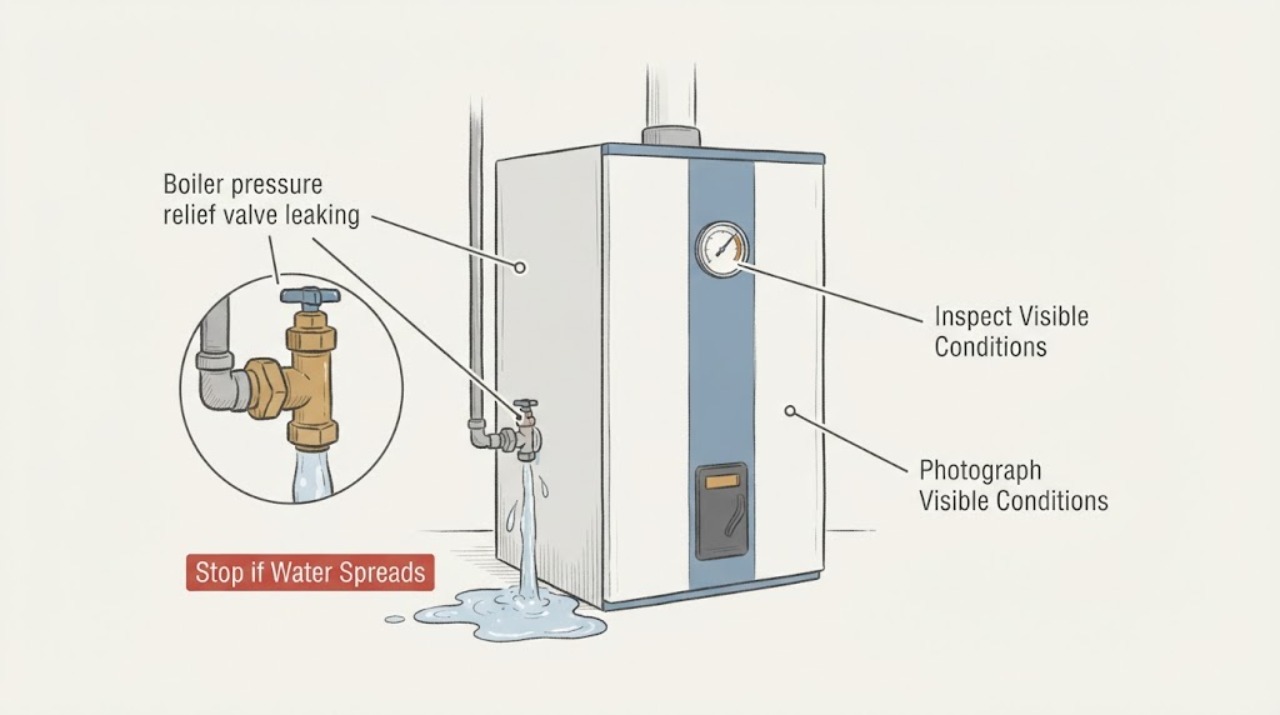
A Buderus boiler pressure relief valve that is dripping or discharging water is a safety symptom, not a valve to cap, plug, or repeatedly reset. First keep clear of hot water and identify whether water is coming from the relief-valve outlet, the valve body or threaded connection, a nearby pipe, or a condensate path.
-
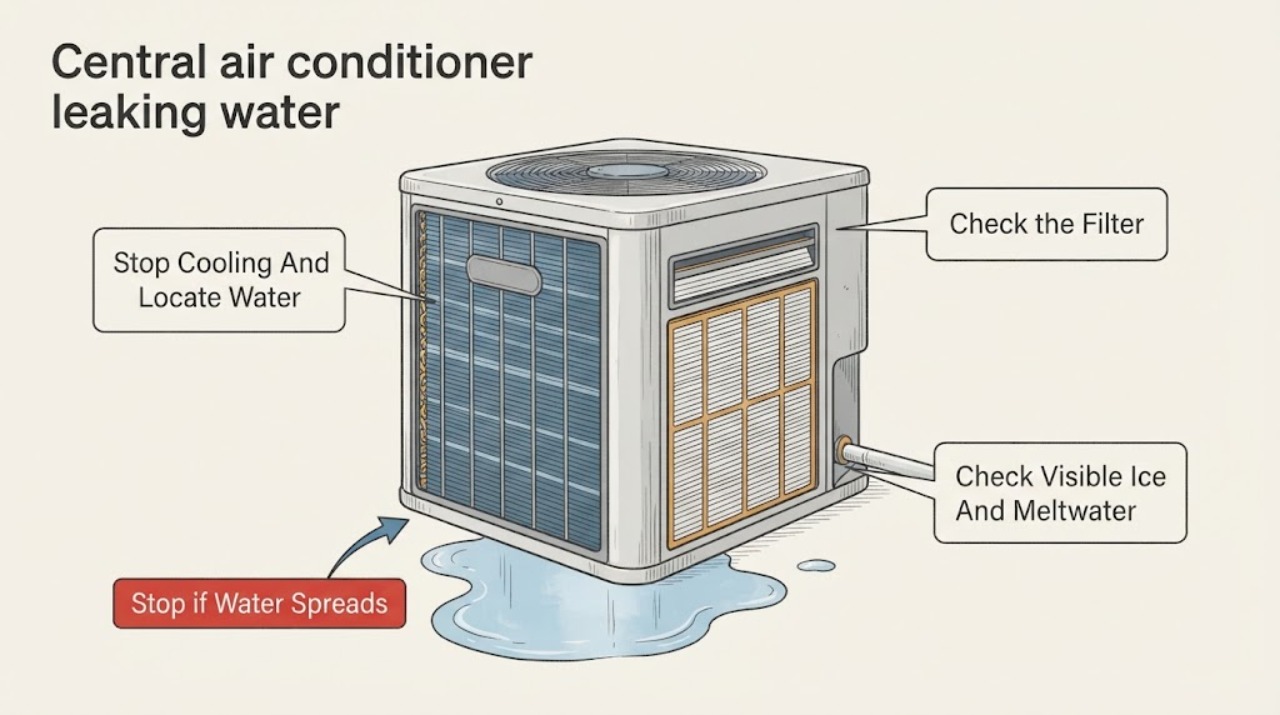
Carrier central air conditioner leaking water: What to Check and What to Do Next
A Carrier central air conditioner leaking water usually has a condensate drainage problem, a frozen evaporator coil that is melting, or a damaged drain pan. A dirty filter or blocked return can reduce airflow and freeze the coil; a refrigerant issue, disconnected drain, pump problem, or installation condition can look similar.
-
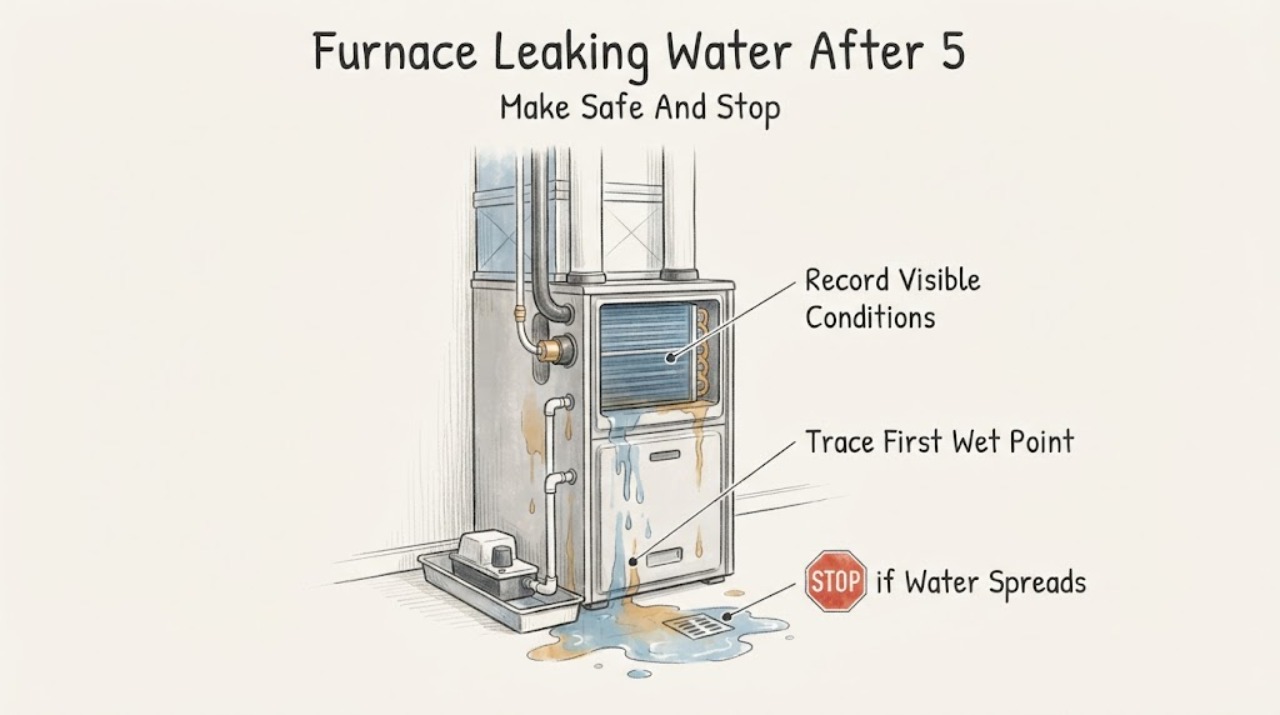
Carrier Furnace Leaking Water After 5 Years: Trace the Source Safely
A Carrier furnace leaking water after five years needs source tracing, not an age-based part diagnosis. If it is a high-efficiency condensing furnace, a blocked or disconnected condensate drain, trap, pan, or pump can back water up; a whole-home humidifier, air-conditioner evaporator coil and pan, or nearby supply/drain line can also wet the furnace area.
-
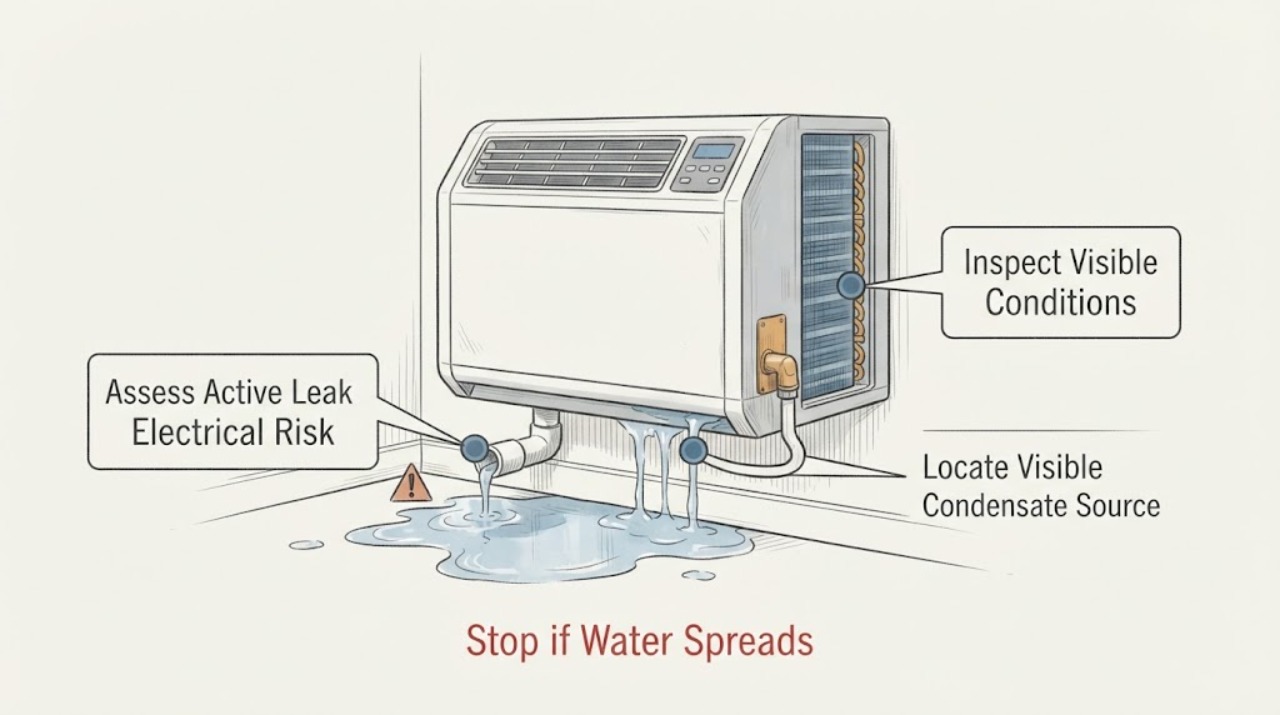
Central air conditioner condensate drain leaking water: What to Check and What to Do Next
Turn the air conditioner off at the thermostat if water is actively leaking, and keep it off until the source is understood. From a dry, safe position, identify whether water is coming from the indoor unit, a visible drain-pan edge, a condensate-pipe joint, or nearby ceiling or wall; note whether the pan is overflowing, the drain outlet is producing water, or ice is visible.
-
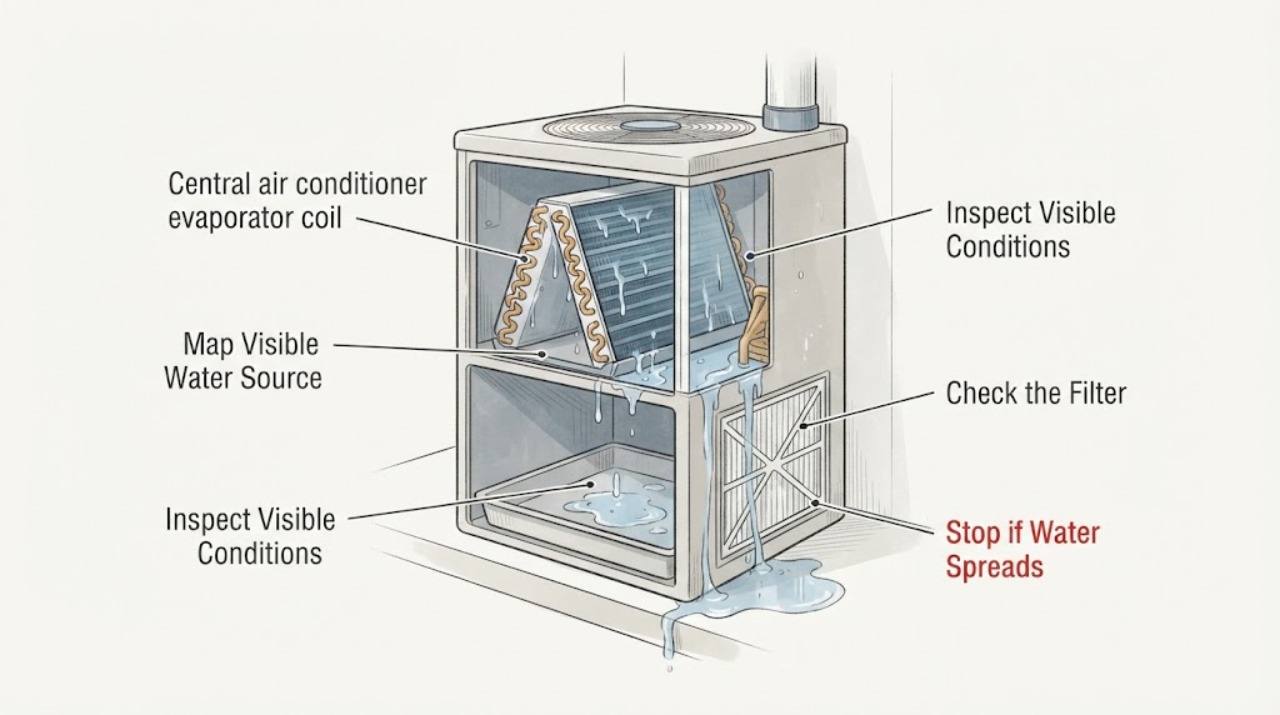
Central air conditioner evaporator coil leaking water: What to Check and What to Do Next
Water attributed to a central air conditioner's evaporator coil is usually a condensate-management or frozen-coil symptom, not a safe coil repair for a homeowner. From a dry, accessible position, note where water appears, whether ice or frost is visible without opening the cabinet, filter condition from its normal access point, drain-outlet behavior, and any water near electrical equipment.
-
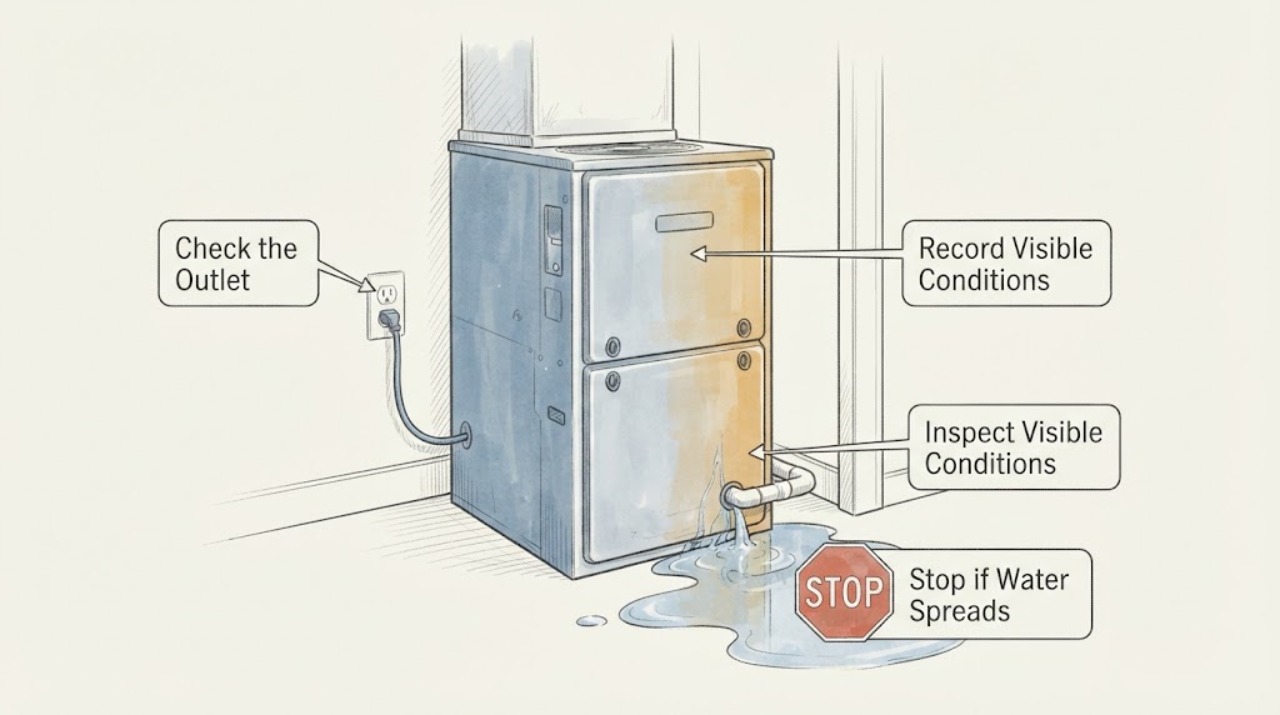
Central air conditioner leaking water is near indoor unit: What to Check and What to Do Next
Water near a central air conditioner's indoor unit is commonly related to condensate drainage, but it can also follow a frozen evaporator coil, damaged drain pan, condensate pump problem, or condensation on a cold cabinet, duct, or pipe. Turn cooling off, protect the area, and keep away from wet electrical equipment.
-
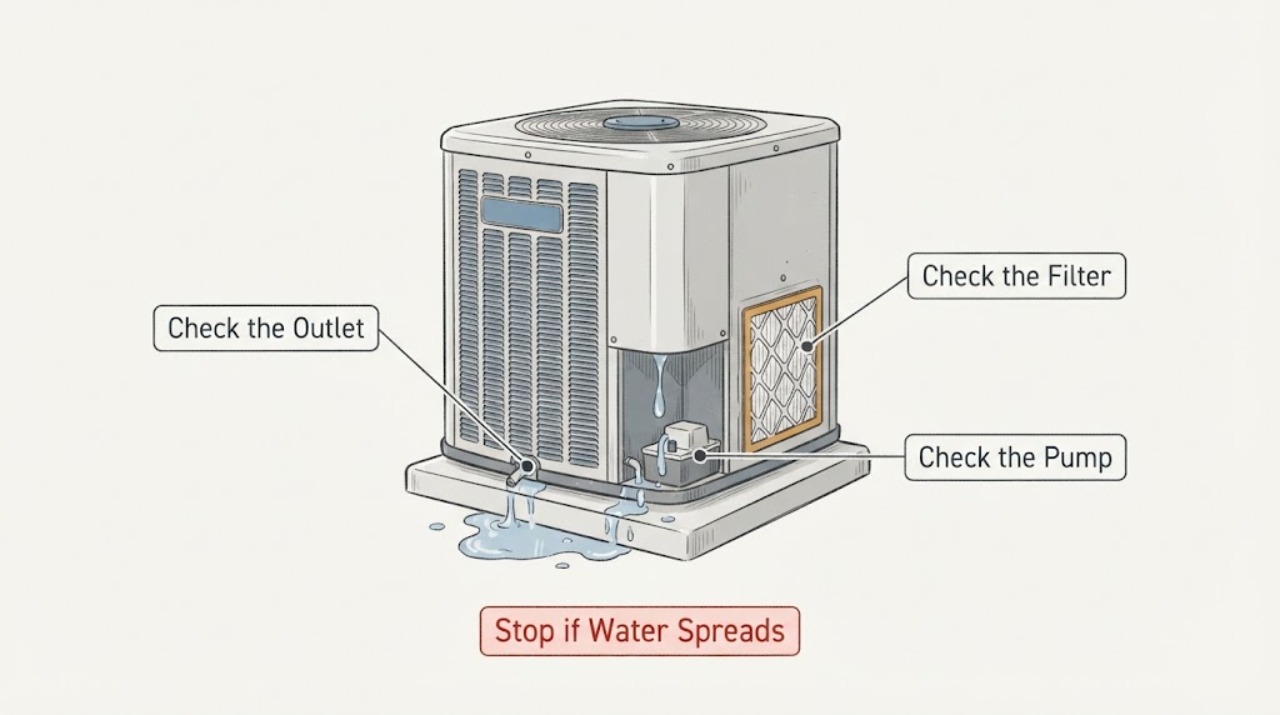
Central air conditioner leaking water drain may be blocked: What to Check and What to Do Next
A blocked condensate drain can make a central air conditioner leak, but the same water can come from a frozen evaporator coil, damaged drain pan, condensate pump, or condensation on an uninsulated surface. Turn cooling off to limit water damage, keep clear of wet electrical equipment, and note where and when water appears.
-
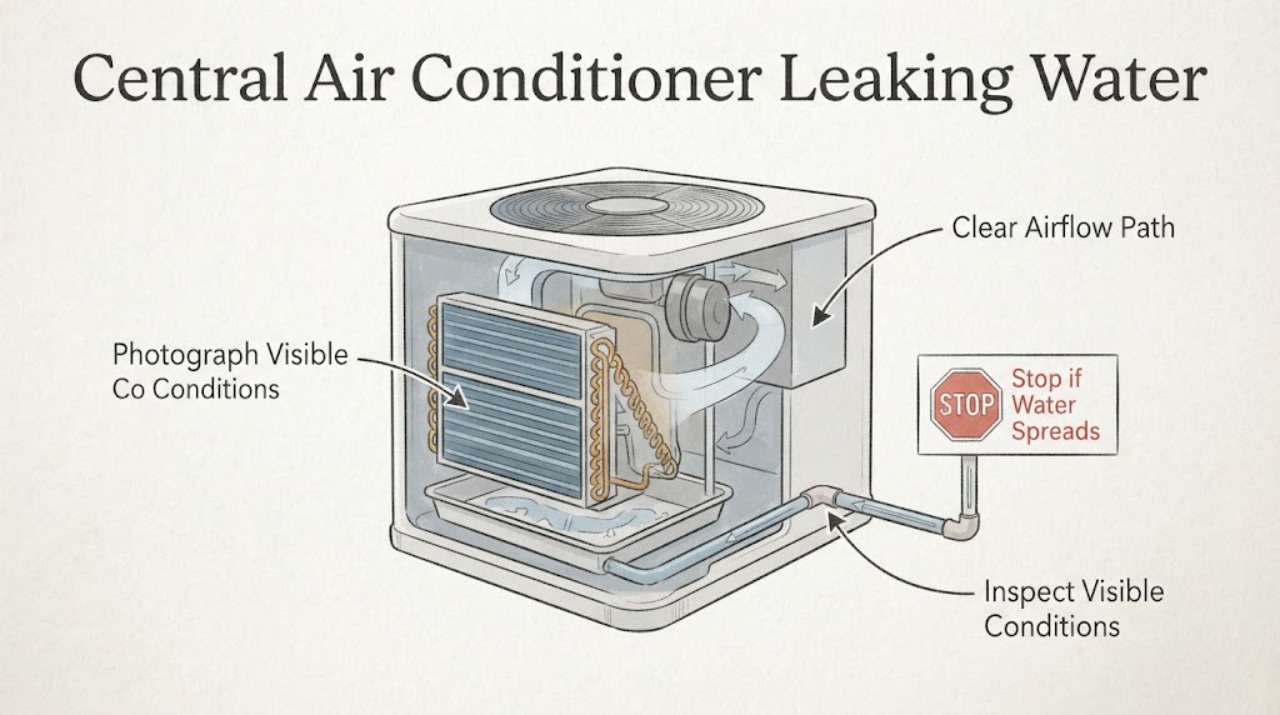
Central Air Conditioner Leaking Water While Cooling Is Running: What to Check and What to Do Next
A central air conditioner normally creates condensate while cooling, but that water should collect in an indoor drain pan and leave through the condensate drain. Water escaping onto a floor, ceiling, wall, or around the air handler usually means the drain is blocked, the pan is damaged or overflowing, or a frozen evaporator coil is melting; restricted airflow, a dirty filter, low refrigerant, or a pump problem can be upstream causes.
-
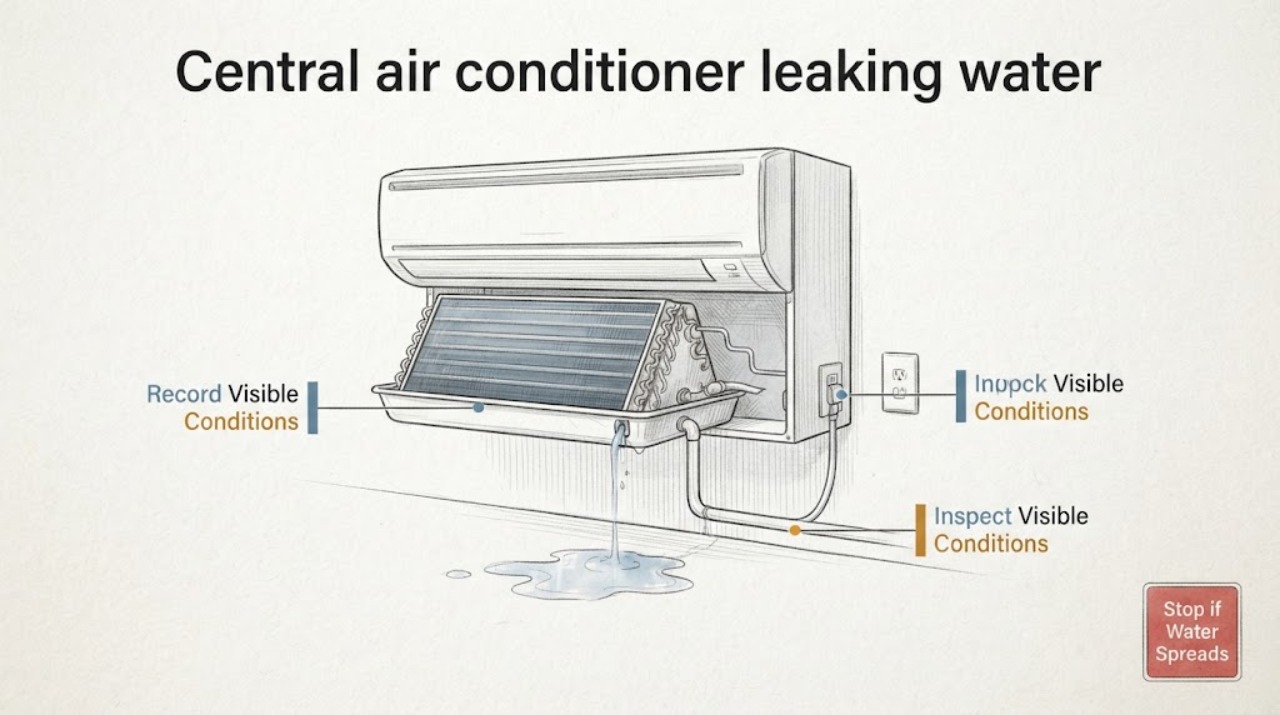
Central air conditioner leaking water: What to Check and What to Do Next
Turn the central AC off when you find indoor water, then identify where and when it appears without opening the equipment. Record whether the water is at the indoor air handler, ceiling, floor, or wall; whether it follows cooling, shutdown, or melting ice; and whether you can see frost, a dirty filter, a full visible pan, or a blocked-looking drain outlet from a safe user-accessible position.
-
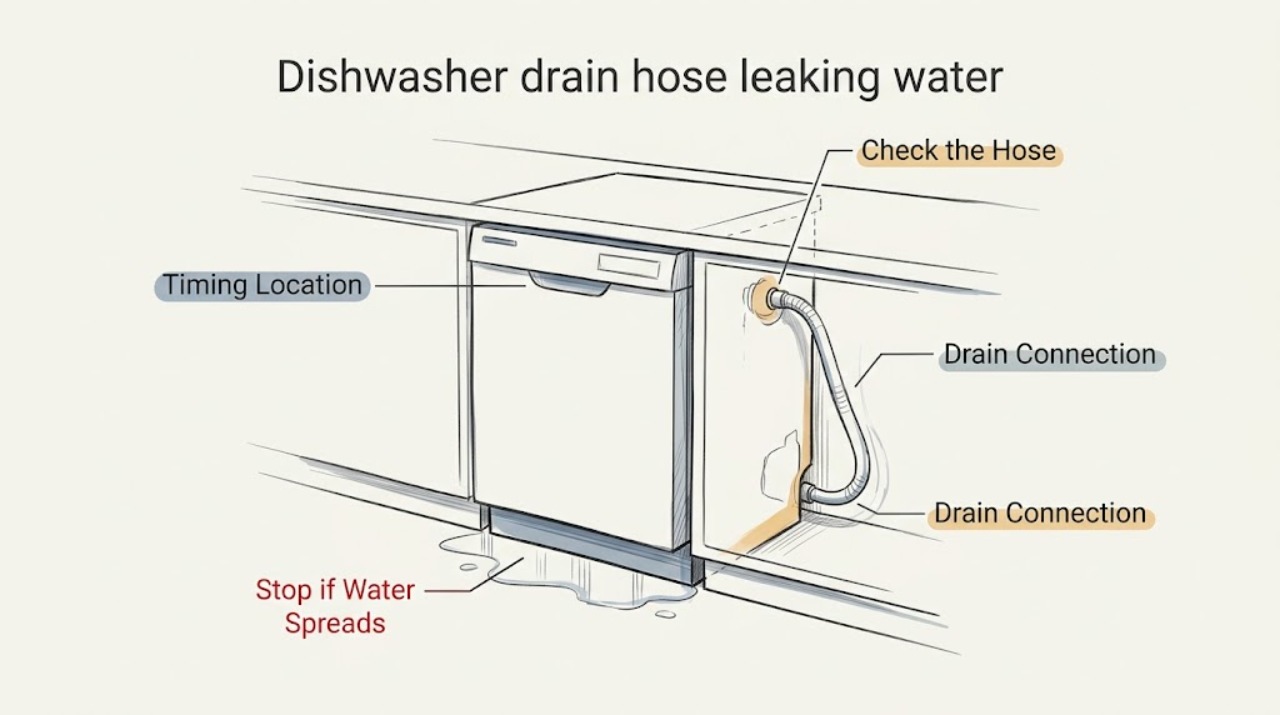
Dishwasher drain hose leaking water: What to Check and What to Do Next
For a dishwasher drain hose leaking water, first record the cycle phase and the first wet point. A leak that starts during draining at a hose end or along its route supports a drain-path assessment; water at the door during filling or washing points to another path.
-
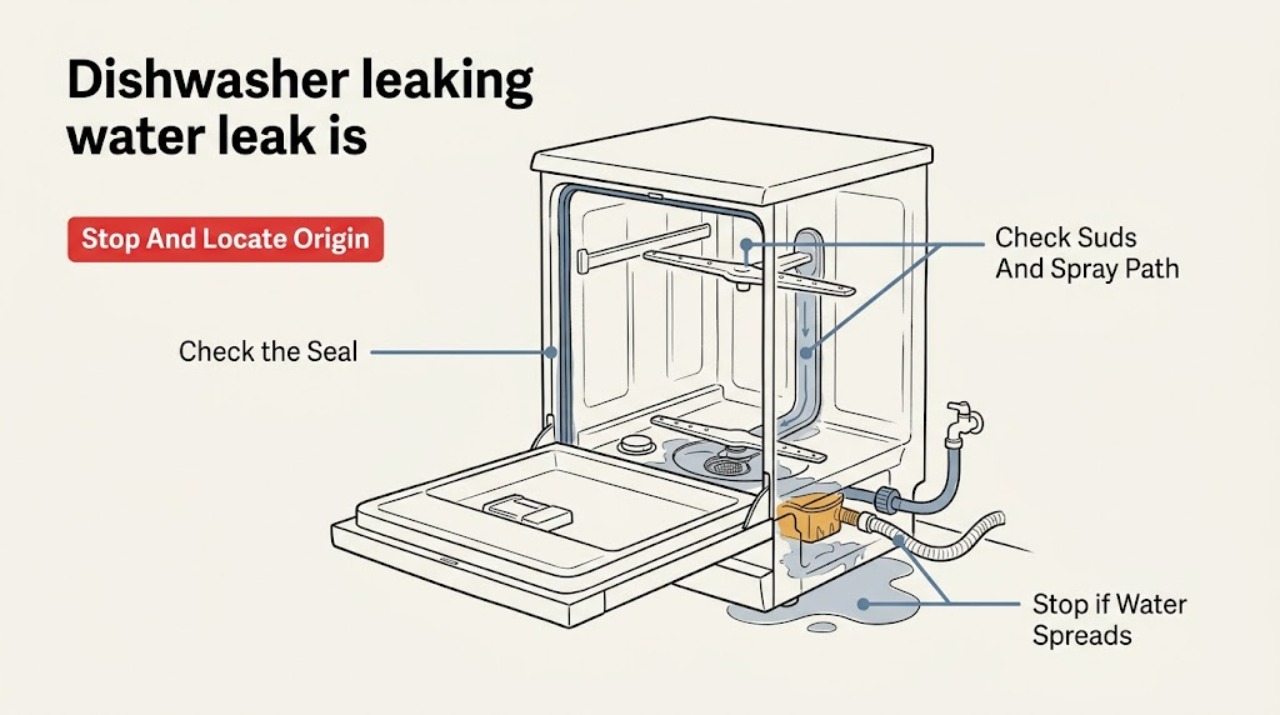
Dishwasher leaking water leak is at door or beneath unit: What to Check and What to Do Next
Stop the dishwasher if water is actively escaping, clean up the spill, and isolate the water supply and power only from safe, accessible controls. If the water starts at the door, inspect the gasket, food or utensils at the seal, rack loading, suds, spray direction, vent, and whether the unit is level.
-
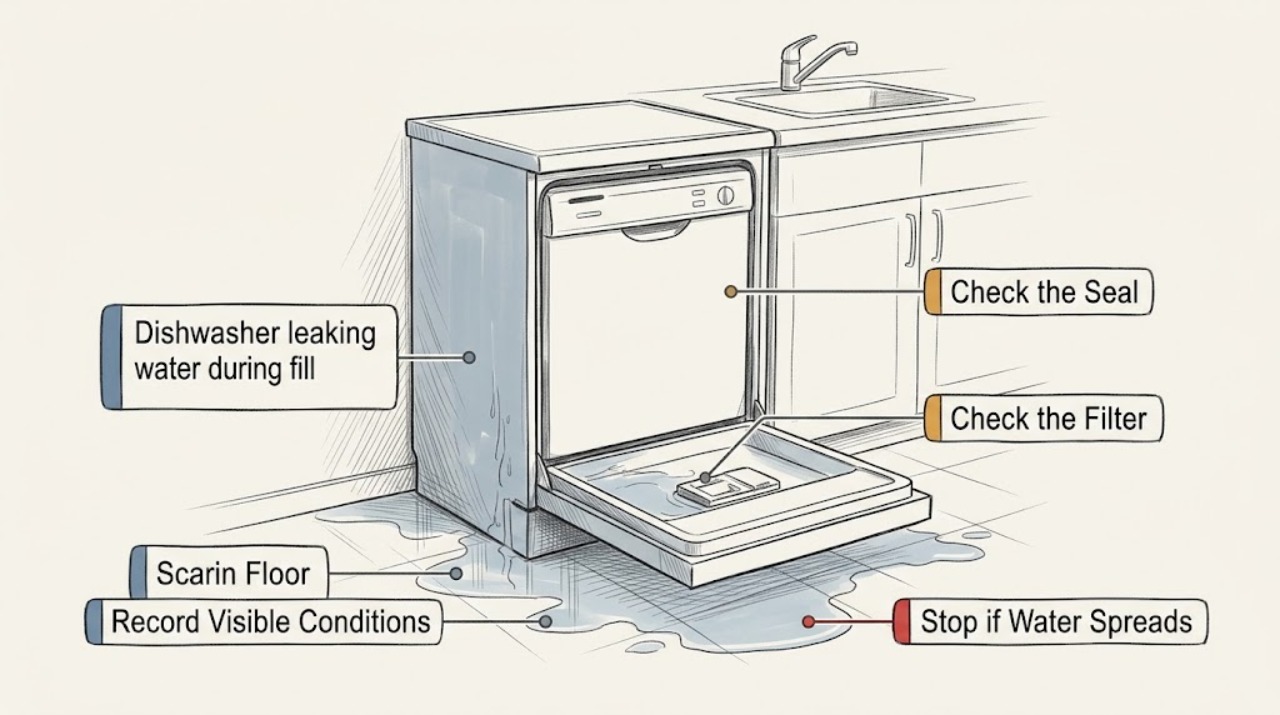
Dishwasher leaking water during fill or wash: What to Check and What to Do Next
A dishwasher that leaks during fill or wash can be leaking at the door seal, an inlet or drain connection, the tub or pump area, or from excess suds and spray being directed past the door. First stop the cycle, keep water away from electrical parts, and note whether water appears at the front edge, underneath, behind the unit, or only when the spray and wash motor run.
-
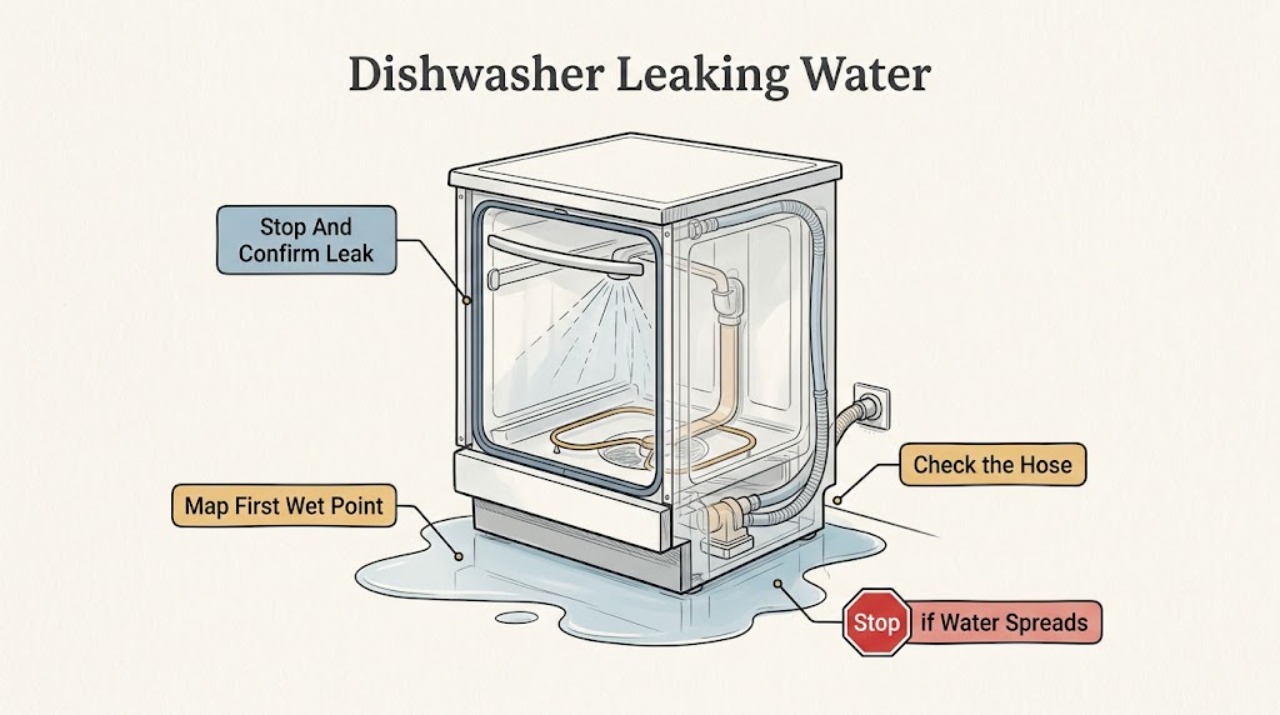
Dishwasher Leaking Water With a Wet Floor: What to Check and What to Do Next
First treat a wet floor as an active water-damage risk: stop the dishwasher, keep people away from the water, and turn off power at the identified breaker and the water supply if the leak is continuing and it is safe to reach them. Wipe the floor and confirm whether water returns, then locate the first wet point without removing panels or disconnecting a pressurized line.
-
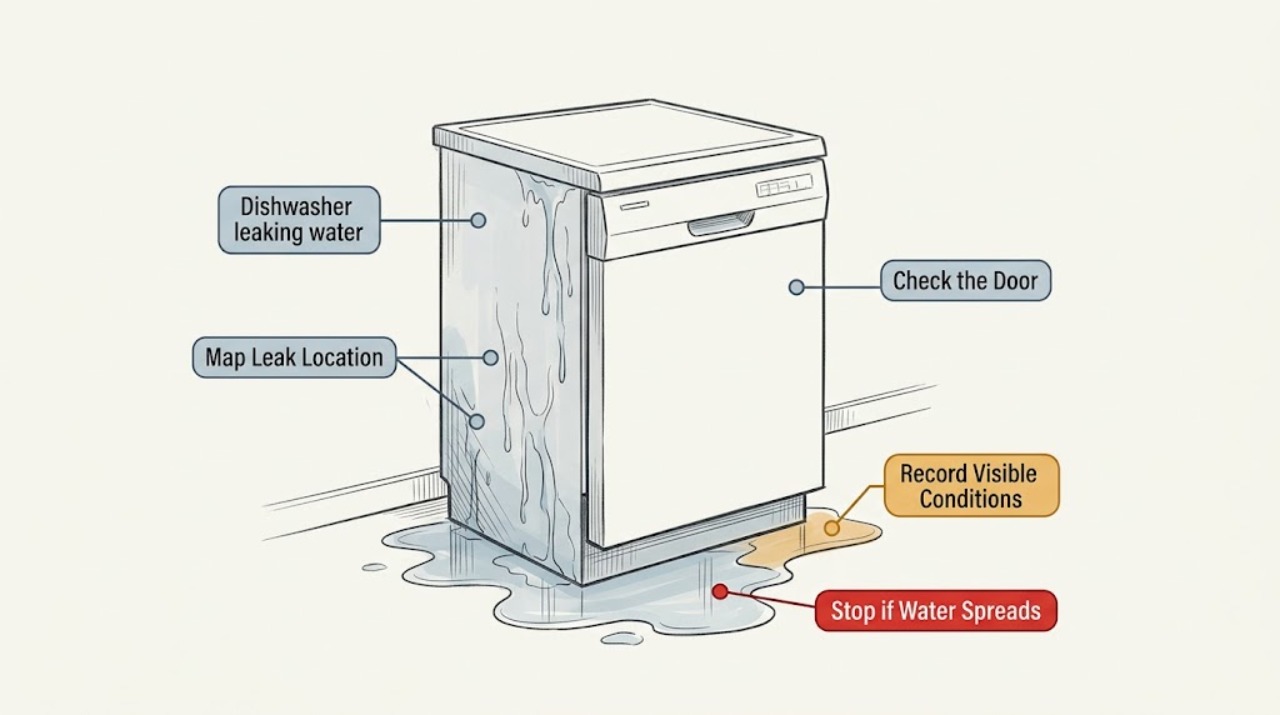
Dishwasher leaking water: What to Check and What to Do Next
First identify where and when the dishwasher leak appears: at the door, underneath or behind the cabinet, at the sink air gap, or only when suds are present. Stop the cycle using normal controls if it is safe to do so, keep water away from electrical connections, and do not run the appliance again while an active leak is reaching cabinetry, flooring, or wiring.
-
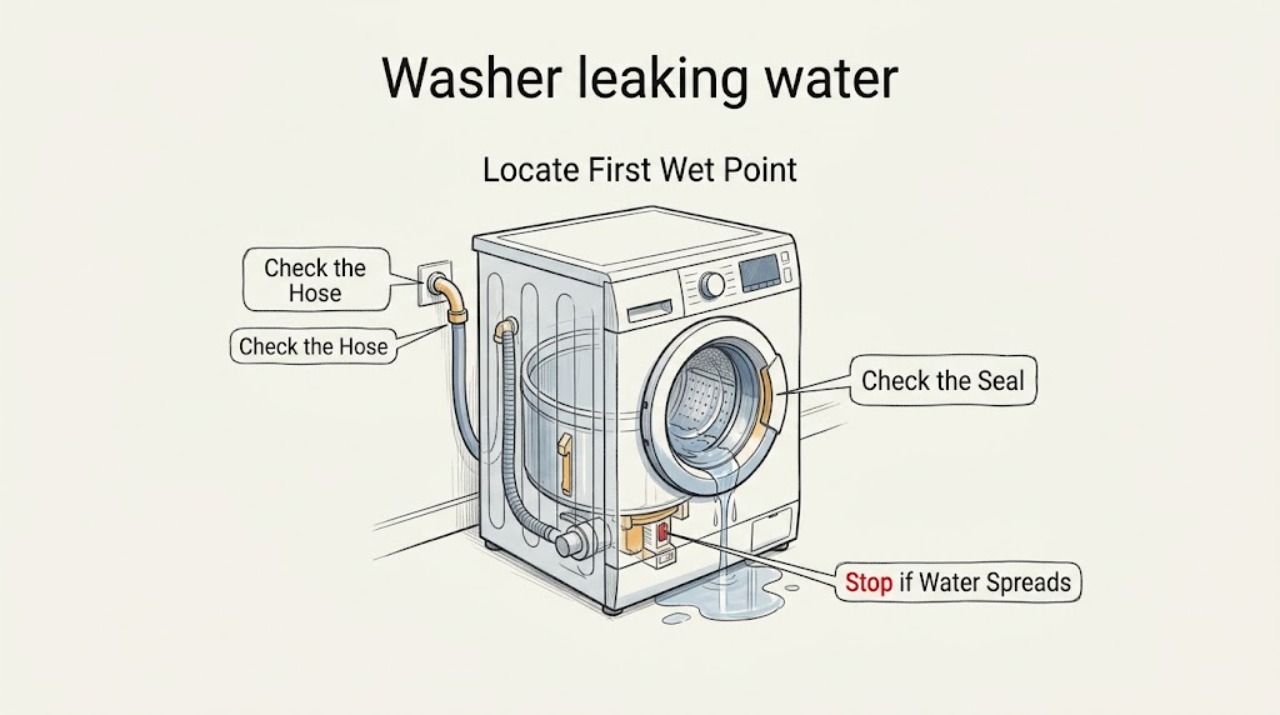
Electrolux washer leaking water: What to Check and What to Do Next
Stop the cycle safely, note the first wet point and when it appears, and keep hands away from water near the plug, outlet, controls, or damaged wiring. Electrolux's leak guidance separates inlet-hose connections, drain hose or standpipe, door seal and glass, and the adaptive dispenser; each needs a different check.
-
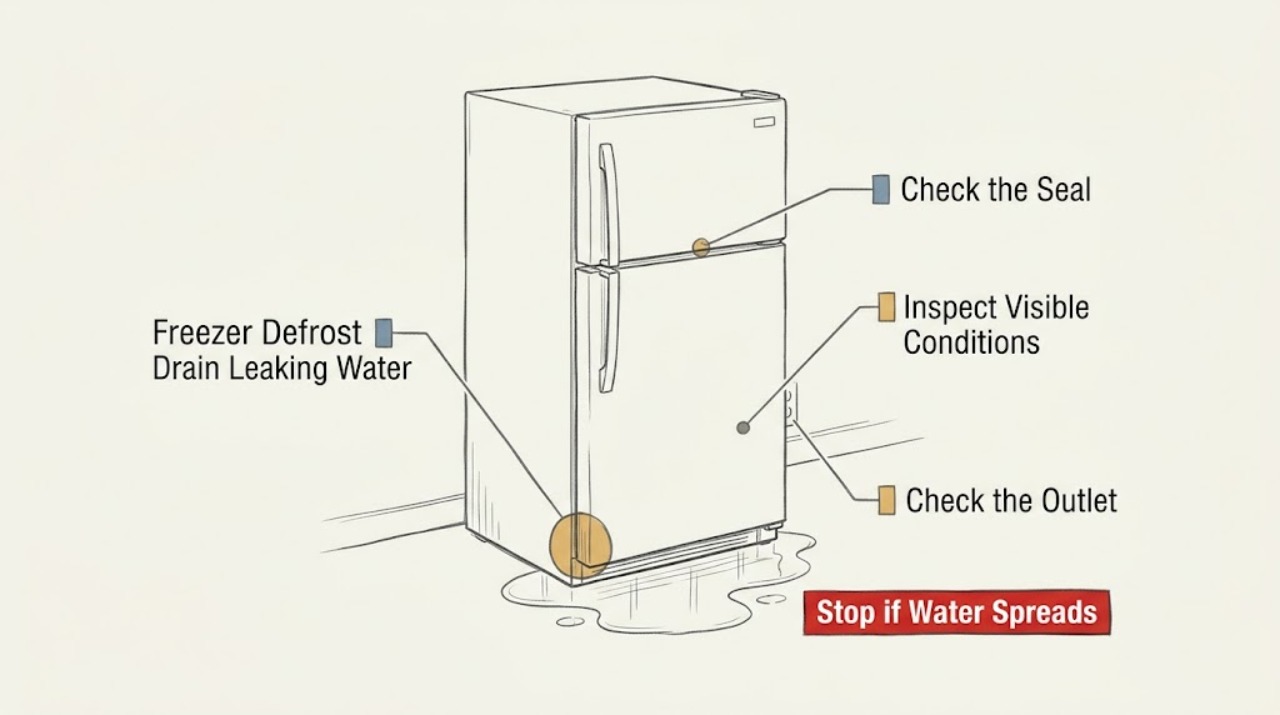
Freezer Defrost Drain Leaking Water: What to Check and What to Do Next
A freezer that leaks during or after defrost may have a blocked or frozen defrost drain, an overflowing drain pan, or a different water source such as an icemaker or supply line. First protect the floor, keep water away from electrical parts, and note whether the water is inside the freezer, under the unit, or coming from a connection.
-
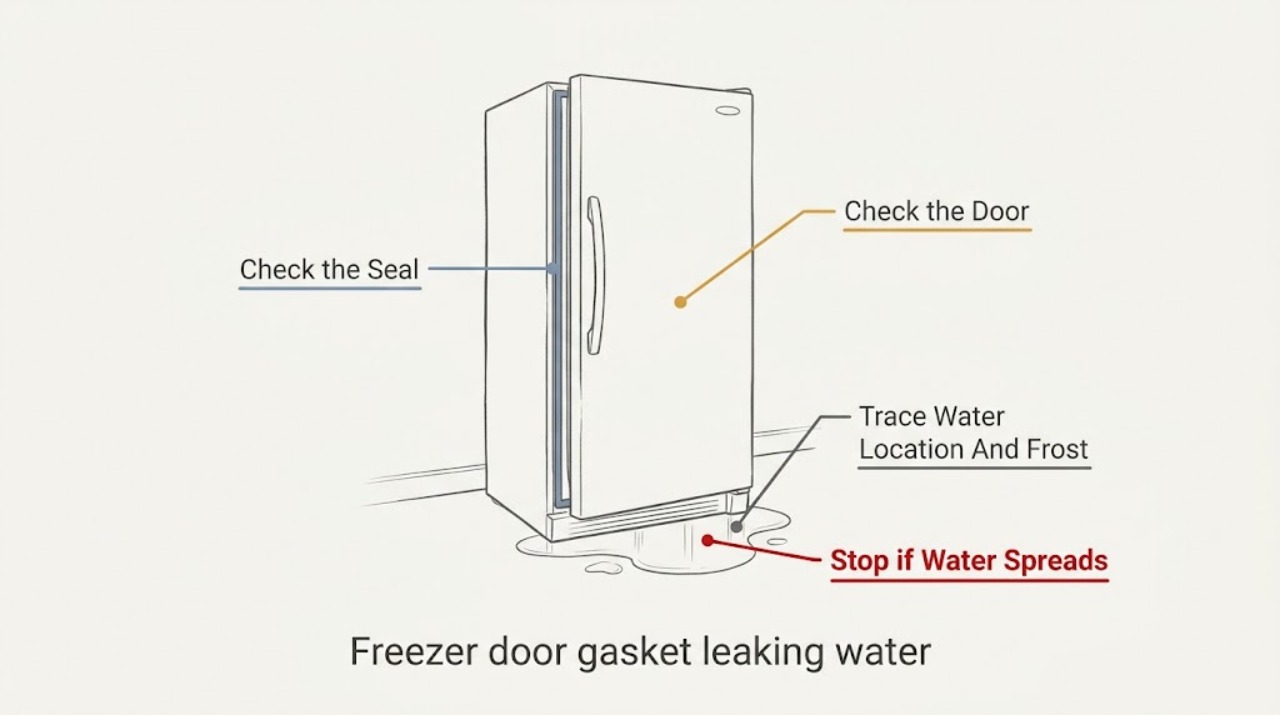
Freezer door gasket leaking water: What to Check and What to Do Next
Water at a freezer door gasket is often condensation caused by warm, humid air entering through a dirty, obstructed, loose, torn, warped, or poorly aligned seal, but water can also be coming from a different defrost or drain path. Dry the area, keep the freezer door closed, clean and dry the gasket with mild soap, and check that containers are not preventing full closure.
-
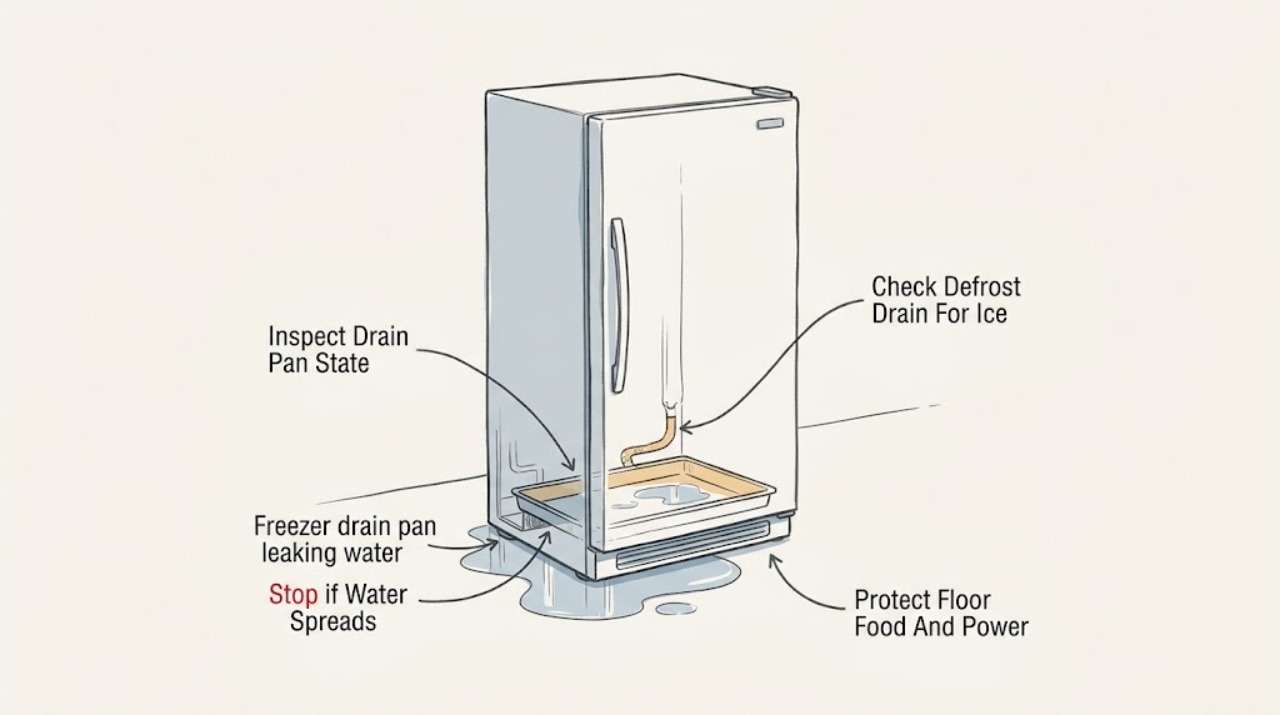
Freezer drain pan leaking water: What to Check and What to Do Next
A freezer drain pan normally receives water from a defrost cycle, but water on the floor means the drain path, pan or evaporation path needs attention. First protect food and the floor, and disconnect power from a dry location if water is near the cord or electrical parts.
-
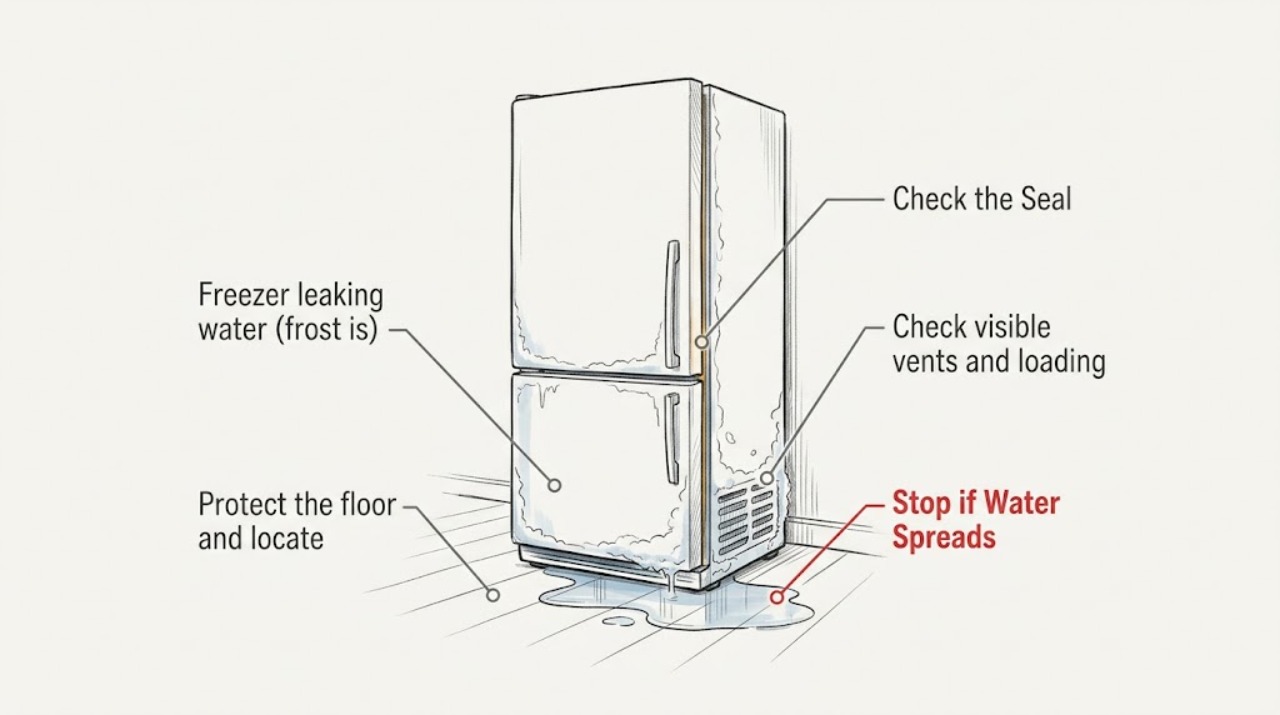
Freezer leaking water (frost is present): What to Check and What to Do Next
A freezer leaking water while frost is present usually has melted frost or defrost water that is not staying in its intended drain path, or warm moist air is entering through a door, gasket, vent, or ice-maker opening and creating excess frost. Protect the floor and food, identify whether the water is inside the compartment, under the appliance, or at a water connection, and inspect only the closed door seal, visible vents, and accessible loading obstructions.
-
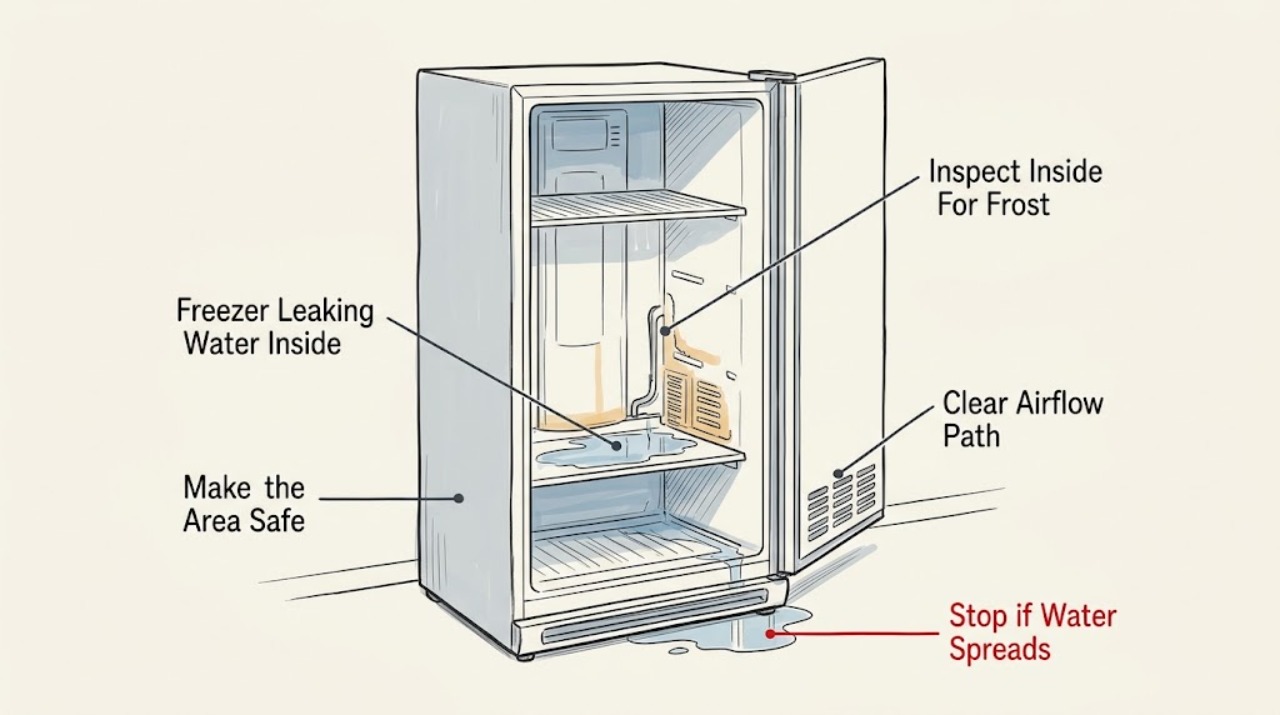
Freezer Leaking Water Inside or Beneath: What to Check and What to Do Next
A freezer leaking water inside or beneath it most often needs the leak source separated into a defrost-drain path, door-and-frost problem, or water-supply circuit. Keep the door closed, protect the floor, and do not reach through water toward a cord or outlet.
-
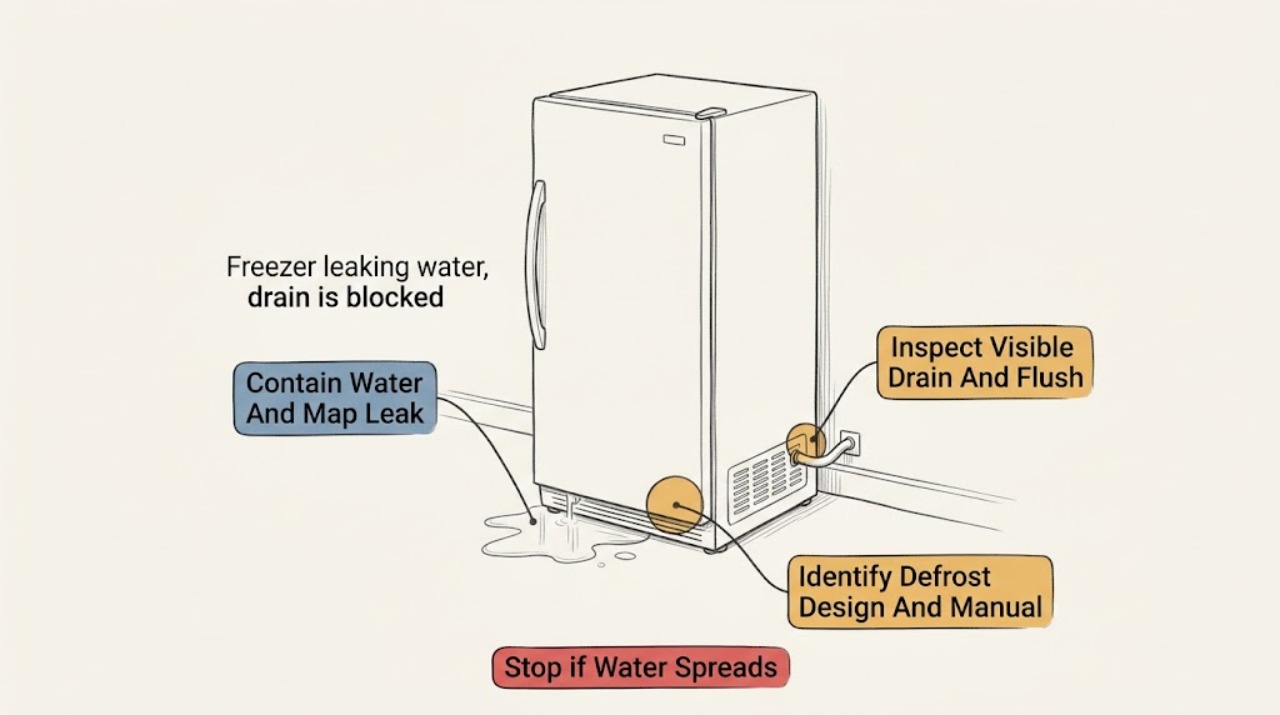
Freezer leaking water, drain is blocked: What to Check and What to Do Next
If a freezer is leaking because its defrost drain is blocked, first protect the floor and identify whether water is pooling inside the freezer, under a basket, in a refrigerator compartment, or at the front of the appliance. A self-defrost freezer normally sends meltwater through a drain tube to a pan; ice on the freezer floor plus a recurring puddle supports a blocked or frozen drain.
-
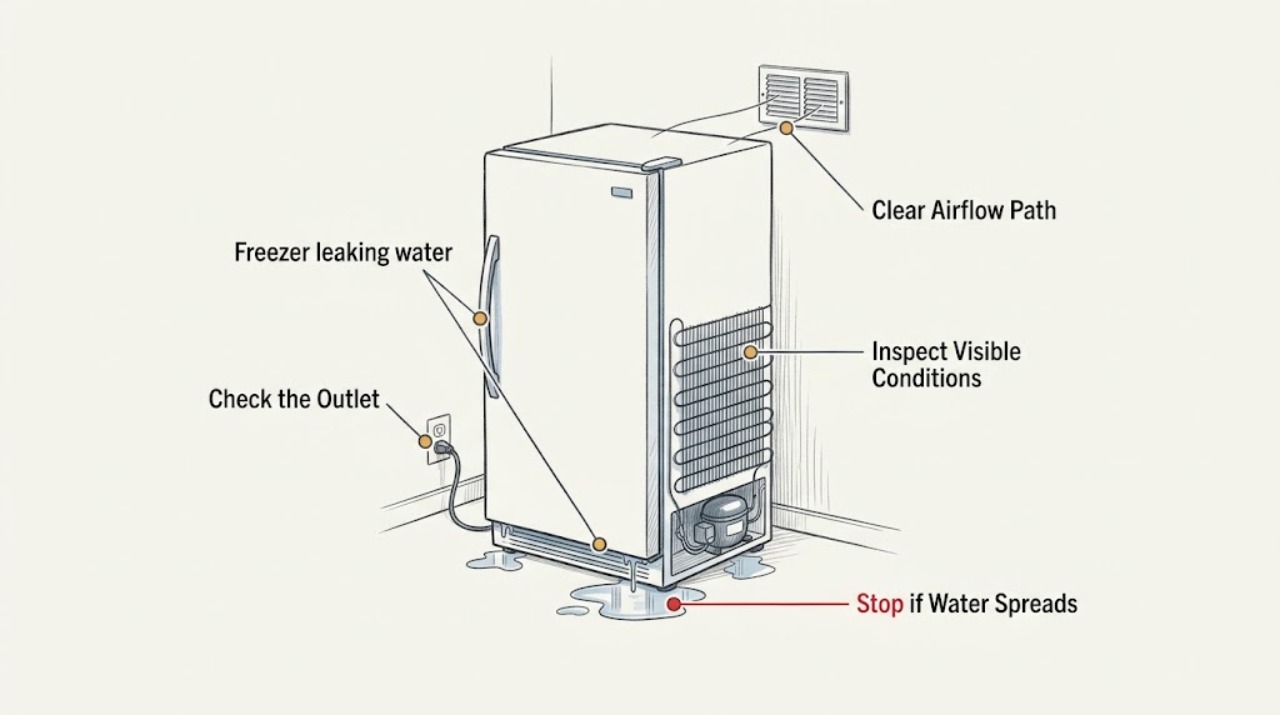
Freezer leaking water: What to Check and What to Do Next
First identify where the water appears and whether it follows a defrost cycle, a door-opening event, a spill, or thawing food. Frost-free freezers normally send defrost water to a drain pan, so water outside the appliance can mean the pan, drain path, door seal, leveling, or a separate spill needs attention.
-
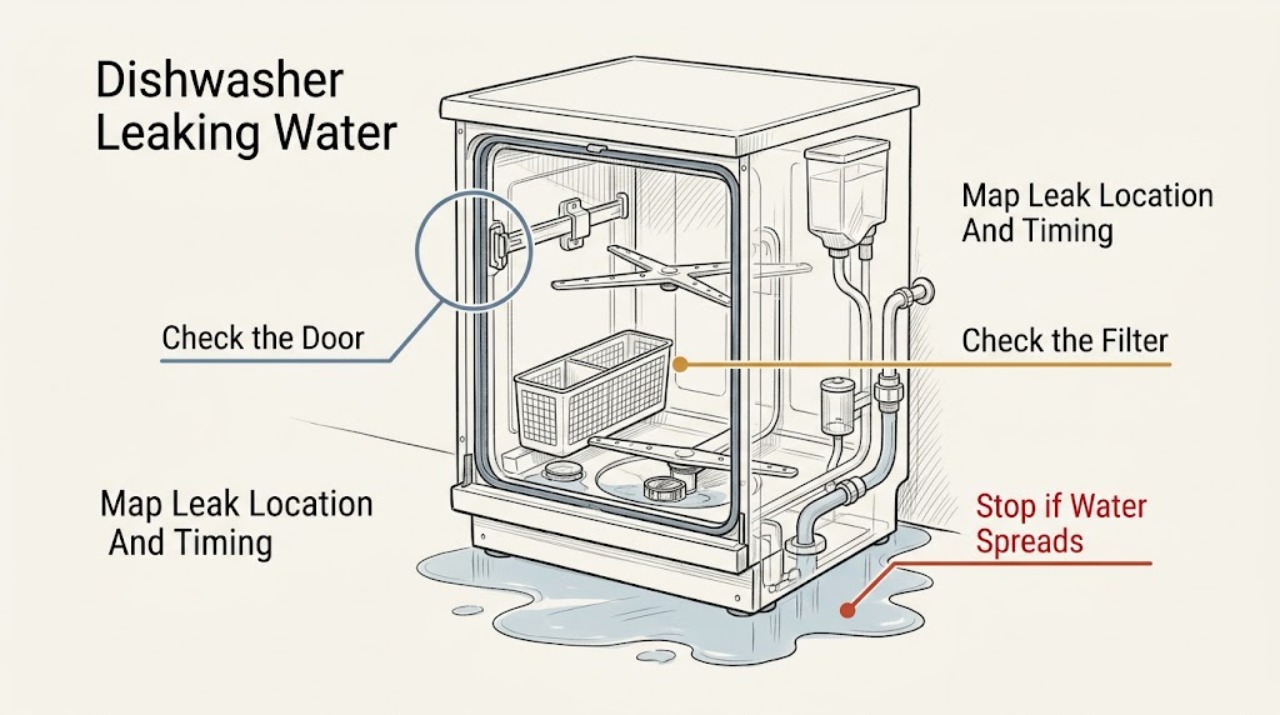
Frigidaire Dishwasher Leaking Water: What to Check and What to Do Next
Stop the cycle and first identify where the water starts: at the door or front edge, beneath the tub, at a visible supply connection, or at the drain side. If water is near electrical parts, the leak is active, or the machine is overflowing, keep clear and arrange service; only shut off water or power from a dry, safe position.
-
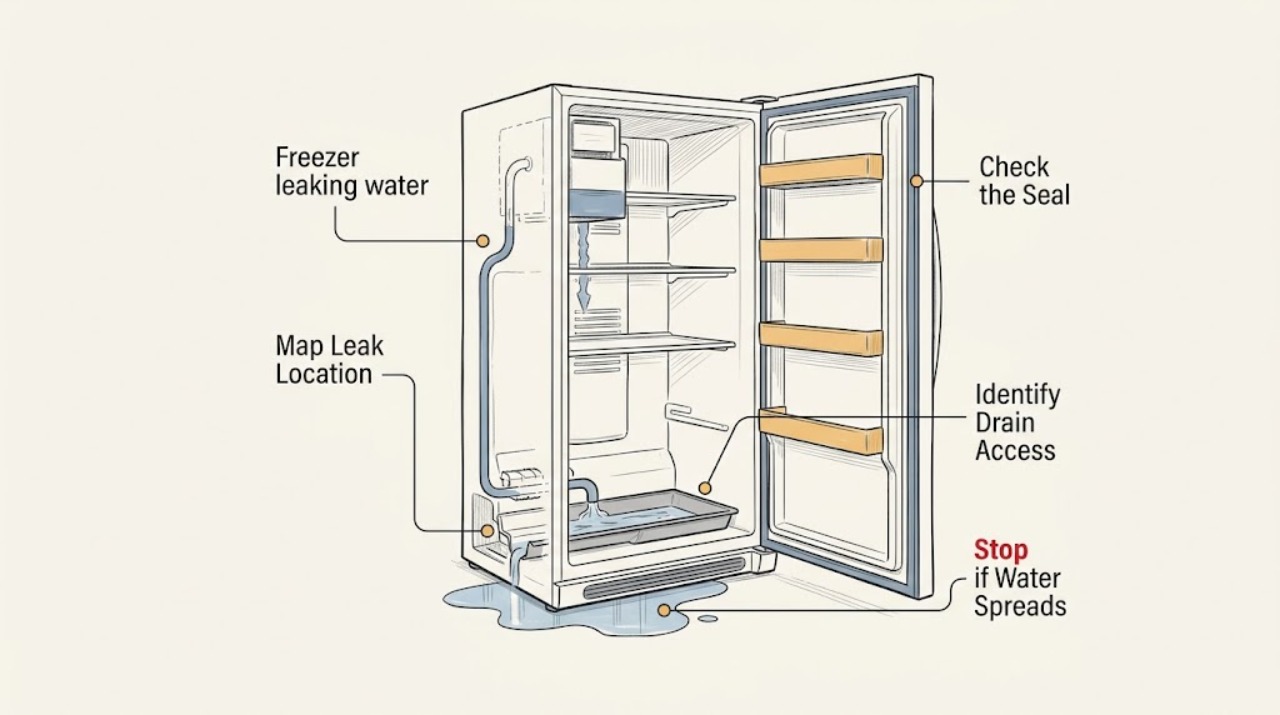
Frigidaire freezer leaking water: What to Check and What to Do Next
Start by locating where and when the Frigidaire freezer leaks. Water on the freezer floor after frost or defrost points toward a blocked or frozen defrost drain; a steady drip from the rear, dispenser, ice-maker area, filter, or water connection is a different path.
-
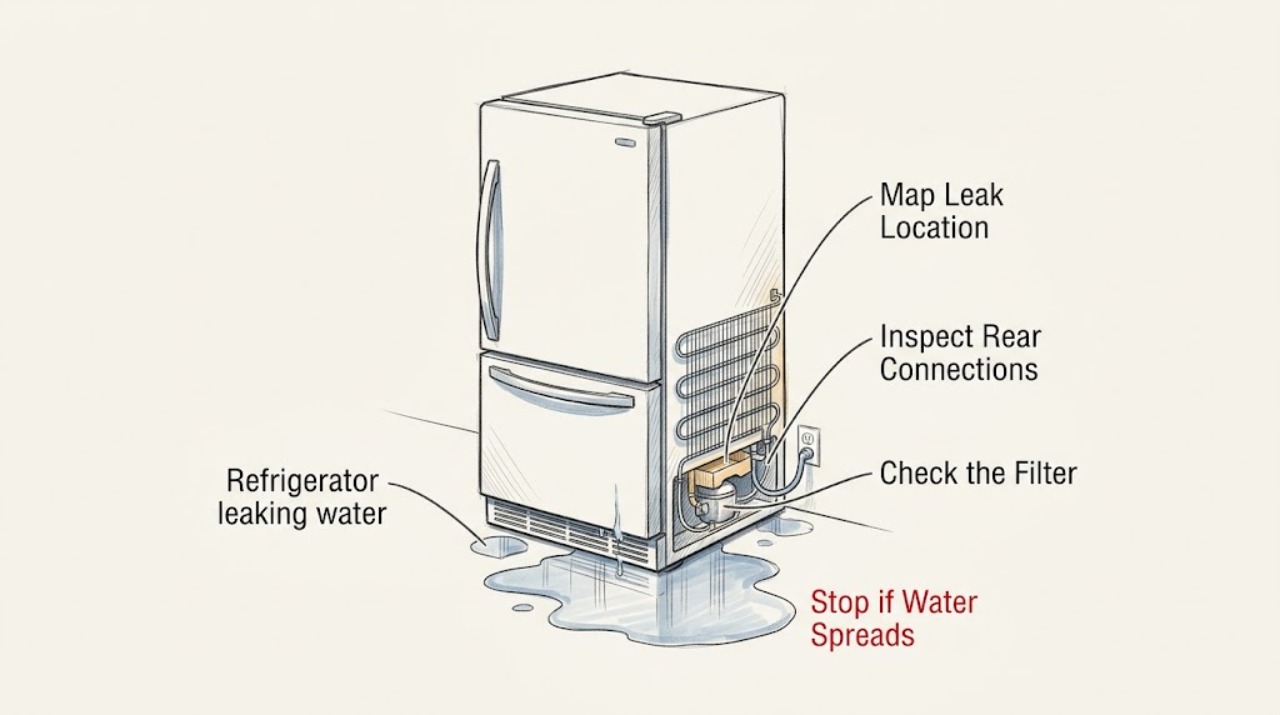
Frigidaire refrigerator leaking water: What to Check and What to Do Next
When a Frigidaire refrigerator is leaking water, first identify whether the water is on the floor, inside the cabinet, at the dispenser, or under the ice maker. For an outside leak, inspect accessible rear water connections and the valve with a dry paper towel; for an inside leak, check a recently installed or cracked water filter and whether a door was left open long enough to cause frost and meltwater.
-
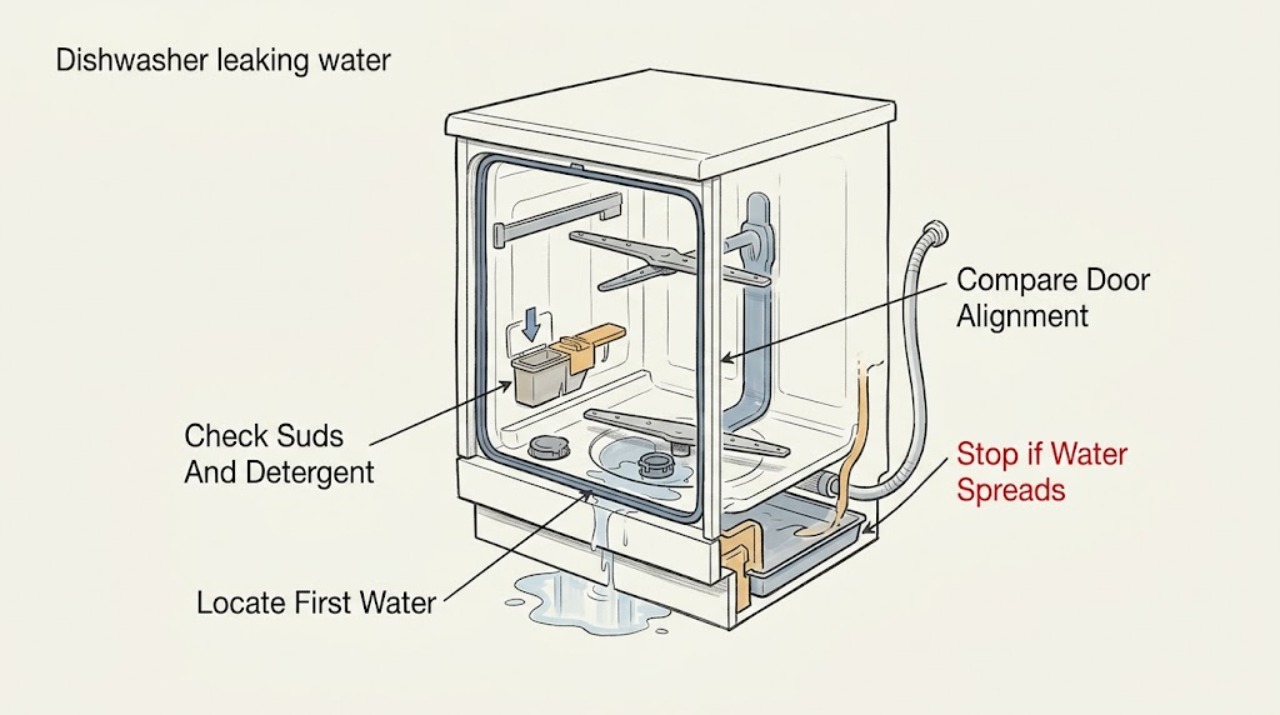
Ge dishwasher leaking water: What to Check and What to Do Next
Stop the GE dishwasher and first locate where water appears: around the door, under the unit, at the adjacent cabinet or sink air gap, or only as normal residual water in the filter area. Suds from the wrong detergent or spilled rinse aid can push water out, while a damaged or mis-seated door gasket, blocked spray arm, misaligned door, loose hose connection, drain problem, or internal leak can produce a different pattern.
-
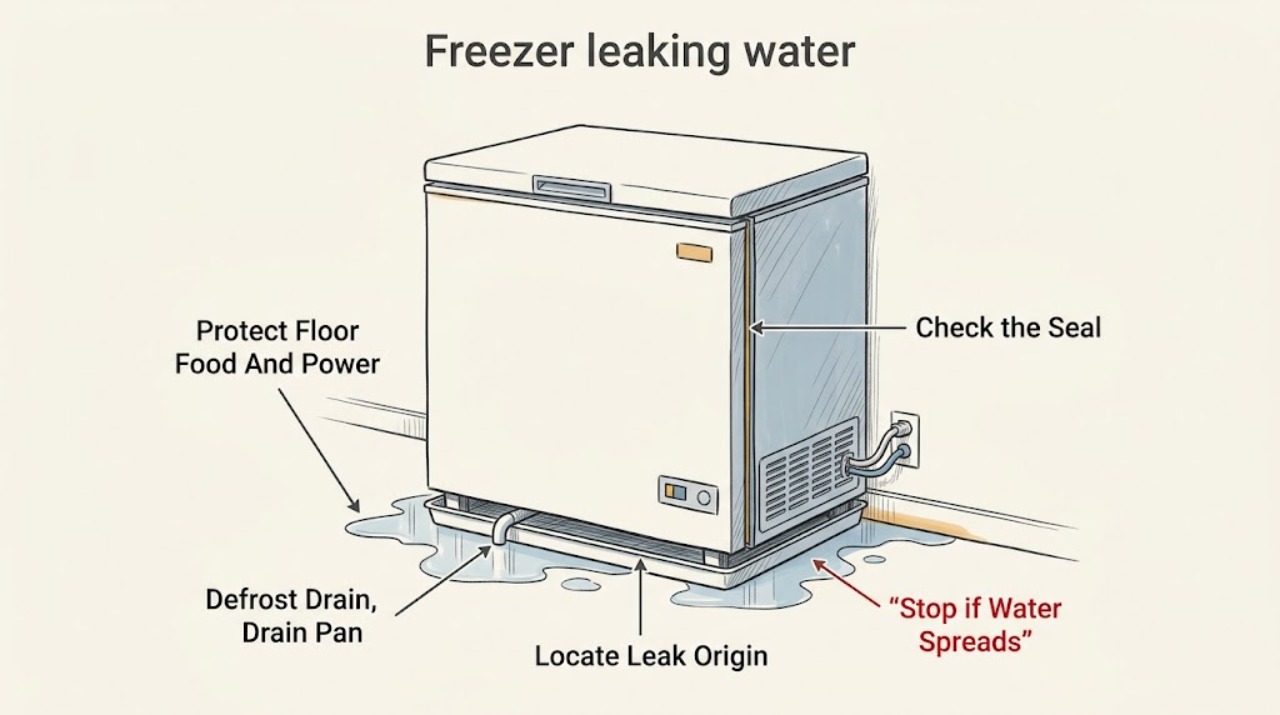
GE freezer leaking water: What to Check and What to Do Next
A GE freezer leak can come from normal defrost water, a blocked or displaced defrost drain, an overflowing drain pan, frost caused by a door or lid that is not sealing, or—on a refrigerator-freezer with an ice maker or water connection—a valve, fill tube, or supply-line leak. First identify whether the water starts inside the freezer, at the door or lid edge, under the cabinet, or at an external water connection.
-
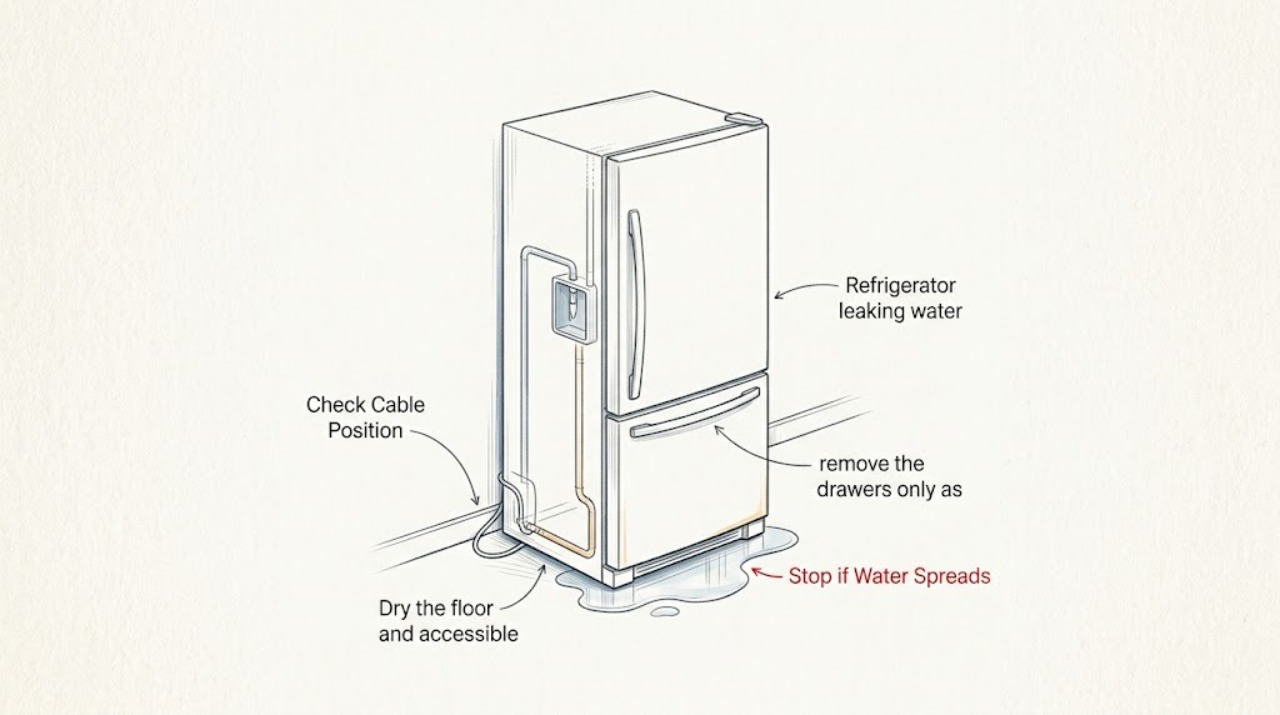
GE refrigerator leaking water: What to Check and What to Do Next
Start by identifying where the water appears: on the floor, under the fresh-food drawers, around the filter, in the ice bucket, or at the rear water connection. Turn off the icemaker and refrigerator water supply before moving a leaking unit or inspecting a loose line.
-
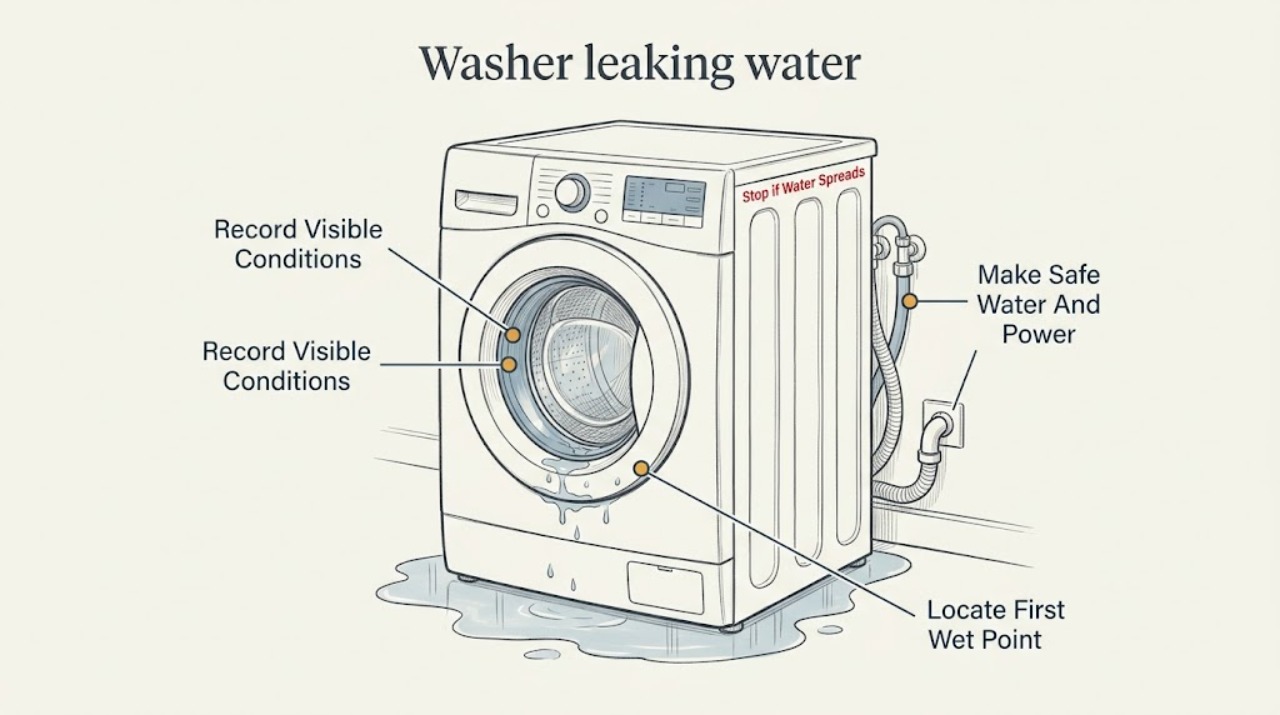
GE washer leaking water: What to Check and What to Do Next
Stop the GE washer and locate the first wet point before replacing anything. Record whether water appears while the washer is idle, filling, washing, draining, or spinning; then distinguish a front-load door gasket or dispenser leak from a top-load overflow or suds leak and a rear hose, drain, or household-plumbing leak.