
On this page
Start here
Quick answer
Stop the GE dishwasher and first locate where water appears: around the door, under the unit, at the adjacent cabinet or sink air gap, or only as normal residual water in the filter area. Suds from the wrong detergent or spilled rinse aid can push water out, while a damaged or mis-seated door gasket, blocked spray arm, misaligned door, loose hose connection, drain problem, or internal leak can produce a different pattern. Without removing panels, check for visible foam, door or gasket damage, blocked spray-arm openings, a cabinet or sink connection leak, and standing water after a completed cycle. Use only automatic-dishwasher detergent and follow the exact GE model instructions. If water reaches the floor, a LEAK DETECTED message appears, the breaker trips, the leak comes from underneath, or the cause is not an obvious surface or detergent issue, leave the dishwasher off and arrange qualified appliance or plumbing service. Do not keep running cycles, pull the appliance out, open electrical covers, or reach into the pump.
Before you begin
Safety first
- This article covers leak location, visible door and spray checks, detergent and suds observations, and ordinary cabinet-side plumbing observations only. Appliance removal, pump or pan access, hose disassembly, internal leak repair, electrical work, and live measurements belong to qualified professionals.
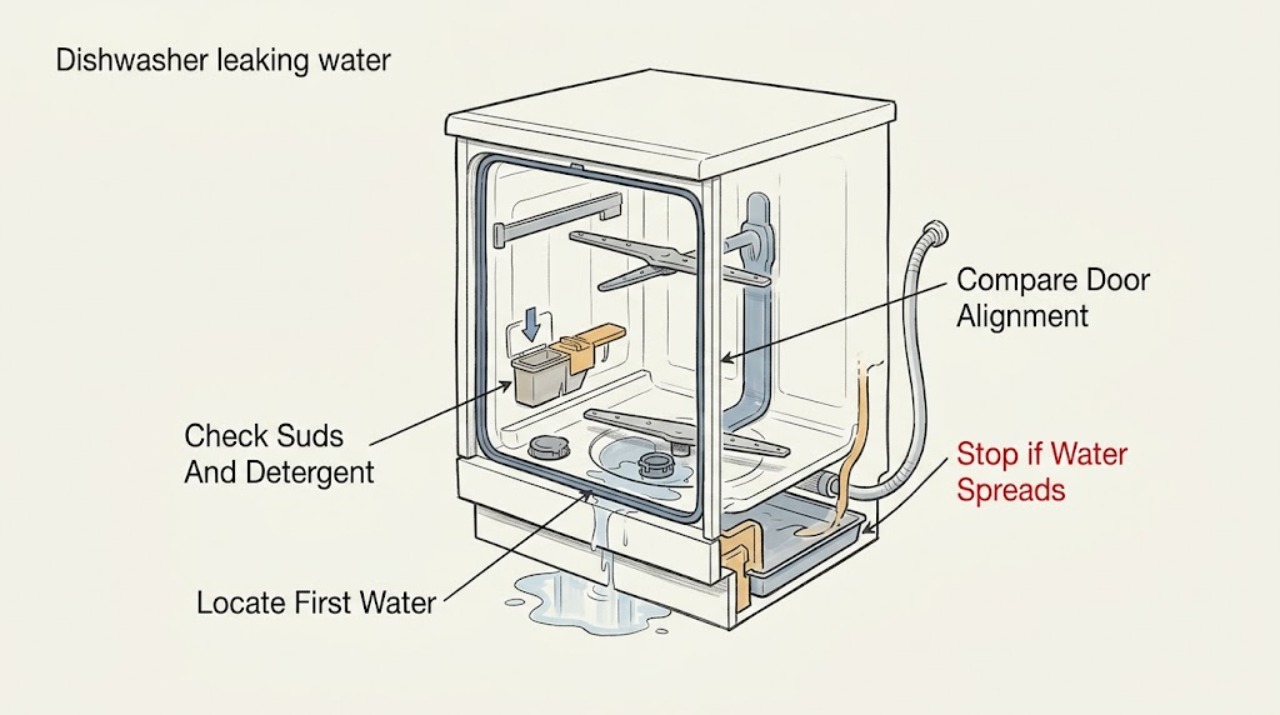
Work through in order
Diagnostic checks
Use only checks that match the exact appliance or system and its official guide.
-
Check 1
Stop the GE dishwasher and, from a dry safe position, note where the first water appears: around the door, underneath the appliance, in the adjacent cabinet, at the sink air gap, or only in the filter area after a cycle. Look for smoke, burning odor, hot wiring, or a large flow without touching wet electrical parts.
Expected result: Water is at the front door, underneath, at a cabinet or hose connection, at the sink air gap, or there is a LEAK DETECTED message or floor water.
Next step: Keep the dishwasher off for floor water, an underneath leak, LEAK DETECTED, smoke, burning odor, hot wiring, or an unexplained large flow. Otherwise continue only with the matching visible checks below.
Stop if: Do not pull the dishwasher out, remove panels, touch wet wiring, or keep running cycles to locate a leak.
Why this matters
Why: Leak location narrows the likely boundary to door sealing or spray direction, plumbing or drain connections, or an internal leak. Floor water, a protection alert, and electrical warning signs are escalation conditions.
-
Check 2
With the dishwasher stopped, look through the open door for bubbles or soap foam and recall whether hand dish soap, excess automatic-dishwasher detergent, or spilled rinse aid was involved. Do not add another product while foam is present.
Expected result: Foam is present, the leak began after a detergent or rinse-aid change, no foam is present, or the leak continues after the foam has dissipated.
Next step: If foam is present, turn the dishwasher off, allow it to dissipate, and follow the exact GE model guidance for safe pump-out. Use only automatic-dishwasher detergent afterward; call service if leaking continues or the tub will not drain.
Stop if: Do not mix cleaners, use hand soap, repeatedly run a foaming cycle, or reach into standing water near electrical parts.
Why this matters
Why: GE identifies excess suds as a mechanism that can push water out and cause flooding. No foam or a recurring leak after the suds are gone makes door, spray, plumbing, drain, or internal causes more likely.
-
Check 3
With the door open and the appliance off, inspect the gasket around the door or tub for cuts, tears, wear, foreign material, or a section pressed out of its groove. Check that the door closes without hitting the adjacent cabinet or countertop and that no rack or dish prevents a full latch.
Expected result: The gasket is damaged or displaced, the door is misaligned or obstructed, the door latches normally with an intact seal, or the leak is not near the door.
Next step: Correct only an obvious rack or loading obstruction permitted by the manual. If the gasket is torn, the door does not align, or the front leak remains, leave the dishwasher off and arrange qualified service rather than forcing the seal.
Stop if: Do not remove a gasket, bend cabinet or latch metal, force the door, or operate with a damaged seal and water reaching the floor.
Why this matters
Why: A damaged seal, misalignment, cabinet contact, or rack obstruction can let wash water escape from the front. An intact, properly closing door with a leak elsewhere makes a different branch more likely. A designed gap on some gasket styles is not automatically a defect.
-
Check 4
Inspect the visible spray-arm openings and rack loading with the dishwasher off. Remove only loose food or detergent residue that is plainly accessible, and confirm that a tall item or dish is not blocking an arm or directing spray at the door.
Expected result: A spray-arm opening is blocked, the arm is cracked or split, a rack or dish obstructs rotation, or the visible spray path is clear but the door still leaks.
Next step: Clear only accessible residue and correct loading as the model manual permits, then monitor one supervised cycle only if there is no other hazard. Stop and arrange service if the arm is damaged or the leak returns.
Stop if: Do not run with a cracked spray arm, reach into moving parts, use sharp tools in spray openings, or continue a cycle with active floor water.
Why this matters
Why: GE says food, detergent, or mineral deposits can deflect water out the front, and holes or splits in a spray arm can contribute. A clear spray path with a continuing leak keeps the gasket, alignment, suds, or internal leak in scope.
-
Check 5
From ordinary cabinet access, look for water at the visible inlet or drain hose connections, shutoff area, sink drain, or air gap without loosening a clamp or pulling the dishwasher. Note whether the sink or air gap is backed up and whether the dishwasher leaves water in the tub.
Expected result: Water is at a hose or shutoff connection, the sink or air gap is backed up, the dishwasher does not drain, or all visible external connections are dry.
Next step: If the visible plumbing issue is outside the dishwasher, contact a plumber or qualified installer. For water underneath, poor drainage that persists, or an unclear connection, leave the dishwasher off and arrange qualified appliance or plumbing service.
Stop if: Do not dismantle the drain or inlet path, reach behind the machine, pull it out, or handle wet electrical connections.
Why this matters
Why: A cabinet or sink-side leak may be plumbing or connection-related, while poor drainage can cause water to back up or escape from the air gap. Dry external connections with water underneath keep an internal dishwasher leak in scope.
-
Check 6
Check the display for a LEAK DETECTED message or other model-specific alert and record whether the breaker trips, the cycle cancels, or the pump-out behavior changes. Give the exact GE model number, leak location, cycle timing, detergent used, and visible findings to a qualified technician.
Expected result: A leak-protection message appears, the cycle cancels, water remains under the appliance, the breaker trips, or the leak remains unexplained after the visible checks.
Next step: Leave the dishwasher off and arrange qualified appliance service; use a licensed electrician for a recurring breaker or supply concern and a plumber for an external plumbing leak. Preserve photos and the symptom timeline.
Stop if: Do not reset a tripping breaker repeatedly, bypass a leak sensor, remove panels, or continue operating through an active leak.
Why this matters
Why: A protection alert or unexplained underneath leak indicates a condition beyond routine door or detergent adjustment. A breaker trip adds an electrical boundary, and a recurring leak should not be diagnosed by replacing a guessed part.
Use your observations
Decision map
Find the observation that best matches what you see, then follow the next safe action.
-
PATH 01Safety boundary
What you see
Water first appears around the door and the gasket is damaged, displaced, obstructed, or the door contacts the cabinet or countertop.
Do this next
Correct only an obvious loading obstruction allowed by the model manual. Leave the dishwasher off and arrange service for a torn gasket, misaligned door, damaged baffle, or leak that persists.
Why this path and its safety boundary
Why it matters: A sealing, alignment, rack, or door-vent condition is more likely than an underneath leak.
Safety stop: Do not force the door, alter the latch or cabinet, or operate with floor water or a damaged seal.
-
PATH 02Safety boundary
What you see
Foam is visible or the leak began after hand soap, excess detergent, or spilled rinse aid was introduced.
Do this next
Turn the dishwasher off, let the foam dissipate, and follow the exact GE model pump-out guidance. Use only automatic-dishwasher detergent and arrange service if water or suds return.
Why this path and its safety boundary
Why it matters: Excess suds are a likely mechanism for water being pushed out of the tub.
Safety stop: Do not add mixed chemicals, run another foaming cycle, or reach into standing water near electrical parts.
-
PATH 03Safety boundary
What you see
The leak is at the front, the gasket and alignment look sound, and a blocked or split spray arm or tall item can direct water toward the door.
Do this next
Remove only accessible residue and correct loading as the manual permits. If the spray arm is damaged or the leak returns, stop use and arrange service.
Why this path and its safety boundary
Why it matters: Water misdirection from the spray path or loading pattern is more likely.
Safety stop: Do not use sharp tools in spray holes or run with a cracked arm or floor water.
-
PATH 04Safety boundary
What you see
Water appears at a cabinet hose, shutoff, sink air gap, or drain connection, or the dishwasher leaves water in the tub without suds.
Do this next
Leave the dishwasher off and have the visible plumbing or drain boundary assessed by a plumber, installer, or appliance technician. Do not pull the machine or dismantle the drain path.
Why this path and its safety boundary
Why it matters: An external plumbing, drain, hose-routing, or connection problem is more likely than a door gasket alone.
Safety stop: Stop for floor water, a leaking connection, standing water near electrical parts, or any access requiring appliance removal.
-
PATH 05Safety boundary
What you see
Water comes from underneath, a LEAK DETECTED message appears, the cycle cancels, the breaker trips, or the cause remains unexplained after visible checks.
Do this next
Keep the dishwasher off and arrange qualified appliance service; involve a licensed electrician for a recurring breaker or supply issue and a plumber for an external plumbing cause.
Why this path and its safety boundary
Why it matters: An internal leak, leak-protection event, electrical fault, or unresolved installation condition is more likely and cannot be safely identified from the outside.
Safety stop: Do not reset repeatedly, bypass protection, open panels, pull the dishwasher out, or continue operating through the leak.
Helpful context
Understand the symptom
The leak location changes the next check
Water at the front of the door points toward the gasket, alignment, vent, spray direction, or suds. Water under the machine keeps the drain, inlet, plumbing, and internal tub system in scope. Water at the sink air gap or adjacent cabinet may be a plumbing or hose issue rather than a dishwasher door seal. Dry the area only when safe and record where the first drop appears.
Check the detergent and foam branch first
GE warns that hand dish soap, too much automatic-dishwasher detergent, or spilled rinse aid can produce excess suds that force water out. Stop the machine and let foam dissipate; use only the detergent type and amount specified for the exact model. Do not mix improvised cleaners or repeat a foaming cycle.
Inspect only user-accessible parts
The door gasket, visible spray-arm openings, rack position, detergent dispenser area, and external sink or cabinet connections can be observed without opening the appliance. GE's gasket guidance notes that some models have a designed gap at the bottom of the seal, so that feature alone is not proof of a leak. Internal hose, pump, pan, or wiring access belongs to service.
Treat leak protection as an escalation signal
Some GE dishwashers use a floor-protection pan or moisture sensor and may show LEAK DETECTED. If the appliance reports that condition, keep it out of use and follow the model's service guidance. Cleaning a door or changing detergent cannot establish that an underneath leak has been repaired.
Safety boundary
Stop conditions
- Stop immediately for water reaching the floor, smoke, burning odor, hot or damaged wiring, shock, a large uncontrolled flow, or a breaker that trips again; keep clear and arrange urgent qualified help.
- Do not pull the dishwasher out, remove access or electrical panels, reach into the pump, touch wet wiring, dismantle hoses, or alter hardwired connections.
- Do not repeatedly reset a breaker, bypass leak protection, or continue cycles while the dishwasher is actively leaking or displays LEAK DETECTED.
- Do not use hand dish soap, mix cleaners, add improvised chemicals, use sharp tools in spray openings, or run with a damaged gasket or spray arm.
- Stop when the leak is underneath, persistent, unexplained, or associated with standing water, poor drainage, or a protection alert; arrange qualified appliance or plumbing service.
Only after diagnosis
Potential parts
- dishwasher door gasket or lower baffle
Consider this category only if the exact model and qualified diagnosis confirm a torn, worn, displaced, or damaged door seal or baffle after alignment and loading checks.
Confirm the complete GE model and gasket style before ordering; a designed seal gap on some models is not itself proof of a failed part. - dishwasher spray arm
Consider this category only if a spray arm is visibly split, damaged, or confirmed by model-specific diagnosis to be directing water incorrectly.
Confirm the exact GE model and spray-arm position before ordering; do not infer fit from appearance alone. - dishwasher inlet or drain hose
Consider this category only after a qualified installer, plumber, or appliance technician confirms a leaking, kinked, damaged, or incorrectly routed hose.
Confirm model, connection type, routing, and installation requirements before ordering or replacing a hose. - dishwasher drain pump or leak sensor
Consider this category only when a technician confirms an internal drain, pump, pan, or leak-sensor fault after external suds, seal, spray, and plumbing causes are excluded.
Confirm the complete GE model and approved diagnostic result before ordering; do not access internal parts as a homeowner test.
When checks do not resolve it
Need a professional?
Arrange qualified GE dishwasher service for water underneath the appliance, a persistent front leak, a damaged gasket or spray arm, a LEAK DETECTED message, unexplained standing water, or a leak that remains after the safe detergent, loading, door, and visible plumbing checks. Use a licensed electrician when a breaker trips again or supply and wiring assessment is needed, and a plumber for an external sink, air-gap, shutoff, or cabinet plumbing leak. For floor water, smoke, burning odor, hot wiring, shock, or uncontrolled flow, stop using the dishwasher and obtain urgent help from a safe location.
Safety scope: This article covers leak location, visible door and spray checks, detergent and suds observations, and ordinary cabinet-side plumbing observations only. Appliance removal, pump or pan access, hose disassembly, internal leak repair, electrical work, and live measurements belong to qualified professionals.
Common questions
FAQ
Why is my GE dishwasher leaking from the door?
Check for suds, a damaged or displaced gasket, a rack or dish blocking the door, cabinet contact, a misaligned door, or a spray arm directing water toward the front. If the seal and loading are sound but the leak persists, arrange qualified service.
Can the wrong detergent make a GE dishwasher leak?
Yes. GE says wrong or excessive detergent, hand dish soap residue, or spilled rinse aid can create suds that push water out. Stop the dishwasher, let foam dissipate, and use only automatic-dishwasher detergent according to the model instructions.
What if my GE dishwasher leaks from underneath?
Leave it off and check only visible cabinet or sink-side plumbing from a safe position. GE directs service for water underneath that is not clearly a plumbing issue, and a LEAK DETECTED alert or floor-protection event needs service rather than repeated cycles.
Is a gap in a GE dishwasher door gasket always a problem?
No. GE says some gasket designs intentionally have a gap at the bottom. Tears, cuts, wear, displacement, poor door alignment, or water escaping from that area are different findings and should be evaluated using the exact model guidance.
When should I call a plumber or appliance technician for a GE dishwasher leak?
Call an appliance technician for an underneath leak, persistent door leak, damaged gasket or spray arm, LEAK DETECTED, unexplained standing water, or a recurring fault. Call a plumber for an external sink, air-gap, shutoff, or cabinet plumbing leak. Stop immediately for floor water, smoke, burning odor, hot wiring, shock, or an uncontrolled flow.
Read the exact guide
Official sources
- GE Appliance - Circuit Breaker TripsGE Appliances · GE circuit guidance used for the electrical stop boundary; it is not permission to access energized appliance wiring.
- Dishwasher - Checking and Replacing Door GasketGE Appliances · GE gasket guidance for tears, cuts, wear, seating, and model-dependent gasket styles; use the exact model procedure.
- Dishwasher - Door Does Not Close ProperlyGE Appliances · GE installation and door-closing guidance for alignment and leveling; use the model installation instructions and professional help for repositioning.
- Dishwasher - Leaking From DoorGE Appliances · GE door-leak guidance for model-dependent gasket, cabinet-clearance, vent, and alignment conditions.
- Dishwasher - Leaks or Floods UnderneathGE Appliances · GE guidance for leaks or flooding under a dishwasher; it does not authorize appliance removal or internal repair.
- Dishwasher - Excess SudsGE Appliances · GE's excess-suds guidance for wrong detergent or over-sudsing; use only the exact model procedure and stop for hazards.
- Dishwasher - Floor Protect / Leak Protection FeatureGE Appliances · GE leak-protection guidance for models equipped with Floor Protect or Floor Protect with Alert; exact model features vary.
- Dishwasher - Preventing LeakingGE Appliances · GE's general dishwasher leak-prevention and symptom-location guidance; exact dishwasher model instructions govern installation and service steps.
Community feedback
Share a repair observation
Share a plain-text repair observation. Accepted observations are published automatically; this page may take a moment to update.