
GE appliance guidance
GE Dishwasher Repair Guides
Troubleshooting and repair guidance for published GE Dishwasher problems, symptoms, and maintenance questions.
Published GE Dishwasher guides
Choose the guide whose symptom or condition most closely matches what you are seeing.
-
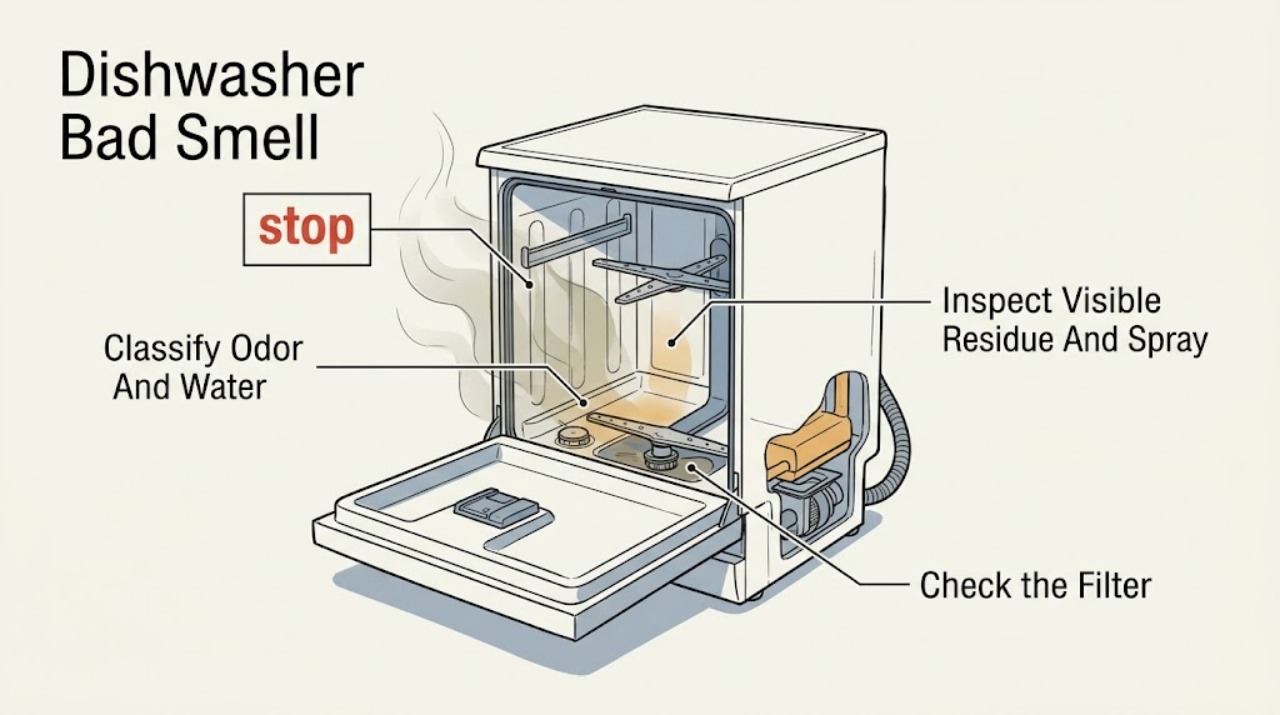
GE Dishwasher Bad Smell: Check Residue, Filters, Mildew, and Drainage Safely
A persistent odor in a GE dishwasher usually points to food residue, a dirty filter or pump-inlet area, blocked spray-arm jets, mildew on the tub or gasket, or dirty water returning between cycles; a new-appliance smell can be temporary. First note whether the odor is new-plastic, food, sour or mildew-like, sewage-like after sitting, or burning during a cycle.
-
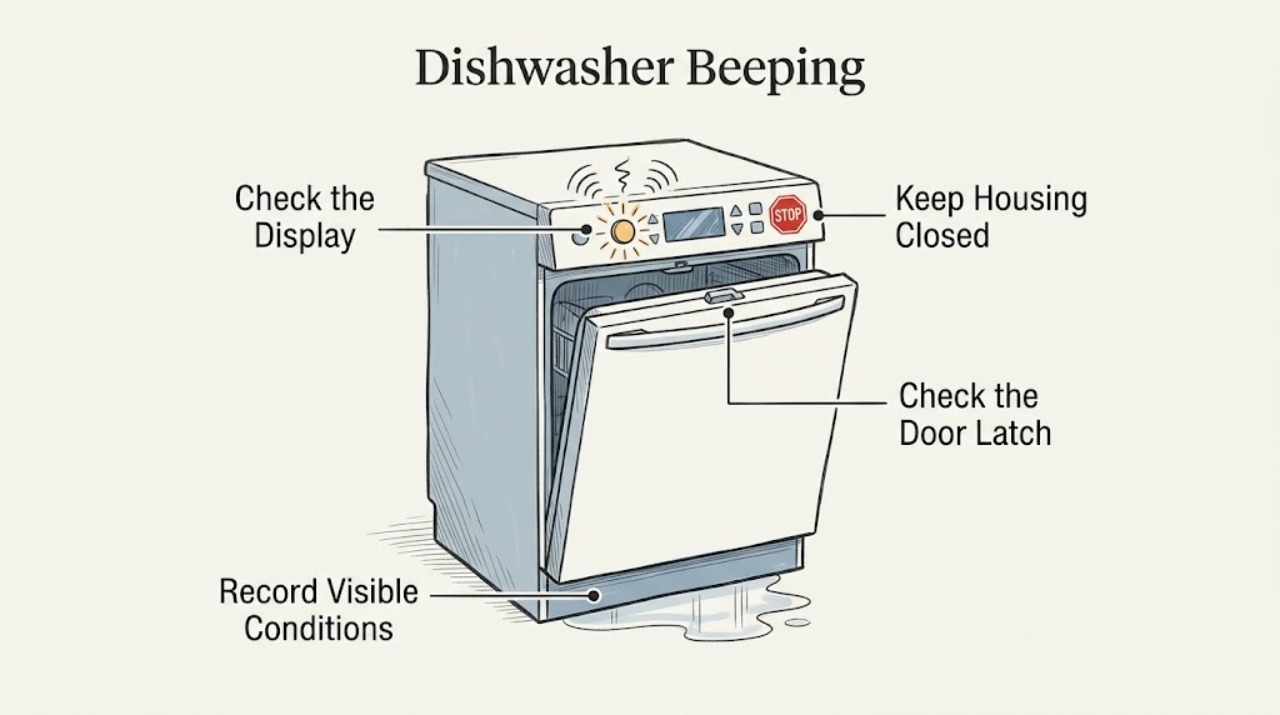
GE Dishwasher Beeping: Use the Timing and Display to Find the Safe Next Step
First note whether the sound is a single end-of-cycle tone, a tone whenever a key is touched, a beep every 30 seconds or every minute, or a repeating beep with a blinking light or displayed code. GE says a beep every 30 seconds or minute usually means the door was unlatched during a cycle: close and latch it, then press Start if the model requires that.
-
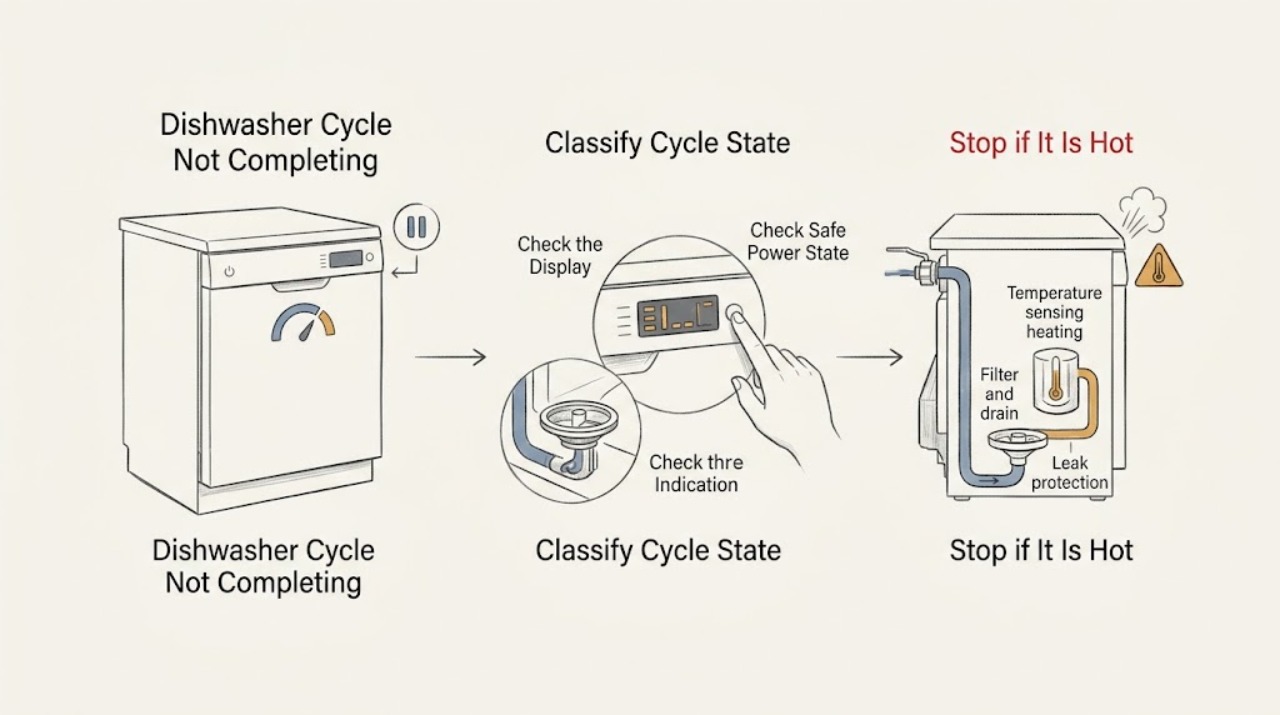
GE Dishwasher Cycle Not Completing: Find the Pause, Drain, or Heat Cause
First separate a normal long or briefly paused cycle from a true interruption: GE says many dishwashers can run for two hours or more, clean sensors can change the time, and some models start and stop briefly while draining. Heated Dry, Dry Boost, Power Dry, Added Heat, sanitize options, and low incoming-water temperature can add time.
-
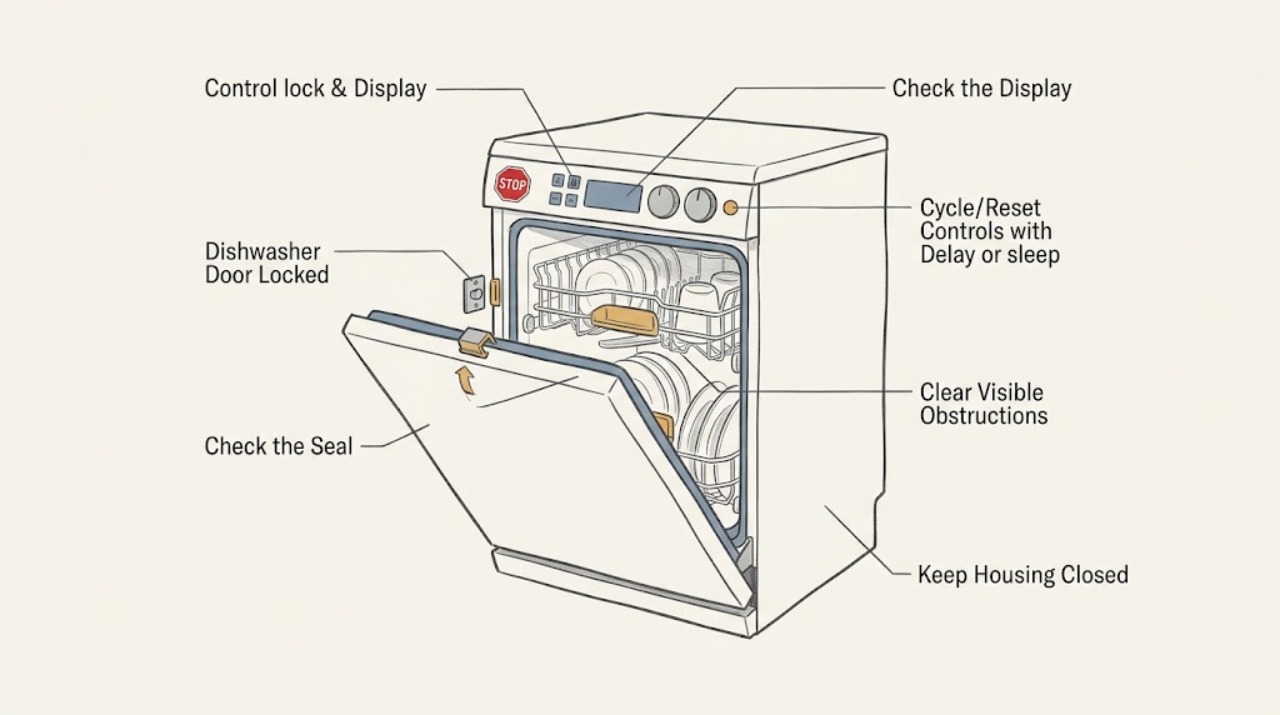
GE Dishwasher Door Locked: Distinguish Control Lock, Cycle State, and a Physical Latch
First distinguish a locked control panel from a door that is physically stuck. If LOCK or LOCKED is displayed and the door itself opens normally, the GE control-lock feature is active: older models commonly use the LOCK pad twice within three seconds, while many newer models use a documented three-second hold on a model-specific pad or pad combination.
-
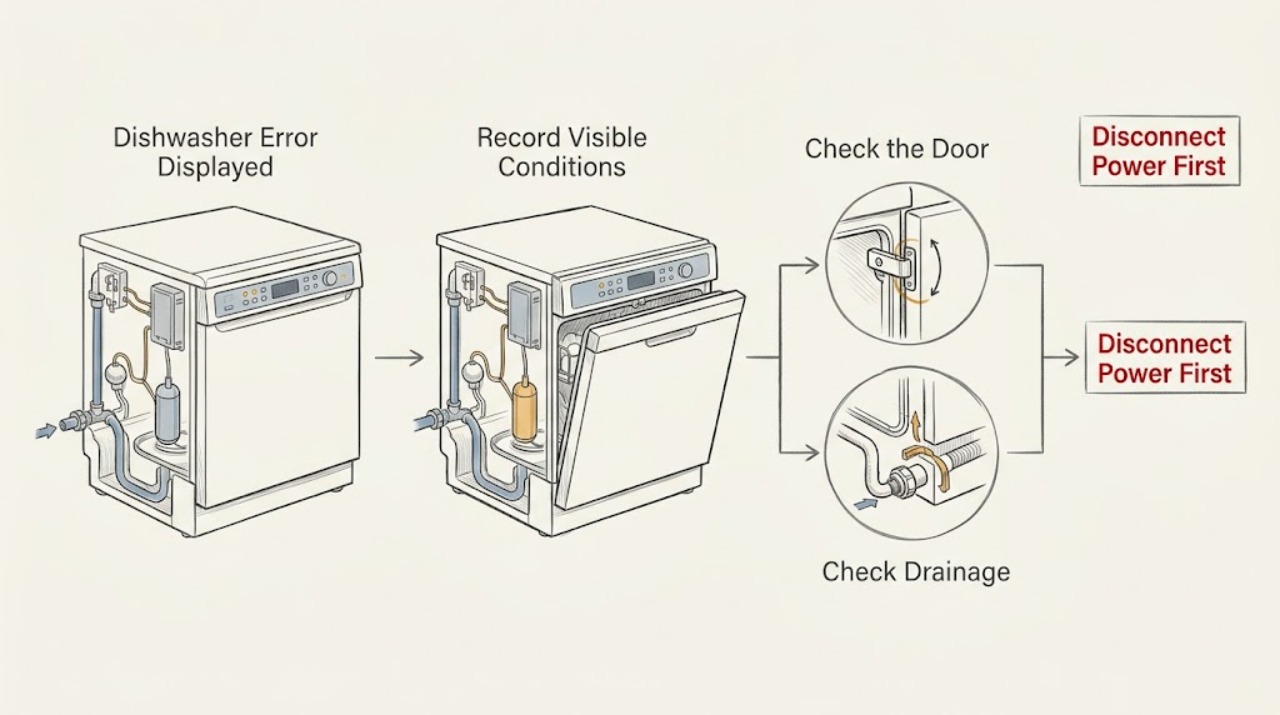
GE Dishwasher Error Displayed
If a GE dishwasher displays an error, record the exact code or words, model number, whether there is standing water or a visible leak, and whether the cycle will start. GE says error, fault, and function codes are not universal across models; most codes need the exact Owner's Manual and many require a technician.
-
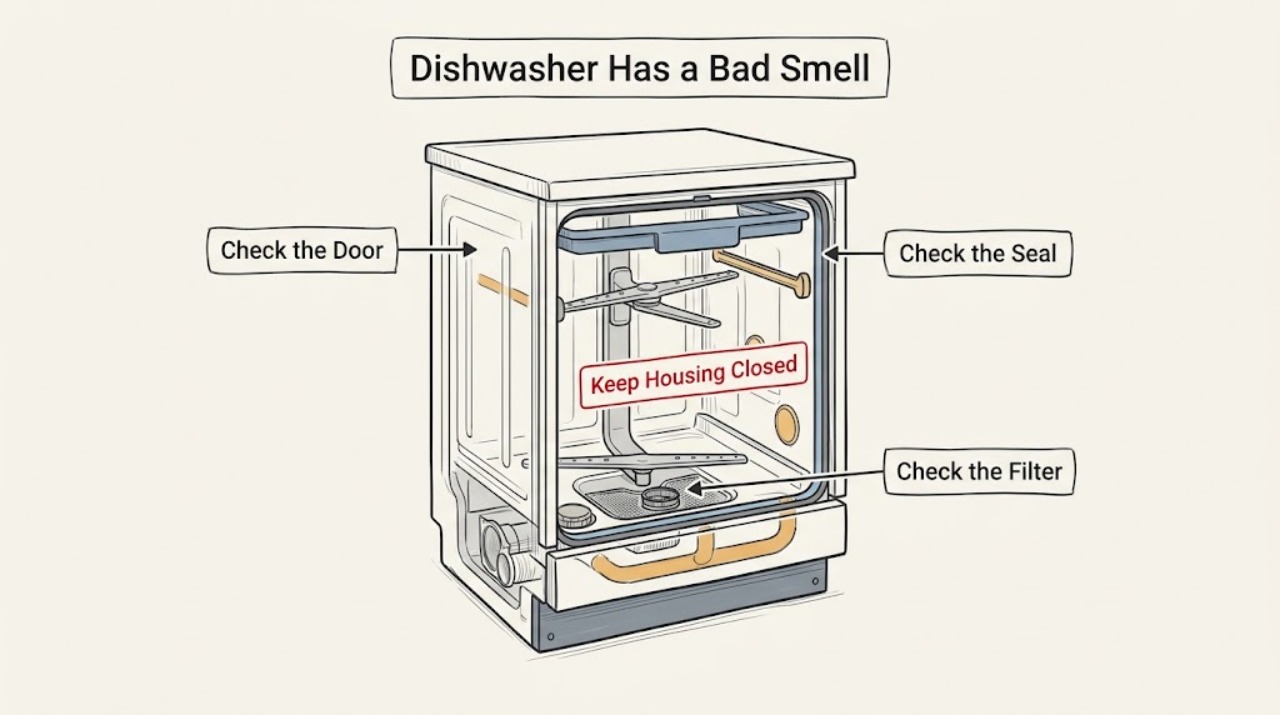
GE Dishwasher Has a Bad Smell: What to Check and What to Do Next
A bad smell in a GE dishwasher usually comes from food residue, a dirty or restricted filter, buildup near the pump inlet or spray-arm jets, mildew on the gasket, or dirty water returning through an incorrectly routed drain hose. A small amount of clean water near the sump may be normal, but dirty water that builds up between cycles is not.
-
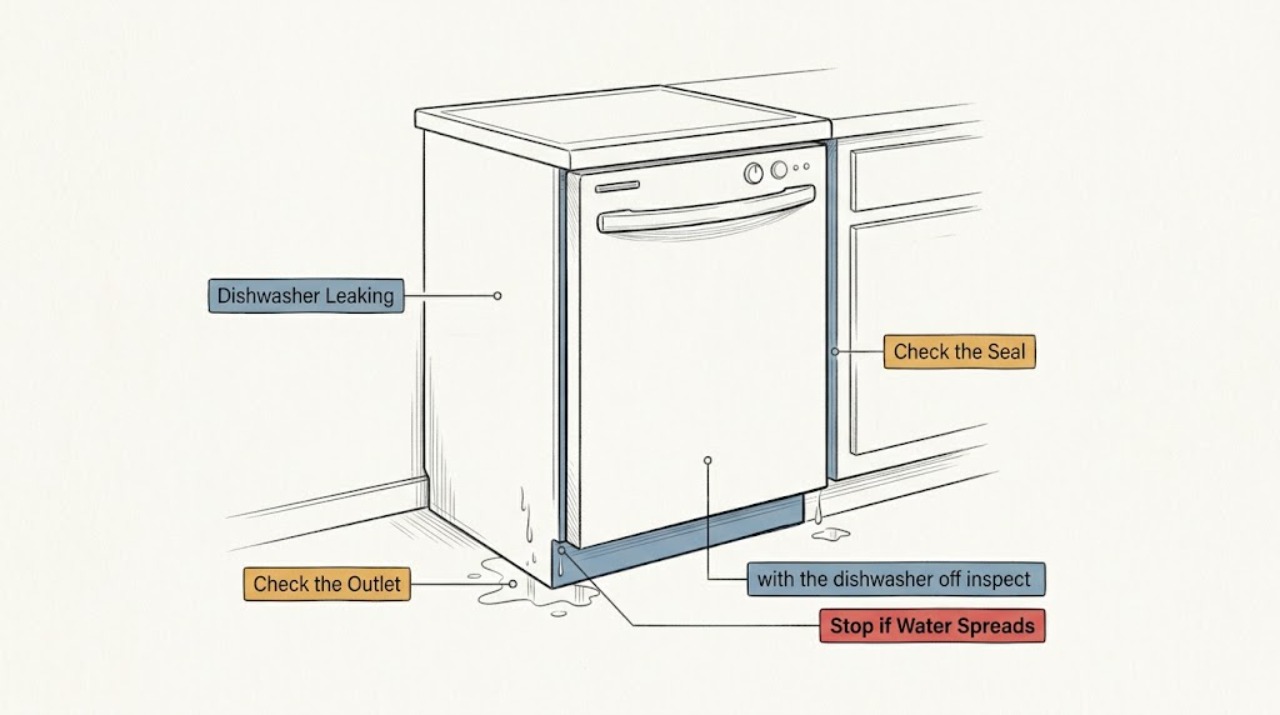
GE Dishwasher Leaking
If a GE dishwasher is leaking, stop the cycle and keep water away from the plug, outlet, and other electrical equipment. First locate the water: at the door, beneath the dishwasher, in the adjacent cabinet, or at the sink air gap.
-
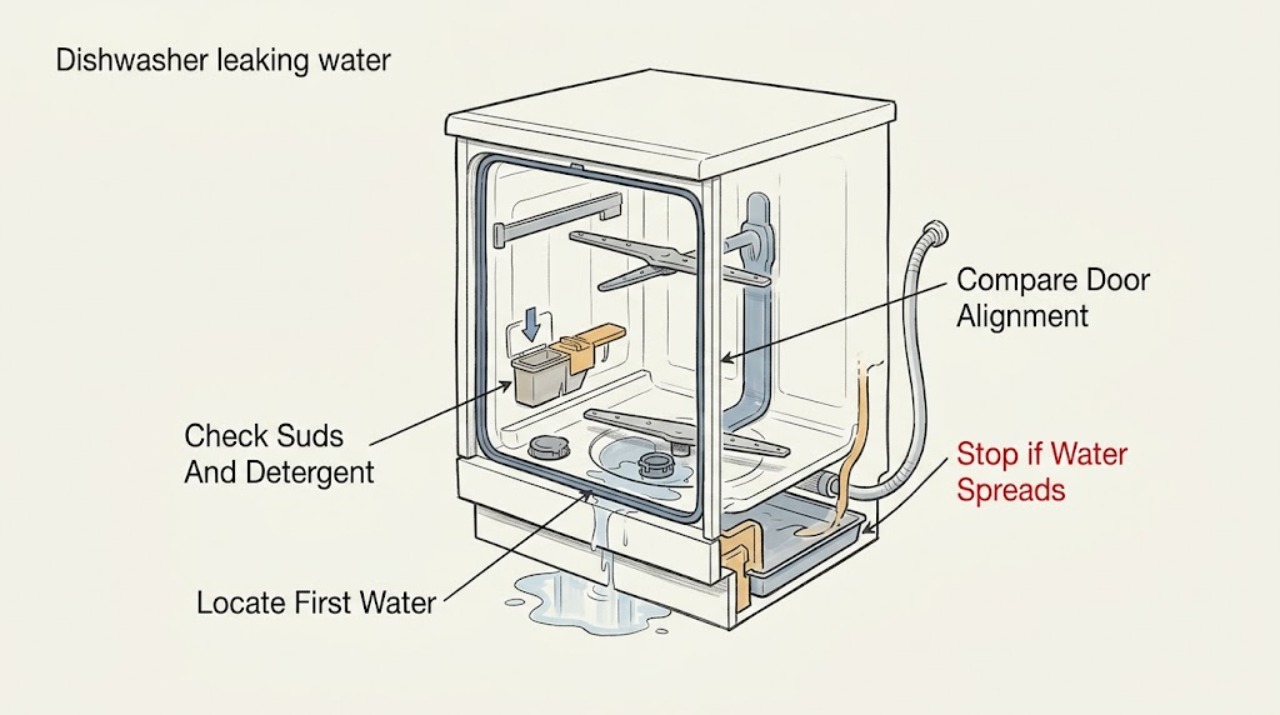
Ge dishwasher leaking water: What to Check and What to Do Next
Stop the GE dishwasher and first locate where water appears: around the door, under the unit, at the adjacent cabinet or sink air gap, or only as normal residual water in the filter area. Suds from the wrong detergent or spilled rinse aid can push water out, while a damaged or mis-seated door gasket, blocked spray arm, misaligned door, loose hose connection, drain problem, or internal leak can produce a different pattern.
-
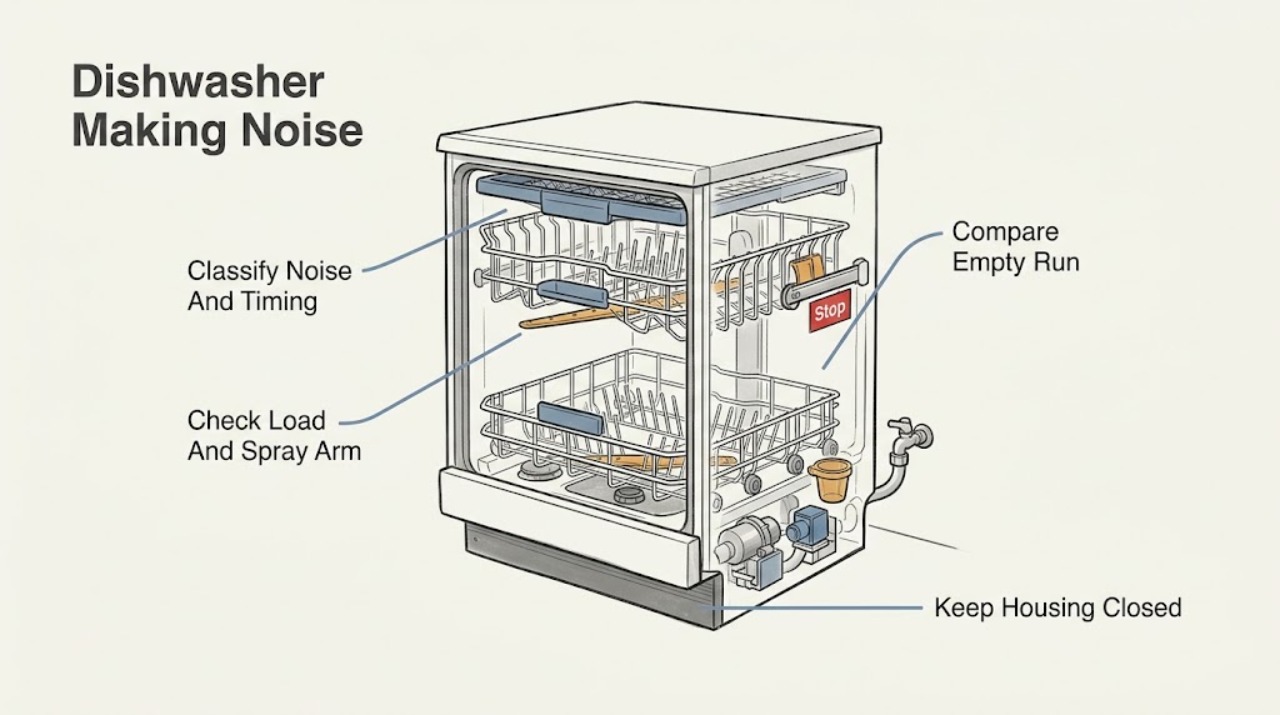
GE Dishwasher Making Noise: Find the Source Safely
A GE dishwasher can normally hum, swish, whine, click, snap, or pause as its pumps, spray system, drain valve, detergent cup, and controls operate. First note when the noise occurs and whether the racks are loaded; a rattle or rhythmic knock that disappears on an empty run usually points to dishes, utensils, or a spray arm striking the load.
-
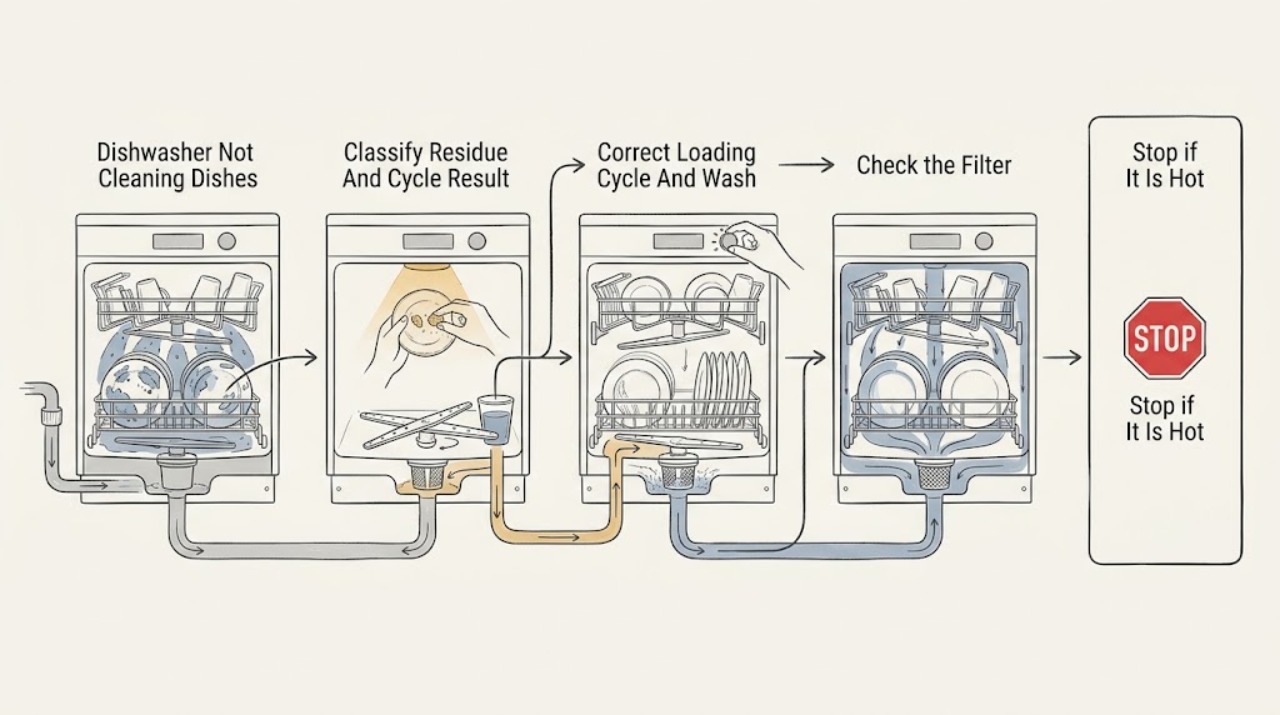
GE Dishwasher Not Cleaning Dishes: What to Check and What to Do Next
When a GE dishwasher leaves food, detergent, grit, or film on dishes, first separate a loading or detergent problem from a low-water, filtration, spray-arm, or drain problem. Empty the racks and note whether the residue is food, undissolved detergent, or a white film.
-
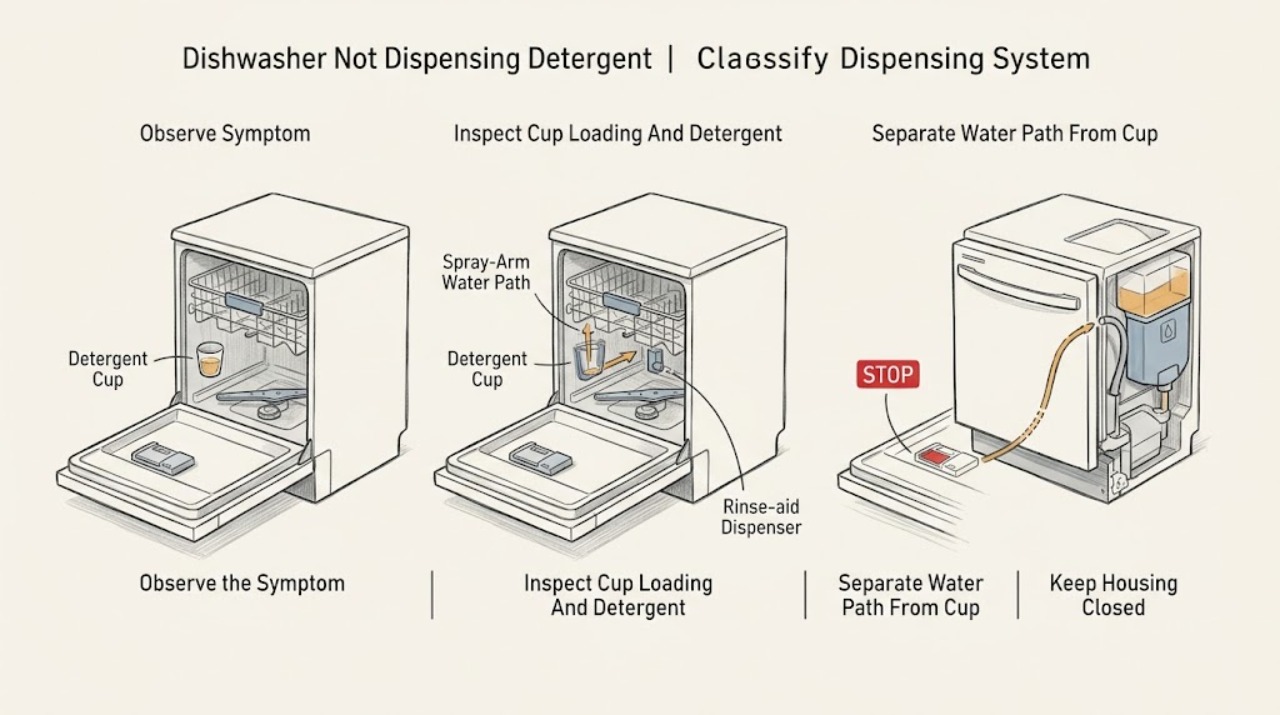
GE Dishwasher Not Dispensing Detergent: Find the Blocked Path
First distinguish a detergent cup that stayed closed from detergent that stayed in an open cup, and distinguish both from rinse aid not dispensing. For a standard detergent cup, GE says to keep tall dishes and handles from blocking the cover, remove old residue, line pods up so they do not bind the cover, and use fresh, loose powder.
-
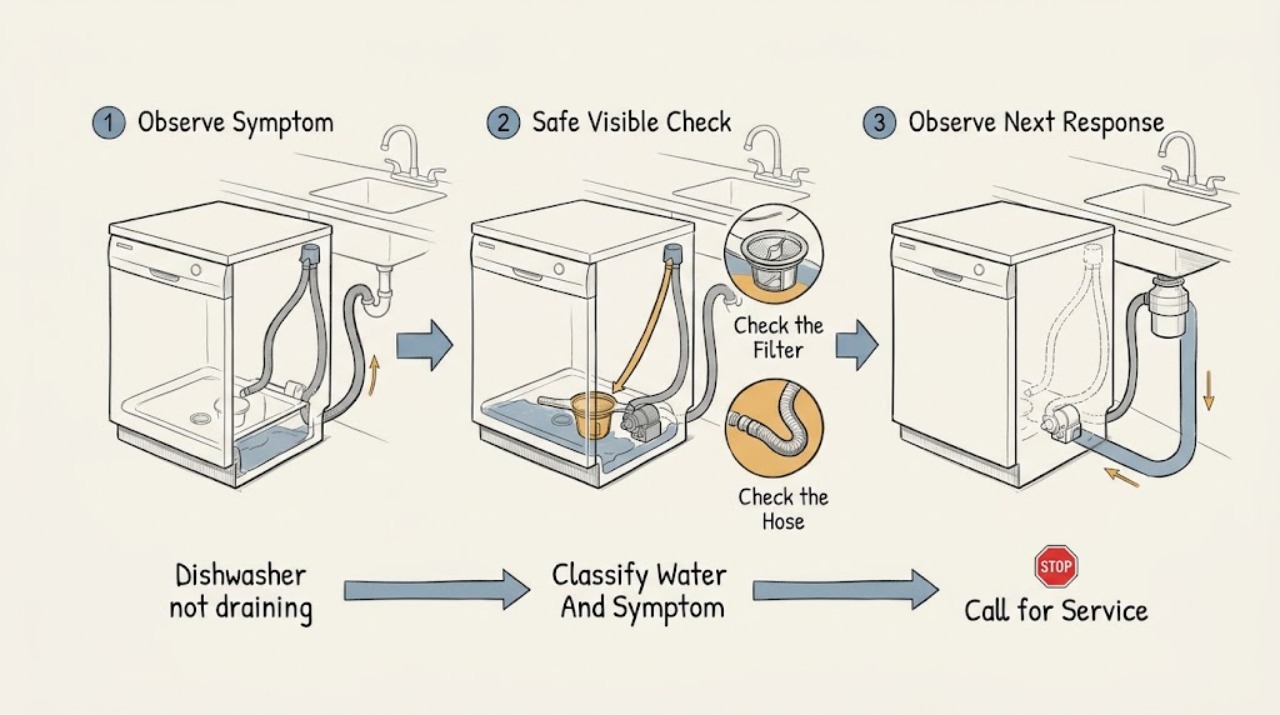
Ge dishwasher not draining: What to Check and What to Do Next
A GE dishwasher that leaves more than its model's normal small amount of water usually has a restriction in the filter or sump, drain hose, air gap, sink or disposer connection, or pump path. First keep hands out of the disposer and any pump opening, note whether the water is clean or dirty, and check the exact model guidance for the filter style.
-
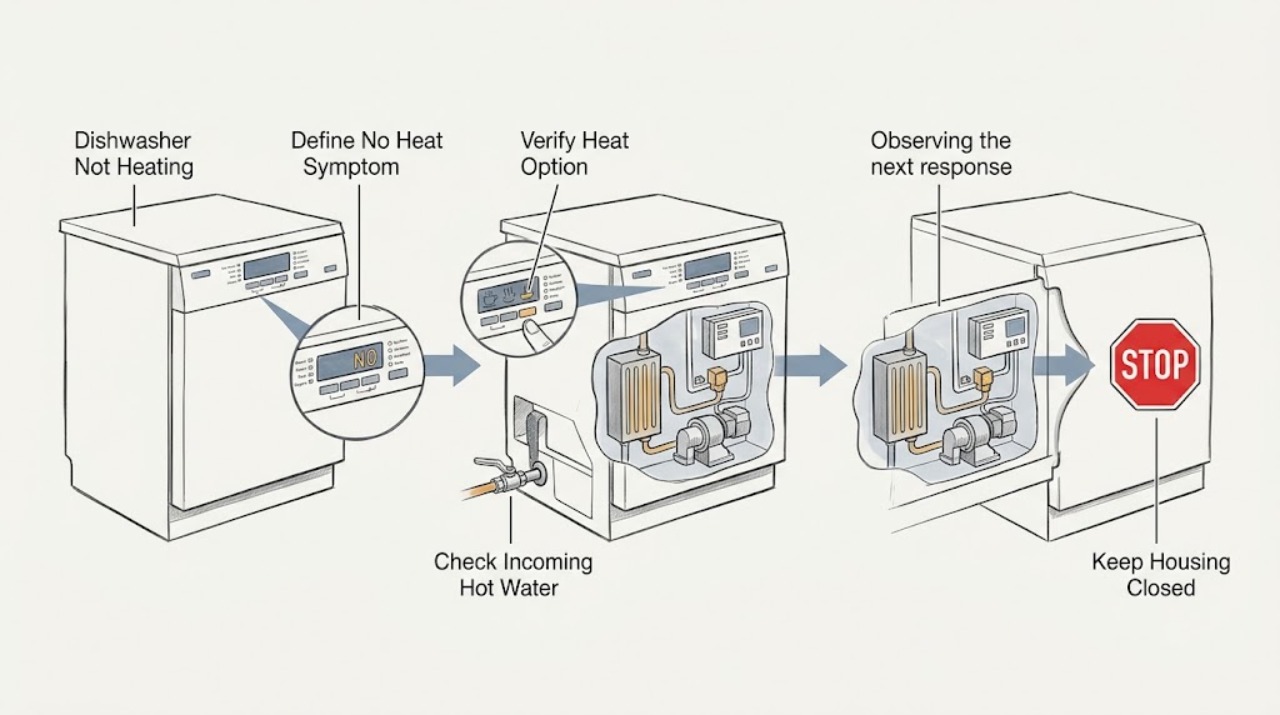
GE Dishwasher Not Heating: Check Cycle Settings, Incoming Water, and Heater Type
First decide whether the GE dishwasher truly fails to heat or is simply using a no-heat drying option. GE says natural-convection drying is expected when Heated Dry is not selected, and model options differ.
-
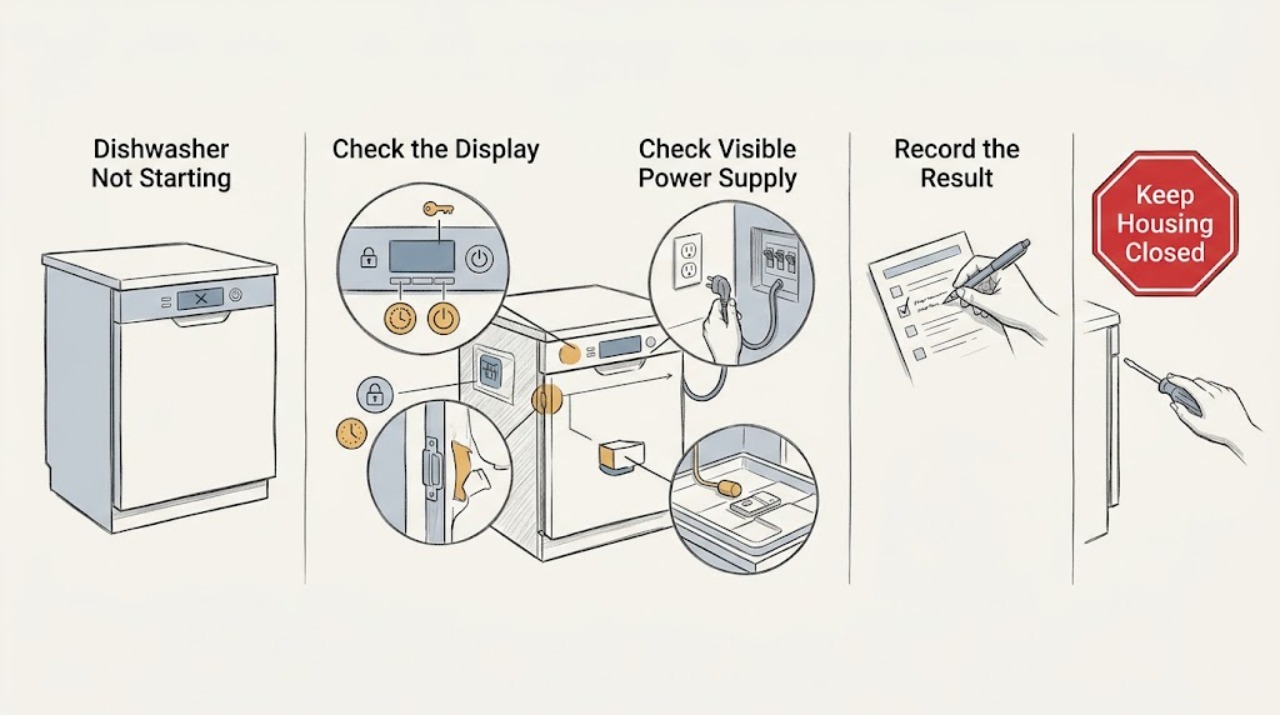
GE Dishwasher Not Starting: Check Power, Latch, Lock, and Delay State
First separate a dead dishwasher from one that has lights or sounds but will not run. If there are no lights or button responses, check the visible supply: a cord in the adjacent cabinet, a GFCI reset, a wall switch, or the dishwasher breaker, without opening the appliance.
-
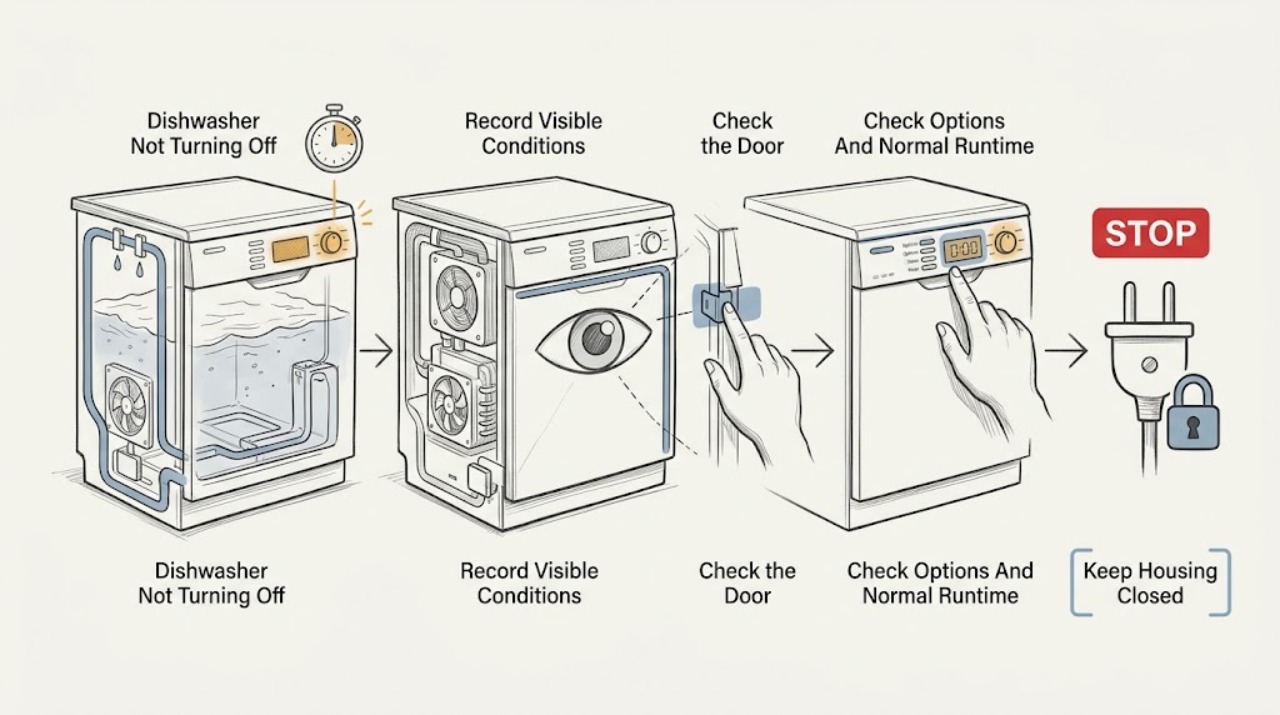
GE Dishwasher Not Turning Off
A GE dishwasher that seems not to turn off may be in a long wash, heating pause, drying fan period, or a sensor-adjusted cycle rather than failed. GE says many dishwashers can run two hours or more, the timer can pause for up to 30 minutes while heating, and clean-sensor or Auto Hot Start models can change cycle time.
-
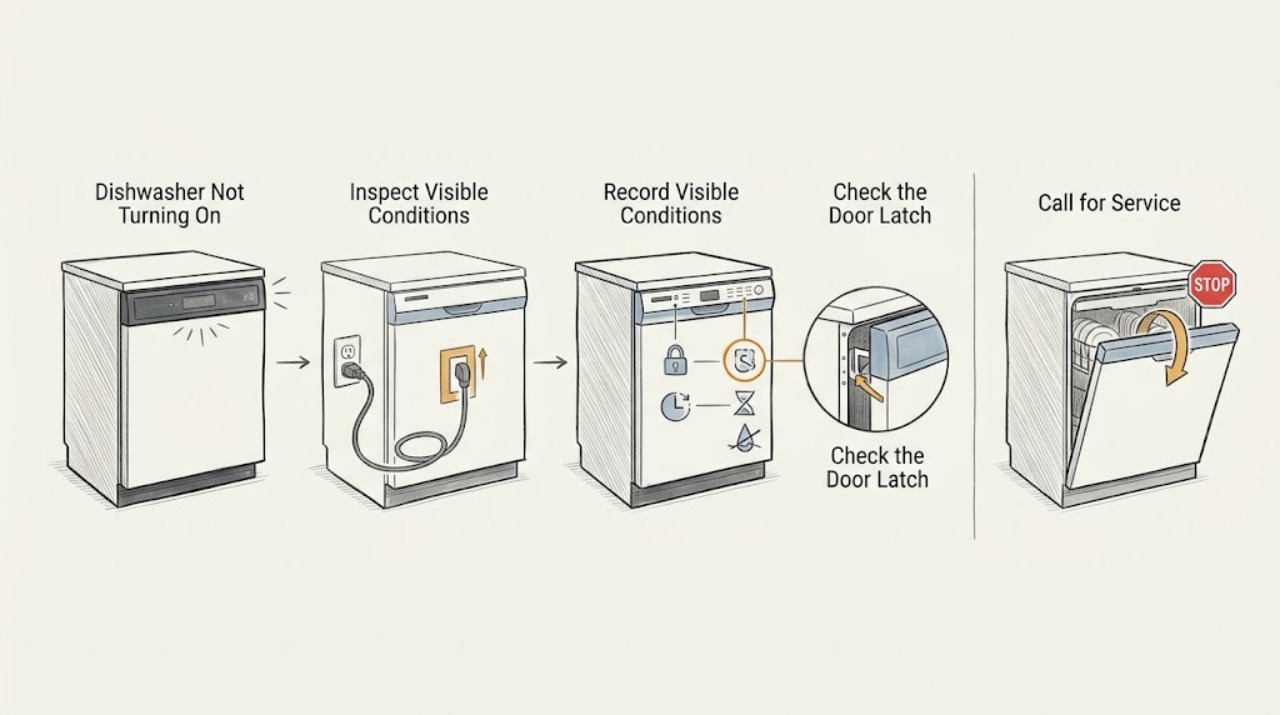
GE Dishwasher Not Turning On: Separate No Power from a No-Start Condition
First separate a GE dishwasher with no lights or sounds from one that has power but will not start. For a completely dark, non-responsive unit, close and latch the door, then check the dishwasher breaker or fuse, an accessible GFCI receptacle, an adjacent-cabinet power cord if the model uses one, and any wall switch that controls the appliance.
-
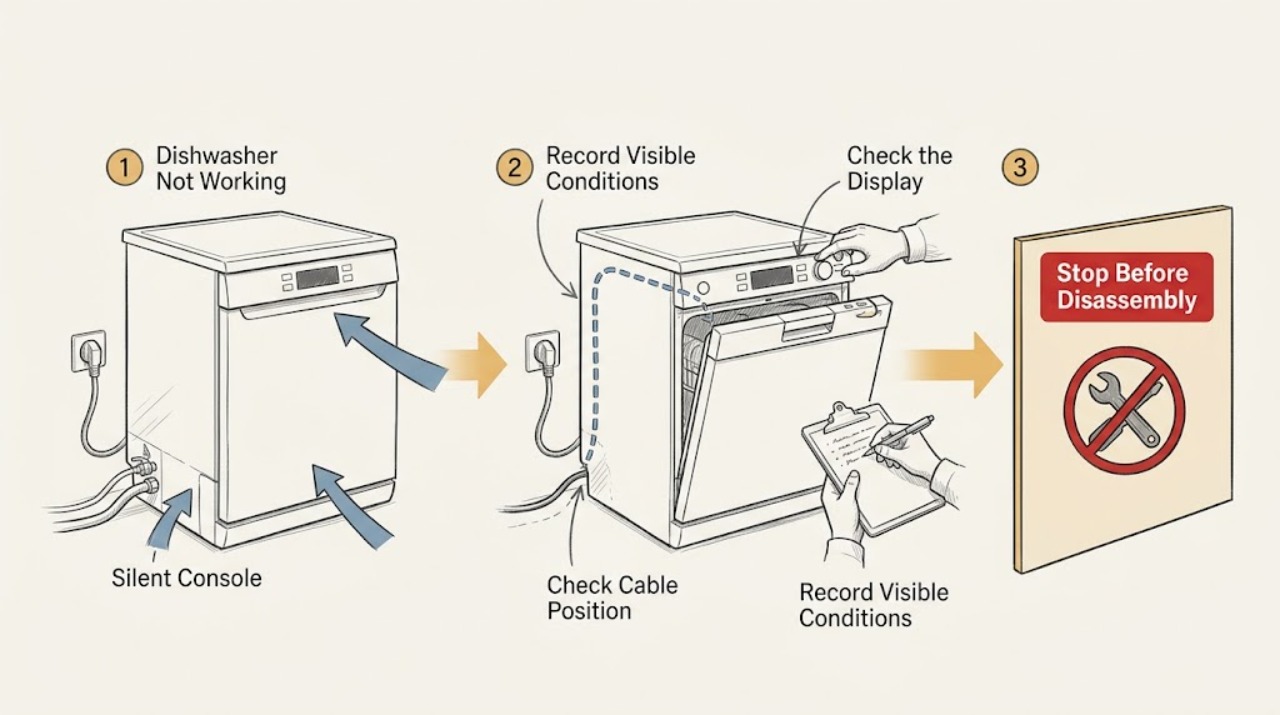
GE Dishwasher Not Working
If a GE dishwasher is not working, first decide whether it has no lights or sound, has power but will not start, starts but does not fill, or stops with water left inside. For no power, check the dedicated breaker or fuse, an accessible cord and GFCI outlet, and any wall switch; do not open the junction box or perform live tests.
-
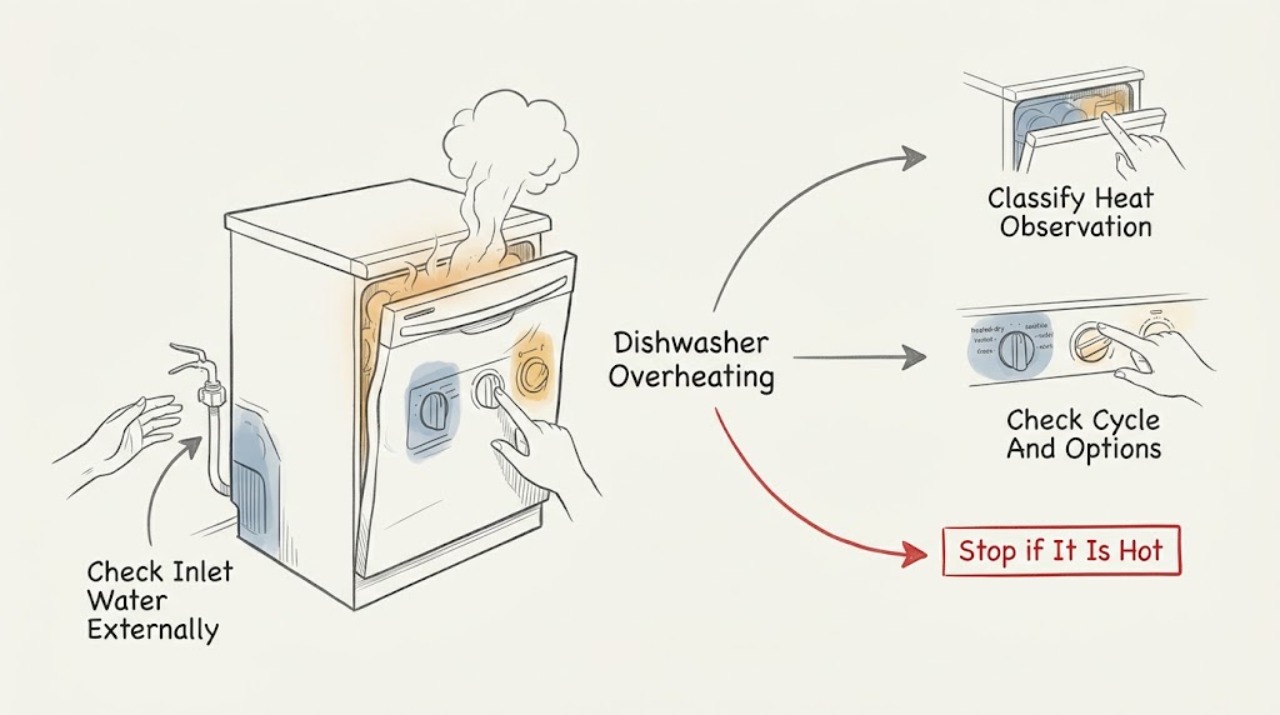
GE Dishwasher Overheating: Separate Normal Heat from a Hazard
Stop the cycle and do not touch the tub or heater while hot. First record whether the concern is normal steam/hot dishes, a selected Heated Dry/Hi-Temp/Sanitize option, water hotter than GE's recommended inlet range, melted plastic or a burning odor, or a heater that appears to stay on.