
On this page
Start here
Quick answer
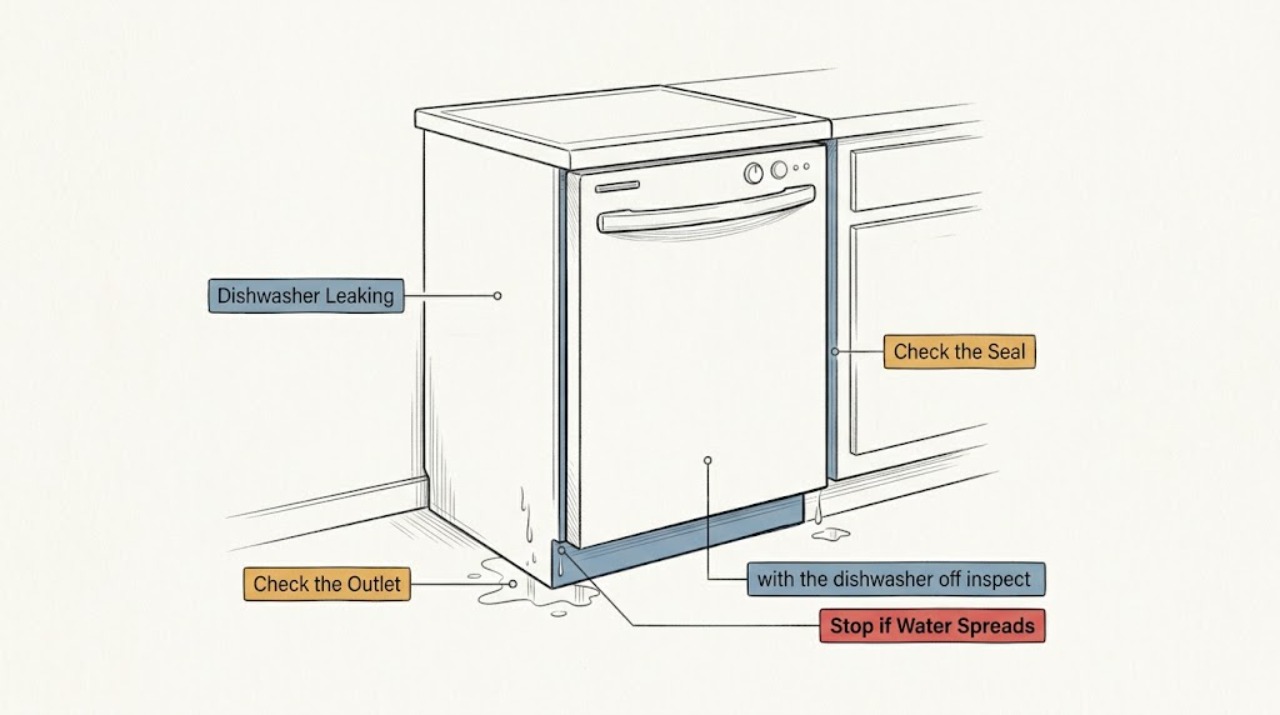
If a GE dishwasher is leaking, stop the cycle and keep water away from the plug, outlet, and other electrical equipment. First locate the water: at the door, beneath the dishwasher, in the adjacent cabinet, or at the sink air gap. Suds from the wrong detergent or excess rinse aid can push water out; a door leak can follow cabinet interference, a damaged or displaced gasket, a loose vent cap, misalignment, or spray-arm water being deflected toward the door. A leak under the unit that is not clearly a plumbing connection, a Floor Protect or LEAK DETECTED indication, or a leak that returns after external checks needs qualified service. Do not remove the dishwasher, open its base, bypass a leak sensor, or perform live electrical tests.
Work through in order
Diagnostic checks
Use only checks that match the exact appliance or system and its official guide.
-
Check 1
Stop the dishwasher, close the door, and inspect the floor, cord, plug, outlet, and nearby cabinet without pulling the appliance out. If water is close to electrical parts, isolate power at the breaker only if you can do so safely and keep the dishwasher off. If the leak is active, close the dishwasher water shutoff valve if it is accessible without reaching through water.
Expected result: Identify the first wet point: the lower door edge, the floor directly below the tub, the water inlet or drain area in the adjacent cabinet, or the sink air gap. Note whether the leak occurs while filling, washing, draining, or after the cycle ends.
Next step: Continue only with dry, accessible external checks if there is no electrical exposure and the leak is stopped. If the cord or outlet is wet or damaged, water is coming from the base, or the source cannot be isolated, leave power and water off and arrange qualified appliance service.
Why this matters
Why: A door-edge leak points toward sealing or water direction; a cabinet or air-gap leak points toward an accessible plumbing or drain path; a leak that appears only under the appliance is not safe to diagnose by generic internal instructions.
-
Check 2
If the leak is at or around the door, inspect the gasket for cuts, tears, wear, twisting, or sections not pressed into their groove. Check that the door and control panel are not striking the counter or adjacent cabinet, and on models with an inside top-corner vent, hand-tighten only a visibly loose vent cap after the appliance is off and dry.
Expected result: Look for a displaced or damaged seal, cabinet contact that prevents a full seal, missing or damaged corner baffles on models that use them, or water tracking from the vent area. A designed gap between the ends of some light-gray door gaskets at the bottom is normal.
Next step: Reseat a visibly displaced gasket only as the exact model instructions allow, remove an external obstruction, or stop using the dishwasher and have a qualified servicer replace a damaged seal, baffle, vent, hinge, or alignment component. Do not remove the inner door or adjust springs without model-specific service instructions.
Why this matters
Why: A damaged or displaced gasket, cabinet interference, missing model-specific baffle, or loose vent cap can let wash water escape at the door. The normal gasket-end gap is not, by itself, evidence of a failed seal.
-
Check 3
If water appears at the door during washing rather than filling or draining, with the dishwasher off inspect the racks and visible spray arms. Reposition tall items or utensils that could contact an arm, and clear only visible food, detergent, or mineral debris from spray-arm holes without removing panels or forcing parts.
Expected result: Check whether a spray arm is obstructed, has a split or damaged side, or has holes blocked; note whether the leak stops when the load is rearranged. Also check whether excess foam is present in the tub.
Next step: Remove the load obstruction and let suds dissipate before restarting; use only the detergent type and amount specified for automatic dishwashers, and wipe up spilled rinse aid. If water still escapes without suds or a visible load issue, stop and arrange service.
Why this matters
Why: A blocked, split, or contaminated spray arm can deflect water toward the door. Suds from hand dish soap, too much automatic-detergent, rinse-aid spills, or soap residue can expand and push water out of the tub.
-
Check 4
If water is in the cabinet beside the dishwasher or at the sink air gap, inspect only the visible shutoff valve, inlet hose, drain hose, hose clamps, sink drain, disposer connection, and air gap. Do not loosen a pressurized connection or reach through pooled water; if the air gap has a removable cover, clean it only with the dishwasher stopped and power isolated as a safe precaution.
Expected result: Look for a drip at an inlet or drain connection, a loose hose clamp, a kinked or displaced drain hose, a backed-up sink, or water emerging from the air gap while the dishwasher drains.
Next step: Correct only an obvious accessible hose position or clamp issue if it can be done safely, and clear the sink or air gap using its normal maintenance procedure. If the connection continues to leak, the hose is damaged, or the source is behind the appliance, use a qualified plumber or appliance servicer rather than pulling the dishwasher out.
Why this matters
Why: A cabinet drip or air-gap discharge can be a household plumbing or hose-routing problem rather than a dishwasher tub failure. A blocked sink or air gap can prevent discharge and send water back toward the dishwasher.
-
Check 5
Check the display for a model-specific leak alert such as LEAK DETECTED, and note whether the machine cancels or pumps out. After an external cause has been corrected and the area is fully dry, run at most one supervised short test; stop immediately for a new puddle, water from underneath, burning odor, smoke, or breaker operation.
Expected result: Record whether the alert returns, whether the dishwasher leaks only during fill, wash, or drain, and whether water comes from an internal location that cannot be seen without removing the appliance.
Next step: If a leak alert appears, the leak recurs, or the source is underneath or internal, keep the dishwasher unplugged and the water supply off and arrange qualified service. Do not bypass a float or leak sensor, remove the base, or perform live tests.
Why this matters
Why: On models with Floor Protect with Alert, a leak indication means moisture was detected below the appliance and service is required. A recurring leak after correct external checks is more consistent with an internal tub, pump, valve, hose, sensor, or control problem.
Use your observations
Decision map
Find the observation that best matches what you see, then follow the next safe action.
-
PATH 01Next step
What you see
Water first appears at the lower front edge or around the door.
Do this next
With the dishwasher off and dry, correct only an accessible load obstruction, gasket seating, or loose vent-cap issue supported by the model. Escalate damaged seals, baffles, hinges, vents, or persistent door leaks.
Why this path and its safety boundary
Why it matters: Door sealing or water direction is more likely than a drain hose under the sink.
-
PATH 02Next step
What you see
Foam is visible in the tub and water is pushing out during the cycle.
Do this next
Stop the cycle, allow suds to dissipate, remove accessible water as appropriate, wipe spilled rinse aid, and resume only with the correct detergent and amount.
Why this path and its safety boundary
Why it matters: Oversudsing can force water out even when the door gasket is intact.
-
PATH 03Next step
What you see
Water appears in the adjacent cabinet or at the sink air gap.
Do this next
Keep the water supply off while correcting only a safe, visible connection or drain obstruction; use a plumber or appliance servicer for damaged hoses, concealed fittings, or continued leakage.
Why this path and its safety boundary
Why it matters: An accessible plumbing or drain-path issue is more likely than an internal tub leak.
-
PATH 04Next step
What you see
Water comes from under the dishwasher, a leak alert appears, or the leak returns after external checks.
Do this next
Stop using the dishwasher, isolate water and power, and arrange qualified service. Do not pull out the appliance, bypass the protection system, or test internal wiring.
Why this path and its safety boundary
Why it matters: An internal tub, pump, inlet valve, hose, sensor, or control fault is more likely and cannot be safely distinguished by opening the base.
Helpful context
Understand the symptom
Find the first wet point before changing anything
A puddle at the front edge, water under the machine, and water in the sink cabinet do not identify the same fault. Stop the cycle, mop up accessible water, and use the location and timing of the first drip to separate a door-seal or spray problem from a drain, inlet, or household-plumbing problem. If water is near an outlet or the dishwasher cord, disconnect power only when it is safe to do so.
Door leaks have several model-dependent causes
For water escaping around the door, inspect the visible gasket and confirm the door is not contacting the underside of the counter or an adjacent cabinet. GE notes that some light-gray gasket designs intentionally have a gap at the bottom, so do not treat that design gap alone as damage. On models with an external vent, warm moist air during drying can be normal, but a loose inside vent cap can let water leak from the door.
Under-unit leaks and leak alerts need a firm stop boundary
GE recommends service for water coming from underneath when it is not attributable to a plumbing issue. Models with Floor Protect or Floor Protect with Alert may route water forward or display LEAK DETECTED; the alert version can cancel the cycle and pump out remaining water. Treat a leak alert, repeated under-unit leak, damaged tub or hose, or water near electrical parts as a service condition rather than a reason to open the base.
When checks do not resolve it
Need a professional?
Keep the GE dishwasher off and arrange qualified service if water comes from underneath or inside the base, a leak alert appears, the tub, hose, valve, pump, door hardware, or cord is damaged, the breaker trips, or the leak continues after safe external checks. If the visible leak is from a household shutoff, sink drain, or air gap, a qualified plumber may be appropriate. Do not remove the dishwasher, open its base or inner door, bypass a float or leak sensor, or perform live electrical tests.
Common questions
FAQ
Why is my GE dishwasher leaking from the door?
Check where the first water appears and whether the leak occurs during washing. GE identifies cabinet interference, a damaged or displaced gasket, model-specific corner baffles, a loose vent cap, and spray-arm water deflection as possible door-leak causes. Suds from the wrong detergent or excess rinse aid can also push water out of the tub.
What should I do if my GE dishwasher says LEAK DETECTED?
Stop using it and keep the water and electrical area isolated. GE says Floor Protect with Alert models detect moisture below the dishwasher, may cancel the cycle and pump out remaining water, and require service. Do not bypass the alert or open the base to search for the leak.
Can a clogged sink or air gap make a GE dishwasher leak?
Yes. GE notes that a clogged sink or air gap can prevent the dishwasher from draining normally and may send water out through the air gap or back toward the dishwasher. Inspect the visible drain path and air gap using its normal maintenance procedure; continued leakage or a concealed hose problem needs plumbing or appliance service.
Read the exact guide
Official sources
- Dishwasher - Leaks or Floods UnderneathGE Appliances · GE dishwasher under-unit leaks, suds, and drain-related guidance
- Dishwasher - Error, Fault or Function CodesGE Appliances · GE dishwasher model-dependent leak and drain indications
- Dishwasher - Leaks from Under CabinetGE Appliances · GE dishwasher adjacent-cabinet hose and shutoff leak checks
- Dishwasher - Floor Protect / Leak Protection FeatureGE Appliances · GE dishwasher Floor Protect and Floor Protect with Alert behavior
- Dishwasher - Checking and Replacing Door GasketGE Appliances · GE dishwasher gasket inspection and model-dependent gasket design
- Dishwasher - LeakingGE Appliances · GE dishwasher leak troubleshooting scope
- Dishwasher - Leaks From DoorGE Appliances · GE dishwasher door leak, gasket, baffle, vent, and alignment guidance
- Dishwasher - Preventing LeakingGE Appliances · GE dishwasher suds, plumbing, gasket, cabinet, and spray-arm leak causes
Community feedback
Share a repair observation
Share a plain-text repair observation. Accepted observations are published automatically; this page may take a moment to update.