
On this page
Start here
Quick answer
Stop the cycle and do not keep running a leaking Asko dishwasher. From a safe position, note whether the water is at the front door, under the unit, or at a visible hose or connection; close the dishwasher's water shutoff and isolate power through the normal safe disconnect if there is active leaking or a continuously running drain pump. Check only visible door and rack interference, the accessible filter area, and visible hose kinks or damage as the exact Asko manual permits. Asko's cleaning guide connects drainage problems with dirty filters or a clogged drain line, while its installation instructions require qualified connections and a watertight check. Do not pull out a built-in dishwasher, remove panels, loosen plumbing, or work on wiring. A recurring leak, water in the base, damaged hose or seal, or any electrical or burning symptom requires qualified service.
Before you begin
Safety first
- Owner checks are limited to normal controls, visible water and floor observations, accessible filter care, visible door and hose inspection, and normal external shutoff. Built-in removal, plumbing disconnection, pump or base access, electrical, and internal component work require qualified service.
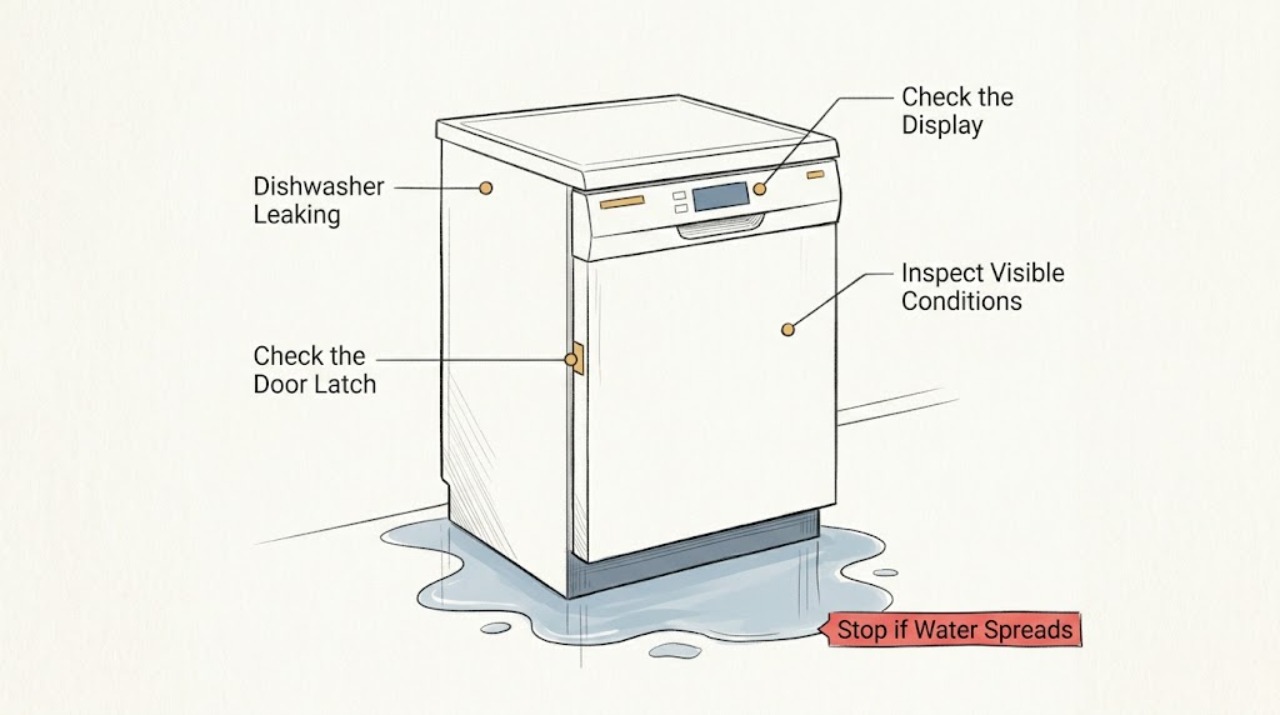
Work through in order
Diagnostic checks
Use only checks that match the exact appliance or system and its official guide.
-
Check 1
Press Stop or cancel the cycle from the normal control panel, keep hands and feet away from pooled water, and close the dishwasher's accessible water shutoff if water is still entering or the leak is active. Isolate power only through the normal safe disconnect if water is near electrical equipment or the drain pump runs continuously.
Expected result: Water continues to enter, water is spreading under the unit, the drain pump runs continuously, the leak has stopped, or there is smoke, a burning smell, or visible electrical damage.
Next step: Keep the water supply closed and the dishwasher off for an active, recurring, or electrically abnormal leak. Arrange qualified service; do not restore power merely to reproduce the leak.
Stop if: Do not touch electrical parts through water, repeatedly reset the appliance, or continue operating while it leaks.
Why this matters
Why: A continuing leak or pump condition can increase water damage; smoke, burning smell, and electrical damage are immediate safety stops. A stopped leak is still a fault that must be localized before another cycle.
-
Check 2
From the front and sides that are already visible, record where water first appears and at what stage: filling, washing, draining, or after the cycle. Look for a wet door edge, water under the front, a visible hose or connection leak, or water at the rear without pulling out the dishwasher.
Expected result: The front door edge is wet, water appears under the center or base, a visible hose or connection is wet, the leak occurs only while draining, or the source cannot be seen.
Next step: Use the matching symptom branch below and provide the location and timing to service. If the source is hidden or water returns, leave the water shutoff closed and do not pull out the built-in unit.
Stop if: Do not remove panels, tip the dishwasher, or reach underneath a powered or water-connected appliance.
Why this matters
Why: Timing and location narrow the likely system but do not prove a seal, hose, pump, or tub failure. A hidden-base leak cannot be safely diagnosed from the floor alone.
-
Check 3
Check the door from the normal user position for a rack, utensil, or dish preventing full closure, and inspect the visible door edge and rubber seal for obvious food residue, tears, or displacement. Do not adjust the hinge, latch, or seal mounting.
Expected result: A rack or dish interferes with the door, the seal is visibly dirty but intact, the seal is damaged or displaced, or the door closes normally with no visible defect.
Next step: Remove only an obvious loading obstruction and wipe the accessible seal with a damp cloth as the guide permits. If the seal is damaged, the door does not close, or water returns at the front, keep the dishwasher off and arrange service.
Stop if: Do not force the door, remove the seal, alter the latch, or run a cycle with a damaged seal.
Why this matters
Why: Asko's cleaning guide identifies door-edge and rubber-seal cleaning as owner care, while a damaged seal or persistent front leak can require service. A normal door edge makes a drain or supply path more likely, not ruled in.
-
Check 4
With power isolated and the interior cool, clean the accessible filters only according to the Asko cleaning guide, check for visible debris above the filters, and inspect the visible drain path for an obvious blockage. Reinstall every filter correctly; do not remove the pump or disconnect the drain hose.
Expected result: Filters contain food or debris, water stands above the filters, the drain line appears blocked, the filters are clean and the tub is empty, or a filter cannot be refitted securely.
Next step: Clear only the visible filter-area debris allowed by the guide and refit the filters. If standing water, a recurring leak, or an unsecured filter remains, keep the unit off and request service.
Stop if: Do not operate without filters, insert tools into the pump, or remove the base or pump cover to chase a leak.
Why this matters
Why: Asko links dirty filters or a clogged drain line with drainage problems, and its guide lists odor or water above filters as cleaning issues. A clean filter does not rule out an internal pump, hose, or base leak; a loose filter can itself impair operation.
-
Check 5
Inspect only the visible inlet and drain hoses and nearby connections for a kink, crack, wet fitting, or sign that the unit has been pushed against a hose. Do not loosen or retighten a connection; if the line is damaged or the leak is behind the built-in cabinet, leave the water off and document the location for service.
Expected result: A hose is kinked, cracked, or wet at a connection, the visible hoses look normal, water appears only after filling, or the source remains hidden.
Next step: Do not operate with a damaged or wet hose. Keep the water supply closed and arrange qualified appliance or plumbing service; provide the stage at which the leak appears and a photo of the visible area if safe.
Stop if: Do not pull out the dishwasher, disconnect a hose, alter the drain route, or work on water or electrical connections.
Why this matters
Why: A damaged or stressed hose or connection can leak during filling or draining, but a dry visible connection does not exclude an internal or concealed leak. Asko requires professional water and drainage connections.
Use your observations
Decision map
Find the observation that best matches what you see, then follow the next safe action.
-
PATH 01Next step
What you see
The leak appears at the front edge only while spraying, and a rack, dish, or visible seal residue prevents the door from closing normally.
Do this next
Correct only the loading obstruction and wipe the accessible seal as the guide permits. If the front leak returns, stop using the dishwasher and arrange service.
Why this path and its safety boundary
Why it matters: Loading or door-seal interference is more likely than a proven pump or hose failure, but a damaged or displaced seal still requires service.
-
PATH 02Next step
What you see
Water is above the filters, the unit drains poorly, or the leak appears after draining while the filters or visible drain path contain debris.
Do this next
Clean and refit the filters as the manual permits and check only an obvious external drain restriction. If water remains or the leak recurs, keep power and water off and call service.
Why this path and its safety boundary
Why it matters: A drainage restriction is more likely and may be contributing to retained water, but the visible check cannot distinguish a blocked line from an internal pump or base problem.
-
PATH 03Next step
What you see
Water appears at a visible inlet or drain connection, or a hose is kinked, cracked, or wet during filling or draining.
Do this next
Close the water shutoff, leave the dishwasher off, and arrange qualified appliance or plumbing service. Do not loosen the fitting or pull out the built-in appliance.
Why this path and its safety boundary
Why it matters: The external water or drain path is more likely than a door leak, but the installation instructions require professional connection work and a concealed connection may also be involved.
-
PATH 04Next step
What you see
The visible door, filters, and hoses look normal but water returns under the unit, appears in the base, or the source cannot be localized.
Do this next
Keep water and power off and arrange qualified Asko service. Do not slide out the dishwasher or remove the base to investigate.
Why this path and its safety boundary
Why it matters: An internal tub, pump, seal, hose, or base condition is possible. A clean exterior does not make continued operation safe or identify a replaceable part.
-
PATH 05Next step
What you see
The drain pump runs continuously, a breaker trips, the cord or connection is damaged, or the leak is accompanied by burning smell, smoke, or overheating.
Do this next
Leave the dishwasher off, keep the water shutoff closed, and arrange qualified service. If the model and serial match a safety notice, follow the regulator's stop-use remedy; do not resume operation to test it.
Why this path and its safety boundary
Why it matters: This is a safety stop, not a routine leak-cleaning problem. ASKO's guide directs power and water shutoff for a continuously running pump, and the CPSC recall identifies a fire hazard for specific recalled ASKO dishwasher serial ranges.
Helpful context
Understand the symptom
Stop first, then identify the leak pattern
Water under an Asko dishwasher can come from the door edge, a visible supply or drain connection, an overfilled or poorly draining tub, or an internal component. The location and timing matter: a front-edge leak during spraying is a different pattern from water appearing at the back after filling or from water that remains after draining. Stop the cycle, protect the floor, and record when the water appears before attempting any cleanup or check.
Use only accessible checks on a built-in appliance
Asko's installation instructions state that water, drainage, and electrical connections are professional work. The owner-level boundary is the normal controls, visible door and rack position, accessible filter area, visible hose condition, and the appliance's accessible water shutoff. Do not slide a built-in dishwasher forward to find a leak or remove a toe kick, side panel, base, pump, or connection unless a qualified technician is doing it.
A leak and a drainage fault can overlap
The ASKO cleaning guide lists dirty filters and a clogged drain line under drain problems and separately says to turn power and water off when the drain pump runs continuously. Standing water can therefore be a clue to a drainage problem, but it does not prove that the leak source is the filter or hose. Clean only the accessible filters according to the guide and escalate if the water remains or returns.
When checks do not resolve it
Need a professional?
Arrange qualified Asko service for any recurring leak, water in the base, hidden source, damaged door seal, hose or connection, standing water that remains after the accessible filter and drain checks, or a drain pump that runs continuously. Close the water shutoff and isolate power through the normal safe disconnect for an active leak or electrical symptom. Stop immediately for smoke, burning smell, overheating, or repeated breaker operation. Do not pull out a built-in dishwasher, remove panels, disconnect plumbing, or work on wiring.
Safety scope: Owner checks are limited to normal controls, visible water and floor observations, accessible filter care, visible door and hose inspection, and normal external shutoff. Built-in removal, plumbing disconnection, pump or base access, electrical, and internal component work require qualified service.
Common questions
FAQ
What should I do first if my Asko dishwasher is leaking?
Stop the cycle, close the accessible water shutoff, and leave the dishwasher off. Note whether water first appeared at the door, under the unit, or at a visible hose or connection. Do not pull out a built-in dishwasher or run another cycle to reproduce the leak; arrange service if water returns or the source is hidden.
Can a clogged filter cause an Asko dishwasher to leak?
A clogged filter can cause drainage problems and water above the filters, which can overlap with a leak complaint. Clean and refit the accessible filters as the Asko guide describes, but do not assume that this clears an internal leak. If water remains or returns, keep the unit off and arrange service.
Why is my Asko dishwasher leaking from the front door?
Check from the user position for a rack or dish preventing full closure and for visible residue or damage at the door edge and rubber seal. Correct only a loading obstruction and wipe the accessible seal as the guide permits. A damaged seal or a front leak that returns needs service; do not adjust the latch or remove the seal.
What if the Asko dishwasher drain pump keeps running while it leaks?
Leave the dishwasher off, close the water supply, and isolate power through the normal safe disconnect. Asko's cleaning guide treats a continuously running drain pump as a service condition. Do not keep resetting the pump, remove the base, or run another cycle.
Could an Asko dishwasher leak be a fire hazard?
Water near electrical equipment, a burning smell, smoke, overheating, damaged wiring, or repeated breaker operation is an immediate stop condition. Leave the dishwasher off, close the water shutoff, and arrange qualified service. Check the exact model and serial against applicable safety notices rather than continuing to operate it.
Read the exact guide
Official sources
- Dishwasher CleaningASKO · Official ASKO USA cleaning and troubleshooting guide; exact filter access and controls vary by dishwasher model.
- Installation InstructionsASKO · Official ASKO installation instructions for a dishwasher model family; installed-model instructions and local codes control.
- ASKO Recalls Dishwashers Due to Fire HazardU.S. Consumer Product Safety Commission · Official U.S. CPSC recall notice for specified ASKO dishwasher model and serial ranges; it is not a general finding about every ASKO dishwasher.
Community feedback
Share a repair observation
Share a plain-text repair observation. Accepted observations are published automatically; this page may take a moment to update.