
On this page
Start here
Quick answer
Stop the cycle and identify where the first water appears. Water or a spot at the door can come from condensation at the vent, excess suds, an item blocking the seal, a damaged seal, or a dishwasher that is not level. Water underneath or behind points first to the accessible water-supply or drain-line connections, or to suds overflowing. Use only automatic-dishwasher detergent, clean up overflow, and do not let water sit against cabinets or flooring. If the leak is active, reaches electrical parts, returns after the external checks, or the cause is inside the cabinet, keep the dishwasher off and arrange qualified service.
Before you begin
Safety first
- Stop the cycle for an active leak, keep water away from electrical connections, and do not run repeated tests. Do not remove panels, move a built-in dishwasher, disconnect hoses, dismantle the door or tub, or work on plumbing or wiring while connected.
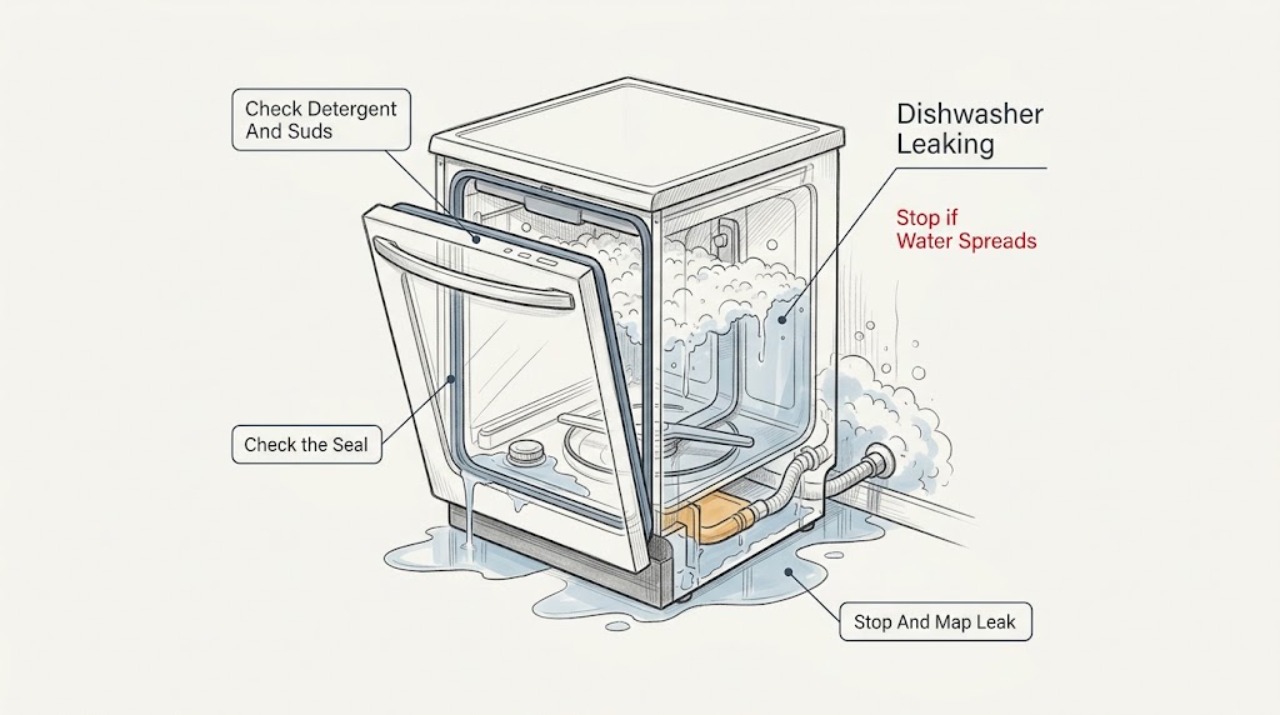
Work through in order
Diagnostic checks
Use only checks that match the exact appliance or system and its official guide.
-
Check 1
Stop the dishwasher cycle as soon as water is seen, clean up accessible overflow, and note whether the first water is at the front or door, under the unit, behind it, or only a spot on the floor after the door opens. Keep clear of wet electrical connections.
Expected result: The leak is active or spreading, water is near an electrical connection, or the water is limited to a small door-area spot with no active flow.
Next step: For active water, electrical exposure, or an uncertain source, leave the dishwasher off and arrange qualified service. If the area is dry and the spot is limited to the door area, continue with the door and suds checks.
Stop if: Do not touch wet plugs, energized parts, or standing water near wiring, and do not restart the dishwasher simply to watch it leak.
Why this matters
Why: An active or electrically unsafe leak is an immediate stop condition. A small door-area spot may be condensation from the door vent, but location alone does not rule out a seal or suds problem.
-
Check 2
With the cycle stopped, look for suds, bubbles, or soap foam and review whether hand dish soap, spray-on cleaner, or pre-soaked dishes entered the load. Use only detergent made for automatic dishwashers; allow visible suds to dissipate and clean overflow without adding unapproved chemicals.
Expected result: Suds are present, the wrong soap or soap residue is likely, or the tub is not foamy and the detergent was intended for an automatic dishwasher.
Next step: If suds or wrong soap are present, stop normal operation, clean overflow, and follow the model-specific or Amana suds-removal guidance; arrange service if the wrong soap entered an internal dispenser or the leak returns. If there are no suds, continue to the door and tub checks.
Stop if: Do not run repeated cycles with detergent to test the leak, pour random cleaners into the tub, or continue operating while foam is forcing water out.
Why this matters
Why: Amana says dish soap and residue from soaking or spraying dishes can create excess suds, which may push water out and cause leaking or poor washing. No suds makes over-foaming less likely but does not clear the door, supply, drain, or tub.
-
Check 3
With the dishwasher off, inspect the visible door and tub seals for food particles, cracks, tears, displacement, or a rack item protruding into the closing path. Check that the door closes squarely and that the dishwasher appears supported and level without moving a built-in unit.
Expected result: An item or debris blocks the seal, the gasket is visibly damaged or out of place, the door does not close squarely, or the visible seal and closing path are clear.
Next step: Remove only movable items or visible debris, restore the rack position, and close the door normally. If the gasket is cracked, torn, displaced, or the unit is not level and cannot be corrected safely from the user position, stop and arrange service with the model information.
Stop if: Do not remove the door, tub, cabinet, or seal, and do not force the door closed against an obstruction.
Why this matters
Why: Amana identifies door obstructions, large food particles, an unlevel or out-of-square installation, and a damaged tub or cabinet seal as possible door-leak contributors. A clear visible seal does not rule out a hidden tub or internal leak.
-
Check 4
If the water appeared underneath or behind, and only from a dry, safe position, inspect visible water-supply and drain-line connections for moisture, a cracked or kinked hose, a loose-looking clamp, or a connection that does not match the exact installation guide. Do not pull out a built-in dishwasher to reach hidden plumbing.
Expected result: Moisture is concentrated at the supply connection, drain hose, or sink or disposal connection, the drain line is kinked or poorly routed, or the visible connections are dry and properly routed.
Next step: If a safely accessible connection is visibly loose or misrouted, isolate water and power as directed by the model installation guide before any installation correction; otherwise leave the dishwasher off and arrange service. If the visible path is dry, continue to the repeat-leak decision rather than opening the cabinet.
Stop if: Do not disconnect hoses, remove the kick panel, move a heavy or built-in dishwasher, or work on plumbing or wiring while water or power remains connected.
Why this matters
Why: Amana lists the water-supply and drain-line connections as primary checks for an underneath leak. A drain line that is not connected or routed correctly can leave residual water and contribute to leaking, but a dry exterior connection does not rule out a leak inside the cabinet.
-
Check 5
For a door-area spot, note whether it appears only after the door is fully opened and whether the water seems to come from the door vent. For any leak, record whether it begins during filling, washing, draining, or after the cycle has finished; do not disassemble the vent or tub.
Expected result: The spot occurs only after the door opens and appears to be condensation at the vent, the leak starts during a particular cycle stage, or the timing is inconsistent or cannot be observed safely.
Next step: If it is only a small vent-related spot and the door seals normally with no suds, monitor without replacing a part. If water flows during a cycle, the source is hidden, or timing is unclear, keep the appliance off and arrange qualified service.
Stop if: Do not run multiple cycles, block the vent, or try to access the vent or internal plumbing.
Why this matters
Why: Amana says water vapor leaves through the door vent and can condense into a floor spot after the door is fully opened. Timing can narrow the service investigation, but it does not prove which seal, valve, hose, pump, or tub component is involved.
-
Check 6
Record the exact Amana model and product number, leak location, cycle stage, detergent and suds history, door and seal condition, level or rack obstruction, visible supply and drain observations, and whether the leak stopped when the cycle was cancelled.
Expected result: The leak returns after visible checks, water came from underneath or behind without an obvious external connection, a seal is damaged, or any electrical or cabinet safety concern is present.
Next step: Leave the dishwasher off, keep water away from electrical areas, and arrange qualified appliance service with the recorded observations. A replacement seal or hose should be considered only after the exact model and failed location are confirmed.
Stop if: Do not order or replace a door seal, hose, pump, valve, or tub part from the symptom label alone.
Why this matters
Why: These patterns exceed a safe external diagnosis. Amana directs owners to contact service when the door, supply, drain, and suds checks do not resolve the leak, and model information is needed for manuals and service.
Use your observations
Decision map
Find the observation that best matches what you see, then follow the next safe action.
-
PATH 01Next step
What you see
A small amount of water appears at the door or on the floor only after the door is fully opened, the interior is not foamy, and the door closes against a clear, intact visible seal.
Do this next
Do not replace a part based on one small vent-area spot. Keep the door path clear, record when it appears, and arrange service if it becomes an active leak or the seal condition changes.
-
PATH 02Next step
What you see
Foam or bubbles are present, dish soap or pre-wash residue is likely, and water is being pushed toward the door or floor.
Do this next
Stop normal operation, let suds dissipate, clean overflow, and follow Amana or the exact model guidance for removing suds. Escalate if the wrong soap entered a dispenser or the leak recurs after the foam is gone.
-
PATH 03Next step
What you see
Water starts during filling or draining and is concentrated near a visible supply or drain connection, while the door seal and tub edge appear clear.
Do this next
Use the model installation guide and isolate water and power before any installation correction that is safely accessible. Do not pull out a built-in dishwasher; arrange service when the connection is hidden, damaged, or still leaks.
-
PATH 04Next step
What you see
The leak continues after the accessible detergent, door, and connection checks, starts from inside the cabinet, reaches electrical areas, or cannot be located without moving or dismantling the appliance.
Do this next
Keep the dishwasher off, protect cabinets and flooring from water, and arrange qualified appliance service. Do not run further cycles or replace an internal part based only on the leak location.
Helpful context
Understand the symptom
Start with the leak location and timing
A water spot after the door has been fully opened is different from a stream underneath during filling or draining. Amana also warns that suds from dish soap or pre-washed dishes can push water out of the dishwasher. Stop the cycle, protect the floor and cabinets from standing water, and record where the first water appears before attempting any correction.
Keep the checks external and model-aware
The useful owner checks are visible door and gasket conditions, detergent and suds, level and rack obstructions, and accessible supply or drain connections. Hose routing, clamps, seals, and the exact tub design vary by model. Use the model manual for installation details and do not remove panels or reach into an energized or wet cabinet.
A repeat leak is a service boundary
If the leak continues after the visible checks, the source is hidden, or water has reached electrical parts, stop using the dishwasher. Do not keep running cycles to reproduce the leak. Give the technician the model, cycle stage, leak location, detergent history, and the observations from the checks below.
Only after diagnosis
Potential parts
- door or tub seal
Consider only when the exact model is confirmed and the visible seal has a crack, tear, displacement, or other technician-confirmed sealing failure after suds and door-obstruction causes are excluded.
Seal shape and fit vary by Amana model; confirm the model number and the manufacturer's fit information before ordering.
When checks do not resolve it
Need a professional?
Arrange qualified appliance service when water continues after the external detergent, door, and visible connection checks, the leak is underneath or behind without an obvious safe correction, a seal is damaged, the source is inside the cabinet, or water reaches an electrical area. Use the exact model manual for any installation-specific correction.
Safety scope: Stop the cycle for an active leak, keep water away from electrical connections, and do not run repeated tests. Do not remove panels, move a built-in dishwasher, disconnect hoses, dismantle the door or tub, or work on plumbing or wiring while connected.
Have this ready
- Exact Amana model and product number
- Where the first water appeared
- Cycle stage when the leak began
- Whether suds, dish soap, or pre-wash residue was present
- Door, rack, gasket, level, supply, and drain observations
- Whether cancelling the cycle stopped the leak
Common questions
FAQ
Why does my Amana dishwasher leave water near the door after a cycle?
Amana says water vapor leaves through the door vent and can condense into a floor spot after the door is fully opened. If the spot grows, appears during the cycle, or is accompanied by suds or a damaged seal, stop and investigate the other leak branches or arrange service.
Can regular dish soap make an Amana dishwasher leak?
Yes. Amana says dish soap and residue from soaking or spraying dishes can create excess suds, and the suds can push water out of the dishwasher. Stop the cycle, let the suds dissipate, clean overflow, and use only automatic-dishwasher detergent.
What should I check when an Amana dishwasher leaks underneath?
From a dry, safe position, note whether moisture is near the visible water-supply or drain-line connections and compare the routing with the exact installation guide. Do not move a built-in dishwasher or open the cabinet; arrange service when the connection is hidden, damaged, or still leaks.
Should I replace the Amana dishwasher door seal immediately?
No. First exclude suds, rack or food obstructions, and an unlevel or out-of-square door path. Consider a seal only when the exact model is confirmed and the seal is visibly damaged or a qualified technician confirms it is the leak source.
Read the exact guide
Official sources
- Leaking - Underneath - DishwasherAmana · Amana dishwasher leaks underneath or behind, water-supply and drain-line checks, suds stop boundary, and service guidance
- Leaking from DoorAmana · Amana dishwasher leaks at the door, vent condensation, suds, door obstructions, level, and seal guidance
- Drain Line InstallationAmana · Amana dishwasher drain-line routing and connection requirements relevant to preventing leaks
Community feedback
Share a repair observation
Share a plain-text repair observation. Accepted observations are published automatically; this page may take a moment to update.