
On this page
Start here
Quick answer
Unplug a leaking Blomberg dishwasher before accessible checks, then locate where water first appears. Common causes include a kinked or incorrectly positioned drain hose, a clogged pump filter, a worn door seal, incorrect leveling or installation, and overloaded or poorly loaded racks. Clear only the accessible filter or hose path described in the model manual. Stop using the appliance for an active or recurring leak, a damaged seal, water near electrical equipment, or any source that would require pulling out the machine or opening panels, and arrange Blomberg technical support.
Before you begin
Safety first
- Do not work on an energized dishwasher, pull an integrated unit out alone, remove panels, reach into the pump housing, or replace a seal or hose without exact model instructions.
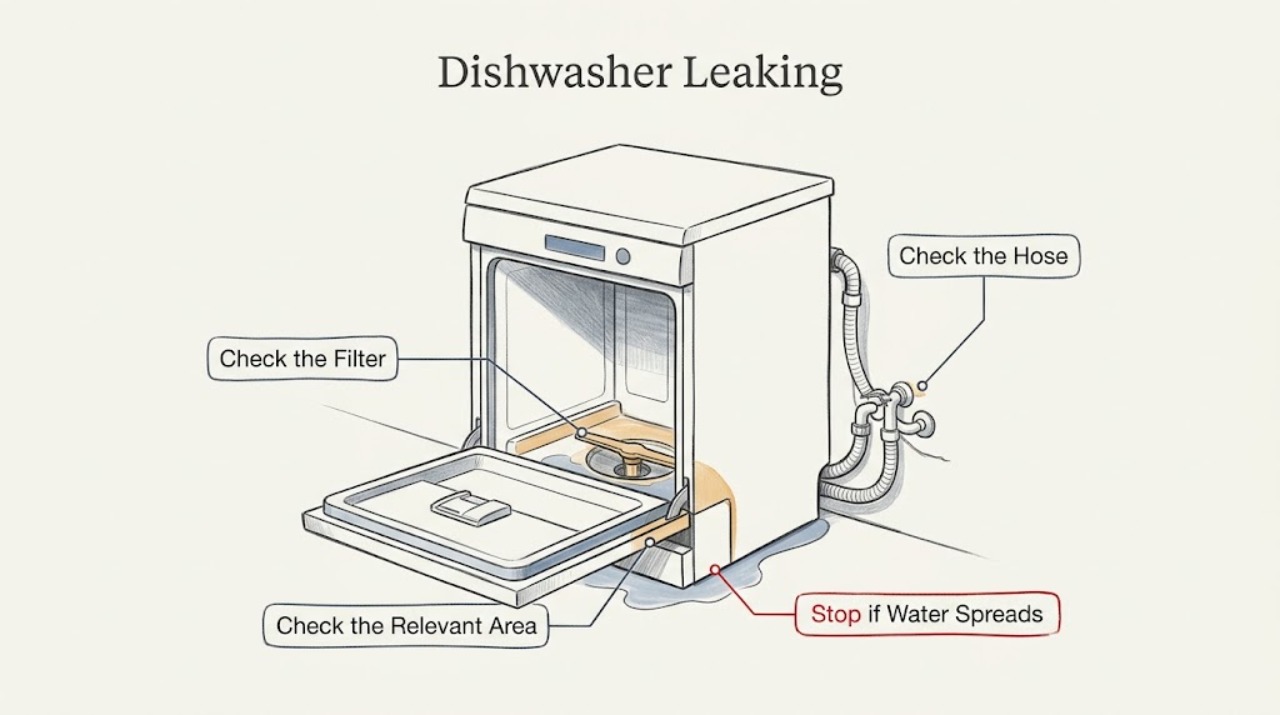
Work through in order
Diagnostic checks
Use only checks that match the exact appliance or system and its official guide.
-
Check 1
Stop the cycle, unplug the dishwasher from the mains, dry the visible water, and identify whether the first wet point is inside the tub, at the door edge, beneath the front, or along an accessible hose.
Expected result: Water is confined to one visible area, or it continues to spread or is near an outlet or power cord.
Next step: For a contained leak, continue with the matching accessible check. For spreading water or an electrical hazard, keep the appliance unplugged, close the accessible water tap if safe, and arrange technical service.
Why this matters
Why: The location selects the relevant check. Spreading water or water near electricity is an immediate safety boundary, not a reason to keep running diagnostic cycles.
-
Check 2
Inspect the accessible portion of the drain hose for kinks, crushing, blockage, or an obviously incorrect route; compare its position with the installation instructions without pulling the dishwasher from a cabinet.
Expected result: The hose is kinked or obstructed, or it looks clear and correctly positioned while water still leaks from below.
Next step: Correct only an obvious external kink or route issue, then monitor one empty test cycle if the manual permits. If the hose is hidden or the leak returns, keep the unit unplugged and contact Blomberg service.
Why this matters
Why: A restricted or incorrectly positioned drain hose can make water leak from the bottom. A clear accessible hose shifts suspicion to a hidden connection, pump path, installation fault, or another component.
-
Check 3
With power disconnected, remove the pump filter from the dishwasher base as shown in the model manual, rinse away food or debris under running water, and refit it securely.
Expected result: The filter is clogged or incorrectly seated, or it is clean and secure but water still leaks or remains in the tub.
Next step: Replace the filter exactly as the manual shows and do not run the appliance if the filter cannot seat correctly. For continued leakage or standing water, arrange professional assistance rather than reaching into the pump housing.
Why this matters
Why: A blocked or poorly seated filter can interfere with drainage and contribute to leakage. A clean, secure filter with a continuing leak points beyond this user-level maintenance check.
-
Check 4
Inspect the full door seal or gasket for cracks, flattened sections, displacement, or food debris, and check that a rack, utensil, or dish is not keeping the door from closing evenly.
Expected result: The seal is damaged or displaced, the door is obstructed, or the seal and door edge look even while water appears elsewhere.
Next step: Remove only visible loading interference and clean the seal gently. Do not force a damaged seal or order a replacement without confirming the exact model; arrange service if the seal is worn, displaced, or the leak continues.
Why this matters
Why: A worn seal or loading interference can let wash water escape at the door. A sound seal with a leak from below makes the drain, installation, or internal hose path more likely.
-
Check 5
Check from a safe standing position that the dishwasher is level and not overloaded, and that dishes are loaded according to the model's instructions without pressing against the door or spray path.
Expected result: The appliance rocks, the load interferes with the door or spray path, or it is level and correctly loaded while leakage continues.
Next step: Remove the visible loading problem and use the manual's leveling method only if it can be done without moving a heavy or integrated unit. Otherwise stop and arrange an engineer visit.
Why this matters
Why: Incorrect installation level or loading can direct water toward a seal or allow it to escape. A level, correctly loaded dishwasher with a recurring leak needs a deeper inspection.
-
Check 6
After one permitted retest, note whether the leak starts during filling, washing, or draining and record whether the same wet point returns; do not repeat tests if water is active or the source is hidden.
Expected result: The leak is gone after an obvious hose, filter, or loading correction, or it returns at the same stage or from an inaccessible area.
Next step: Stop repeated test cycles when the leak returns. Give Blomberg service the model number, leak location, cycle stage, and checks already completed.
Why this matters
Why: A one-time correction supports an external obstruction or seating issue. A repeat at the same stage is evidence of an unresolved seal, pump, hose, installation, or internal component fault.
Use your observations
Decision map
Find the observation that best matches what you see, then follow the next safe action.
-
PATH 01Next step
What you see
The leak is at the door edge and a rack, utensil, dish, or damaged gasket prevents an even seal.
Do this next
Remove the visible loading interference and clean the gasket gently. If the gasket is worn, displaced, or the leak returns, keep the appliance unplugged and arrange service.
Why this path and its safety boundary
Why it matters: The water is more likely escaping at the door than coming from the drain hose or pump filter.
-
PATH 02Next step
What you see
Water appears beneath the dishwasher and the accessible drain hose is kinked, crushed, or incorrectly routed.
Do this next
Correct only the visible route issue and monitor once if the manual permits. If the hose is hidden or leakage persists, contact Blomberg technical support.
Why this path and its safety boundary
Why it matters: The drain path is a plausible cause of water escaping from the bottom.
-
PATH 03Next step
What you see
The filter is clogged or not seated, and the leak or standing water follows a drain phase.
Do this next
Clean and refit the filter with power disconnected and according to the manual. A clean filter with a continuing leak needs professional diagnosis.
Why this path and its safety boundary
Why it matters: Restricted drainage is more likely than a door-seal problem.
-
PATH 04Next step
What you see
The dishwasher is overloaded or not level, but the hose and filter are clear.
Do this next
Correct only visible loading interference and use the model's leveling instructions when safe. Arrange an engineer if the unit is integrated, unstable, or still leaks.
Why this path and its safety boundary
Why it matters: Water may be reaching a seal or edge at an abnormal angle, making installation or loading more likely than a blocked drain.
-
PATH 05Next step
What you see
The leak is active or recurring, water is near electrical equipment, or the source is hidden behind the cabinet or panels.
Do this next
Keep the dishwasher unplugged, close the accessible water tap if safe, protect the floor, and arrange Blomberg technical service. Do not pull out the unit alone or open panels.
Why this path and its safety boundary
Why it matters: The problem has passed the safe accessible-check boundary and may involve an internal hose, pump, seal, or installation connection.
Helpful context
Understand the symptom
The first place water appears narrows the cause
Water at the bottom of the tub, along the door edge, or under the appliance does not point to the same repair. A leak that appears while draining makes the hose and filter path more relevant; a door-edge leak makes the seal or loading more relevant. Trace the first wet point after making the area safe instead of replacing a seal or hose by guesswork.
Keep a dishwasher leak user-safe
Unplug before removing a filter or inspecting an accessible hose. Do not pull an integrated dishwasher out alone, reach under a wet appliance, remove panels, or test energized parts. If water reaches an outlet, cord, or other electrical equipment, stop and obtain qualified help.
When checks do not resolve it
Need a professional?
Contact Blomberg technical service for an active or recurring leak, a worn door seal, a hidden hose or installation fault, a filter that will not seat, water near electrical equipment, or any leak that remains after the accessible checks.
Safety scope: Do not work on an energized dishwasher, pull an integrated unit out alone, remove panels, reach into the pump housing, or replace a seal or hose without exact model instructions.
Have this ready
- Provide the exact model number, where water first appears, whether it happens during filling, washing, or draining, the condition of the hose, filter, seal, and loading, and whether the appliance is integrated or freestanding.
Common questions
FAQ
What should I check first when my Blomberg dishwasher is leaking?
Unplug it, dry the water, and locate the first wet point. Then match it to the accessible drain hose, pump filter, door seal, loading, or leveling check. Do not keep running cycles if the leak is active or near electrical equipment.
Can a blocked filter make a Blomberg dishwasher leak?
It can contribute to drainage and leakage problems. With the appliance unplugged, clean and refit the base filter as the model manual shows. If water remains or the leak returns, arrange professional assistance.
Why does my Blomberg dishwasher leak from the door?
A worn or displaced door gasket, or a rack, dish, or utensil preventing an even closure, can let water escape at the door. Remove only visible loading interference and arrange service for a damaged seal or a recurring leak.
Should I pull out my integrated Blomberg dishwasher to find the leak?
No. Keep the appliance unplugged and do not pull out a heavy or integrated unit alone. Hidden hoses, pump components, and installation connections should be assessed by Blomberg technical service.
Read the exact guide
Official sources
- What should I do if water is not draining from my Blomberg dishwasher?Blomberg · Blomberg dishwasher drain-hose position, filter cleaning, blockage checks, and professional-assistance boundary
- What are the possible reasons for my Blomberg dishwasher leaking, and how can I resolve it?Blomberg · Blomberg dishwasher leak causes and accessible drain hose, pump filter, door seal, installation, loading, and service guidance
Community feedback
Share a repair observation
Share a plain-text repair observation. Accepted observations are published automatically; this page may take a moment to update.