
On this page
Start here
Quick answer
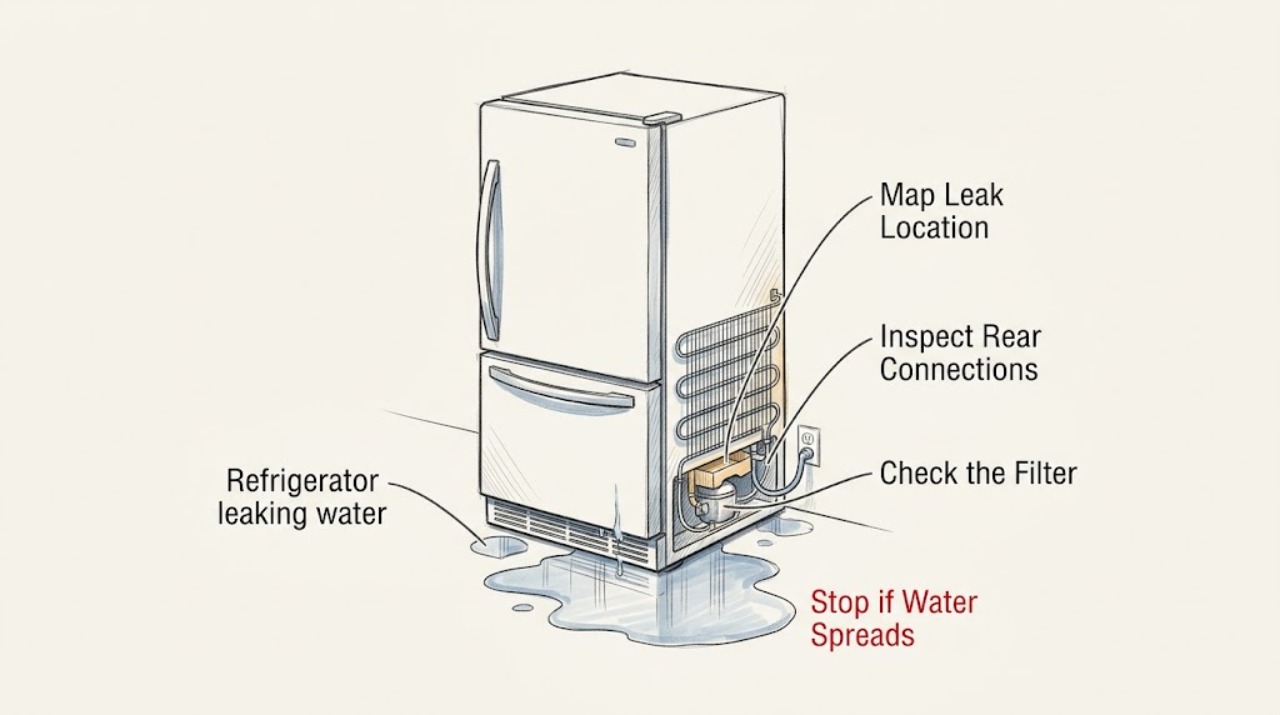
When a Frigidaire refrigerator is leaking water, first identify whether the water is on the floor, inside the cabinet, at the dispenser, or under the ice maker. For an outside leak, inspect accessible rear water connections and the valve with a dry paper towel; for an inside leak, check a recently installed or cracked water filter and whether a door was left open long enough to cause frost and meltwater. If the dispenser drips, look for ice or frost in the chute and consider air in the water line. Dry the spill, protect nearby flooring and food, and stop using the water feature if the leak continues, reaches wiring, or comes from an internal line, valve, drain, or sealed area that needs service.
Before you begin
Safety first
- This article supports drying, locating the first wet point, ordinary-access filter, door, dispenser, and rear-connection observations, and the model-authorized priming procedure. Do not disconnect water lines, open panels, force a filter or valve, apply heat to frost, or access wiring.
Work through in order
Diagnostic checks
Use only checks that match the exact appliance or system and its official guide.
-
Check 1
Turn off the dispenser and ice-making water feature using the model-authorized control if it is safe to do so, wipe the spill, and identify the first wet location: floor or rear, cabinet interior, under the ice maker, filter area, or dispenser chute.
Expected result: Water returns at the rear or floor, forms inside the cabinet, appears under the ice maker or filter, drips from the dispenser tip or chute, or no new water appears after drying.
Next step: Keep the area dry and continue with the check that matches the first wet point; if water reaches wiring, pools under the appliance, or returns rapidly, close the accessible water shutoff and arrange service.
Stop if: Stop using the refrigerator water and ice features for active leaking, water near electrical parts, a hot outlet or cabinet, sparking, or a leak that cannot be safely contained.
Why this matters
Why: A rear or floor leak makes an accessible supply connection or valve more likely. A filter or ice-maker-area leak points to the water system or frost melt path. A chute or tip drip is a dispenser-path symptom, while no recurrence may mean spilled or defrost water rather than an active supply leak.
-
Check 2
Without disconnecting tubing, inspect the accessible rear water lines, connections, and water valve with a dry paper towel; check whether the refrigerator was pushed back far enough to kink a line, and do not move it if doing so would strain the line or cord.
Expected result: The towel becomes wet at a fitting or valve, a line is visibly kinked or pinched, the rear area stays dry, or water is coming from an inaccessible panel or internal line.
Next step: If the shutoff and connection are plainly accessible and operate normally, close the water supply before service; do not force or retighten an unfamiliar fitting. Arrange qualified appliance or plumbing service for a wet valve, damaged line, or inaccessible leak.
Stop if: Do not pull the refrigerator by its water line, disconnect tubing, force a shutoff, open a rear panel, or continue operation with a pressurized leak.
Why this matters
Why: Frigidaire identifies loose connections as a cause of water reaching the floor, and a kinked or pinched line can restrict or disturb water flow. A dry accessible rear area shifts attention to the filter, dispenser, defrost-related meltwater, or an internal fault.
-
Check 3
If water is inside the cabinet or around the filter housing, identify whether the filter was changed recently and, only according to the model manual, verify that it is seated securely and has no visible crack; keep the area dry while inspecting.
Expected result: The filter is newly installed but not seated, visibly cracked or wet, frozen, unchanged and dry, or water is appearing below the ice maker or elsewhere with no filter wetness.
Next step: Use the exact model's filter removal, replacement, and priming procedure; if the filter is cracked or continues to leak, stop the water feature and arrange service or an exact compatible replacement. Do not remove a filter that is frozen in place by force.
Stop if: Do not pry a stuck filter, puncture ice, open the housing, or keep using the water system when the filter area leaks into wiring or food storage.
Why this matters
Why: Frigidaire says an incorrectly installed or cracked filter can leak in the cabinet and can also cause slow or no water at the door. Water below the ice maker after a long-open door points more toward frost and meltwater; a dry filter shifts attention to another path.
-
Check 4
For water at the dispenser or under the ice-maker area, confirm the doors close fully and inspect the chute and dispenser tip for accessible frost, ice, or a continuing droplet; check that the door gasket is clean and not blocked, without removing panels.
Expected result: A door was left open or does not close, frost is present around the chute, the dispenser tip remains wet, or the doors and dispenser area are dry while water returns elsewhere.
Next step: Close and clear the door using ordinary access, follow the model manual for an accessible chute or ice-bin cleanup, and stop the water feature if the tip continues dripping; arrange service for recurring frost, a damaged gasket, or water that returns from inside.
Stop if: Do not insert tools into the chute, apply direct heat, force the door or ice bin, or reach near dispenser wiring or a moving auger.
Why this matters
Why: Frigidaire links a long-open door to evaporator icing and meltwater at the bottom or under the ice maker. Ice or frost in the chute can melt down the dispenser, while air in the water line can cause a dispenser tip to drip. A dry chute and good door closure make another leak source more likely.
-
Check 5
After a filter change or new installation, use the exact Frigidaire manual's water priming and purging procedure if the model has a dispenser; then wipe the area dry and reassess whether water leaks during normal dispensing or an ice-making cycle.
Expected result: Water flow becomes even and the leak stops, the first cycles had air or no water, the dispenser still drips, or water reappears at the filter, rear line, ice-maker area, or floor.
Next step: Keep the water feature off for a continuing leak, document the first wet point and filter or installation history, and arrange qualified service for a recurring leak, internal line, valve, drain, or ice-maker-area problem.
Stop if: Do not continue dispensing into a leak, run a leaking water valve, disconnect a line, or attempt internal drain, valve, or sealed-system repair.
Why this matters
Why: Frigidaire says air trapped in new plumbing can produce uneven dispenser flow and empty ice-maker cycles, and priming is used after installation or a new filter. A persistent leak after priming is not explained by air alone and needs the specific water-path diagnosis.
Use your observations
Decision map
Find the observation that best matches what you see, then follow the next safe action.
-
PATH 01Safety boundary
What you see
A dry paper towel becomes wet at an accessible rear connection or water valve, or water reaches the floor from that area.
Do this next
Close the accessible water shutoff only if it operates normally, keep the refrigerator from straining the line, and arrange qualified appliance or plumbing service for the fitting, valve, or line.
Why this path and its safety boundary
Why it matters: A loose connection, damaged line, or valve leak is more likely than a dispenser or frost-only issue.
Safety stop: Do not disconnect tubing, force the shutoff, open a panel, or operate with a pressurized leak.
-
PATH 02Safety boundary
What you see
The leak is inside or around the filter housing after a filter change, or the filter is visibly cracked, wet, or not seated securely.
Do this next
Follow the exact model filter and priming procedure; stop the water feature and arrange service or an exact compatible replacement if the filter leaks or cannot be removed safely.
Why this path and its safety boundary
Why it matters: The filter installation or filter body is a plausible source of the leak and may also explain slow or absent water at the door.
Safety stop: Do not pry a frozen filter, open the housing, or continue if water reaches electrical parts.
-
PATH 03Safety boundary
What you see
Water is under the ice maker or at the cabinet bottom after a door was left open, a door does not close, or frost is visible around the compartment.
Do this next
Close the door, remove only an obstruction, clean an accessible gasket, and allow the unit to return to normal; arrange service for repeated frost, poor sealing, or water that persists.
Why this path and its safety boundary
Why it matters: Frigidaire links an extended-open door to air leakage, evaporator icing, and later meltwater; this is different from a continuously pressurized supply leak.
Safety stop: Do not chip frost, apply direct heat, remove panels, or store food if the compartment cannot maintain a safe temperature.
-
PATH 04Safety boundary
What you see
The first wet point is the dispenser tip or chute, with droplets, frost, or ice visible there while the rear connections remain dry.
Do this next
Use the model manual for accessible chute and bin care, prime the line only when appropriate after installation or filter work, and arrange service if the tip continues to drip.
Why this path and its safety boundary
Why it matters: Melted ice or frost in the chute, air in the water line, or a dispenser-path problem is more likely than a rear supply connection.
Safety stop: Do not insert tools, use heat, or reach into a moving dispenser or auger path.
-
PATH 05Safety boundary
What you see
The refrigerator was newly installed or the filter was recently changed, water flow is uneven, and the leak is not reproduced at a dry rear connection.
Do this next
Complete the exact model's priming and purging procedure, reseat the filter only as directed, dry the area, and reassess; stop and arrange service if water returns.
Why this path and its safety boundary
Why it matters: Air in new plumbing or an incompletely seated filter can explain irregular flow and an early water-system symptom, but persistent water at a fitting still needs service.
Safety stop: Do not repeatedly run the dispenser into a leak or assume priming fixes a cracked filter, valve, or tubing.
-
PATH 06Safety boundary
What you see
The accessible rear, filter, door, and dispenser checks are dry or do not explain recurring water, but water continues to appear inside, below the cabinet, or behind an inaccessible panel.
Do this next
Keep the water feature off, protect flooring and food, record the first wet location and timing, and arrange qualified Frigidaire appliance service for internal diagnosis.
Why this path and its safety boundary
Why it matters: An internal water line, inlet valve, defrost-related path, drain, ice-maker component, or other appliance fault is more likely than a simple spill.
Safety stop: Do not open panels, dismantle a drain or valve, move the appliance by its line, or continue using an active leak near electrical parts.
Helpful context
Understand the symptom
Locate the first wet point before changing a part
A puddle in front of a Frigidaire refrigerator can begin at the rear connection, filter housing, dispenser chute, ice-maker area, or a frost-related melt path. Wipe the floor and accessible surfaces dry, then watch where water appears first. The location matters more than the size of the puddle: a rear connection calls for a supply check, a filter or dispenser leak calls for a water-system check, and water returning from inside or below the cabinet may need service.
Check accessible connections without creating a new leak
Frigidaire recommends checking the water lines, connections, and rear valve with a dry paper towel to find a wet point. Do not pull hard on tubing, move the refrigerator farther than needed, or loosen a connection that is not designed for user access. If a connection or valve is wet, close the appliance's accessible water shutoff only if it operates normally and arrange repair for the leaking fitting, line, or valve.
A filter or door problem can put water inside
A water filter that was recently changed may not be seated securely, and Frigidaire says a cracked filter can leak into the cabinet and cause slow or absent water at the door. Separately, leaving a door open can let the evaporator ice up and later release water at the bottom or below the ice maker. These observations point to different next steps, so do not assume every interior puddle is a clogged drain.
Treat dispenser drips and ice jams as their own path
Water at the dispenser tip or chute may result from air in the line or ice and frost melting in the chute. Frigidaire also describes an auger or ice jam as a separate dispenser problem. Clear only loose, accessible ice using the model's use-and-care instructions; do not insert tools into the chute or use heat near plastic, wiring, or a water line.
Safety boundary
Stop conditions
- Stop using the refrigerator's water and ice features for an active leak, a rapid return of water, or water near wiring, the outlet, or other electrical parts.
- Do not disconnect water tubing, force a shutoff or filter, open rear panels, or move the refrigerator by its water line or power cord.
- Do not chip frost, apply direct heat, insert tools into a dispenser chute, or reach near a moving auger or ice-maker mechanism.
- Protect food and flooring and arrange prompt service for a warm compartment, repeated heavy frost, a wet inaccessible area, sparking, burning odor, or a hot cabinet or outlet.
- Arrange qualified Frigidaire appliance service when the first wet point remains unexplained after accessible connection, filter, door, dispenser, and model-authorized priming checks.
Only after diagnosis
Potential parts
- Frigidaire refrigerator water filter
Consider this category only when the exact model filter is cracked, leaking, incorrectly seated, or diagnosed as restricting the water path after the manual-authorized check.
Confirm the exact Frigidaire model and filter design; a filter does not correct a leaking valve, damaged tubing, housing, dispenser, or internal water path. - Frigidaire refrigerator water inlet valve or supply tubing
Consider this category only when service confirms that an accessible or internal valve, fitting, or water line is the first wet point or is failing under water pressure.
Confirm the exact model and diagnosed connection or valve; water-line and valve replacement are not ordinary user checks. - Frigidaire refrigerator defrost drain or drain-path component
Consider this category only when a qualified diagnosis links recurring interior or bottom water to a blocked or damaged defrost drain or related meltwater path after supply leaks are excluded.
Confirm the exact model and diagnosed drain-path component; do not chip frost, apply heat, or remove panels to reach it.
When checks do not resolve it
Need a professional?
Arrange qualified Frigidaire appliance service when water continues after the accessible rear, filter, door, dispenser, and priming checks; when a rear valve or line is wet; when the filter is cracked, stuck, or leaking; when water comes from under the ice maker or an inaccessible panel; or when repeated frost, poor door sealing, or a dispenser drip returns. Keep water and ice features off for an active leak, and request prompt help for water near electrical parts, sparking, burning odor, a hot outlet or cabinet, unsafe food temperature, or a leak that cannot be contained. Provide the Frigidaire model, first wet location, filter and installation history, door and frost condition, dispenser result, rear connection result, and whether the leak occurs continuously or only during dispensing or defrost.
Safety scope: This article supports drying, locating the first wet point, ordinary-access filter, door, dispenser, and rear-connection observations, and the model-authorized priming procedure. Do not disconnect water lines, open panels, force a filter or valve, apply heat to frost, or access wiring.
Common questions
FAQ
Why is my Frigidaire refrigerator leaking water onto the floor?
Start at the first wet point rather than the puddle. Frigidaire recommends checking accessible rear water connections and the valve with a dry paper towel. If that area is dry, inspect the filter, dispenser, door-related frost, and internal leak boundary; stop the water feature and arrange service for a continuing or inaccessible leak.
Can a Frigidaire refrigerator water filter cause a leak?
Yes. Frigidaire says a filter that is not installed securely or has a crack can leak inside the cabinet and can also cause slow or no water at the door. Follow the exact model filter and priming procedure, and do not force a frozen or stuck filter.
Why is there water under the ice maker in my Frigidaire refrigerator?
Frigidaire links an extended-open door to evaporator icing and water leaking from the bottom of the ice maker. A filter, supply connection, internal water path, or recurring frost problem can also be involved. Close the door and inspect only accessible areas; arrange service if the water returns.
Why does my Frigidaire refrigerator dispenser keep dripping?
Look for ice or frost in the chute and a wet dispenser tip. Frigidaire says melted chute ice and air in the water line can produce dripping. Use the model manual for accessible cleaning or priming; stop using the dispenser and arrange service if dripping persists or water appears elsewhere.
Read the exact guide
Official sources
- Refrigerators - No IceFrigidaire · Use for dispenser and ice-bin observations when a leak appears at the chute or ice area; the model manual controls bin and dispenser handling.
- Refrigerator Prime and Purge GuideFrigidaire · Use only when the refrigerator has a dispenser and the model's manual permits the described priming approach.
- Refrigerator Water LeaksFrigidaire · Use for general Frigidaire refrigerator leak-location checks; the model manual controls exact filter, dispenser, and installation procedures.
- Refrigerator Door IssuesFrigidaire · Use for the ordinary-access door and gasket check; door adjustment or sealing repair may require model-specific service.
- Refrigerators - No WaterFrigidaire · Use for water-supply and filter observations that can accompany a leak; the exact refrigerator model governs control and filter instructions.
Community feedback
Share a repair observation
Share a plain-text repair observation. Accepted observations are published automatically; this page may take a moment to update.