
On this page
Start here
Quick answer
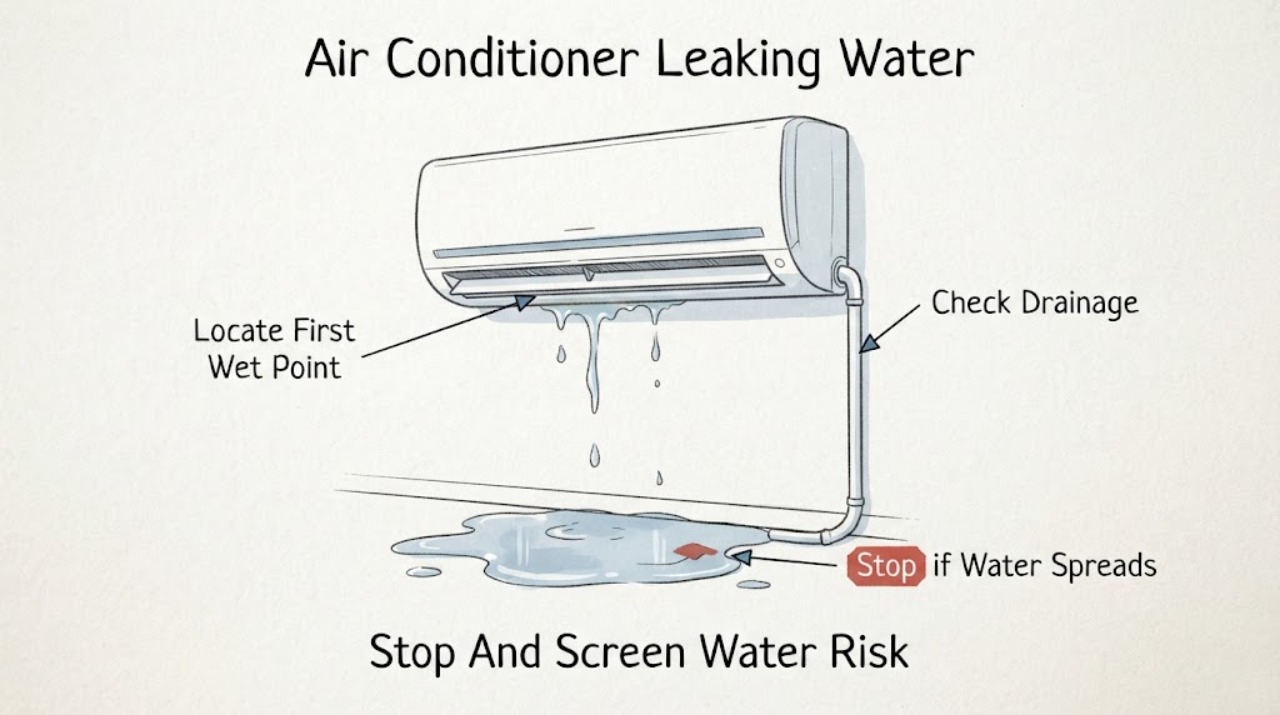
Turn the air conditioner off when water is reaching electrical equipment, a ceiling is bulging, the leak is large or continuous, sewage or mold is involved, or the indoor unit is unsafe to approach. The first wet point matters: water at the indoor unit or wall can come from a blocked, detached, or frozen condensate drain; water at a ceiling or roof opening can also be building or plumbing water; water outside at the drain outlet may be normal condensate discharge. From a dry safe position, inspect only visible drain outlets, tubing, the area below the unit, and filter condition as the manual allows. Do not open the cabinet, work on a live unit, force air through the drain, add chemicals, or open the refrigerant circuit. Arrange HVAC service, and use a plumber when the evidence points to building plumbing or a hidden drain route.
Work through in order
Diagnostic checks
Use only checks that match the exact appliance or system and its official guide.
-
Check 1
From a dry safe position, switch the air conditioner off at its normal control and note whether water is near outlets, wiring, a disconnect, a ceiling fixture, or standing water; do not touch wet equipment or enter water to reach a control.
Expected result: There is only a small isolated drip, or there is active pooling, water near electrical parts, a bulging ceiling, visible mold or sewage, or a large continuous flow.
Next step: Keep the system off. From a dry safe position, isolate power only if the disconnect is plainly accessible; otherwise keep clear and use HVAC, electrical, plumbing, or emergency help as indicated.
Stop if: Do not touch wet electrical equipment, use the unit to see whether the leak worsens, or use water or chemicals on the spill.
Why this matters
Why: The latter signs create electrical, structural, sanitation, or indoor-air risks that take priority over drain diagnosis.
-
Check 2
With cooling off and without opening the cabinet, trace the visible water path backward from the lowest drip to the first wet point at the indoor unit, wall, ceiling, drain tubing, pan, outdoor outlet, or nearby plumbing.
Expected result: The first wet point is at the indoor unit or pan, a visible drain line or outlet, a ceiling or wall opening, a roof or pipe path, or cannot be reached safely.
Next step: Photograph or describe the path from a safe position and follow the matching branch. Do not assume the air conditioner caused water that begins away from the unit.
Stop if: Do not remove panels, ceiling material, insulation, or trim to chase a hidden leak.
Why this matters
Why: Indoor-unit water favors condensate drainage, freezing, or pan issues; a ceiling, wall, roof, or pipe path may be building or plumbing water instead; an inaccessible source needs professional tracing.
-
Check 3
Only if dry, stable, and plainly accessible, inspect the visible condensate drain tubing, termination, trap or pump outlet if fitted, and the area around the drain pan; do not detach tubing or open the unit.
Expected result: The tubing is kinked, detached, visibly blocked, discharging into an unsafe area, or the outlet is clear but indoor water continues.
Next step: Keep the system off and arrange HVAC service for any indoor leak or concealed-route suspicion. Use a plumber when the drain joins building plumbing and the evidence points downstream of the air conditioner.
Stop if: Do not force compressed air, introduce drain chemicals, suck on a tube, puncture a line, or open the cabinet.
Why this matters
Why: A visible route problem can stop condensate flow, but a clear outlet does not rule out a concealed blockage, cracked pan, pump fault, or frozen coil.
-
Check 4
If the exact manual permits it and the unit is off, inspect or replace only the accessible air filter as directed, and look from outside for ice on the indoor coil or tubing; do not scrape ice or operate with a blocked filter.
Expected result: The filter is visibly blocked, airflow is weak, ice is present, or there is no ice or airflow concern.
Next step: Leave the system off to thaw naturally and arrange HVAC service for ice, repeated leaking, weak airflow, or an unchanged leak. Follow the model manual for filter handling.
Stop if: Do not chip ice, use heat near the coil, open the refrigerant circuit, or keep restarting the system while frozen.
Why this matters
Why: Restricted airflow can contribute to coil freezing and later meltwater, but ice can also indicate a refrigeration or airflow fault that requires HVAC diagnosis.
-
Check 5
If water is observed outdoors, identify whether it is a steady discharge from the intended condensate termination while cooling, or whether it is coming from a wall, roof, pipe, cabinet, or an unusual location; do not block or reroute a line without the manual.
Expected result: Water exits at the expected drain termination with no indoor water, or water appears at an unexpected point or also reaches indoors.
Next step: Monitor only the safe visible outlet with the system off if indoor risk exists. Arrange HVAC service for unusual discharge or any indoor leak; use plumbing or roofing service when the source is not the condensate route.
Stop if: Do not cap, seal, disconnect, or redirect the drain as a test.
Why this matters
Why: Outdoor condensate at an intended outlet can be normal, while an unexpected path or simultaneous indoor leak indicates a drain, pan, installation, or building-water concern.
-
Check 6
If the installation visibly uses a condensate pump, note from outside whether its reservoir is overfilled, its discharge tube is disconnected, or its alarm is active; do not open the pump, bypass the float, or work on its wiring.
Expected result: The reservoir is full, the discharge route is visibly detached or blocked, the alarm is active, or the pump is not safely accessible.
Next step: Keep cooling off and arrange HVAC service. If the discharge joins a building drain and the restriction is downstream, request plumbing assessment as well.
Stop if: Do not bypass a float switch, open the pump, add chemicals, or restore power to a wet pump.
Why this matters
Why: A pump or discharge problem can stop condensate removal, but the exact pump and float arrangement is installation-specific and needs professional handling.
-
Check 7
Compare the leak timing with cooling, rain, plumbing use, defrost or thaw, and nearby pipe activity, while checking only visible surfaces from a safe position; do not open a ceiling, wall, roof, or utility chase.
Expected result: Water follows cooling, follows rain or plumbing use, appears after ice melts, or has a sewage odor, staining, or a route unrelated to the air conditioner.
Next step: Keep the air conditioner off if it contributes to water or electrical risk. Call HVAC for condensate or ice, a plumber for a water or drain source, and roofing or building service for roof or envelope intrusion.
Stop if: Do not mix chemicals, enter contaminated water, or remove building materials to trace the source.
Why this matters
Why: Timing and location can separate condensate from roof, pipe, drain-backup, or other building-water sources. Odor or staining can signal sanitation or hidden-moisture damage.
-
Check 8
Keep the system off and give the service professional the first wet point, amount and timing of water, indoor or outdoor location, filter and ice observations, drain or pump observations, recent installation or service, photos from a safe position, and any water or electrical exposure.
Expected result: The leak is isolated and stopped, returns after thawing or cooling, continues with the system off, or the source remains unknown.
Next step: Use HVAC service for condensate, frozen coil, pan, pump, or installation concerns; use plumbing or roofing service for a separate building-water source. Do not re-energize until wet electrical equipment is cleared.
Stop if: Do not run the unit to reproduce the leak, open the cabinet, or attempt refrigerant or electrical repair.
Why this matters
Why: A leak that continues while the air conditioner is off is less consistent with newly generated condensate and needs building or plumbing assessment; recurrence suggests an unresolved condensate, airflow, pan, pump, or refrigeration issue.
Use your observations
Decision map
Find the observation that best matches what you see, then follow the next safe action.
-
PATH 01Next step
What you see
Water is near electrical equipment, a ceiling is bulging, the flow is large or continuous, sewage or extensive mold is present, or access is unsafe.
Do this next
Keep the air conditioner off and keep people clear. Isolate power only from a dry safe position if plainly accessible; otherwise use qualified electrical, HVAC, plumbing, building, or emergency help.
-
PATH 02Next step
What you see
Water is only at the intended outdoor condensate termination and there is no indoor leak, ice, damage, or unusual route.
Do this next
Treat outdoor discharge as a possible normal condensate condition for the installation, keep the outlet unobstructed, and follow the exact manual if the pattern changes.
-
PATH 03Next step
What you see
The first wet point is the indoor unit, pan, visible drain tubing, or pump discharge.
Do this next
Keep cooling off and arrange HVAC service for a blocked, detached, cracked, or concealed drain route. Use plumbing service if the restriction is in downstream building plumbing.
-
PATH 04Next step
What you see
Ice is visible on the indoor coil or tubing, or a larger leak begins as ice melts.
Do this next
Leave the system off and let it thaw naturally. Arrange HVAC diagnosis for airflow, filter, refrigeration, or control causes; do not scrape ice or open the refrigeration circuit.
-
PATH 05Next step
What you see
A visible condensate pump reservoir is full, its discharge is detached, or its alarm is active.
Do this next
Keep the system off and request HVAC service. Do not bypass the float or work on wet wiring; involve a plumber if the downstream drain is the problem.
-
PATH 06Next step
What you see
Water continues with cooling off or follows rain, plumbing use, a roof or wall path, staining, or sewage odor rather than cooling.
Do this next
Keep the air conditioner off if it is wet or unsafe, and arrange plumbing, roofing, or building service for the source. Do not open hidden construction or enter contaminated water.
-
PATH 07Next step
What you see
The accessible filter is blocked or airflow is weak without an emergency sign.
Do this next
Replace or clean the filter only as the exact manual permits, keep the system off if ice is present, and request HVAC service if leaking, weak airflow, or freezing returns.
-
PATH 08Next step
What you see
The source is inaccessible, the leak returns, or water remains after safe visible checks.
Do this next
Keep the system off and arrange HVAC service, adding plumbing or building service when the route is outside the condensate system. Do not run the unit to reproduce the leak.
Helpful context
Understand the symptom
Start at the first wet point
Water at the indoor cabinet, the wall opening, the ceiling below, or the outdoor drain outlet leads to different decisions. A blocked or detached condensate line is plausible at the indoor unit, but a roof, plumbing, or wall leak can follow a different path. Dry the area only if doing so is safe and do not assume the nearest drip is the source.
Freezing can create water after the fact
A frozen coil can release a larger amount of water while thawing. Restricted airflow, a dirty filter, low refrigerant, or another fault can contribute, but a homeowner should not open the refrigeration circuit or infer a refrigerant charge from a leak. Keep the system off and call HVAC service when ice, weak airflow, or repeated leaking is present.
Water and electricity change the boundary
Do not touch wet electrical equipment or enter standing water to reach a switch. If water is near wiring, a disconnect, an outlet, or a ceiling fixture, isolate power only from a dry safe position if the disconnect is clearly accessible; otherwise keep clear and use qualified electrical or emergency help.
Only after diagnosis
Potential parts
- condensate drain line or trap
Consider only after HVAC service confirms a blocked, detached, damaged, or incorrectly routed condensate path.
Match the equipment, installation, drain size, trap requirements, and local code; a visible drip does not establish which section failed. - condensate pump or float switch
Consider only when the installation has a pump and professional diagnosis confirms a failed pump, float, or discharge assembly.
Confirm the exact pump arrangement and electrical requirements. Do not bypass a float or replace wet electrical equipment by guesswork. - evaporator coil or drain pan assembly
Consider only after HVAC inspection identifies a cracked pan, coil issue, or related assembly rather than a drain blockage or building-water source.
Equipment model, refrigerant system, dimensions, and installation determine fit. Refrigeration work requires qualified HVAC service.
When checks do not resolve it
Need a professional?
Arrange HVAC service for any indoor-unit leak, recurring water, frozen coil, weak airflow, pan or drain concern, condensate-pump issue, or leak that cannot be traced safely. Use a plumber for a downstream building drain or water source, and roofing or building service for roof or wall intrusion. Use qualified electrical or emergency help for water near electrical equipment, smoke, arcing, or unsafe access.
Have this ready
- Provide the first wet point, indoor or outdoor location, timing relative to cooling, rain, and plumbing use, amount of water, filter and ice observations, visible drain or pump condition, installation history, photos from a safe distance, and any electrical or ceiling exposure.
Common questions
FAQ
Why is my air conditioner leaking water inside?
Common decision branches include a blocked or detached condensate route, a full pan or failed pump, a frozen coil thawing, or water entering from a wall, ceiling, roof, or pipe. Find the first wet point with the system off and arrange HVAC or plumbing service as the route indicates.
Should I keep running an air conditioner that is leaking water?
No if water is pooling, near electrical equipment, reaching a ceiling or wall, or accompanied by ice, weak airflow, or a large flow. Turn it off and keep clear; only perform visible, dry, manual-approved checks.
Can a frozen air-conditioner coil cause a water leak?
Yes. Ice can melt into more water after cooling stops, but freezing has several possible causes. Let it thaw naturally and arrange HVAC diagnosis; do not chip ice, add heat, or open the refrigeration circuit.
Is water from the outdoor air-conditioner drain normal?
Water at an intended outdoor condensate termination can be normal during cooling. Water at an unexpected route, together with indoor leaking, or after the system is off needs HVAC or building-water assessment. Do not block or redirect the outlet as a test.
When should I call a plumber instead of an HVAC technician?
Use HVAC service for the unit, drain pan, condensate line, pump, airflow, or coil. Use a plumber when the first wet point is a building drain, pipe, or plumbing connection; use roofing or building service for a roof, wall, or ceiling path.
Read the exact guide
Official sources
- Appliance and Electrical Fire SafetyU.S. Fire Administration · General household electrical safety, not a diagnosis of an HVAC installation.
- Mold Course Chapter 2: Prevention of MoldU.S. Environmental Protection Agency · General building-moisture guidance, not an air-conditioner repair manual.
- Maintenance ChecklistENERGY STAR · General residential air-conditioning guidance, not a model-specific drain procedure.
Community feedback
Share a repair observation
Share a plain-text repair observation. Accepted observations are published automatically; this page may take a moment to update.