
HVAC guides
Air Conditioners Repair Guides
Cooling-system guidance for airflow, temperature, drainage, controls, and outdoor-unit problems.
Published air conditioners guides
Choose the guide that best matches the equipment and symptom you are seeing.
-
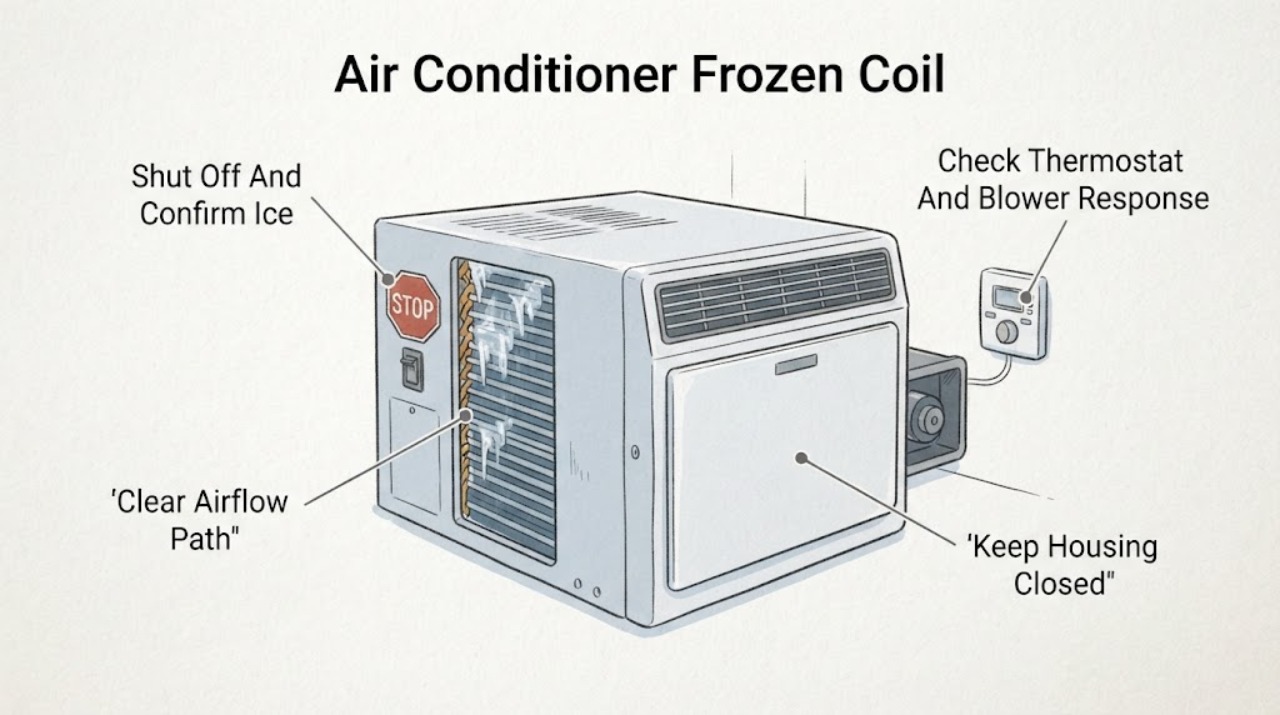
Air Conditioner Frozen Coil: Check Airflow and Blower Motor Safely
If ice is visible on the indoor evaporator coil, refrigerant lines, or nearby tubing, turn the thermostat's cooling mode to Off and leave the compressor off while the coil defrosts. Do not chip the ice, use a heat gun, or keep running cooling against a frozen coil.
-
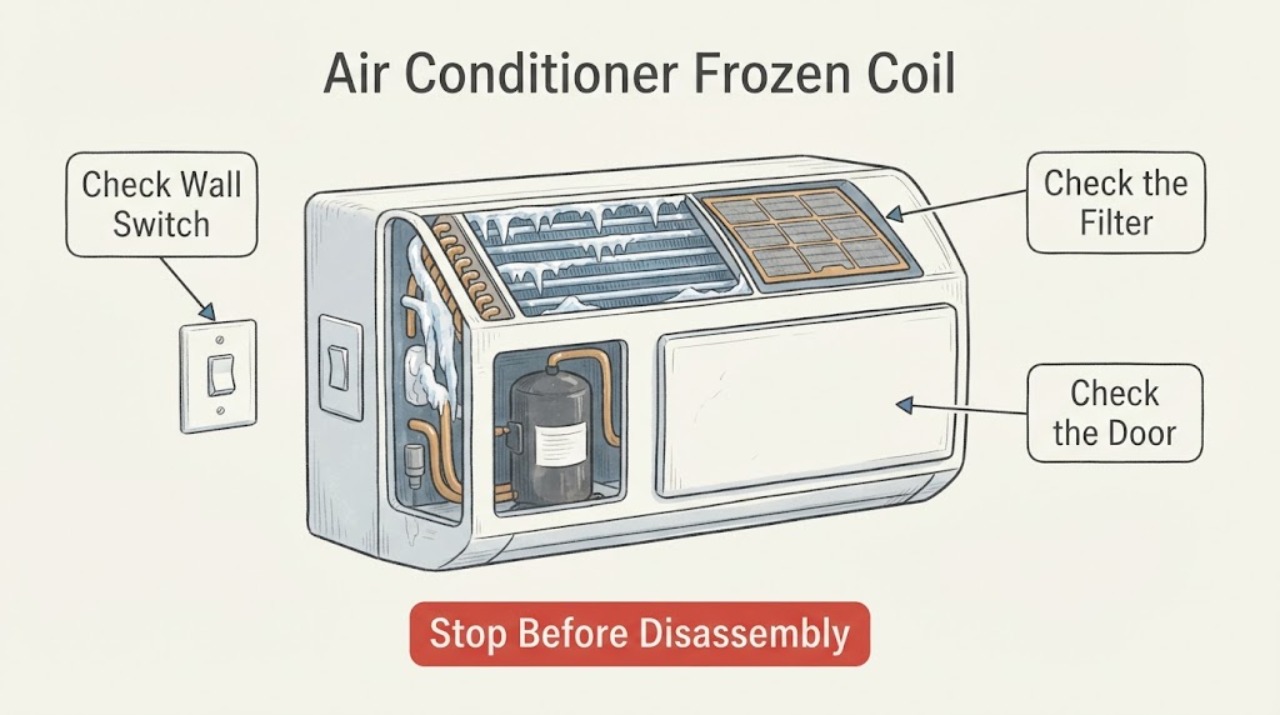
Air Conditioner Frozen Coil: Safe Checks Before Compressor Damage
Turn the thermostat from COOL to OFF as soon as you see ice or frost, and do not keep running the compressor while the coil is frozen. Let the ice thaw naturally, then check only the accessible air filter, supply registers, return grilles, and outdoor-unit clearance.
-
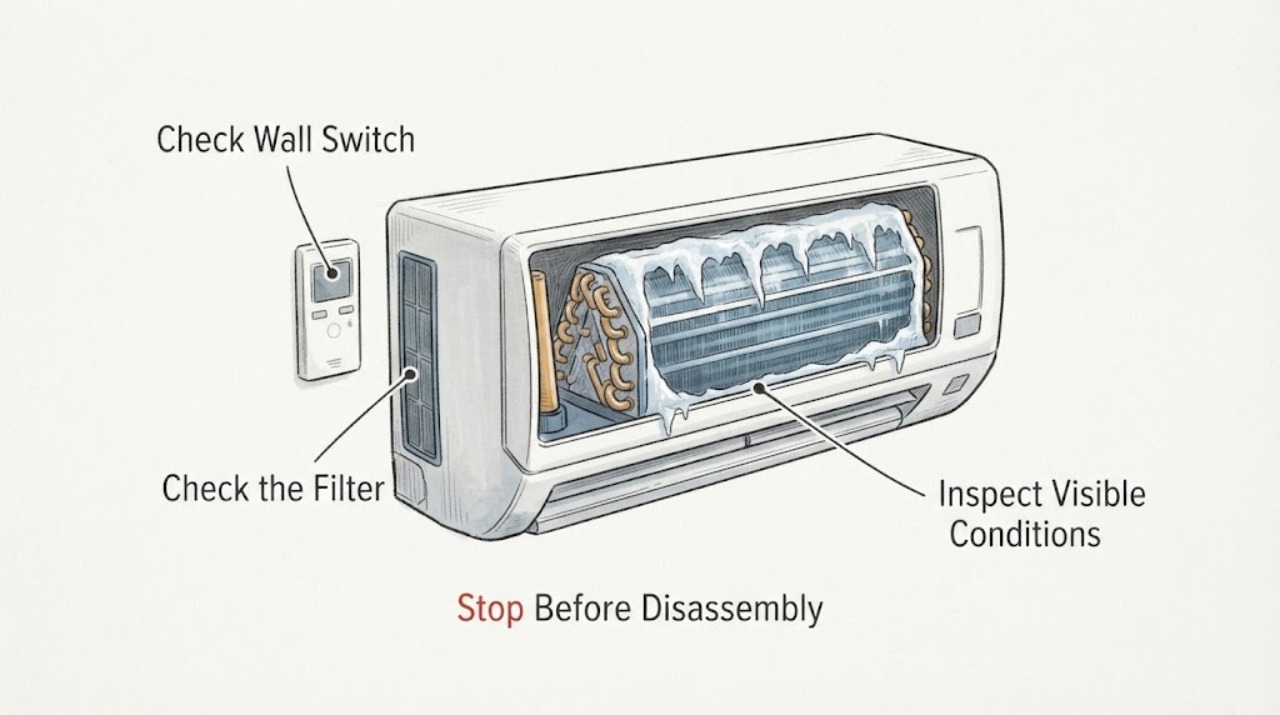
Air Conditioner Frozen Coil: Safely Defrost the Evaporator Coil and Find the Cause
If ice is forming on an air conditioner's evaporator coil or refrigerant line, switch the thermostat from COOL to OFF and let the coil thaw naturally; do not chip at the ice or keep running the compressor against a frozen coil. Once the ice is gone and the equipment is dry, check the return-air filter, make sure supply and return grilles are open, and confirm the indoor blower is moving normal air.
-
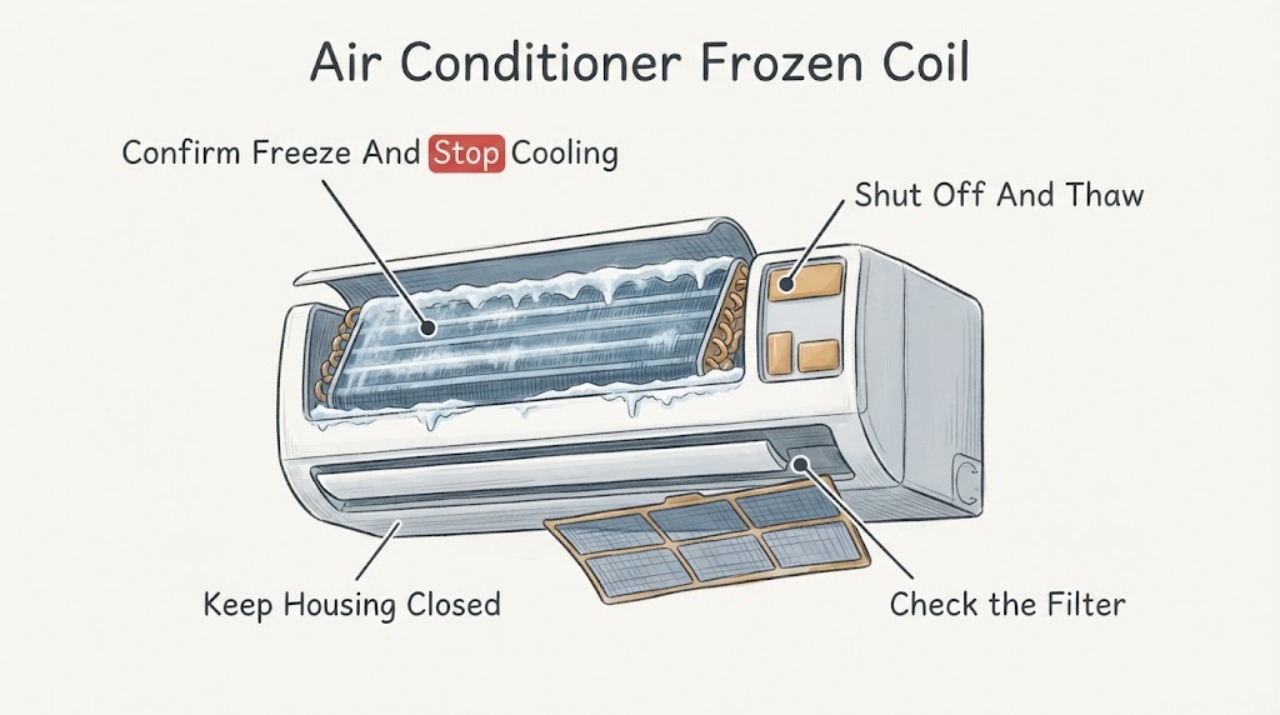
Air Conditioner Frozen Coil
Turn the cooling function off as soon as you see ice on the evaporator coil, copper lines, or indoor unit. Let the coil thaw naturally; do not use a hair dryer, space heater, hot water, or another heat source.
-
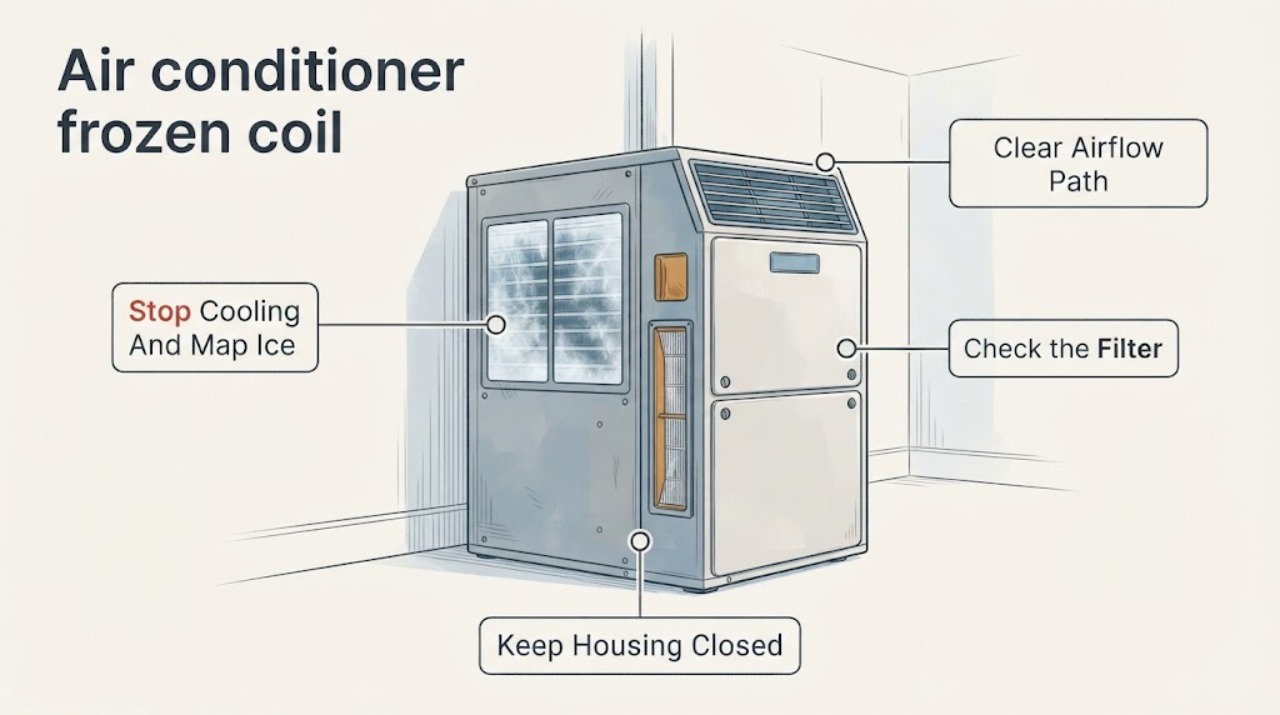
Air conditioner frozen coil: stop cooling, restore airflow, and call HVAC service safely
If an air conditioner has a frozen evaporator coil, switch the thermostat from COOL to OFF and leave cooling off while the ice melts naturally. Do not chip the ice, pour hot water on it, use a flame, open the coil cabinet, or touch electrical or refrigerant parts.
-
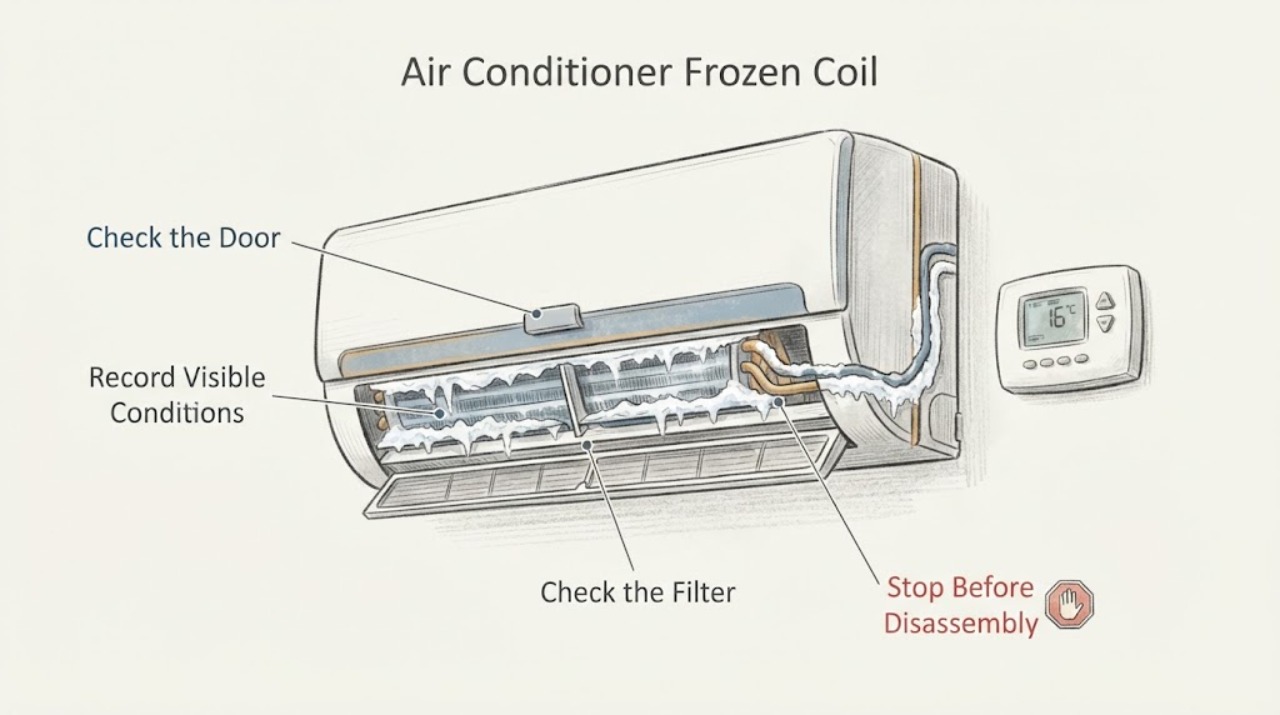
Air Conditioner Frozen Coil: Check the Thermostat Safely
Set the thermostat to OFF so the compressor stops, allow the ice on the evaporator coil to melt naturally, and do not chip it away or use heat. While the system is off, check only the thermostat display and accessible filter, return, supply, and drain areas.
-
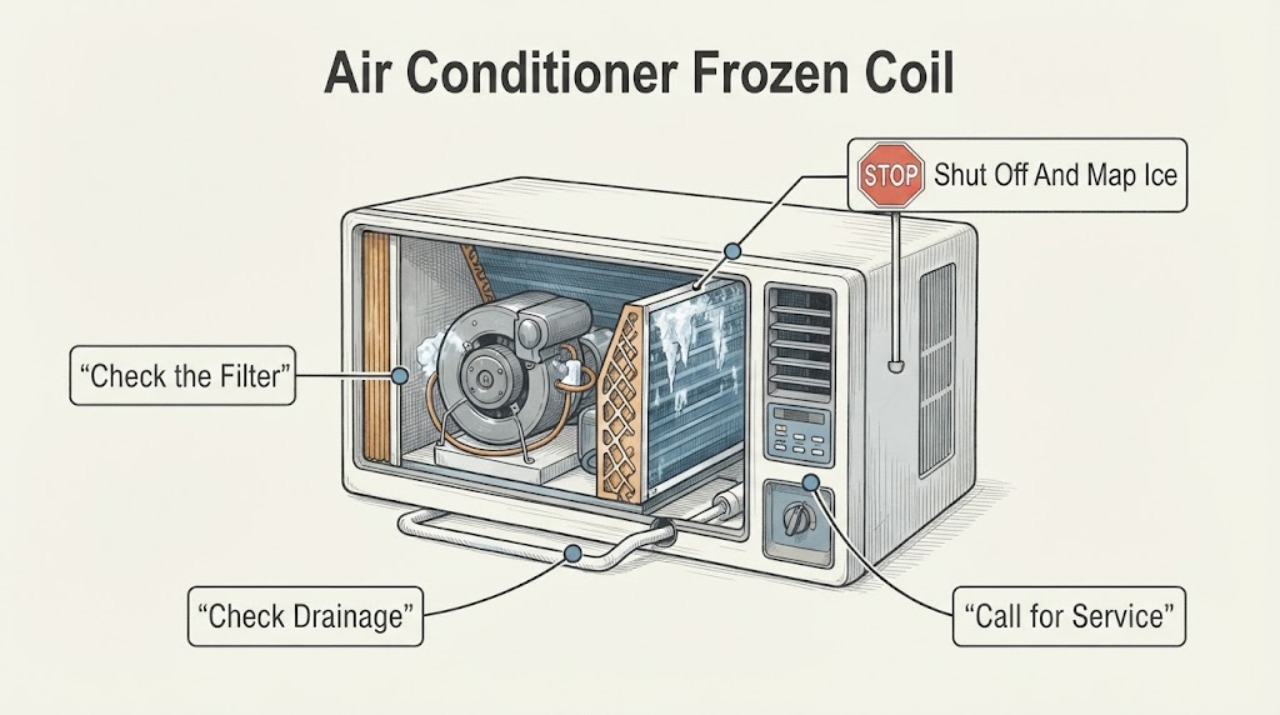
Air Conditioner Frozen Coil: Stop the Cooling Cycle, Restore Airflow, and Find the Cause
If an air conditioner has ice on the evaporator coil or refrigerant line, switch the thermostat from COOL to OFF and do not chip the ice or keep running the system. Trane identifies restricted airflow from a dirty filter, blocked return vents, or a dirty coil as common causes, while low refrigerant, a blower problem, or thermostat trouble can also freeze the coil.
-
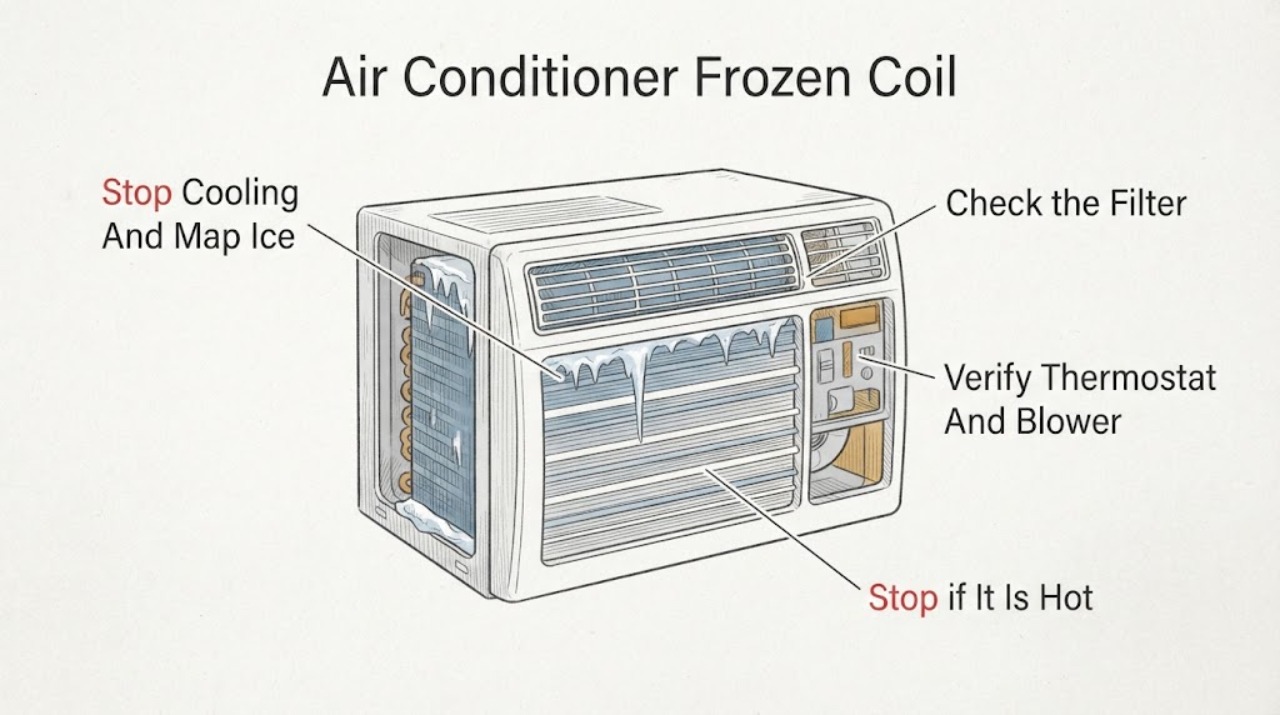
Air Conditioner Frozen Coil: What to Check and What to Do Next
If you see ice on the indoor evaporator coil, the copper refrigerant line, or the air-handler cabinet, stop cooling immediately. Set the thermostat to COOL OFF; if the indoor blower is operating normally and meltwater is not threatening the equipment, FAN ON can help thaw the coil.
-
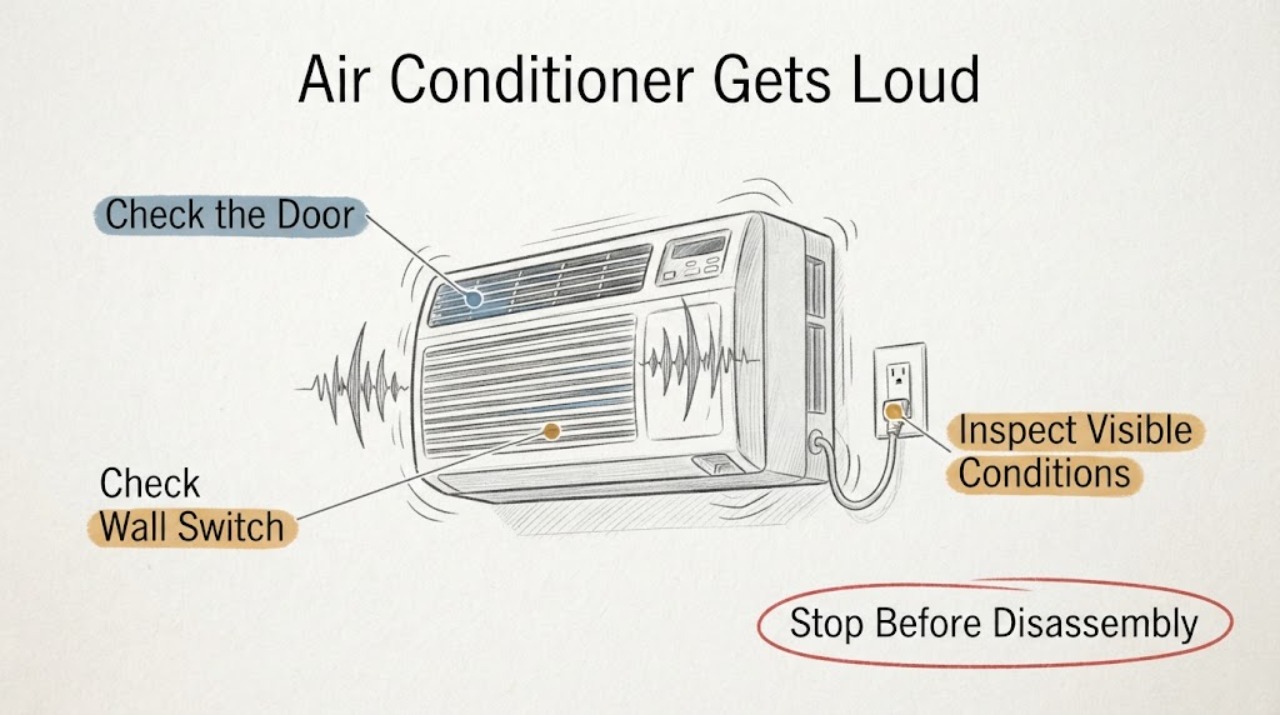
Air Conditioner Gets Loud and Resonates at Startup: Safe Checks
When an air conditioner becomes loud and then resonates as it starts, first identify whether the sound is coming from the indoor air handler, duct or grille, outdoor cabinet, or the building surface carrying vibration. A brief familiar startup sound may be normal for some systems, but a new or worsening resonance can involve an unstable mounting surface, loose external panel, duct transmission, fan or blower imbalance, motor trouble, capacitor or compressor trouble.
-
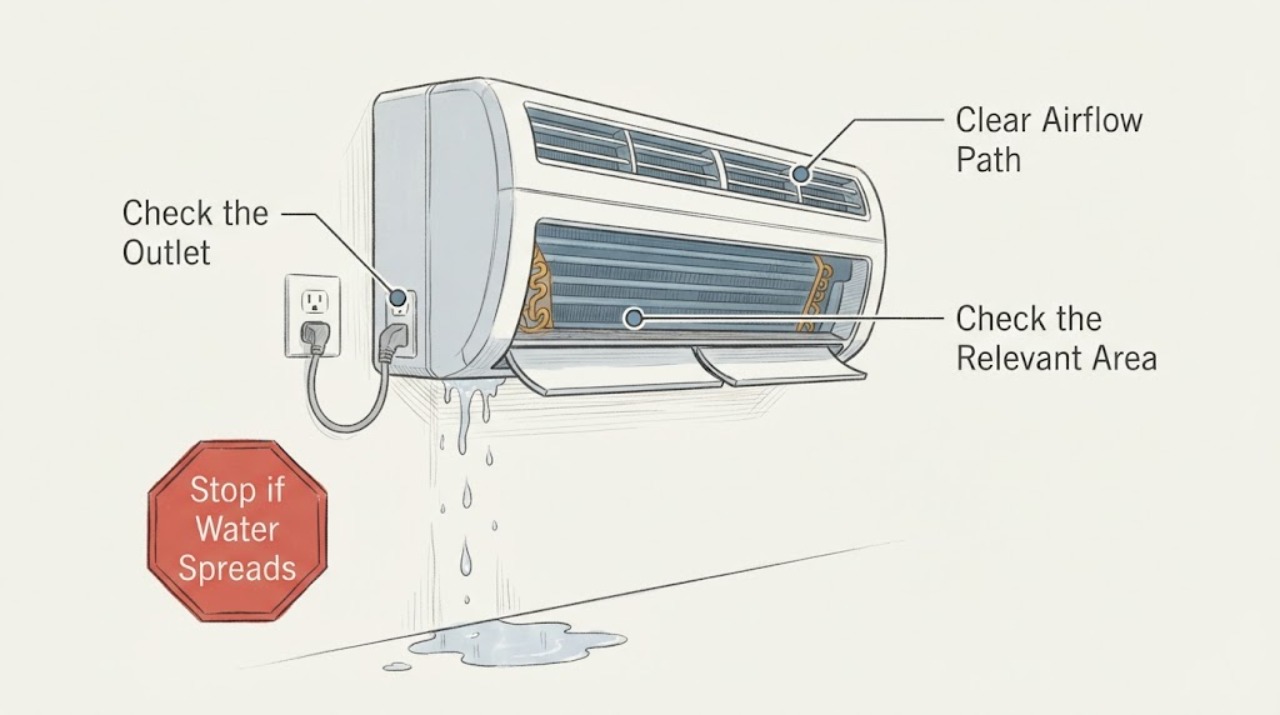
Air Conditioner Leaking Water at the Evaporator Coil: Safe Triage
Stop cooling first and keep water away from electrical equipment. Water around an evaporator coil is commonly condensation that is not draining, or ice on the coil that is melting after restricted airflow or another cooling fault.
-
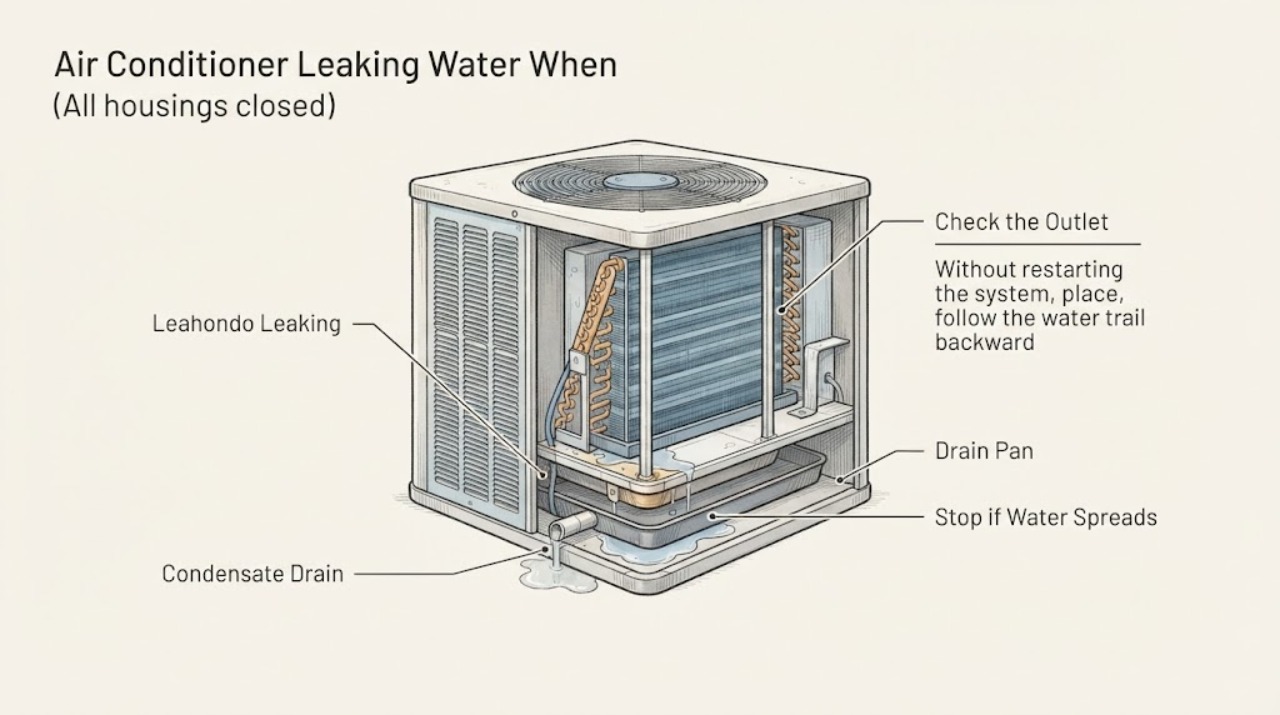
Air Conditioner Leaking Water When It Is Off: Find the Source Safely
A short drip after cooling can be meltwater from ice on the evaporator coil, but water that keeps appearing or returns while the air conditioner is off needs attention. A backed-up condensate drain or pan, a thawing coil, and an outside water source are different possibilities. Keep the system off, identify the first wet point from a dry position, and arrange HVAC service before running it again. Do not open the cabinet or perform a live electrical check.
-
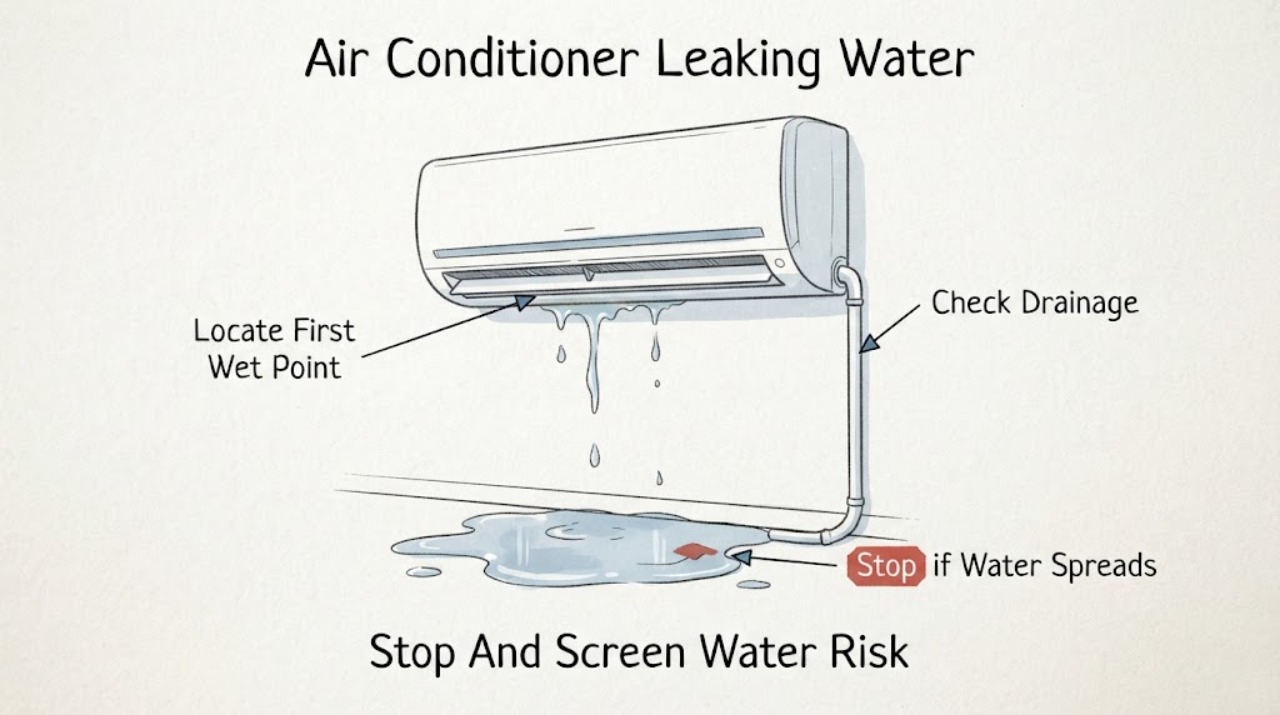
Air Conditioner Leaking Water: Find the First Wet Point Safely
Turn the air conditioner off when water is reaching electrical equipment, a ceiling is bulging, the leak is large or continuous, sewage or mold is involved, or the indoor unit is unsafe to approach. The first wet point matters: water at the indoor unit or wall can come from a blocked, detached, or frozen condensate drain; water at a ceiling or roof opening can also be building or plumbing water; water outside at the drain outlet may be normal condensate discharge.
-
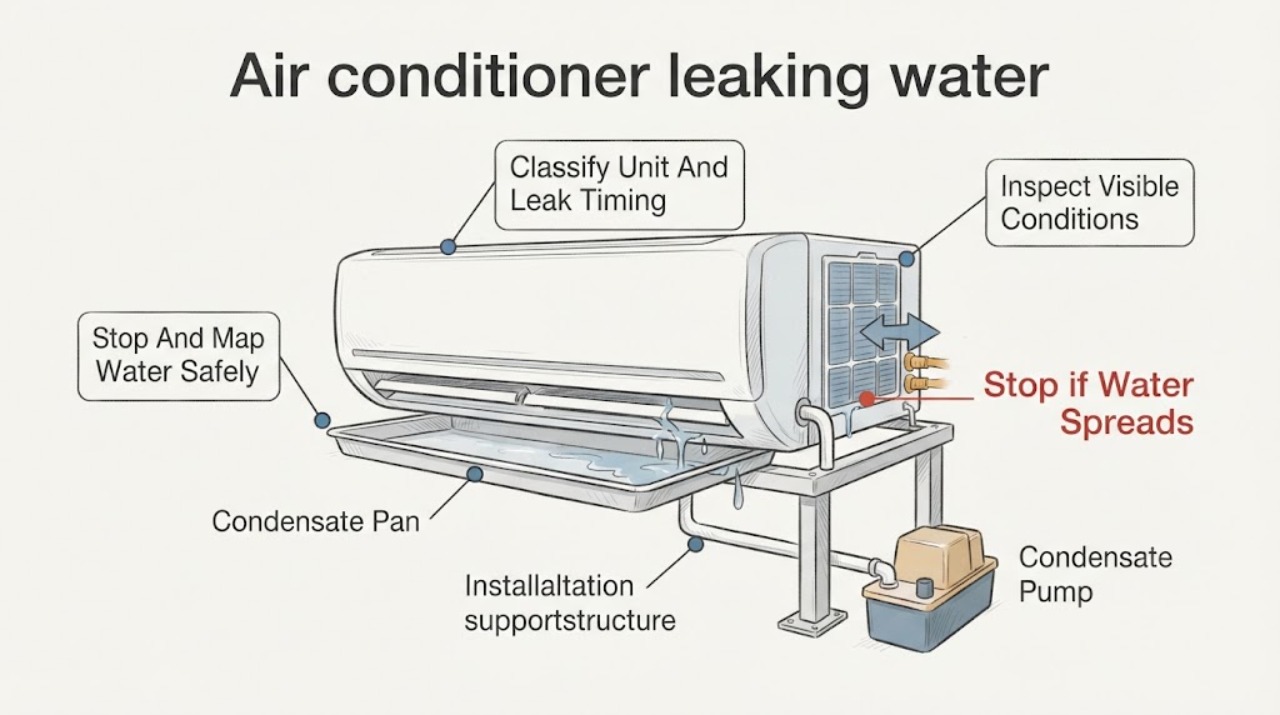
Air conditioner leaking water: What to Check and What to Do Next
Turn the air conditioner off when water appears, using only a dry normal control that you can reach safely. From a dry position, note whether the water is at an indoor air handler, wall-mounted unit, window unit, pan, drain outlet, ceiling, or floor, and whether it appeared during cooling, after shutdown, or after rain.
-
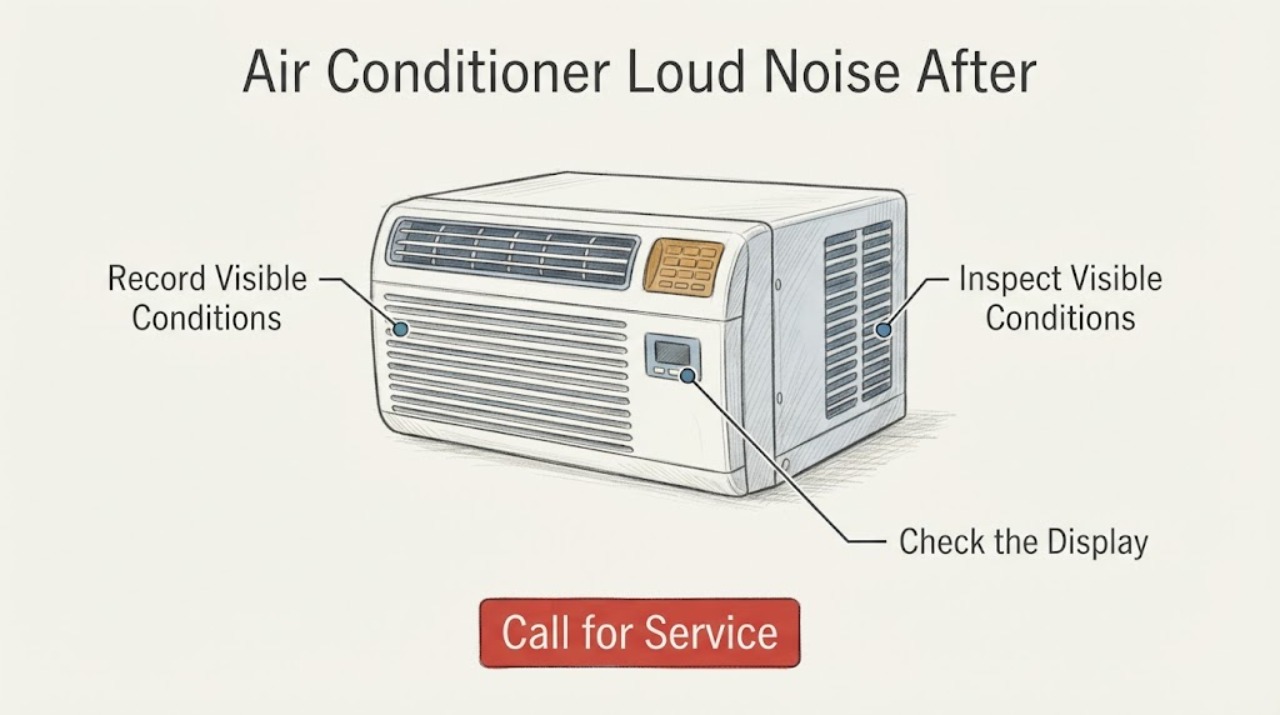
Air Conditioner Loud Noise After Buzzing
If an air conditioner begins making a loud noise after a buzzing sound, stop treating the buzz as a harmless startup sound until the source is identified. From a safe distance, note whether the sound starts at the outdoor unit, whether the outdoor fan turns, and whether cooling or electrical behavior changes.
-
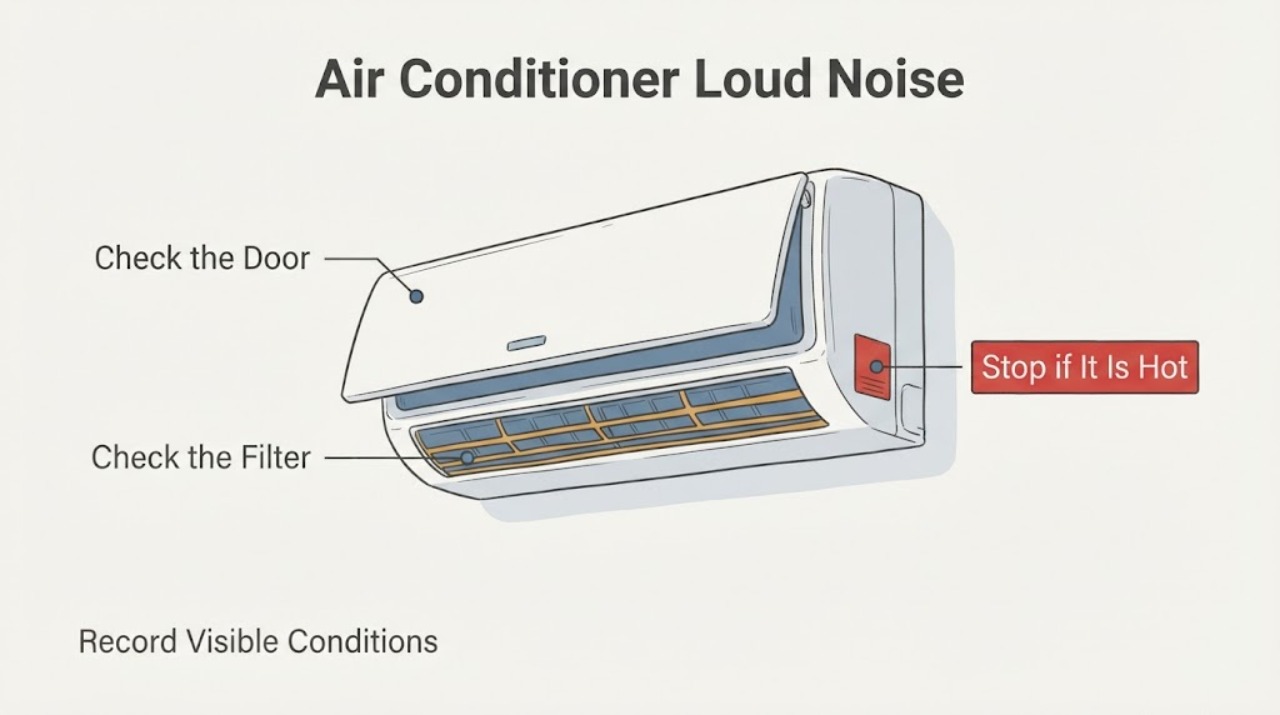
Air Conditioner Loud Noise in the House: Indoor Unit, Duct, and Airflow Checks
First determine whether the loud sound comes from the indoor air handler, a return or supply grille, a duct, or the condensate area, and whether it occurs at startup, while running, or during shutdown. A blocked filter, obstructed register, loose grille, duct vibration, or normal expansion can create indoor noise, but a new grinding, rattling, loud hum, hissing near the indoor coil, water, burning odor, or electrical sound means turn the system off and arrange HVAC service.
-
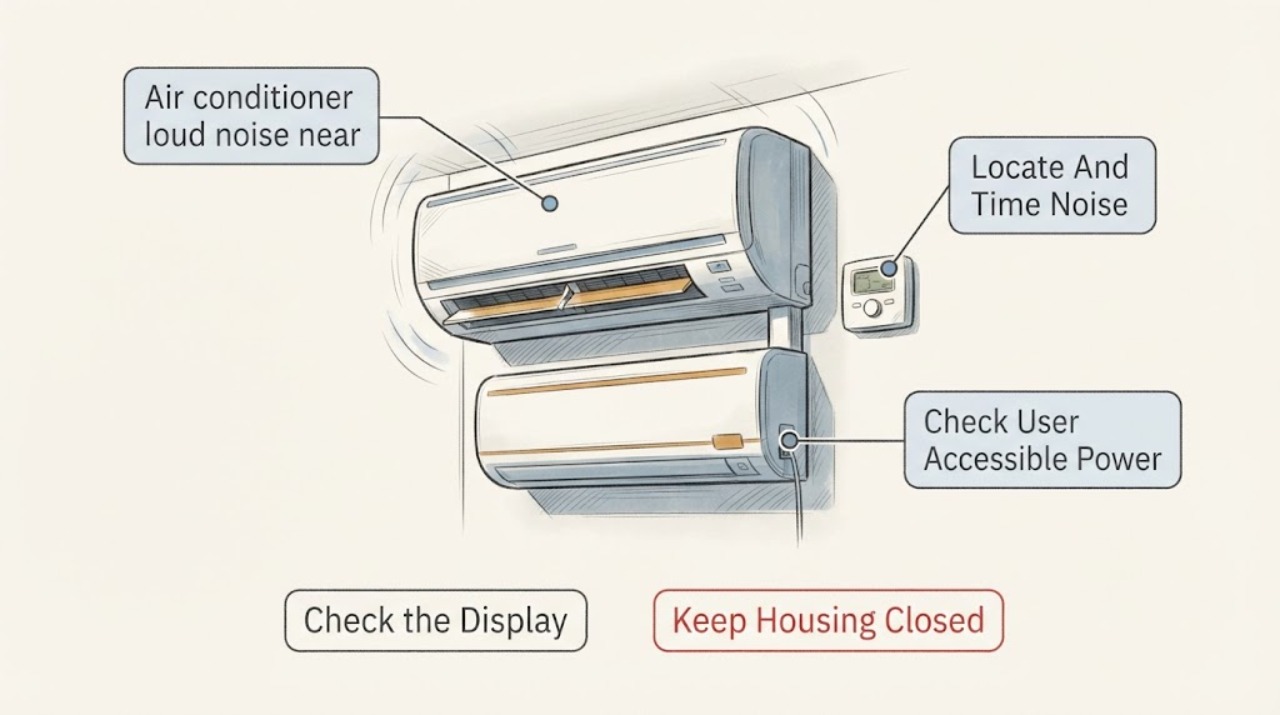
Air conditioner loud noise near the thermostat: separate a normal click from a fault
A brief click when a thermostat starts or stops a cooling call can be the control making contact, but a new loud click, buzz, crackle, vibration, or repeated clicking is not proof that the thermostat itself is bad. First stand safely near the wall control and record whether the sound is truly at the thermostat or is the outdoor unit starting at the same moment.
-
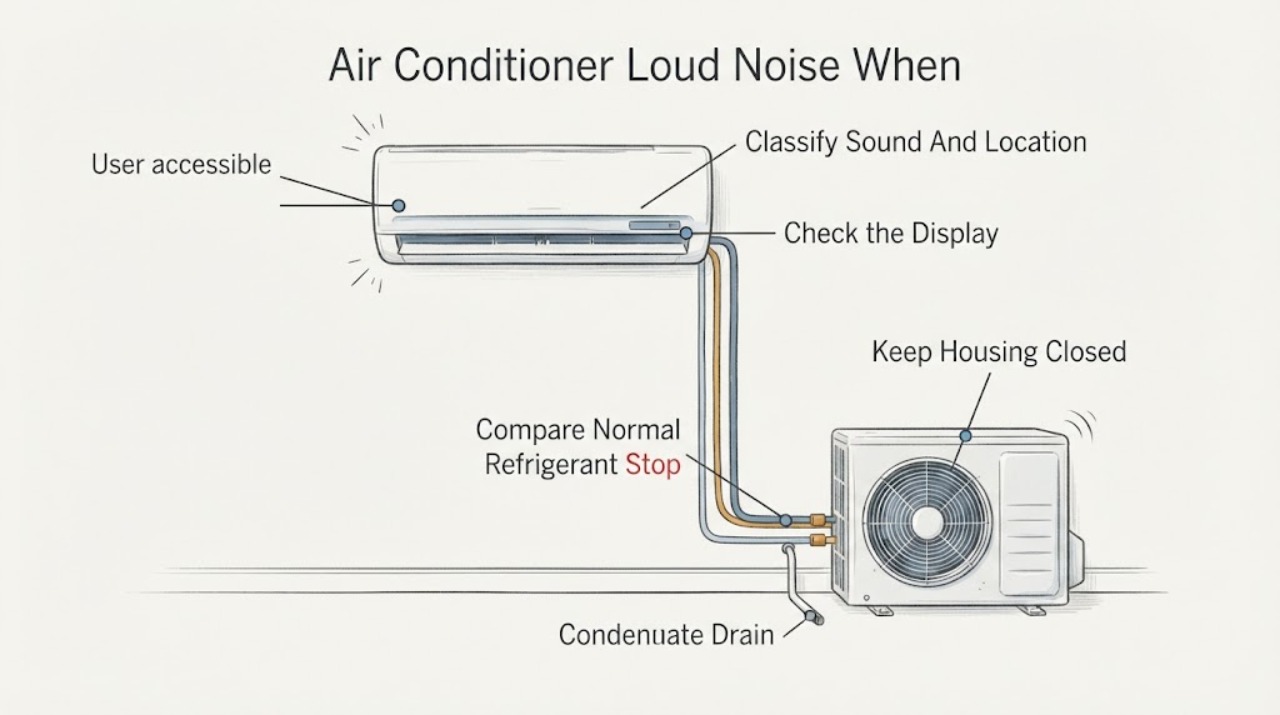
Air Conditioner Loud Noise When a Mini-Split Is Off
A loud noise from a mini-split after you turn it off is worth classifying before you reset or open anything. A brief hiss immediately after stopping, a short creak as parts cool, a faint drain-pump sound, or limited outdoor run-on can be normal on some systems; a multi-zone system may also make a faint sound at a stopped indoor head while another head is operating.
-
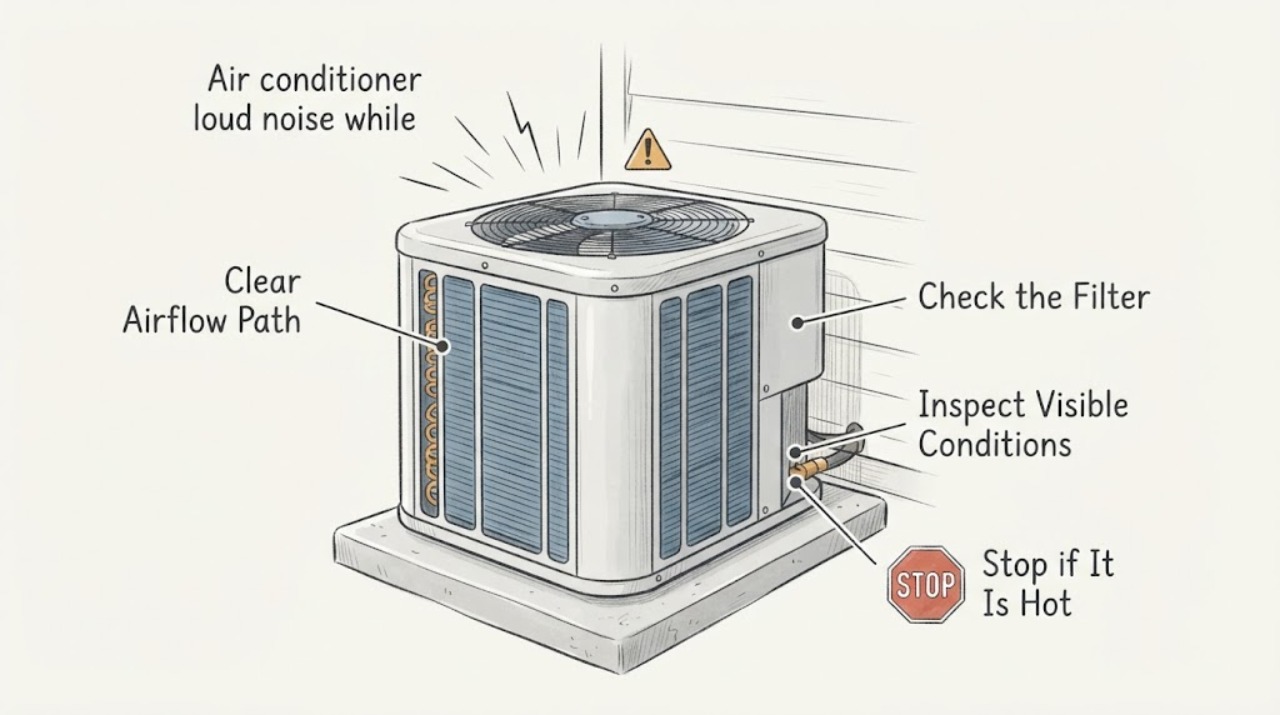
Air conditioner loud noise while the outdoor unit runs but the house is not cooling
If the outdoor air-conditioner unit is running but the house is not cooling and the system is making a loud noise, first verify the thermostat call and identify whether the indoor blower is moving air. Then check only the user-accessible filter and unobstructed vents, and look from a safe position for ice or abnormal water.
-
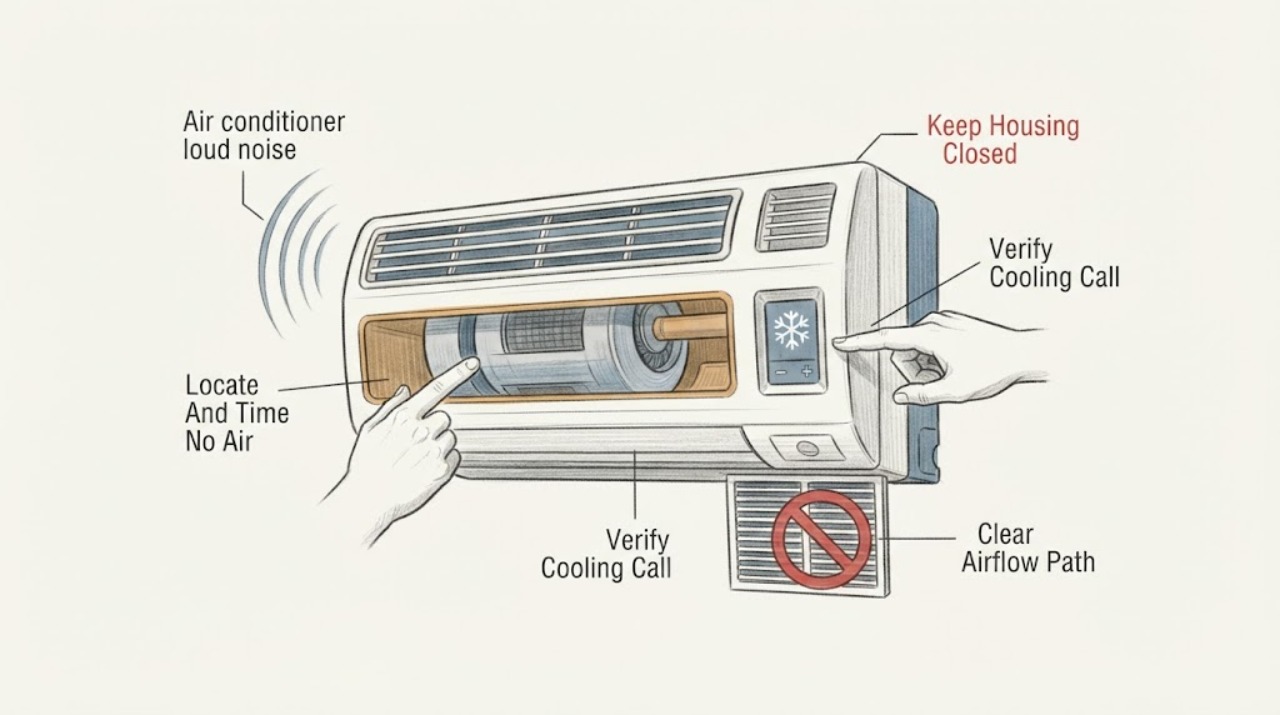
Air conditioner loud noise with no air: check the blower motor safely
If an air conditioner makes a loud noise when turned on but no air comes from the vents, first confirm that the thermostat is actually calling for cooling and identify whether the sound is at the indoor air handler or the outdoor unit. A loud indoor hum with no airflow can involve the blower motor, blower wheel, a restricted filter or frozen coil, a control or safety shutdown, or another electrical fault; an outdoor sound is a different diagnostic path.
-
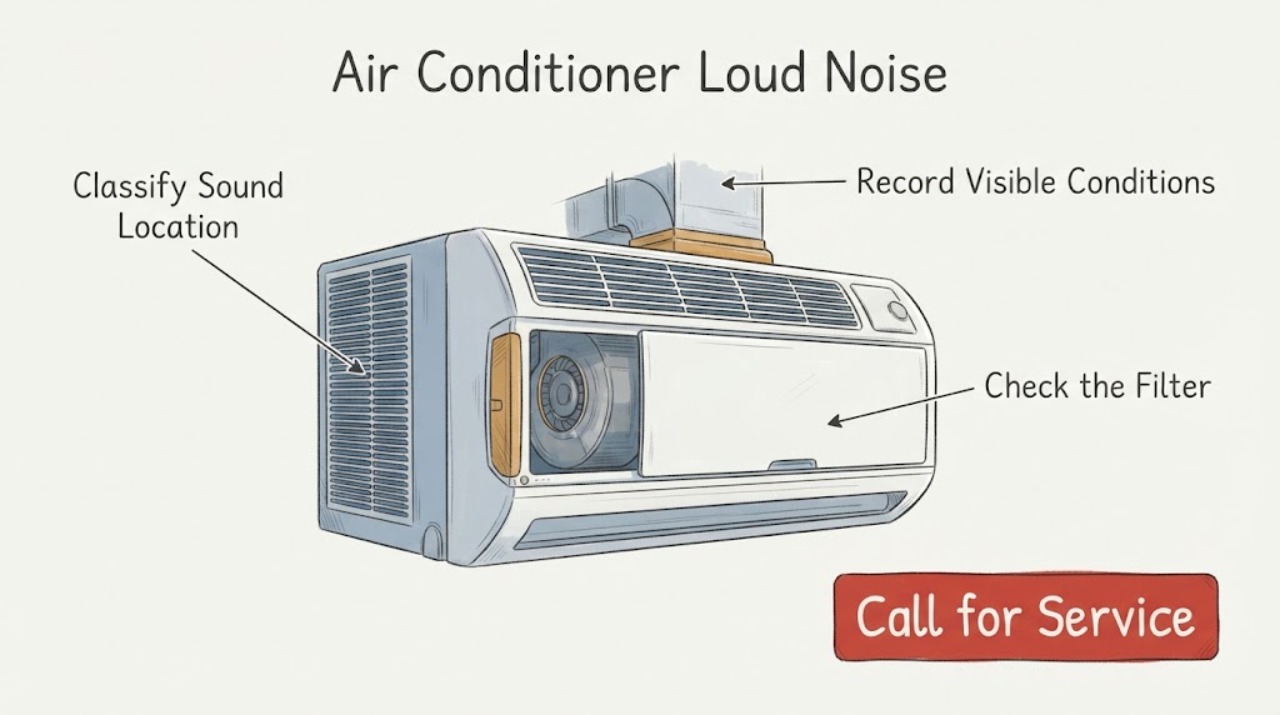
Air Conditioner Loud Noise: Isolate the Blower Motor Safely
A loud air-conditioner noise can come from the indoor blower motor or wheel, a restricted filter or return, duct movement, or the outdoor fan or compressor rather than the blower itself. Turn the system off at the thermostat when the noise is sudden, harsh, grinding, scraping, rattling, or accompanied by weak airflow, smoke, a burning odor, ice, water, or repeated electrical trips.
-
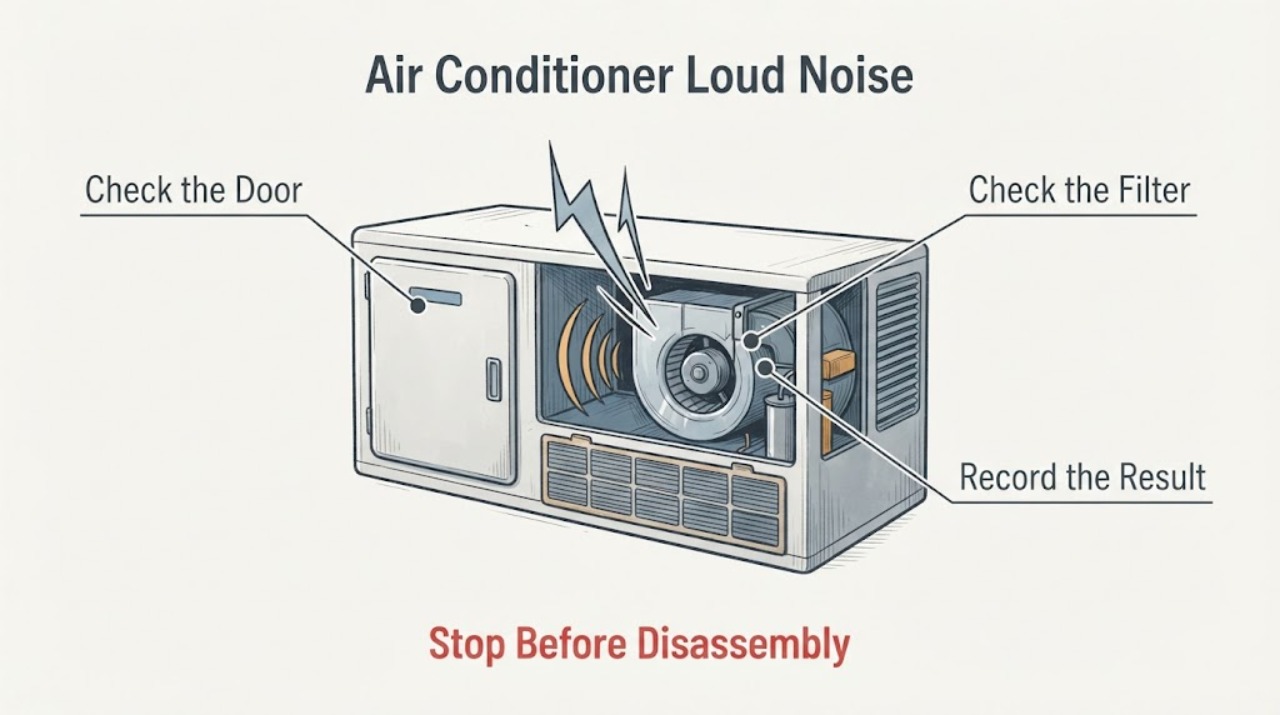
Air Conditioner Loud Noise: Blower Motor and Capacitor Checks
A new loud sound should be treated as a fault until its location and timing are clear. Turn cooling off, note whether the sound comes from the indoor blower or outdoor unit, and do only external, power-off checks.
-
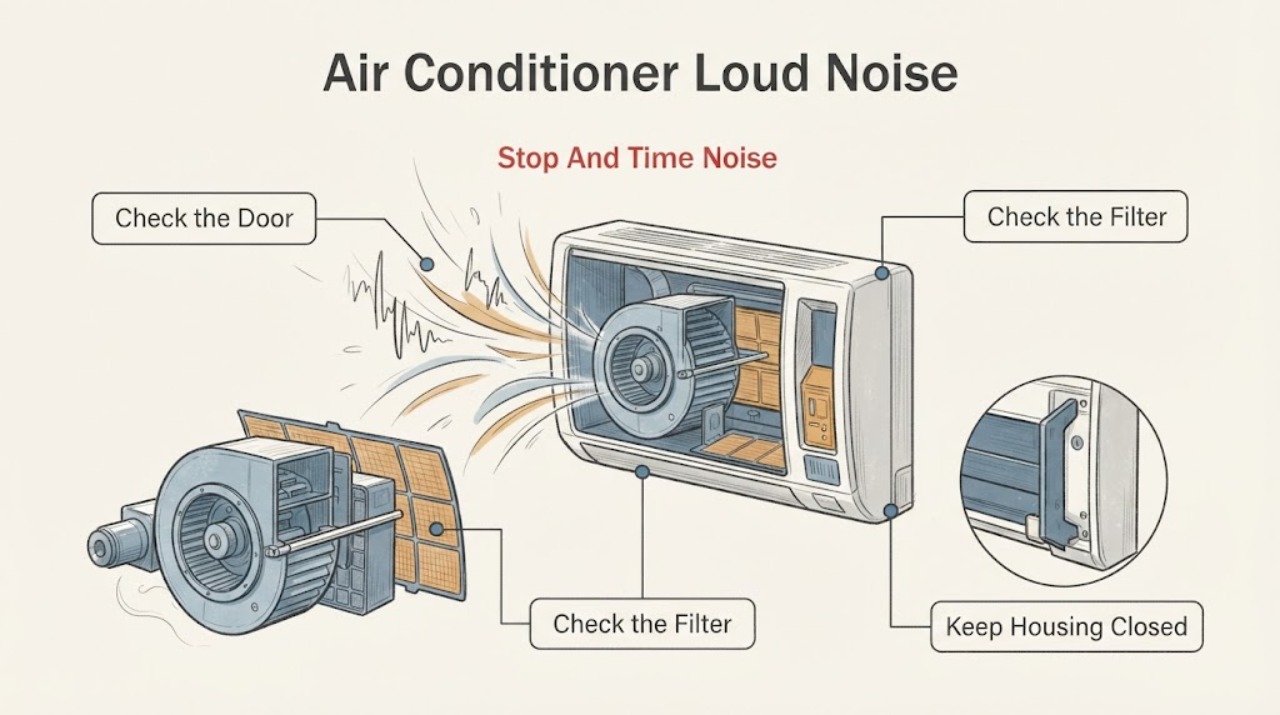
Air Conditioner Loud Noise: Check the Filter and Blower Safely
First identify where and when the loud noise occurs, then stop the air conditioner from the thermostat and inspect only the accessible filter, return grille, and supply registers. A blocked filter can restrict airflow and make the blower work harder, while a rattle, squeal, or grinding sound that starts with the indoor blower can indicate a blower wheel, motor, bearing, or electrical fault that requires HVAC service.
-
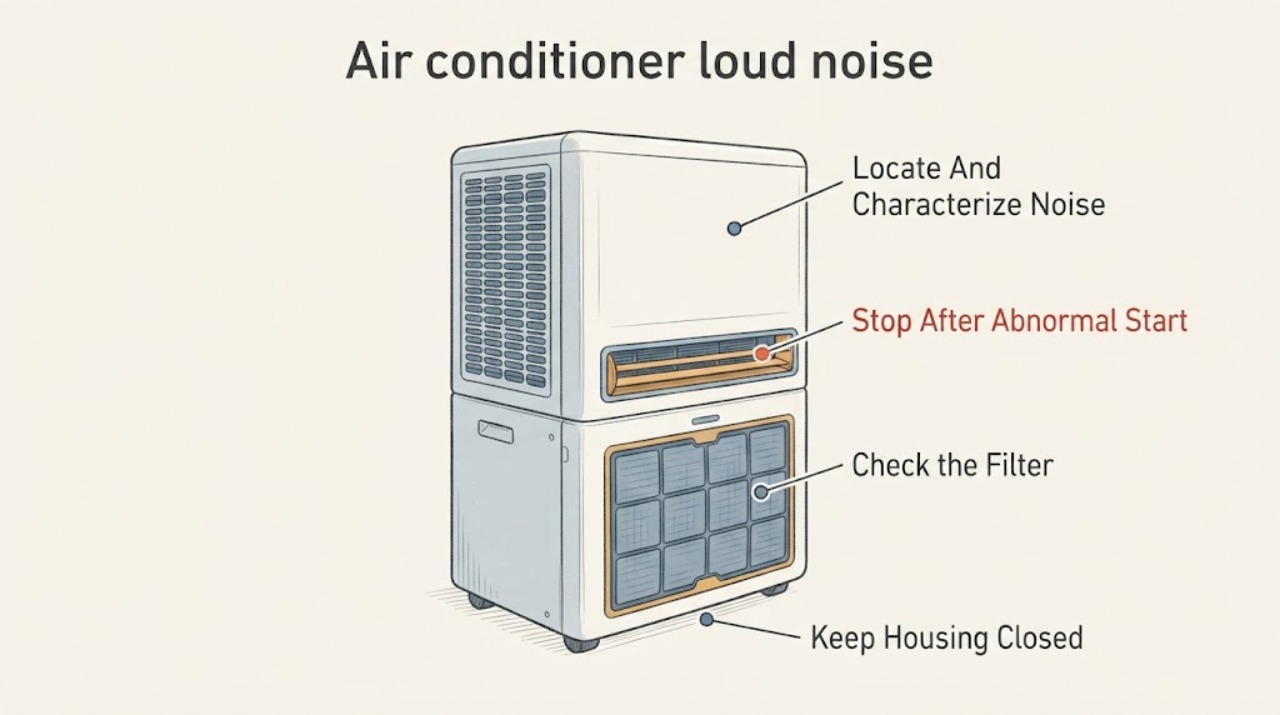
Air conditioner loud noise: how to tell whether a capacitor needs service
A loud air conditioner does not prove that the capacitor has failed. Note whether the sound comes from the indoor or outdoor unit and whether it occurs at startup, during cooling, or at shutdown, then stop the system if the sound is sudden, harsh, or accompanied by poor cooling.
-
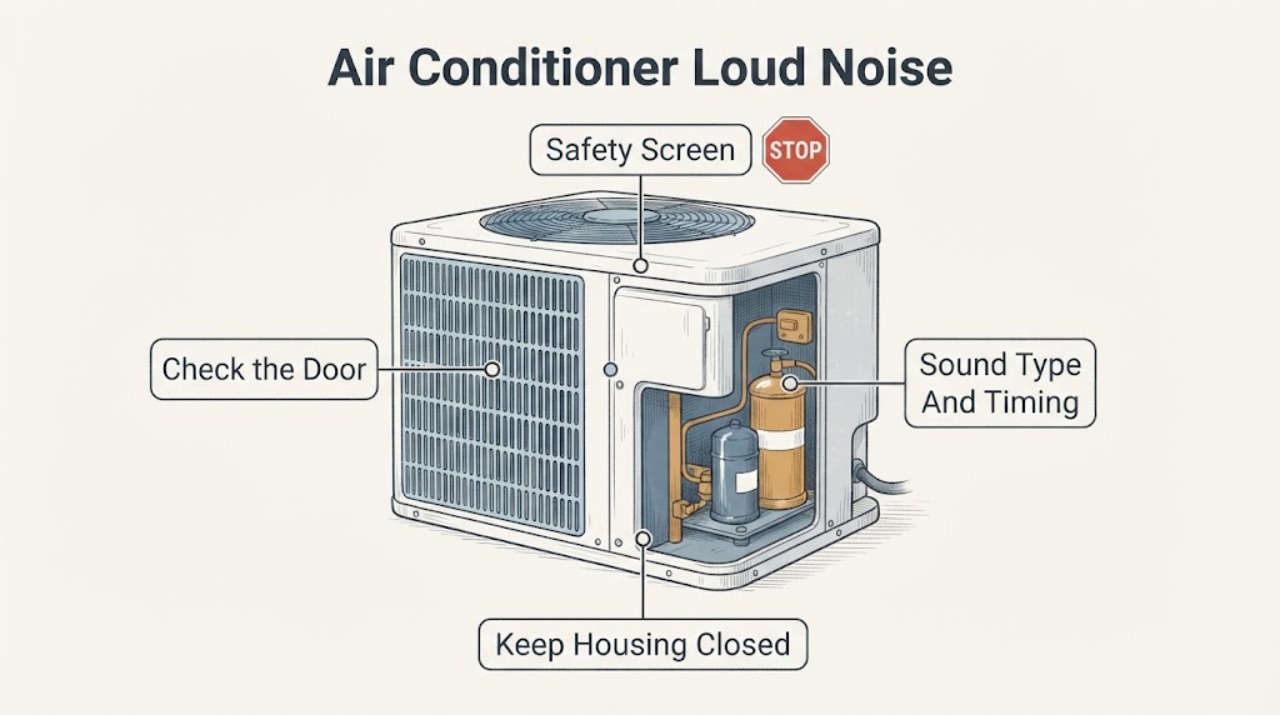
Air Conditioner Loud Noise: Capacitor and Compressor Clues
A loud air-conditioner noise should be classified by location, sound, and timing before anyone guesses a part. Turn cooling off at the thermostat and listen from a safe position: an indoor blower sound points to a different path from an outdoor hum, click, rattle, grind, bang, or squeal.
-
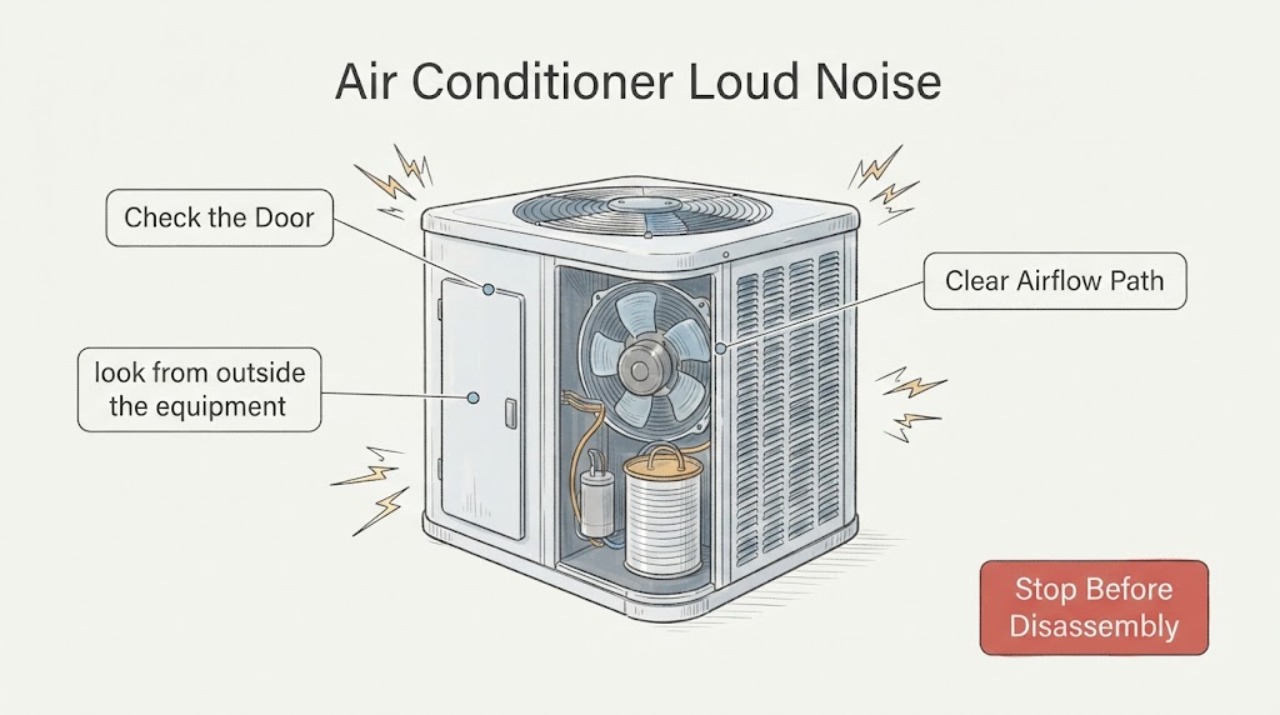
Air Conditioner Loud Noise: Check the Fan and Capacitor Safely
A suddenly loud air conditioner should be diagnosed by location, sound, and timing, not by opening the unit. From a safe position, note whether the noise is indoors or outdoors and whether it is a hum at startup, repeated clicking, rattling, scraping, grinding, or a fan that is not turning.
-
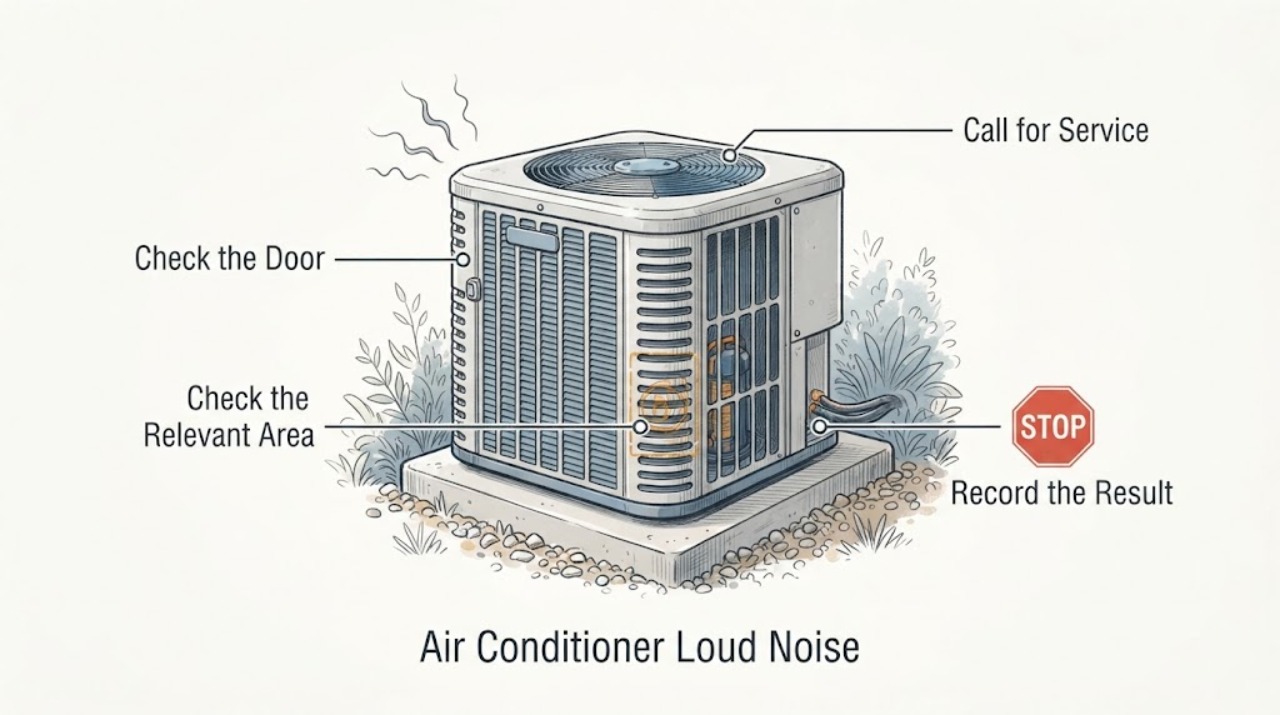
Air Conditioner Loud Noise: Is the Compressor the Source?
A loud air conditioner does not prove that the compressor has failed. First locate the sound from a safe distance and note whether it starts with the outdoor unit, only during compressor startup, or continues while the system runs.
-
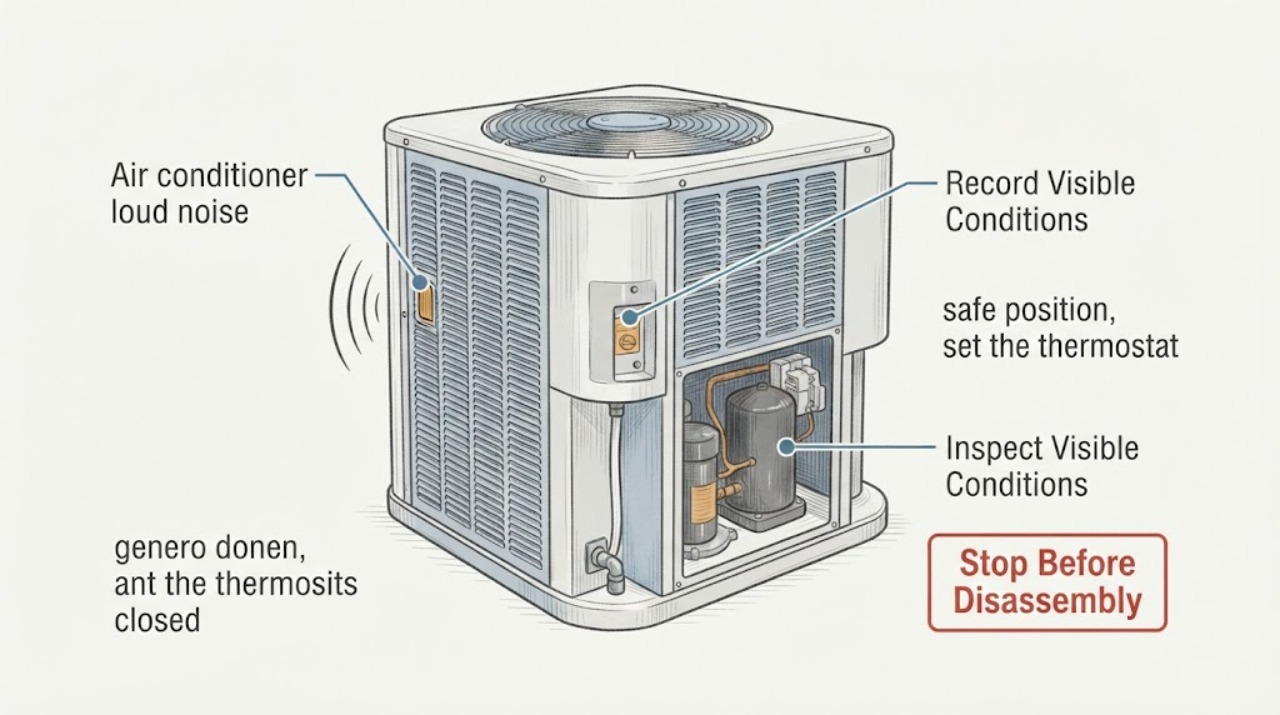
Air conditioner loud noise: check the compressor and contactor safely
A loud air conditioner can be a harmless startup or airflow sound, but a new bang, grinding noise, repeated buzzing or clicking, violent vibration, or a sound that comes with poor cooling can indicate an outdoor fan, compressor, contactor, electrical, mounting, or refrigerant problem. From a safe distance, note whether the sound comes from the indoor or outdoor unit and whether it starts, stops, or changes with a cooling call.
-
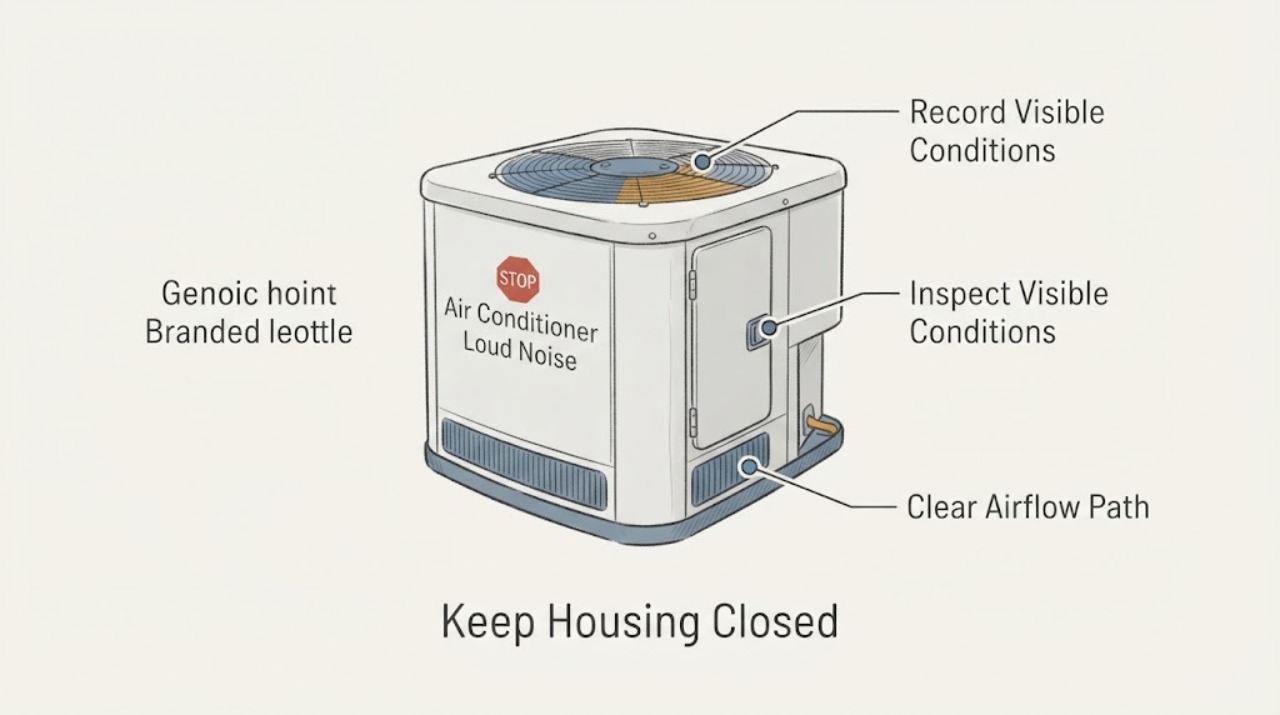
Air Conditioner Loud Noise: When a Contactor Needs HVAC Service
A new or unusually loud hum, buzz, or repeated click from an air conditioner's outdoor unit can involve the contactor, capacitor, fan, compressor, loose hardware, or another electrical or mechanical fault. From a safe position, note whether the sound is indoors or outdoors, whether it occurs at startup, shutdown, or continuously, whether the outdoor fan runs, and whether cooling changes.
-
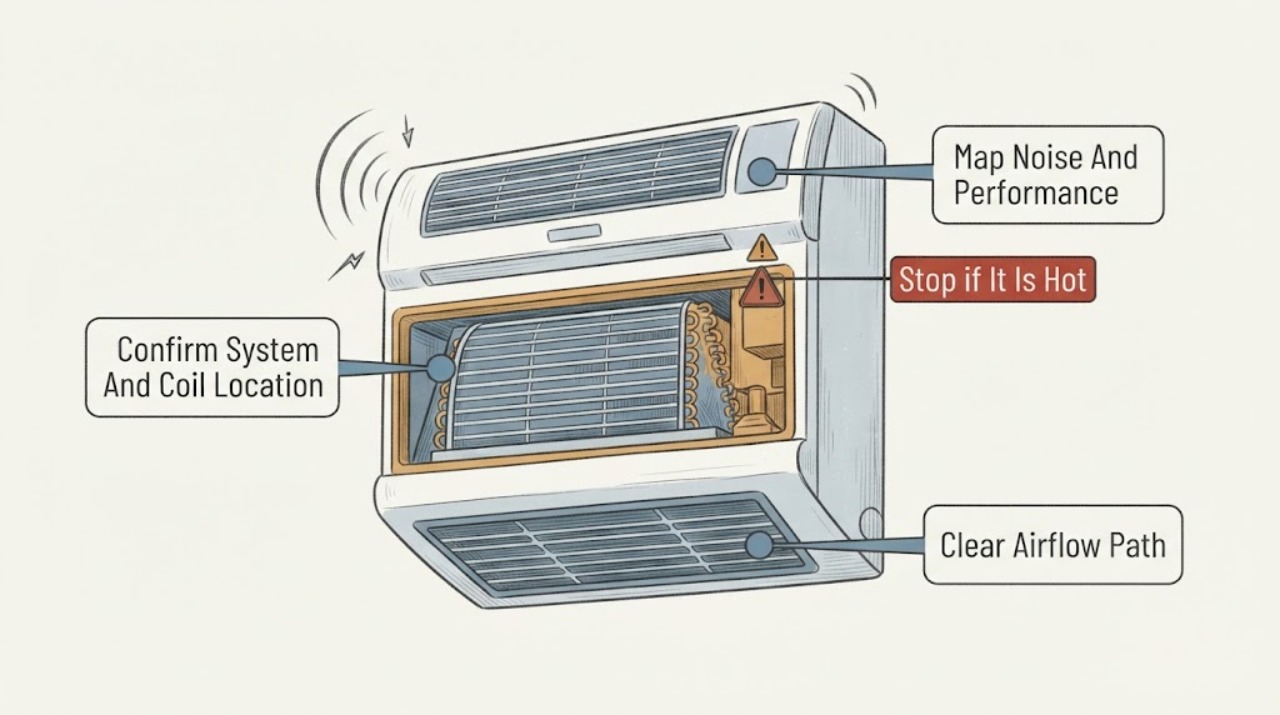
Air Conditioner Loud Noise: Check the Evaporator Coil, Airflow, and Ice Safely
A loud air-conditioner noise near the evaporator coil can be caused by restricted airflow, a frozen or dirty coil, a blower or fan problem, vibration, or a refrigerant-side fault. First note whether the sound is indoors or outdoors and whether cooling, airflow, frost, or water changed at the same time.
-
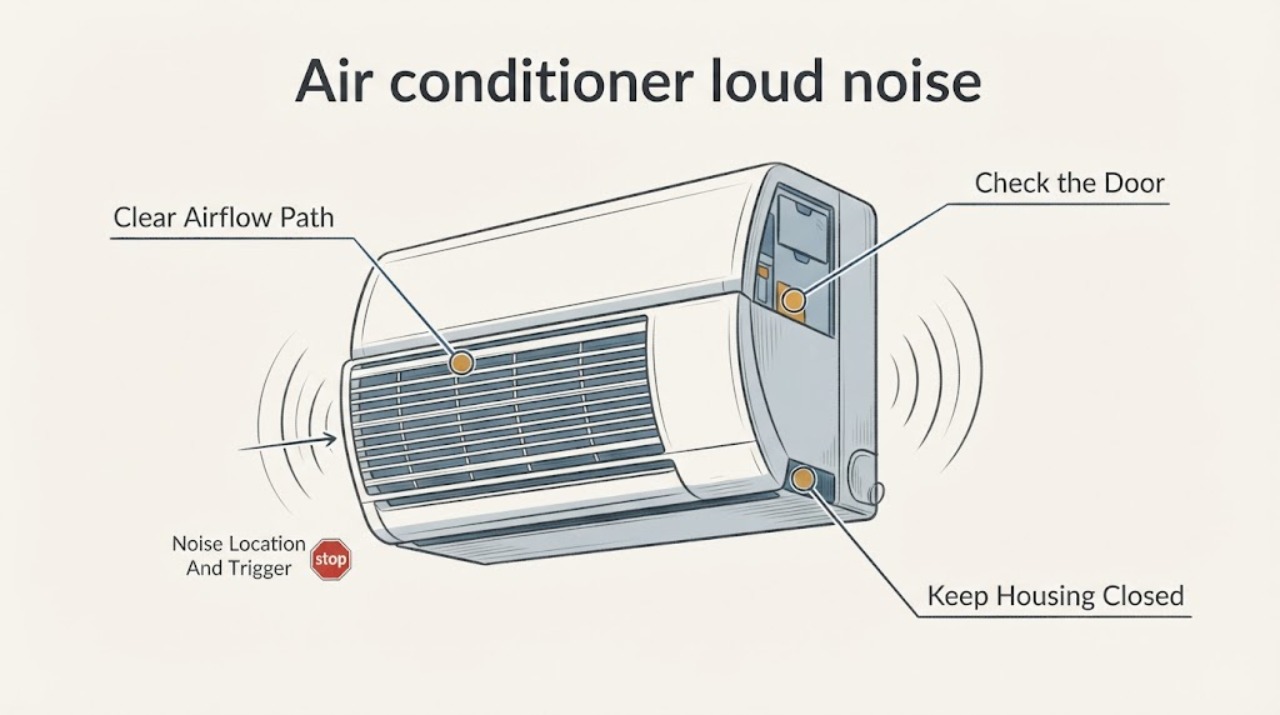
Air conditioner loud noise: What to check and when to stop
A new or intrusive air-conditioner noise is a symptom to classify, not a part to guess. Turn cooling off before inspecting anything.
-
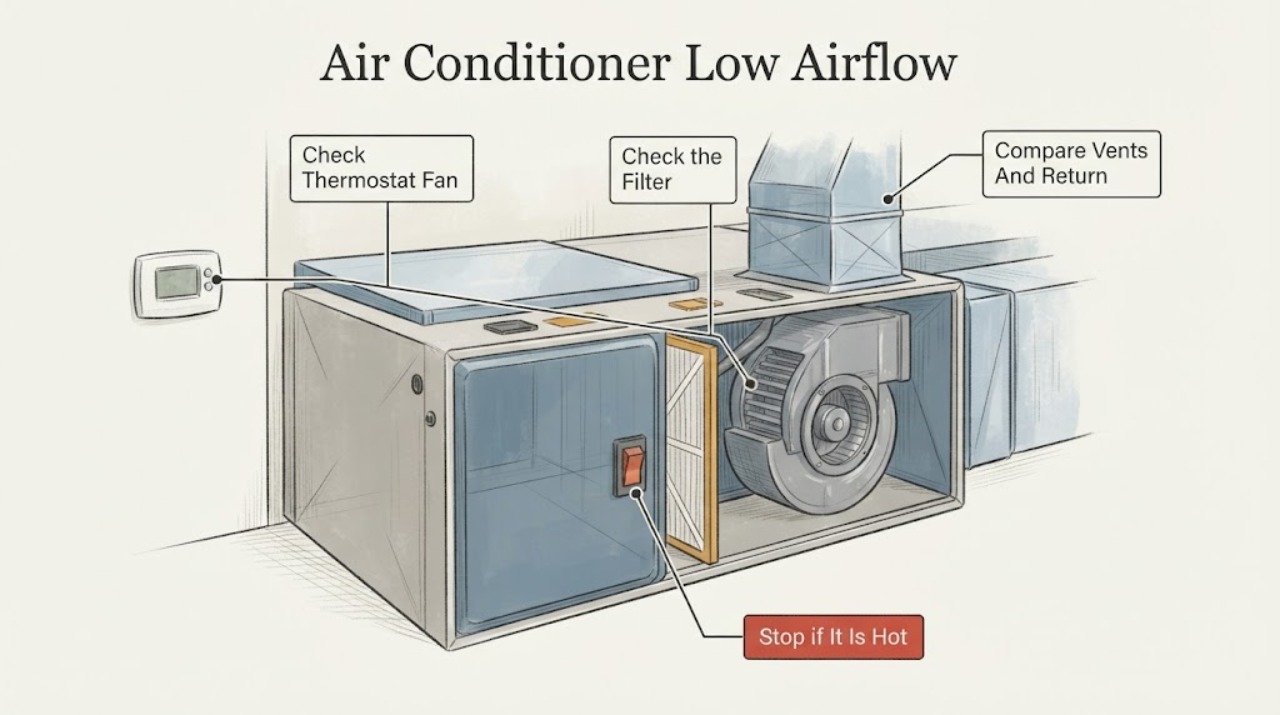
Air Conditioner Low Airflow: Check the Air Path Before Blaming the Blower Motor
Low airflow can come from a blocked filter, closed or obstructed return and supply grilles, an incorrect thermostat fan state, a frozen evaporator coil, or an indoor blower that is not running correctly. First compare several supply vents and the return, then inspect the accessible filter and thermostat from a safe position.
-
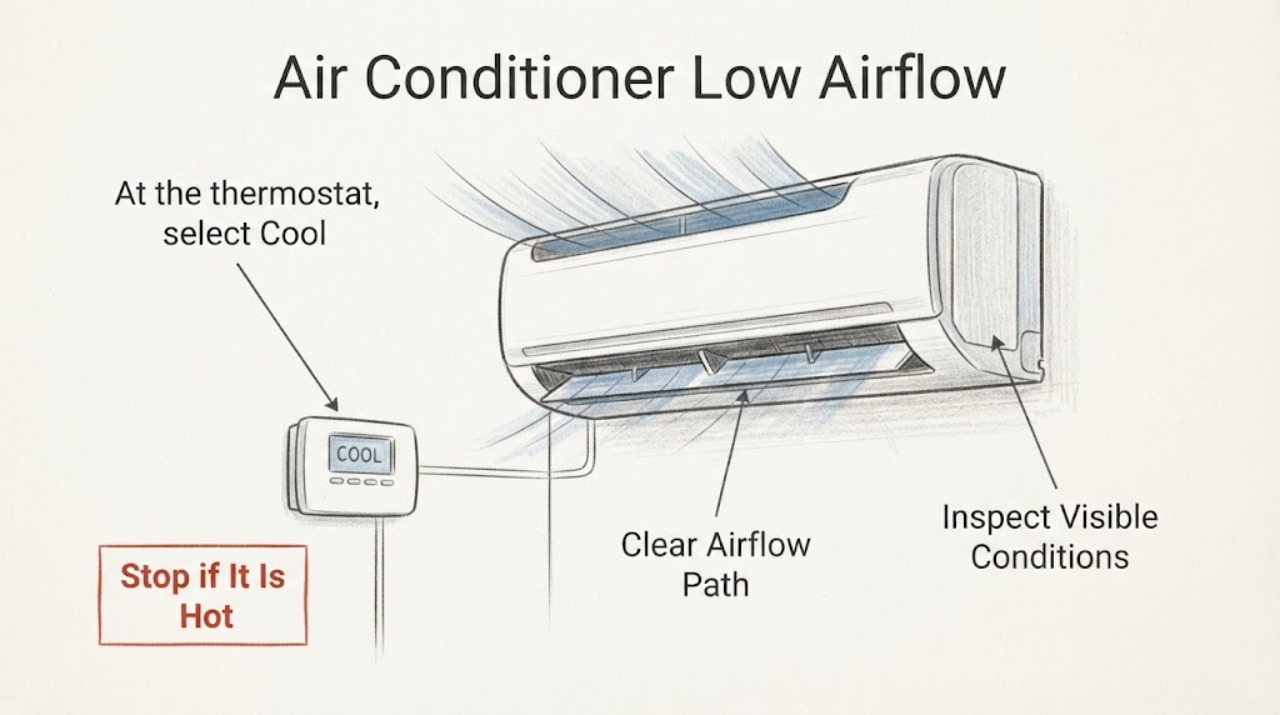
Air Conditioner Low Airflow: Check the Thermostat First
For low airflow from an air conditioner, first confirm that the thermostat is calling for cooling and that the fan is not limited by its mode or schedule. Then turn the system off and check the accessible air filter, return grille, and supply registers.
-
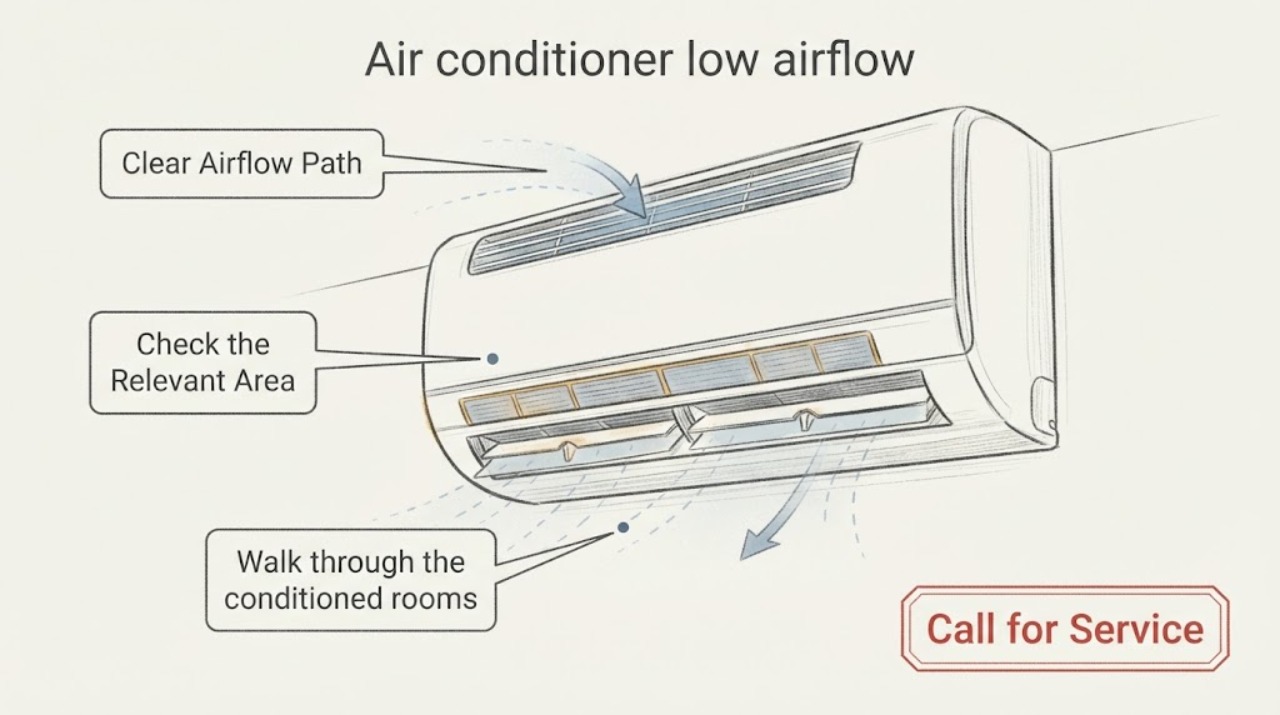
Air conditioner low airflow: safe checks before service
Start by checking whether the weak airflow affects one register or the whole system, then switch the air conditioner off and inspect the correctly fitted filter and all accessible supply and return grilles. A clogged filter or blocked grille can restrict airflow.
-
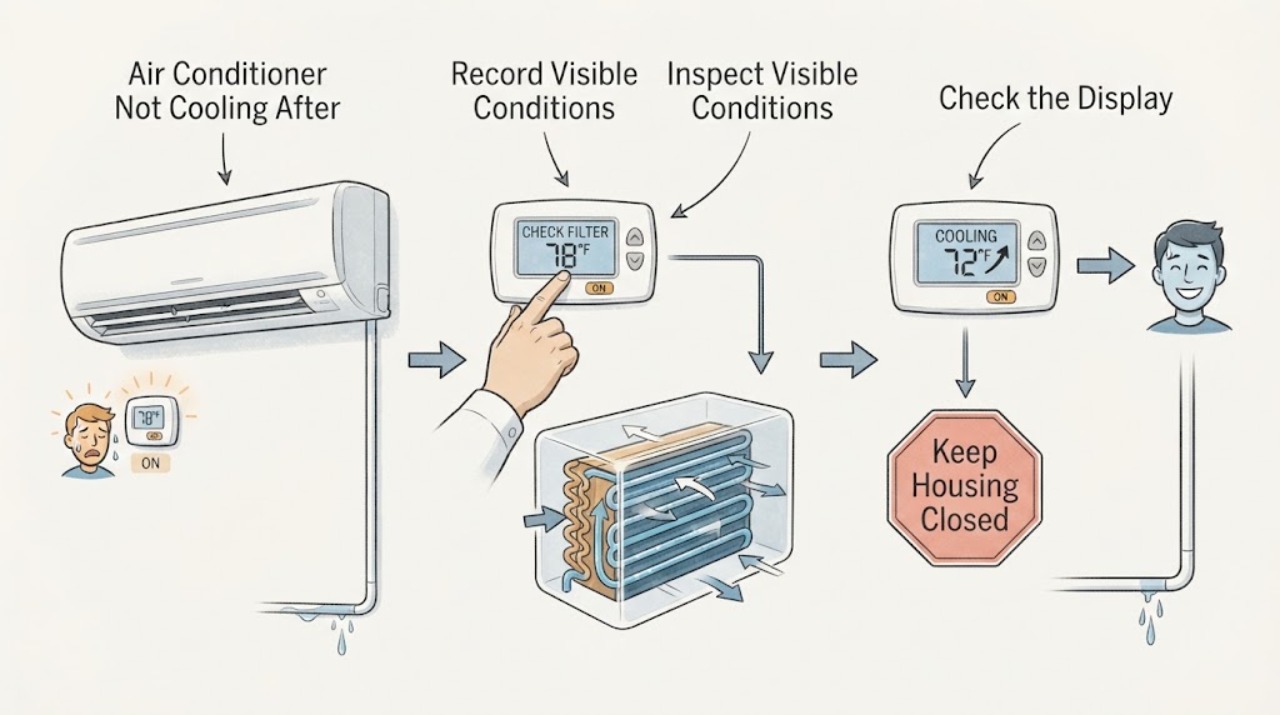
Air Conditioner Not Cooling After Evaporator Replacement: Safe Checks
If an air conditioner still does not cool after an evaporator coil was replaced, treat the timing as a post-installation commissioning or handoff issue first. Record whether cooling never returned or worked briefly, then check only the thermostat, filter, registers, visible ice, visible condensate, and outdoor-unit response from a safe position.
-
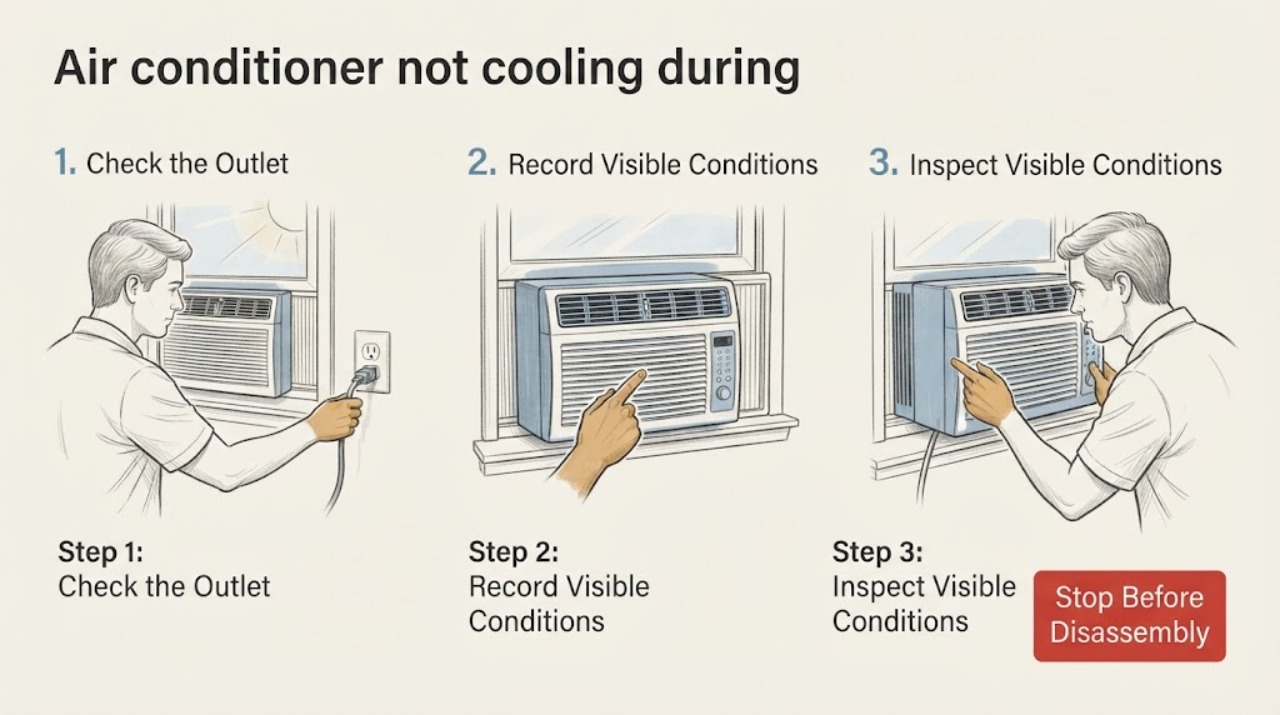
Air conditioner not cooling during the day but works at night
If an air conditioner cools at night but struggles during the day, the added daytime heat load may be exposing a capacity, airflow, outdoor-temperature, or system fault. First confirm that the mode and schedule are calling for cooling, then check the filter and visible indoor and outdoor airflow paths.
-
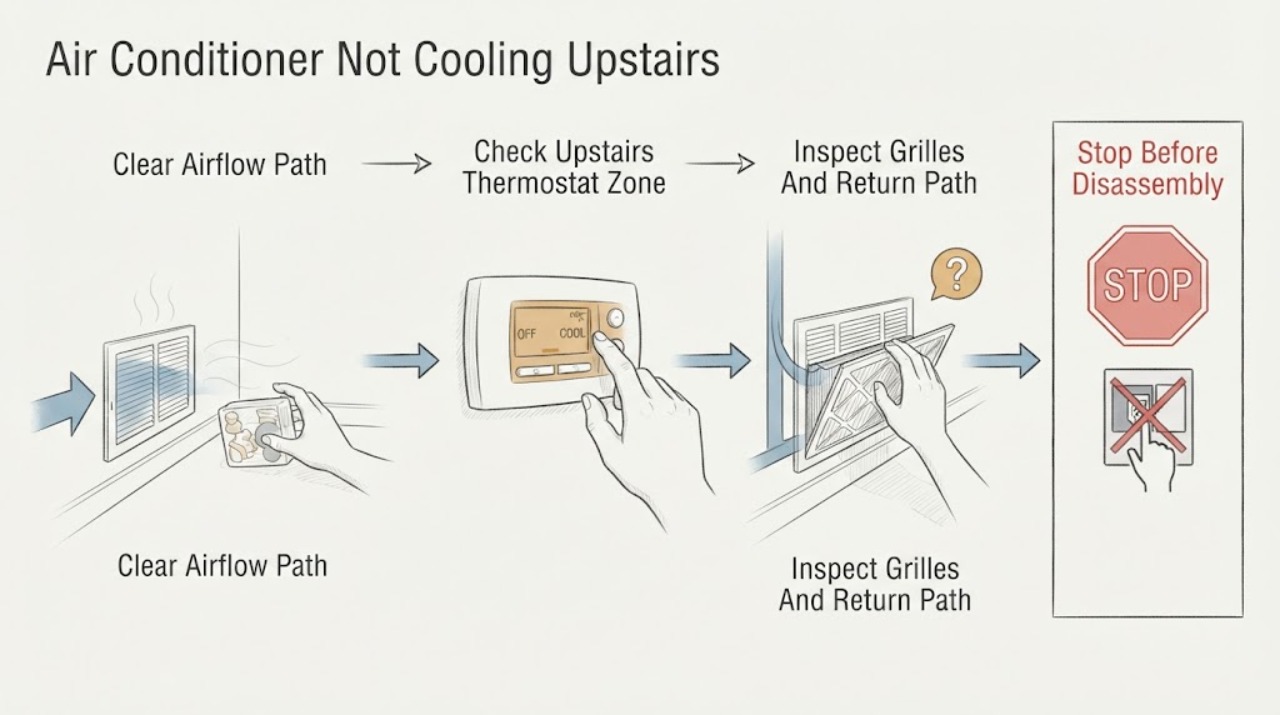
Air Conditioner Not Cooling Upstairs or Blowing Air Through Vents
When an air conditioner cools downstairs but the upstairs rooms are not cooling or have little or no air from the vents, first determine whether the problem is airflow to the upstairs zone or whole-system cooling. Check the upstairs thermostat or zone call, keep supply and return grilles unobstructed, inspect the accessible filter, and compare airflow at several upstairs and downstairs registers.
-
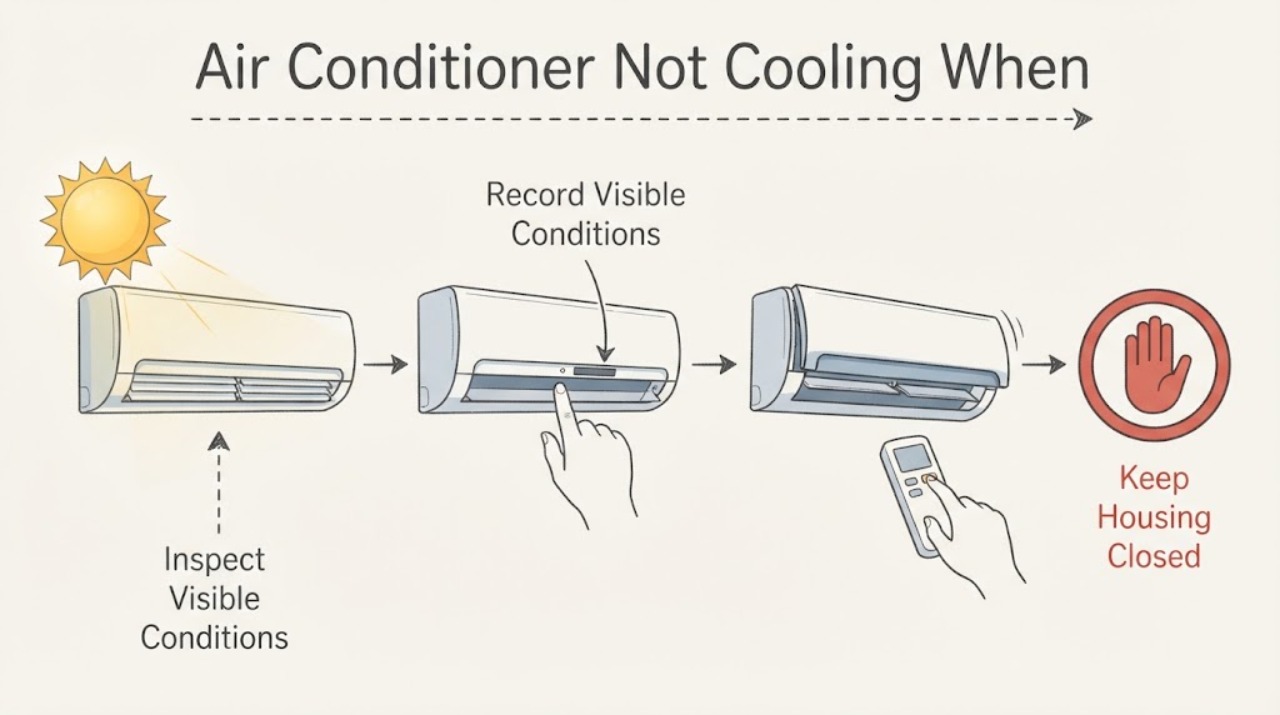
Air Conditioner Not Cooling When in the Sun: Separate Heat Load from a Fault
Direct sun can make a room or a sun-facing outdoor condenser work harder, but it should not by itself make a correctly operating air conditioner stop cooling. First determine whether this is a room AC, window unit, mini-split, or central split system, then compare thermostat readings, supply-air temperature by feel, run time, and whether the outdoor unit is operating.
-
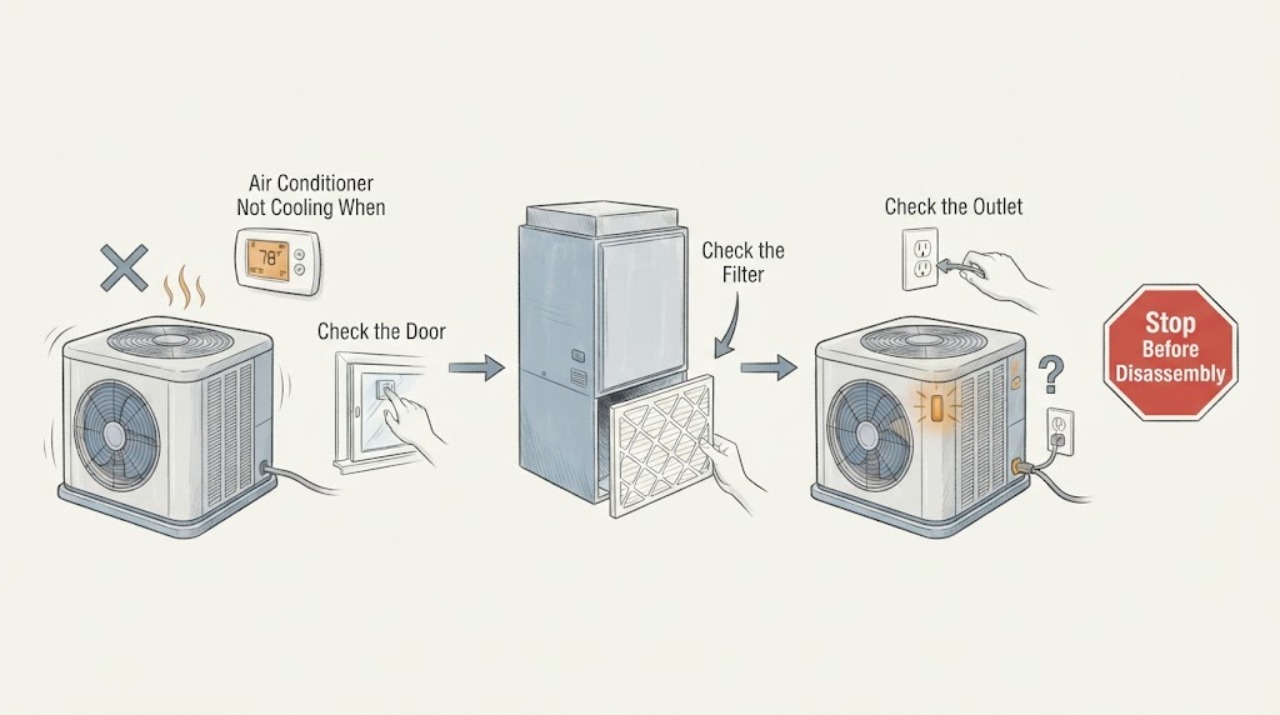
Air Conditioner Not Cooling When the Outside Unit Is On but the House Is Not Cooling
An outdoor unit running does not prove that the indoor blower is moving enough air or that the system is removing heat. Check the thermostat mode, indoor airflow, accessible filter, open registers, visible ice, condensate warning, and clear space around the outdoor unit.
-
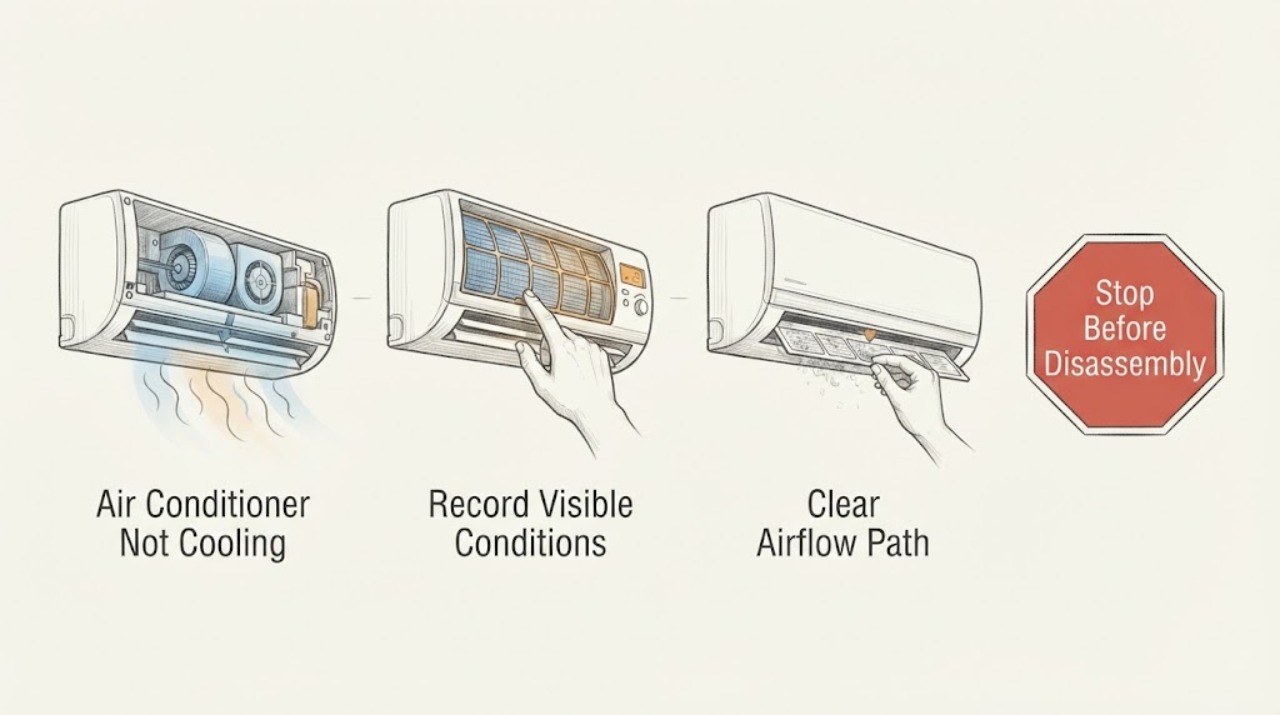
Air Conditioner Not Cooling: Blower Motor and Airflow Checks
When an air conditioner is not cooling and the suspected component is the blower motor, first separate an airflow problem from a refrigeration problem. Check that the thermostat is calling for cooling, the indoor blower is moving air, and the return filter and supply registers are not blocked.
-
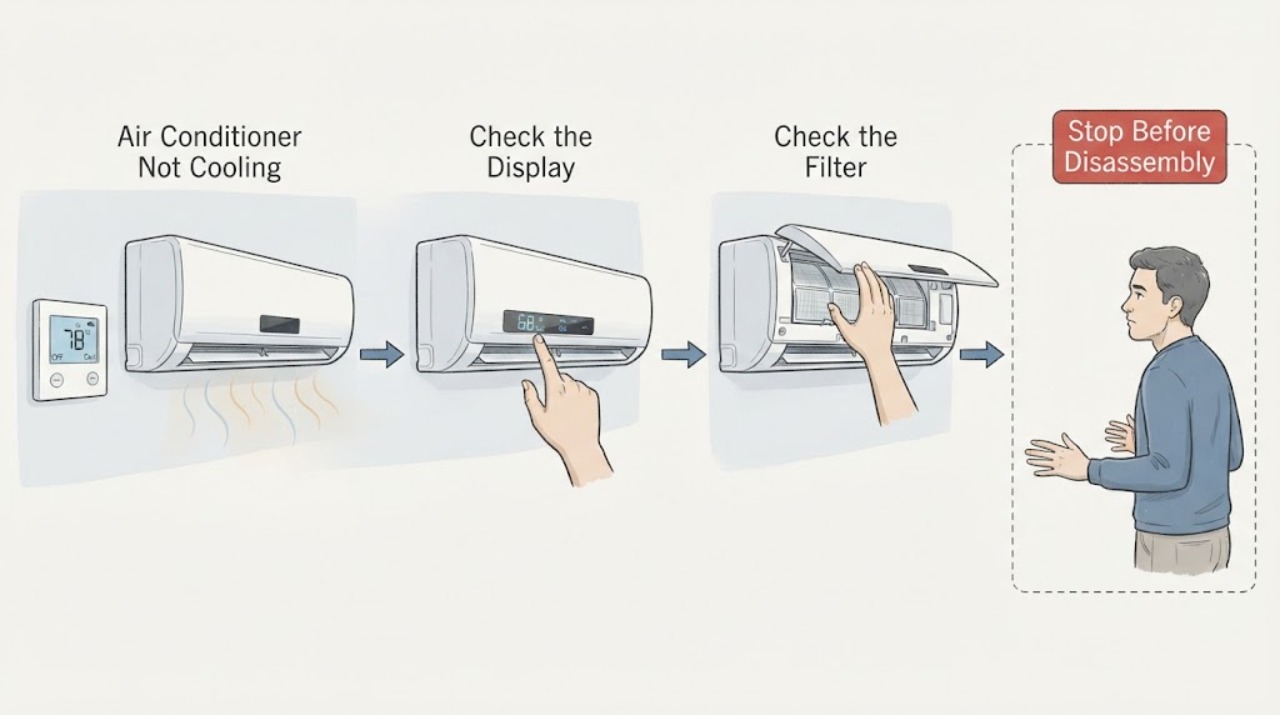
Air Conditioner Not Cooling: Thermostat and Blower Motor Checks
If the air conditioner is not cooling, confirm the thermostat is actually calling for Cool, then inspect the accessible filter and registers before judging the blower motor. A fan set to run continuously can move warm air, while a loaded filter can reduce airflow and contribute to ice.
-
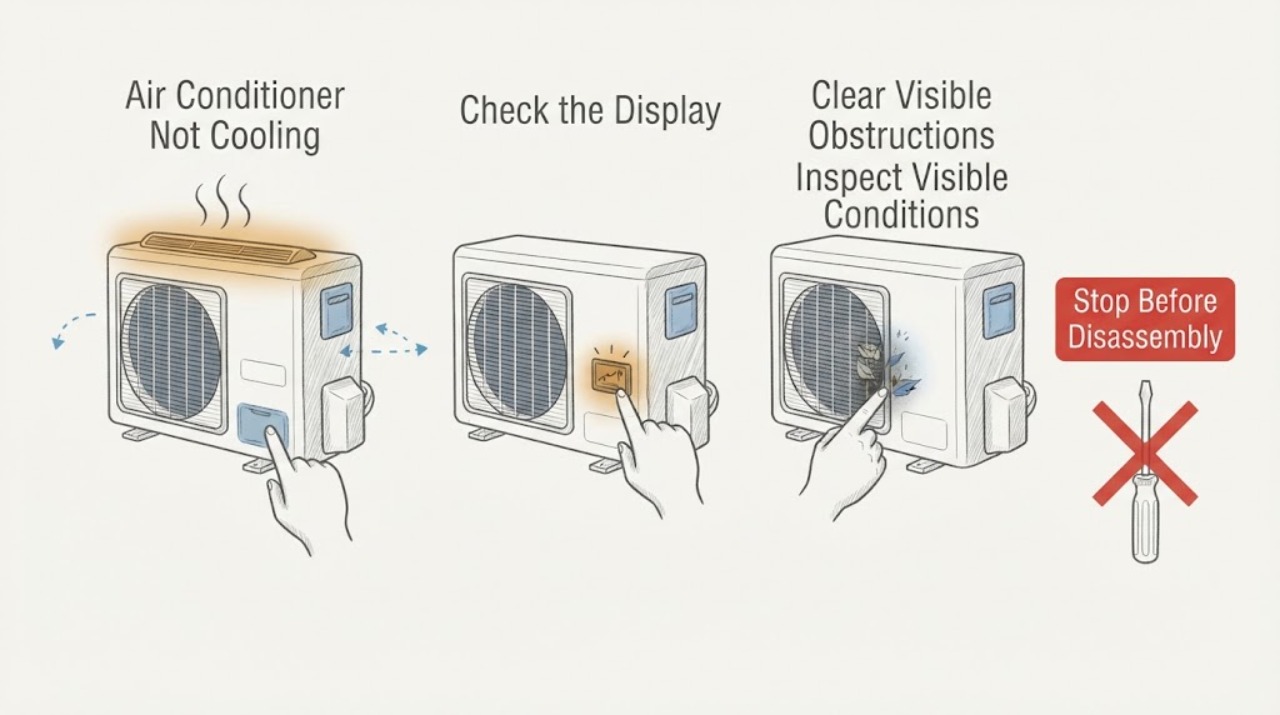
Air Conditioner Not Cooling: When a Capacitor May Be Involved
A capacitor can be one reason an air conditioner does not start, but a warm room or a humming outdoor unit does not prove that the capacitor has failed. Confirm the thermostat mode and target, inspect the accessible filter and registers, and observe whether the indoor airflow and outdoor fan start from a safe distance.
-
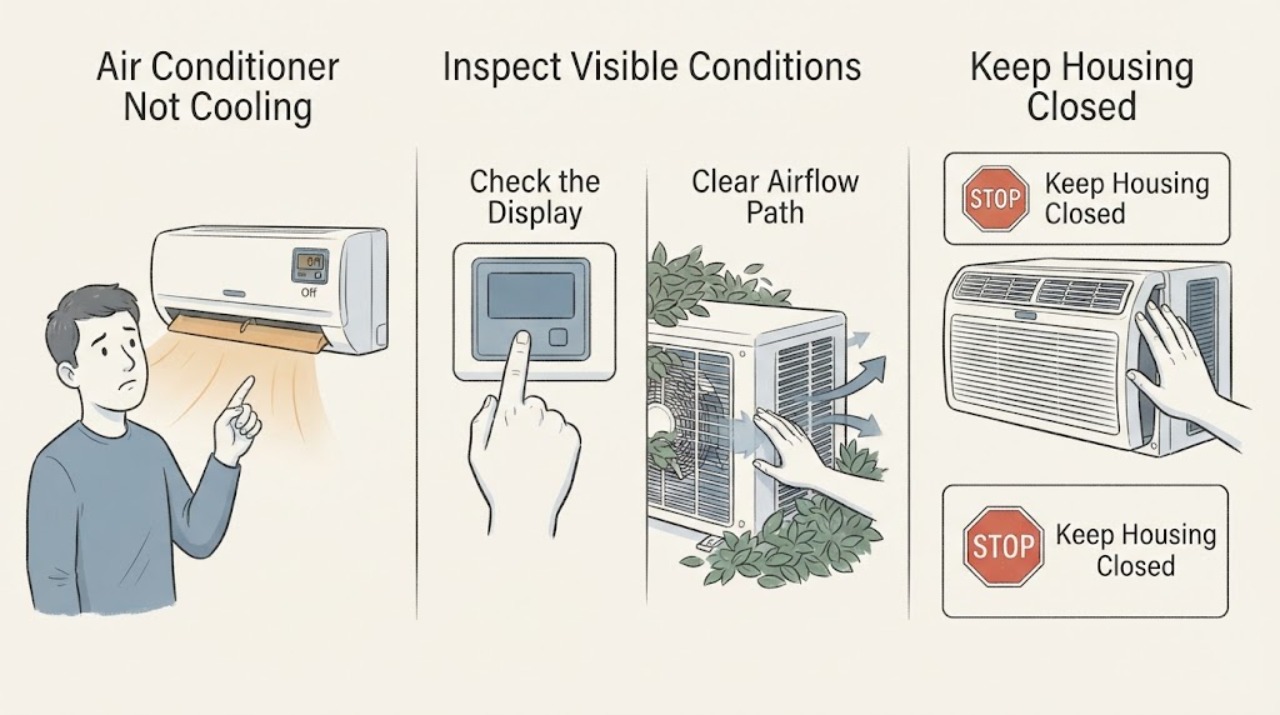
Air Conditioner Not Cooling: Check Airflow Before Capacitor or Compressor Service
Start with the thermostat, filter, airflow, and visible ice, but treat capacitor and compressor work as professional HVAC service. Set the thermostat to cooling with the fan on Auto, confirm the filter is not blocked, and make sure supply and return paths and the outdoor unit are not visibly obstructed.
-
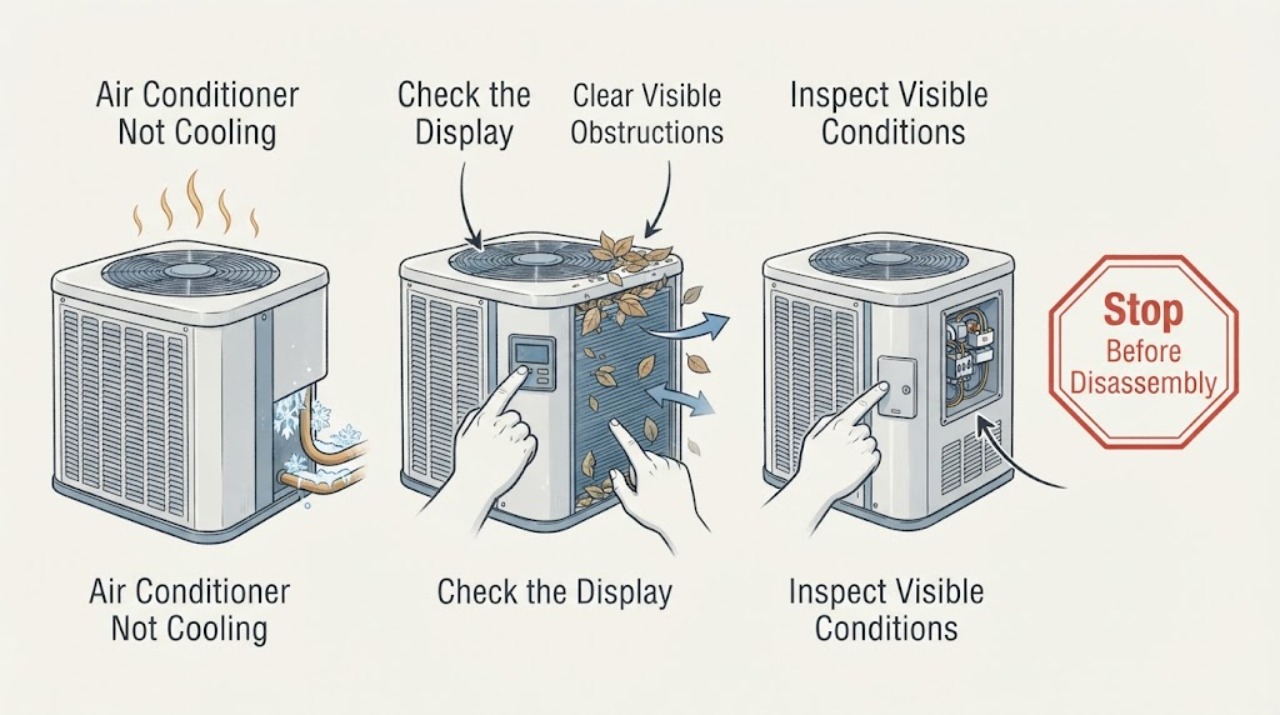
Air Conditioner Not Cooling: Safe Capacitor and Contactor Clues
If an air conditioner is not cooling, begin with the thermostat mode, target, filter, airflow, and visible outdoor clearance. A contactor or capacitor may be involved when the outdoor unit does not start, hums, or stops, but neither part can be confirmed from a sound or a warm room.
-
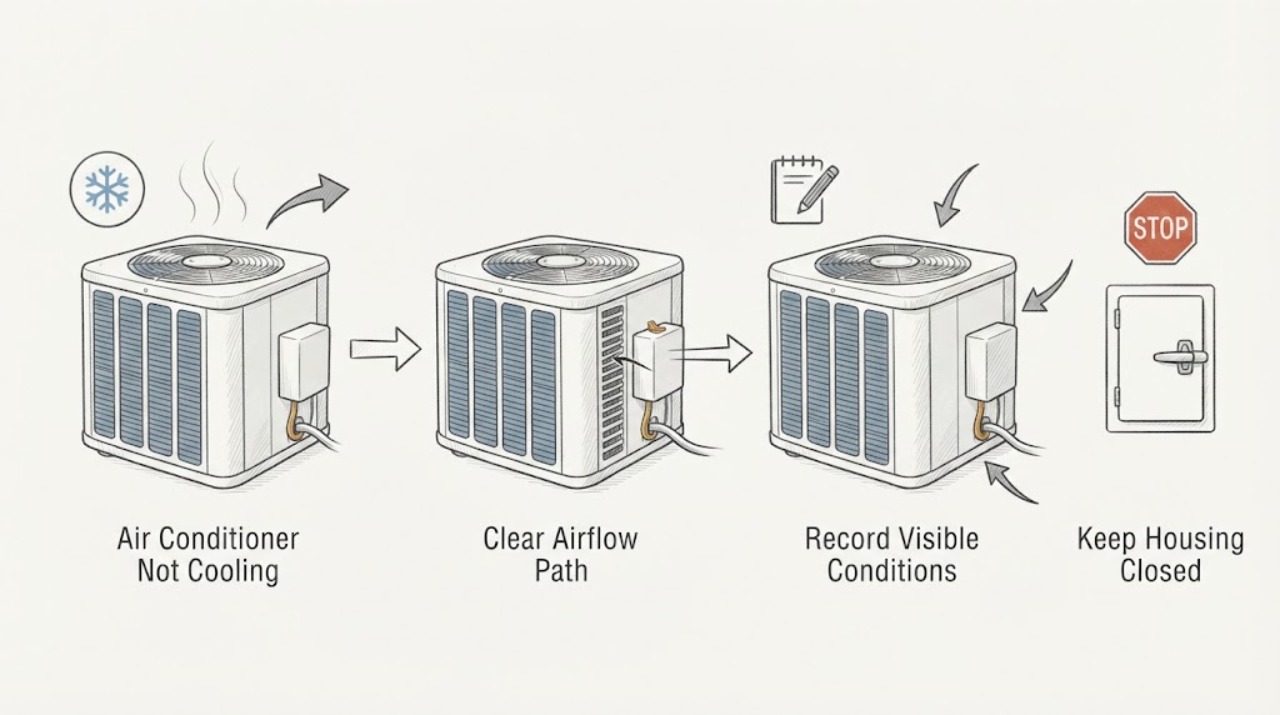
Air Conditioner Not Cooling: Check Airflow, Drainage, and Capacitor Symptoms Safely
Start with the thermostat mode and setpoint, then check the accessible air filter and whether supply air is weak. Look for ice on visible tubing or the indoor coil area and for condensate water near the indoor unit or drain outlet.
-
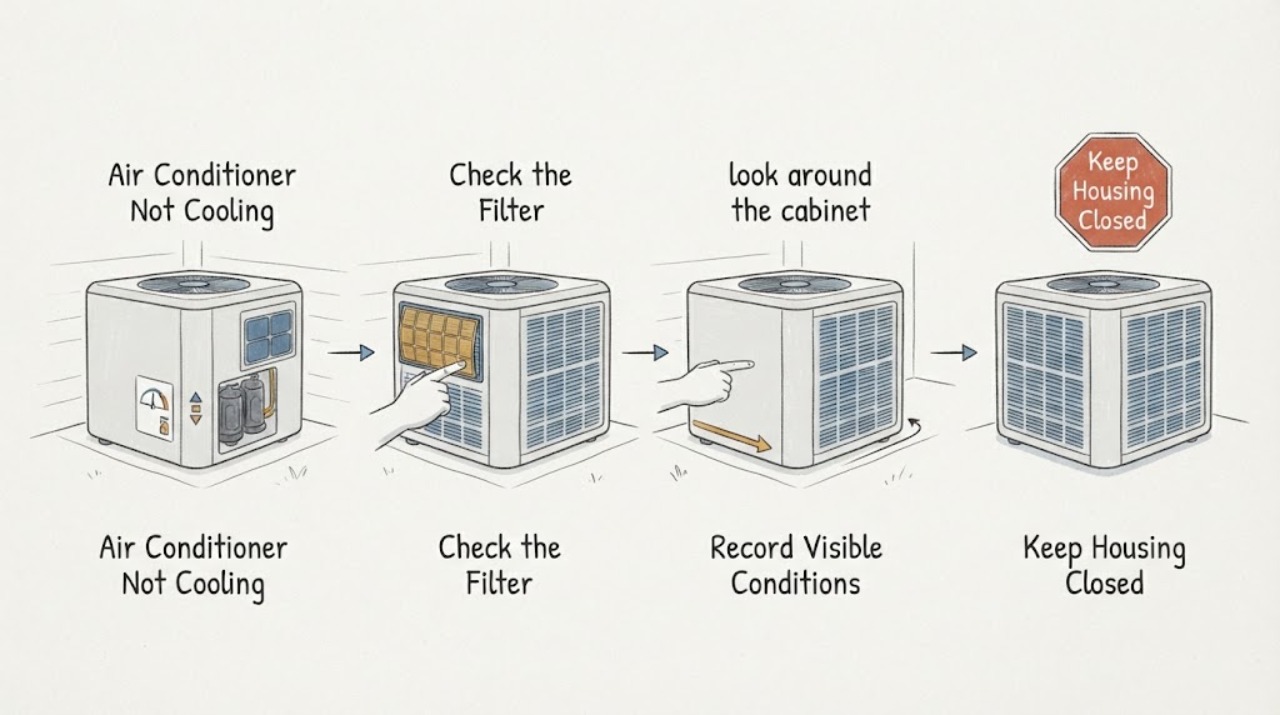
Air Conditioner Not Cooling: How to Tell if the Compressor Is Involved
An air conditioner that is not cooling may have an airflow, thermostat, outdoor-coil, frozen-evaporator, refrigerant, electrical, or compressor problem. A compressor cannot be confirmed by sound alone, and its sealed refrigerant circuit and high-voltage starting components are not homeowner checks.
-
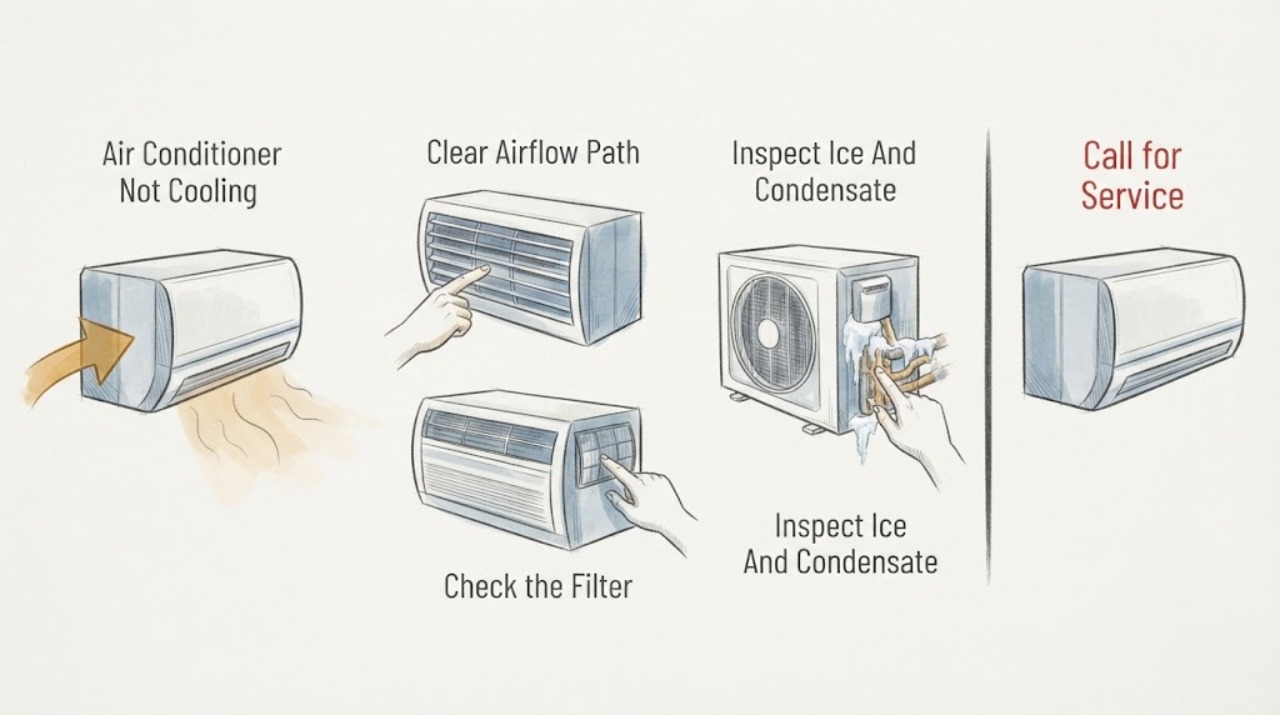
Air Conditioner Not Cooling: Check Airflow Before the Compressor or Coil
If an air conditioner is running but not cooling, first note whether the indoor airflow is absent, weak, or normal but warm. Check the thermostat's cooling call, the accessible filter and vents, and the outdoor unit from a safe distance.
-
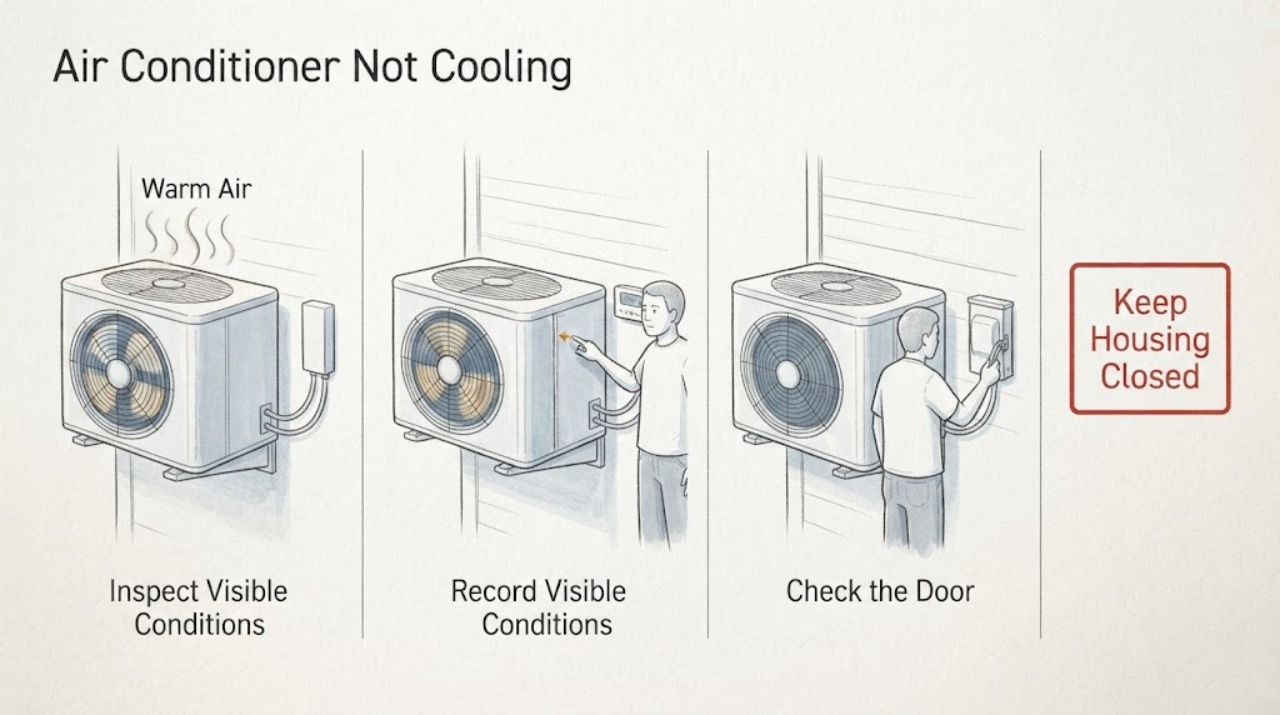
Air Conditioner Not Cooling: Check the Thermostat and Compressor Safely
Start at the thermostat: confirm the installed cooling mode, normal setpoint, schedule, and fan setting, then check the accessible filter and airflow. Observe whether the outdoor unit starts when there is a cooling call and whether the indoor air is weak, warm, or accompanied by ice or condensate water.
-
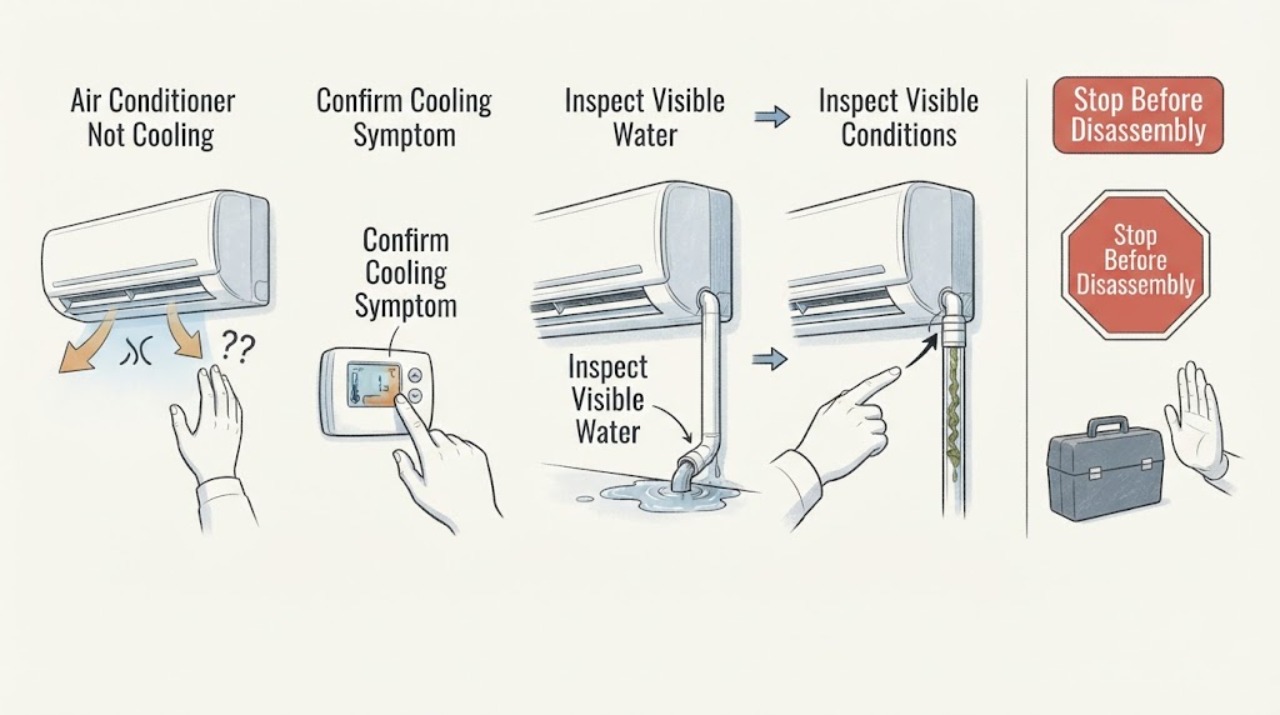
Air Conditioner Not Cooling: Check the Condensate Drain Line
A blocked condensate drain line or pan can make an air conditioner stop cooling because water backs up and a condensate overflow switch may shut down the compressor, outdoor fan, or indoor fan. Look only from safe, ordinary access for standing water, a wet area near the indoor unit, or no water leaving the known drain outlet; also note whether a safety switch has stopped the system.